Computational Biology Prepared By: Syed
Description: Computational Biology Prepared By: Syed Khaleelulla Hussaini Outline Proteins DNA RNA Genetics and evolution The Sequence Matching Problem RNA Sequence Matching Complexity of the Algorithms DEFINITION Computational Biology encompasses all
Related Topics
Download Presentation
"Computational Biology Prepared By: Syed" is the property of its rightful owner. Permission is granted to download and print the materials on this website for personal, non-commercial use only, and to display it on your personal computer provided you do not modify the materials and that you retain all copyright notices contained in the materials. By downloading content from our website, you accept the terms of this agreement.
Presentation Transcript
slide1. Computational Biology Prepared By:
Syed Khaleelulla Hussaini<br>
slide2. Outline Proteins
DNA
RNA
Genetics and evolution
The Sequence Matching Problem
RNA Sequence Matching
Complexity of the Algorithms<br>
slide3. DEFINITION Computational Biology encompasses all computational methods and theories applicable to molecular biology and areas of computer based techniques for solving biological problems.<br>
slide4. Protiens They are building blocks of living organism
It is a large molecule that is composed of sequences of amino acids
There are 20 amino acids which are divided into classes
hydrophobic(h-phob)
hydrophillic(h-phil)
polar(pos,neg)<br>
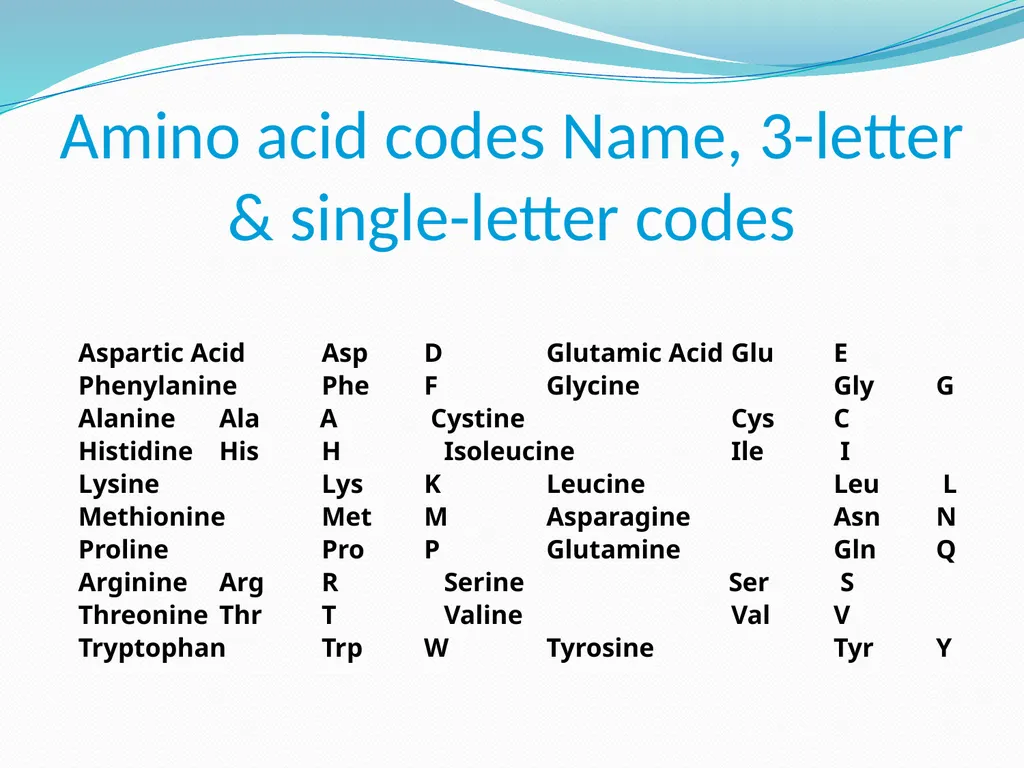
slide5. Aspartic Acid Asp D Glutamic Acid Glu E
Phenylanine Phe F Glycine Gly G
Alanine Ala A Cystine Cys C
Histidine His H Isoleucine Ile I
Lysine Lys K Leucine Leu L
Methionine Met M Asparagine Asn N
Proline Pro P Glutamine Gln Q
Arginine Arg R Serine Ser S
Threonine Thr T Valine Val V
Tryptophan Trp W Tyrosine Tyr Y Amino acid codes Name, 3-letter & single-letter codes<br>
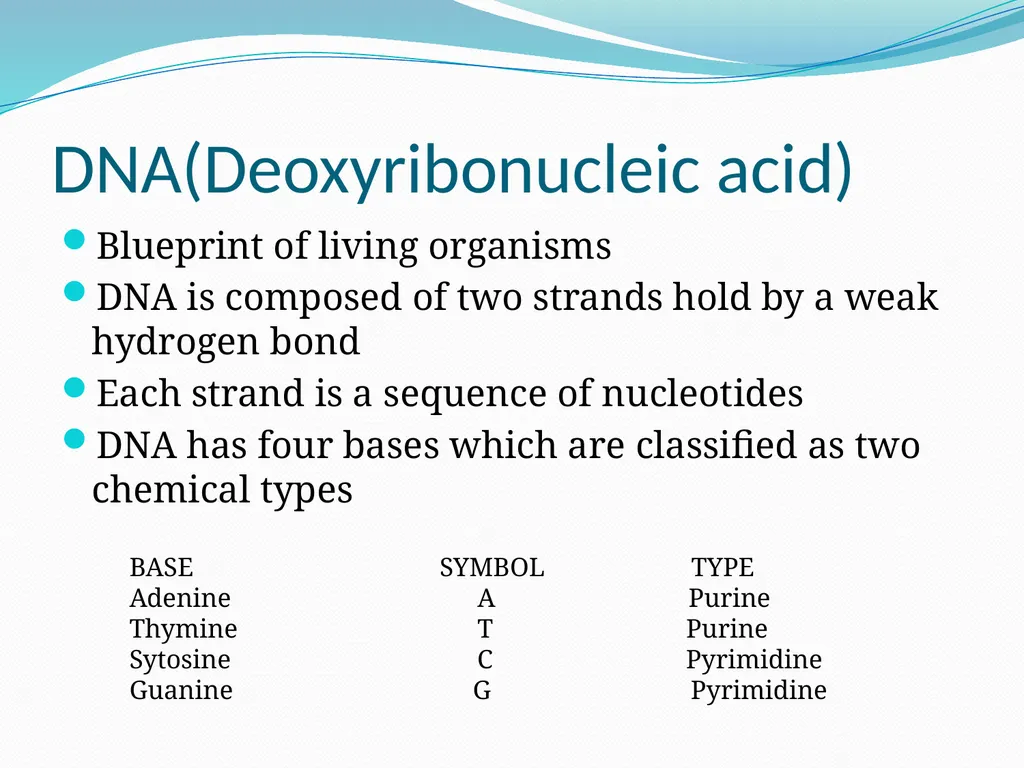
slide6. DNA(Deoxyribonucleic acid) Blueprint of living organisms
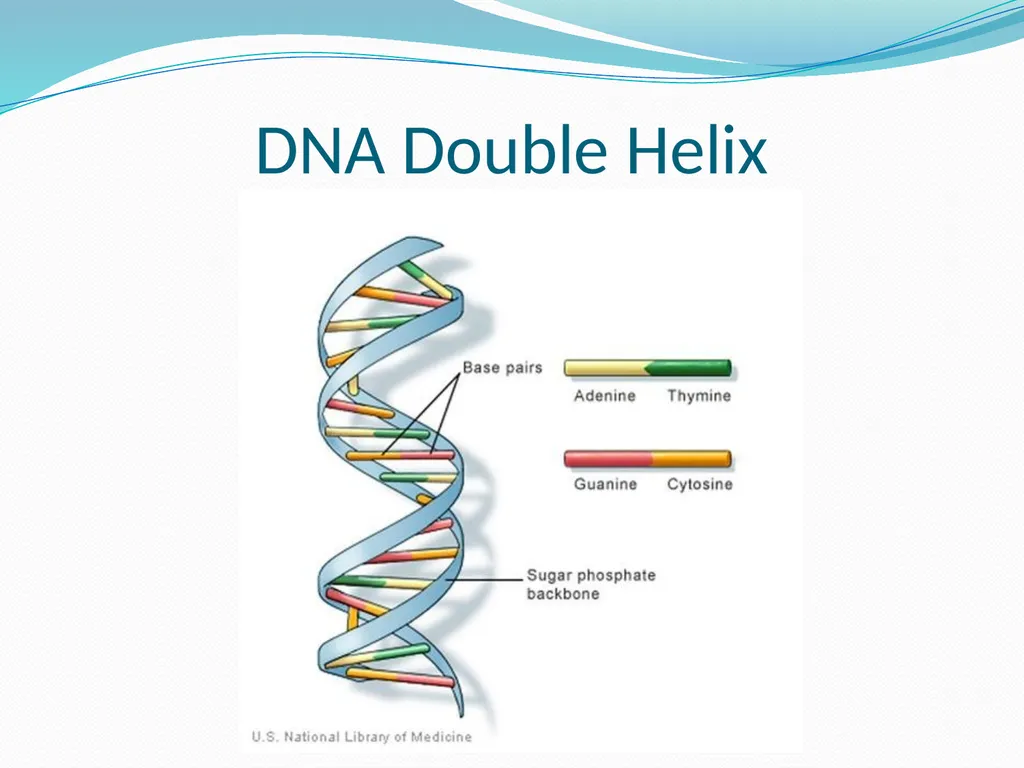
DNA is composed of two strands hold by a weak hydrogen bond
Each strand is a sequence of nucleotides
DNA has four bases which are classified as two chemical types BASE SYMBOL TYPE
Adenine A Purine
Thymine T Purine
Sytosine C Pyrimidine
Guanine G Pyrimidine<br>
slide7. DNA Double Helix<br>
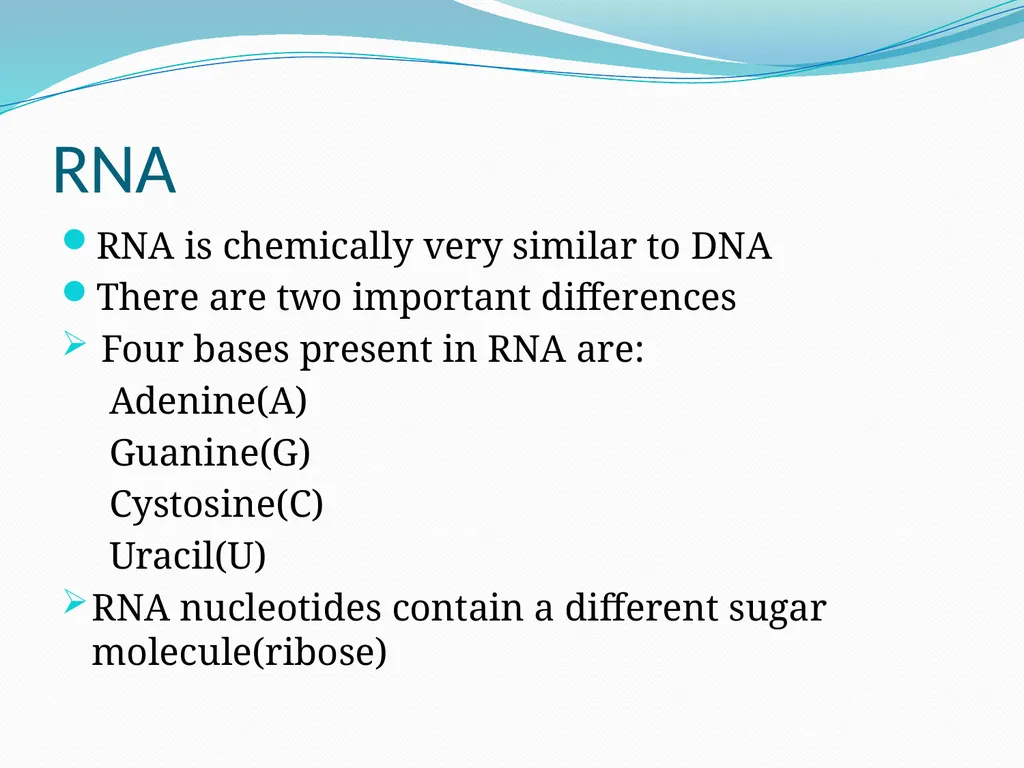
slide8. RNA RNA is chemically very similar to DNA
There are two important differences
Four bases present in RNA are:
Adenine(A)
Guanine(G)
Cystosine(C)
Uracil(U)
RNA nucleotides contain a different sugar molecule(ribose)<br>
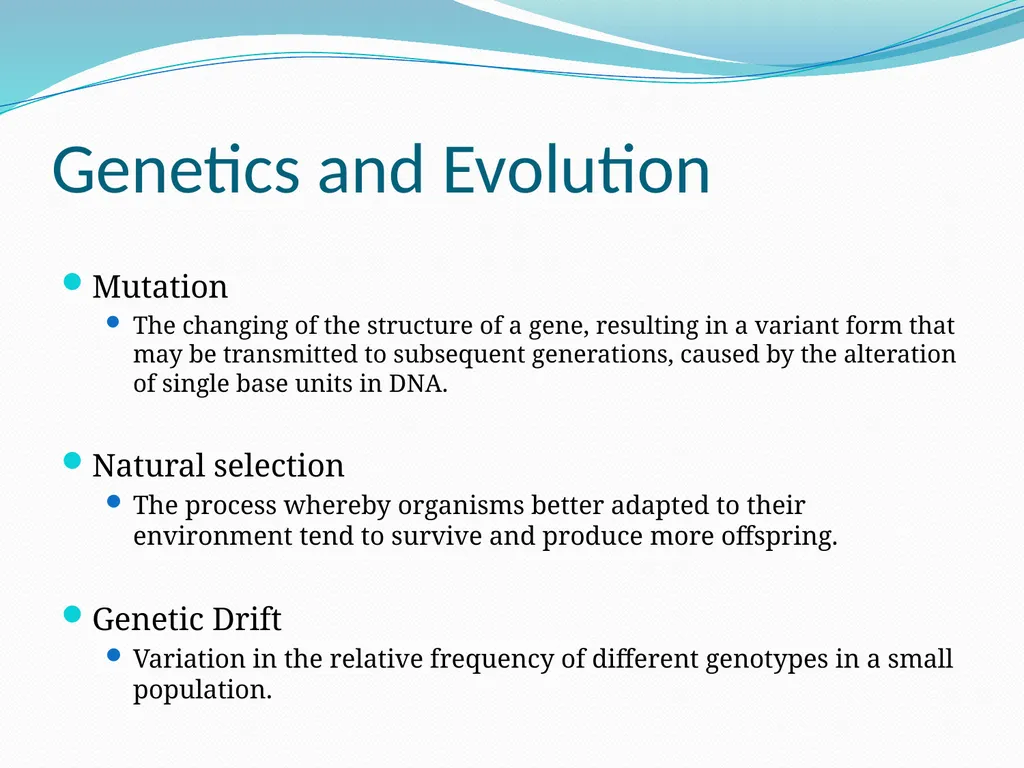
slide9. Genetics and Evolution Mutation
The changing of the structure of a gene, resulting in a variant form that may be transmitted to subsequent generations, caused by the alteration of single base units in DNA.
Natural selection
The process whereby organisms better adapted to their environment tend to survive and produce more offspring.
Genetic Drift
Variation in the relative frequency of different genotypes in a small population.<br>
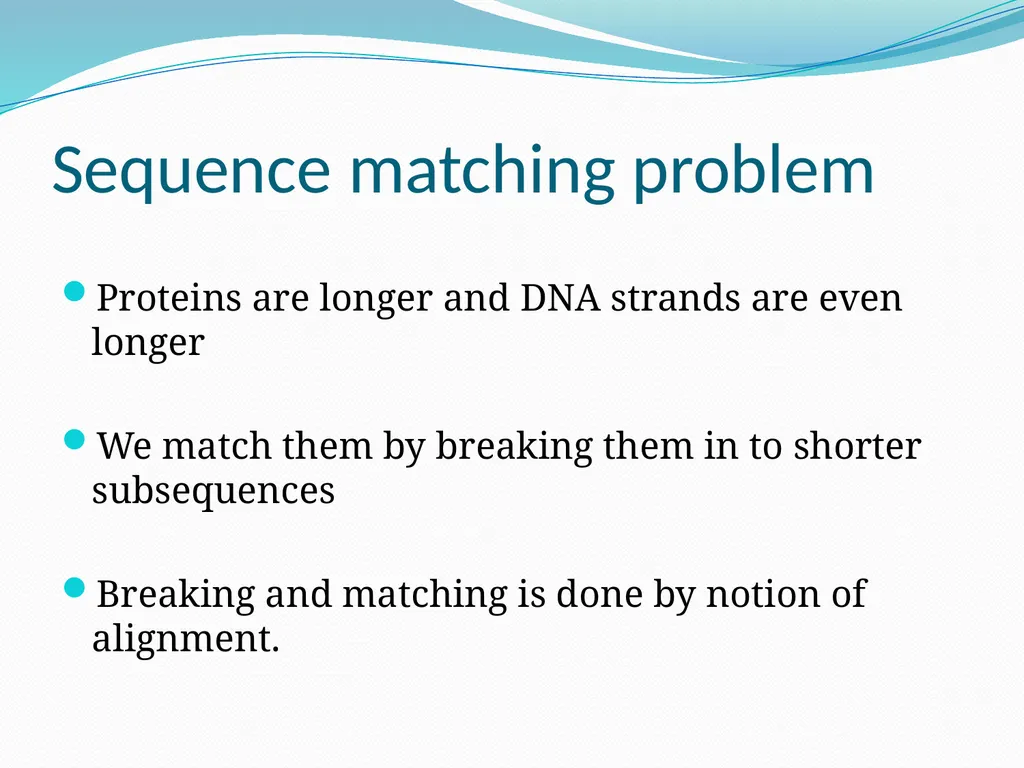
slide10. Sequence matching problem Proteins are longer and DNA strands are even longer
We match them by breaking them in to shorter subsequences
Breaking and matching is done by notion of alignment.<br>
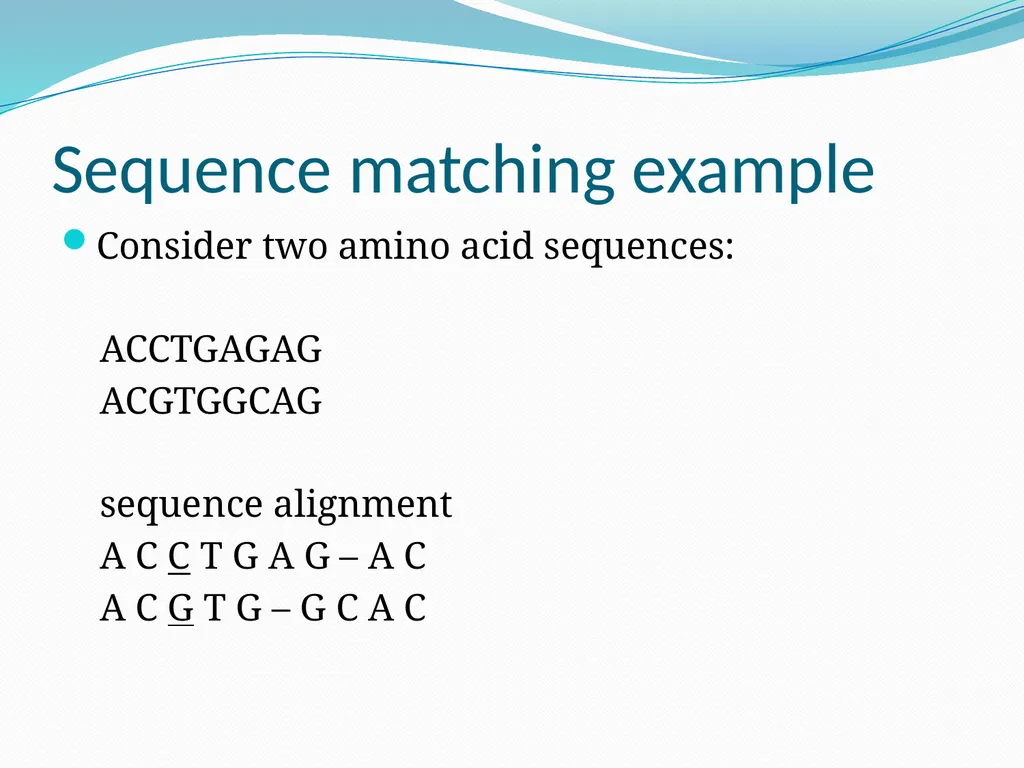
slide11. Sequence matching example Consider two amino acid sequences:
ACCTGAGAG
ACGTGGCAG
sequence alignment
A C C T G A G – A C
A C G T G – G C A C<br>
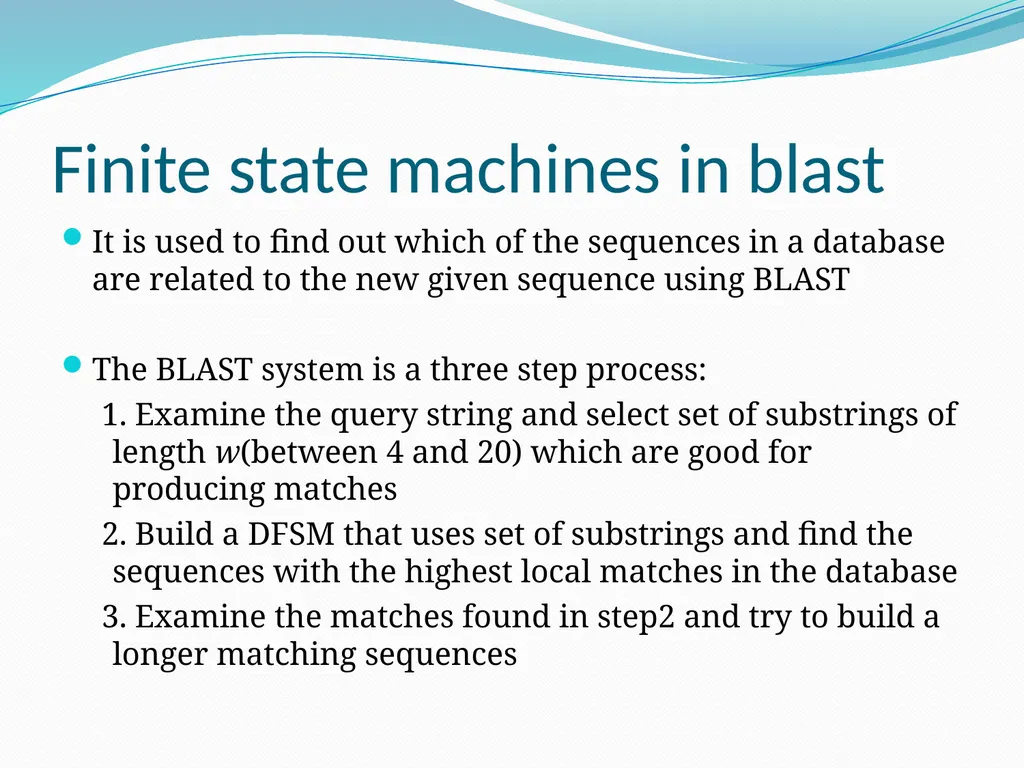
slide12. Finite state machines in blast It is used to find out which of the sequences in a database are related to the new given sequence using BLAST
The BLAST system is a three step process:
1. Examine the query string and select set of substrings of length w(between 4 and 20) which are good for producing matches
2. Build a DFSM that uses set of substrings and find the sequences with the highest local matches in the database
3. Examine the matches found in step2 and try to build a longer matching sequences<br>
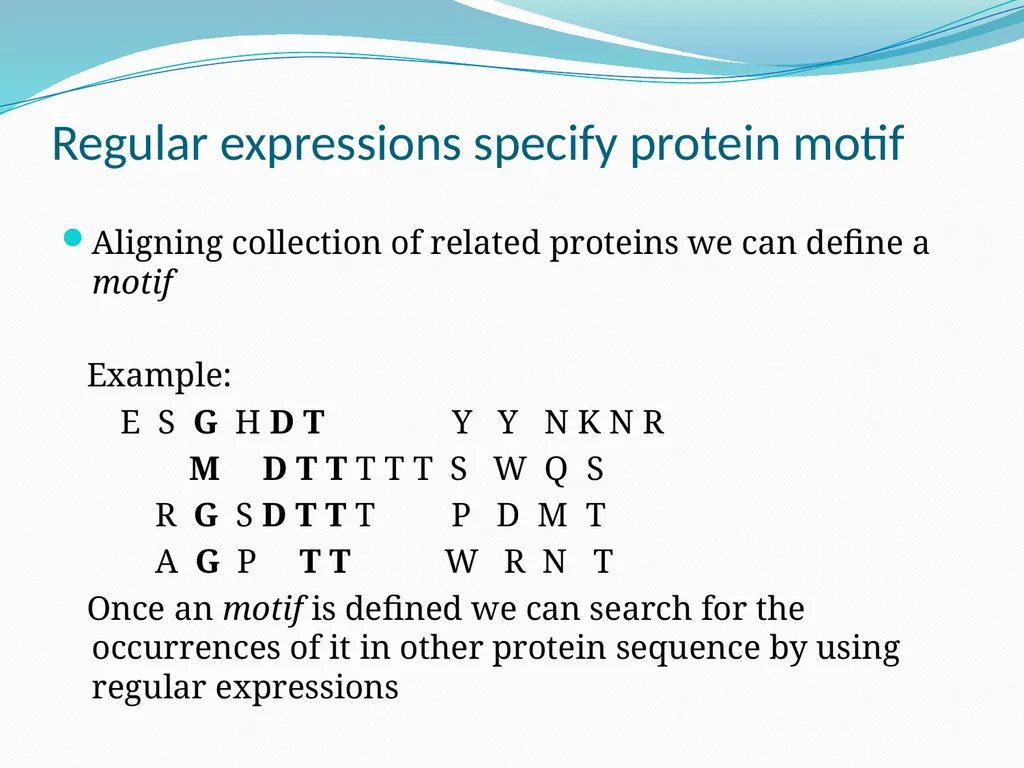
slide13. Regular expressions specify protein motif Aligning collection of related proteins we can define a motif
Example:
E S G H D T Y Y N K N R
M D T T T T T S W Q S
R G S D T T T P D M T
A G P T T W R N T
Once an motif is defined we can search for the occurrences of it in other protein sequence by using regular expressions<br>
slide14. HMM for sequence matching HMM’s are used when sequences become fairly diverse
We can capture the variations among the members of the family and the probabilities associated with them
So by using HMM’s we can find the best alignment between two sequences and from which family does a given new sequence belongs to<br>
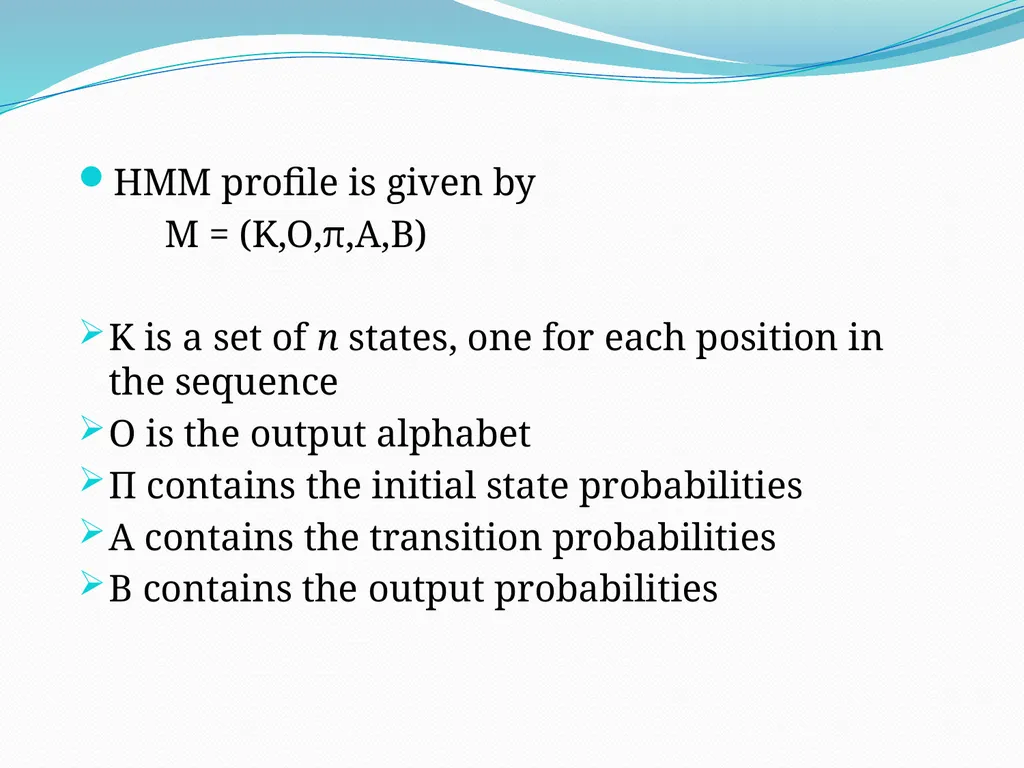
slide15. HMM profile is given by
M = (K,O,π,A,B)
K is a set of n states, one for each position in the sequence
O is the output alphabet
Π contains the initial state probabilities
A contains the transition probabilities
B contains the output probabilities<br>
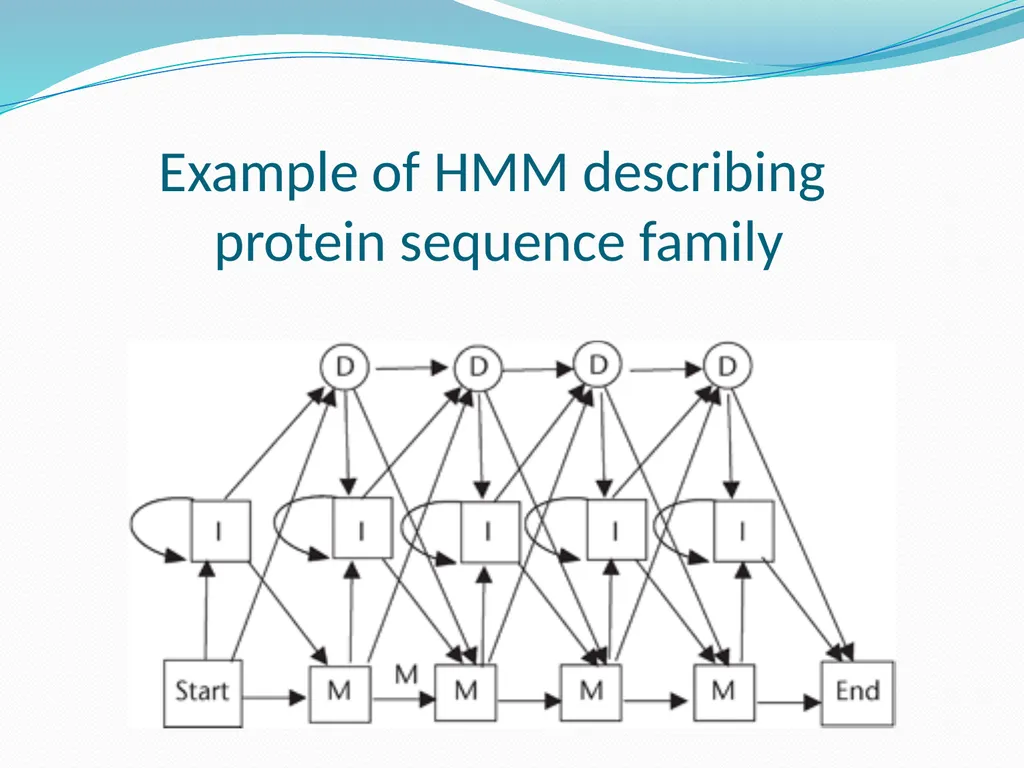
slide16. Example of HMM describing protein sequence family<br>
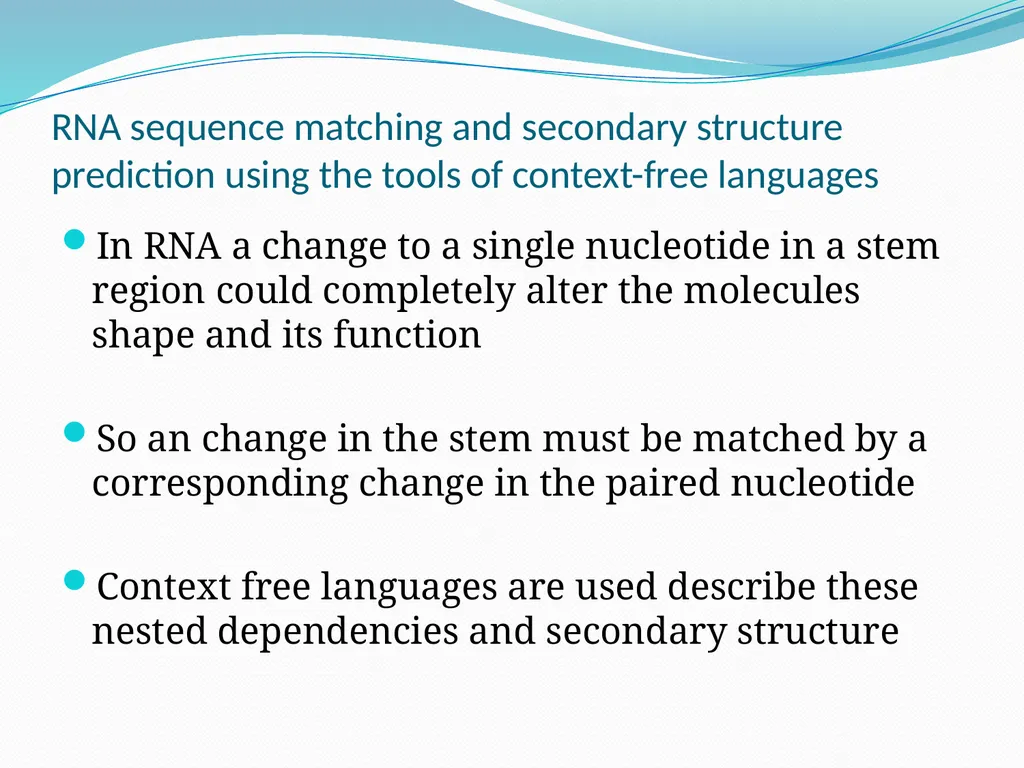
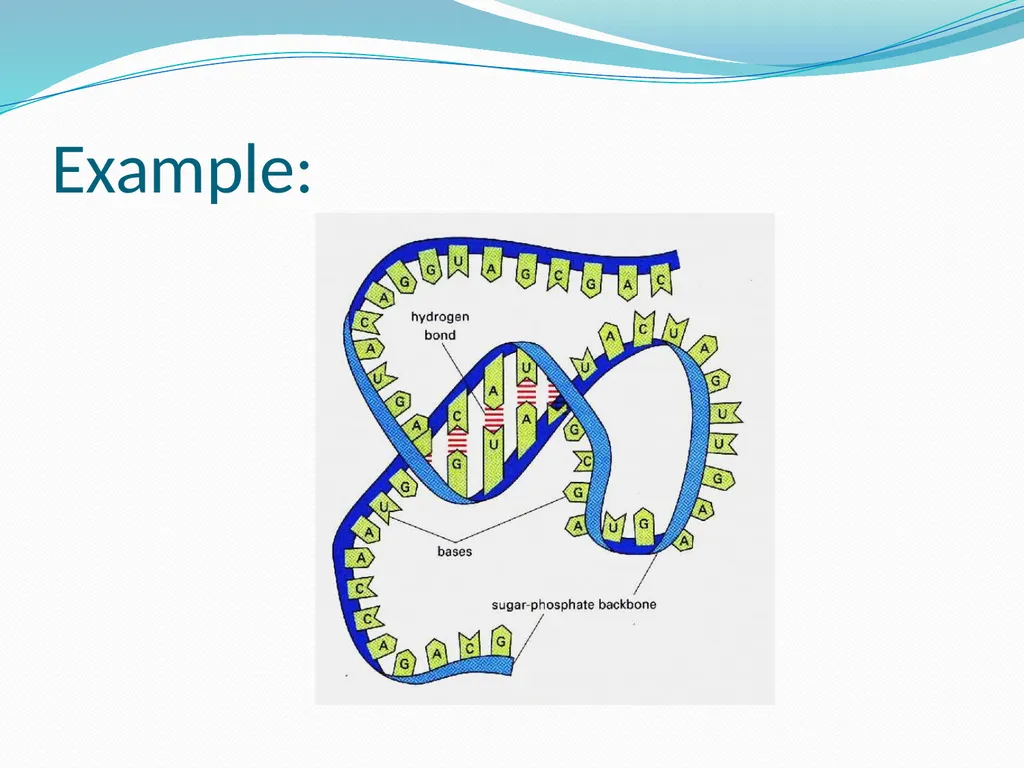
slide17. RNA sequence matching and secondary structure prediction using the tools of context-free languages In RNA a change to a single nucleotide in a stem region could completely alter the molecules shape and its function
So an change in the stem must be matched by a corresponding change in the paired nucleotide
Context free languages are used describe these nested dependencies and secondary structure<br>
slide18. Example:<br>
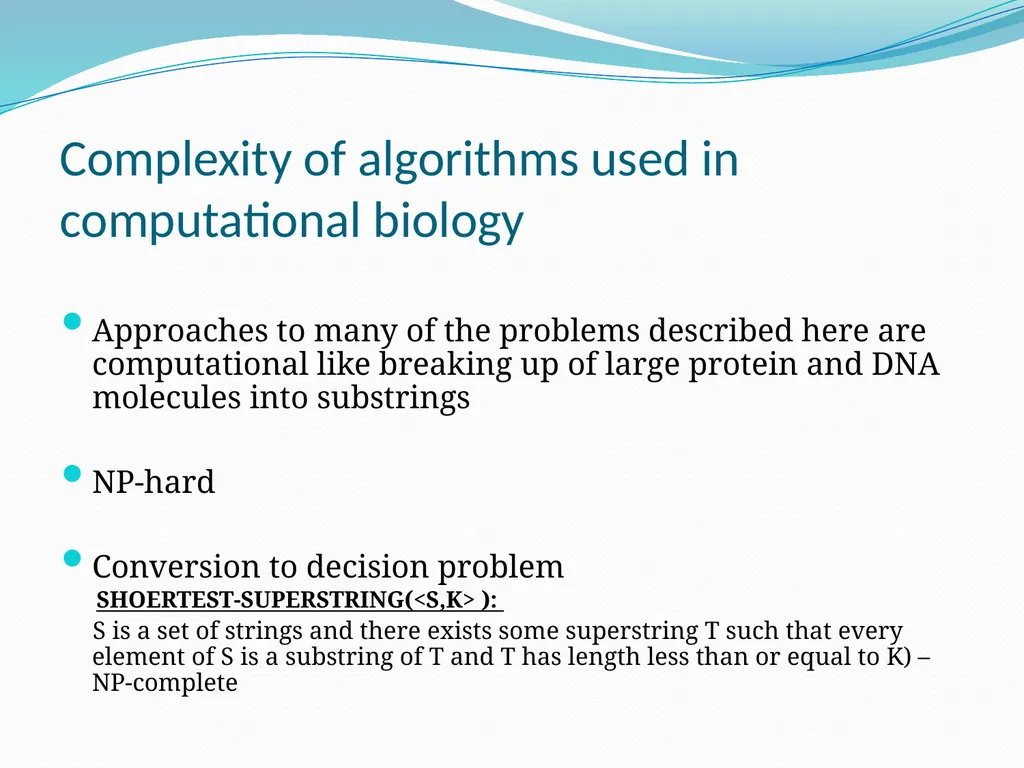
slide19. Complexity of algorithms used in computational biology Approaches to many of the problems described here are computational like breaking up of large protein and DNA molecules into substrings
NP-hard
Conversion to decision problem
SHOERTEST-SUPERSTRING(<S,K> ):
S is a set of strings and there exists some superstring T such that every element of S is a substring of T and T has length less than or equal to K) – NP-complete<br>

slide20. Reference http://en.wikipedia.org/wiki/Computational_biology
http://www.google.com
http://www.cs.utexas.edu/~ear/cs341/automatabook/<br>
slide21. Thank you…<br>
Syed Khaleelulla Hussaini<br>
slide2. Outline Proteins
DNA
RNA
Genetics and evolution
The Sequence Matching Problem
RNA Sequence Matching
Complexity of the Algorithms<br>
slide3. DEFINITION Computational Biology encompasses all computational methods and theories applicable to molecular biology and areas of computer based techniques for solving biological problems.<br>
slide4. Protiens They are building blocks of living organism
It is a large molecule that is composed of sequences of amino acids
There are 20 amino acids which are divided into classes
hydrophobic(h-phob)
hydrophillic(h-phil)
polar(pos,neg)<br>
slide5. Aspartic Acid Asp D Glutamic Acid Glu E
Phenylanine Phe F Glycine Gly G
Alanine Ala A Cystine Cys C
Histidine His H Isoleucine Ile I
Lysine Lys K Leucine Leu L
Methionine Met M Asparagine Asn N
Proline Pro P Glutamine Gln Q
Arginine Arg R Serine Ser S
Threonine Thr T Valine Val V
Tryptophan Trp W Tyrosine Tyr Y Amino acid codes Name, 3-letter & single-letter codes<br>
slide6. DNA(Deoxyribonucleic acid) Blueprint of living organisms
DNA is composed of two strands hold by a weak hydrogen bond
Each strand is a sequence of nucleotides
DNA has four bases which are classified as two chemical types BASE SYMBOL TYPE
Adenine A Purine
Thymine T Purine
Sytosine C Pyrimidine
Guanine G Pyrimidine<br>
slide7. DNA Double Helix<br>
slide8. RNA RNA is chemically very similar to DNA
There are two important differences
Four bases present in RNA are:
Adenine(A)
Guanine(G)
Cystosine(C)
Uracil(U)
RNA nucleotides contain a different sugar molecule(ribose)<br>
slide9. Genetics and Evolution Mutation
The changing of the structure of a gene, resulting in a variant form that may be transmitted to subsequent generations, caused by the alteration of single base units in DNA.
Natural selection
The process whereby organisms better adapted to their environment tend to survive and produce more offspring.
Genetic Drift
Variation in the relative frequency of different genotypes in a small population.<br>
slide10. Sequence matching problem Proteins are longer and DNA strands are even longer
We match them by breaking them in to shorter subsequences
Breaking and matching is done by notion of alignment.<br>
slide11. Sequence matching example Consider two amino acid sequences:
ACCTGAGAG
ACGTGGCAG
sequence alignment
A C C T G A G – A C
A C G T G – G C A C<br>
slide12. Finite state machines in blast It is used to find out which of the sequences in a database are related to the new given sequence using BLAST
The BLAST system is a three step process:
1. Examine the query string and select set of substrings of length w(between 4 and 20) which are good for producing matches
2. Build a DFSM that uses set of substrings and find the sequences with the highest local matches in the database
3. Examine the matches found in step2 and try to build a longer matching sequences<br>
slide13. Regular expressions specify protein motif Aligning collection of related proteins we can define a motif
Example:
E S G H D T Y Y N K N R
M D T T T T T S W Q S
R G S D T T T P D M T
A G P T T W R N T
Once an motif is defined we can search for the occurrences of it in other protein sequence by using regular expressions<br>
slide14. HMM for sequence matching HMM’s are used when sequences become fairly diverse
We can capture the variations among the members of the family and the probabilities associated with them
So by using HMM’s we can find the best alignment between two sequences and from which family does a given new sequence belongs to<br>
slide15. HMM profile is given by
M = (K,O,π,A,B)
K is a set of n states, one for each position in the sequence
O is the output alphabet
Π contains the initial state probabilities
A contains the transition probabilities
B contains the output probabilities<br>
slide16. Example of HMM describing protein sequence family<br>
slide17. RNA sequence matching and secondary structure prediction using the tools of context-free languages In RNA a change to a single nucleotide in a stem region could completely alter the molecules shape and its function
So an change in the stem must be matched by a corresponding change in the paired nucleotide
Context free languages are used describe these nested dependencies and secondary structure<br>
slide18. Example:<br>
slide19. Complexity of algorithms used in computational biology Approaches to many of the problems described here are computational like breaking up of large protein and DNA molecules into substrings
NP-hard
Conversion to decision problem
SHOERTEST-SUPERSTRING(<S,K> ):
S is a set of strings and there exists some superstring T such that every element of S is a substring of T and T has length less than or equal to K) – NP-complete<br>
slide20. Reference http://en.wikipedia.org/wiki/Computational_biology
http://www.google.com
http://www.cs.utexas.edu/~ear/cs341/automatabook/<br>
slide21. Thank you…<br>