
Conditional Probability CSE 312 Spring 21 Lecture
Description: Conditional Probability CSE 312 Spring 21 Lecture 6 More Examples! More Examples! More Examples! Takeaways There is often more than one sample space possible! But one is probably easier than the others. Finding a sample space that will make
Related Topics
Download Presentation
"Conditional Probability CSE 312 Spring 21 Lecture" is the property of its rightful owner. Permission is granted to download and print the materials on this website for personal, non-commercial use only, and to display it on your personal computer provided you do not modify the materials and that you retain all copyright notices contained in the materials. By downloading content from our website, you accept the terms of this agreement.
Presentation Transcript
slide1. Conditional Probability CSE 312 Spring 21
Lecture 6<br>
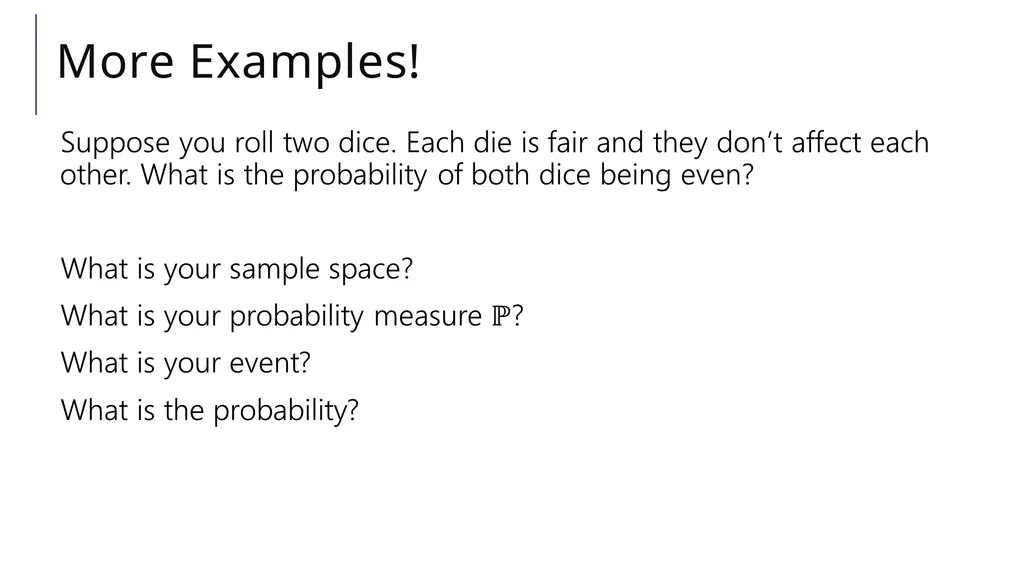
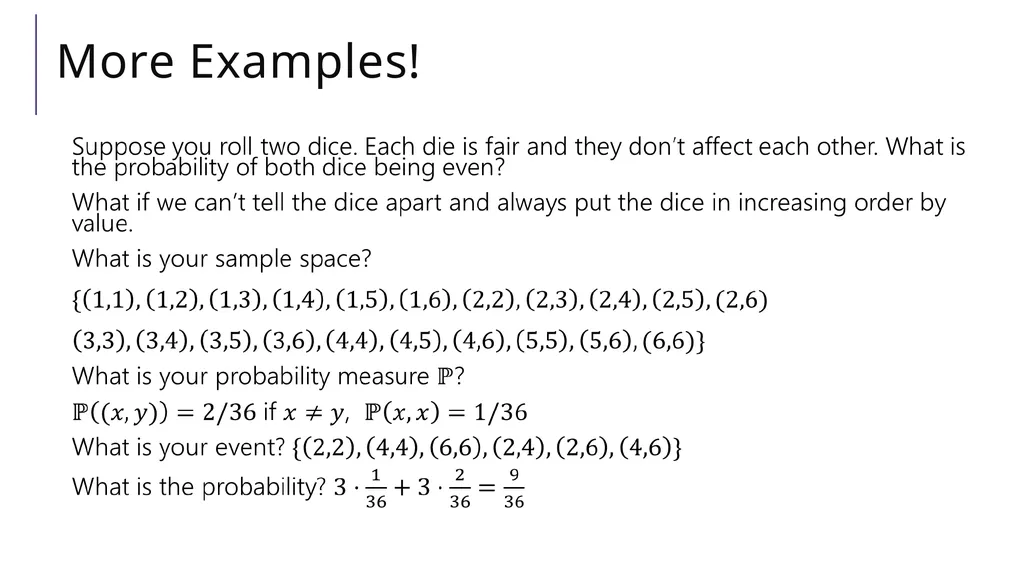
slide2. More Examples!<br>
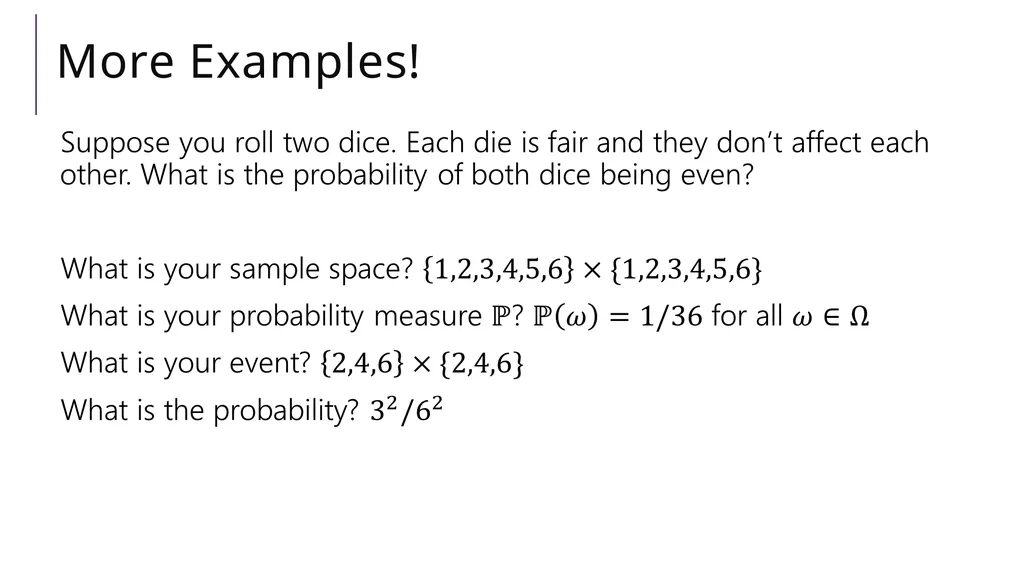
slide3. More Examples!<br>
slide4. More Examples!<br>
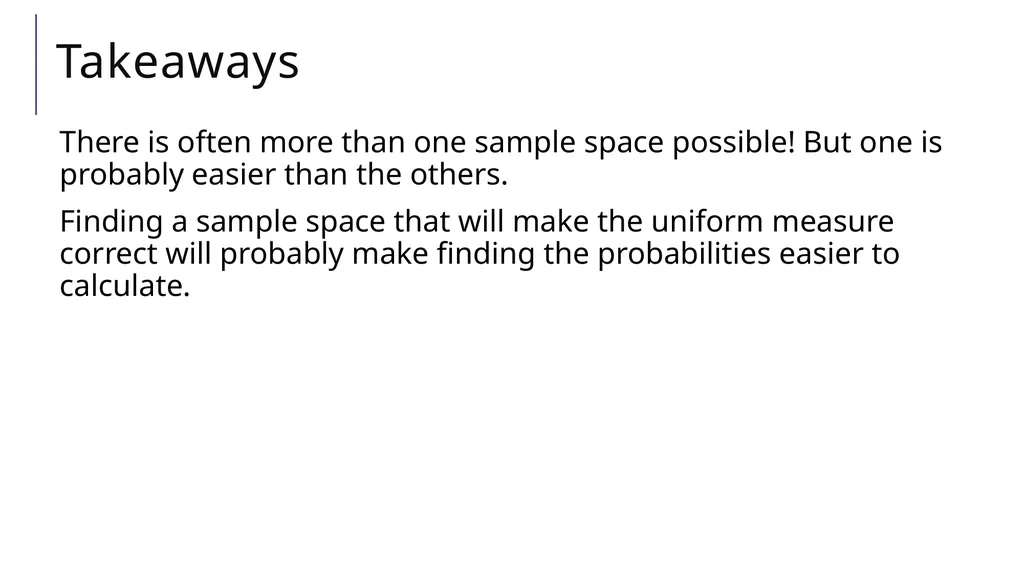
slide5. Takeaways There is often more than one sample space possible! But one is probably easier than the others.
Finding a sample space that will make the uniform measure correct will probably make finding the probabilities easier to calculate.<br>
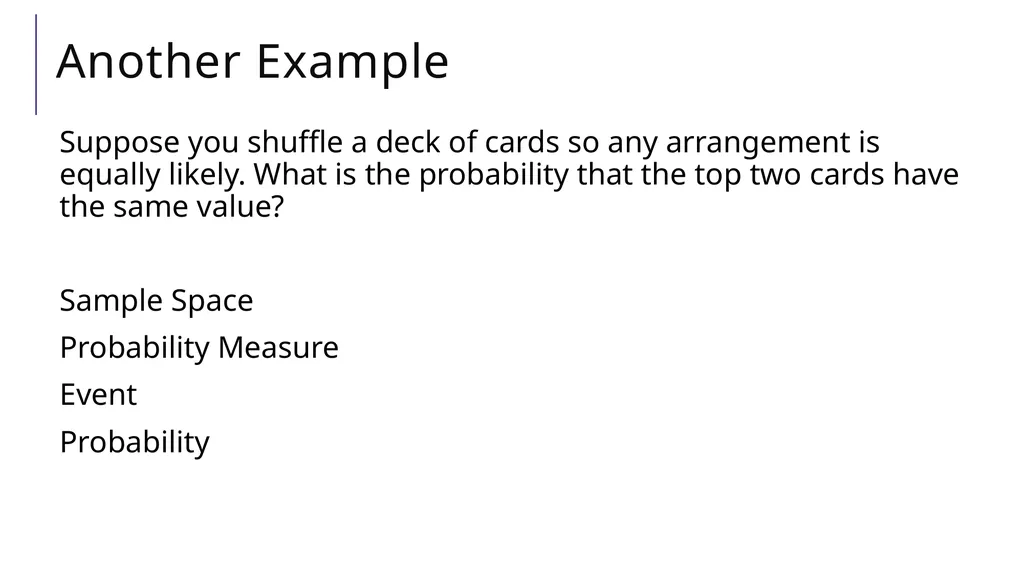
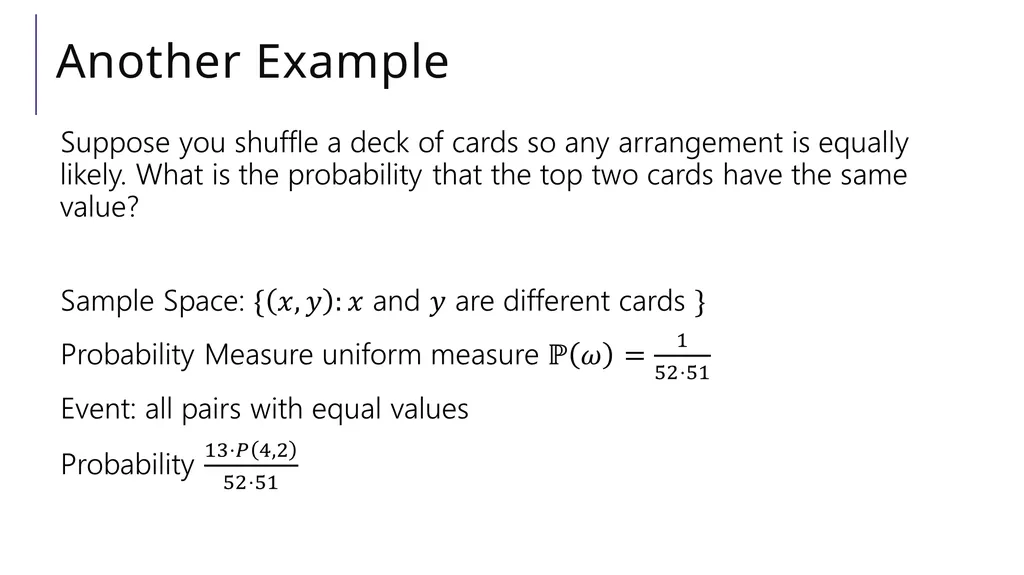
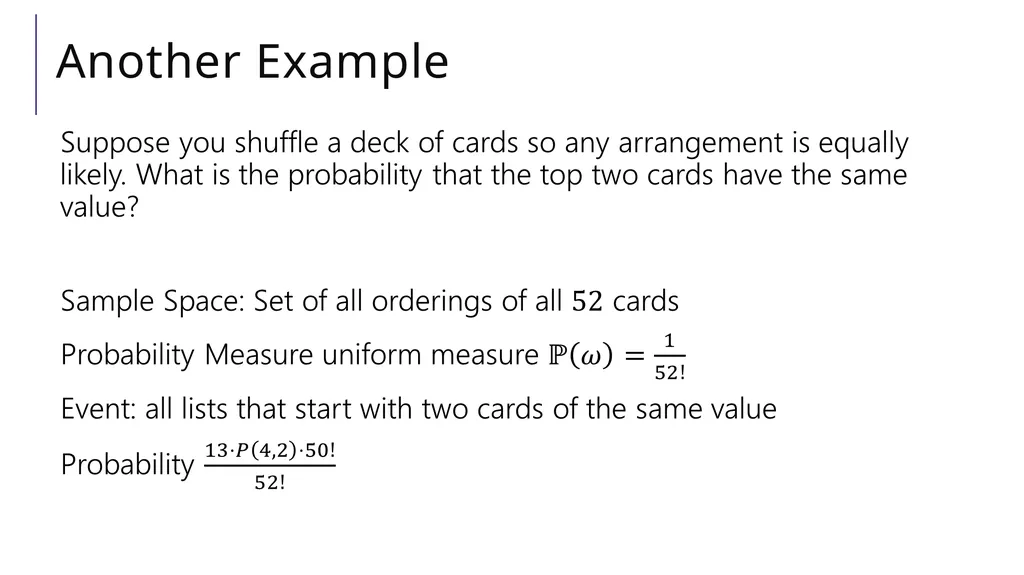
slide6. Another Example Suppose you shuffle a deck of cards so any arrangement is equally likely. What is the probability that the top two cards have the same value?
Sample Space
Probability Measure
Event
Probability<br>
slide7. Another Example<br>
slide8. Another Example<br>
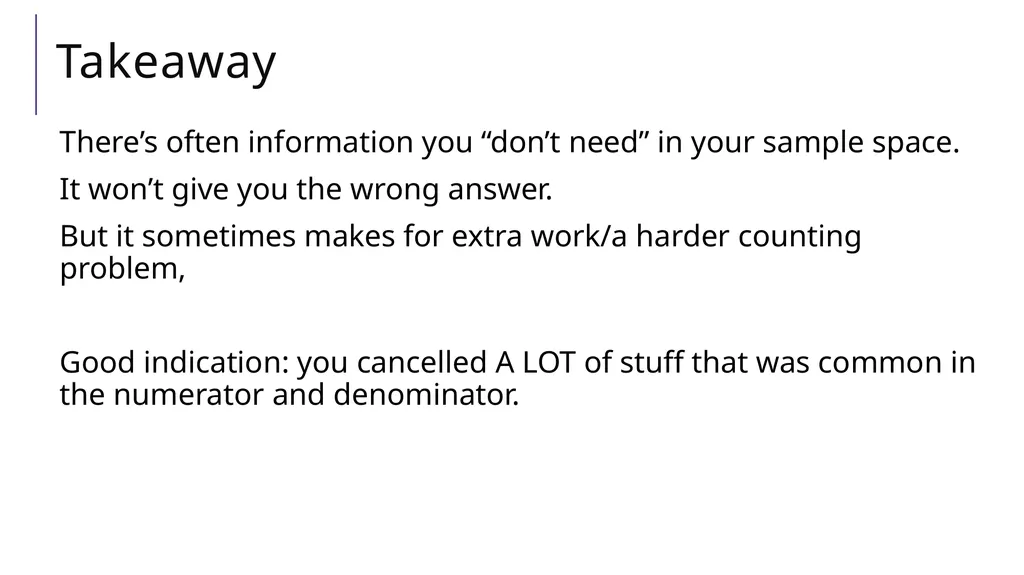
slide9. Takeaway There’s often information you “don’t need” in your sample space.
It won’t give you the wrong answer.
But it sometimes makes for extra work/a harder counting problem,
Good indication: you cancelled A LOT of stuff that was common in the numerator and denominator.<br>
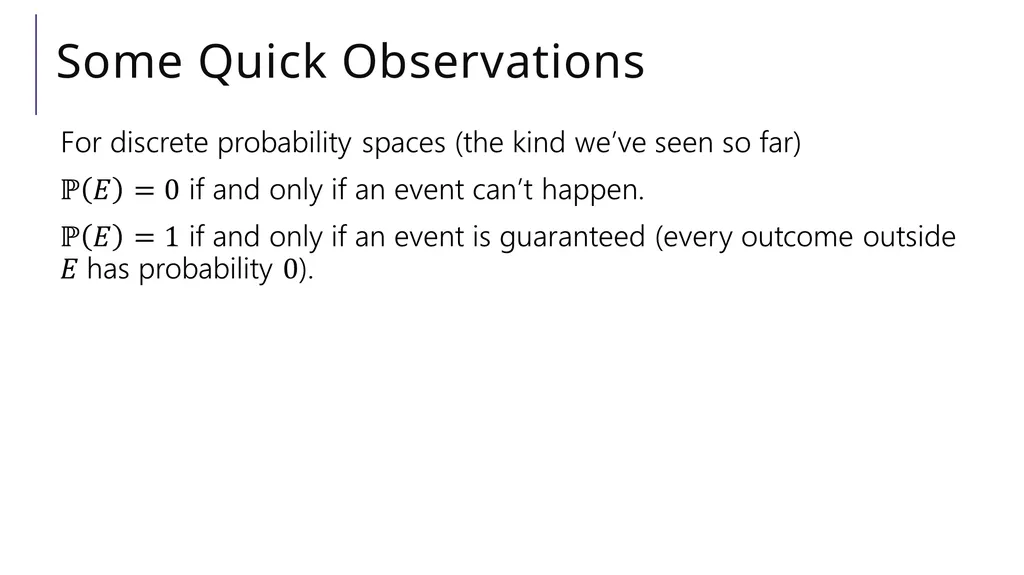
slide10. Some Quick Observations<br>
slide11. Conditional Probabilities<br>
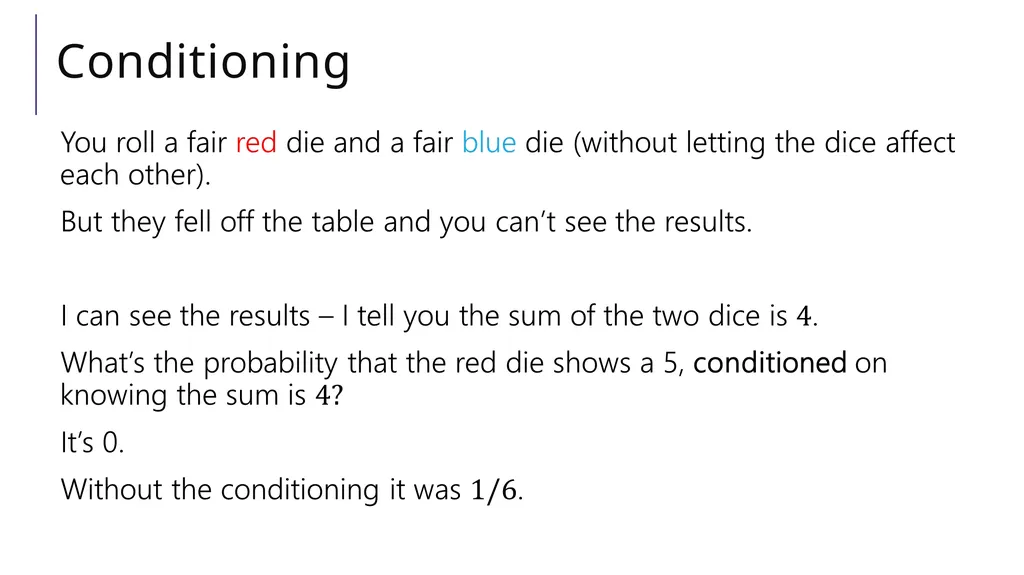
slide12. Conditioning<br>
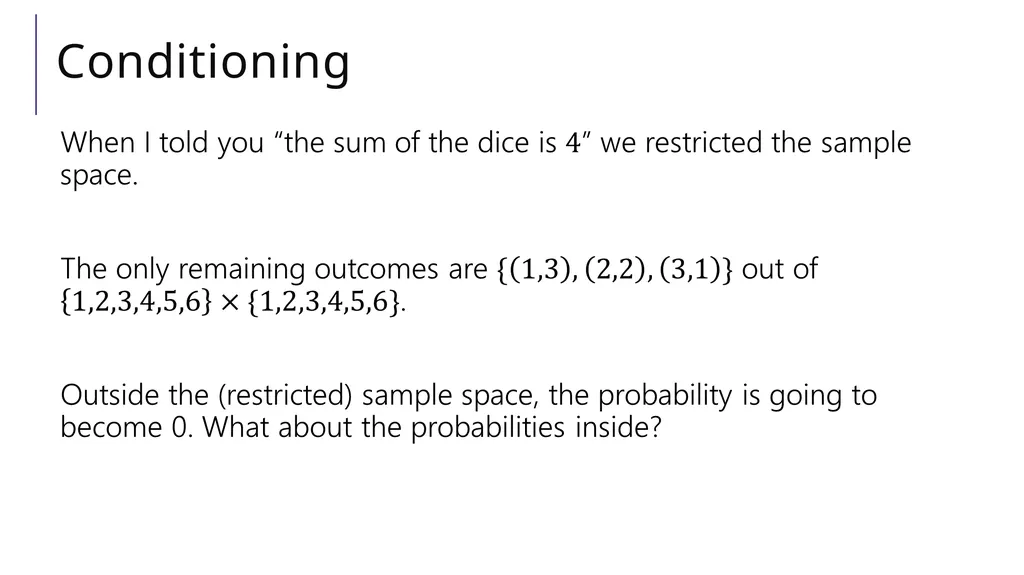
slide13. Conditioning<br>
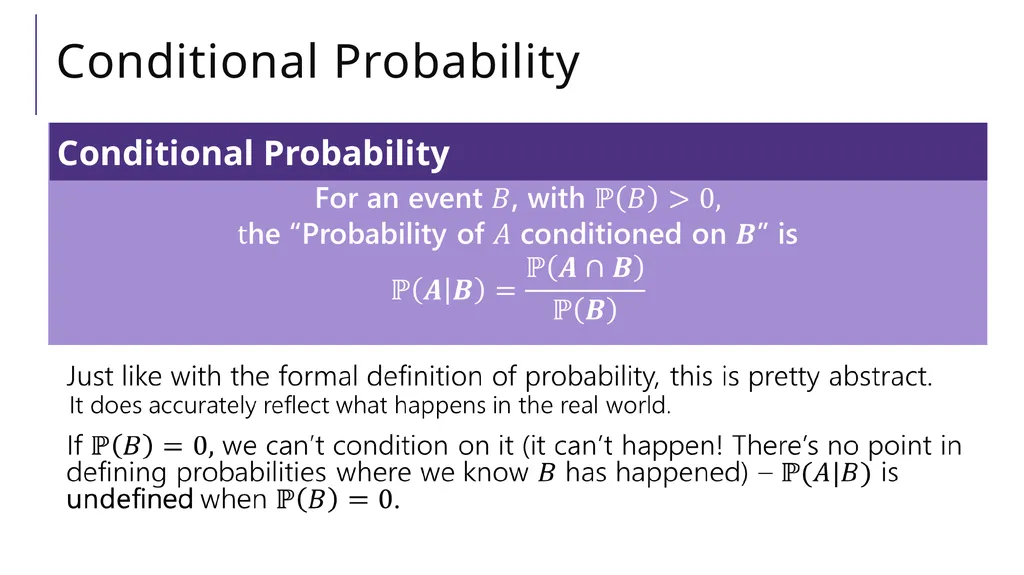
slide14. Conditional Probability<br>
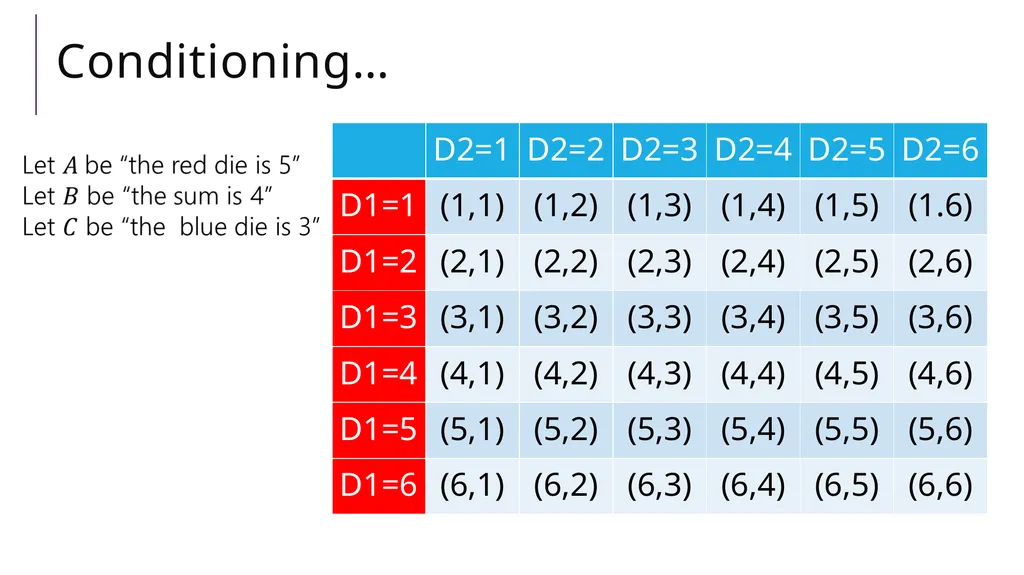
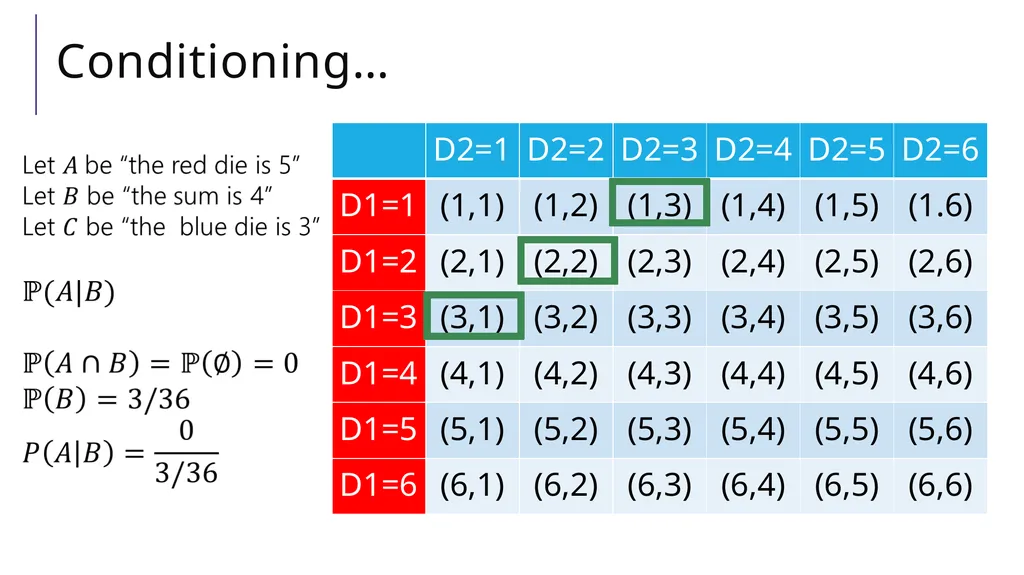
slide15. Conditioning…<br>
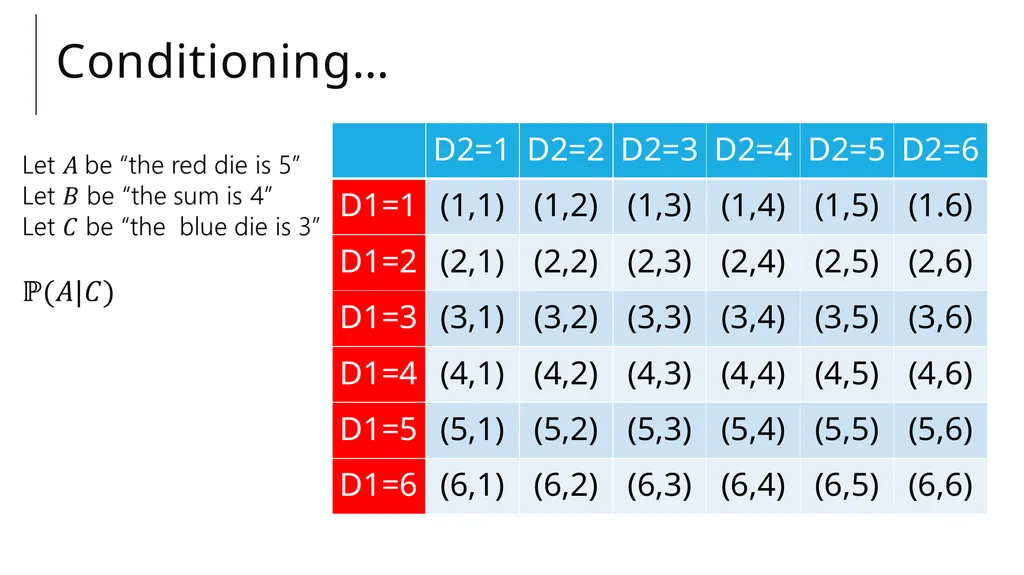
slide16. Conditioning…<br>
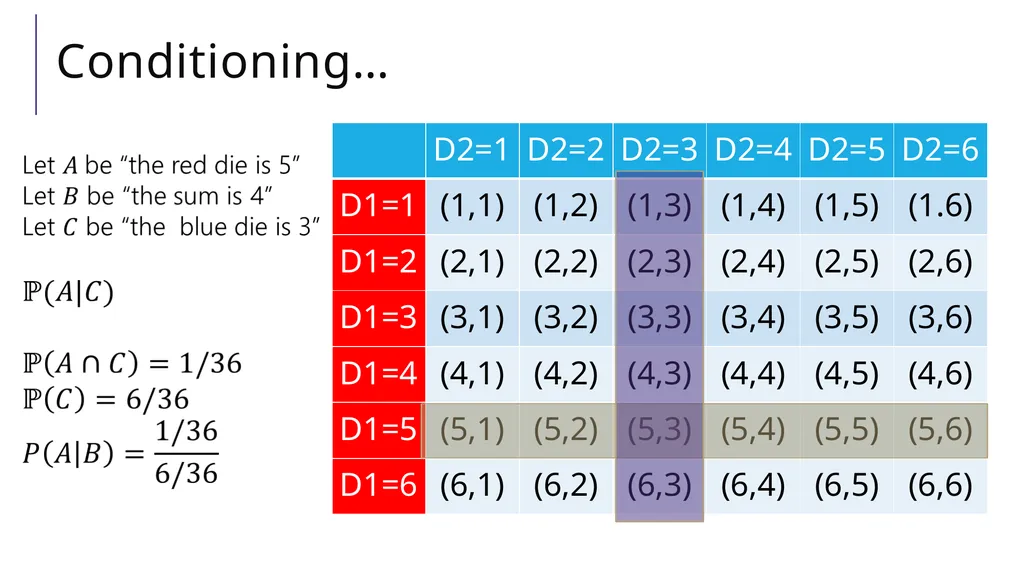
slide17. Conditioning…<br>
slide18. Conditioning…<br>
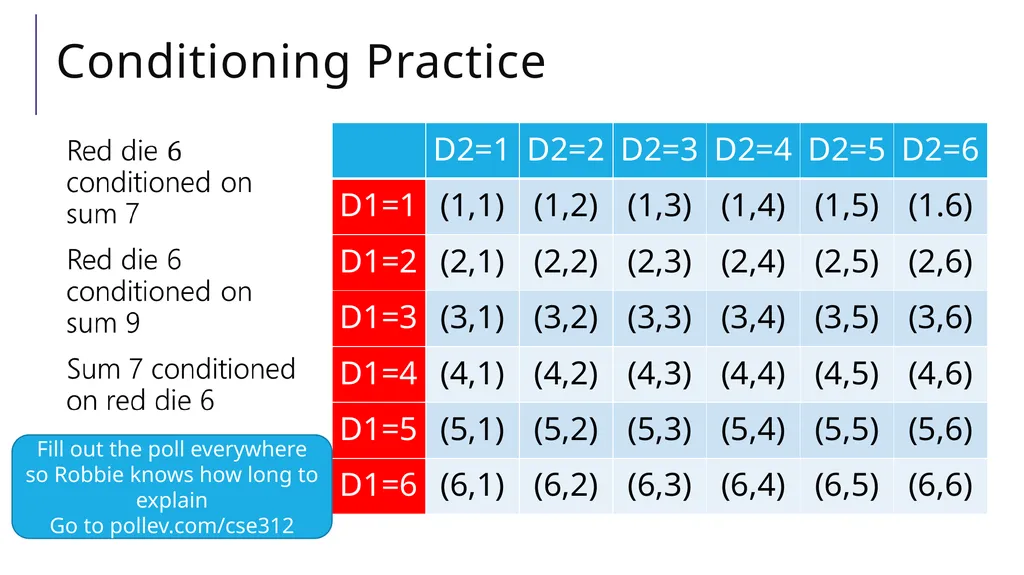
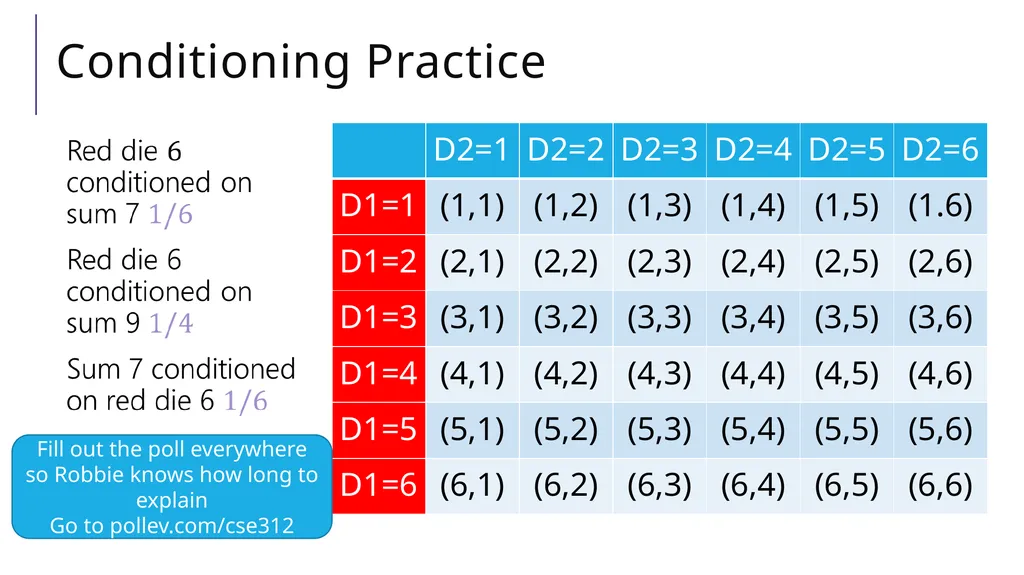
slide19. Conditioning Practice Fill out the poll everywhere so Robbie knows how long to explain
Go to pollev.com/cse312<br>
slide20. Conditioning Practice Fill out the poll everywhere so Robbie knows how long to explain
Go to pollev.com/cse312<br>
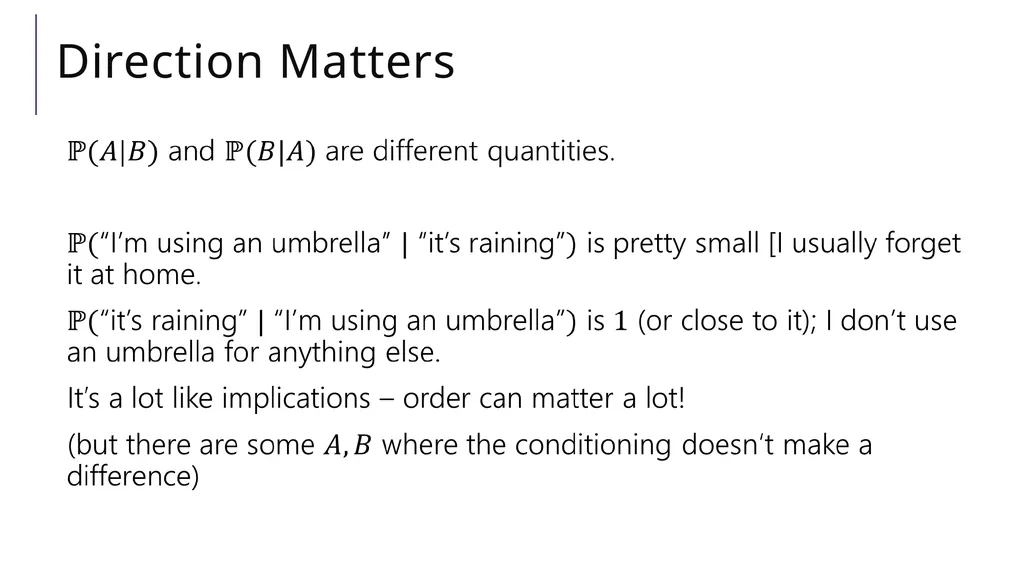
slide21. Direction Matters<br>
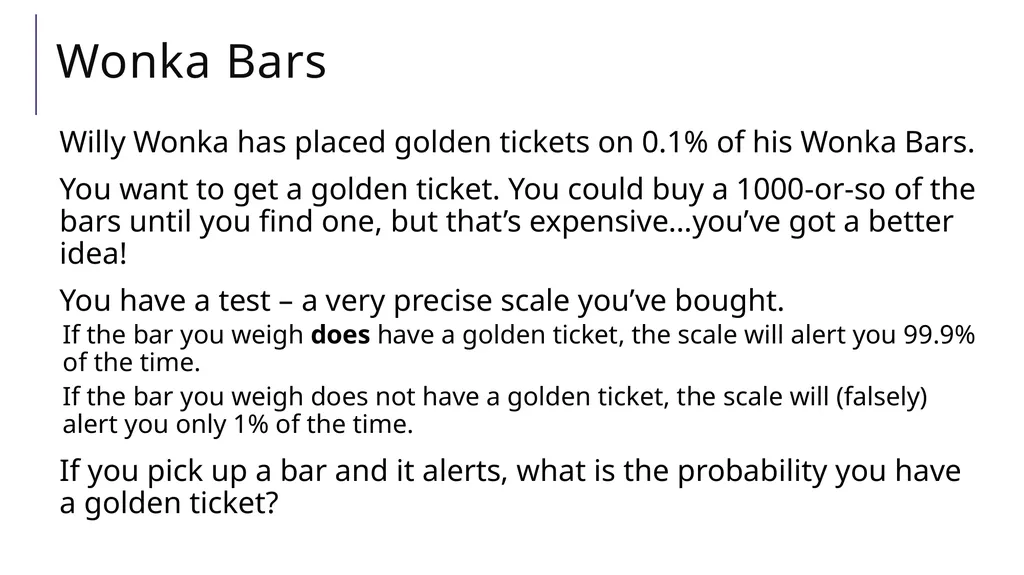
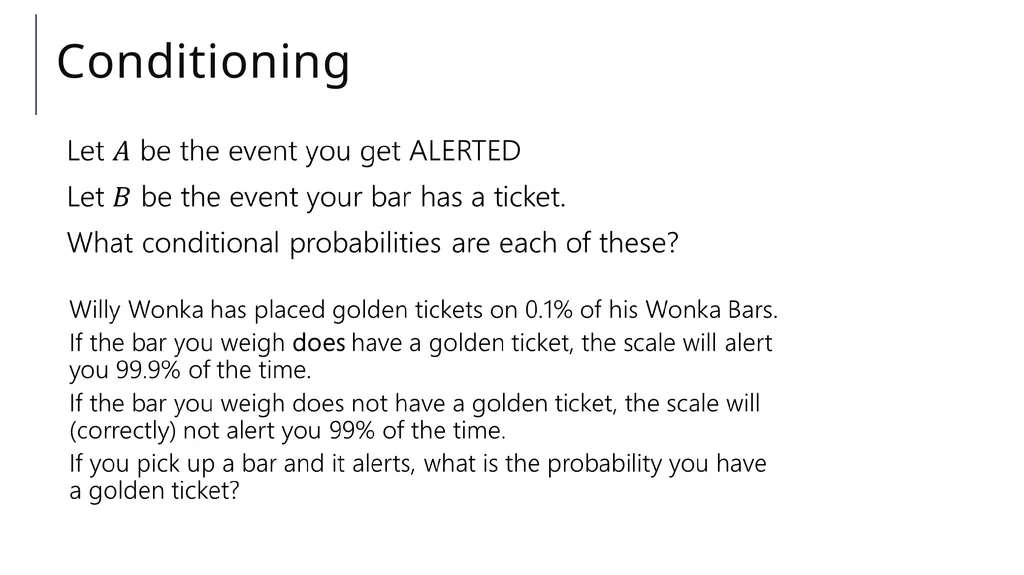
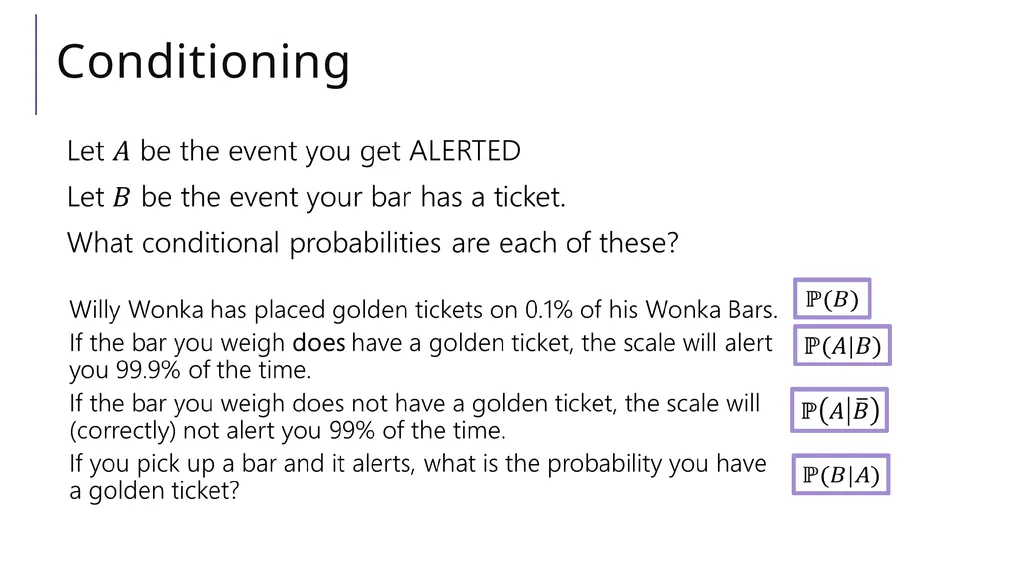
slide22. Wonka Bars Willy Wonka has placed golden tickets on 0.1% of his Wonka Bars.
You want to get a golden ticket. You could buy a 1000-or-so of the bars until you find one, but that’s expensive…you’ve got a better idea!
You have a test – a very precise scale you’ve bought.
If the bar you weigh does have a golden ticket, the scale will alert you 99.9% of the time.
If the bar you weigh does not have a golden ticket, the scale will (falsely) alert you only 1% of the time.
If you pick up a bar and it alerts, what is the probability you have a golden ticket?<br>
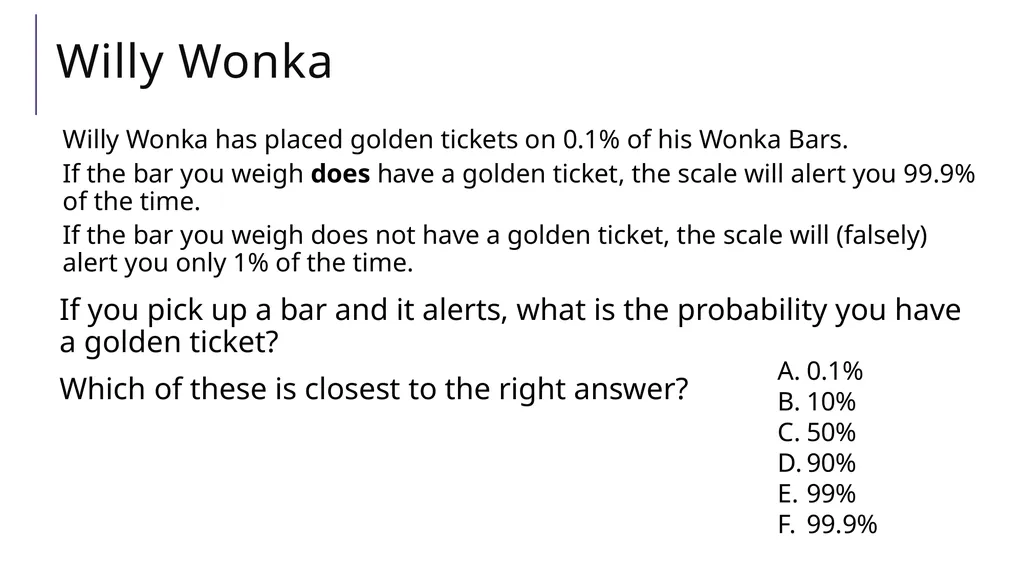
slide23. Willy Wonka Willy Wonka has placed golden tickets on 0.1% of his Wonka Bars.
If the bar you weigh does have a golden ticket, the scale will alert you 99.9% of the time.
If the bar you weigh does not have a golden ticket, the scale will (falsely) alert you only 1% of the time.
If you pick up a bar and it alerts, what is the probability you have a golden ticket?
Which of these is closest to the right answer? 0.1%
10%
50%
90%
99%
99.9%<br>
slide24. Conditioning<br>
slide25. Conditioning<br>
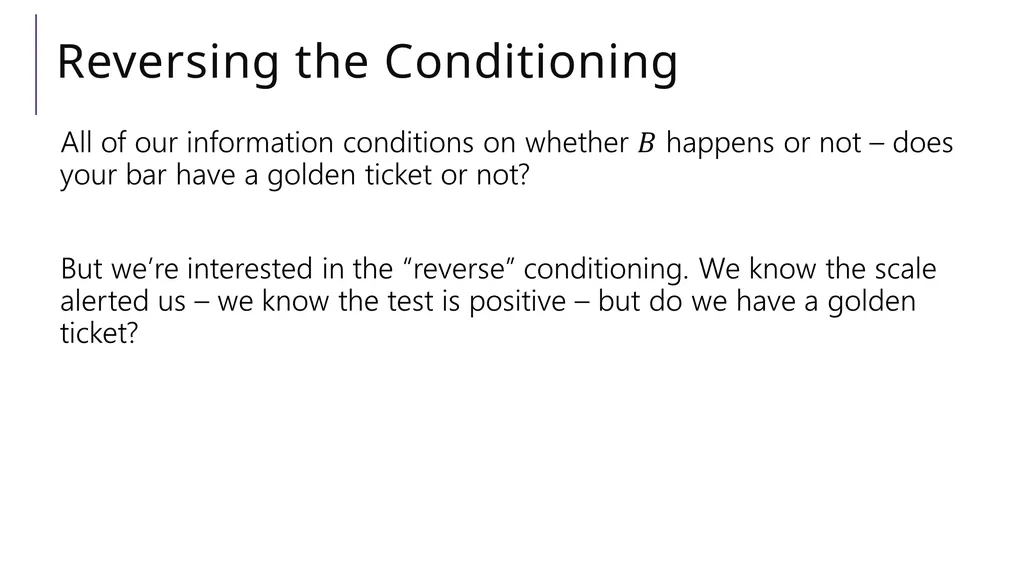
slide26. Reversing the Conditioning<br>
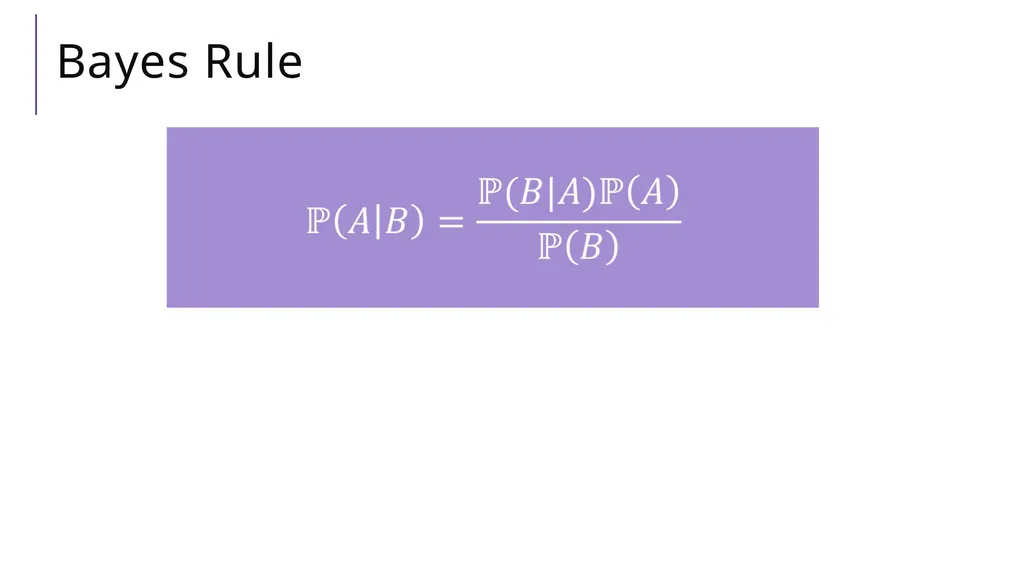
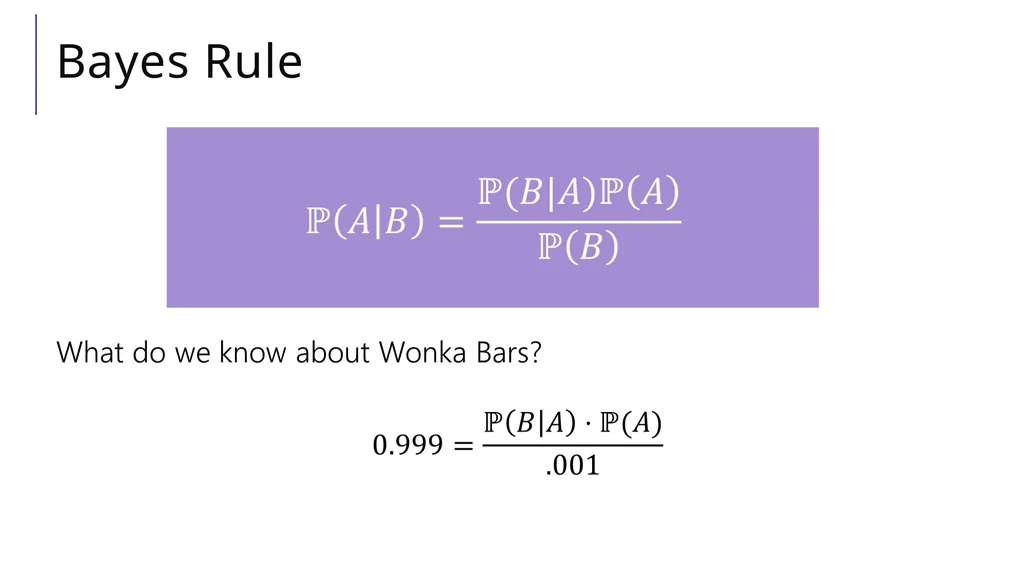
slide27. Bayes Rule<br>
slide28. Bayes Rule<br>
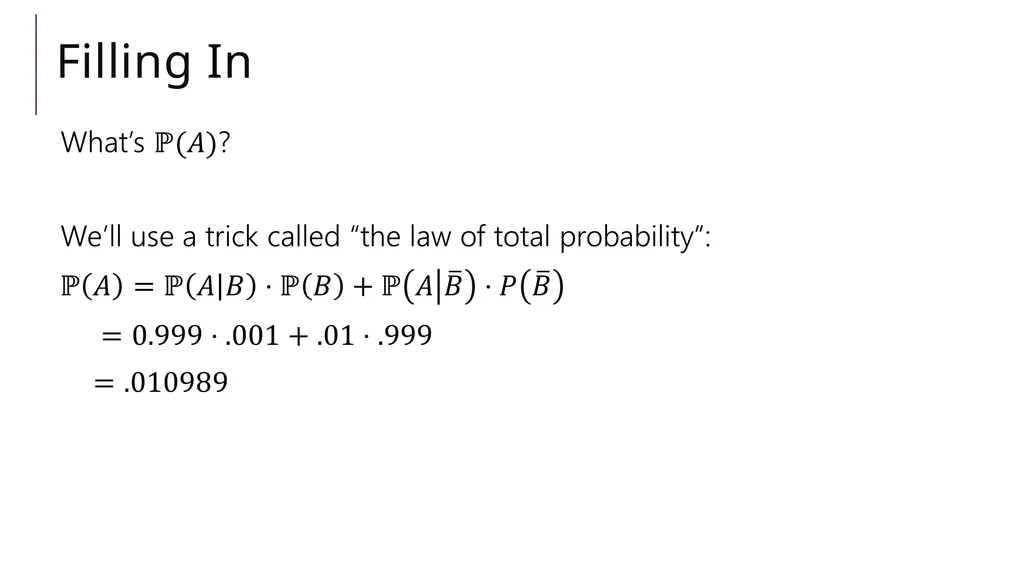
slide29. Filling In<br>
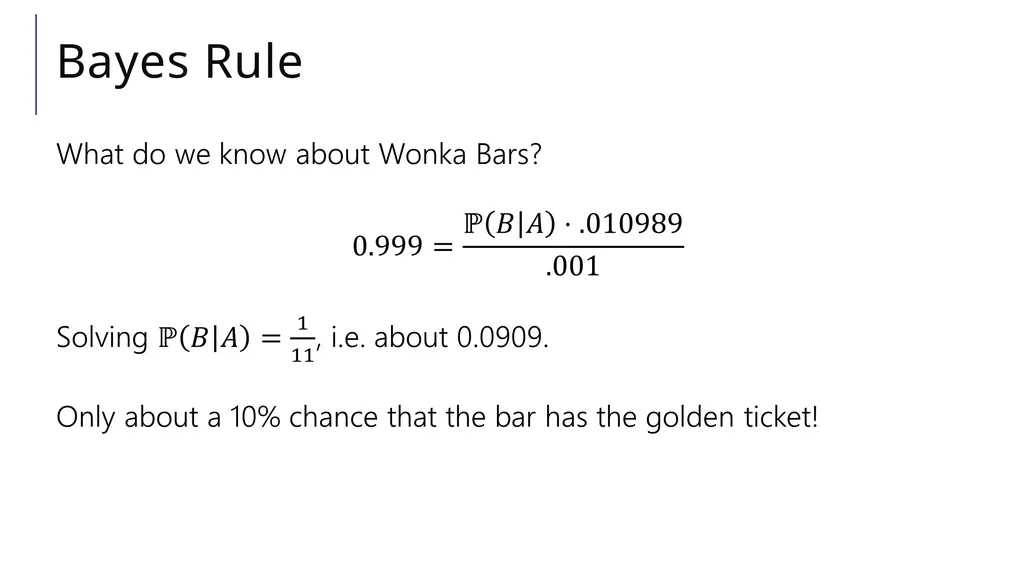
slide30. Bayes Rule<br>
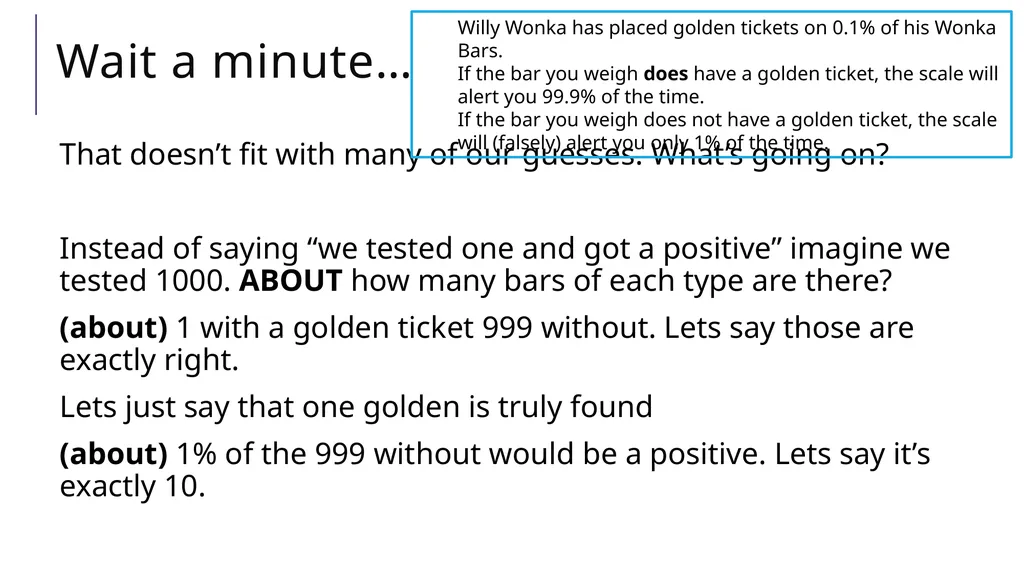
slide31. Wait a minute… That doesn’t fit with many of our guesses. What’s going on?
Instead of saying “we tested one and got a positive” imagine we tested 1000. ABOUT how many bars of each type are there?
(about) 1 with a golden ticket 999 without. Lets say those are exactly right.
Lets just say that one golden is truly found
(about) 1% of the 999 without would be a positive. Lets say it’s exactly 10. Willy Wonka has placed golden tickets on 0.1% of his Wonka Bars.
If the bar you weigh does have a golden ticket, the scale will alert you 99.9% of the time.
If the bar you weigh does not have a golden ticket, the scale will (falsely) alert you only 1% of the time.<br>
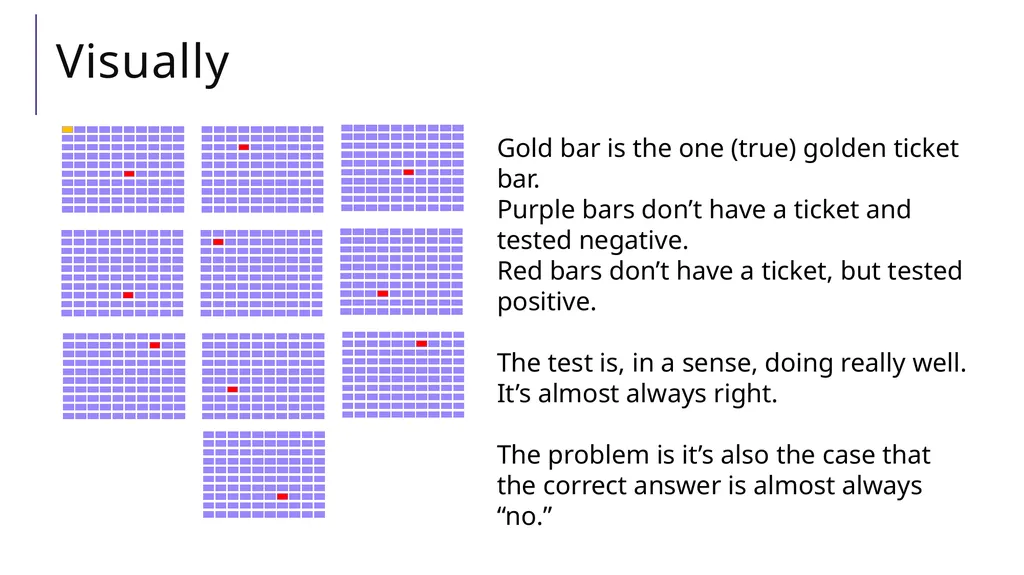
slide32. Visually Gold bar is the one (true) golden ticket bar.
Purple bars don’t have a ticket and tested negative.
Red bars don’t have a ticket, but tested positive.
The test is, in a sense, doing really well.
It’s almost always right.
The problem is it’s also the case that the correct answer is almost always “no.”<br>
slide33. Updating Your Intuition Take 1: The test is actually good and has VASTLY increased our belief that there IS a
If we told you “your job is to find a Wonka Bar with a golden ticket” without the test, you have 1/1000 chance, with the test, you have (about) a 1/11 chance. That’s (almost) 100 times better!
This is actually a huge improvement!<br>
slide34. Updating Your Intuition Take 2: Humans are really bad at intuitively understanding very large or very small numbers.
When I hear “99% chance”, “99.9% chance”, “99.99% chance” they all go into my brain as “well that’s basically guaranteed” And then I forget how many 9’s there actually were.
But the number of 9s matters because they end up “cancelling” with the “number of 9’s” in the population that’s truly negative. We’ll talk about this a little more on Friday in the applications.<br>
Lecture 6<br>
slide2. More Examples!<br>
slide3. More Examples!<br>
slide4. More Examples!<br>
slide5. Takeaways There is often more than one sample space possible! But one is probably easier than the others.
Finding a sample space that will make the uniform measure correct will probably make finding the probabilities easier to calculate.<br>
slide6. Another Example Suppose you shuffle a deck of cards so any arrangement is equally likely. What is the probability that the top two cards have the same value?
Sample Space
Probability Measure
Event
Probability<br>
slide7. Another Example<br>
slide8. Another Example<br>
slide9. Takeaway There’s often information you “don’t need” in your sample space.
It won’t give you the wrong answer.
But it sometimes makes for extra work/a harder counting problem,
Good indication: you cancelled A LOT of stuff that was common in the numerator and denominator.<br>
slide10. Some Quick Observations<br>
slide11. Conditional Probabilities<br>
slide12. Conditioning<br>
slide13. Conditioning<br>
slide14. Conditional Probability<br>
slide15. Conditioning…<br>
slide16. Conditioning…<br>
slide17. Conditioning…<br>
slide18. Conditioning…<br>
slide19. Conditioning Practice Fill out the poll everywhere so Robbie knows how long to explain
Go to pollev.com/cse312<br>
slide20. Conditioning Practice Fill out the poll everywhere so Robbie knows how long to explain
Go to pollev.com/cse312<br>
slide21. Direction Matters<br>
slide22. Wonka Bars Willy Wonka has placed golden tickets on 0.1% of his Wonka Bars.
You want to get a golden ticket. You could buy a 1000-or-so of the bars until you find one, but that’s expensive…you’ve got a better idea!
You have a test – a very precise scale you’ve bought.
If the bar you weigh does have a golden ticket, the scale will alert you 99.9% of the time.
If the bar you weigh does not have a golden ticket, the scale will (falsely) alert you only 1% of the time.
If you pick up a bar and it alerts, what is the probability you have a golden ticket?<br>
slide23. Willy Wonka Willy Wonka has placed golden tickets on 0.1% of his Wonka Bars.
If the bar you weigh does have a golden ticket, the scale will alert you 99.9% of the time.
If the bar you weigh does not have a golden ticket, the scale will (falsely) alert you only 1% of the time.
If you pick up a bar and it alerts, what is the probability you have a golden ticket?
Which of these is closest to the right answer? 0.1%
10%
50%
90%
99%
99.9%<br>
slide24. Conditioning<br>
slide25. Conditioning<br>
slide26. Reversing the Conditioning<br>
slide27. Bayes Rule<br>
slide28. Bayes Rule<br>
slide29. Filling In<br>
slide30. Bayes Rule<br>
slide31. Wait a minute… That doesn’t fit with many of our guesses. What’s going on?
Instead of saying “we tested one and got a positive” imagine we tested 1000. ABOUT how many bars of each type are there?
(about) 1 with a golden ticket 999 without. Lets say those are exactly right.
Lets just say that one golden is truly found
(about) 1% of the 999 without would be a positive. Lets say it’s exactly 10. Willy Wonka has placed golden tickets on 0.1% of his Wonka Bars.
If the bar you weigh does have a golden ticket, the scale will alert you 99.9% of the time.
If the bar you weigh does not have a golden ticket, the scale will (falsely) alert you only 1% of the time.<br>
slide32. Visually Gold bar is the one (true) golden ticket bar.
Purple bars don’t have a ticket and tested negative.
Red bars don’t have a ticket, but tested positive.
The test is, in a sense, doing really well.
It’s almost always right.
The problem is it’s also the case that the correct answer is almost always “no.”<br>
slide33. Updating Your Intuition Take 1: The test is actually good and has VASTLY increased our belief that there IS a
If we told you “your job is to find a Wonka Bar with a golden ticket” without the test, you have 1/1000 chance, with the test, you have (about) a 1/11 chance. That’s (almost) 100 times better!
This is actually a huge improvement!<br>
slide34. Updating Your Intuition Take 2: Humans are really bad at intuitively understanding very large or very small numbers.
When I hear “99% chance”, “99.9% chance”, “99.99% chance” they all go into my brain as “well that’s basically guaranteed” And then I forget how many 9’s there actually were.
But the number of 9s matters because they end up “cancelling” with the “number of 9’s” in the population that’s truly negative. We’ll talk about this a little more on Friday in the applications.<br>