
Confined Space Training Confined Space Training
YM
Published · 47 slides · 0 views
1 / 1
Description
Confined Space Training Confined Space Training Disclaimer This material was produced under grant number SH-05073-SH8 from the Occupational Safety and Health Administration, U.S. Department of Labor. It does not necessarily reflect the
Related Topics
Share
Embed code
Download this presentation From Below
"Confined Space Training Confined Space Training" is the property of its rightful owner. Permission is granted to download and print the materials on this website for personal, non-commercial use only, and to display it on your personal computer provided you do not modify the materials and that you retain all copyright notices contained in the materials. By downloading content from our website, you accept the terms of this agreement.
Presentation Transcript
01
Confined Space
Training<br>
02
Confined Space Training Disclaimer This material was produced under
grant number SH-05073-SH8 from
the Occupational Safety and Health Administration, U.S. Department of Labor.
It does not necessarily reflect the views or policies of the U.S. Department of Labor, nor does mention of trade names, commercial products, or organizations imply endorsement by the U.S. Government.<br>
grant number SH-05073-SH8 from
the Occupational Safety and Health Administration, U.S. Department of Labor.
It does not necessarily reflect the views or policies of the U.S. Department of Labor, nor does mention of trade names, commercial products, or organizations imply endorsement by the U.S. Government.<br>
03
Confined Space Training Welcome What is a Confined Space
When does it become Permit Required?
What are the Hazards
Training<br>
When does it become Permit Required?
What are the Hazards
Training<br>
04
Confined Space Training Module-1 What is a Confined Space
When does it become Permit Required?
What are the Hazards
Training<br>
When does it become Permit Required?
What are the Hazards
Training<br>
05
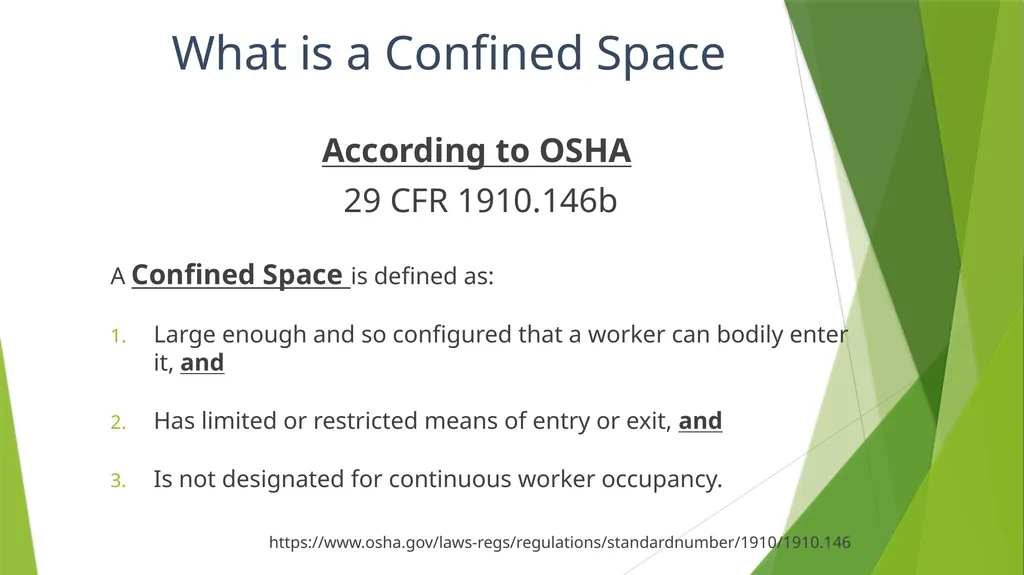
What is a Confined Space According to OSHA
29 CFR 1910.146b
A Confined Space is defined as:
Large enough and so configured that a worker can bodily enter it, and
Has limited or restricted means of entry or exit, and
Is not designated for continuous worker occupancy.
https://www.osha.gov/laws-regs/regulations/standardnumber/1910/1910.146<br>
29 CFR 1910.146b
A Confined Space is defined as:
Large enough and so configured that a worker can bodily enter it, and
Has limited or restricted means of entry or exit, and
Is not designated for continuous worker occupancy.
https://www.osha.gov/laws-regs/regulations/standardnumber/1910/1910.146<br>
06
What is a Confined Space – Part 2 According to OSHA
29 CFR 1910.146b
A confined space is defined as:
Large enough and so configured that a worker can bodily enter it, and
Has limited or restricted means of entry or exit, and
Is not designated for continuous worker occupancy.
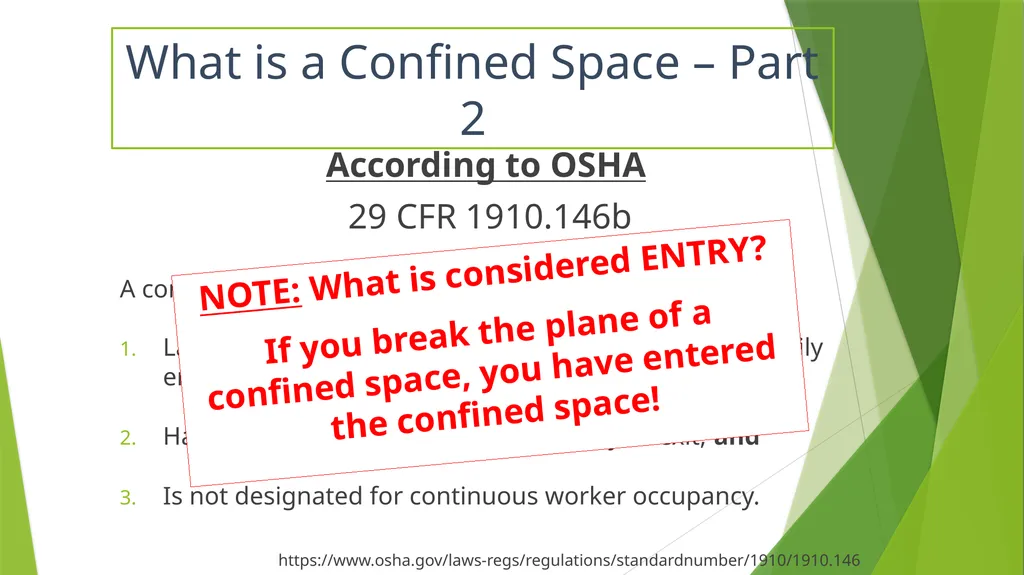
https://www.osha.gov/laws-regs/regulations/standardnumber/1910/1910.146 NOTE: What is considered ENTRY?
If you break the plane of a confined space, you have entered the confined space!<br>
29 CFR 1910.146b
A confined space is defined as:
Large enough and so configured that a worker can bodily enter it, and
Has limited or restricted means of entry or exit, and
Is not designated for continuous worker occupancy.
https://www.osha.gov/laws-regs/regulations/standardnumber/1910/1910.146 NOTE: What is considered ENTRY?
If you break the plane of a confined space, you have entered the confined space!<br>
07
Confined Space Training Module-1b What is a Confined Space
When does it become Permit Required?
What are the Hazards
Training<br>
When does it become Permit Required?
What are the Hazards
Training<br>
08
When does it become Permit Required? Permit Required Confined Space has one or more of the following characteristics:
1. Contains or has the potential to contain a hazardous atmosphere;
2. Contains a material that has the potential for engulfing an entrant;
3. Has an internal configuration such that an entrant could be trapped or asphyxiated by inwardly converging walls or by sloped/tapered floors.<br>
1. Contains or has the potential to contain a hazardous atmosphere;
2. Contains a material that has the potential for engulfing an entrant;
3. Has an internal configuration such that an entrant could be trapped or asphyxiated by inwardly converging walls or by sloped/tapered floors.<br>
09
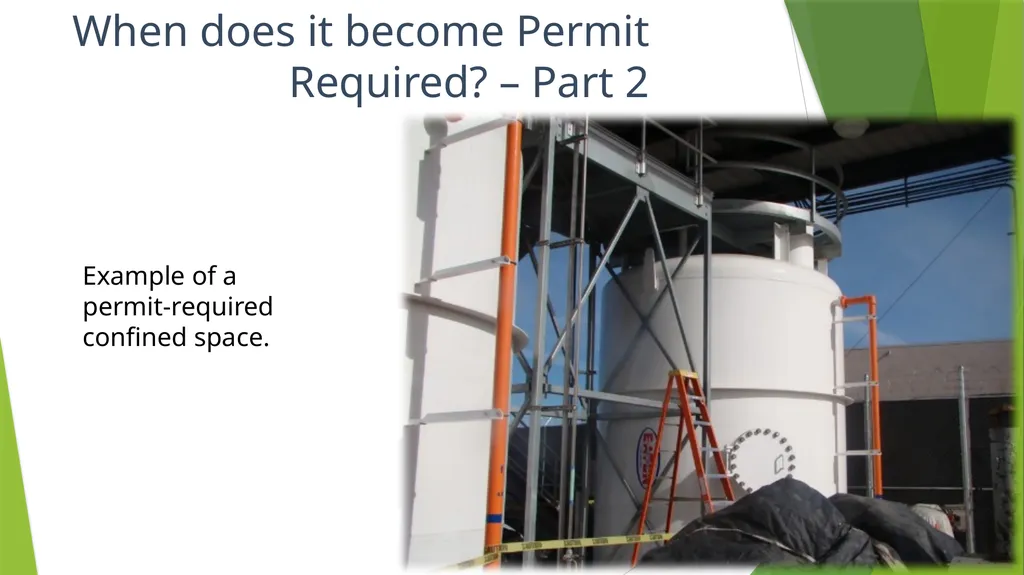
When does it become Permit Required? – Part 2 Example of a
permit-required confined space.<br>
permit-required confined space.<br>
10
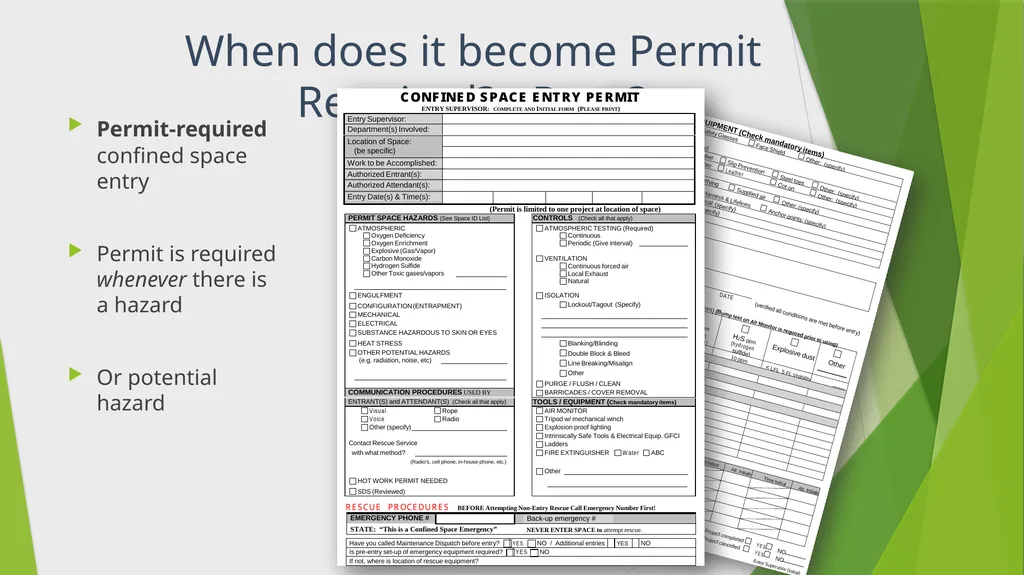
When does it become Permit Required? - Part 3 Permit-required confined space entry
Permit is required whenever there is a hazard
Or potential hazard<br>
Permit is required whenever there is a hazard
Or potential hazard<br>
11
Confined Space Training Module-3 What is a Confined Space
When does it become Permit Required?
What are the Hazards
Training<br>
When does it become Permit Required?
What are the Hazards
Training<br>
12
What are the Hazards? Potential Hazards in Confined Spaces Asphyxiating - Oxygen Deficiency
<19.5% or >23.5% oxygen concentration
CO2
CO2 is toxic in higher concentrations:
1% (10,000 ppm) will make some people feel drowsy.
Concentrations of 7% to 10% cause dizziness, headache, visual and hearing dysfunction, and unconsciousness within a few minutes to an hour. Toxic Materials
Carbon Monoxide
Hydrogen Sulphide
Welding fumes
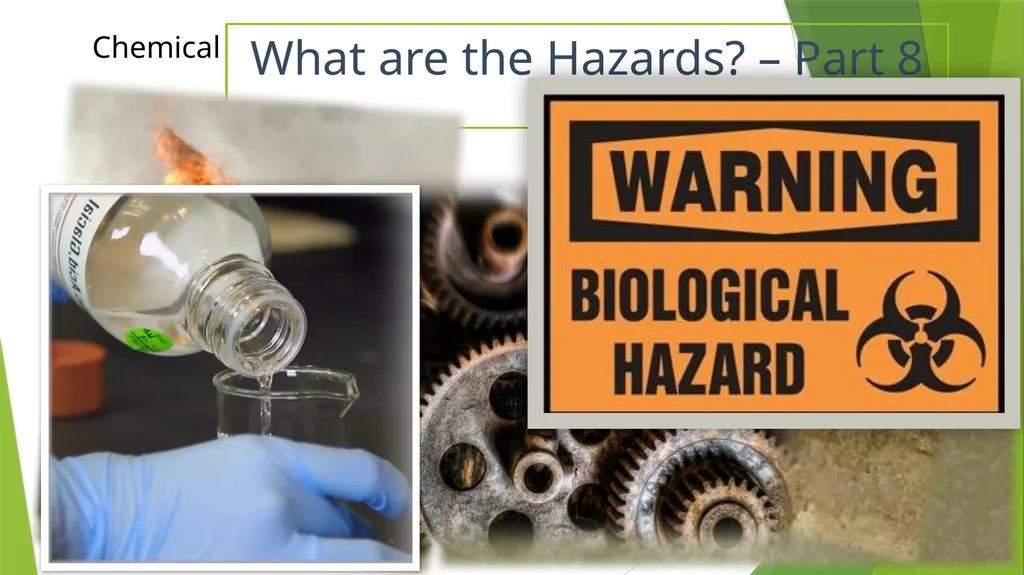
Corrosives
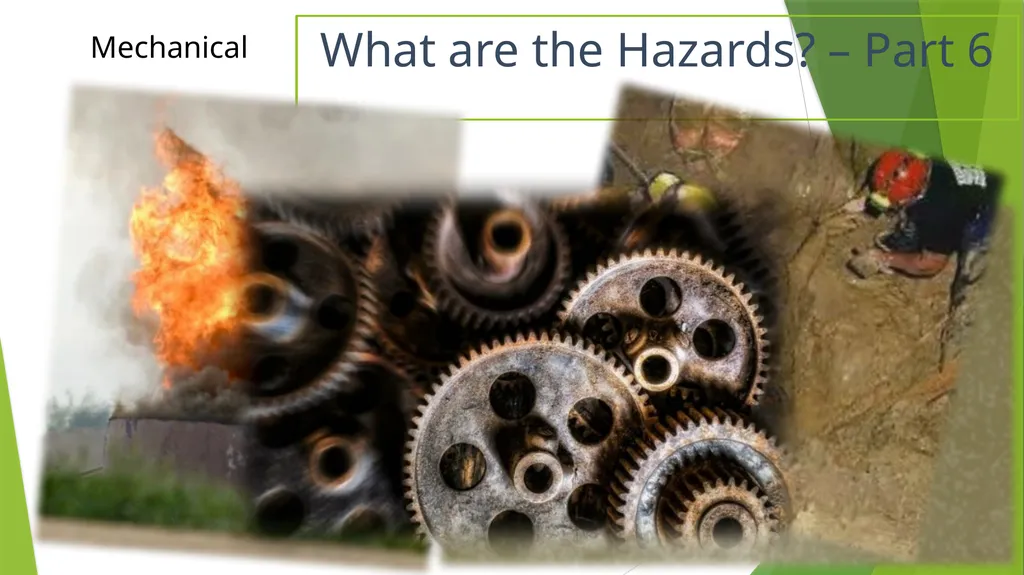
Mechanical Hazards
Mixers
Crushers
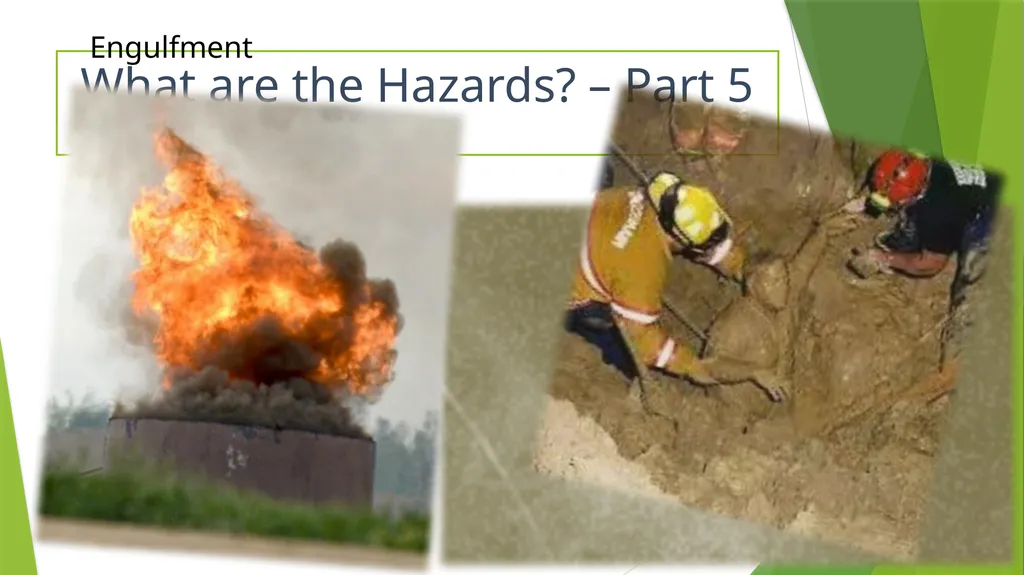
Engulfment
Soil around an excavation
Grain in a silo
Powdered material in a bin<br>
<19.5% or >23.5% oxygen concentration
CO2
CO2 is toxic in higher concentrations:
1% (10,000 ppm) will make some people feel drowsy.
Concentrations of 7% to 10% cause dizziness, headache, visual and hearing dysfunction, and unconsciousness within a few minutes to an hour. Toxic Materials
Carbon Monoxide
Hydrogen Sulphide
Welding fumes
Corrosives
Mechanical Hazards
Mixers
Crushers
Engulfment
Soil around an excavation
Grain in a silo
Powdered material in a bin<br>
13
What are the Hazards? – Part 2 Potential Hazards in Confined Spaces Electricity
Flammable -Combustibles
Methane
Hydrogen
Acetylene
Propane
Gasoline fumes Asphyxiating - Oxygen Deficiency
<19.5% or >23.5% oxygen concentration
CO2
CO2 is toxic in higher concentrations:
1% (10,000 ppm) will make some people feel drowsy.
Concentrations of 7% to 10% cause dizziness, headache, visual and hearing dysfunction, and unconsciousness within a few minutes to an hour. Toxic Materials
Carbon Monoxide
Hydrogen Sulphide
Welding fumes
Corrosives
Mechanical Hazards
Mixers
Crushers
Engulfment
Soil around an excavation
Grain in a silo
Powdered material in a bin Oxygen could be removed from the air in a confined space by:
Material in the space could displace the oxygen
Rusting could create a chemical reaction that uses up the oxygen
The space could be purged with a gas to prevent explosions.<br>
Flammable -Combustibles
Methane
Hydrogen
Acetylene
Propane
Gasoline fumes Asphyxiating - Oxygen Deficiency
<19.5% or >23.5% oxygen concentration
CO2
CO2 is toxic in higher concentrations:
1% (10,000 ppm) will make some people feel drowsy.
Concentrations of 7% to 10% cause dizziness, headache, visual and hearing dysfunction, and unconsciousness within a few minutes to an hour. Toxic Materials
Carbon Monoxide
Hydrogen Sulphide
Welding fumes
Corrosives
Mechanical Hazards
Mixers
Crushers
Engulfment
Soil around an excavation
Grain in a silo
Powdered material in a bin Oxygen could be removed from the air in a confined space by:
Material in the space could displace the oxygen
Rusting could create a chemical reaction that uses up the oxygen
The space could be purged with a gas to prevent explosions.<br>
14
What are the Hazards? – Part 3 Gasses<br>
15
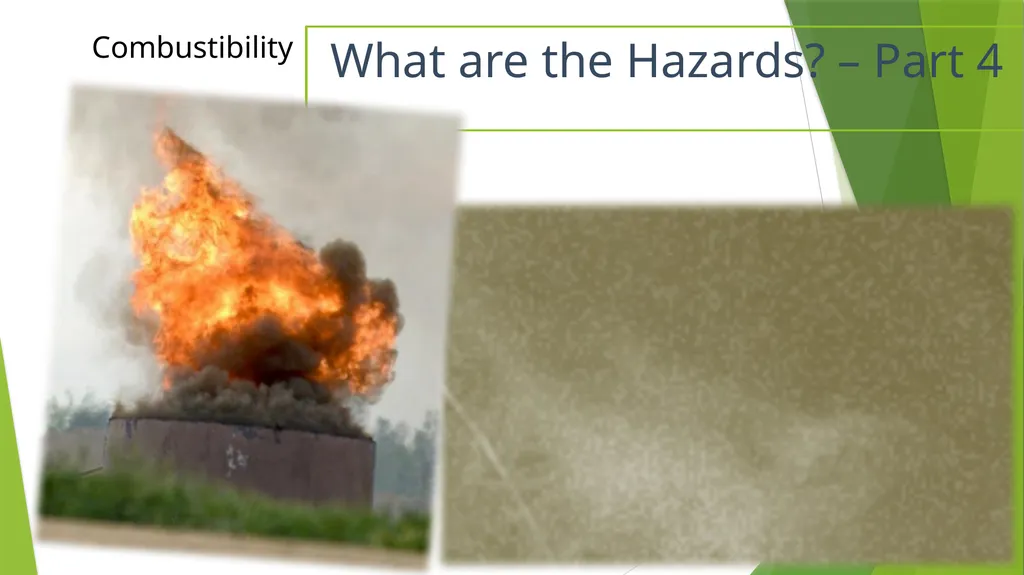
What are the Hazards? – Part 4 Combustibility<br>
16
What are the Hazards? – Part 5 Engulfment<br>
17
What are the Hazards? – Part 6 Mechanical<br>
18
What are the Hazards? – Part 7 Biological<br>
19
What are the Hazards? – Part 8 Chemical<br>
20
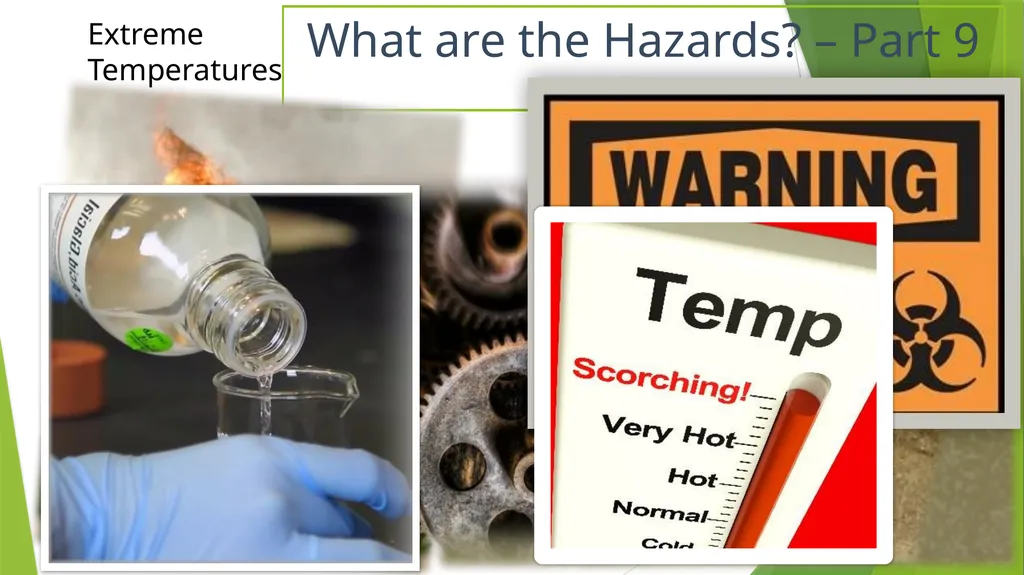
What are the Hazards? – Part 9 Extreme
Temperatures<br>
Temperatures<br>
21
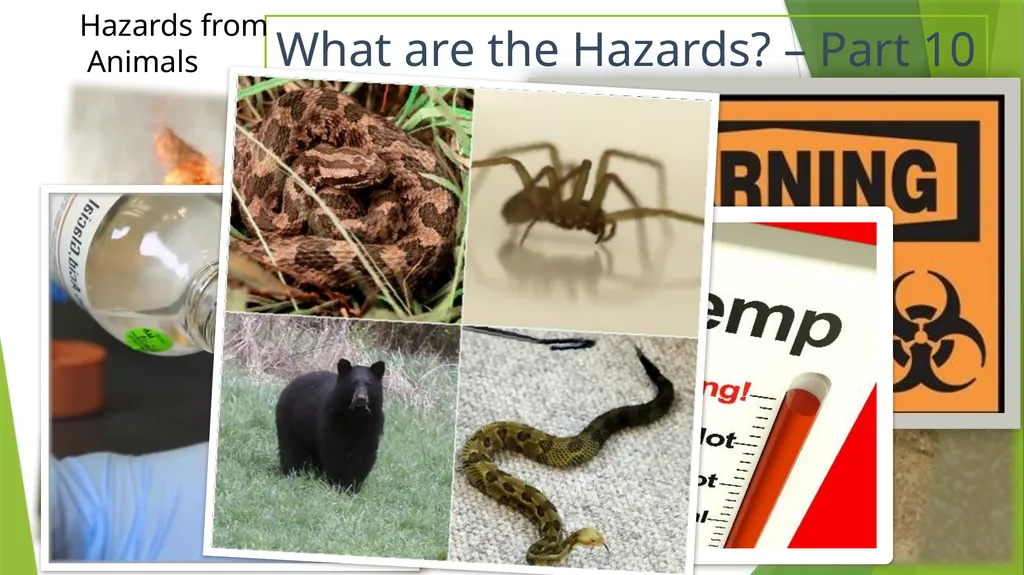
What are the Hazards? – Part 10 Hazards from
Animals<br>
Animals<br>
22
Confined Space Training Module-4 What is a Confined Space
When does it become Permit Required?
What are the Hazards
Training<br>
When does it become Permit Required?
What are the Hazards
Training<br>
23
Confined Space Training OSHA 1910.146(g) Training
The employer shall provide training so that all employees whose work is regulated by this section acquire the understanding, knowledge, and skills necessary for the safe performance of the duties assigned under this section.<br>
The employer shall provide training so that all employees whose work is regulated by this section acquire the understanding, knowledge, and skills necessary for the safe performance of the duties assigned under this section.<br>
24
Confined Space Training – Part 2 OSHA 1910.146(g) Training
Training shall be provided to each affected employee:
Before the employee is first assigned duties under this section;
Before there is a change in assigned duties;
Whenever there is a change in permit space operations that presents a hazard about which an employee has not previously been trained;
Whenever the employer has reason to believe either that there are deviations from the permit space entry procedures.<br>
Training shall be provided to each affected employee:
Before the employee is first assigned duties under this section;
Before there is a change in assigned duties;
Whenever there is a change in permit space operations that presents a hazard about which an employee has not previously been trained;
Whenever the employer has reason to believe either that there are deviations from the permit space entry procedures.<br>
25
Confined Space Training – Part 3 Entry:
The action by which a person passes through an opening into a permit-required confined space; Entry includes ensuing work activities in that space and is considered to have occurred as soon as any part of the entrant’s body breaks the plane of an opening into the space. Confined Space Entry<br>
The action by which a person passes through an opening into a permit-required confined space; Entry includes ensuing work activities in that space and is considered to have occurred as soon as any part of the entrant’s body breaks the plane of an opening into the space. Confined Space Entry<br>
26
Confined Space Training – Part 4 Authorized Entrant
Enters the confined space
Authorized Attendant
Stands watch outside the entry point of the space
Entry Supervisor
Oversees entry, ensures conformity to permit & acceptable conditions for entry Confined Space Personnel<br>
Enters the confined space
Authorized Attendant
Stands watch outside the entry point of the space
Entry Supervisor
Oversees entry, ensures conformity to permit & acceptable conditions for entry Confined Space Personnel<br>
27
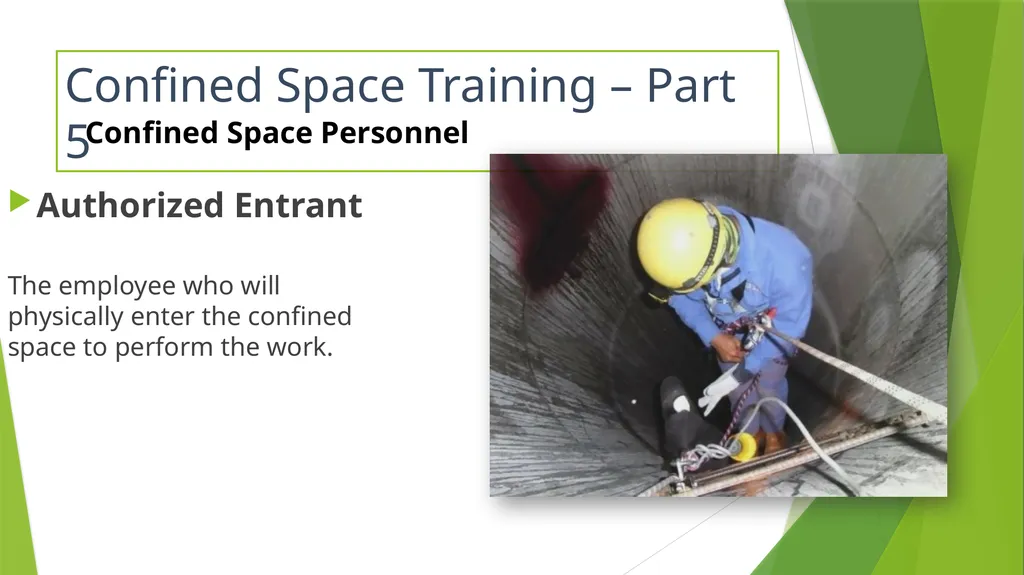
Confined Space Training – Part 5 Authorized Entrant
The employee who will physically enter the confined space to perform the work. Confined Space Personnel<br>
The employee who will physically enter the confined space to perform the work. Confined Space Personnel<br>
28
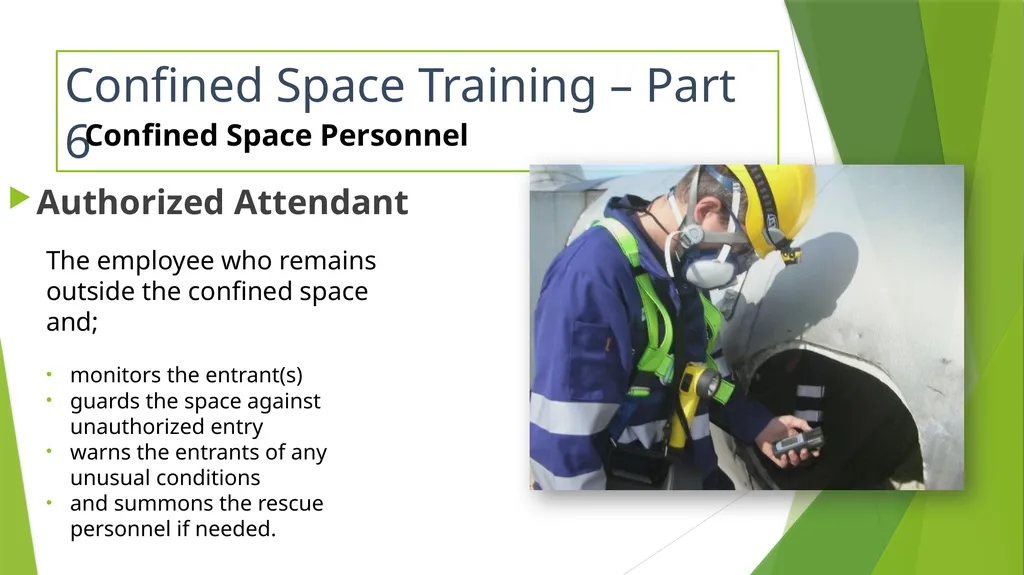
Confined Space Training – Part 6 Authorized Attendant
The employee who remains outside the confined space and;
monitors the entrant(s)
guards the space against unauthorized entry
warns the entrants of any unusual conditions
and summons the rescue personnel if needed. Confined Space Personnel<br>
The employee who remains outside the confined space and;
monitors the entrant(s)
guards the space against unauthorized entry
warns the entrants of any unusual conditions
and summons the rescue personnel if needed. Confined Space Personnel<br>
29
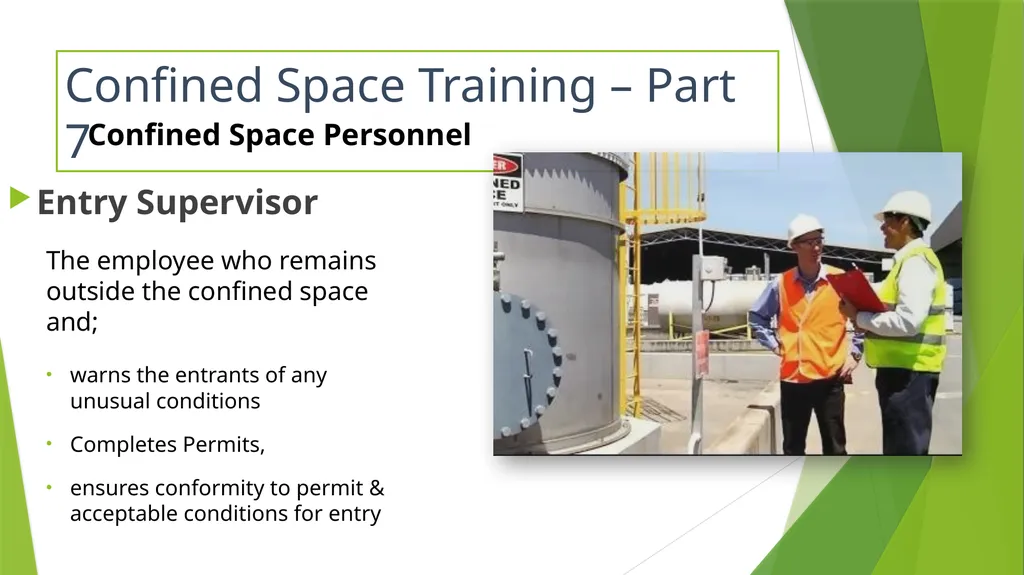
Confined Space Training – Part 7 Entry Supervisor
The employee who remains outside the confined space and;
warns the entrants of any unusual conditions
Completes Permits,
ensures conformity to permit & acceptable conditions for entry Confined Space Personnel<br>
The employee who remains outside the confined space and;
warns the entrants of any unusual conditions
Completes Permits,
ensures conformity to permit & acceptable conditions for entry Confined Space Personnel<br>
30
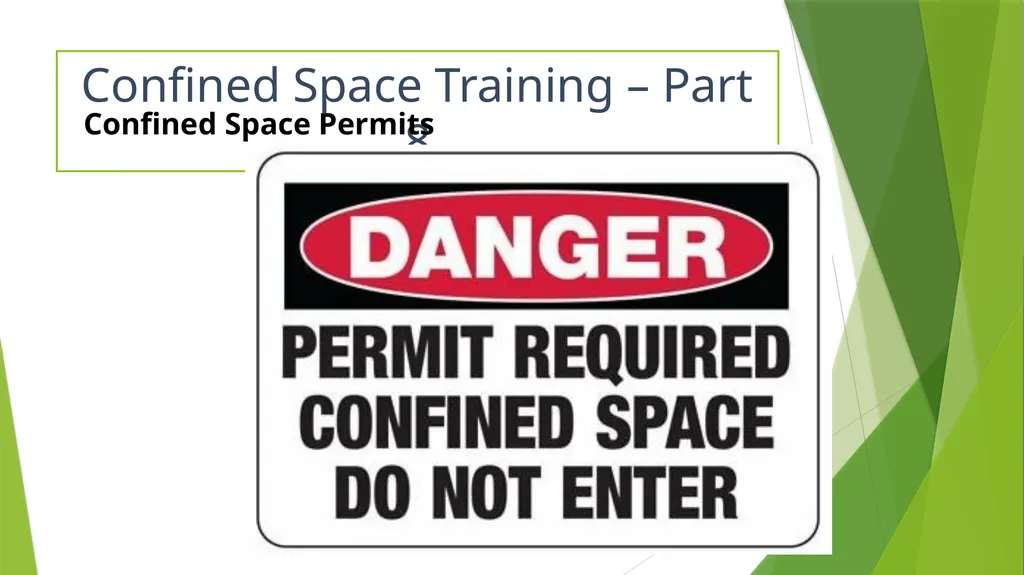
Confined Space Training – Part 8 Confined Space Permits<br>
31
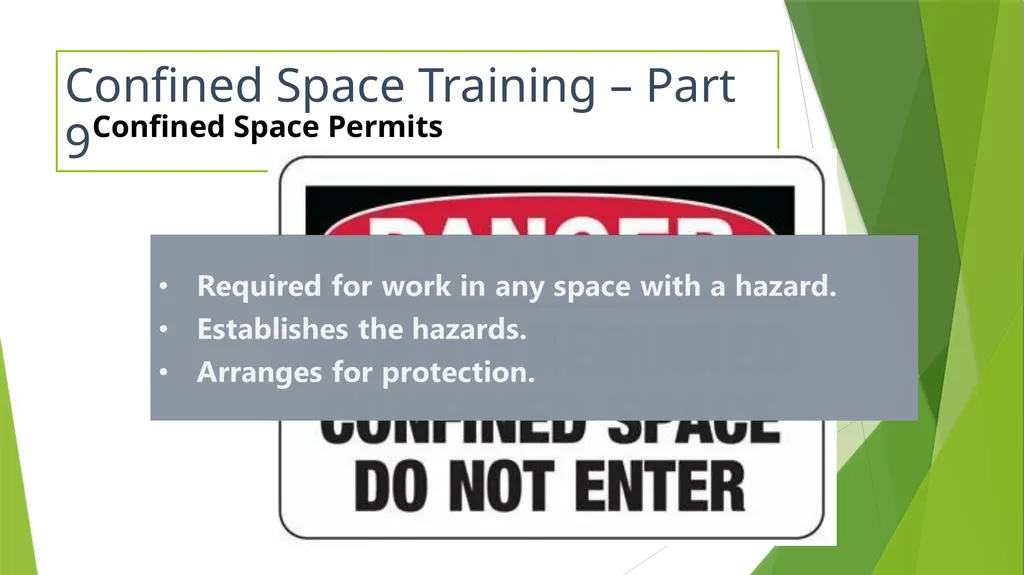
Confined Space Training – Part 9 Confined Space Permits<br>
32
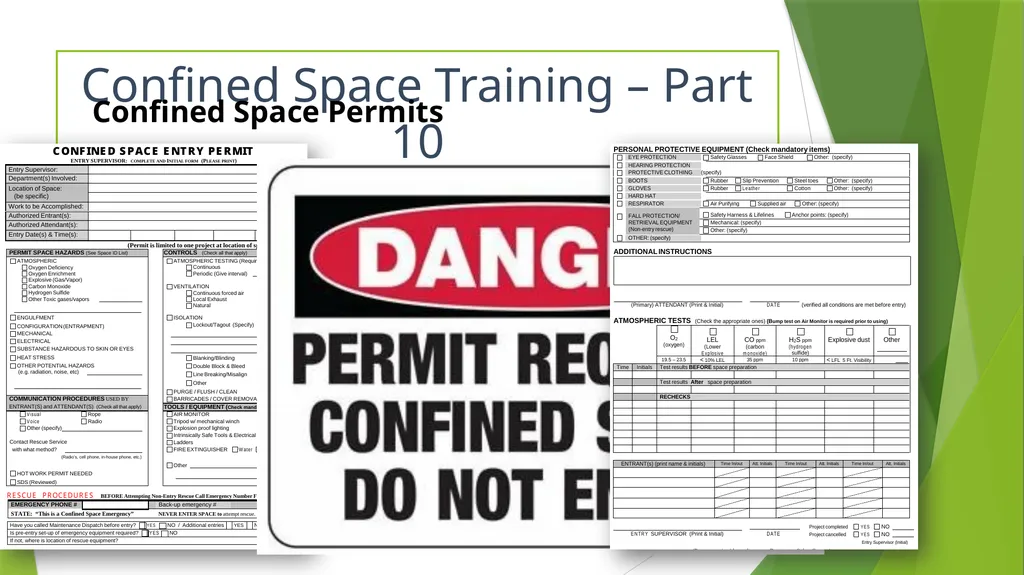
Confined Space Training – Part 10 Confined Space Permits<br>
33
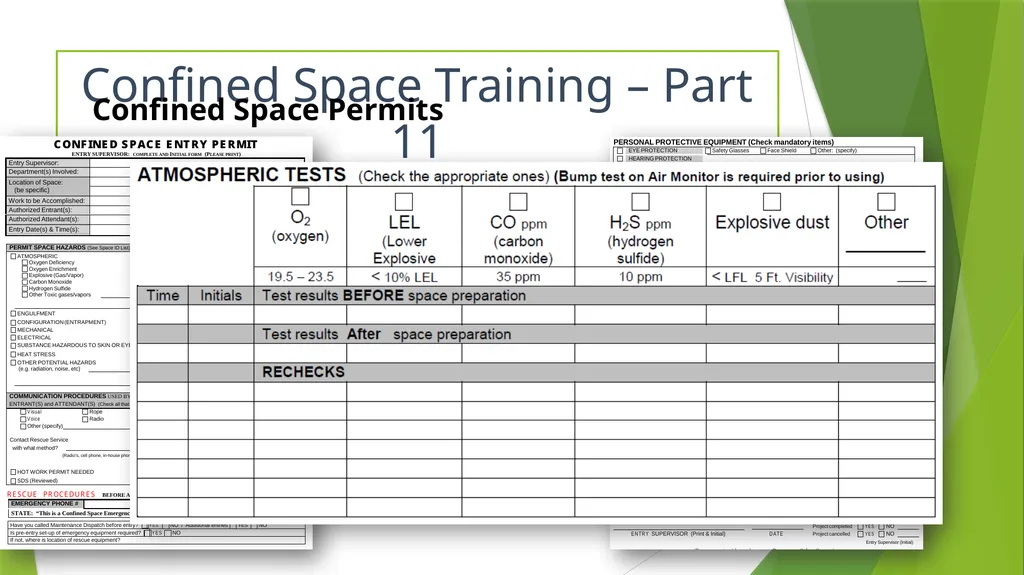
Confined Space Training – Part 11 Confined Space Permits<br>
34
Confined Space Training – Part 12 Prior to every entry when the space is vacant;
After a 10-minute ventilation period (if ventilation is necessary);
At least hourly for permit-required confined spaces. NOTE: A good practice is to re-test the atmosphere after breaks or having been out of the confined space for a period of time.
More frequently, if conditions or suspicions warrant. Confined Space Permits Atmosphere Testing Must Be Performed<br>
After a 10-minute ventilation period (if ventilation is necessary);
At least hourly for permit-required confined spaces. NOTE: A good practice is to re-test the atmosphere after breaks or having been out of the confined space for a period of time.
More frequently, if conditions or suspicions warrant. Confined Space Permits Atmosphere Testing Must Be Performed<br>
35
Confined Space Training – Part 13 Prior to every entry when the space is vacant;
After a 10-minute ventilation period (if ventilation is necessary);
At least hourly for permit-required confined spaces. NOTE: A good practice is to re-test the atmosphere after breaks or having been out of the confined space for a period of time.
More frequently, if conditions or suspicions warrant. Confined Space Permits Atmosphere Testing Must Be Performed<br>
After a 10-minute ventilation period (if ventilation is necessary);
At least hourly for permit-required confined spaces. NOTE: A good practice is to re-test the atmosphere after breaks or having been out of the confined space for a period of time.
More frequently, if conditions or suspicions warrant. Confined Space Permits Atmosphere Testing Must Be Performed<br>
36
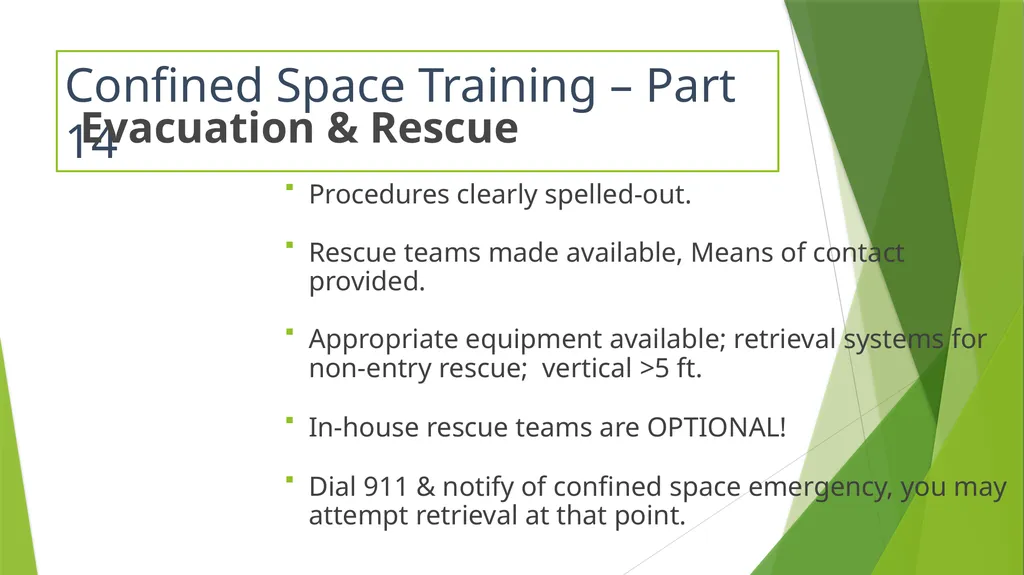
Confined Space Training – Part 14 Procedures clearly spelled-out.
Rescue teams made available, Means of contact provided.
Appropriate equipment available; retrieval systems for non-entry rescue; vertical >5 ft.
In-house rescue teams are OPTIONAL!
Dial 911 & notify of confined space emergency, you may attempt retrieval at that point. Evacuation & Rescue<br>
Rescue teams made available, Means of contact provided.
Appropriate equipment available; retrieval systems for non-entry rescue; vertical >5 ft.
In-house rescue teams are OPTIONAL!
Dial 911 & notify of confined space emergency, you may attempt retrieval at that point. Evacuation & Rescue<br>
37
Confined Space Training – Part 15 for each affected employee
before first assignment & with changes
deviations from space entry procedures
shall establish employee proficiency Training: Must Be Certified In Writing<br>
before first assignment & with changes
deviations from space entry procedures
shall establish employee proficiency Training: Must Be Certified In Writing<br>
38
Confined Space Training – Review<br>
39
Knowledge Check What is a Confined Space?<br>
40
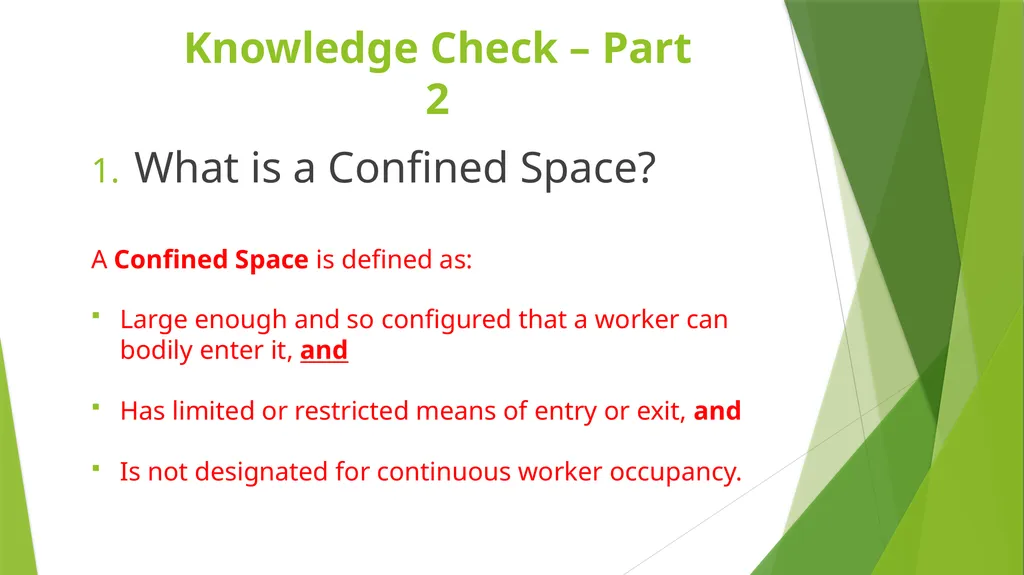
Knowledge Check – Part 2 What is a Confined Space?
A Confined Space is defined as:
Large enough and so configured that a worker can bodily enter it, and
Has limited or restricted means of entry or exit, and
Is not designated for continuous worker occupancy.<br>
A Confined Space is defined as:
Large enough and so configured that a worker can bodily enter it, and
Has limited or restricted means of entry or exit, and
Is not designated for continuous worker occupancy.<br>
41
Knowledge Check – Part 3 2. What is a Permit Required Confined Space?<br>
42
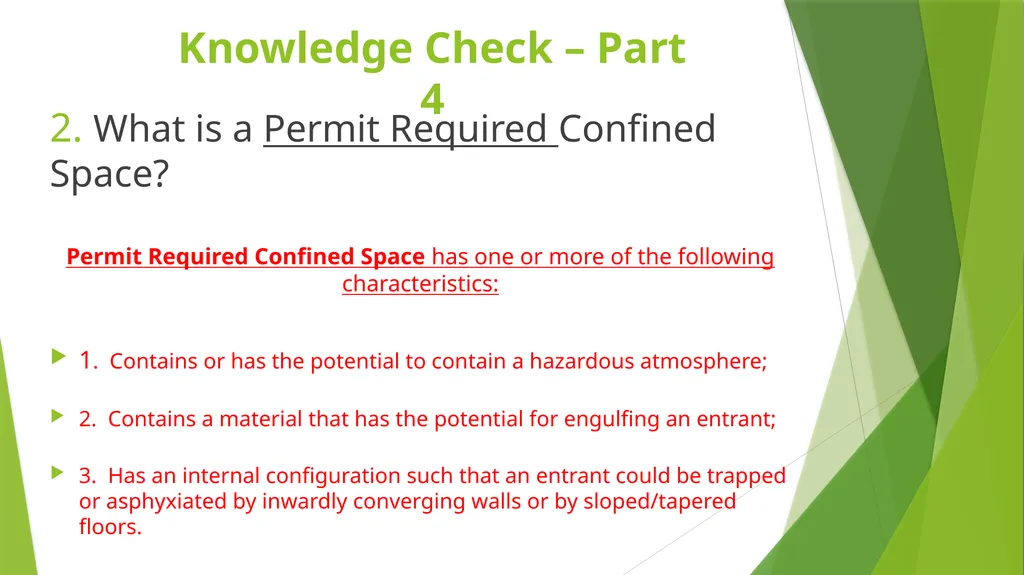
Knowledge Check – Part 4 2. What is a Permit Required Confined Space?
Permit Required Confined Space has one or more of the following characteristics:
1. Contains or has the potential to contain a hazardous atmosphere;
2. Contains a material that has the potential for engulfing an entrant;
3. Has an internal configuration such that an entrant could be trapped or asphyxiated by inwardly converging walls or by sloped/tapered floors.<br>
Permit Required Confined Space has one or more of the following characteristics:
1. Contains or has the potential to contain a hazardous atmosphere;
2. Contains a material that has the potential for engulfing an entrant;
3. Has an internal configuration such that an entrant could be trapped or asphyxiated by inwardly converging walls or by sloped/tapered floors.<br>
43
Knowledge Check – Part 5 3. Who are the Qualified workers?<br>
44
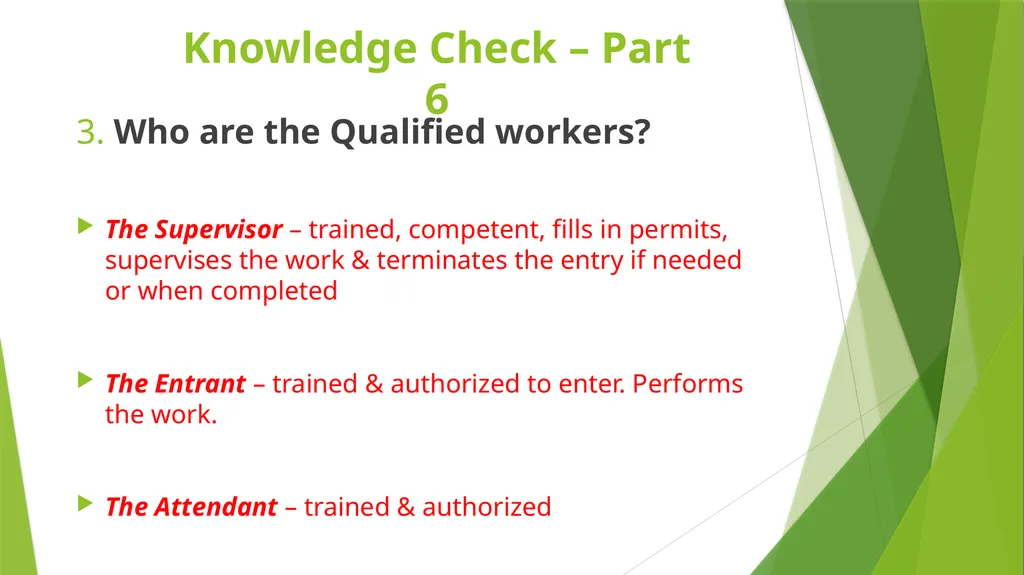
Knowledge Check – Part 6 3. Who are the Qualified workers?
The Supervisor – trained, competent, fills in permits, supervises the work & terminates the entry if needed or when completed
The Entrant – trained & authorized to enter. Performs the work.
The Attendant – trained & authorized<br>
The Supervisor – trained, competent, fills in permits, supervises the work & terminates the entry if needed or when completed
The Entrant – trained & authorized to enter. Performs the work.
The Attendant – trained & authorized<br>
45
Knowledge Check – Part 7 4. What is the primary reason for using a retrieval system for work within a Permit Required Confined Space?<br>
46
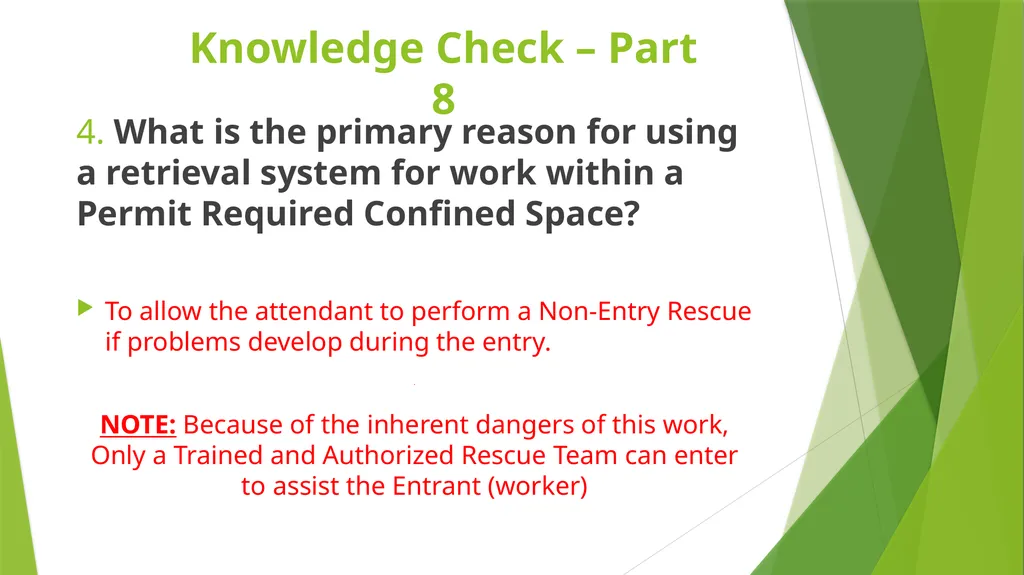
Knowledge Check – Part 8 4. What is the primary reason for using a retrieval system for work within a Permit Required Confined Space?
To allow the attendant to perform a Non-Entry Rescue if problems develop during the entry.
NOTE: Because of the inherent dangers of this work, Only a Trained and Authorized Rescue Team can enter to assist the Entrant (worker)<br>
To allow the attendant to perform a Non-Entry Rescue if problems develop during the entry.
NOTE: Because of the inherent dangers of this work, Only a Trained and Authorized Rescue Team can enter to assist the Entrant (worker)<br>
47
Additional Resources OSHA website: http://www.osha.gov and OSHA offices: Call or Write (800-321-OSHA)
Compliance Assistance Specialists in the area offices
National Institute for Occupational Safety and Health (NIOSH) – OSHA’s sister agency
OSHA Training Institute Education Centers
Public libraries<br>
Compliance Assistance Specialists in the area offices
National Institute for Occupational Safety and Health (NIOSH) – OSHA’s sister agency
OSHA Training Institute Education Centers
Public libraries<br>