04
You could burn to death in an explosion or fire.
You could suffocate from lack of oxygen.
You could be poisoned by toxic gas.
You could get crushed, electrocuted or engulfed in a liquid or solid material. What can happen if safe entry procedures are not followed<br>
05
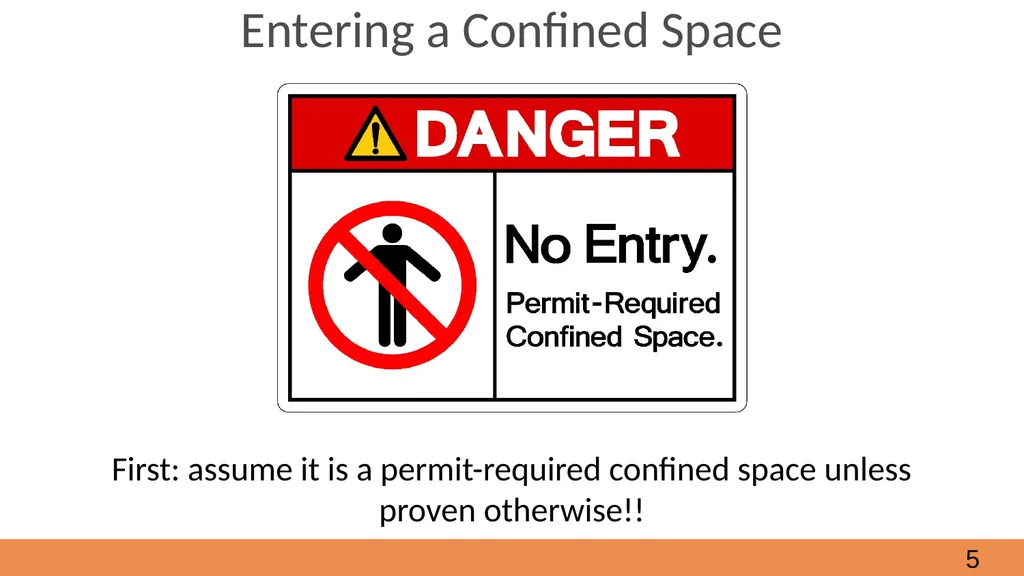
Entering a Confined Space First: assume it is a permit-required confined space unless proven otherwise!!<br>
06
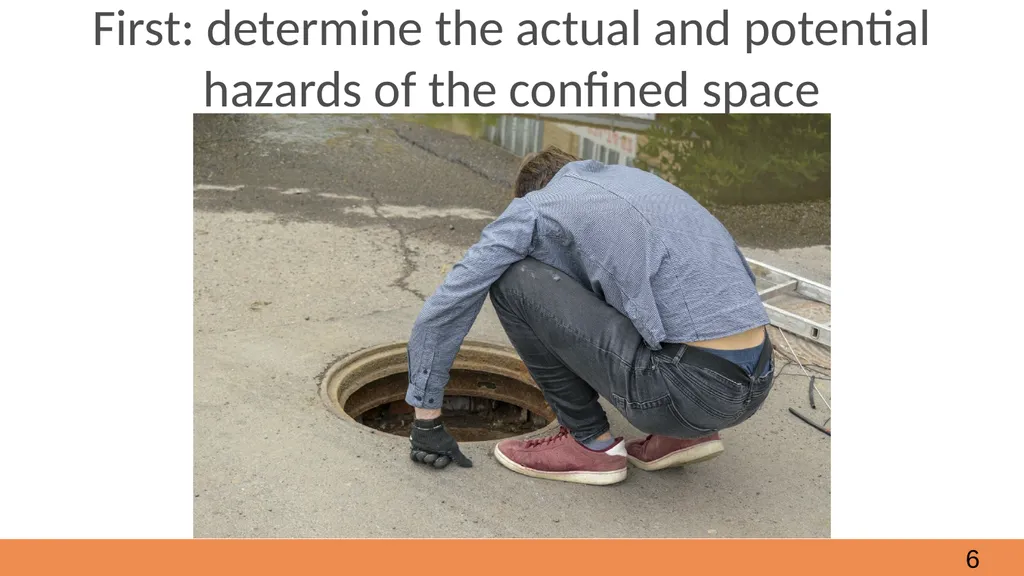
First: determine the actual and potential hazards of the confined space<br>
07
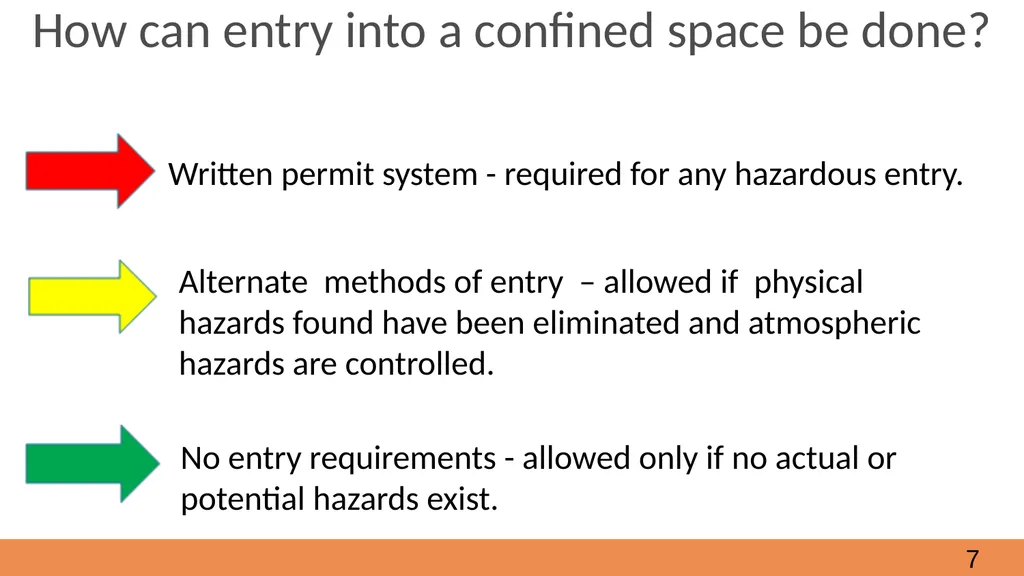
How can entry into a confined space be done? Written permit system - required for any hazardous entry. Alternate methods of entry – allowed if physical hazards found have been eliminated and atmospheric hazards are controlled. No entry requirements - allowed only if no actual or potential hazards exist.<br>
08
Determine if hazards can be eliminated Can all moving parts be locked out?
Can all energy sources be de-energized or locked out?
Can all incoming pipes or other lines be blocked off?
Can all contents of storage-type confined spaces be removed (including product residues) before entry?<br>
09
Determine if atmospheric hazards can be eliminated Can all work activities in the space that generate toxic chemicals or reduce oxygen levels be stopped?
Can air contamination and low oxygen content below 19.5% be eliminated by ventilation or other means?
Will conditions remain static during entry?
Can you immediately exit the space if conditions change?<br>
10
Entering a confined space without a permit can be done if it has first been determined that no hazards exist. However if hazards do exist, then alternate methods of entry may be used if:
All physical hazards have been eliminated
AND
Atmospheric hazards are controlled with continuous ventilation.<br>
11
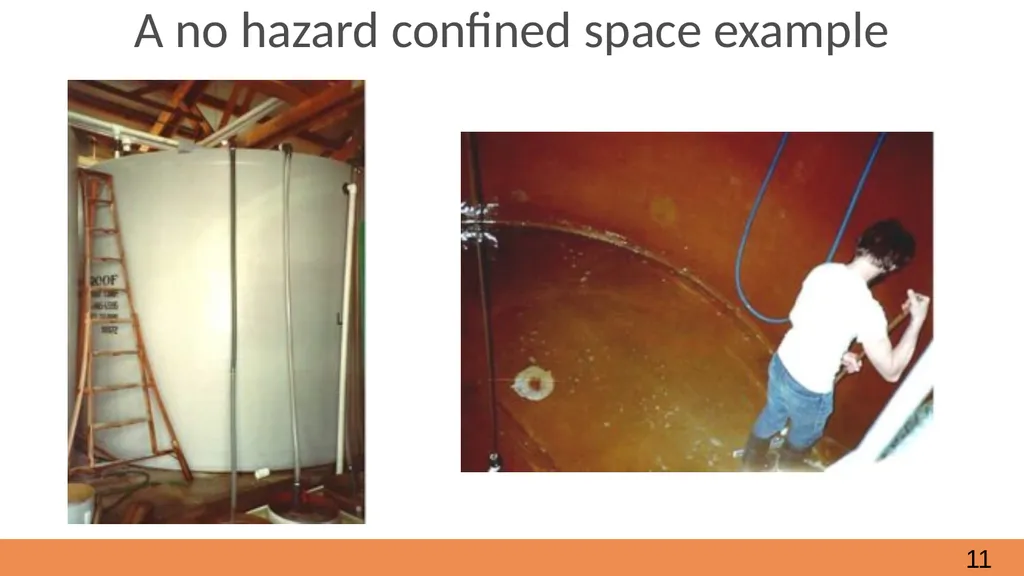
A no hazard confined space example<br>
12
If it has been determined or assumed it is a permit-required confined space, what do you have to do before entry? Get approval from your supervisor, or our designated confined space program administrator.
Decide who will be the entry supervisor and attendant.
Obtain the necessary personal protective equipment.
Obtain air monitoring equipment if there is an actual or potential atmospheric hazard.<br>
13
What do you have to do before entry? (continued) 5. Obtain ventilation equipment for the same hazard.
6. Make arrangements to lock-out moving parts and block off incoming piping, lines or materials.
7. Make arrangements for rescue procedures.
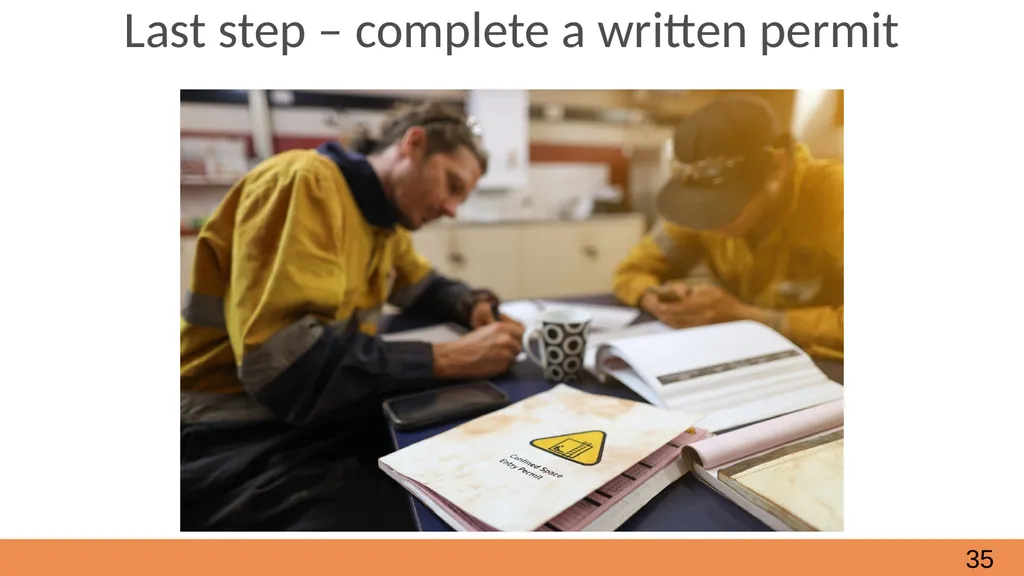
8. Obtain and complete an entry permit.<br>
14
The people involved in a confined space entry An entry supervisor An attendant The entrant Photo by USAG Livorno PAO inc Creative Commons<br>
15
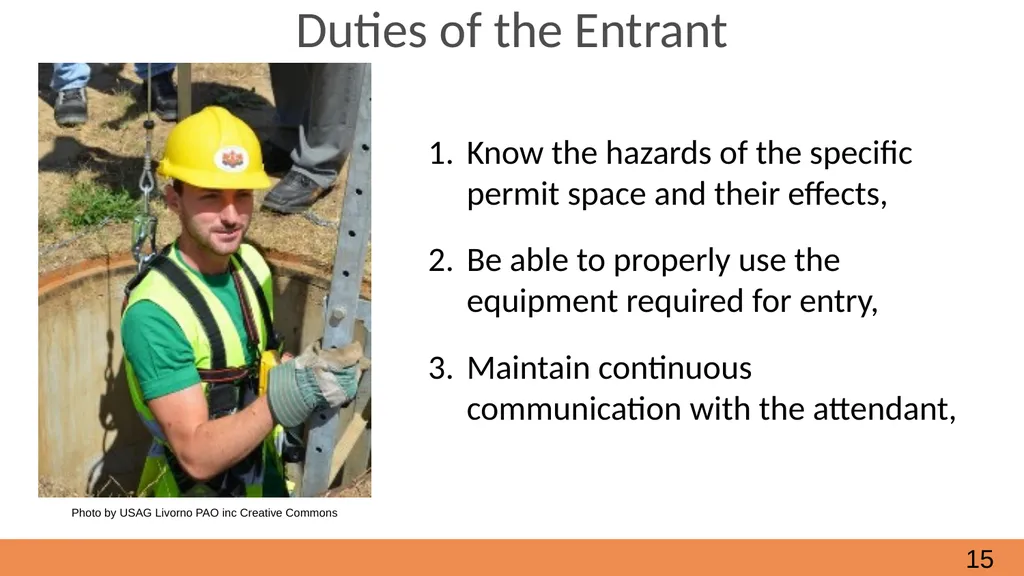
Duties of the Entrant Photo by USAG Livorno PAO inc Creative Commons Know the hazards of the specific permit space and their effects,
Be able to properly use the equipment required for entry,
Maintain continuous communication with the attendant,<br>
16
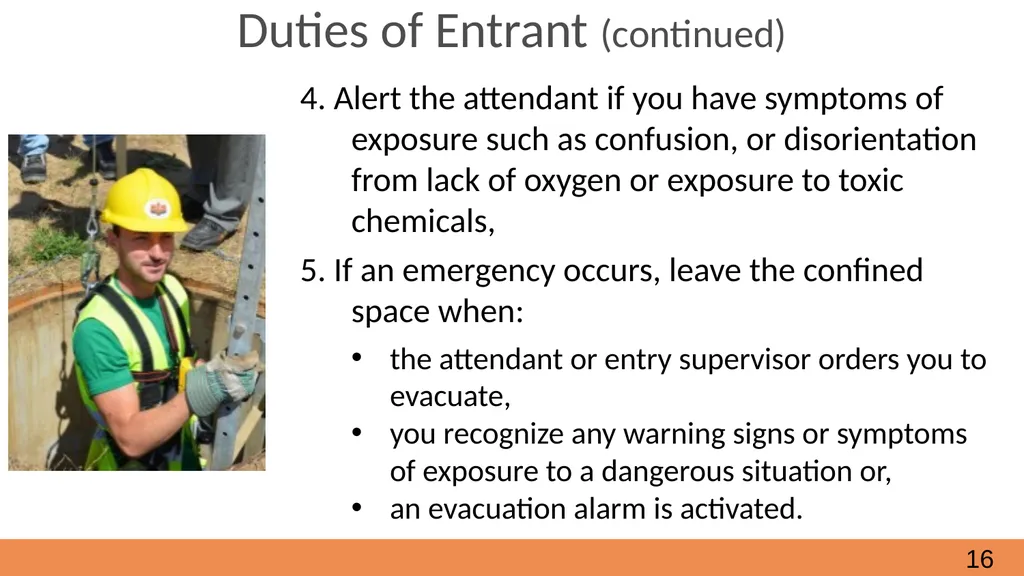
Duties of Entrant (continued) 4. Alert the attendant if you have symptoms of exposure such as confusion, or disorientation from lack of oxygen or exposure to toxic chemicals,
5. If an emergency occurs, leave the confined space when:
the attendant or entry supervisor orders you to evacuate,
you recognize any warning signs or symptoms of exposure to a dangerous situation or,
an evacuation alarm is activated.<br>
17
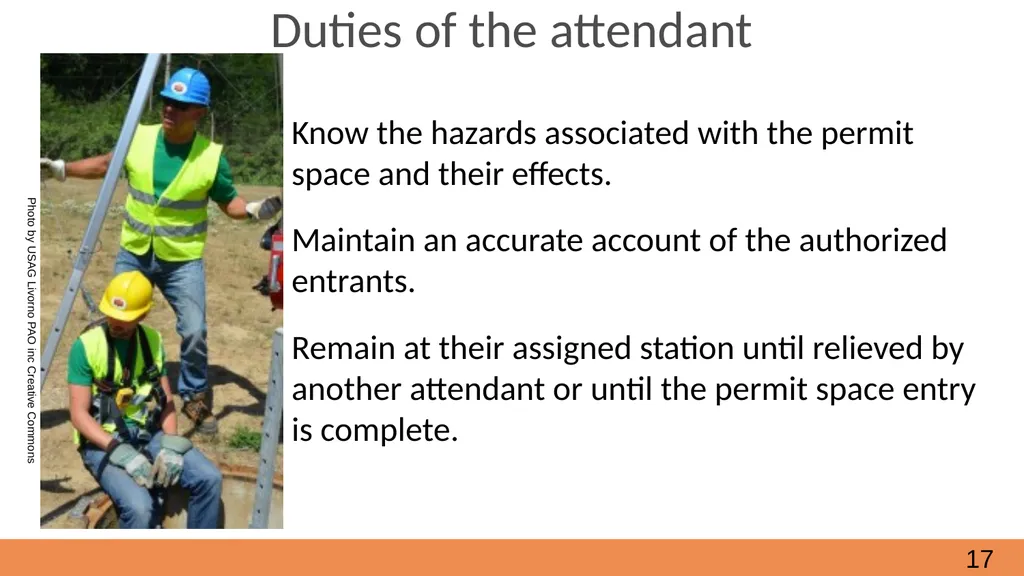
Duties of the attendant Know the hazards associated with the permit space and their effects.
Maintain an accurate account of the authorized entrants.
Remain at their assigned station until relieved by another attendant or until the permit space entry is complete. Photo by USAG Livorno PAO inc Creative Commons<br>
18
Duties of the attendant (continued) Summon rescue and applicable medical services in the event of an emergency.
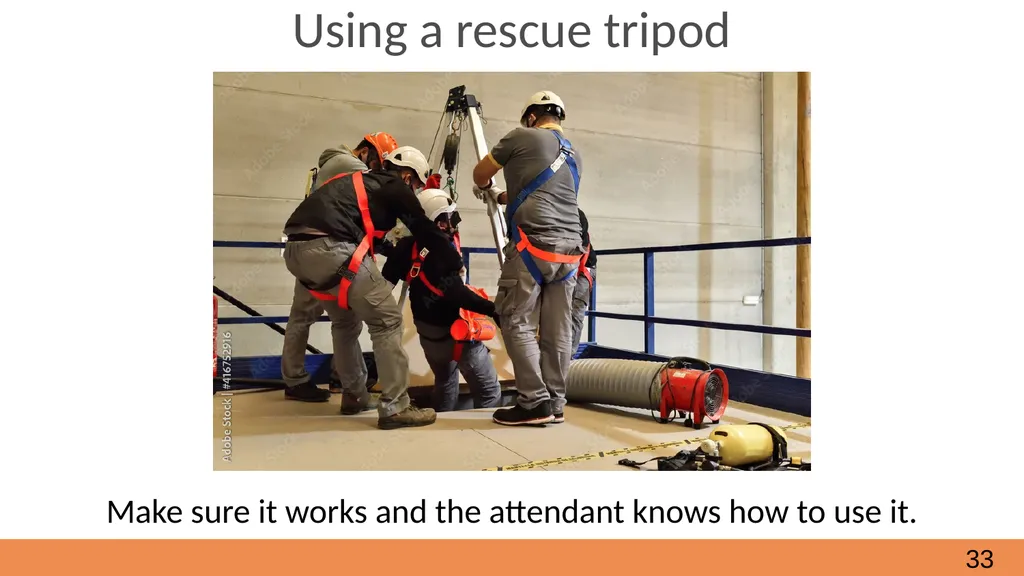
Perform non-entry rescue procedures (rescue tripod or similar equipment).
Prevent unauthorized personnel from entering the permit space.
Monitor conditions in and around the permit space. Photo by USAG Livorno PAO inc Creative Commons<br>
19
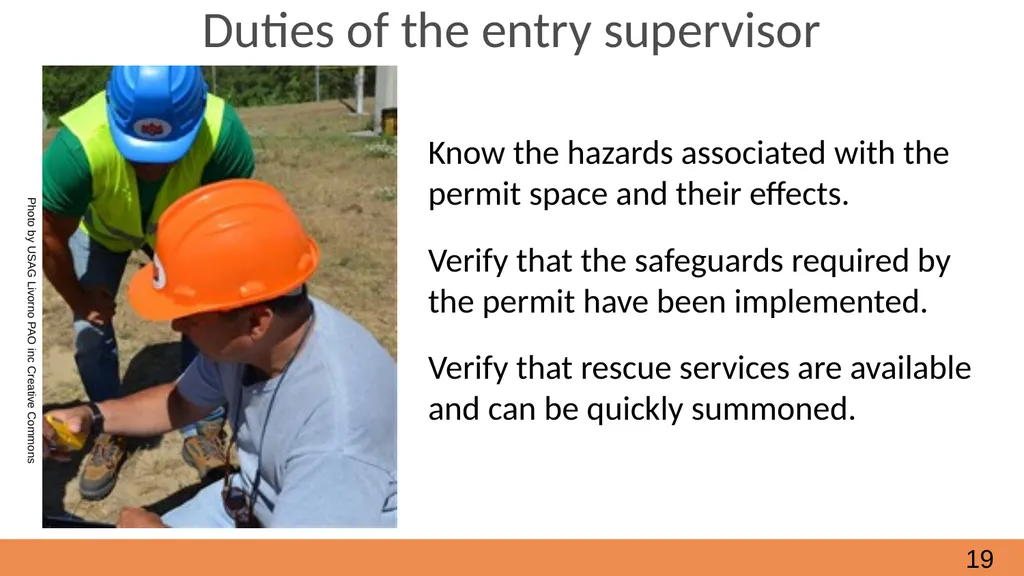
Duties of the entry supervisor Know the hazards associated with the permit space and their effects.
Verify that the safeguards required by the permit have been implemented.
Verify that rescue services are available and can be quickly summoned. Photo by USAG Livorno PAO inc Creative Commons<br>
20
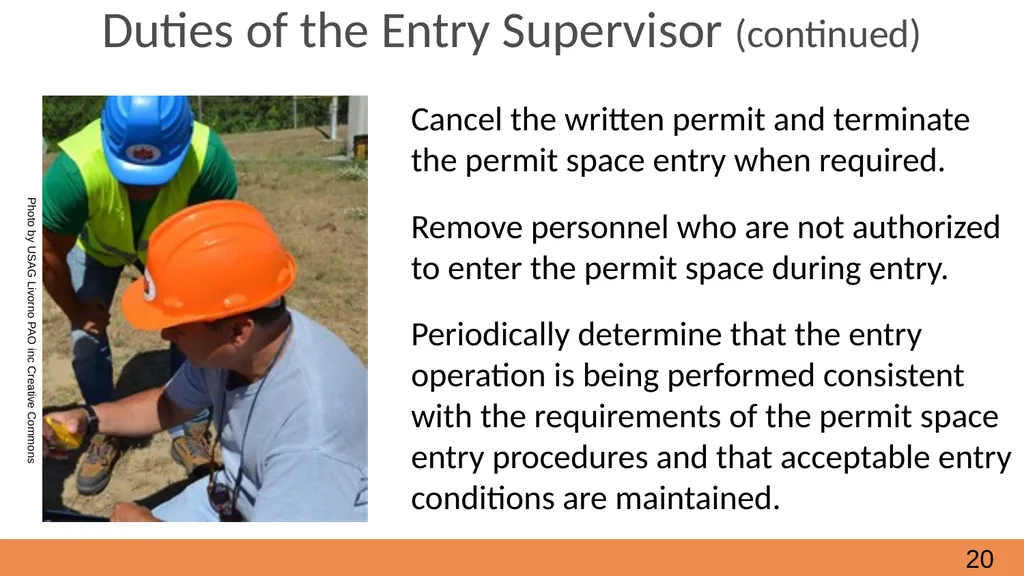
Duties of the Entry Supervisor (continued) Cancel the written permit and terminate the permit space entry when required.
Remove personnel who are not authorized to enter the permit space during entry.
Periodically determine that the entry operation is being performed consistent with the requirements of the permit space entry procedures and that acceptable entry conditions are maintained. Photo by USAG Livorno PAO inc Creative Commons<br>
21
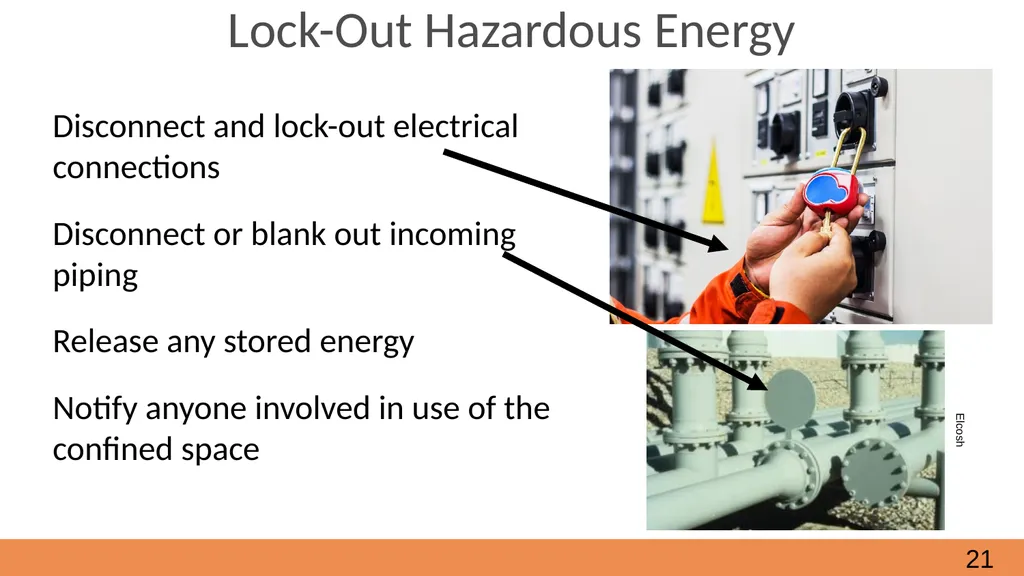
Lock-Out Hazardous Energy Disconnect and lock-out electrical connections
Disconnect or blank out incoming piping
Release any stored energy
Notify anyone involved in use of the confined space Elcosh<br>
22
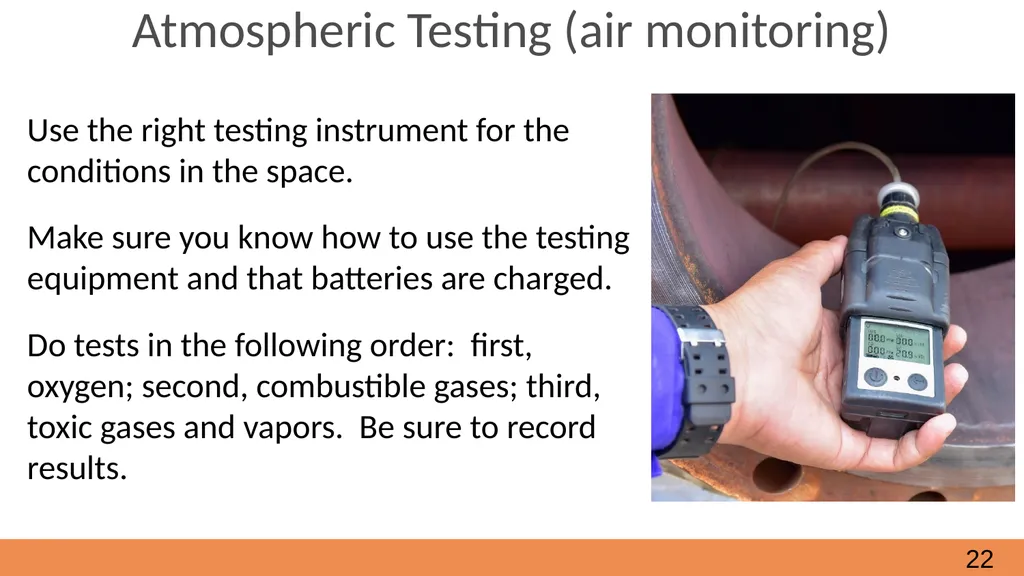
Atmospheric Testing (air monitoring) Use the right testing instrument for the conditions in the space.
Make sure you know how to use the testing equipment and that batteries are charged.
Do tests in the following order: first, oxygen; second, combustible gases; third, toxic gases and vapors. Be sure to record results.<br>
23
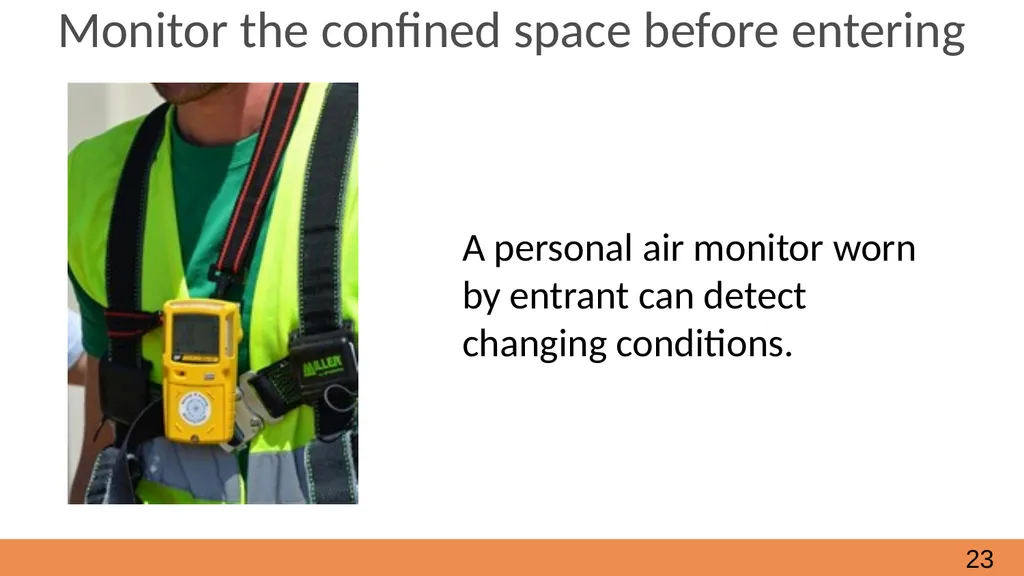
Monitor the confined space before entering A personal air monitor worn by entrant can detect changing conditions.<br>
24
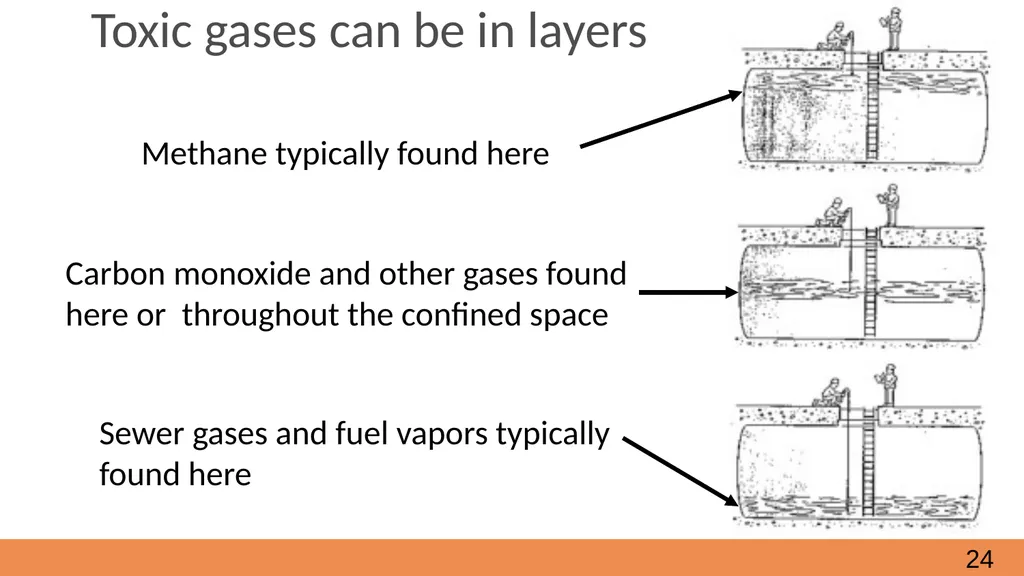
Toxic gases can be in layers Methane typically found here Carbon monoxide and other gases found here or throughout the confined space Sewer gases and fuel vapors typically found here<br>
25
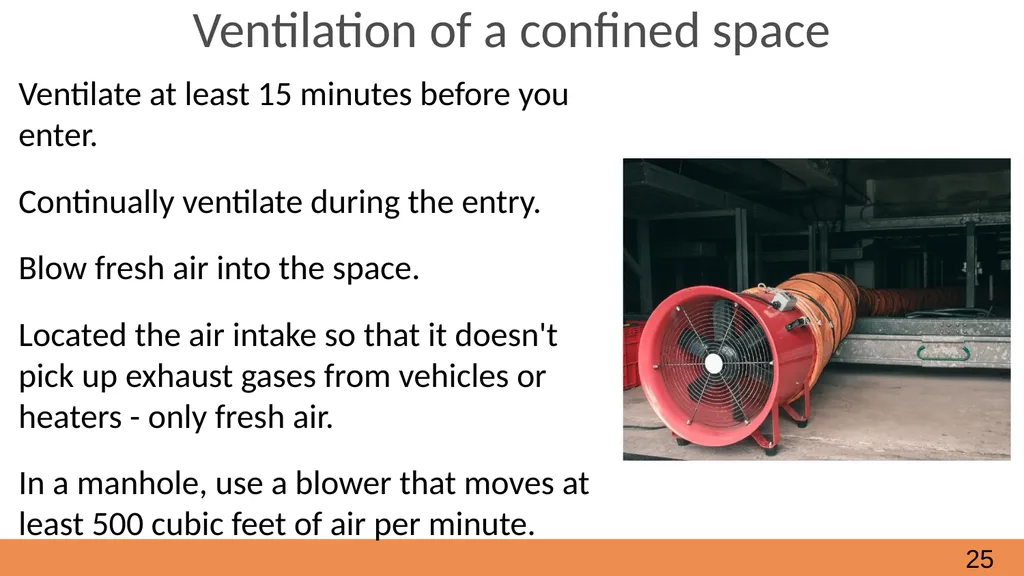
Ventilation of a confined space Ventilate at least 15 minutes before you enter.
Continually ventilate during the entry.
Blow fresh air into the space.
Located the air intake so that it doesn't pick up exhaust gases from vehicles or heaters - only fresh air.
In a manhole, use a blower that moves at least 500 cubic feet of air per minute.<br>
26
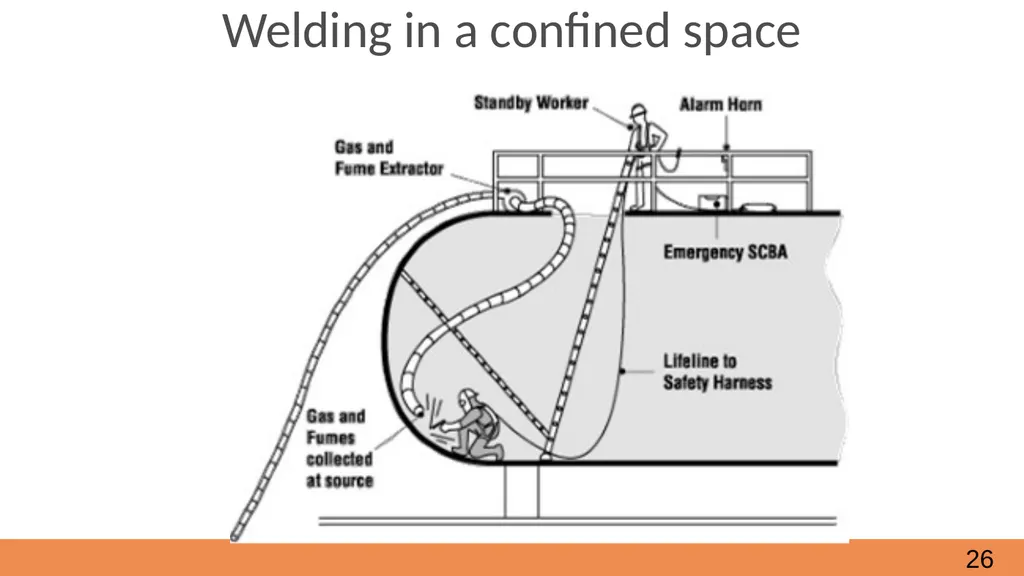
Welding in a confined space<br>
27
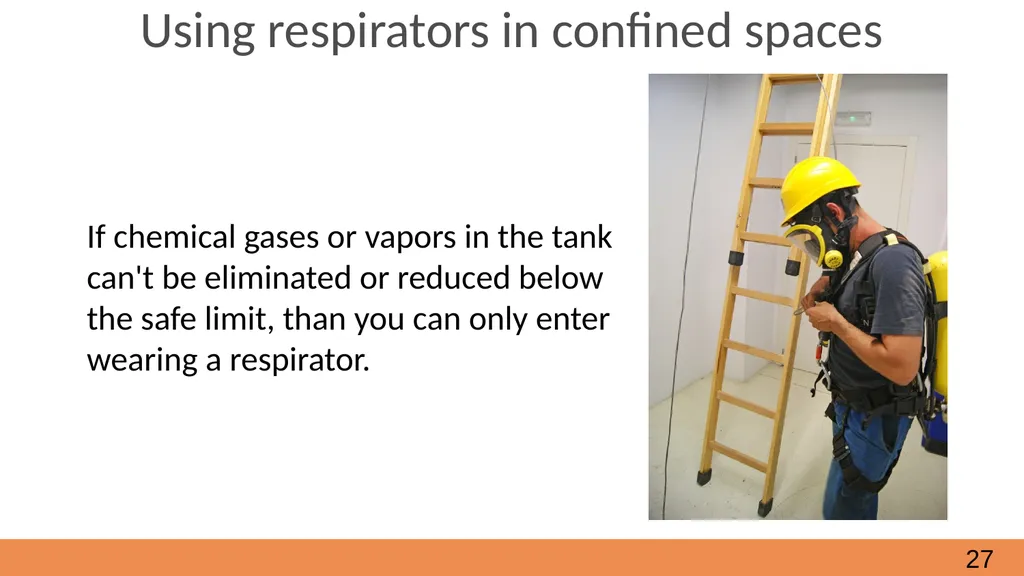
Using respirators in confined spaces If chemical gases or vapors in the tank can't be eliminated or reduced below the safe limit, than you can only enter wearing a respirator.<br>
28
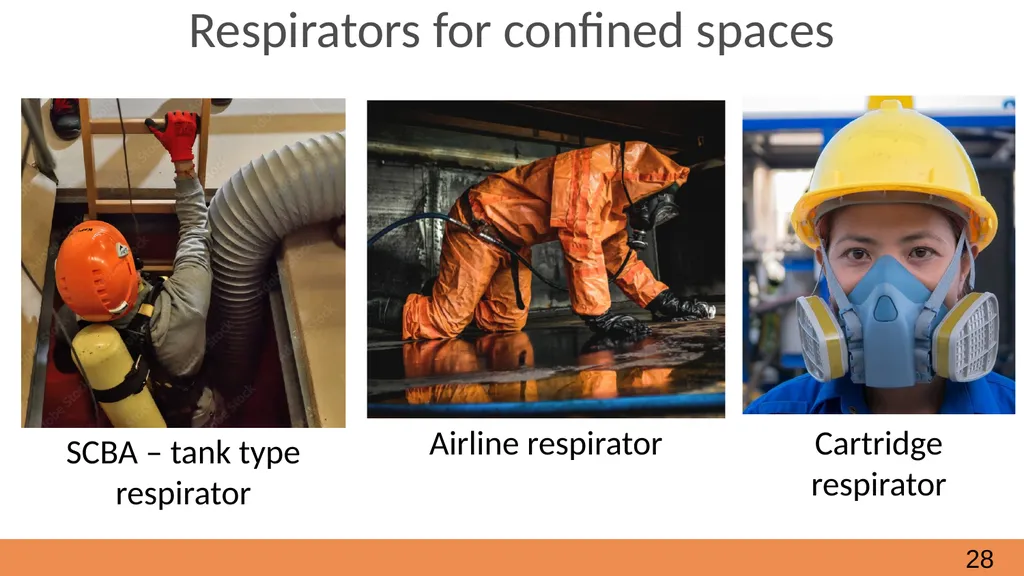
Respirators for confined spaces SCBA – tank type respirator Airline respirator Cartridge respirator<br>
29
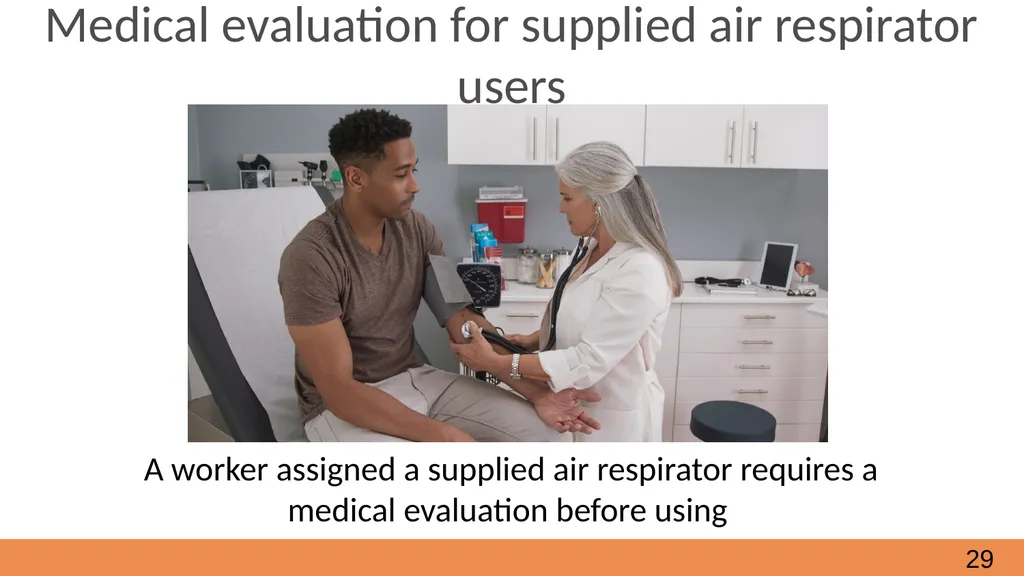
Medical evaluation for supplied air respirator users A worker assigned a supplied air respirator requires a medical evaluation before using<br>
30
Our medical evaluation procedures for supplied air users<br>
31
Suppose you are an attendant and this co-worker collapses in this confined space. What would you do? WADOT<br>
32
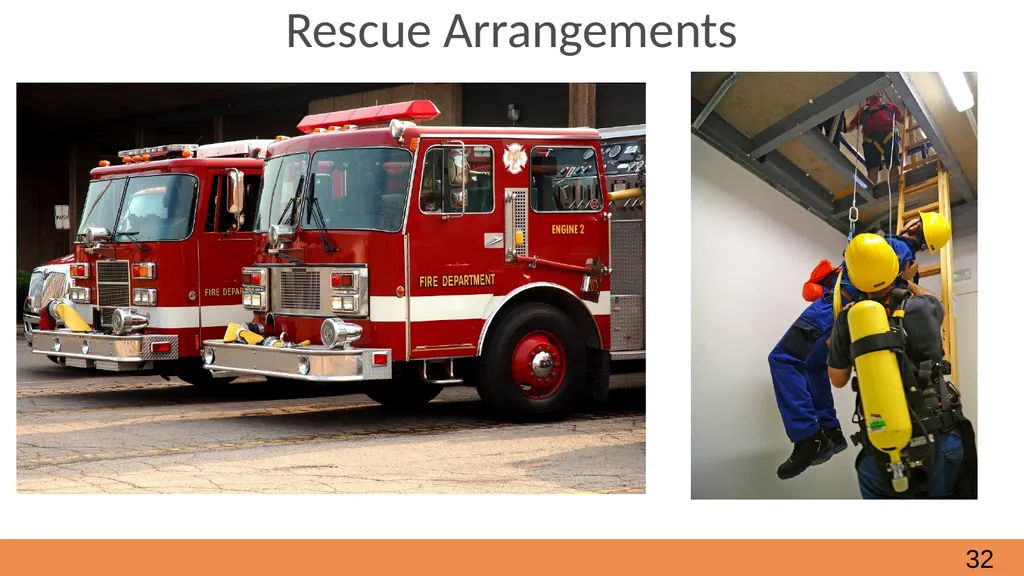
Rescue Arrangements<br>
33
Using a rescue tripod Make sure it works and the attendant knows how to use it.<br>
34
Our rescue arrangements<br>
35
Last step – complete a written permit<br>
36
Our confined space entry procedures<br>
37
Additional Resources L & I confined spaces Rule and Templates Oregon OSHA – Guide to Confined space safety<br>