Content Writing Content Frameworks Homework H2H3 tags - does anyone need a refresher on this? Tools for finding word count on a page fast SEO Pro SEO Quake Introduction Types ProblemSolution Storytelling Question Statistic or data
"Content Writing Content Frameworks Homework H2/H3" is the property of its rightful owner. Permission is granted to
download and print the materials on this website for personal, non-commercial use only, and to display it
on your personal computer provided you do not modify the materials and that you retain all copyright
notices contained in the materials. By downloading content from our website, you accept the terms of this
agreement.
Presentation Transcript
01
Content Writing Content Frameworks<br>
02
Homework H2/H3 tags - does anyone need a refresher on this?
Tools for finding word count on a page fast
SEO Pro
SEO Quake<br>
03
Introduction Types Problem/Solution
Storytelling
Question
Statistic or data
Introductionless<br>
04
Post Types How To
What Is/Definition
Profile
Case Study
List or “listicle”
Pillar page or guide<br>
05
Conclusion Types Summary
Call to action
Question<br>
06
Introduction Types<br>
07
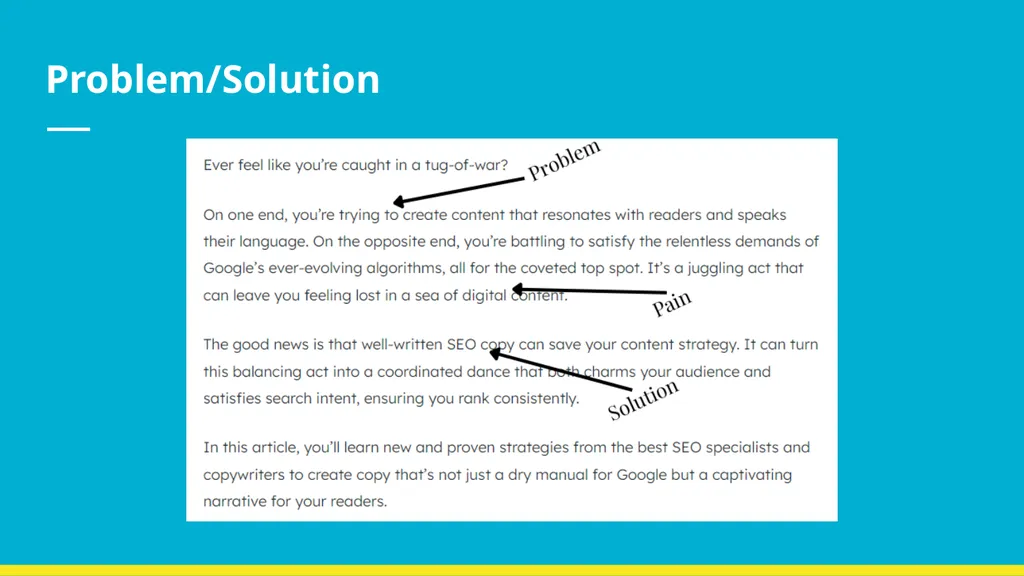
Problem/Solution Present problem
Remind people of how painful it is
Present your content as the solution<br>
08
Problem/Solution<br>
09
Storytelling Tell a story - people are naturally drawn to stories
Use storytelling to catch people’s attention, help them understand why topic is important or create a connection between you and reader
Story still needs to be relevant to what you are wanting people to read<br>
10
Storytelling<br>
11
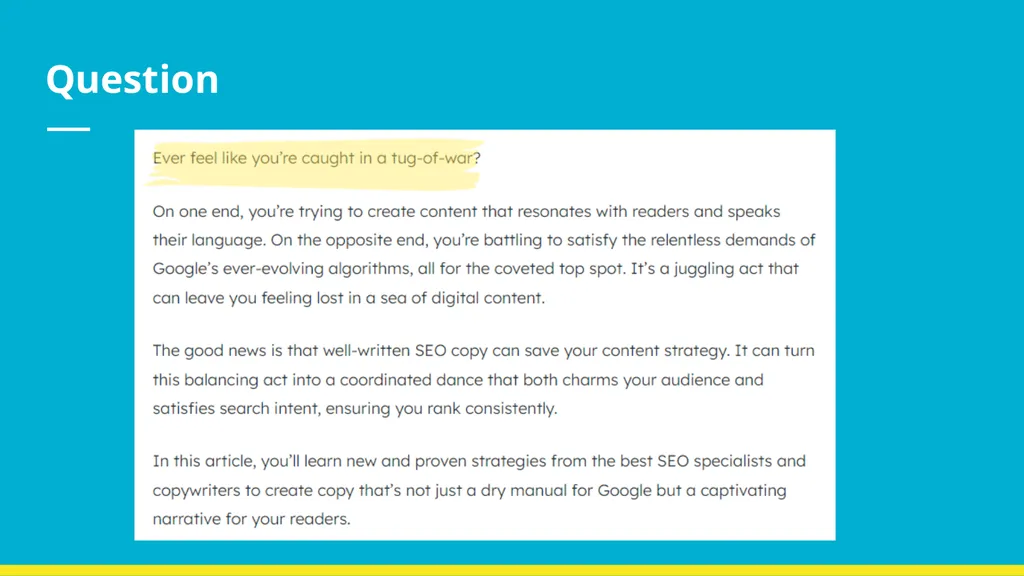
Question Asks a question the reader might have or
Presents the problem as a question to draw the reader in
Ideally, it’s a question you want the reader to identify with or say “yes” to<br>
12
Question<br>
13
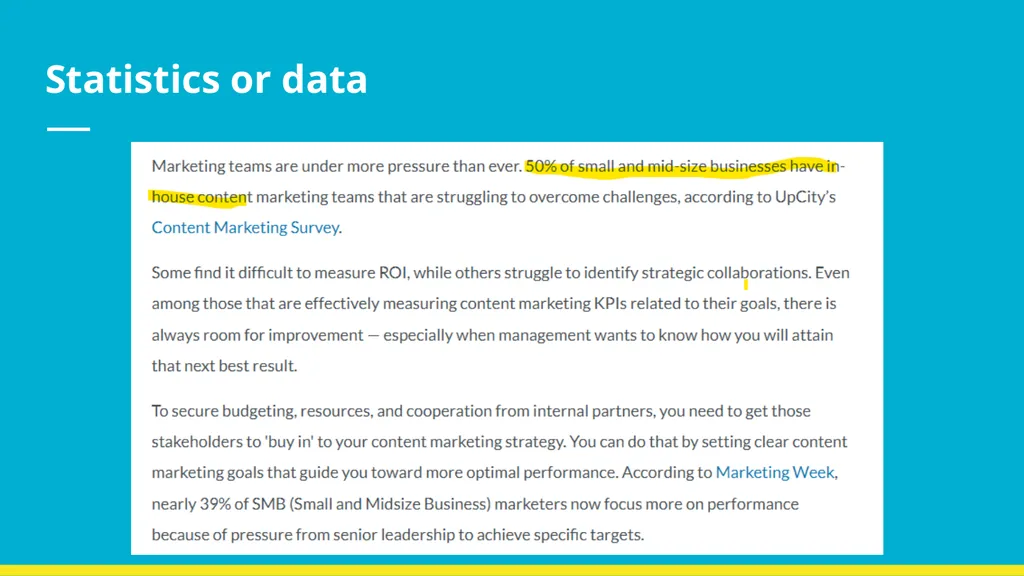
Statistics or Data Shows the reader why you are addressing the topic (relevance)
Shows how you, as the reader fit in - “I have this problem too.”
Establishes your credibility<br>
14
Statistics or data<br>
15
Introductionless<br>
16
Post Types<br>
17
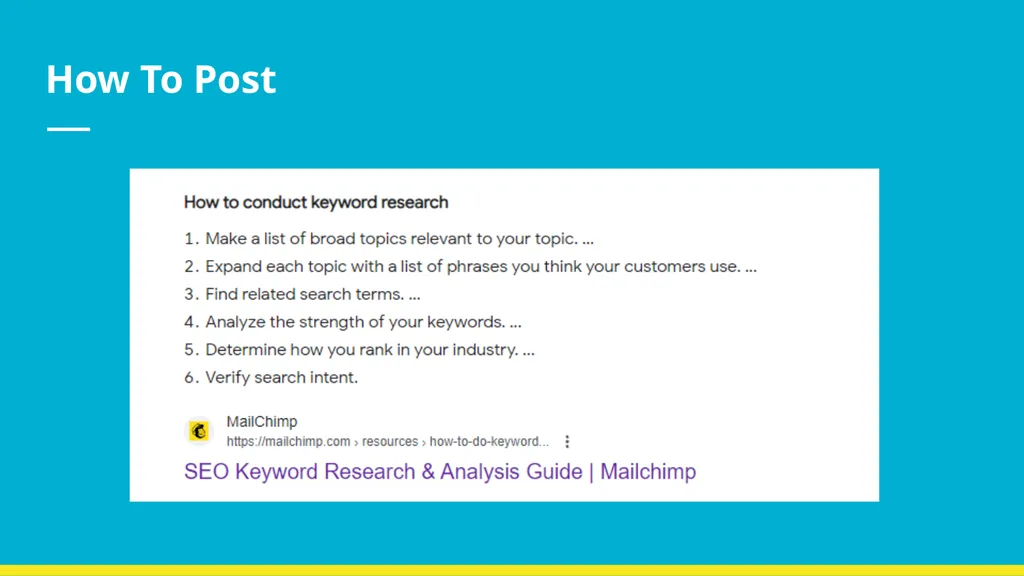
How To Post Provides clear, actionable steps for how to complete a task
Could also provide a structured approach to thinking through something a little less concrete<br>
18
How To Post<br>
19
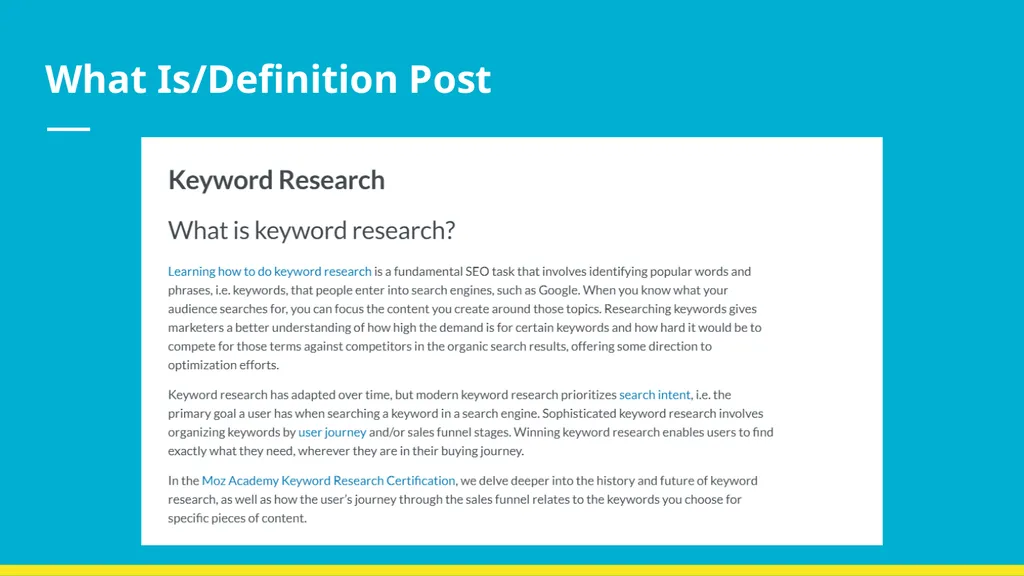
What Is/Definition Post Best for defining a term or concept
Can also provide additional detail that the reader may find useful<br>
20
What Is/Definition Post<br>
21
Profile Post Profiles someone knowledgeable or influential
Provides lots of authority and has lots of sharing potential
Involves an interview of a subject<br>
22
Profile Post<br>
23
Case Study Believable
High converting
Relies on real-life examples
Uses social proof to explain a concept
See this a lot in SaaS in particular<br>
24
Case Study<br>
25
List or “Listicle” Popularized on the internet by Buzzfeed
Great way to present lot of information in a way people and search engines can digest
Can break down complex topics
Some people argue it’s overdone and oversimplifies some topics
In product marketing, can convert well when people are looking to research certain products<br>
26
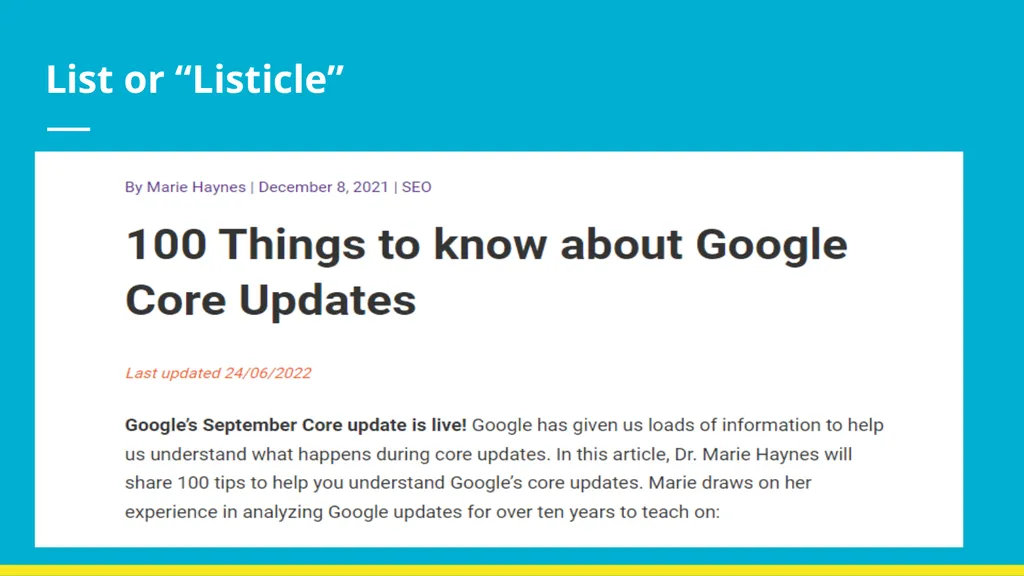
List or “Listicle”<br>
27
Pillar Page or Guide The authoritative landing page for a resource or large topic
Serves as an ultimate guide
Designed to attract a reader and keep them on the page for a long time
Tends to attract backlinks
Often includes a table of contents or navigational elements
May link out to more specific resource<br>
28
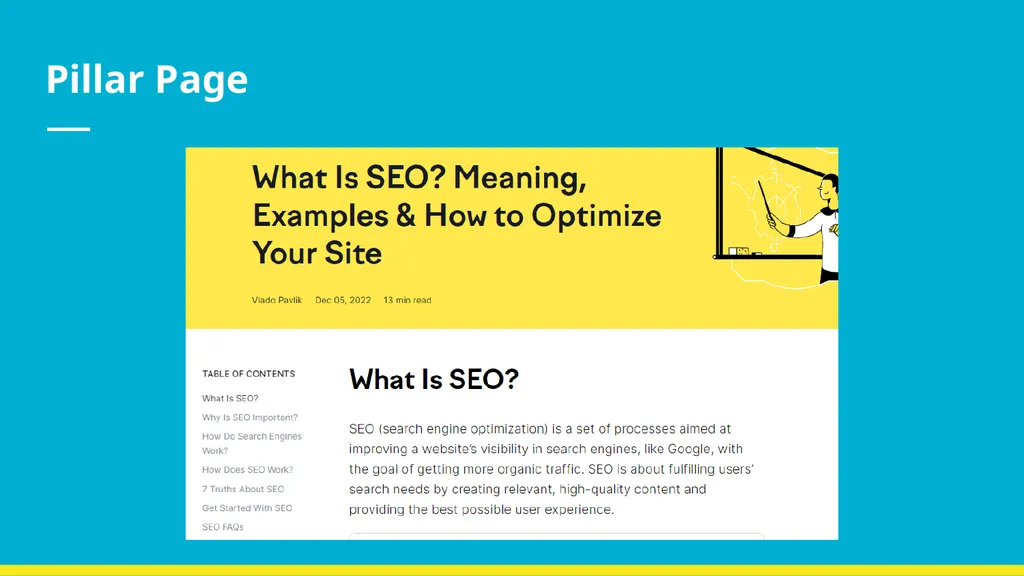
Pillar Page<br>
29
Conclusion Types<br>
30
Summary Most common
Especially good for longer posts where a reader might need a refresher of key takeaways
Restate key points in fresh language in a way that’s useful<br>
31
Summary<br>
32
Call to Action Designed to produce an action - sign for a newsletter, schedule a demo, read more, etc.
Works best when search intent of the person visiting closely aligns with the request.
Can be text, button/image or both<br>
33
Call to Action<br>
34
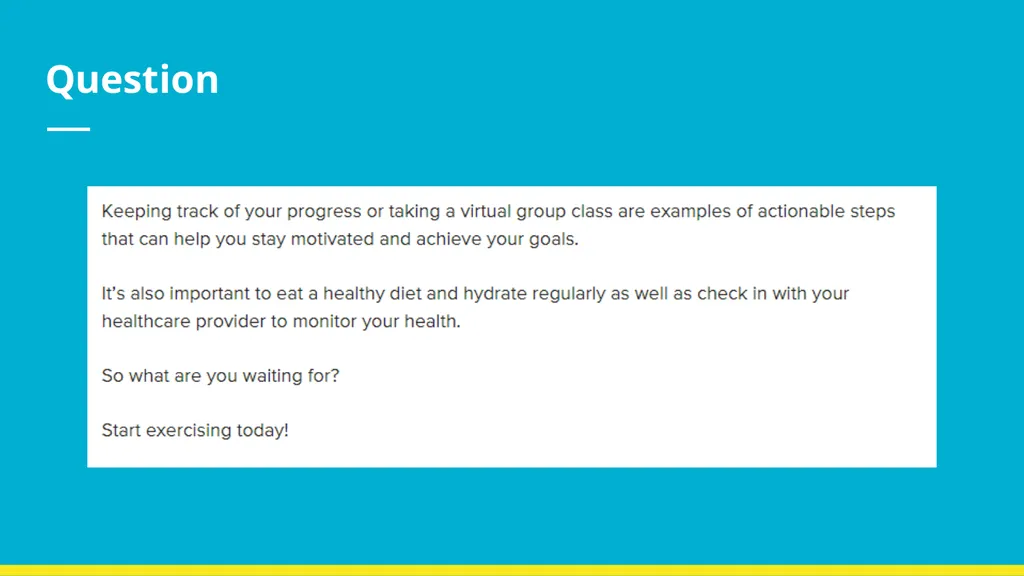
Question Can be a way to engage readers, especially if commenting is an option
Can reduce the content’s authority<br>