Contextualized Noncredit Curriculum for CTE Cheryl Aschenbach, Lassen College L.E. Foisia, Mount San Antonio College CTL Basics Contextualized Teaching and Learning (CTL) is an instructional strategy designed to link the learning of basic
"Contextualized Noncredit Curriculum for CTE Cheryl" is the property of its rightful owner. Permission is granted to
download and print the materials on this website for personal, non-commercial use only, and to display it
on your personal computer provided you do not modify the materials and that you retain all copyright
notices contained in the materials. By downloading content from our website, you accept the terms of this
agreement.
Presentation Transcript
01
Contextualized Noncredit Curriculum for CTE Cheryl Aschenbach, Lassen College
L.E. Foisia, Mount San Antonio College<br>
02
CTL Basics Contextualized Teaching and Learning (CTL) is an instructional strategy designed to link the learning of basic skills (math, English, ESL) with academic or occupational content
Focuses teaching and learning directly on concrete applications in a specific career context of interest to students<br>
03
Using CTL: Formats Stand-alone classroom practices
Academic classes with embedded CTE “Infused academic” – skills building with CTL, relevance of skills, and opportunities for students to engage
CTE courses with embedded basic skills instruction “Infused occupational” – vocational focus, integrating academic skills with occupational content
Courses contextualized for meta-majors
*Resource: Contextualized Teaching and Learning: A Faculty Primer, a joint product of RP Group, BSI, ASCCC, and Bay Area Workforce Funding Collaborative<br>
04
Using CTL: Formats Team models
Linked courses or learning communities
Team teaching or integrated academic and occupational courses
Connected courses, shared goals
Context for delivery
Collaboration between instructors and student
*Resource: Contextualized Teaching and Learning: A Faculty Primer, a joint product of RP Group, BSI, ASCCC, and Bay Area Workforce Funding Collaborative<br>
05
What are the pros and cons for these models?<br>
06
Using CTL: Central Components Faculty Collaboration – faculty should be collaborating on many aspects of CTL including program design, curriculum development, resource acquisition, and assessment of practices
Curriculum/Instructional Material Development – moving from traditional texts and activities to an authentic, contextualized approach requires new materials; time and support is needed
Relevant Context – all CTL is based on relevant context. Faculty might choose one, develop context with students, or offer options based on career or educational interests
Interactive Teaching – engaging interactive activities may include team work, peer to peer review, real-world data collection and problem solving, experiences with community partners, authentic assessments, and reflective essays
*Resource: Contextualized Teaching and Learning: A Faculty Primer, a joint product of RP Group, BSI, ASCCC, and Bay Area Workforce Funding Collaborative<br>
07
Using CTL: Central Components Professional Development – may focus on better understanding of course content to exploring how to use CTL
Institutional Support – vital to success and sustainability of CTL, especially linked courses. May include administrative backing for new course creating, release time for professional and curricular development, sharing of faculty across departments, flexible scheduling, and more
Continuous Improvement – ongoing reflection and revision is necessary due to the integrated nature of CTL. Course and program modifications are a natural part of CTL
Improved Outcomes – most common improved outcomes include increased student engagement, motivation, and self-esteem as well as quantitative measures of improved course completion, GPA, performance in college-level work, and employment
*Resource: Contextualized Teaching and Learning: A Faculty Primer, a joint product of RP Group, BSI, ASCCC, and Bay Area Workforce Funding Collaborative<br>
08
Examples<br>
09
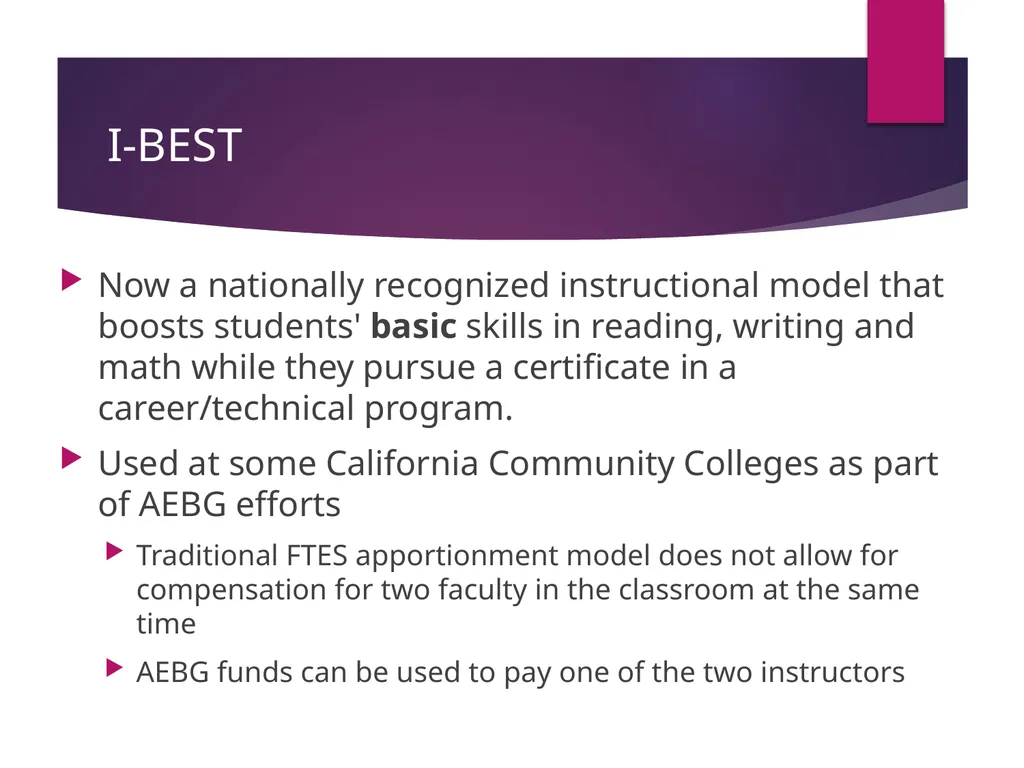
I-BEST: Integrated Basic Education Skills Training Initially a demonstration project in 10 WA CCs (2004)
Designed to reach students with limited English proficiency seeking the skills that lead to higher wage and higher skills jobs
Classroom teams of English as a second language (ESL)/adult basic education (ABE) instructors and professional-technical instructors, who co-teach an integrated course of language and vocational skills training at the same time
Shifted traditional teaching ESL within context of family & citizenship (social environment) to teaching students how to learn language and college study skills within context of and along with workforce education
I-BEST Now a nationally recognized instructional model that boosts students' basic skills in reading, writing and math while they pursue a certificate in a career/technical program.
Used at some California Community Colleges as part of AEBG efforts
Traditional FTES apportionment model does not allow for compensation for two faculty in the classroom at the same time
AEBG funds can be used to pay one of the two instructors<br>
11
Mt. SAC School of Continuing Education Existing models of noncredit contextualized courses<br>
12
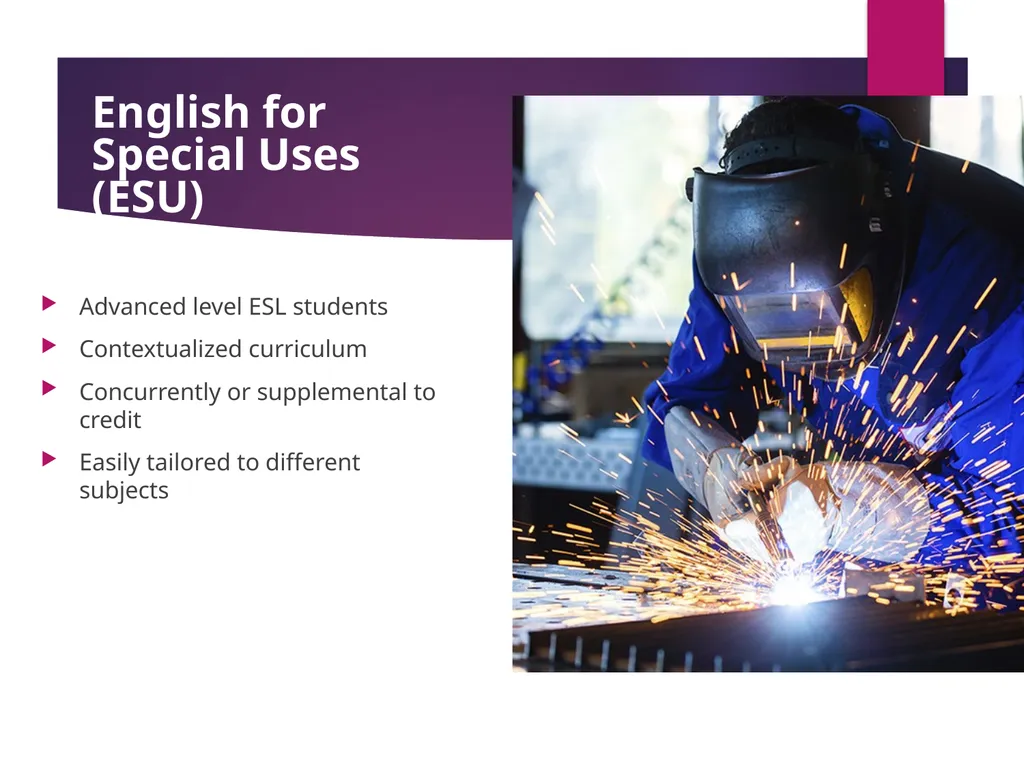
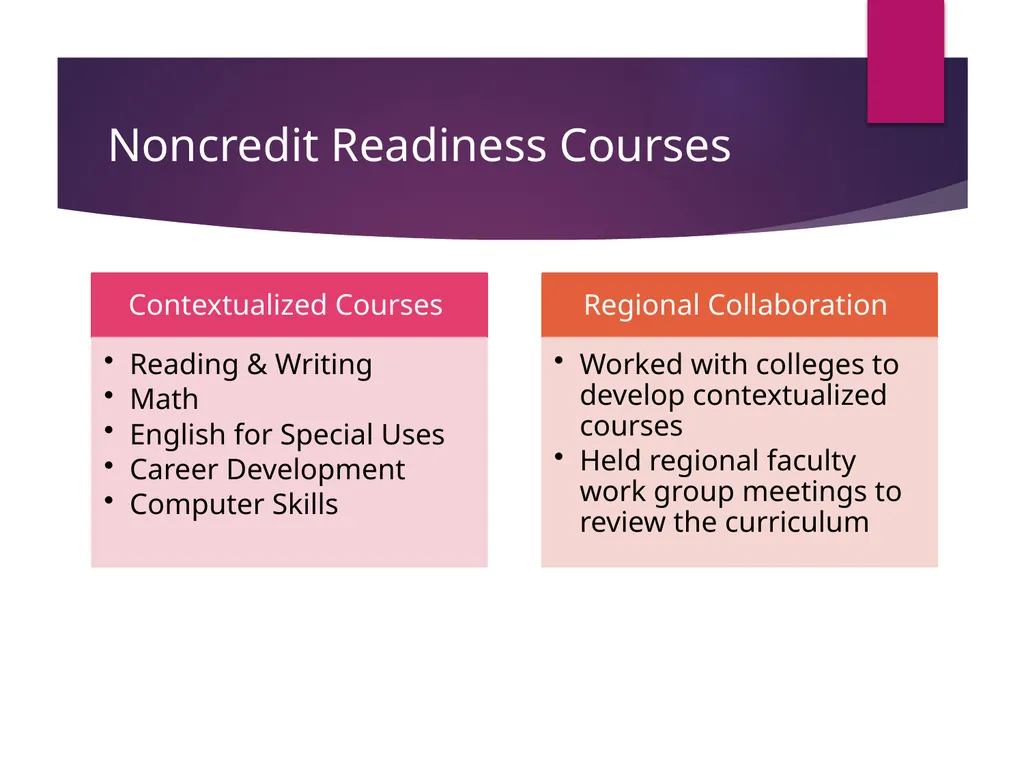
English for Special Uses (ESU) Advanced level ESL students
Contextualized curriculum
Concurrently or supplemental to credit
Easily tailored to different subjects<br>
13
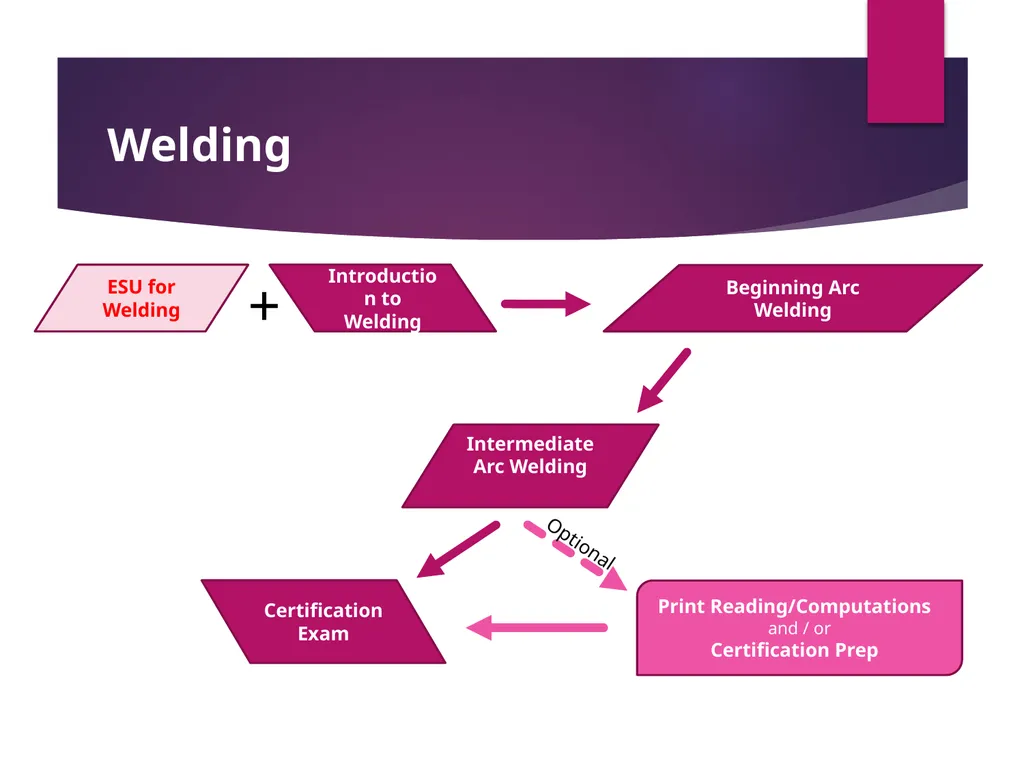
Welding<br>
14
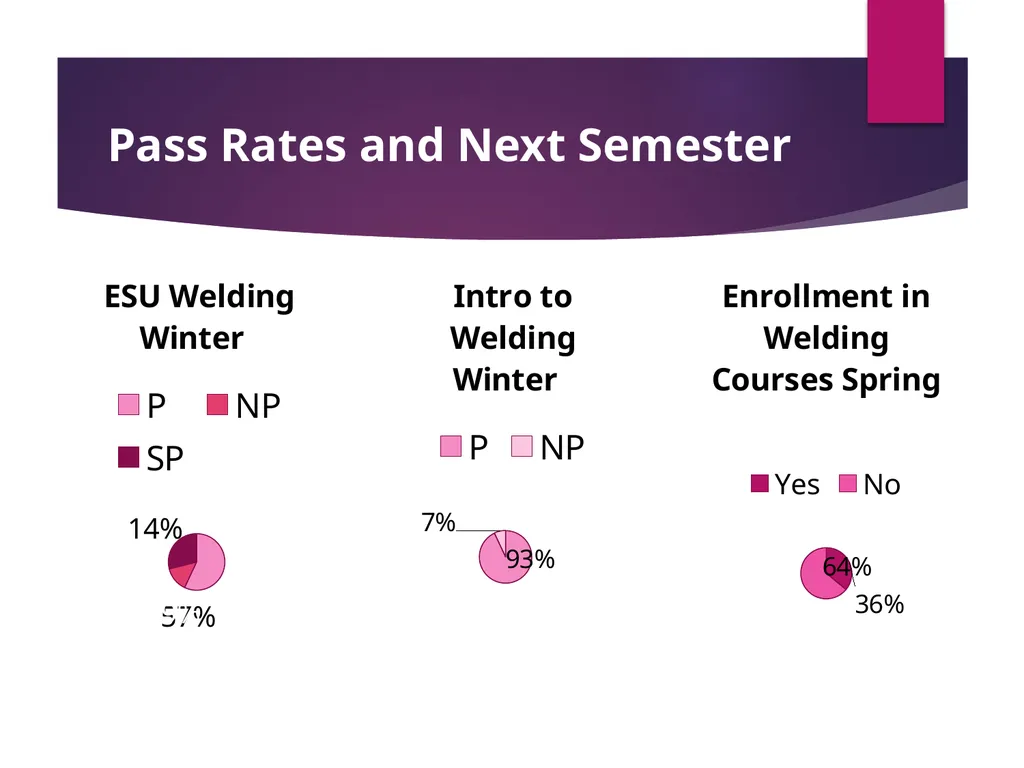
Pass Rates and Next Semester<br>
15
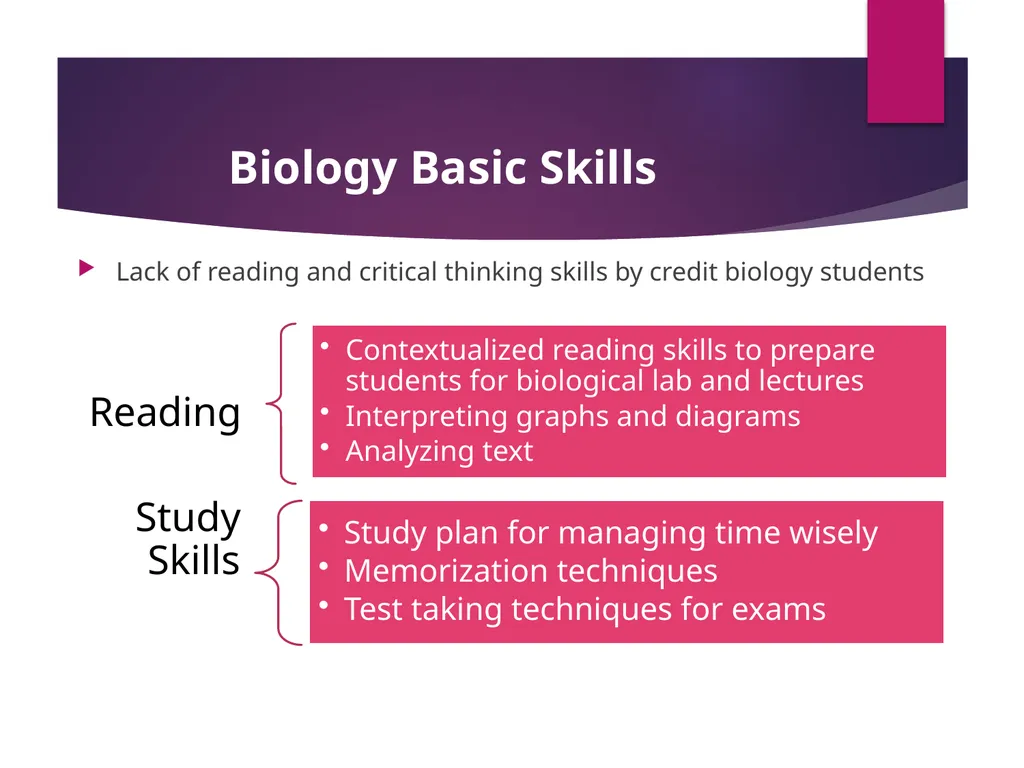
Biology Basic Skills Lack of reading and critical thinking skills by credit biology students<br>
16
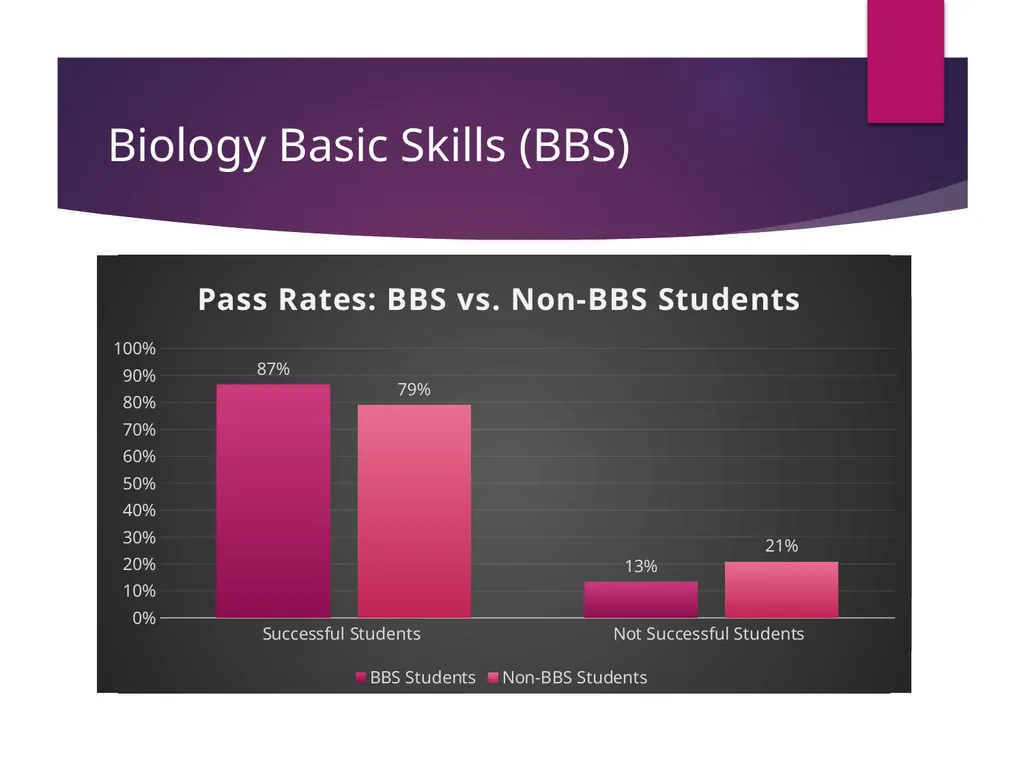
Biology Basic Skills (BBS)<br>
17
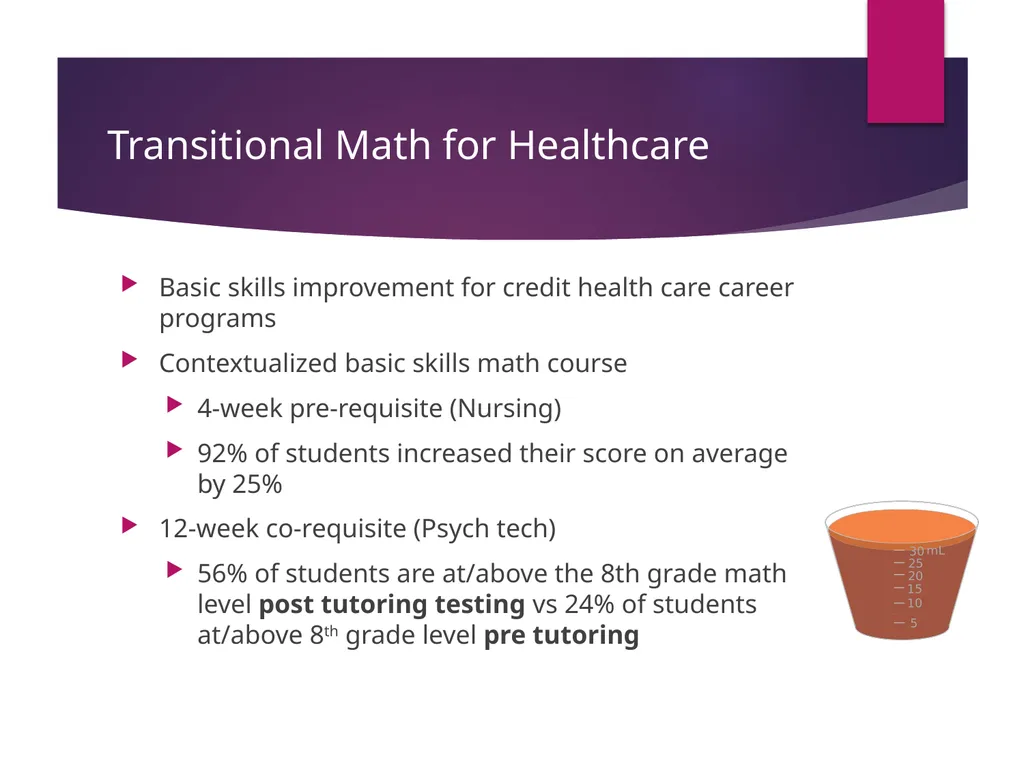
Transitional Math for Healthcare Basic skills improvement for credit health care career programs
Contextualized basic skills math course
4-week pre-requisite (Nursing)
92% of students increased their score on average by 25%
12-week co-requisite (Psych tech)
56% of students are at/above the 8th grade math level post tutoring testing vs 24% of students at/above 8th grade level pre tutoring<br>
18
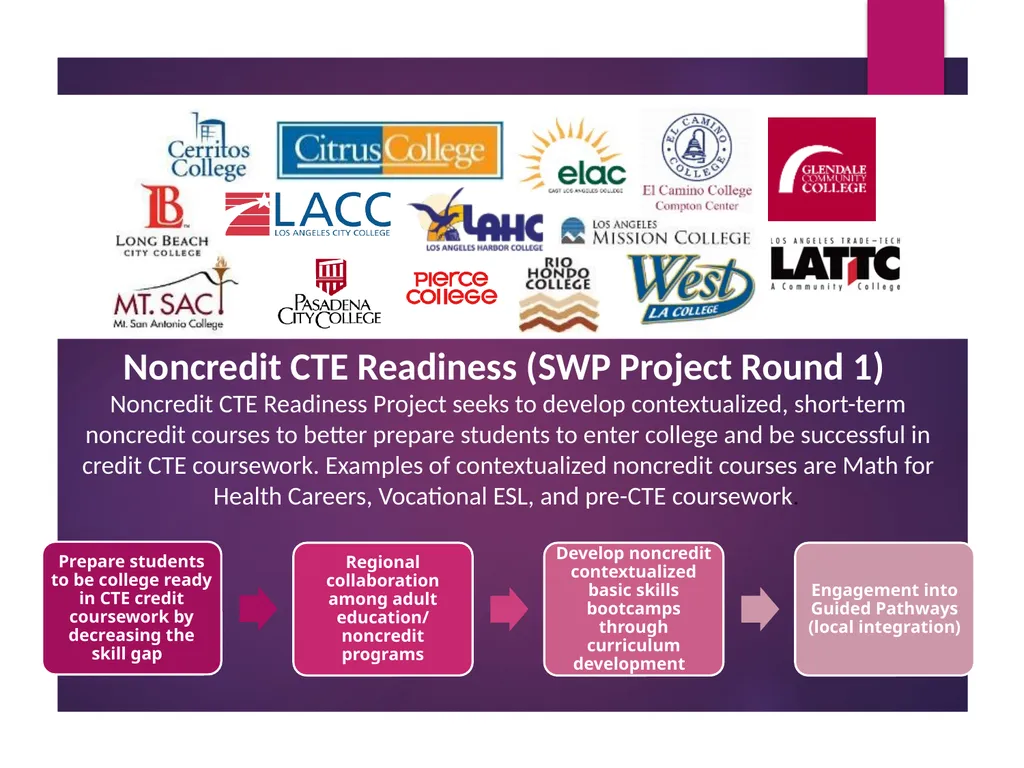
Noncredit CTE Readiness (SWP Project Round 1)
Noncredit CTE Readiness Project seeks to develop contextualized, short-term noncredit courses to better prepare students to enter college and be successful in credit CTE coursework. Examples of contextualized noncredit courses are Math for Health Careers, Vocational ESL, and pre-CTE coursework.<br>
Resources Contextualized Teaching and Learning: A Faculty Primer (ASCCC Paper, Spring 2009) In association with the Academic Senate for California Community Colleges, Center for Student Success/RP Group, Basic Skills Initiative, Bay Area Workforce Funding Collaborative, and funded by the California Community Chancellor’s Office. http://asccc.org/papers/contextualized-teaching-learning-faculty-primer
Facilitating Student Learning Through Contextualization (Dolores Perin, February 2011) A resource published by the Community College Research Center. http://ccrc.tc.columbia.edu/media/k2/attachments/facilitating-learning-contextualization-working-paper.pdf
The Theory and Application of Contextualized Teaching and Learning in Relation to Programs of Study and Career Pathways (Kalchik & Oertle, September 2010) Article published by the Office of Community College Research and Leadership at University of Illinois. http://files.eric.ed.gov/fulltext/ED513404.pdf<br>
23
Resources Contextual Learning - CORD Center for Occupational Research and Development (CORD) is a national nonprofit dedicated to leading change in education. It is committed to supporting educators who use contextual teaching strategies. This section of the CORD Web site offers general information about contextual teaching and learning, research papers, and descriptions of contextual materials developed by CORD. http://www.cord.org/contextual-teaching-and-learning/
Contextualized Teaching and Learning Overview: Students and Faculty Talk (Video – Career Ladders Project, December 2010) Key CTL issues are illustrated using interviews with faculty and students. https://www.youtube.com/watch?v=BuRKVjyLEVI<br>