
Coordination Saves Lives Community Responder






Description: Coordination Saves Lives Community Responder Training How to get the best training result Name Presentation Title: ToT Session 2 PresenterInstructor: Community Responder Training Coordination Saves Lives How to get the best training
Related Topics
Download Presentation
"Coordination Saves Lives Community Responder" is the property of its rightful owner. Permission is granted to download and print the materials on this website for personal, non-commercial use only, and to display it on your personal computer provided you do not modify the materials and that you retain all copyright notices contained in the materials. By downloading content from our website, you accept the terms of this agreement.
Presentation Transcript
slide1. Coordination Saves Lives Community Responder Training How to get the best training result <Name> Presentation Title: ToT – Session 2 Presenter/Instructor:<br>
slide2. Community Responder Training Coordination Saves Lives How to get the best training result Using Group Work
The “Hands-On” Approach
Mixing Theory and Practical Elements<br>
slide3. knowing the difference between child orientated learning and adult education
understanding the challenges in adult learning
recognizing the potential of the “hands-on” approach Session Goals<br>
slide4. A learning theory for adult education that fits perfect for the better understanding of the topics.
Active participation is the key! Participants should reflect upon what they are doing.
Four key elements are:
Active involvement of the participants
Analyzing the experience
Evaluation of practical sessions
Use of knowledge gained from the experience Experimental Learning<br>
slide5. Experimental Learning: Participant Engagement involve participants in planning their learning
Learners deciding on their learning goals will be more motivated!
encourage critical reflection
Ask for feedback, introduce self-evaluation to track own learning progress.
create a story
Help to overcome challenges related to the new topic.<br>
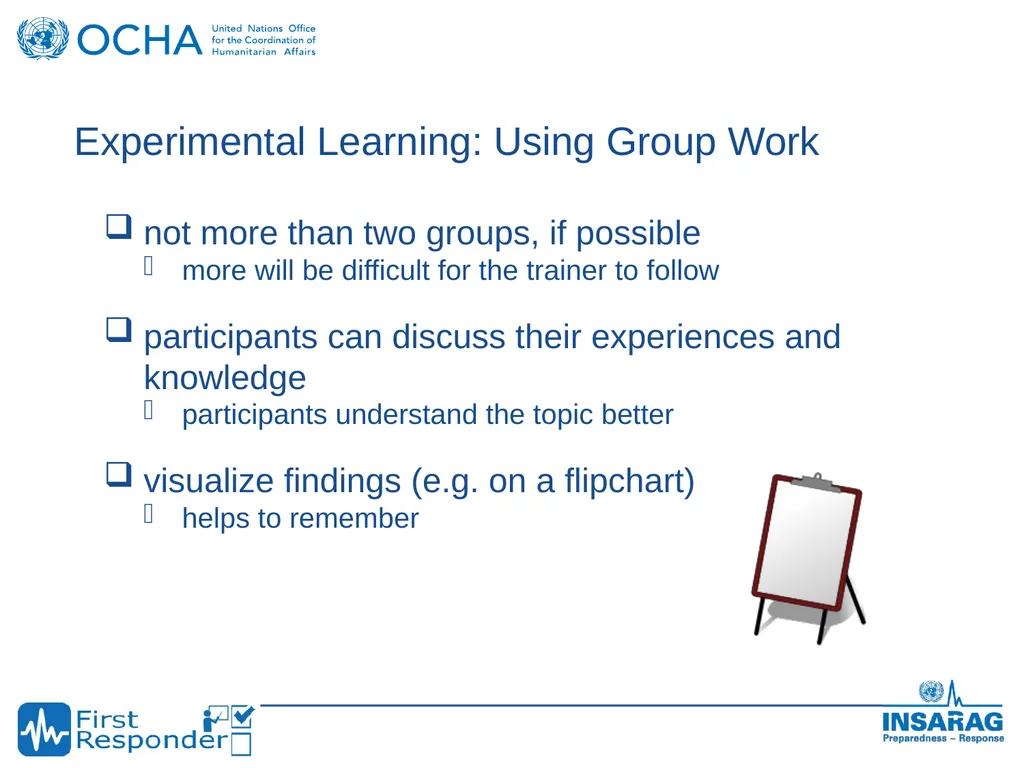
slide6. not more than two groups, if possible
more will be difficult for the trainer to follow
participants can discuss their experiences and knowledge
participants understand the topic better
visualize findings (e.g. on a flipchart)
helps to remember Experimental Learning: Using Group Work<br>
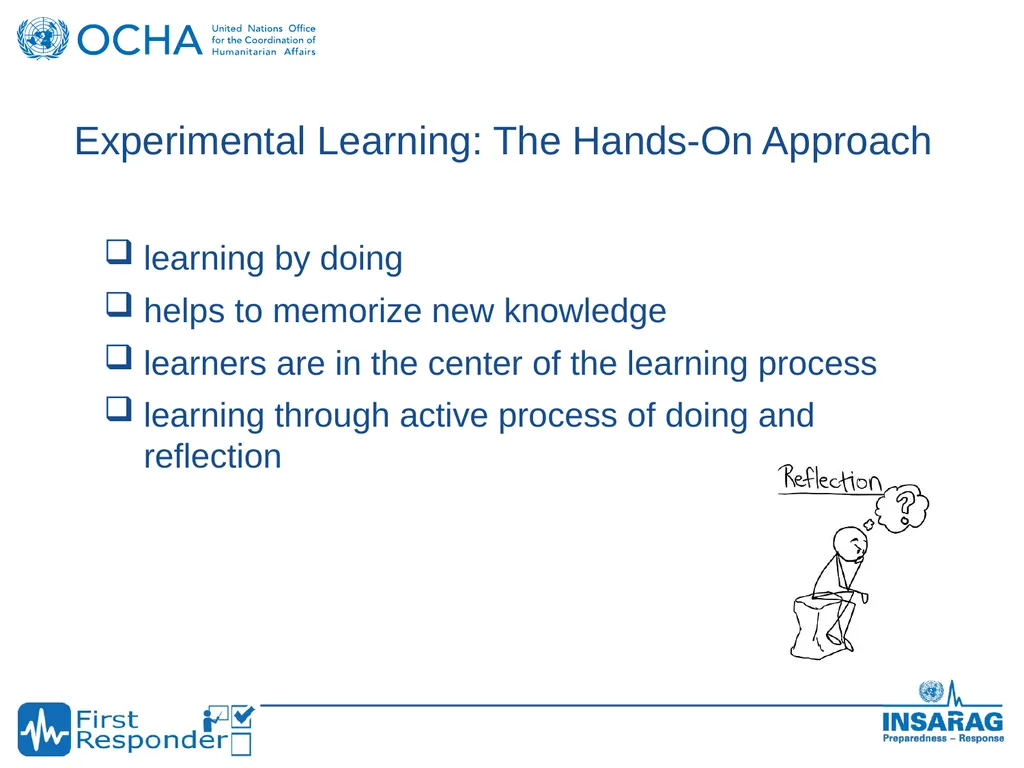
slide7. learning by doing
helps to memorize new knowledge
learners are in the center of the learning process
learning through active process of doing and reflection Experimental Learning: The Hands-On Approach<br>
slide8. You have 20 minutes for discussion and 5 minutes per group to present the results.
Please discuss:
What could be challenges in adult education that make learning difficult? Group Work:<br>
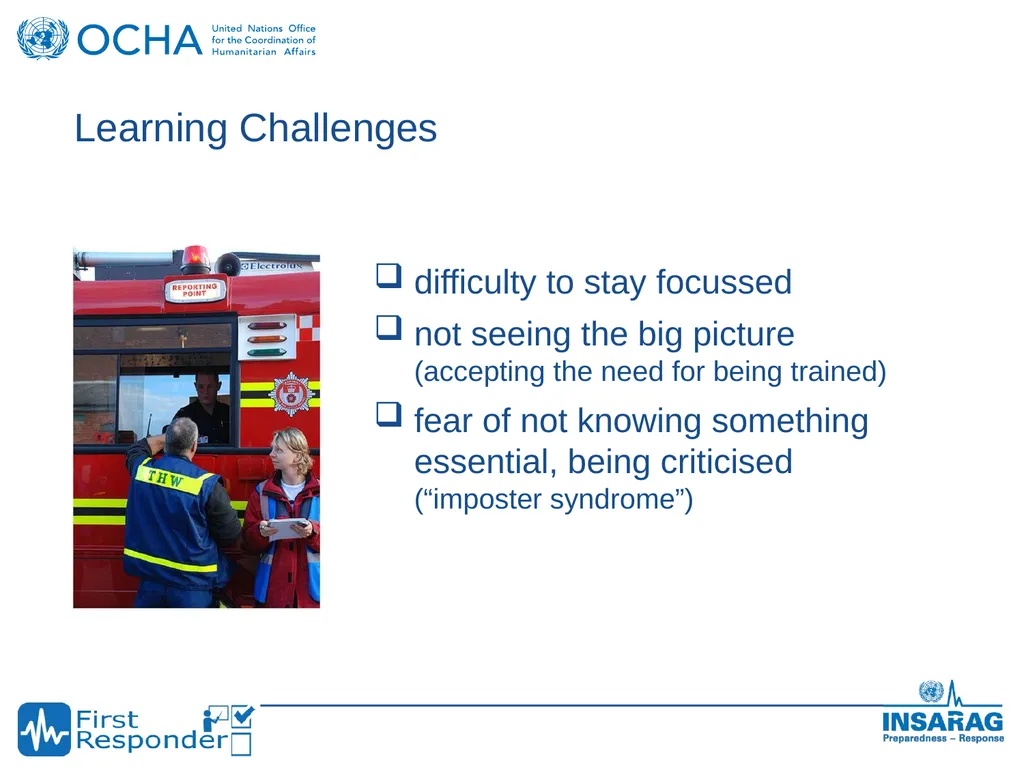
slide9. difficulty to stay focussed
not seeing the big picture (accepting the need for being trained)
fear of not knowing something essential, being criticised (“imposter syndrome”) Learning Challenges<br>
slide10. Questions Cuestión La question الأسئلة въпроси 问题 otázky spørgsmål vragen küsimused kysymykset Fragen सवालों के जवाब pertanyaan domande 質問 perguntas вопросов sorular ?<br>
slide2. Community Responder Training Coordination Saves Lives How to get the best training result Using Group Work
The “Hands-On” Approach
Mixing Theory and Practical Elements<br>
slide3. knowing the difference between child orientated learning and adult education
understanding the challenges in adult learning
recognizing the potential of the “hands-on” approach Session Goals<br>
slide4. A learning theory for adult education that fits perfect for the better understanding of the topics.
Active participation is the key! Participants should reflect upon what they are doing.
Four key elements are:
Active involvement of the participants
Analyzing the experience
Evaluation of practical sessions
Use of knowledge gained from the experience Experimental Learning<br>
slide5. Experimental Learning: Participant Engagement involve participants in planning their learning
Learners deciding on their learning goals will be more motivated!
encourage critical reflection
Ask for feedback, introduce self-evaluation to track own learning progress.
create a story
Help to overcome challenges related to the new topic.<br>
slide6. not more than two groups, if possible
more will be difficult for the trainer to follow
participants can discuss their experiences and knowledge
participants understand the topic better
visualize findings (e.g. on a flipchart)
helps to remember Experimental Learning: Using Group Work<br>
slide7. learning by doing
helps to memorize new knowledge
learners are in the center of the learning process
learning through active process of doing and reflection Experimental Learning: The Hands-On Approach<br>
slide8. You have 20 minutes for discussion and 5 minutes per group to present the results.
Please discuss:
What could be challenges in adult education that make learning difficult? Group Work:<br>
slide9. difficulty to stay focussed
not seeing the big picture (accepting the need for being trained)
fear of not knowing something essential, being criticised (“imposter syndrome”) Learning Challenges<br>
slide10. Questions Cuestión La question الأسئلة въпроси 问题 otázky spørgsmål vragen küsimused kysymykset Fragen सवालों के जवाब pertanyaan domande 質問 perguntas вопросов sorular ?<br>