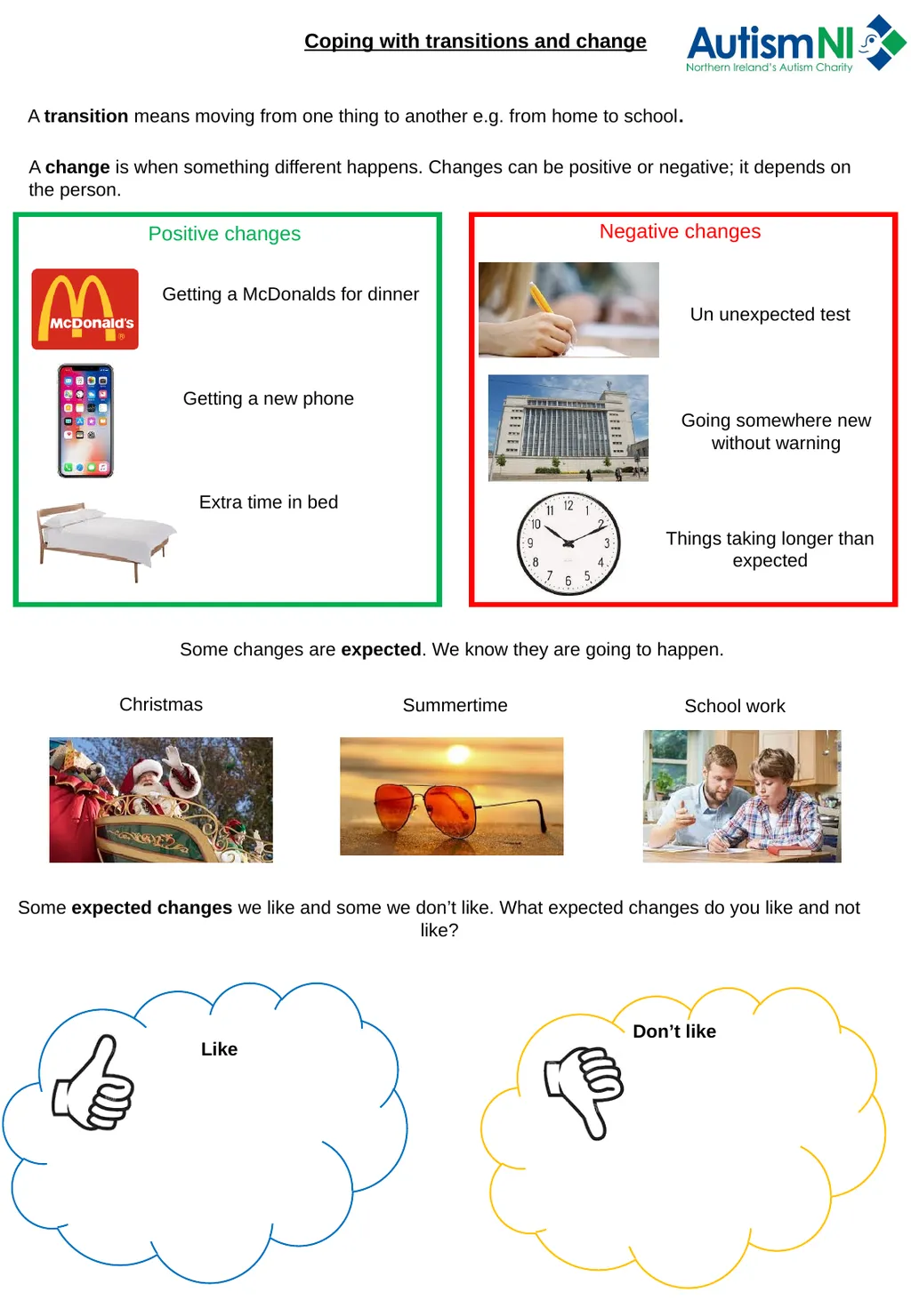
Coping with transitions and change A change is when something different happens. Changes can be positive or negative; it depends on the person. Positive changes Negative changes Getting a McDonalds for dinner Getting a new phone Extra time
"Coping with transitions and change A change is" is the property of its rightful owner. Permission is granted to
download and print the materials on this website for personal, non-commercial use only, and to display it
on your personal computer provided you do not modify the materials and that you retain all copyright
notices contained in the materials. By downloading content from our website, you accept the terms of this
agreement.
Presentation Transcript
01
Coping with transitions and change A change is when something different happens. Changes can be positive or negative; it depends on the person. Positive changes Negative changes Getting a McDonalds for dinner Getting a new phone Extra time in bed Things taking longer than expected Going somewhere new without warning Un unexpected test Some changes are expected. We know they are going to happen. Christmas Summertime School work Some expected changes we like and some we don’t like. What expected changes do you like and not like? Like Don’t like A transition means moving from one thing to another e.g. from home to school.<br>
02
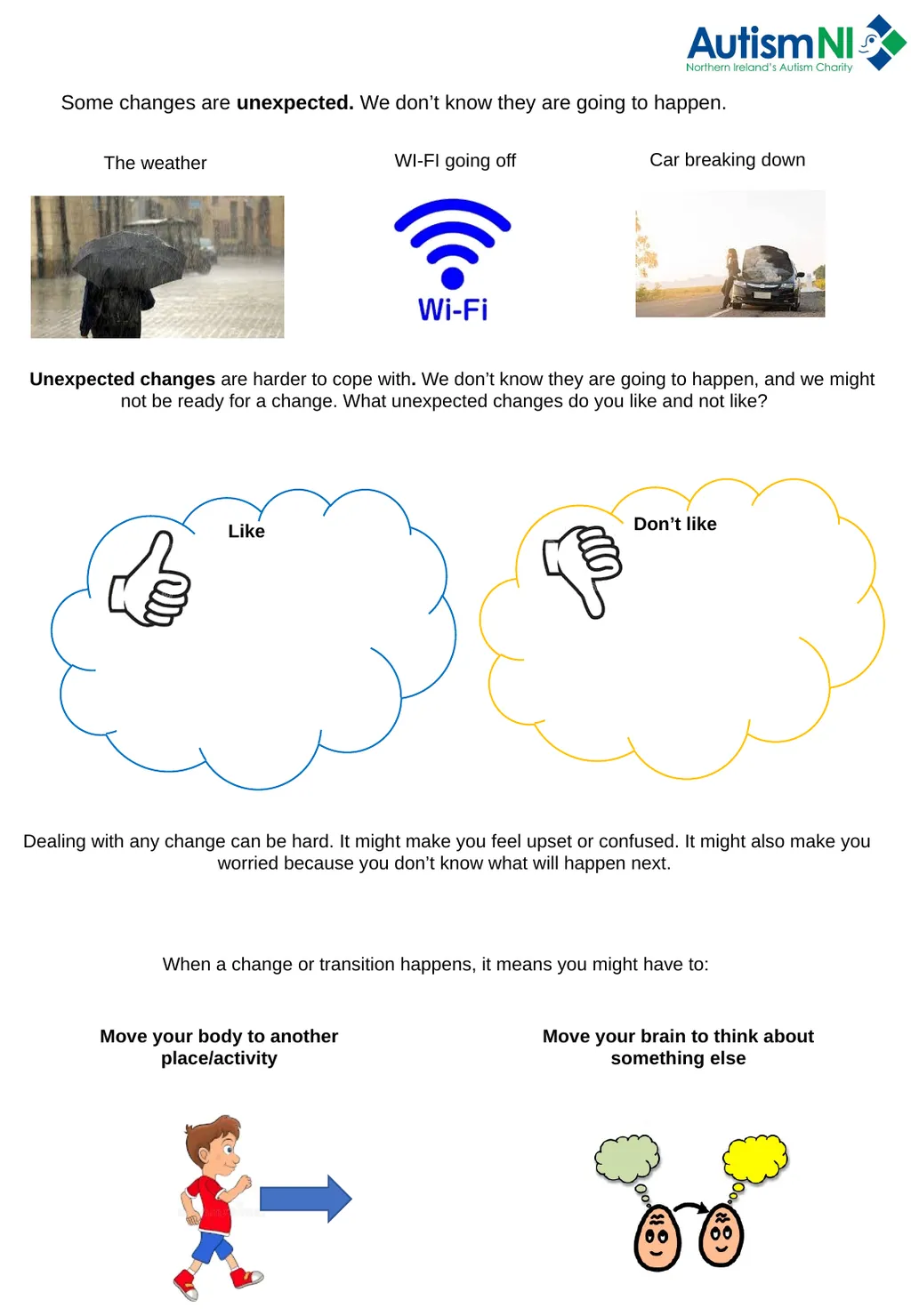
Some changes are unexpected. We don’t know they are going to happen. The weather WI-FI going off Car breaking down Unexpected changes are harder to cope with. We don’t know they are going to happen, and we might not be ready for a change. What unexpected changes do you like and not like? Like Don’t like Dealing with any change can be hard. It might make you feel upset or confused. It might also make you worried because you don’t know what will happen next. When a change or transition happens, it means you might have to: Move your body to another place/activity Move your brain to think about something else<br>
03
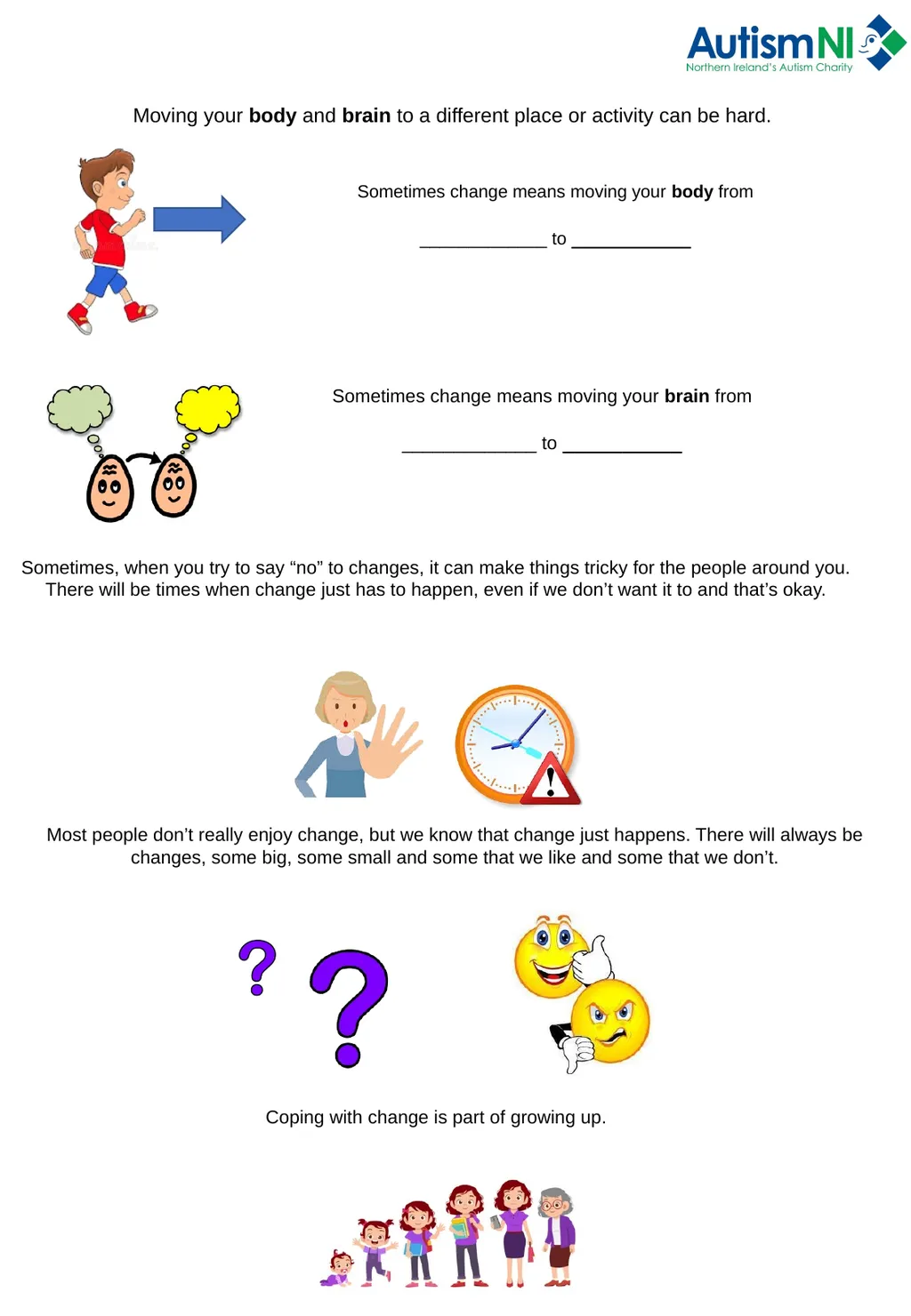
Moving your body and brain to a different place or activity can be hard. Sometimes change means moving your body from _____________ to __________ Sometimes change means moving your brain from _____________ to __________ Sometimes, when you try to say “no” to changes, it can make things tricky for the people around you. There will be times when change just has to happen, even if we don’t want it to and that’s okay. Most people don’t really enjoy change, but we know that change just happens. There will always be changes, some big, some small and some that we like and some that we don’t. Coping with change is part of growing up.<br>
04
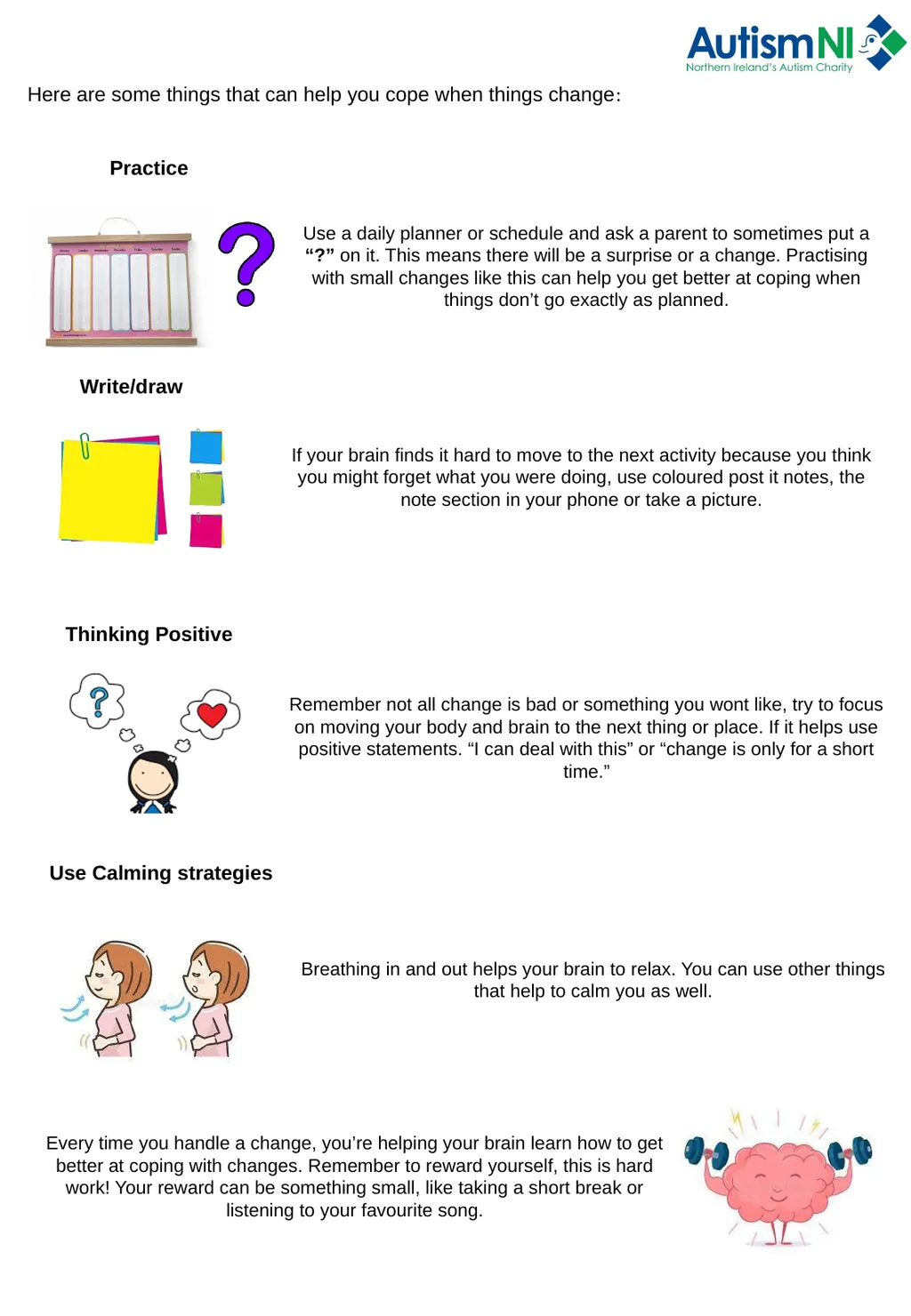
Here are some things that can help you cope when things change: Practice Write/draw Thinking Positive Use a daily planner or schedule and ask a parent to sometimes put a “?” on it. This means there will be a surprise or a change. Practising with small changes like this can help you get better at coping when things don’t go exactly as planned. If your brain finds it hard to move to the next activity because you think you might forget what you were doing, use coloured post it notes, the note section in your phone or take a picture. Remember not all change is bad or something you wont like, try to focus on moving your body and brain to the next thing or place. If it helps use positive statements. “I can deal with this” or “change is only for a short time.” Use Calming strategies Breathing in and out helps your brain to relax. You can use other things that help to calm you as well. Every time you handle a change, you’re helping your brain learn how to get better at coping with changes. Remember to reward yourself, this is hard work! Your reward can be something small, like taking a short break or listening to your favourite song.<br>