
Copyright Law & Policy: Advocating for Libraries
LS
Published · 22 slides · 0 views

1 / 1
Description
Copyright Law Policy: Advocating for Libraries Carrie Russell Office for Information Technology American Library Association 2016 Kraemer Copyright Conference University of Colorado Colorado Springs The Garden of the Gods!! June 7, 2016
Related Topics
Share
Embed code
Download this presentation From Below
"Copyright Law & Policy: Advocating for Libraries" is the property of its rightful owner. Permission is granted to download and print the materials on this website for personal, non-commercial use only, and to display it on your personal computer provided you do not modify the materials and that you retain all copyright notices contained in the materials. By downloading content from our website, you accept the terms of this agreement.
Presentation Transcript
01
Copyright Law & Policy: Advocating for Libraries Carrie Russell
Office for Information Technology
American Library Association
2016 Kraemer Copyright Conference
University of Colorado – Colorado Springs
The Garden of the Gods!!
June 7, 2016<br>
Office for Information Technology
American Library Association
2016 Kraemer Copyright Conference
University of Colorado – Colorado Springs
The Garden of the Gods!!
June 7, 2016<br>
02
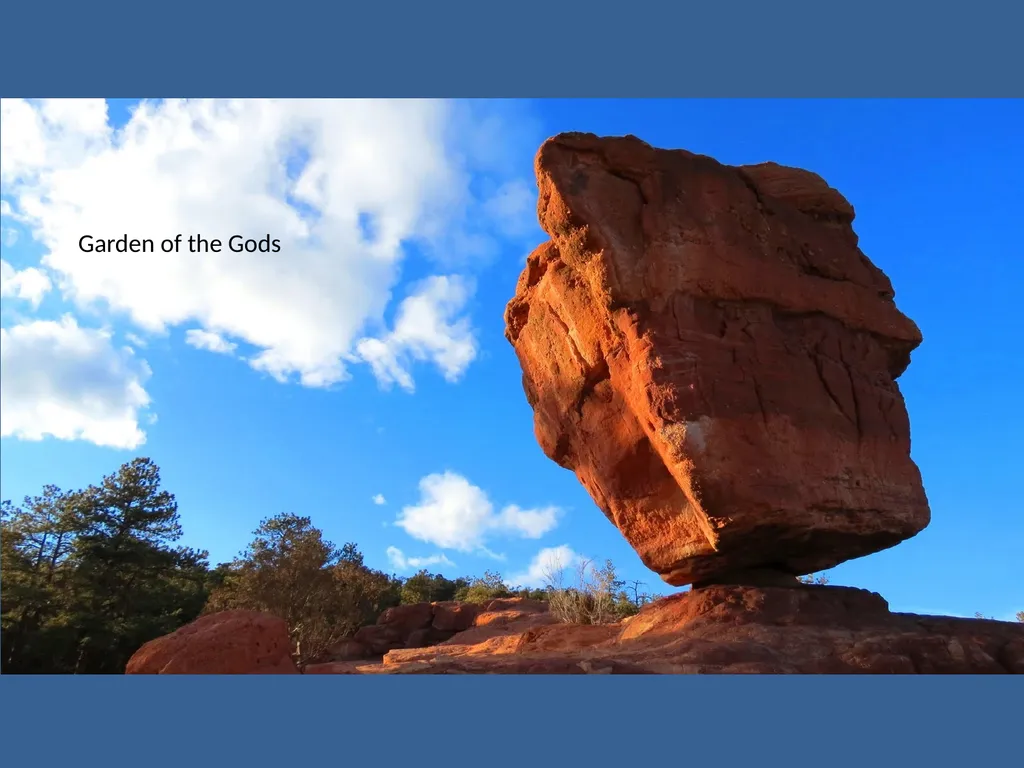
Garden of the Gods<br>
03
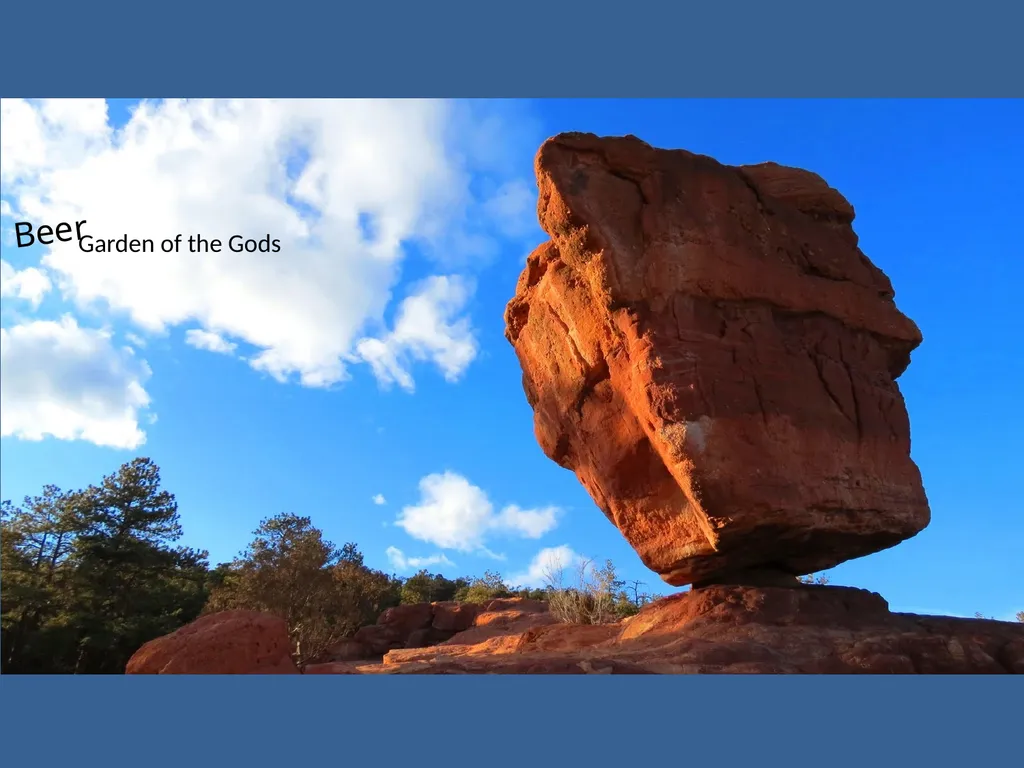
Garden of the Gods Beer<br>
04
The Plan Provide a brief DC legislative update
Tell you the cold, hard truth
Show you that it is not as bad as it seems
But then again, tell you the cold, hard truth
My thoughts – what you can do to advocate for the public’s right to information<br>
Tell you the cold, hard truth
Show you that it is not as bad as it seems
But then again, tell you the cold, hard truth
My thoughts – what you can do to advocate for the public’s right to information<br>
05
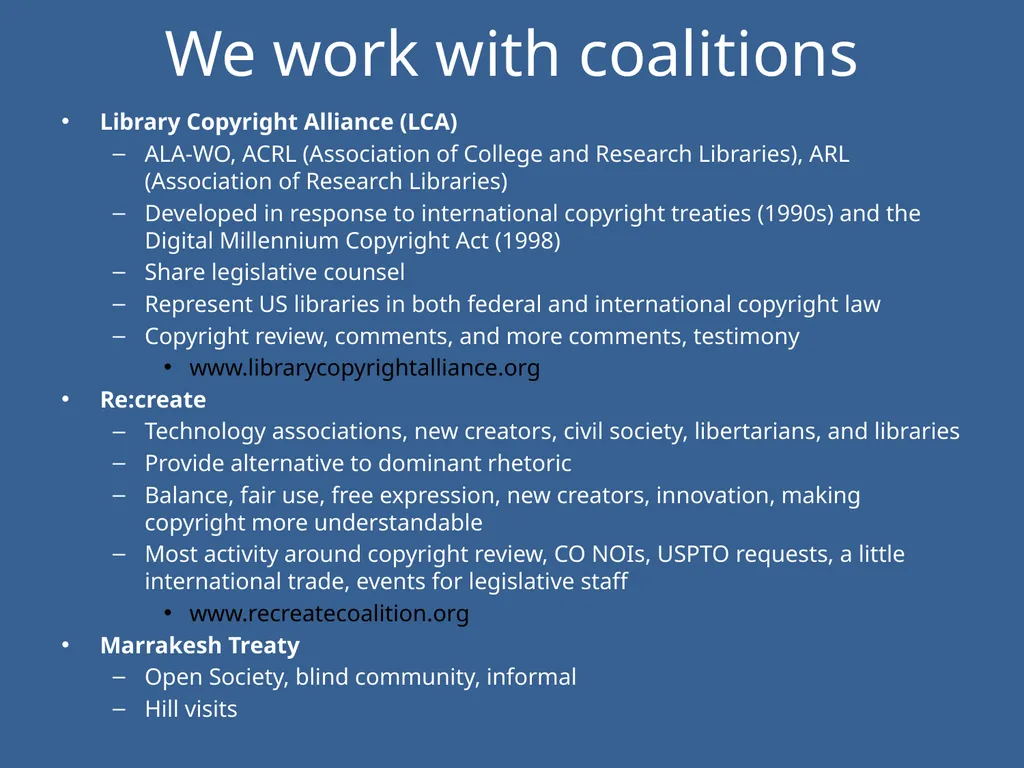
We work with coalitions Library Copyright Alliance (LCA)
ALA-WO, ACRL (Association of College and Research Libraries), ARL (Association of Research Libraries)
Developed in response to international copyright treaties (1990s) and the Digital Millennium Copyright Act (1998)
Share legislative counsel
Represent US libraries in both federal and international copyright law
Copyright review, comments, and more comments, testimony
www.librarycopyrightalliance.org
Re:create
Technology associations, new creators, civil society, libertarians, and libraries
Provide alternative to dominant rhetoric
Balance, fair use, free expression, new creators, innovation, making copyright more understandable
Most activity around copyright review, CO NOIs, USPTO requests, a little international trade, events for legislative staff
www.recreatecoalition.org
Marrakesh Treaty
Open Society, blind community, informal
Hill visits<br>
ALA-WO, ACRL (Association of College and Research Libraries), ARL (Association of Research Libraries)
Developed in response to international copyright treaties (1990s) and the Digital Millennium Copyright Act (1998)
Share legislative counsel
Represent US libraries in both federal and international copyright law
Copyright review, comments, and more comments, testimony
www.librarycopyrightalliance.org
Re:create
Technology associations, new creators, civil society, libertarians, and libraries
Provide alternative to dominant rhetoric
Balance, fair use, free expression, new creators, innovation, making copyright more understandable
Most activity around copyright review, CO NOIs, USPTO requests, a little international trade, events for legislative staff
www.recreatecoalition.org
Marrakesh Treaty
Open Society, blind community, informal
Hill visits<br>
06
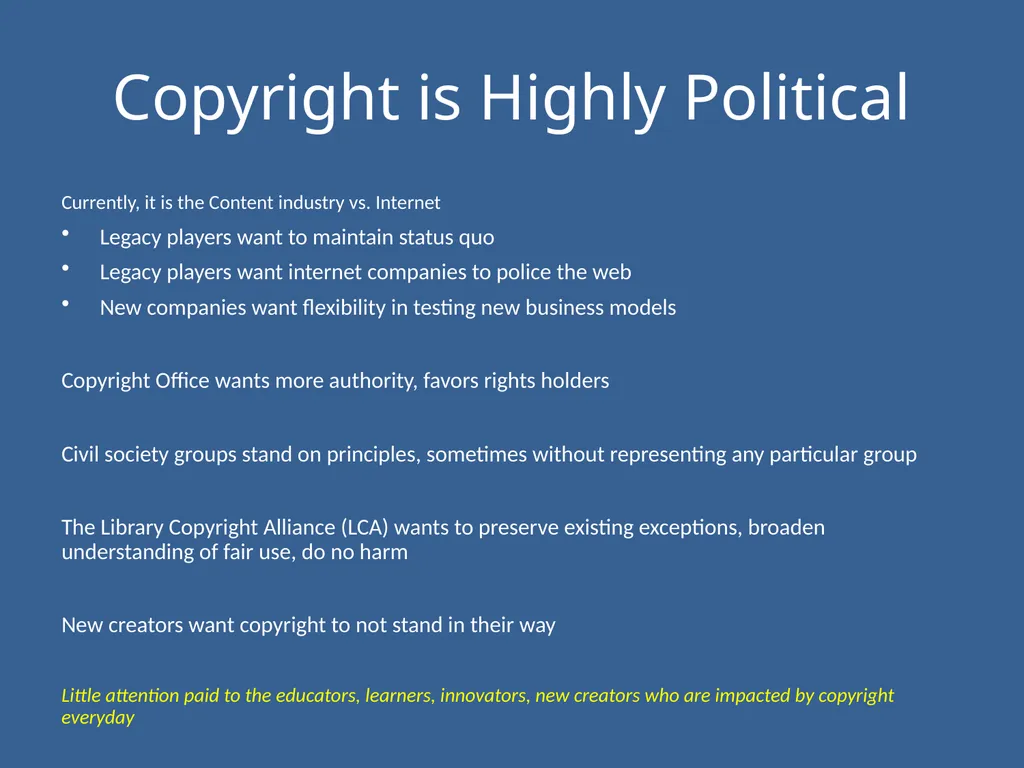
Copyright is Highly Political Currently, it is the Content industry vs. Internet
Legacy players want to maintain status quo
Legacy players want internet companies to police the web
New companies want flexibility in testing new business models
Copyright Office wants more authority, favors rights holders
Civil society groups stand on principles, sometimes without representing any particular group
The Library Copyright Alliance (LCA) wants to preserve existing exceptions, broaden understanding of fair use, do no harm
New creators want copyright to not stand in their way
Little attention paid to the educators, learners, innovators, new creators who are impacted by copyright everyday<br>
Legacy players want to maintain status quo
Legacy players want internet companies to police the web
New companies want flexibility in testing new business models
Copyright Office wants more authority, favors rights holders
Civil society groups stand on principles, sometimes without representing any particular group
The Library Copyright Alliance (LCA) wants to preserve existing exceptions, broaden understanding of fair use, do no harm
New creators want copyright to not stand in their way
Little attention paid to the educators, learners, innovators, new creators who are impacted by copyright everyday<br>
07
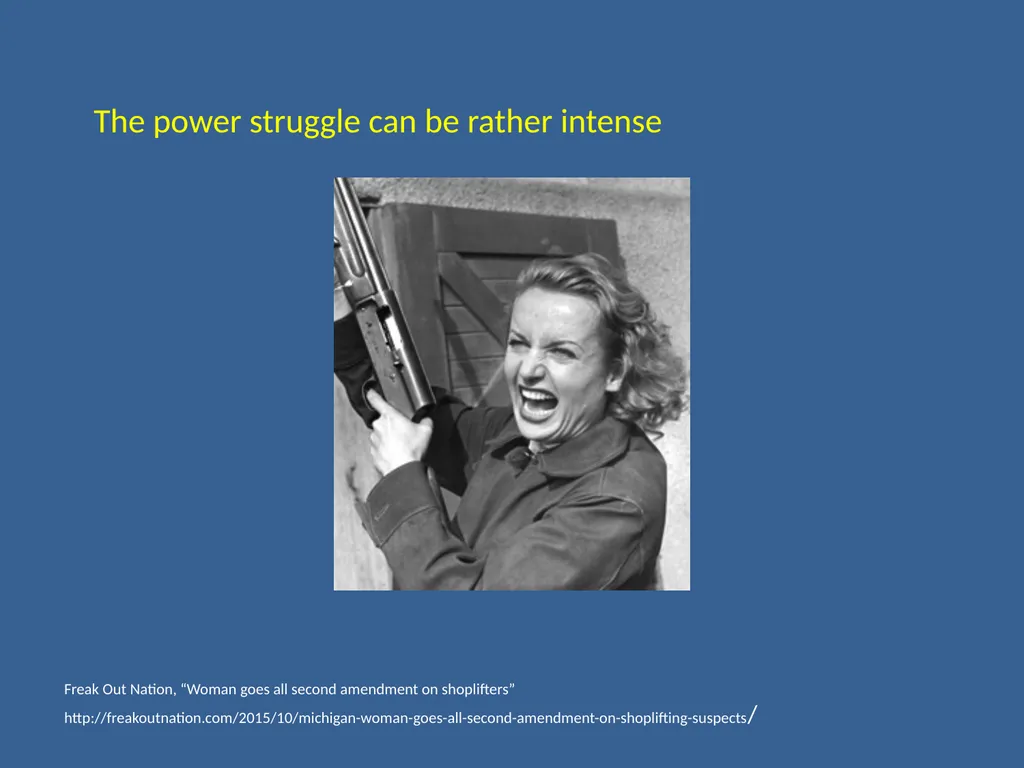
Freak Out Nation, “Woman goes all second amendment on shoplifters”
http://freakoutnation.com/2015/10/michigan-woman-goes-all-second-amendment-on-shoplifting-suspects/ The power struggle can be rather intense<br>
http://freakoutnation.com/2015/10/michigan-woman-goes-all-second-amendment-on-shoplifting-suspects/ The power struggle can be rather intense<br>
08
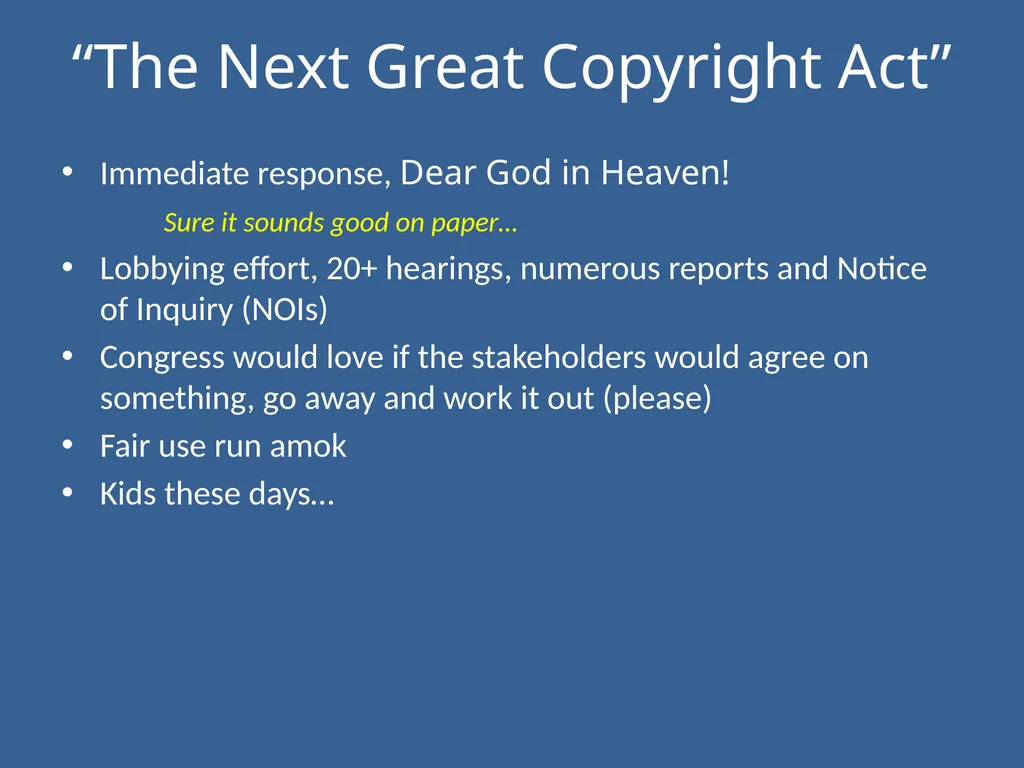
“The Next Great Copyright Act” Immediate response, Dear God in Heaven!
Sure it sounds good on paper…
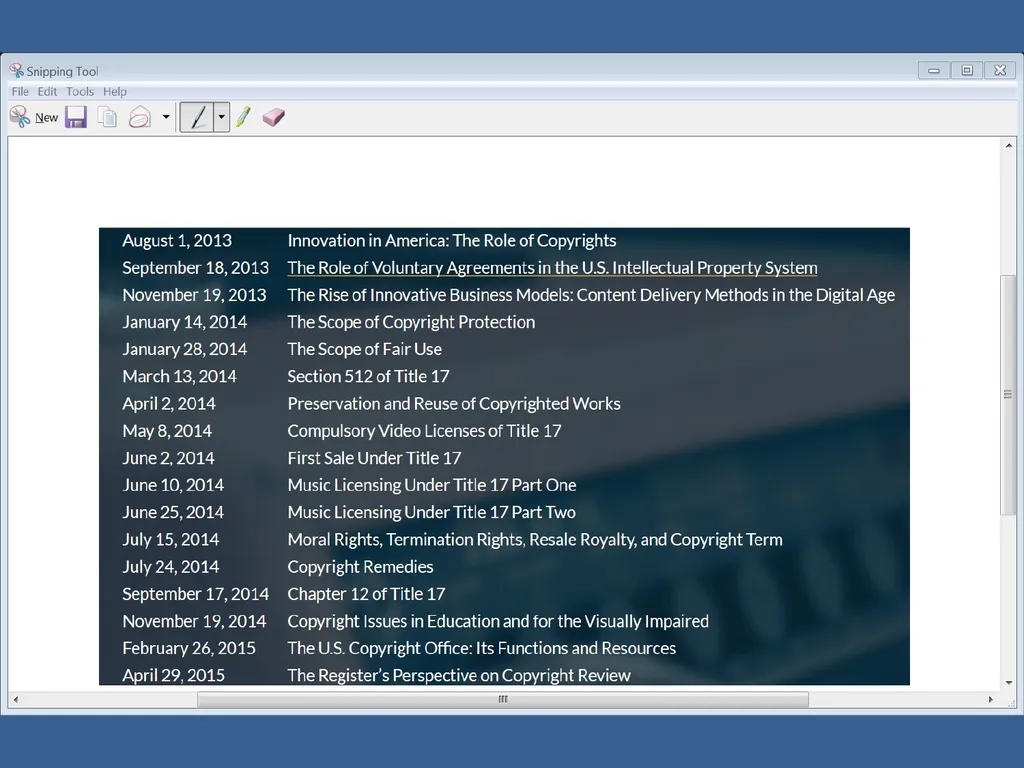
Lobbying effort, 20+ hearings, numerous reports and Notice of Inquiry (NOIs)
Congress would love if the stakeholders would agree on something, go away and work it out (please)
Fair use run amok
Kids these days…<br>
Sure it sounds good on paper…
Lobbying effort, 20+ hearings, numerous reports and Notice of Inquiry (NOIs)
Congress would love if the stakeholders would agree on something, go away and work it out (please)
Fair use run amok
Kids these days…<br>
09
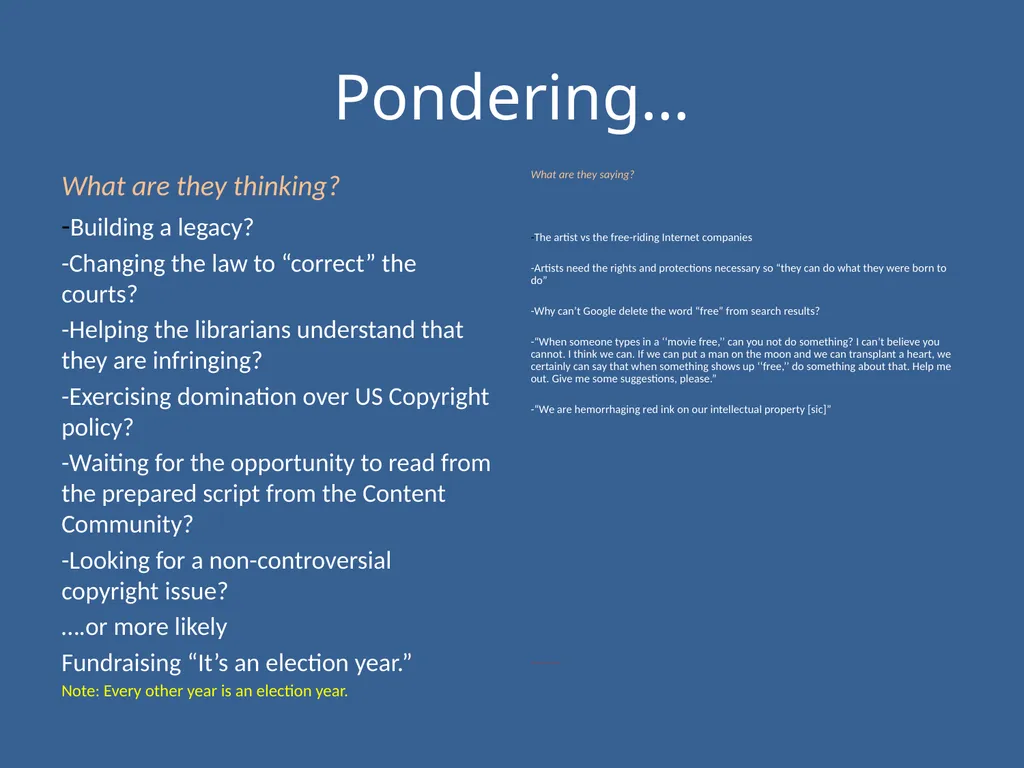
Pondering… What are they thinking?
-Building a legacy?
-Changing the law to “correct” the courts?
-Helping the librarians understand that they are infringing?
-Exercising domination over US Copyright policy?
-Waiting for the opportunity to read from the prepared script from the Content Community?
-Looking for a non-controversial copyright issue?
….or more likely
Fundraising “It’s an election year.”
Note: Every other year is an election year. What are they saying?
-The artist vs the free-riding Internet companies
-Artists need the rights and protections necessary so “they can do what they were born to do”
-Why can’t Google delete the word “free” from search results?
-“When someone types in a ‘‘movie free,’’ can you not do something? I can’t believe you cannot. I think we can. If we can put a man on the moon and we can transplant a heart, we certainly can say that when something shows up ‘‘free,’’ do something about that. Help me out. Give me some suggestions, please.”
-“We are hemorrhaging red ink on our intellectual property [sic]”
(All kinds of funny things!)<br>
-Building a legacy?
-Changing the law to “correct” the courts?
-Helping the librarians understand that they are infringing?
-Exercising domination over US Copyright policy?
-Waiting for the opportunity to read from the prepared script from the Content Community?
-Looking for a non-controversial copyright issue?
….or more likely
Fundraising “It’s an election year.”
Note: Every other year is an election year. What are they saying?
-The artist vs the free-riding Internet companies
-Artists need the rights and protections necessary so “they can do what they were born to do”
-Why can’t Google delete the word “free” from search results?
-“When someone types in a ‘‘movie free,’’ can you not do something? I can’t believe you cannot. I think we can. If we can put a man on the moon and we can transplant a heart, we certainly can say that when something shows up ‘‘free,’’ do something about that. Help me out. Give me some suggestions, please.”
-“We are hemorrhaging red ink on our intellectual property [sic]”
(All kinds of funny things!)<br>
10
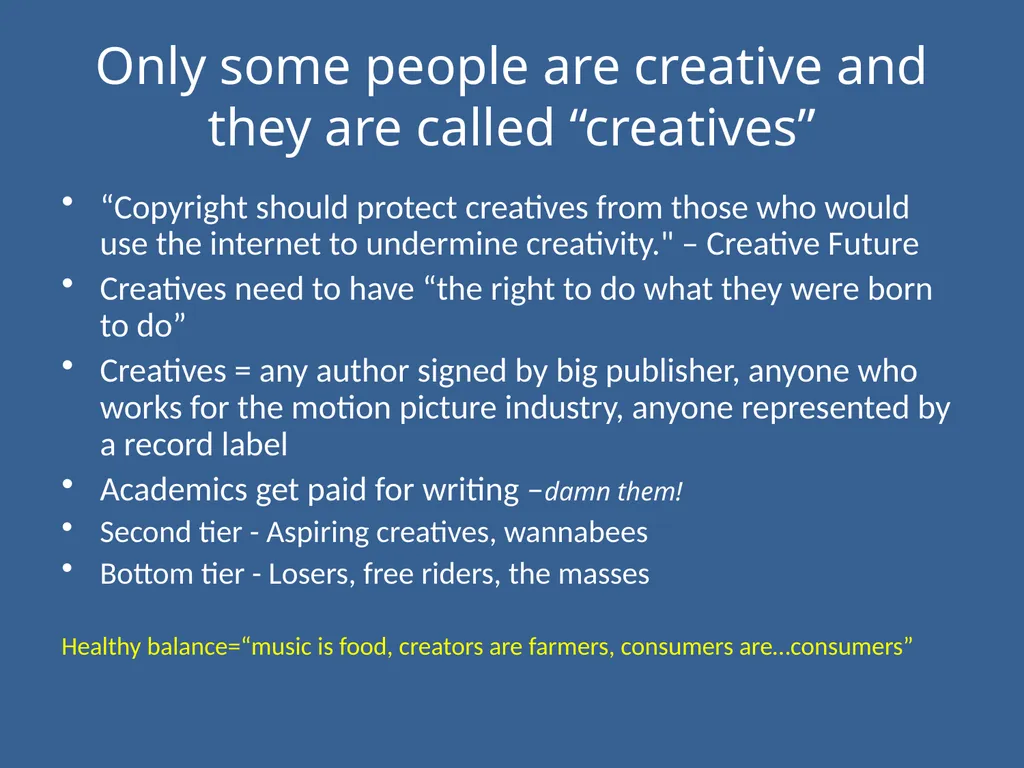
Only some people are creative and they are called “creatives” “Copyright should protect creatives from those who would use the internet to undermine creativity." – Creative Future
Creatives need to have “the right to do what they were born to do”
Creatives = any author signed by big publisher, anyone who works for the motion picture industry, anyone represented by a record label
Academics get paid for writing –damn them!
Second tier - Aspiring creatives, wannabees
Bottom tier - Losers, free riders, the masses
Healthy balance=“music is food, creators are farmers, consumers are…consumers”<br>
Creatives need to have “the right to do what they were born to do”
Creatives = any author signed by big publisher, anyone who works for the motion picture industry, anyone represented by a record label
Academics get paid for writing –damn them!
Second tier - Aspiring creatives, wannabees
Bottom tier - Losers, free riders, the masses
Healthy balance=“music is food, creators are farmers, consumers are…consumers”<br>
11
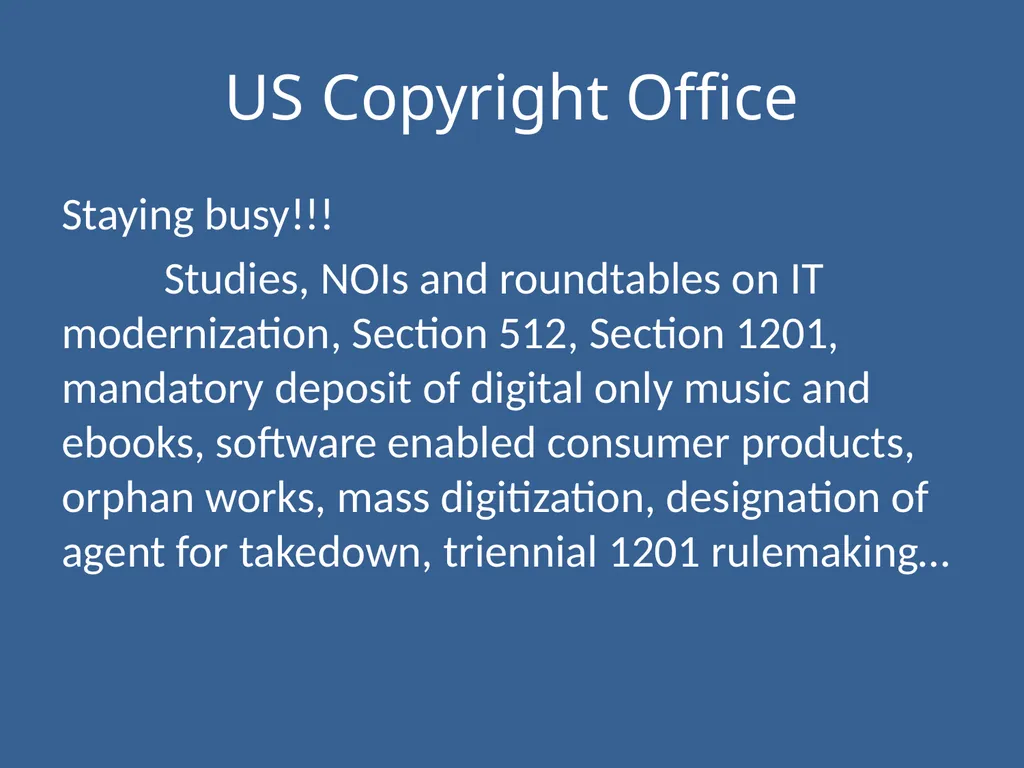
US Copyright Office Staying busy!!!
Studies, NOIs and roundtables on IT modernization, Section 512, Section 1201, mandatory deposit of digital only music and ebooks, software enabled consumer products, orphan works, mass digitization, designation of agent for takedown, triennial 1201 rulemaking…<br>
Studies, NOIs and roundtables on IT modernization, Section 512, Section 1201, mandatory deposit of digital only music and ebooks, software enabled consumer products, orphan works, mass digitization, designation of agent for takedown, triennial 1201 rulemaking…<br>
12
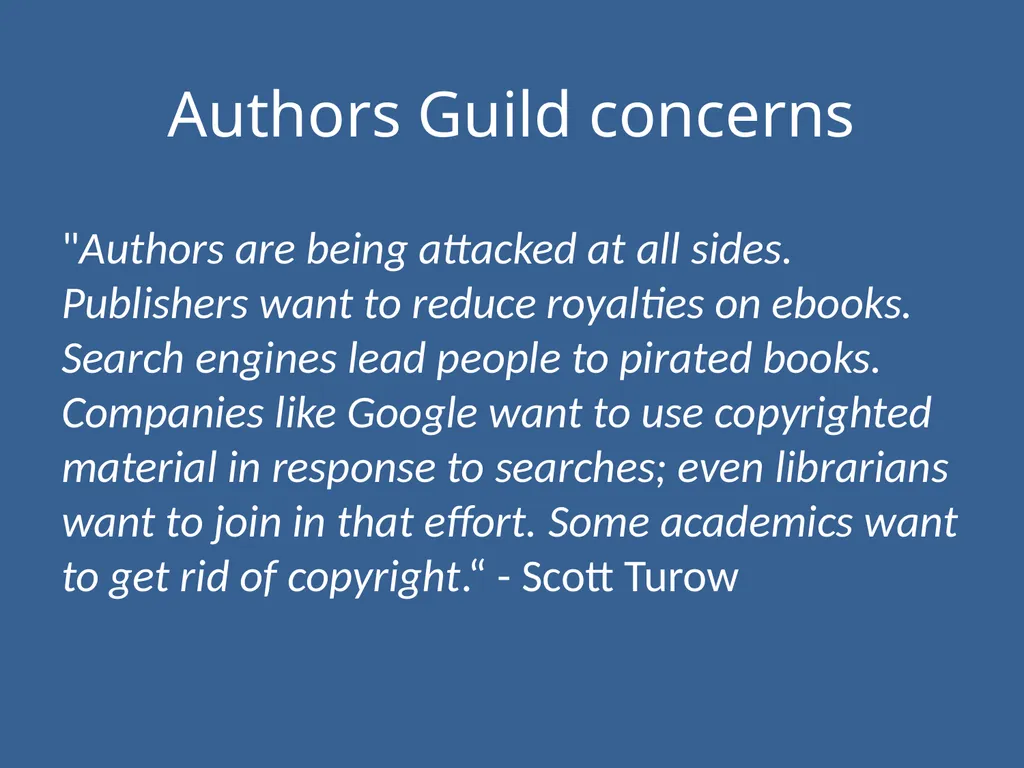
Authors Guild concerns "Authors are being attacked at all sides. Publishers want to reduce royalties on ebooks. Search engines lead people to pirated books. Companies like Google want to use copyrighted material in response to searches; even librarians want to join in that effort. Some academics want to get rid of copyright.“ - Scott Turow<br>
13
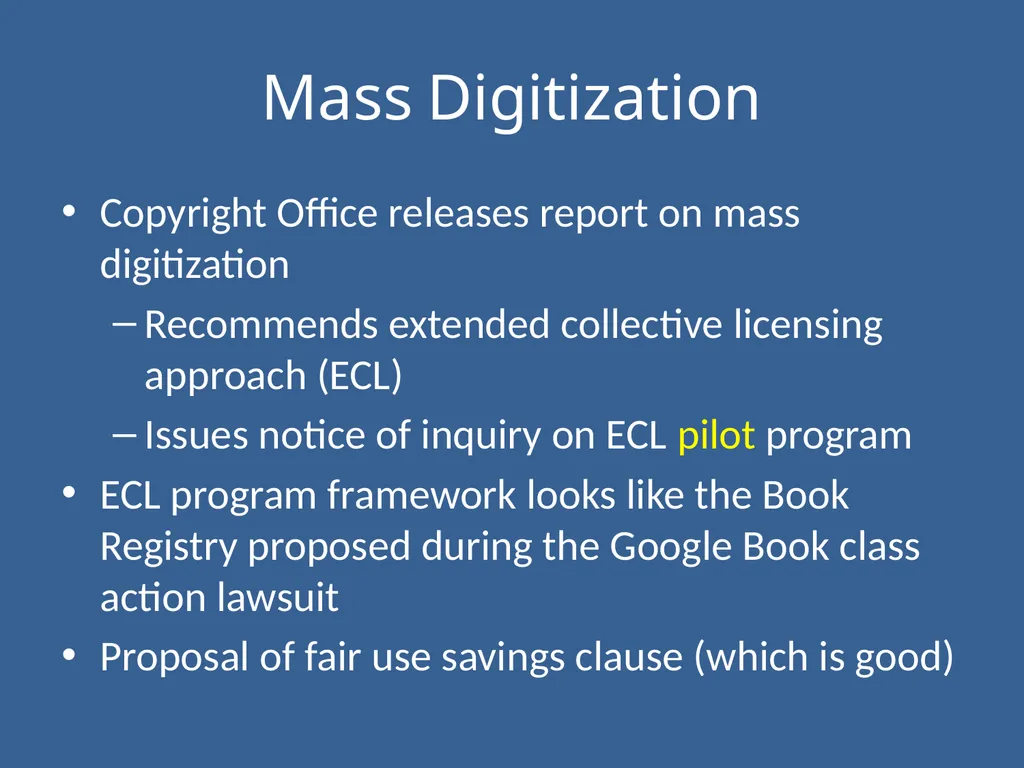
Mass Digitization Copyright Office releases report on mass digitization
Recommends extended collective licensing approach (ECL)
Issues notice of inquiry on ECL pilot program
ECL program framework looks like the Book Registry proposed during the Google Book class action lawsuit
Proposal of fair use savings clause (which is good)<br>
Recommends extended collective licensing approach (ECL)
Issues notice of inquiry on ECL pilot program
ECL program framework looks like the Book Registry proposed during the Google Book class action lawsuit
Proposal of fair use savings clause (which is good)<br>
14
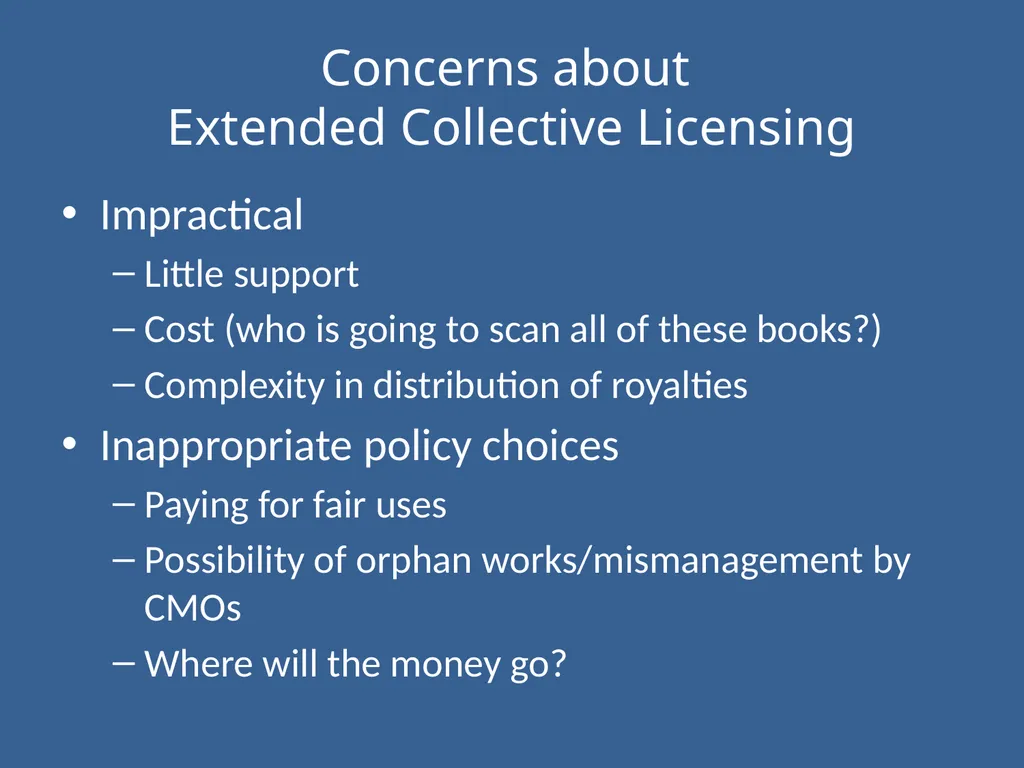
Concerns about
Extended Collective Licensing Impractical
Little support
Cost (who is going to scan all of these books?)
Complexity in distribution of royalties
Inappropriate policy choices
Paying for fair uses
Possibility of orphan works/mismanagement by CMOs
Where will the money go?<br>
Little support
Cost (who is going to scan all of these books?)
Complexity in distribution of royalties
Inappropriate policy choices
Paying for fair uses
Possibility of orphan works/mismanagement by CMOs
Where will the money go?<br>
15
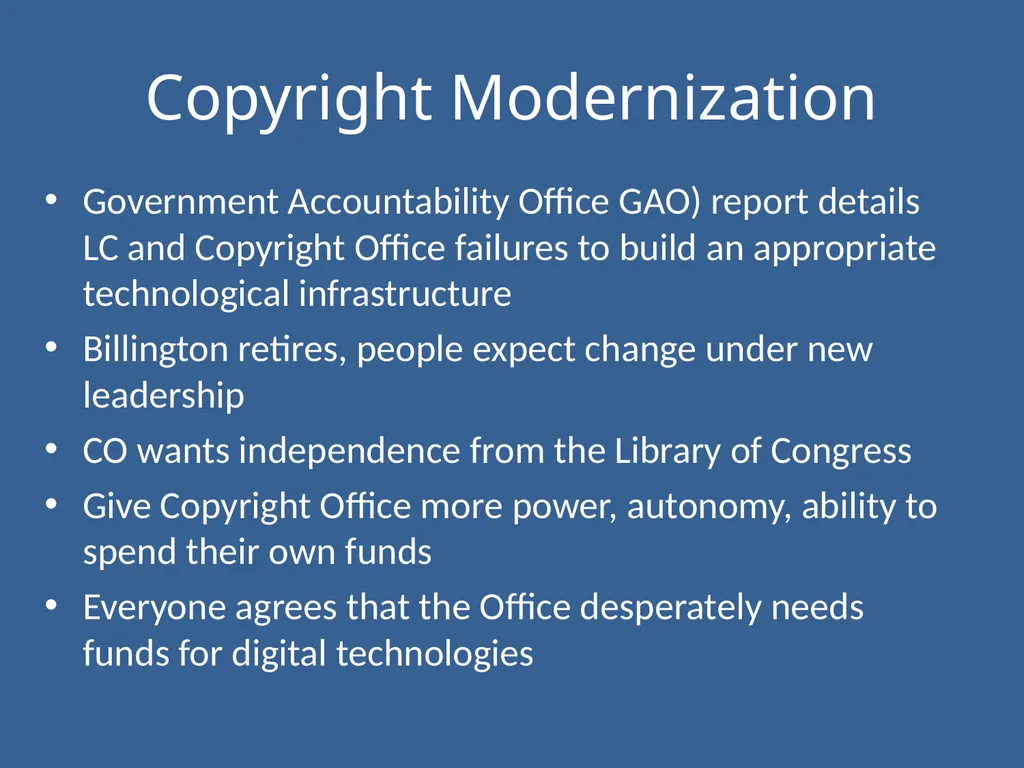
Copyright Modernization Government Accountability Office GAO) report details LC and Copyright Office failures to build an appropriate technological infrastructure
Billington retires, people expect change under new leadership
CO wants independence from the Library of Congress
Give Copyright Office more power, autonomy, ability to spend their own funds
Everyone agrees that the Office desperately needs funds for digital technologies<br>
Billington retires, people expect change under new leadership
CO wants independence from the Library of Congress
Give Copyright Office more power, autonomy, ability to spend their own funds
Everyone agrees that the Office desperately needs funds for digital technologies<br>
16
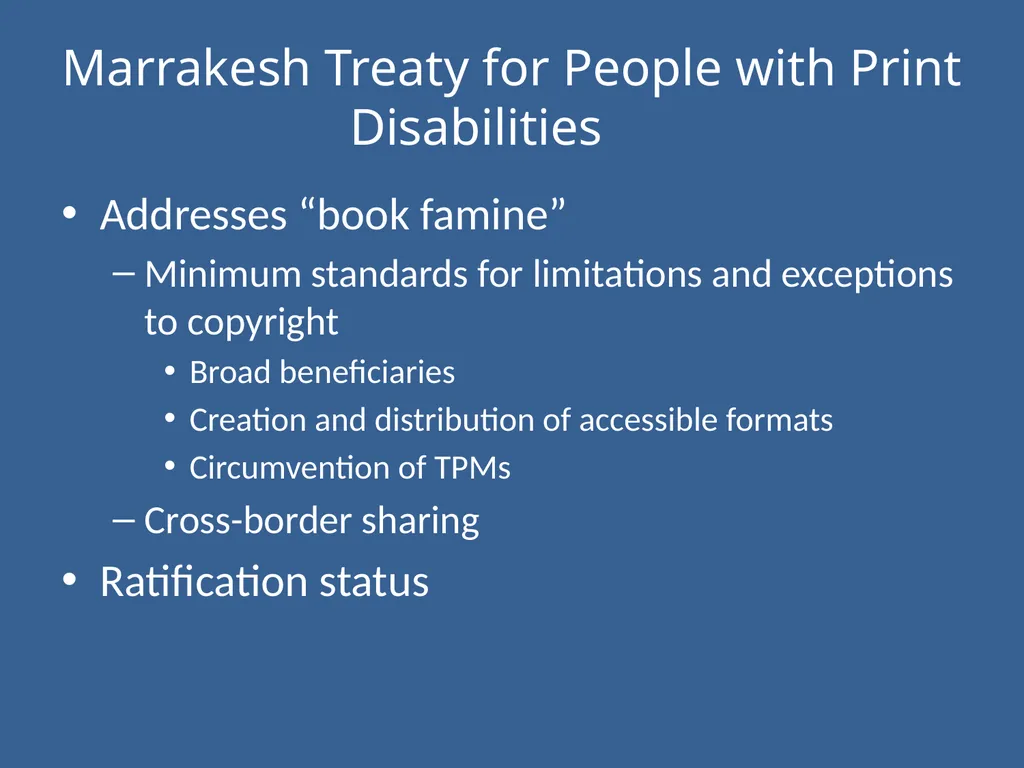
Marrakesh Treaty for People with Print Disabilities Addresses “book famine”
Minimum standards for limitations and exceptions to copyright
Broad beneficiaries
Creation and distribution of accessible formats
Circumvention of TPMs
Cross-border sharing
Ratification status<br>
Minimum standards for limitations and exceptions to copyright
Broad beneficiaries
Creation and distribution of accessible formats
Circumvention of TPMs
Cross-border sharing
Ratification status<br>
17
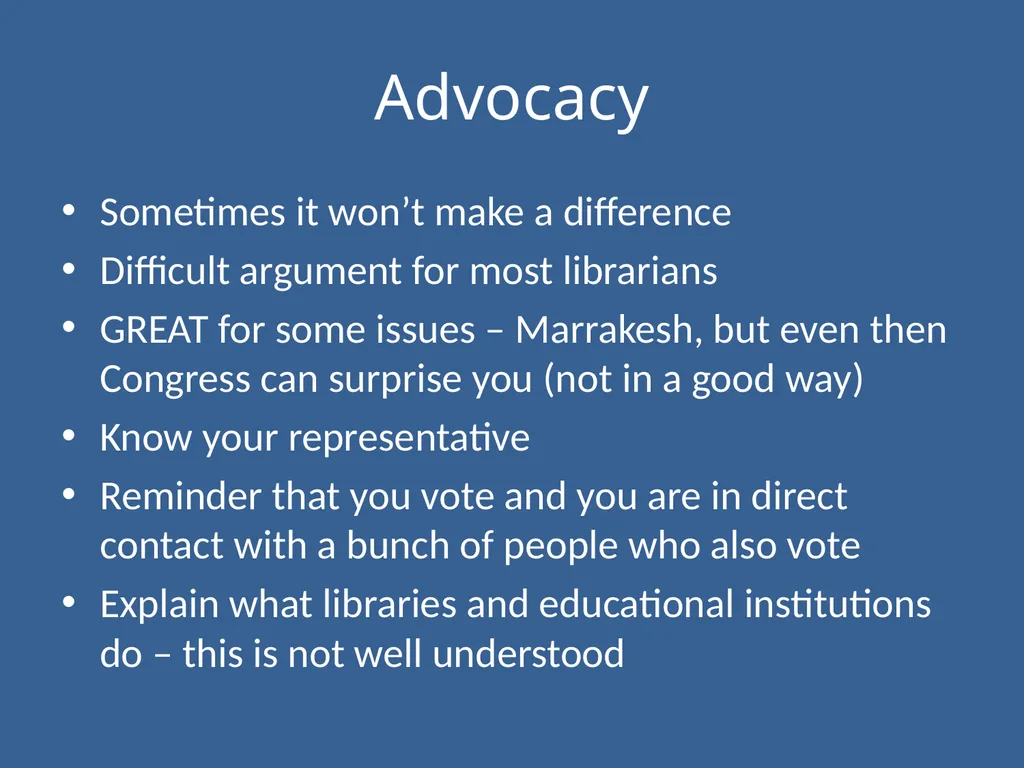
Advocacy Sometimes it won’t make a difference
Difficult argument for most librarians
GREAT for some issues – Marrakesh, but even then Congress can surprise you (not in a good way)
Know your representative
Reminder that you vote and you are in direct contact with a bunch of people who also vote
Explain what libraries and educational institutions do – this is not well understood<br>
Difficult argument for most librarians
GREAT for some issues – Marrakesh, but even then Congress can surprise you (not in a good way)
Know your representative
Reminder that you vote and you are in direct contact with a bunch of people who also vote
Explain what libraries and educational institutions do – this is not well understood<br>
18
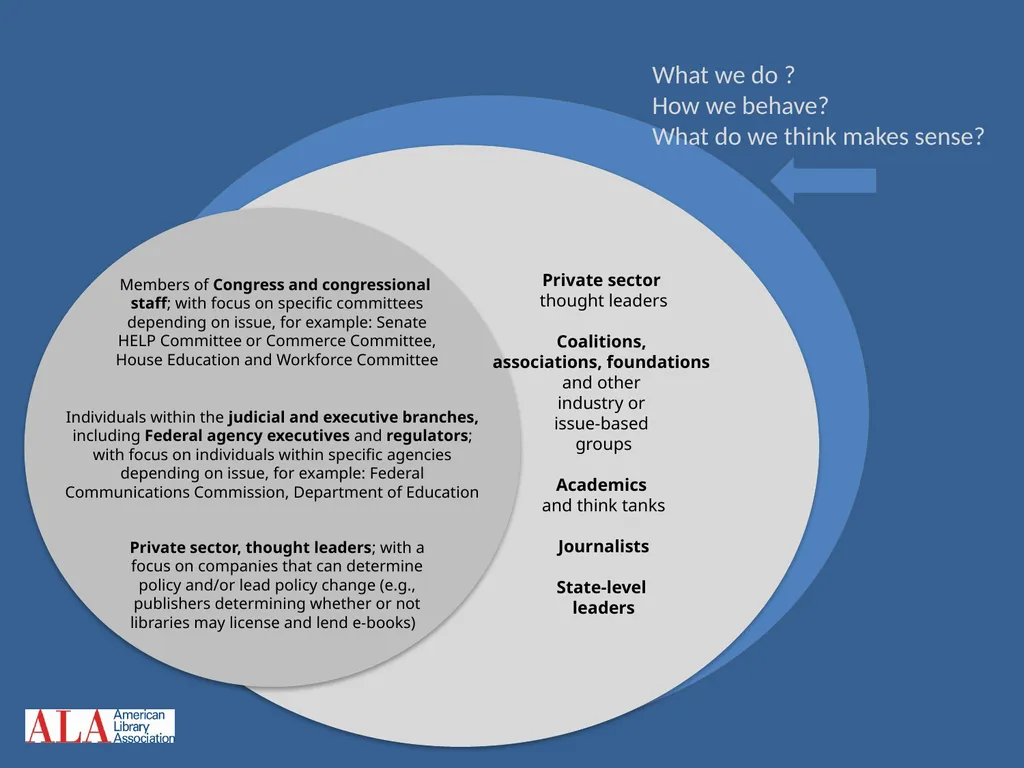
Li Members of Congress and congressional
staff; with focus on specific committees depending on issue, for example: Senate HELP Committee or Commerce Committee, House Education and Workforce Committee
Private sector, thought leaders; with a focus on companies that can determine policy and/or lead policy change (e.g., publishers determining whether or not libraries may license and lend e-books) Private sector
thought leaders
Coalitions,
associations, foundations
and other
industry or
issue-based
groups
Academics
and think tanks
Journalists
State-level
leaders Individuals within the judicial and executive branches, including Federal agency executives and regulators; with focus on individuals within specific agencies depending on issue, for example: Federal Communications Commission, Department of Education What we do ?
How we behave?
What do we think makes sense?<br>
staff; with focus on specific committees depending on issue, for example: Senate HELP Committee or Commerce Committee, House Education and Workforce Committee
Private sector, thought leaders; with a focus on companies that can determine policy and/or lead policy change (e.g., publishers determining whether or not libraries may license and lend e-books) Private sector
thought leaders
Coalitions,
associations, foundations
and other
industry or
issue-based
groups
Academics
and think tanks
Journalists
State-level
leaders Individuals within the judicial and executive branches, including Federal agency executives and regulators; with focus on individuals within specific agencies depending on issue, for example: Federal Communications Commission, Department of Education What we do ?
How we behave?
What do we think makes sense?<br>
19
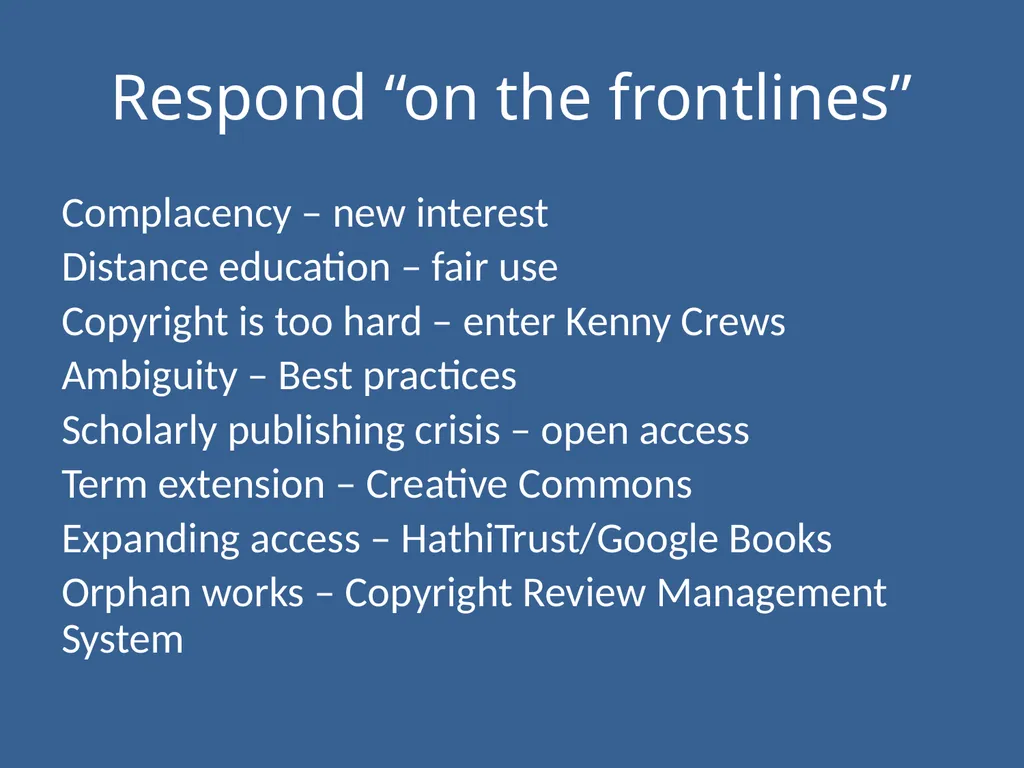
Respond “on the frontlines” Complacency – new interest
Distance education – fair use
Copyright is too hard – enter Kenny Crews
Ambiguity – Best practices
Scholarly publishing crisis – open access
Term extension – Creative Commons
Expanding access – HathiTrust/Google Books
Orphan works – Copyright Review Management System<br>
Distance education – fair use
Copyright is too hard – enter Kenny Crews
Ambiguity – Best practices
Scholarly publishing crisis – open access
Term extension – Creative Commons
Expanding access – HathiTrust/Google Books
Orphan works – Copyright Review Management System<br>
20
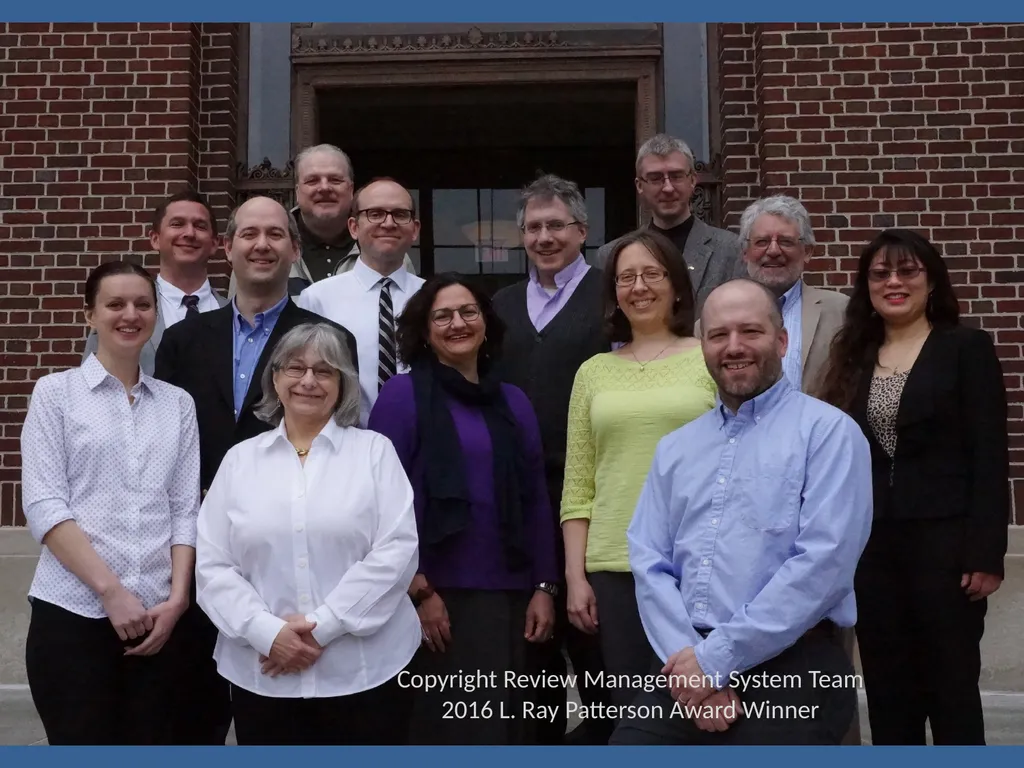
Copyright Review Management System Team
2016 L. Ray Patterson Award Winner<br>
2016 L. Ray Patterson Award Winner<br>
21
Final thoughts Librarians are the leaders in fighting for the information rights of the public
Help your colleagues – including K-12
See the gray, love the gray
We’re right
Thanks! crussell@alawash.org
copyrightadvisorynetwork.org
librarycopyrightalliance.org
recreatecoalition.org<br>
Help your colleagues – including K-12
See the gray, love the gray
We’re right
Thanks! crussell@alawash.org
copyrightadvisorynetwork.org
librarycopyrightalliance.org
recreatecoalition.org<br>