Council opinion about the LAPP March 2016 Summary
Description: Council opinion about the LAPP March 2016 Summary Why we did the research How we carried it out Whom we included What we found out: Insurance decision making considerations Factors important to retaining current members Reasons past members
Related Topics
Download Presentation
"Council opinion about the LAPP March 2016 Summary" is the property of its rightful owner. Permission is granted to download and print the materials on this website for personal, non-commercial use only, and to display it on your personal computer provided you do not modify the materials and that you retain all copyright notices contained in the materials. By downloading content from our website, you accept the terms of this agreement.
Presentation Transcript
slide1. Council opinion about the LAPP
March 2016<br>
slide2. Summary<br>
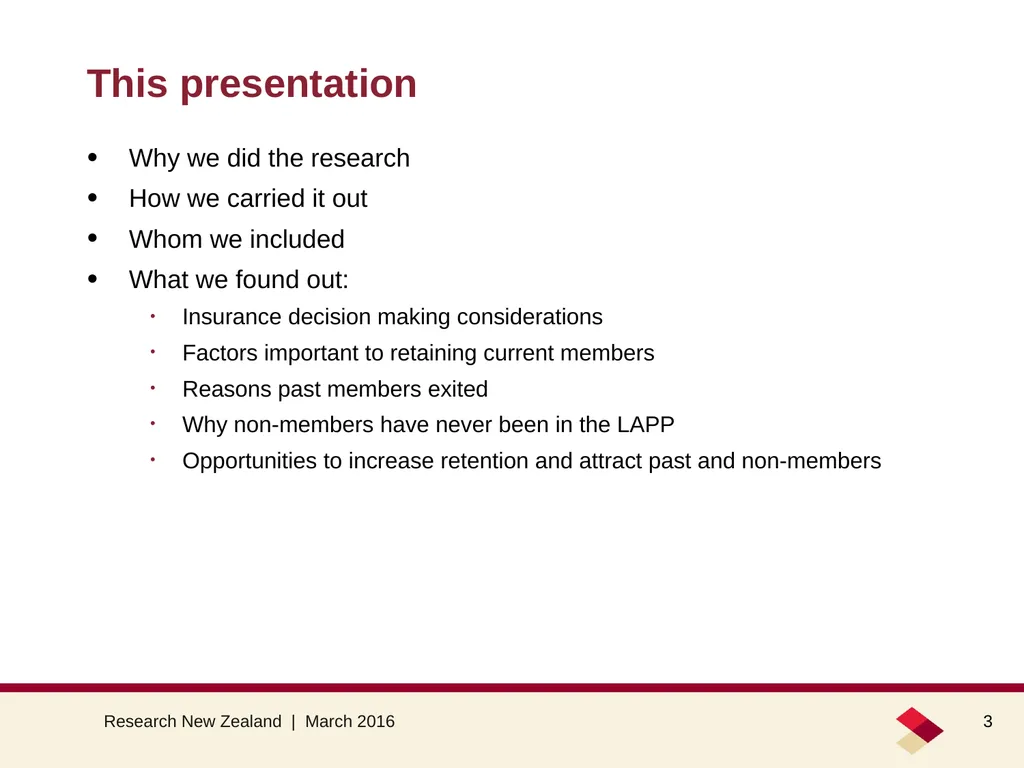
slide3. Why we did the research
How we carried it out
Whom we included
What we found out:
Insurance decision making considerations
Factors important to retaining current members
Reasons past members exited
Why non-members have never been in the LAPP
Opportunities to increase retention and attract past and non-members This presentation<br>
slide4. Background<br>
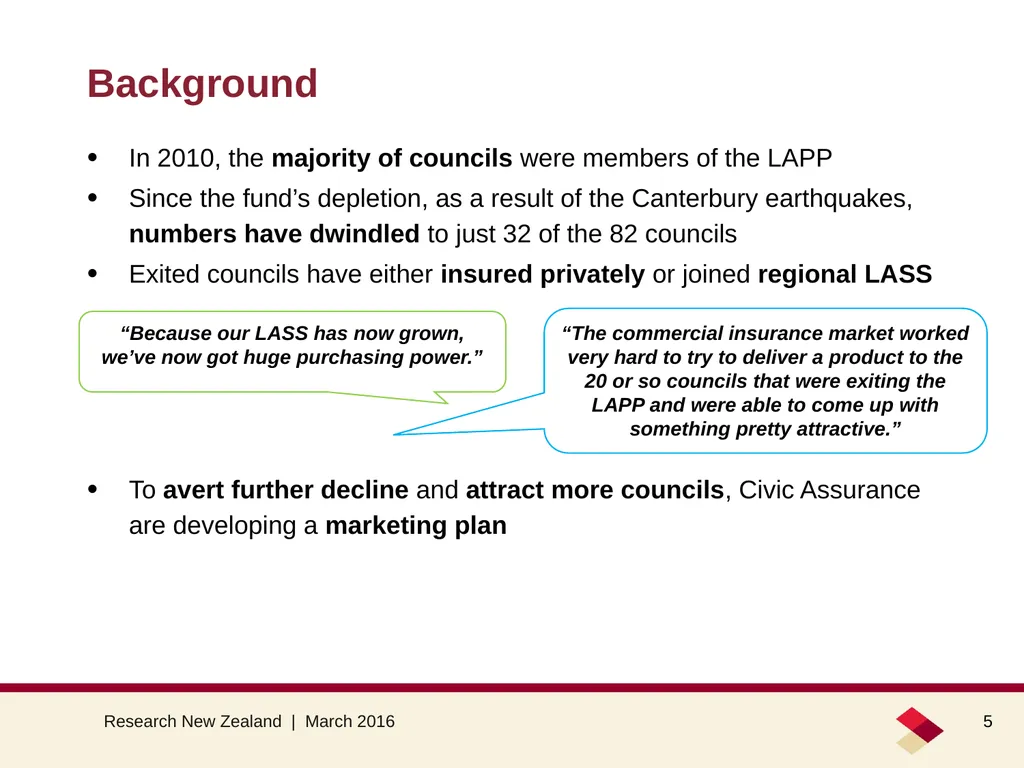
slide5. In 2010, the majority of councils were members of the LAPP
Since the fund’s depletion, as a result of the Canterbury earthquakes, numbers have dwindled to just 32 of the 82 councils
Exited councils have either insured privately or joined regional LASS
To avert further decline and attract more councils, Civic Assurance are developing a marketing plan Background “Because our LASS has now grown, we’ve now got huge purchasing power.” “The commercial insurance market worked very hard to try to deliver a product to the 20 or so councils that were exiting the LAPP and were able to come up with something pretty attractive.”<br>
slide6. Purpose and design<br>
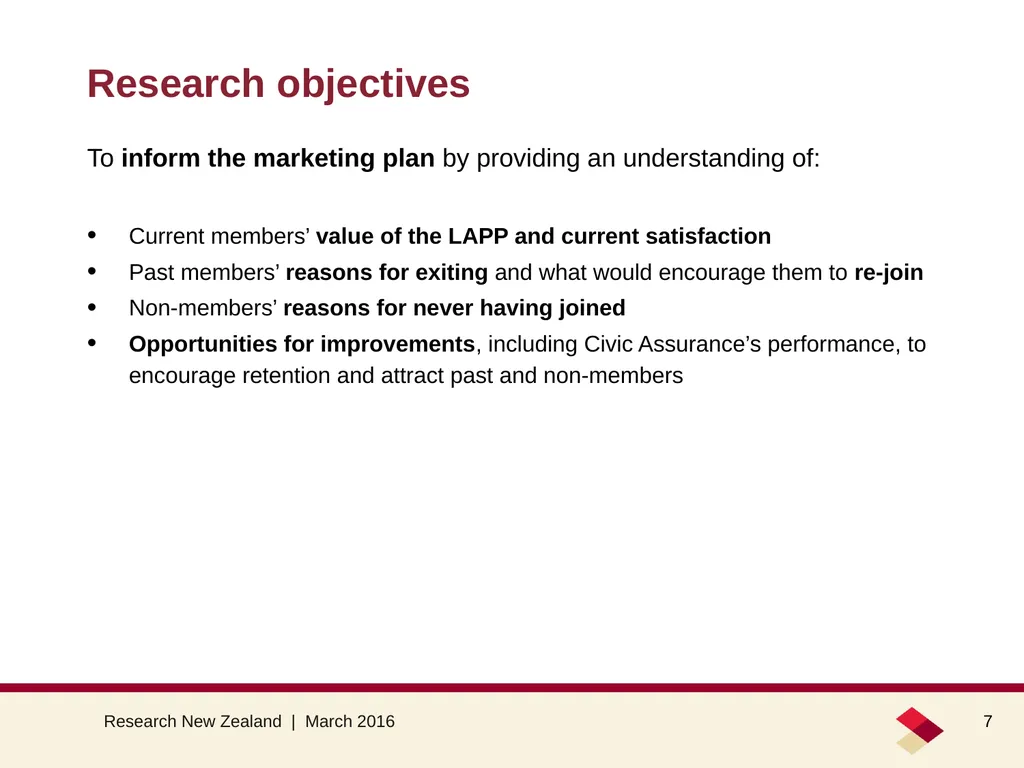
slide7. To inform the marketing plan by providing an understanding of:
Current members’ value of the LAPP and current satisfaction
Past members’ reasons for exiting and what would encourage them to re-join
Non-members’ reasons for never having joined
Opportunities for improvements, including Civic Assurance’s performance, to encourage retention and attract past and non-members Research objectives<br>
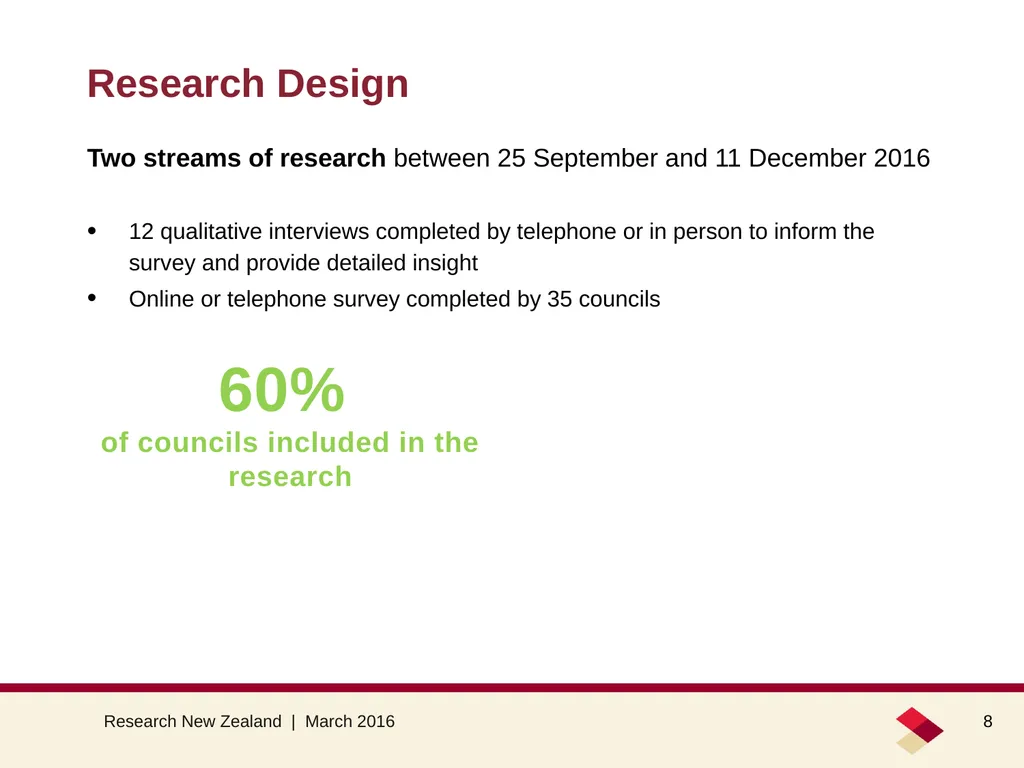
slide8. Two streams of research between 25 September and 11 December 2016
12 qualitative interviews completed by telephone or in person to inform the survey and provide detailed insight
Online or telephone survey completed by 35 councils Research Design 60%
of councils included in the research<br>
slide9. Findings<br>
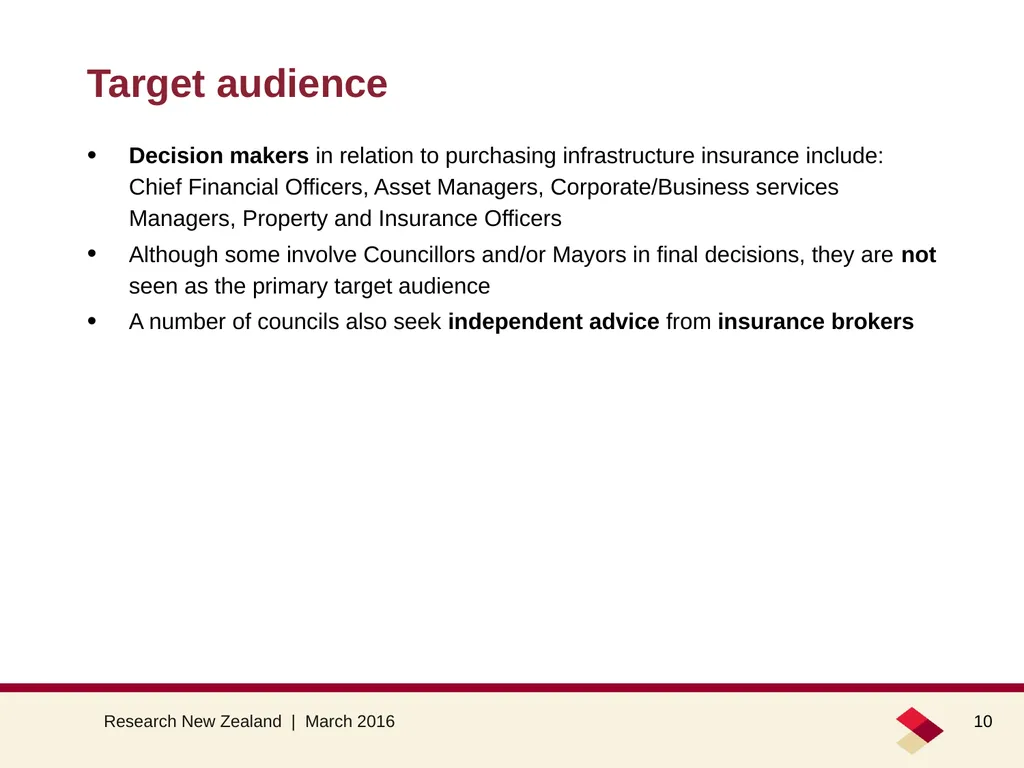
slide10. Decision makers in relation to purchasing infrastructure insurance include: Chief Financial Officers, Asset Managers, Corporate/Business services Managers, Property and Insurance Officers
Although some involve Councillors and/or Mayors in final decisions, they are not seen as the primary target audience
A number of councils also seek independent advice from insurance brokers Target audience<br>
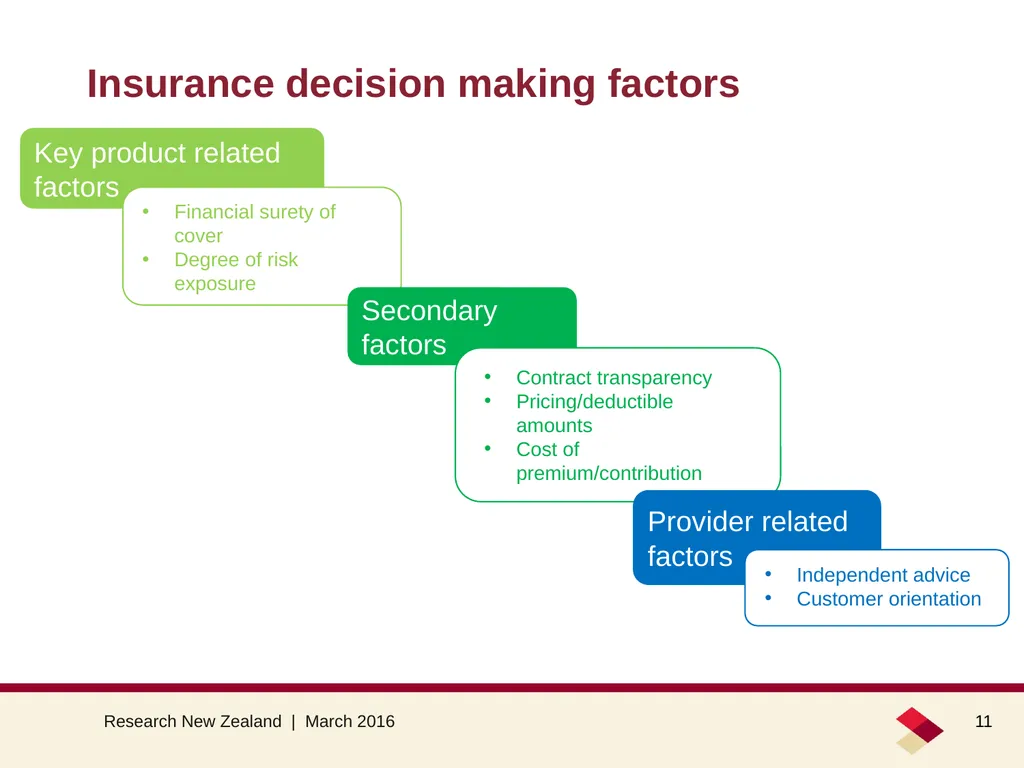
slide11. Insurance decision making factors<br>
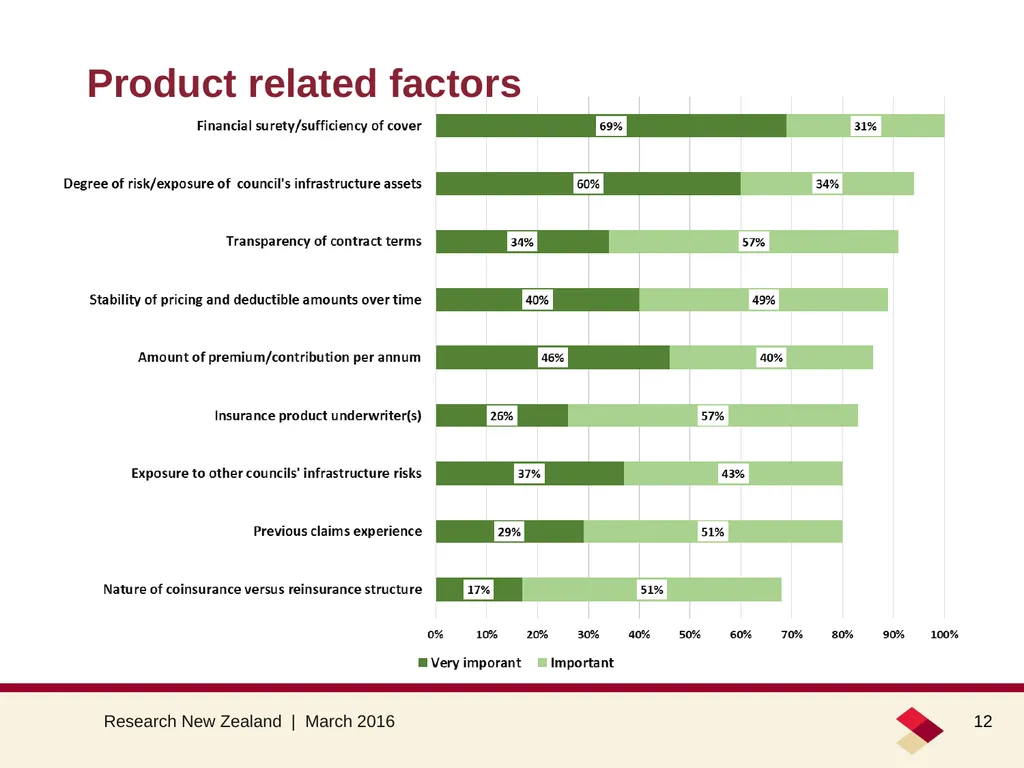
slide12. Product related factors<br>
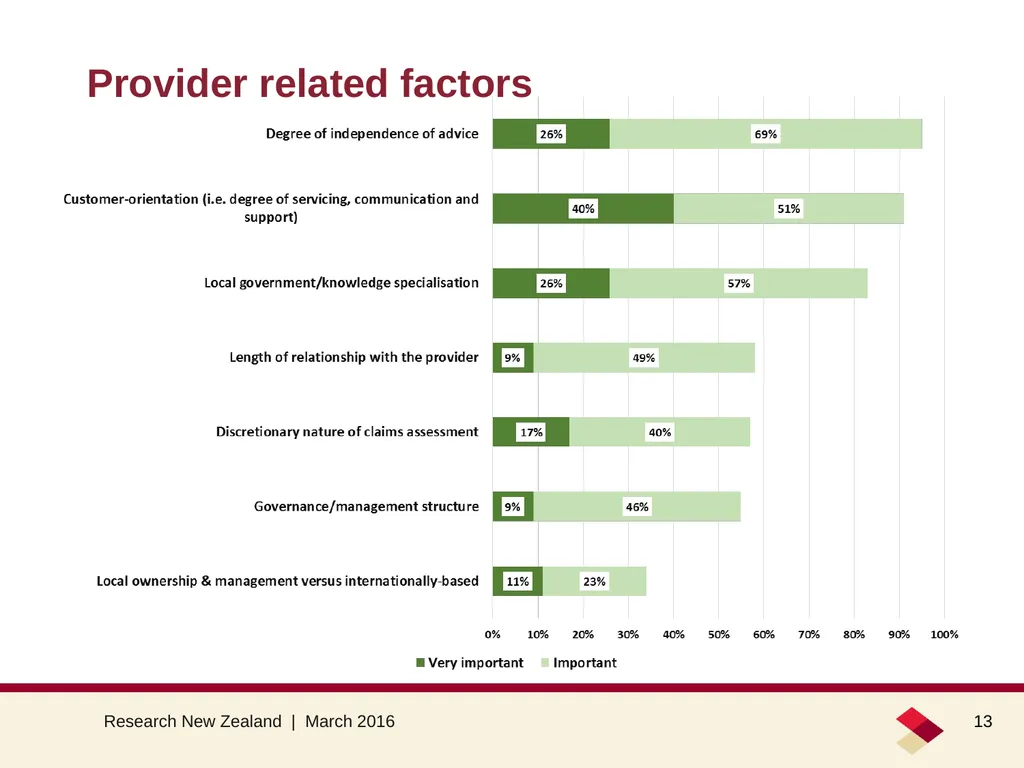
slide13. Provider related factors<br>
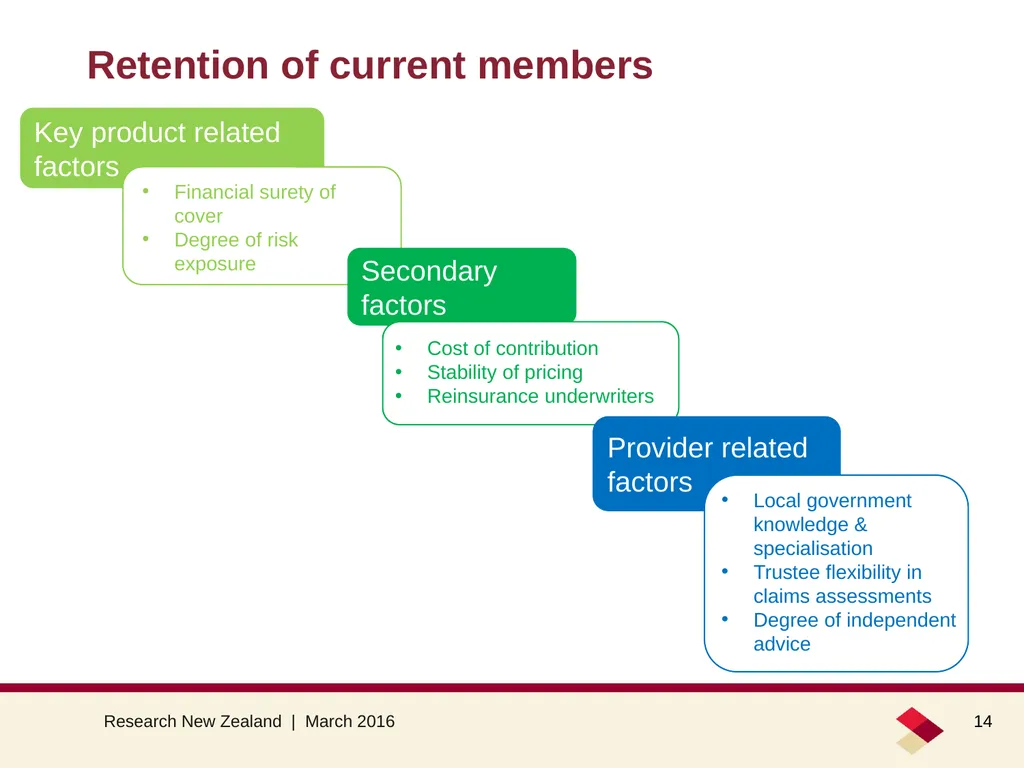
slide14. Retention of current members<br>
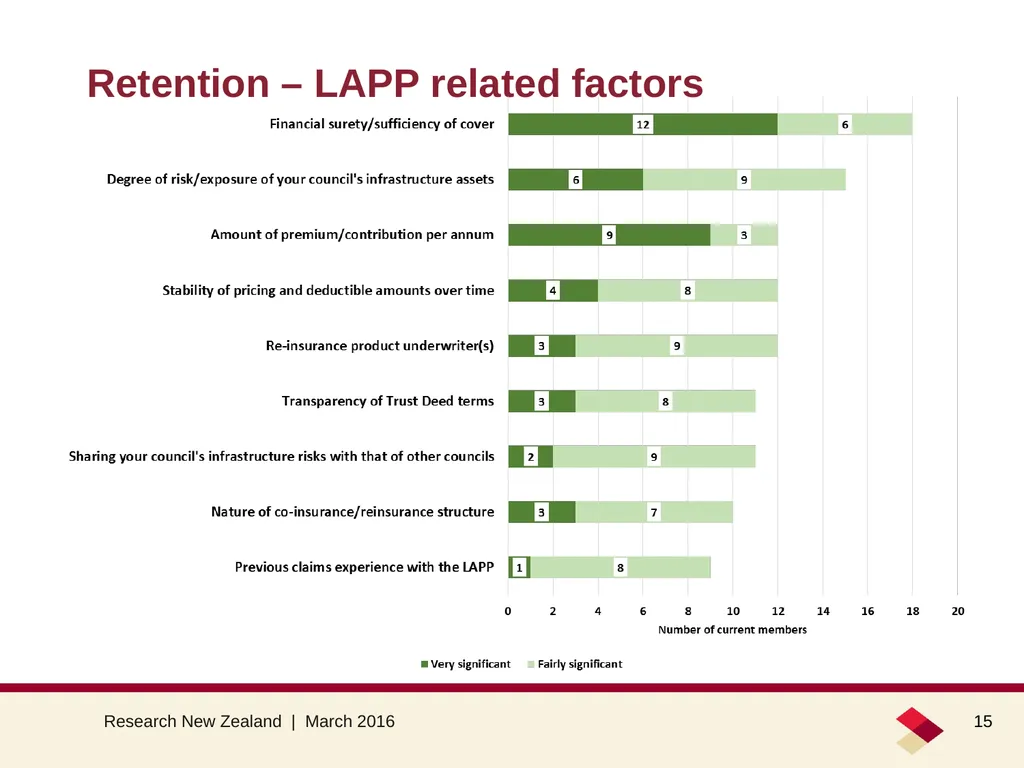
slide15. Retention – LAPP related factors<br>
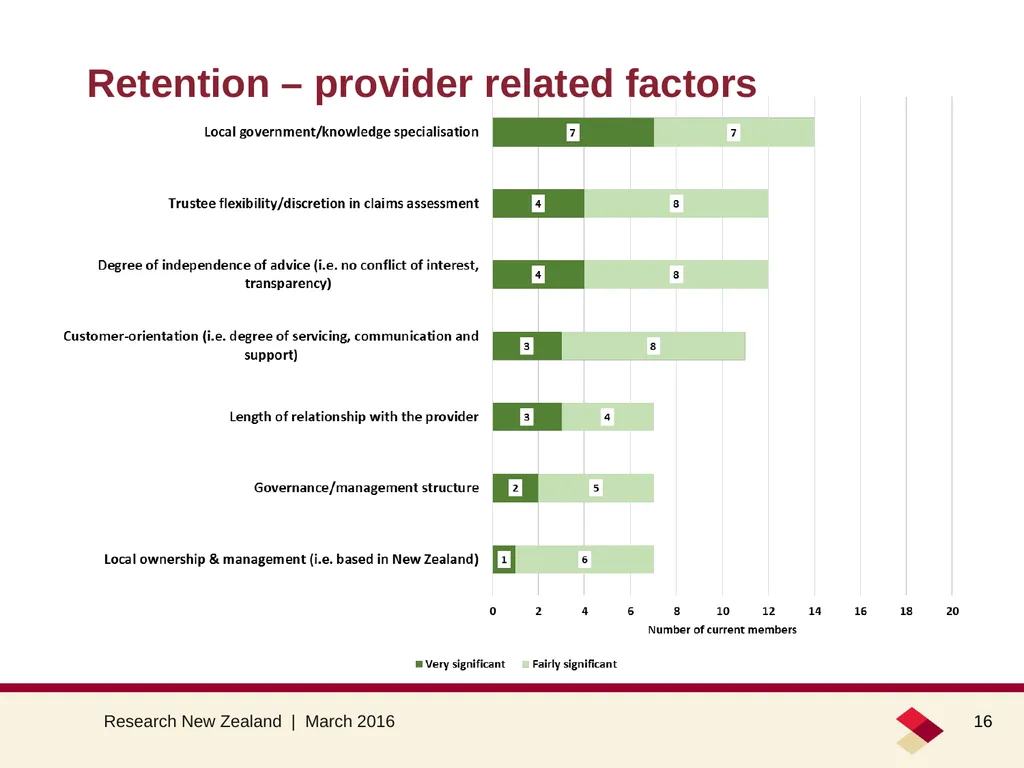
slide16. Retention – provider related factors<br>
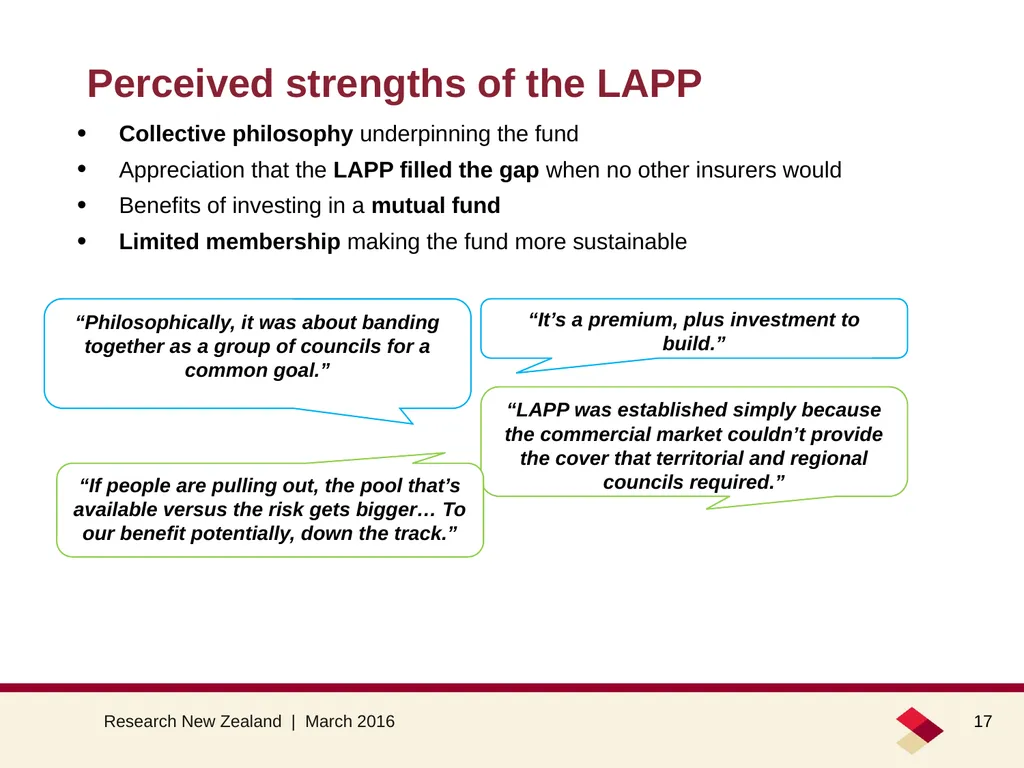
slide17. Perceived strengths of the LAPP Collective philosophy underpinning the fund
Appreciation that the LAPP filled the gap when no other insurers would
Benefits of investing in a mutual fund
Limited membership making the fund more sustainable “Philosophically, it was about banding together as a group of councils for a common goal.” “LAPP was established simply because the commercial market couldn’t provide the cover that territorial and regional councils required.” “It’s a premium, plus investment to build.” “If people are pulling out, the pool that’s available versus the risk gets bigger… To our benefit potentially, down the track.”<br>
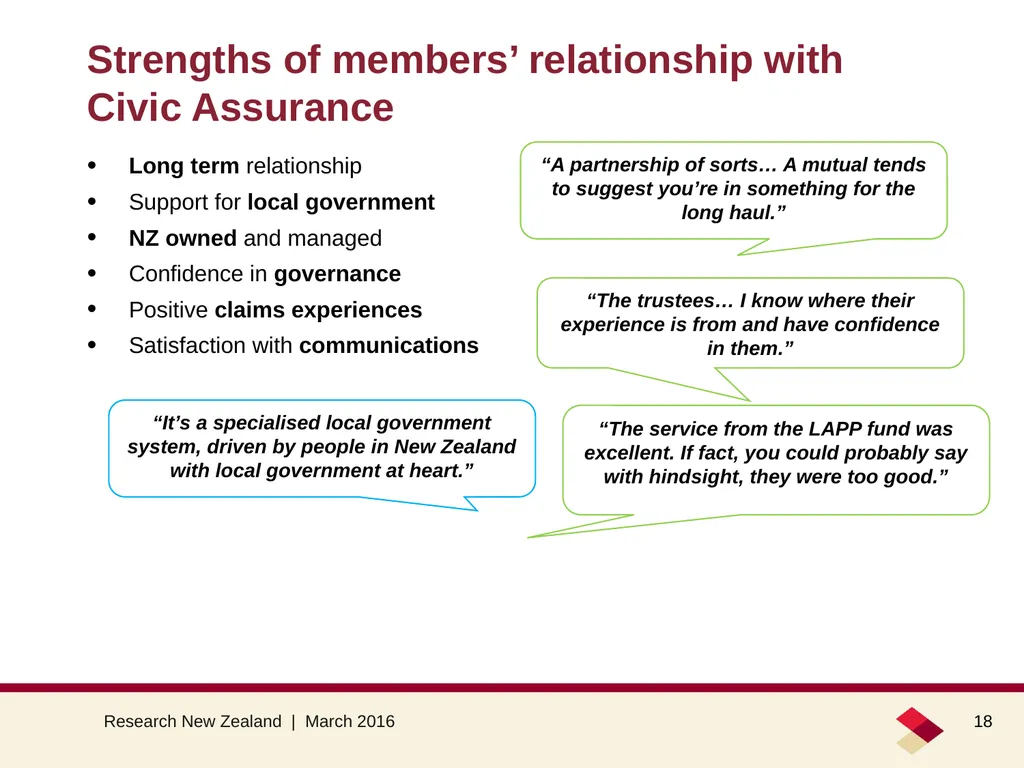
slide18. Strengths of members’ relationship with Civic Assurance Long term relationship
Support for local government
NZ owned and managed
Confidence in governance
Positive claims experiences
Satisfaction with communications “A partnership of sorts… A mutual tends to suggest you’re in something for the long haul.” “It’s a specialised local government system, driven by people in New Zealand with local government at heart.” “The trustees… I know where their experience is from and have confidence in them.” “The service from the LAPP fund was excellent. If fact, you could probably say with hindsight, they were too good.”<br>
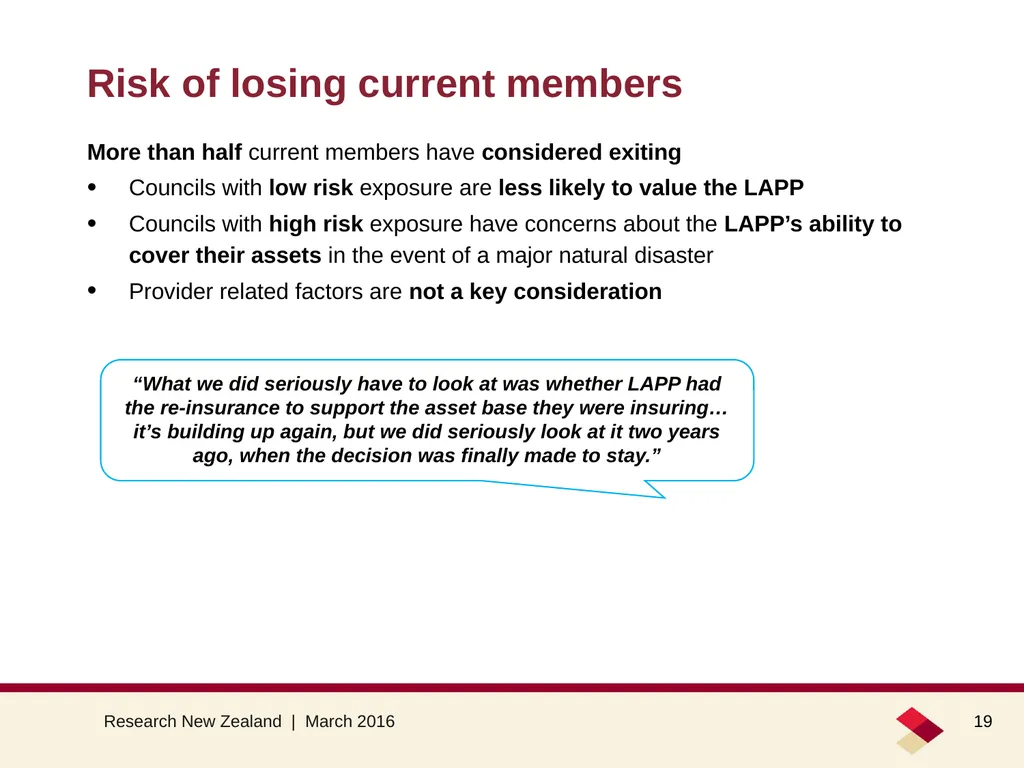
slide19. Risk of losing current members More than half current members have considered exiting
Councils with low risk exposure are less likely to value the LAPP
Councils with high risk exposure have concerns about the LAPP’s ability to cover their assets in the event of a major natural disaster
Provider related factors are not a key consideration “What we did seriously have to look at was whether LAPP had the re-insurance to support the asset base they were insuring… it’s building up again, but we did seriously look at it two years ago, when the decision was finally made to stay.”<br>
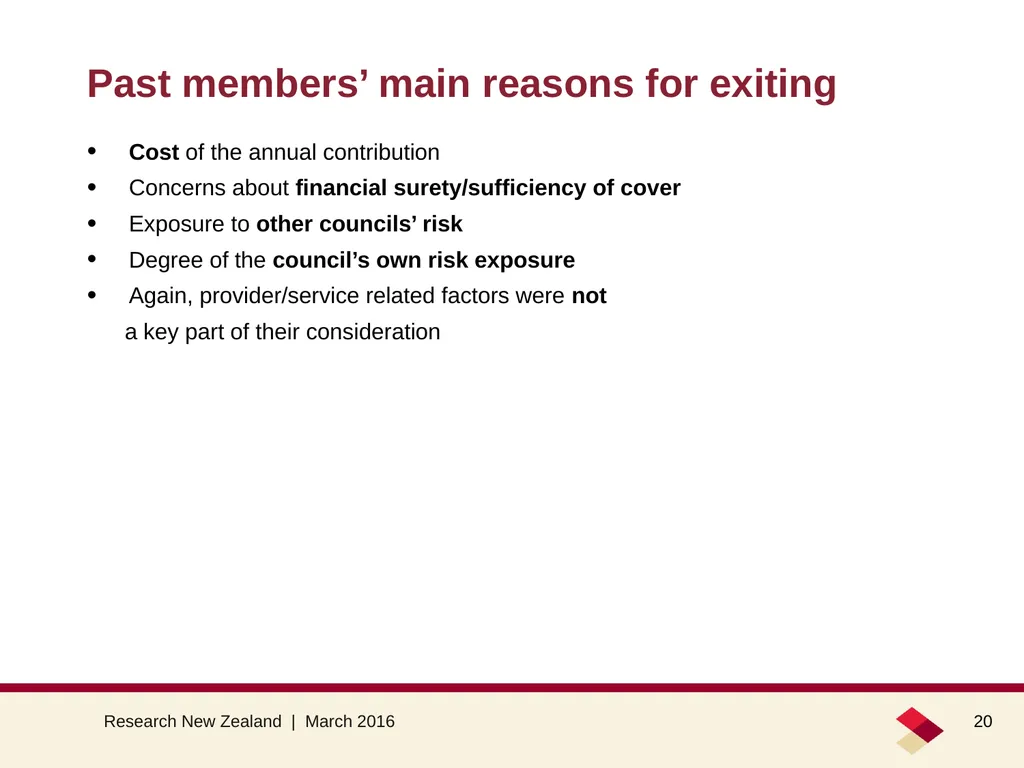
slide20. Past members’ main reasons for exiting Cost of the annual contribution
Concerns about financial surety/sufficiency of cover
Exposure to other councils’ risk
Degree of the council’s own risk exposure
Again, provider/service related factors were not
a key part of their consideration<br>
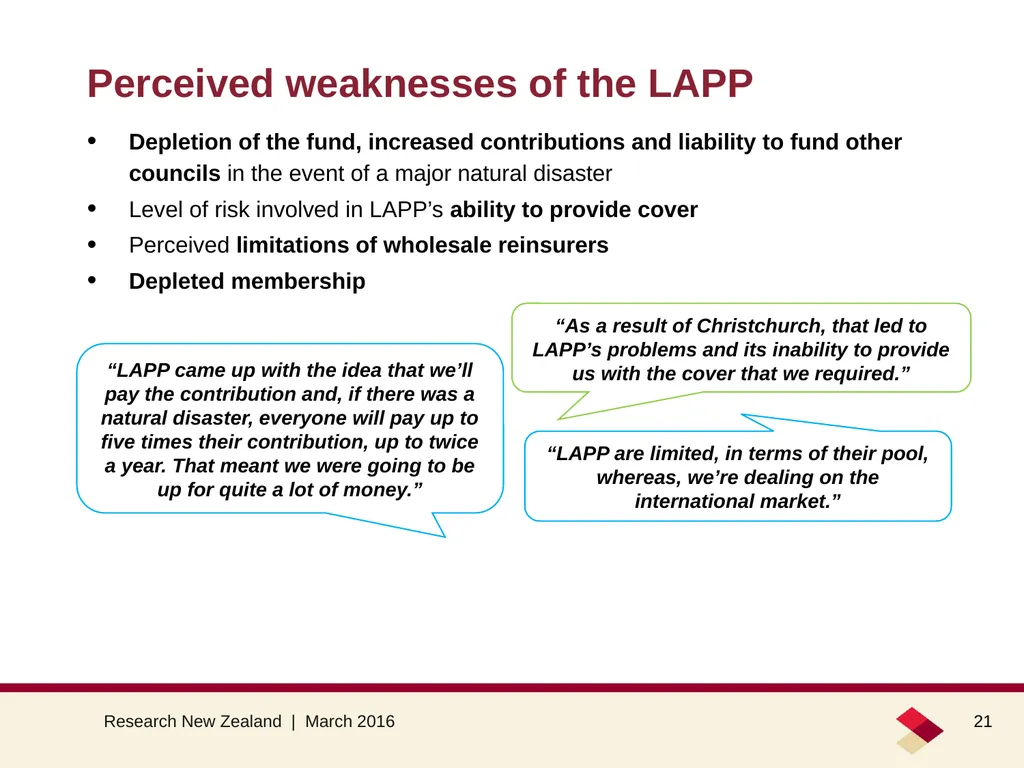
slide21. Perceived weaknesses of the LAPP Depletion of the fund, increased contributions and liability to fund other councils in the event of a major natural disaster
Level of risk involved in LAPP’s ability to provide cover
Perceived limitations of wholesale reinsurers
Depleted membership “LAPP came up with the idea that we’ll pay the contribution and, if there was a natural disaster, everyone will pay up to five times their contribution, up to twice a year. That meant we were going to be up for quite a lot of money.” “As a result of Christchurch, that led to LAPP’s problems and its inability to provide us with the cover that we required.” “LAPP are limited, in terms of their pool, whereas, we’re dealing on the international market.”<br>
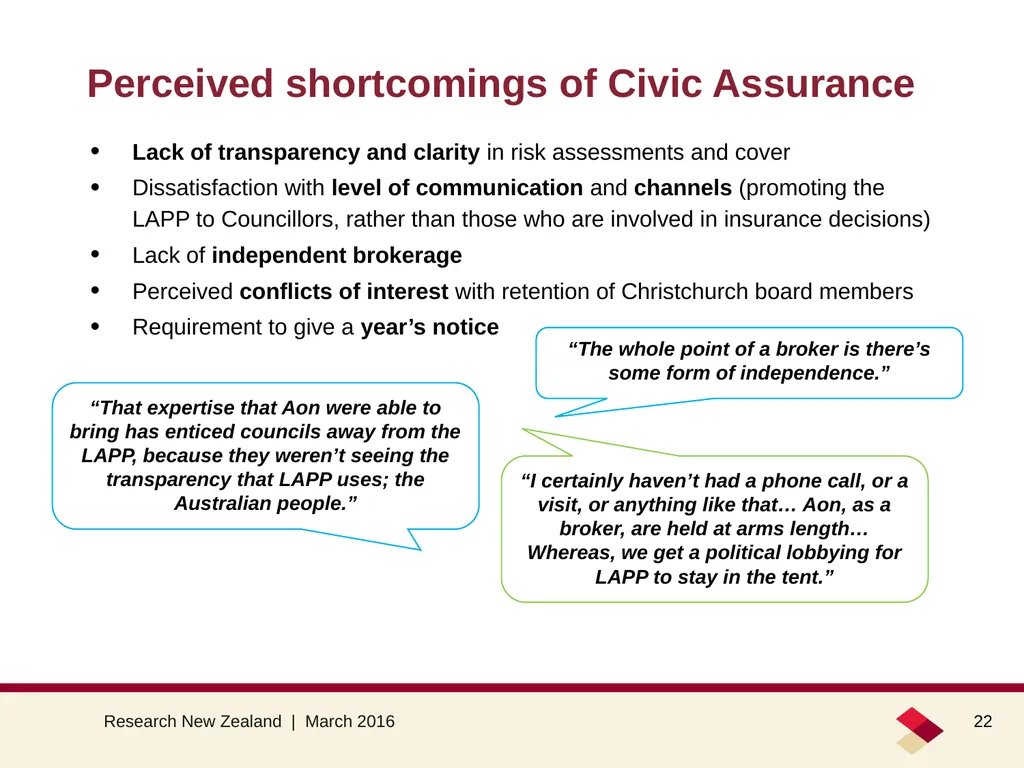
slide22. Perceived shortcomings of Civic Assurance Lack of transparency and clarity in risk assessments and cover
Dissatisfaction with level of communication and channels (promoting the LAPP to Councillors, rather than those who are involved in insurance decisions)
Lack of independent brokerage
Perceived conflicts of interest with retention of Christchurch board members
Requirement to give a year’s notice “That expertise that Aon were able to bring has enticed councils away from the LAPP, because they weren’t seeing the transparency that LAPP uses; the Australian people.” “The whole point of a broker is there’s some form of independence.” “I certainly haven’t had a phone call, or a visit, or anything like that… Aon, as a broker, are held at arms length… Whereas, we get a political lobbying for LAPP to stay in the tent.”<br>
slide23. Non-members’ insurance arrangements Most non-members are self-insured, due to:
Low risk exposure
Concerns about other councils’ infrastructure risk, compared to their own
The cost of contribution/premium “We are a relatively small council and we have very little in the way of infrastructure. So, that’s been our policy to date. Self-insurance.” “Our risk is probably a lot smaller than a lot of other councils and, potentially, we’d be propping them up and us having not much benefit.”<br>
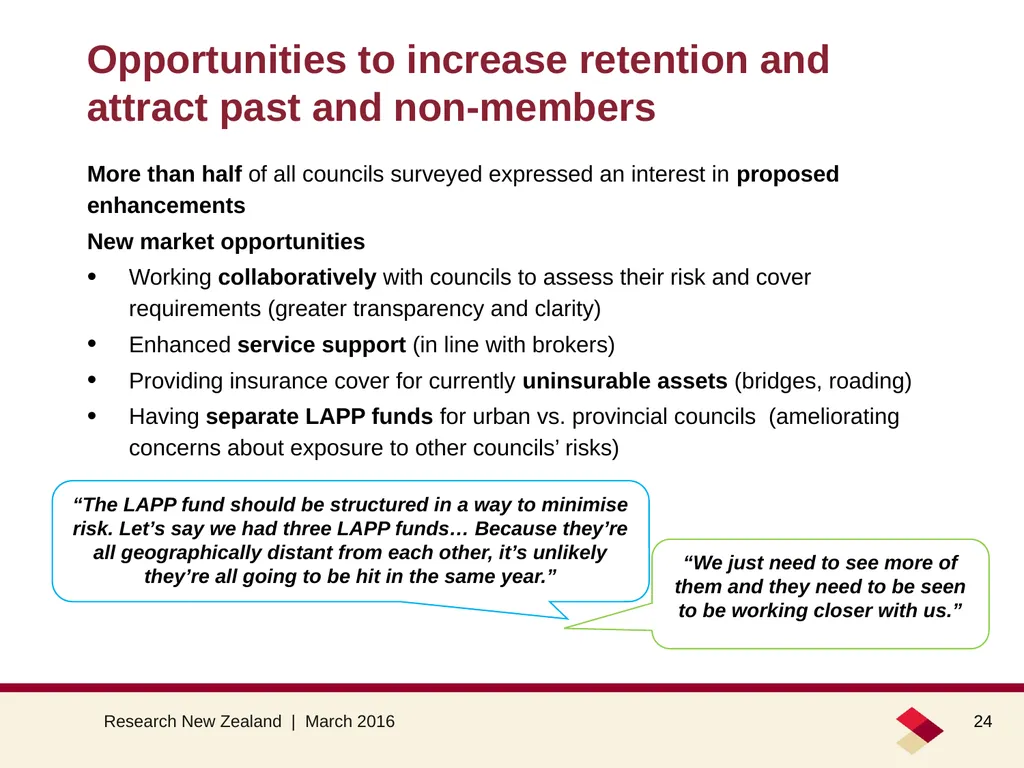
slide24. Opportunities to increase retention and attract past and non-members More than half of all councils surveyed expressed an interest in proposed enhancements
New market opportunities
Working collaboratively with councils to assess their risk and cover requirements (greater transparency and clarity)
Enhanced service support (in line with brokers)
Providing insurance cover for currently uninsurable assets (bridges, roading)
Having separate LAPP funds for urban vs. provincial councils (ameliorating concerns about exposure to other councils’ risks) “The LAPP fund should be structured in a way to minimise risk. Let’s say we had three LAPP funds… Because they’re all geographically distant from each other, it’s unlikely they’re all going to be hit in the same year.” “We just need to see more of them and they need to be seen to be working closer with us.”<br>
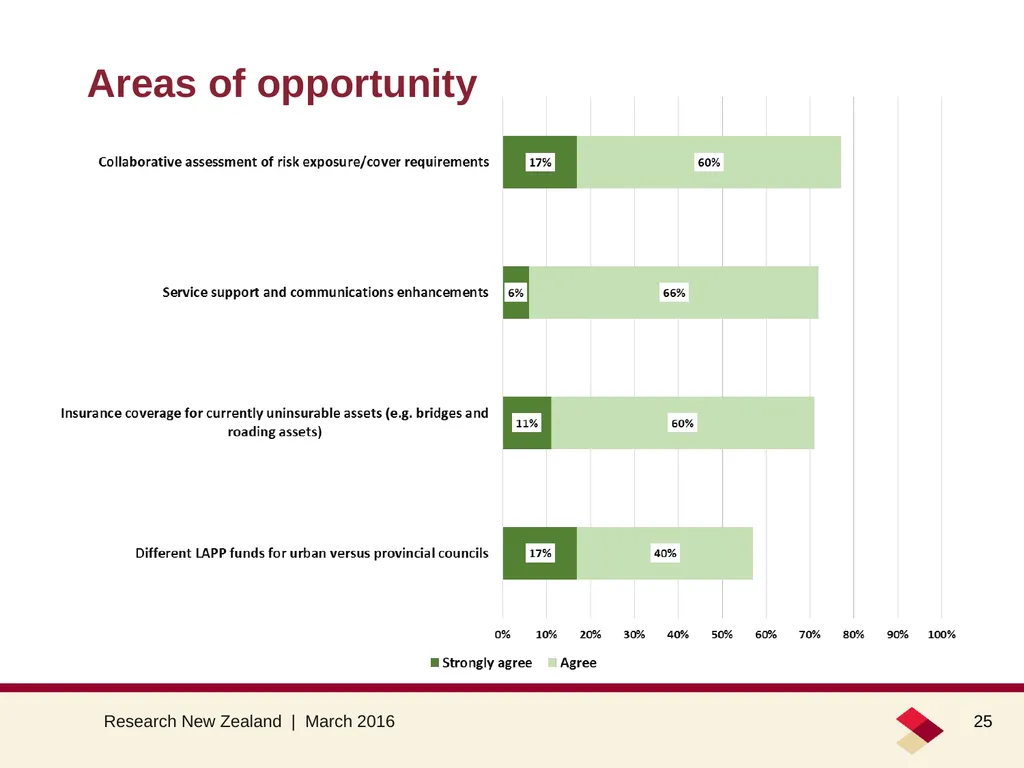
slide25. Areas of opportunity<br>
March 2016<br>
slide2. Summary<br>
slide3. Why we did the research
How we carried it out
Whom we included
What we found out:
Insurance decision making considerations
Factors important to retaining current members
Reasons past members exited
Why non-members have never been in the LAPP
Opportunities to increase retention and attract past and non-members This presentation<br>
slide4. Background<br>
slide5. In 2010, the majority of councils were members of the LAPP
Since the fund’s depletion, as a result of the Canterbury earthquakes, numbers have dwindled to just 32 of the 82 councils
Exited councils have either insured privately or joined regional LASS
To avert further decline and attract more councils, Civic Assurance are developing a marketing plan Background “Because our LASS has now grown, we’ve now got huge purchasing power.” “The commercial insurance market worked very hard to try to deliver a product to the 20 or so councils that were exiting the LAPP and were able to come up with something pretty attractive.”<br>
slide6. Purpose and design<br>
slide7. To inform the marketing plan by providing an understanding of:
Current members’ value of the LAPP and current satisfaction
Past members’ reasons for exiting and what would encourage them to re-join
Non-members’ reasons for never having joined
Opportunities for improvements, including Civic Assurance’s performance, to encourage retention and attract past and non-members Research objectives<br>
slide8. Two streams of research between 25 September and 11 December 2016
12 qualitative interviews completed by telephone or in person to inform the survey and provide detailed insight
Online or telephone survey completed by 35 councils Research Design 60%
of councils included in the research<br>
slide9. Findings<br>
slide10. Decision makers in relation to purchasing infrastructure insurance include: Chief Financial Officers, Asset Managers, Corporate/Business services Managers, Property and Insurance Officers
Although some involve Councillors and/or Mayors in final decisions, they are not seen as the primary target audience
A number of councils also seek independent advice from insurance brokers Target audience<br>
slide11. Insurance decision making factors<br>
slide12. Product related factors<br>
slide13. Provider related factors<br>
slide14. Retention of current members<br>
slide15. Retention – LAPP related factors<br>
slide16. Retention – provider related factors<br>
slide17. Perceived strengths of the LAPP Collective philosophy underpinning the fund
Appreciation that the LAPP filled the gap when no other insurers would
Benefits of investing in a mutual fund
Limited membership making the fund more sustainable “Philosophically, it was about banding together as a group of councils for a common goal.” “LAPP was established simply because the commercial market couldn’t provide the cover that territorial and regional councils required.” “It’s a premium, plus investment to build.” “If people are pulling out, the pool that’s available versus the risk gets bigger… To our benefit potentially, down the track.”<br>
slide18. Strengths of members’ relationship with Civic Assurance Long term relationship
Support for local government
NZ owned and managed
Confidence in governance
Positive claims experiences
Satisfaction with communications “A partnership of sorts… A mutual tends to suggest you’re in something for the long haul.” “It’s a specialised local government system, driven by people in New Zealand with local government at heart.” “The trustees… I know where their experience is from and have confidence in them.” “The service from the LAPP fund was excellent. If fact, you could probably say with hindsight, they were too good.”<br>
slide19. Risk of losing current members More than half current members have considered exiting
Councils with low risk exposure are less likely to value the LAPP
Councils with high risk exposure have concerns about the LAPP’s ability to cover their assets in the event of a major natural disaster
Provider related factors are not a key consideration “What we did seriously have to look at was whether LAPP had the re-insurance to support the asset base they were insuring… it’s building up again, but we did seriously look at it two years ago, when the decision was finally made to stay.”<br>
slide20. Past members’ main reasons for exiting Cost of the annual contribution
Concerns about financial surety/sufficiency of cover
Exposure to other councils’ risk
Degree of the council’s own risk exposure
Again, provider/service related factors were not
a key part of their consideration<br>
slide21. Perceived weaknesses of the LAPP Depletion of the fund, increased contributions and liability to fund other councils in the event of a major natural disaster
Level of risk involved in LAPP’s ability to provide cover
Perceived limitations of wholesale reinsurers
Depleted membership “LAPP came up with the idea that we’ll pay the contribution and, if there was a natural disaster, everyone will pay up to five times their contribution, up to twice a year. That meant we were going to be up for quite a lot of money.” “As a result of Christchurch, that led to LAPP’s problems and its inability to provide us with the cover that we required.” “LAPP are limited, in terms of their pool, whereas, we’re dealing on the international market.”<br>
slide22. Perceived shortcomings of Civic Assurance Lack of transparency and clarity in risk assessments and cover
Dissatisfaction with level of communication and channels (promoting the LAPP to Councillors, rather than those who are involved in insurance decisions)
Lack of independent brokerage
Perceived conflicts of interest with retention of Christchurch board members
Requirement to give a year’s notice “That expertise that Aon were able to bring has enticed councils away from the LAPP, because they weren’t seeing the transparency that LAPP uses; the Australian people.” “The whole point of a broker is there’s some form of independence.” “I certainly haven’t had a phone call, or a visit, or anything like that… Aon, as a broker, are held at arms length… Whereas, we get a political lobbying for LAPP to stay in the tent.”<br>
slide23. Non-members’ insurance arrangements Most non-members are self-insured, due to:
Low risk exposure
Concerns about other councils’ infrastructure risk, compared to their own
The cost of contribution/premium “We are a relatively small council and we have very little in the way of infrastructure. So, that’s been our policy to date. Self-insurance.” “Our risk is probably a lot smaller than a lot of other councils and, potentially, we’d be propping them up and us having not much benefit.”<br>
slide24. Opportunities to increase retention and attract past and non-members More than half of all councils surveyed expressed an interest in proposed enhancements
New market opportunities
Working collaboratively with councils to assess their risk and cover requirements (greater transparency and clarity)
Enhanced service support (in line with brokers)
Providing insurance cover for currently uninsurable assets (bridges, roading)
Having separate LAPP funds for urban vs. provincial councils (ameliorating concerns about exposure to other councils’ risks) “The LAPP fund should be structured in a way to minimise risk. Let’s say we had three LAPP funds… Because they’re all geographically distant from each other, it’s unlikely they’re all going to be hit in the same year.” “We just need to see more of them and they need to be seen to be working closer with us.”<br>
slide25. Areas of opportunity<br>