Creating Habits for Success One Tiny Habit at a Time Templates and clipart are by Microsoft: all rights reserved copyright. How do we create a new habit that helps us reach our life goals? One small change at a time! Tiny Habits, by BJ
Related Topics
Share
Embed code
Download this presentation From Below
"Creating Habits for Success One Tiny Habit at a" is the property of its rightful owner. Permission is granted to
download and print the materials on this website for personal, non-commercial use only, and to display it
on your personal computer provided you do not modify the materials and that you retain all copyright
notices contained in the materials. By downloading content from our website, you accept the terms of this
agreement.
Presentation Transcript
01
Creating Habits for Success One Tiny Habit at a Time Templates and clipart are by Microsoft: all rights reserved copyright.<br>
02
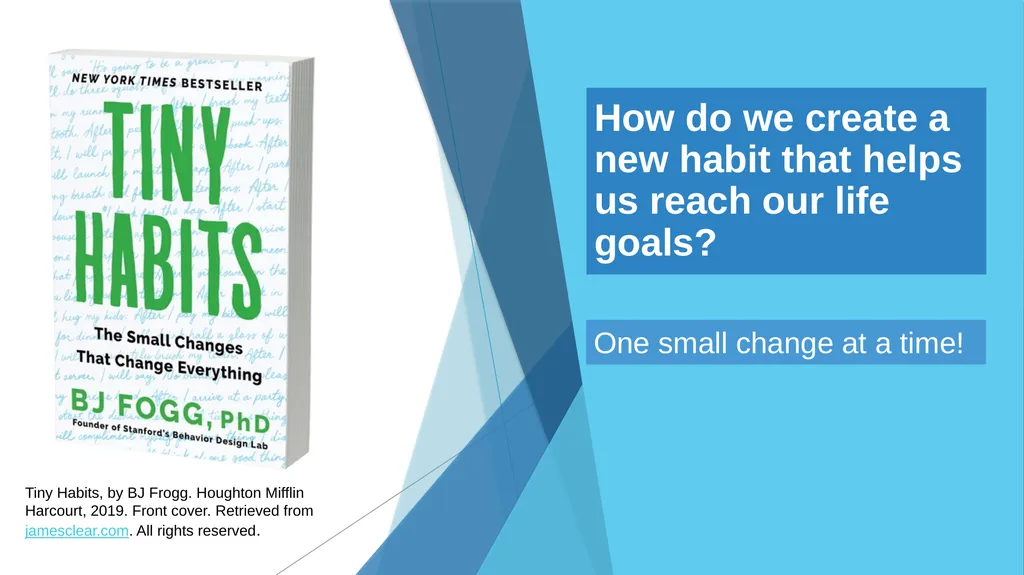
How do we create a new habit that helps us reach our life goals? One small change at a time! Tiny Habits, by BJ Frogg. Houghton Mifflin Harcourt, 2019. Front cover. Retrieved from jamesclear.com. All rights reserved.<br>
03
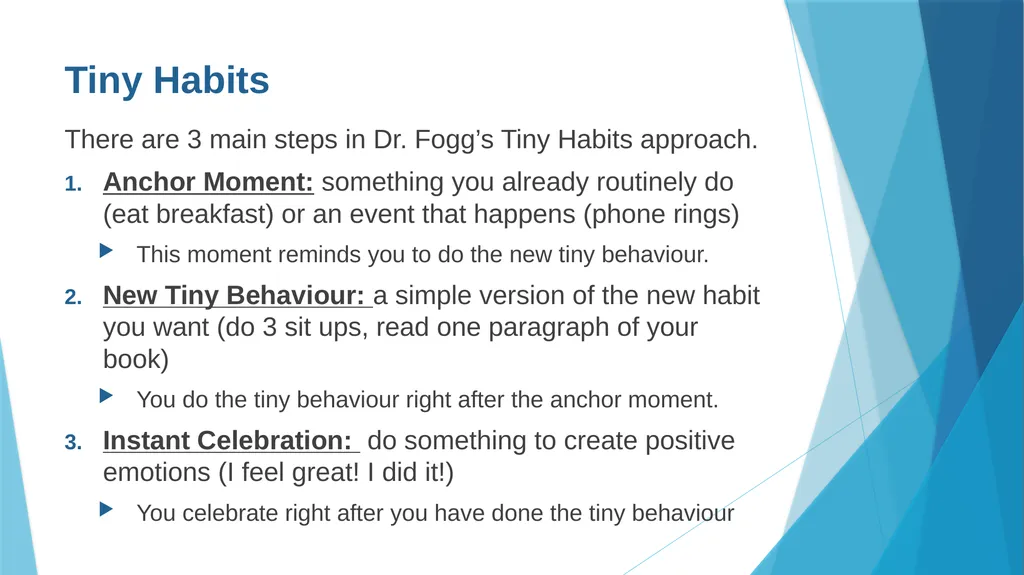
Tiny Habits There are 3 main steps in Dr. Fogg’s Tiny Habits approach.
Anchor Moment: something you already routinely do (eat breakfast) or an event that happens (phone rings)
This moment reminds you to do the new tiny behaviour.
New Tiny Behaviour: a simple version of the new habit you want (do 3 sit ups, read one paragraph of your book)
You do the tiny behaviour right after the anchor moment.
Instant Celebration: do something to create positive emotions (I feel great! I did it!)
You celebrate right after you have done the tiny behaviour<br>
04
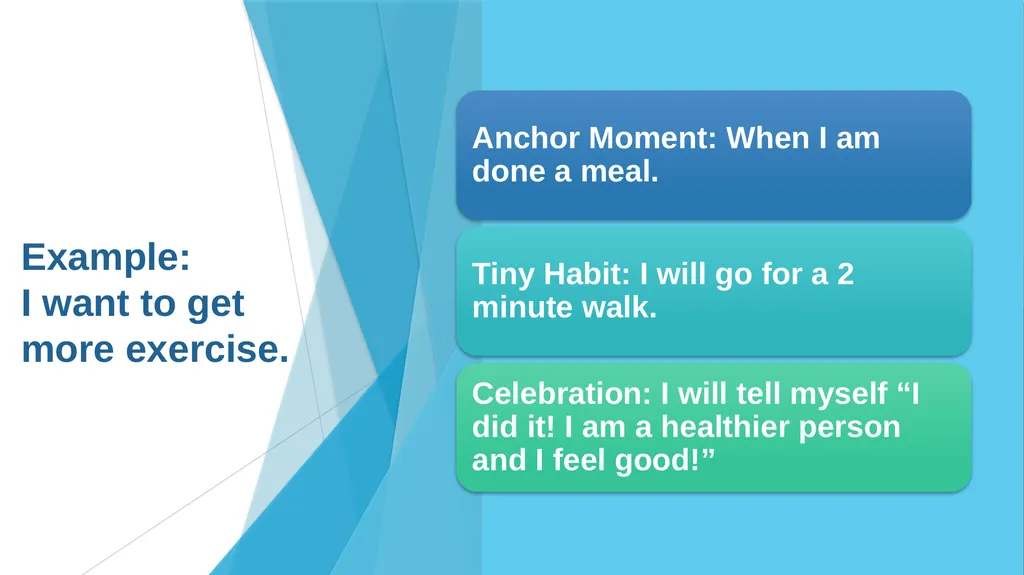
Example: I want to get more exercise.<br>
05
Humans are more likely to do a task if it takes less effort.
Setting your space up for success increases the chance that you will engage in the new tiny behaviour.
In the previous example, you can put your running shoes next to your chair at the table where you eat.
You can also do the tiny behaviour with someone from the table or a friend to make it more fun.
After creating the habit of getting up from the table after a meal and going for a walk, you will increase your time walking gradually since going for a walk after a meal is already a habit. Set your space up for success!<br>
06
A Tool to Help Go online to TinyHabits.com/recipes for a tool that will help you create recipes for tiny habits. This is a tool from Dr. Fogg’s book.
At first, choose one new tiny habit recipe to practice every day.
There are lots of options to choose from and once you create your recipe you will receive feedback if it’s Dr. Fogg approved or not!
Your recipe will look something like this:
After I realize I've been on social media too long, I will set a timer for 5 minutes and dive into my work project.<br>
07
Remind yourself that change is easier by feeling good than bad. Post a note on your mirror or wherever you will see it often that states:
I am better able to change by feeling good, not by feeling bad.
Read it often and notice how this changes the way you look at your life.<br>
08
Complete a free 5-day program from Dr. Fogg Go online to TinyHabits.com/join and join the free 5-day program where you’ll create new tiny habits with the personal guidance of a “real human” Tiny Habits coach trained by Dr. Fogg who is kind and supportive.<br>
09
References Clear, J. (2018). Atomic habits: An easy &proven way to build Good Habits & Break Bad Ones. Avery Penguin Random House.
Fogg, B. J. (2020). Tiny Habits: The small changes that change everything. Virgin Books.<br>