Creative iMedia Revision Booklet R081: Pre-production skills Mood boards Purpose of a mood board: Central focus of ideas in one place Used to generate ideas for a client to meet their approval before creating the final product Used to share
"Creative iMedia Revision Booklet R081:" is the property of its rightful owner. Permission is granted to
download and print the materials on this website for personal, non-commercial use only, and to display it
on your personal computer provided you do not modify the materials and that you retain all copyright
notices contained in the materials. By downloading content from our website, you accept the terms of this
agreement.
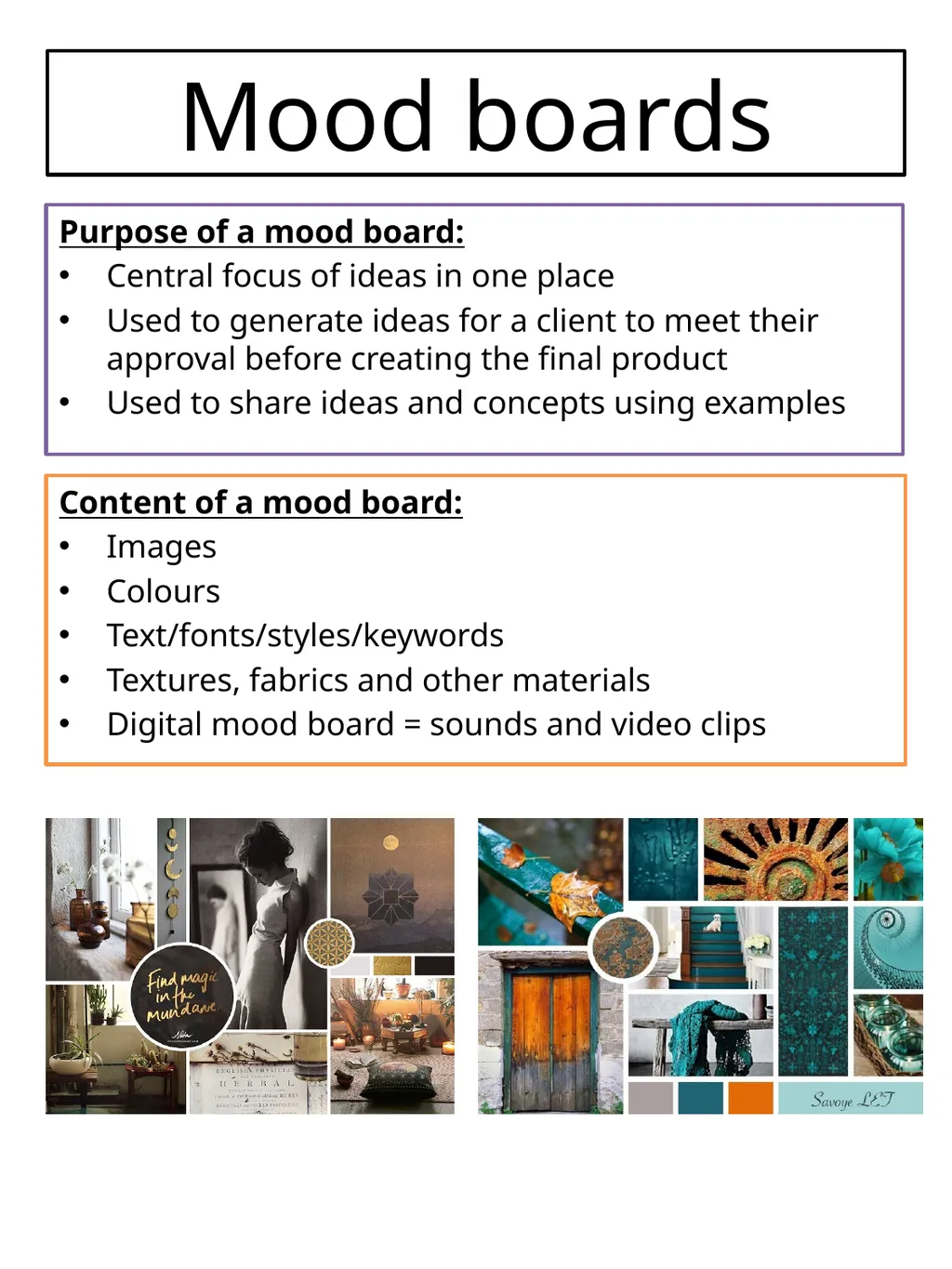
Mood boards Purpose of a mood board:
Central focus of ideas in one place
Used to generate ideas for a client to meet their approval before creating the final product
Used to share ideas and concepts using examples Content of a mood board:
Images
Colours
Text/fonts/styles/keywords
Textures, fabrics and other materials
Digital mood board = sounds and video clips<br>
03
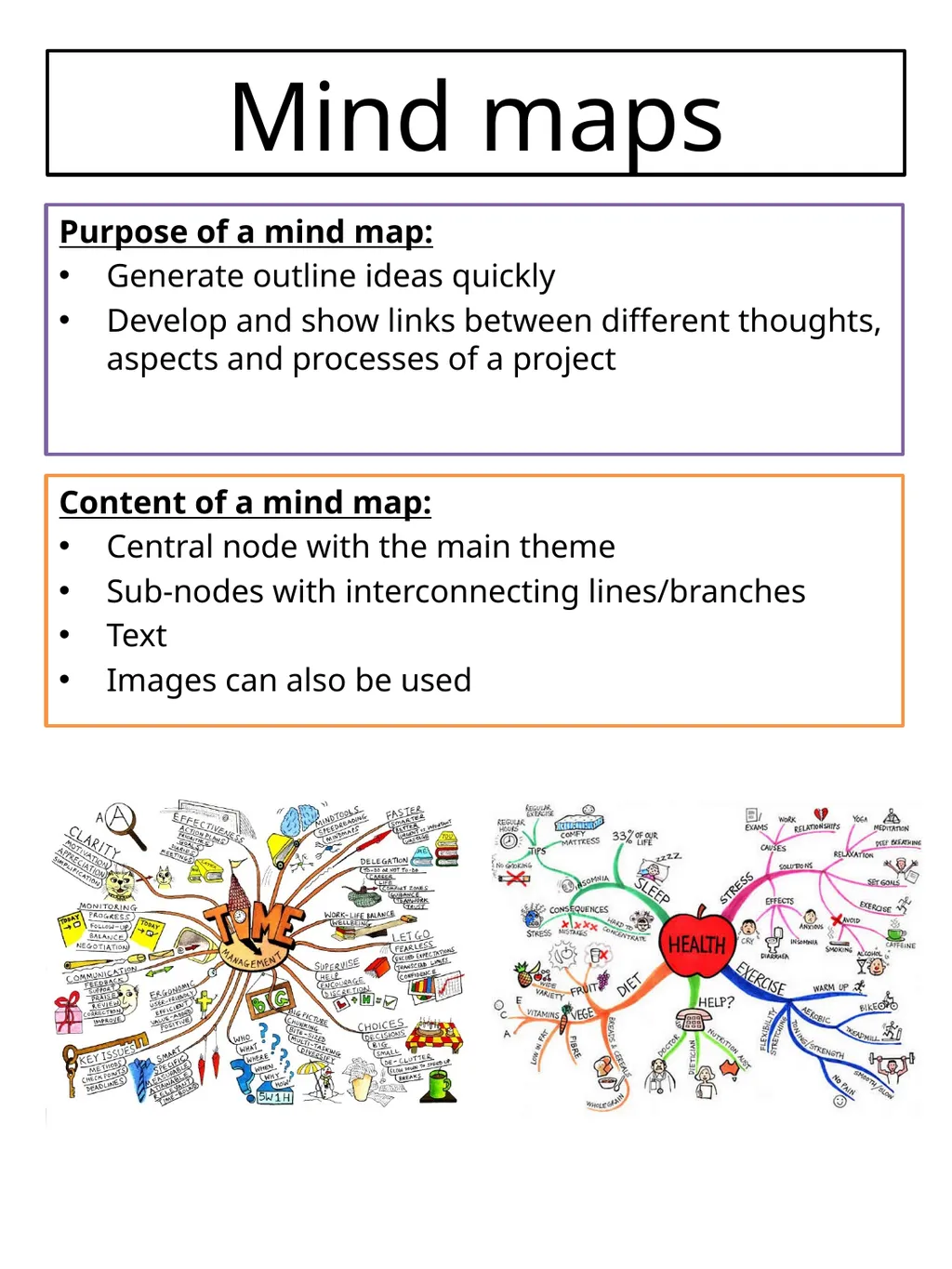
Mind maps Purpose of a mind map:
Generate outline ideas quickly
Develop and show links between different thoughts, aspects and processes of a project Content of a mind map:
Central node with the main theme
Sub-nodes with interconnecting lines/branches
Text
Images can also be used<br>
04
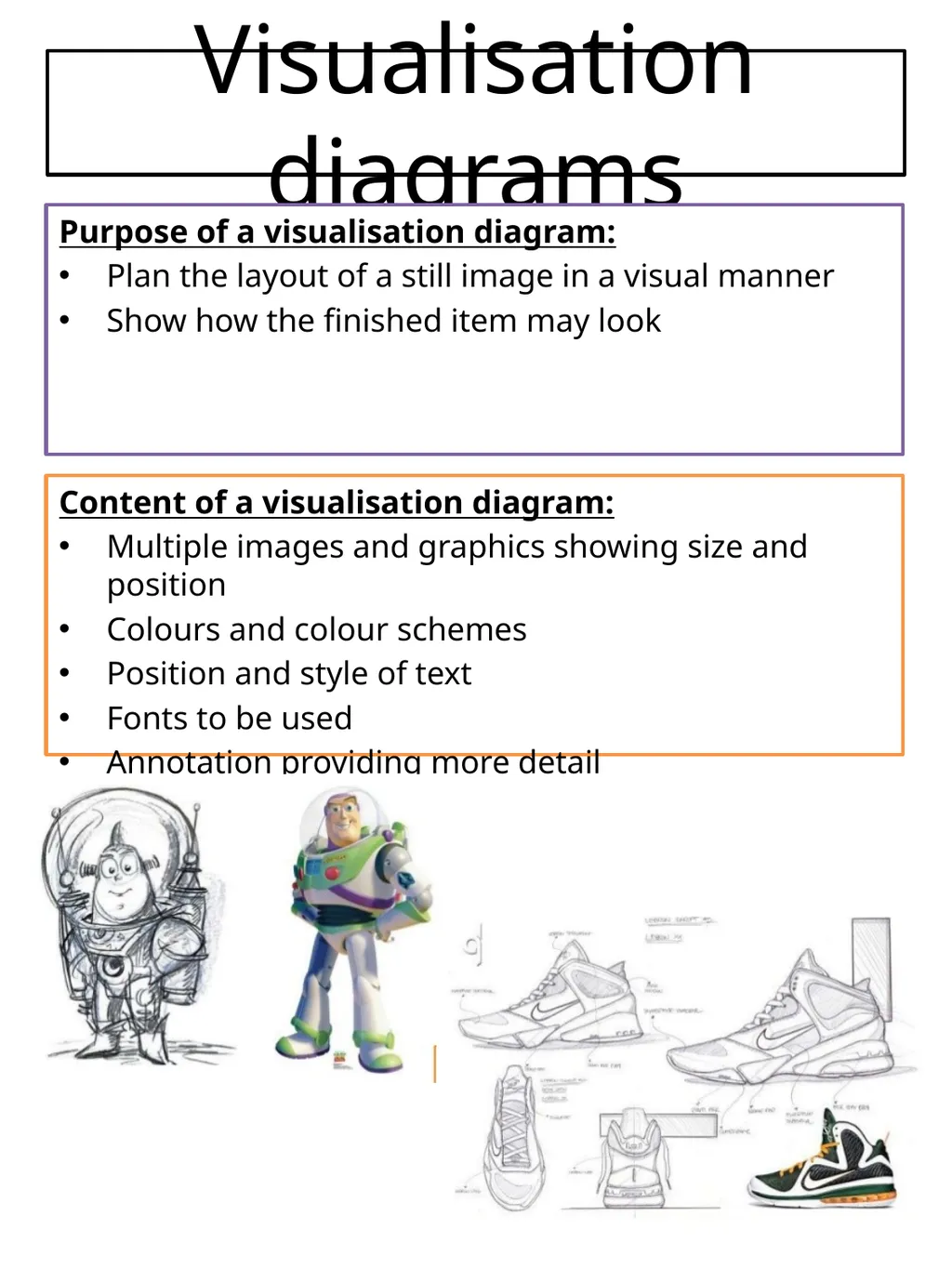
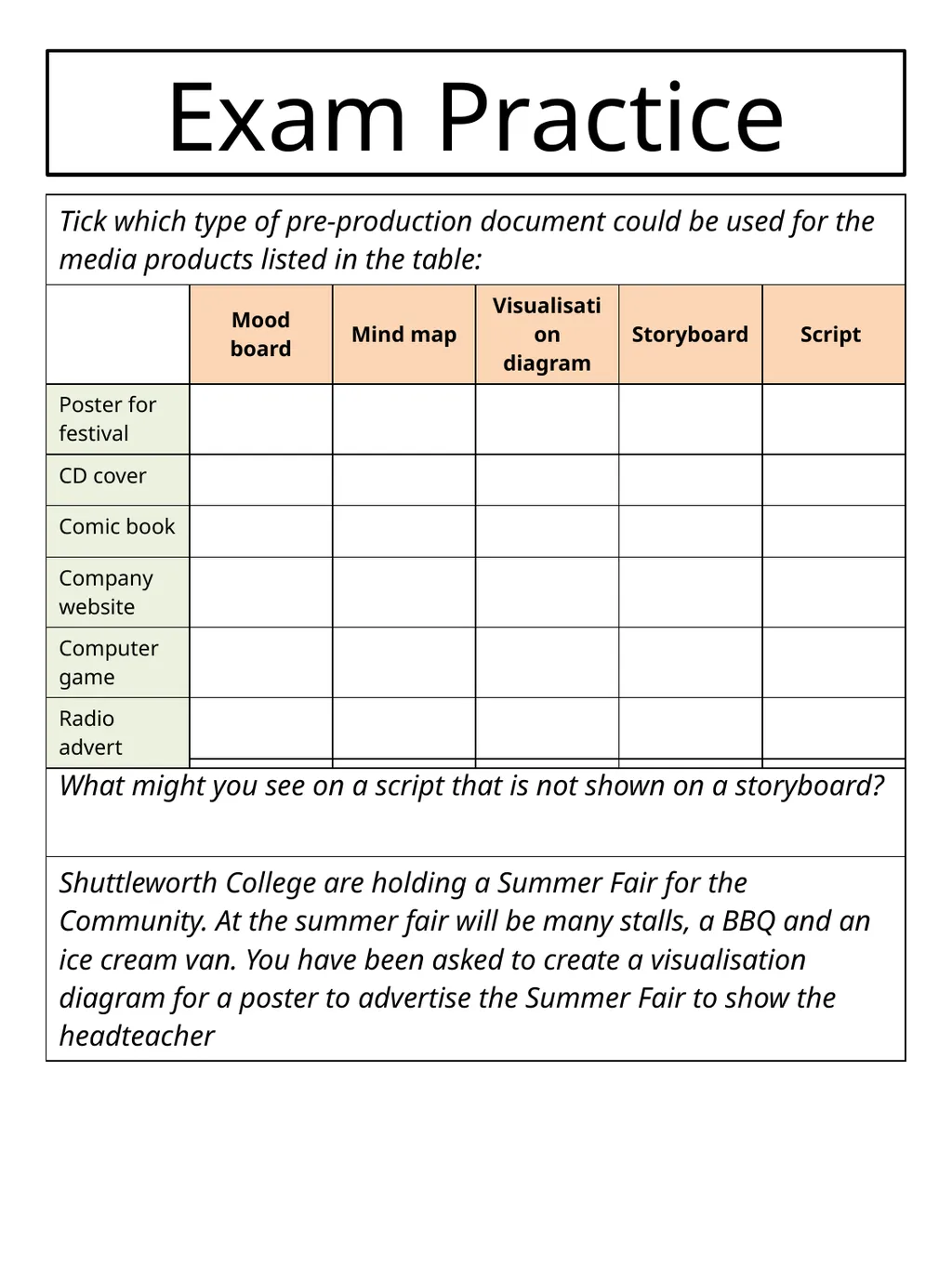
Visualisation diagrams Purpose of a visualisation diagram:
Plan the layout of a still image in a visual manner
Show how the finished item may look Content of a visualisation diagram:
Multiple images and graphics showing size and position
Colours and colour schemes
Position and style of text
Fonts to be used
Annotation providing more detail<br>
05
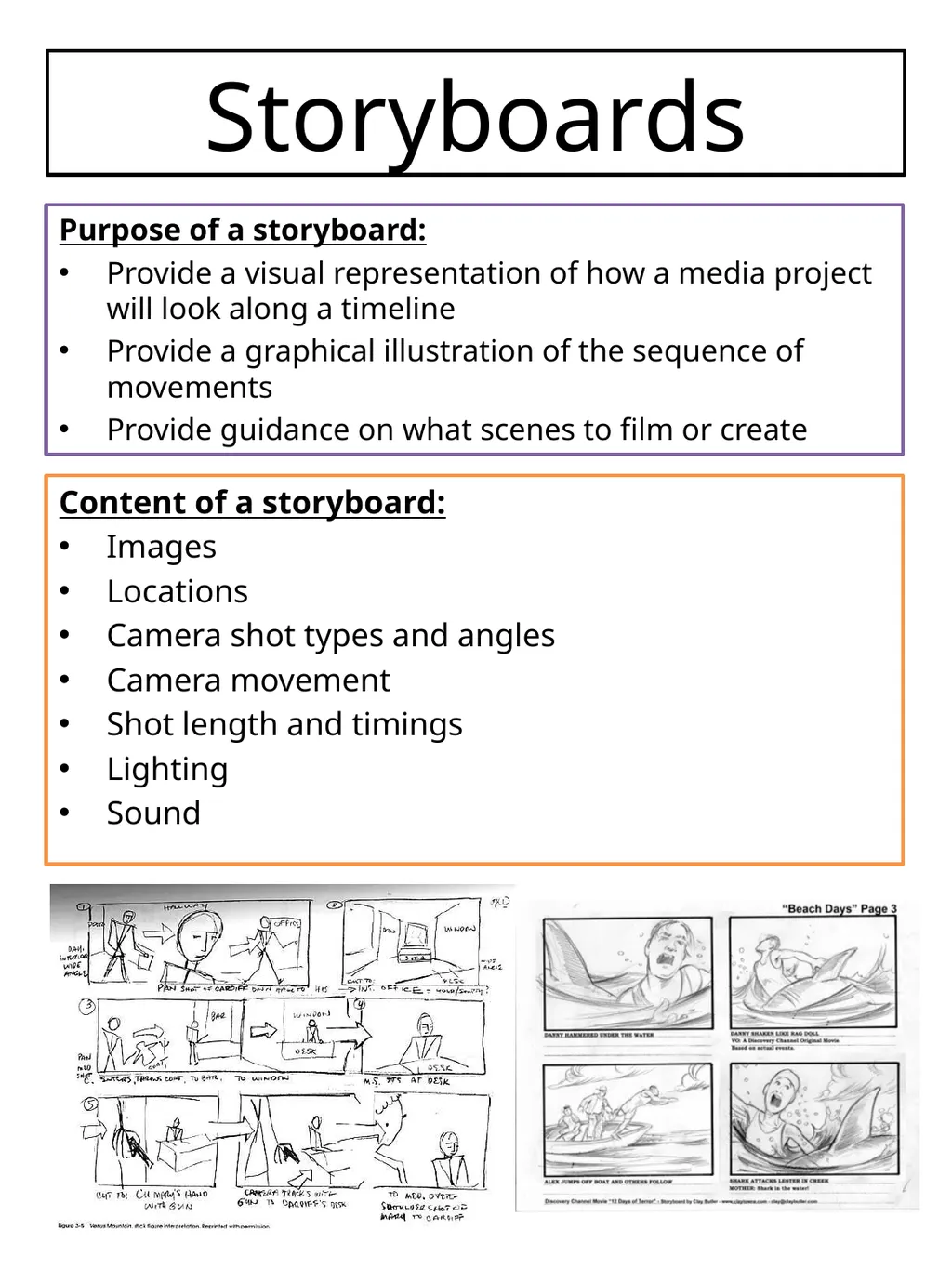
Storyboards Purpose of a storyboard:
Provide a visual representation of how a media project will look along a timeline
Provide a graphical illustration of the sequence of movements
Provide guidance on what scenes to film or create Content of a storyboard:
Images
Locations
Camera shot types and angles
Camera movement
Shot length and timings
Lighting
Sound<br>
06
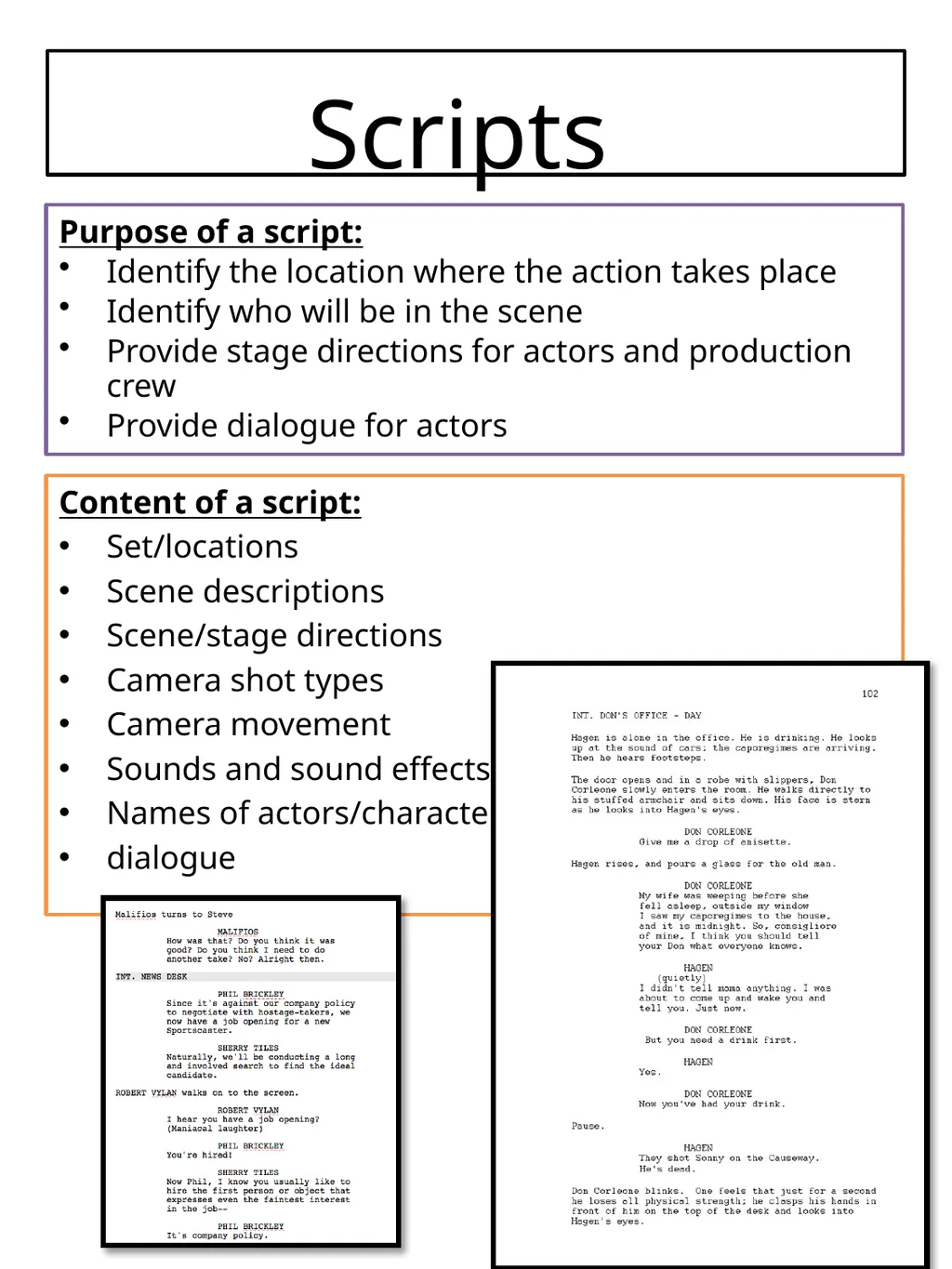
Scripts Purpose of a script:
Identify the location where the action takes place
Identify who will be in the scene
Provide stage directions for actors and production crew
Provide dialogue for actors Content of a script:
Set/locations
Scene descriptions
Scene/stage directions
Camera shot types
Camera movement
Sounds and sound effects
Names of actors/characters
dialogue<br>
07
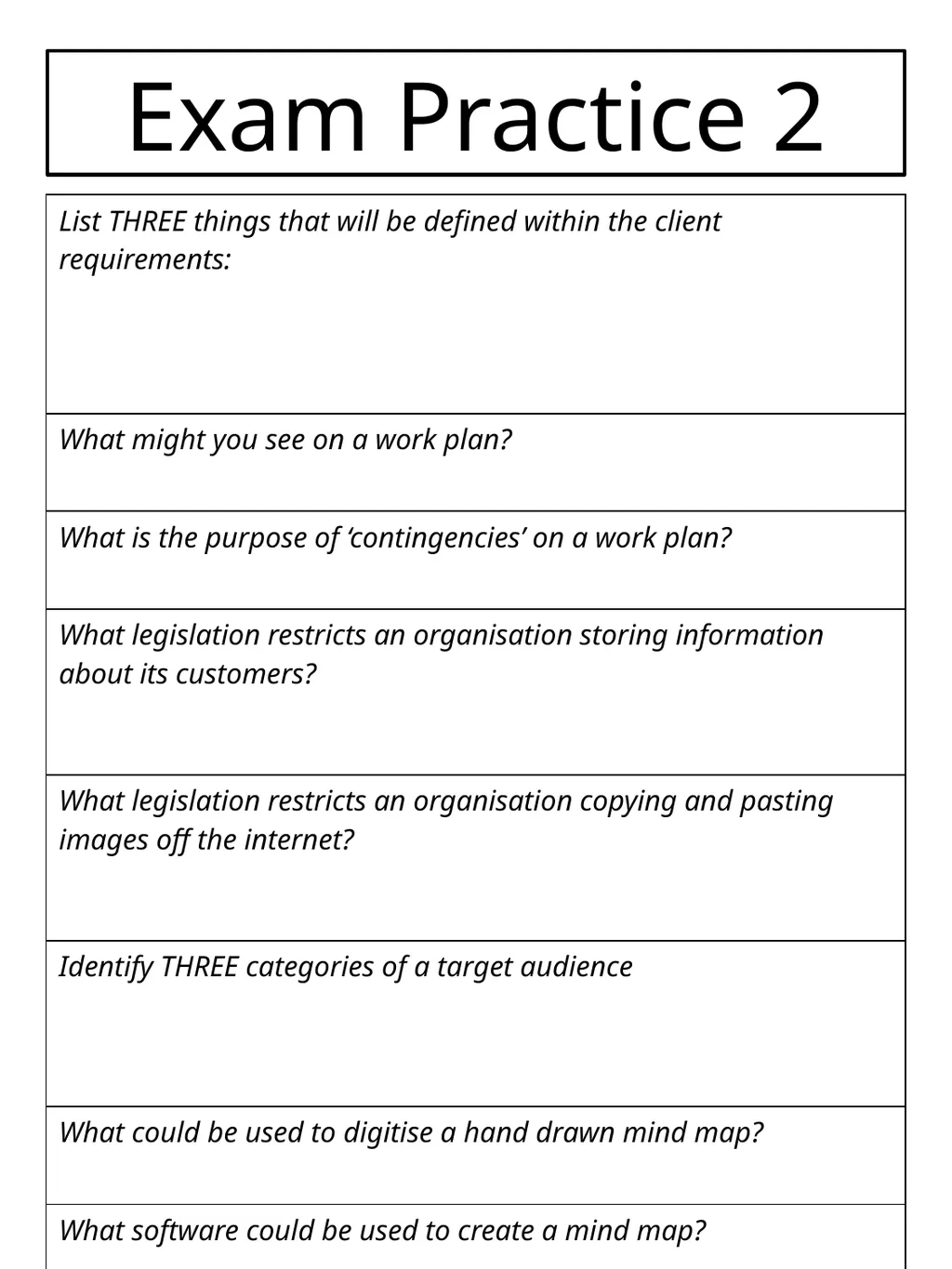
Client requirements Whether you are creating something for yourself or for a client, your project will have a set of client requirements. Purpose of client requirements:
Provide the media developer with outline information and any constraints (timescale)
Clear statement of what is to be produced Content of client requirements:
Statement of what media product is needed
Purpose of the media product
Target audience
Content
Timescale
Restrictions
House style<br>
08
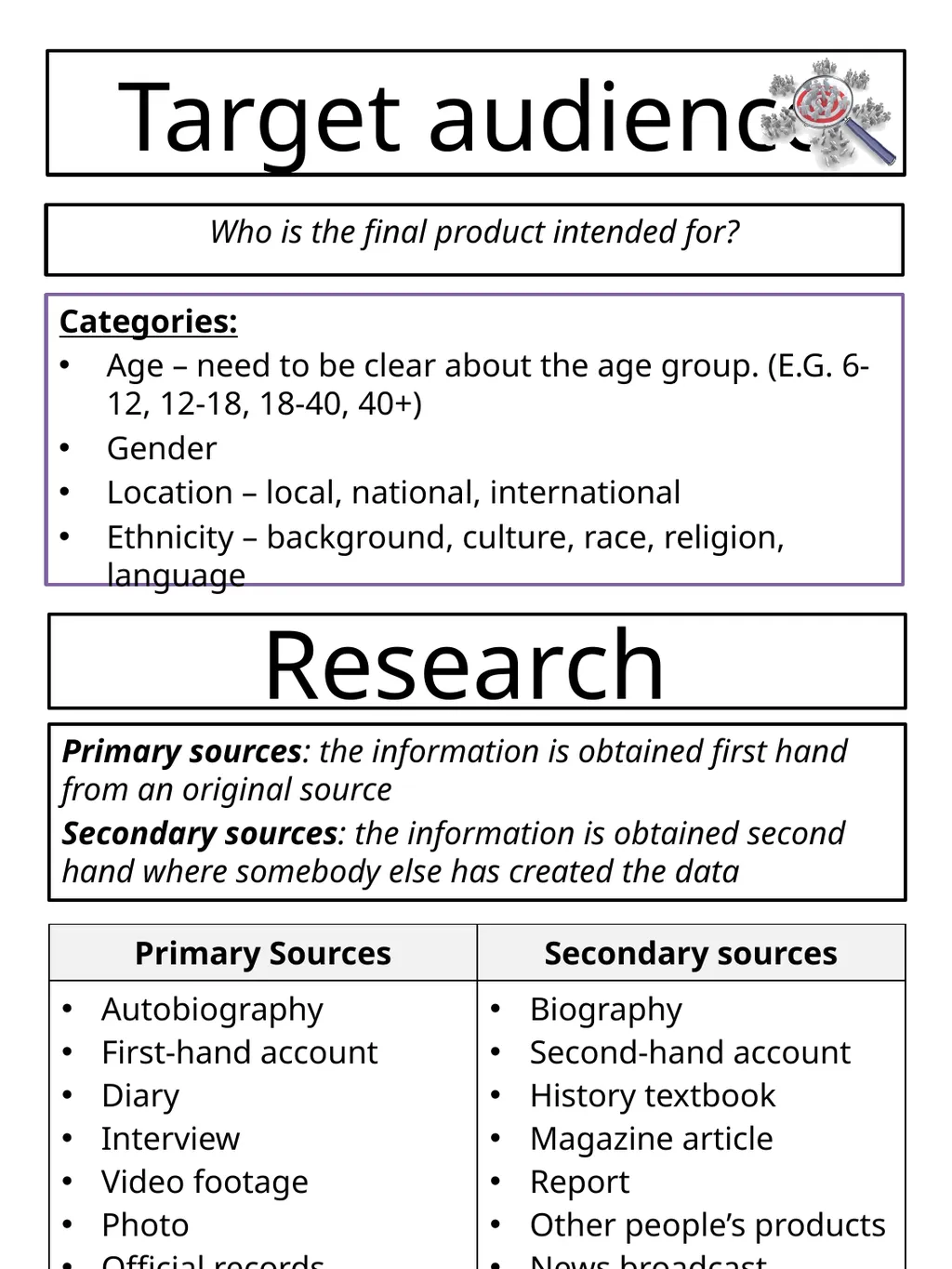
Target audience Who is the final product intended for? Categories:
Age – need to be clear about the age group. (E.G. 6-12, 12-18, 18-40, 40+)
Gender
Location – local, national, international
Ethnicity – background, culture, race, religion, language Research Primary sources: the information is obtained first hand from an original source
Secondary sources: the information is obtained second hand where somebody else has created the data<br>
09
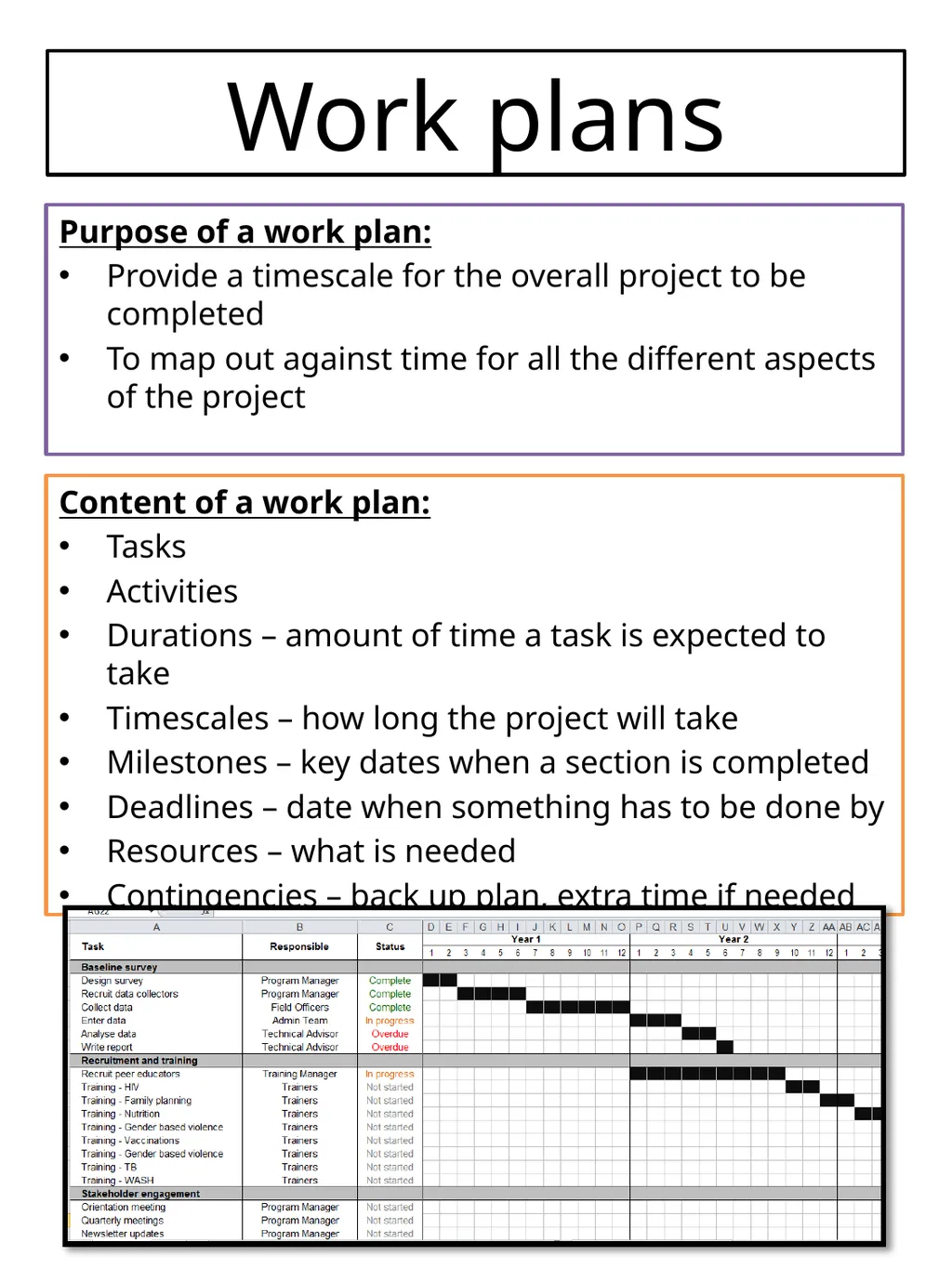
Work plans Purpose of a work plan:
Provide a timescale for the overall project to be completed
To map out against time for all the different aspects of the project Content of a work plan:
Tasks
Activities
Durations – amount of time a task is expected to take
Timescales – how long the project will take
Milestones – key dates when a section is completed
Deadlines – date when something has to be done by
Resources – what is needed
Contingencies – back up plan, extra time if needed<br>