Criminal Justice System Identify state-specific
Description: Criminal Justice System Identify state-specific victims rights. Identify criminal justice system remedies that may benefit victims. Identify strategies to support victims while they participate in criminal justice system processes.
Related Topics
Download Presentation
"Criminal Justice System Identify state-specific" is the property of its rightful owner. Permission is granted to download and print the materials on this website for personal, non-commercial use only, and to display it on your personal computer provided you do not modify the materials and that you retain all copyright notices contained in the materials. By downloading content from our website, you accept the terms of this agreement.
Presentation Transcript
slide1. Criminal Justice System<br>
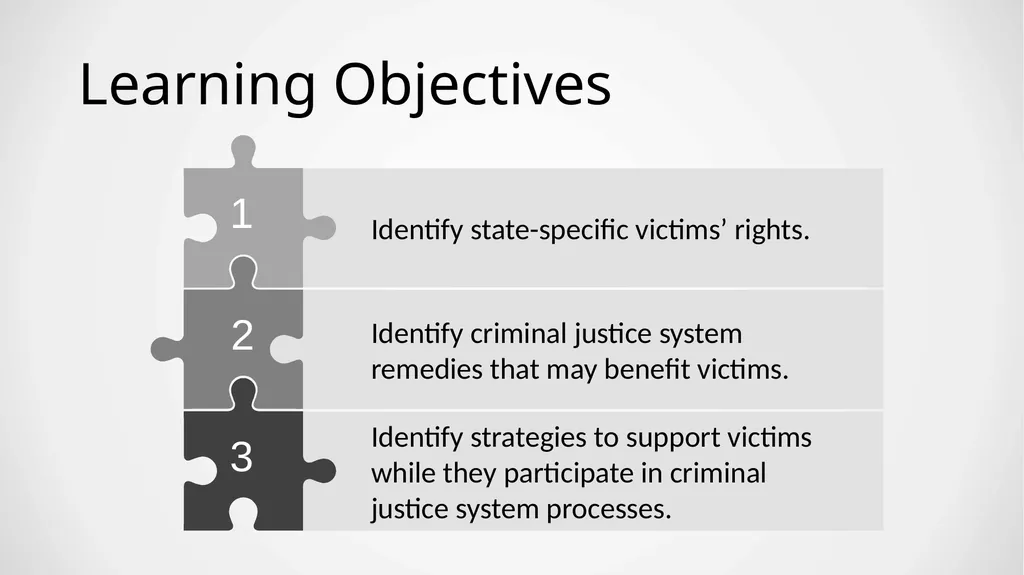
slide2. Identify state-specific victims’ rights. Identify criminal justice system remedies that may benefit victims. Identify strategies to support victims while they participate in criminal justice system processes. Learning Objectives<br>
slide3. Criminal Justice System<br>
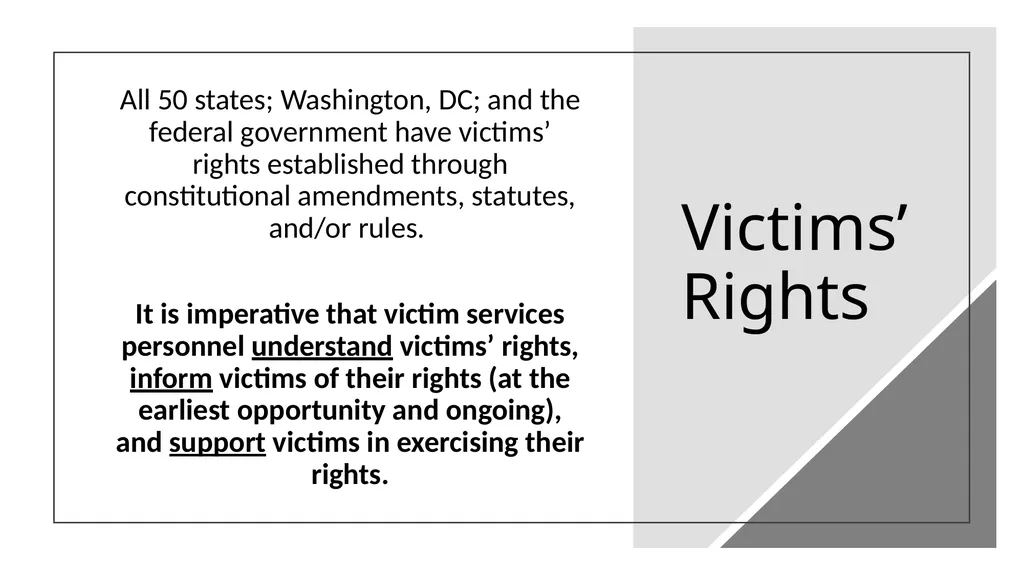
slide4. Victims’ Rights All 50 states; Washington, DC; and the federal government have victims’ rights established through constitutional amendments, statutes, and/or rules.
It is imperative that victim services personnel understand victims’ rights, inform victims of their rights (at the earliest opportunity and ongoing), and support victims in exercising their rights.<br>
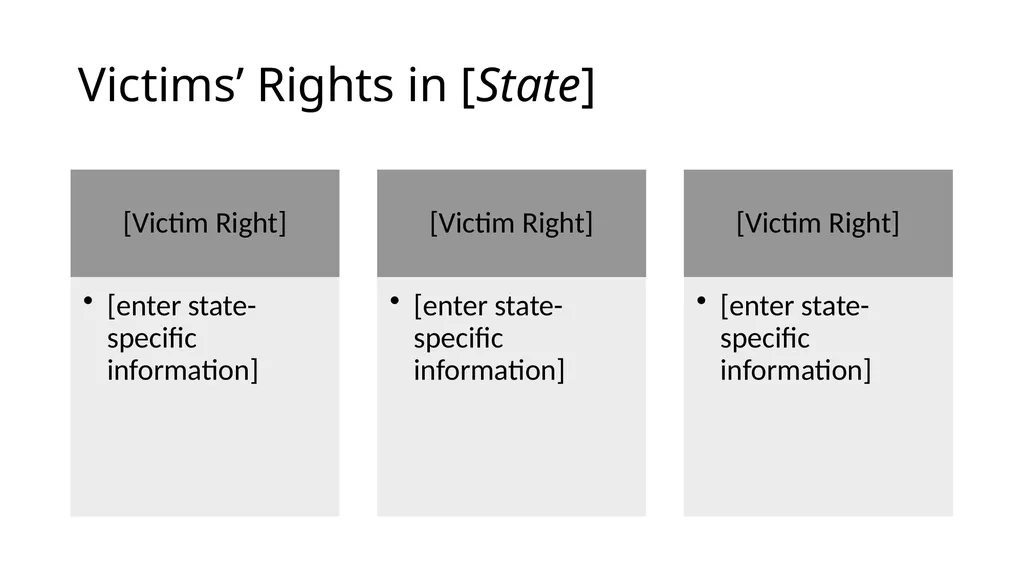
slide5. Victims’ Rights in [State]<br>
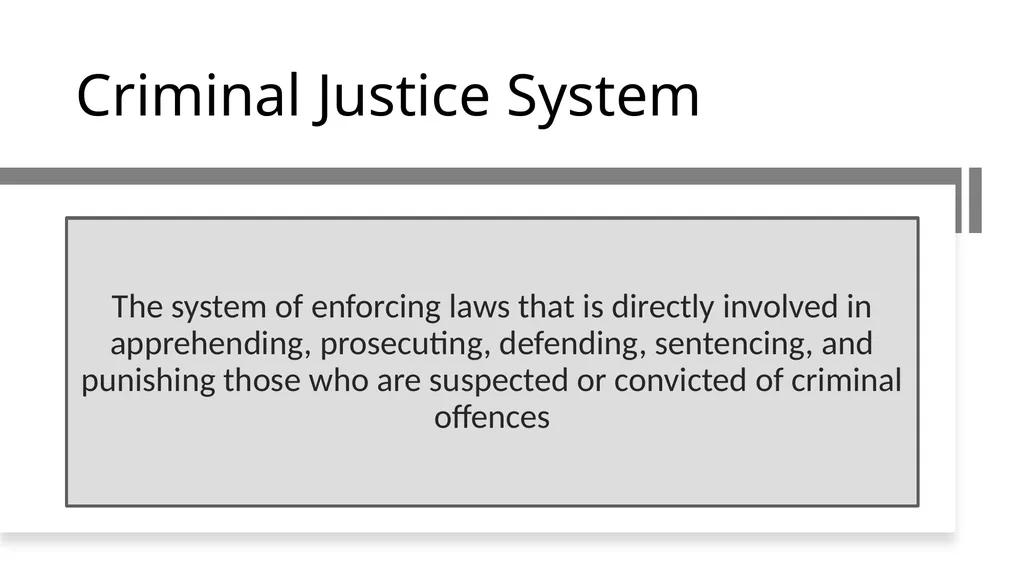
slide6. Criminal Justice System The system of enforcing laws that is directly involved in apprehending, prosecuting, defending, sentencing, and punishing those who are suspected or convicted of criminal offences<br>
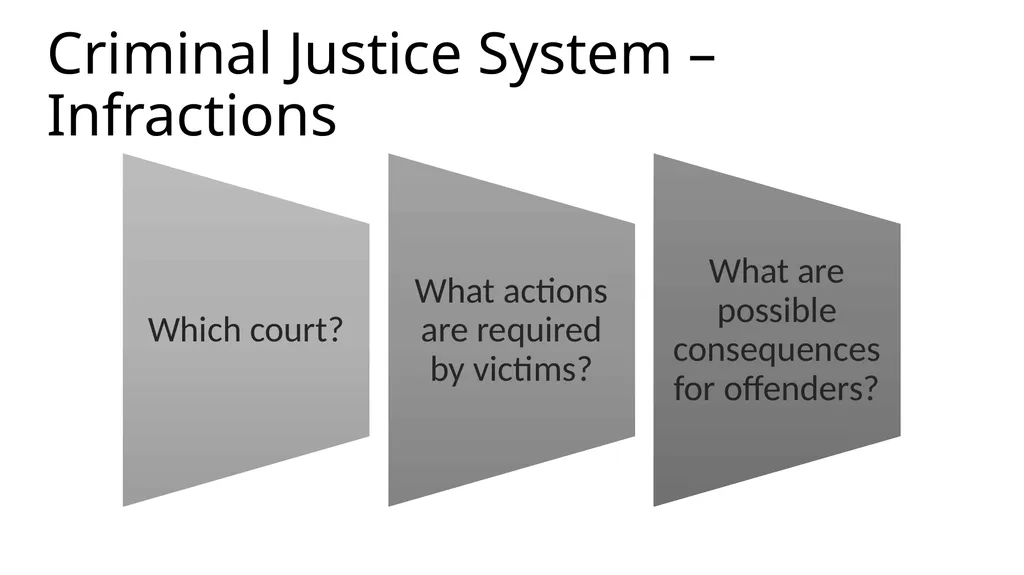
slide7. Criminal Justice System – Infractions<br>
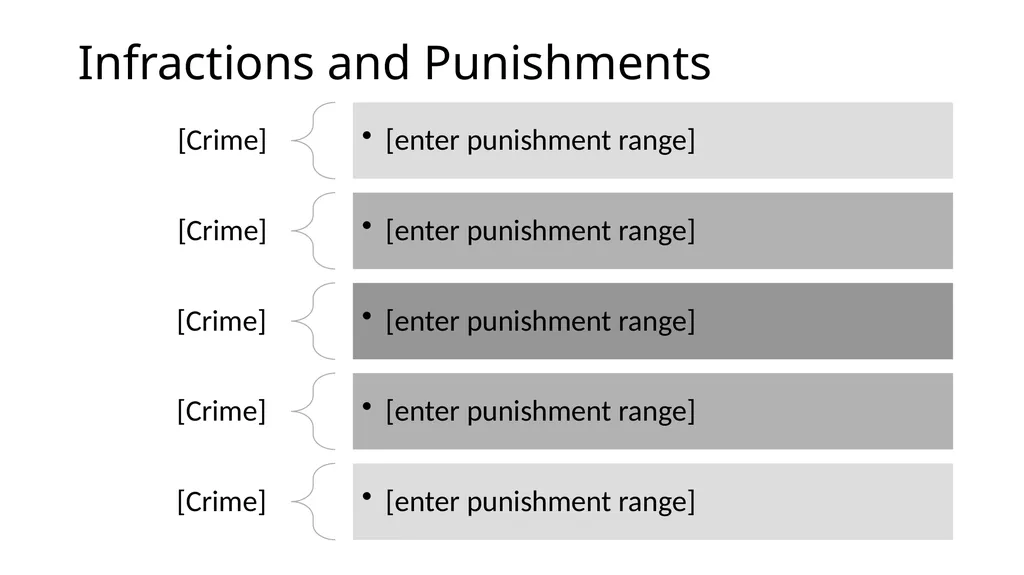
slide8. Infractions and Punishments<br>
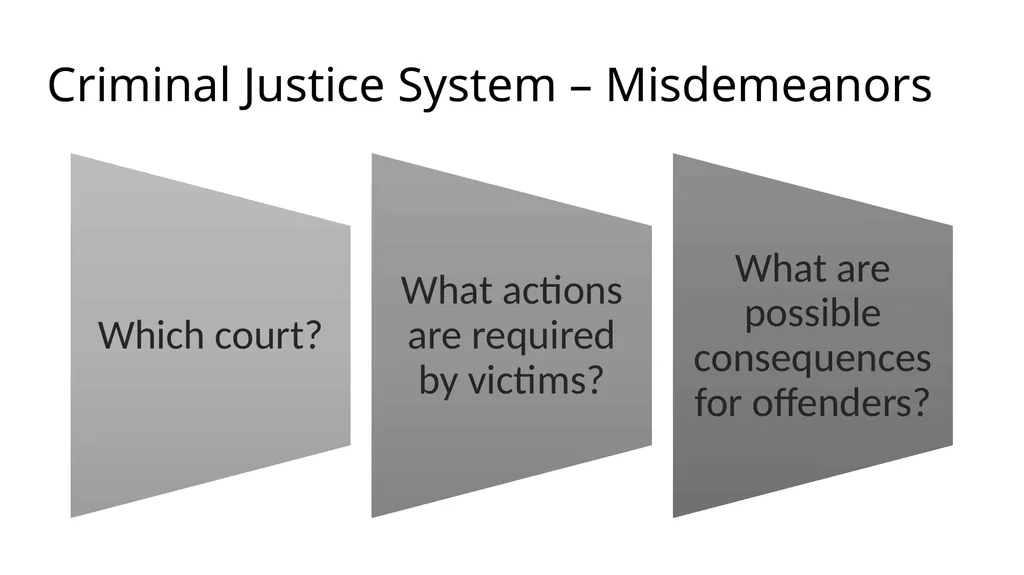
slide9. Criminal Justice System – Misdemeanors<br>
slide10. Class A Misdemeanors and Punishments<br>
slide11. Class B Misdemeanors and Punishments<br>
slide12. Class C Misdemeanors and Punishments<br>
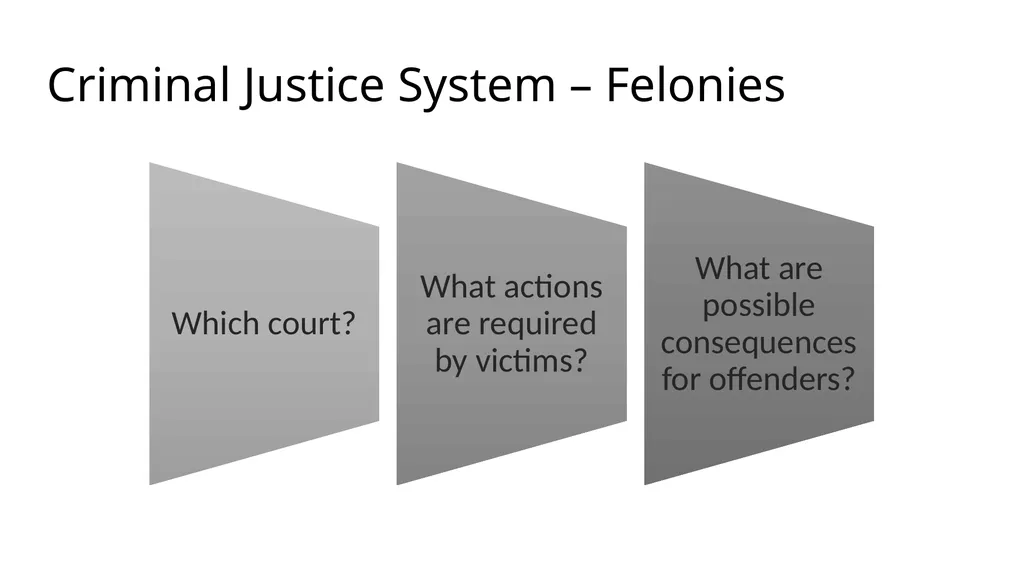
slide13. Criminal Justice System – Felonies<br>
slide14. First-Degree Felonies and Punishments<br>
slide15. Second-Degree Felonies and Punishments<br>
slide16. Third-Degree Felonies and Punishments<br>
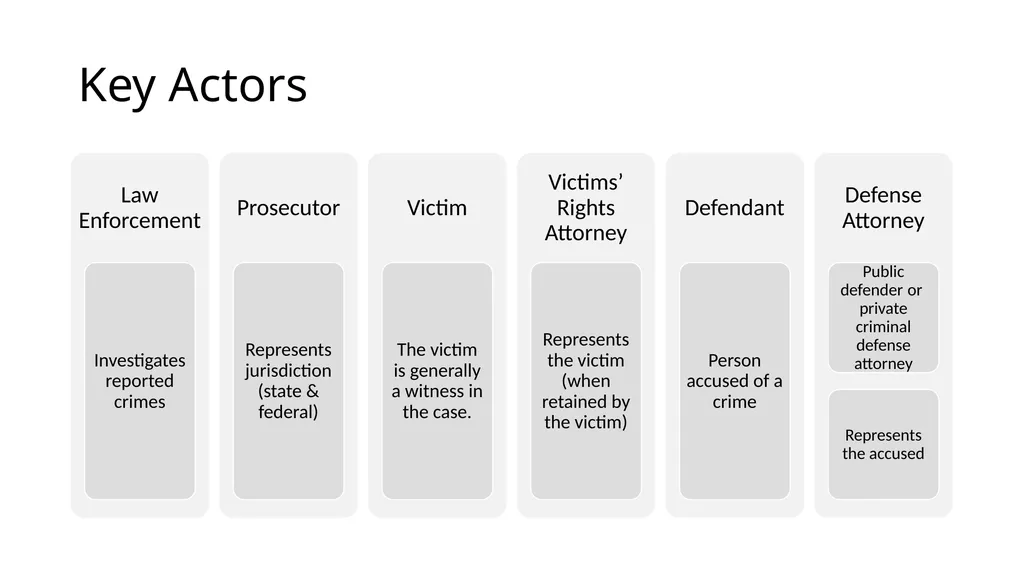
slide17. Key Actors<br>
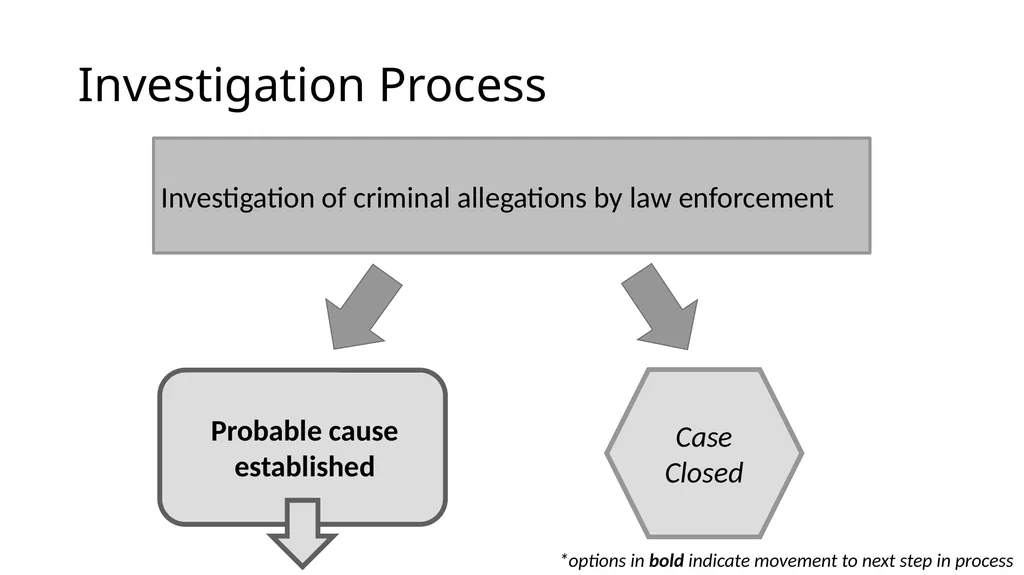
slide18. Investigation Process Investigation of criminal allegations by law enforcement Case Closed Probable cause established *options in bold indicate movement to next step in process<br>
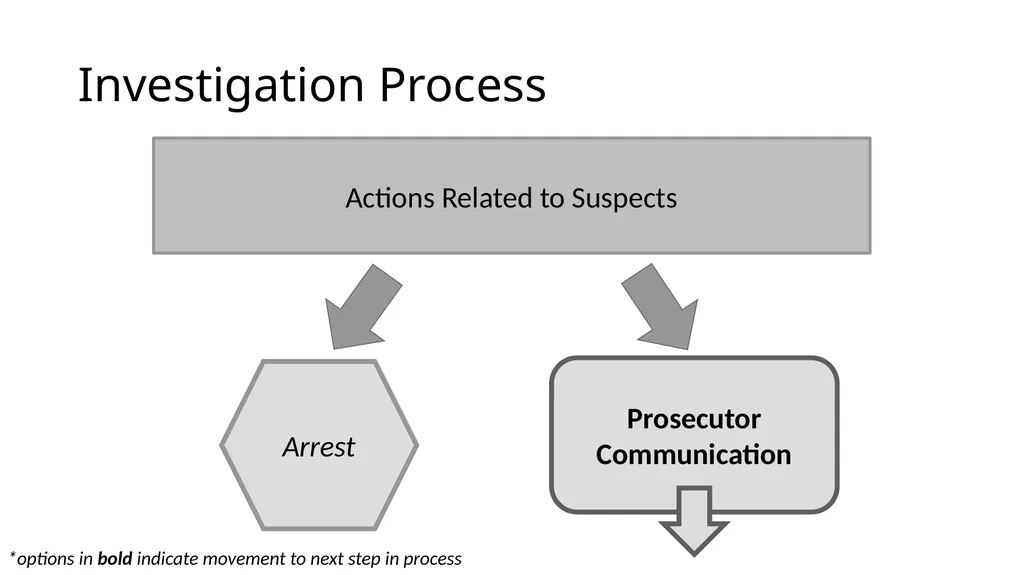
slide19. Investigation Process Actions Related to Suspects Arrest *options in bold indicate movement to next step in process<br>
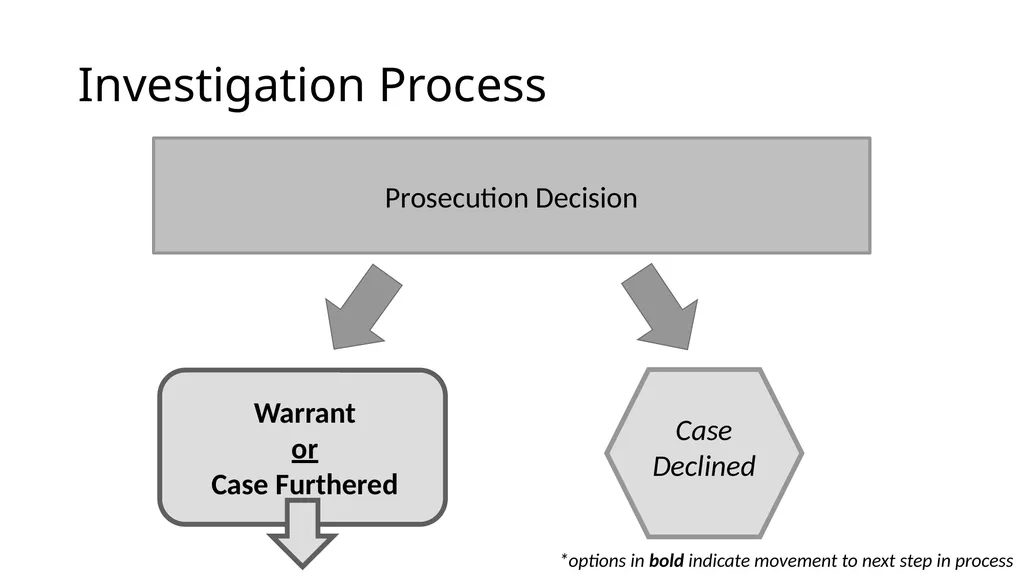
slide20. Investigation Process Prosecution Decision Case Declined Warrant
or
Case Furthered *options in bold indicate movement to next step in process<br>
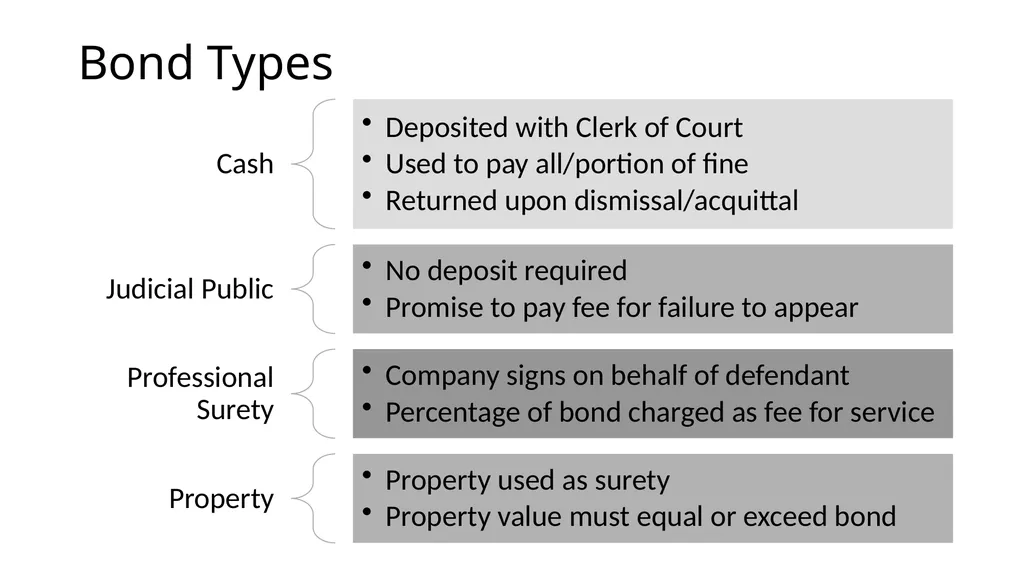
slide21. Bond Types<br>
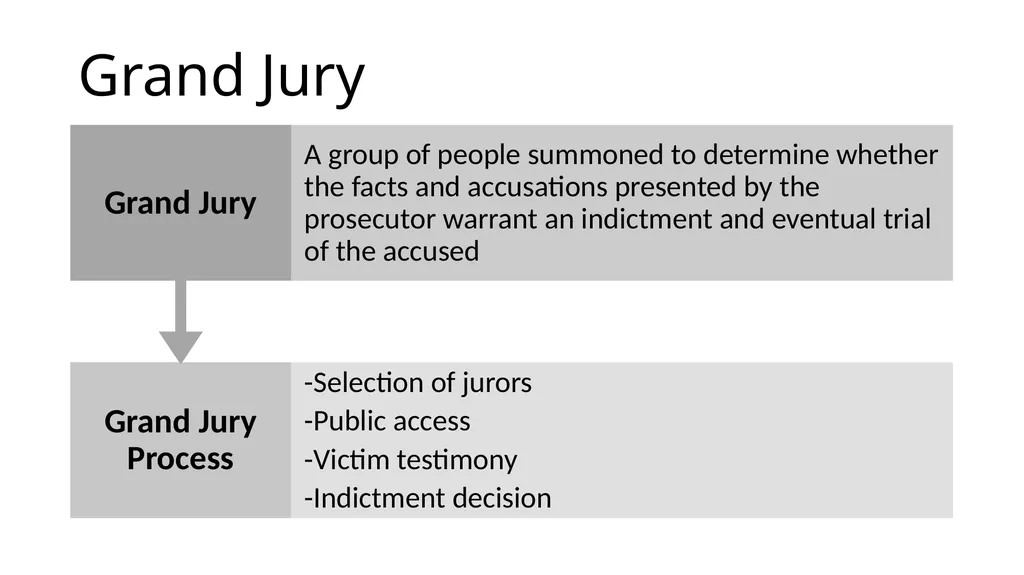
slide22. Grand Jury<br>
slide23. Court Hearings and Court Structure<br>
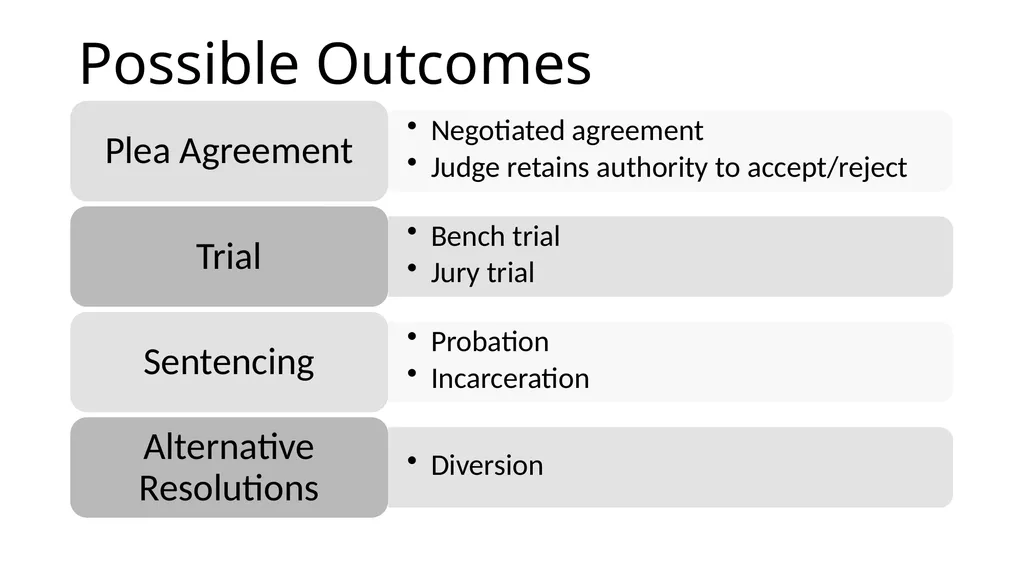
slide24. Possible Outcomes<br>
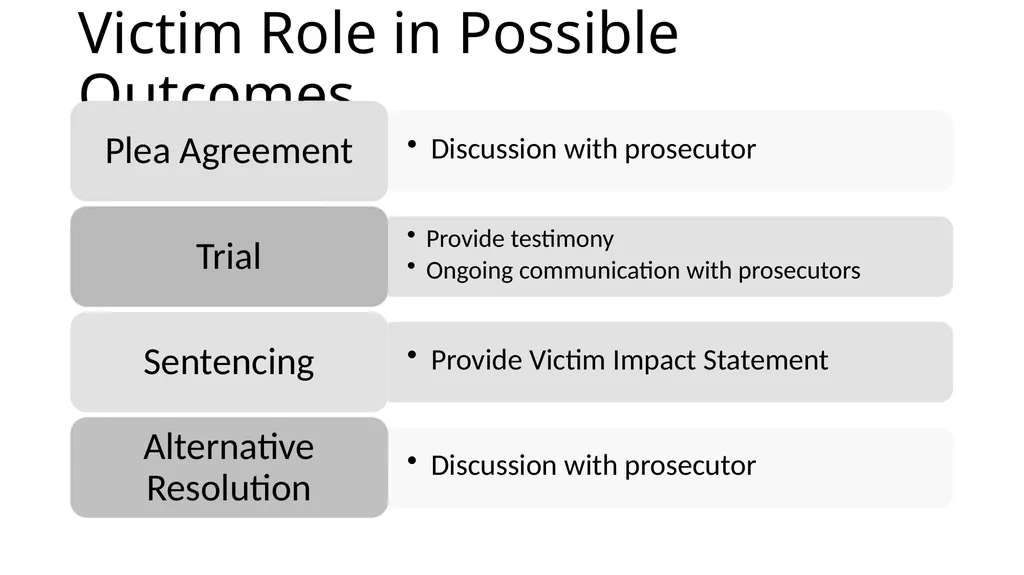
slide25. Victim Role in Possible Outcomes<br>
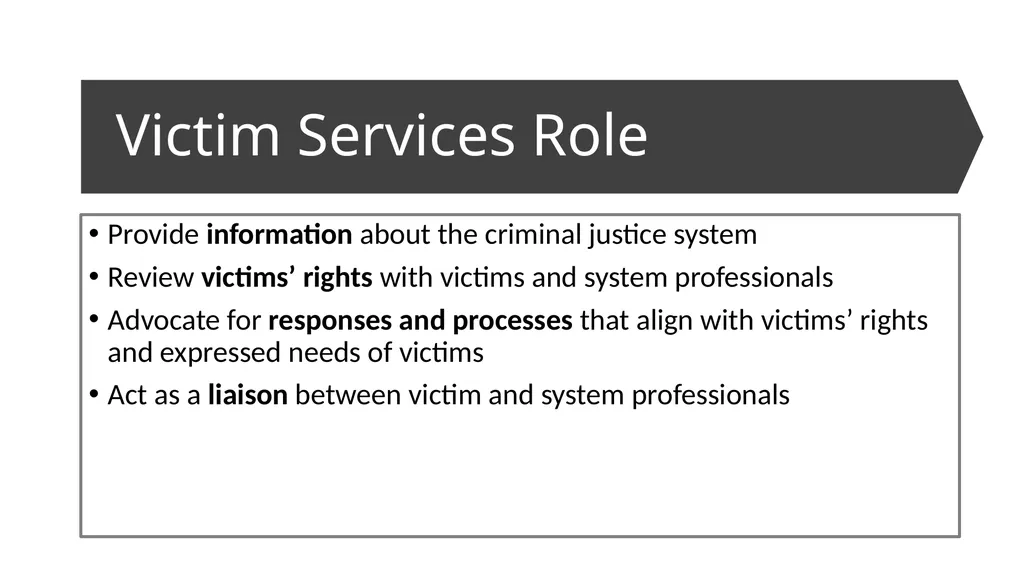
slide26. Victim Services Role Provide information about the criminal justice system
Review victims’ rights with victims and system professionals
Advocate for responses and processes that align with victims’ rights and expressed needs of victims
Act as a liaison between victim and system professionals<br>
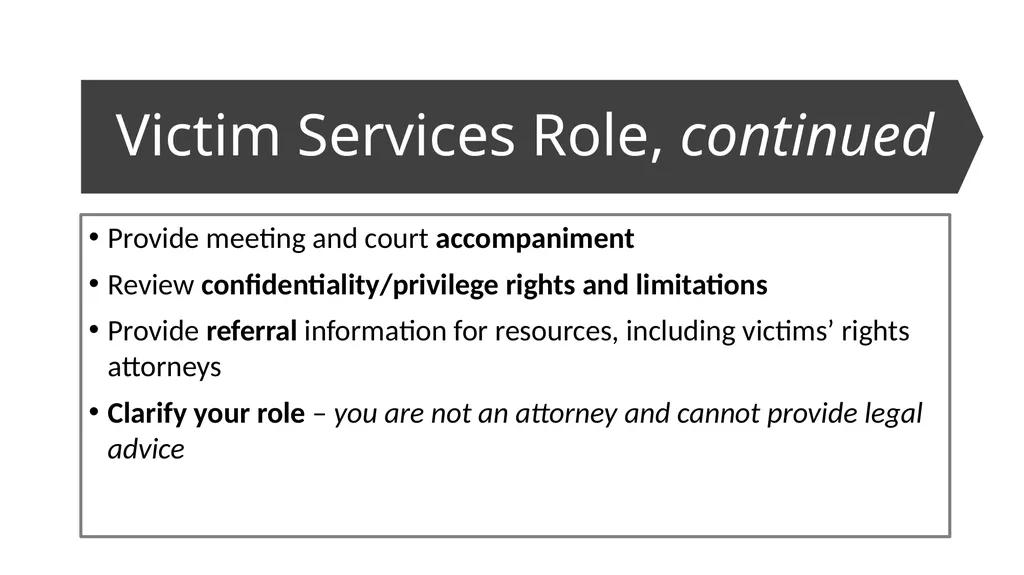
slide27. Victim Services Role, continued Provide meeting and court accompaniment
Review confidentiality/privilege rights and limitations
Provide referral information for resources, including victims’ rights attorneys
Clarify your role – you are not an attorney and cannot provide legal advice<br>
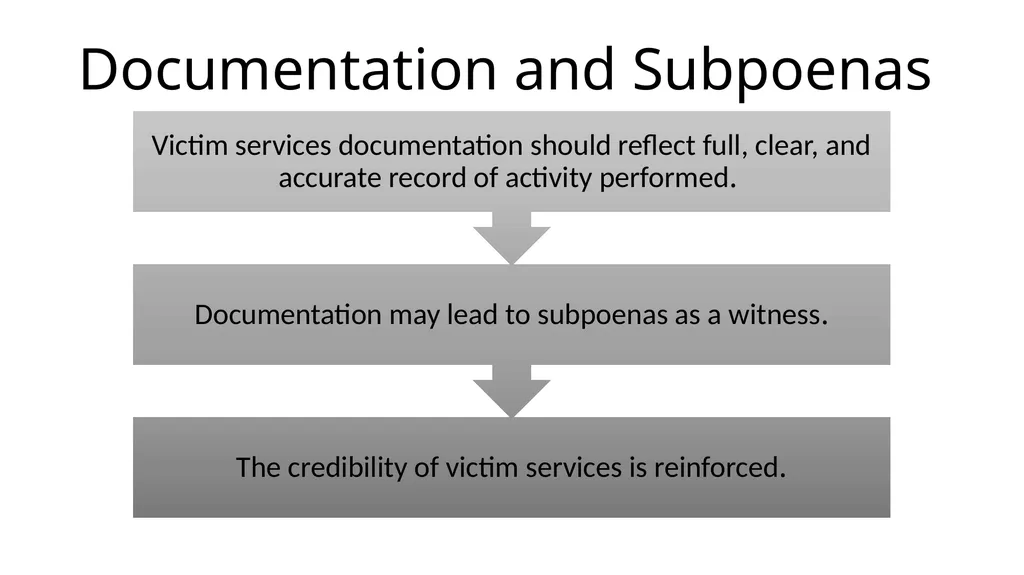
slide28. Documentation and Subpoenas<br>
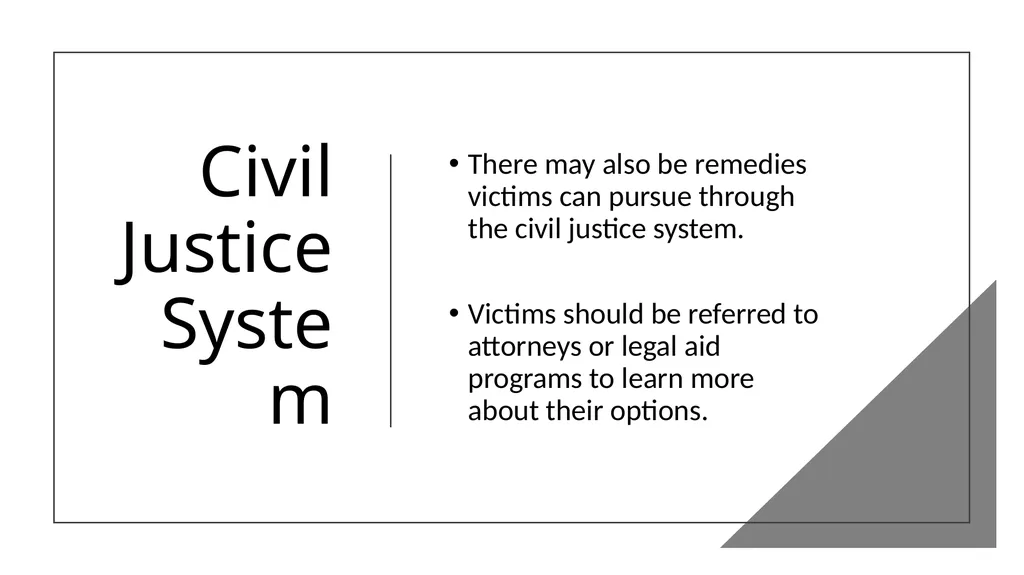
slide29. Civil Justice System There may also be remedies victims can pursue through the civil justice system.
Victims should be referred to attorneys or legal aid programs to learn more about their options.<br>
slide30. Questions [enter contact information for trainers]<br>
slide2. Identify state-specific victims’ rights. Identify criminal justice system remedies that may benefit victims. Identify strategies to support victims while they participate in criminal justice system processes. Learning Objectives<br>
slide3. Criminal Justice System<br>
slide4. Victims’ Rights All 50 states; Washington, DC; and the federal government have victims’ rights established through constitutional amendments, statutes, and/or rules.
It is imperative that victim services personnel understand victims’ rights, inform victims of their rights (at the earliest opportunity and ongoing), and support victims in exercising their rights.<br>
slide5. Victims’ Rights in [State]<br>
slide6. Criminal Justice System The system of enforcing laws that is directly involved in apprehending, prosecuting, defending, sentencing, and punishing those who are suspected or convicted of criminal offences<br>
slide7. Criminal Justice System – Infractions<br>
slide8. Infractions and Punishments<br>
slide9. Criminal Justice System – Misdemeanors<br>
slide10. Class A Misdemeanors and Punishments<br>
slide11. Class B Misdemeanors and Punishments<br>
slide12. Class C Misdemeanors and Punishments<br>
slide13. Criminal Justice System – Felonies<br>
slide14. First-Degree Felonies and Punishments<br>
slide15. Second-Degree Felonies and Punishments<br>
slide16. Third-Degree Felonies and Punishments<br>
slide17. Key Actors<br>
slide18. Investigation Process Investigation of criminal allegations by law enforcement Case Closed Probable cause established *options in bold indicate movement to next step in process<br>
slide19. Investigation Process Actions Related to Suspects Arrest *options in bold indicate movement to next step in process<br>
slide20. Investigation Process Prosecution Decision Case Declined Warrant
or
Case Furthered *options in bold indicate movement to next step in process<br>
slide21. Bond Types<br>
slide22. Grand Jury<br>
slide23. Court Hearings and Court Structure<br>
slide24. Possible Outcomes<br>
slide25. Victim Role in Possible Outcomes<br>
slide26. Victim Services Role Provide information about the criminal justice system
Review victims’ rights with victims and system professionals
Advocate for responses and processes that align with victims’ rights and expressed needs of victims
Act as a liaison between victim and system professionals<br>
slide27. Victim Services Role, continued Provide meeting and court accompaniment
Review confidentiality/privilege rights and limitations
Provide referral information for resources, including victims’ rights attorneys
Clarify your role – you are not an attorney and cannot provide legal advice<br>
slide28. Documentation and Subpoenas<br>
slide29. Civil Justice System There may also be remedies victims can pursue through the civil justice system.
Victims should be referred to attorneys or legal aid programs to learn more about their options.<br>
slide30. Questions [enter contact information for trainers]<br>