
Criminal Profiling 2 Introduction—Vocabulary
TF
Published · 52 slides · 0 views
1 / 1

Description
Criminal Profiling 2 IntroductionVocabulary Criminal profilera person who infers the personality and characteristics of a suspect based on information gathered from a crime scene Modus operandi (MO)also referred to as the method of
Related Topics
Share
Embed code
Download this presentation From Below
"Criminal Profiling 2 Introduction—Vocabulary" is the property of its rightful owner. Permission is granted to download and print the materials on this website for personal, non-commercial use only, and to display it on your personal computer provided you do not modify the materials and that you retain all copyright notices contained in the materials. By downloading content from our website, you accept the terms of this agreement.
Presentation Transcript
01
Criminal Profiling<br>
02
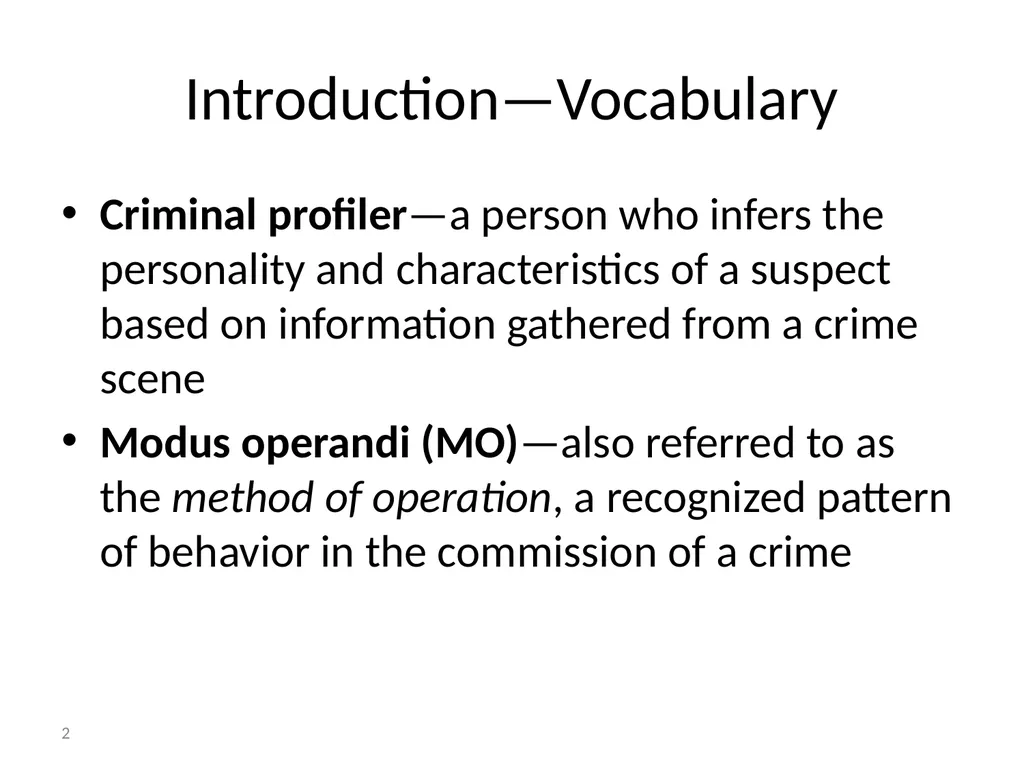
2 Introduction—Vocabulary Criminal profiler—a person who infers the personality and characteristics of a suspect based on information gathered from a crime scene
Modus operandi (MO)—also referred to as the method of operation, a recognized pattern of behavior in the commission of a crime<br>
Modus operandi (MO)—also referred to as the method of operation, a recognized pattern of behavior in the commission of a crime<br>
03
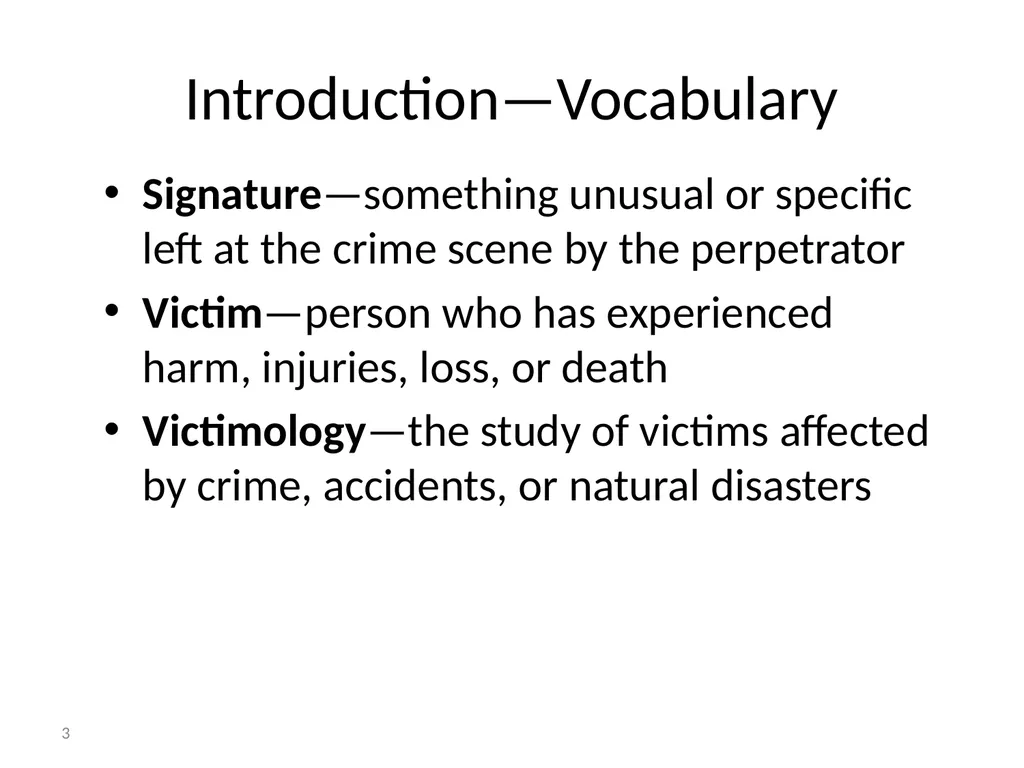
3 Introduction—Vocabulary Signature—something unusual or specific left at the crime scene by the perpetrator
Victim—person who has experienced harm, injuries, loss, or death
Victimology—the study of victims affected by crime, accidents, or natural disasters<br>
Victim—person who has experienced harm, injuries, loss, or death
Victimology—the study of victims affected by crime, accidents, or natural disasters<br>
04
4 Introduction Criminal profilers study evidence collected and analyzed by crime-scene investigators to formulate a hypothesis about a perpetrator’s
Age
Personality
Lifestyle
Social environment<br>
Age
Personality
Lifestyle
Social environment<br>
05
5 Modern Day Profiling Forensic psychiatrist
Interviews criminals and suspects
Evaluates personal history
Administers personality tests
Presents an opinion as testimony in court
James Brussel, 1950s, viewed profiling as a diagnostic tool, bridging the gap between criminal investigators and forensic psychiatrists<br>
Interviews criminals and suspects
Evaluates personal history
Administers personality tests
Presents an opinion as testimony in court
James Brussel, 1950s, viewed profiling as a diagnostic tool, bridging the gap between criminal investigators and forensic psychiatrists<br>
06
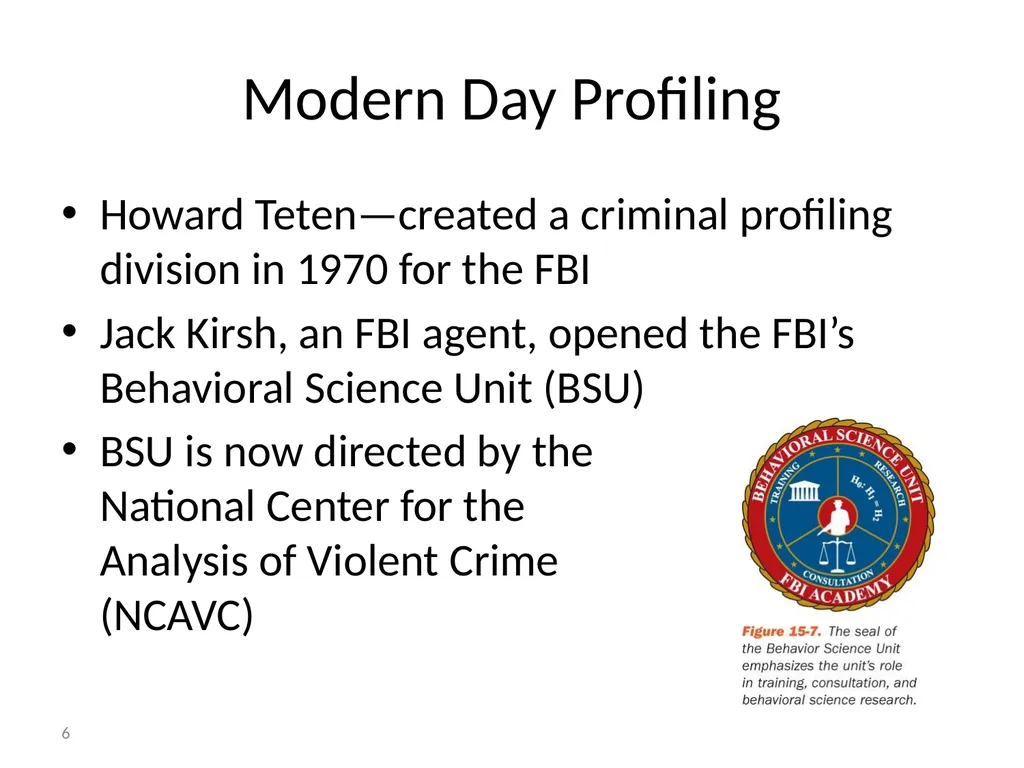
6 Modern Day Profiling Howard Teten—created a criminal profiling division in 1970 for the FBI
Jack Kirsh, an FBI agent, opened the FBI’s Behavioral Science Unit (BSU)
BSU is now directed by the National Center for the Analysis of Violent Crime (NCAVC)<br>
Jack Kirsh, an FBI agent, opened the FBI’s Behavioral Science Unit (BSU)
BSU is now directed by the National Center for the Analysis of Violent Crime (NCAVC)<br>
07
7 Stages of the Profiling Process Input
Decision process models
Crime assessment
Criminal profile
Investigation
Apprehension
The logic is that the way a person thinks guides his or her behavior.<br>
Decision process models
Crime assessment
Criminal profile
Investigation
Apprehension
The logic is that the way a person thinks guides his or her behavior.<br>
08
8 1 – Input Collecting evidence (for example)
Placement of the victim and weapon(s)
Body position
Blood splatter
Condition of surroundings
History of the victim
Employment and reputation
Social habits
Hobbies and interests
Autopsy report<br>
Placement of the victim and weapon(s)
Body position
Blood splatter
Condition of surroundings
History of the victim
Employment and reputation
Social habits
Hobbies and interests
Autopsy report<br>
09
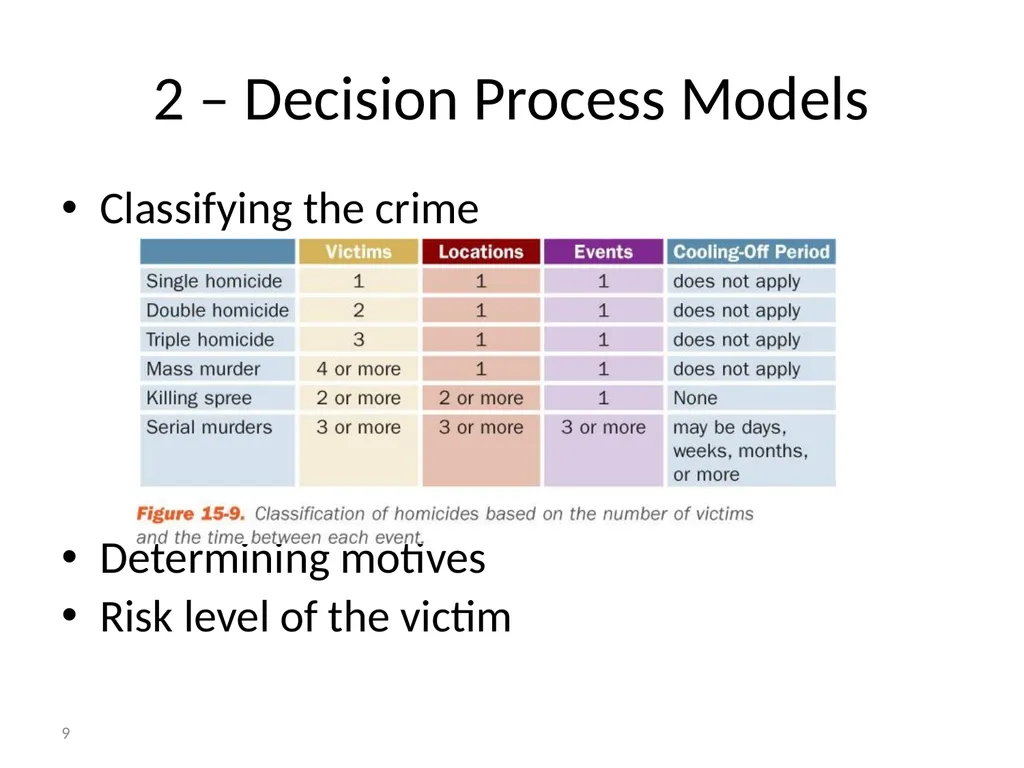
9 2 – Decision Process Models Classifying the crime
Determining motives
Risk level of the victim<br>
Determining motives
Risk level of the victim<br>
10
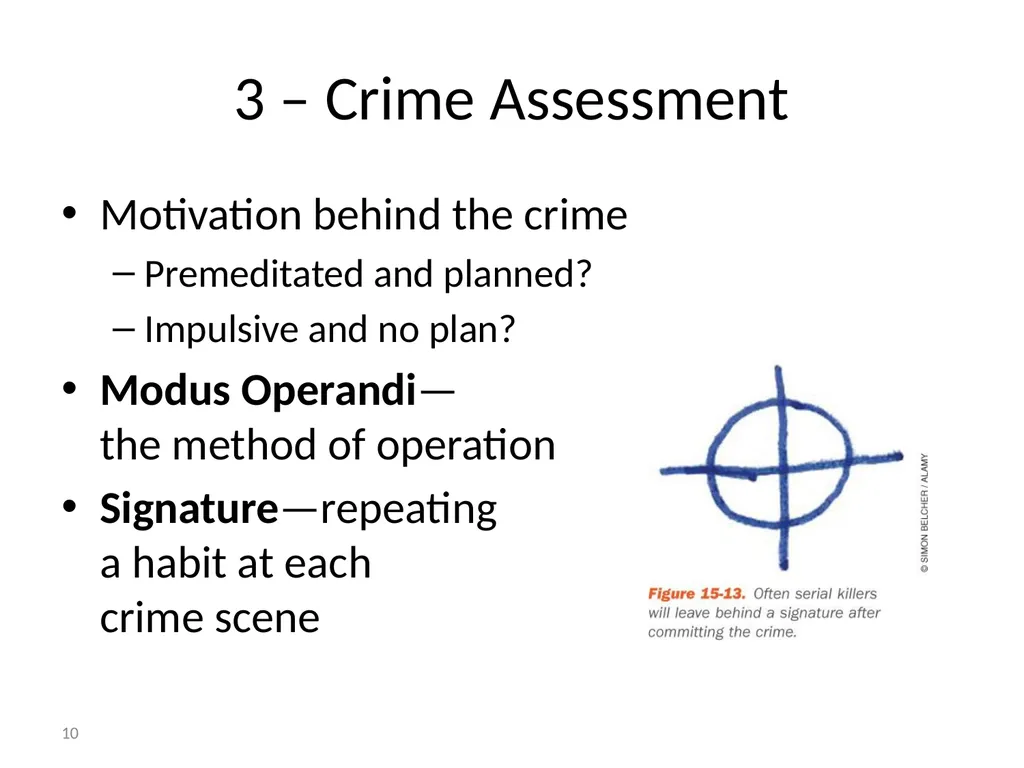
10 3 – Crime Assessment Motivation behind the crime
Premeditated and planned?
Impulsive and no plan?
Modus Operandi— the method of operation
Signature—repeating a habit at each crime scene<br>
Premeditated and planned?
Impulsive and no plan?
Modus Operandi— the method of operation
Signature—repeating a habit at each crime scene<br>
11
11 4 – Criminal Profile A typical profile includes estimates of:
Race
Sex
Physical characteristics
Habits
Values and beliefs
Compare the profile with the decision process models (stage 2) and reconstruction of the crime scene<br>
Race
Sex
Physical characteristics
Habits
Values and beliefs
Compare the profile with the decision process models (stage 2) and reconstruction of the crime scene<br>
12
12 5 – Investigation Begins after profiler submits written report
Seek and evaluate suspects that match the profile<br>
Seek and evaluate suspects that match the profile<br>
13
13 6 – Apprehension Apprehend
Interview
Interrogate
Arrest<br>
Interview
Interrogate
Arrest<br>
14
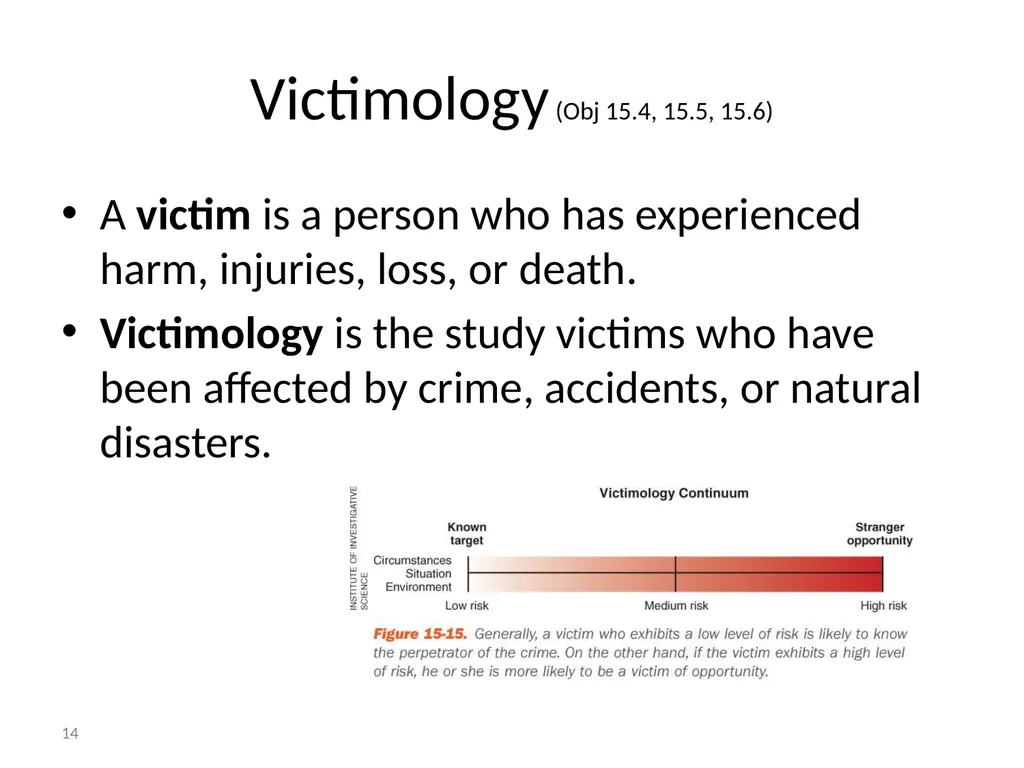
14 Victimology (Obj 15.4, 15.5, 15.6) A victim is a person who has experienced harm, injuries, loss, or death.
Victimology is the study victims who have been affected by crime, accidents, or natural disasters.<br>
Victimology is the study victims who have been affected by crime, accidents, or natural disasters.<br>
15
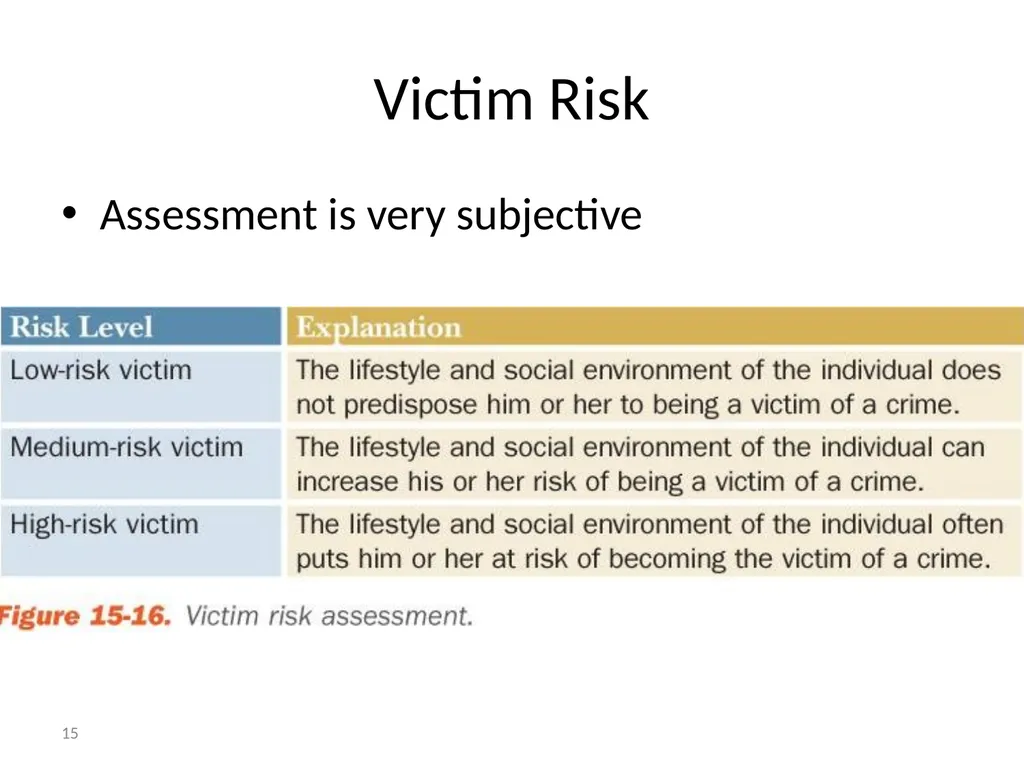
15 Victim Risk Assessment is very subjective<br>
16
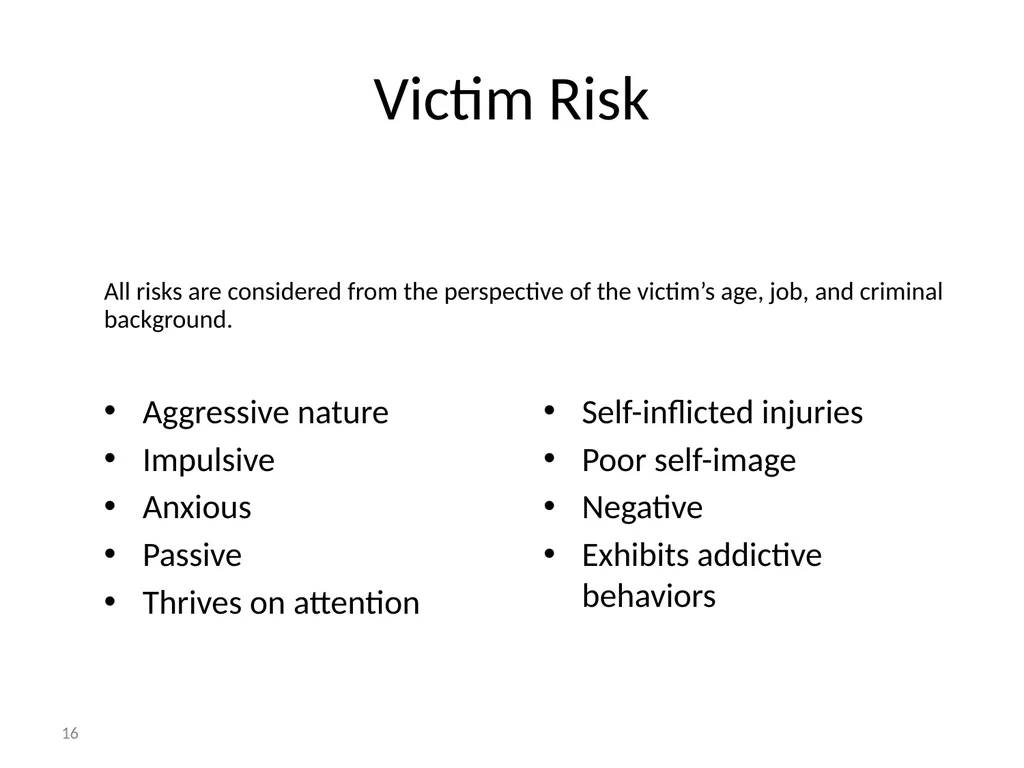
16 Victim Risk Aggressive nature
Impulsive
Anxious
Passive
Thrives on attention Self-inflicted injuries
Poor self-image
Negative
Exhibits addictive behaviors All risks are considered from the perspective of the victim’s age, job, and criminal background.<br>
Impulsive
Anxious
Passive
Thrives on attention Self-inflicted injuries
Poor self-image
Negative
Exhibits addictive behaviors All risks are considered from the perspective of the victim’s age, job, and criminal background.<br>
17
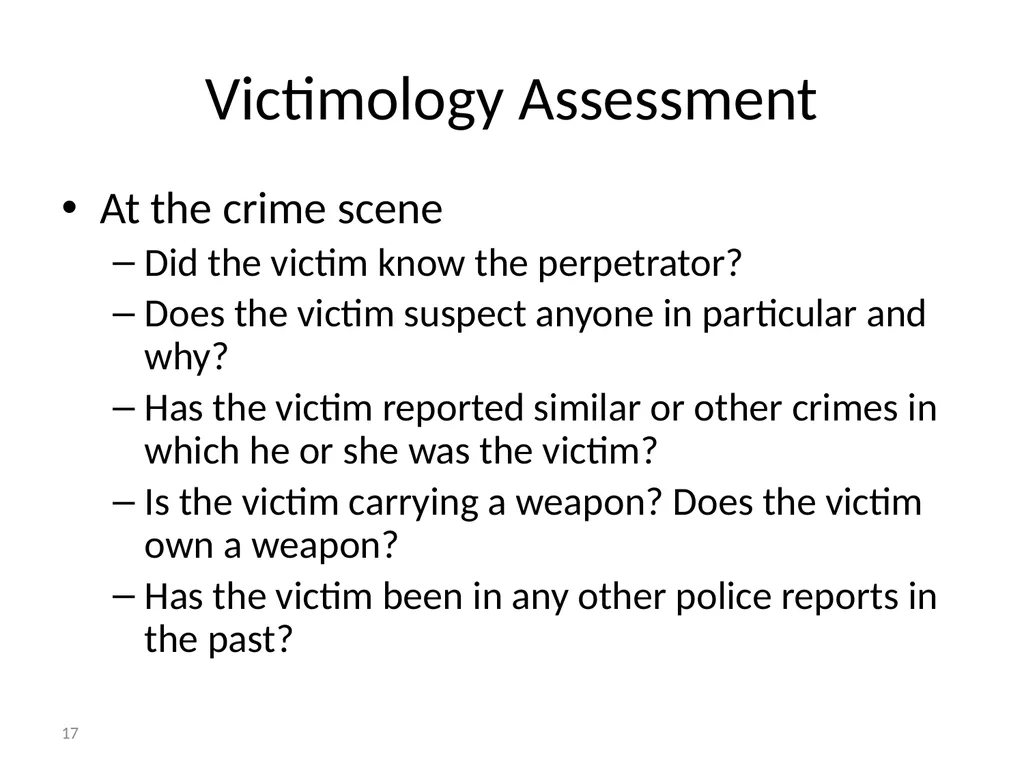
17 Victimology Assessment At the crime scene
Did the victim know the perpetrator?
Does the victim suspect anyone in particular and why?
Has the victim reported similar or other crimes in which he or she was the victim?
Is the victim carrying a weapon? Does the victim own a weapon?
Has the victim been in any other police reports in the past?<br>
Did the victim know the perpetrator?
Does the victim suspect anyone in particular and why?
Has the victim reported similar or other crimes in which he or she was the victim?
Is the victim carrying a weapon? Does the victim own a weapon?
Has the victim been in any other police reports in the past?<br>
18
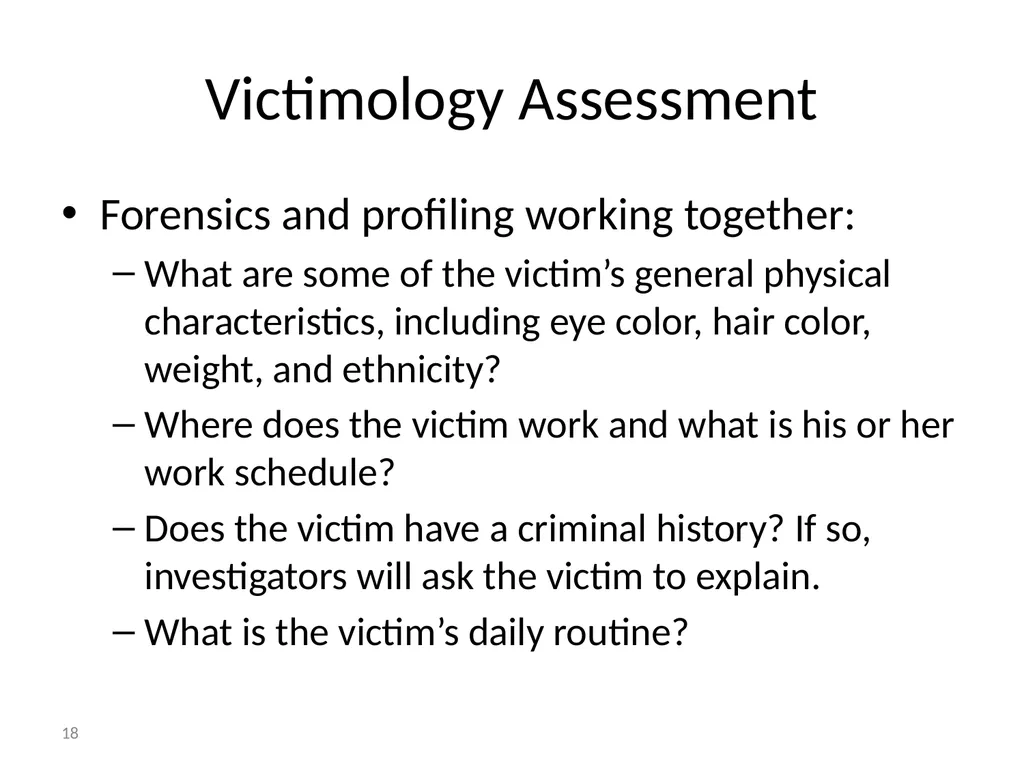
18 Victimology Assessment Forensics and profiling working together:
What are some of the victim’s general physical characteristics, including eye color, hair color, weight, and ethnicity?
Where does the victim work and what is his or her work schedule?
Does the victim have a criminal history? If so, investigators will ask the victim to explain.
What is the victim’s daily routine?<br>
What are some of the victim’s general physical characteristics, including eye color, hair color, weight, and ethnicity?
Where does the victim work and what is his or her work schedule?
Does the victim have a criminal history? If so, investigators will ask the victim to explain.
What is the victim’s daily routine?<br>
19
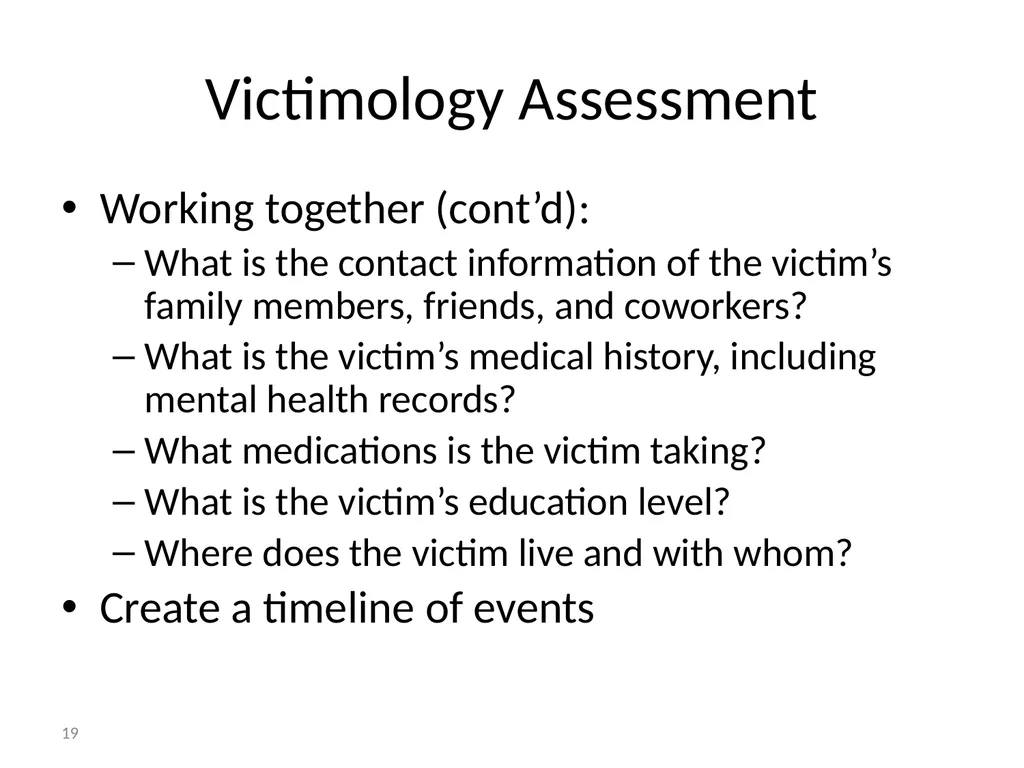
19 Victimology Assessment Working together (cont’d):
What is the contact information of the victim’s family members, friends, and coworkers?
What is the victim’s medical history, including mental health records?
What medications is the victim taking?
What is the victim’s education level?
Where does the victim live and with whom?
Create a timeline of events<br>
What is the contact information of the victim’s family members, friends, and coworkers?
What is the victim’s medical history, including mental health records?
What medications is the victim taking?
What is the victim’s education level?
Where does the victim live and with whom?
Create a timeline of events<br>
20
Geographic Profiling<br>
21
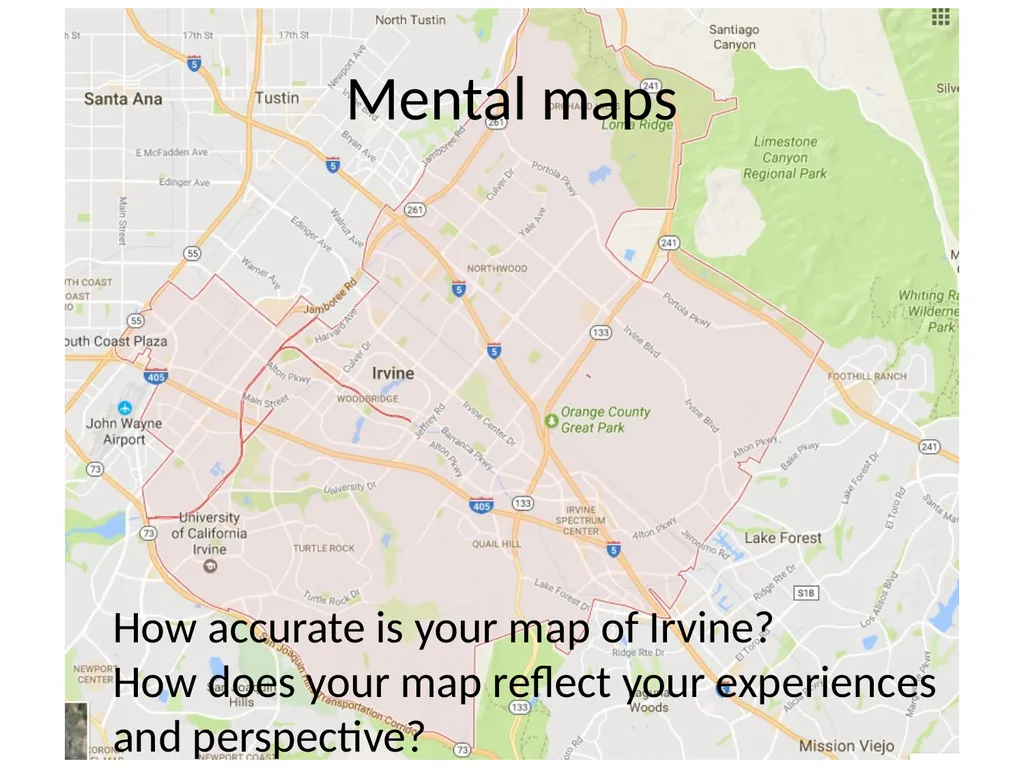
You have two minutes to draw a map of Irvine.<br>
22
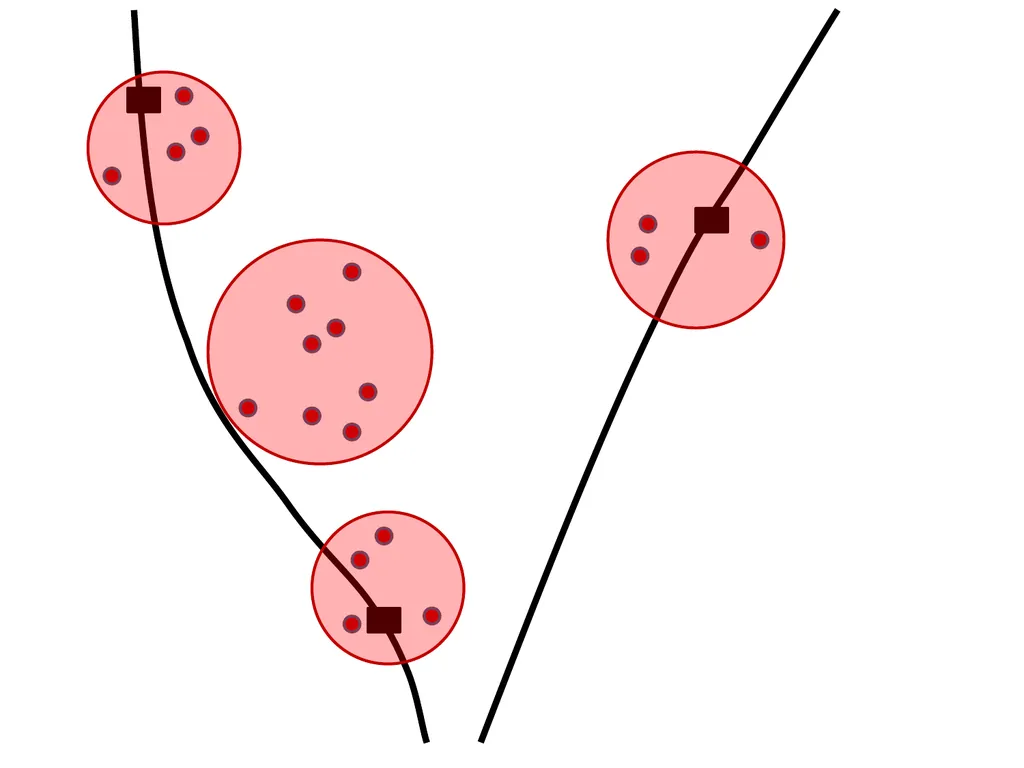
Geographical profiling A set of techniques for making inferences about crime and criminals from the location and timing of offences.<br>
23
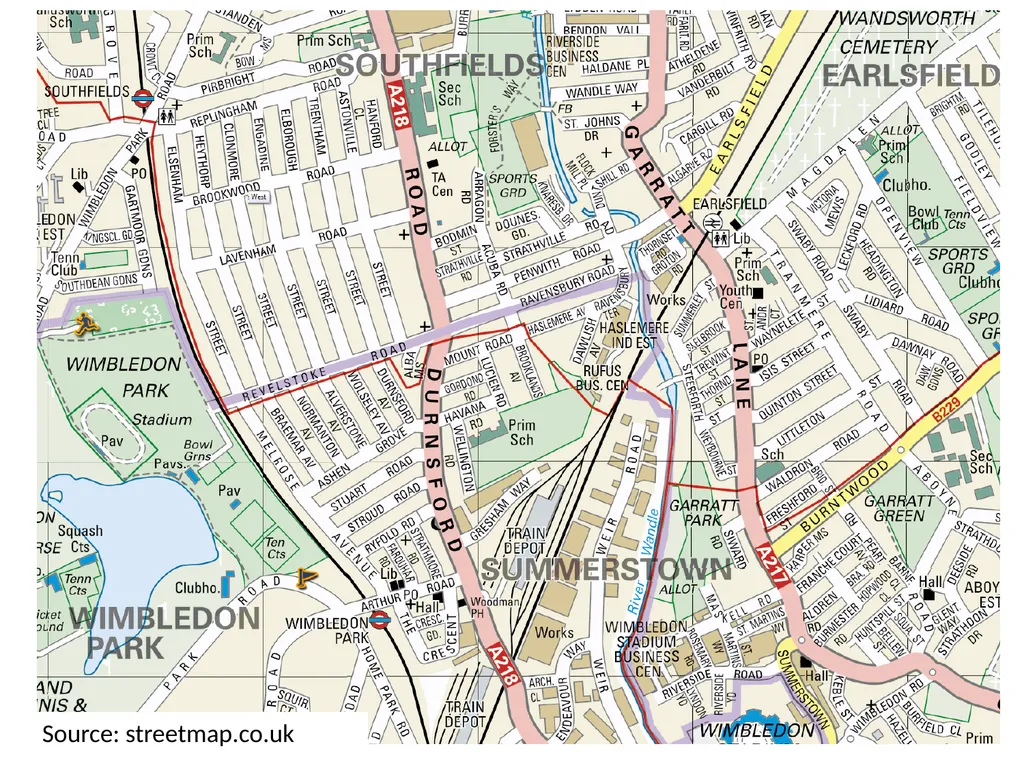
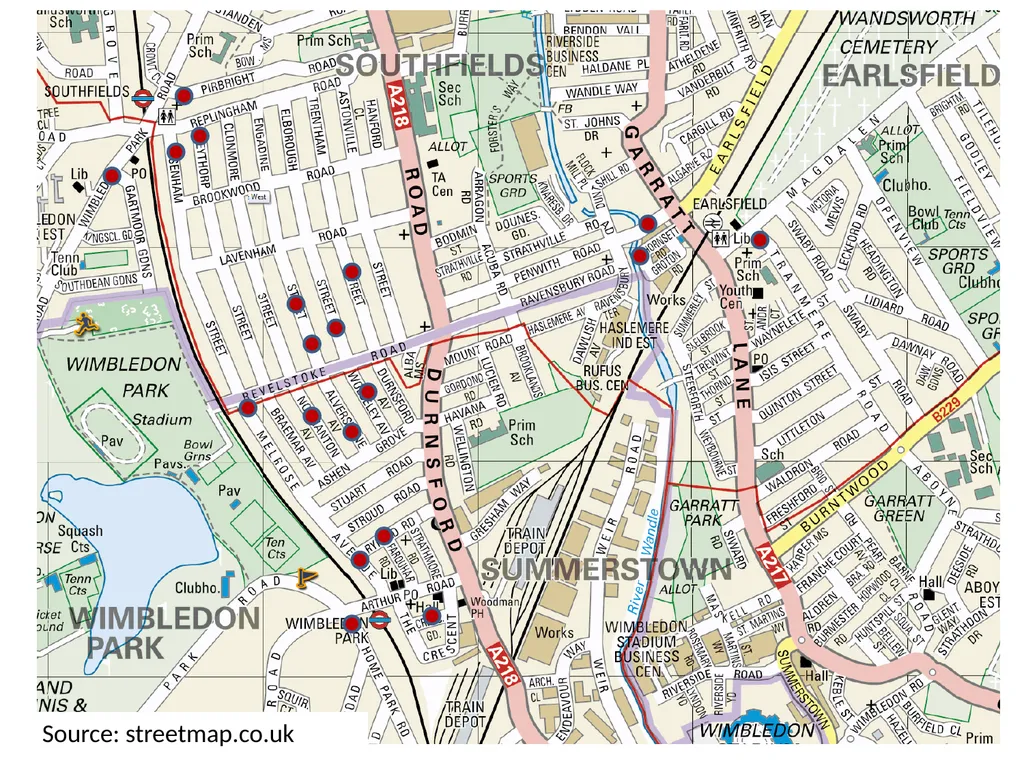
Crime mapping Plot the crimes on the map then decide...
How many offenders do you think are responsible and why?
What other suggestions can you make about the offender(s)?<br>
How many offenders do you think are responsible and why?
What other suggestions can you make about the offender(s)?<br>
24
Crime mapping Source: streetmap.co.uk<br>
25
Crime mapping Source: streetmap.co.uk<br>
26
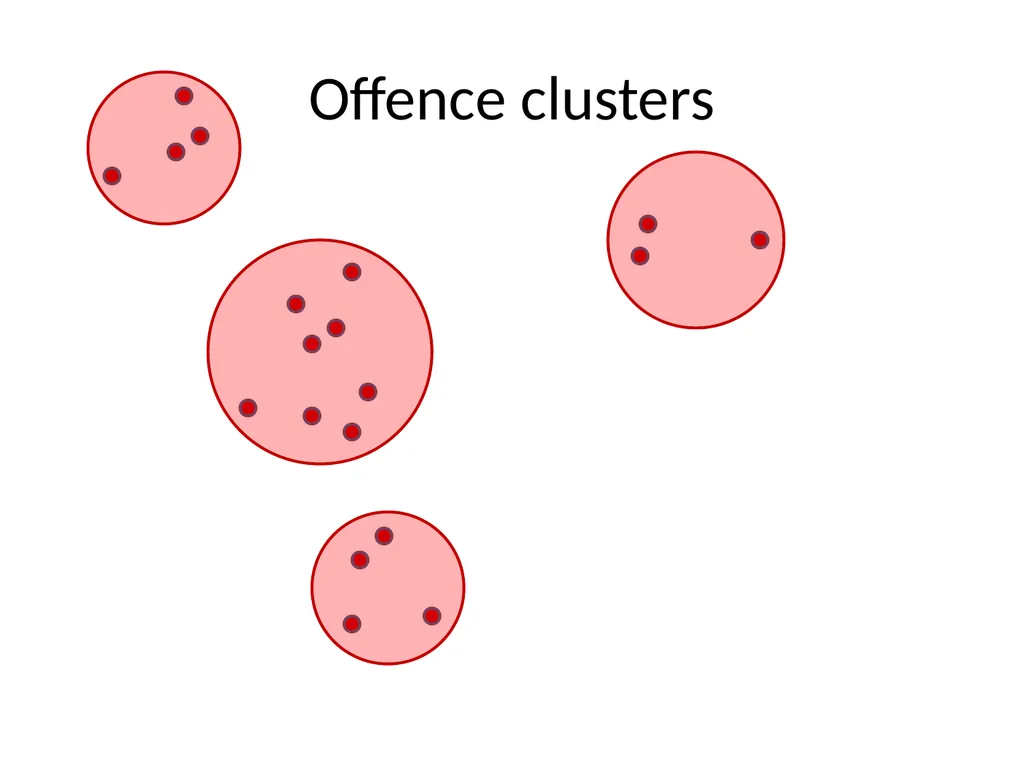
Offence clusters<br>
27
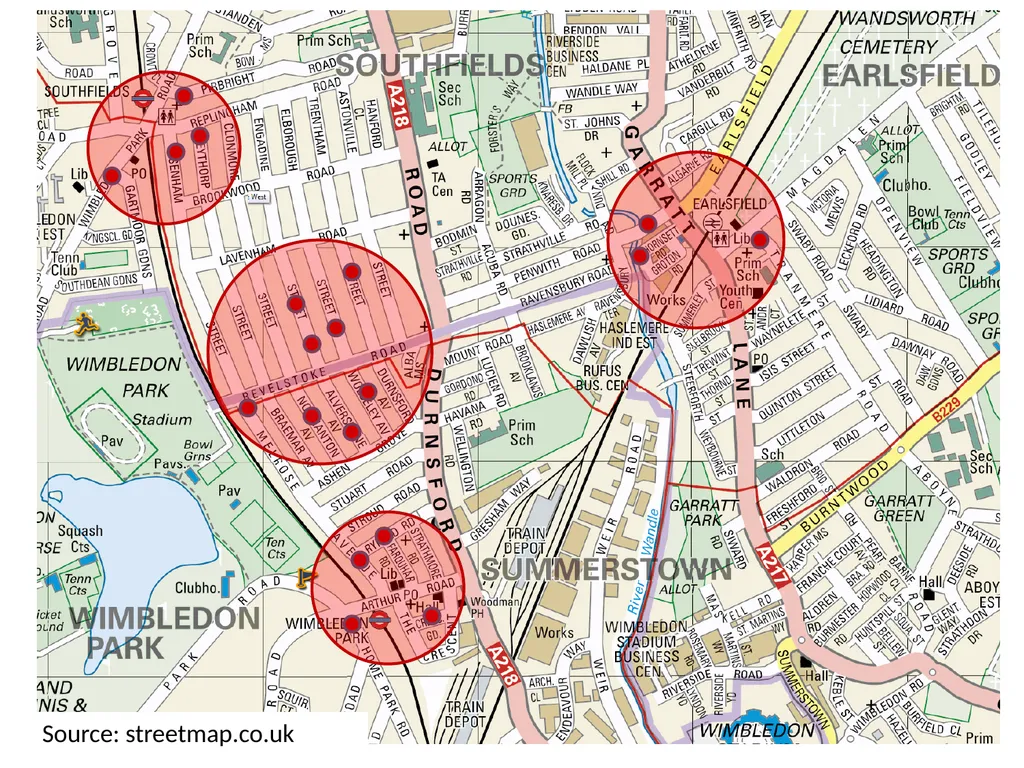
Crime mapping Source: streetmap.co.uk<br>
28
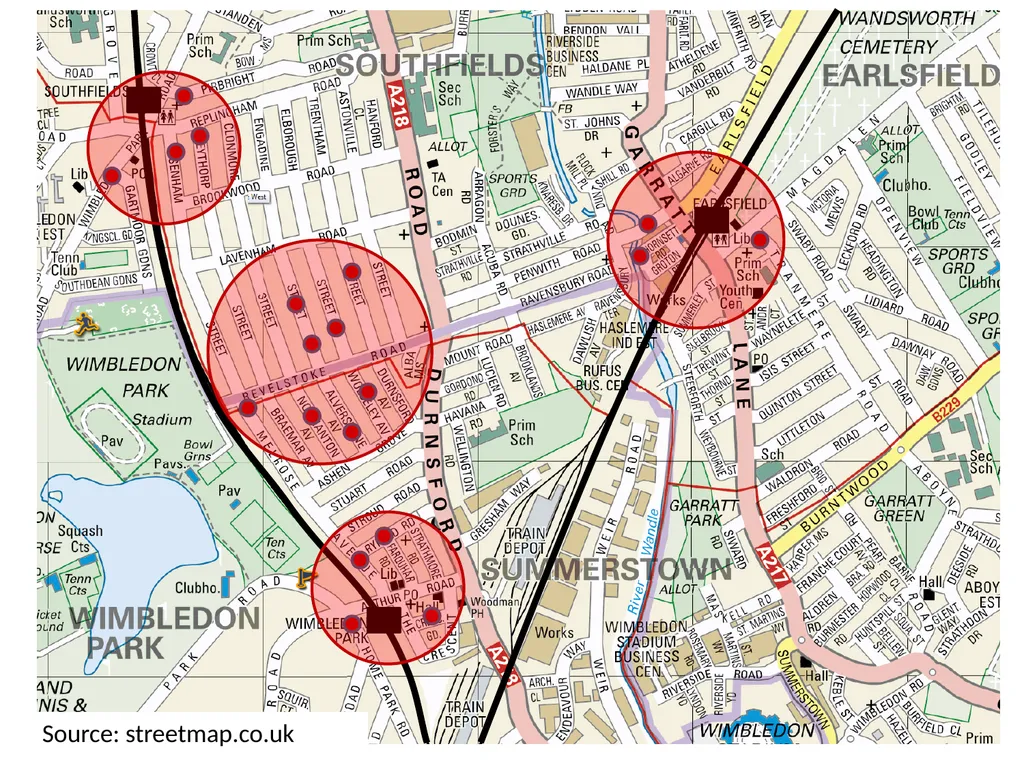
Source: streetmap.co.uk<br>
29
Routine activity theory Crimes occur when three circumstances coincide:
A motivated offender
A suitable (and vulnerable) victim
Absence of a capable guardian
Criminal offences are an extension of the offender’s normal activities, so will occur in places the offender makes regular use of<br>
A motivated offender
A suitable (and vulnerable) victim
Absence of a capable guardian
Criminal offences are an extension of the offender’s normal activities, so will occur in places the offender makes regular use of<br>
30
Circle theory of environmental range A circle drawn to encompass all the crimes in a series is likely to contain the offender’s base (Canter & Larkin, 1993).<br>
31
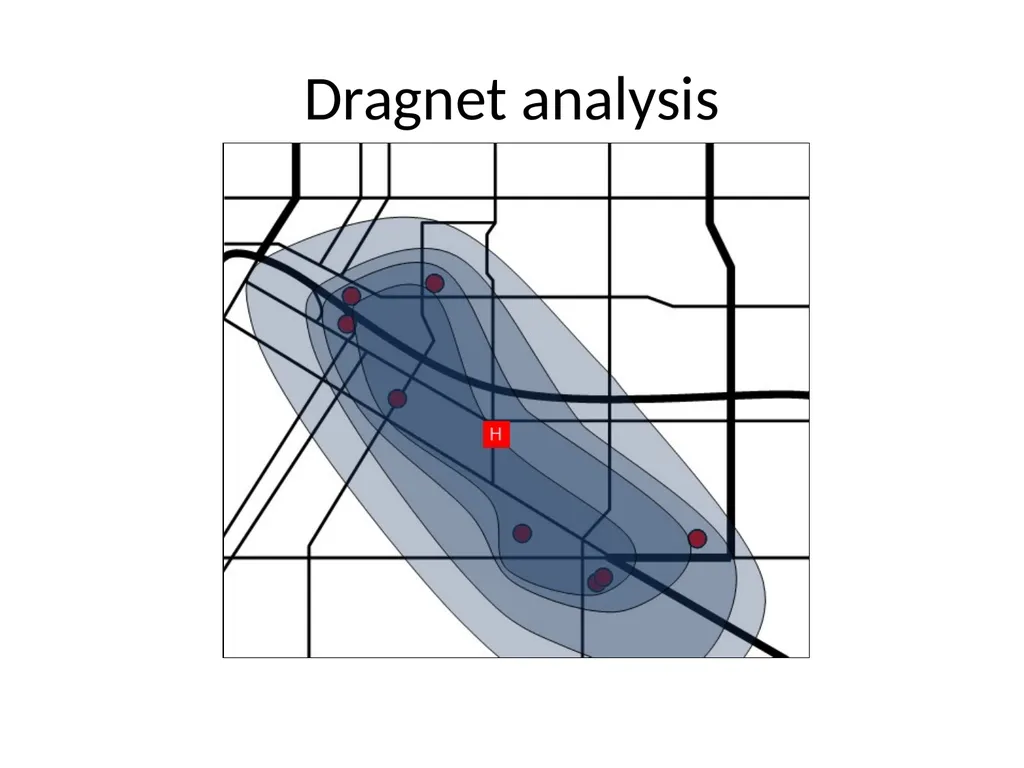
Dragnet analysis<br>
32
Timing of offences Information about geographical location of crimes becomes more useful when combined with information about when offences occurred.<br>
33
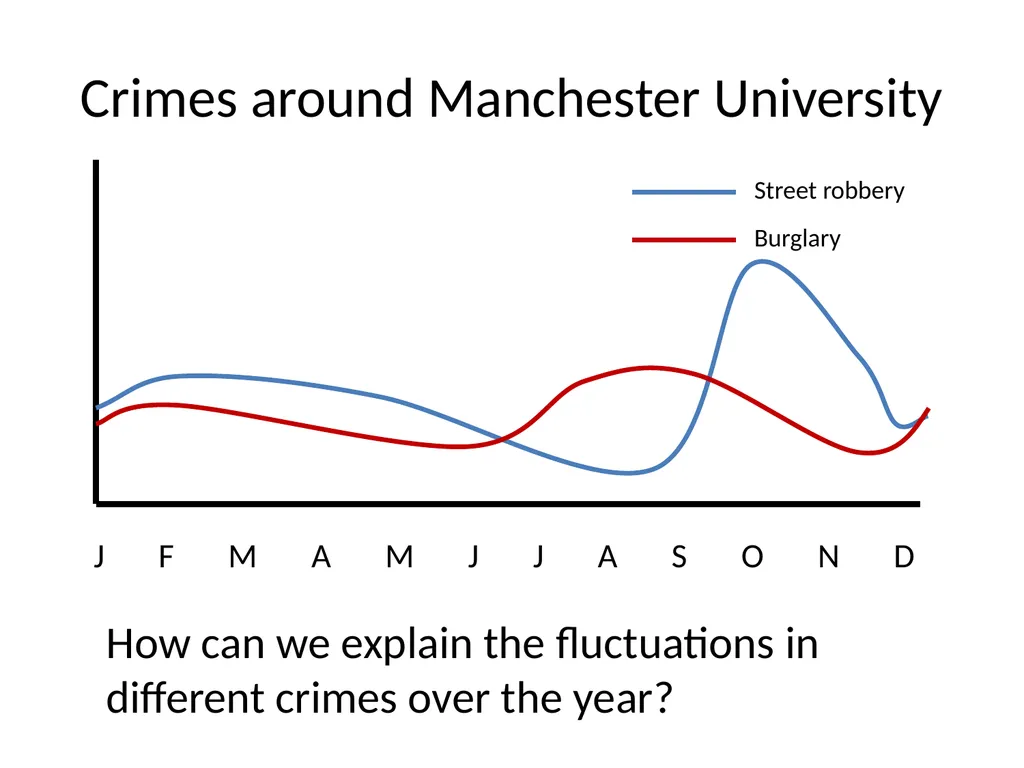
Crimes around Manchester University Street robbery Burglary How can we explain the fluctuations in different crimes over the year?<br>
34
Mental maps How accurate is your map of Irvine?
How does your map reflect your experiences and perspective?<br>
How does your map reflect your experiences and perspective?<br>
35
Mental maps Individuals construct mental maps of the areas they know.
These are not absolutely accurate. They embody the person’s experience and perspective on the area.
The distribution of linked offences may reflect the offender’s mental map of the area<br>
These are not absolutely accurate. They embody the person’s experience and perspective on the area.
The distribution of linked offences may reflect the offender’s mental map of the area<br>
36
How many different ways might geographical profiling contribute to police work?
What issues may make geographical profiling difficult and/or misleading?<br>
What issues may make geographical profiling difficult and/or misleading?<br>
37
Typological Profiling<br>
38
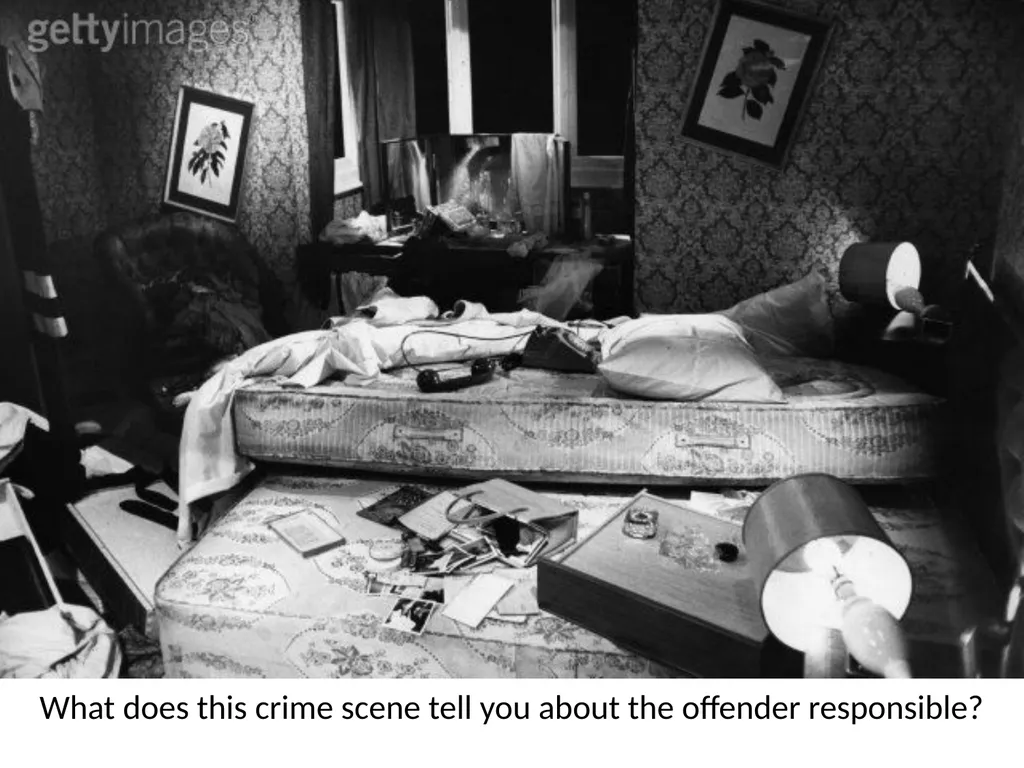
What does this crime scene tell you about the offender responsible?<br>
39
Two important ideas Behavioural evidence
Things that tells us how an offender went about committing a crime
Criminal consistency
The idea that a person’s behaviour at a crime scene is consistent with their behaviour in other contexts<br>
Things that tells us how an offender went about committing a crime
Criminal consistency
The idea that a person’s behaviour at a crime scene is consistent with their behaviour in other contexts<br>
40
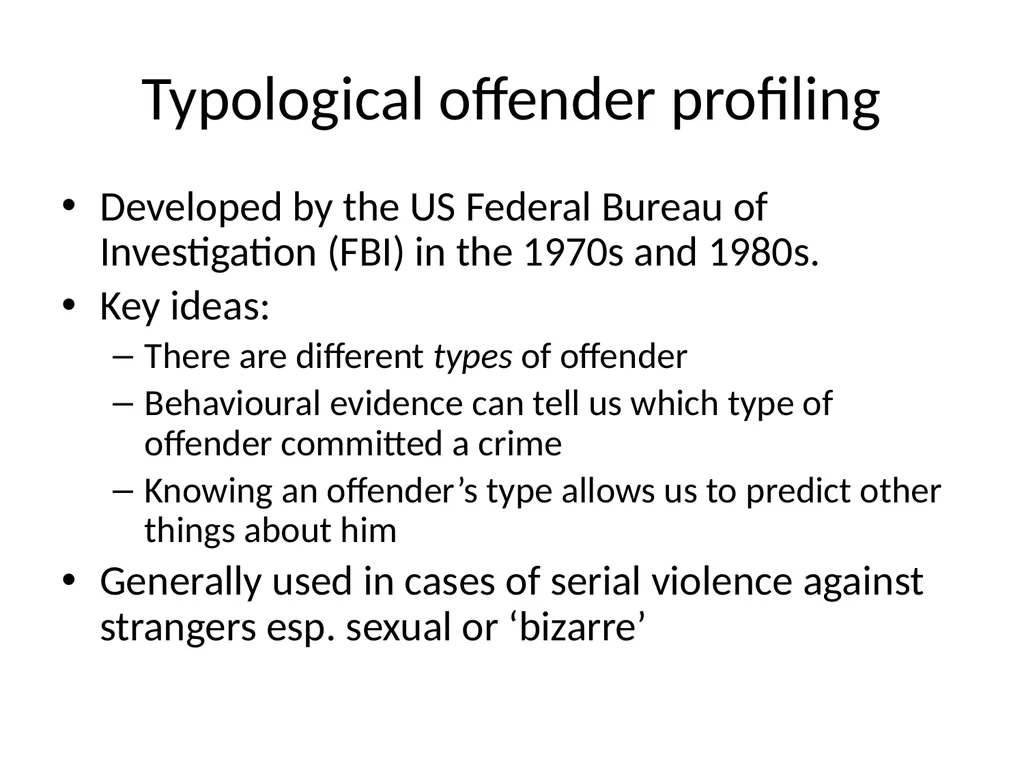
Typological offender profiling Developed by the US Federal Bureau of Investigation (FBI) in the 1970s and 1980s.
Key ideas:
There are different types of offender
Behavioural evidence can tell us which type of offender committed a crime
Knowing an offender’s type allows us to predict other things about him
Generally used in cases of serial violence against strangers esp. sexual or ‘bizarre’<br>
Key ideas:
There are different types of offender
Behavioural evidence can tell us which type of offender committed a crime
Knowing an offender’s type allows us to predict other things about him
Generally used in cases of serial violence against strangers esp. sexual or ‘bizarre’<br>
41
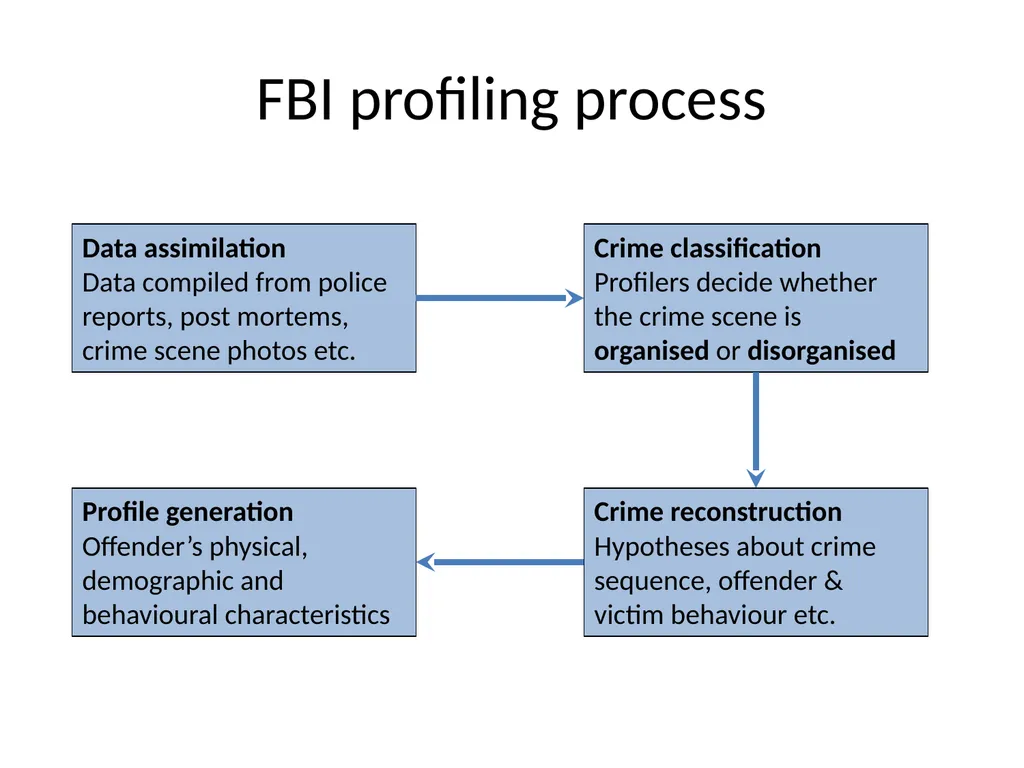
FBI profiling process Profile generation
Offender’s physical, demographic and behavioural characteristics<br>
Offender’s physical, demographic and behavioural characteristics<br>
42
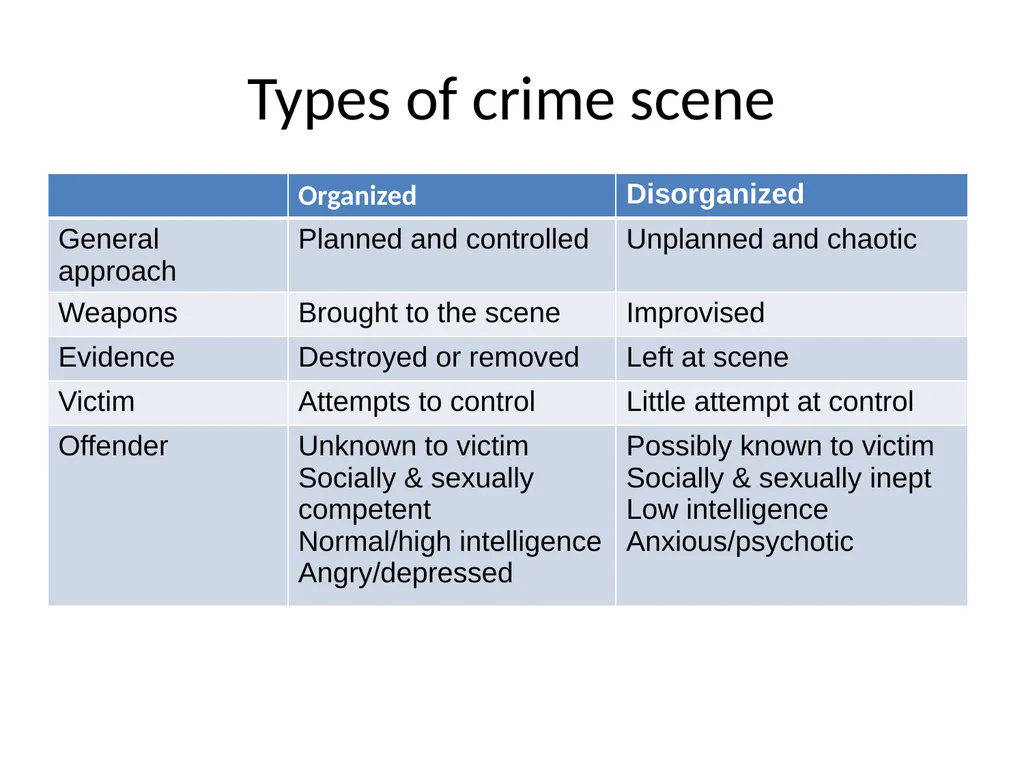
Types of crime scene<br>
43
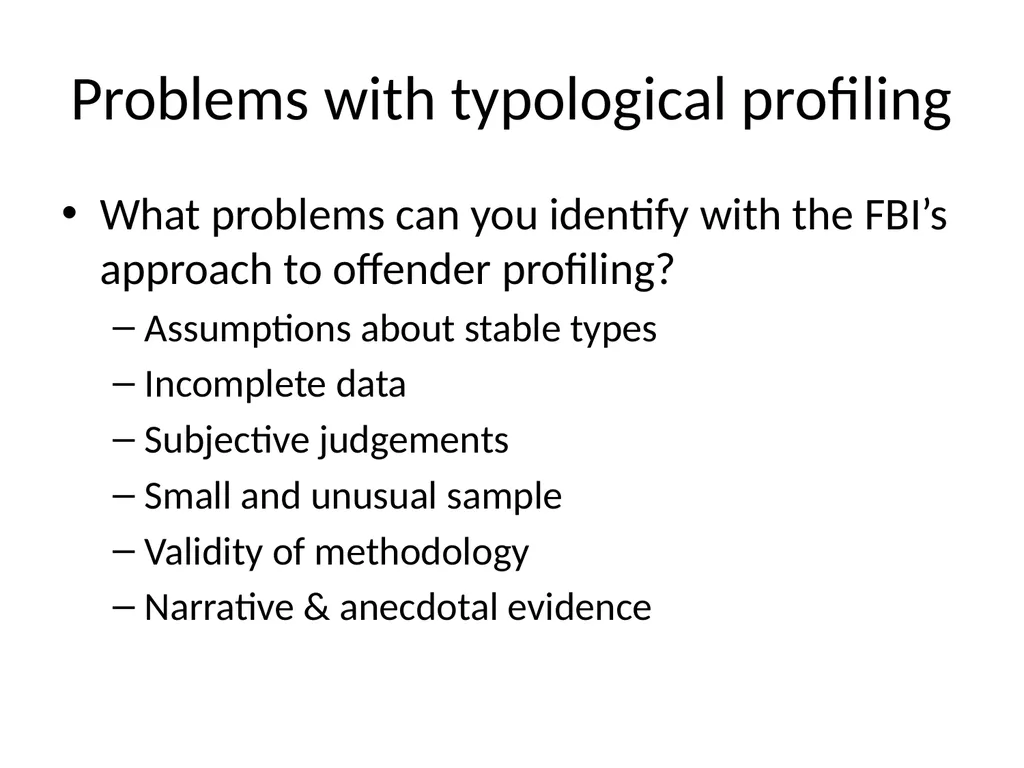
Problems with typological profiling What problems can you identify with the FBI’s approach to offender profiling?
Assumptions about stable types
Incomplete data
Subjective judgements
Small and unusual sample
Validity of methodology
Narrative & anecdotal evidence<br>
Assumptions about stable types
Incomplete data
Subjective judgements
Small and unusual sample
Validity of methodology
Narrative & anecdotal evidence<br>
44
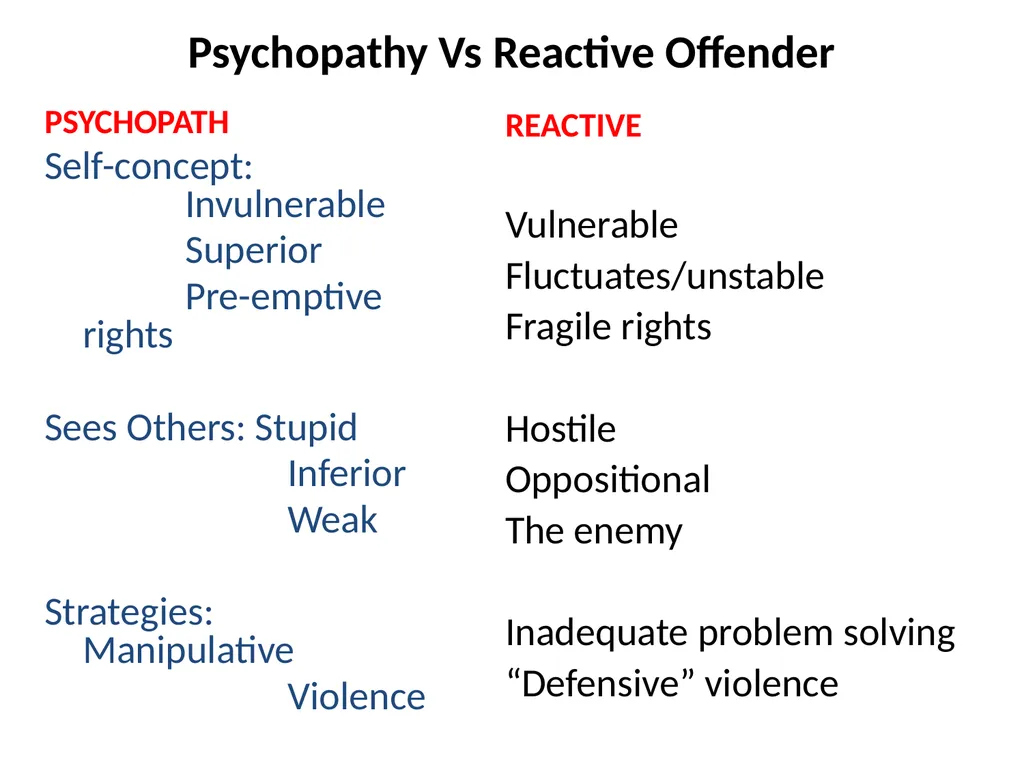
Psychopathy Vs Reactive Offender PSYCHOPATH
Self-concept: Invulnerable
Superior
Pre-emptive rights
Sees Others: Stupid
Inferior
Weak
Strategies: Manipulative
Violence REACTIVE
Vulnerable
Fluctuates/unstable
Fragile rights
Hostile
Oppositional
The enemy
Inadequate problem solving
“Defensive” violence<br>
Self-concept: Invulnerable
Superior
Pre-emptive rights
Sees Others: Stupid
Inferior
Weak
Strategies: Manipulative
Violence REACTIVE
Vulnerable
Fluctuates/unstable
Fragile rights
Hostile
Oppositional
The enemy
Inadequate problem solving
“Defensive” violence<br>
45
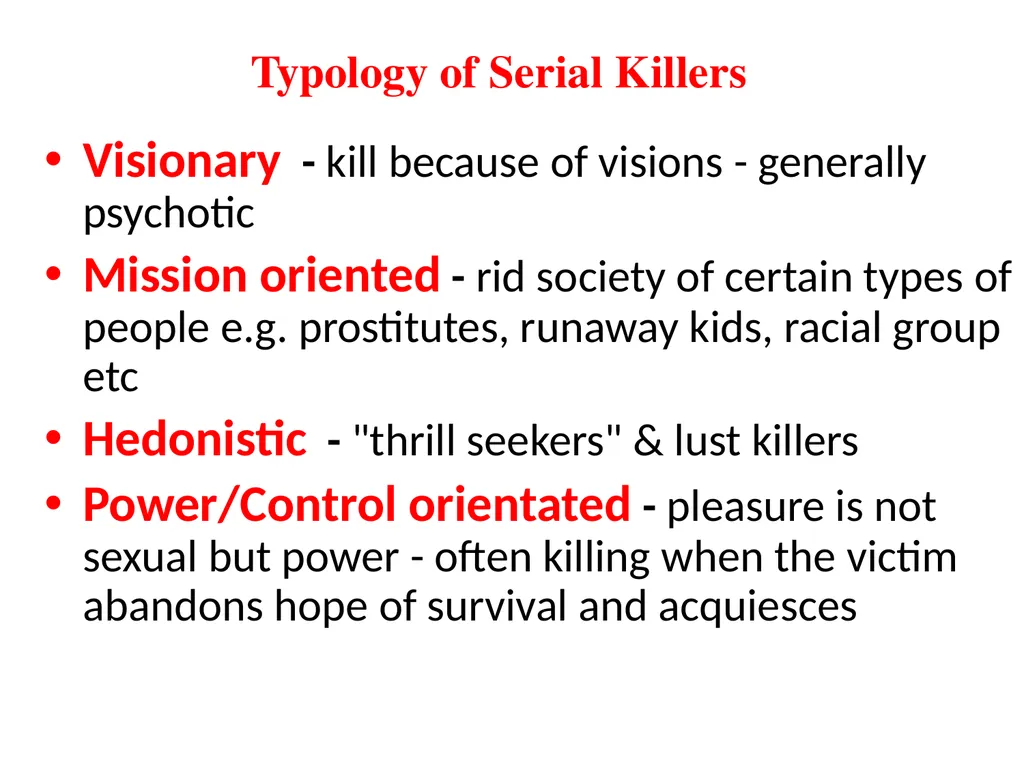
Typology of Serial Killers Visionary - kill because of visions - generally psychotic
Mission oriented - rid society of certain types of people e.g. prostitutes, runaway kids, racial group etc
Hedonistic - "thrill seekers" & lust killers
Power/Control orientated - pleasure is not sexual but power - often killing when the victim abandons hope of survival and acquiesces<br>
Mission oriented - rid society of certain types of people e.g. prostitutes, runaway kids, racial group etc
Hedonistic - "thrill seekers" & lust killers
Power/Control orientated - pleasure is not sexual but power - often killing when the victim abandons hope of survival and acquiesces<br>
46
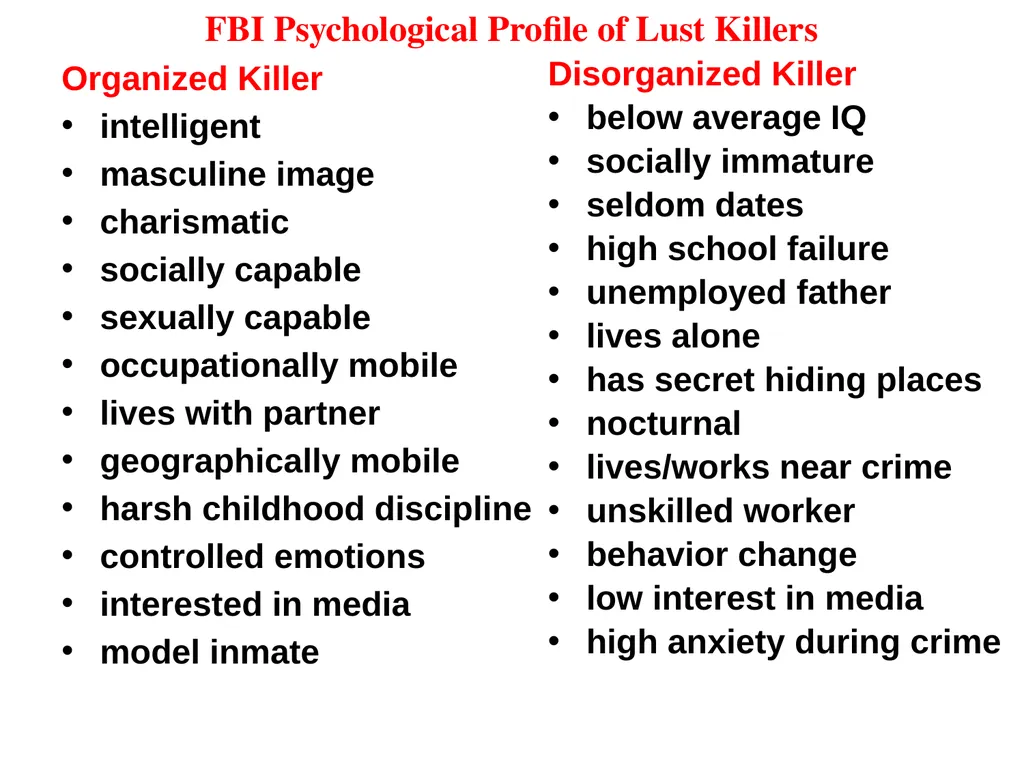
FBI Psychological Profile of Lust Killers Organized Killer
intelligent
masculine image
charismatic
socially capable
sexually capable
occupationally mobile
lives with partner
geographically mobile
harsh childhood discipline
controlled emotions
interested in media
model inmate Disorganized Killer
below average IQ
socially immature
seldom dates
high school failure
unemployed father
lives alone
has secret hiding places
nocturnal
lives/works near crime
unskilled worker
behavior change
low interest in media
high anxiety during crime<br>
intelligent
masculine image
charismatic
socially capable
sexually capable
occupationally mobile
lives with partner
geographically mobile
harsh childhood discipline
controlled emotions
interested in media
model inmate Disorganized Killer
below average IQ
socially immature
seldom dates
high school failure
unemployed father
lives alone
has secret hiding places
nocturnal
lives/works near crime
unskilled worker
behavior change
low interest in media
high anxiety during crime<br>
47
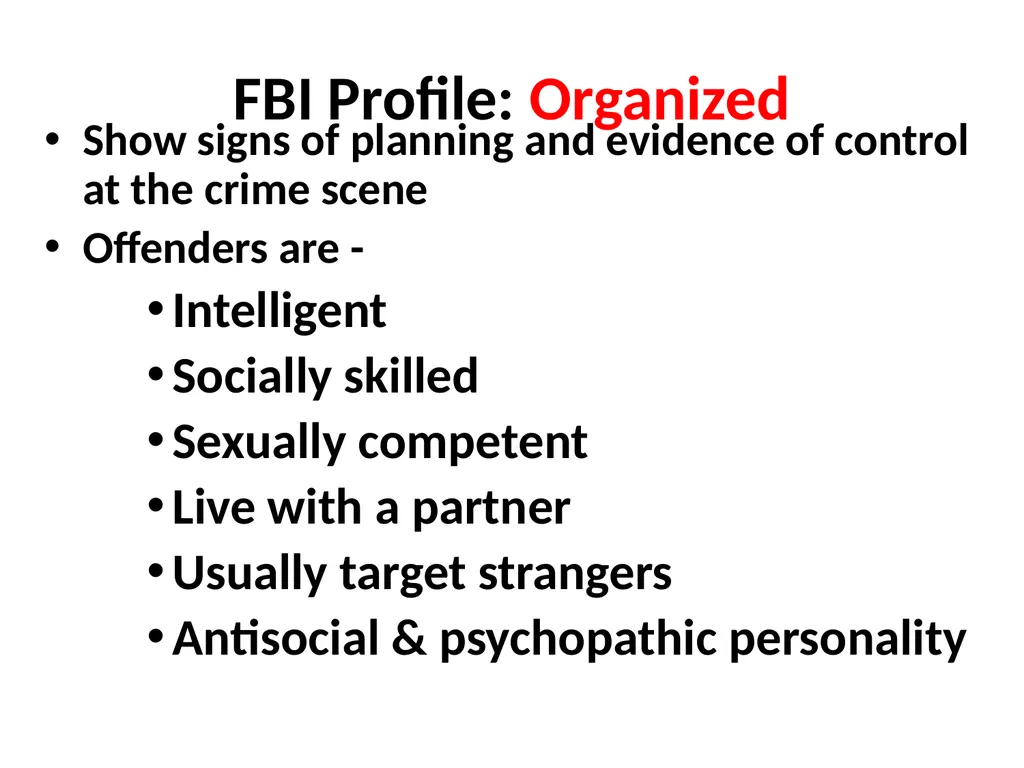
FBI Profile: Organized Show signs of planning and evidence of control at the crime scene
Offenders are -
Intelligent
Socially skilled
Sexually competent
Live with a partner
Usually target strangers
Antisocial & psychopathic personality<br>
Offenders are -
Intelligent
Socially skilled
Sexually competent
Live with a partner
Usually target strangers
Antisocial & psychopathic personality<br>
48
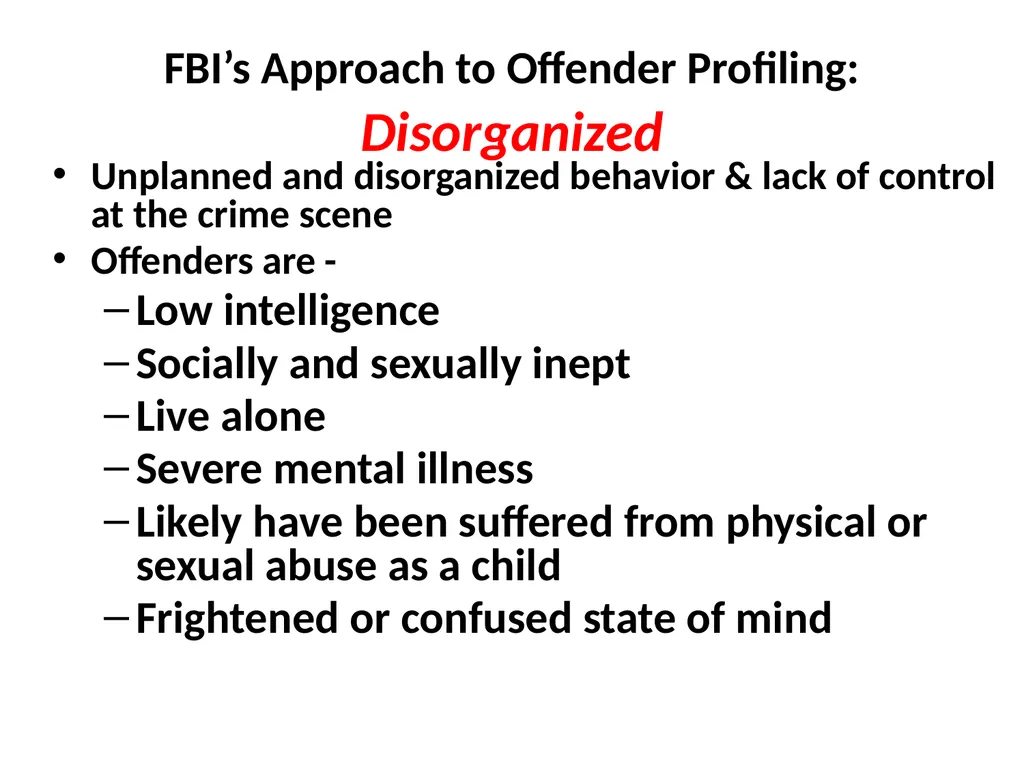
FBI’s Approach to Offender Profiling: Disorganized Unplanned and disorganized behavior & lack of control at the crime scene
Offenders are -
Low intelligence
Socially and sexually inept
Live alone
Severe mental illness
Likely have been suffered from physical or sexual abuse as a child
Frightened or confused state of mind<br>
Offenders are -
Low intelligence
Socially and sexually inept
Live alone
Severe mental illness
Likely have been suffered from physical or sexual abuse as a child
Frightened or confused state of mind<br>
49
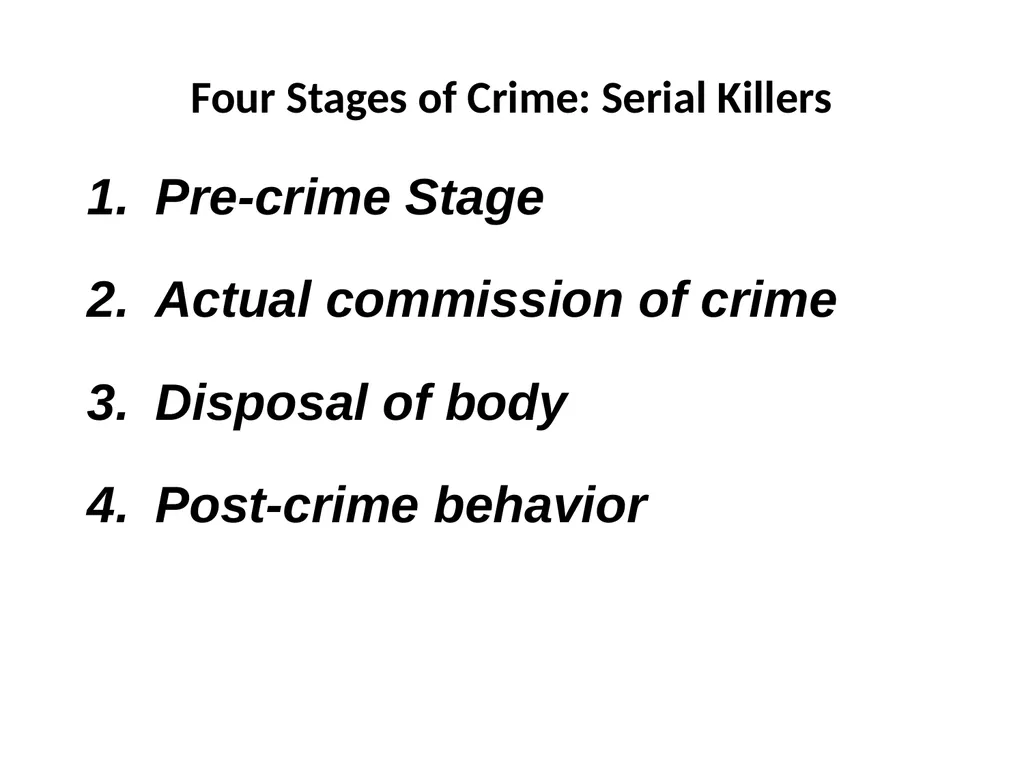
Four Stages of Crime: Serial Killers Pre-crime Stage
Actual commission of crime
Disposal of body
Post-crime behavior<br>
Actual commission of crime
Disposal of body
Post-crime behavior<br>
50
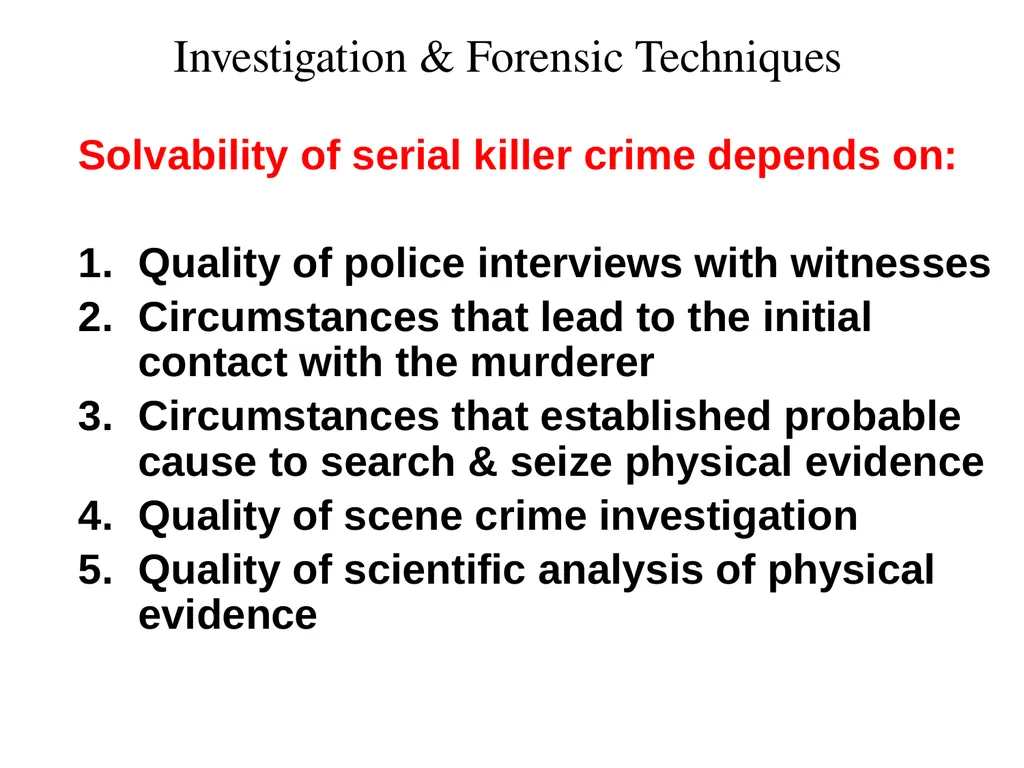
Investigation & Forensic Techniques Solvability of serial killer crime depends on:
Quality of police interviews with witnesses
Circumstances that lead to the initial contact with the murderer
Circumstances that established probable cause to search & seize physical evidence
Quality of scene crime investigation
Quality of scientific analysis of physical evidence<br>
Quality of police interviews with witnesses
Circumstances that lead to the initial contact with the murderer
Circumstances that established probable cause to search & seize physical evidence
Quality of scene crime investigation
Quality of scientific analysis of physical evidence<br>
51
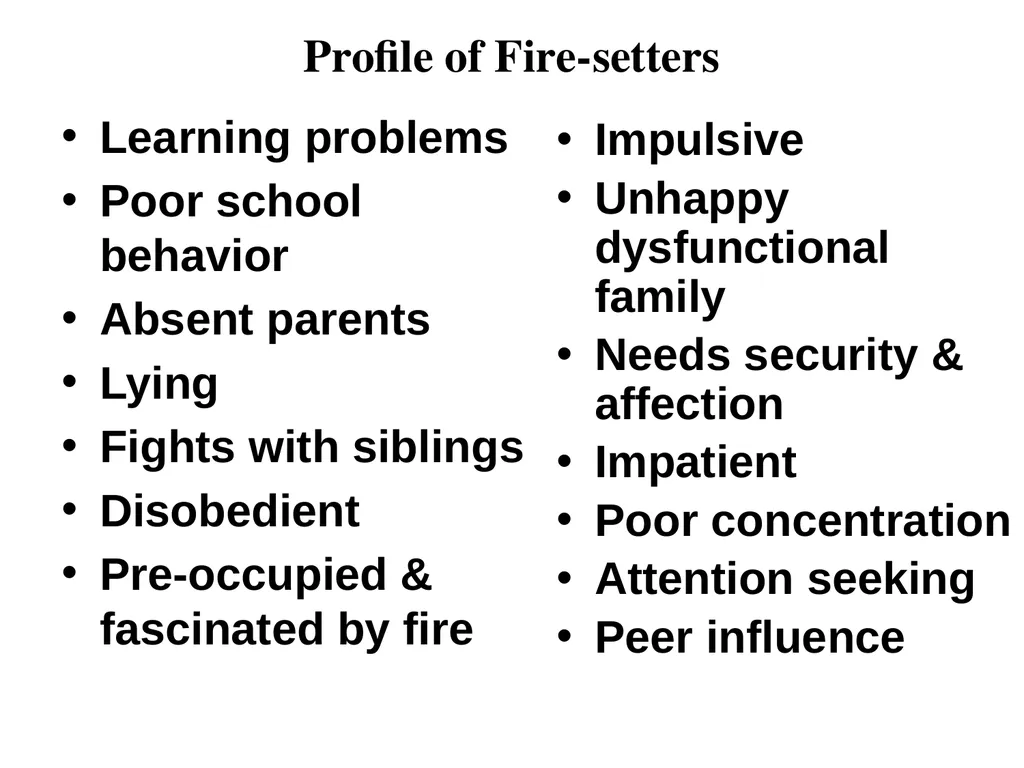
Profile of Fire-setters Learning problems
Poor school behavior
Absent parents
Lying
Fights with siblings
Disobedient
Pre-occupied & fascinated by fire Impulsive
Unhappy dysfunctional family
Needs security & affection
Impatient
Poor concentration
Attention seeking
Peer influence<br>
Poor school behavior
Absent parents
Lying
Fights with siblings
Disobedient
Pre-occupied & fascinated by fire Impulsive
Unhappy dysfunctional family
Needs security & affection
Impatient
Poor concentration
Attention seeking
Peer influence<br>