Cryptococcal meningitis Dr. Priyanka Chaturvedi Assistant Professor FUNGAL INFECTIONS OF CNS CRYPTOCOCCAL MENINGITIS CRYPTOCOCCAL MENINGITIS Cryptococcal meningitis is caused by a Cryptococcus neoformans It is a capsulated yeast Capable of
"Cryptococcal meningitis Dr. Priyanka Chaturvedi" is the property of its rightful owner. Permission is granted to
download and print the materials on this website for personal, non-commercial use only, and to display it
on your personal computer provided you do not modify the materials and that you retain all copyright
notices contained in the materials. By downloading content from our website, you accept the terms of this
agreement.
Presentation Transcript
01
Cryptococcal meningitis Dr. Priyanka Chaturvedi
Assistant Professor<br>
02
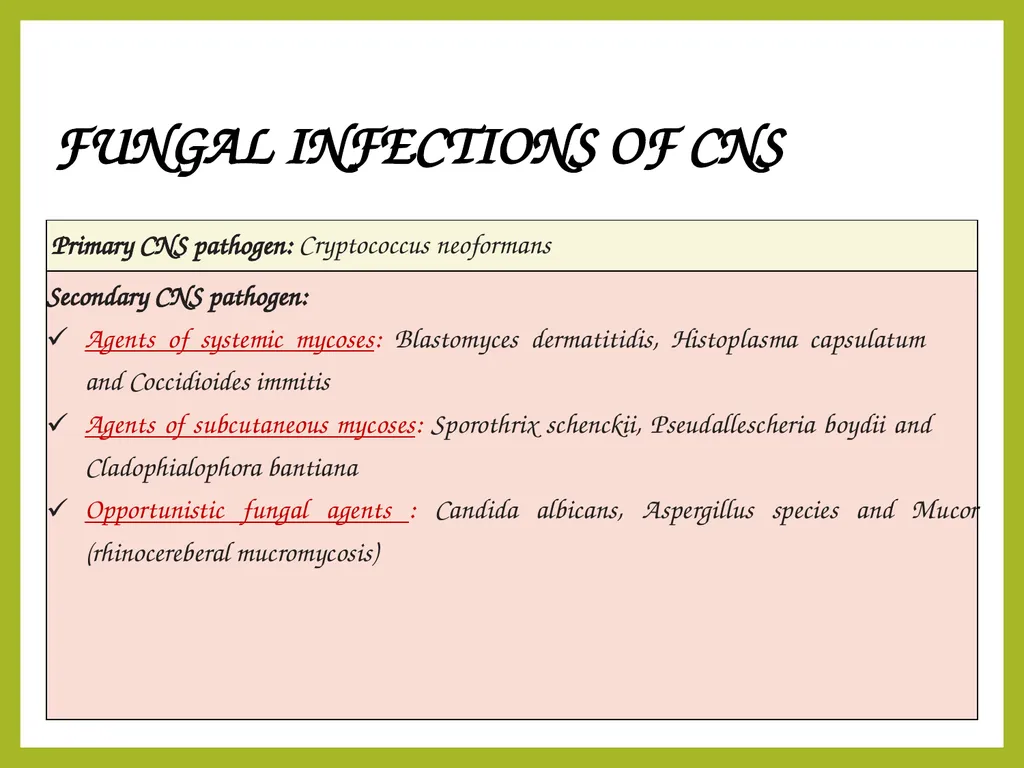
FUNGAL INFECTIONS OF CNS<br>
03
CRYPTOCOCCAL MENINGITIS<br>
04
CRYPTOCOCCAL MENINGITIS Cryptococcal meningitis is caused by a Cryptococcus neoformans
It is a capsulated yeast
Capable of producing fatal meningitis in immunocompromised individuals like PLHIV/AIDS.<br>
05
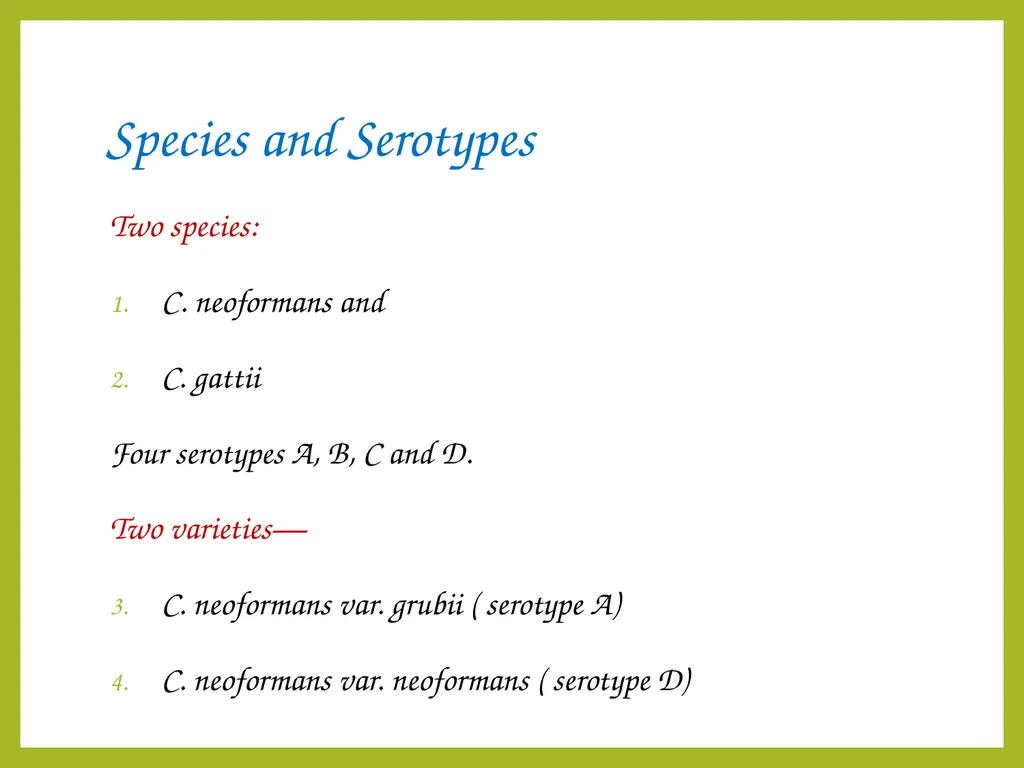
Species and Serotypes Two species:
C. neoformans and
C. gattii
Four serotypes A, B, C and D.
Two varieties—
C. neoformans var. grubii ( serotype A)
C. neoformans var. neoformans ( serotype D)<br>
06
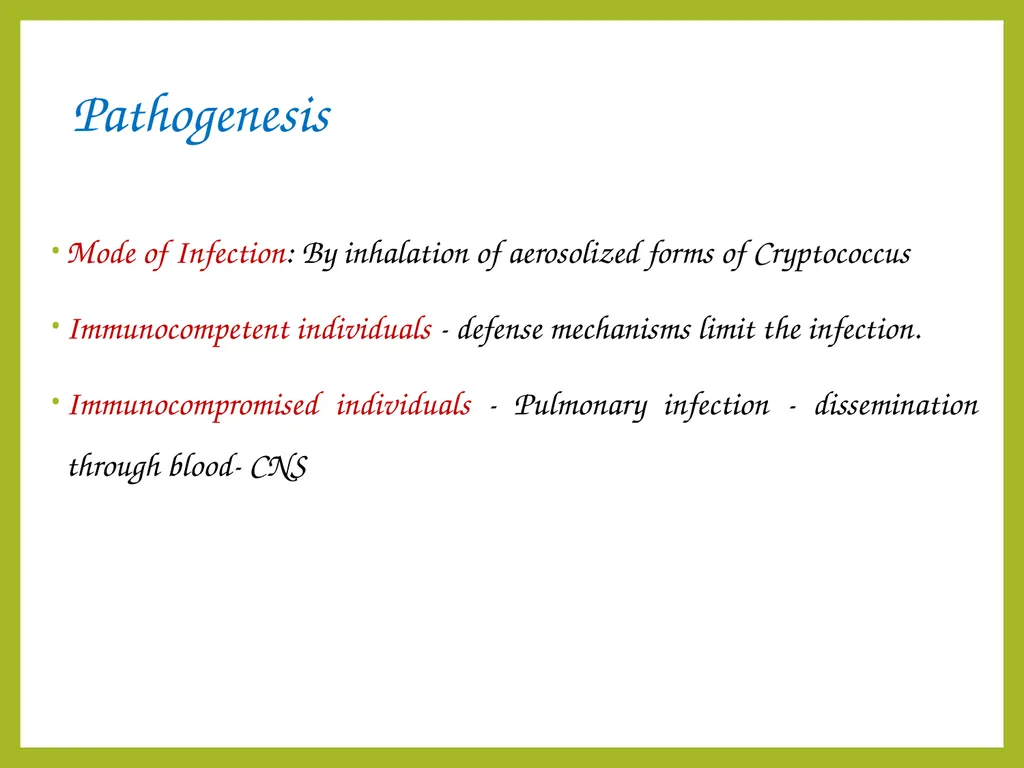
Pathogenesis Mode of Infection: By inhalation of aerosolized forms of Cryptococcus
Immunocompetent individuals - defense mechanisms limit the infection.
Immunocompromised individuals - Pulmonary infection - dissemination through blood- CNS<br>
07
Pathogenesis CNS spread: Cross blood-brain barrier - migrate directly across the endothelium or carried inside the macrophages.<br>
08
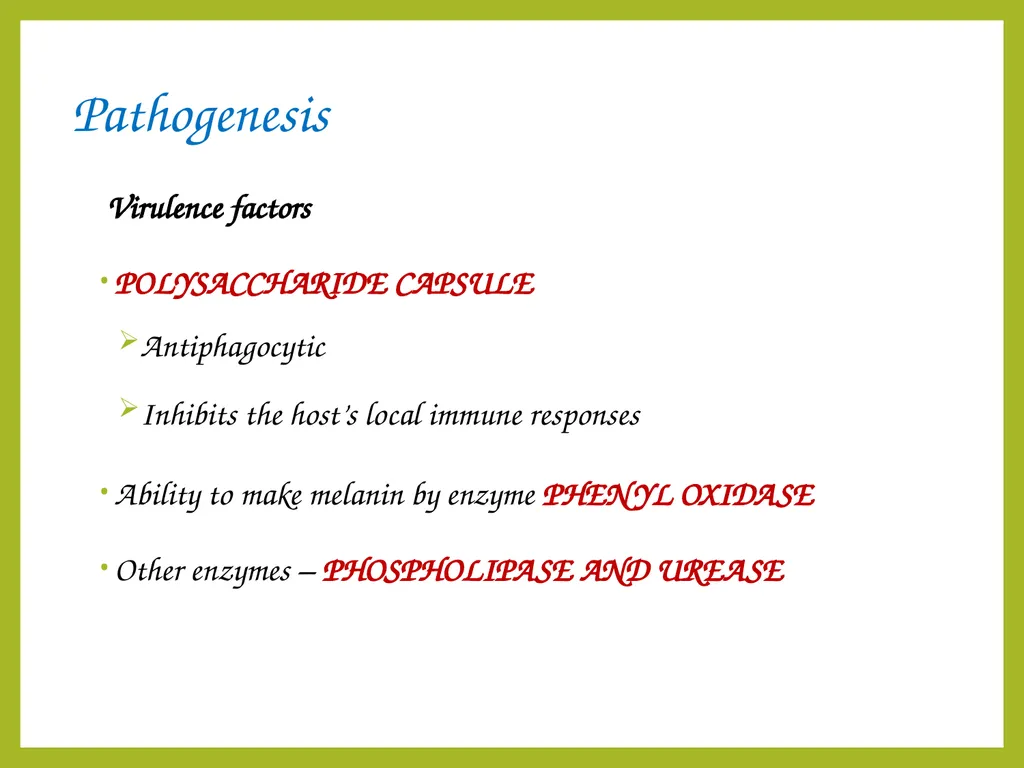
Virulence factors
POLYSACCHARIDE CAPSULE
Antiphagocytic
Inhibits the host’s local immune responses
Ability to make melanin by enzyme PHENYL OXIDASE
Other enzymes – PHOSPHOLIPASE AND UREASE Pathogenesis<br>
09
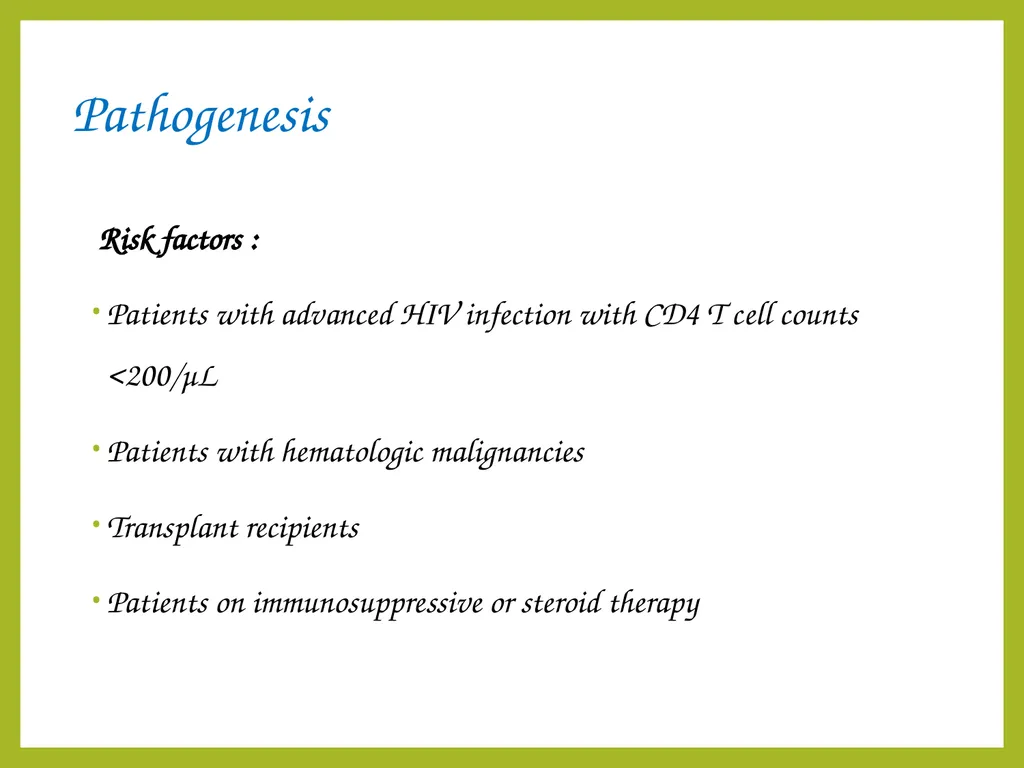
Risk factors :
Patients with advanced HIV infection with CD4 T cell counts <200/μL
Patients with hematologic malignancies
Transplant recipients
Patients on immunosuppressive or steroid therapy Pathogenesis<br>
10
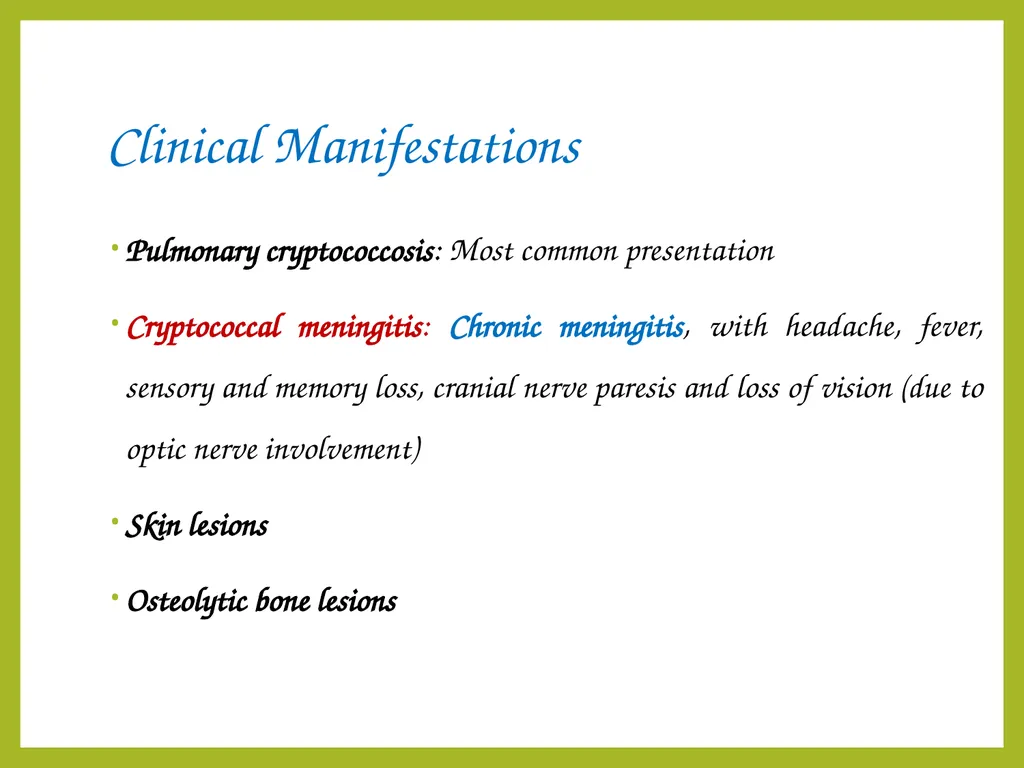
Clinical Manifestations Pulmonary cryptococcosis: Most common presentation
Cryptococcal meningitis: Chronic meningitis, with headache, fever, sensory and memory loss, cranial nerve paresis and loss of vision (due to optic nerve involvement)
Skin lesions
Osteolytic bone lesions<br>
11
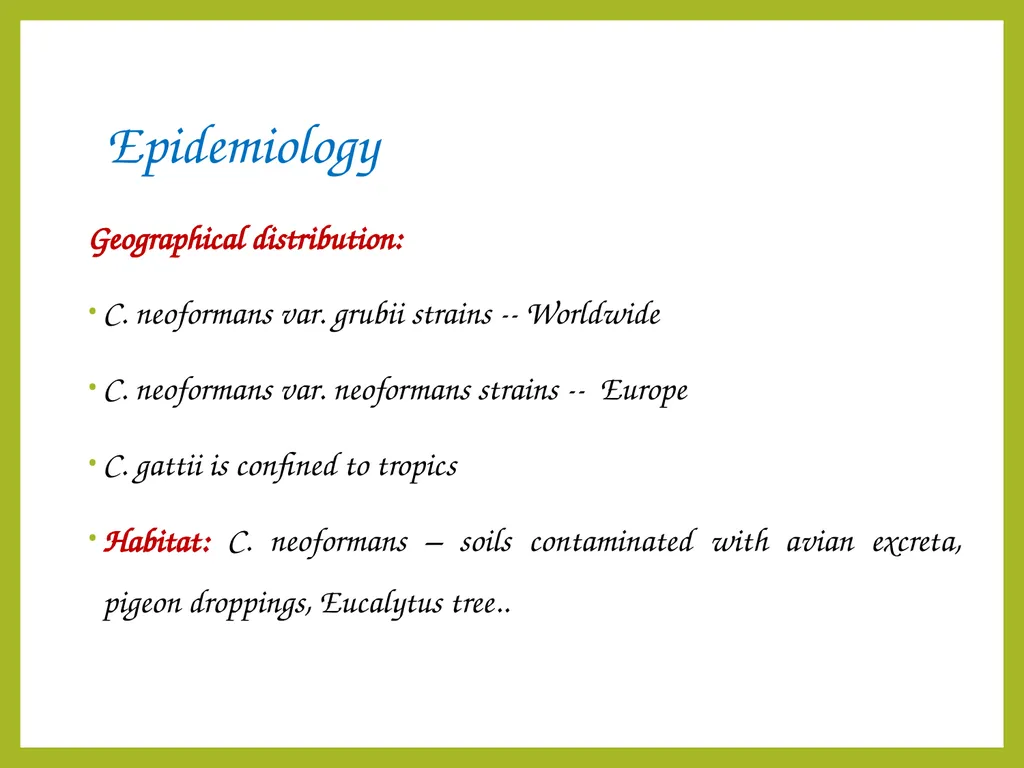
Epidemiology Geographical distribution:
C. neoformans var. grubii strains -- Worldwide
C. neoformans var. neoformans strains -- Europe
C. gattii is confined to tropics
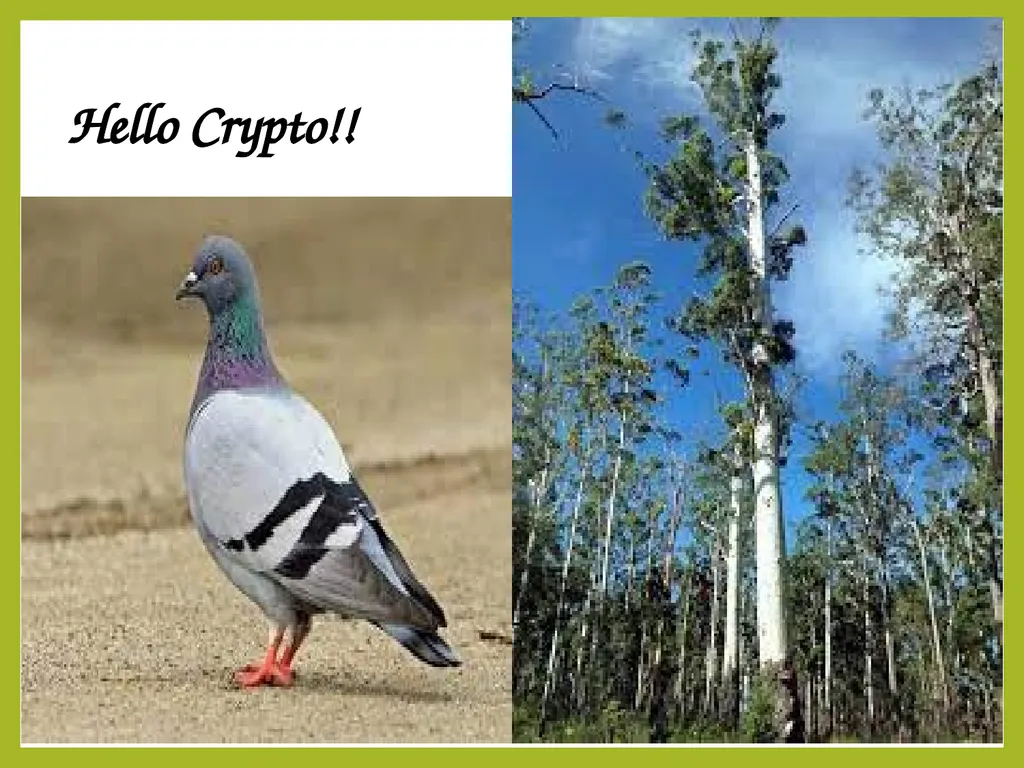
Habitat: C. neoformans – soils contaminated with avian excreta, pigeon droppings, Eucalytus tree..<br>
12
Hello Crypto!!<br>
13
Laboratory Diagnosis Specimens – CSF<br>
14
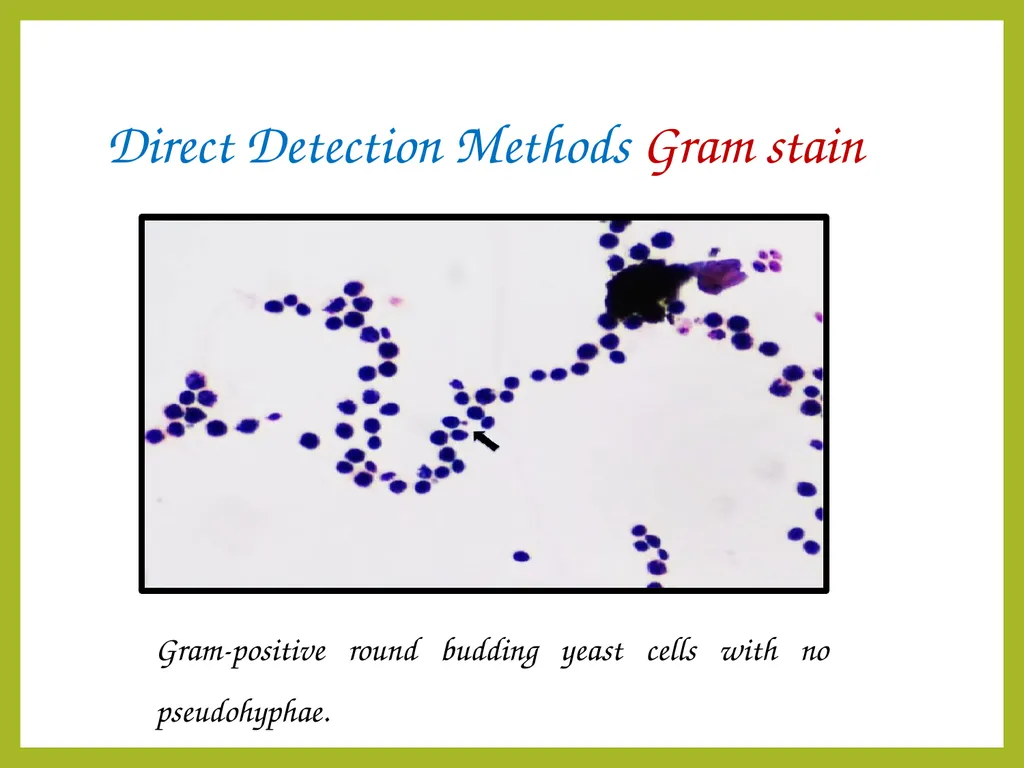
Gram-positive round budding yeast cells with no pseudohyphae. Direct Detection Methods Gram stain<br>
15
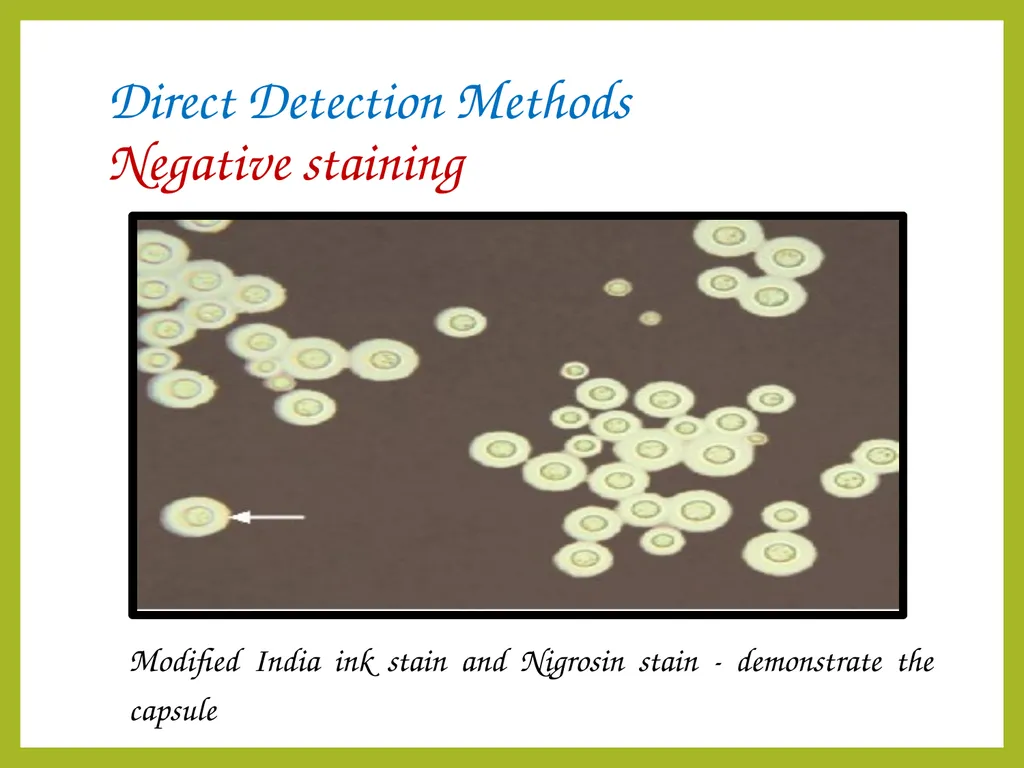
Direct Detection Methods Negative staining Modified India ink stain and Nigrosin stain - demonstrate the capsule<br>
16
Direct Detection Methods Mucicarmine stain: Stains the carminophilic cell wall of C. neoformans
Masson-Fontana stain: Demonstrates the production of melanin
Alcian blue stain to demonstrate the capsule.<br>
17
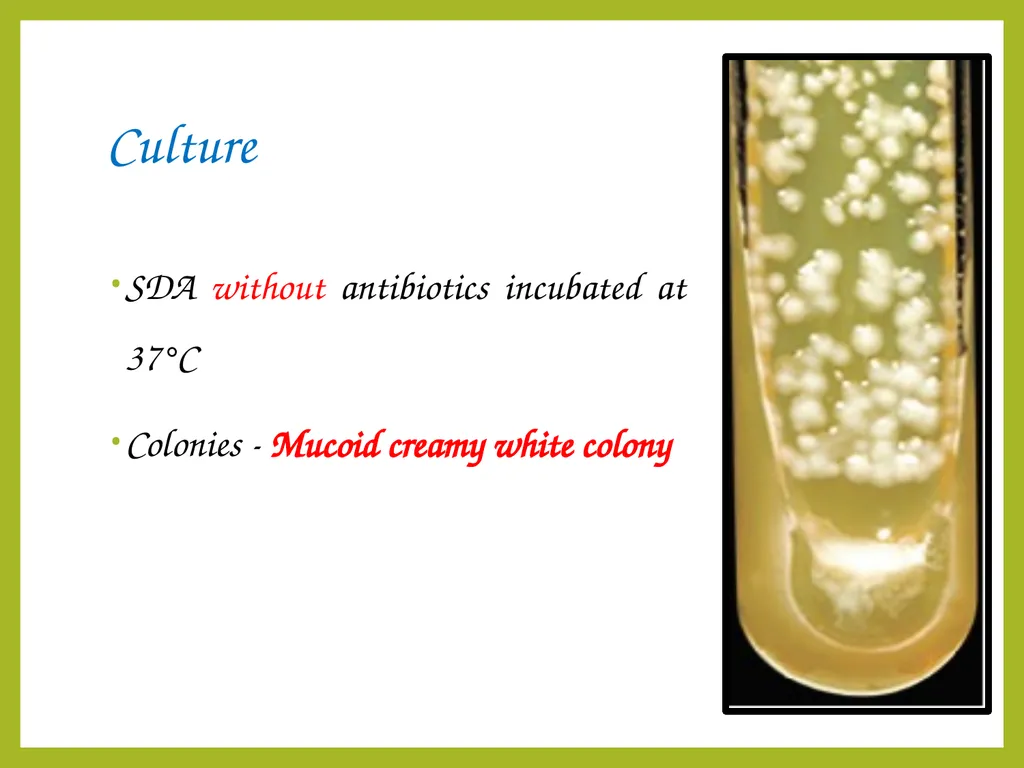
Culture SDA without antibiotics incubated at 37°C
Colonies - Mucoid creamy white colony<br>
18
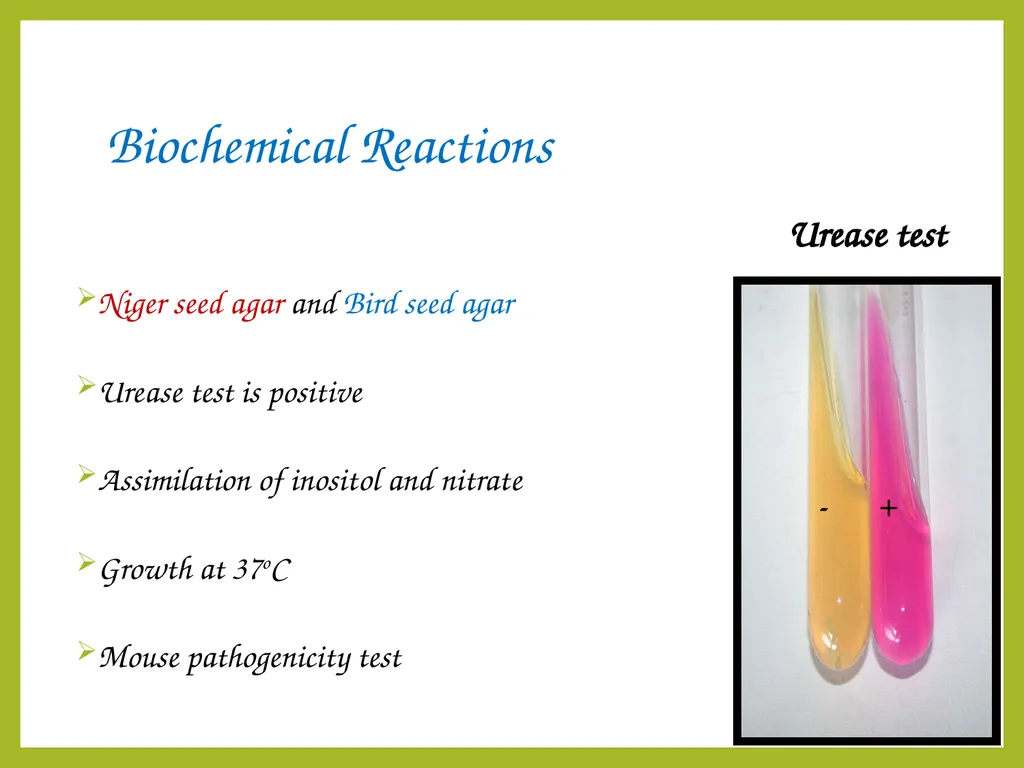
Biochemical Reactions Niger seed agar and Bird seed agar
Urease test is positive
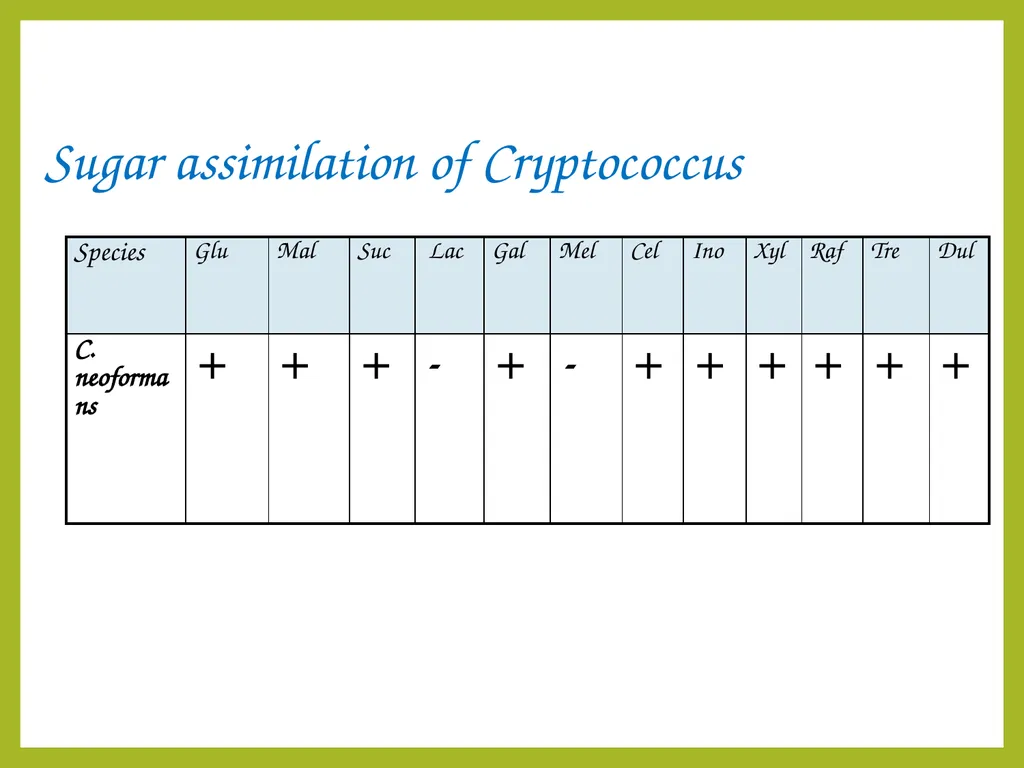
Assimilation of inositol and nitrate
Growth at 37oC
Mouse pathogenicity test - + Urease test<br>
19
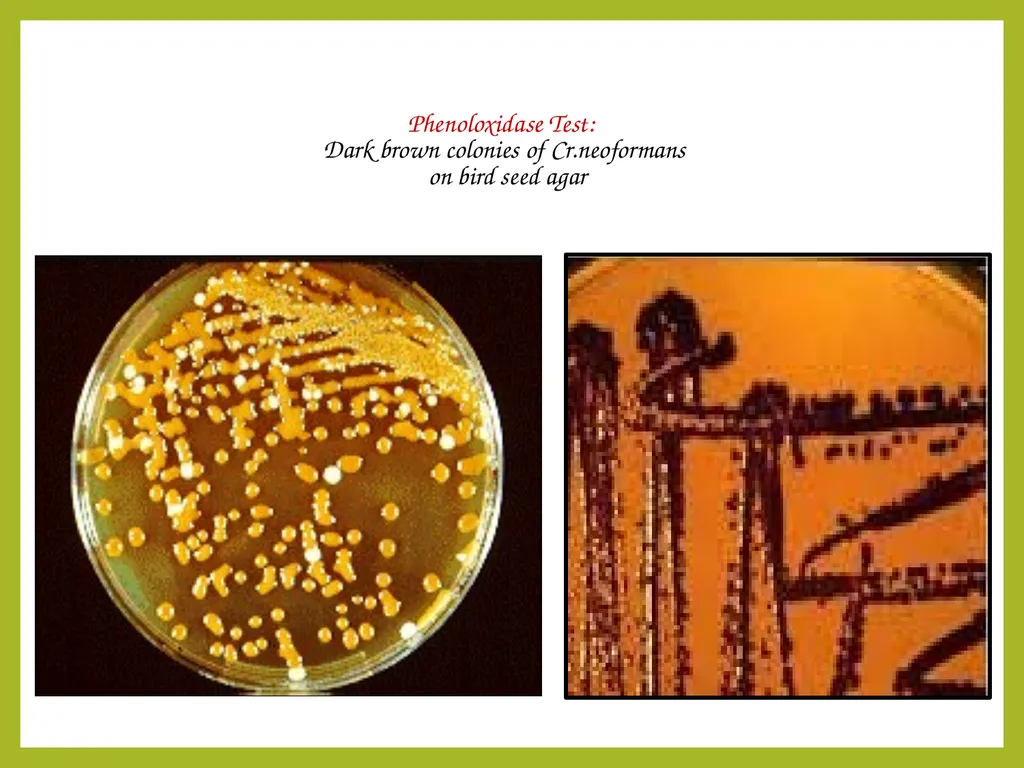
Phenoloxidase Test: Dark brown colonies of Cr.neoformans on bird seed agar<br>
20
Phenoloxidase Test: Production of Dark brown/ Black colonies of Cryptococcus neoformans on medium containing Diphenolic compound (Birdseed agar) due to conversion of diphenolic compound to melanin by its Phenoloxidase enzyme.<br>
21
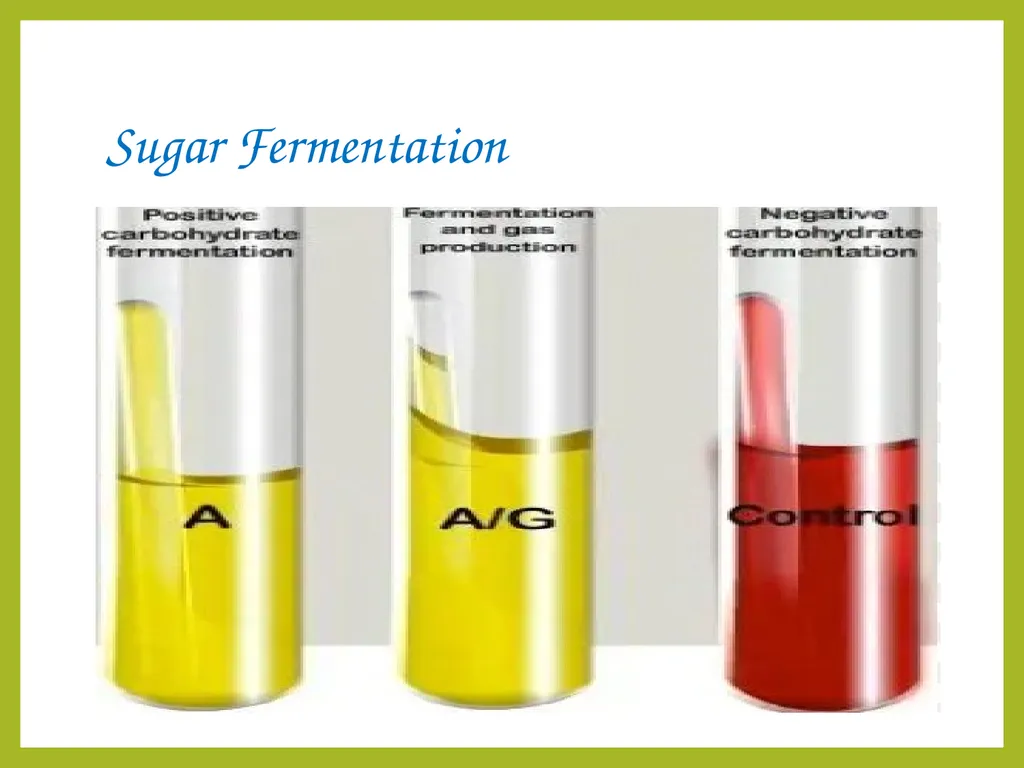
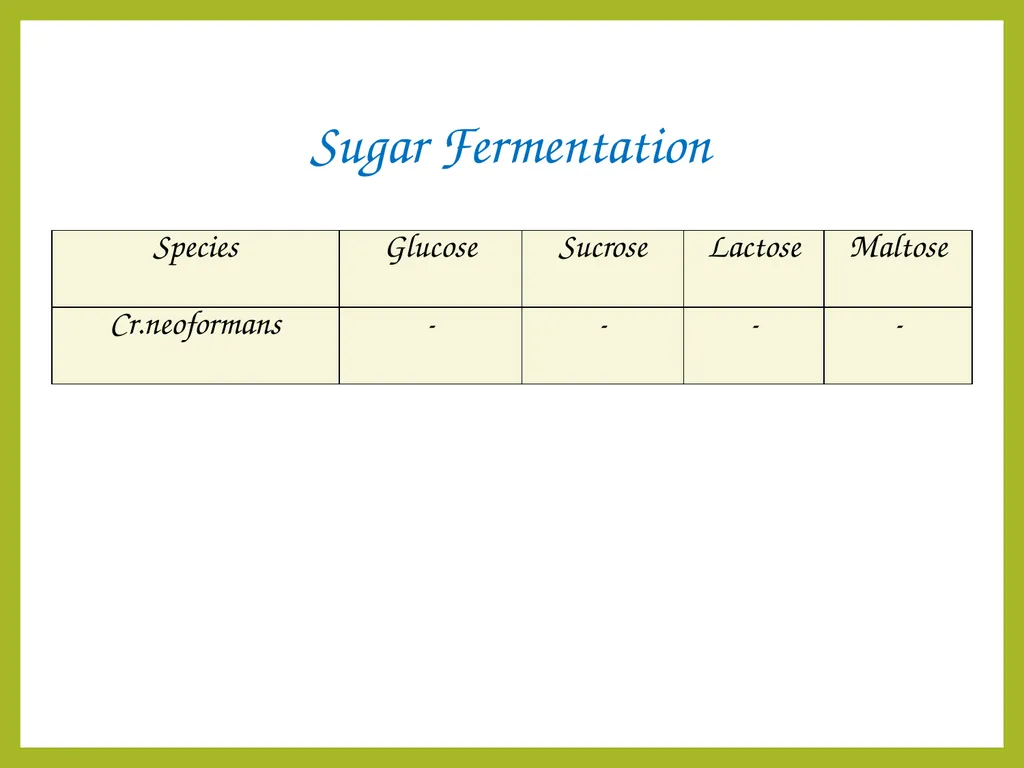
Sugar Fermentation This test involves liquid media supplemented with different carbohydrates, a color indicator to assess pH change to measure acid formation and inverted Durham tube for gas production.<br>
22
Sugar Fermentation<br>
23
Sugar Fermentation<br>
24
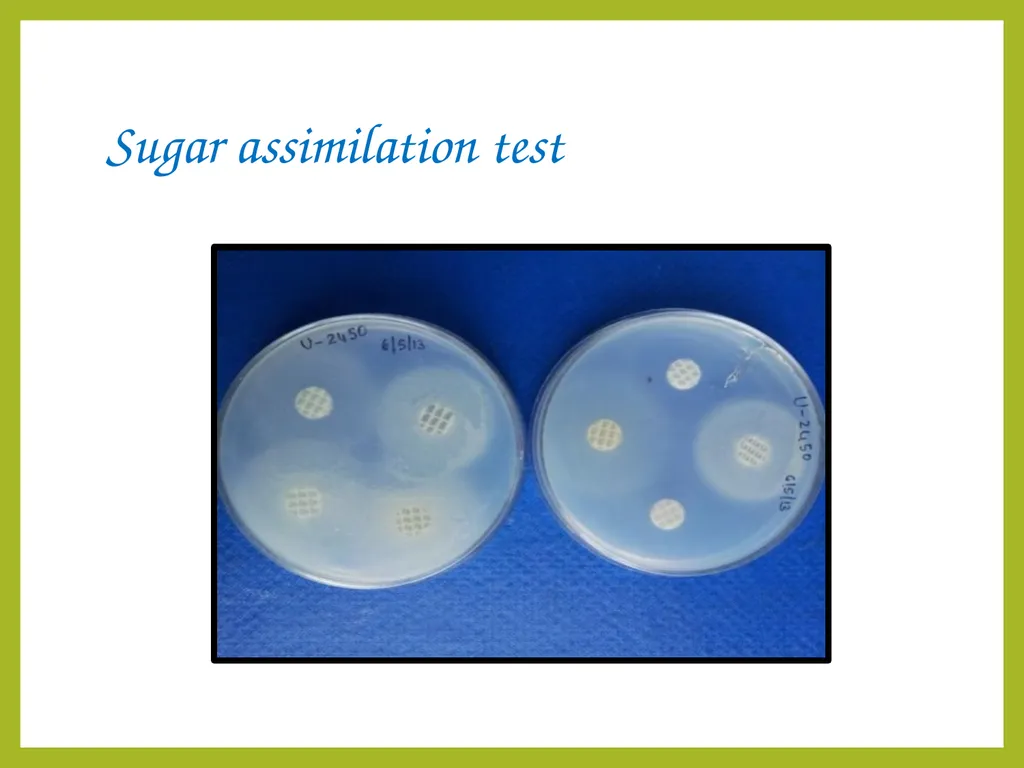
Sugar assimilation test This test checks the ability of a yeast to utilize a specific carbohydrate(sugar) as a source of nutrition, in a carbohydrate free medium aerobically.<br>
25
Sugar assimilation test<br>
26
Sugar assimilation of Cryptococcus<br>
27
Nitrate Assimilation Test Performed on YEAST CARBON BASE agar.
Used in identification of Cryptococcus species.<br>
28
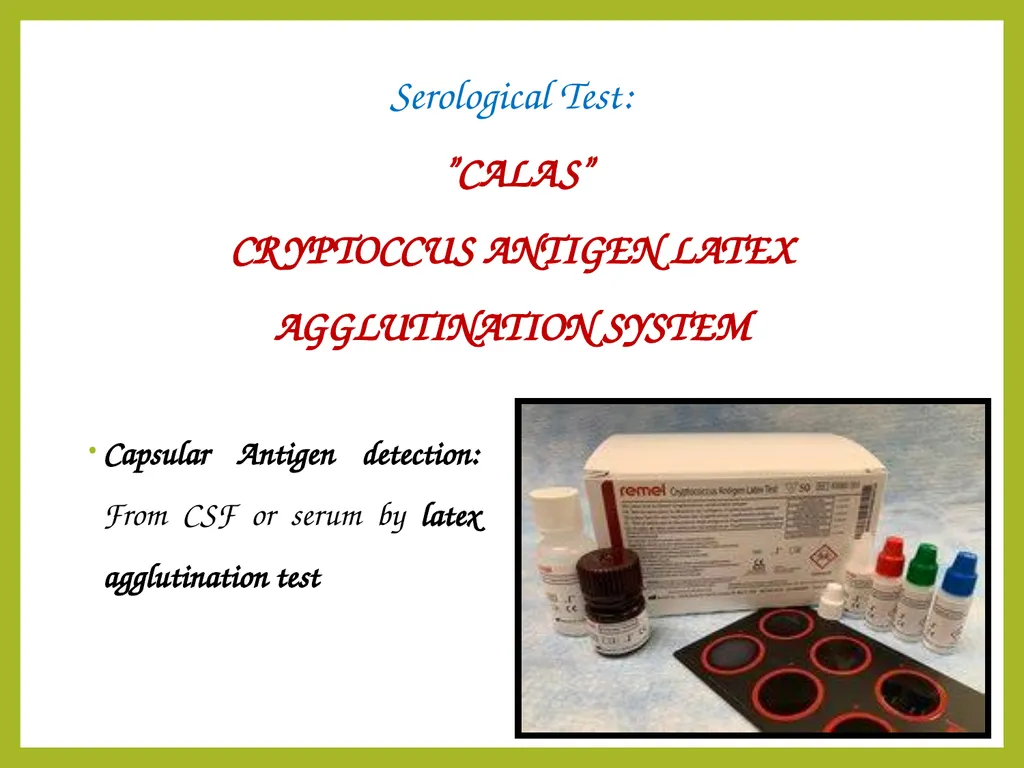
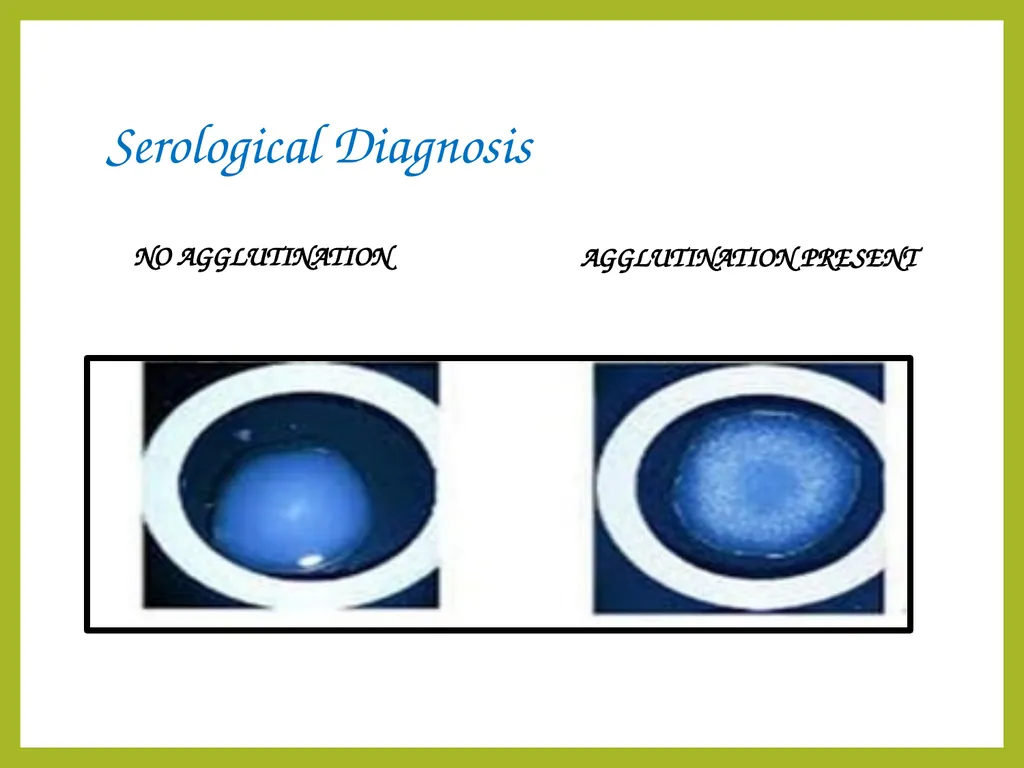
Serological Test: ”CALAS” CRYPTOCCUS ANTIGEN LATEX AGGLUTINATION SYSTEM Capsular Antigen detection: From CSF or serum by latex agglutination test<br>
29
Serological Diagnosis NO AGGLUTINATION AGGLUTINATION PRESENT<br>
30
Cryptococcus Laboratory Diagnosis Demonstration of Capsule on India ink/ Nigrosin stain
Narrow neck budding with no pseudohyphae or hyphae on microscopy
Mucoid, cream to buff colored colonies on SDA
Brown to Black color colonies on Bird seed / Caffeic acid agar
Urease test positive, Nitrate assimilation positive, Inositol assimilation, growth at 37°C.
CALAS<br>