
CRYSTAL STRUCTURE Prof. Dr. B. J. Lokhande School
Description: CRYSTAL STRUCTURE Prof. Dr. B. J. Lokhande School of Physical Sciences TYPES OF SOLIDS In a Crystalline solid, atoms are arranged in an orderly manner. The atoms are having long range order. Example : Iron, Copper and other metals, NaCl
Related Topics
Download Presentation
"CRYSTAL STRUCTURE Prof. Dr. B. J. Lokhande School" is the property of its rightful owner. Permission is granted to download and print the materials on this website for personal, non-commercial use only, and to display it on your personal computer provided you do not modify the materials and that you retain all copyright notices contained in the materials. By downloading content from our website, you accept the terms of this agreement.
Presentation Transcript
slide1. CRYSTAL STRUCTURE Prof. Dr. B. J. Lokhande
School of Physical Sciences<br>
slide2. TYPES OF SOLIDS In a Crystalline solid, atoms are arranged in an orderly manner. The atoms are having long range order.
Example : Iron, Copper and other metals, NaCl etc.
In an Amorphous solid, atoms are not present in an orderly manner. They are randomly arranged.
Example : Glass<br>
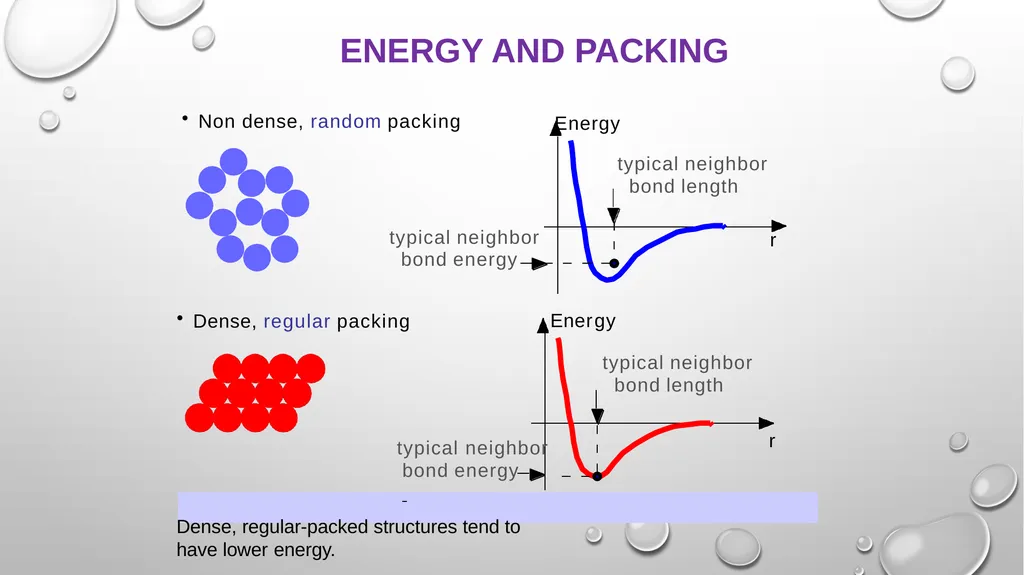
slide3. Non dense, random packing Dense, regular packing r Energy
typical neighbor bond length typical neighbor bond energy Energy r typical neighbor bond length typical neighbor bond energy
Dense, regular-packed structures tend to have lower energy. ENERGY AND PACKING<br>
slide4. SOME DEFINITIONS Crystalline material is a material comprised of one or many crystals. In crystal, atoms or ions show a long-range periodic arrangement.
Single crystal is a crystalline material that is made of only one crystal ( no grain boundaries).
Grains are the crystals in a polycrystalline material.
Polycrystalline material is a material comprised of many crystals (single-crystal material that has only one crystal).
Grain boundaries are regions between grains of a polycrystalline material. A unit cell is the smallest part of the unit cell, which when repeated in all three directions, reproduces the lattice.<br>
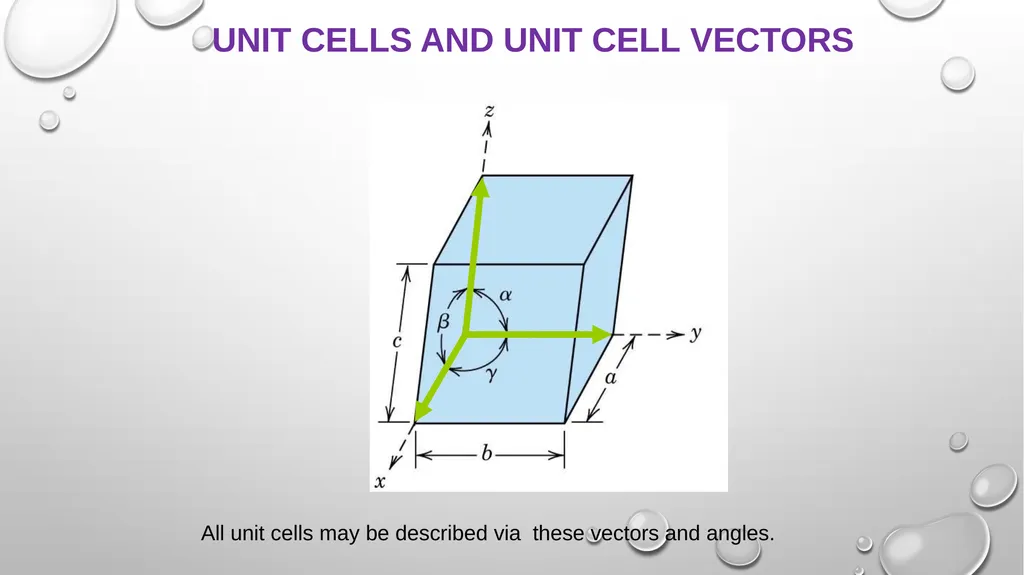
slide5. All unit cells may be described via these vectors and angles. UNIT CELLS AND UNIT CELL VECTORS<br>
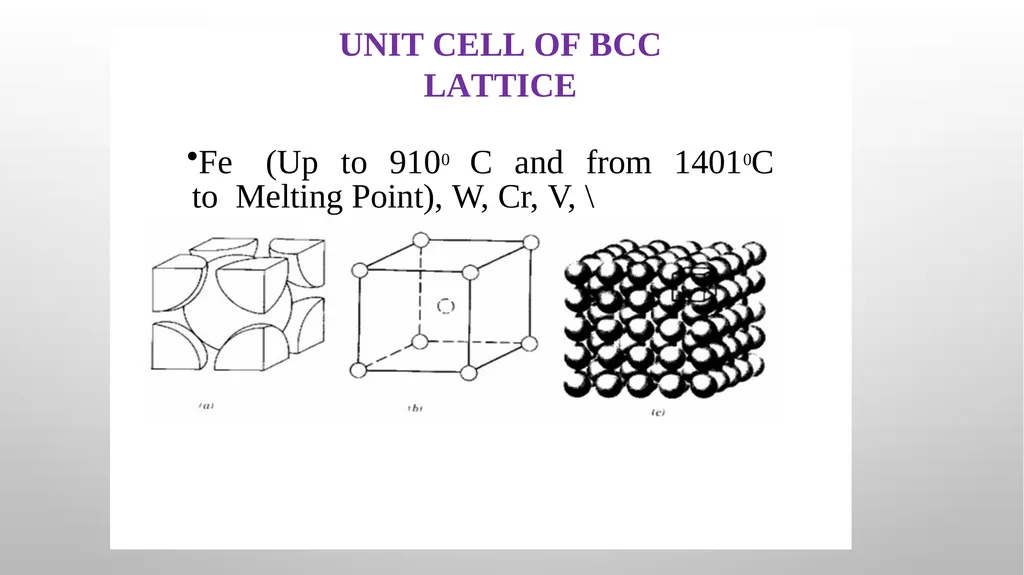
slide8. Unit Cell of BCC Lattice Fe (Up to 9100 C and from 14010C to Melting Point), W, Cr, V, \<br>
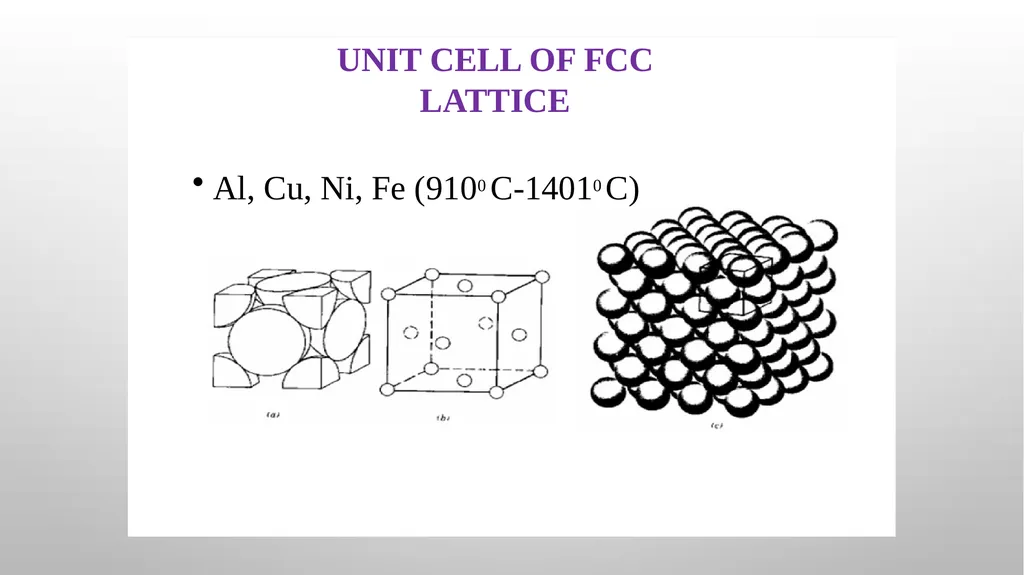
slide9. Unit Cell of FCC lattice Al, Cu, Ni, Fe (9100 C-14010 C)<br>
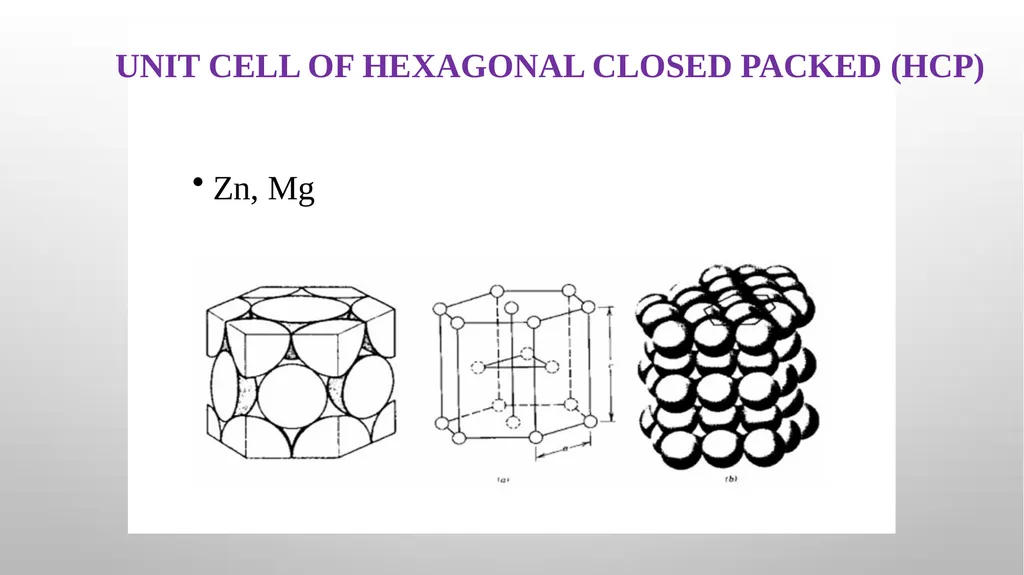
slide10. Unit Cell of Hexagonal closed packed (HCP) Zn, Mg<br>
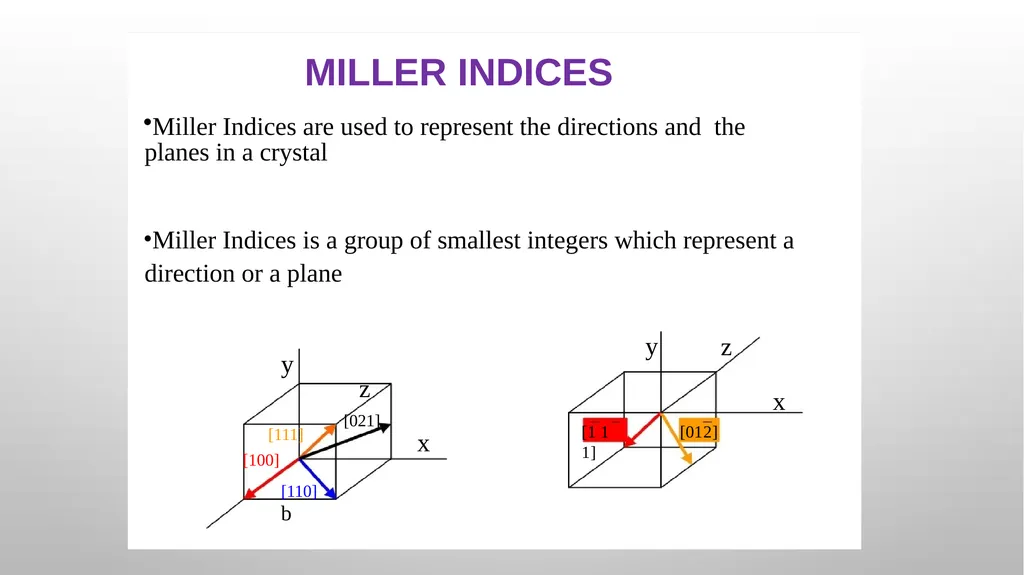
slide11. MILLER INDICES Miller Indices are used to represent the directions and the planes in a crystal
Miller Indices is a group of smallest integers which represent a direction or a plane z y z [1 1 1] [012] x [021] y [111]
[100]
[110]
b x<br>
slide12. MILLER INDICES Select any point on the direction line other than the origin Find out the coordinates of the point in terms of the unit vectors along different axes.
Specify negative coordinate with a bar on top Divide the m by the unit vector along the respective axis.
Convert the result into the smallest integers by suitable multiplication or division.<br>
School of Physical Sciences<br>
slide2. TYPES OF SOLIDS In a Crystalline solid, atoms are arranged in an orderly manner. The atoms are having long range order.
Example : Iron, Copper and other metals, NaCl etc.
In an Amorphous solid, atoms are not present in an orderly manner. They are randomly arranged.
Example : Glass<br>
slide3. Non dense, random packing Dense, regular packing r Energy
typical neighbor bond length typical neighbor bond energy Energy r typical neighbor bond length typical neighbor bond energy
Dense, regular-packed structures tend to have lower energy. ENERGY AND PACKING<br>
slide4. SOME DEFINITIONS Crystalline material is a material comprised of one or many crystals. In crystal, atoms or ions show a long-range periodic arrangement.
Single crystal is a crystalline material that is made of only one crystal ( no grain boundaries).
Grains are the crystals in a polycrystalline material.
Polycrystalline material is a material comprised of many crystals (single-crystal material that has only one crystal).
Grain boundaries are regions between grains of a polycrystalline material. A unit cell is the smallest part of the unit cell, which when repeated in all three directions, reproduces the lattice.<br>
slide5. All unit cells may be described via these vectors and angles. UNIT CELLS AND UNIT CELL VECTORS<br>
slide8. Unit Cell of BCC Lattice Fe (Up to 9100 C and from 14010C to Melting Point), W, Cr, V, \<br>
slide9. Unit Cell of FCC lattice Al, Cu, Ni, Fe (9100 C-14010 C)<br>
slide10. Unit Cell of Hexagonal closed packed (HCP) Zn, Mg<br>
slide11. MILLER INDICES Miller Indices are used to represent the directions and the planes in a crystal
Miller Indices is a group of smallest integers which represent a direction or a plane z y z [1 1 1] [012] x [021] y [111]
[100]
[110]
b x<br>
slide12. MILLER INDICES Select any point on the direction line other than the origin Find out the coordinates of the point in terms of the unit vectors along different axes.
Specify negative coordinate with a bar on top Divide the m by the unit vector along the respective axis.
Convert the result into the smallest integers by suitable multiplication or division.<br>