01
Curriculum Intent
Subject … Geography PRIORITIES IN WHOLE SCHOOL CURRICULUM INTENT
Enjoyment of learning
Knowledge acquisition and recall
Extensive vocabulary
Effective communication through writing, speaking & listening, and use of technology
Numeracy
Critical evaluation of information
Enterprise and problem-solving
Working with others KEY QUESTIONS TO CONSIDER
1. Why has content been selected? Is there sufficient focus on the most powerful knowledge, concepts and skills?
2. Does learning provide sufficient challenge? Is there sufficient challenge for all learners in all year groups?
3. Why is learning sequenced in this way? Does the sequence enable students to build on prior learning, and learn in increasing breadth and depth over time?
4. How is learning sequenced or spaced to promote long-term memory? SUBJECT CURRICULUM INTENT
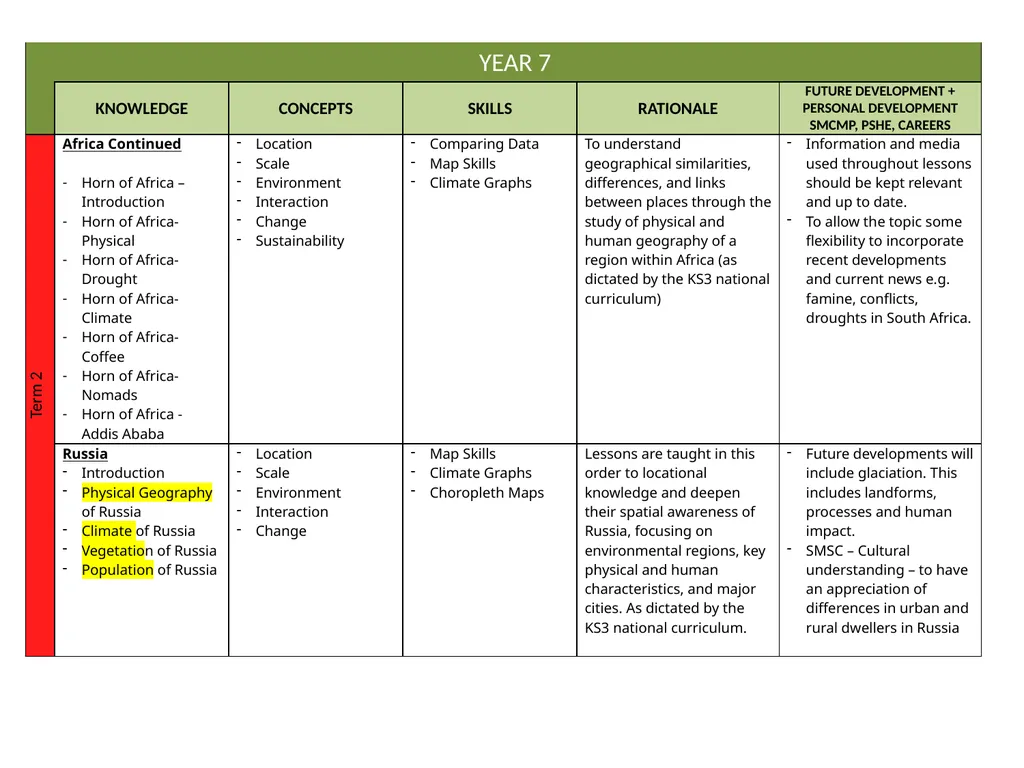
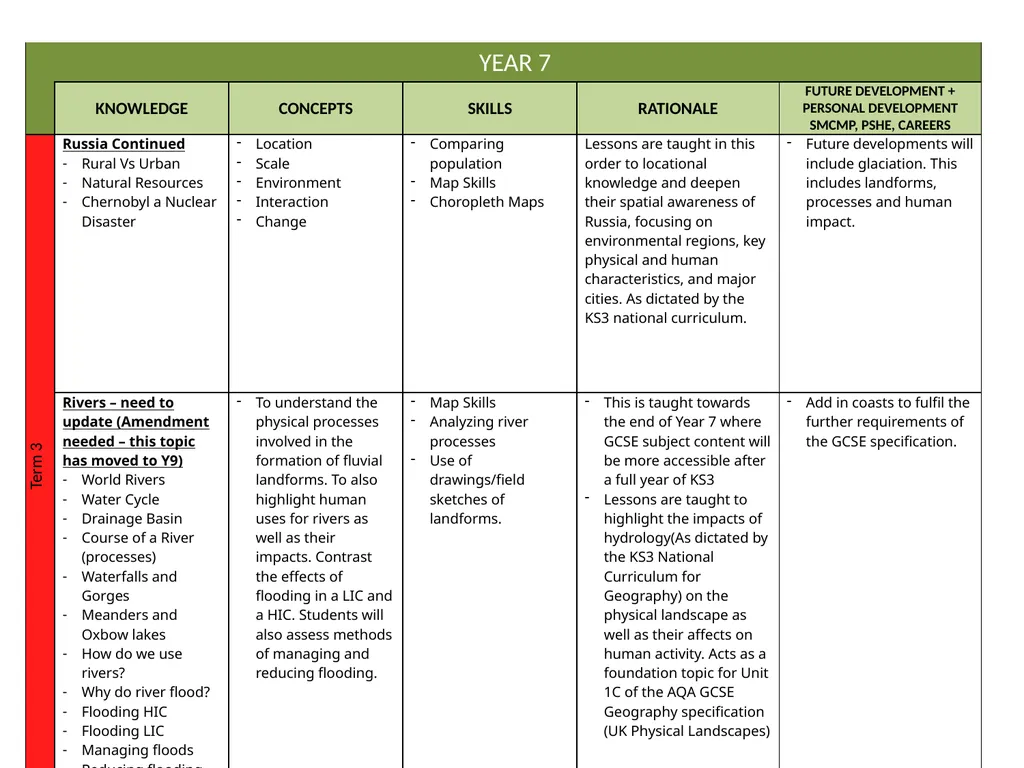
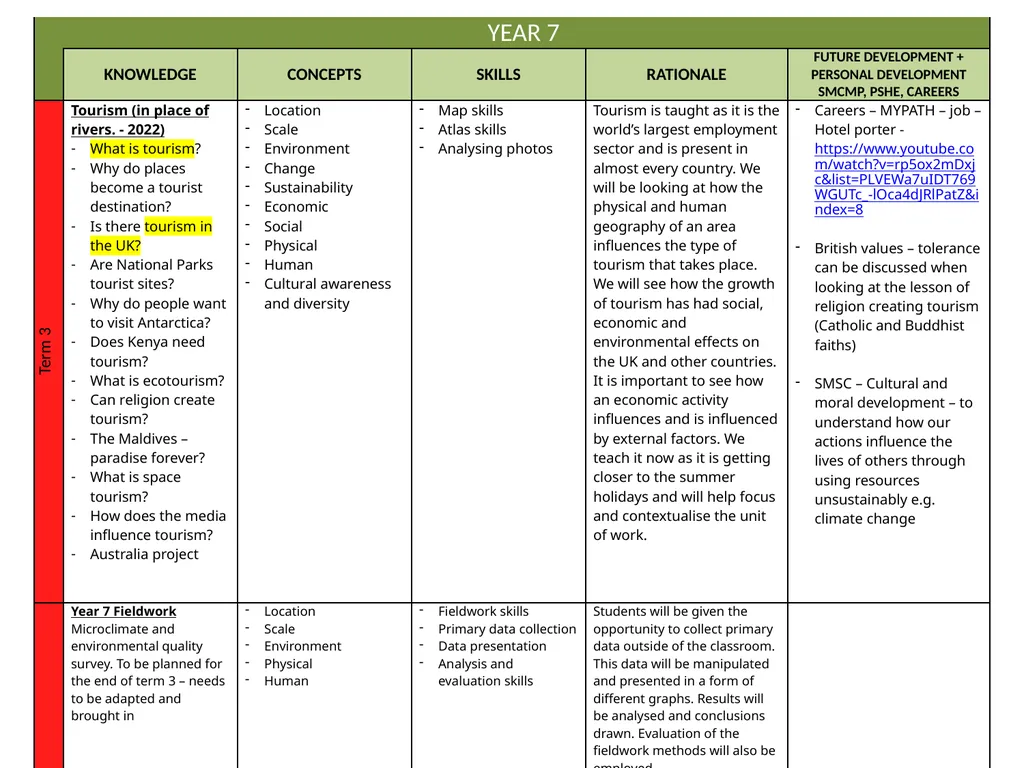
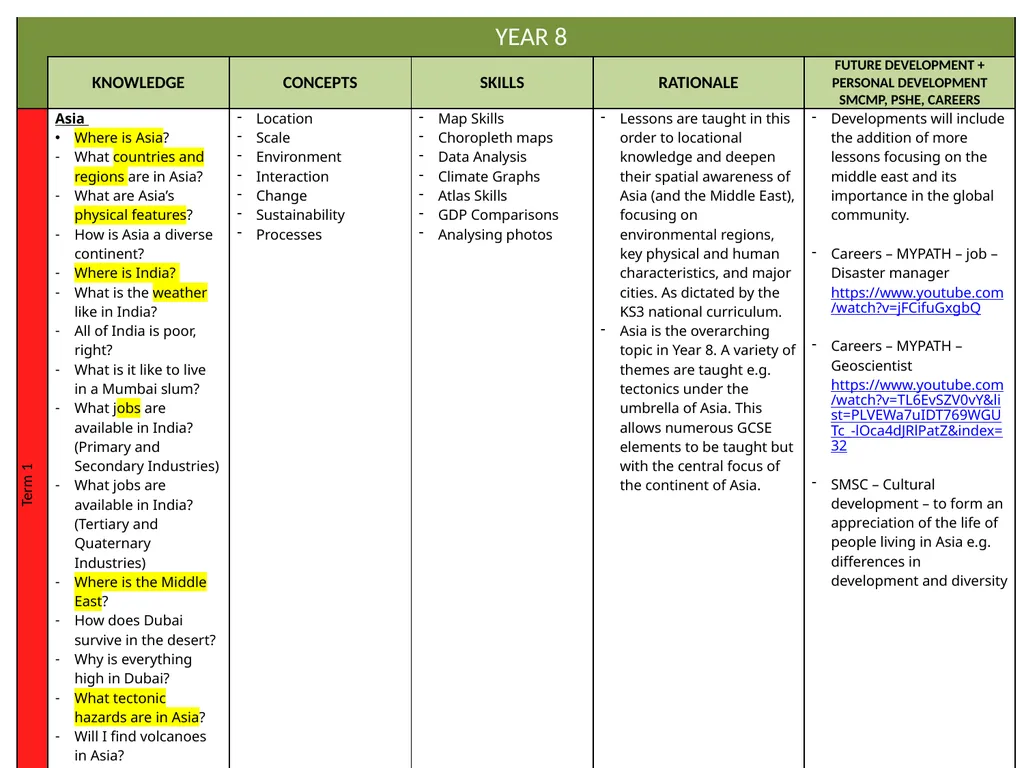
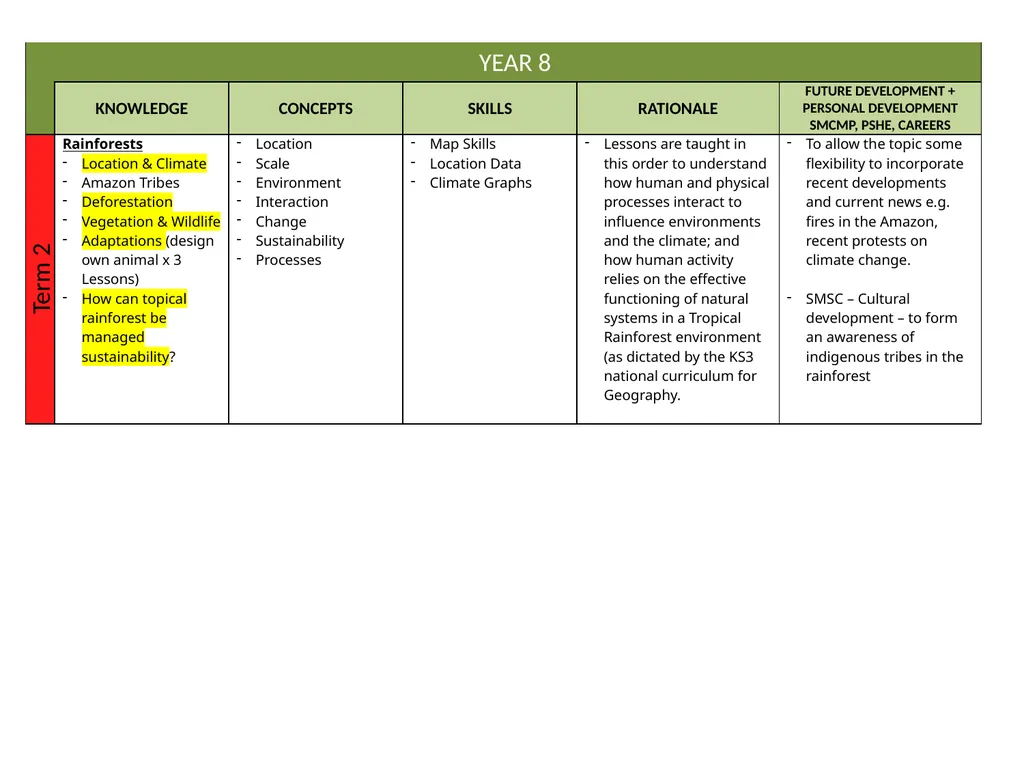
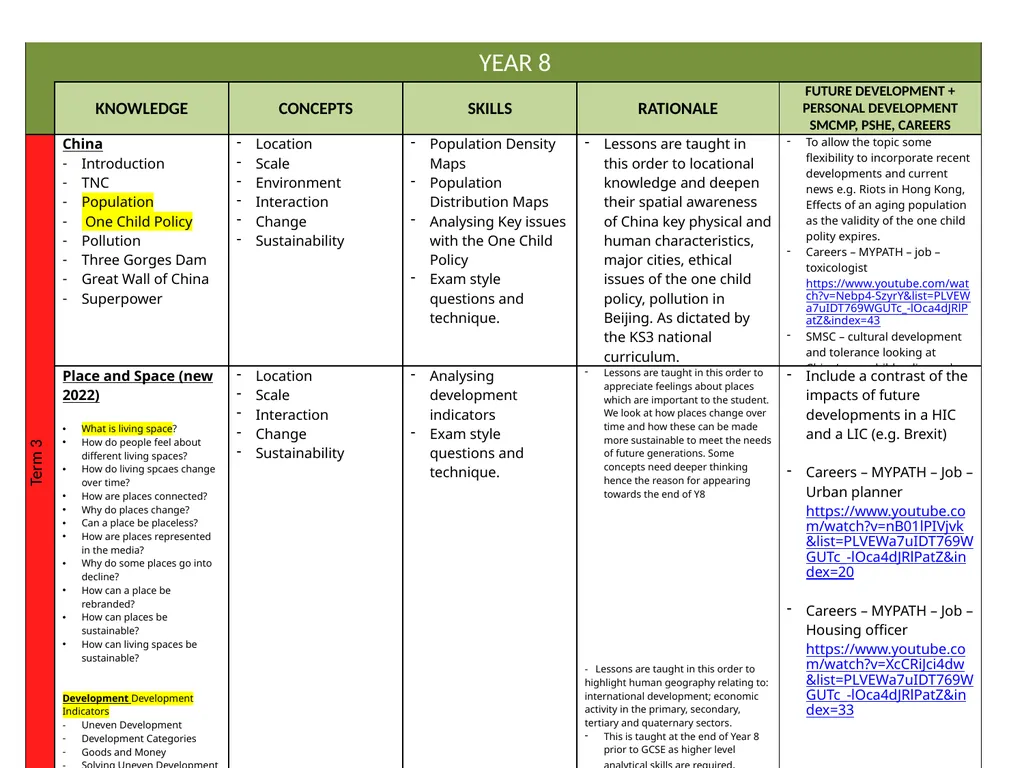
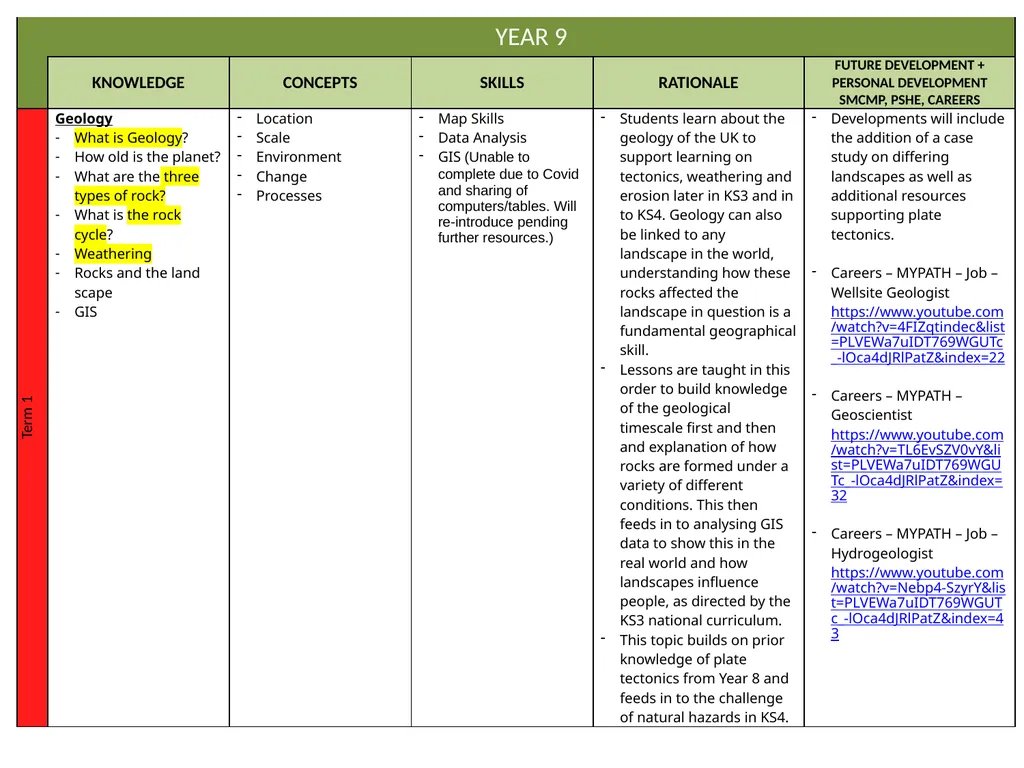
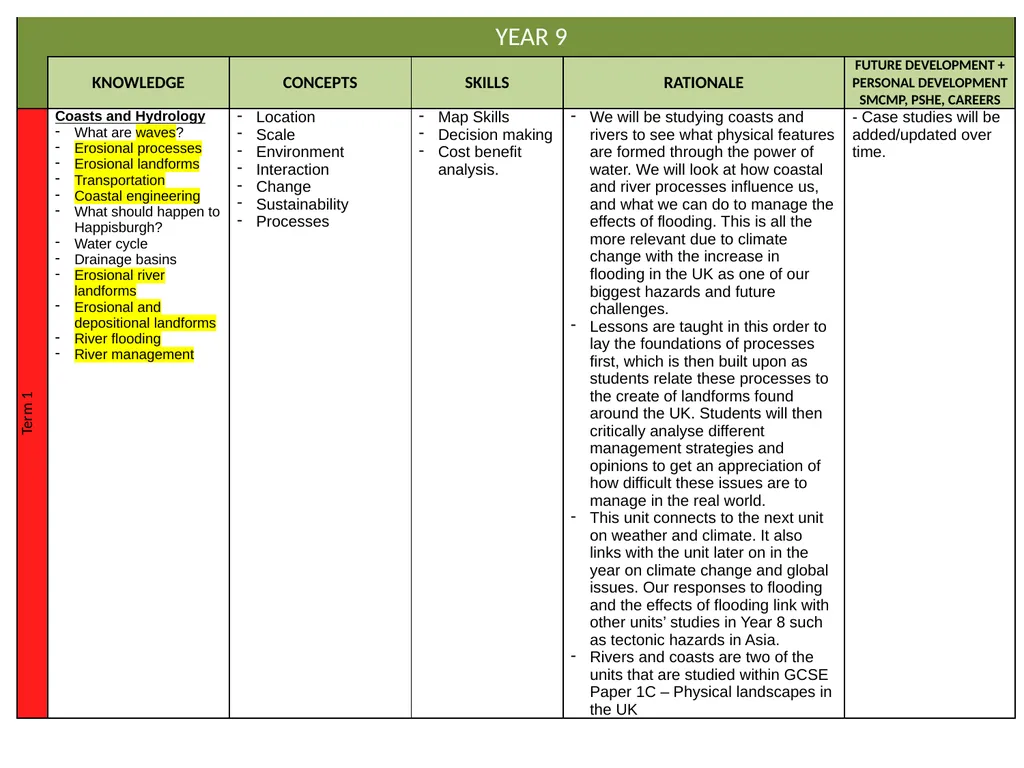
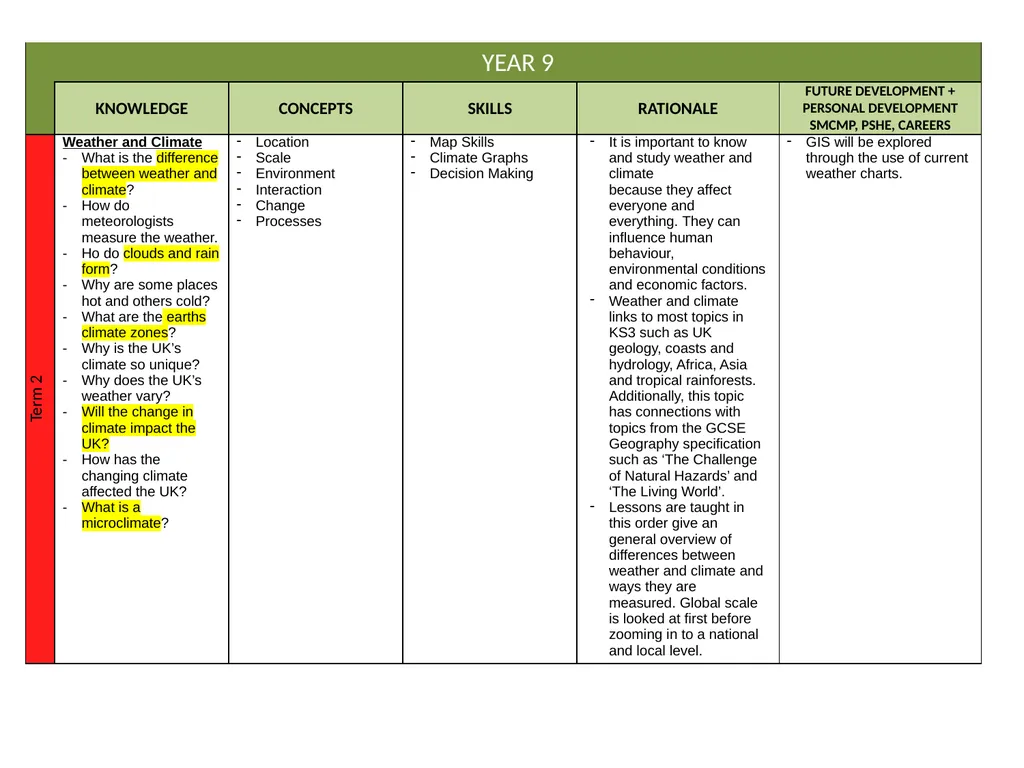
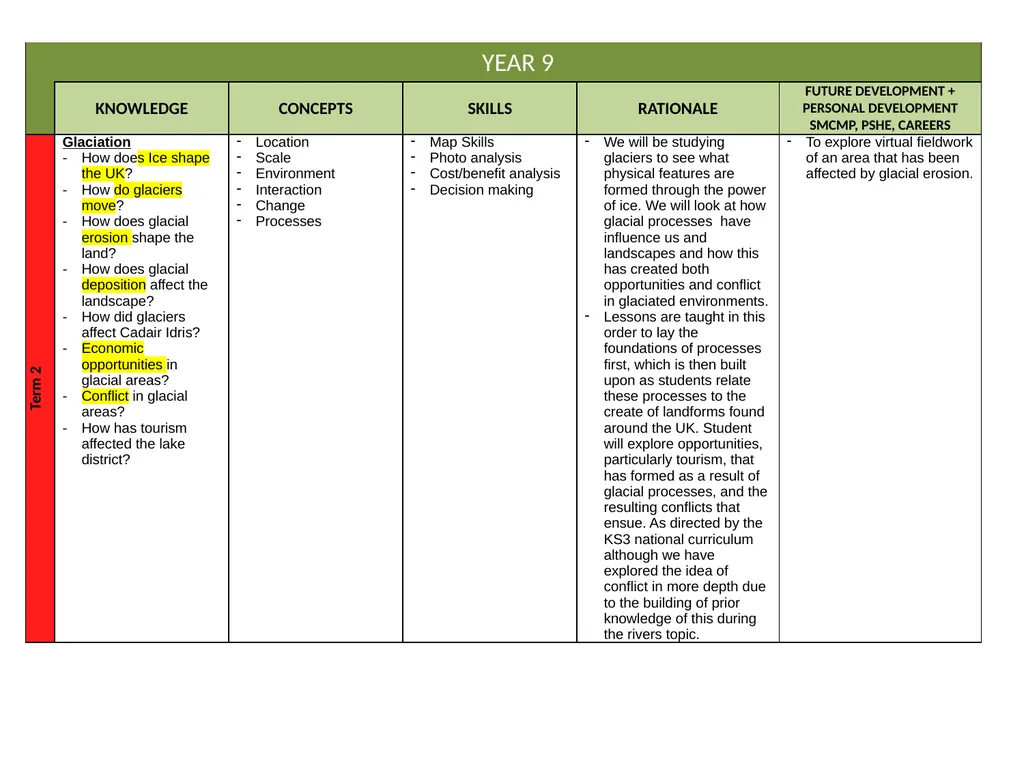
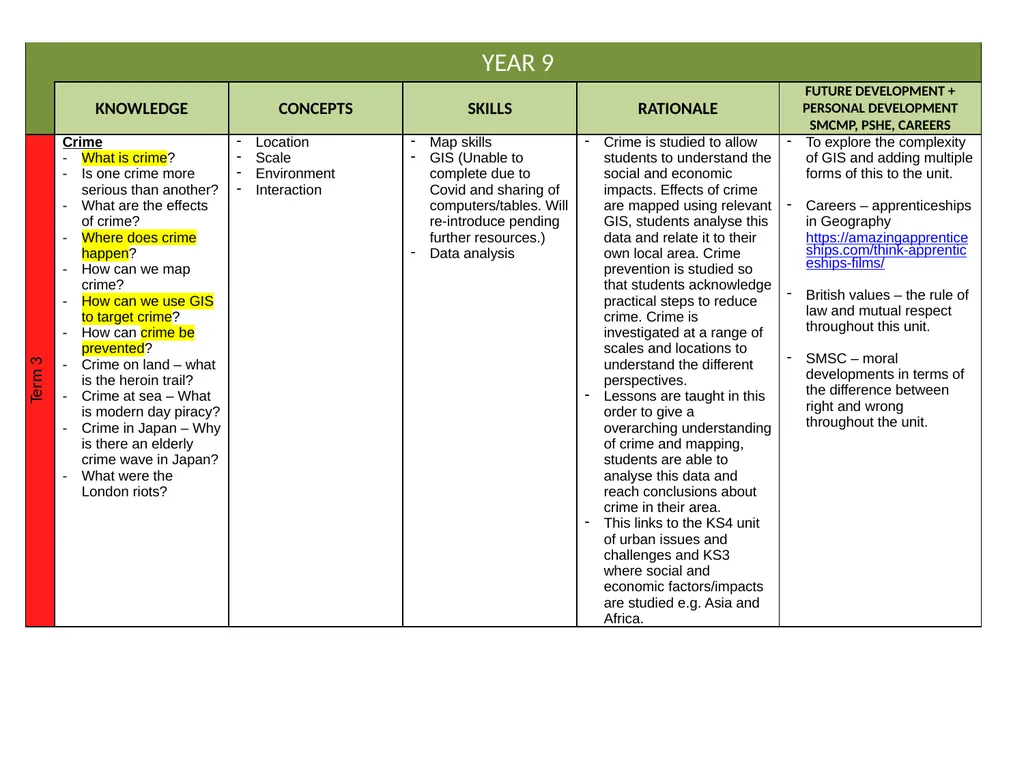
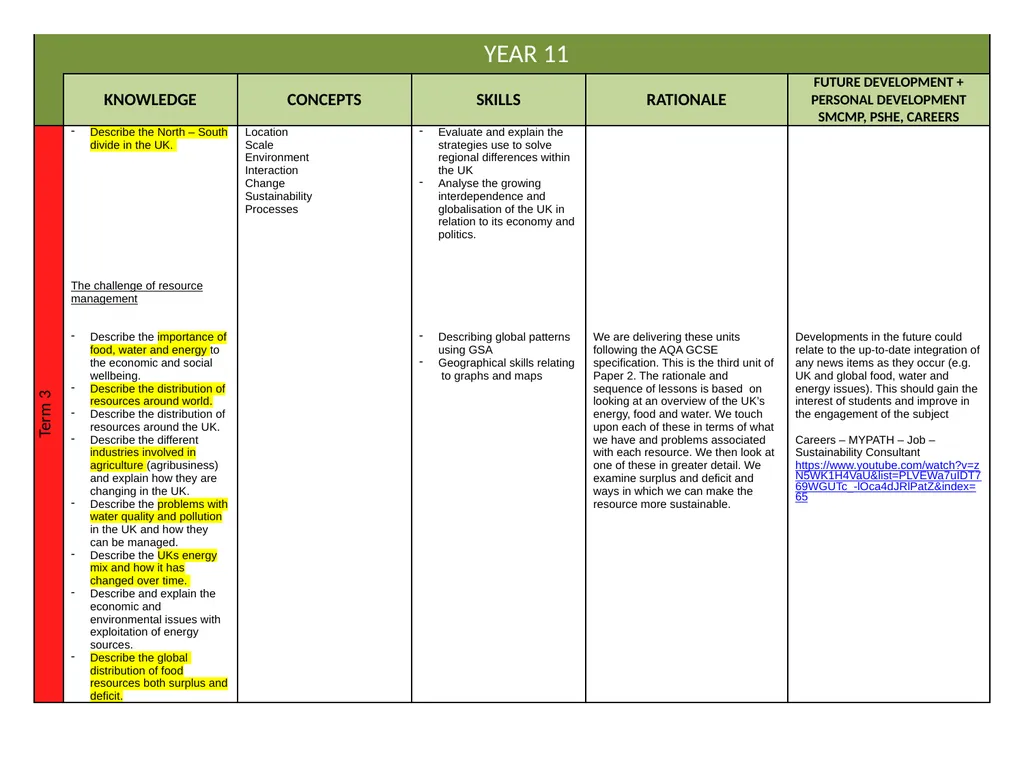
The KS3 curriculum is designed to fulfil the requirements of the National Curriculum. It teaches a number of physical and human themes across various regions of the world. It is intended to prepare students for the GCSE course and borrows a lot of similar themes from these e.g. tectonics. Exam technique and command words are addressed early on, also in preparation for the GCSE course. It is intended that students have a sense of where they are in the world, and why various physical and human processes occur, in order to foster an enquiring and questioning mind, whilst also analysing the problems the world faces. HOW IS THE EXTENDED TIME IN KS4 USED TO IMPROVE & ENRICH LEARNING IN THE SUBJECT?
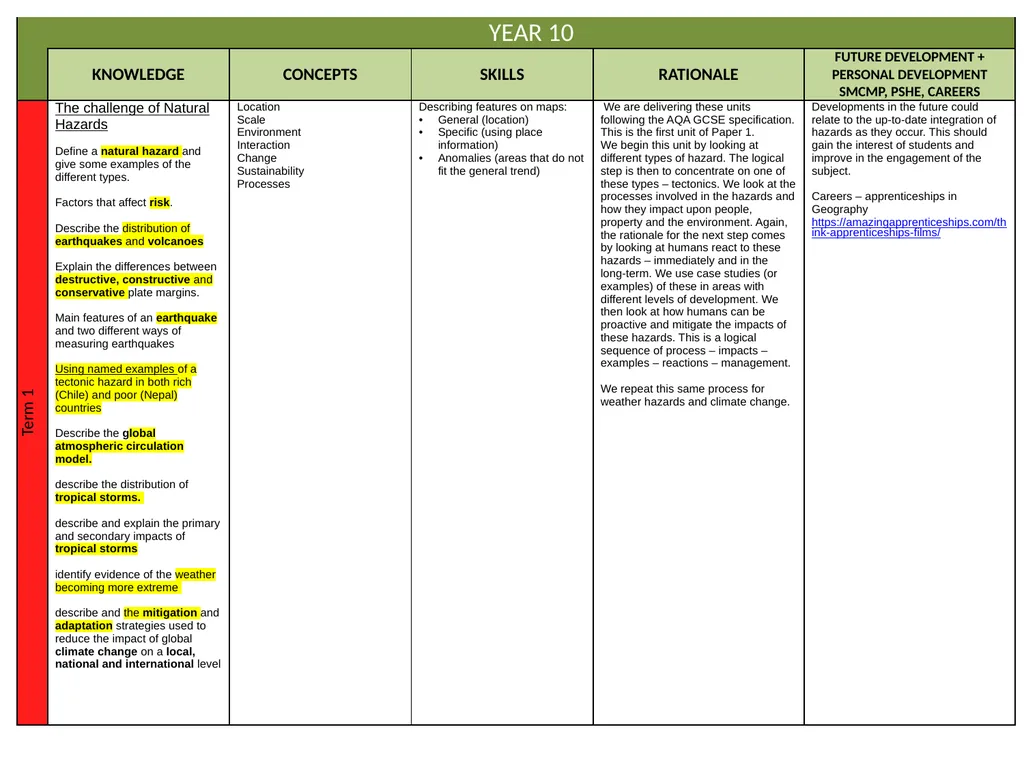
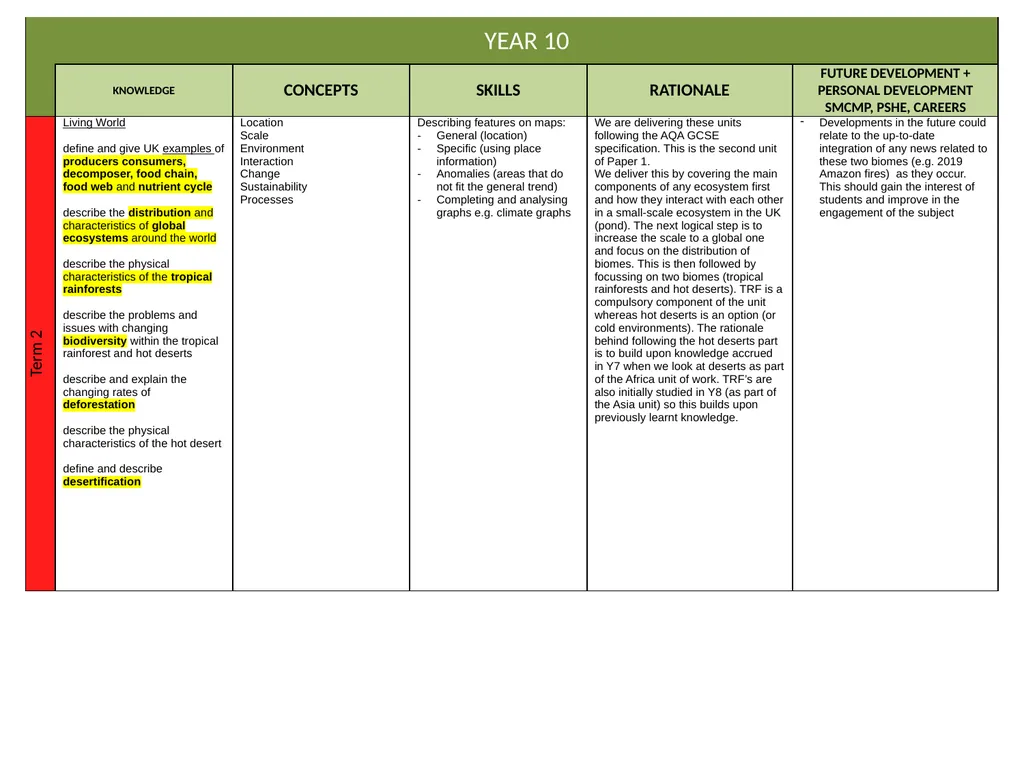
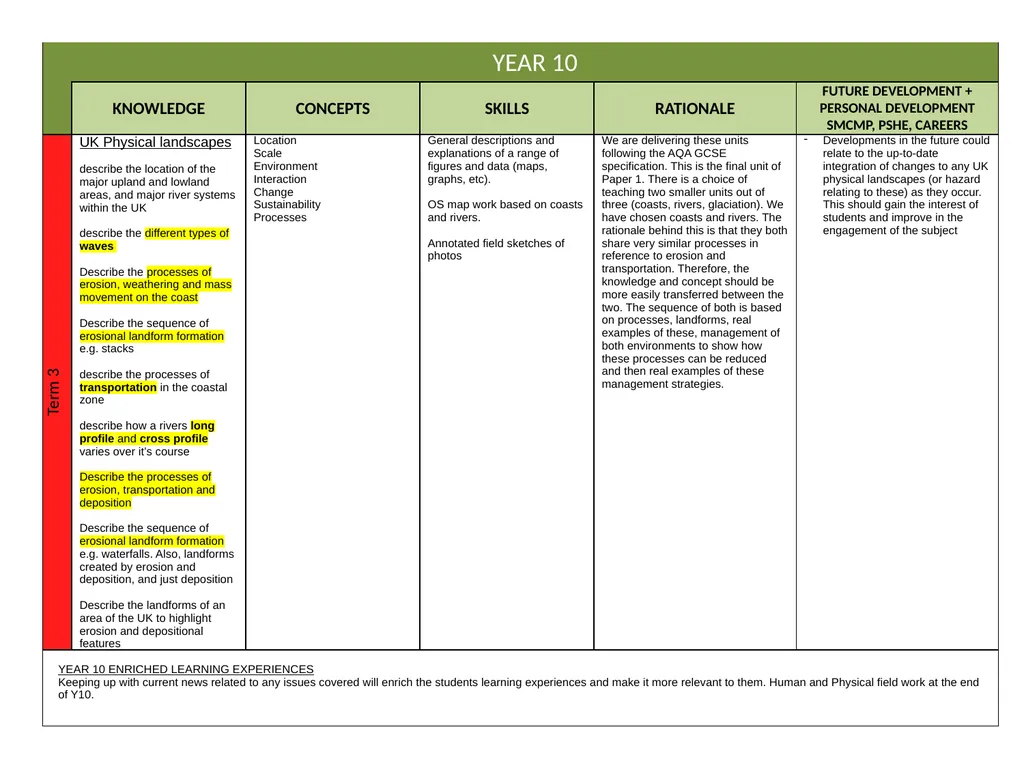
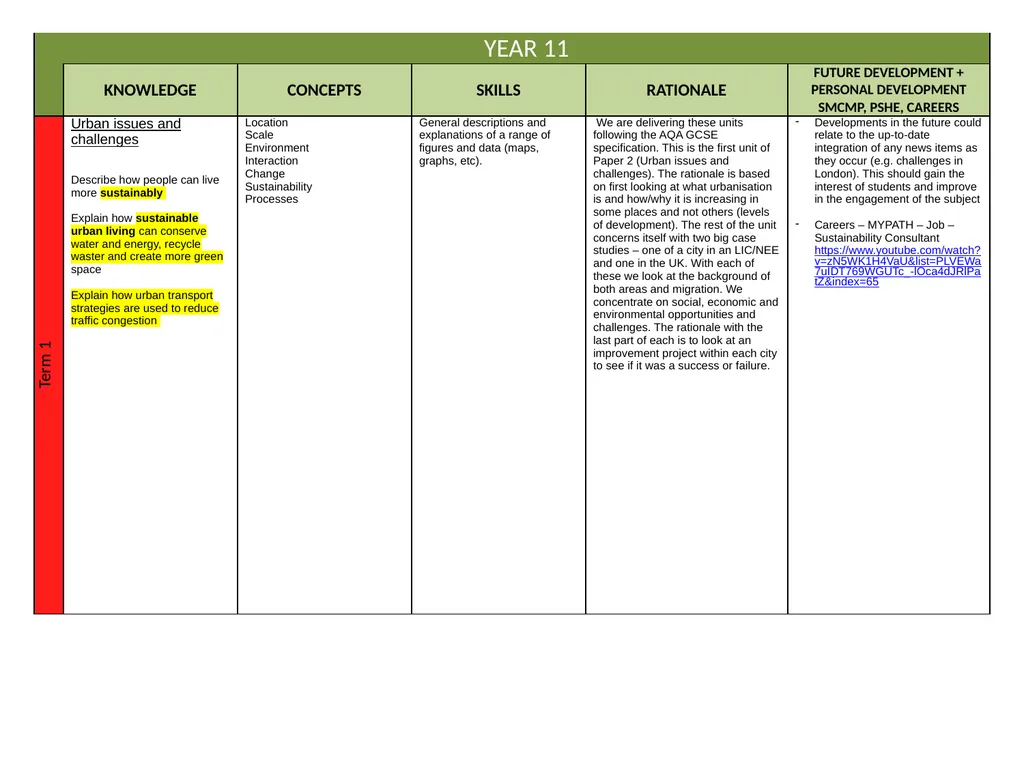
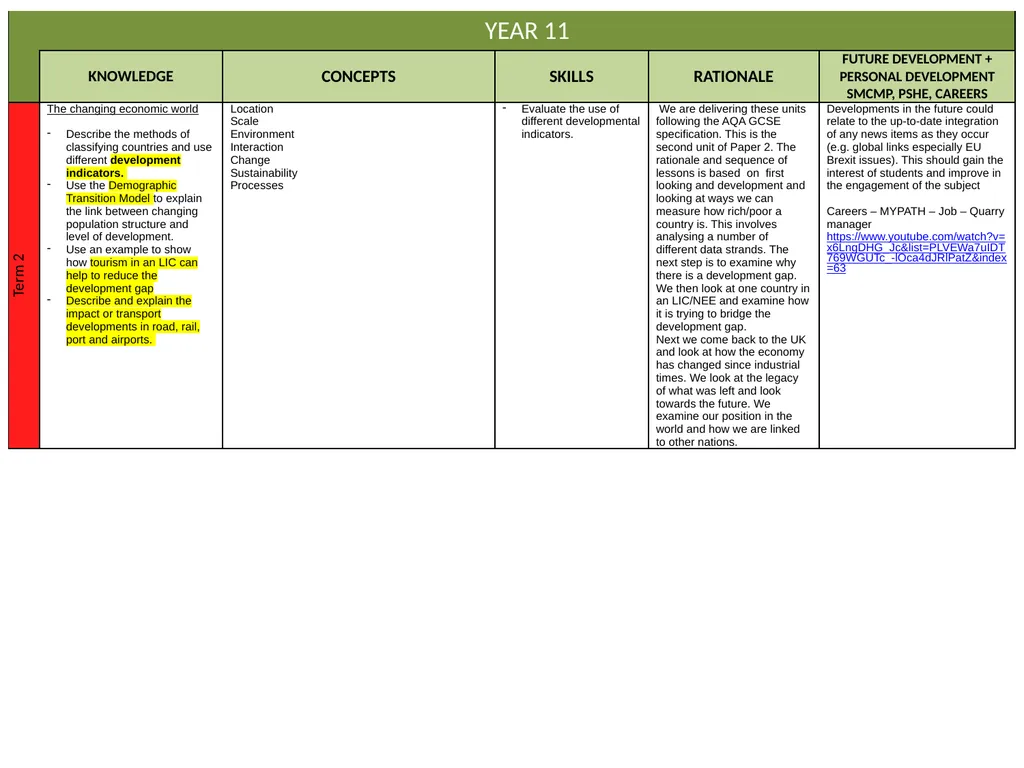
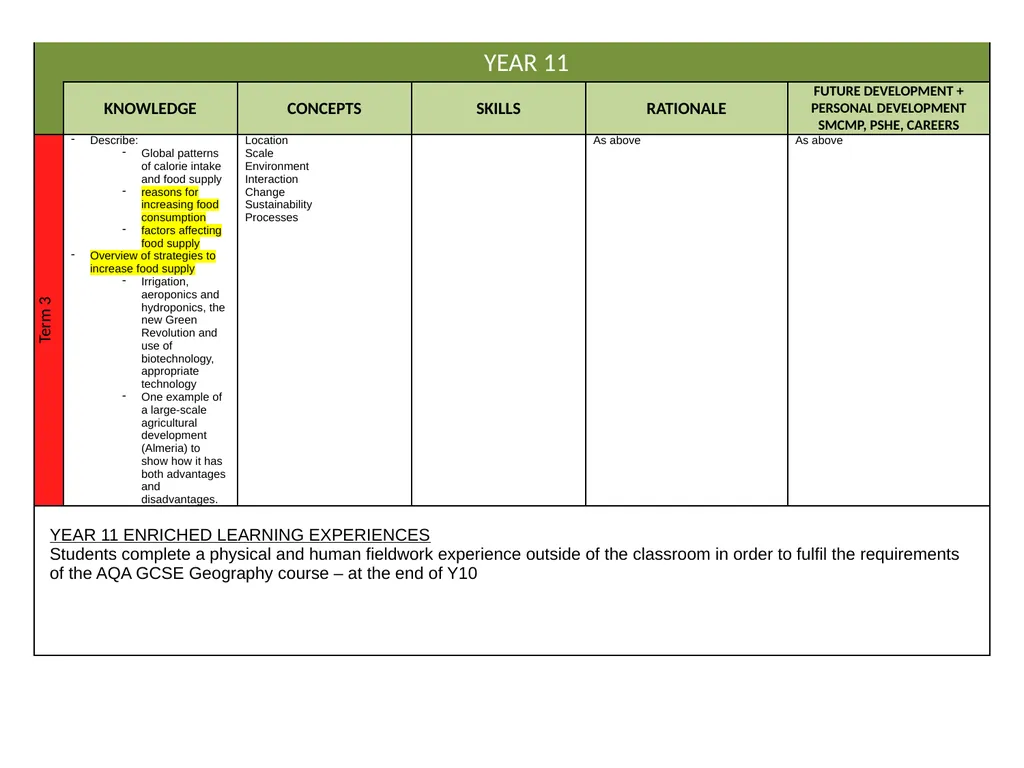
In KS4, we spend Y10 and 11 delivering the entire AQA GCSE course. There are also opportunities to work and refine exam technique through stringent approaches to exam questions. This, coupled with DTT, is designed to improve students ability to access and respond to the GCSE questions in the exam<br>
02
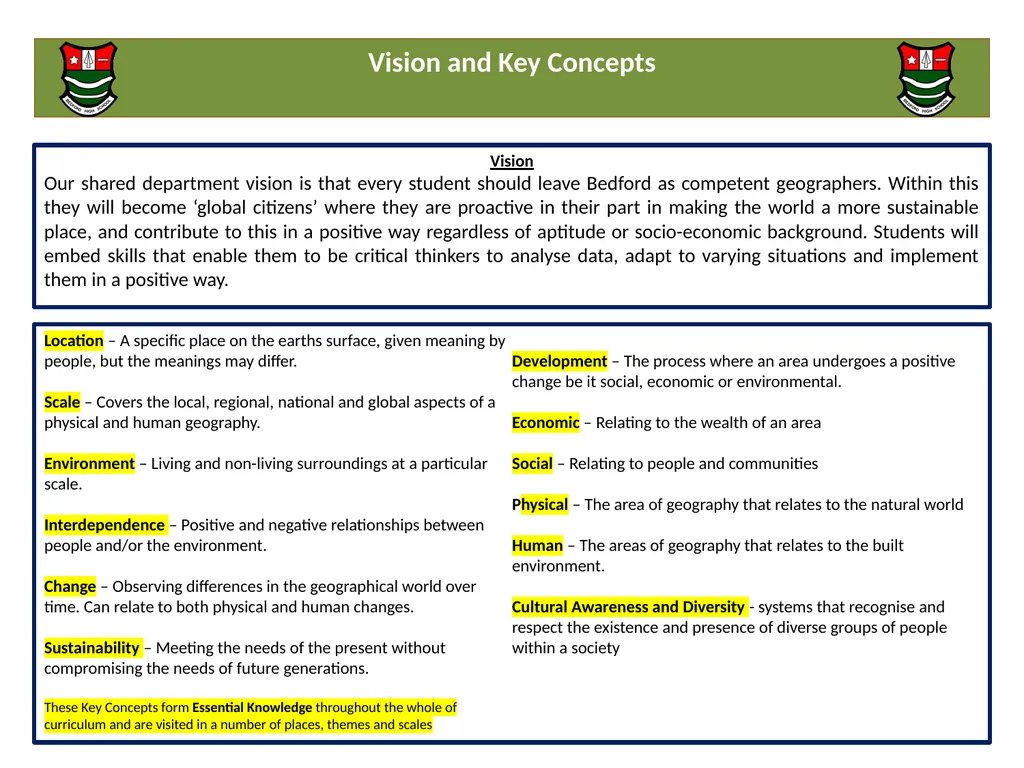
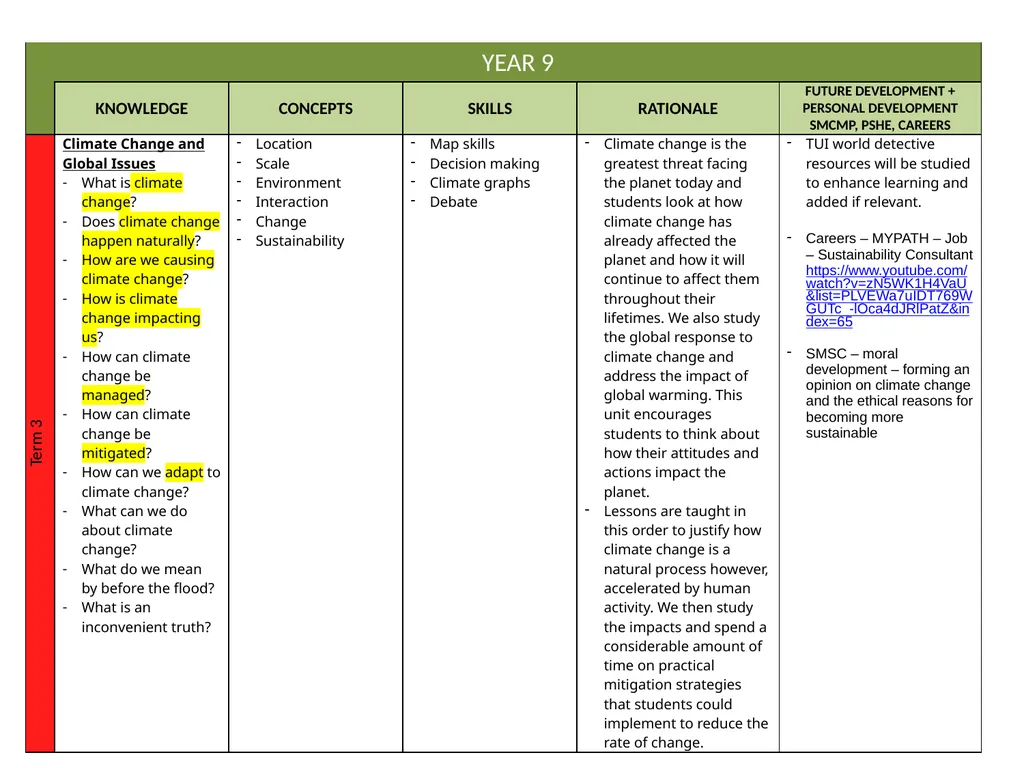
Vision and Key Concepts Location – A specific place on the earths surface, given meaning by people, but the meanings may differ.
Scale – Covers the local, regional, national and global aspects of a physical and human geography.
Environment – Living and non-living surroundings at a particular scale.
Interdependence – Positive and negative relationships between people and/or the environment.
Change – Observing differences in the geographical world over time. Can relate to both physical and human changes.
Sustainability – Meeting the needs of the present without compromising the needs of future generations.
These Key Concepts form Essential Knowledge throughout the whole of curriculum and are visited in a number of places, themes and scales
Development – The process where an area undergoes a positive change be it social, economic or environmental.
Economic – Relating to the wealth of an area
Social – Relating to people and communities
Physical – The area of geography that relates to the natural world
Human – The areas of geography that relates to the built environment.
Cultural Awareness and Diversity - systems that recognise and respect the existence and presence of diverse groups of people within a society Vision
Our shared department vision is that every student should leave Bedford as competent geographers. Within this they will become ‘global citizens’ where they are proactive in their part in making the world a more sustainable place, and contribute to this in a positive way regardless of aptitude or socio-economic background. Students will embed skills that enable them to be critical thinkers to analyse data, adapt to varying situations and implement them in a positive way.<br>