04
Data management problems Redundancy
Inconsistent representations
Multiple definitions of data items
Essential data missing
Inaccurate or incomplete data
Uncaptured data
Data that cannot be located 4<br>
05
Goals of data management Enable clients and customers to access the data they need in the most suitable format
Maintain data integrity 5<br>
06
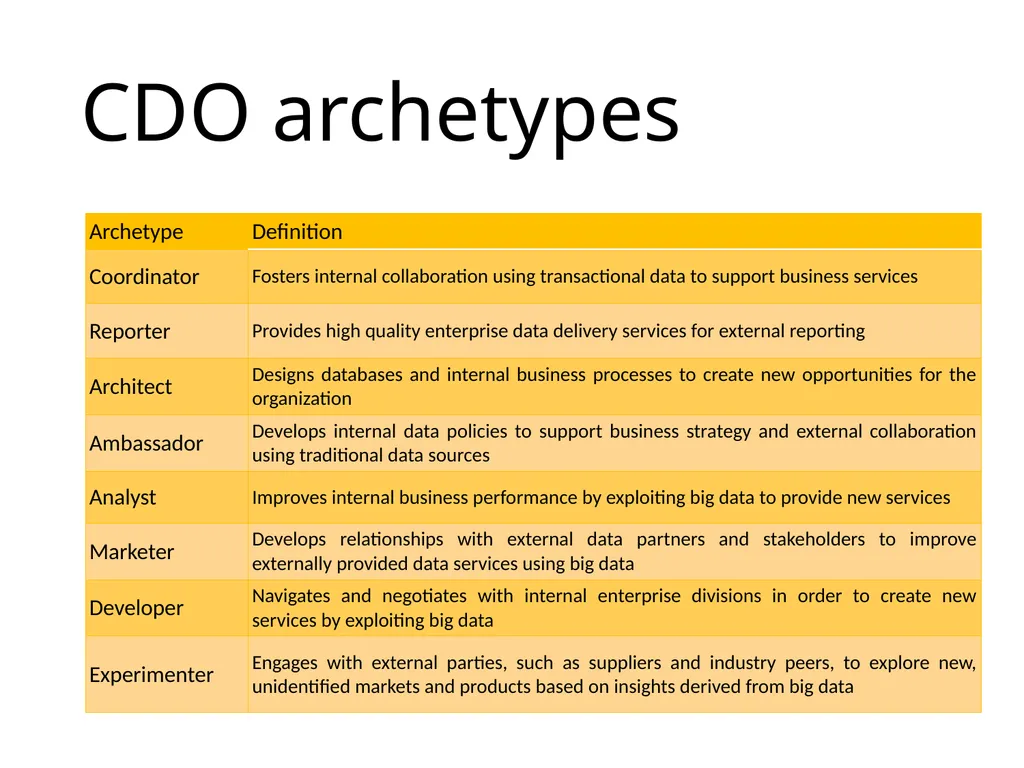
Chief Data Officer (CDO) A new C-level position
Responsible for the strategic management of data systems and ensuring that the organization fully seizes data-driven opportunities
In 2003, Capital One was perhaps to first firm to appoint a CDO 6<br>
07
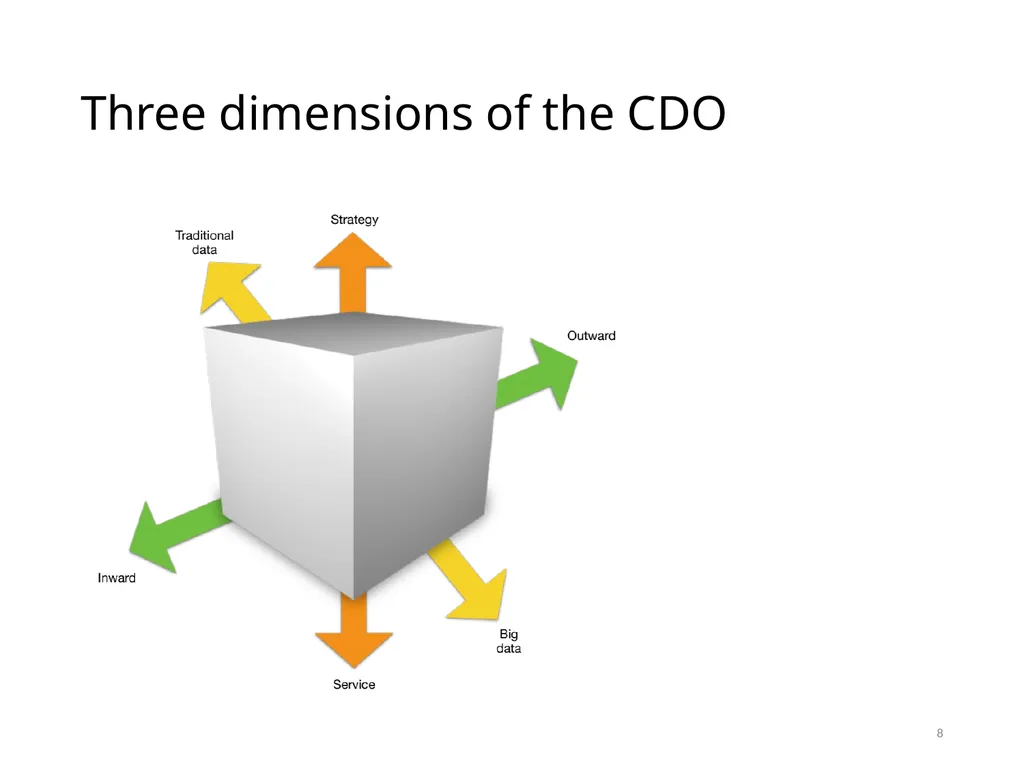
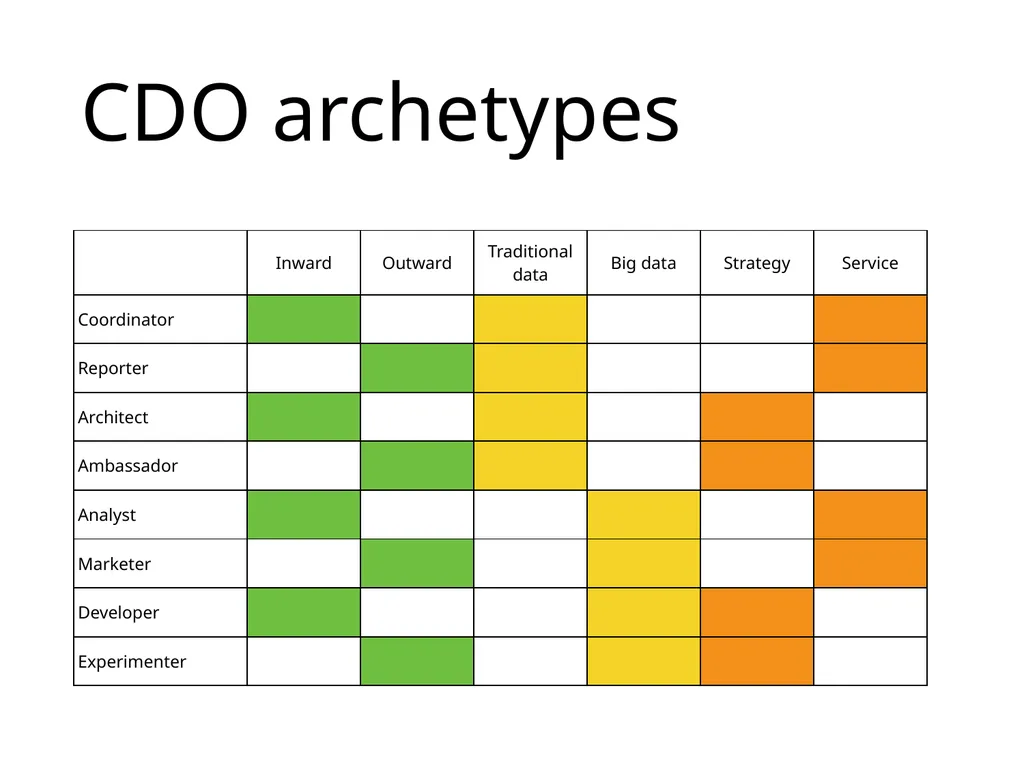
CDO role dimensions Collaboration direction
Inward or outward
Data management focus
Traditional transaction or big data
Value orientation
Service or strategy 7<br>
08
Three dimensions of the CDO 8<br>
09
Inward collaboration Initiatives might include developing data quality assessment methods, establishing data products standards, creating procedures for managing metadata, and establishing data governance
The goal is to ensure consistent data delivery and quality inside the organization 9<br>
10
Outward collaboration An outwardly-focused CDO will strive to cooperate with an organization’s external stakeholders
One CDO led a program for “global unique product identification” to improve collaboration with external global partners
Another might pay attention to improving the quality of data supplied to external partners 10<br>
11
Traditional data management Traditional data are still the foundation of many organization’s operations
There remains in many firms a need for a CDO with a transactional data orientation
Traditional data are typically managed with a relational databases 11<br>
12
Big data management Big data promises opportunities for improving operations or developing new business strategies based on analyses and insights not available from traditional data
A CDO attending to big data can provide leadership in helping a business gain deeper knowledge of its key stakeholders 12<br>
13
Service orientation If the top management team is mainly concerned with oversight and accountability, then the CDO should pay attention to improving existing data-related processes 13<br>
14
Strategy orientation If the senior team actively seeks new data-driven strategic value, then the CDO needs to be similarly aligned and might look at how to exploit digit data streams
One strategy-directed CDO, led an initiative to identify new information products for advancing the firm’s position in the financial industry 14<br>
17
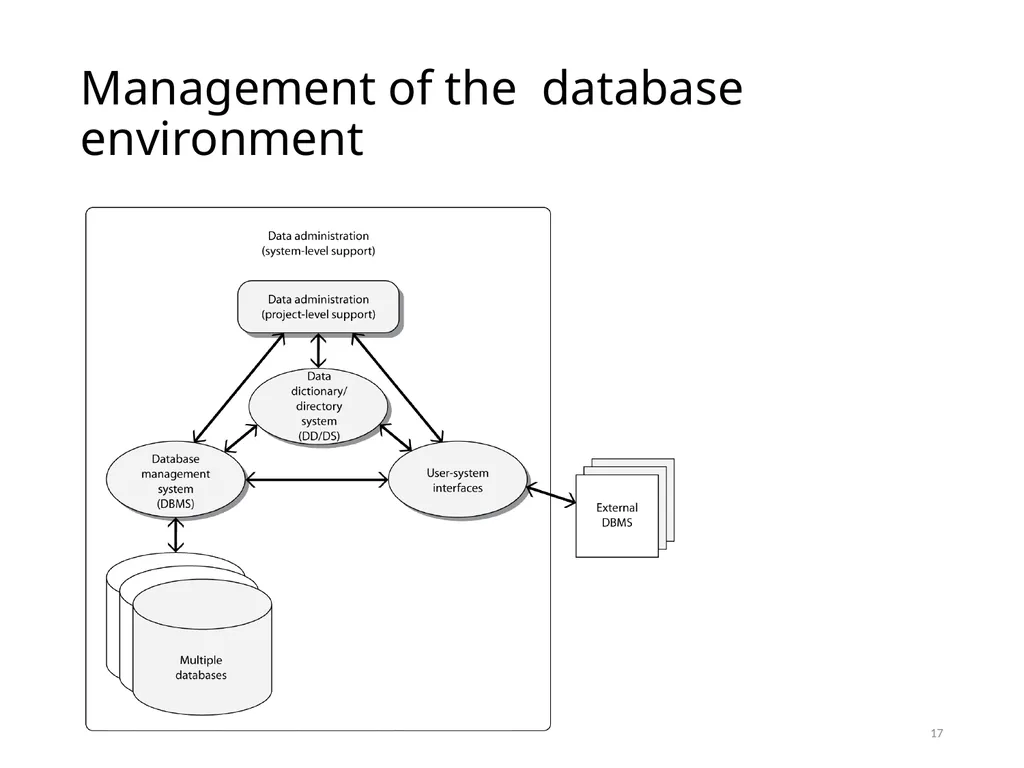
Management of the database environment 17<br>
18
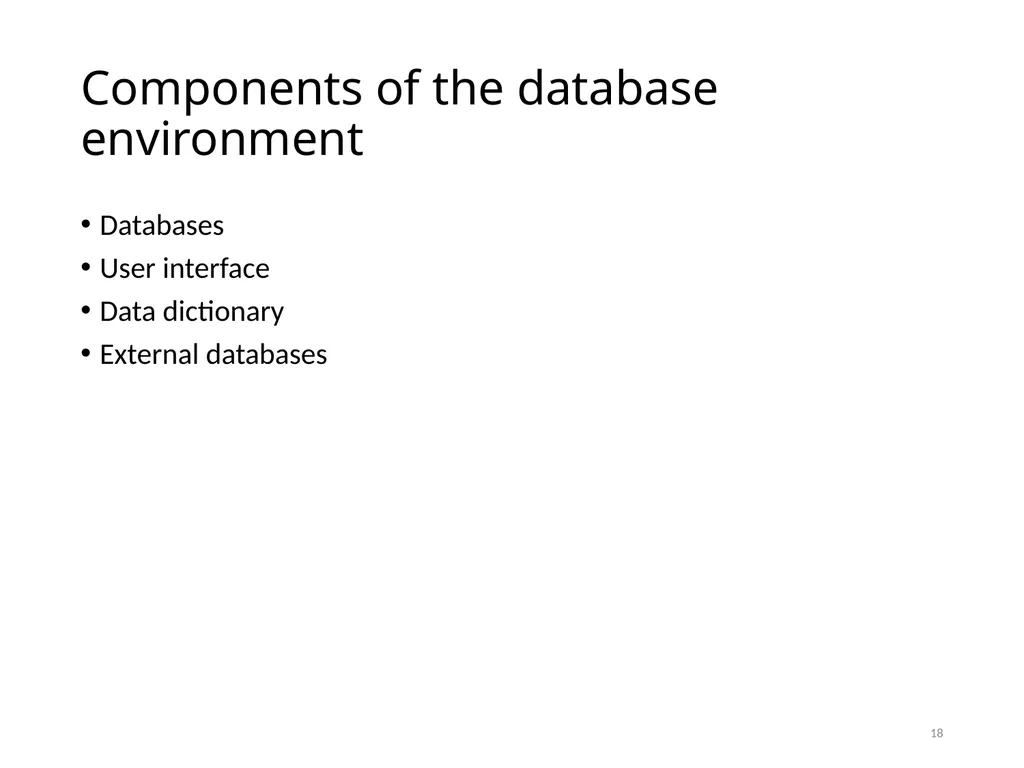
Components of the database environment Databases
User interface
Data dictionary
External databases 18<br>
19
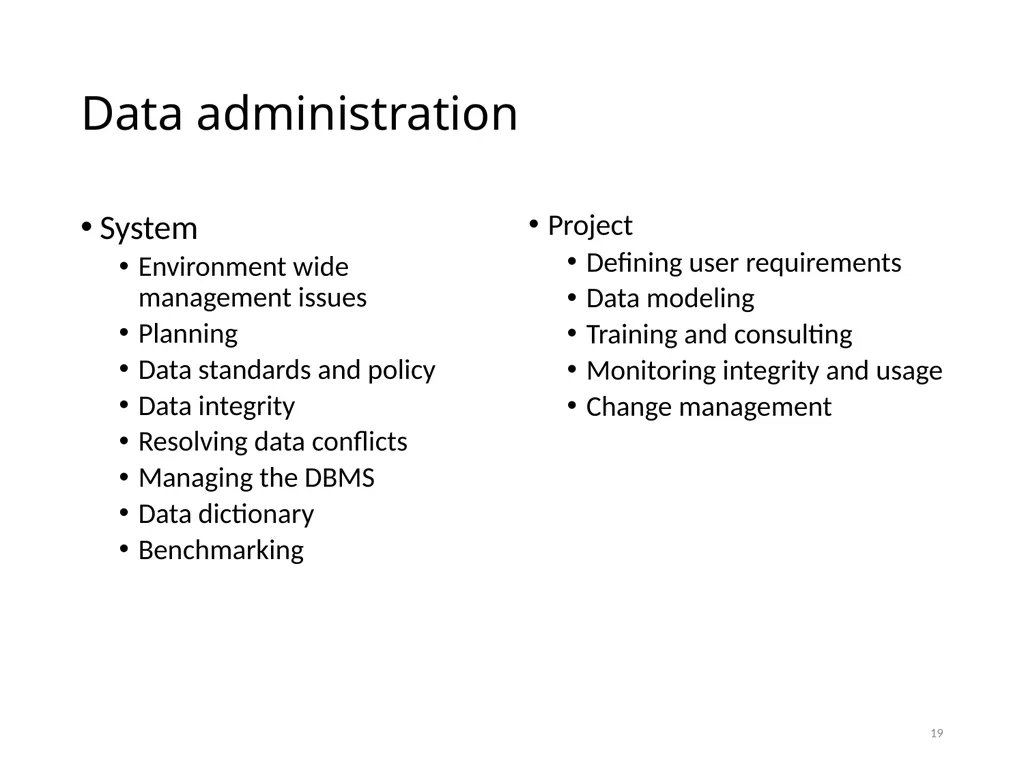
Data administration System
Environment wide management issues
Planning
Data standards and policy
Data integrity
Resolving data conflicts
Managing the DBMS
Data dictionary
Benchmarking Project
Defining user requirements
Data modeling
Training and consulting
Monitoring integrity and usage
Change management 19<br>
20
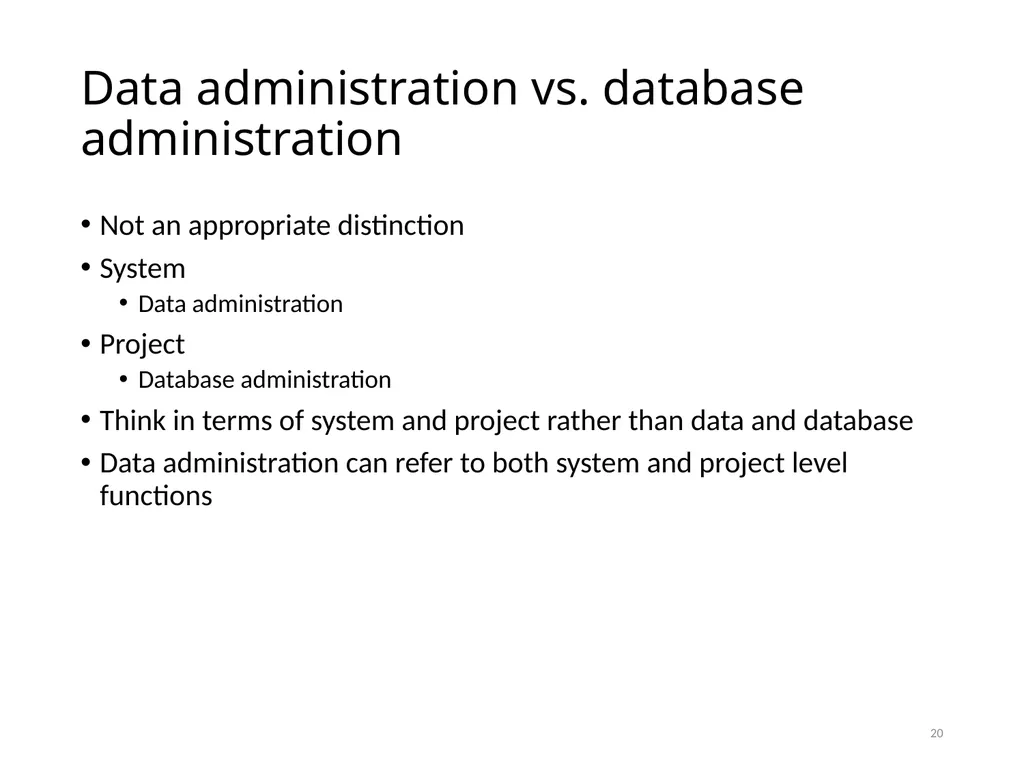
Data administration vs. database administration Not an appropriate distinction
System
Data administration
Project
Database administration
Think in terms of system and project rather than data and database
Data administration can refer to both system and project level functions 20<br>
21
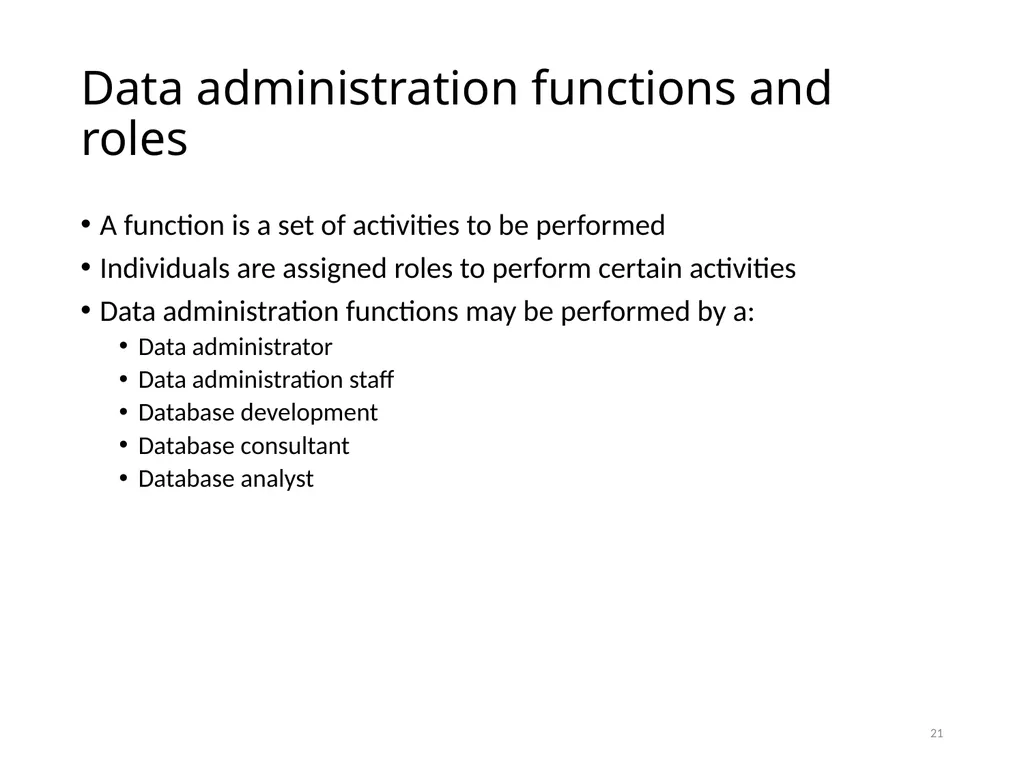
Data administration functions and roles A function is a set of activities to be performed
Individuals are assigned roles to perform certain activities
Data administration functions may be performed by a:
Data administrator
Data administration staff
Database development
Database consultant
Database analyst 21<br>
22
Data steward Responsible for managing all corporate data for a critical business entity or product
Cuts across functional boundaries
Aligns data management with organizational goals 22<br>
23
Database use levels Personal
Workgroup
Organizational
More users means greater complexity 23<br>
24
Personal databases Notebook computers
Personal digital assistants (PDAs)
Personal information managers (PIMs)
Cell phones
Music players (iPod)
Information appliances 24<br>
25
Workgroup and �organizational databases Shared by many people
Greater complexity
Require more planning and co-ordination than personal databases 25<br>
26
System level data administration Planning
Development of data standards and policies
Data integrity
Data conflict resolution
Managing the DBMS
Establishing and maintaining the Data Dictionary
Selection of hardware and software
Benchmarking
Managing external databases
Internal marketing 26<br>
27
Selection of hardware �and software How many users will simultaneously access the database?
Will the database need to be geographically distributed?
What is the maximum size of the database?
How many transactions per second can the DBMS handle?
What kind of support for on-line transaction processing is available?
What are the initial and ongoing costs of using the product?
What is the extent of training required, will it be provided, and what are the associated costs? 27<br>
28
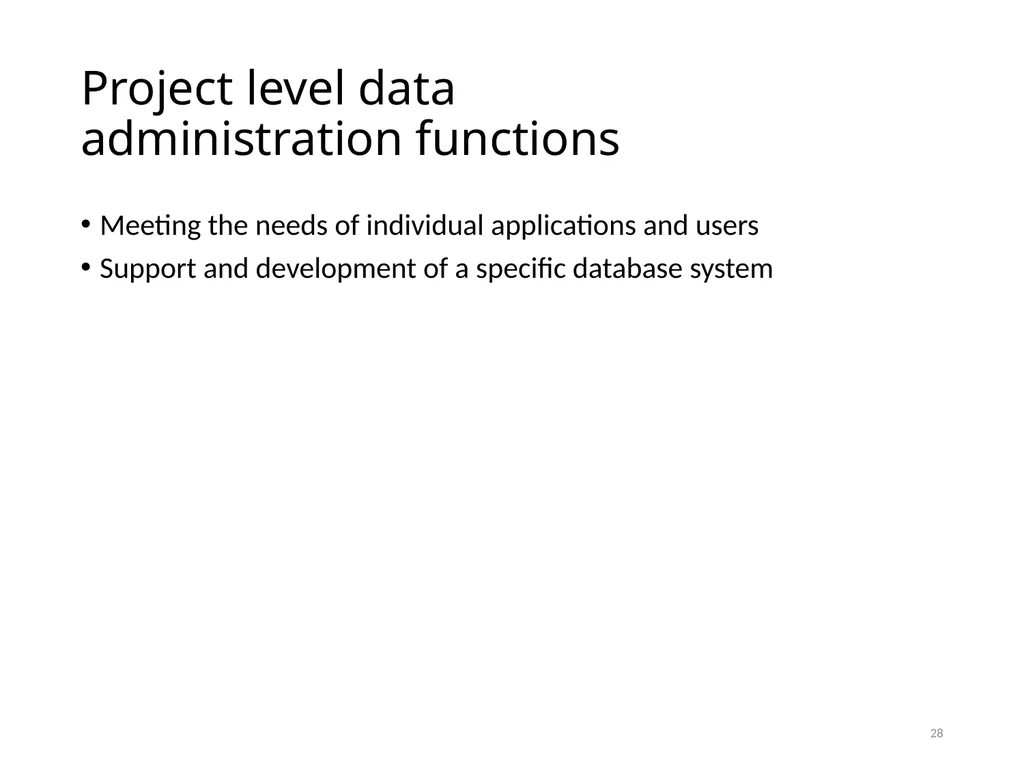
Project level data �administration functions Meeting the needs of individual applications and users
Support and development of a specific database system 28<br>
29
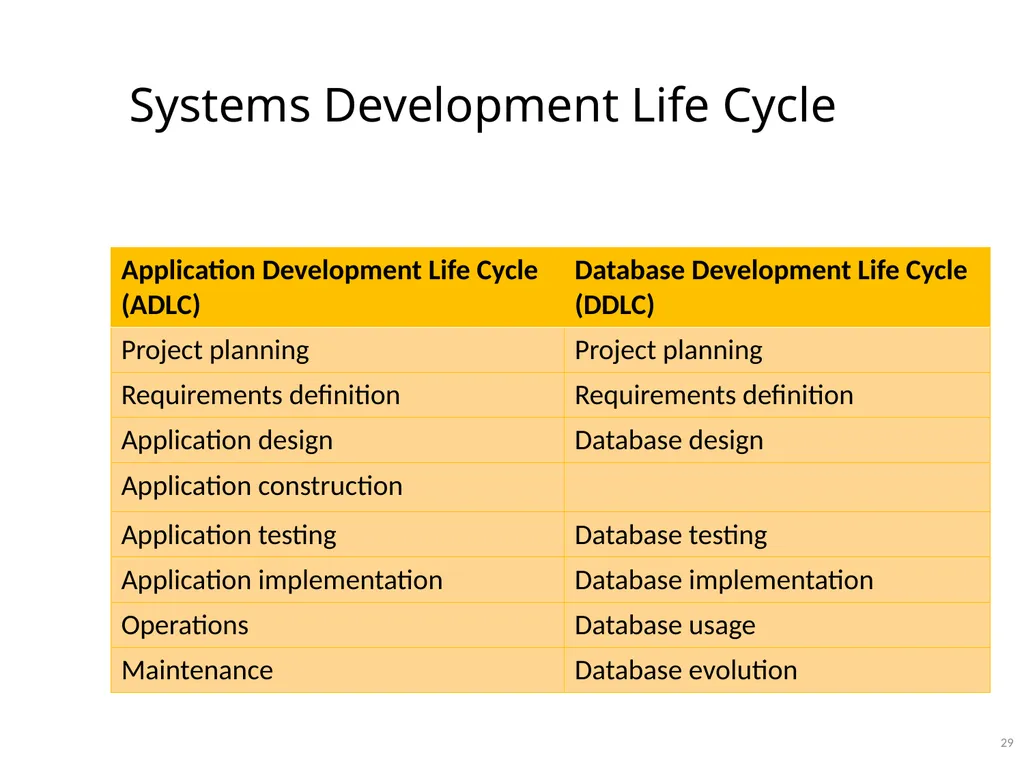
Systems Development Life Cycle 29<br>
30
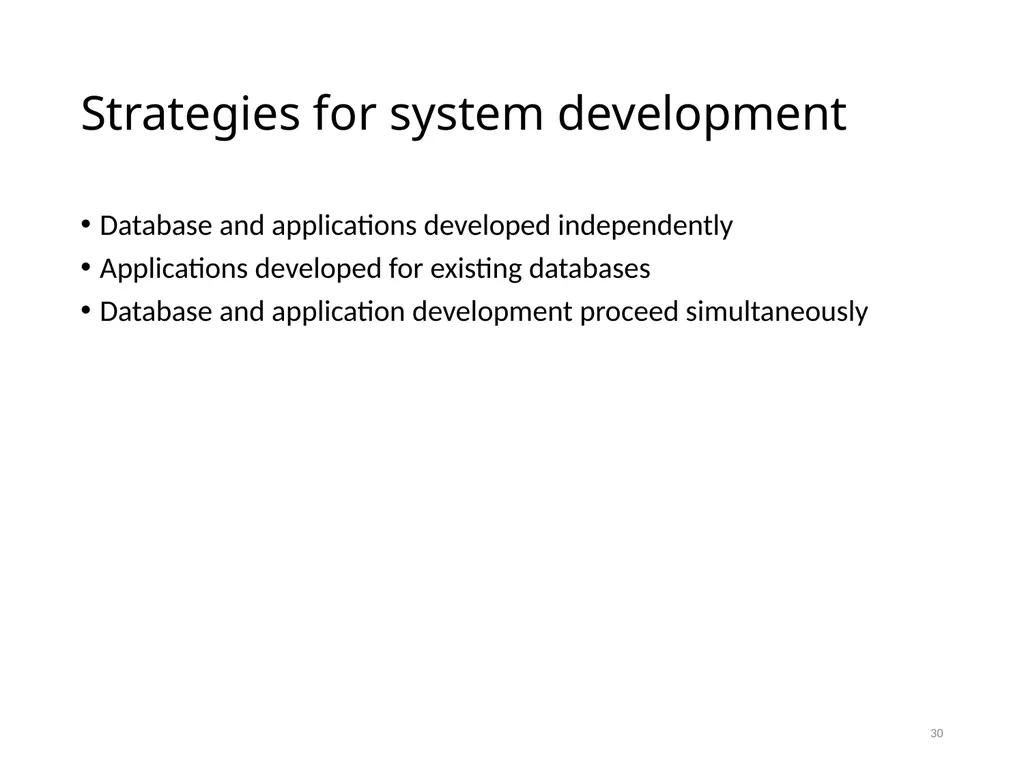
Strategies for system development Database and applications developed independently
Applications developed for existing databases
Database and application development proceed simultaneously 30<br>
31
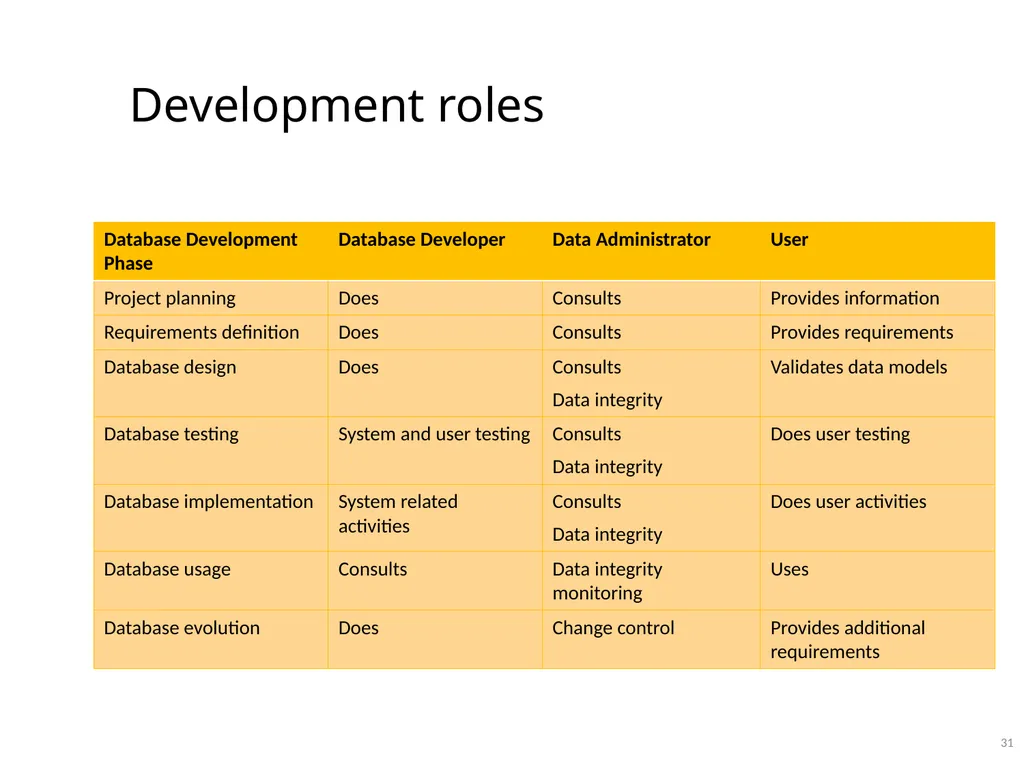
Development roles 31<br>
32
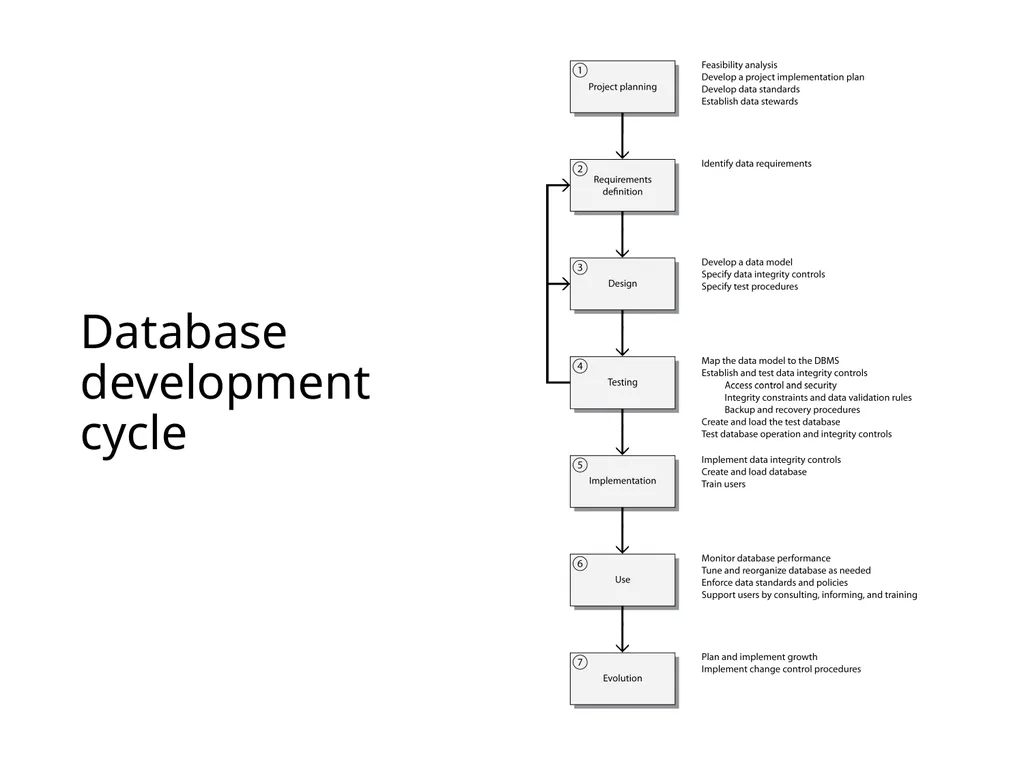
Database development cycle<br>
33
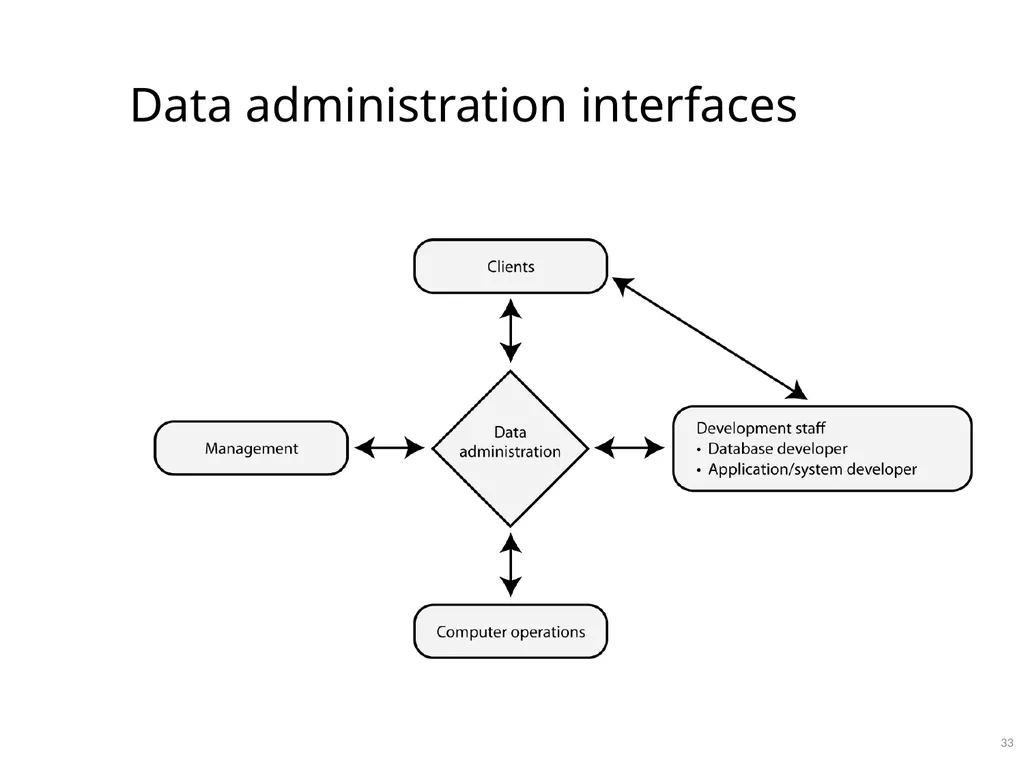
Data administration interfaces 33<br>
34
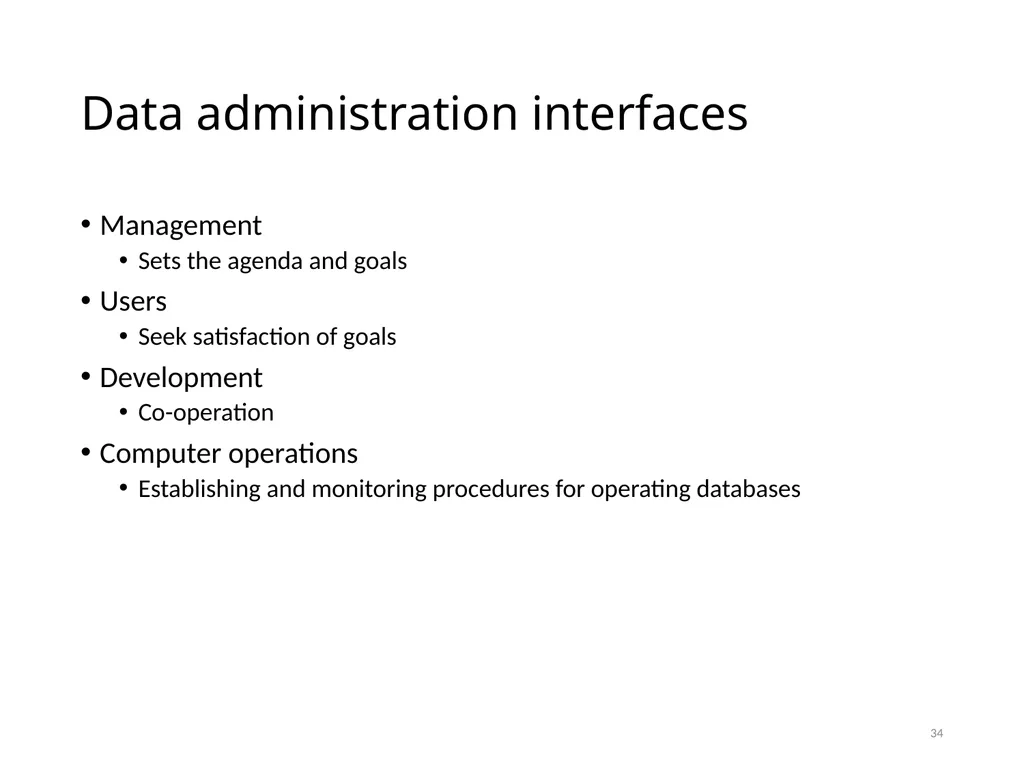
Data administration interfaces Management
Sets the agenda and goals
Users
Seek satisfaction of goals
Development
Co-operation
Computer operations
Establishing and monitoring procedures for operating databases 34<br>
35
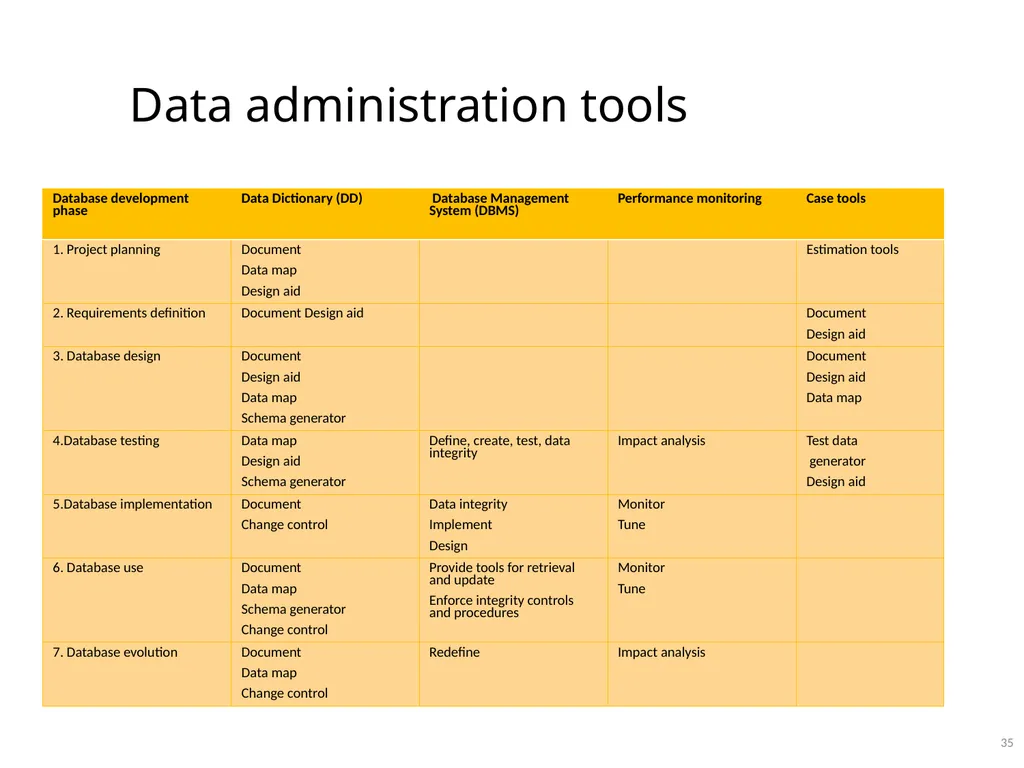
Data administration tools 35<br>
36
Use of the data dictionary Documentation support
Data maps
Design aid
Schema generation
Change control 36<br>
37
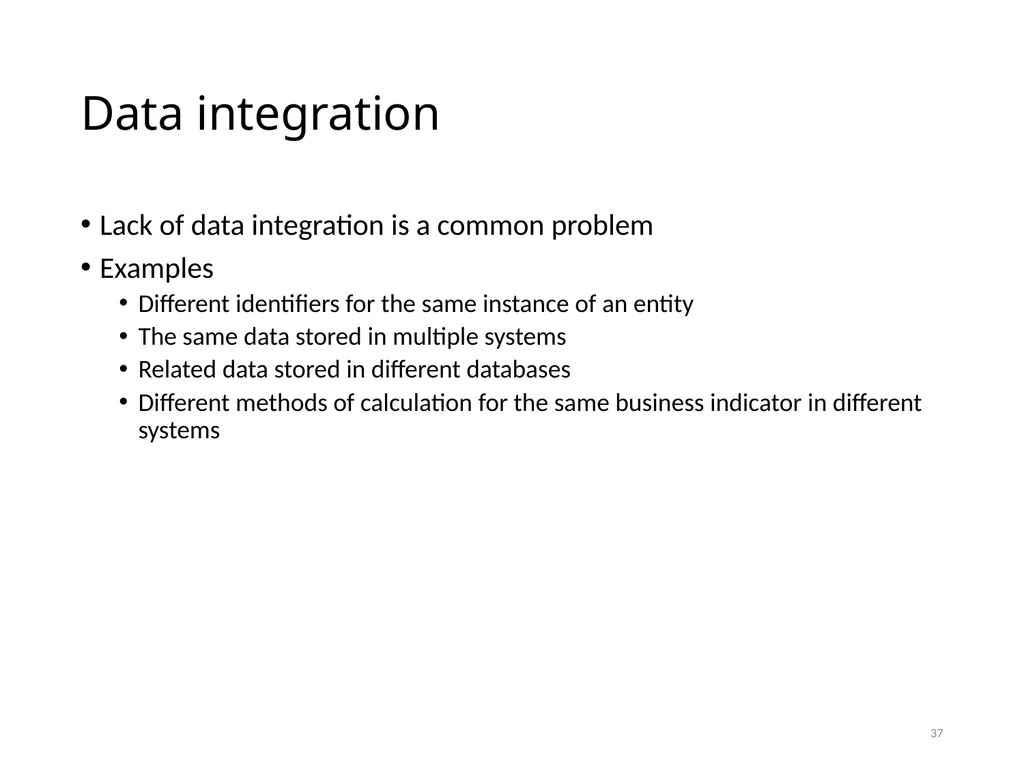
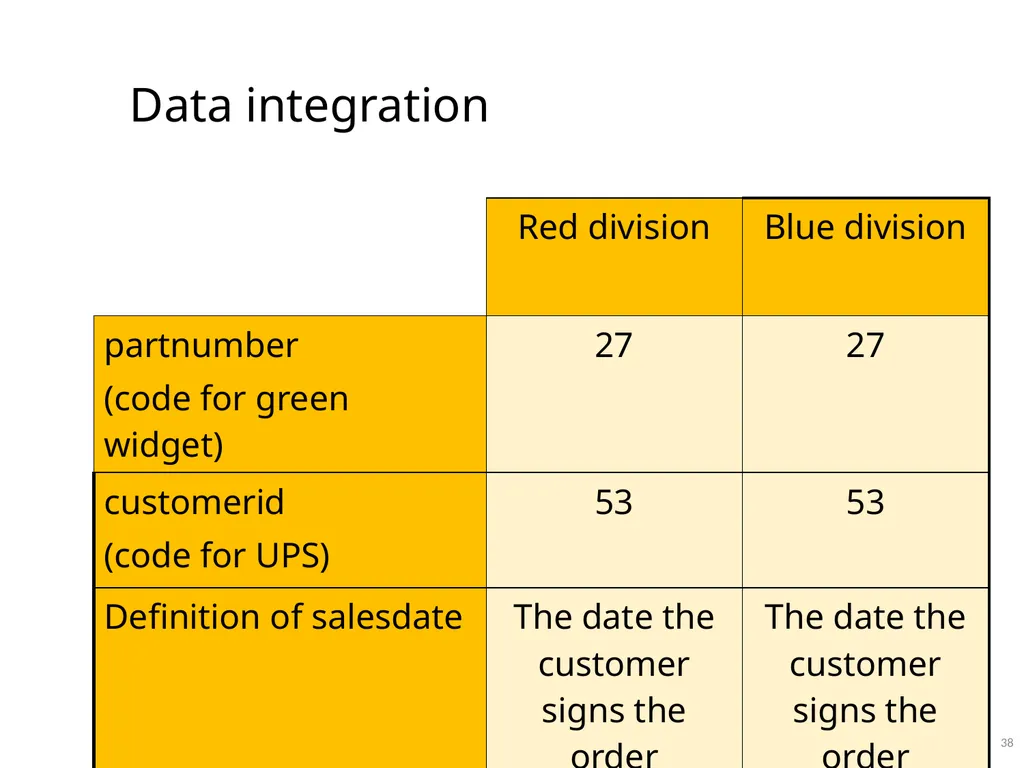
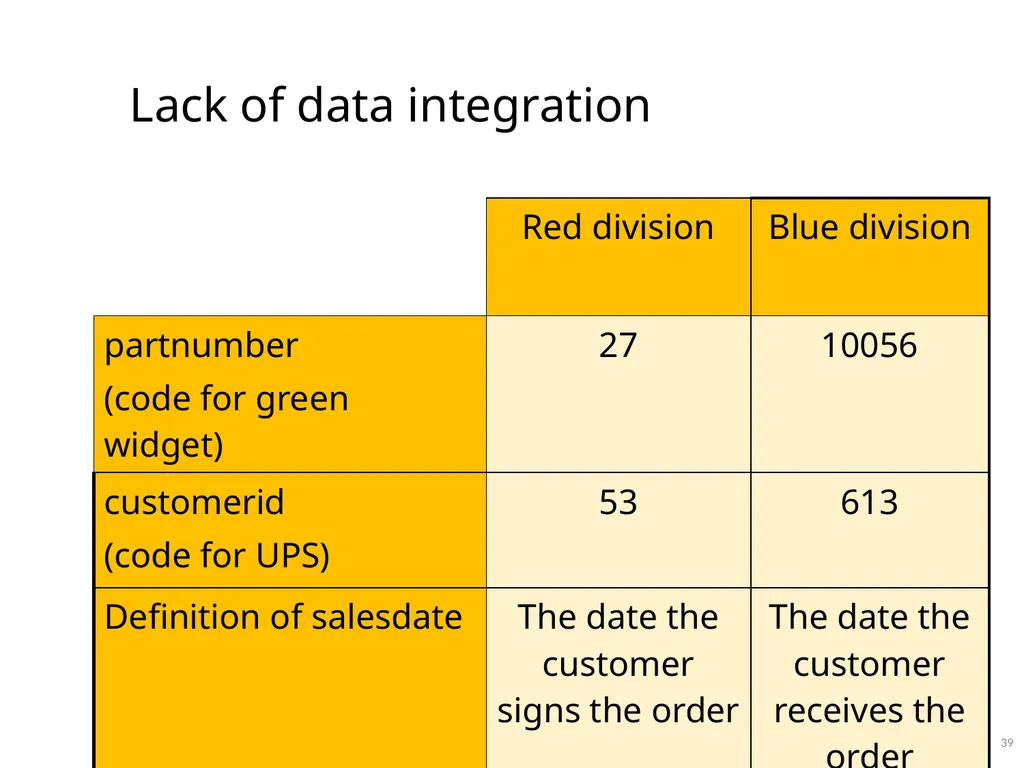
Data integration Lack of data integration is a common problem
Examples
Different identifiers for the same instance of an entity
The same data stored in multiple systems
Related data stored in different databases
Different methods of calculation for the same business indicator in different systems 37<br>
38
Data integration 38<br>
39
Lack of data integration 39<br>
40
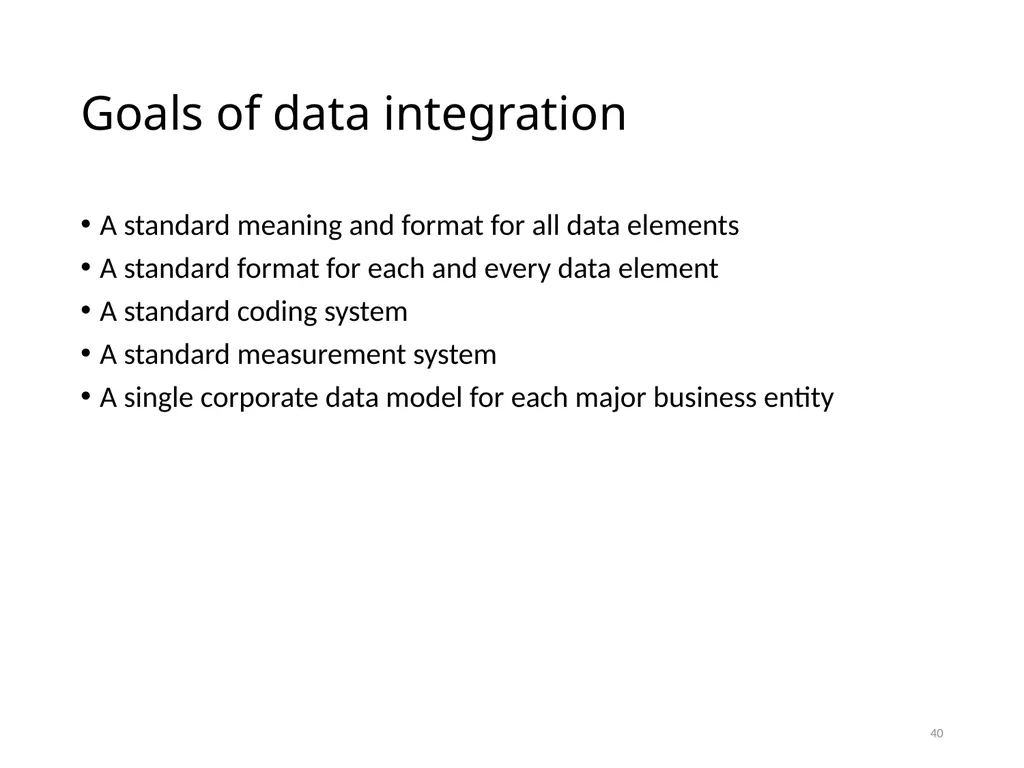
Goals of data integration A standard meaning and format for all data elements
A standard format for each and every data element
A standard coding system
A standard measurement system
A single corporate data model for each major business entity 40<br>
41
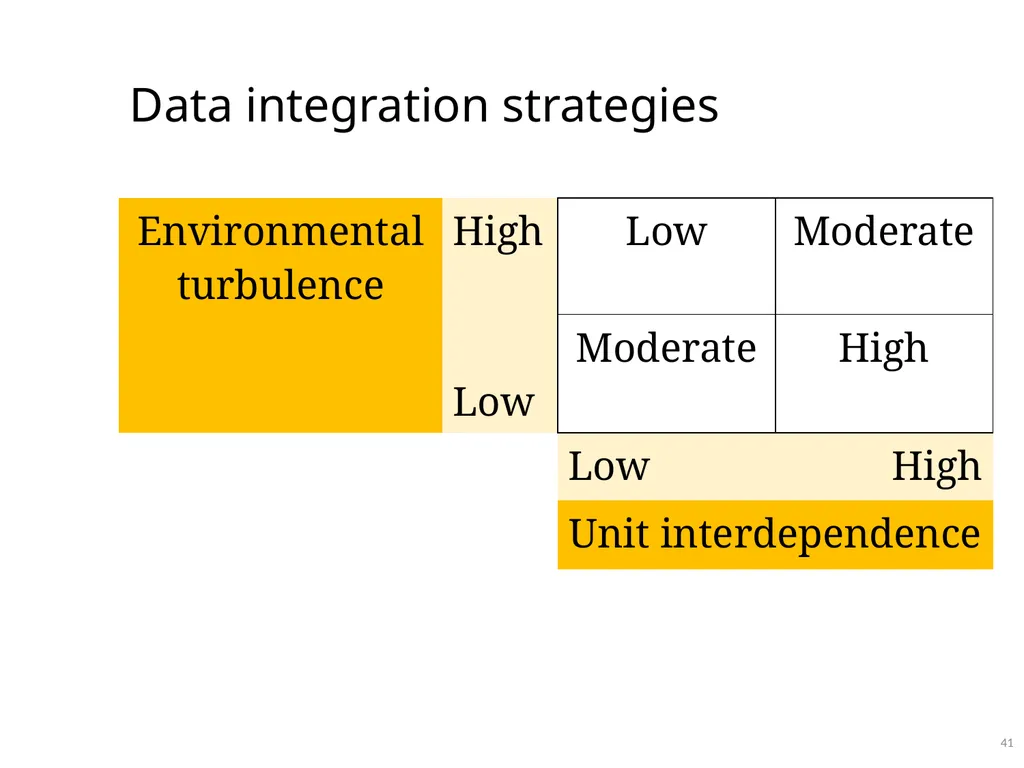
Data integration strategies 41<br>
42
Organizing the data administration function Creation of the function
Selecting staff and assigning roles
Locating the function 42<br>
43
Conclusion Data administration is
Critical to the success of most organizations
Necessary for data-driven decision making
Growing in complexity
Increasingly requires the appointment of a CDO to ensure appropriate strategic attention 43<br>