
DATA VALIDATION-II Consistency check Objectives


Description: DATA VALIDATION-II Consistency check Objectives Ensuring all records meet with editing rules Ensuring there is no unusualunexpected values Checking for whether the data makes sense when variables are tabulated or cross-tabulated How to
Related Topics
Download Presentation
"DATA VALIDATION-II Consistency check Objectives" is the property of its rightful owner. Permission is granted to download and print the materials on this website for personal, non-commercial use only, and to display it on your personal computer provided you do not modify the materials and that you retain all copyright notices contained in the materials. By downloading content from our website, you accept the terms of this agreement.
Presentation Transcript
slide1. DATA VALIDATION-II
Consistency check<br>
slide2. Objectives Ensuring all records meet with editing rules
Ensuring there is no unusual/unexpected values
Checking for whether the data makes sense when variables are tabulated or cross-tabulated<br>
slide3. How to evaluate validation Cross - tabulation between variables
for preliminary analysis of census results, the list of tables should be prepared based on:
Editing rules and relation between variables
Tables should present all possible conditions in data without eliminating any category to verify the results<br>
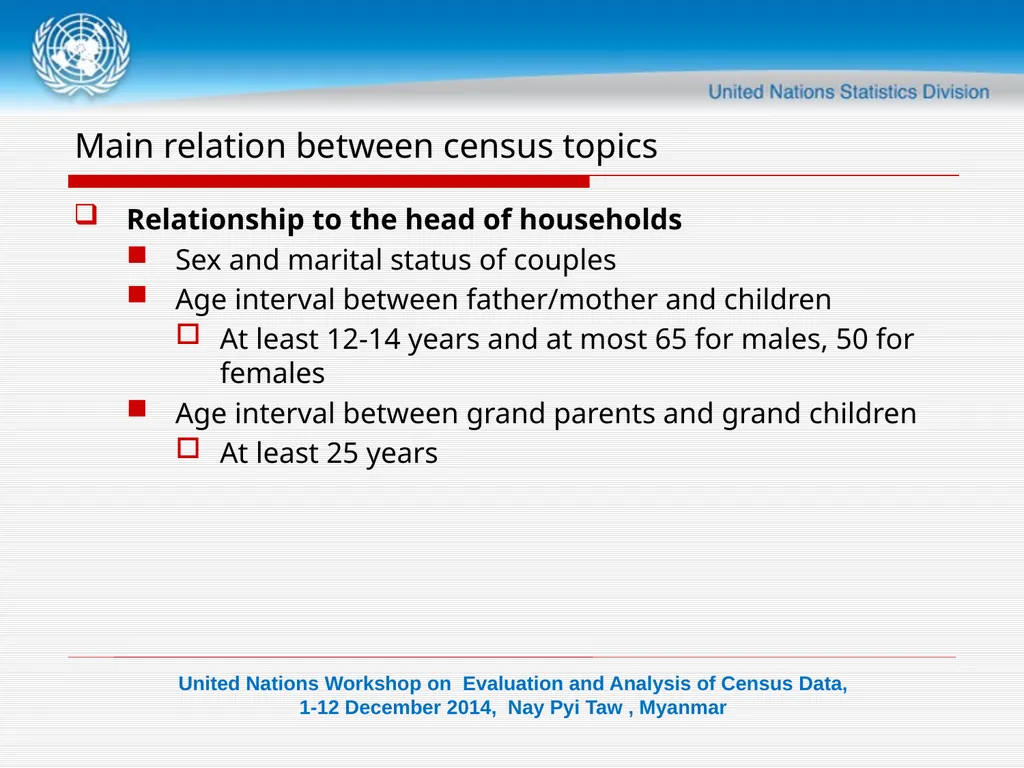
slide4. Main relation between census topics Relationship to the head of households
Sex and marital status of couples
Age interval between father/mother and children
At least 12-14 years and at most 65 for males, 50 for females
Age interval between grand parents and grand children
At least 25 years<br>
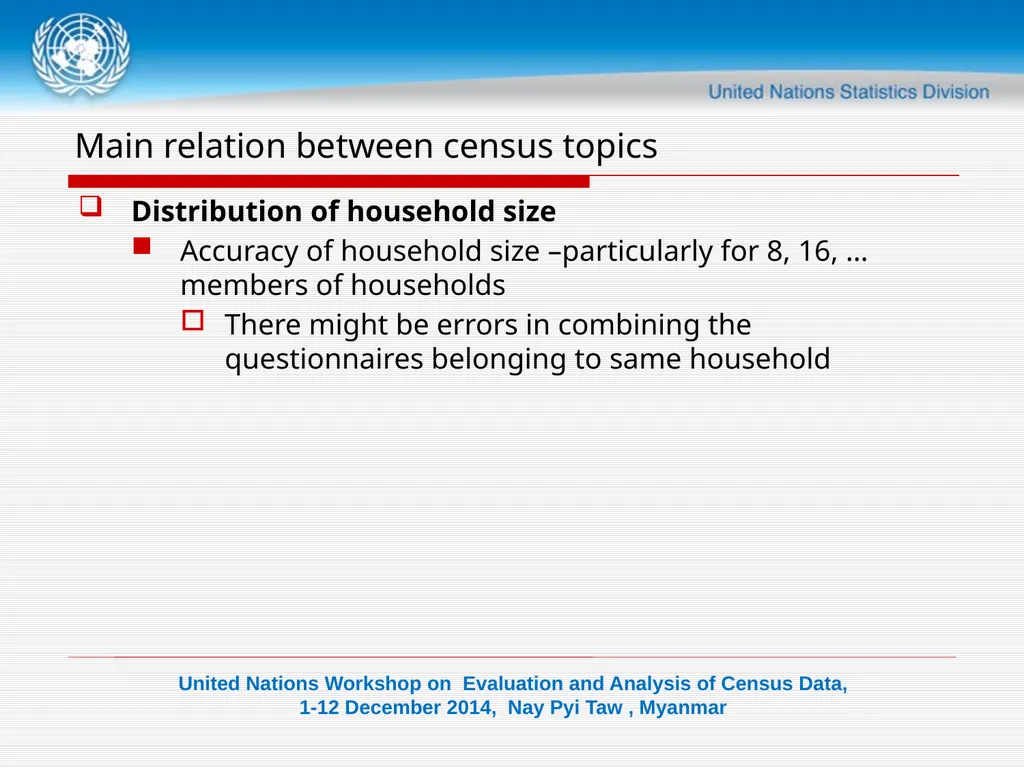
slide5. Main relation between census topics Distribution of household size
Accuracy of household size –particularly for 8, 16, … members of households
There might be errors in combining the questionnaires belonging to same household<br>
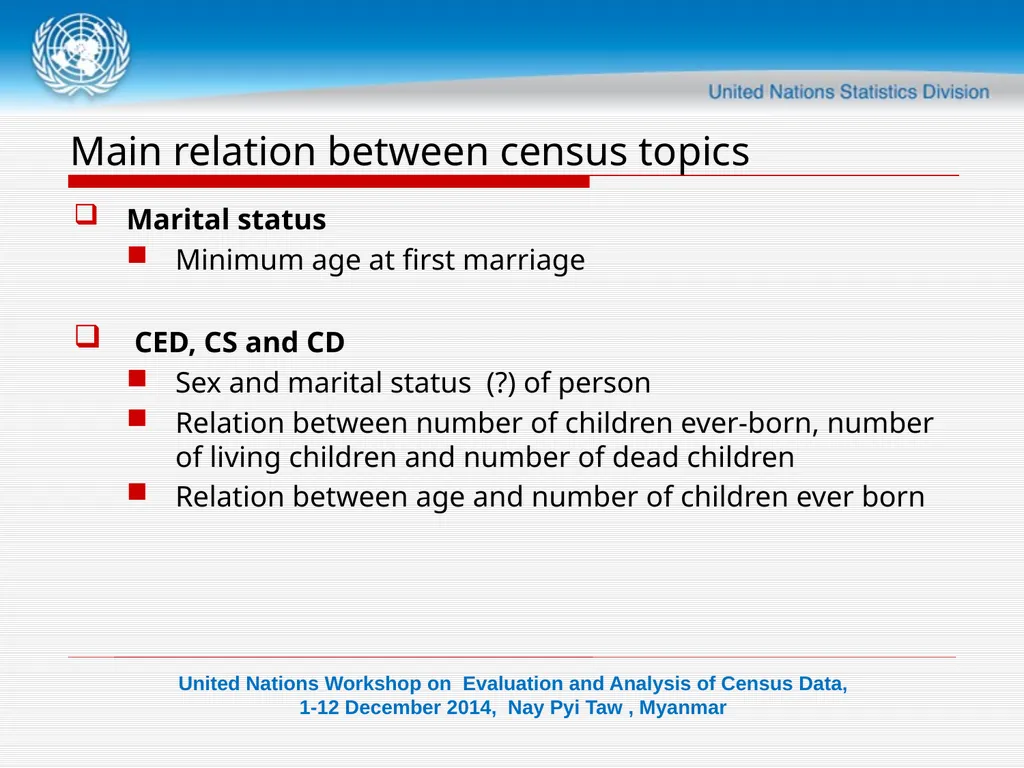
slide6. Marital status
Minimum age at first marriage
CED, CS and CD
Sex and marital status (?) of person
Relation between number of children ever-born, number of living children and number of dead children
Relation between age and number of children ever born Main relation between census topics<br>
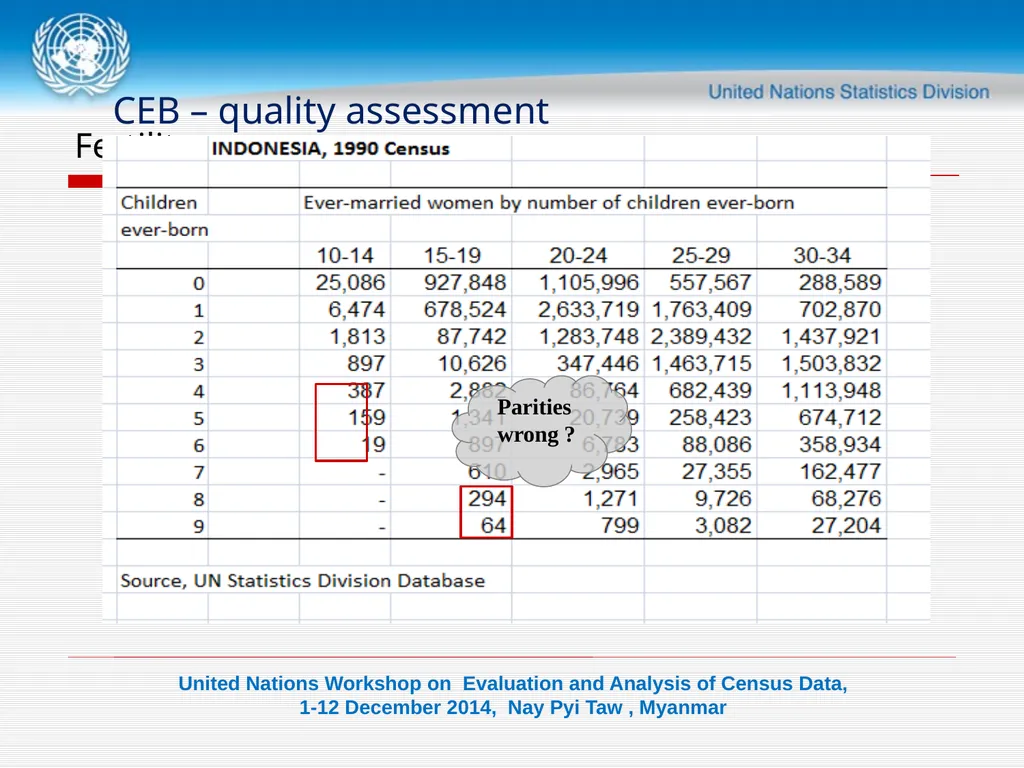
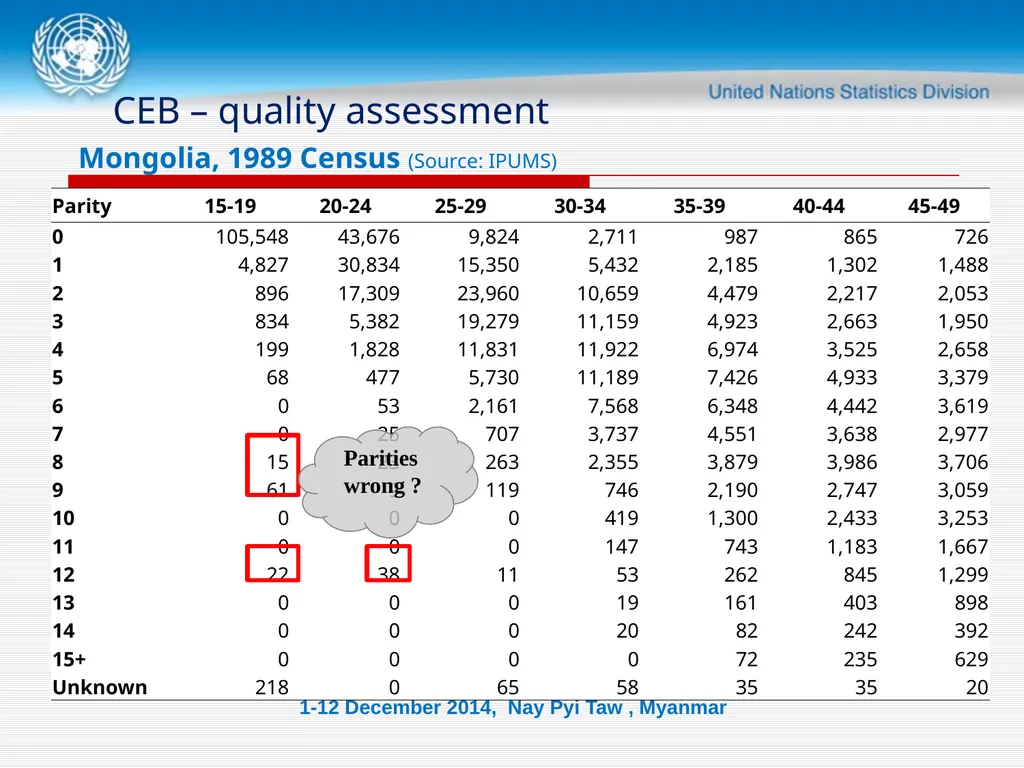
slide7. Fertility Parities wrong ? CEB – quality assessment<br>
slide8. CEB – quality assessment Mongolia, 1989 Census (Source: IPUMS) Parities wrong ?<br>
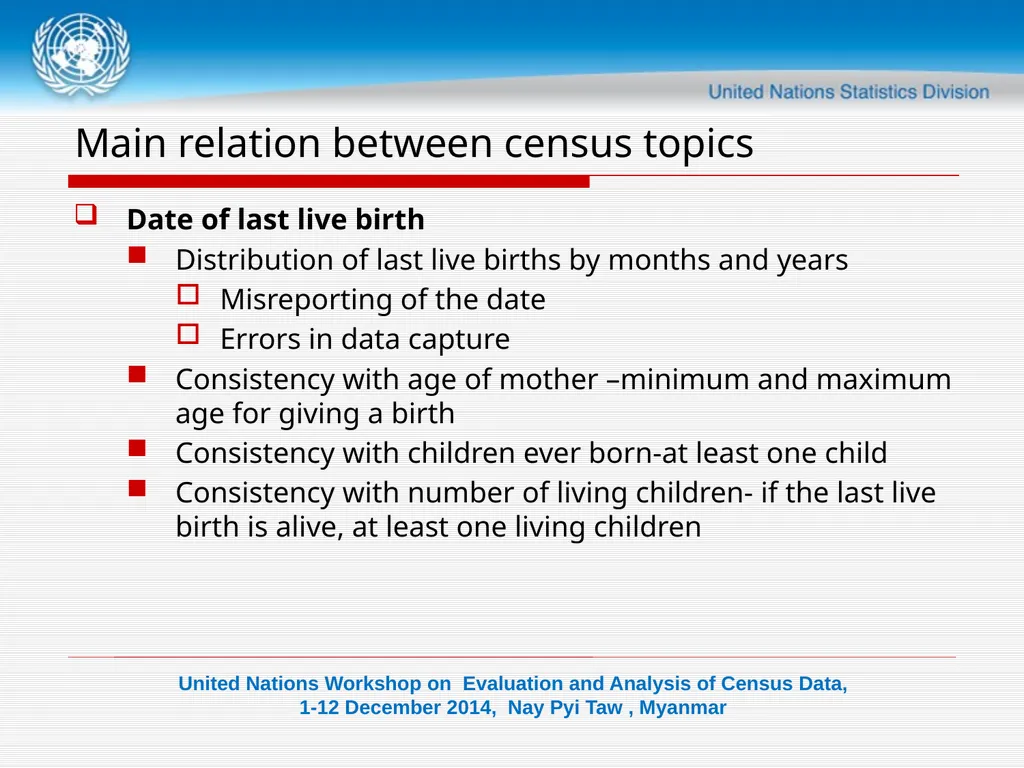
slide9. Date of last live birth
Distribution of last live births by months and years
Misreporting of the date
Errors in data capture
Consistency with age of mother –minimum and maximum age for giving a birth
Consistency with children ever born-at least one child
Consistency with number of living children- if the last live birth is alive, at least one living children Main relation between census topics<br>
slide10. Household deaths
Sex and age of death for maternal mortality
Consistency with the last live birth if the infant is dead Main relation between census topics<br>
slide11. Age at death of children (in month) declared by the mother, Nepal 1975<br>
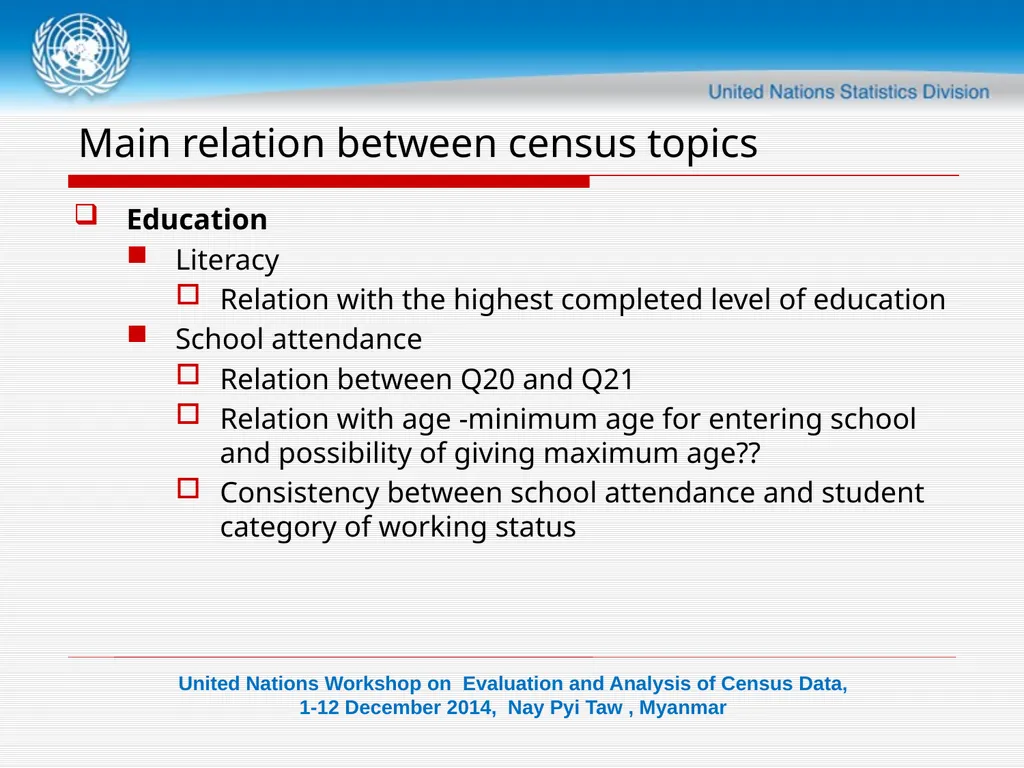
slide12. Education
Literacy
Relation with the highest completed level of education
School attendance
Relation between Q20 and Q21
Relation with age -minimum age for entering school and possibility of giving maximum age??
Consistency between school attendance and student category of working status Main relation between census topics<br>
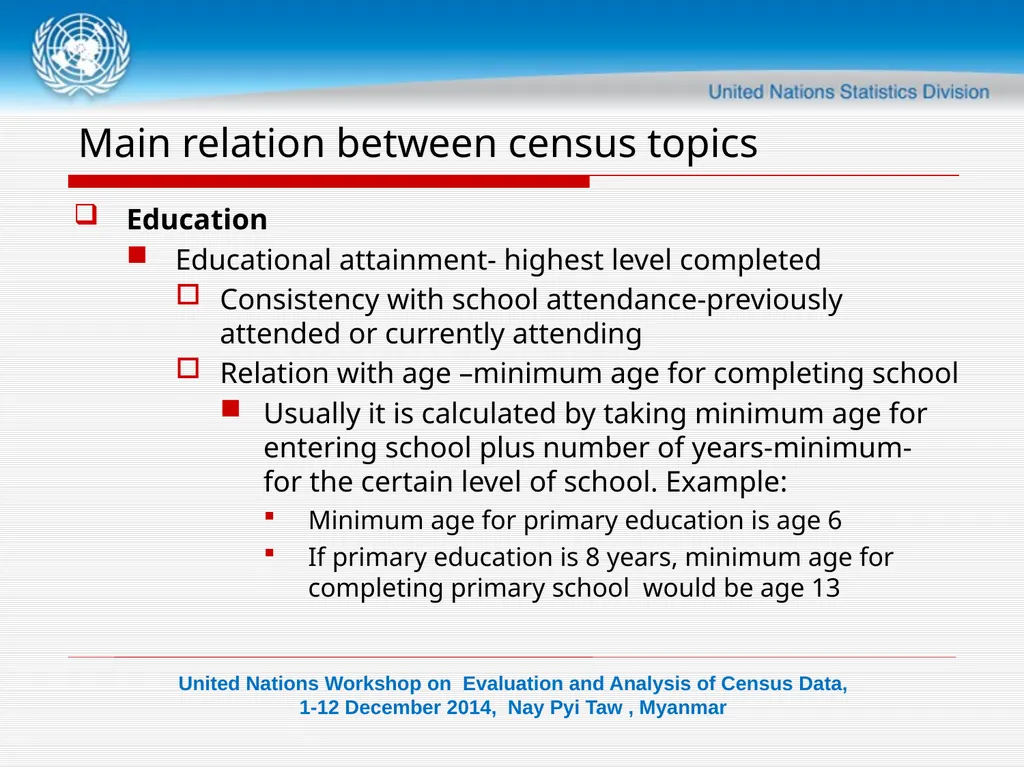
slide13. Education
Educational attainment- highest level completed
Consistency with school attendance-previously attended or currently attending
Relation with age –minimum age for completing school
Usually it is calculated by taking minimum age for entering school plus number of years-minimum- for the certain level of school. Example:
Minimum age for primary education is age 6
If primary education is 8 years, minimum age for completing primary school would be age 13 Main relation between census topics<br>
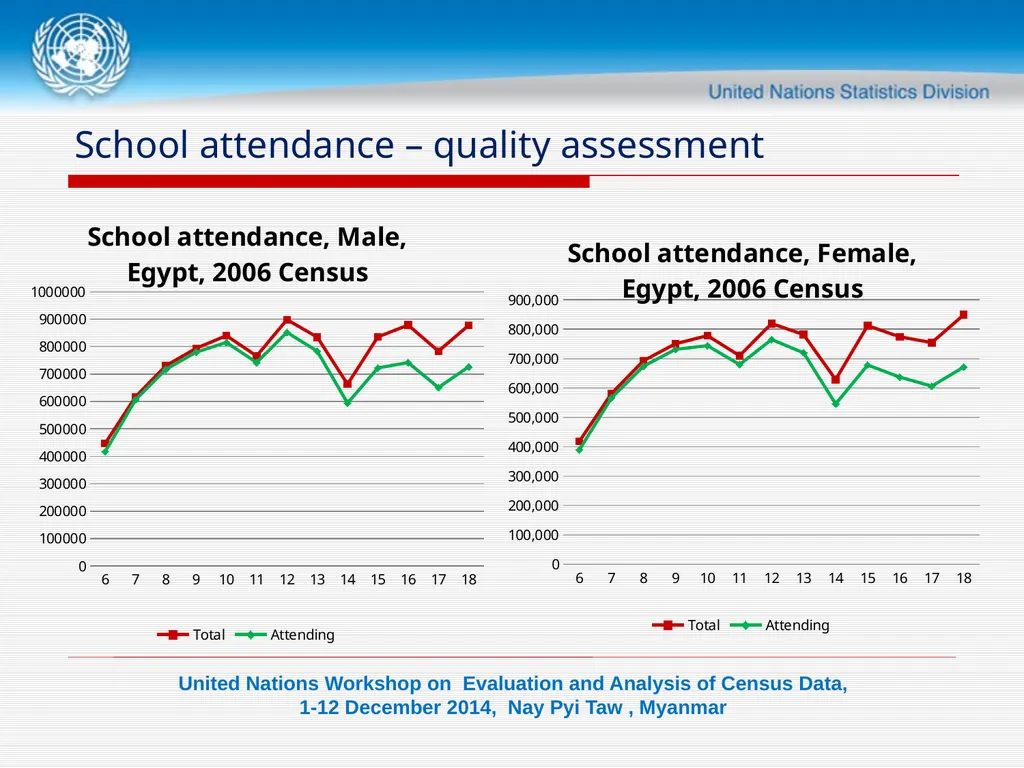
slide14. School attendance – quality assessment<br>
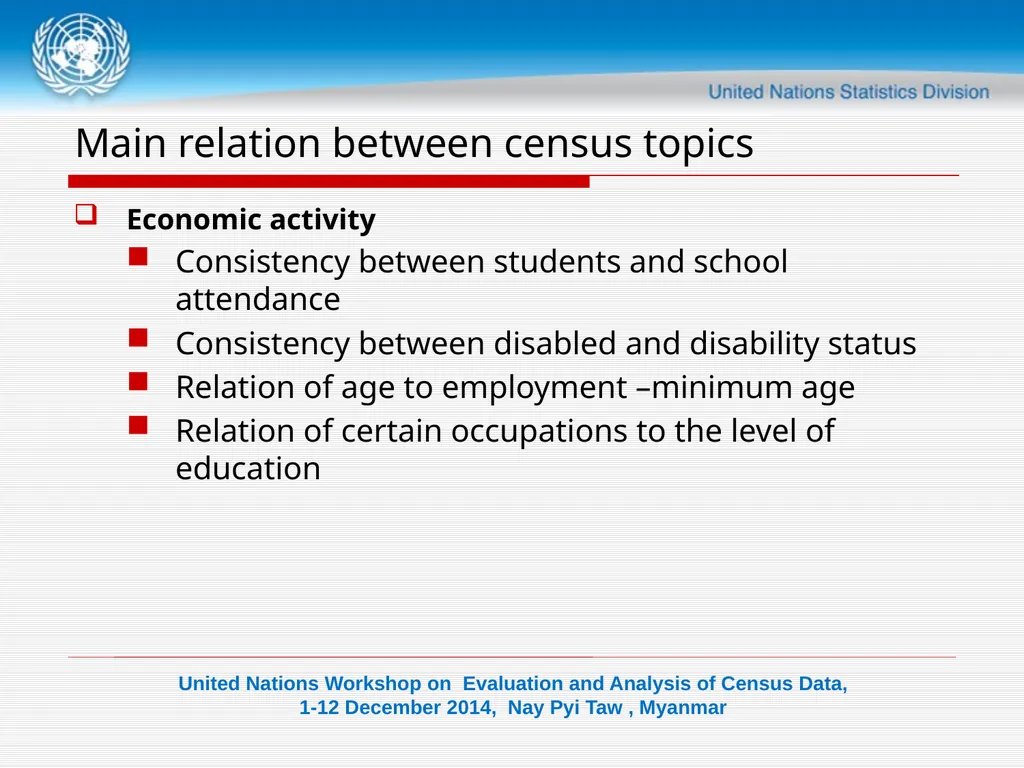
slide15. Economic activity
Consistency between students and school attendance
Consistency between disabled and disability status
Relation of age to employment –minimum age
Relation of certain occupations to the level of education Main relation between census topics<br>
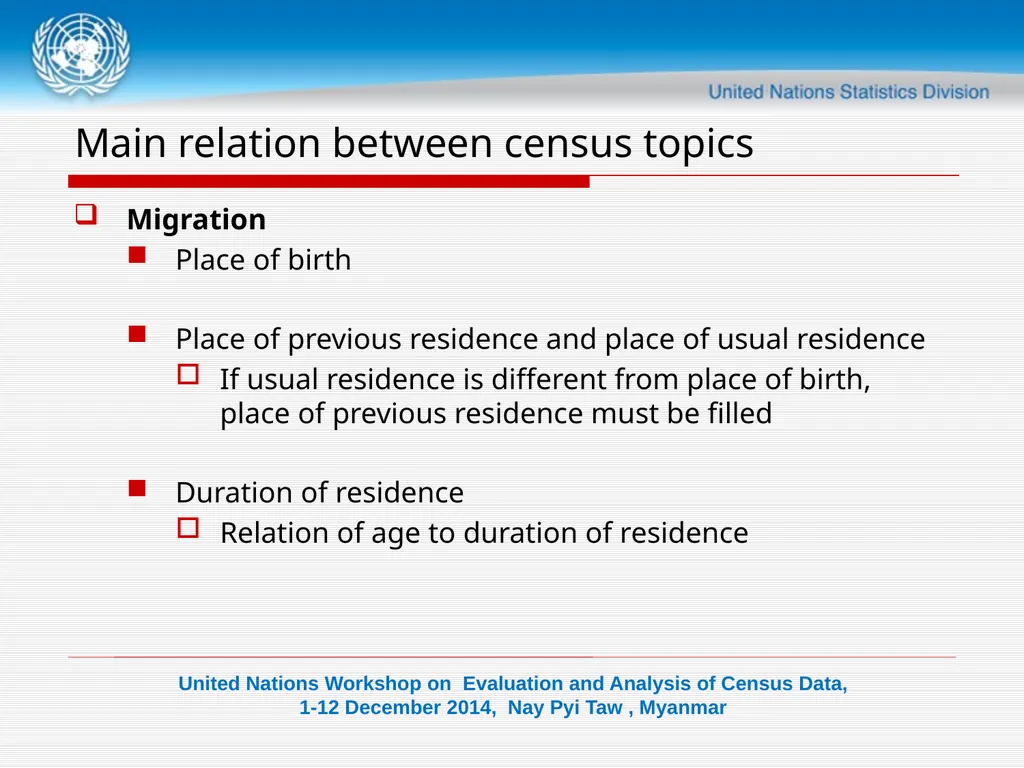
slide16. Migration
Place of birth
Place of previous residence and place of usual residence
If usual residence is different from place of birth, place of previous residence must be filled
Duration of residence
Relation of age to duration of residence Main relation between census topics<br>
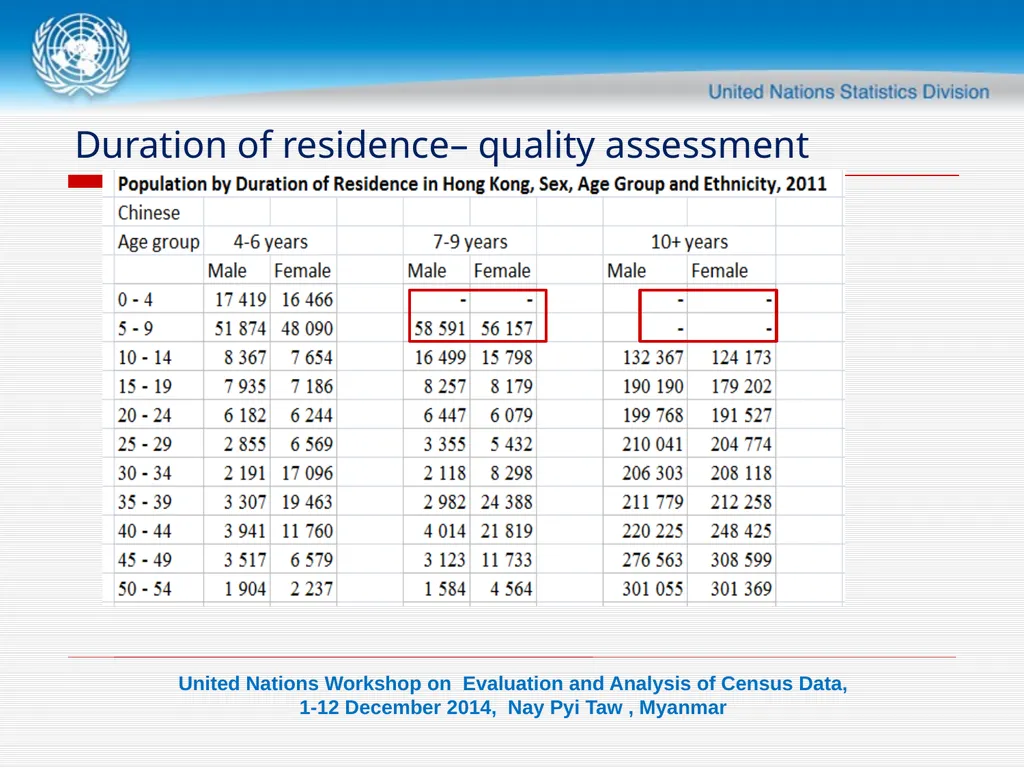
slide17. Duration of residence– quality assessment<br>
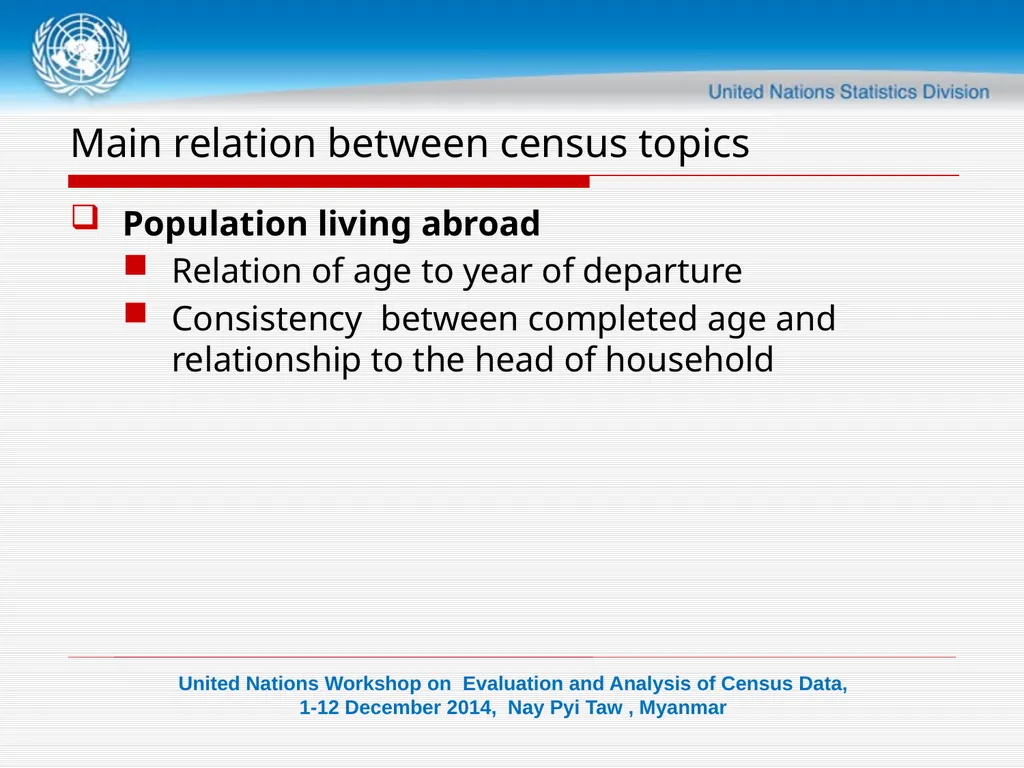
slide18. Population living abroad
Relation of age to year of departure
Consistency between completed age and relationship to the head of household Main relation between census topics<br>
Consistency check<br>
slide2. Objectives Ensuring all records meet with editing rules
Ensuring there is no unusual/unexpected values
Checking for whether the data makes sense when variables are tabulated or cross-tabulated<br>
slide3. How to evaluate validation Cross - tabulation between variables
for preliminary analysis of census results, the list of tables should be prepared based on:
Editing rules and relation between variables
Tables should present all possible conditions in data without eliminating any category to verify the results<br>
slide4. Main relation between census topics Relationship to the head of households
Sex and marital status of couples
Age interval between father/mother and children
At least 12-14 years and at most 65 for males, 50 for females
Age interval between grand parents and grand children
At least 25 years<br>
slide5. Main relation between census topics Distribution of household size
Accuracy of household size –particularly for 8, 16, … members of households
There might be errors in combining the questionnaires belonging to same household<br>
slide6. Marital status
Minimum age at first marriage
CED, CS and CD
Sex and marital status (?) of person
Relation between number of children ever-born, number of living children and number of dead children
Relation between age and number of children ever born Main relation between census topics<br>
slide7. Fertility Parities wrong ? CEB – quality assessment<br>
slide8. CEB – quality assessment Mongolia, 1989 Census (Source: IPUMS) Parities wrong ?<br>
slide9. Date of last live birth
Distribution of last live births by months and years
Misreporting of the date
Errors in data capture
Consistency with age of mother –minimum and maximum age for giving a birth
Consistency with children ever born-at least one child
Consistency with number of living children- if the last live birth is alive, at least one living children Main relation between census topics<br>
slide10. Household deaths
Sex and age of death for maternal mortality
Consistency with the last live birth if the infant is dead Main relation between census topics<br>
slide11. Age at death of children (in month) declared by the mother, Nepal 1975<br>
slide12. Education
Literacy
Relation with the highest completed level of education
School attendance
Relation between Q20 and Q21
Relation with age -minimum age for entering school and possibility of giving maximum age??
Consistency between school attendance and student category of working status Main relation between census topics<br>
slide13. Education
Educational attainment- highest level completed
Consistency with school attendance-previously attended or currently attending
Relation with age –minimum age for completing school
Usually it is calculated by taking minimum age for entering school plus number of years-minimum- for the certain level of school. Example:
Minimum age for primary education is age 6
If primary education is 8 years, minimum age for completing primary school would be age 13 Main relation between census topics<br>
slide14. School attendance – quality assessment<br>
slide15. Economic activity
Consistency between students and school attendance
Consistency between disabled and disability status
Relation of age to employment –minimum age
Relation of certain occupations to the level of education Main relation between census topics<br>
slide16. Migration
Place of birth
Place of previous residence and place of usual residence
If usual residence is different from place of birth, place of previous residence must be filled
Duration of residence
Relation of age to duration of residence Main relation between census topics<br>
slide17. Duration of residence– quality assessment<br>
slide18. Population living abroad
Relation of age to year of departure
Consistency between completed age and relationship to the head of household Main relation between census topics<br>