DECARBONIZATION: Phasing out fossil fuels in cities buildings, transportation, and energy systems on the path to net-zero carbon emissions. DEFINING A CITYS PATH TO NET-ZERO CARBON EMISSIONS: In order to prevent the worst impacts of
"DECARBONIZATION: Phasing out fossil fuels in" is the property of its rightful owner. Permission is granted to
download and print the materials on this website for personal, non-commercial use only, and to display it
on your personal computer provided you do not modify the materials and that you retain all copyright
notices contained in the materials. By downloading content from our website, you accept the terms of this
agreement.
Presentation Transcript
01
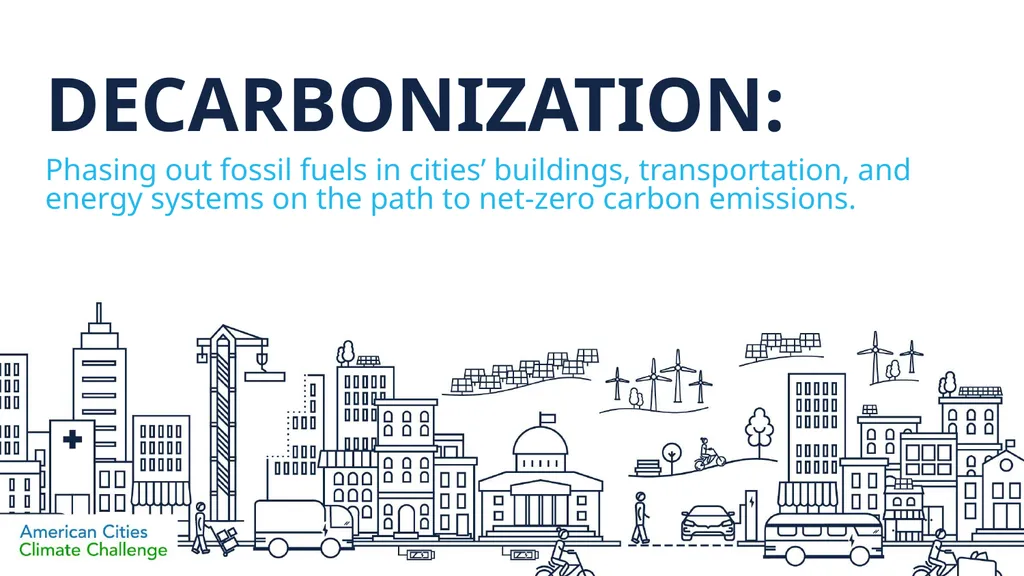
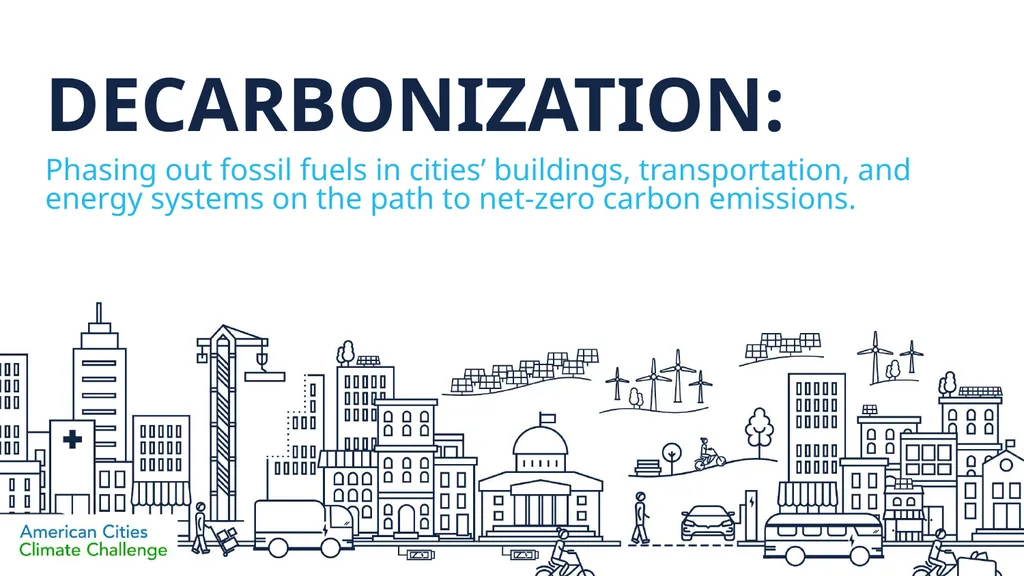
DECARBONIZATION: Phasing out fossil fuels in cities’ buildings, transportation, and energy systems on the path to net-zero carbon emissions.<br>
02
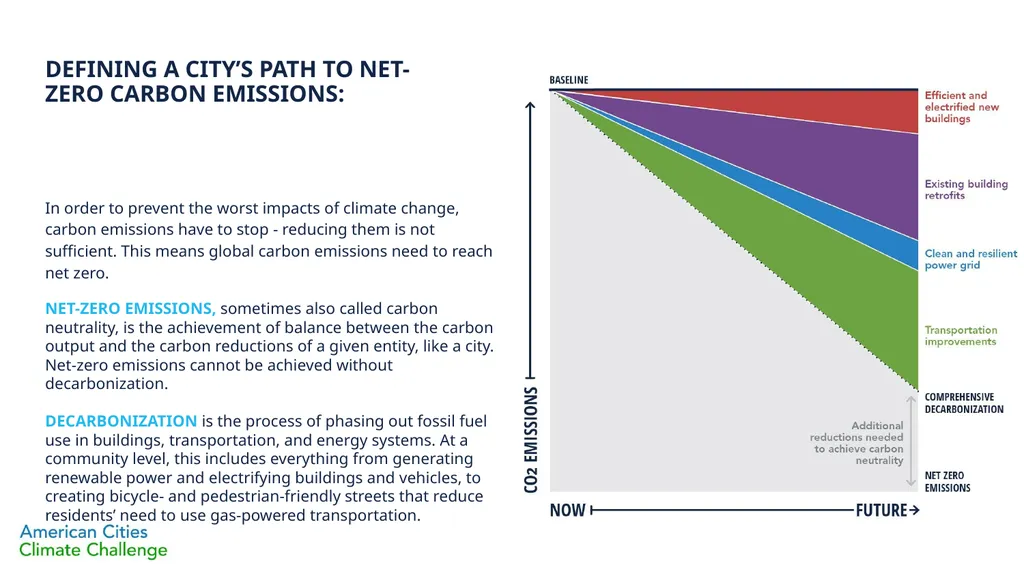
DEFINING A CITY’S PATH TO NET-ZERO CARBON EMISSIONS: In order to prevent the worst impacts of climate change, carbon emissions have to stop - reducing them is not sufficient. This means global carbon emissions need to reach net zero.
NET-ZERO EMISSIONS, sometimes also called carbon neutrality, is the achievement of balance between the carbon output and the carbon reductions of a given entity, like a city. Net-zero emissions cannot be achieved without decarbonization.
DECARBONIZATION is the process of phasing out fossil fuel use in buildings, transportation, and energy systems. At a community level, this includes everything from generating renewable power and electrifying buildings and vehicles, to creating bicycle- and pedestrian-friendly streets that reduce residents’ need to use gas-powered transportation.<br>
03
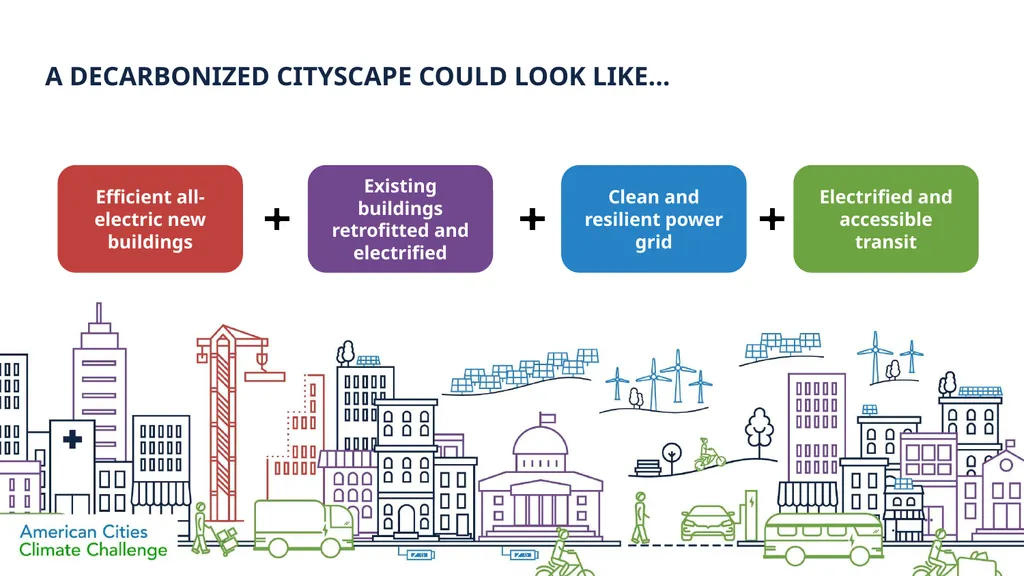
A DECARBONIZED CITYSCAPE COULD LOOK LIKE… Efficient all-electric new buildings Existing buildings retrofitted and electrified Clean and resilient power grid Electrified and accessible transit<br>
04
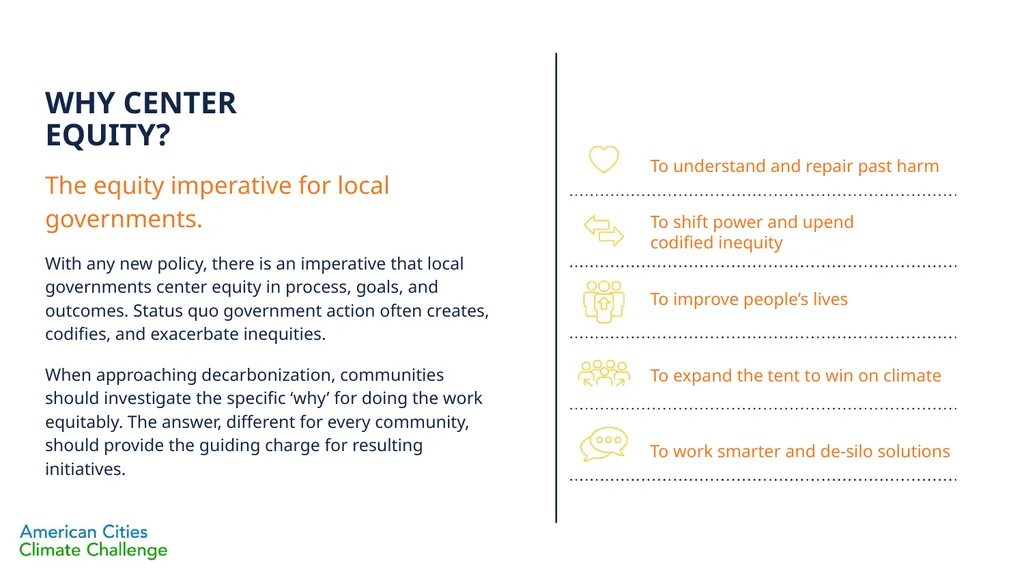
WHY CENTER EQUITY? The equity imperative for local governments.
With any new policy, there is an imperative that local governments center equity in process, goals, and outcomes. Status quo government action often creates, codifies, and exacerbate inequities.
When approaching decarbonization, communities should investigate the specific ‘why’ for doing the work equitably. The answer, different for every community, should provide the guiding charge for resulting initiatives. To understand and repair past harm To shift power and upend codified inequity To improve people’s lives To expand the tent to win on climate To work smarter and de-silo solutions<br>
05
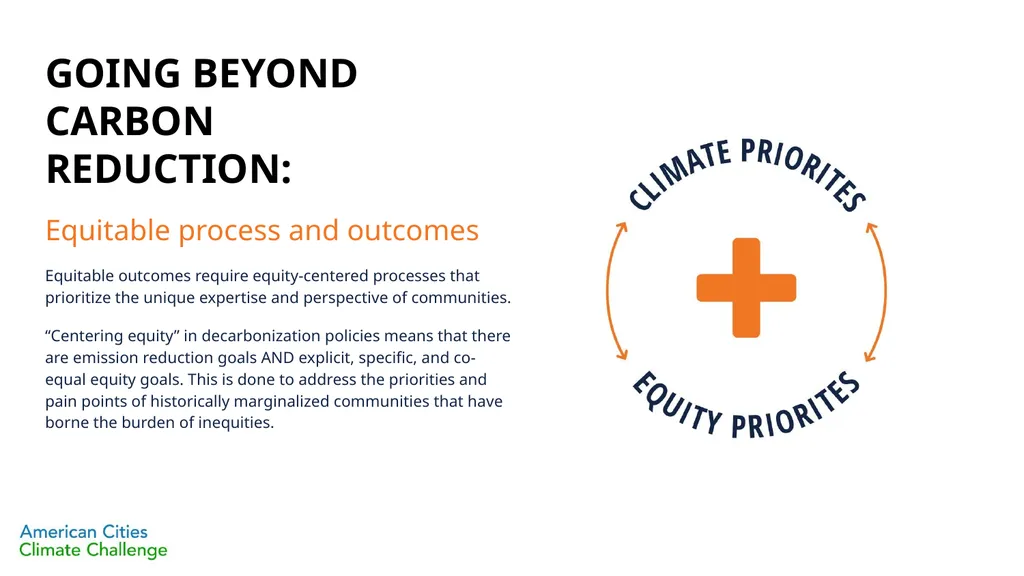
GOING BEYOND CARBON REDUCTION: Equitable process and outcomes
Equitable outcomes require equity-centered processes that prioritize the unique expertise and perspective of communities.
“Centering equity” in decarbonization policies means that there are emission reduction goals AND explicit, specific, and co-equal equity goals. This is done to address the priorities and pain points of historically marginalized communities that have borne the burden of inequities.<br>
06
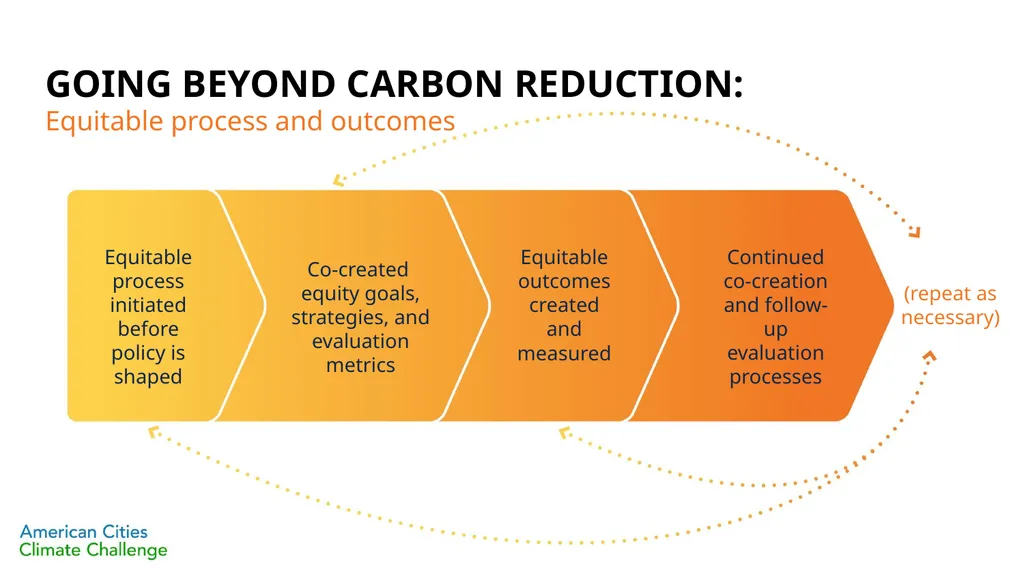
GOING BEYOND CARBON REDUCTION: Equitable process and outcomes Equitable process initiated before policy is shaped Co-created
equity goals, strategies, and evaluation metrics Equitable outcomes created and measured Continued co-creation and follow- up evaluation processes (repeat as necessary)<br>
07
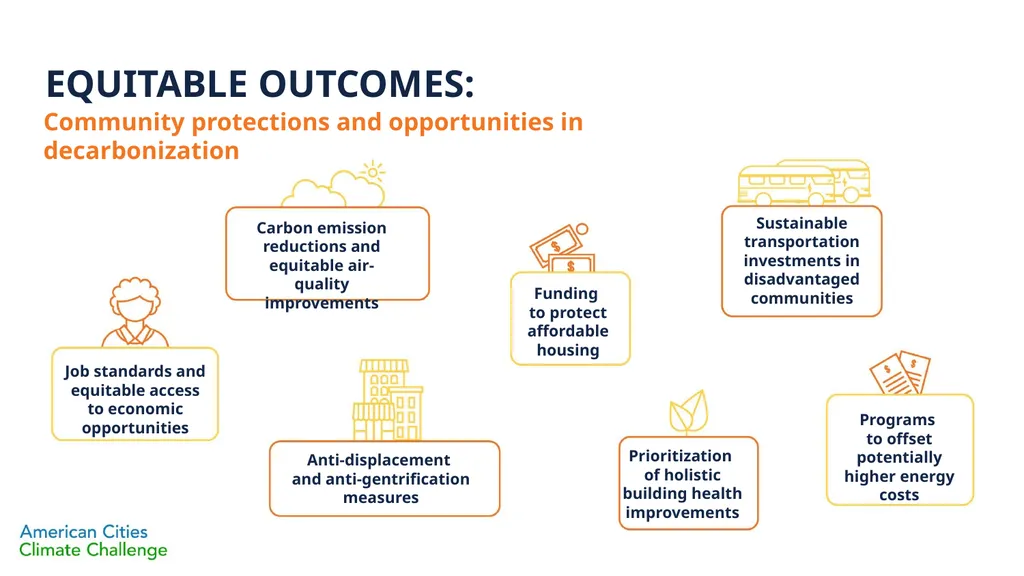
EQUITABLE OUTCOMES: Community protections and opportunities in decarbonization Job standards and equitable access to economic opportunities Carbon emission reductions and equitable air-quality improvements Funding
to protect affordable housing Sustainable transportation investments in disadvantaged communities Programs
to offset potentially higher energy costs Anti-displacement
and anti-gentrification measures Prioritization
of holistic building health improvements<br>
08
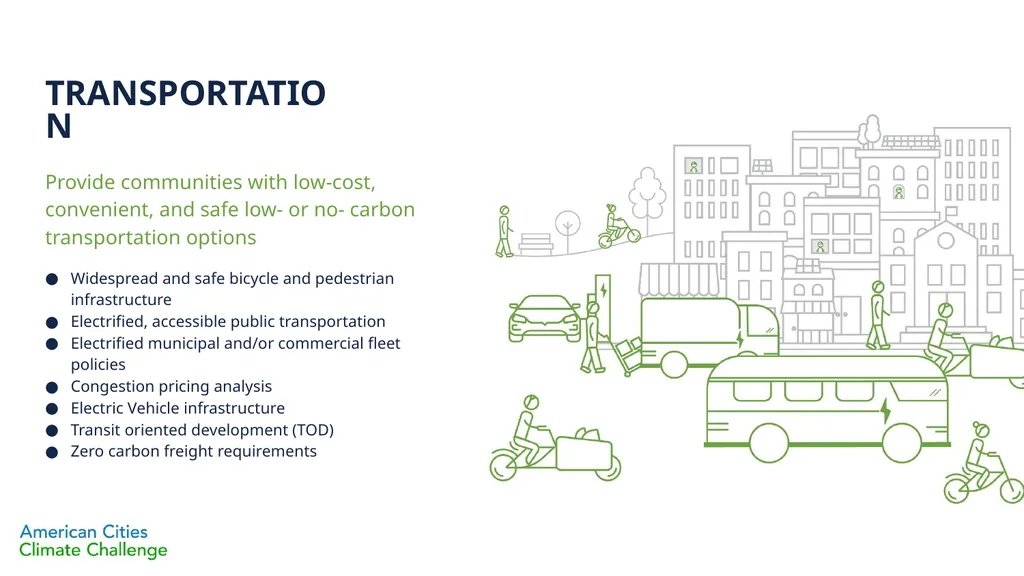
TRANSPORTATION Provide communities with low-cost, convenient, and safe low- or no- carbon transportation options
Widespread and safe bicycle and pedestrian infrastructure
Electrified, accessible public transportation
Electrified municipal and/or commercial fleet policies
Congestion pricing analysis
Electric Vehicle infrastructure
Transit oriented development (TOD)
Zero carbon freight requirements<br>
09
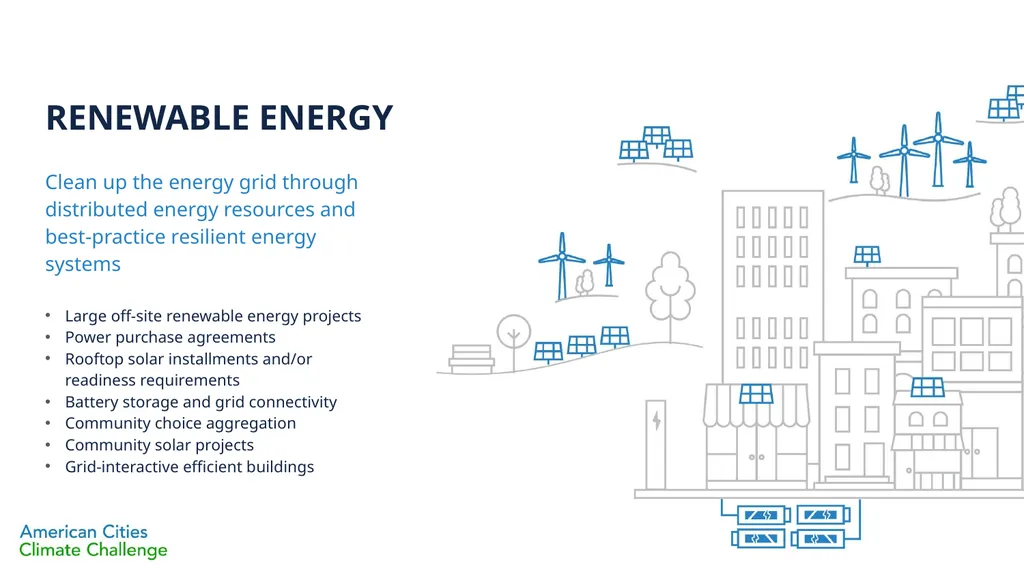
RENEWABLE ENERGY Clean up the energy grid through distributed energy resources and best-practice resilient energy systems
Large off-site renewable energy projects
Power purchase agreements
Rooftop solar installments and/or readiness requirements
Battery storage and grid connectivity
Community choice aggregation
Community solar projects
Grid-interactive efficient buildings<br>
10
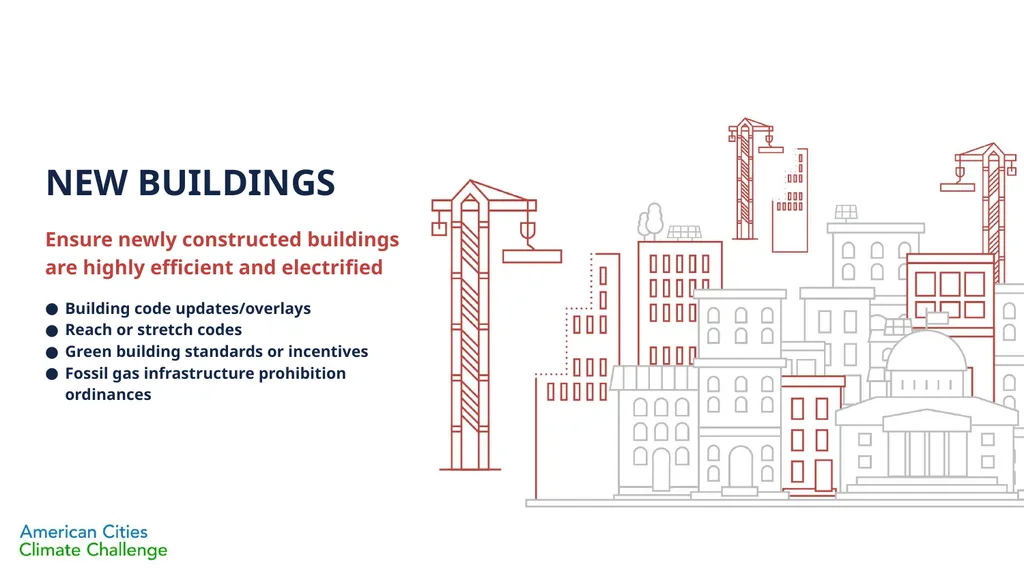
NEW BUILDINGS Ensure newly constructed buildings are highly efficient and electrified
Building code updates/overlays
Reach or stretch codes
Green building standards or incentives
Fossil gas infrastructure prohibition ordinances<br>
11
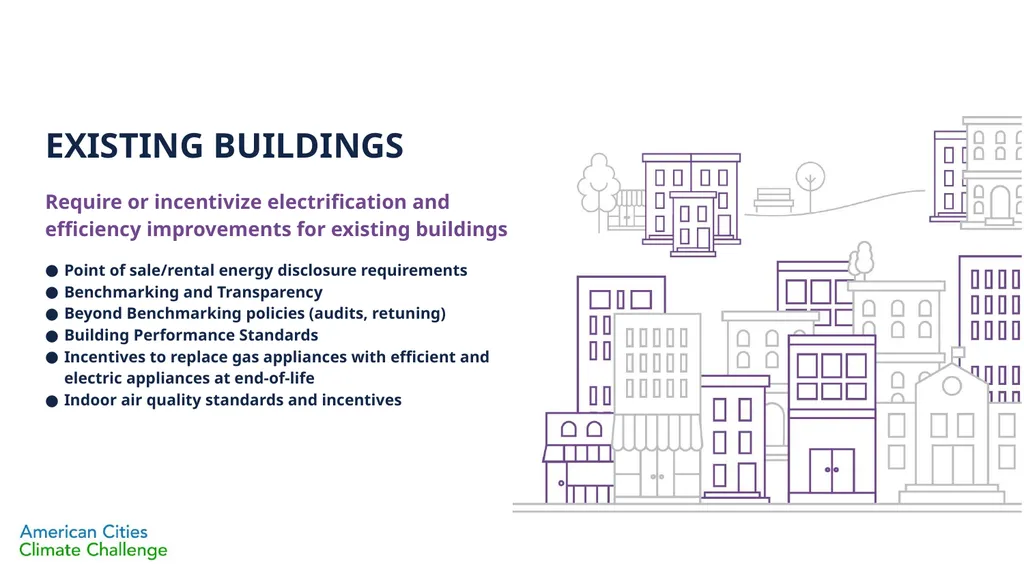
EXISTING BUILDINGS Require or incentivize electrification and efficiency improvements for existing buildings
Point of sale/rental energy disclosure requirements
Benchmarking and Transparency
Beyond Benchmarking policies (audits, retuning)
Building Performance Standards
Incentives to replace gas appliances with efficient and electric appliances at end-of-life
Indoor air quality standards and incentives<br>