Deep Learning Introduction Thanks to Dhruv Batra Georgia Tech http:clgiles.ist.psu.eduIST597 Class Course outline and materials at https:clgiles.ist.psu.eduIST597 5 exercises, all in TensorFlowPython - 40 One large
Related Topics
Share
Embed code
Download this presentation From Below
"Deep Learning Introduction Thanks to Dhruv Batra" is the property of its rightful owner. Permission is granted to
download and print the materials on this website for personal, non-commercial use only, and to display it
on your personal computer provided you do not modify the materials and that you retain all copyright
notices contained in the materials. By downloading content from our website, you accept the terms of this
agreement.
Presentation Transcript
01
Deep Learning Introduction Thanks to Dhruv Batra Georgia Tech http://clgiles.ist.psu.edu/IST597<br>
02
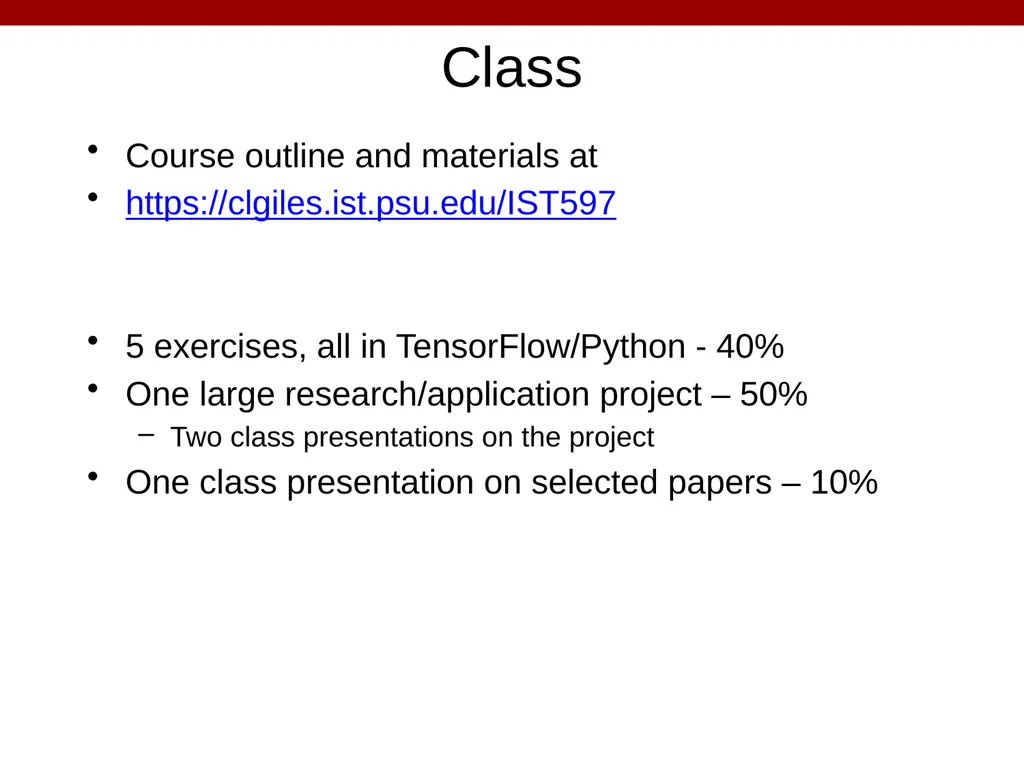
Class Course outline and materials at
https://clgiles.ist.psu.edu/IST597
5 exercises, all in TensorFlow/Python - 40%
One large research/application project – 50%
Two class presentations on the project
One class presentation on selected papers – 10%<br>
03
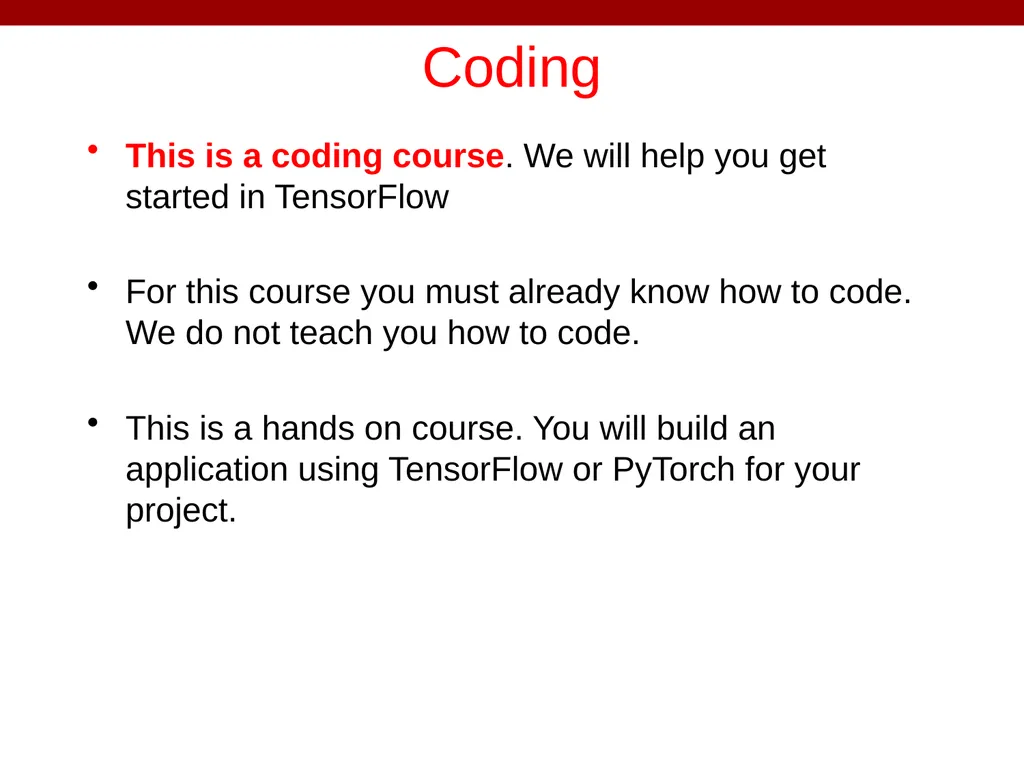
Coding This is a coding course. We will help you get started in TensorFlow
For this course you must already know how to code. We do not teach you how to code.
This is a hands on course. You will build an application using TensorFlow or PyTorch for your project.<br>
04
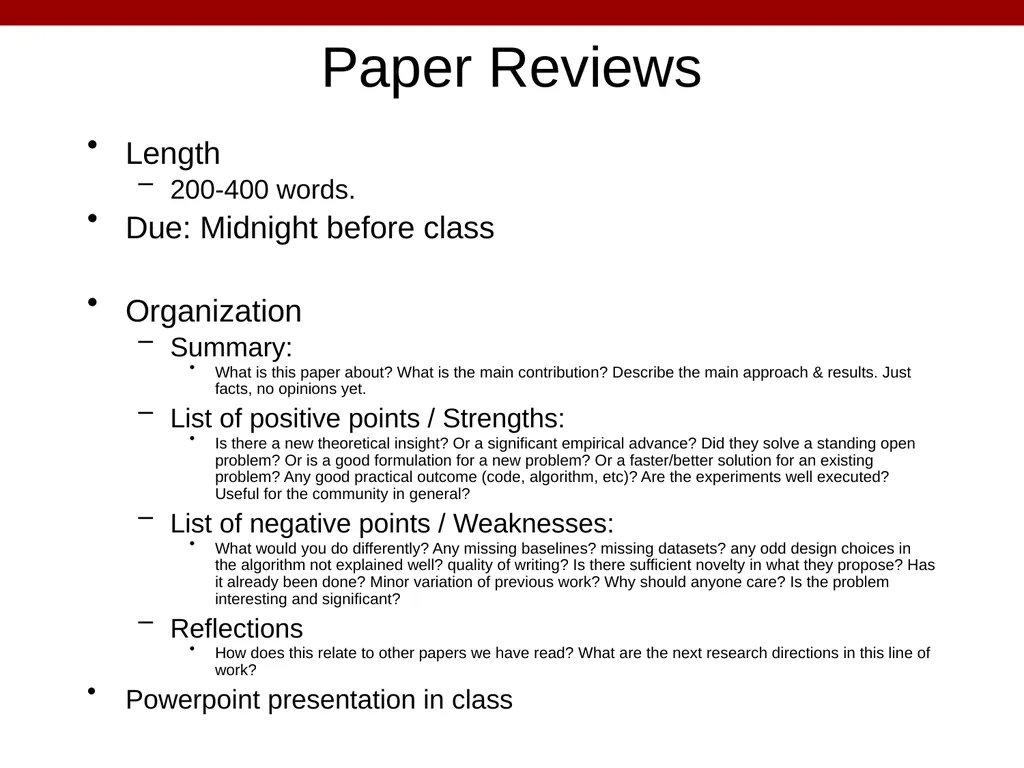
Paper Reviews Length
200-400 words.
Due: Midnight before class
Organization
Summary:
What is this paper about? What is the main contribution? Describe the main approach & results. Just facts, no opinions yet.
List of positive points / Strengths:
Is there a new theoretical insight? Or a significant empirical advance? Did they solve a standing open problem? Or is a good formulation for a new problem? Or a faster/better solution for an existing problem? Any good practical outcome (code, algorithm, etc)? Are the experiments well executed? Useful for the community in general?
List of negative points / Weaknesses:
What would you do differently? Any missing baselines? missing datasets? any odd design choices in the algorithm not explained well? quality of writing? Is there sufficient novelty in what they propose? Has it already been done? Minor variation of previous work? Why should anyone care? Is the problem interesting and significant?
Reflections
How does this relate to other papers we have read? What are the next research directions in this line of work?
Powerpoint presentation in class<br>
05
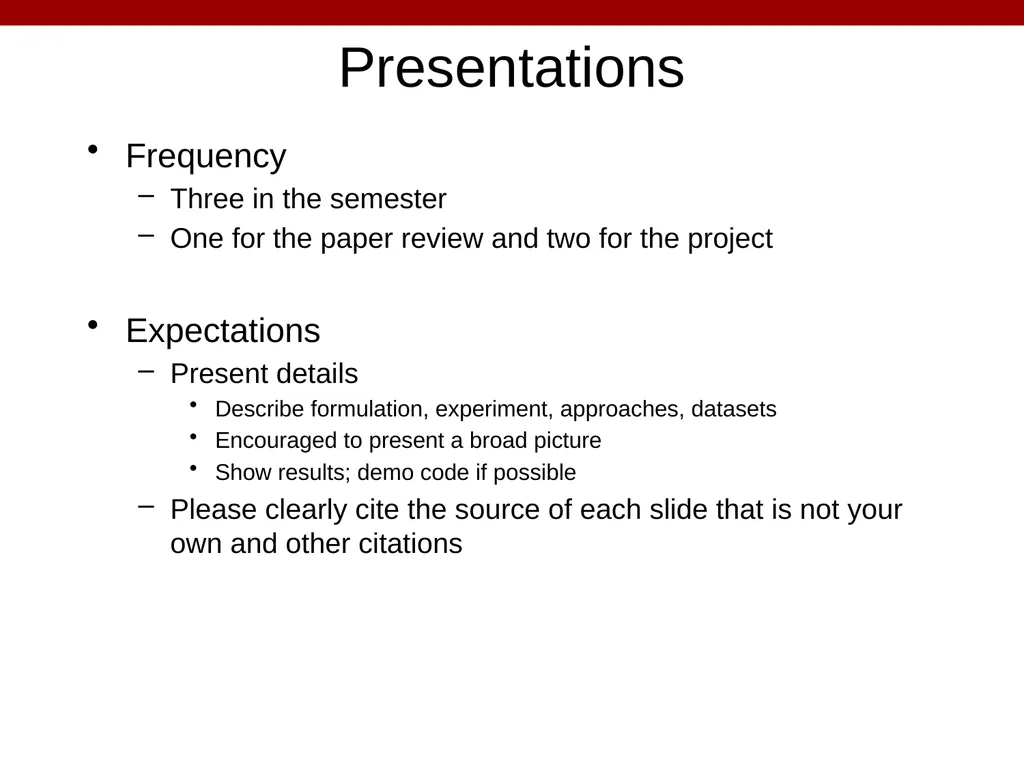
Presentations Frequency
Three in the semester
One for the paper review and two for the project
Expectations
Present details
Describe formulation, experiment, approaches, datasets
Encouraged to present a broad picture
Show results; demo code if possible
Please clearly cite the source of each slide that is not your own and other citations<br>
06
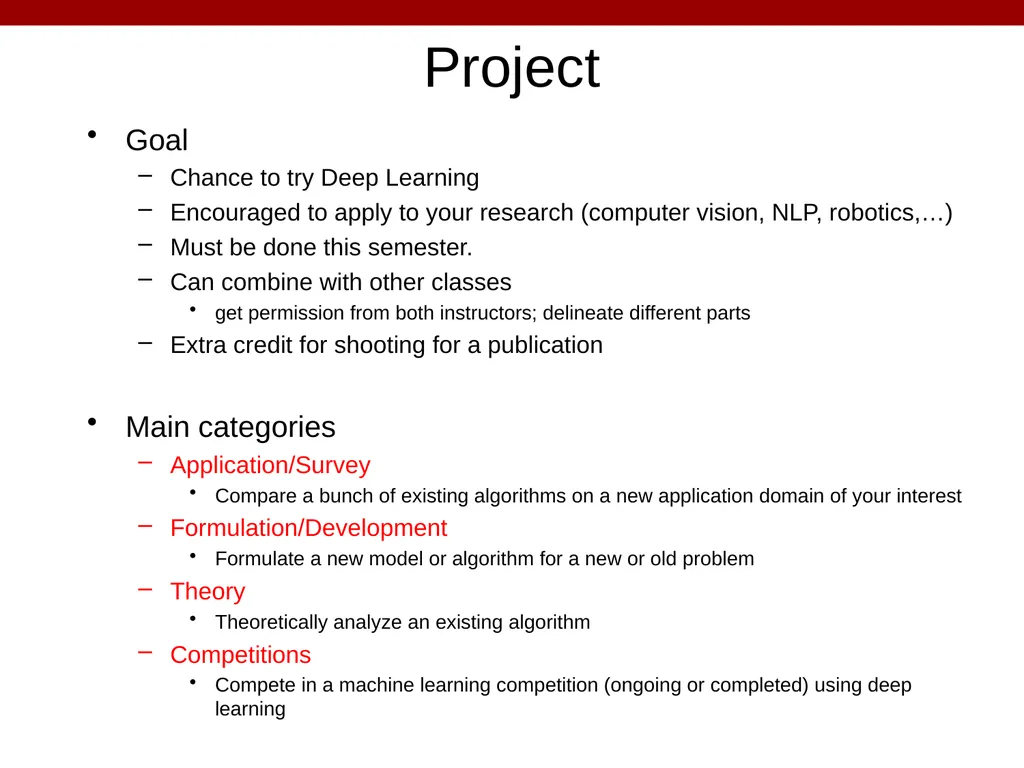
Project Goal
Chance to try Deep Learning
Encouraged to apply to your research (computer vision, NLP, robotics,…)
Must be done this semester.
Can combine with other classes
get permission from both instructors; delineate different parts
Extra credit for shooting for a publication
Main categories
Application/Survey
Compare a bunch of existing algorithms on a new application domain of your interest
Formulation/Development
Formulate a new model or algorithm for a new or old problem
Theory
Theoretically analyze an existing algorithm
Competitions
Compete in a machine learning competition (ongoing or completed) using deep learning<br>
07
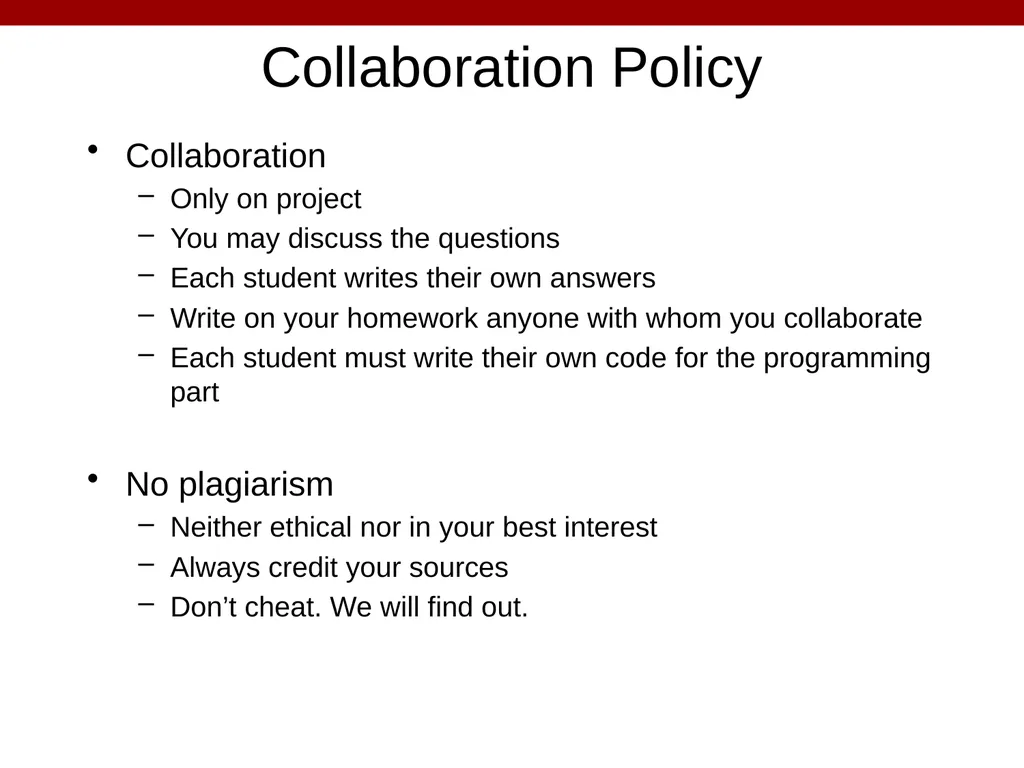
Collaboration Policy Collaboration
Only on project
You may discuss the questions
Each student writes their own answers
Write on your homework anyone with whom you collaborate
Each student must write their own code for the programming part
No plagiarism
Neither ethical nor in your best interest
Always credit your sources
Don’t cheat. We will find out.<br>