definitions Crosswind - the component of wind that
Description: definitions Crosswind - the component of wind that is blowing across the runway making landings and take-offs more difficult than if the wind were blowing straight down the runway. If a crosswind is strong enough it may exceed an aircrafts
Related Topics
Download Presentation
"definitions Crosswind - the component of wind that" is the property of its rightful owner. Permission is granted to download and print the materials on this website for personal, non-commercial use only, and to display it on your personal computer provided you do not modify the materials and that you retain all copyright notices contained in the materials. By downloading content from our website, you accept the terms of this agreement.
Presentation Transcript
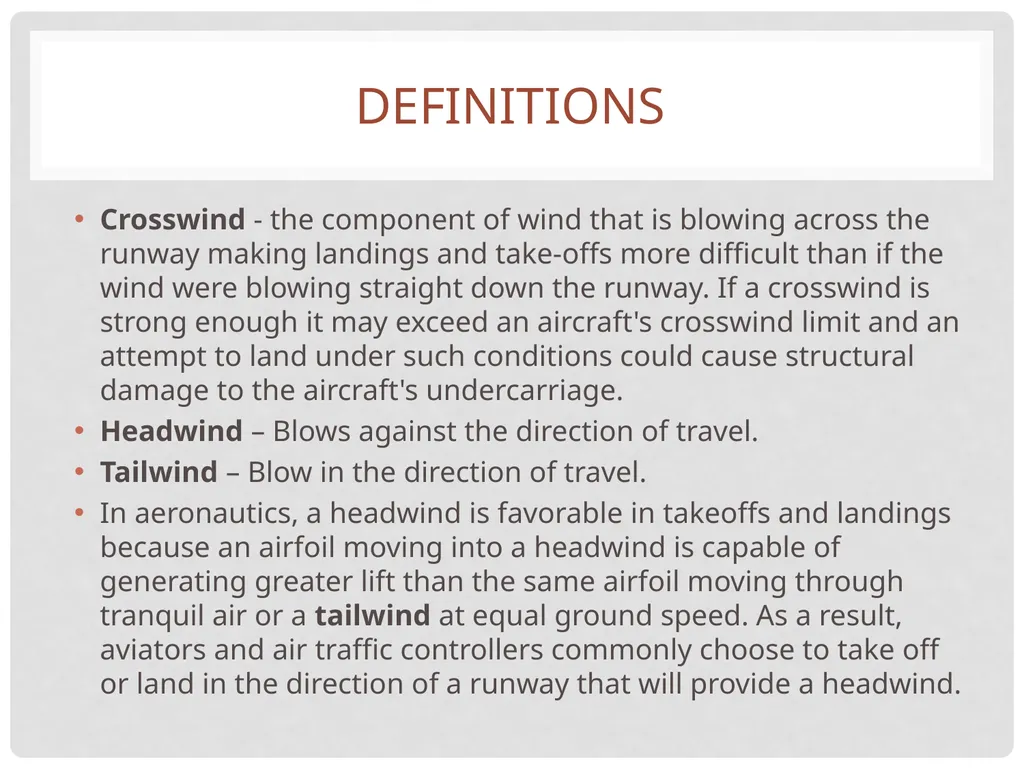
slide2. definitions Crosswind - the component of wind that is blowing across the runway making landings and take-offs more difficult than if the wind were blowing straight down the runway. If a crosswind is strong enough it may exceed an aircraft's crosswind limit and an attempt to land under such conditions could cause structural damage to the aircraft's undercarriage.
Headwind – Blows against the direction of travel.
Tailwind – Blow in the direction of travel.
In aeronautics, a headwind is favorable in takeoffs and landings because an airfoil moving into a headwind is capable of generating greater lift than the same airfoil moving through tranquil air or a tailwind at equal ground speed. As a result, aviators and air traffic controllers commonly choose to take off or land in the direction of a runway that will provide a headwind.<br>
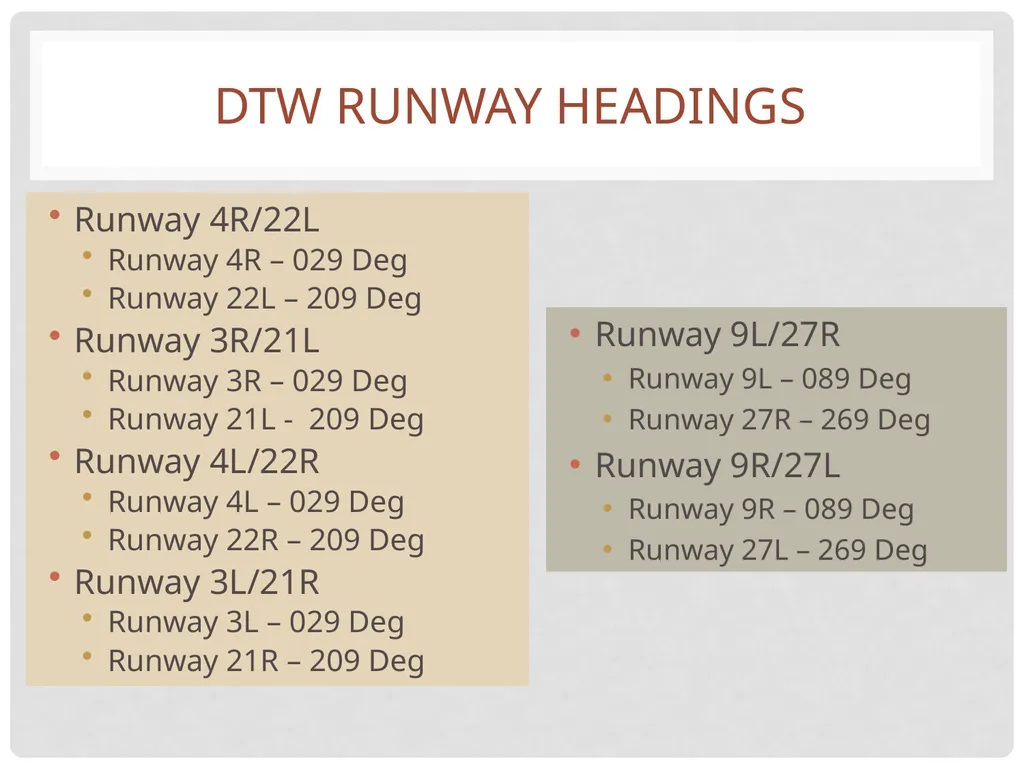
slide3. DTW RUNWAY Headings Runway 4R/22L
Runway 4R – 029 Deg
Runway 22L – 209 Deg
Runway 3R/21L
Runway 3R – 029 Deg
Runway 21L - 209 Deg
Runway 4L/22R
Runway 4L – 029 Deg
Runway 22R – 209 Deg
Runway 3L/21R
Runway 3L – 029 Deg
Runway 21R – 209 Deg Runway 9L/27R
Runway 9L – 089 Deg
Runway 27R – 269 Deg
Runway 9R/27L
Runway 9R – 089 Deg
Runway 27L – 269 Deg<br>
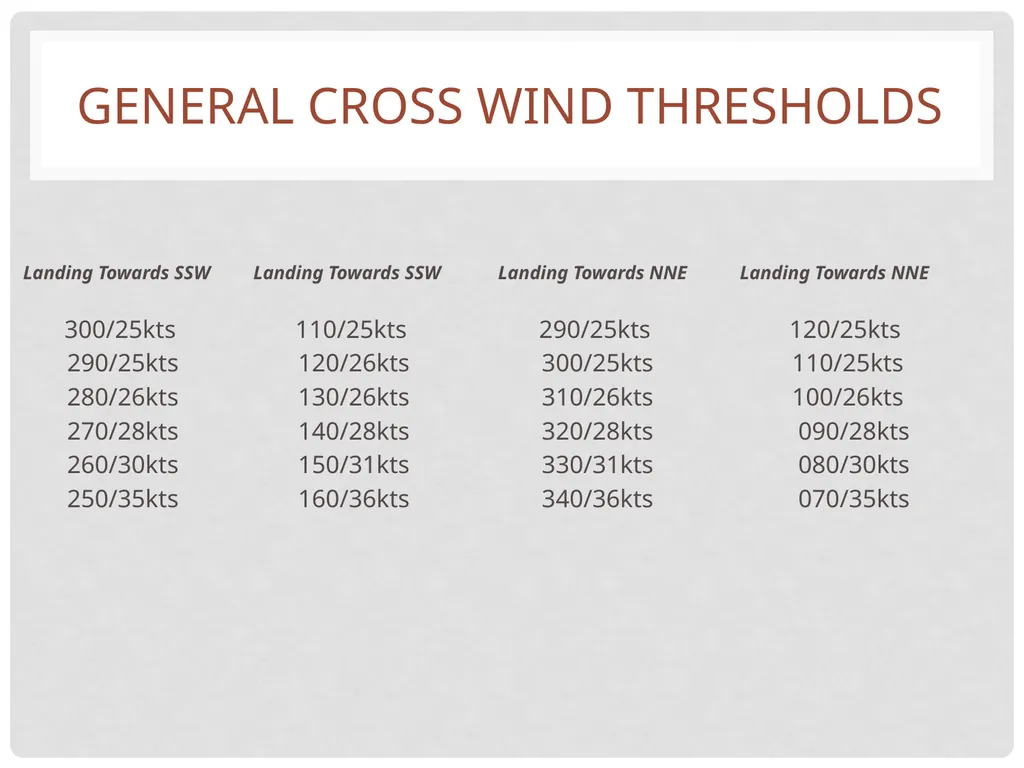
slide4. General cross wind thresholds Landing Towards SSWÂ Â Â Â Â Â Â Â Landing Towards SSWÂ Â Â Â Â Â Â Â Â Â Â Landing Towards NNEÂ Â Â Â Â Â Â Â Â Â Landing Towards NNE
300/25kts                  110/25kts                  290/25kts                   120/25kts
290/25kts                  120/26kts                  300/25kts                    110/25kts
280/26kts                  130/26kts                  310/26kts                    100/26kts
270/28kts                  140/28kts                  320/28kts                     090/28kts
260/30kts                  150/31kts                  330/31kts                      080/30kts
250/35kts                  160/36kts                  340/36kts                      070/35kts<br>
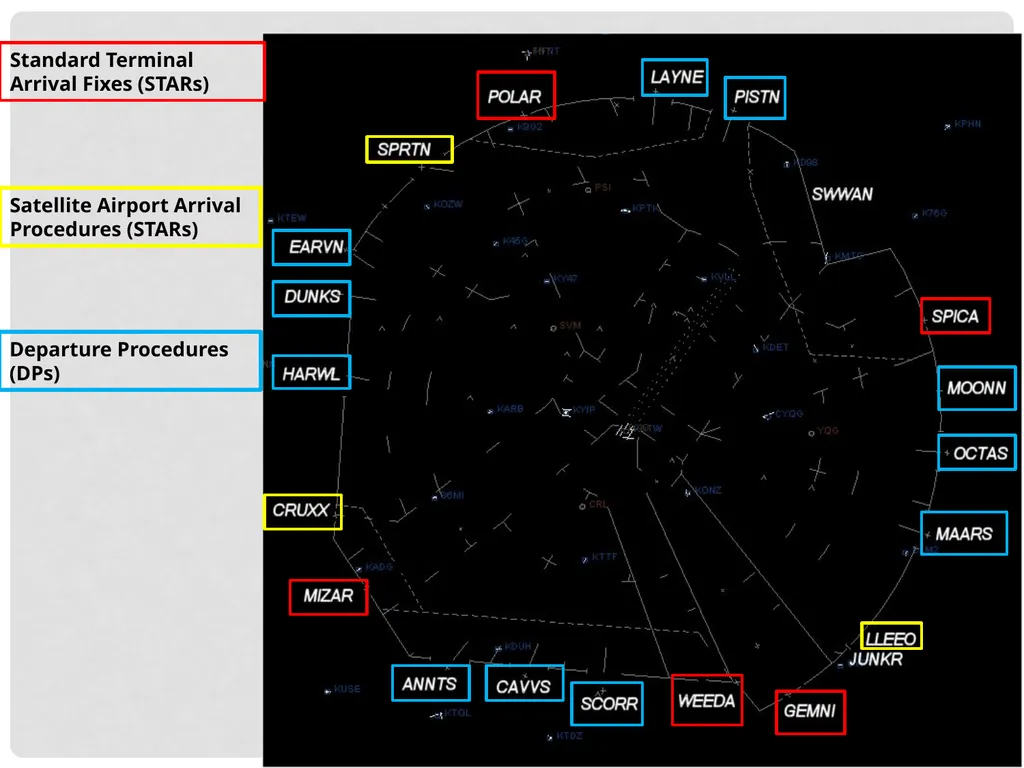
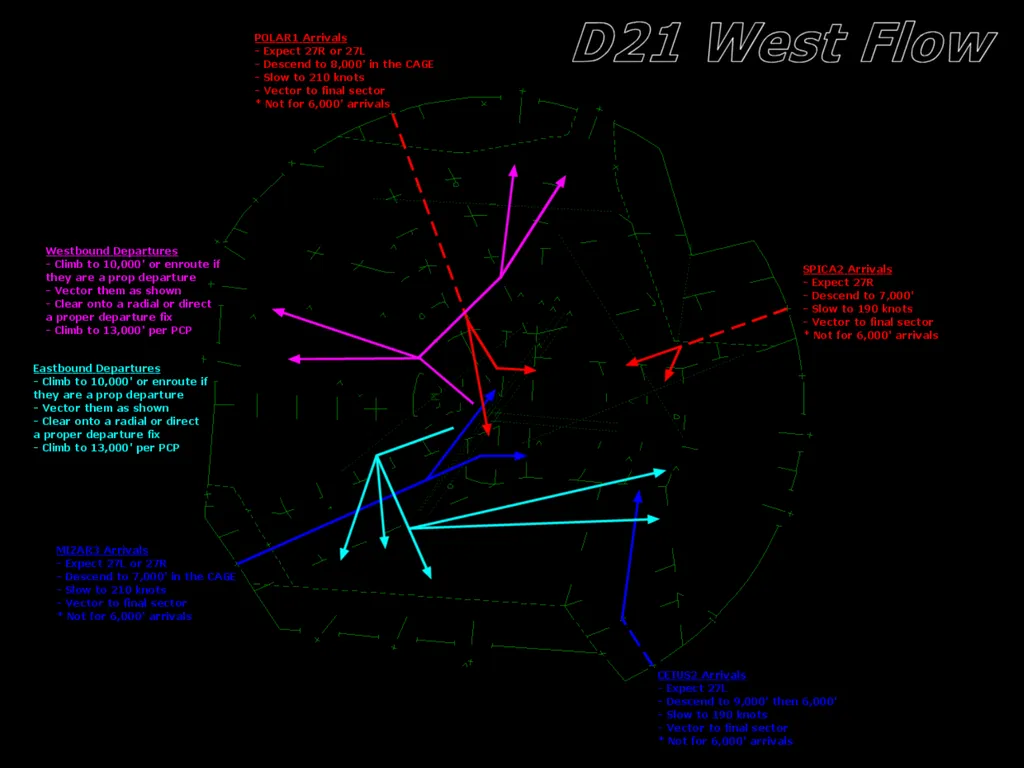
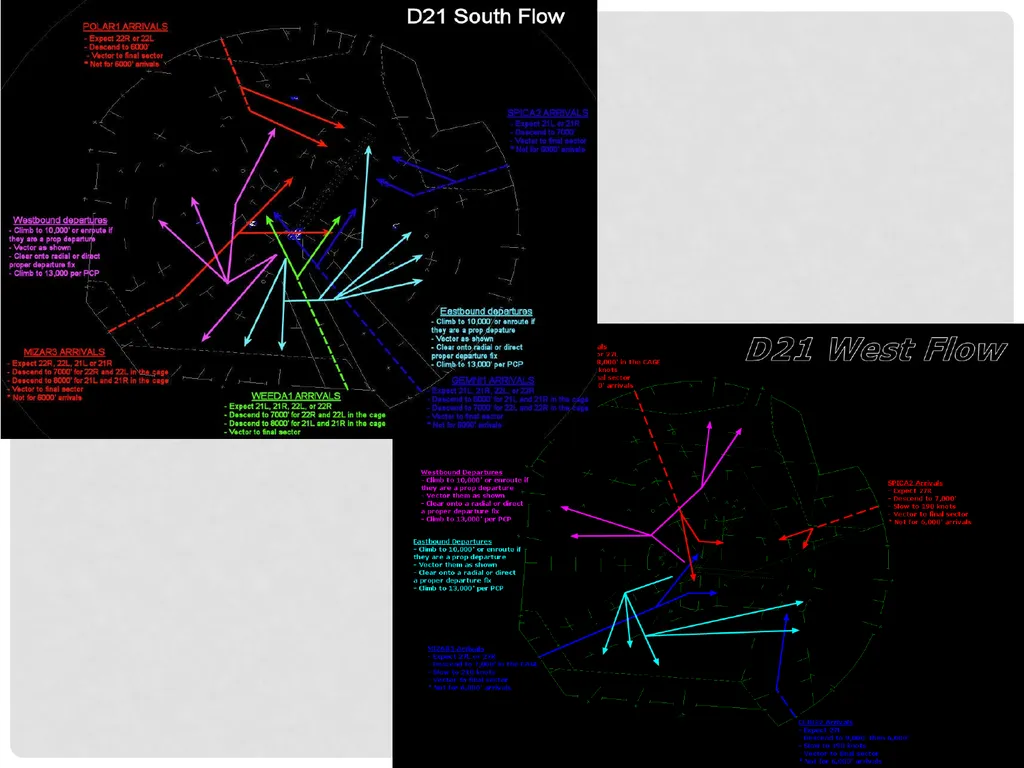
slide5. Standard Terminal Arrival Fixes (STARs) Satellite Airport Arrival Procedures (STARs) Departure Procedures (DPs)<br>
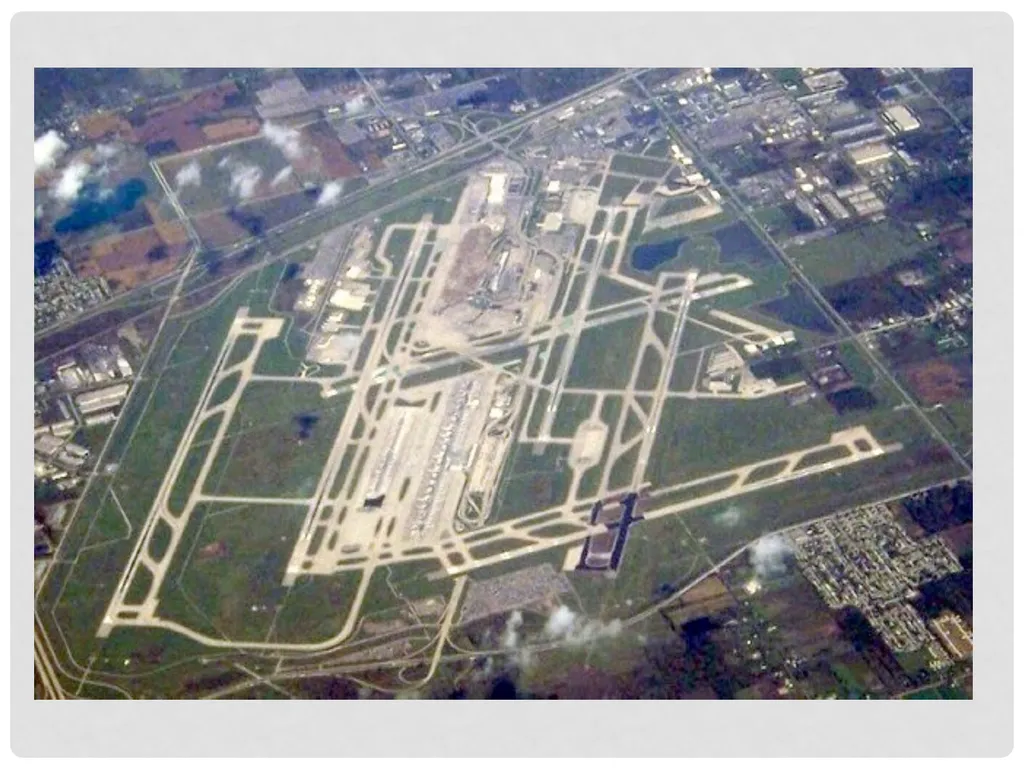
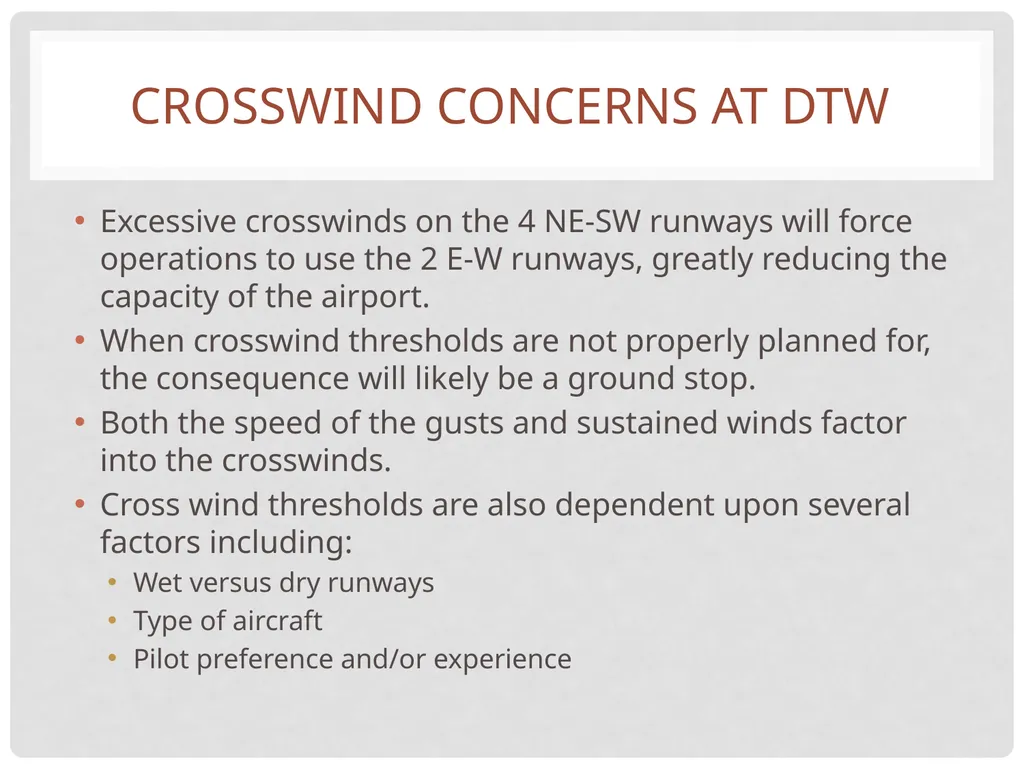
slide11. Crosswind concerns at dtw Excessive crosswinds on the 4 NE-SW runways will force operations to use the 2 E-W runways, greatly reducing the capacity of the airport.
When crosswind thresholds are not properly planned for, the consequence will likely be a ground stop.
Both the speed of the gusts and sustained winds factor into the crosswinds.
Cross wind thresholds are also dependent upon several factors including:
Wet versus dry runways
Type of aircraft
Pilot preference and/or experience<br>
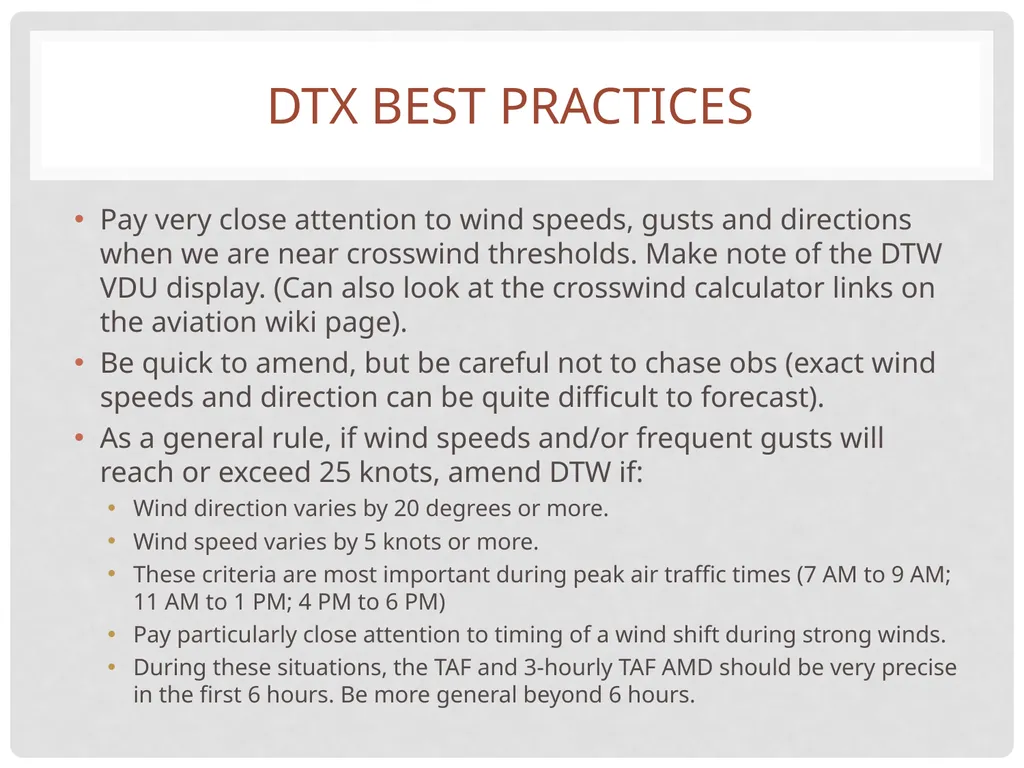
slide12. DTx best practices Pay very close attention to wind speeds, gusts and directions when we are near crosswind thresholds. Make note of the DTW VDU display. (Can also look at the crosswind calculator links on the aviation wiki page).
Be quick to amend, but be careful not to chase obs (exact wind speeds and direction can be quite difficult to forecast).
As a general rule, if wind speeds and/or frequent gusts will reach or exceed 25 knots, amend DTW if:
Wind direction varies by 20 degrees or more.
Wind speed varies by 5 knots or more.
These criteria are most important during peak air traffic times (7 AM to 9 AM; 11 AM to 1 PM; 4 PM to 6 PM)
Pay particularly close attention to timing of a wind shift during strong winds.
During these situations, the TAF and 3-hourly TAF AMD should be very precise in the first 6 hours. Be more general beyond 6 hours.<br>

Headwind – Blows against the direction of travel.
Tailwind – Blow in the direction of travel.
In aeronautics, a headwind is favorable in takeoffs and landings because an airfoil moving into a headwind is capable of generating greater lift than the same airfoil moving through tranquil air or a tailwind at equal ground speed. As a result, aviators and air traffic controllers commonly choose to take off or land in the direction of a runway that will provide a headwind.<br>
slide3. DTW RUNWAY Headings Runway 4R/22L
Runway 4R – 029 Deg
Runway 22L – 209 Deg
Runway 3R/21L
Runway 3R – 029 Deg
Runway 21L - 209 Deg
Runway 4L/22R
Runway 4L – 029 Deg
Runway 22R – 209 Deg
Runway 3L/21R
Runway 3L – 029 Deg
Runway 21R – 209 Deg Runway 9L/27R
Runway 9L – 089 Deg
Runway 27R – 269 Deg
Runway 9R/27L
Runway 9R – 089 Deg
Runway 27L – 269 Deg<br>
slide4. General cross wind thresholds Landing Towards SSWÂ Â Â Â Â Â Â Â Landing Towards SSWÂ Â Â Â Â Â Â Â Â Â Â Landing Towards NNEÂ Â Â Â Â Â Â Â Â Â Landing Towards NNE
300/25kts                  110/25kts                  290/25kts                   120/25kts
290/25kts                  120/26kts                  300/25kts                    110/25kts
280/26kts                  130/26kts                  310/26kts                    100/26kts
270/28kts                  140/28kts                  320/28kts                     090/28kts
260/30kts                  150/31kts                  330/31kts                      080/30kts
250/35kts                  160/36kts                  340/36kts                      070/35kts<br>
slide5. Standard Terminal Arrival Fixes (STARs) Satellite Airport Arrival Procedures (STARs) Departure Procedures (DPs)<br>
slide11. Crosswind concerns at dtw Excessive crosswinds on the 4 NE-SW runways will force operations to use the 2 E-W runways, greatly reducing the capacity of the airport.
When crosswind thresholds are not properly planned for, the consequence will likely be a ground stop.
Both the speed of the gusts and sustained winds factor into the crosswinds.
Cross wind thresholds are also dependent upon several factors including:
Wet versus dry runways
Type of aircraft
Pilot preference and/or experience<br>
slide12. DTx best practices Pay very close attention to wind speeds, gusts and directions when we are near crosswind thresholds. Make note of the DTW VDU display. (Can also look at the crosswind calculator links on the aviation wiki page).
Be quick to amend, but be careful not to chase obs (exact wind speeds and direction can be quite difficult to forecast).
As a general rule, if wind speeds and/or frequent gusts will reach or exceed 25 knots, amend DTW if:
Wind direction varies by 20 degrees or more.
Wind speed varies by 5 knots or more.
These criteria are most important during peak air traffic times (7 AM to 9 AM; 11 AM to 1 PM; 4 PM to 6 PM)
Pay particularly close attention to timing of a wind shift during strong winds.
During these situations, the TAF and 3-hourly TAF AMD should be very precise in the first 6 hours. Be more general beyond 6 hours.<br>