Delia Derbyshire Doctor Who Theme (original theme composed by Ron Grainer) Primary KS2 2nd Level Classroom Lesson Plan Written by Rachel Leach Trailblazer Composer Delia Derbyshire created a new soundworld using electronic sounds, using
"Delia Derbyshire Doctor Who Theme (original theme" is the property of its rightful owner. Permission is granted to
download and print the materials on this website for personal, non-commercial use only, and to display it
on your personal computer provided you do not modify the materials and that you retain all copyright
notices contained in the materials. By downloading content from our website, you accept the terms of this
agreement.
Presentation Transcript
01
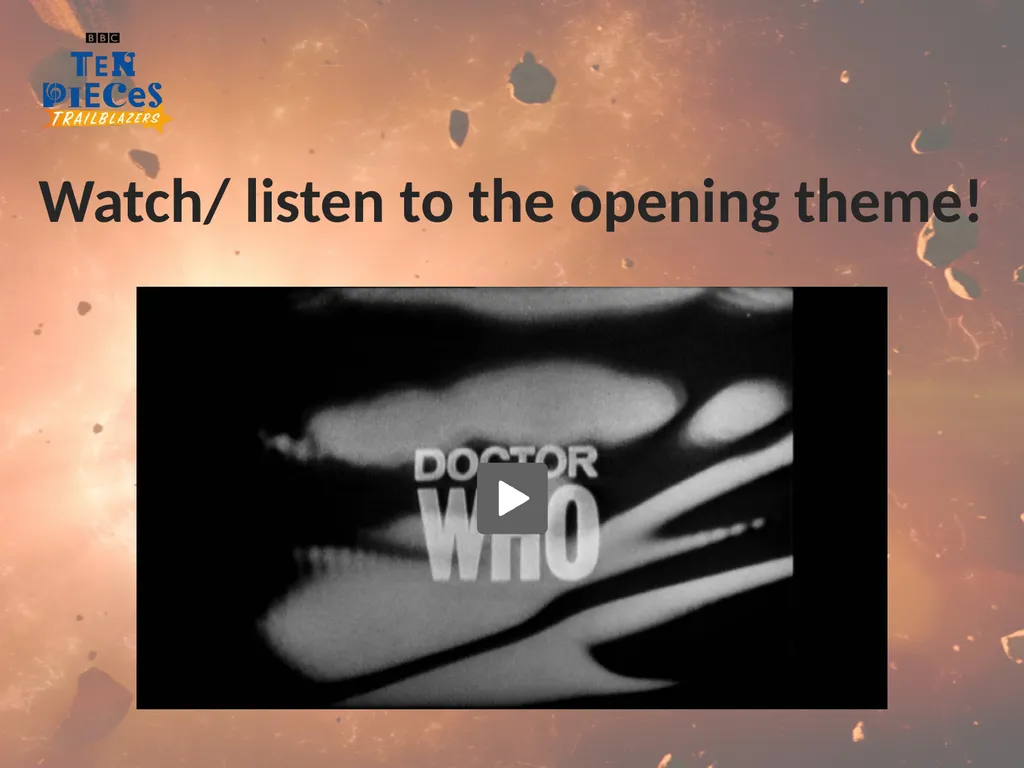
Delia Derbyshire Doctor Who Theme
(original theme composed by Ron Grainer)
Primary / KS2 / 2nd Level Classroom Lesson Plan Written by
Rachel Leach<br>
02
Trailblazer Composer Delia Derbyshire created a new soundworld using electronic sounds, using these to arrange the melody for Doctor Who – one of the most famous TV shows ever!<br>
03
Lesson outcomes After this lesson, pupils will be able to:
listen and reflect on a piece of orchestral music
create their own piece of music using instruments, voice and technology
perform as an ensemble
learn musical language appropriate to the task<br>
04
Curriculum checklist Learners will:
play and perform in ensemble contexts, using voices and playing musical instruments
improvise and compose music for a range of purposes using the interrelated dimensions of music
listen with attention to detail and recall sounds with increasing aural memory<br>
05
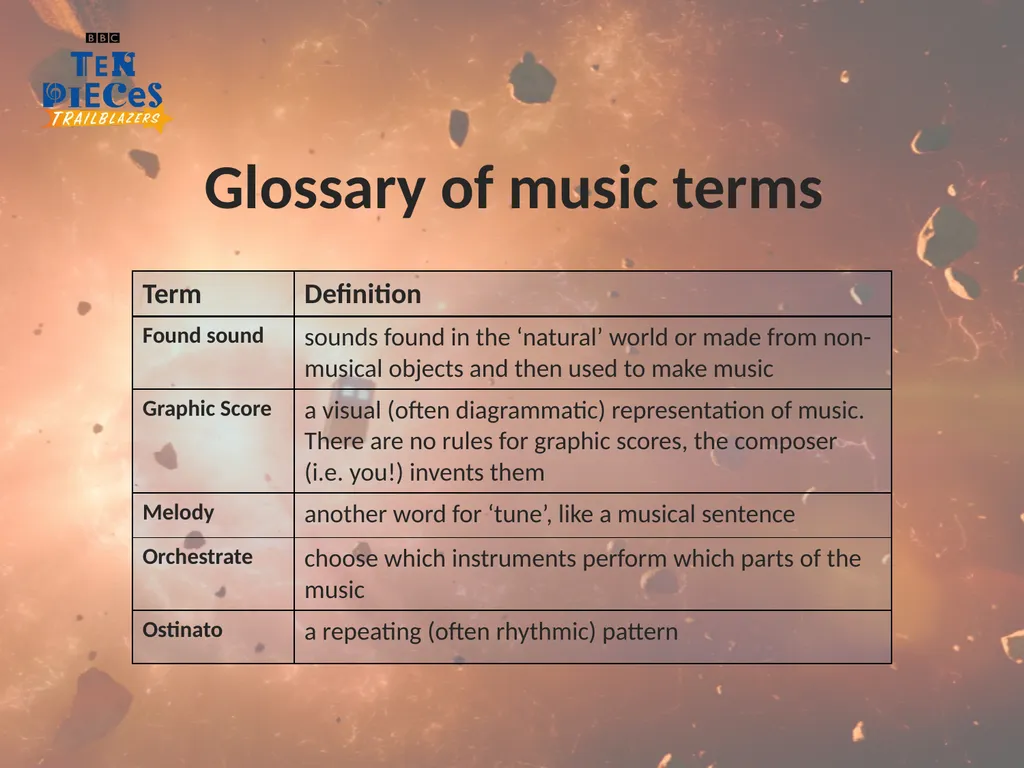
Glossary of music terms<br>
06
Lesson 1
Watching and listening<br>
07
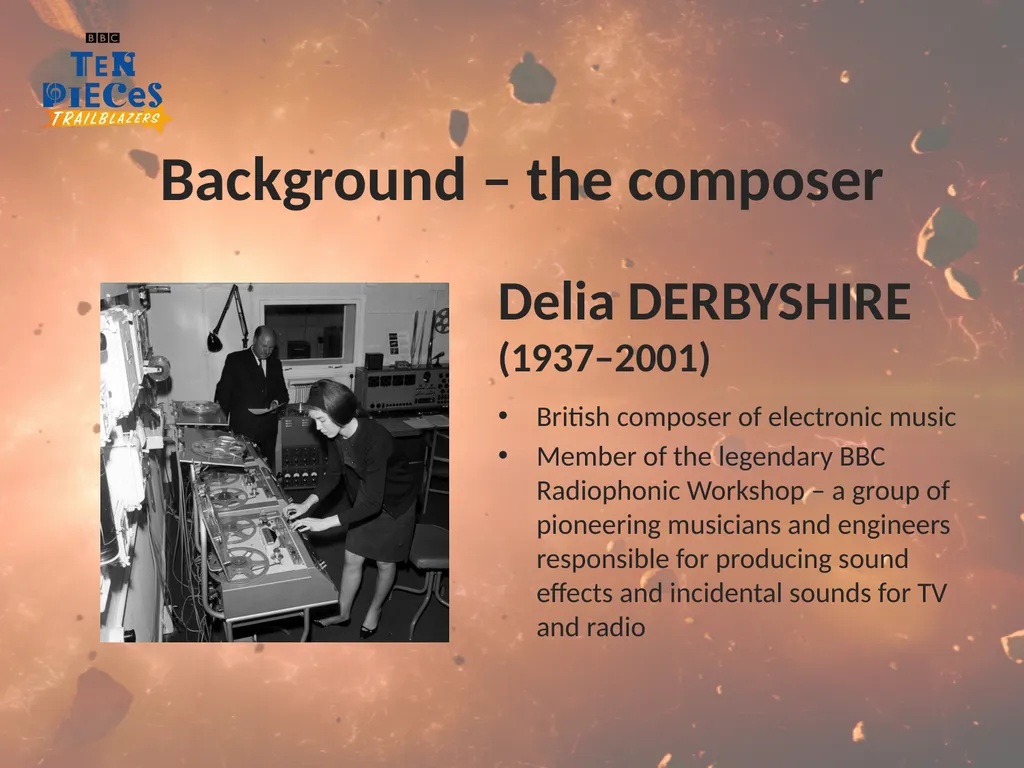
Background – the composer Delia DERBYSHIRE (1937–2001)
British composer of electronic music
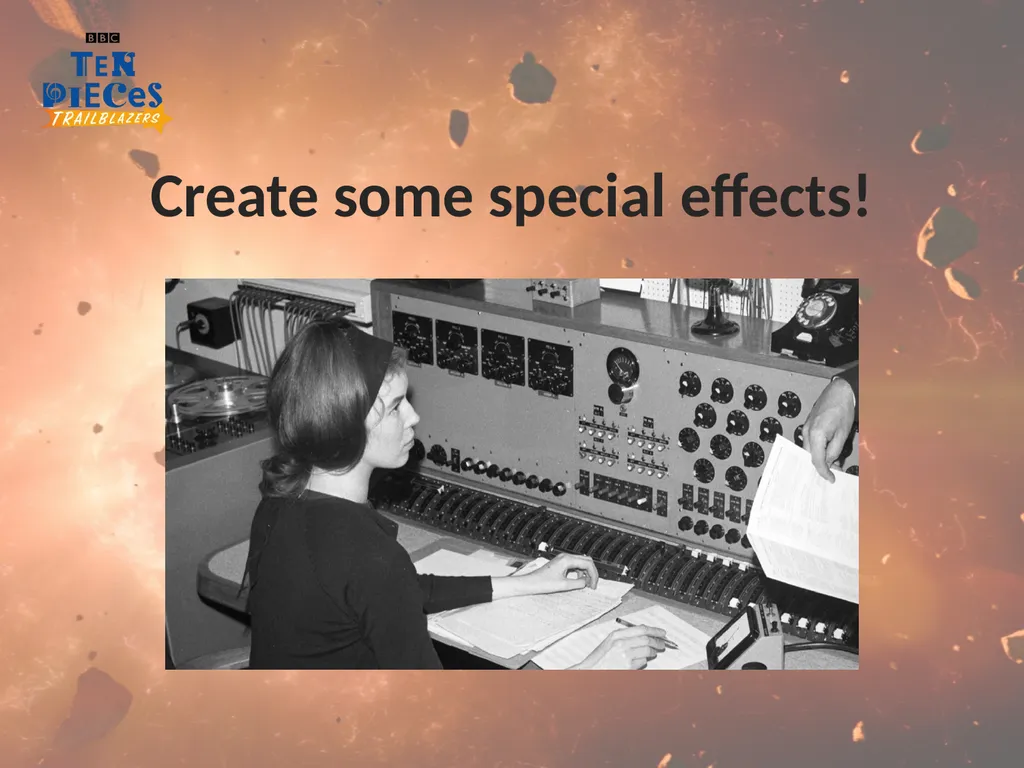
Member of the legendary BBC Radiophonic Workshop – a group of pioneering musicians and engineers responsible for producing sound effects and incidental sounds for TV and radio<br>
08
Background – the music Doctor Who Theme
The famous melody was actually written by Australian composer Roy Grainer. Delia’s task was to ‘realise’ or ‘arrange’ the theme using electronic sounds to match the futuristic sci-fi nature of the programme
Derbyshire’s version uses ‘found sounds’ that were manipulated electronically. She recorded the sound of everyday objects onto tape and then changed the speed of the tape to create different pitches or looped single sounds over and over to create rhythms. This was back in 1963 before computers made such experiments easy!
Scandalously, Derbyshire was not credited with the composition of the now iconic original version and received very little money for it<br>
09
Watch/ listen to the opening theme!<br>
10
As you listen to the music, draw the bass line and the swooping melody with two different colours<br>
11
Lesson 2
Ron’s theme - live!<br>
12
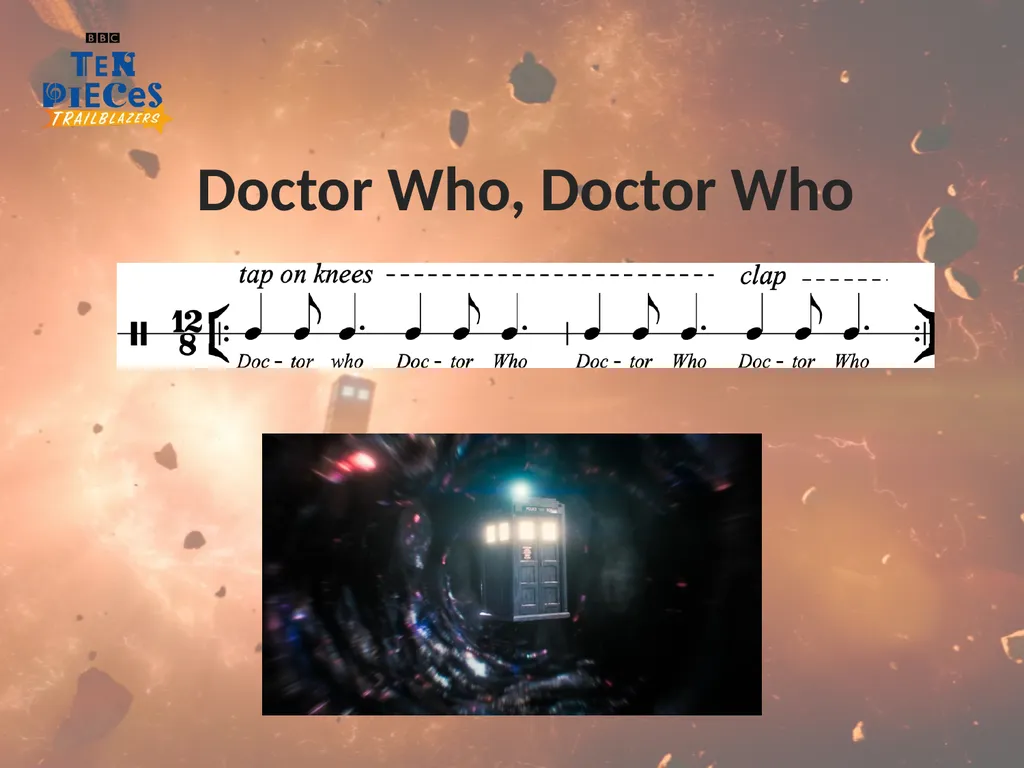
Doctor Who, Doctor Who<br>
13
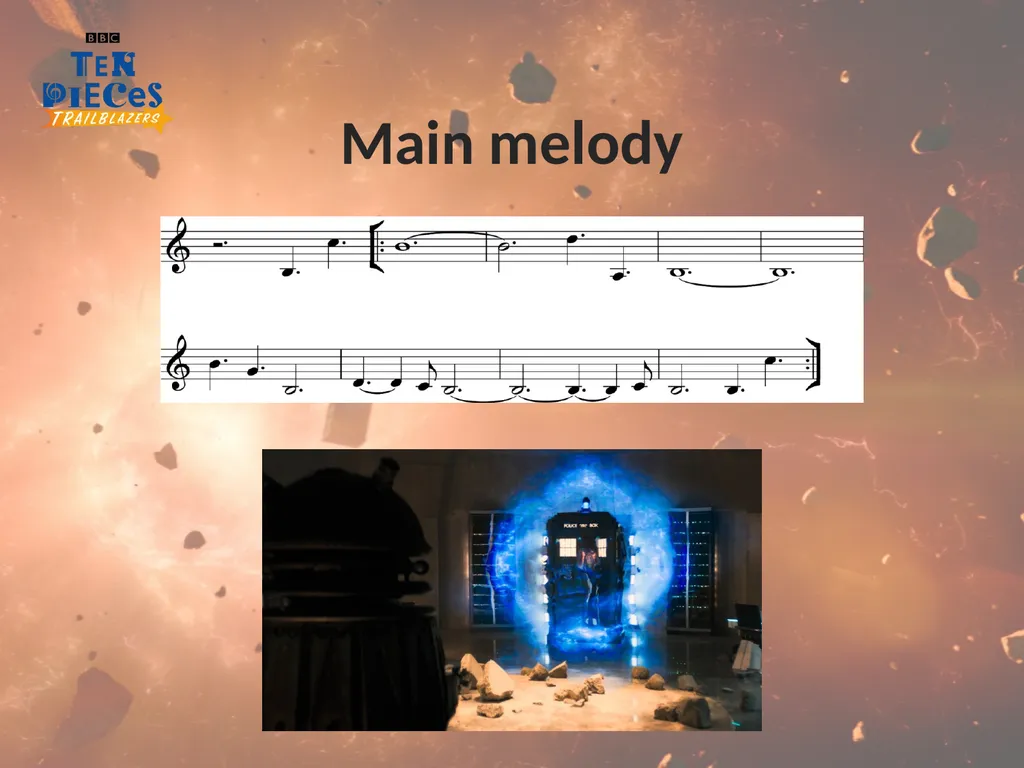
Main melody<br>
14
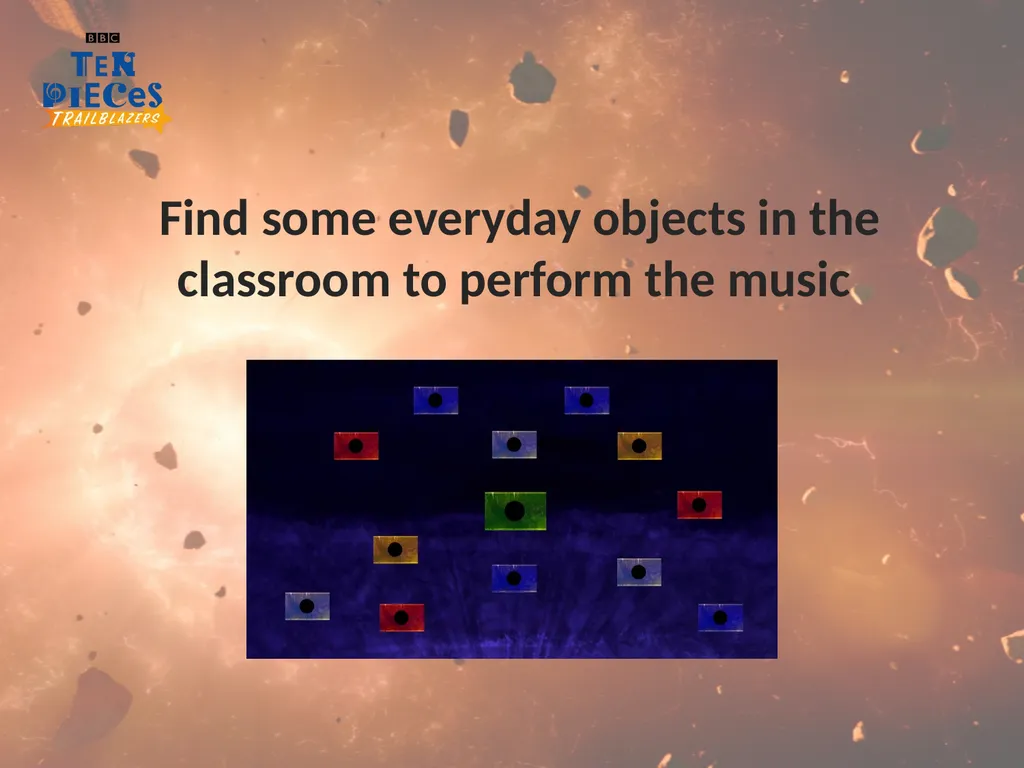
Find some everyday objects in the classroom to perform the music<br>
15
Lesson 3
Found sounds<br>
16
Sing to the theme to Doctor Who<br>
17
Find and record sounds of objects you have in your classroom or school. Try and find: Something else Long sounds Short sounds<br>
18
Lesson 4
Manipulation and special effects<br>
19
Create some special effects!<br>
20
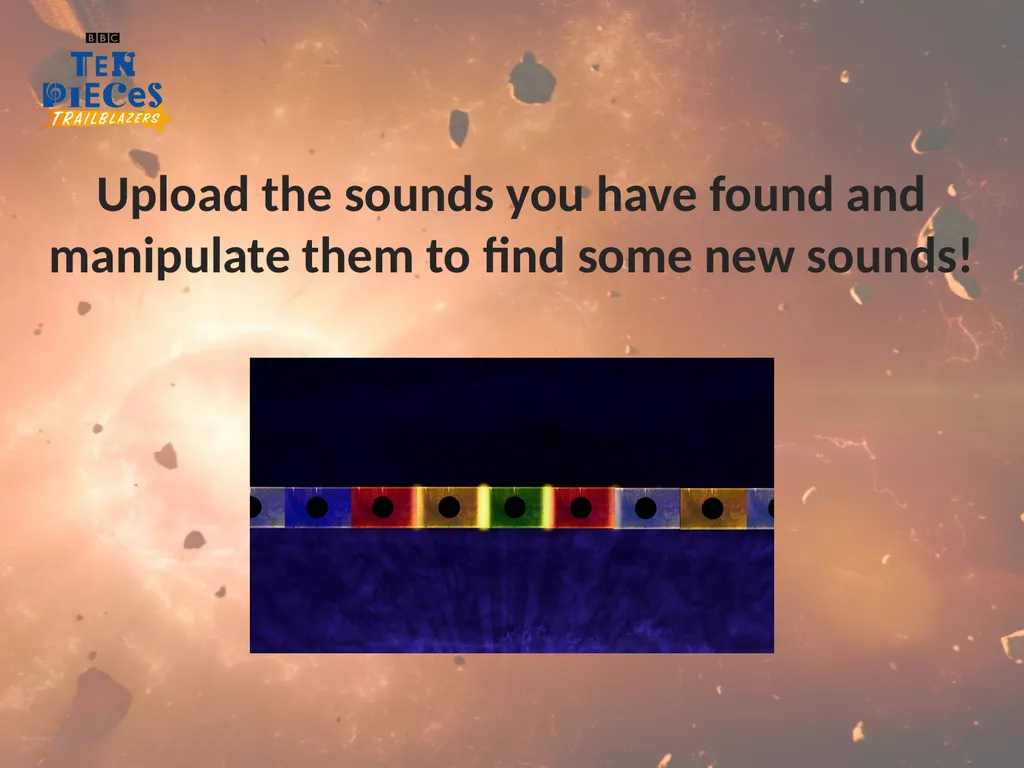
Upload the sounds you have found and manipulate them to find some new sounds!<br>
21
Lesson 5
Looping and pitching<br>
22
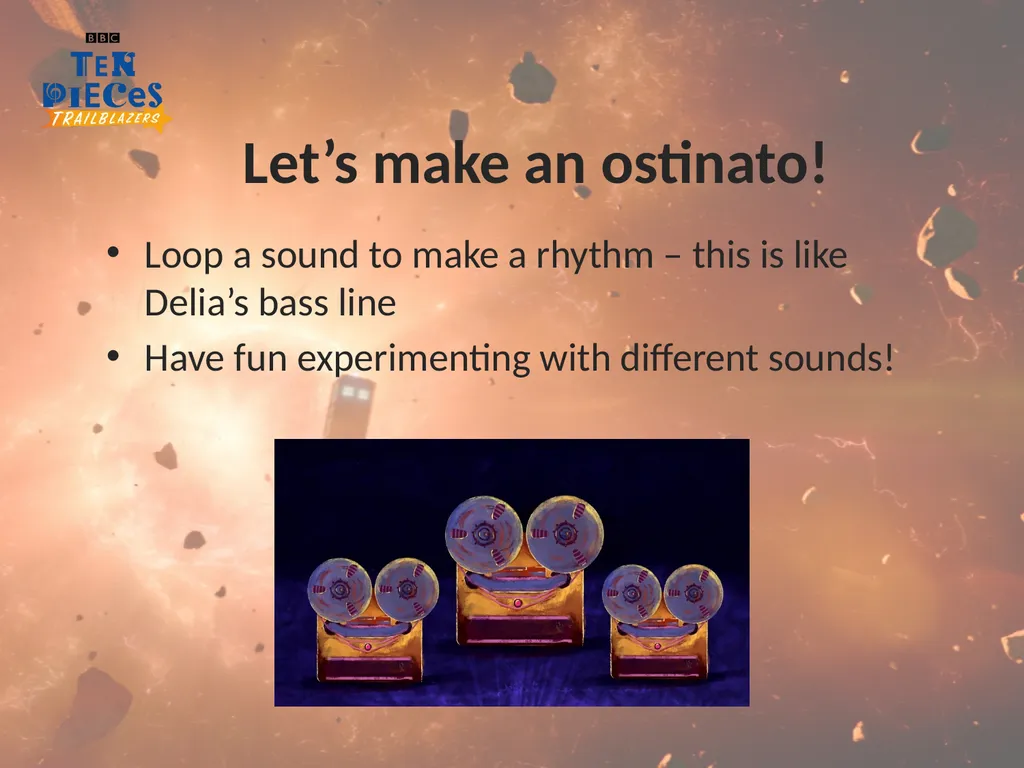
Let’s make an ostinato! Loop a sound to make a rhythm – this is like Delia’s bass line
Have fun experimenting with different sounds!<br>
23
Lesson 6
Structure and finish<br>
24
Your new piece is the theme tune to an imaginary TV show! What is your TV show called?
What is your TV show about?
Perform your new piece to the class, and tell them about your new imaginary TV show!<br>
25
Taking it further – cross-curricular activities SOUND EFFECTS: The BBC Radiophonic workshop existed to make sound effects for TV and radio. Have a go at making your own sound effects and add them into a play or story.
LITERACY: write the first episode of your invented TV show. Do this as a play script, stage it and add sound effects!
RESEARCH: discover more about the BBC Radiophonic Workshop and its pioneers.
UPLOAD: Show us what you’ve created! Submit your creative responses using our Uploader for a chance to be featured on the Ten Pieces website.<br>