Demand Response Providers 2025 Final Report Workshop Hosted by the California Public Utilities Commission May 14, 2025 Leap 2024 Load impact evaluation Agenda Introduction Leap portfolio Events Ex Post Methods Results Ex Ante Methods
"Demand Response Providers’ 2025 Final Report" is the property of its rightful owner. Permission is granted to
download and print the materials on this website for personal, non-commercial use only, and to display it
on your personal computer provided you do not modify the materials and that you retain all copyright
notices contained in the materials. By downloading content from our website, you accept the terms of this
agreement.
Presentation Transcript
01
Demand Response Providers’ 2025 Final Report Workshop
Hosted by the California Public Utilities Commission
May 14, 2025 Leap 2024 Load impact evaluation<br>
02
Agenda Introduction
Leap portfolio
Events
Ex Post
Methods
Results
Ex Ante
Methods
Results Leap Program Year 2024 Load Impacts<br>
03
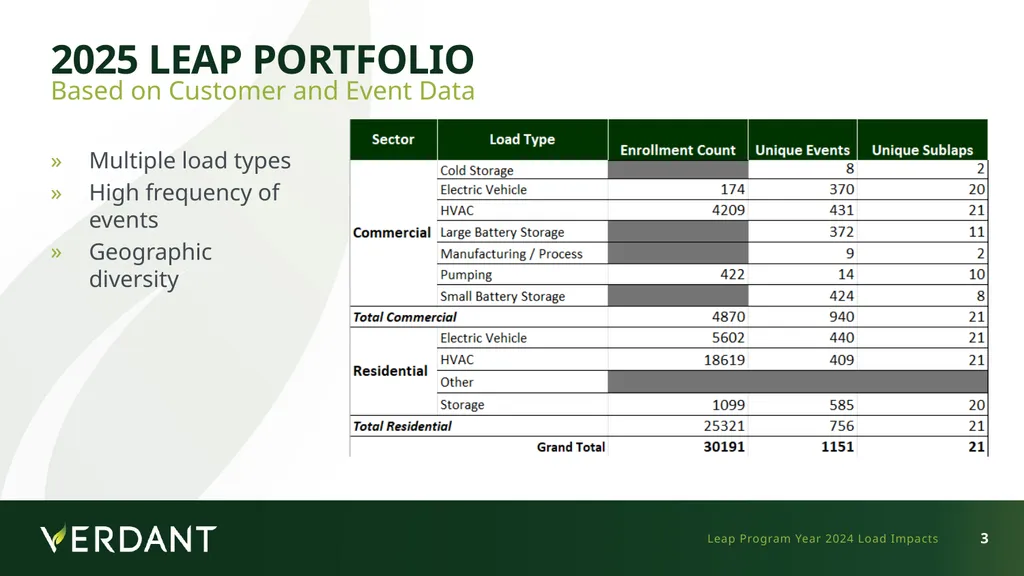
2025 Leap Portfolio Based on Customer and Event Data Multiple load types
High frequency of events
Geographic diversity Leap Program Year 2024 Load Impacts<br>
04
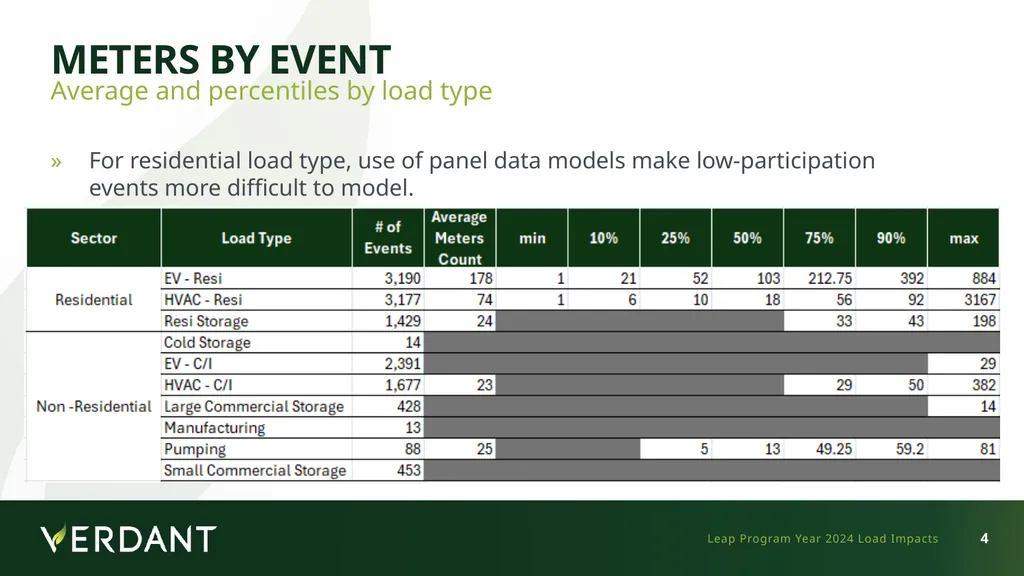
Meters by event Average and percentiles by load type For residential load type, use of panel data models make low-participation events more difficult to model. Leap Program Year 2024 Load Impacts<br>
05
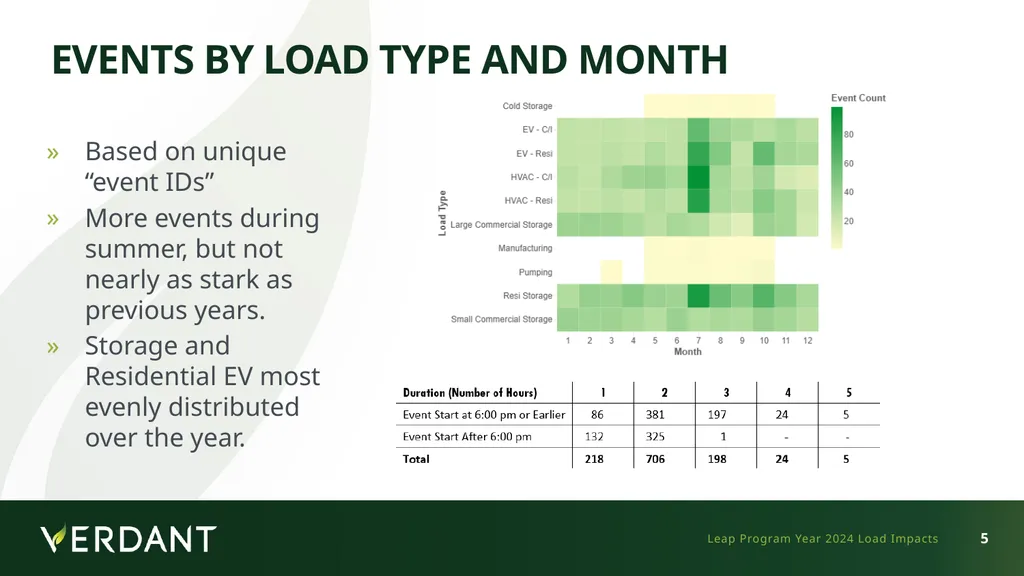
Events by Load Type and Month Based on unique “event IDs”
More events during summer, but not nearly as stark as previous years.
Storage and Residential EV most evenly distributed over the year. Leap Program Year 2024 Load Impacts<br>
06
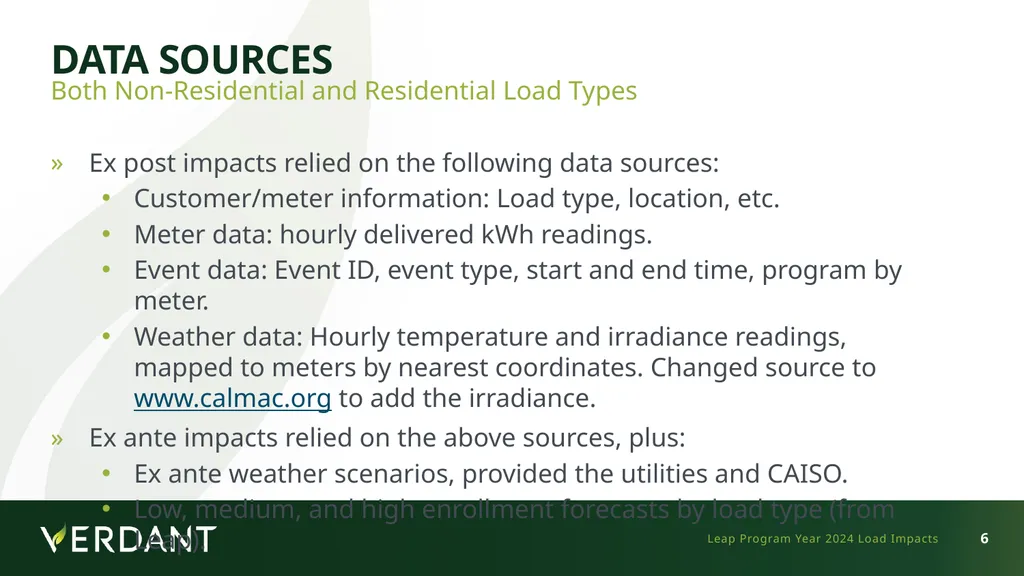
Data Sources Both Non-Residential and Residential Load Types Ex post impacts relied on the following data sources:
Customer/meter information: Load type, location, etc.
Meter data: hourly delivered kWh readings.
Event data: Event ID, event type, start and end time, program by meter.
Weather data: Hourly temperature and irradiance readings, mapped to meters by nearest coordinates. Changed source to www.calmac.org to add the irradiance.
Ex ante impacts relied on the above sources, plus:
Ex ante weather scenarios, provided the utilities and CAISO.
Low, medium, and high enrollment forecasts by load type (from Leap). Leap Program Year 2024 Load Impacts<br>
07
Ex Post impacts Leap Program Year 2024 Load Impacts<br>
08
Residential approach Three load types: HVAC, EV, storage.
Panel data models for each event modeled by SubLAP and PV presence
Model selection based on a proxy event day to select best model based on out-of-sample performance.
Events differentiated by type (Test, Market, Combined) and program (CCA vs. DRAM)
Event IDs can have a mix of CCA and DRAM meters, but shares are overwhelmingly one or the other (e.g., >95% of meters DRAM). Leap Program Year 2024 Load Impacts<br>
09
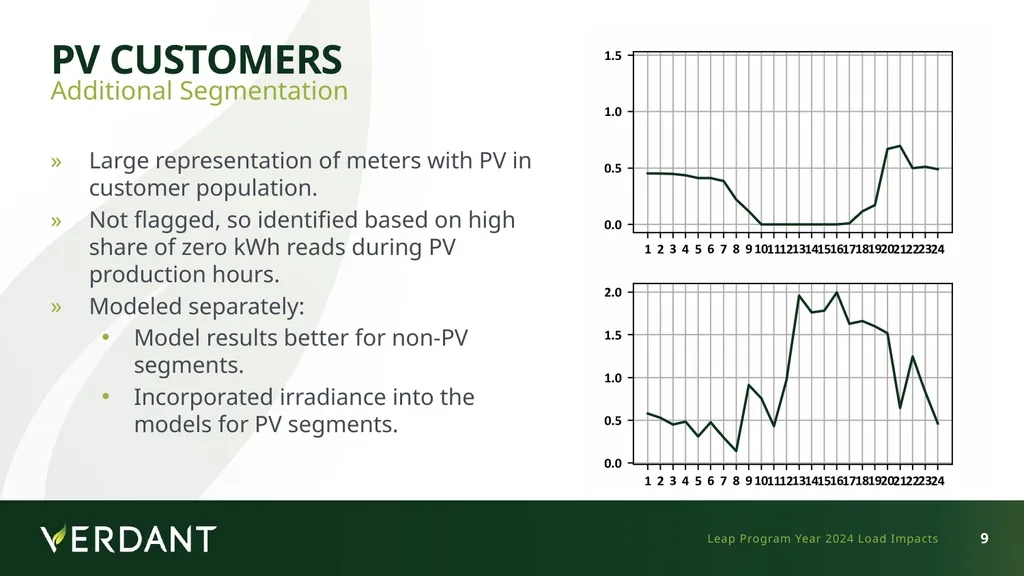
PV Customers Additional Segmentation Large representation of meters with PV in customer population.
Not flagged, so identified based on high share of zero kWh reads during PV production hours.
Modeled separately:
Model results better for non-PV segments.
Incorporated irradiance into the models for PV segments. Leap Program Year 2024 Load Impacts<br>
10
Non-Residential approach Individual regression models for each meter
Analysis to assess weather sensitivity of meters to determine a model family, done seasonally.
Model selection based on a proxy event day to select best model based on out-of-sample performance.
Separate models could be selected based on time of the year (based on quarter). All event specific events within a quarter are estimated simultaneously for each meter. Leap Program Year 2024 Load Impacts<br>
11
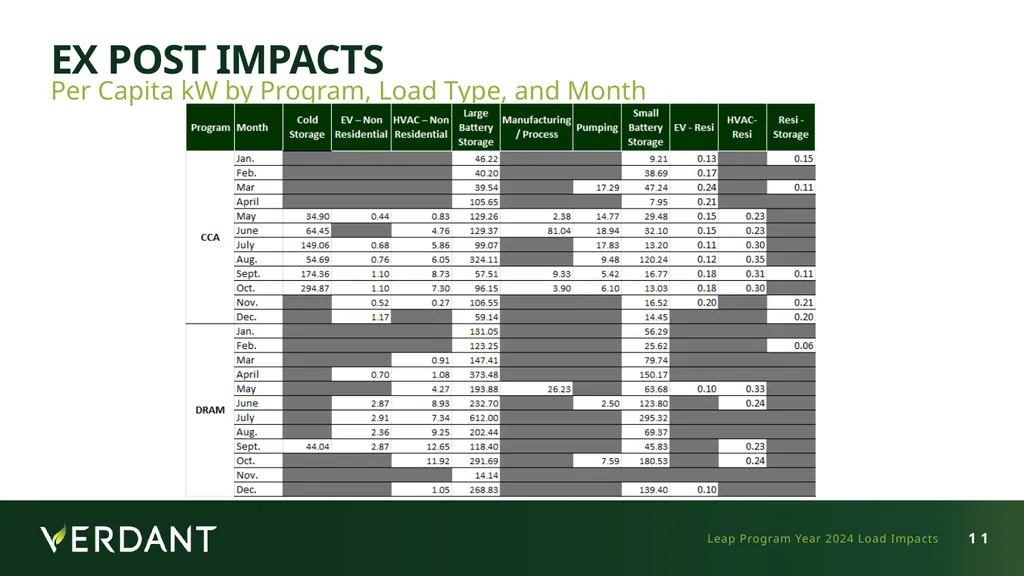
Ex Post Impacts Per Capita kW by Program, Load Type, and Month Leap Program Year 2024 Load Impacts<br>
12
Ex Ante impacts Leap Program Year 2024 Load Impacts<br>
13
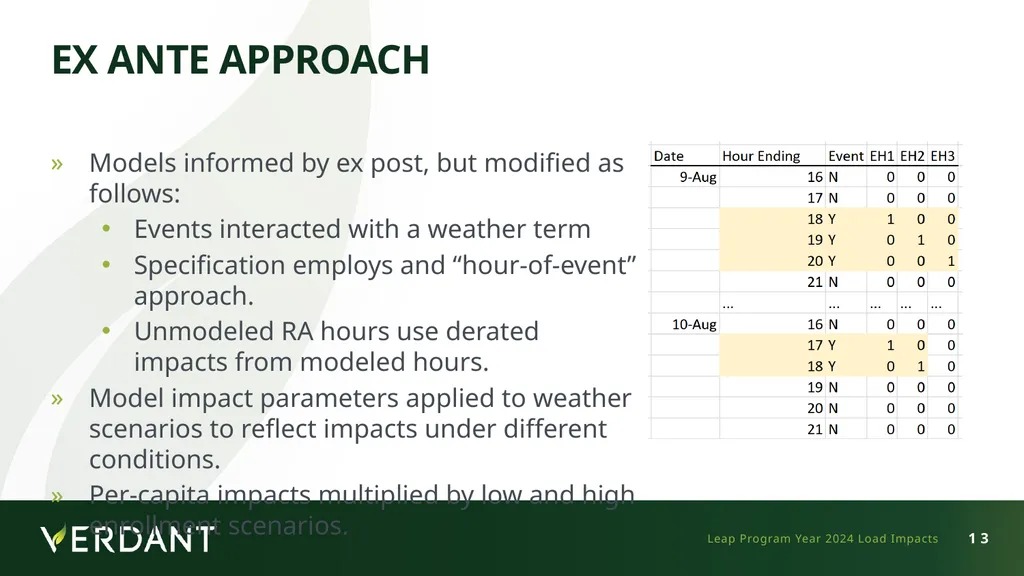
Ex ante Approach Models informed by ex post, but modified as follows:
Events interacted with a weather term
Specification employs and “hour-of-event” approach.
Unmodeled RA hours use derated impacts from modeled hours.
Model impact parameters applied to weather scenarios to reflect impacts under different conditions.
Per-capita impacts multiplied by low and high enrollment scenarios. Leap Program Year 2024 Load Impacts<br>
14
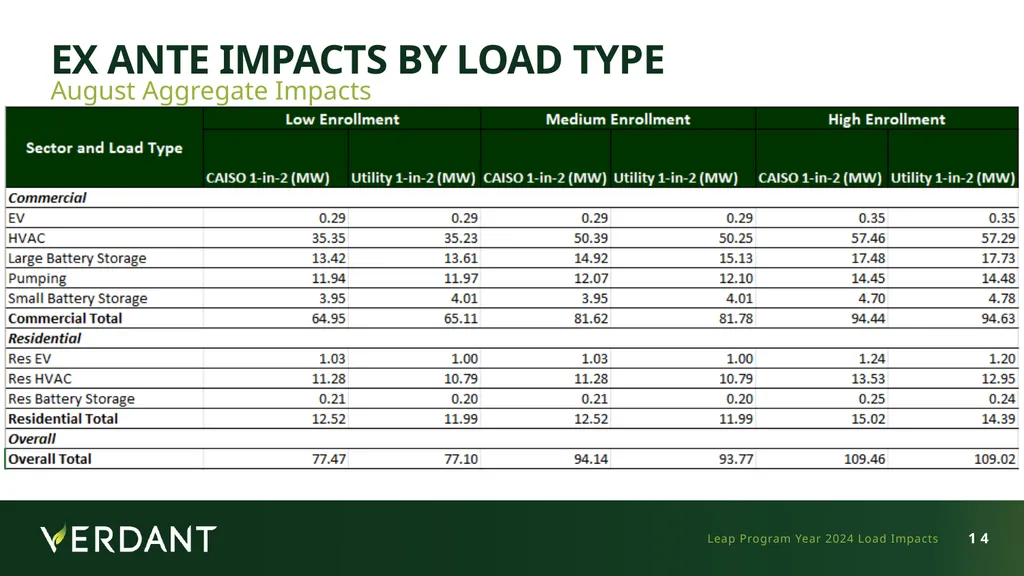
Ex ante impacts by load type August Aggregate Impacts Leap Program Year 2024 Load Impacts<br>
15
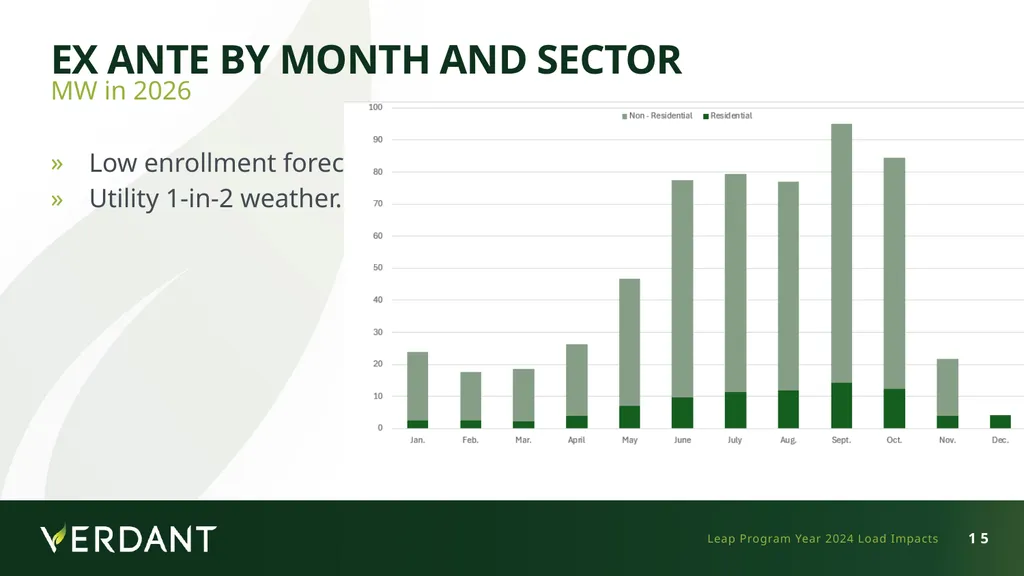
Ex Ante by Month and sector MW in 2026 Low enrollment forecast.
Utility 1-in-2 weather. Leap Program Year 2024 Load Impacts<br>
16
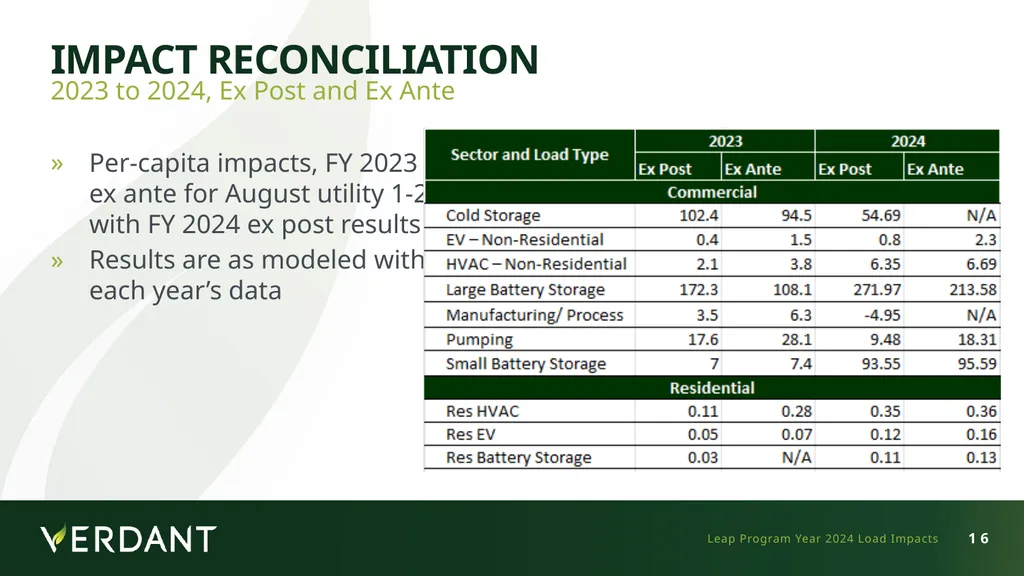
Impact reconciliation 2023 to 2024, Ex Post and Ex Ante Per-capita impacts, FY 2023 ex ante for August utility 1-2 with FY 2024 ex post results
Results are as modeled with each year’s data Leap Program Year 2024 Load Impacts<br>
17
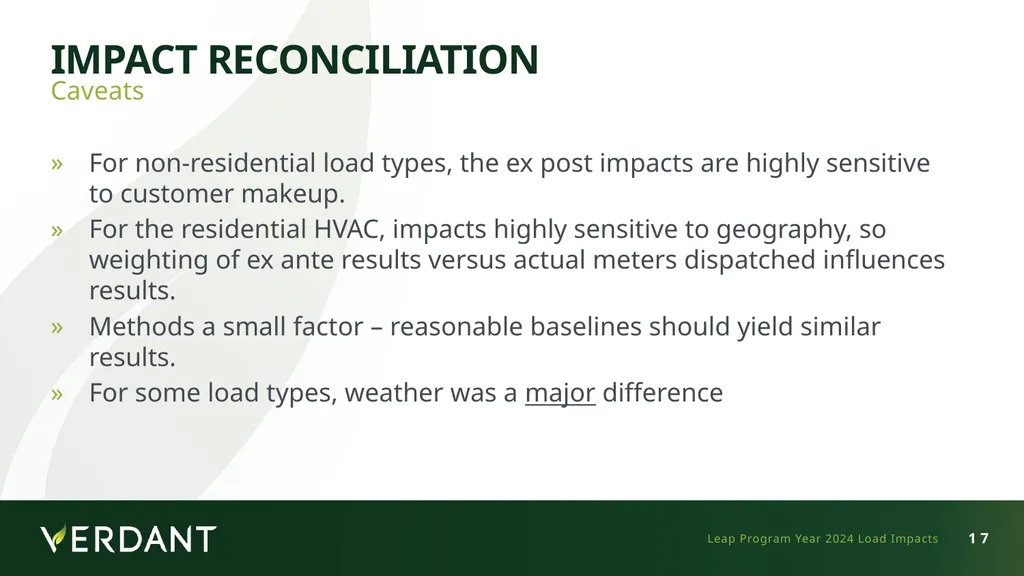
Impact reconciliation Caveats For non-residential load types, the ex post impacts are highly sensitive to customer makeup.
For the residential HVAC, impacts highly sensitive to geography, so weighting of ex ante results versus actual meters dispatched influences results.
Methods a small factor – reasonable baselines should yield similar results.
For some load types, weather was a major difference Leap Program Year 2024 Load Impacts<br>
18
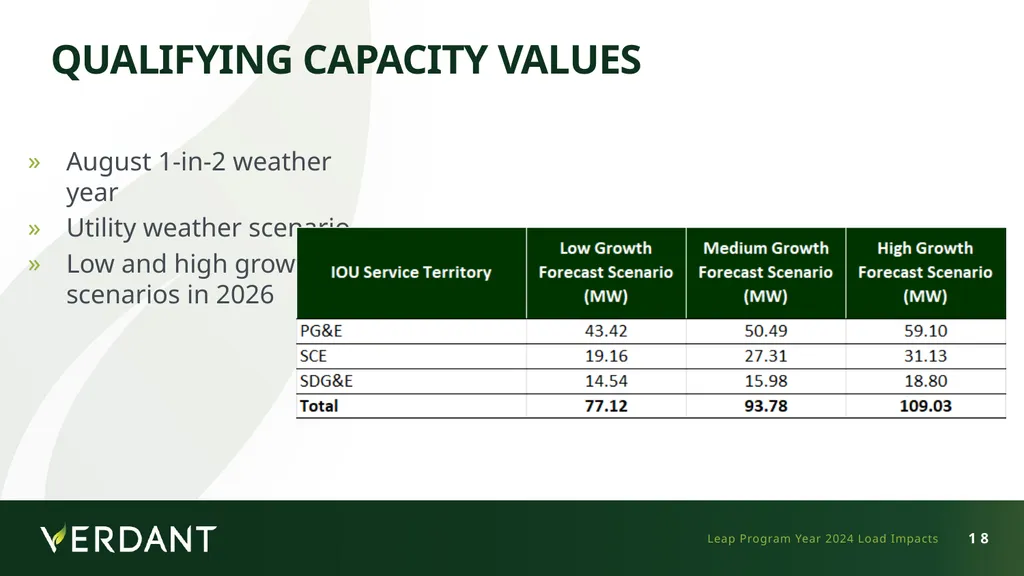
Qualifying capacity values August 1-in-2 weather year
Utility weather scenario
Low and high growth scenarios in 2026 Leap Program Year 2024 Load Impacts<br>
19
Conclusion and recommendations Leap Program Year 2024 Load Impacts<br>
20
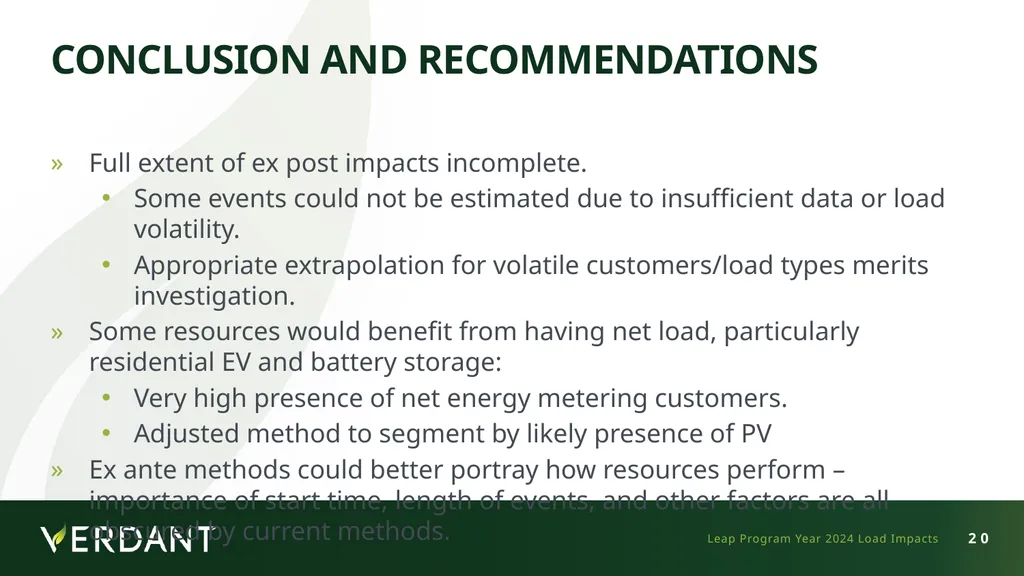
Conclusion and recommendations Full extent of ex post impacts incomplete.
Some events could not be estimated due to insufficient data or load volatility.
Appropriate extrapolation for volatile customers/load types merits investigation.
Some resources would benefit from having net load, particularly residential EV and battery storage:
Very high presence of net energy metering customers.
Adjusted method to segment by likely presence of PV
Ex ante methods could better portray how resources perform – importance of start time, length of events, and other factors are all obscured by current methods. Leap Program Year 2024 Load Impacts<br>