Demerger Takeover Subject: Merger Acquisition Corporate Restructuring Table Of Content Part : 01 Demerger Meaning Types Advantages Disadvantages Example Part : 02 Takeover Meaning Types Consideration of Company Takeover Example Part :
"Demerger & Takeover Subject: Merger & Acquisition" is the property of its rightful owner. Permission is granted to
download and print the materials on this website for personal, non-commercial use only, and to display it
on your personal computer provided you do not modify the materials and that you retain all copyright
notices contained in the materials. By downloading content from our website, you accept the terms of this
agreement.
Table Of Content Part : 01 Demerger
Meaning
Types
Advantages & Disadvantages
Example
Part : 02 Takeover
Meaning
Types
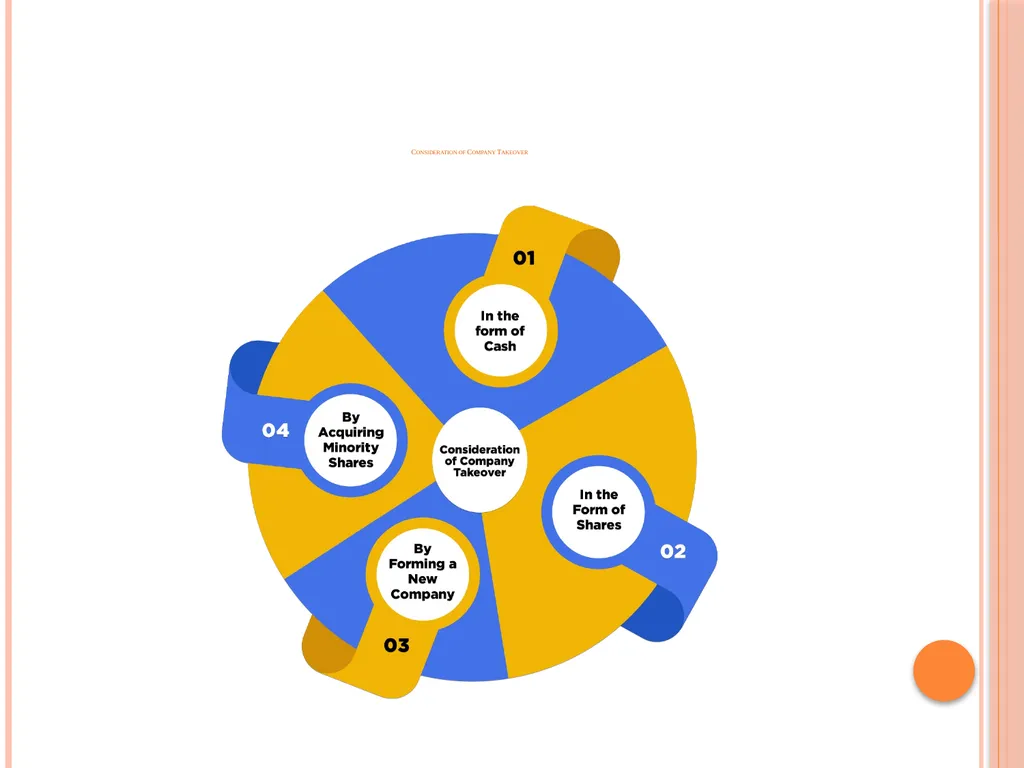
Consideration of Company Takeover
Example<br>
03
Part : 01 Demerger<br>
04
Meaning A demerger under Companies Act 2013, can be defined as corporate restructuring in which a business breaks into components. These components can operate as a separate unit or can be sold or can be liquidated. It allows a large company to split into various business units.
De-mergers are a valuable strategy for companies that want to refocus on their most profitable units, reduce risk, and create greater shareholder value.
A de-merger may take place for several reasons, including focusing on a company's core operations and spinning off less relevant business units, to raise capital, or to discourage a hostile takeover.<br>
05
Types 1. Spin-offs
In a spin-off, the parent company separates off a business unit and makes it its own entity. Shares in the newly created company are distributed to existing shareholders of the parent via a dividend.
2. Splits
Split-off : A large company consisting of multiple businesses may want to split them into separate companies.
Split-up : In contrast to the above, in a split-up the parent company does not survive. It is liquidated into the new companies that are created as part of the transaction.<br>
06
Continue… 3. Carve-outs
Spin-offs and split-offs can be preceded by an IPO in which a portion of the share of the subsidiary is sold to the public, with the proceeds either retained by the subsidiary or distributed to the parent. This is called a carve-out.<br>
07
Advantages of Demerger Tax benefits
Improve Strategic Focus
Improved Profitability
Enhance Shareholder Value
Long term Value creation
Increased Transparency<br>
08
Disadvantages of Demerger Shareholder dissent
Immediate drop in stock value
Required significant Planning
Reduction in economies of scale<br>
09
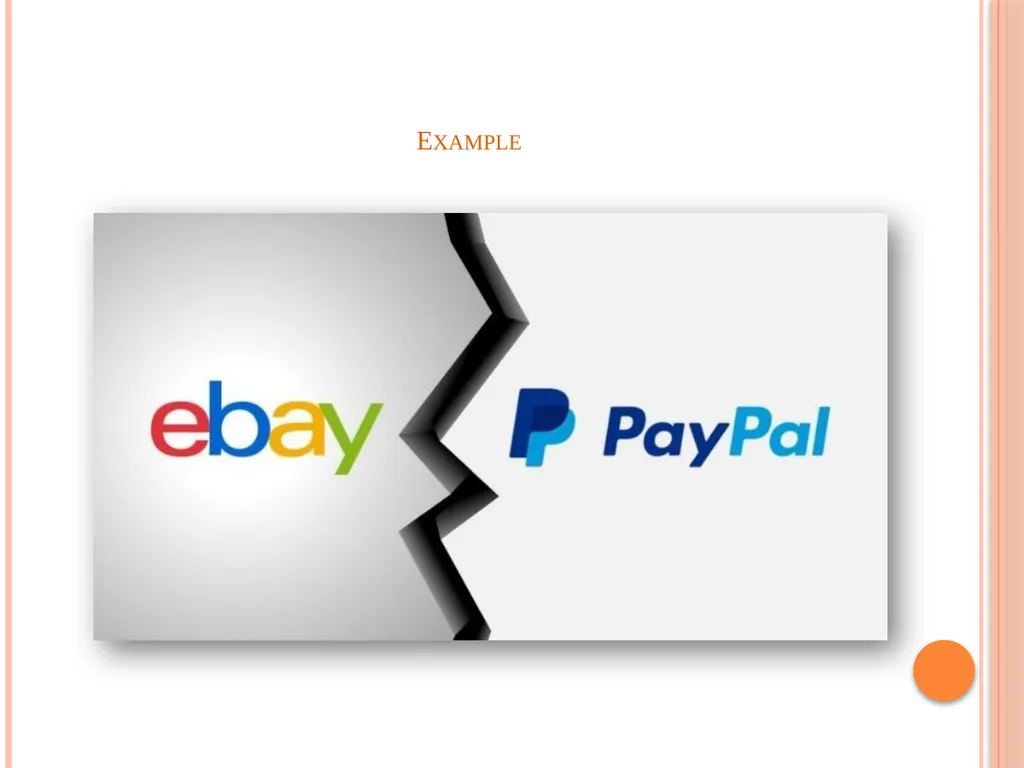
Example<br>
10
Part : 02 Takeover<br>
11
Meaning A takeover occurs when one company makes a successful bid to assume control of or acquire another. Takeovers can be done by purchasing a majority stake in the target firm.
A larger corporation usually conducts takeovers for a smaller one. They could be voluntary by a joint agreement between the two companies. In other situations, they can be rejected, in which case, without indicating, the larger organization goes after the target.<br>
12
Types 1. Friendly or Negotiated Takeover : A friendly takeover is a scenario in which a target company is willingly acquired by another company. Friendly takeovers are subject to approval by the target company's shareholders, who generally green light deals only if they believe the price per share offer is reasonable.
2. Bail out Takeover : A bailout takeover refers to a scenario where the government or a financially stable company takes over control of a weak company with the goal of helping the latter regain its financial strength.
3. Hostile Takeover : A hostile takeover occurs when an acquiring company attempts to take over a target company against the wishes of the target company's management.<br>
13
Continues… 4. Conglomerate Takeover : A conglomerate takeover is a merger of two firms that have completely unrelated business activities.
5. Vertical Takeover : Vertical acquisitions are typically when a company buys out one of its suppliers. The main purpose behind this kind of takeover is reduction in costs.
6. Horizontal Takeover : A horizontal takeover is when one company acquires another company in the same industry and works at the same production stage.<br>