Deployment and Separation Data Objectives Deployment related objectives: Describe how data changes when Service members are deployed. Discuss importance of considering deployment when calculating rates, and especially when comparing rates
"Deployment and Separation Data Objectives" is the property of its rightful owner. Permission is granted to
download and print the materials on this website for personal, non-commercial use only, and to display it
on your personal computer provided you do not modify the materials and that you retain all copyright
notices contained in the materials. By downloading content from our website, you accept the terms of this
agreement.
Presentation Transcript
01
Deployment and Separation Data<br>
02
Objectives Deployment related objectives:
Describe how data changes when Service members are deployed.
Discuss importance of considering deployment when calculating rates, and especially when comparing rates amongst the Services.
Describe the deployment data
Separation related objectives:
Describe the Separation data.
Discuss the values of the separation codes.<br>
03
Objectives Both Deployment and Separation data are owned by the Defense Manpower Data Center (DMDC)
DHA has Special Project Agreements with DMDC that enable the use of these data under certain circumstances.
Internal users can utilize flag variables that have been appended to all of the data types from the deployment data.
DHA cannot release CTS or Separation data externally unless the recipient has a signed Special Project Agreement with DMDC<br>
04
Deployment Data<br>
05
Deployments The US has been at war for the last 17 years
This has placed incredible stress on the MHS.
The MHS is responsible for ensuring medical and dental readiness for all Service members.
Ensuring readiness for active duty is an ongoing function of the MHS.
Since Guard/Reserve have sporadic coverage with DoD, there is a 30 day “early alert” period where the MHS can provide the healthcare services needed to get the Guard/Reserve ready to deploy.
Providers also deploy from MTFs, and often those providers care for more than just the Active Duty that deployed with them, leaving a gap that requires backfills, etc.
Obviously, the deployment file can be used to build a list of deployers.<br>
06
Deployments Includes data from 9/11/2001+
Contents of the Deployment Data
DEERS Person ID & Social Security Number
Deployment Start and Stop Date
Death Date
Gender, Date of Birth, Zip Code, Service Branch
The deployment file contains “buffer” records which span the gaps between deployments.
This was a system requirement so that the MDR’s data mart could apply deployment data properly. These should be removed by limited to record type = “D”, for deployment record.<br>
07
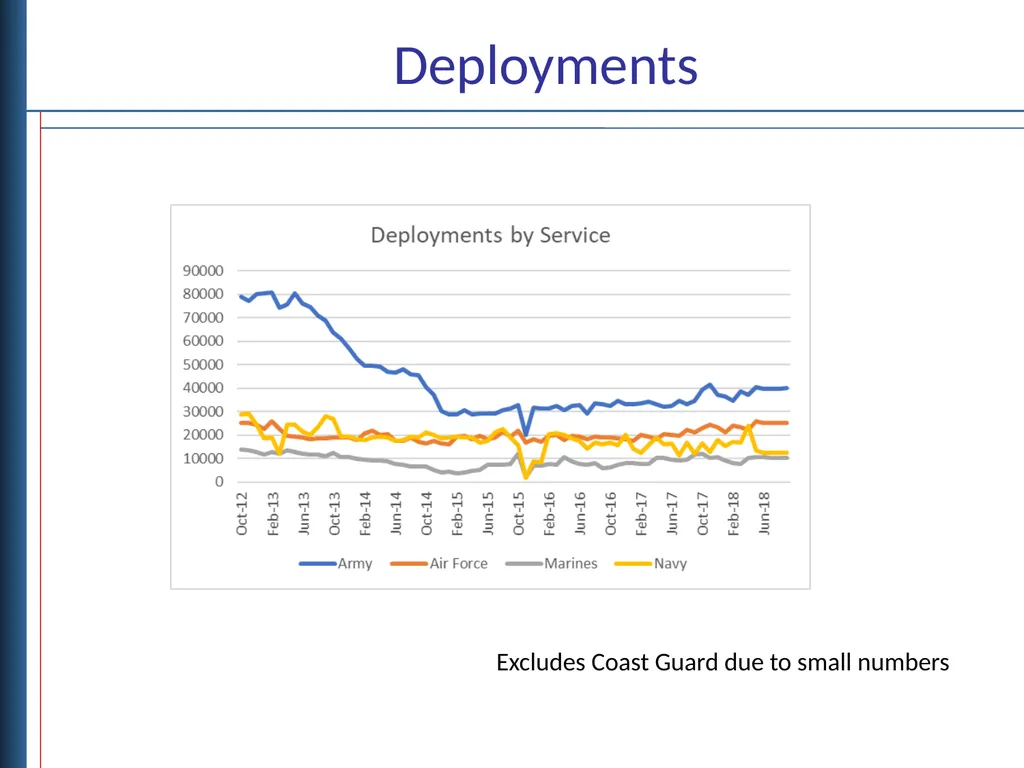
Deployments Excludes Coast Guard due to small numbers<br>
08
When Service members deploy, DEERS does not change their address to represent where they deploy to; Service members remain listed at their home base.
This can greatly impact measurement of things like utilization rates because the member will show up in the denominator but have little opportunity to appear in the numerator.
Incorporating TMDS data into work can be helpful.
However, TMDS data is known to be incomplete and is not coded as well as regular peacetime healthcare data.
Many analysts use deployment data to adjust Deployments<br>
09
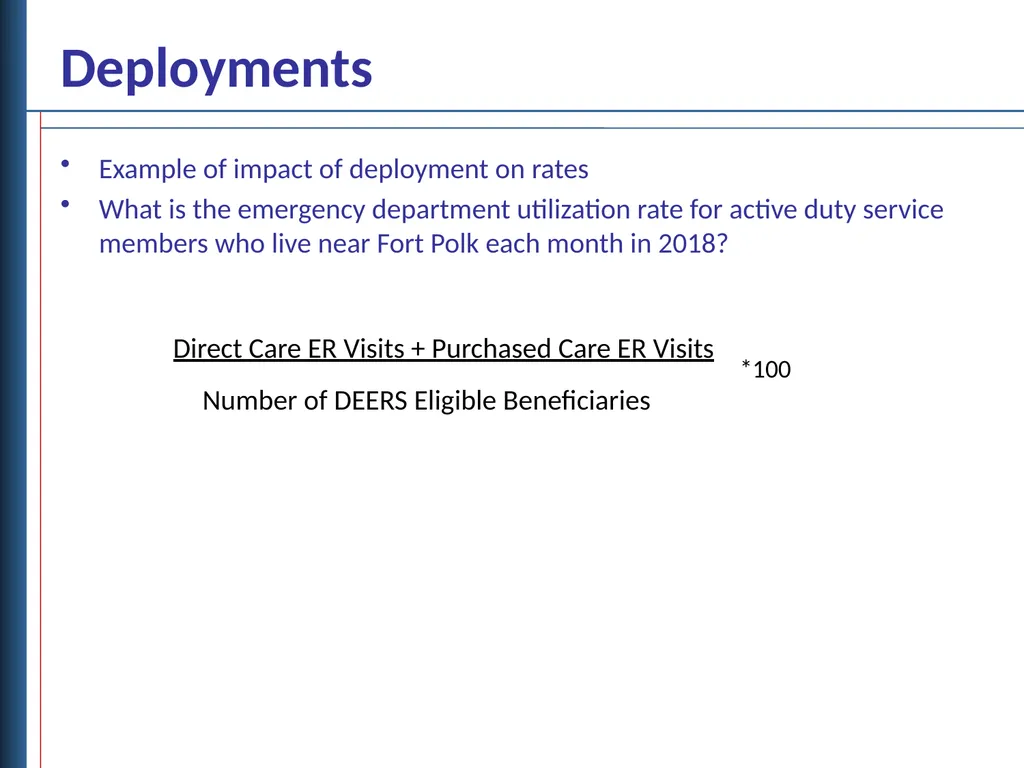
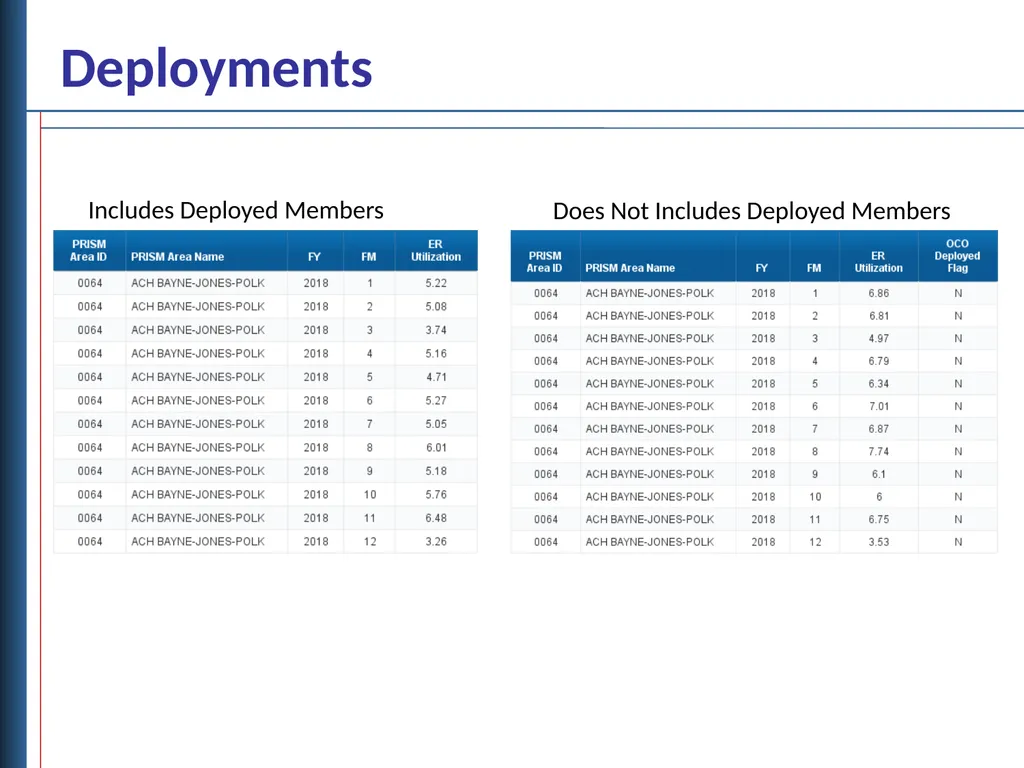
Example of impact of deployment on rates
What is the emergency department utilization rate for active duty service members who live near Fort Polk each month in 2018? Deployments Direct Care ER Visits + Purchased Care ER Visits Number of DEERS Eligible Beneficiaries *100<br>
10
Deployments Does Not Includes Deployed Members Includes Deployed Members<br>
11
Separation Data<br>
12
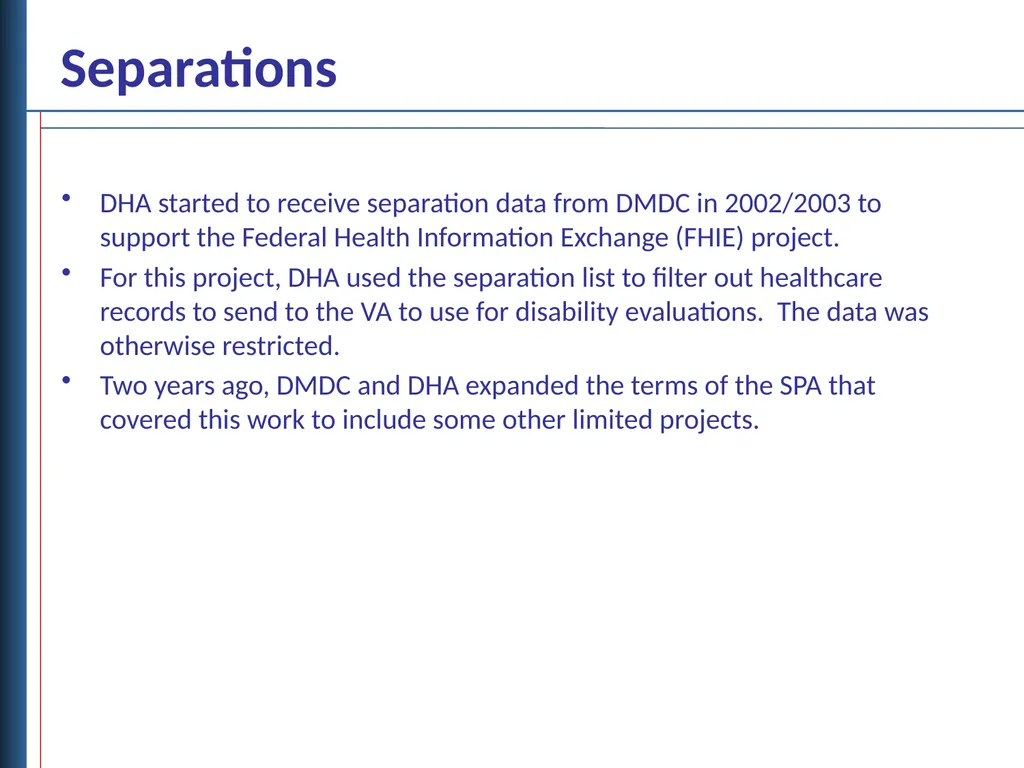
DHA started to receive separation data from DMDC in 2002/2003 to support the Federal Health Information Exchange (FHIE) project.
For this project, DHA used the separation list to filter out healthcare records to send to the VA to use for disability evaluations. The data was otherwise restricted.
Two years ago, DMDC and DHA expanded the terms of the SPA that covered this work to include some other limited projects. Separations<br>
13
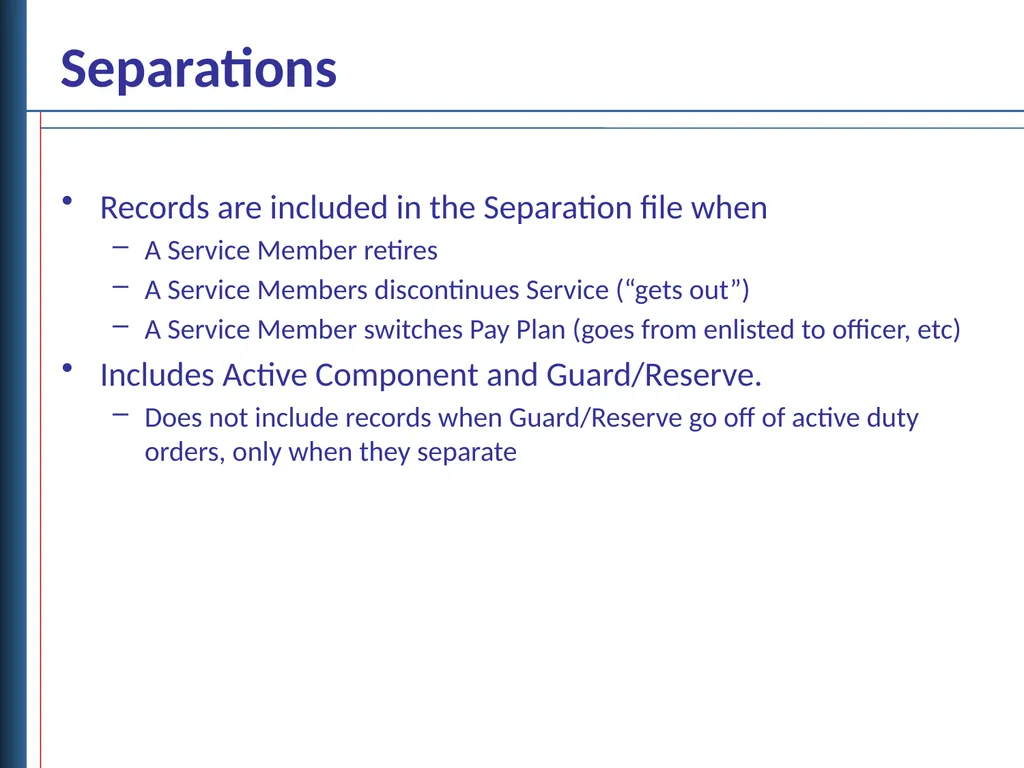
Records are included in the Separation file when
A Service Member retires
A Service Members discontinues Service (“gets out”)
A Service Member switches Pay Plan (goes from enlisted to officer, etc)
Includes Active Component and Guard/Reserve.
Does not include records when Guard/Reserve go off of active duty orders, only when they separate Separations<br>
14
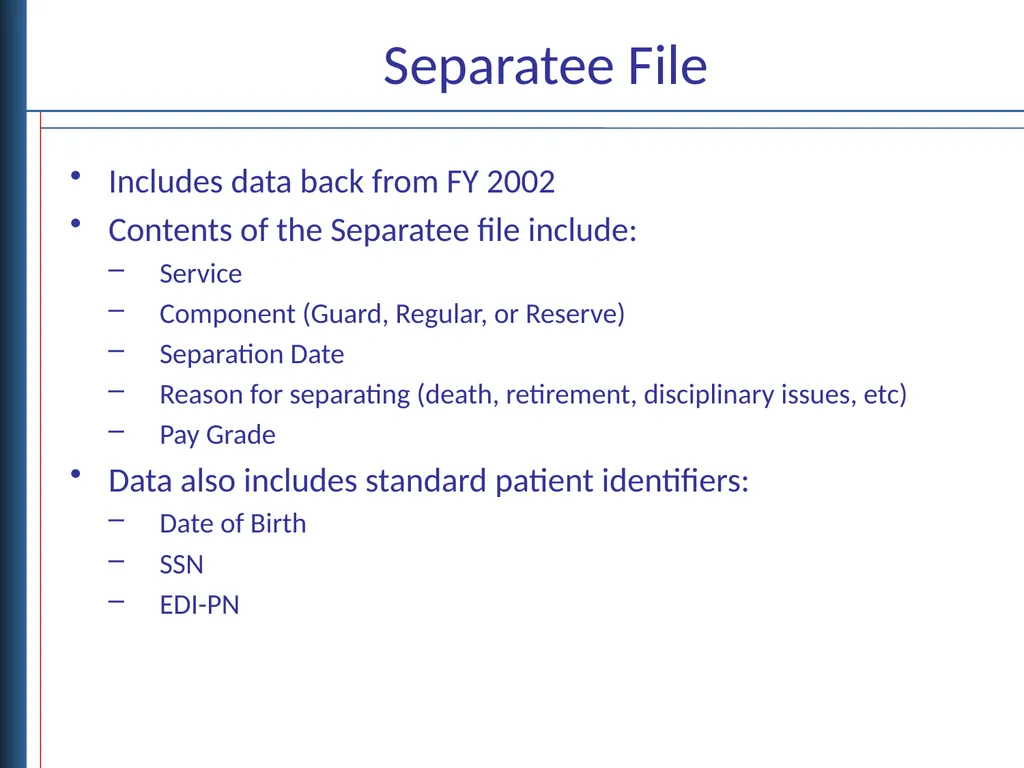
Separatee File Includes data back from FY 2002
Contents of the Separatee file include:
Service
Component (Guard, Regular, or Reserve)
Separation Date
Reason for separating (death, retirement, disciplinary issues, etc)
Pay Grade
Data also includes standard patient identifiers:
Date of Birth
SSN
EDI-PN<br>
15
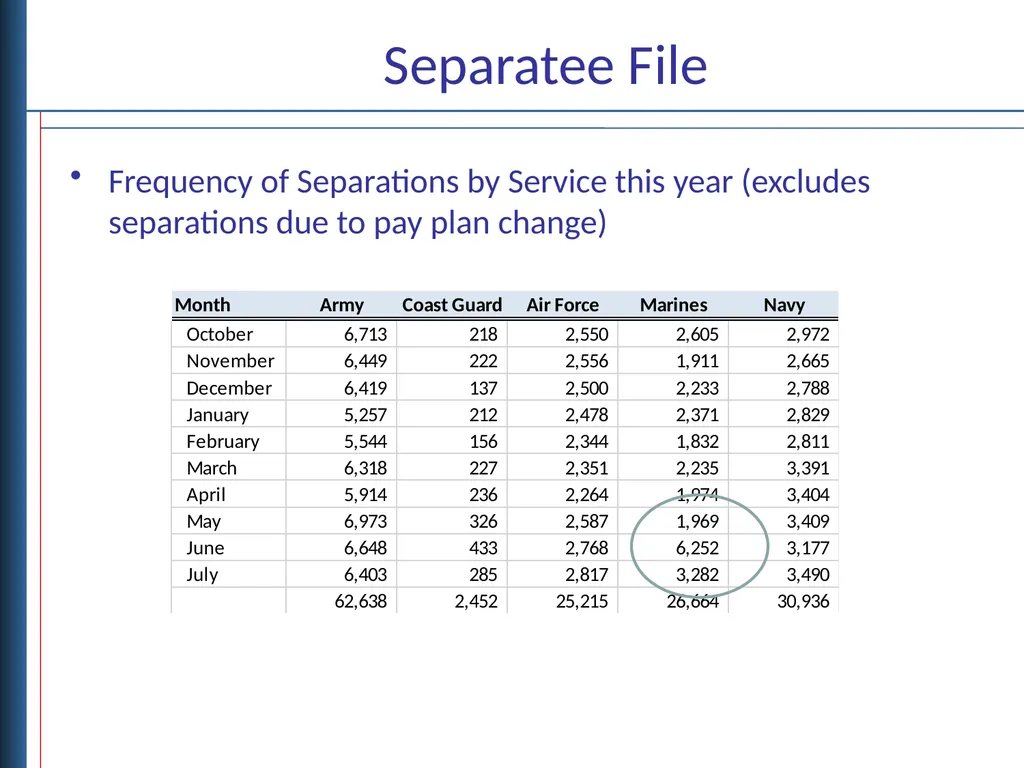
Separatee File Frequency of Separations by Service this year (excludes separations due to pay plan change)<br>
16
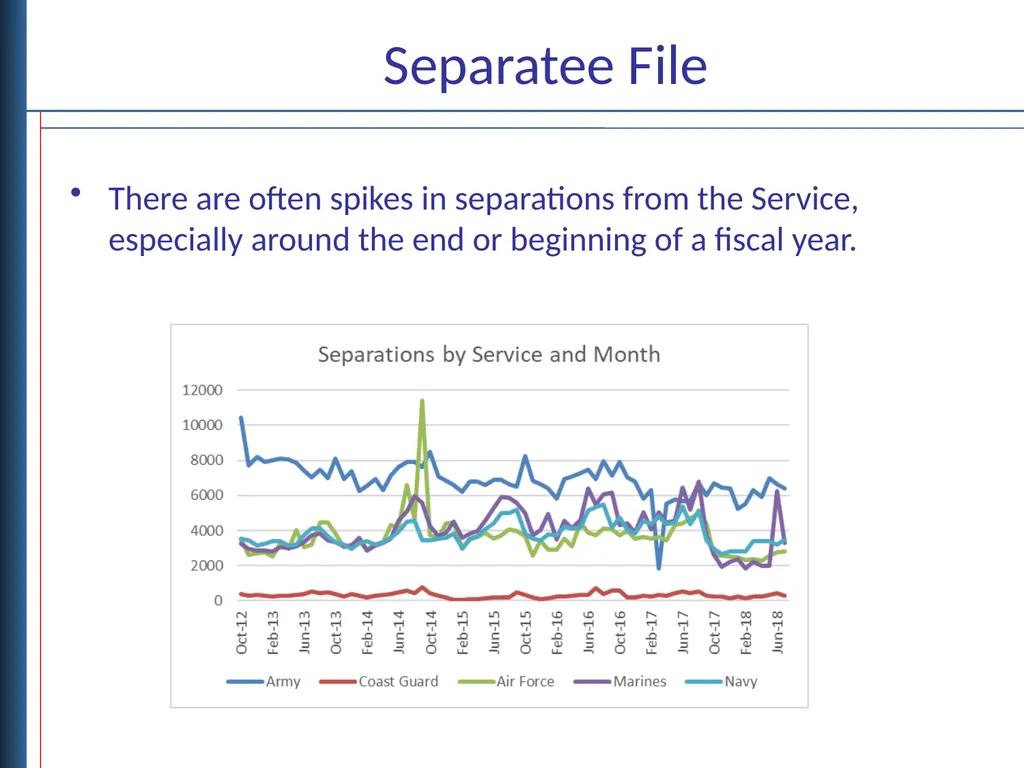
Separatee File There are often spikes in separations from the Service, especially around the end or beginning of a fiscal year.<br>
17
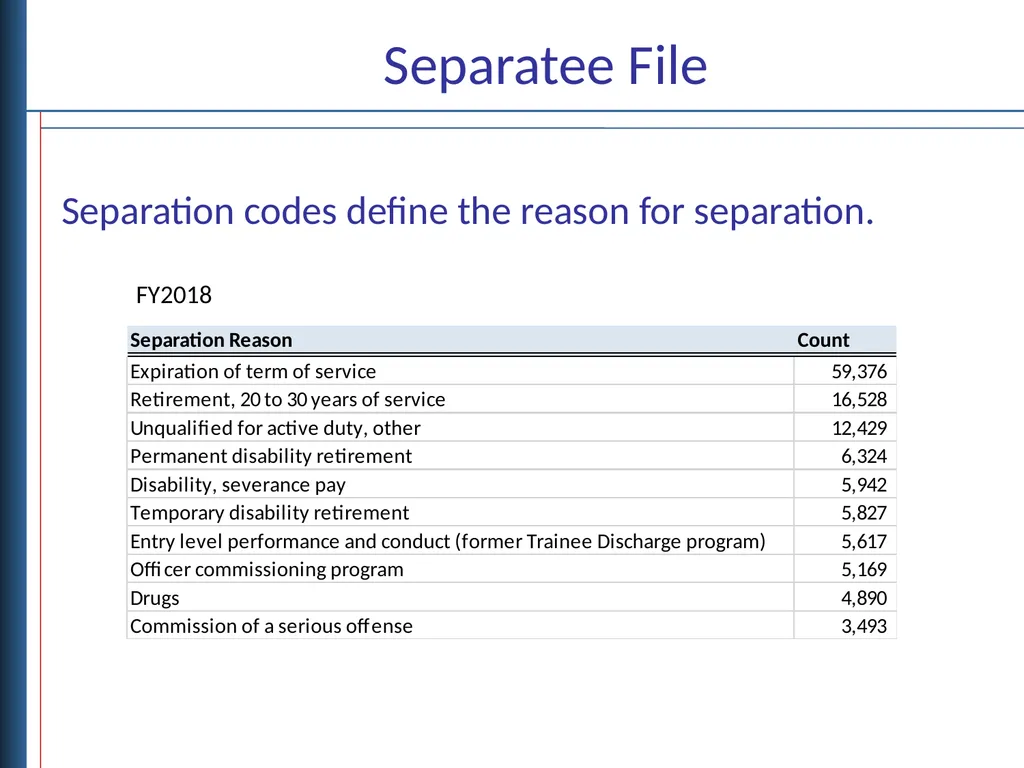
Separation codes define the reason for separation. Separatee File FY2018<br>