04
Seems simple enough….right? We will establish reference intervals for venous blood gas and clotting parameters in a population of healthy mini pigs Objectives<br>
05
Outline Objectives
Introduction and Background
What is a reference interval?
How are reference intervals established?
What is a mini pig?
Why do we need reference intervals in mini pigs?
How did we do it
Discussion
Future Directions
Acknowledgements and References<br>
06
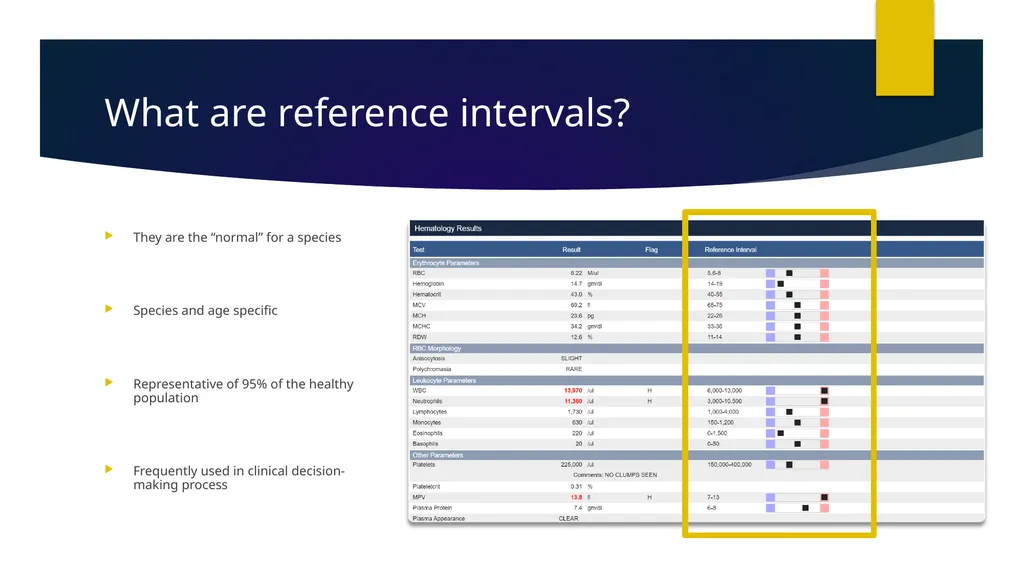
What are reference intervals? They are the “normal” for a species
Species and age specific
Representative of 95% of the healthy population
Frequently used in clinical decision-making process<br>
07
How are reference intervals established? Created with BioRender.com<br>
08
What is a mini pig? Not one specific breed – often mixed
Smaller breed examples:
Kunekune
Vietnamese potbelly
Juliana
Based partially on size smaller than production pigs
36-68 kg (80-150 pounds)
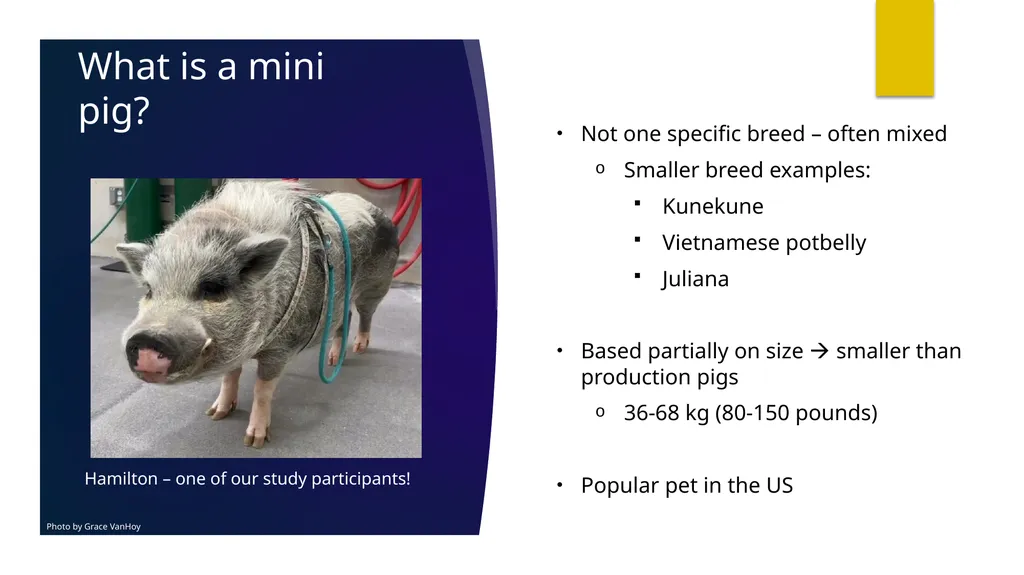
Popular pet in the US Hamilton – one of our study participants! Photo by Grace VanHoy<br>
09
Why do we even need reference intervals in mini pigs? Reference intervals not currently available for mini pigs
Often not able to get a sufficient volume of blood for full CBC or biochemistry
Venous blood gas provides patient’s health status, acid-base balance, guides fluid therapy plan
Clotting parameters peri-operative for procedures with significant hemorrhage, know when extra blood products will be needed What do we expect the results to be?
Reference intervals for mini pigs will be established for venous blood gas and clotting parameters
The reference intervals for mini pigs will be different than those currently published in research and production pigs<br>
10
Outline Objectives
Introduction and Background
What is a reference interval?
How are reference intervals established?
What is a mini pig?
Why do we need reference intervals in mini pigs?
How did we do it
Discussion
Future Directions
Acknowledgements and References<br>
11
How did we do it? - Animals<br>
12
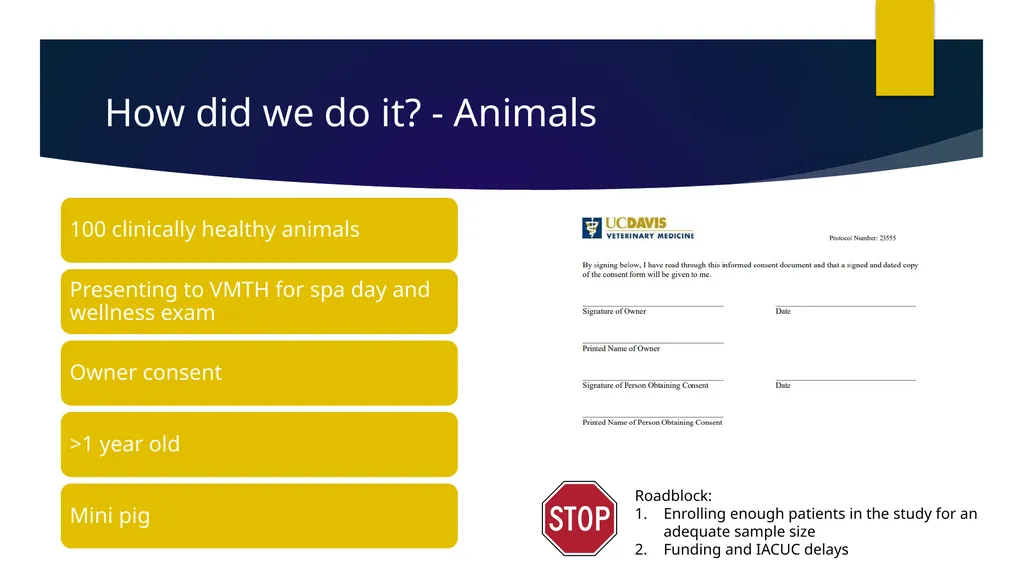
How did we do it? - Animals Roadblock:
Enrolling enough patients in the study for an adequate sample size
Funding and IACUC delays<br>
13
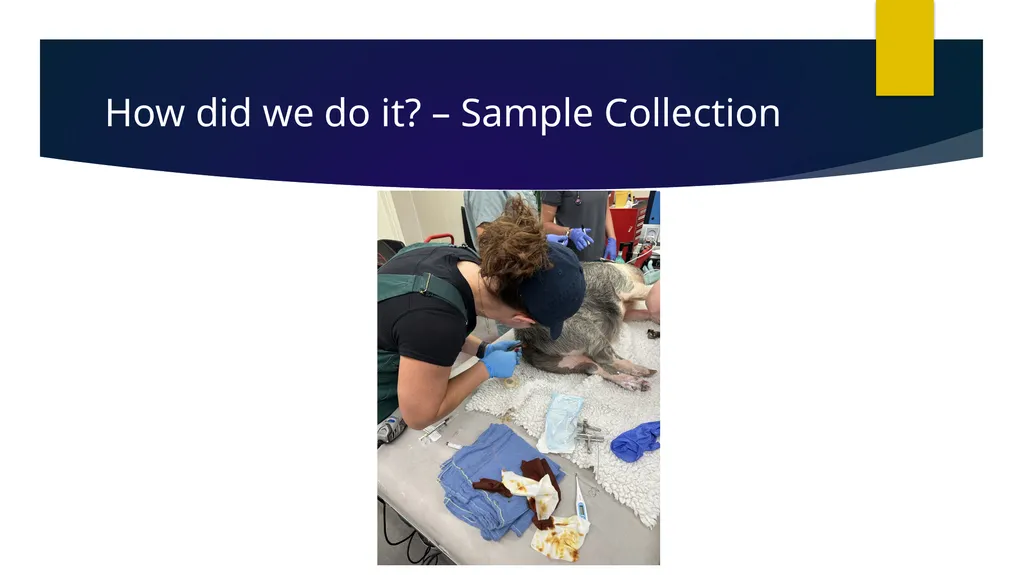
How did we do it? – Sample Collection<br>
14
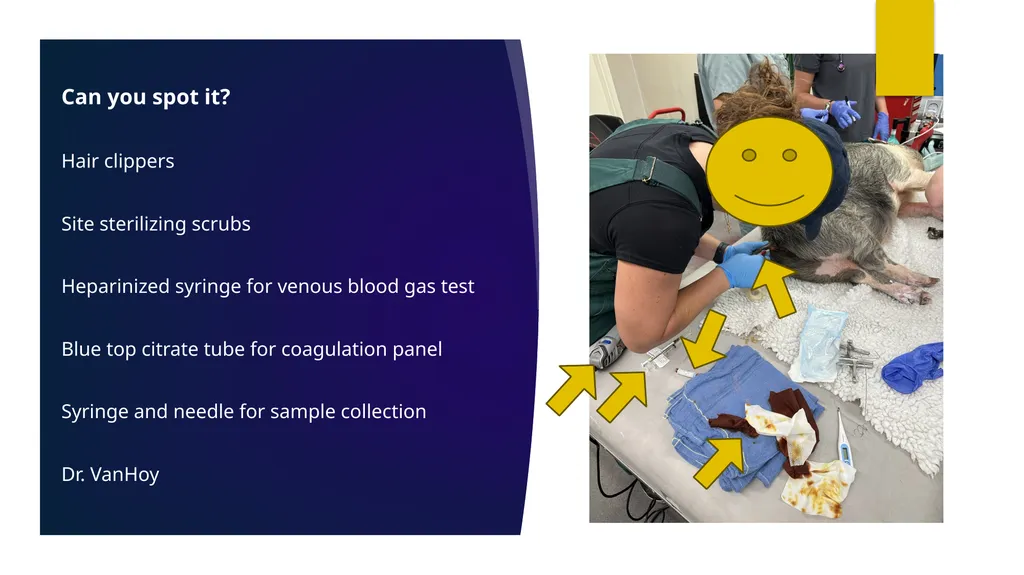
Can you spot it?
Hair clippers
Site sterilizing scrubs
Heparinized syringe for venous blood gas test
Blue top citrate tube for coagulation panel
Syringe and needle for sample collection
Dr. VanHoy<br>
15
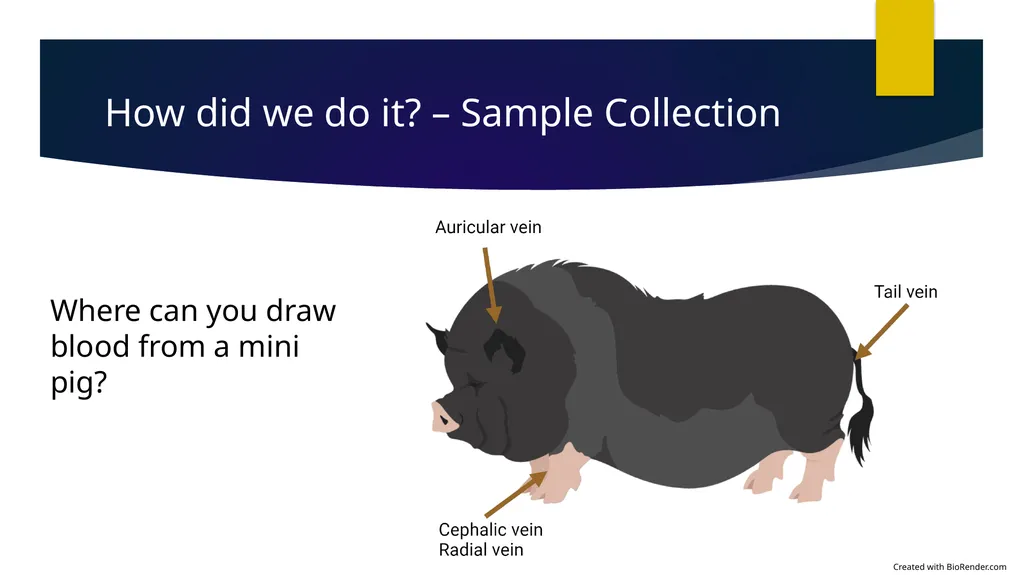
How did we do it? – Sample Collection Where can you draw blood from a mini pig? Created with BioRender.com<br>
16
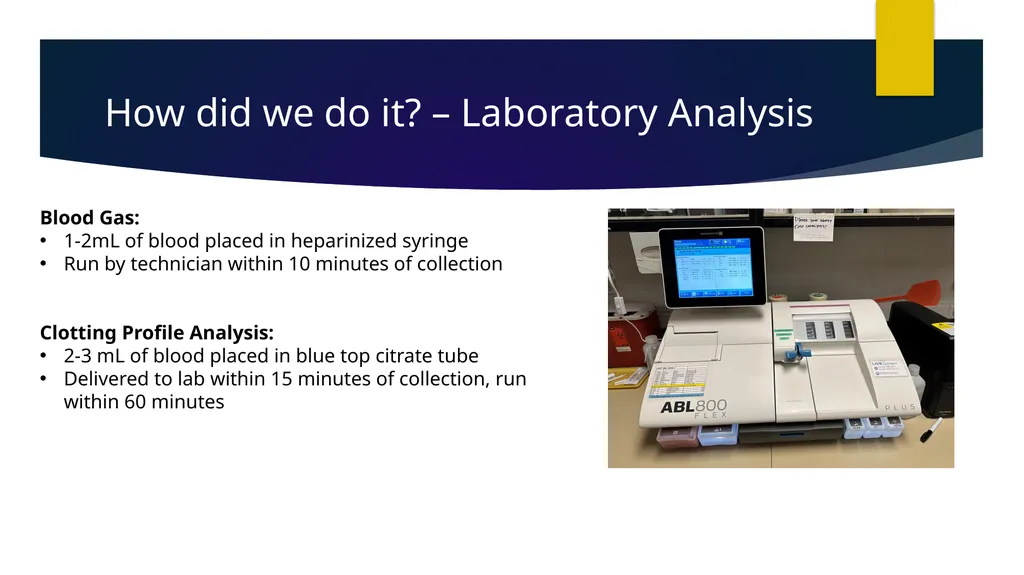
How did we do it? – Laboratory Analysis Blood Gas:
1-2mL of blood placed in heparinized syringe
Run by technician within 10 minutes of collection
Clotting Profile Analysis:
2-3 mL of blood placed in blue top citrate tube
Delivered to lab within 15 minutes of collection, run within 60 minutes<br>
17
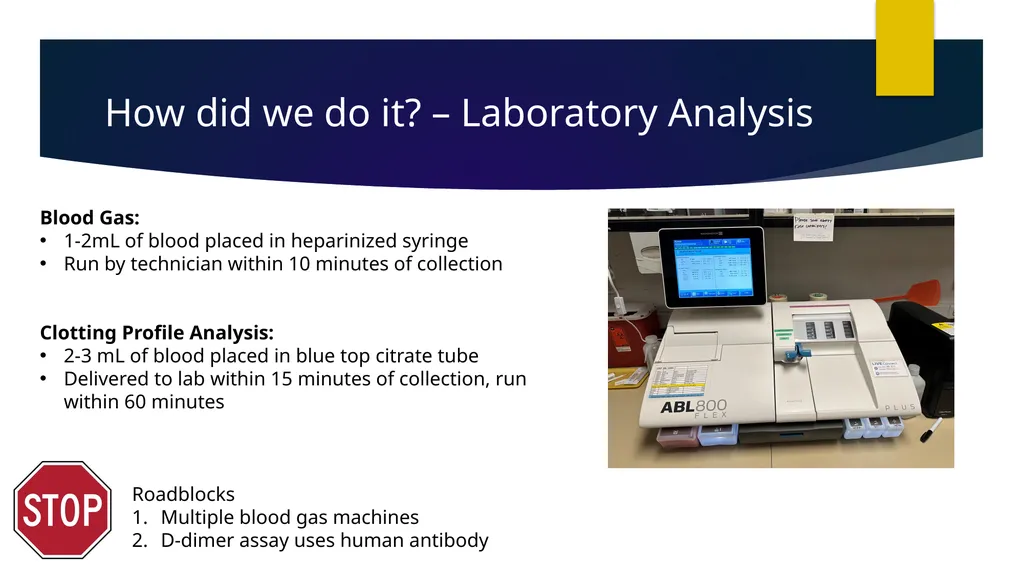
How did we do it? – Laboratory Analysis Roadblocks
Multiple blood gas machines
D-dimer assay uses human antibody Blood Gas:
1-2mL of blood placed in heparinized syringe
Run by technician within 10 minutes of collection
Clotting Profile Analysis:
2-3 mL of blood placed in blue top citrate tube
Delivered to lab within 15 minutes of collection, run within 60 minutes<br>
18
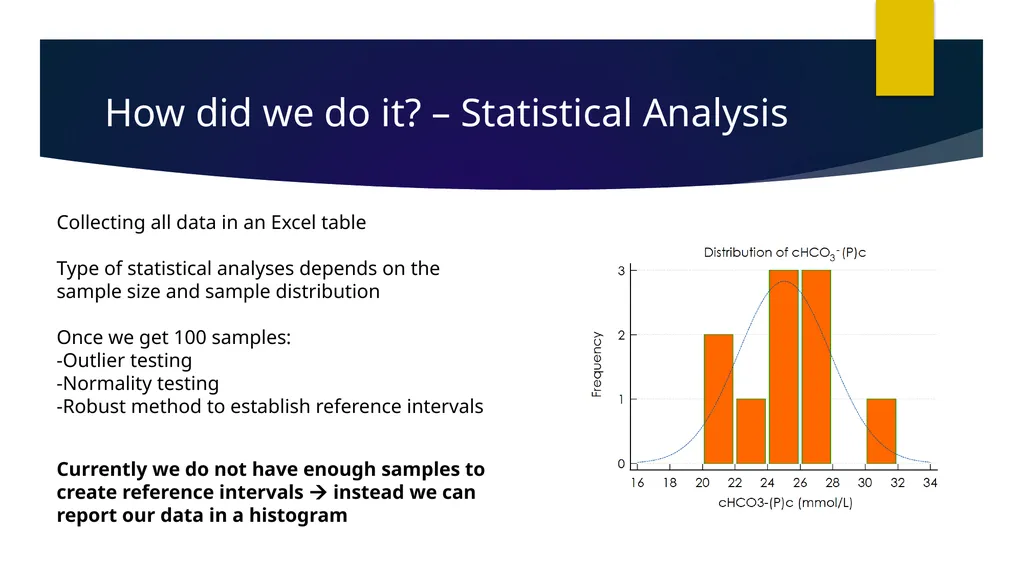
How did we do it? – Statistical Analysis Collecting all data in an Excel table
Type of statistical analyses depends on the sample size and sample distribution
Once we get 100 samples:
-Outlier testing
-Normality testing
-Robust method to establish reference intervals Currently we do not have enough samples to create reference intervals instead we can report our data in a histogram<br>
19
Outline Objectives
Introduction and Background
What is a reference interval?
How are reference intervals established?
What is a mini pig?
Why do we need reference intervals in mini pigs?
How did we do it
Discussion
Future Directions
Acknowledgements and References<br>
20
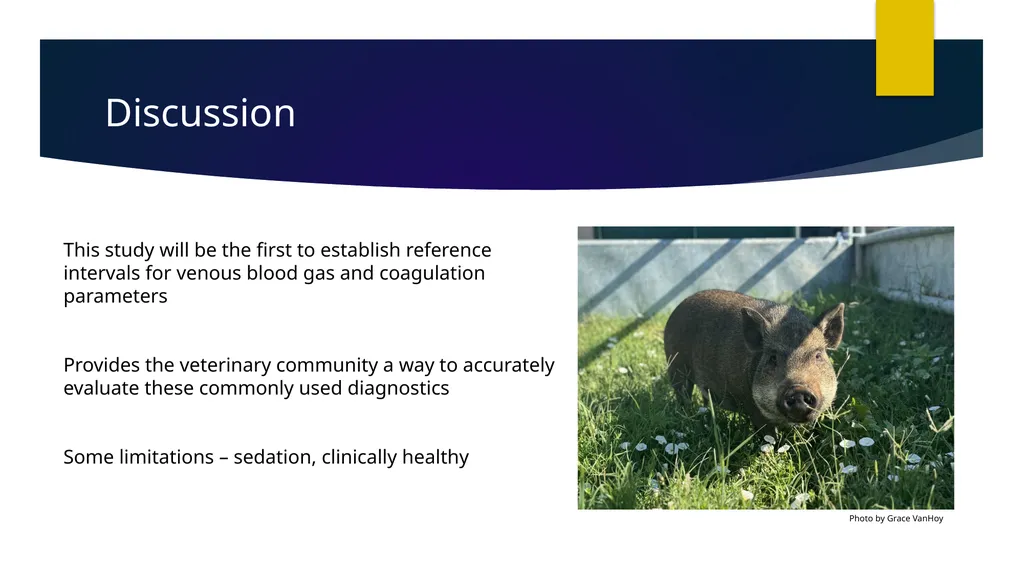
Discussion This study will be the first to establish reference intervals for venous blood gas and coagulation parameters
Provides the veterinary community a way to accurately evaluate these commonly used diagnostics
Some limitations – sedation, clinically healthy<br>
21
Outline Objectives
Introduction and Background
What is a reference interval?
How are reference intervals established?
What is a mini pig?
Why do we need reference intervals in mini pigs?
How did we do it
Discussion
Future Directions
Acknowledgements and References<br>
22
Future Directions Continue collection of mini pig blood samples to create venous blood gas and coagulation reference intervals
Validation of the d-dimer assay for use in mini pigs
Sick pig reference intervals<br>
23
Outline Objectives
Introduction and Background
What is a reference interval?
How are reference intervals established?
What is a mini pig?
Why do we need reference intervals in mini pigs?
How did we do it
Discussion
Future Directions
Acknowledgements and References<br>
24
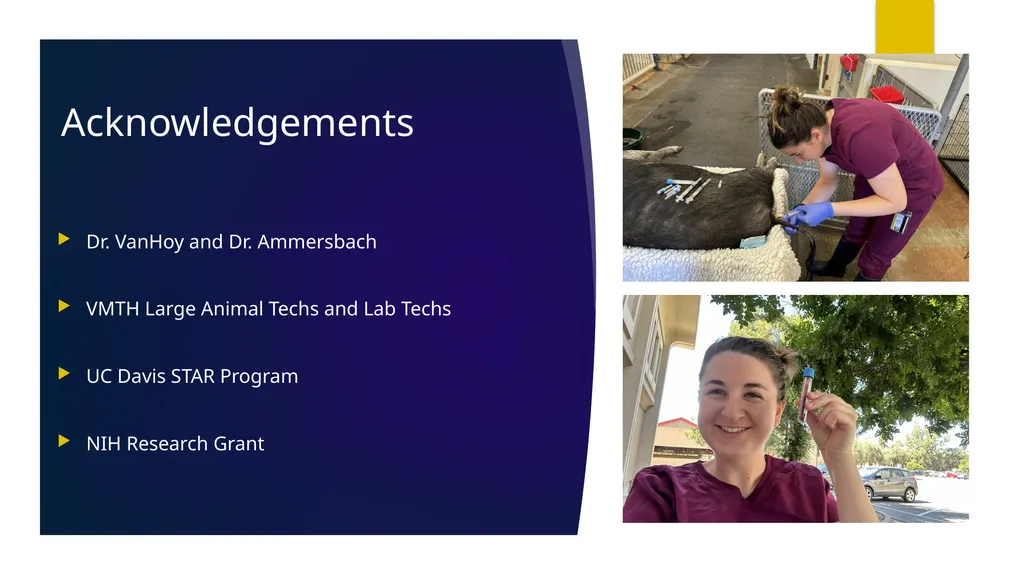
Acknowledgements Dr. VanHoy and Dr. Ammersbach
VMTH Large Animal Techs and Lab Techs
UC Davis STAR Program
NIH Research Grant<br>
25
References Brockus, C.W., Mahaffey, E.A., Bush, S.E. et al. Hematologic and serum biochemical reference intervals for Vietnamese potbellied pigs (Sus scrofa). Comp Clin Path 13, 162–165 (2005). https://doi.org/10.1007/s00580-005-0539-5
Yeom SC, Cho SY, Park CG, Lee WJ. Analysis of reference interval and age-related changes in serum biochemistry and hematology in the specific pathogen free miniature pig. Lab Anim Res. 2012 Dec;28(4):245-53. doi: 10.5625/lar.2012.28.4.245. Epub 2012 Dec 26. PMID: 23326285; PMCID: PMC3542383.
Friedrichs, K.R., Harr, K.E., Freeman, K.P., Szladovits, B., Walton, R.M., Barnhart, K.F. and Blanco-Chavez, J. (2012), ASVCP reference interval guidelines: determination of de novo reference intervals in veterinary species and other related topics. Vet Clin Pathol, 41: 441- 453. https://doi.org/10.1111/vcp.12006<br>