
Developing Terms of Reference A Guide to Coalition
Description: Developing Terms of Reference A Guide to Coalition Building Slides The Key to Successful Coalitions Coalition building is an art. More than anything else, it requires individuals and groups to be willing to rise above their feelings of
Related Topics
Download Presentation
"Developing Terms of Reference A Guide to Coalition" is the property of its rightful owner. Permission is granted to download and print the materials on this website for personal, non-commercial use only, and to display it on your personal computer provided you do not modify the materials and that you retain all copyright notices contained in the materials. By downloading content from our website, you accept the terms of this agreement.
Presentation Transcript
slide1. Developing Terms of Reference A Guide to Coalition Building – Slides<br>
slide2. The Key to Successful Coalitions “Coalition building is an art. More than anything else, it requires individuals and groups to be willing to rise above their feelings of separateness and to actively collaborate in a spirit of mutual understanding, patience, and flexibility. When members share responsibility, goals, decisions, and leadership and energetically and enthusiastically work toward a common goal, the coalition has the potential for great success”.<br>
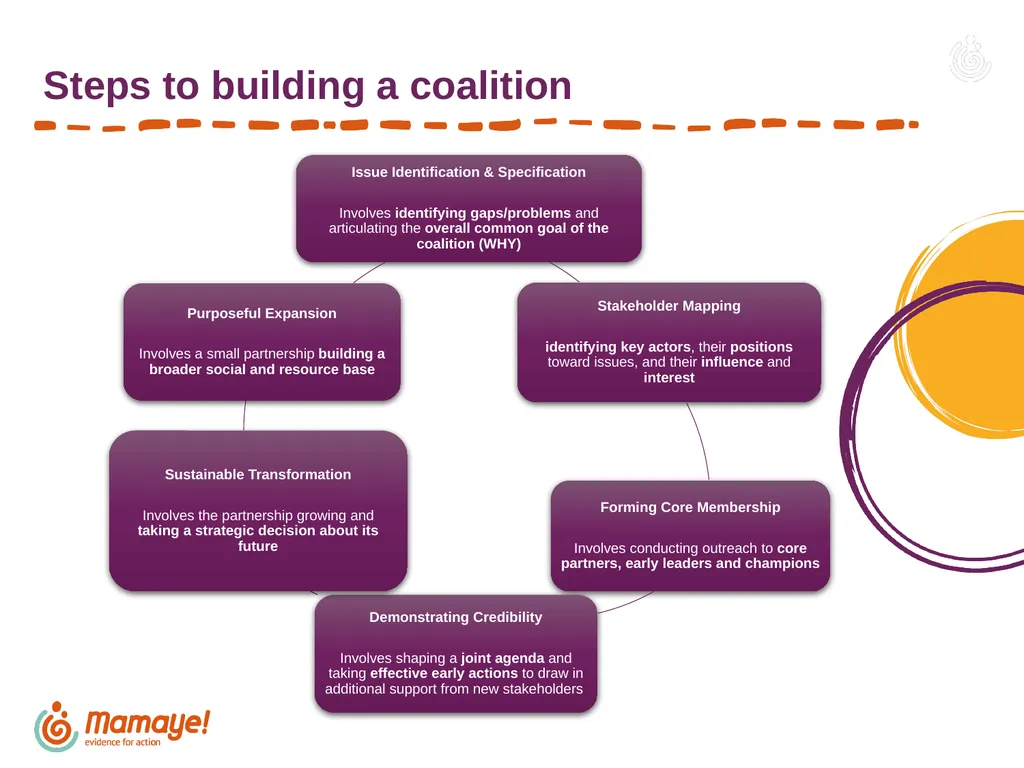
slide3. Steps to building a coalition<br>
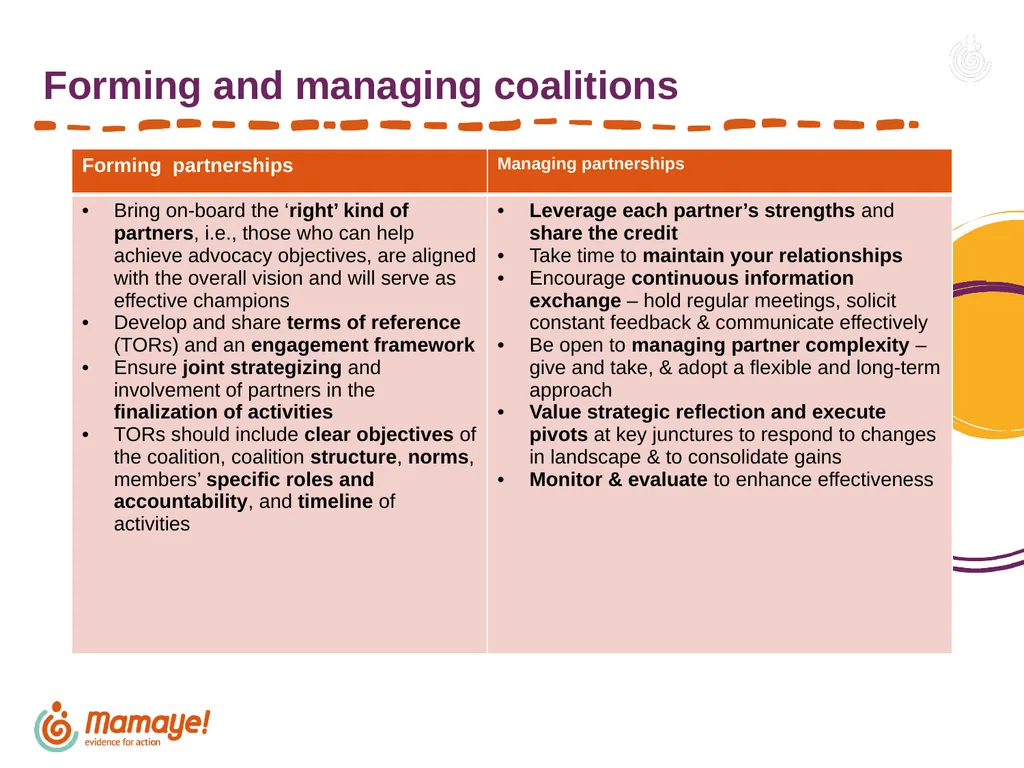
slide4. Forming and managing coalitions<br>
slide5. Key sections Terms of Reference<br>
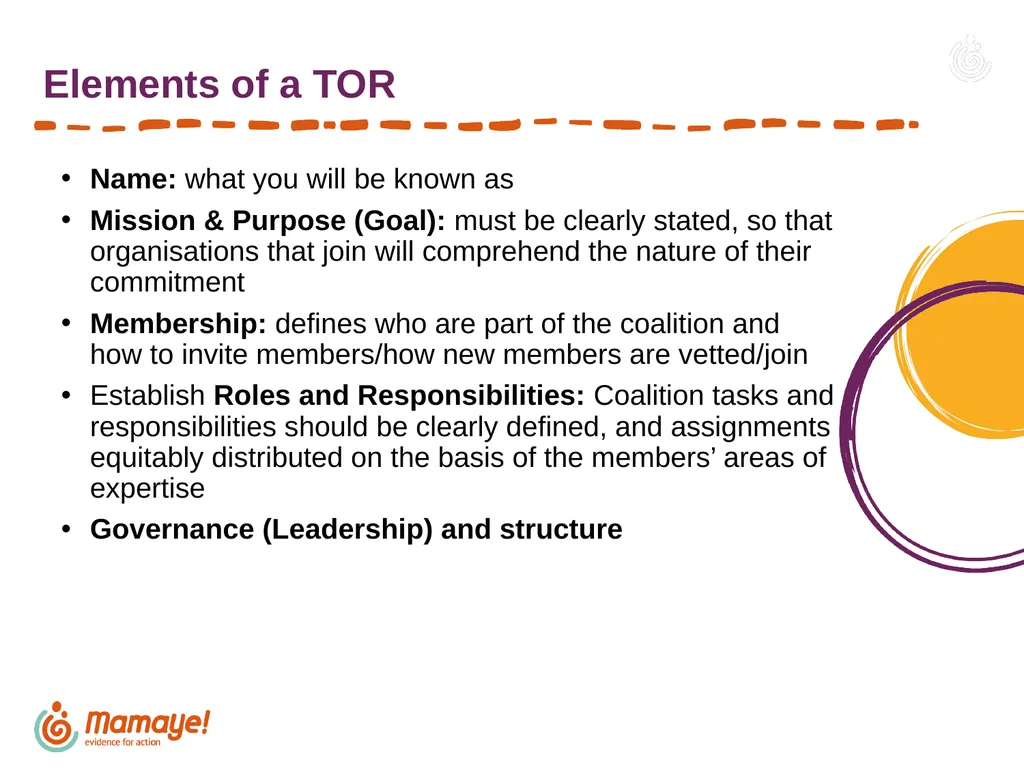
slide6. Elements of a TOR Name: what you will be known as
Mission & Purpose (Goal): must be clearly stated, so that organisations that join will comprehend the nature of their commitment
Membership: defines who are part of the coalition and how to invite members/how new members are vetted/join
Establish Roles and Responsibilities: Coalition tasks and responsibilities should be clearly defined, and assignments equitably distributed on the basis of the members’ areas of expertise
Governance (Leadership) and structure<br>
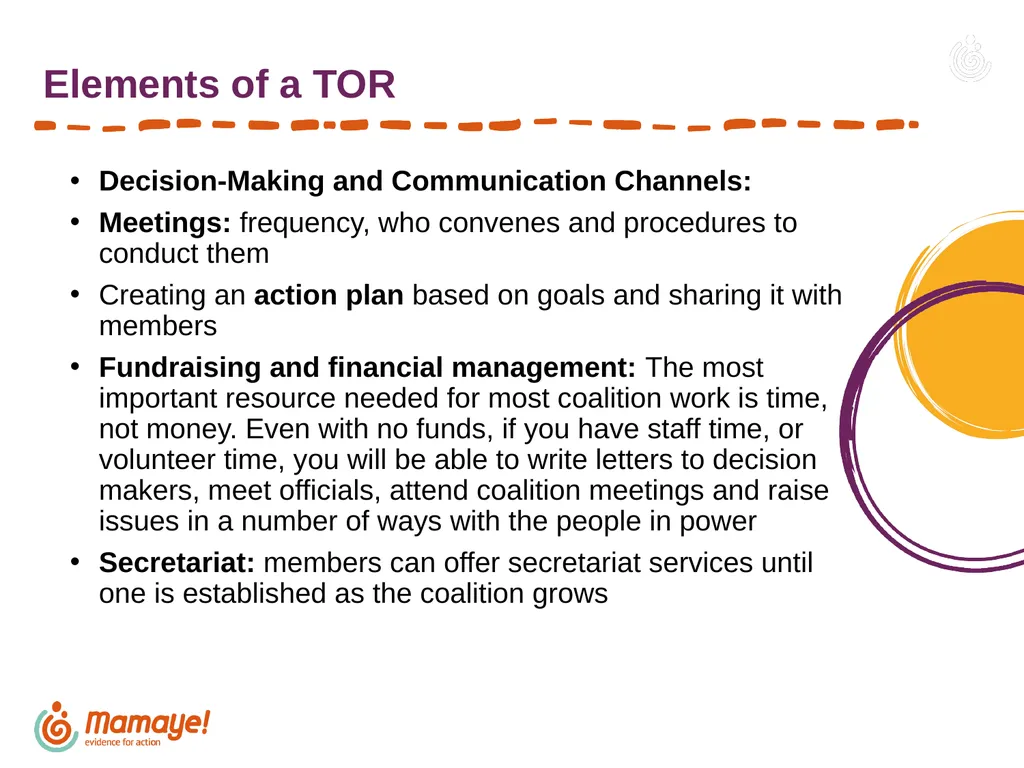
slide7. Elements of a TOR Decision-Making and Communication Channels:
Meetings: frequency, who convenes and procedures to conduct them
Creating an action plan based on goals and sharing it with members
Fundraising and financial management: The most important resource needed for most coalition work is time, not money. Even with no funds, if you have staff time, or volunteer time, you will be able to write letters to decision makers, meet officials, attend coalition meetings and raise issues in a number of ways with the people in power
Secretariat: members can offer secretariat services until one is established as the coalition grows<br>
slide2. The Key to Successful Coalitions “Coalition building is an art. More than anything else, it requires individuals and groups to be willing to rise above their feelings of separateness and to actively collaborate in a spirit of mutual understanding, patience, and flexibility. When members share responsibility, goals, decisions, and leadership and energetically and enthusiastically work toward a common goal, the coalition has the potential for great success”.<br>
slide3. Steps to building a coalition<br>
slide4. Forming and managing coalitions<br>
slide5. Key sections Terms of Reference<br>
slide6. Elements of a TOR Name: what you will be known as
Mission & Purpose (Goal): must be clearly stated, so that organisations that join will comprehend the nature of their commitment
Membership: defines who are part of the coalition and how to invite members/how new members are vetted/join
Establish Roles and Responsibilities: Coalition tasks and responsibilities should be clearly defined, and assignments equitably distributed on the basis of the members’ areas of expertise
Governance (Leadership) and structure<br>
slide7. Elements of a TOR Decision-Making and Communication Channels:
Meetings: frequency, who convenes and procedures to conduct them
Creating an action plan based on goals and sharing it with members
Fundraising and financial management: The most important resource needed for most coalition work is time, not money. Even with no funds, if you have staff time, or volunteer time, you will be able to write letters to decision makers, meet officials, attend coalition meetings and raise issues in a number of ways with the people in power
Secretariat: members can offer secretariat services until one is established as the coalition grows<br>