
Development of Self-Concept Dr. Shankuntala


Description: Development of Self-Concept Dr. Shankuntala Dulhani Assistant Professor Department Of Psychology Durga Mahavidyalaya Raipur Development of Self-Concept Paper II (A) B.A. Part 3 What is self-concept? The individuals belief about himself or
Related Topics
Download Presentation
"Development of Self-Concept Dr. Shankuntala" is the property of its rightful owner. Permission is granted to download and print the materials on this website for personal, non-commercial use only, and to display it on your personal computer provided you do not modify the materials and that you retain all copyright notices contained in the materials. By downloading content from our website, you accept the terms of this agreement.
Presentation Transcript
slide1. Development of
Self-Concept Dr. Shankuntala Dulhani
Assistant Professor
Department Of Psychology
Durga Mahavidyalaya Raipur<br>
slide2. Development of Self-Concept Paper II (A)
B.A. Part 3<br>
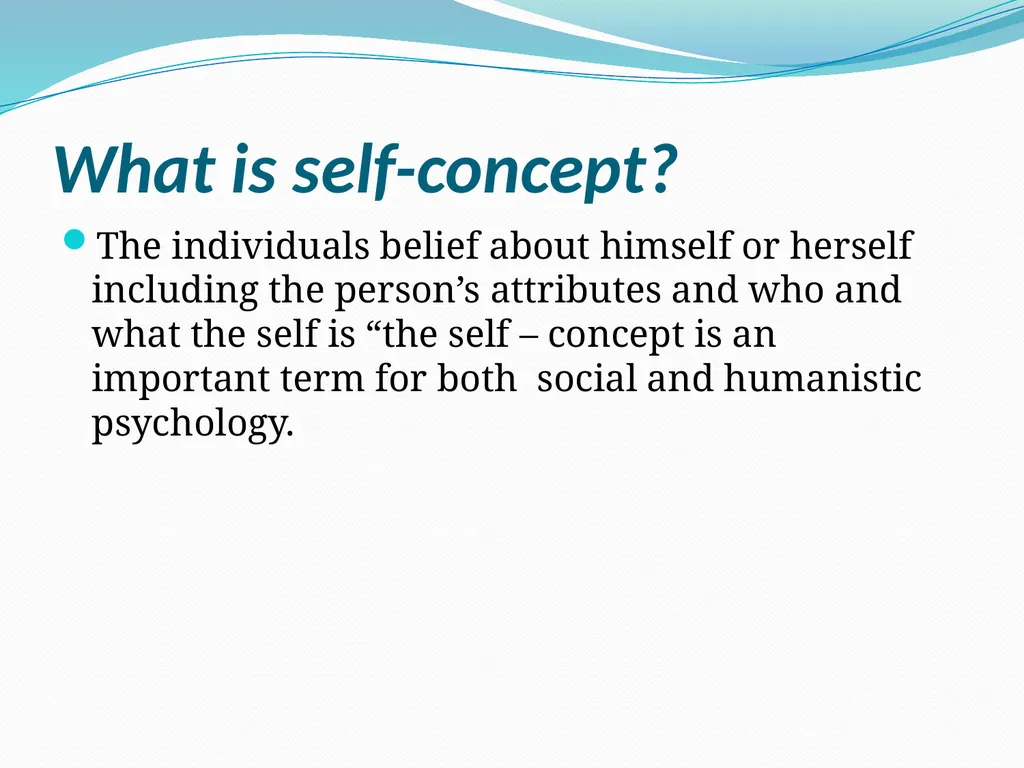
slide3. What is self-concept? The individuals belief about himself or herself including the person’s attributes and who and what the self is “the self – concept is an important term for both social and humanistic psychology.<br>
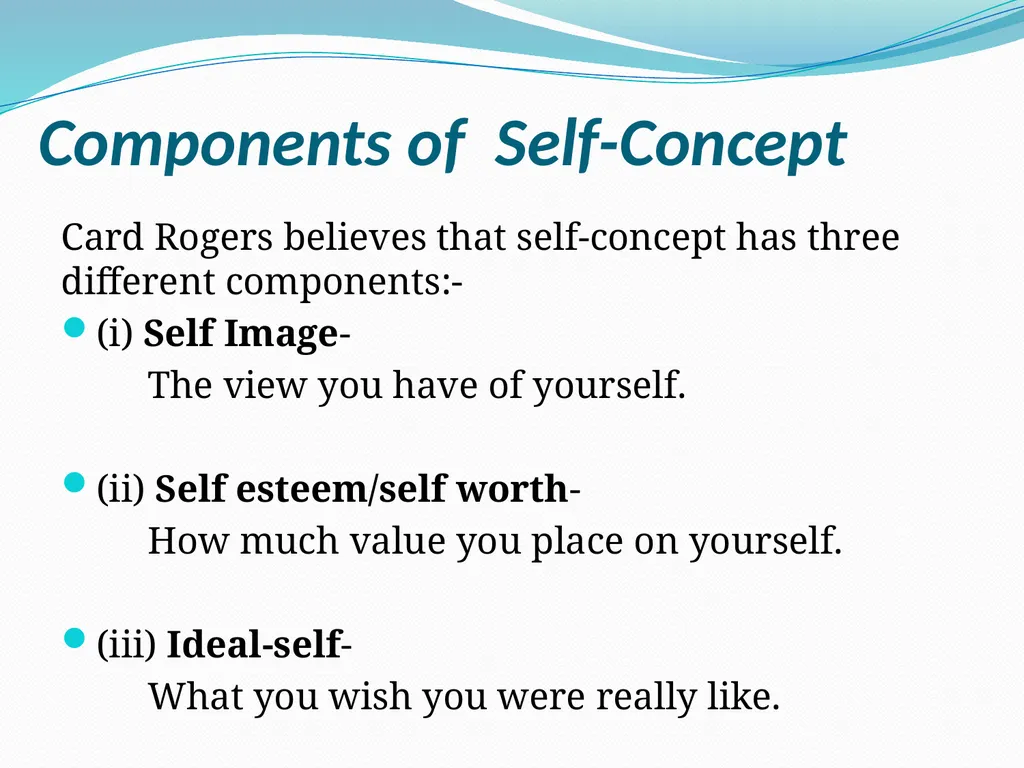
slide4. Components of Self-Concept Card Rogers believes that self-concept has three different components:-
(i) Self Image-
The view you have of yourself.
(ii) Self esteem/self worth-
How much value you place on yourself.
(iii) Ideal-self-
What you wish you were really like.<br>
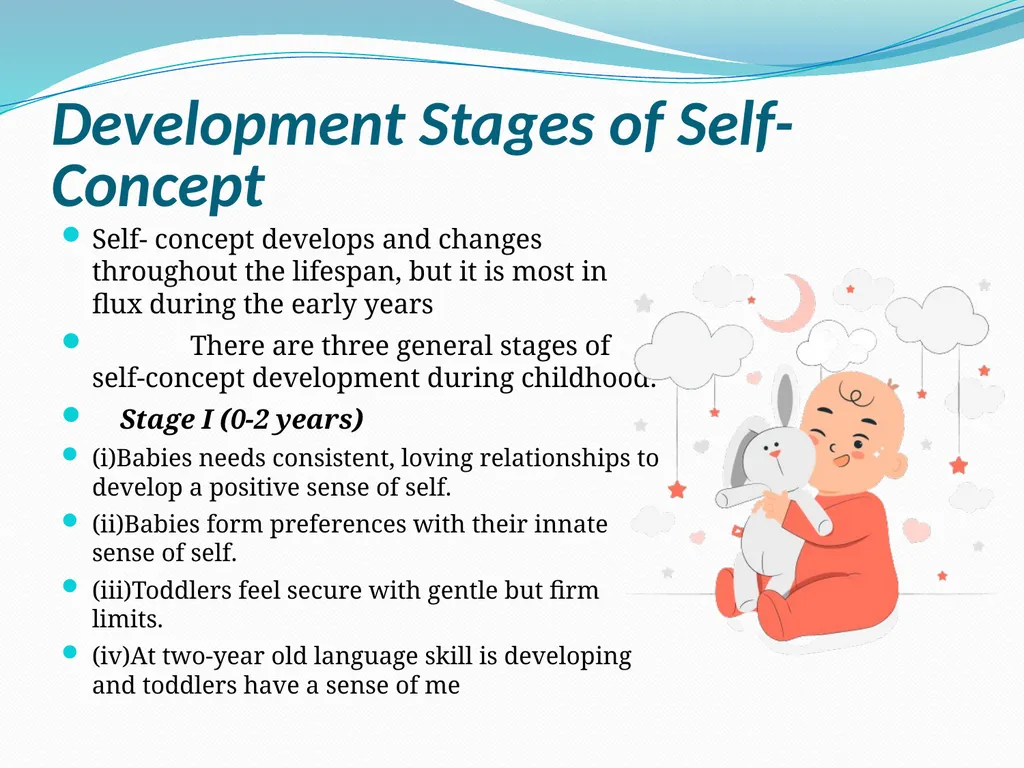
slide5. Development Stages of Self-Concept Self- concept develops and changes throughout the lifespan, but it is most in flux during the early years
There are three general stages of self-concept development during childhood:
Stage I (0-2 years)
(i)Babies needs consistent, loving relationships to develop a positive sense of self.
(ii)Babies form preferences with their innate sense of self.
(iii)Toddlers feel secure with gentle but firm limits.
(iv)At two-year old language skill is developing and toddlers have a sense of me<br>
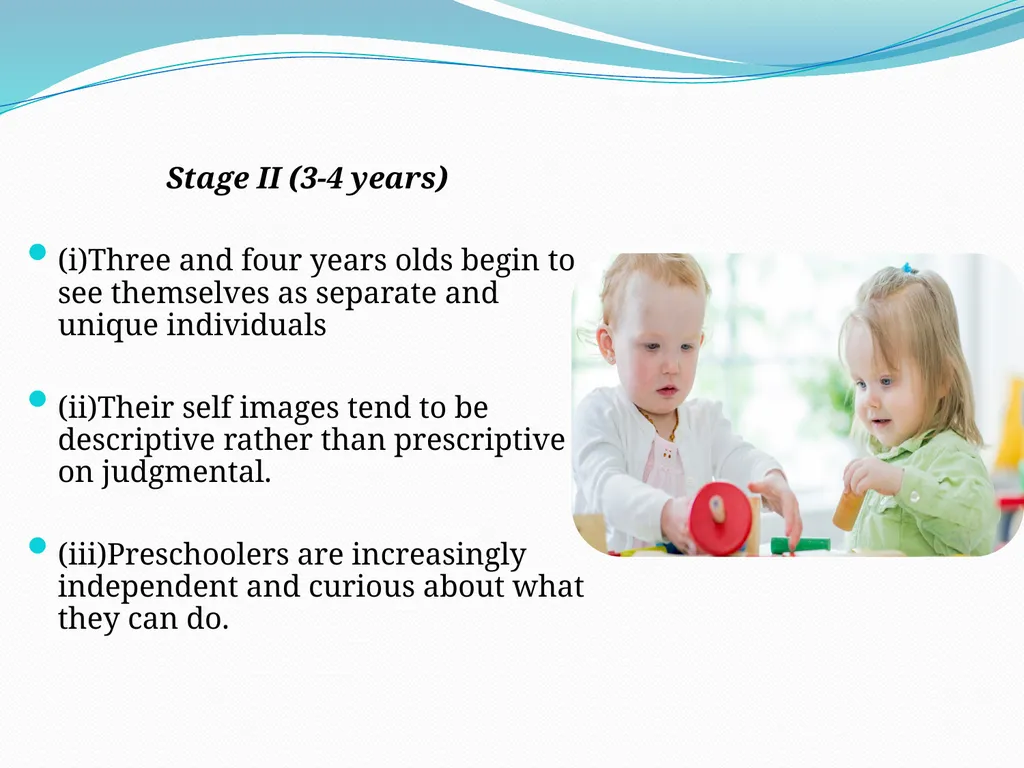
slide6. Stage II (3-4 years)
(i)Three and four years olds begin to see themselves as separate and unique individuals
(ii)Their self images tend to be descriptive rather than prescriptive on judgmental.
(iii)Preschoolers are increasingly independent and curious about what they can do.<br>
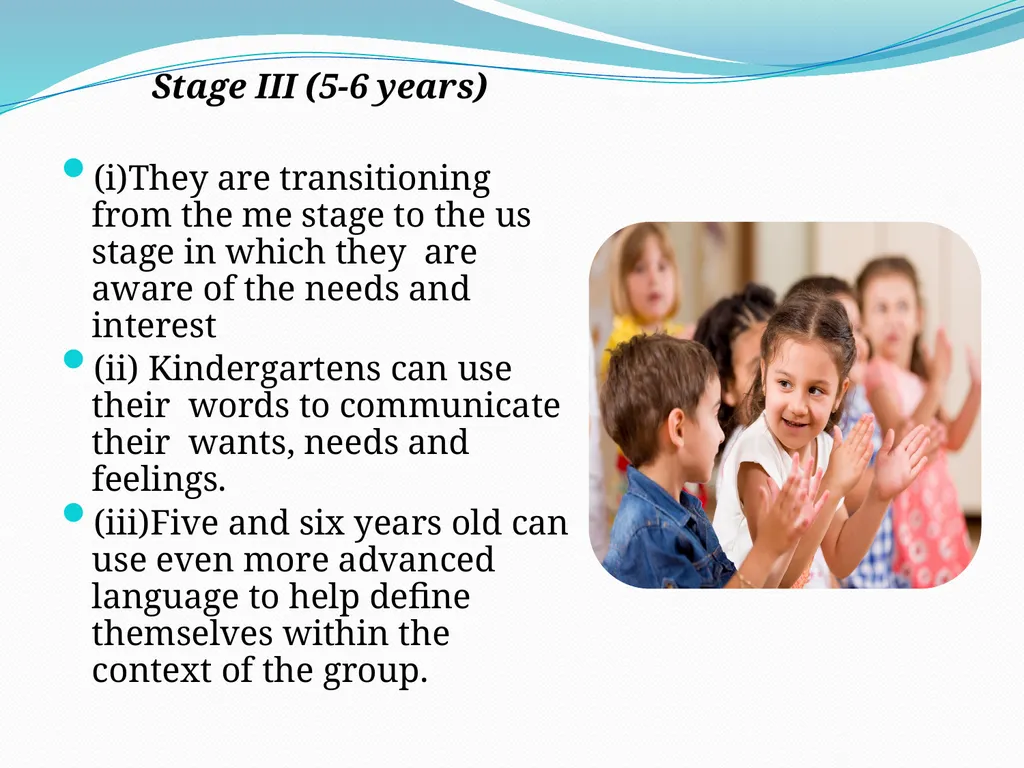
slide7. Stage III (5-6 years)
(i)They are transitioning from the me stage to the us stage in which they are aware of the needs and interest
(ii) Kindergartens can use their words to communicate their wants, needs and feelings.
(iii)Five and six years old can use even more advanced language to help define themselves within the context of the group.<br>
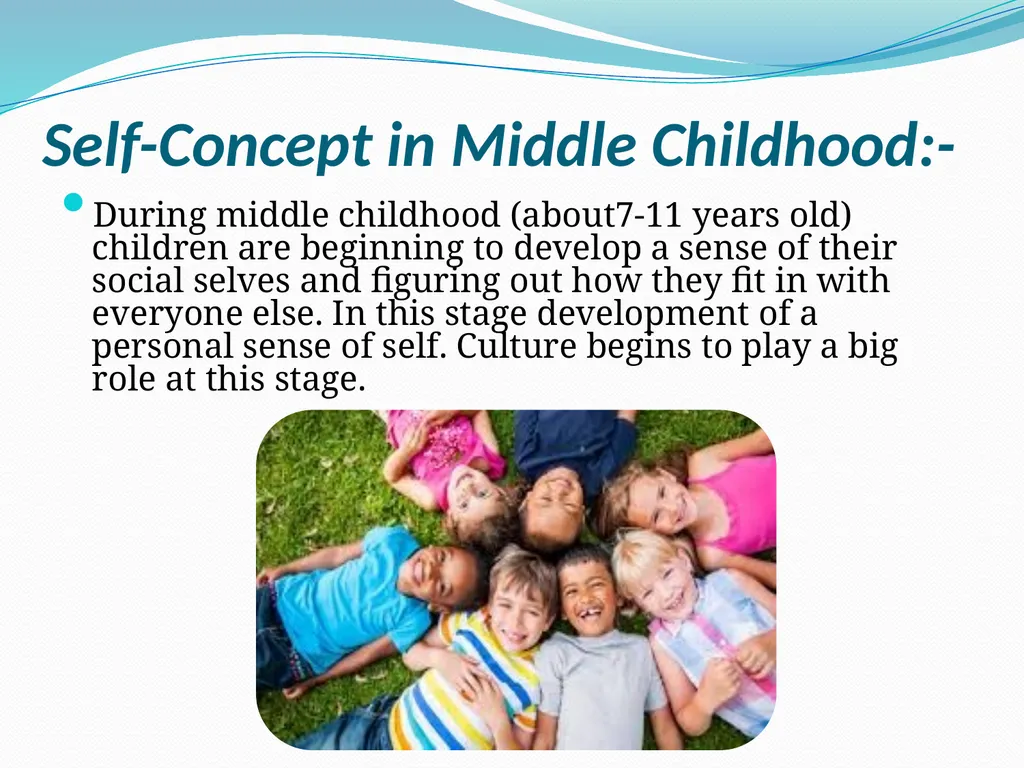
slide8. Self-Concept in Middle Childhood:- During middle childhood (about7-11 years old) children are beginning to develop a sense of their social selves and figuring out how they fit in with everyone else. In this stage development of a personal sense of self. Culture begins to play a big role at this stage.<br>
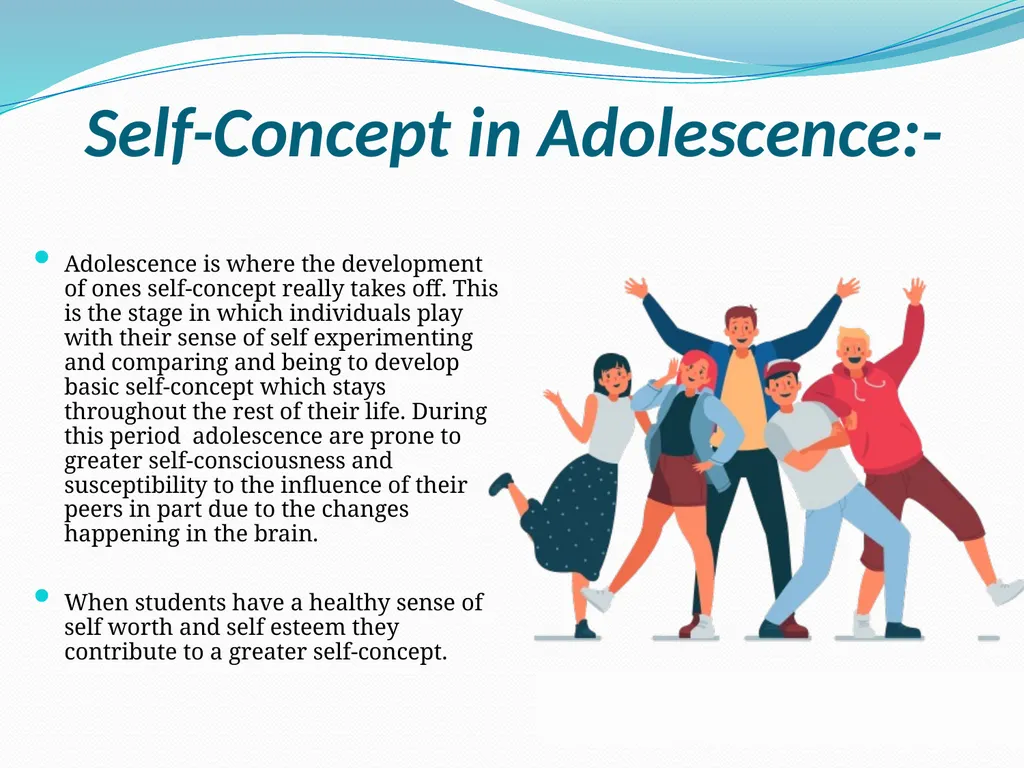
slide9. Self-Concept in Adolescence:- Adolescence is where the development of ones self-concept really takes off. This is the stage in which individuals play with their sense of self experimenting and comparing and being to develop basic self-concept which stays throughout the rest of their life. During this period adolescence are prone to greater self-consciousness and susceptibility to the influence of their peers in part due to the changes happening in the brain.
When students have a healthy sense of self worth and self esteem they contribute to a greater self-concept.<br>
slide10. Factors influence and individuals self-concept From the various factors that influence an individuals self concept, the focus will be directed towards the following:
(i)Age
(ii)Gender
(iii)Education
(iv) Media
(v)Culture<br>
slide11. Thank You!<br>
Assistant Professor
Department Of Psychology
Durga Mahavidyalaya Raipur<br>
slide2. Development of Self-Concept Paper II (A)
B.A. Part 3<br>
slide3. What is self-concept? The individuals belief about himself or herself including the person’s attributes and who and what the self is “the self – concept is an important term for both social and humanistic psychology.<br>
slide4. Components of Self-Concept Card Rogers believes that self-concept has three different components:-
(i) Self Image-
The view you have of yourself.
(ii) Self esteem/self worth-
How much value you place on yourself.
(iii) Ideal-self-
What you wish you were really like.<br>
slide5. Development Stages of Self-Concept Self- concept develops and changes throughout the lifespan, but it is most in flux during the early years
There are three general stages of self-concept development during childhood:
Stage I (0-2 years)
(i)Babies needs consistent, loving relationships to develop a positive sense of self.
(ii)Babies form preferences with their innate sense of self.
(iii)Toddlers feel secure with gentle but firm limits.
(iv)At two-year old language skill is developing and toddlers have a sense of me<br>
slide6. Stage II (3-4 years)
(i)Three and four years olds begin to see themselves as separate and unique individuals
(ii)Their self images tend to be descriptive rather than prescriptive on judgmental.
(iii)Preschoolers are increasingly independent and curious about what they can do.<br>
slide7. Stage III (5-6 years)
(i)They are transitioning from the me stage to the us stage in which they are aware of the needs and interest
(ii) Kindergartens can use their words to communicate their wants, needs and feelings.
(iii)Five and six years old can use even more advanced language to help define themselves within the context of the group.<br>
slide8. Self-Concept in Middle Childhood:- During middle childhood (about7-11 years old) children are beginning to develop a sense of their social selves and figuring out how they fit in with everyone else. In this stage development of a personal sense of self. Culture begins to play a big role at this stage.<br>
slide9. Self-Concept in Adolescence:- Adolescence is where the development of ones self-concept really takes off. This is the stage in which individuals play with their sense of self experimenting and comparing and being to develop basic self-concept which stays throughout the rest of their life. During this period adolescence are prone to greater self-consciousness and susceptibility to the influence of their peers in part due to the changes happening in the brain.
When students have a healthy sense of self worth and self esteem they contribute to a greater self-concept.<br>
slide10. Factors influence and individuals self-concept From the various factors that influence an individuals self concept, the focus will be directed towards the following:
(i)Age
(ii)Gender
(iii)Education
(iv) Media
(v)Culture<br>
slide11. Thank You!<br>