Dialectical Behavioral Therapy for Beginners Matt Butler LISW-S, LICDC-CS Were going to do these things today: Discuss the history and theory behind DBT. Review stigma surrounding BPD and its presentation. Overview of and practice with the
"Dialectical Behavioral Therapy for Beginners Matt" is the property of its rightful owner. Permission is granted to
download and print the materials on this website for personal, non-commercial use only, and to display it
on your personal computer provided you do not modify the materials and that you retain all copyright
notices contained in the materials. By downloading content from our website, you accept the terms of this
agreement.
Presentation Transcript
01
Dialectical Behavioral Therapy
for Beginners Matt Butler
LISW-S, LICDC-CS<br>
02
We’re going to do these things today:
Discuss the history and theory behind DBT.
Review stigma surrounding BPD and its presentation.
Overview of and practice with the four main DBT skills.
Talk about some SUD-specific uses of DBT.
Review DBT’s shortcomings.
Make a plan for getting better at DBT.<br>
03
Where’d it come from?<br>
04
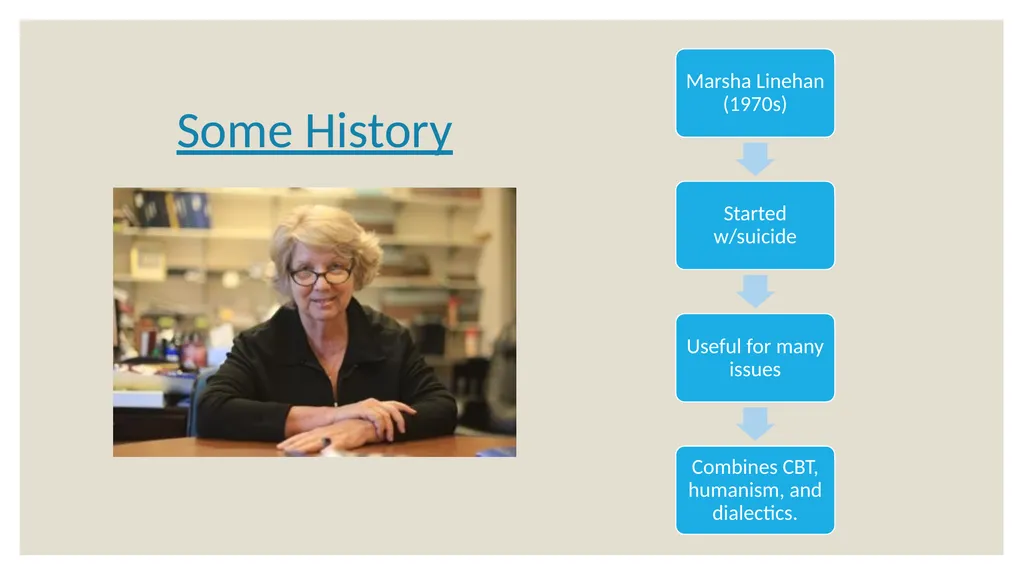
Some History<br>
05
Borderline Personality Disorder BPD carries so much stigma.
What does BPD look like?
I like The Mayo Clinic’s summary.
Remember, no diagnosis sums up
an entire person.<br>
06
BPD in clients Self-destructive behaviors
“Manipulative” or “Attention-Seeking”
“Non-compliant”
Chaotic relationships (including with us)<br>
07
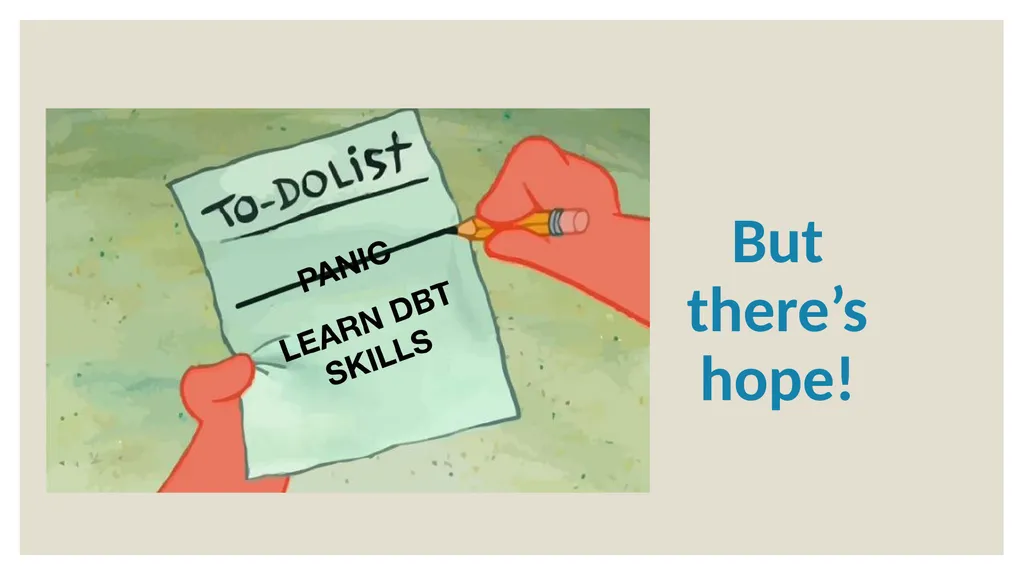
But there’s hope!<br>
08
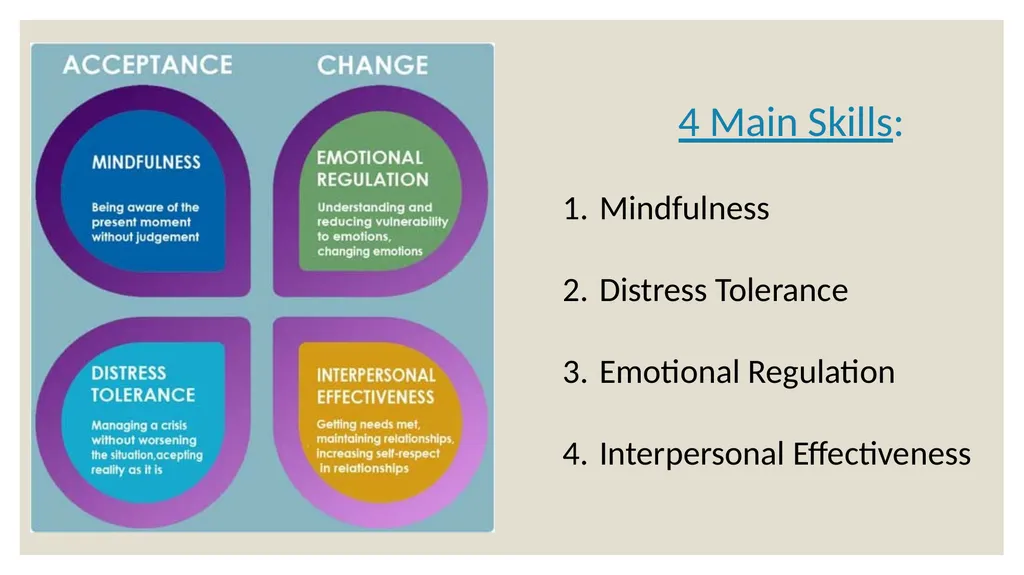
4 Main Skills:
Mindfulness
Distress Tolerance
Emotional Regulation
Interpersonal Effectiveness<br>
09
Skill 1: Mindfulness<br>
10
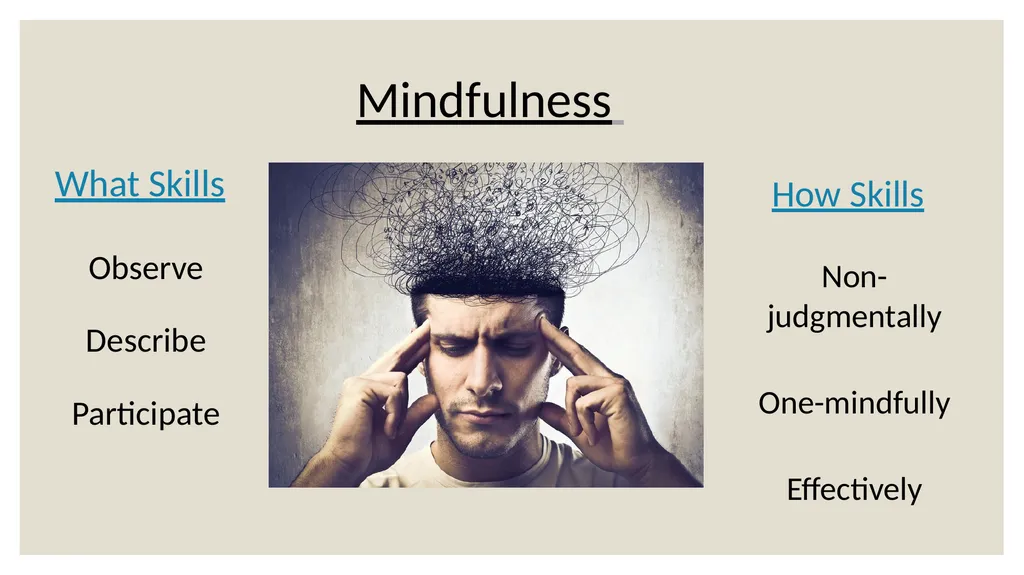
Mindfulness How Skills
Non-judgmentally
One-mindfully
Effectively What Skills
Observe
Describe
Participate<br>
11
Time to practice a Mindfulness skill!<br>
12
What was your skill?
How did it work?
What will you do differently next time? Tell us…<br>
13
Skill 2: Distress Tolerance<br>
14
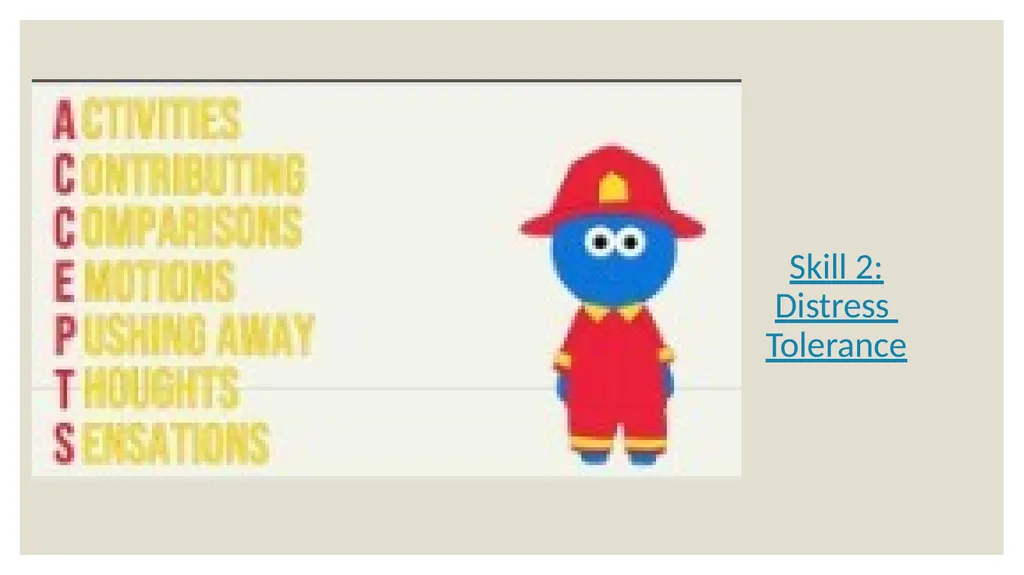
Distress Tolerance A Activities
C Contributing
C Comparisons
E Emotions
P Pushing Away
T Thoughts
S Sensations<br>
15
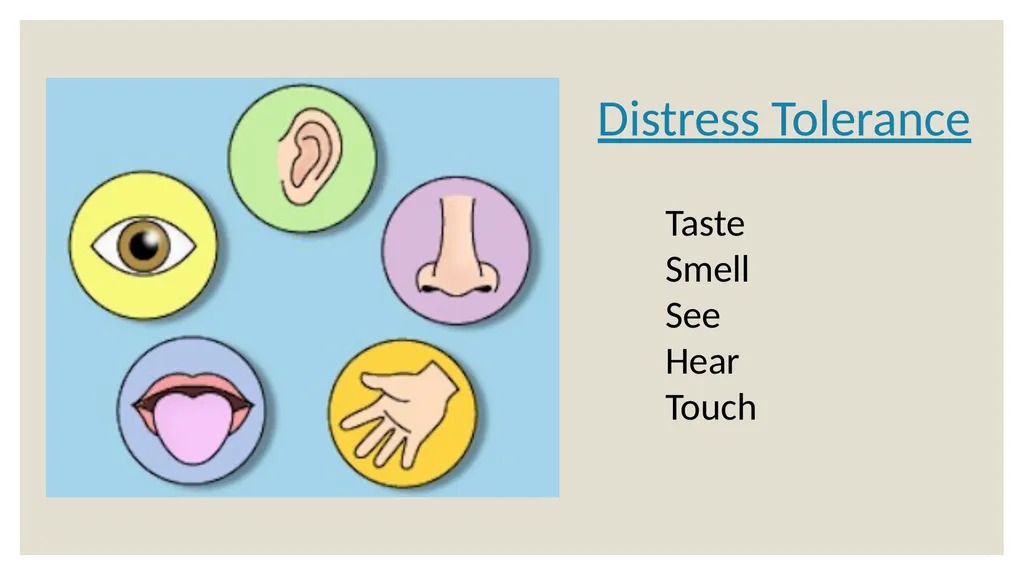
Distress Tolerance Taste
Smell
See
Hear
Touch<br>
16
Time to practice a Distress Tolerance skill!<br>
17
What was your skill?
How did it work?
What will you do differently next time? Tell us…<br>
18
Skill 3: Emotional Regulation<br>
19
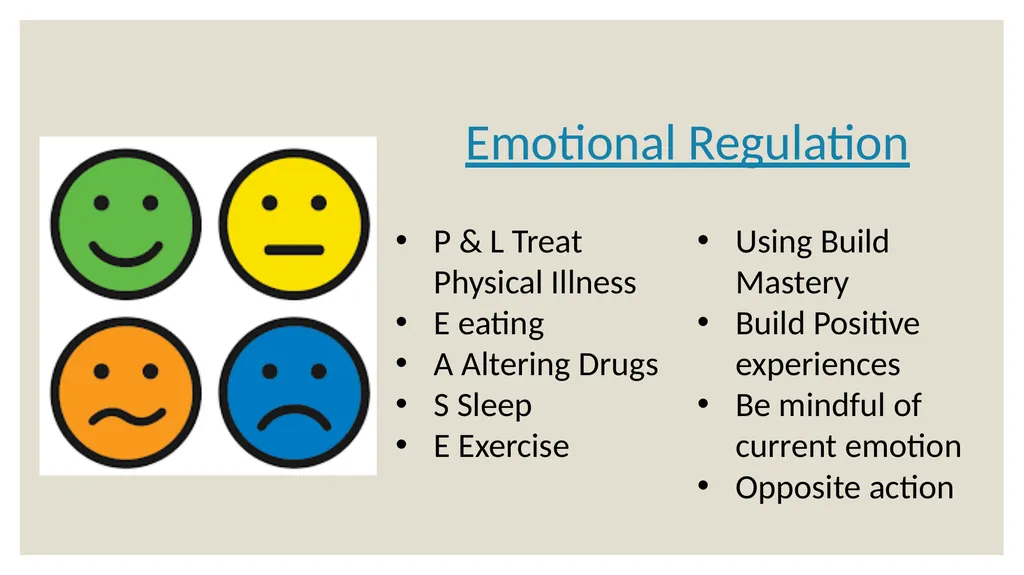
Emotional Regulation P & L Treat Physical Illness
E eating
A Altering Drugs
S Sleep
E Exercise
Using Build Mastery
Build Positive experiences
Be mindful of current emotion
Opposite action<br>
20
Time to practice an Emotional Regulation skill!<br>
21
What was your skill?
How did it work?
What will you do differently next time? Tell us…<br>
22
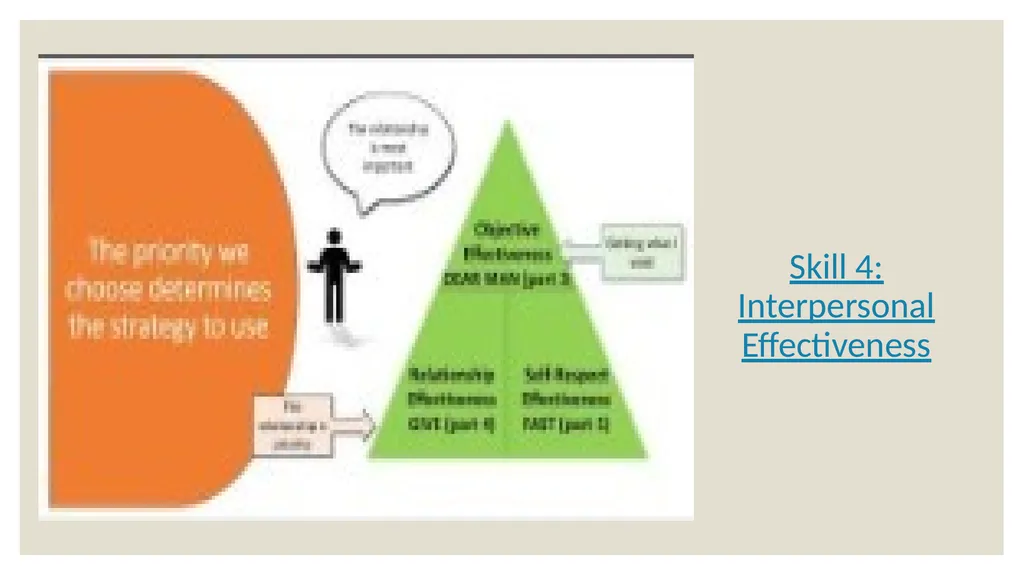
Skill 4: Interpersonal Effectiveness<br>
23
Interpersonal Effectiveness D Describe
E Express
A Assert
R Reinforce
M Mindful
A Appear Confident
N Negotiate<br>
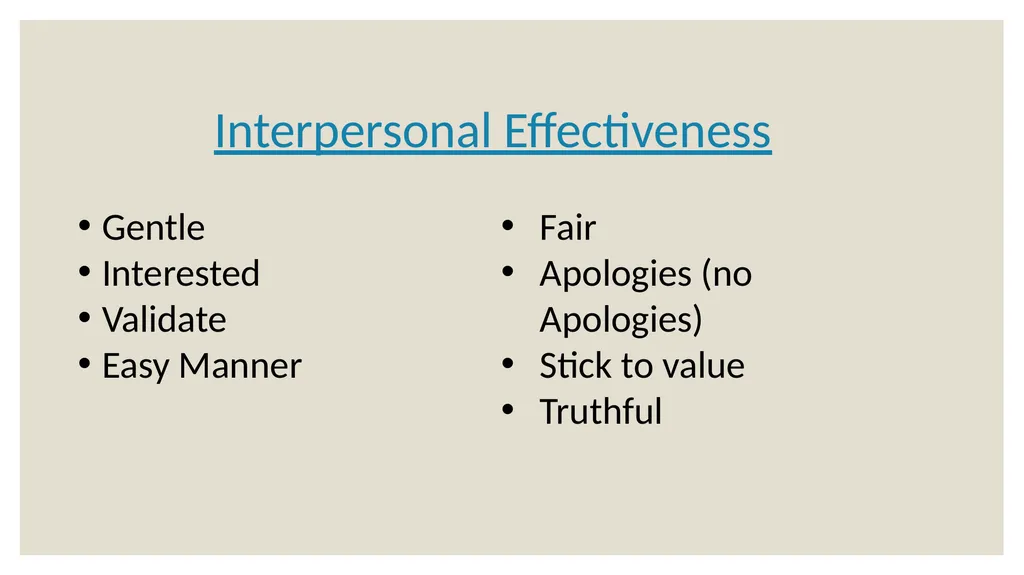
Fair
Apologies (no Apologies)
Stick to value
Truthful<br>
25
Time to practice an Interpersonal Effectiveness skill!<br>
26
What was your skill?
How did it work?
What will you do differently next time? Tell us…<br>
27
DBT: The Less-than-great Stuff It isn’t good for everything/everyone!
It can be better-used as part of a team.
Saying you know DBT doesn’t mean you do.
If emotions are hard, DBT might be hard.
Stigma (Yes, once again).<br>
28
DBT with SUD Populations After success with DBT and NSSI (1990s), Linehan began work on DBT-SUD.
It uses many “regular” DBT techniques.
“Butterfly Attachment” led to new attachment strategies.
Substance-related goals are efforts to emotionally regulate.
5 large studies have shown that it’s the best option for co-occurring BPD and SUD.
Harned, et. al study (2008)<br>
29
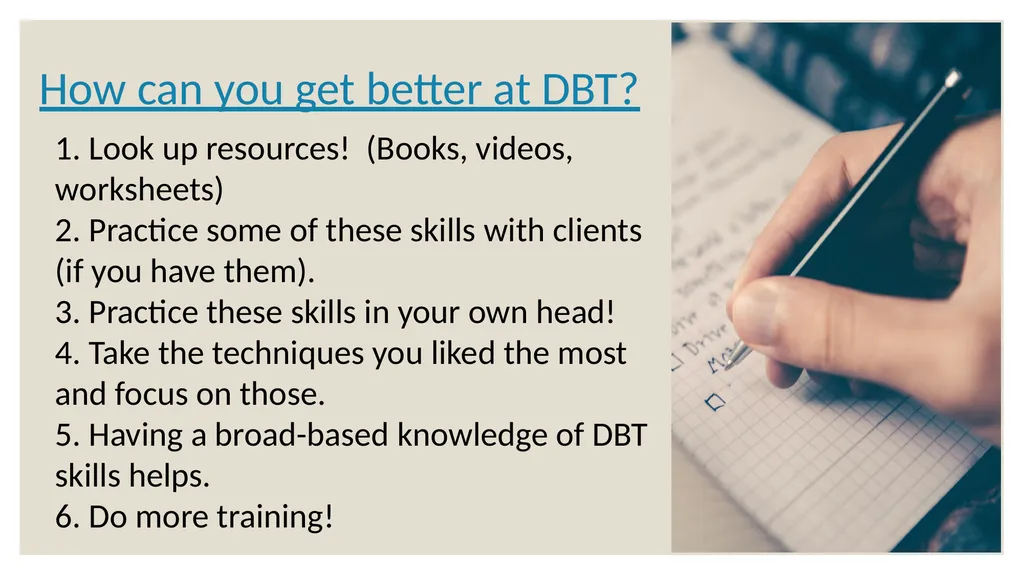
How can you get better at DBT? 1. Look up resources! (Books, videos, worksheets)
2. Practice some of these skills with clients (if you have them).
3. Practice these skills in your own head!
4. Take the techniques you liked the most and focus on those.
5. Having a broad-based knowledge of DBT skills helps.
6. Do more training!<br>
30
Even though you’re bored of listening to me for two hours and just want to be done…
Any questions?<br>
31
Call or email anytime! Matt Butler
(440)276-0914
mattbutler.lisws@gmail.com<br>
32
References https://psychotherapyacademy.org/dbt/history-of-dialectical-behavioral-therapy-a-very-brief-introduction/
https://www.mayoclinic.org/diseases-conditions/borderline-personality-disorder/symptoms-causes/syc-20370237
https://www.headwayclinic.ca/what-is-dbt/
https://dialecticalbehaviortherapy.com/
https://www.youtube.com/watch?v=KJA53l91LSk Dialectical Behavior Therapy
https://youtu.be/s-lz2iqZ5-c History of Dialectical Behavior Therapy
https://www.goodtherapy.org/blog/interpersonal-effectiveness-dialectical-behavior-therapy-dbt-0416134
http://dbtselfhelp.com
https://behavioraltech.org/dbt-substance-use-disorders/
https://www.drugrehab.com/treatment/types-of-therapy/dialectical-behavior-therapy/<br>