Dietary reference values (DRVs) Nutritional requirements People require a variety of nutrients to stay healthy and reduce the risk of diet-related diseases. The amount of each nutrient needed is called the nutritional requirement. These are
"Dietary reference values (DRVs) Nutritional" is the property of its rightful owner. Permission is granted to
download and print the materials on this website for personal, non-commercial use only, and to display it
on your personal computer provided you do not modify the materials and that you retain all copyright
notices contained in the materials. By downloading content from our website, you accept the terms of this
agreement.
Presentation Transcript
01
Dietary reference values (DRVs)<br>
02
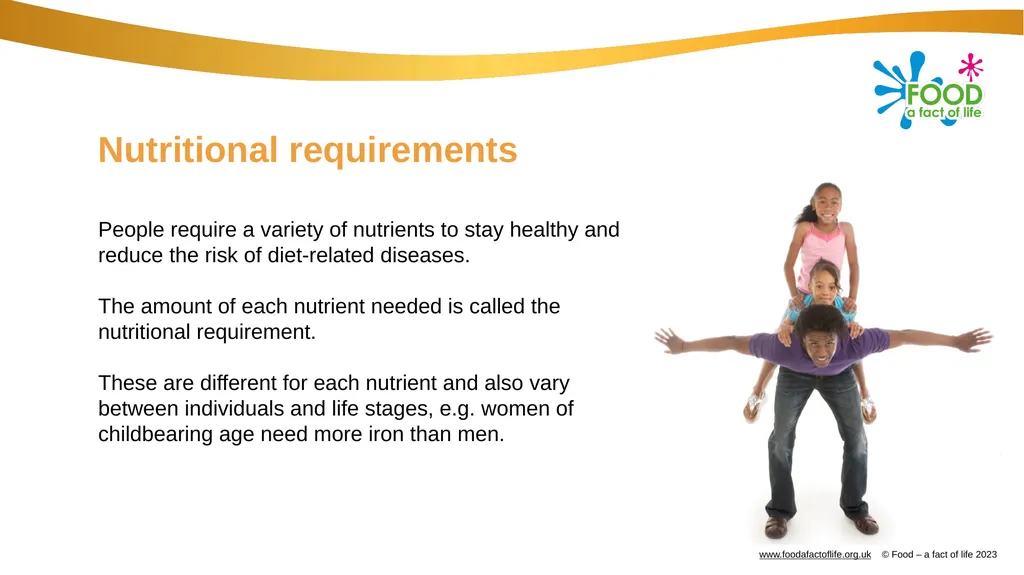
Nutritional requirements People require a variety of nutrients to stay healthy and reduce the risk of diet-related diseases.
The amount of each nutrient needed is called the nutritional requirement.
These are different for each nutrient and also vary between individuals and life stages, e.g. women of childbearing age need more iron than men.<br>
03
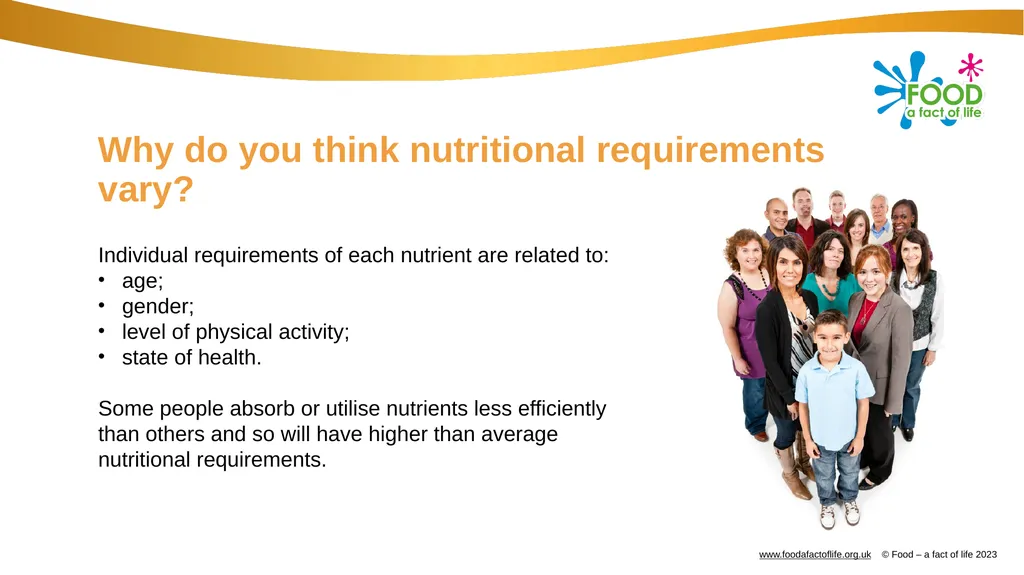
Why do you think nutritional requirements vary? Individual requirements of each nutrient are related to:
age;
gender;
level of physical activity;
state of health.
Some people absorb or utilise nutrients less efficiently than others and so will have higher than average nutritional requirements.<br>
04
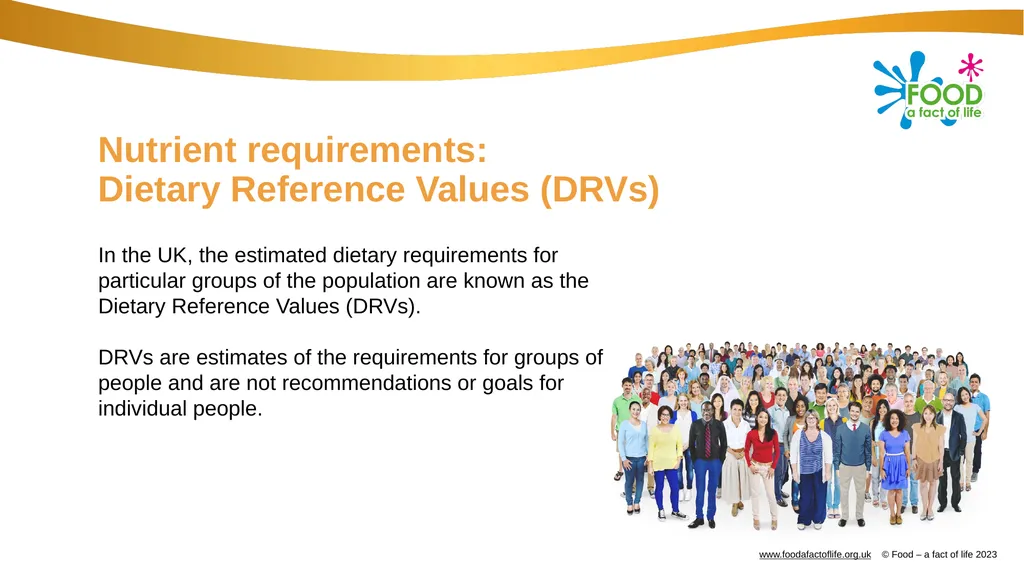
Nutrient requirements: Dietary Reference Values (DRVs) In the UK, the estimated dietary requirements for particular groups of the population are known as the Dietary Reference Values (DRVs).
DRVs are estimates of the requirements for groups of people and are not recommendations or goals for individual people.<br>
05
Nutrient requirements There are three types of DRV estimates:
Estimated Average Requirements (EARs);
Reference Nutrient Intakes (RNIs);
Lower Reference Nutrient Intakes (LRNIs).<br>
06
Nutrient requirements EAR is used for energy. The EARs for energy are based on the present lifestyles and activity levels of the UK population.
RNI is often used as a reference amount for population groups.
LRNI is a useful measure of nutritional inadequacy.<br>
07
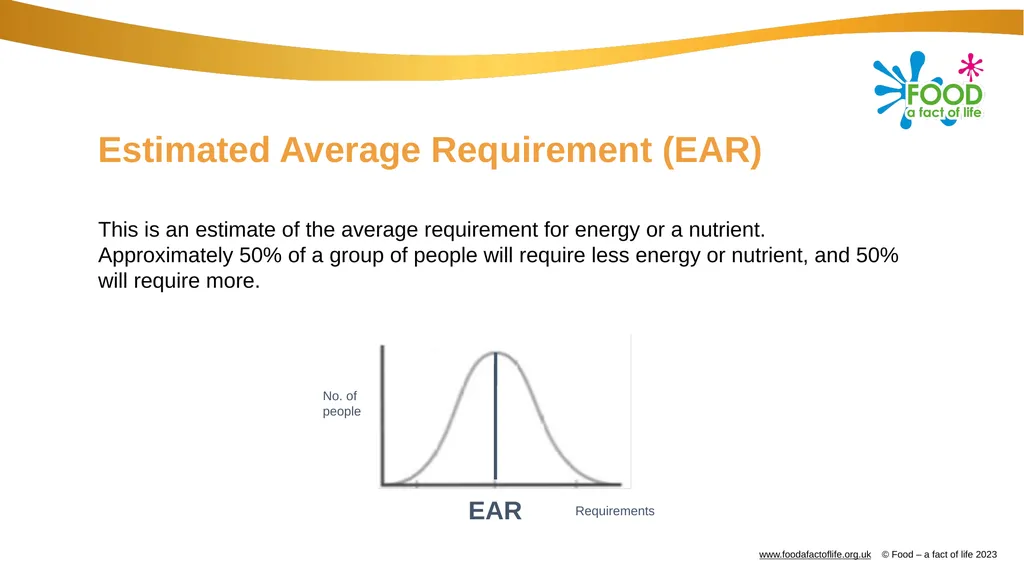
Estimated Average Requirement (EAR) This is an estimate of the average requirement for energy or a nutrient.
Approximately 50% of a group of people will require less energy or nutrient, and 50% will require more.<br>
08
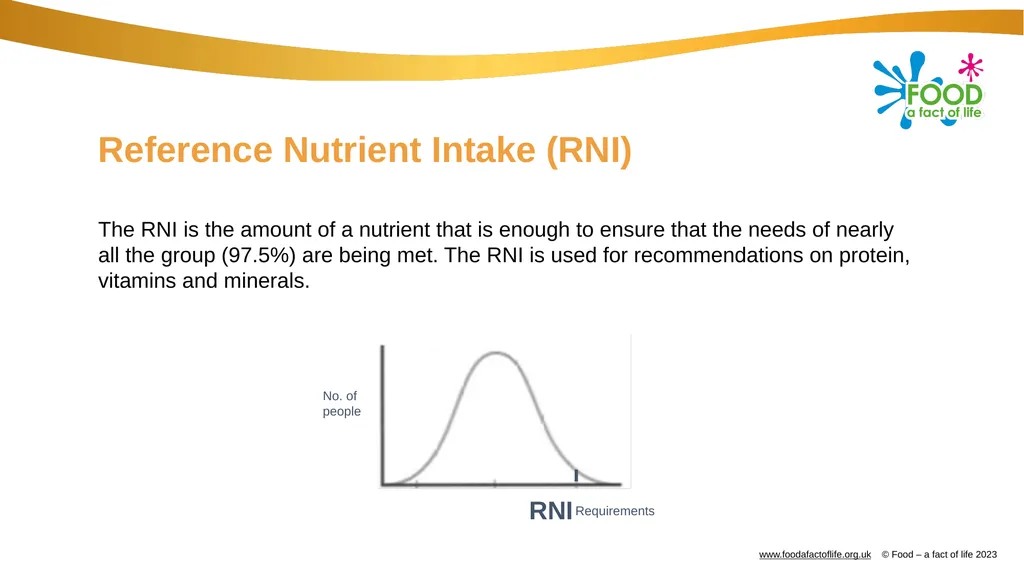
Reference Nutrient Intake (RNI) The RNI is the amount of a nutrient that is enough to ensure that the needs of nearly all the group (97.5%) are being met. The RNI is used for recommendations on protein, vitamins and minerals.<br>
09
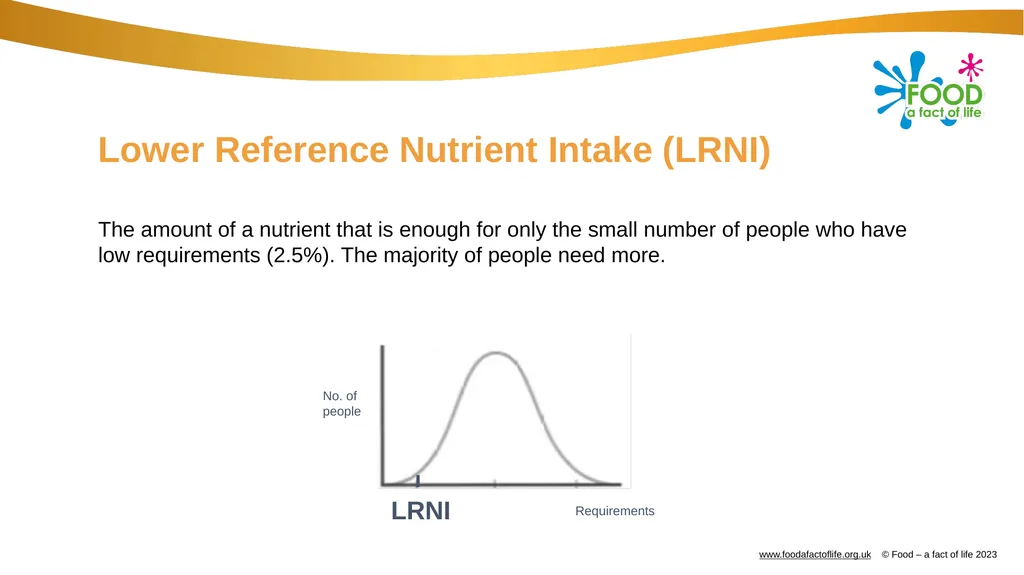
Lower Reference Nutrient Intake (LRNI) The amount of a nutrient that is enough for only the small number of people who have low requirements (2.5%). The majority of people need more.<br>
10
Kahoot Quiz Open the link below on the main screen and get students to log onto kahoot.it on their tablets or smartphones.
They can then enter the code (that will come up on the main screen when you start the game) and their own nickname.
They can then play along with the quiz choosing the multiple choice answers that correspond with the questions on the main screen. There will then be a leader board of the scores after each question and at the end.
Dietary reference values (DRVs) For further information, go to:
www.foodafactoflife.org.uk This resource meets the Guidelines for producers and users of school education resources about food.<br>