
Digital Well‑Being: Concept and Scope Dr. Shalini
KL
Published · 23 slides · 0 views

1 / 1


Description
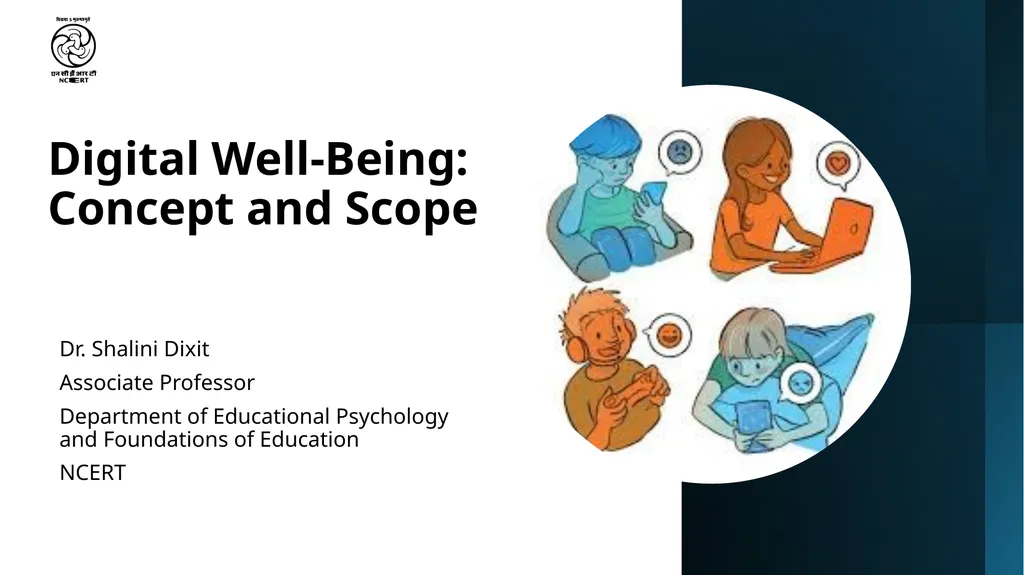
Digital WellBeing: Concept and Scope Dr. Shalini Dixit Associate Professor Department of Educational Psychology and Foundations of Education NCERT The Rise of Digital Engagement With students increasingly immersed in digital environments
Related Topics
Share
Embed code
Download this presentation From Below
"Digital Well‑Being: Concept and Scope Dr. Shalini" is the property of its rightful owner. Permission is granted to download and print the materials on this website for personal, non-commercial use only, and to display it on your personal computer provided you do not modify the materials and that you retain all copyright notices contained in the materials. By downloading content from our website, you accept the terms of this agreement.
Presentation Transcript
01
Digital Well‑Being:
Concept and Scope Dr. Shalini Dixit
Associate Professor
Department of Educational Psychology and Foundations of Education
NCERT<br>
Associate Professor
Department of Educational Psychology and Foundations of Education
NCERT<br>
02
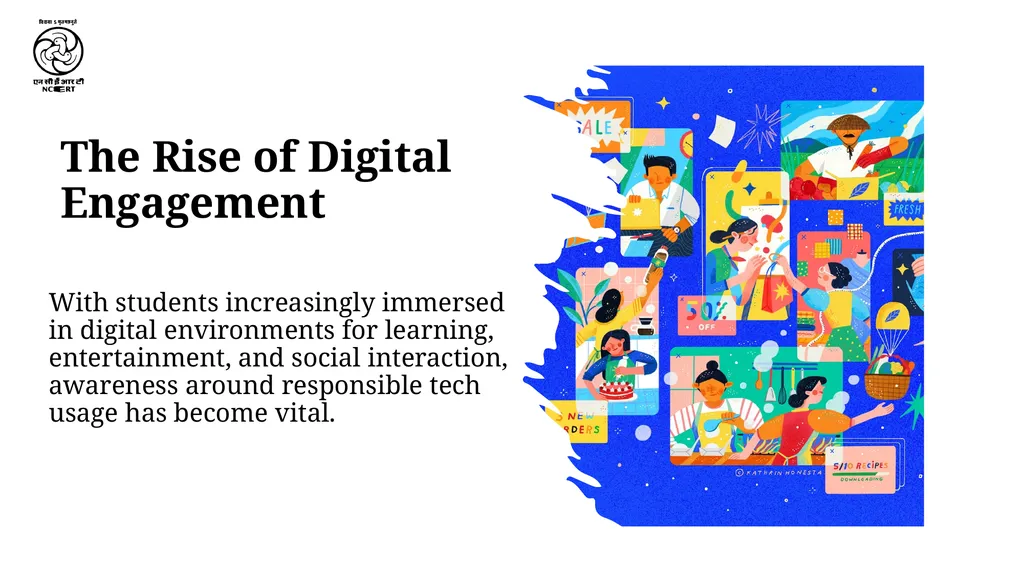
The Rise of Digital Engagement With students increasingly immersed in digital environments for learning, entertainment, and social interaction, awareness around responsible tech usage has become vital.<br>
03
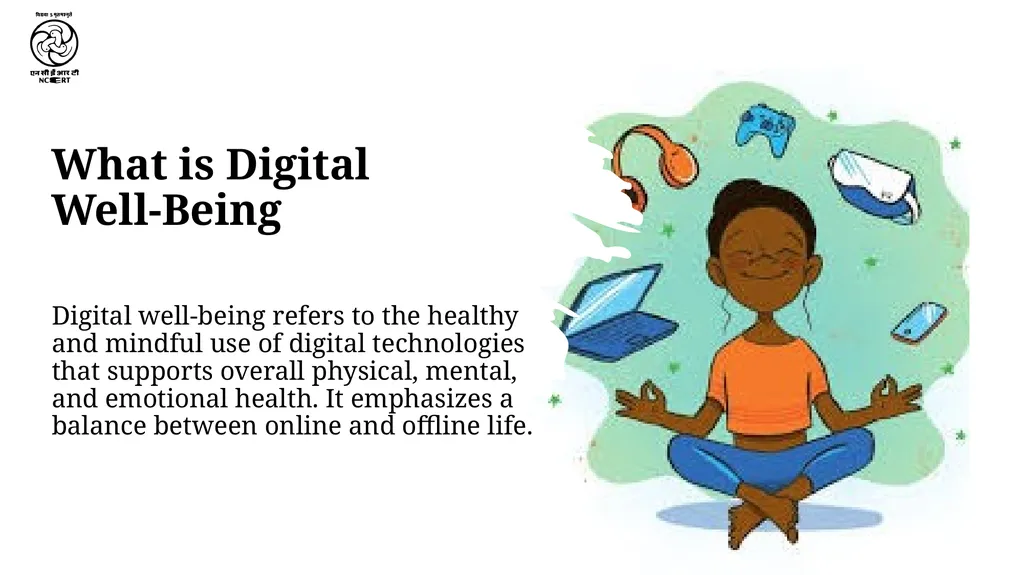
What is Digital Well‑Being Digital well-being refers to the healthy and mindful use of digital technologies that supports overall physical, mental, and emotional health. It emphasizes a balance between online and offline life.<br>
04
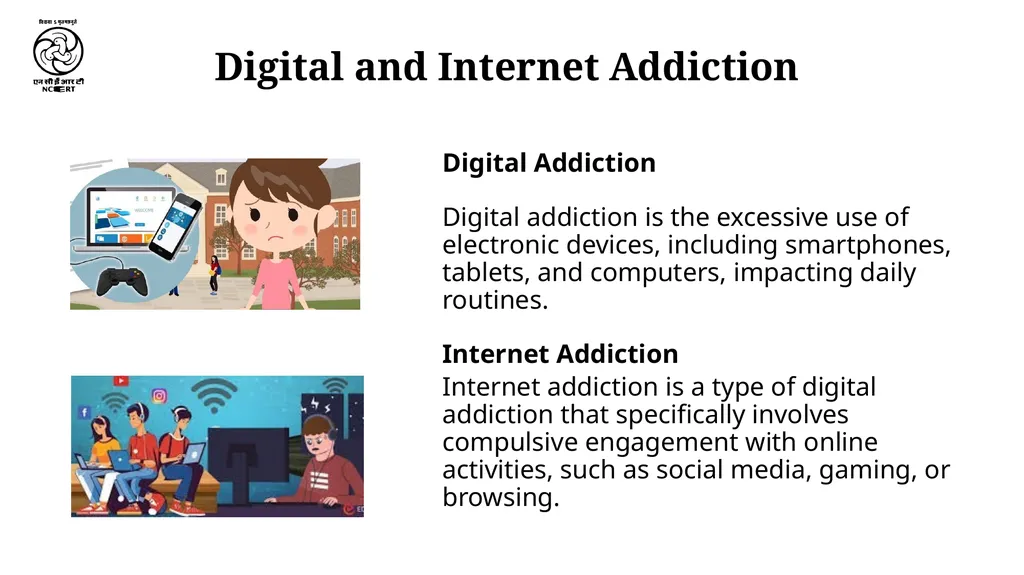
Digital and Internet Addiction Digital Addiction
Digital addiction is the excessive use of electronic devices, including smartphones, tablets, and computers, impacting daily routines.
Internet Addiction
Internet addiction is a type of digital addiction that specifically involves compulsive engagement with online activities, such as social media, gaming, or browsing.<br>
Digital addiction is the excessive use of electronic devices, including smartphones, tablets, and computers, impacting daily routines.
Internet Addiction
Internet addiction is a type of digital addiction that specifically involves compulsive engagement with online activities, such as social media, gaming, or browsing.<br>
05
Concept of IA 1st came in 1996 when excessive internet use was compared to substance abuse
Important global mental health problem.
Defined as overuse of internet, with subsequent impairment of psychological health, social interaction, academic or occupational disturbance
Common point: Problematic computer usage that is time consuming and causes distress or impairs one’s functioning in important life domains
Features comparable to core features of addictive behaviour Internet addiction (IA): Concept Young, 1996; Shaw and Black, 2008; Ko et al, 2012<br>
Important global mental health problem.
Defined as overuse of internet, with subsequent impairment of psychological health, social interaction, academic or occupational disturbance
Common point: Problematic computer usage that is time consuming and causes distress or impairs one’s functioning in important life domains
Features comparable to core features of addictive behaviour Internet addiction (IA): Concept Young, 1996; Shaw and Black, 2008; Ko et al, 2012<br>
06
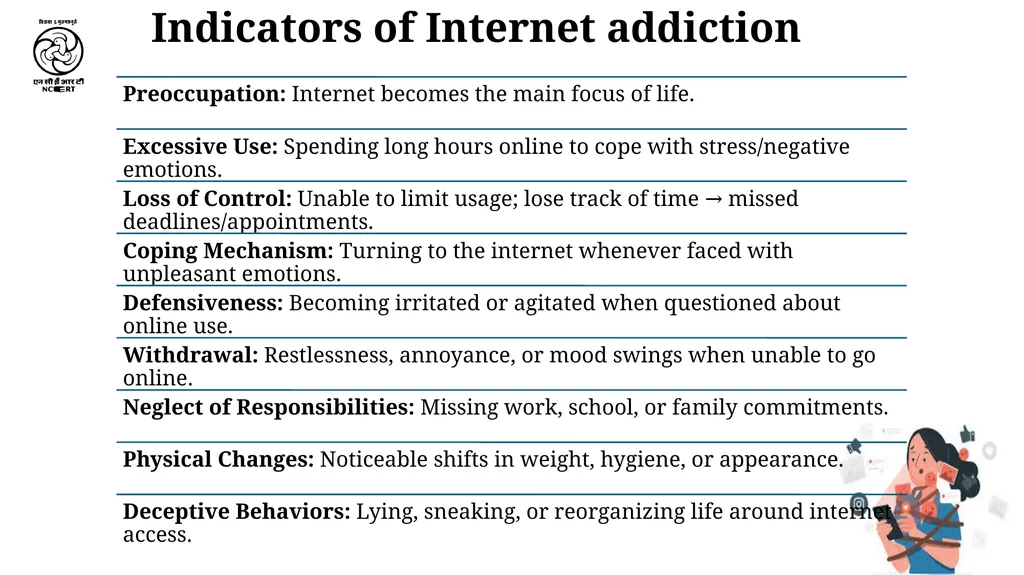
Indicators of Internet addiction<br>
07
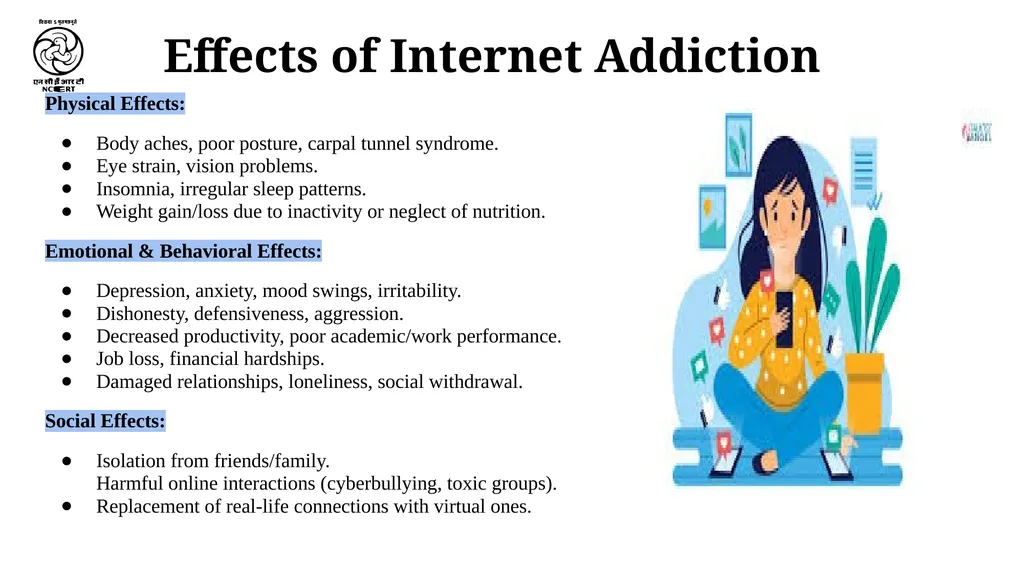
Physical Effects:
Body aches, poor posture, carpal tunnel syndrome.
Eye strain, vision problems.
Insomnia, irregular sleep patterns.
Weight gain/loss due to inactivity or neglect of nutrition.
Emotional & Behavioral Effects:
Depression, anxiety, mood swings, irritability.
Dishonesty, defensiveness, aggression.
Decreased productivity, poor academic/work performance.
Job loss, financial hardships.
Damaged relationships, loneliness, social withdrawal.
Social Effects:
Isolation from friends/family. Harmful online interactions (cyberbullying, toxic groups).
Replacement of real-life connections with virtual ones. Effects of Internet Addiction<br>
Body aches, poor posture, carpal tunnel syndrome.
Eye strain, vision problems.
Insomnia, irregular sleep patterns.
Weight gain/loss due to inactivity or neglect of nutrition.
Emotional & Behavioral Effects:
Depression, anxiety, mood swings, irritability.
Dishonesty, defensiveness, aggression.
Decreased productivity, poor academic/work performance.
Job loss, financial hardships.
Damaged relationships, loneliness, social withdrawal.
Social Effects:
Isolation from friends/family. Harmful online interactions (cyberbullying, toxic groups).
Replacement of real-life connections with virtual ones. Effects of Internet Addiction<br>
08
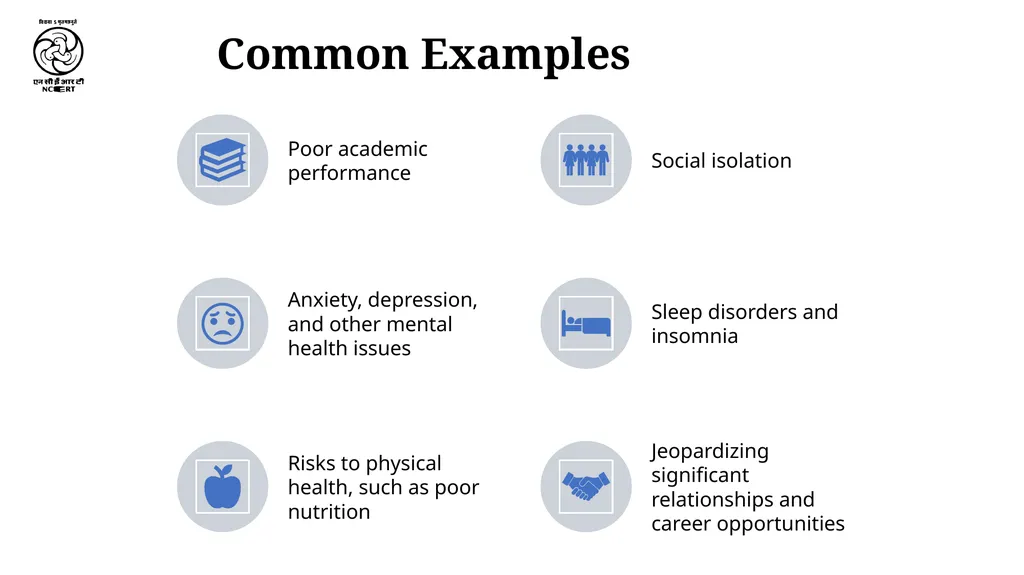
Common Examples<br>
09
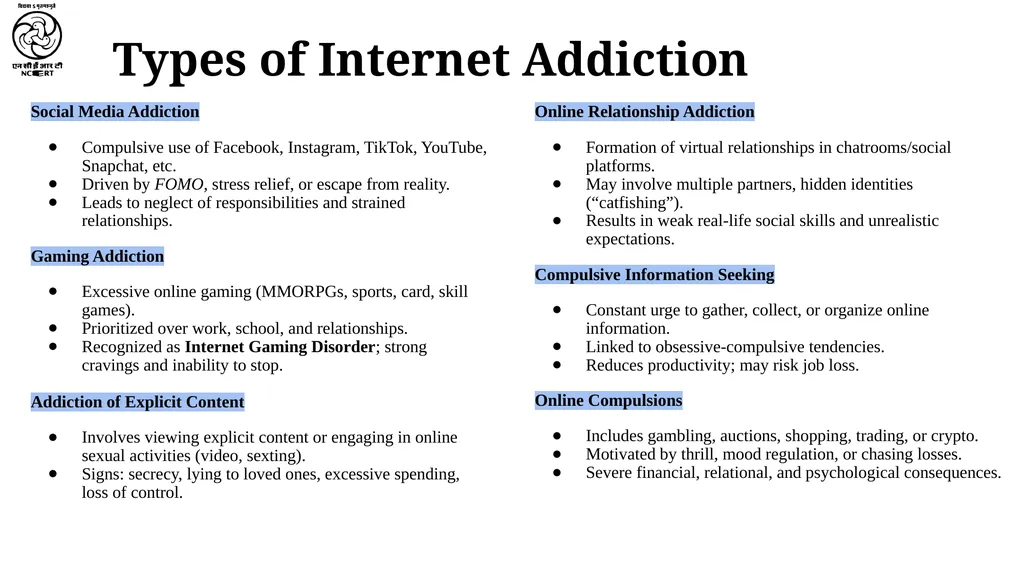
Social Media Addiction
Compulsive use of Facebook, Instagram, TikTok, YouTube, Snapchat, etc.
Driven by FOMO, stress relief, or escape from reality.
Leads to neglect of responsibilities and strained relationships.
Gaming Addiction
Excessive online gaming (MMORPGs, sports, card, skill games).
Prioritized over work, school, and relationships.
Recognized as Internet Gaming Disorder; strong cravings and inability to stop.
Addiction of Explicit Content
Involves viewing explicit content or engaging in online sexual activities (video, sexting).
Signs: secrecy, lying to loved ones, excessive spending, loss of control. Online Relationship Addiction
Formation of virtual relationships in chatrooms/social platforms.
May involve multiple partners, hidden identities (“catfishing”).
Results in weak real-life social skills and unrealistic expectations.
Compulsive Information Seeking
Constant urge to gather, collect, or organize online information.
Linked to obsessive-compulsive tendencies.
Reduces productivity; may risk job loss.
Online Compulsions
Includes gambling, auctions, shopping, trading, or crypto.
Motivated by thrill, mood regulation, or chasing losses.
Severe financial, relational, and psychological consequences. Types of Internet Addiction<br>
Compulsive use of Facebook, Instagram, TikTok, YouTube, Snapchat, etc.
Driven by FOMO, stress relief, or escape from reality.
Leads to neglect of responsibilities and strained relationships.
Gaming Addiction
Excessive online gaming (MMORPGs, sports, card, skill games).
Prioritized over work, school, and relationships.
Recognized as Internet Gaming Disorder; strong cravings and inability to stop.
Addiction of Explicit Content
Involves viewing explicit content or engaging in online sexual activities (video, sexting).
Signs: secrecy, lying to loved ones, excessive spending, loss of control. Online Relationship Addiction
Formation of virtual relationships in chatrooms/social platforms.
May involve multiple partners, hidden identities (“catfishing”).
Results in weak real-life social skills and unrealistic expectations.
Compulsive Information Seeking
Constant urge to gather, collect, or organize online information.
Linked to obsessive-compulsive tendencies.
Reduces productivity; may risk job loss.
Online Compulsions
Includes gambling, auctions, shopping, trading, or crypto.
Motivated by thrill, mood regulation, or chasing losses.
Severe financial, relational, and psychological consequences. Types of Internet Addiction<br>
10
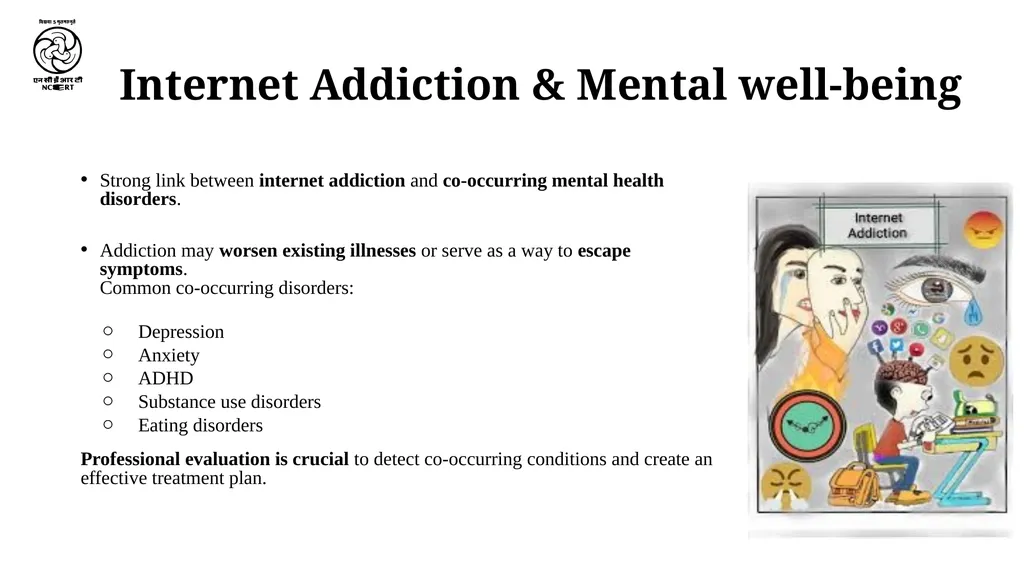
Internet Addiction & Mental well-being Strong link between internet addiction and co-occurring mental health disorders.
Addiction may worsen existing illnesses or serve as a way to escape symptoms. Common co-occurring disorders:
Depression
Anxiety
ADHD
Substance use disorders
Eating disorders
Professional evaluation is crucial to detect co-occurring conditions and create an effective treatment plan.<br>
Addiction may worsen existing illnesses or serve as a way to escape symptoms. Common co-occurring disorders:
Depression
Anxiety
ADHD
Substance use disorders
Eating disorders
Professional evaluation is crucial to detect co-occurring conditions and create an effective treatment plan.<br>
11
Definition:
Cybercrime refers to criminal activities that involve the use of computers, digital devices, or internet technologies.
Offences may occur entirely online.
Many have offline consequences with real-world impacts.
Examples of Offline Impact:
Use of internet platforms for human trafficking.
Online channels enabling trade in illegal substances.
Fraudulent financial transactions affecting real assets.
Examples of Online-Only Offences:
Hacking into networks or systems.
Identity theft and phishing.
Malware distribution, denial-of-service (DoS) attacks.
Cyberstalking and online harassment.
Cybercrime blurs the boundary between virtual and physical worlds, making it a global security and law enforcement challenge. Cybercrime<br>
Offences may occur entirely online.
Many have offline consequences with real-world impacts.
Examples of Offline Impact:
Use of internet platforms for human trafficking.
Online channels enabling trade in illegal substances.
Fraudulent financial transactions affecting real assets.
Examples of Online-Only Offences:
Hacking into networks or systems.
Identity theft and phishing.
Malware distribution, denial-of-service (DoS) attacks.
Cyberstalking and online harassment.
Cybercrime blurs the boundary between virtual and physical worlds, making it a global security and law enforcement challenge. Cybercrime<br>
12
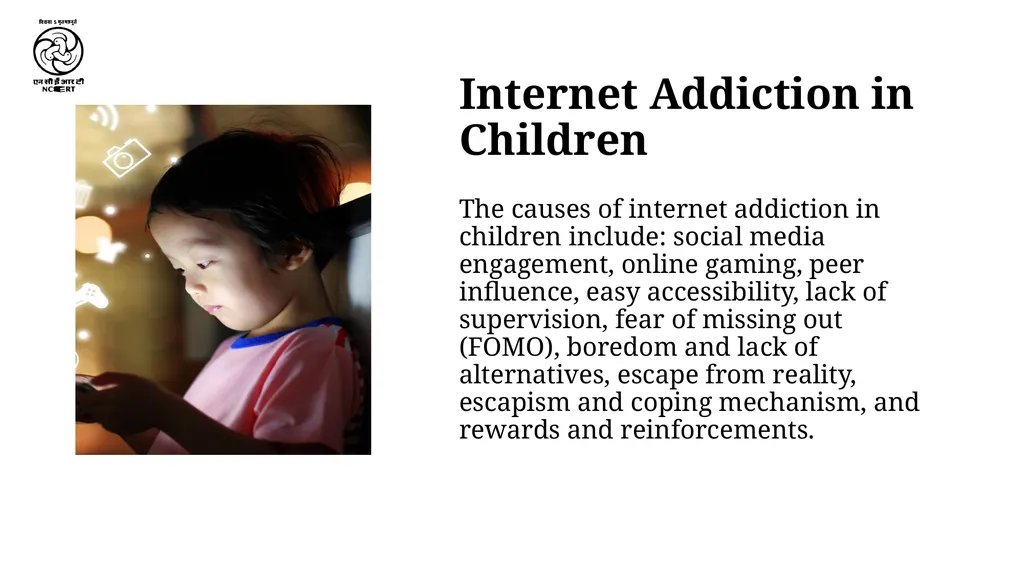
Internet Addiction in Children The causes of internet addiction in children include: social media engagement, online gaming, peer influence, easy accessibility, lack of supervision, fear of missing out (FOMO), boredom and lack of alternatives, escape from reality, escapism and coping mechanism, and rewards and reinforcements.<br>
13
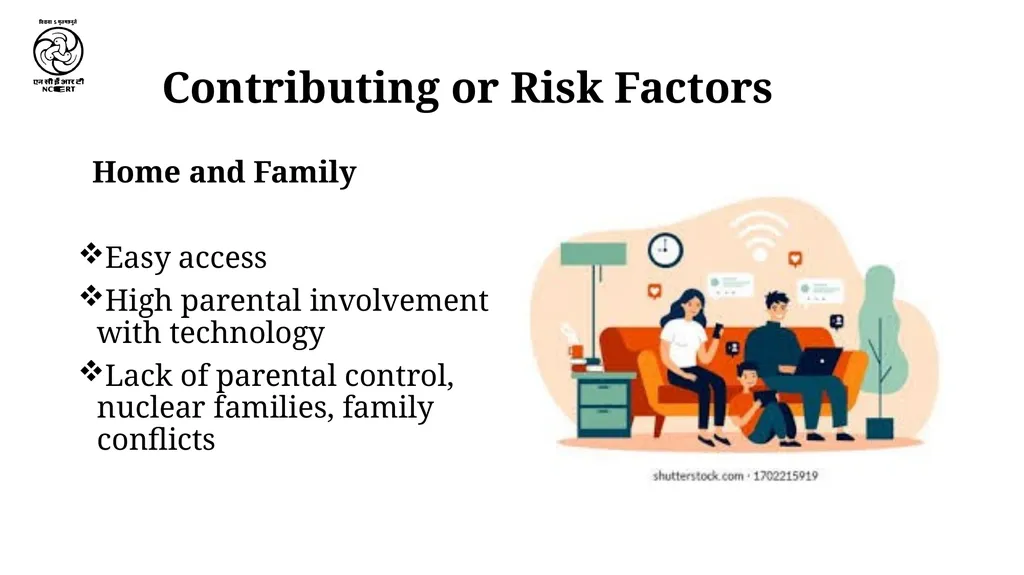
Contributing or Risk Factors Home and Family
Easy access
High parental involvement with technology
Lack of parental control, nuclear families, family conflicts<br>
Easy access
High parental involvement with technology
Lack of parental control, nuclear families, family conflicts<br>
14
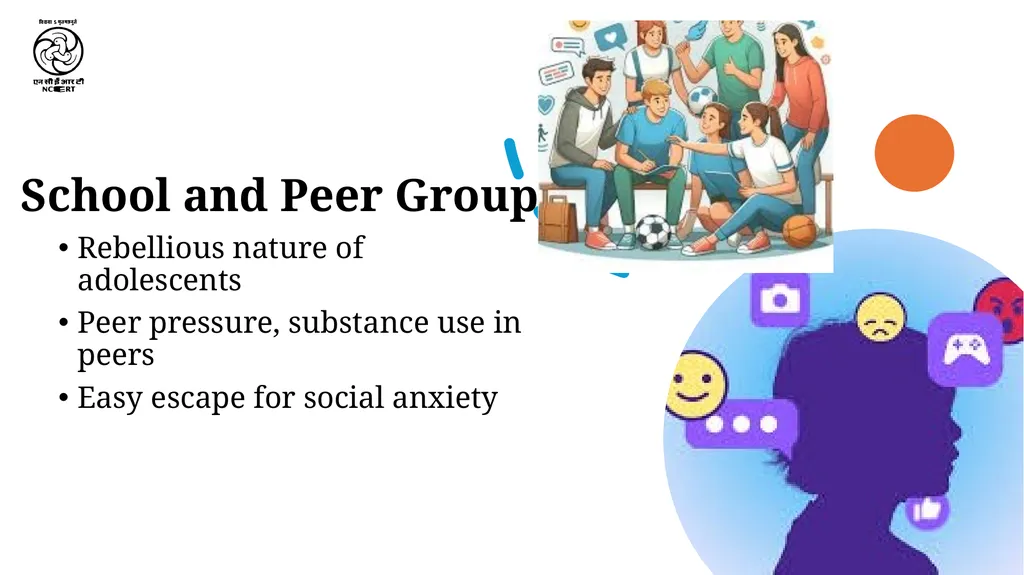
School and Peer Group Rebellious nature of adolescents
Peer pressure, substance use in peers
Easy escape for social anxiety<br>
Peer pressure, substance use in peers
Easy escape for social anxiety<br>
15
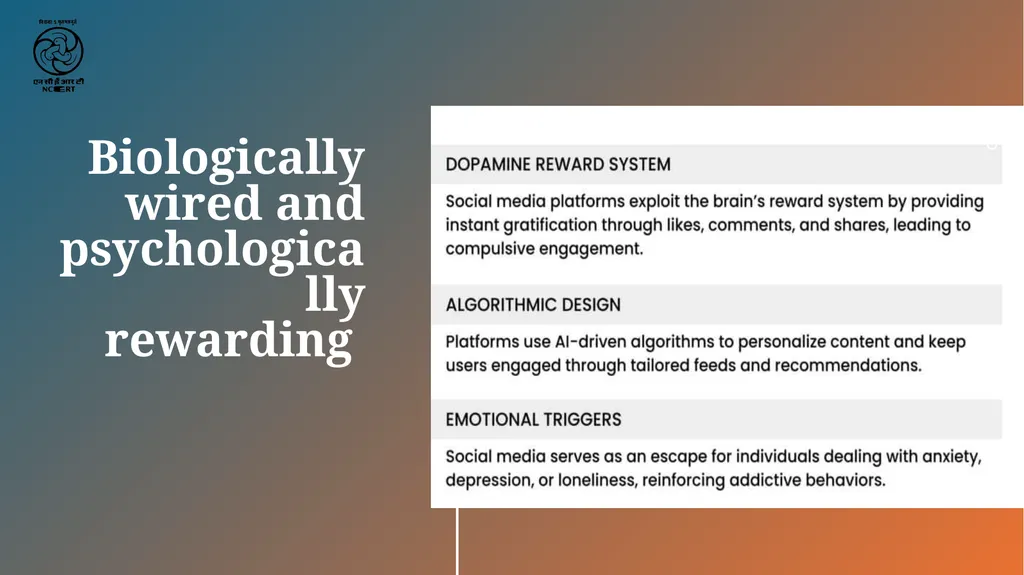
Biologically wired and psychologically rewarding<br>
16
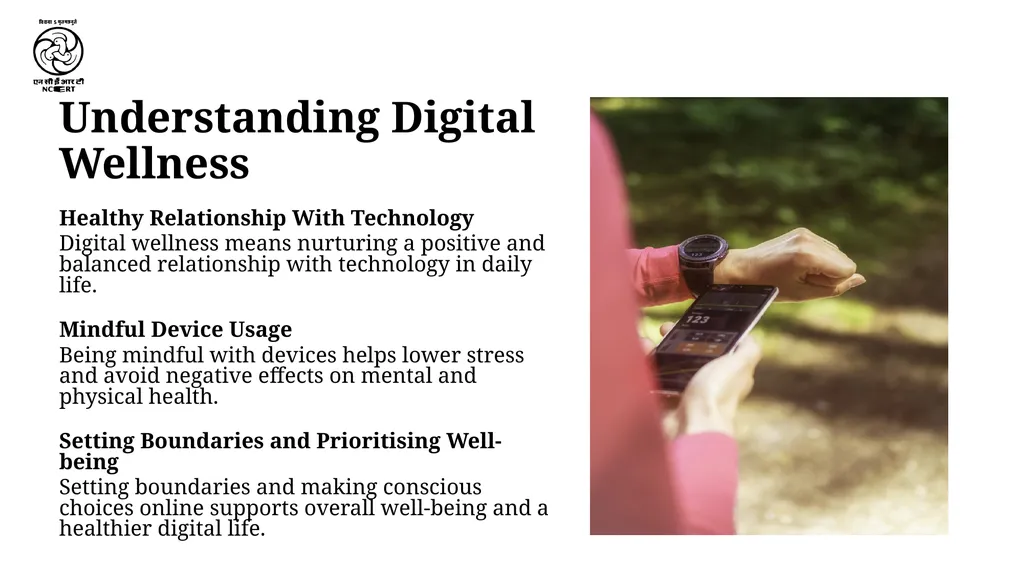
Understanding Digital Wellness Healthy Relationship With Technology
Digital wellness means nurturing a positive and balanced relationship with technology in daily life.
Mindful Device Usage
Being mindful with devices helps lower stress and avoid negative effects on mental and physical health.
Setting Boundaries and Prioritising Well-being
Setting boundaries and making conscious choices online supports overall well-being and a healthier digital life.<br>
Digital wellness means nurturing a positive and balanced relationship with technology in daily life.
Mindful Device Usage
Being mindful with devices helps lower stress and avoid negative effects on mental and physical health.
Setting Boundaries and Prioritising Well-being
Setting boundaries and making conscious choices online supports overall well-being and a healthier digital life.<br>
17
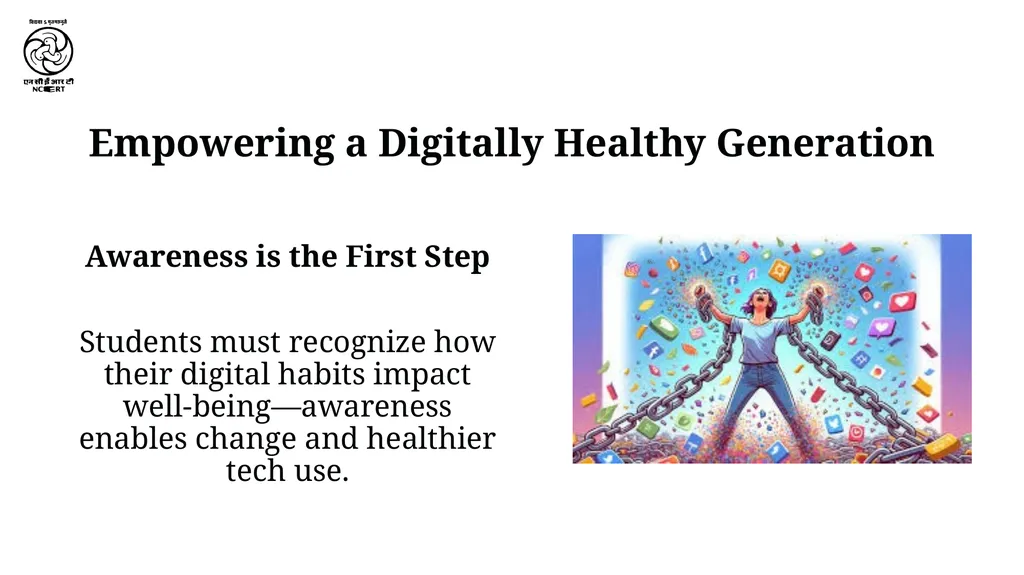
Empowering a Digitally Healthy Generation Awareness is the First Step
Students must recognize how their digital habits impact well-being—awareness enables change and healthier tech use.<br>
Students must recognize how their digital habits impact well-being—awareness enables change and healthier tech use.<br>
18
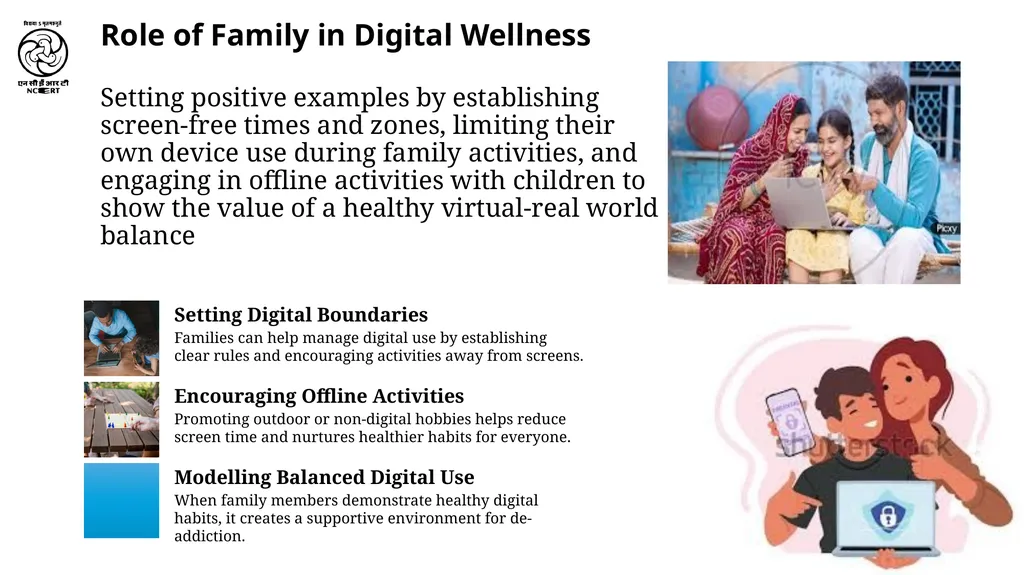
Role of Family in Digital Wellness
Setting positive examples by establishing screen-free times and zones, limiting their own device use during family activities, and engaging in offline activities with children to show the value of a healthy virtual-real world balance<br>
19
Digital Well‑Being in Schools School-Wide Digital Literacy: Embed digital wellness into the curriculum for all students through age-appropriate lessons on screen time, online etiquette, and digital safety
Educating Responsible Technology Use: Teaching students about responsible use and online safety helps them develop healthy digital habits for life.
Balanced Screen Time: Encouraging students to manage their screen time promotes a healthy balance between digital and offline activities.
Group Supports: Provide additional instruction or workshops for students showing signs of digital fatigue, gaming addiction, or social withdrawal. Personalized Interventions: Offer tailored guidance and mental health resources for students at high risk of digital overuse or technology-related distress.
Creating a Healthy Environment: Encourage tech-free zones, device breaks, and teacher modeling of balanced tech use to reinforce healthy digital norms<br>
Educating Responsible Technology Use: Teaching students about responsible use and online safety helps them develop healthy digital habits for life.
Balanced Screen Time: Encouraging students to manage their screen time promotes a healthy balance between digital and offline activities.
Group Supports: Provide additional instruction or workshops for students showing signs of digital fatigue, gaming addiction, or social withdrawal. Personalized Interventions: Offer tailored guidance and mental health resources for students at high risk of digital overuse or technology-related distress.
Creating a Healthy Environment: Encourage tech-free zones, device breaks, and teacher modeling of balanced tech use to reinforce healthy digital norms<br>
20
Seek Help Own the Responsibility
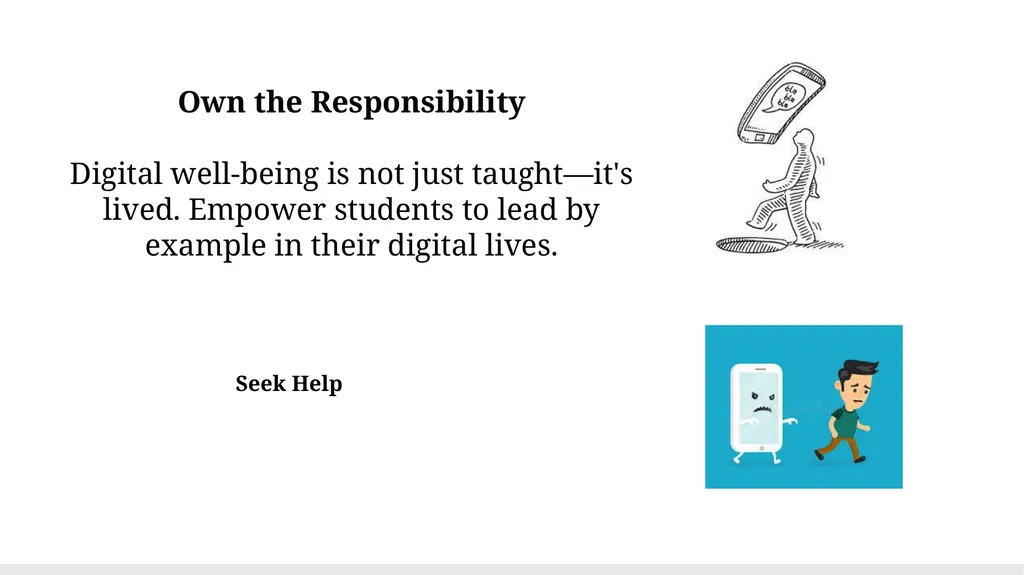
Digital well-being is not just taught—it's lived. Empower students to lead by example in their digital lives.<br>
Digital well-being is not just taught—it's lived. Empower students to lead by example in their digital lives.<br>
21
The cycle is an internal dialogue that serves to maintain the compulsive behavior.
1) Rationalization - Users will rationalize that cybersex serves as a "treat" from a long, hard day of work often making self-statement such as, "Just a few minutes won't hurt," "I can control my net use," but they soon discover that time slips by and the behavior i s not s o easily contained.
2) Regret - After the cybersex experience, the users' experience a period of deep regret. Once they climax, the addict feels guilt or shame for the behavior such as, "feel guilty for how this is hurting my wife" or "I can't believe I wasted all this time,".
3) Abstinence - The addict views the behavior as a personal failure of willpower and promises never to do it again and a short period of abstinence follows. During this time, the addict temporarily engages in healthy patterns of behavior, resumes interests in old hobbies, spends more time with his family, exercises, and gets enough rest.
4) Relapse - The addict in recovery feels tempted to return to the computer during stressful or emotionally charged moments. They begin to crave and miss cybers Stop-Start Relapse Cycle<br>
1) Rationalization - Users will rationalize that cybersex serves as a "treat" from a long, hard day of work often making self-statement such as, "Just a few minutes won't hurt," "I can control my net use," but they soon discover that time slips by and the behavior i s not s o easily contained.
2) Regret - After the cybersex experience, the users' experience a period of deep regret. Once they climax, the addict feels guilt or shame for the behavior such as, "feel guilty for how this is hurting my wife" or "I can't believe I wasted all this time,".
3) Abstinence - The addict views the behavior as a personal failure of willpower and promises never to do it again and a short period of abstinence follows. During this time, the addict temporarily engages in healthy patterns of behavior, resumes interests in old hobbies, spends more time with his family, exercises, and gets enough rest.
4) Relapse - The addict in recovery feels tempted to return to the computer during stressful or emotionally charged moments. They begin to crave and miss cybers Stop-Start Relapse Cycle<br>
22
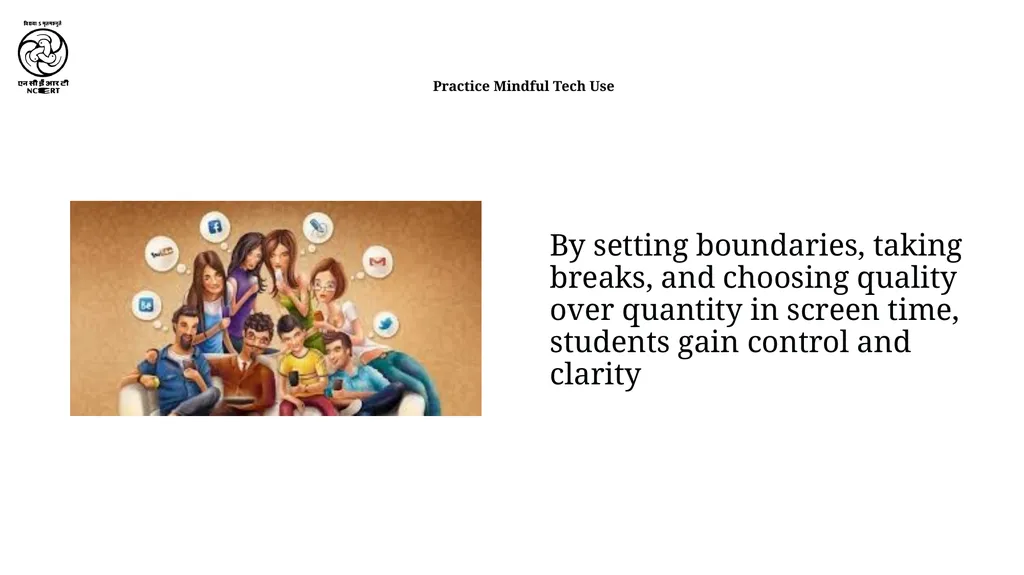
Practice Mindful Tech Use By setting boundaries, taking breaks, and choosing quality over quantity in screen time, students gain control and clarity<br>
23
THANK YOU<br>