Disaster Management Disaster A disaster can be defined as any occurrence that causes damage, ecological disruption, loss of human life or deterioration of health services on a scale sufficient to warrant an extraordinary response from
"Disaster Management Disaster A disaster can be" is the property of its rightful owner. Permission is granted to
download and print the materials on this website for personal, non-commercial use only, and to display it
on your personal computer provided you do not modify the materials and that you retain all copyright
notices contained in the materials. By downloading content from our website, you accept the terms of this
agreement.
Presentation Transcript
01
Disaster Management<br>
02
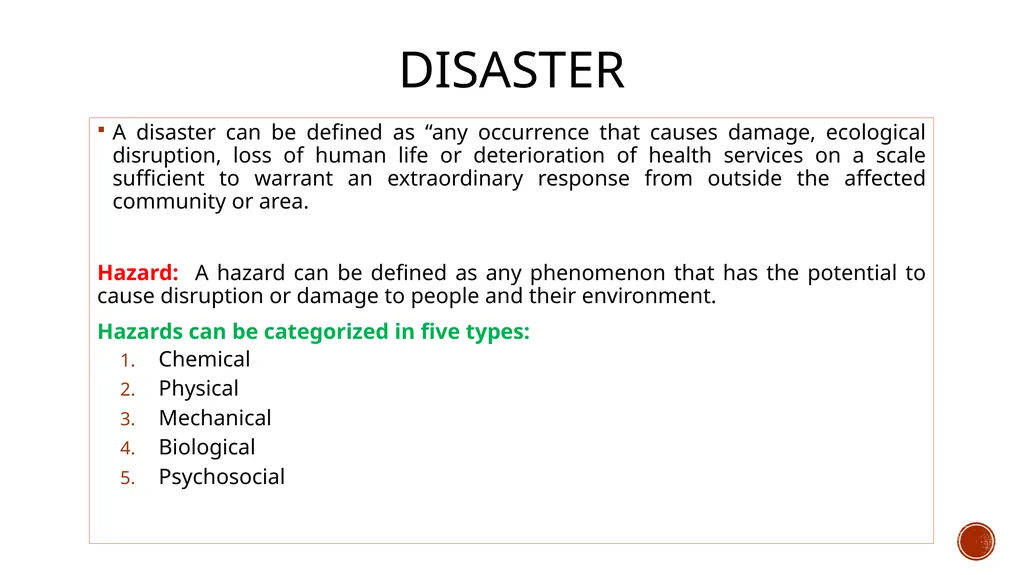
Disaster A disaster can be defined as “any occurrence that causes damage, ecological disruption, loss of human life or deterioration of health services on a scale sufficient to warrant an extraordinary response from outside the affected community or area.
Hazard: A hazard can be defined as any phenomenon that has the potential to cause disruption or damage to people and their environment.
Hazards can be categorized in five types:
Chemical
Physical
Mechanical
Biological
Psychosocial<br>
03
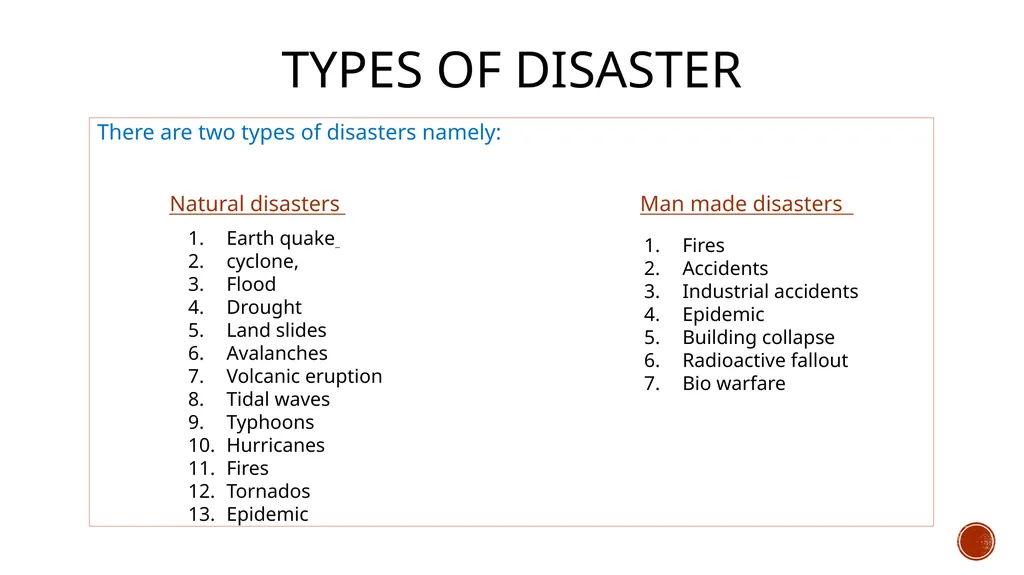
Types of Disaster There are two types of disasters namely:
Natural disasters Man made disasters Earth quake
cyclone,
Flood
Drought
Land slides
Avalanches
Volcanic eruption
Tidal waves
Typhoons
Hurricanes
Fires
Tornados
Epidemic Fires
Accidents
Industrial accidents
Epidemic
Building collapse
Radioactive fallout
Bio warfare<br>
04
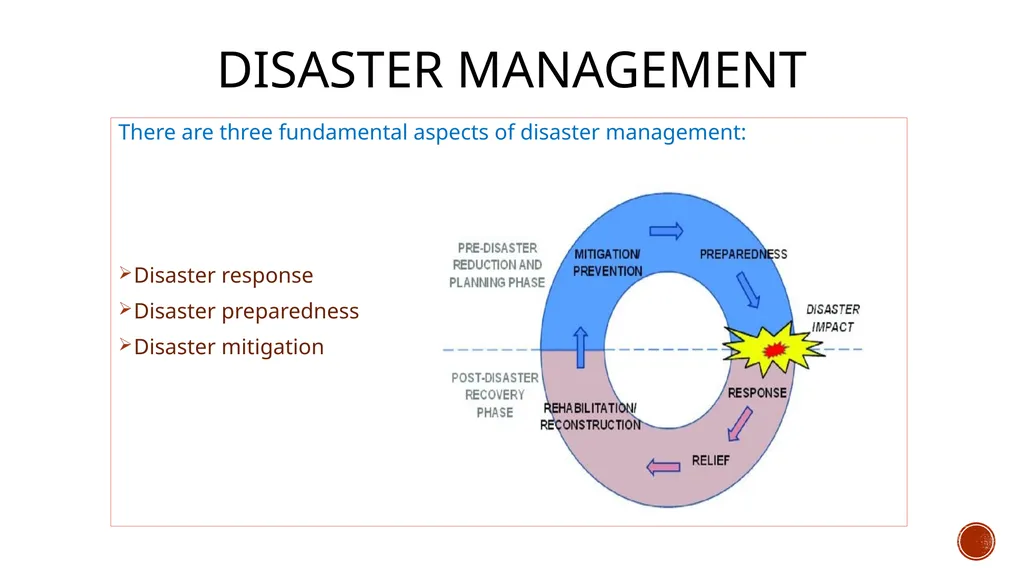
Disaster Management There are three fundamental aspects of disaster management:
Disaster mitigation:
Directly preventing future emergencies and/or minimizing their negative effects
It requires hazard risk analysis and the application of strategies to reduce the likelihood that hazards will become disasters, such as flood-proofing homes or buying insurance
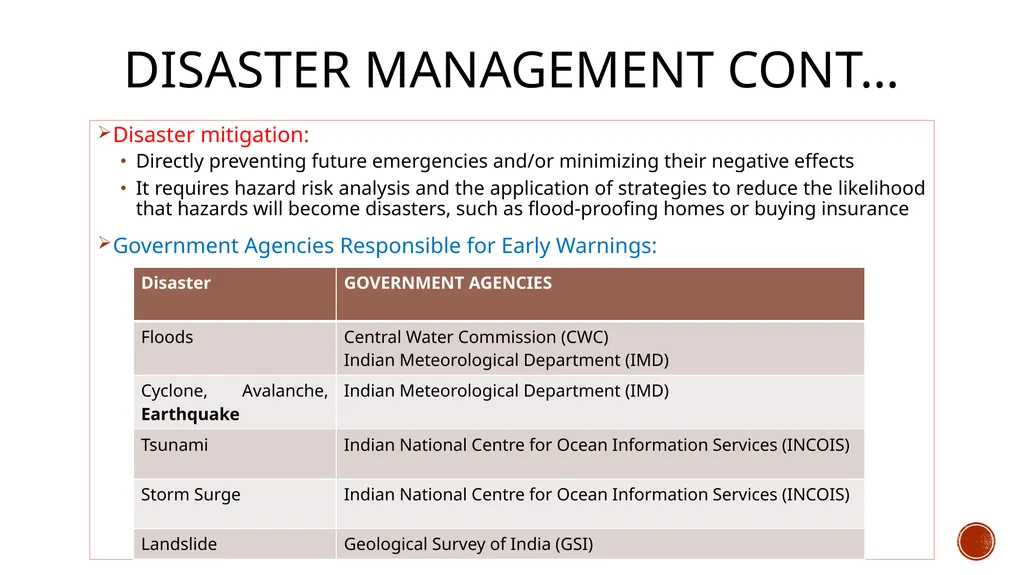
Government Agencies Responsible for Early Warnings: Disaster Management cont…<br>
06
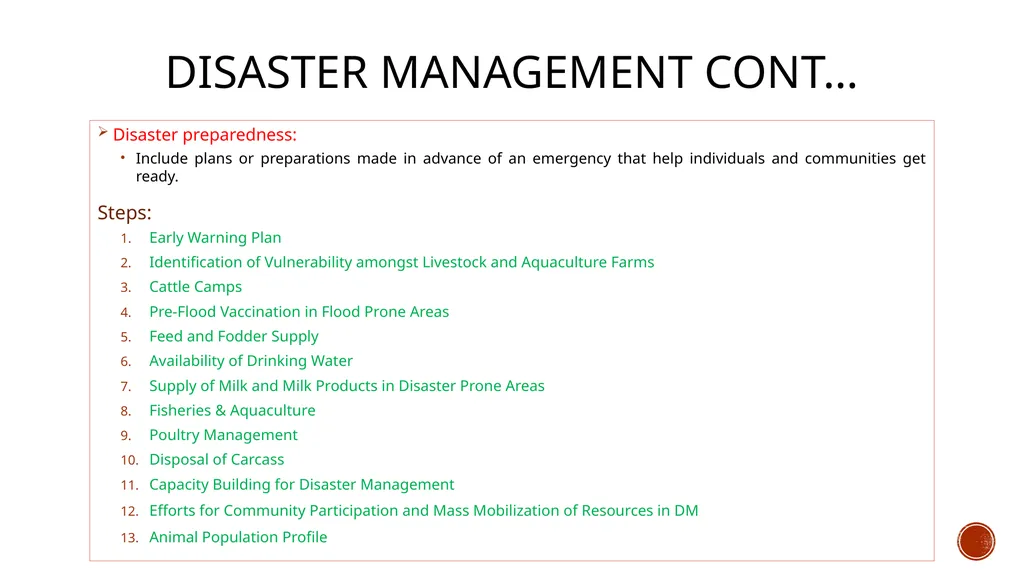
Disaster preparedness:
Include plans or preparations made in advance of an emergency that help individuals and communities get ready.
Steps:
Early Warning Plan
Identification of Vulnerability amongst Livestock and Aquaculture Farms
Cattle Camps
Pre-Flood Vaccination in Flood Prone Areas
Feed and Fodder Supply
Availability of Drinking Water
Supply of Milk and Milk Products in Disaster Prone Areas
Fisheries & Aquaculture
Poultry Management
Disposal of Carcass
Capacity Building for Disaster Management
Efforts for Community Participation and Mass Mobilization of Resources in DM
Animal Population Profile Disaster Management cont…<br>
07
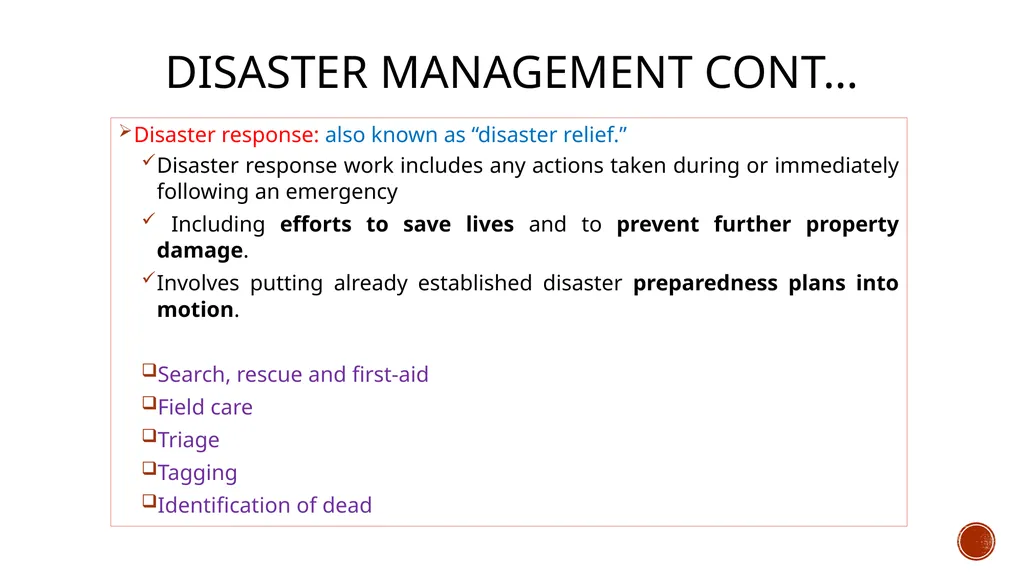
Disaster response: also known as “disaster relief.”
Disaster response work includes any actions taken during or immediately following an emergency
Including efforts to save lives and to prevent further property damage.
Involves putting already established disaster preparedness plans into motion.
Search, rescue and first-aid
Field care
Triage
Tagging
Identification of dead Disaster Management cont…<br>
08
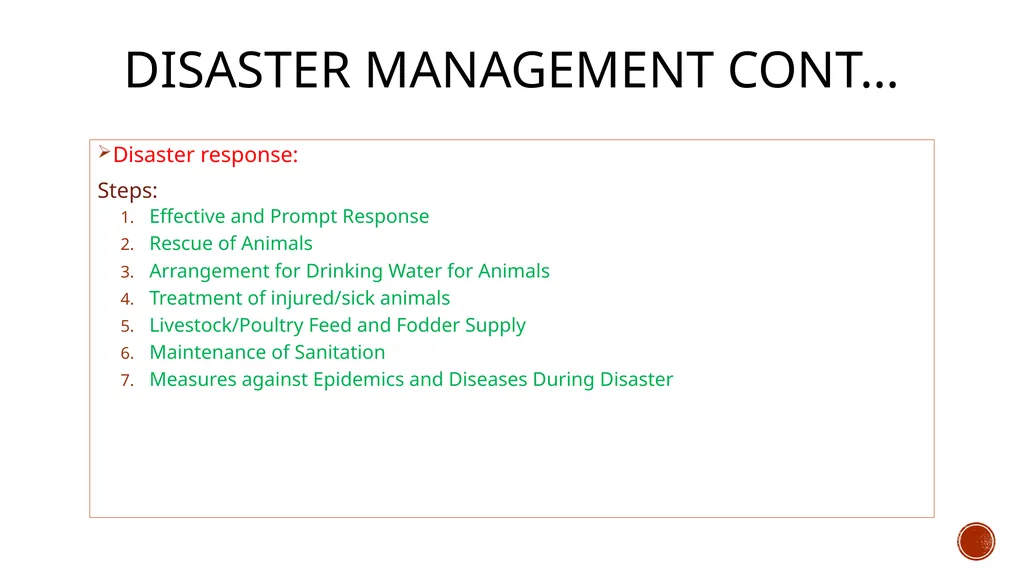
Disaster response:
Steps:
Effective and Prompt Response
Rescue of Animals
Arrangement for Drinking Water for Animals
Treatment of injured/sick animals
Livestock/Poultry Feed and Fodder Supply
Maintenance of Sanitation
Measures against Epidemics and Diseases During Disaster Disaster Management cont…<br>
09
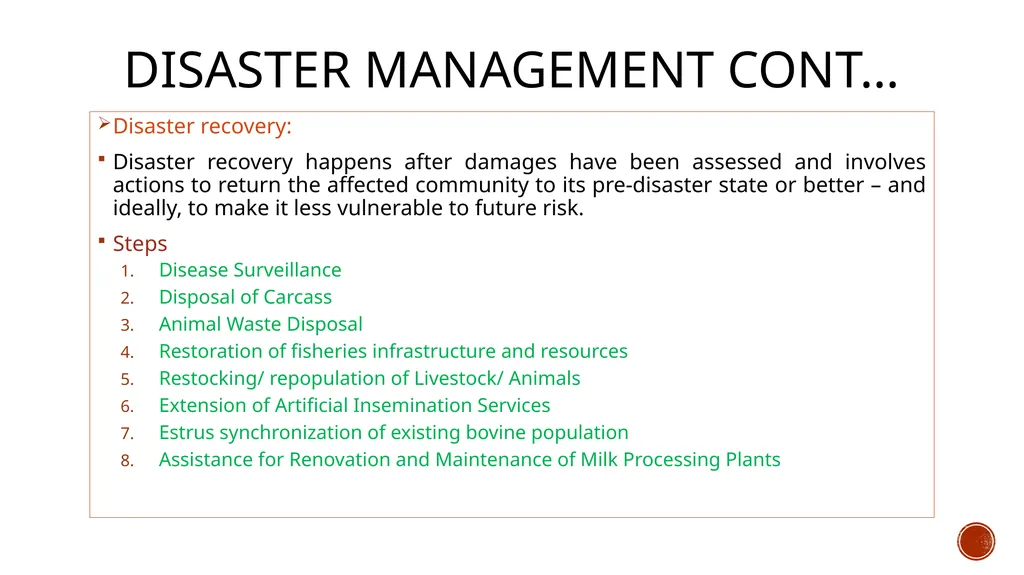
Disaster recovery:
Disaster recovery happens after damages have been assessed and involves actions to return the affected community to its pre-disaster state or better – and ideally, to make it less vulnerable to future risk.
Steps
Disease Surveillance
Disposal of Carcass
Animal Waste Disposal
Restoration of fisheries infrastructure and resources
Restocking/ repopulation of Livestock/ Animals
Extension of Artificial Insemination Services
Estrus synchronization of existing bovine population
Assistance for Renovation and Maintenance of Milk Processing Plants Disaster Management cont…<br>
10
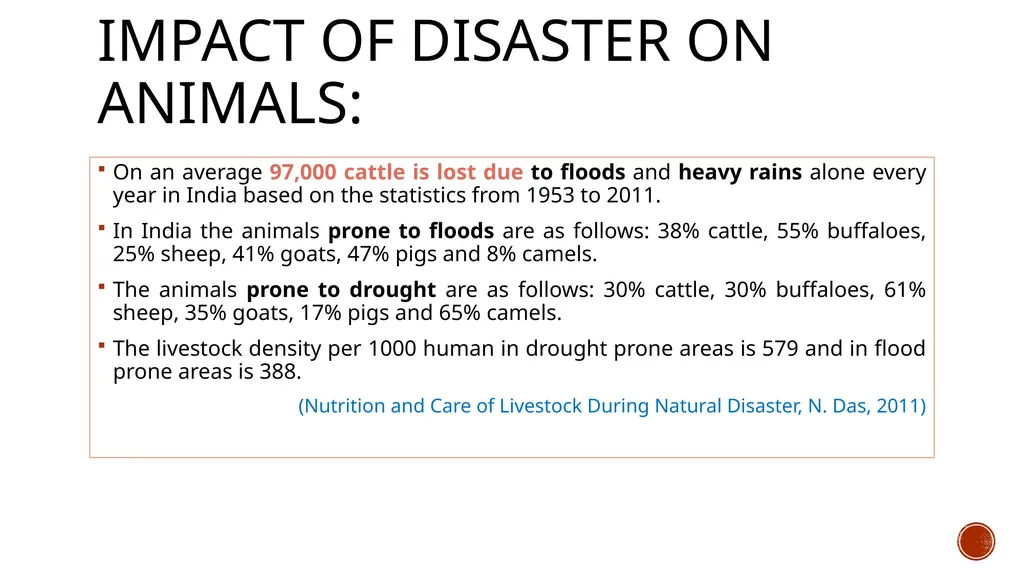
Impact of Disaster on Animals: On an average 97,000 cattle is lost due to floods and heavy rains alone every year in India based on the statistics from 1953 to 2011.
In India the animals prone to floods are as follows: 38% cattle, 55% buffaloes, 25% sheep, 41% goats, 47% pigs and 8% camels.
The animals prone to drought are as follows: 30% cattle, 30% buffaloes, 61% sheep, 35% goats, 17% pigs and 65% camels.
The livestock density per 1000 human in drought prone areas is 579 and in flood prone areas is 388.
(Nutrition and Care of Livestock During Natural Disaster, N. Das, 2011)<br>
11
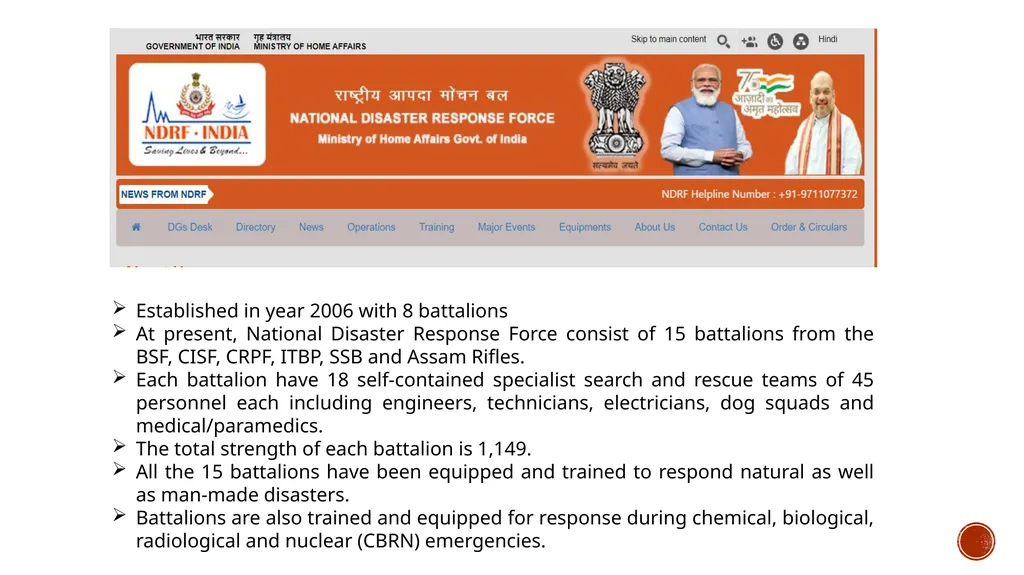
Established in year 2006 with 8 battalions
At present, National Disaster Response Force consist of 15 battalions from the BSF, CISF, CRPF, ITBP, SSB and Assam Rifles.
Each battalion have 18 self-contained specialist search and rescue teams of 45 personnel each including engineers, technicians, electricians, dog squads and medical/paramedics.
The total strength of each battalion is 1,149.
All the 15 battalions have been equipped and trained to respond natural as well as man-made disasters.
Battalions are also trained and equipped for response during chemical, biological, radiological and nuclear (CBRN) emergencies.<br>