
Disasters in Dentistry What to do when the

Description: Disasters in Dentistry What to do when the unthinkable happens Marc Leffler, DDS, Esq. Dental Risk Solutions Lead Head, Dental Advisory Board PUNJABI DENTAL SOCIETY JULY 2024 Disclaimer MedPro Group receives no commercial support from any
Related Topics
Download Presentation
"Disasters in Dentistry What to do when the" is the property of its rightful owner. Permission is granted to download and print the materials on this website for personal, non-commercial use only, and to display it on your personal computer provided you do not modify the materials and that you retain all copyright notices contained in the materials. By downloading content from our website, you accept the terms of this agreement.
Presentation Transcript
slide1. Disasters in Dentistry
What to do when the unthinkable happens Marc Leffler, DDS, Esq.
Dental Risk Solutions Lead
Head, Dental Advisory Board
PUNJABI DENTAL SOCIETY
JULY 2024<br>
slide2. Disclaimer MedPro Group receives no commercial support from any ineligible company/ commercial interest.
It is the policy of MedPro Group to require that all parties in a position to influence the content of this activity disclose the existence of any relevant financial relationship with any ineligible company/commercial interest.
When there are relevant financial relationships mitigation steps are taken. Additionally, the individual(s) will be listed by name, along with the name of the commercial interest with which the person has a relationship and the nature of the relationship.
Today’s faculty, as well as CE planners, content developers, reviewers, editors, and Risk Solutions staff at MedPro Group, have reported that they have no relevant financial relationships with any commercial interests.
The information contained herein and presented by the speaker is based on sources believed to be accurate at the time they were referenced. The speaker has made a reasonable effort to ensure the accuracy of the information presented; however, no warranty or representation is made as to such accuracy. The speaker is not engaged in rendering legal or other professional services. The information contained herein does not constitute legal or medical advice and should not be construed as rules or establishing a standard of care. Because the facts applicable to your situation may vary, or the laws applicable in your jurisdiction may differ, if legal advice or other expert legal assistance is required, the services of an attorney or other competent legal professional should be sought.<br>
slide3. The Industry Leader in Malpractice Insurance<br>
slide4. MedPro Dental Highlights Key Facts
Largest Dental Malpractice Insurer - #1 National Market Share (~48K Dentists and Specialists)
Owned by Berkshire Hathaway
A++ Highest Financial Ratings in Industry
Protecting Dentists for over a Century
Leading Dental Claims Results – 95% Trial Win Rate / 82% Closed w/o Pay
Robust Policy (Pure Consent to Settle, Occurrence)<br>
slide5. Disasters in Dentistry Dentistry will never be risk free, but …….
Today’s program:
Current malpractice environment
Common categories of cases
Some "disaster" claims: only 1 in each of 3 categories (maybe some more cases, too, time permitting)
Pre-operative errors
Intraoperative complications
Post-operative complications
Risk management considerations
How to prevent disasters relating to your practice<br>
slide6. Today’s Malpractice Environment Claim frequency is on the rise after a decade of steady decrease; claim severity is on the rise-significantly
1 in 4 jury verdicts (all professional malpractice) exceeds $1.2 million
The “X-Factor” will continue to push the severity trend
Service lapses
Non-clinical issues
Plaintiff attorney’s dream
Multiple defendants pointing finger at each other
Subsequent treater jousting
News media<br>
slide7. Reasons for Today’s Malpractice Environment Practice beyond ability levels and under less than ideal conditions
Patient (and juror) expectations
Societal view of the system
Societal view of a dollar’s worth
Patient as a purchaser/buyer
HIPAA
The work/debt conundrum
Red-flag patient groups<br>
slide8. Medical/Dental Malpractice and The Standard of Care Malpractice occurs when a dentist provides care that diverges from what is accepted as the standard of care as recognized by the professional community, and that directly causes injury/damages.
What a dentist of ordinary learning, judgment, and skill, i.e., a "reasonable dentist", would do or not do under the same or similar circumstances.
Both sides support their definitions of the “Standard of care”, causation, and damages w/ experts (by way of opinions – ask 10 dentists …).<br>
slide9. Common Categories of Cases A common theme across the case spectrum:
Informed Consent…or lack thereof
Was there adequate disclosure of potential risks, benefits and alternatives ("RBA") (plus the risks of those alternatives) prior to an invasive dental procedure?
But what's "invasive"? Extraction, block injection, SRP, restoration??
Is there an informed consent form signed in the patient’s chart? Obtaining informed consent is a process (usually non-delegable),not a form.
Many/most jurisdictions do not require such a form, but it is valuable evidence for a jury: a memorialization of the process. -<br>
slide10. Common Categories of Cases #1 : Surgical/Treatment Errors - - Pre-operatively based
Often occurs due to poor pre-procedure planning or practicing beyond ability:
Extraction of the wrong tooth (UR4=#5, UR5=#4, Palmer 18 = #1);
Perforation of a root during a root canal;
Wrong-sided surgery;
Inadvertent placement of implant in IAN canal space; and
Severing or otherwise injuring a nerve (IAN, LN) during third molar extraction (which is sometimes unavoidable).<br>
slide11. Case Example 1: Pre-Operative Error Patient
70 year-old female former attorney
Factual Background:
The patient presented to her general DDS who observed a “white pebbled” area along the buccal gingival margin of #18 and #19 on the left side of the patient’s mouth.
Periodontist: Her DDS referred her to a periodontist for evaluation. The periodontist biopsied the left side of the patient’s mouth.
Pathologist 1: The pathologist provisionally dx'd “atypical epithelial proliferation”, but needed a larger tissue sample for a definitive diagnosis.
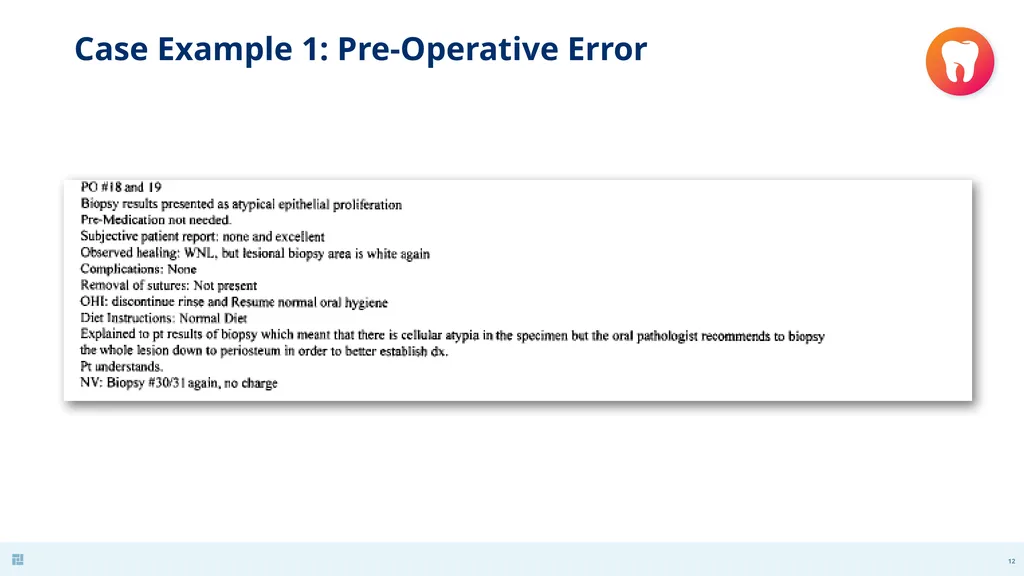
Periodontist: The patient returned to the periodontist. He examined the patient, and charted the following:<br>
slide12. Case Example 1: Pre-Operative Error<br>
slide13. Case Example 1: Pre-Operative Error Facts continued:
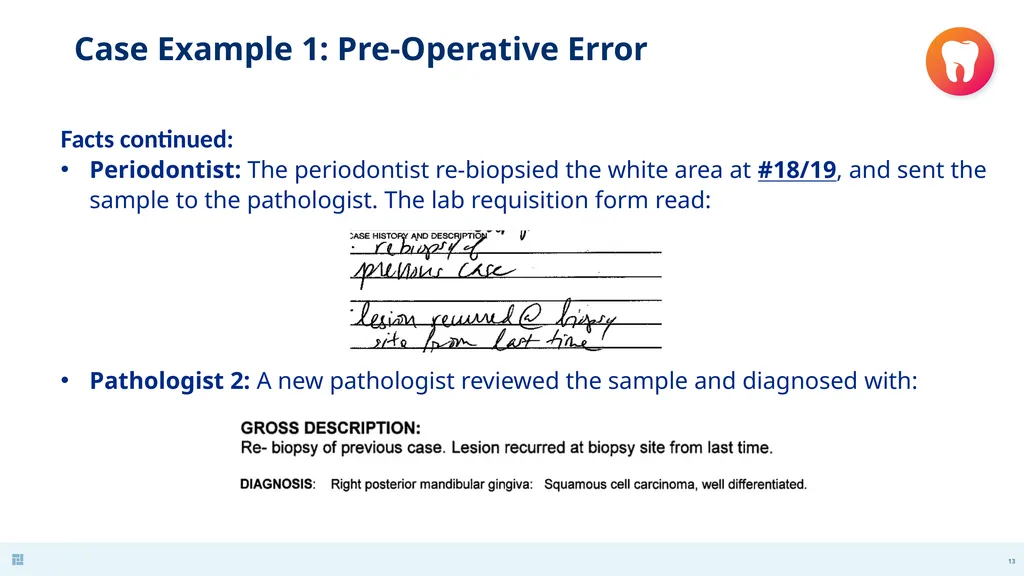
Periodontist: The periodontist re-biopsied the white area at #18/19, and sent the sample to the pathologist. The lab requisition form read:
Pathologist 2: A new pathologist reviewed the sample and diagnosed with:<br>
slide14. Case Example 1: Pre-Operative Error Facts continued:
Periodontist: The periodontist wrote a referral to an OMFS stating “an area of concern around #30 and #31”. He concluded that the patient would best be treated by extraction of teeth #30 and 31 and a limited mandibular excision.
OMFS: The OMFS examined the patient, and noted an abnormality on the left side of the patient’s mouth.
OMFS: The OMFS scheduled the patient in hospital for a "limited marginal mandibulectomy including a modified radical neck dissection".<br>
slide15. Case Example 1: Pre-Operative Error Facts continued:
On the date of surgery, the hospital team, including the MA, examined the patient. The team was inspecting the right side of her mouth. The MA corrected them and said the procedure was to be performed on her left side.
The MA asked the hospital to correct the procedure form.
The OMFS did not speak with the patient beforehand.
Intraoperatively, he prepared the right side of the patient’s mouth. The OR team stopped the OMFS, and stated per the patient and MA, this was the wrong side.
The OMFS reviewed: (1) the referral from the periodontist, and (2) the second pathology report.
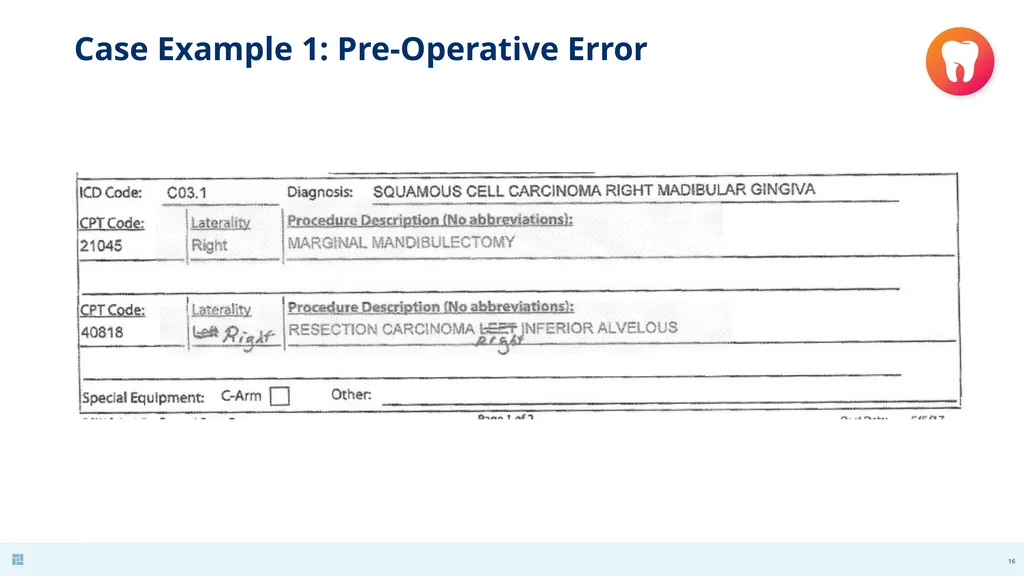
He then did the following:<br>
slide16. Case Example 1: Pre-Operative Error<br>
slide17. Case Example 1: Pre-Operative Error Risk Management Considerations Obvious documentation error
Although a significant contributing factor to the subsequent negligence and patient injury, the real risk management and patient safety issues lie in team communication
Additional checks and balances were ignored – mainly site verification with the patient pre-operatively
When in doubt stand still!<br>
slide18. Case Example 1: Pre-Operative Error Risk Management Considerations Team Communication
Multiple studies show the quality of team communication directly impacts the clinical outcomes of patients
Large study of hospital ICUs rated the quality of teamwork and team communication across organizations
In those ICUs where the quality of communication was ranked in the top 20%...
Discharge return rates were 5%, vs 16% for the other organizations
From a critical mortality rate standpoint, patient's chance of survival doubled
Our dental claim evaluations indicate a similar impact of good team communication on clinical outcomes<br>
slide19. Case Example 1: Pre-Operative Error Risk Management Considerations Make it easier for staff to speak up (just like commercial airlines have done)
Implement a critical language policy when in front of a patient
Take a "time out", which is commonplace for our medicine colleagues
Choose one key word that conveys the importance and gravity of the situation (example: clarity)
Enables staff to overcome barriers traditionally hard to breach
Eliminates the practice of “hint and hope”
Malcolm Gladwell wrote of this in Outliers: The Story of Success - - What makes high-achievers different? Attention to detail.<br>
slide20. Common Categories of Cases #1: Surgical Errors (pre-operatively based)
#2: IntraOperative/Anesthesia Errors
Usually occurs due to poor managing of the patient intraoperatively and/or poor patient selection:
Failure to monitor during anesthesia administration;
Failure to properly dose anesthetics; and
Failure to timely complete an anesthesia record.<br>
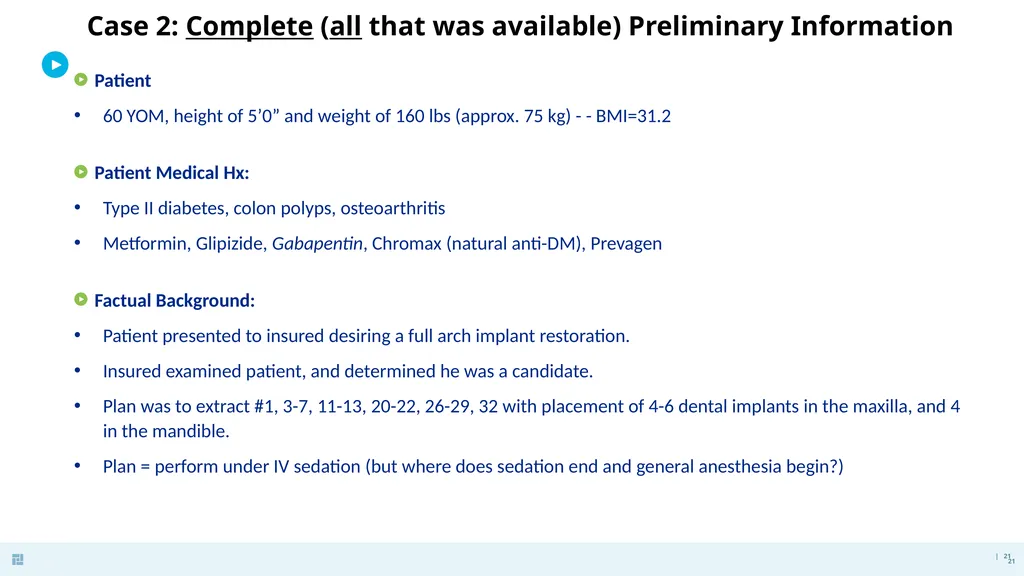
slide21. Case 2: Complete (all that was available) Preliminary Information Patient
60 YOM, height of 5’0” and weight of 160 lbs (approx. 75 kg) - - BMI=31.2
Patient Medical Hx:
Type II diabetes, colon polyps, osteoarthritis
Metformin, Glipizide, Gabapentin, Chromax (natural anti-DM), Prevagen
Factual Background:
Patient presented to insured desiring a full arch implant restoration.
Insured examined patient, and determined he was a candidate.
Plan was to extract #1, 3-7, 11-13, 20-22, 26-29, 32 with placement of 4-6 dental implants in the maxilla, and 4 in the mandible.
Plan = perform under IV sedation (but where does sedation end and general anesthesia begin?)<br>
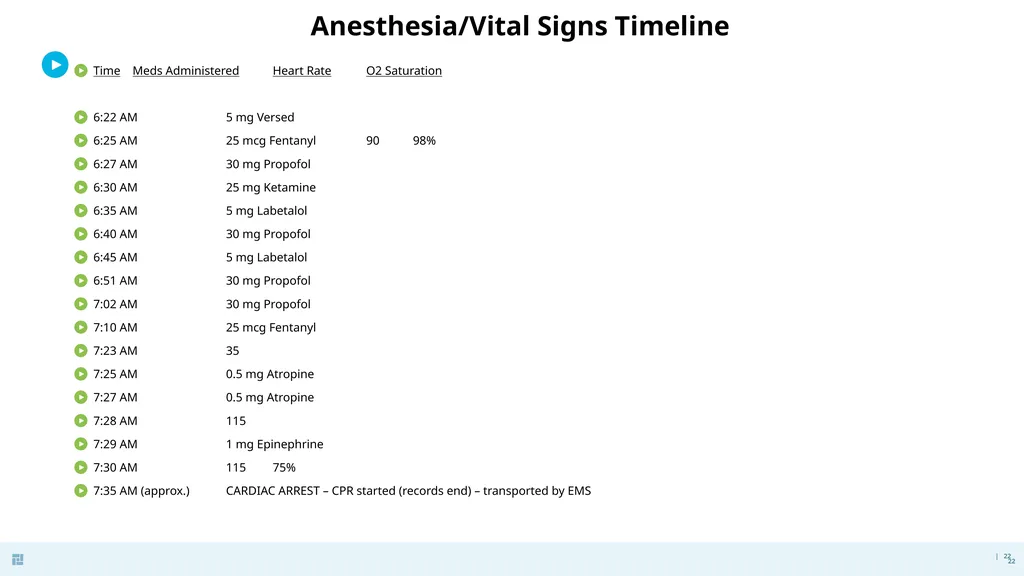
slide22. Anesthesia/Vital Signs Timeline Time Meds Administered Heart Rate O2 Saturation
6:22 AM 5 mg Versed
6:25 AM 25 mcg Fentanyl 90 98%
6:27 AM 30 mg Propofol
6:30 AM 25 mg Ketamine
6:35 AM 5 mg Labetalol
6:40 AM 30 mg Propofol
6:45 AM 5 mg Labetalol
6:51 AM 30 mg Propofol
7:02 AM 30 mg Propofol
7:10 AM 25 mcg Fentanyl
7:23 AM 35
7:25 AM 0.5 mg Atropine
7:27 AM 0.5 mg Atropine
7:28 AM 115
7:29 AM 1 mg Epinephrine
7:30 AM 115 75%
7:35 AM (approx.) CARDIAC ARREST – CPR started (records end) – transported by EMS<br>
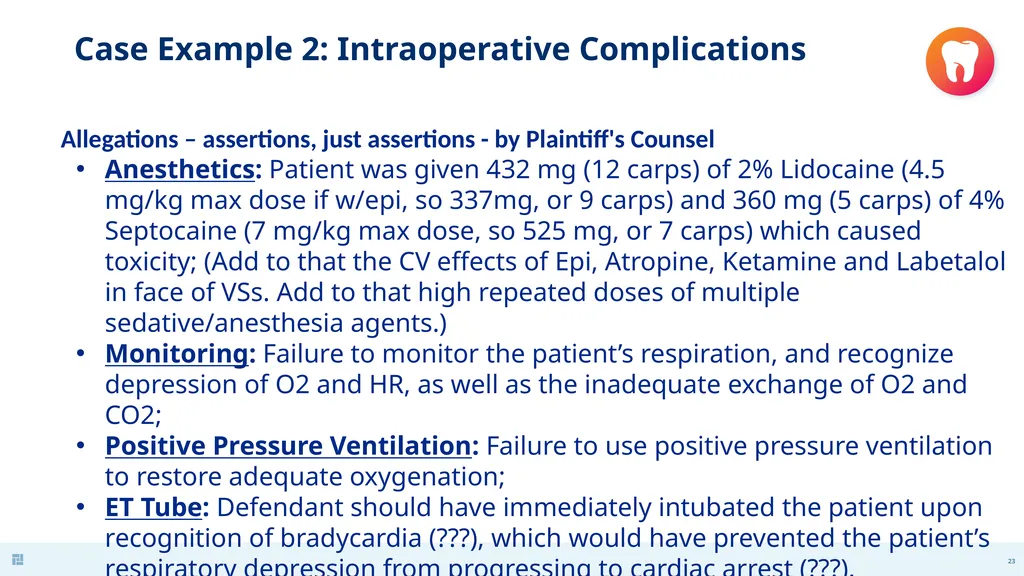
slide23. Case Example 2: Intraoperative Complications Allegations – assertions, just assertions - by Plaintiff's Counsel
Anesthetics: Patient was given 432 mg (12 carps) of 2% Lidocaine (4.5 mg/kg max dose if w/epi, so 337mg, or 9 carps) and 360 mg (5 carps) of 4% Septocaine (7 mg/kg max dose, so 525 mg, or 7 carps) which caused toxicity; (Add to that the CV effects of Epi, Atropine, Ketamine and Labetalol in face of VSs. Add to that high repeated doses of multiple sedative/anesthesia agents.)
Monitoring: Failure to monitor the patient’s respiration, and recognize depression of O2 and HR, as well as the inadequate exchange of O2 and CO2;
Positive Pressure Ventilation: Failure to use positive pressure ventilation to restore adequate oxygenation;
ET Tube: Defendant should have immediately intubated the patient upon recognition of bradycardia (???), which would have prevented the patient’s respiratory depression from progressing to cardiac arrest (???).<br>
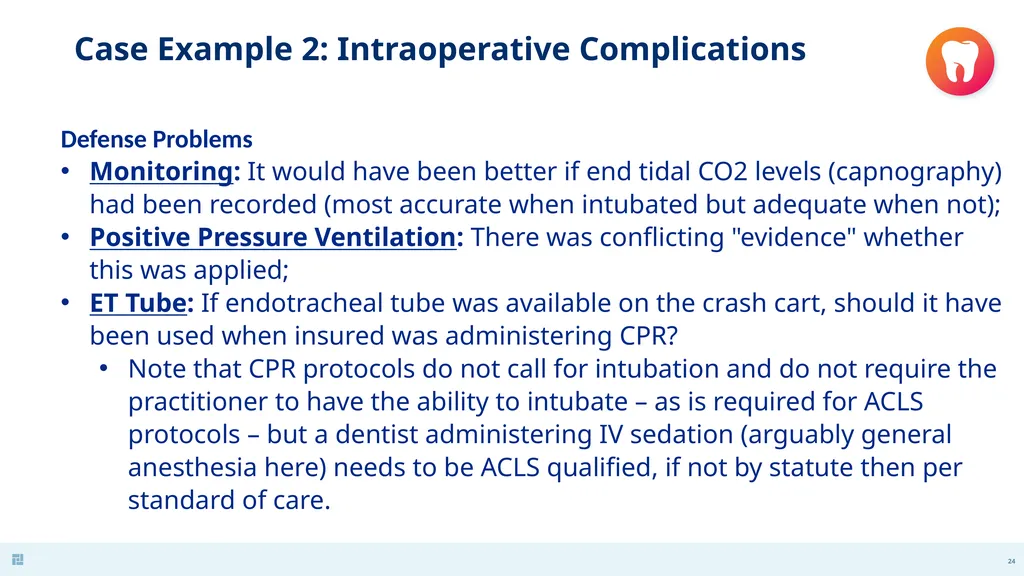
slide24. Case Example 2: Intraoperative Complications Defense Problems
Monitoring: It would have been better if end tidal CO2 levels (capnography) had been recorded (most accurate when intubated but adequate when not);
Positive Pressure Ventilation: There was conflicting "evidence" whether this was applied;
ET Tube: If endotracheal tube was available on the crash cart, should it have been used when insured was administering CPR?
Note that CPR protocols do not call for intubation and do not require the practitioner to have the ability to intubate – as is required for ACLS protocols – but a dentist administering IV sedation (arguably general anesthesia here) needs to be ACLS qualified, if not by statute then per standard of care.<br>
slide25. Case Example 2: Intraoperative Complications Perhaps the biggest problem? Optics!
The insured admitted he completed the anesthesia record after treatment was rendered, after the patient had been taken to the ER.
Why? Because it looks bad to a jury, even though it's nearly impossible to deliver IV anesthesia, perform dentistry, and complete an anesthesia record simultaneously.
That multi-tasking is also a likely issue for jurors; it's not seen in ORs (the common sense factor).<br>
slide26. Case Example 2: Intraoperative Complications Risk Management Considerations Medical clearance with a patient’s physician or surgeon should always be considered in a patient who is, or may be, medically compromised – no matter the dental procedure being performed.
Additional checks and balances: even with medical clearance, don't do what you feel uncomfortable doing. And while a patient can dictate what they refuse, they cannot dictate what you must do.<br>
slide27. Case Example 2: Intraoperative Complications Risk Management Considerations Patient Selection-Know When to Say NO
"Red Flag" Patient Groups
Out of your comfort zone – “Patient as Dentist” patients
Medically compromised or medically "unknown", among others
Cosmetic procedures
Emergency patients/situations
Second-opinion patients
New patients
Noncompliant patients
Disruptive/abusive patients<br>
slide28. Common Categories of Cases #1: Surgical Errors (pre-operatively based)
#2: IntraOperative/Anesthesia Errors
#3: Post-Operative Complications
Diagnosis Errors
Might occur due to poor post-operative management and recognition of complications, and/or with initial and periodic evaluations
Failure to detect oral cancer;
Failure to timely diagnose a nerve injury;
Failure to diagnose mandible fracture s/p extraction;
Failure to determine a patient should receive antibiotics; and
Failure to recognize s/s of post-op infection and treat with antibiotics and/or refer for specialist care.<br>
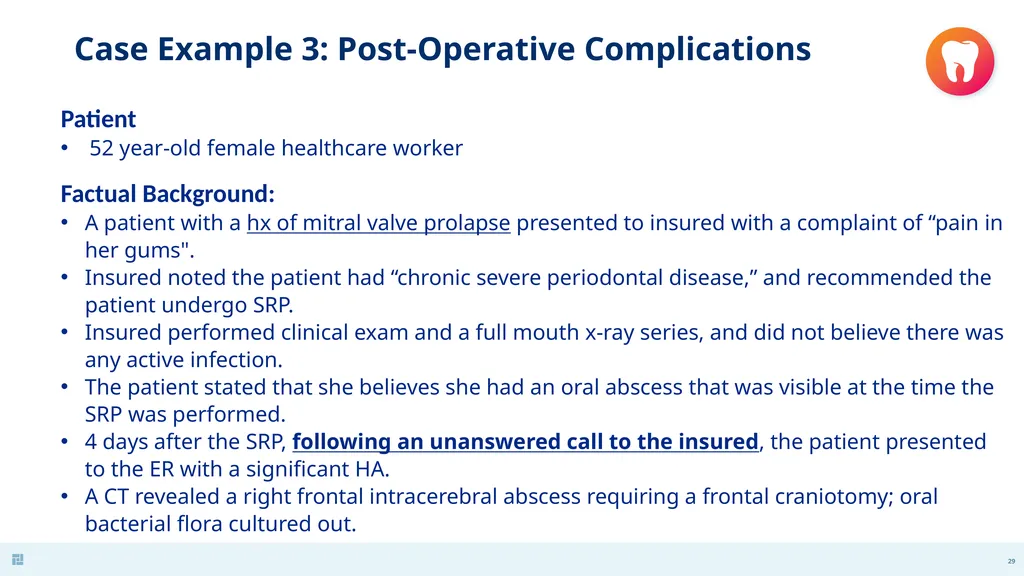
slide29. Case Example 3: Post-Operative Complications Patient
52 year-old female healthcare worker
Factual Background:
A patient with a hx of mitral valve prolapse presented to insured with a complaint of “pain in her gums".
Insured noted the patient had “chronic severe periodontal disease,” and recommended the patient undergo SRP.
Insured performed clinical exam and a full mouth x-ray series, and did not believe there was any active infection.
The patient stated that she believes she had an oral abscess that was visible at the time the SRP was performed.
4 days after the SRP, following an unanswered call to the insured, the patient presented to the ER with a significant HA.
A CT revealed a right frontal intracerebral abscess requiring a frontal craniotomy; oral bacterial flora cultured out.<br>
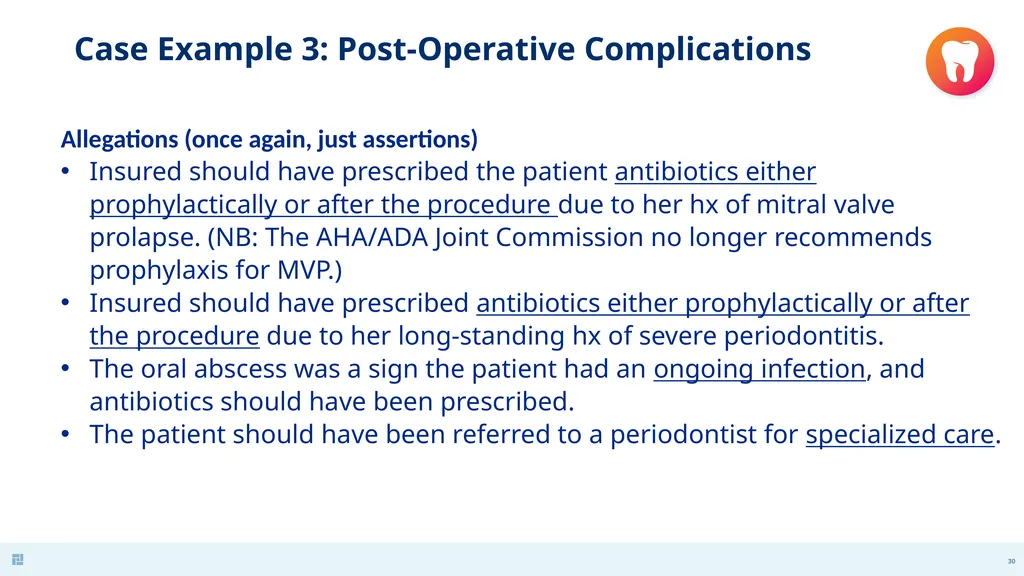
slide30. Case Example 3: Post-Operative Complications Allegations (once again, just assertions)
Insured should have prescribed the patient antibiotics either prophylactically or after the procedure due to her hx of mitral valve prolapse. (NB: The AHA/ADA Joint Commission no longer recommends prophylaxis for MVP.)
Insured should have prescribed antibiotics either prophylactically or after the procedure due to her long-standing hx of severe periodontitis.
The oral abscess was a sign the patient had an ongoing infection, and antibiotics should have been prescribed.
The patient should have been referred to a periodontist for specialized care.<br>
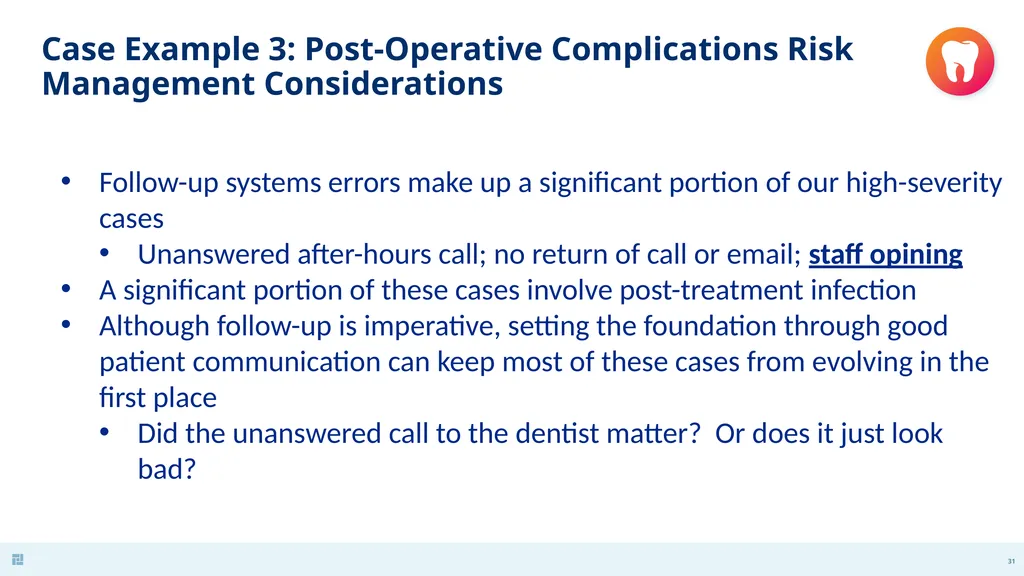
slide31. Case Example 3: Post-Operative Complications Risk Management Considerations Follow-up systems errors make up a significant portion of our high-severity cases
Unanswered after-hours call; no return of call or email; staff opining
A significant portion of these cases involve post-treatment infection
Although follow-up is imperative, setting the foundation through good patient communication can keep most of these cases from evolving in the first place
Did the unanswered call to the dentist matter? Or does it just look bad?<br>
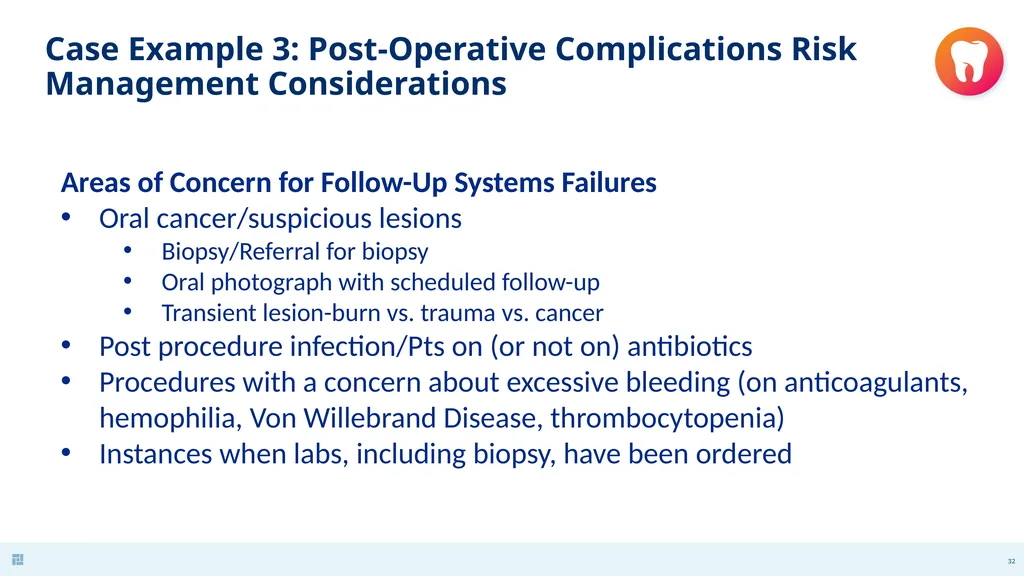
slide32. Case Example 3: Post-Operative Complications Risk Management Considerations Areas of Concern for Follow-Up Systems Failures
Oral cancer/suspicious lesions
Biopsy/Referral for biopsy
Oral photograph with scheduled follow-up
Transient lesion-burn vs. trauma vs. cancer
Post procedure infection/Pts on (or not on) antibiotics
Procedures with a concern about excessive bleeding (on anticoagulants, hemophilia, Von Willebrand Disease, thrombocytopenia)
Instances when labs, including biopsy, have been ordered<br>
slide33. Case Example 3: Post-Operative Complications Risk Management Considerations What is different about cases with follow-up systems failures?
Significantly more about…
Communication between patient/family and dentist/staff
Communication among providers
Failure/delay in obtaining consult/referral
Patient non-compliance factors
Lack of/failure in patient follow-up system
Expert testimony at trial is less important
Significantly less about…
Patient assessment issues
Clinical interpretation of dx studies
Clinical failures<br>
slide34. Case Example 3: Post-Operative Complications Risk Management Considerations Follow-Up Systems Failures
No news is “NO NEWS”
Utilize your patient as a last line of defense
Try to stay away from: “If you haven’t heard from us by…”
Staff engagement and responsibility is imperative
But all "negatives" must be brought to dentist's attention; no medical/dental advice from staff to patient … EVER!<br>
slide35. Case Examples 1, 2, & 3 Risk Management Considerations All three of these cases were likely impacted by lack of informed consent, ineffective informed consent and/or substandard informed consent
This is a significant issue in the dental profession as a whole
Should be seen primarily as a claim prevention tool as opposed to a claim defense tool, although very helpful to a case defense in litigation<br>
slide36. Case Examples 1, 2, & 3 Risk Management Considerations Informed Consent – shared decision making
Significantly under-utilized in dentistry
Informed consent is a process, not a form
Doesn’t have to be time consuming and can actually save time
Can greatly reduce nuisance claims in dentistry
More of a claim prevention tool than defense tool, but helps defense as well
Outstanding patient engagement tool
Sets the tone for patient responsibility and active involvement in their own dental care
Informed consent is not given to a patient; it is obtained from the patient. After patients are informed, then they can consent, … or refuse.<br>
slide37. Case Examples 1, 2, & 3 Risk Management Considerations Information that should be shared during the IC process
The patient’s injury or condition
The proposed intervention and/or treatment options
The specific foreseeable risks and benefits of the treatment, and viable alternatives, with their risks (RBA)
Risks to the patient if treatment is not undertaken (essentially an alternative)
Expected outcomes of the proposed plan and its alternatives
Estimated costs of the treatment and its alternatives
The patient’s questions and understanding of the proposed plan
The patient’s voluntary decision about the plan
Bottom line: make the patient an educated consumer!<br>
slide38. How can/should your malpractice carrier help? Team Approach w/ dentist, risk center, claims consultant, and defense counsel;
Clinical risk management training and Q&A’s;
Consent Clause relating to potential for case settlement;
Strong risk-benefit analysis to make informed decisions regarding settlement versus trial;
Paying the reasonable value of the case; not overpaying just to dispose of the case;
Frequent communication with insureds about what is in their best interests;
Concern about insured retention and accountability.<br>
slide39. Malpractice Insurance What should I look for?
Strength- Financial health/ratings
Coverage- Know what you are purchasing, claims-made vs. occurrence, pure consent to settle, portability
Risk-Management- An on-site team: depth and expertise
Defense- Expertise of counsel and in-house in dental liability claims
Price- Avoid sacrificing quality for cost…know why you’re purchasing malpractice insurance<br>
slide40. @MedProDental dental@medpro.com | 800.4MEDPRO | medpro.com/dentists
Marc Leffler, DDS, Esq. 845-641-5792 Marc.Leffler@MedPro.com QUESTIONS?<br>
slide41. Some more cases, time permitting! Let's go Issue Spotting<br>
slide42. Case Example 38 y.o. female presents with fluctuant buccal swelling adjacent to deeply decayed tooth #4. Patient opts for extraction over RCT, etc. Dentist extracts tooth routinely and prescribes Flagyl. On third post-op day, patient calls office to report fever and persistent swelling. Receptionist independently advises patient this is expected, so not to worry. Patient presents on day 6 with continued symptoms. Dentist prescribes Clindamycin and local measures. Oral symptoms abate, but patient develops bloody stool 5 days later, and calls dentist, who says “stick with it for another 5 days”. Patient admitted for perforated colon due to PMC; undergoes partial colectomy.
Any valid theories for negligence?<br>
slide43. Negligence Theories 1. Delay extraction until infection resolves? I&D with C&S?
2. Is Flagyl appropriate as empirical?
3. Receptionist giving medical advice. Vicarious liability.
4. Is Clinda appropriate as empirical without C&S?
5. Should Clinda have been stopped with GI symptom onset?<br>
slide44. Case Example A 20 year-old woman in need of a composite restoration presented to her dentist toward the end of a college vacation period. At the start of the preparation of the tooth, the bur came loose from the handpiece, and was lost from the sight of the dentist and the assistant who had been using a high-speed suction. After the profuse coughing stopped, the restoration was resumed and completed, which took some 30 minutes more. Once the procedure was completed, the patient was told to go to a hospital emergency department for evaluation, which she did. A radiograph showed the bur to be located near the junction of the stomach and duodenum. The treating physician told the patient that she should pass the bur within 2-3 days at the latest. On the 5th day, she began to have severe abdominal pain, so she returned to the hospital, where a CT revealed that the bur had pierced through the wall of the colon. A laparotomy to remove the bur and close the defect was performed. She missed nearly 4 weeks of the following semester, so she elected to skip the semester altogether. A scar persists.
Any valid theories for negligence?<br>
slide45. Negligence/Damages Theories 1. No protection against swallowing/aspiration!!!
2. Inattentiveness of assistant?
3. Would endoscopy have been possible with more timely referral?
Some questions:
Were actions of MD in the ED appropriate?
Is the dentist on the hook for that?
Is the dentist liable for the abdominal scar?
Is the dentist liable for the missed semester?<br>
slide46. Case Example 50 y.o. male with disclosed PMH of HTN (controlled on meds), presents for single implant in area of #30, where tooth had been lost 2 years prior. Periodontist takes PA which captures entire site, and which demonstrates IAC 15.5 mm from crest. 13mm implant chosen. Following administration of local, patient becomes jittery and starts to move around, with “odd” opening/closing movements of jaw as osteotomy proceeds. Patient has grand mal seizure and immediately bites down on operating handpiece, pushing bur through lower lip. Procedure abandoned, appropriate medical care provided, lip sutured but scarring persists, implant never placed.
Any valid theories for negligence?<br>
slide47. Negligence Theories 1. Adequacy of radiograph – causation?
2. Bite block?
3. Finger rest?
4. Failure to ID prodromal stage?<br>
slide48. Swallowing and Aspiration Cases Just about anything brought to/into the mouth can go where it shouldn't
Almost always preventable
Rubber dam; floss threaded through or around; oropharyngeal drape; position (gravity helps or hurts); suction
Almost never able to be successfully defended
Even when relatively unforeseeable event occurs
Get patient to MD/ER ASAP; only continue to earliest possible end point; time is critical; radiography to locate
Intuitively, aspiration "feels" worse, but maybe not
Aspiration treatments: bronchoscopy, surgery
Swallowing treatments: endoscopy, colonoscopy, surgery pass in feces<br>
What to do when the unthinkable happens Marc Leffler, DDS, Esq.
Dental Risk Solutions Lead
Head, Dental Advisory Board
PUNJABI DENTAL SOCIETY
JULY 2024<br>
slide2. Disclaimer MedPro Group receives no commercial support from any ineligible company/ commercial interest.
It is the policy of MedPro Group to require that all parties in a position to influence the content of this activity disclose the existence of any relevant financial relationship with any ineligible company/commercial interest.
When there are relevant financial relationships mitigation steps are taken. Additionally, the individual(s) will be listed by name, along with the name of the commercial interest with which the person has a relationship and the nature of the relationship.
Today’s faculty, as well as CE planners, content developers, reviewers, editors, and Risk Solutions staff at MedPro Group, have reported that they have no relevant financial relationships with any commercial interests.
The information contained herein and presented by the speaker is based on sources believed to be accurate at the time they were referenced. The speaker has made a reasonable effort to ensure the accuracy of the information presented; however, no warranty or representation is made as to such accuracy. The speaker is not engaged in rendering legal or other professional services. The information contained herein does not constitute legal or medical advice and should not be construed as rules or establishing a standard of care. Because the facts applicable to your situation may vary, or the laws applicable in your jurisdiction may differ, if legal advice or other expert legal assistance is required, the services of an attorney or other competent legal professional should be sought.<br>
slide3. The Industry Leader in Malpractice Insurance<br>
slide4. MedPro Dental Highlights Key Facts
Largest Dental Malpractice Insurer - #1 National Market Share (~48K Dentists and Specialists)
Owned by Berkshire Hathaway
A++ Highest Financial Ratings in Industry
Protecting Dentists for over a Century
Leading Dental Claims Results – 95% Trial Win Rate / 82% Closed w/o Pay
Robust Policy (Pure Consent to Settle, Occurrence)<br>
slide5. Disasters in Dentistry Dentistry will never be risk free, but …….
Today’s program:
Current malpractice environment
Common categories of cases
Some "disaster" claims: only 1 in each of 3 categories (maybe some more cases, too, time permitting)
Pre-operative errors
Intraoperative complications
Post-operative complications
Risk management considerations
How to prevent disasters relating to your practice<br>
slide6. Today’s Malpractice Environment Claim frequency is on the rise after a decade of steady decrease; claim severity is on the rise-significantly
1 in 4 jury verdicts (all professional malpractice) exceeds $1.2 million
The “X-Factor” will continue to push the severity trend
Service lapses
Non-clinical issues
Plaintiff attorney’s dream
Multiple defendants pointing finger at each other
Subsequent treater jousting
News media<br>
slide7. Reasons for Today’s Malpractice Environment Practice beyond ability levels and under less than ideal conditions
Patient (and juror) expectations
Societal view of the system
Societal view of a dollar’s worth
Patient as a purchaser/buyer
HIPAA
The work/debt conundrum
Red-flag patient groups<br>
slide8. Medical/Dental Malpractice and The Standard of Care Malpractice occurs when a dentist provides care that diverges from what is accepted as the standard of care as recognized by the professional community, and that directly causes injury/damages.
What a dentist of ordinary learning, judgment, and skill, i.e., a "reasonable dentist", would do or not do under the same or similar circumstances.
Both sides support their definitions of the “Standard of care”, causation, and damages w/ experts (by way of opinions – ask 10 dentists …).<br>
slide9. Common Categories of Cases A common theme across the case spectrum:
Informed Consent…or lack thereof
Was there adequate disclosure of potential risks, benefits and alternatives ("RBA") (plus the risks of those alternatives) prior to an invasive dental procedure?
But what's "invasive"? Extraction, block injection, SRP, restoration??
Is there an informed consent form signed in the patient’s chart? Obtaining informed consent is a process (usually non-delegable),not a form.
Many/most jurisdictions do not require such a form, but it is valuable evidence for a jury: a memorialization of the process. -<br>
slide10. Common Categories of Cases #1 : Surgical/Treatment Errors - - Pre-operatively based
Often occurs due to poor pre-procedure planning or practicing beyond ability:
Extraction of the wrong tooth (UR4=#5, UR5=#4, Palmer 18 = #1);
Perforation of a root during a root canal;
Wrong-sided surgery;
Inadvertent placement of implant in IAN canal space; and
Severing or otherwise injuring a nerve (IAN, LN) during third molar extraction (which is sometimes unavoidable).<br>
slide11. Case Example 1: Pre-Operative Error Patient
70 year-old female former attorney
Factual Background:
The patient presented to her general DDS who observed a “white pebbled” area along the buccal gingival margin of #18 and #19 on the left side of the patient’s mouth.
Periodontist: Her DDS referred her to a periodontist for evaluation. The periodontist biopsied the left side of the patient’s mouth.
Pathologist 1: The pathologist provisionally dx'd “atypical epithelial proliferation”, but needed a larger tissue sample for a definitive diagnosis.
Periodontist: The patient returned to the periodontist. He examined the patient, and charted the following:<br>
slide12. Case Example 1: Pre-Operative Error<br>
slide13. Case Example 1: Pre-Operative Error Facts continued:
Periodontist: The periodontist re-biopsied the white area at #18/19, and sent the sample to the pathologist. The lab requisition form read:
Pathologist 2: A new pathologist reviewed the sample and diagnosed with:<br>
slide14. Case Example 1: Pre-Operative Error Facts continued:
Periodontist: The periodontist wrote a referral to an OMFS stating “an area of concern around #30 and #31”. He concluded that the patient would best be treated by extraction of teeth #30 and 31 and a limited mandibular excision.
OMFS: The OMFS examined the patient, and noted an abnormality on the left side of the patient’s mouth.
OMFS: The OMFS scheduled the patient in hospital for a "limited marginal mandibulectomy including a modified radical neck dissection".<br>
slide15. Case Example 1: Pre-Operative Error Facts continued:
On the date of surgery, the hospital team, including the MA, examined the patient. The team was inspecting the right side of her mouth. The MA corrected them and said the procedure was to be performed on her left side.
The MA asked the hospital to correct the procedure form.
The OMFS did not speak with the patient beforehand.
Intraoperatively, he prepared the right side of the patient’s mouth. The OR team stopped the OMFS, and stated per the patient and MA, this was the wrong side.
The OMFS reviewed: (1) the referral from the periodontist, and (2) the second pathology report.
He then did the following:<br>
slide16. Case Example 1: Pre-Operative Error<br>
slide17. Case Example 1: Pre-Operative Error Risk Management Considerations Obvious documentation error
Although a significant contributing factor to the subsequent negligence and patient injury, the real risk management and patient safety issues lie in team communication
Additional checks and balances were ignored – mainly site verification with the patient pre-operatively
When in doubt stand still!<br>
slide18. Case Example 1: Pre-Operative Error Risk Management Considerations Team Communication
Multiple studies show the quality of team communication directly impacts the clinical outcomes of patients
Large study of hospital ICUs rated the quality of teamwork and team communication across organizations
In those ICUs where the quality of communication was ranked in the top 20%...
Discharge return rates were 5%, vs 16% for the other organizations
From a critical mortality rate standpoint, patient's chance of survival doubled
Our dental claim evaluations indicate a similar impact of good team communication on clinical outcomes<br>
slide19. Case Example 1: Pre-Operative Error Risk Management Considerations Make it easier for staff to speak up (just like commercial airlines have done)
Implement a critical language policy when in front of a patient
Take a "time out", which is commonplace for our medicine colleagues
Choose one key word that conveys the importance and gravity of the situation (example: clarity)
Enables staff to overcome barriers traditionally hard to breach
Eliminates the practice of “hint and hope”
Malcolm Gladwell wrote of this in Outliers: The Story of Success - - What makes high-achievers different? Attention to detail.<br>
slide20. Common Categories of Cases #1: Surgical Errors (pre-operatively based)
#2: IntraOperative/Anesthesia Errors
Usually occurs due to poor managing of the patient intraoperatively and/or poor patient selection:
Failure to monitor during anesthesia administration;
Failure to properly dose anesthetics; and
Failure to timely complete an anesthesia record.<br>
slide21. Case 2: Complete (all that was available) Preliminary Information Patient
60 YOM, height of 5’0” and weight of 160 lbs (approx. 75 kg) - - BMI=31.2
Patient Medical Hx:
Type II diabetes, colon polyps, osteoarthritis
Metformin, Glipizide, Gabapentin, Chromax (natural anti-DM), Prevagen
Factual Background:
Patient presented to insured desiring a full arch implant restoration.
Insured examined patient, and determined he was a candidate.
Plan was to extract #1, 3-7, 11-13, 20-22, 26-29, 32 with placement of 4-6 dental implants in the maxilla, and 4 in the mandible.
Plan = perform under IV sedation (but where does sedation end and general anesthesia begin?)<br>
slide22. Anesthesia/Vital Signs Timeline Time Meds Administered Heart Rate O2 Saturation
6:22 AM 5 mg Versed
6:25 AM 25 mcg Fentanyl 90 98%
6:27 AM 30 mg Propofol
6:30 AM 25 mg Ketamine
6:35 AM 5 mg Labetalol
6:40 AM 30 mg Propofol
6:45 AM 5 mg Labetalol
6:51 AM 30 mg Propofol
7:02 AM 30 mg Propofol
7:10 AM 25 mcg Fentanyl
7:23 AM 35
7:25 AM 0.5 mg Atropine
7:27 AM 0.5 mg Atropine
7:28 AM 115
7:29 AM 1 mg Epinephrine
7:30 AM 115 75%
7:35 AM (approx.) CARDIAC ARREST – CPR started (records end) – transported by EMS<br>
slide23. Case Example 2: Intraoperative Complications Allegations – assertions, just assertions - by Plaintiff's Counsel
Anesthetics: Patient was given 432 mg (12 carps) of 2% Lidocaine (4.5 mg/kg max dose if w/epi, so 337mg, or 9 carps) and 360 mg (5 carps) of 4% Septocaine (7 mg/kg max dose, so 525 mg, or 7 carps) which caused toxicity; (Add to that the CV effects of Epi, Atropine, Ketamine and Labetalol in face of VSs. Add to that high repeated doses of multiple sedative/anesthesia agents.)
Monitoring: Failure to monitor the patient’s respiration, and recognize depression of O2 and HR, as well as the inadequate exchange of O2 and CO2;
Positive Pressure Ventilation: Failure to use positive pressure ventilation to restore adequate oxygenation;
ET Tube: Defendant should have immediately intubated the patient upon recognition of bradycardia (???), which would have prevented the patient’s respiratory depression from progressing to cardiac arrest (???).<br>
slide24. Case Example 2: Intraoperative Complications Defense Problems
Monitoring: It would have been better if end tidal CO2 levels (capnography) had been recorded (most accurate when intubated but adequate when not);
Positive Pressure Ventilation: There was conflicting "evidence" whether this was applied;
ET Tube: If endotracheal tube was available on the crash cart, should it have been used when insured was administering CPR?
Note that CPR protocols do not call for intubation and do not require the practitioner to have the ability to intubate – as is required for ACLS protocols – but a dentist administering IV sedation (arguably general anesthesia here) needs to be ACLS qualified, if not by statute then per standard of care.<br>
slide25. Case Example 2: Intraoperative Complications Perhaps the biggest problem? Optics!
The insured admitted he completed the anesthesia record after treatment was rendered, after the patient had been taken to the ER.
Why? Because it looks bad to a jury, even though it's nearly impossible to deliver IV anesthesia, perform dentistry, and complete an anesthesia record simultaneously.
That multi-tasking is also a likely issue for jurors; it's not seen in ORs (the common sense factor).<br>
slide26. Case Example 2: Intraoperative Complications Risk Management Considerations Medical clearance with a patient’s physician or surgeon should always be considered in a patient who is, or may be, medically compromised – no matter the dental procedure being performed.
Additional checks and balances: even with medical clearance, don't do what you feel uncomfortable doing. And while a patient can dictate what they refuse, they cannot dictate what you must do.<br>
slide27. Case Example 2: Intraoperative Complications Risk Management Considerations Patient Selection-Know When to Say NO
"Red Flag" Patient Groups
Out of your comfort zone – “Patient as Dentist” patients
Medically compromised or medically "unknown", among others
Cosmetic procedures
Emergency patients/situations
Second-opinion patients
New patients
Noncompliant patients
Disruptive/abusive patients<br>
slide28. Common Categories of Cases #1: Surgical Errors (pre-operatively based)
#2: IntraOperative/Anesthesia Errors
#3: Post-Operative Complications
Diagnosis Errors
Might occur due to poor post-operative management and recognition of complications, and/or with initial and periodic evaluations
Failure to detect oral cancer;
Failure to timely diagnose a nerve injury;
Failure to diagnose mandible fracture s/p extraction;
Failure to determine a patient should receive antibiotics; and
Failure to recognize s/s of post-op infection and treat with antibiotics and/or refer for specialist care.<br>
slide29. Case Example 3: Post-Operative Complications Patient
52 year-old female healthcare worker
Factual Background:
A patient with a hx of mitral valve prolapse presented to insured with a complaint of “pain in her gums".
Insured noted the patient had “chronic severe periodontal disease,” and recommended the patient undergo SRP.
Insured performed clinical exam and a full mouth x-ray series, and did not believe there was any active infection.
The patient stated that she believes she had an oral abscess that was visible at the time the SRP was performed.
4 days after the SRP, following an unanswered call to the insured, the patient presented to the ER with a significant HA.
A CT revealed a right frontal intracerebral abscess requiring a frontal craniotomy; oral bacterial flora cultured out.<br>
slide30. Case Example 3: Post-Operative Complications Allegations (once again, just assertions)
Insured should have prescribed the patient antibiotics either prophylactically or after the procedure due to her hx of mitral valve prolapse. (NB: The AHA/ADA Joint Commission no longer recommends prophylaxis for MVP.)
Insured should have prescribed antibiotics either prophylactically or after the procedure due to her long-standing hx of severe periodontitis.
The oral abscess was a sign the patient had an ongoing infection, and antibiotics should have been prescribed.
The patient should have been referred to a periodontist for specialized care.<br>
slide31. Case Example 3: Post-Operative Complications Risk Management Considerations Follow-up systems errors make up a significant portion of our high-severity cases
Unanswered after-hours call; no return of call or email; staff opining
A significant portion of these cases involve post-treatment infection
Although follow-up is imperative, setting the foundation through good patient communication can keep most of these cases from evolving in the first place
Did the unanswered call to the dentist matter? Or does it just look bad?<br>
slide32. Case Example 3: Post-Operative Complications Risk Management Considerations Areas of Concern for Follow-Up Systems Failures
Oral cancer/suspicious lesions
Biopsy/Referral for biopsy
Oral photograph with scheduled follow-up
Transient lesion-burn vs. trauma vs. cancer
Post procedure infection/Pts on (or not on) antibiotics
Procedures with a concern about excessive bleeding (on anticoagulants, hemophilia, Von Willebrand Disease, thrombocytopenia)
Instances when labs, including biopsy, have been ordered<br>
slide33. Case Example 3: Post-Operative Complications Risk Management Considerations What is different about cases with follow-up systems failures?
Significantly more about…
Communication between patient/family and dentist/staff
Communication among providers
Failure/delay in obtaining consult/referral
Patient non-compliance factors
Lack of/failure in patient follow-up system
Expert testimony at trial is less important
Significantly less about…
Patient assessment issues
Clinical interpretation of dx studies
Clinical failures<br>
slide34. Case Example 3: Post-Operative Complications Risk Management Considerations Follow-Up Systems Failures
No news is “NO NEWS”
Utilize your patient as a last line of defense
Try to stay away from: “If you haven’t heard from us by…”
Staff engagement and responsibility is imperative
But all "negatives" must be brought to dentist's attention; no medical/dental advice from staff to patient … EVER!<br>
slide35. Case Examples 1, 2, & 3 Risk Management Considerations All three of these cases were likely impacted by lack of informed consent, ineffective informed consent and/or substandard informed consent
This is a significant issue in the dental profession as a whole
Should be seen primarily as a claim prevention tool as opposed to a claim defense tool, although very helpful to a case defense in litigation<br>
slide36. Case Examples 1, 2, & 3 Risk Management Considerations Informed Consent – shared decision making
Significantly under-utilized in dentistry
Informed consent is a process, not a form
Doesn’t have to be time consuming and can actually save time
Can greatly reduce nuisance claims in dentistry
More of a claim prevention tool than defense tool, but helps defense as well
Outstanding patient engagement tool
Sets the tone for patient responsibility and active involvement in their own dental care
Informed consent is not given to a patient; it is obtained from the patient. After patients are informed, then they can consent, … or refuse.<br>
slide37. Case Examples 1, 2, & 3 Risk Management Considerations Information that should be shared during the IC process
The patient’s injury or condition
The proposed intervention and/or treatment options
The specific foreseeable risks and benefits of the treatment, and viable alternatives, with their risks (RBA)
Risks to the patient if treatment is not undertaken (essentially an alternative)
Expected outcomes of the proposed plan and its alternatives
Estimated costs of the treatment and its alternatives
The patient’s questions and understanding of the proposed plan
The patient’s voluntary decision about the plan
Bottom line: make the patient an educated consumer!<br>
slide38. How can/should your malpractice carrier help? Team Approach w/ dentist, risk center, claims consultant, and defense counsel;
Clinical risk management training and Q&A’s;
Consent Clause relating to potential for case settlement;
Strong risk-benefit analysis to make informed decisions regarding settlement versus trial;
Paying the reasonable value of the case; not overpaying just to dispose of the case;
Frequent communication with insureds about what is in their best interests;
Concern about insured retention and accountability.<br>
slide39. Malpractice Insurance What should I look for?
Strength- Financial health/ratings
Coverage- Know what you are purchasing, claims-made vs. occurrence, pure consent to settle, portability
Risk-Management- An on-site team: depth and expertise
Defense- Expertise of counsel and in-house in dental liability claims
Price- Avoid sacrificing quality for cost…know why you’re purchasing malpractice insurance<br>
slide40. @MedProDental dental@medpro.com | 800.4MEDPRO | medpro.com/dentists
Marc Leffler, DDS, Esq. 845-641-5792 Marc.Leffler@MedPro.com QUESTIONS?<br>
slide41. Some more cases, time permitting! Let's go Issue Spotting<br>
slide42. Case Example 38 y.o. female presents with fluctuant buccal swelling adjacent to deeply decayed tooth #4. Patient opts for extraction over RCT, etc. Dentist extracts tooth routinely and prescribes Flagyl. On third post-op day, patient calls office to report fever and persistent swelling. Receptionist independently advises patient this is expected, so not to worry. Patient presents on day 6 with continued symptoms. Dentist prescribes Clindamycin and local measures. Oral symptoms abate, but patient develops bloody stool 5 days later, and calls dentist, who says “stick with it for another 5 days”. Patient admitted for perforated colon due to PMC; undergoes partial colectomy.
Any valid theories for negligence?<br>
slide43. Negligence Theories 1. Delay extraction until infection resolves? I&D with C&S?
2. Is Flagyl appropriate as empirical?
3. Receptionist giving medical advice. Vicarious liability.
4. Is Clinda appropriate as empirical without C&S?
5. Should Clinda have been stopped with GI symptom onset?<br>
slide44. Case Example A 20 year-old woman in need of a composite restoration presented to her dentist toward the end of a college vacation period. At the start of the preparation of the tooth, the bur came loose from the handpiece, and was lost from the sight of the dentist and the assistant who had been using a high-speed suction. After the profuse coughing stopped, the restoration was resumed and completed, which took some 30 minutes more. Once the procedure was completed, the patient was told to go to a hospital emergency department for evaluation, which she did. A radiograph showed the bur to be located near the junction of the stomach and duodenum. The treating physician told the patient that she should pass the bur within 2-3 days at the latest. On the 5th day, she began to have severe abdominal pain, so she returned to the hospital, where a CT revealed that the bur had pierced through the wall of the colon. A laparotomy to remove the bur and close the defect was performed. She missed nearly 4 weeks of the following semester, so she elected to skip the semester altogether. A scar persists.
Any valid theories for negligence?<br>
slide45. Negligence/Damages Theories 1. No protection against swallowing/aspiration!!!
2. Inattentiveness of assistant?
3. Would endoscopy have been possible with more timely referral?
Some questions:
Were actions of MD in the ED appropriate?
Is the dentist on the hook for that?
Is the dentist liable for the abdominal scar?
Is the dentist liable for the missed semester?<br>
slide46. Case Example 50 y.o. male with disclosed PMH of HTN (controlled on meds), presents for single implant in area of #30, where tooth had been lost 2 years prior. Periodontist takes PA which captures entire site, and which demonstrates IAC 15.5 mm from crest. 13mm implant chosen. Following administration of local, patient becomes jittery and starts to move around, with “odd” opening/closing movements of jaw as osteotomy proceeds. Patient has grand mal seizure and immediately bites down on operating handpiece, pushing bur through lower lip. Procedure abandoned, appropriate medical care provided, lip sutured but scarring persists, implant never placed.
Any valid theories for negligence?<br>
slide47. Negligence Theories 1. Adequacy of radiograph – causation?
2. Bite block?
3. Finger rest?
4. Failure to ID prodromal stage?<br>
slide48. Swallowing and Aspiration Cases Just about anything brought to/into the mouth can go where it shouldn't
Almost always preventable
Rubber dam; floss threaded through or around; oropharyngeal drape; position (gravity helps or hurts); suction
Almost never able to be successfully defended
Even when relatively unforeseeable event occurs
Get patient to MD/ER ASAP; only continue to earliest possible end point; time is critical; radiography to locate
Intuitively, aspiration "feels" worse, but maybe not
Aspiration treatments: bronchoscopy, surgery
Swallowing treatments: endoscopy, colonoscopy, surgery pass in feces<br>