
DISSOCIATION THEORY, NEUROPLASTICITY AND THE











Description: DISSOCIATION THEORY, NEUROPLASTICITY AND THE HEALING OF COMBAT STRESS ROBERT SCAER, M.D. scaermdpcmsn.com www.traumasoma.com THE ROOTS OF TRAUMATIZATION: A THREAT TO SURVIVAL IN THE FACE OF HELPLESSNESS THE FIGHTFLIGHTFREEZE RESPONSE
Related Topics
Download Presentation
"DISSOCIATION THEORY, NEUROPLASTICITY AND THE" is the property of its rightful owner. Permission is granted to download and print the materials on this website for personal, non-commercial use only, and to display it on your personal computer provided you do not modify the materials and that you retain all copyright notices contained in the materials. By downloading content from our website, you accept the terms of this agreement.
Presentation Transcript
slide1. DISSOCIATION THEORY,
NEUROPLASTICITY
AND THE HEALING
OF COMBAT STRESS
ROBERT SCAER, M.D.
scaermdpc@msn.com
www.traumasoma.com<br>
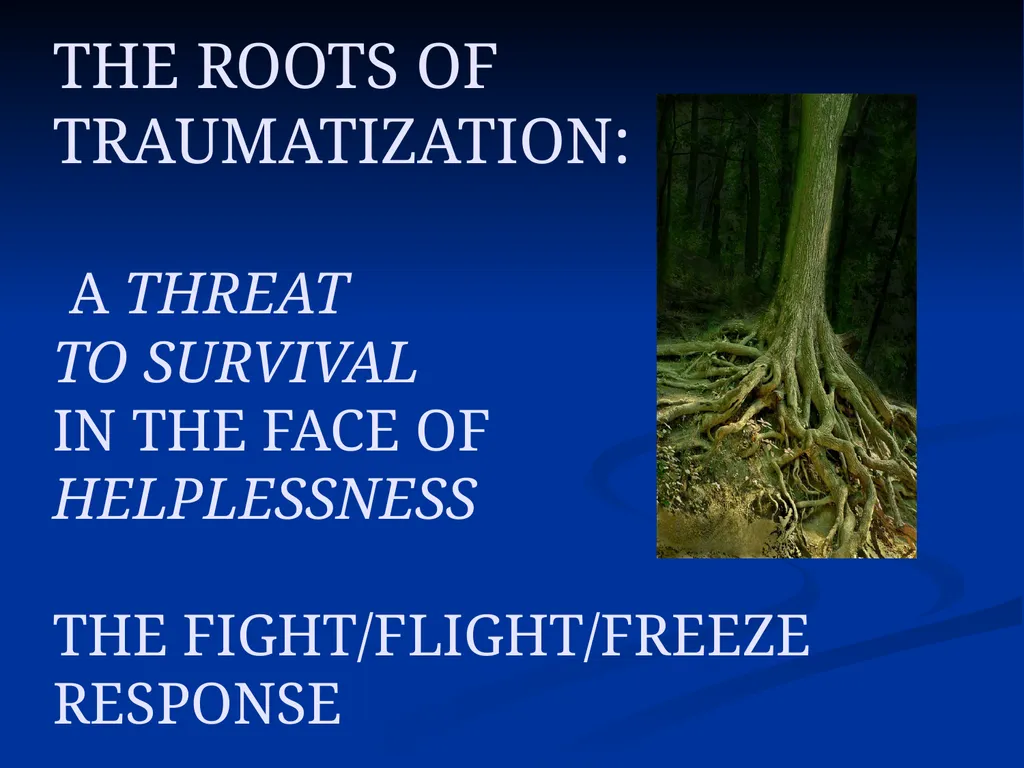
slide2. THE ROOTS OF TRAUMATIZATION: A THREAT TO SURVIVAL IN THE FACE OF HELPLESSNESS THE FIGHT/FLIGHT/FREEZE RESPONSE<br>
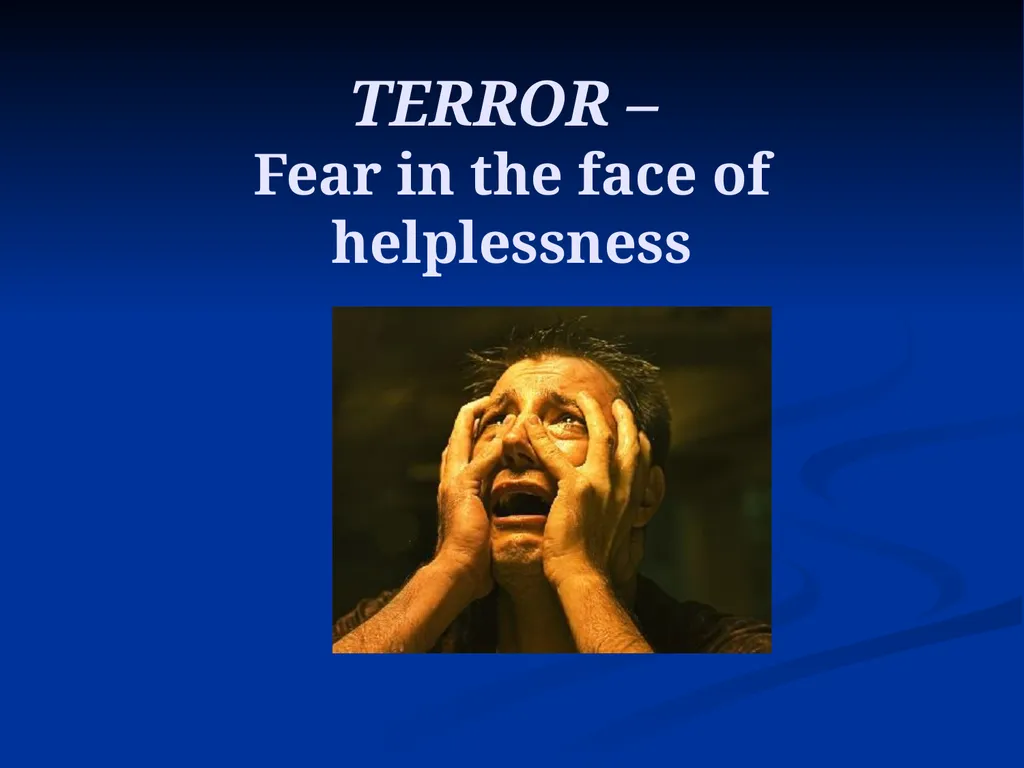
slide3. TERROR – Fear in the face of helplessness<br>
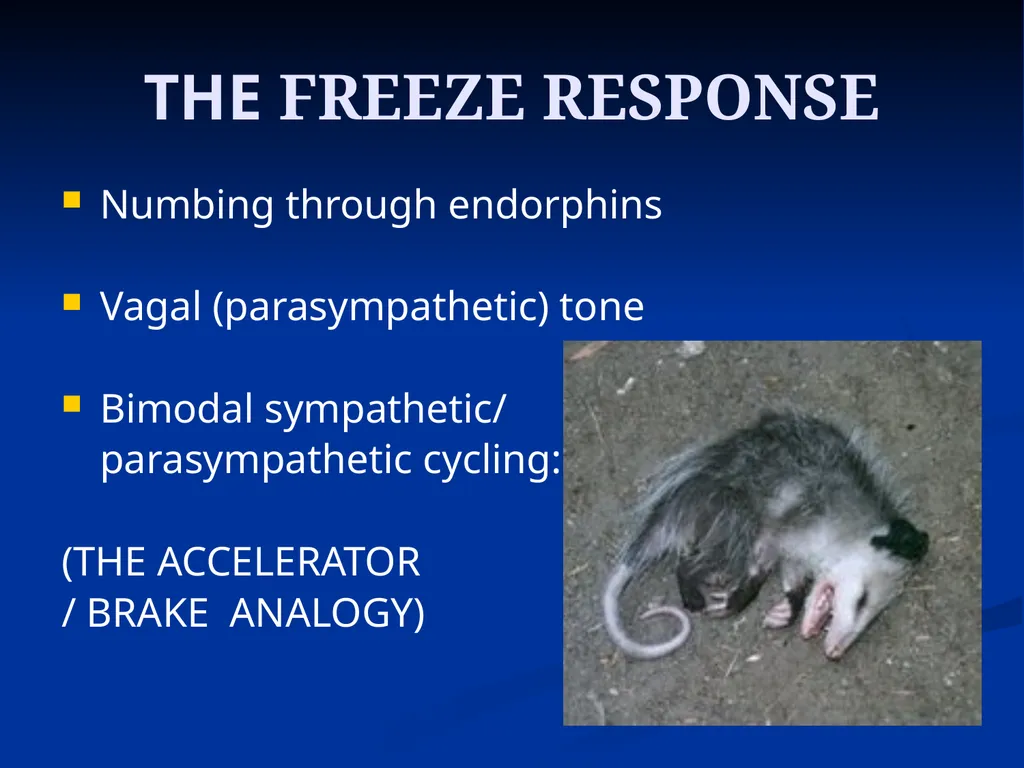
slide4. THE FREEZE RESPONSE Numbing through endorphins
Vagal (parasympathetic) tone
Bimodal sympathetic/
parasympathetic cycling:
(THE ACCELERATOR
/ BRAKE ANALOGY)<br>
slide5. HYPNOSIS - FREUD: “…a paralysis produced by the influence of an omnipotent person on a defenseless, impotent subject”
- PAVLOV: Animal hypnosis - “…a self-protecting reflex of an inhibitory nature”
- Persistence of reflex motor postures imitating the last position of the limbs before hypnosis ensued<br>
slide6. LESSONS FROM THE WILD: THE CRITICAL IMPORTANCE OF DISCHARGING THE FREEZE RESPONSE<br>
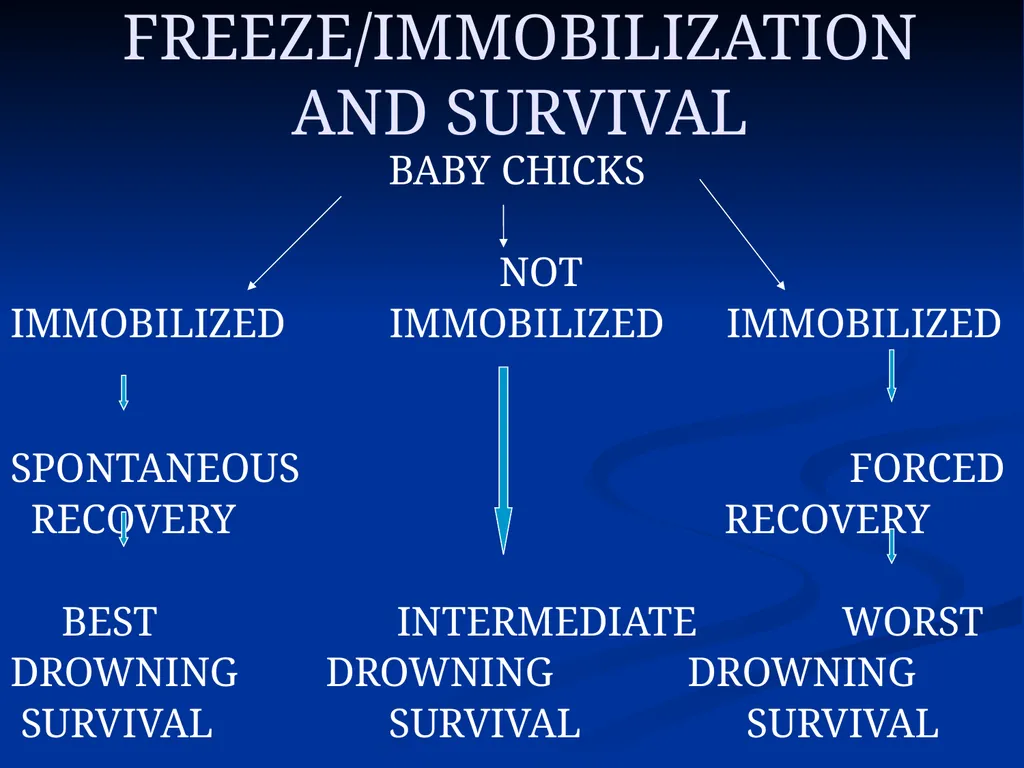
slide7. FREEZE/IMMOBILIZATION AND SURVIVAL BABY CHICKS
NOT
IMMOBILIZED IMMOBILIZED IMMOBILIZED
SPONTANEOUS FORCED
RECOVERY RECOVERY
BEST INTERMEDIATE WORST
DROWNING DROWNING DROWNING
SURVIVAL SURVIVAL SURVIVAL<br>
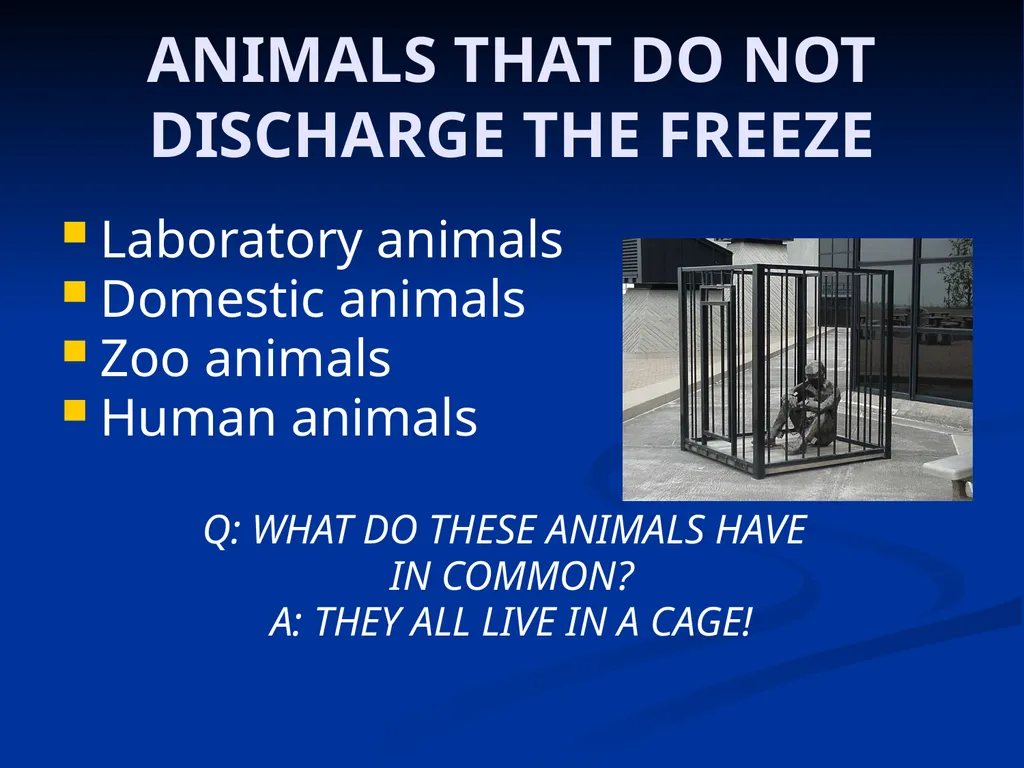
slide8. ANIMALS THAT DO NOT DISCHARGE THE FREEZE Laboratory animals
Domestic animals
Zoo animals
Human animals
Q: WHAT DO THESE ANIMALS HAVE
IN COMMON?
A: THEY ALL LIVE IN A CAGE!<br>
slide9. ENDORPHINS IN TRAUMA Released in arousal: stress-induced analgesia (SIA)
Inhibits ministering to wound, self-care, allows continued fight/flight behavior
Mediates the freeze response
- Analgesia inhibits pain behavior
- Immobility promotes survival<br>
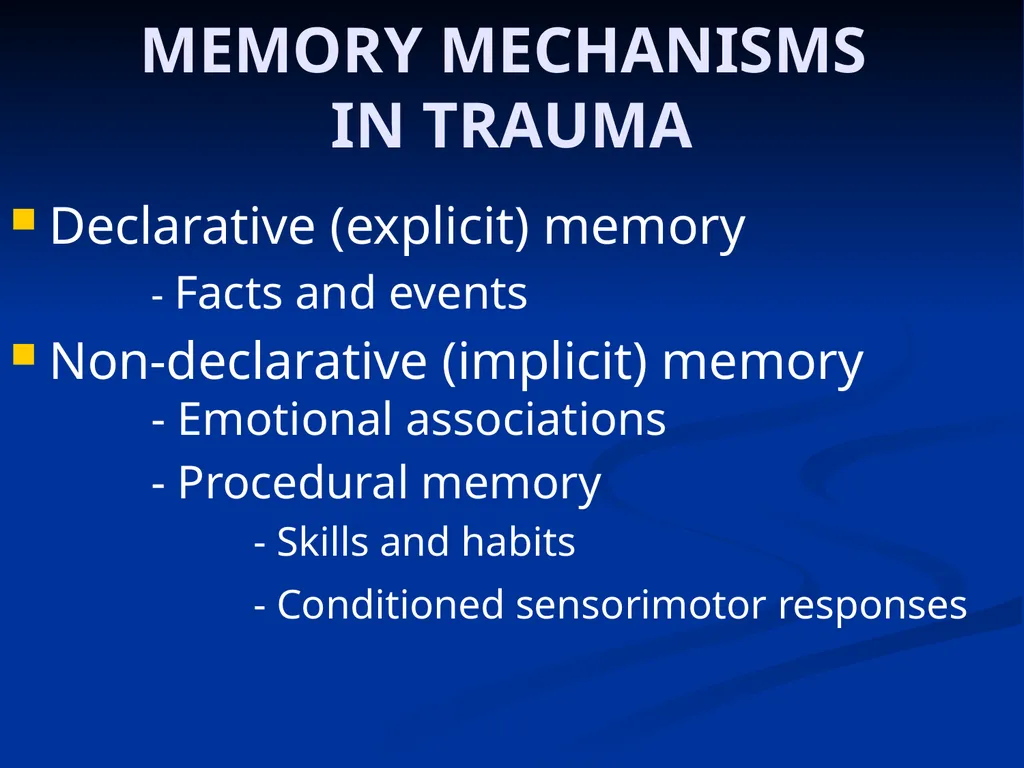
slide10. MEMORY MECHANISMS IN TRAUMA Declarative (explicit) memory
- Facts and events
Non-declarative (implicit) memory - Emotional associations
- Procedural memory
- Skills and habits
- Conditioned sensorimotor responses<br>
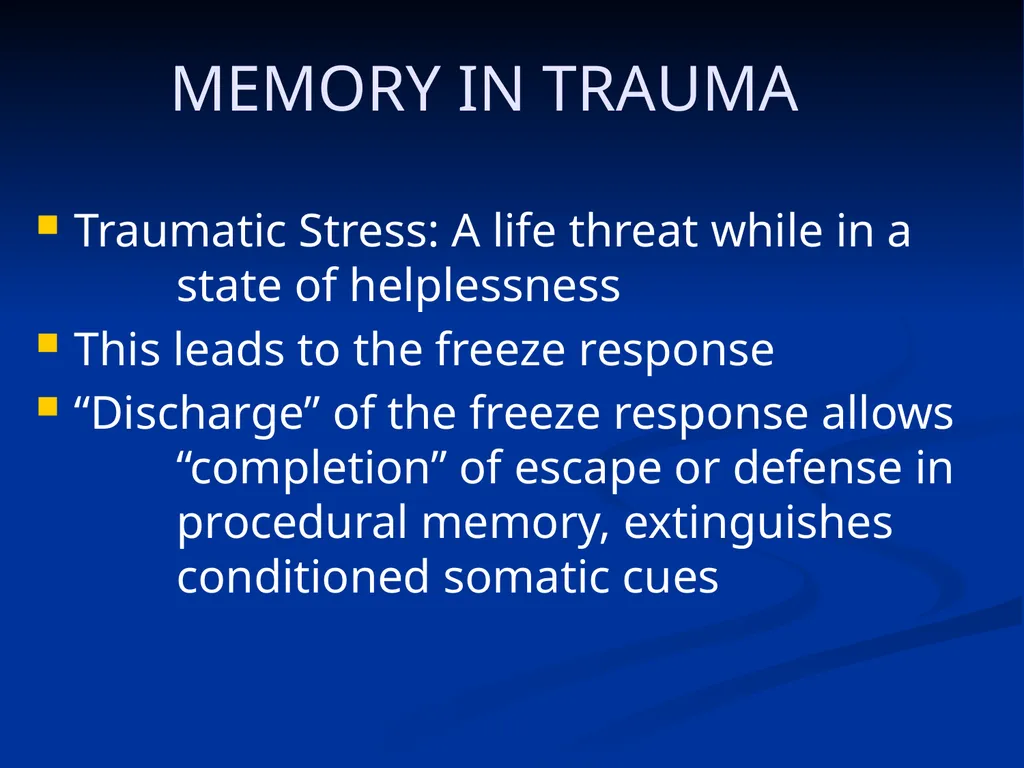
slide11. MEMORY IN TRAUMA Traumatic Stress: A life threat while in a state of helplessness
This leads to the freeze response
“Discharge” of the freeze response allows “completion” of escape or defense in procedural memory, extinguishes conditioned somatic cues<br>
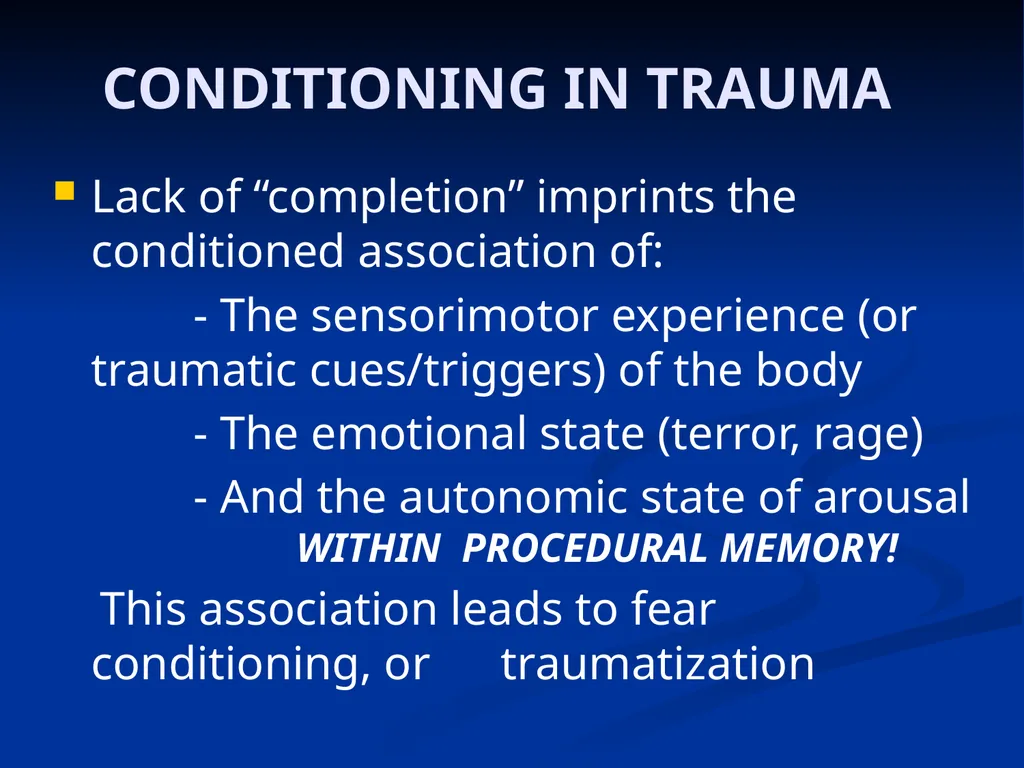
slide12. CONDITIONING IN TRAUMA Lack of “completion” imprints the conditioned association of:
- The sensorimotor experience (or traumatic cues/triggers) of the body
- The emotional state (terror, rage)
- And the autonomic state of arousal WITHIN PROCEDURAL MEMORY!
This association leads to fear conditioning, or traumatization<br>
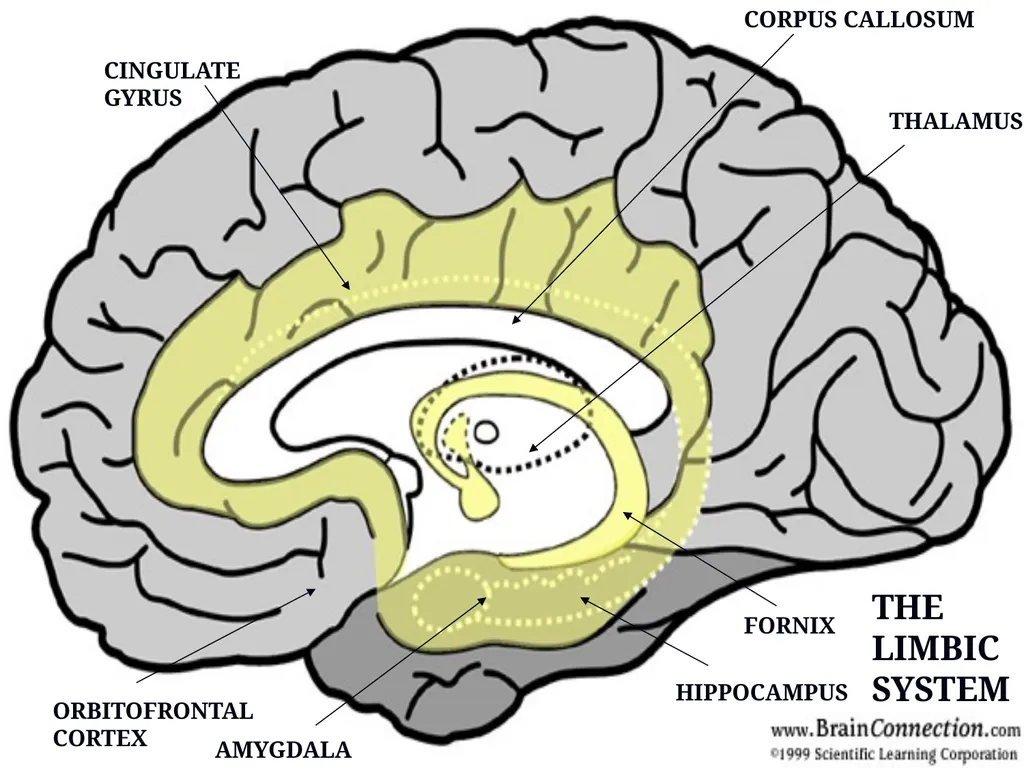
slide13. AMYGDALA HIPPOCAMPUS FORNIX THALAMUS CINGULATE
GYRUS ORBITOFRONTAL
CORTEX CORPUS CALLOSUM THE
LIMBIC
SYSTEM<br>
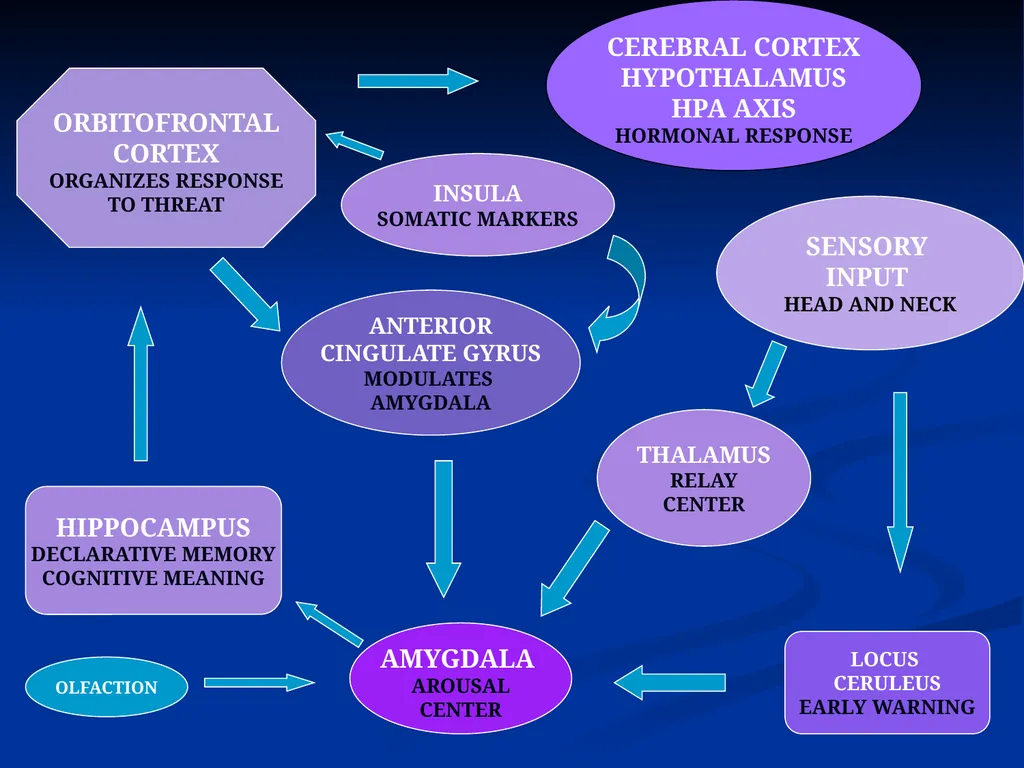
slide14. SENSORY
INPUT
HEAD AND NECK AMYGDALA
AROUSAL
CENTER ANTERIOR
CINGULATE GYRUS
MODULATES
AMYGDALA CEREBRAL CORTEX
HYPOTHALAMUS
HPA AXIS
HORMONAL RESPONSE HIPPOCAMPUS
DECLARATIVE MEMORY
COGNITIVE MEANING ORBITOFRONTAL
CORTEX
ORGANIZES RESPONSE
TO THREAT LOCUS
CERULEUS
EARLY WARNING THALAMUS
RELAY
CENTER INSULA
SOMATIC MARKERS OLFACTION<br>
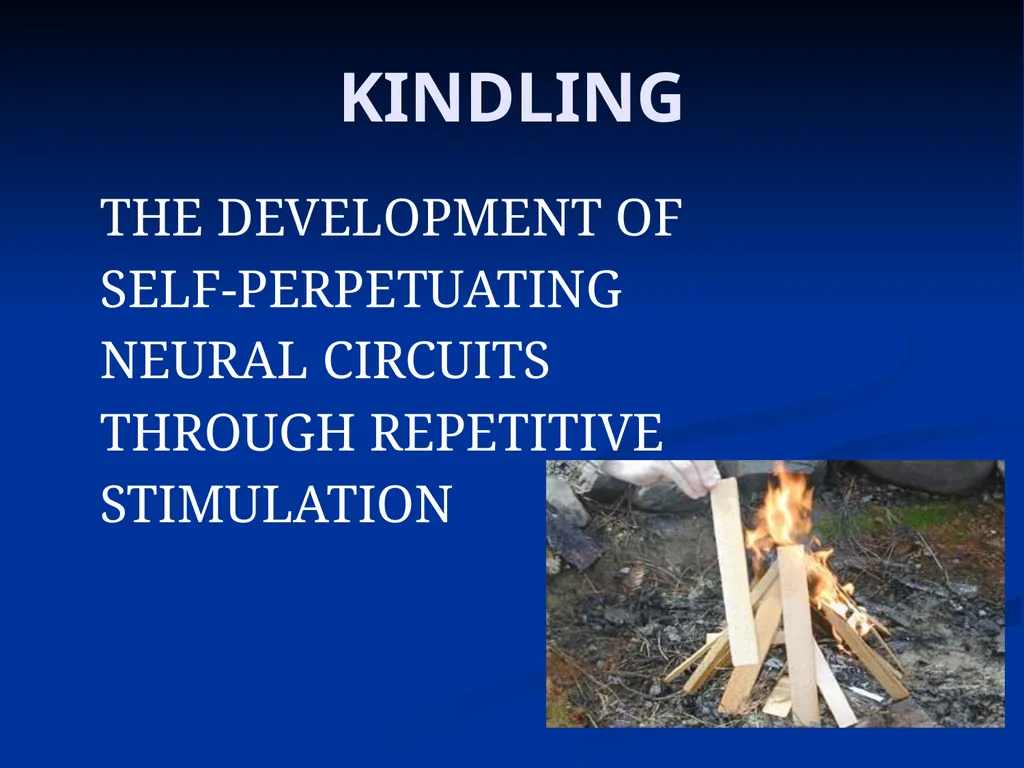
slide15. KINDLING THE DEVELOPMENT OF
SELF-PERPETUATING
NEURAL CIRCUITS
THROUGH REPETITIVE
STIMULATION<br>
slide16. The key to trauma: The retention of traumatic procedural memories through fear-conditioning and kindling<br>
slide17. THE DILEMMA OF TRAUMA The perception that old traumatic procedural memories are actually in the
“present moment”:
A corruption of memory and perception of time
“Then vs. Now”<br>
slide18. THE TRAUMA STRUCTURE Retention of traumatic procedural memories through fear-conditioning
Past memories, triggered by internal/external cues, are perceived as being present
Recurrent unconscious triggering of memories leads to kindling
Repetitive sympathetic autonomic input leads to cyclical autonomic dysregulation<br>
slide19. COGNITIVE DEFICITS: P.T.S.D. Impaired memory in trauma: short term, working, verbal and interference, but not visual memory, proportionate to trauma
Duration of 30 years or more
Attention deficits in traumatized children
Speech and language disorders
Similar deficits in chronic pain, PTSD, depression, fibromyalgia
Findings comparable to cognitive deficits in MTBI<br>
slide20. RESILIENCY vs. VULNERABILITY TO TRAUMA Vulnerability:
A state of fear-conditioned and kindled vulnerability to retraumatization
based on the prior cumulative burden
of life trauma
We must explore what we define as trauma, especially in infancy and childhood<br>
slide21. THE ROLE OF DEVELOPMENTAL NEUROBIOLOGY IN RESILIENCE TO TRAUMA<br>
slide22. THE EXPERIENCE-BASED DEVELOPMENT OF THE BRAIN Allan Schore, 1996: Affect regulation and the Origin of the Self
* THE Maternal/infant dyad (two-as-one):
Face-to-face attunement facilitates development o the right orbito-frontal cortex, promotes autonomic and limbic regulation and resiliency to subsequent life stress/trauma<br>
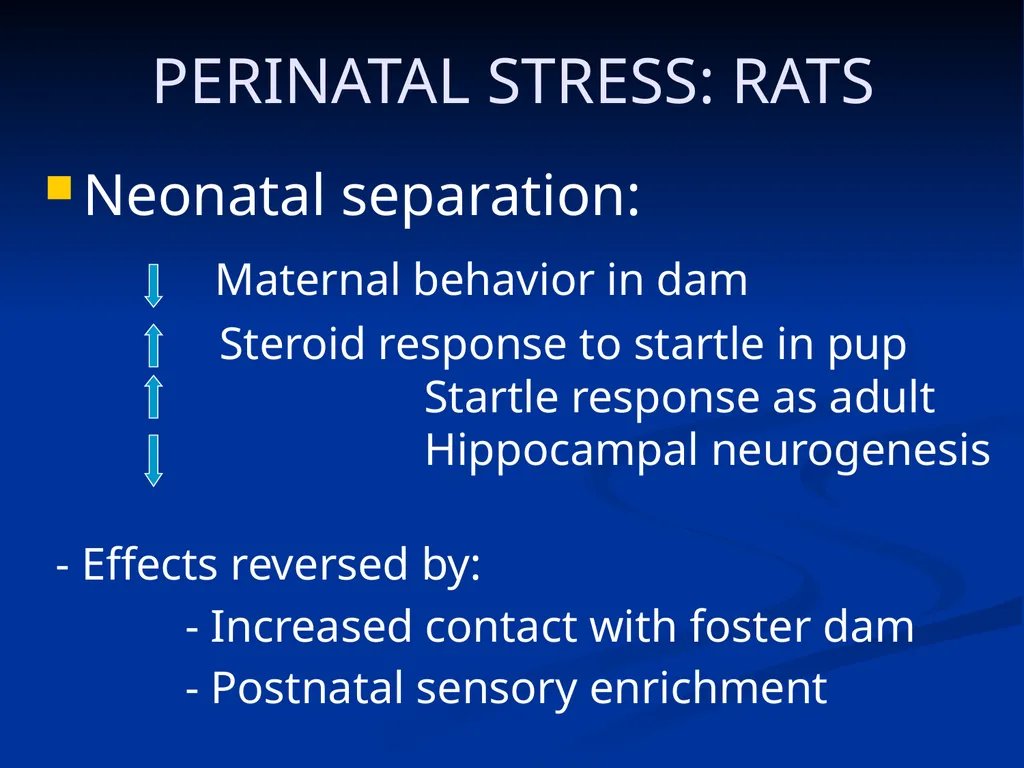
slide23. PERINATAL STRESS: RATS Neonatal separation:
Maternal behavior in dam
Steroid response to startle in pup Startle response as adult Hippocampal neurogenesis
- Effects reversed by:
- Increased contact with foster dam
- Postnatal sensory enrichment<br>
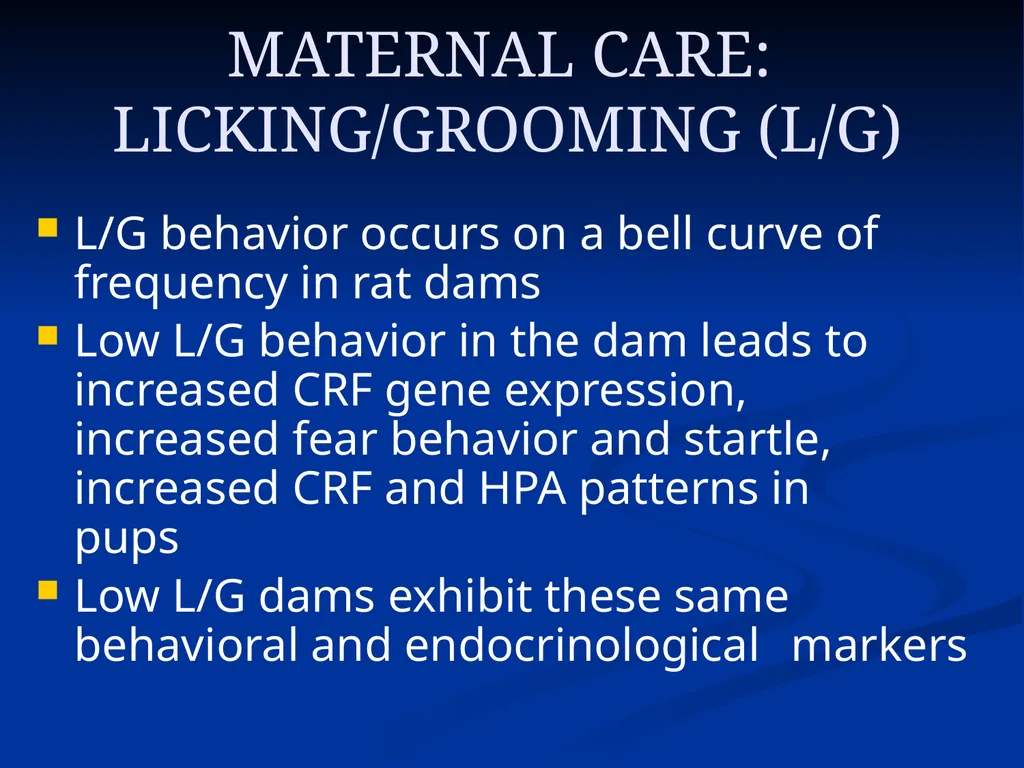
slide24. MATERNAL CARE: LICKING/GROOMING (L/G) L/G behavior occurs on a bell curve of frequency in rat dams
Low L/G behavior in the dam leads to increased CRF gene expression, increased fear behavior and startle, increased CRF and HPA patterns in pups
Low L/G dams exhibit these same behavioral and endocrinological markers<br>
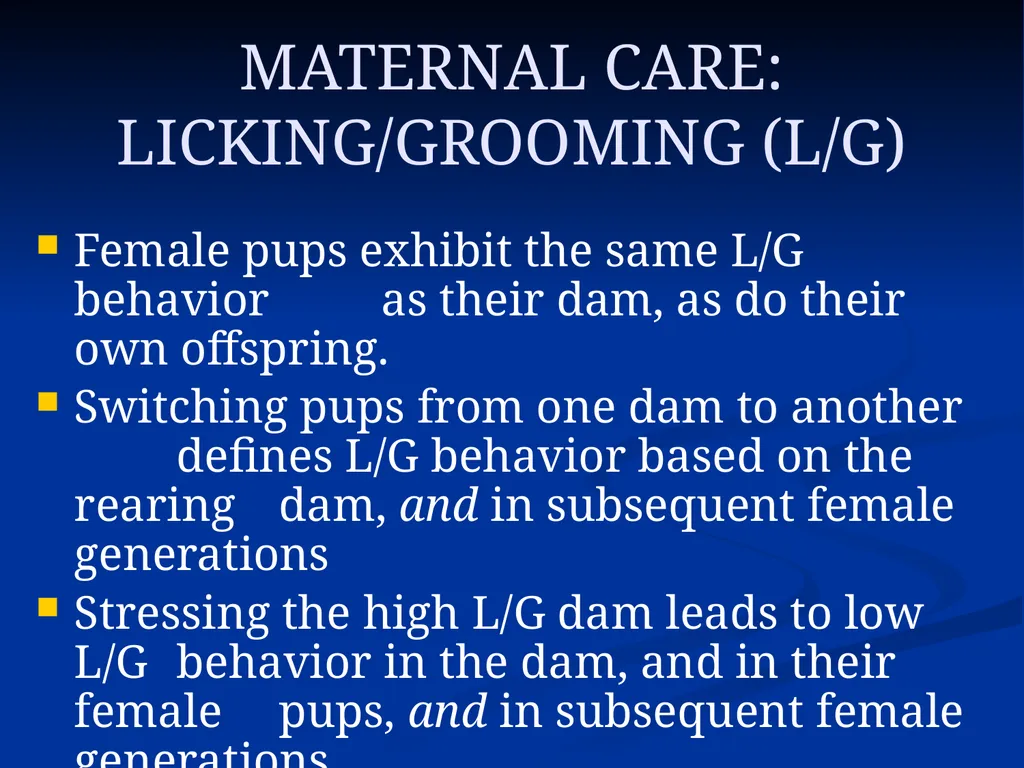
slide25. MATERNAL CARE: LICKING/GROOMING (L/G) Female pups exhibit the same L/G behavior as their dam, as do their own offspring.
Switching pups from one dam to another defines L/G behavior based on the rearing dam, and in subsequent female generations
Stressing the high L/G dam leads to low L/G behavior in the dam, and in their female pups, and in subsequent female generations<br>
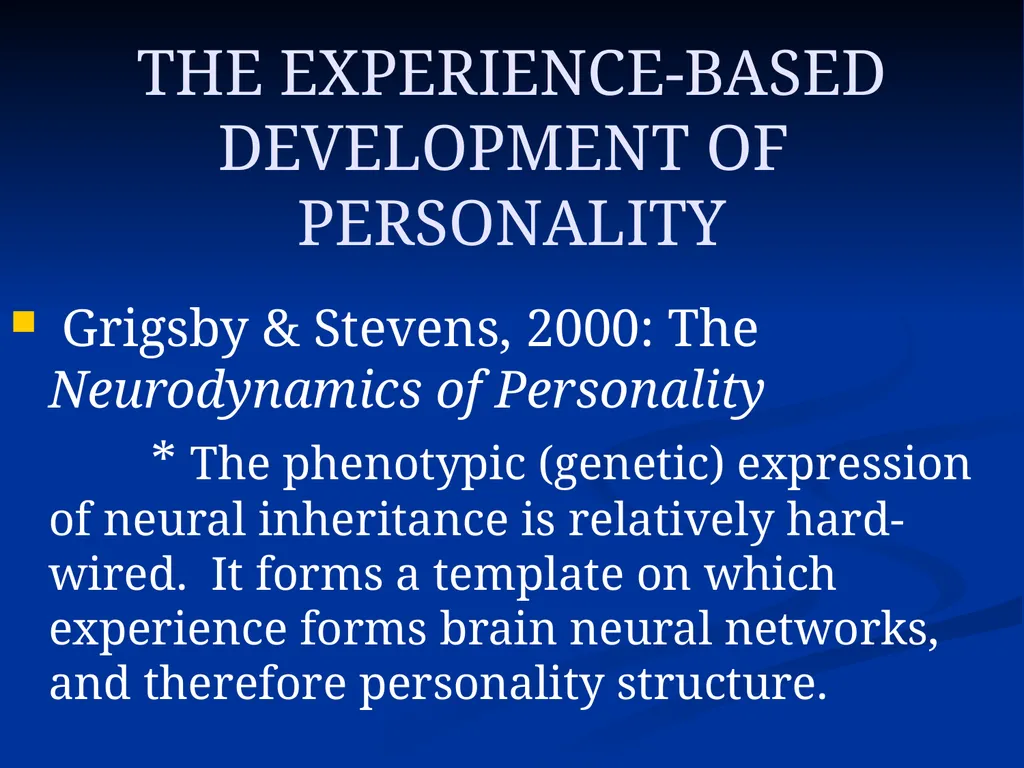
slide26. THE EXPERIENCE-BASED DEVELOPMENT OF PERSONALITY Grigsby & Stevens, 2000: The Neurodynamics of Personality
* The phenotypic (genetic) expression of neural inheritance is relatively hard-wired. It forms a template on which experience forms brain neural networks, and therefore personality structure.<br>
slide27. PROCEDURAL LEARNING, PERSONALITY AND PSYCHOPATHOLOGY Pathways mediating declarative memory are not myelinated until 12-18 months, but procedural memory pathways are
Early resiliency to fear conditioning or trauma may be established through procedural learning in the first 6-12 months of live – and probably in utero
The infant’s/fetus’s environment may lay the seeds for subsequent vulnerability to “minor” trauma<br>
slide28. PROCEDURAL LEARNING, PERSONALITY AND PSYCHOPATHOLOGY Maternal emotional dysfunction may perpetuate patterns of emotional dysfunction in the infant (Genes vs experience in psychiatric disorders)
Genetic disorders (ADHD, dyslexia, autism, bipolar disorder) may actually be predominantly experiential<br>
slide29. THE SYMPTOMS OF TRAUMA: DSM-IV Abnormal arousal
(FIGHT/FLIGHT)
Abnormal avoidance
(FREEZE)
Abnormal reexperienceing, or memory (CONDITIONING)<br>
slide30. ADDITIONAL SYMPTOMS OF TRAUMA Hypersensitivity to light and sound
Cognitive impairment: ADD, memory loss
Stress intolerance
Loss of sense of self
Shyness, social withdrawal, constriction, depression, dissociation
Chronic fatigue
Somatic symptoms: myofascial pain, fibromyalgia, GI, or bladder symptoms, PMS
Impairment of sleep maintenance<br>
slide31. LATE (COMORBID) TRAUMA SYNDROMES Depression
Dissociation
Affect dysregulation
Somatization
THE CONCEPT OF
COMPLEX TRAUMA<br>
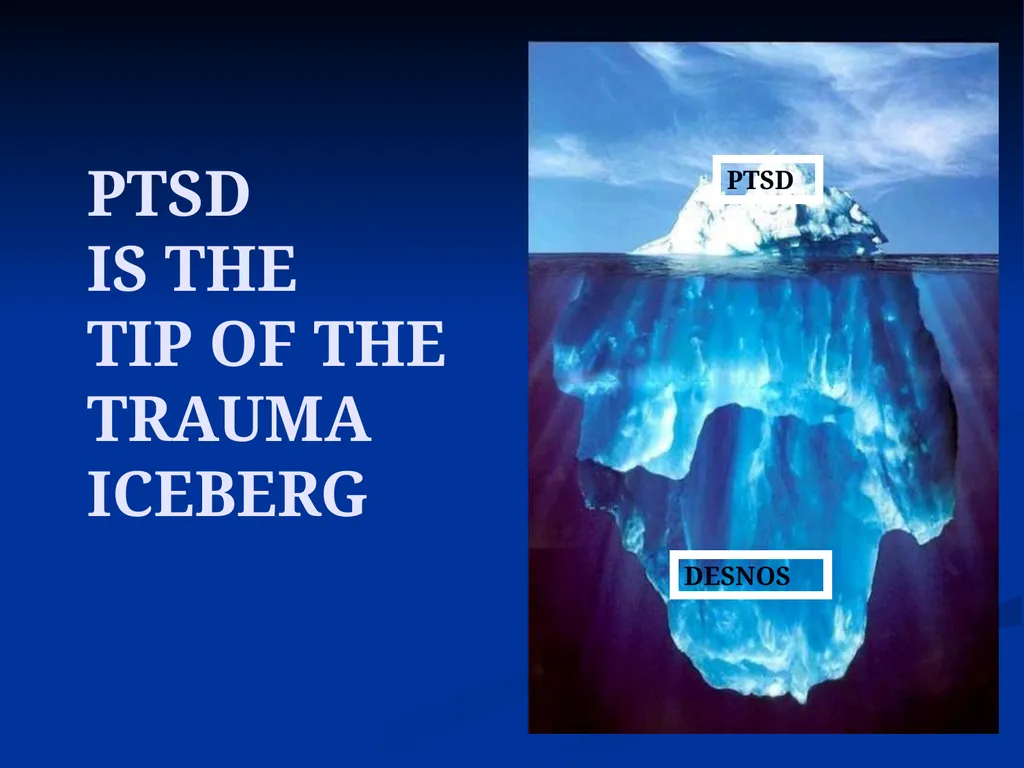
slide32. PTSD IS THE TIP OF THE TRAUMA ICEBERG DESNOS PTSD<br>
slide33. THE HISTORY OF TRAUMA AND DISSOCIATION IN PSYCHIATRY<br>
slide34. THE AGE OF HYSTERIA Breuer, the “talking cure”, and “reminiscences”
Freud, incest and “ The Aetiology of Hysteria”
Freud and Breuer: Recantation
Janet: Perseverance and professional ostracism<br>
slide35. CHARCOT AND THE SALPÊTRIÈRE THE STUDY
OF HYSTERIA
AS A
NEUROLOGICAL SYNDROME<br>
slide36. JANET AND DISSOCIATION “Fixed ideas: The spectrum of symptoms in hysteria
Somatic, emotional, perceptual symptoms triggered by trauma
“Absent-mindedness” and abulia – the inability to initiate action
Triggering of hysteria by cues in the environment<br>
slide37. HYPNOSIS - FREUD: “…a paralysis produced by the influence of an omnipotent person on a defenseless, impotent subject”
- PAVLOV: Animal hypnosis: - “…a self-protecting reflex of an inhibitory nature”
- Persistence of reflex motor postures imitating the last position of the limbs before hypnosis ensued – catalepsy
- Seen in “shell shock” and catatonic schizophrenia<br>
slide38. DISORDERS OF EXTREME STRESS, N.0.S. (DESNOS) Alterations in:
- Affect regulation
- Attention/consciousness
- Self-perception
- Relations with others
- Systems of meaning
- Somatizaton<br>
slide39. DISORDERS OF EXTREME STRESS (DESNOS) Alterations in affect regulation
- Regulation of emotions
- Modulation of anger
- Self-destructiveness/cutting
- Suicidal preoccupation
- Difficulty modulating sexual involvement
- Excessive risk-taking<br>
slide40. DESNOS Alterations in self-perception
- Ineffectiveness
- Permanent damage
- Guilt and responsibility
- Shame
- Nobody can understand
- Minimizing<br>
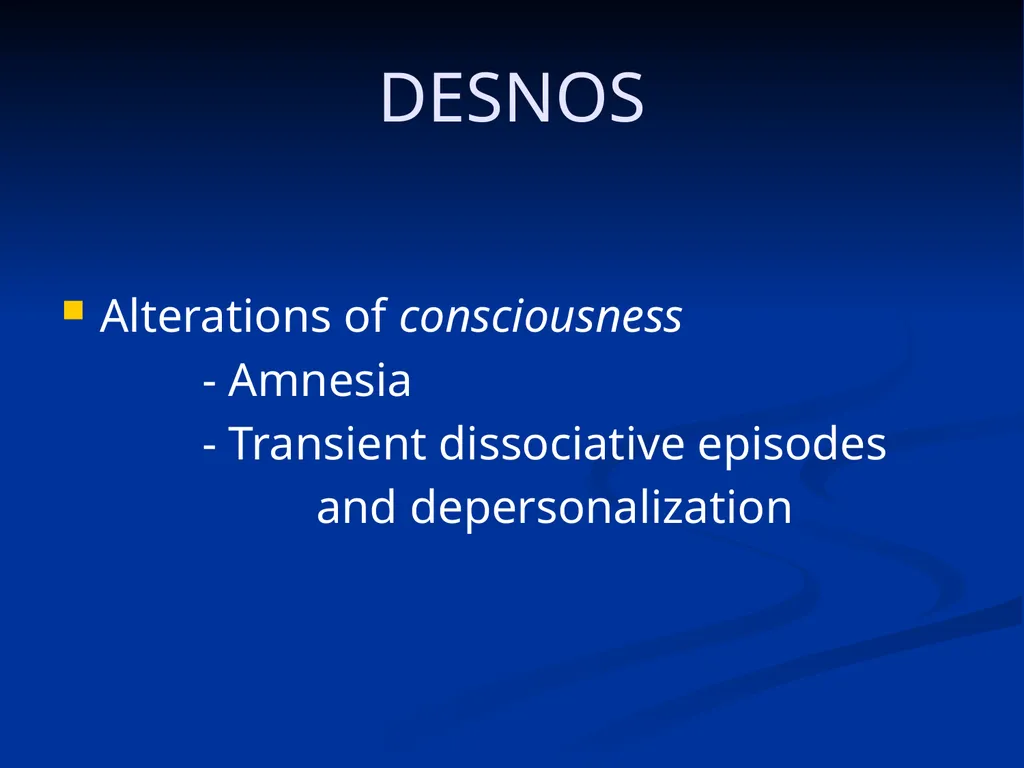
slide41. DESNOS Alterations of consciousness
- Amnesia
- Transient dissociative episodes
and depersonalization<br>
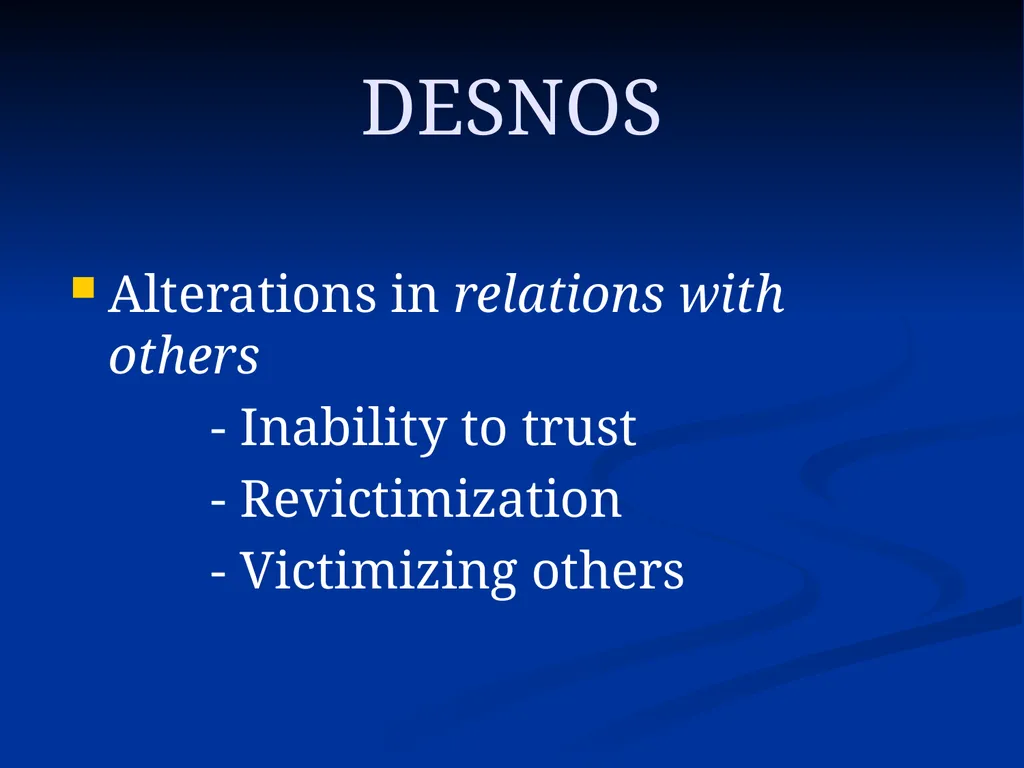
slide42. DESNOS Alterations in relations with others
- Inability to trust
- Revictimization
- Victimizing others<br>
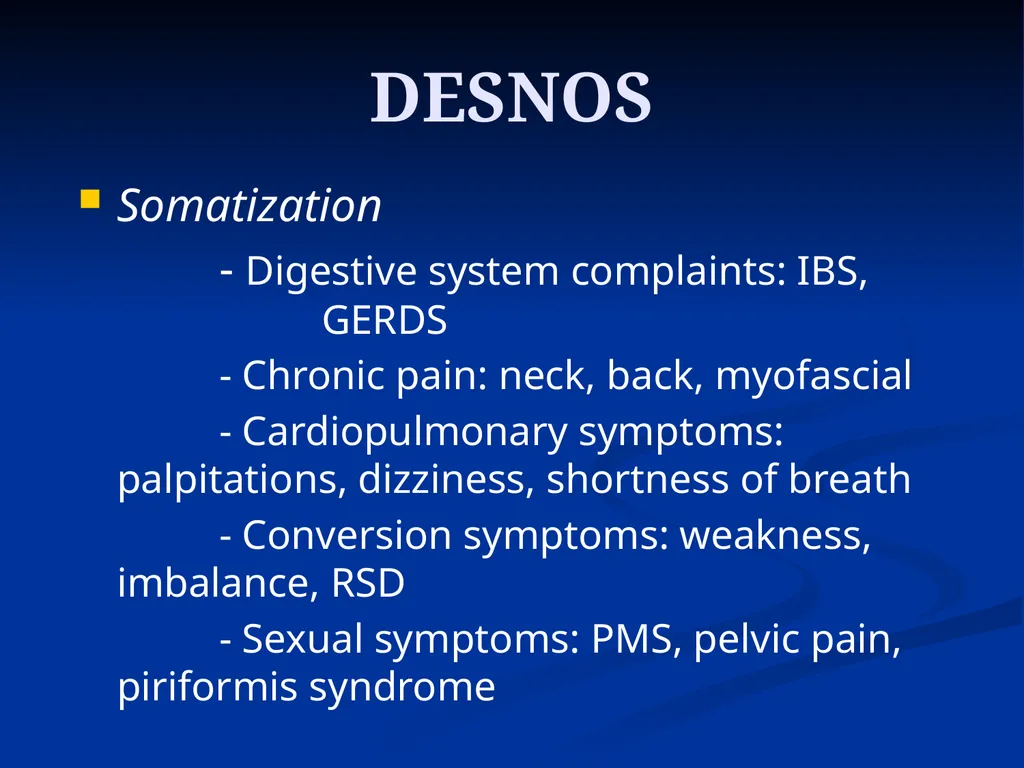
slide43. DESNOS Somatization
- Digestive system complaints: IBS, GERDS
- Chronic pain: neck, back, myofascial
- Cardiopulmonary symptoms: palpitations, dizziness, shortness of breath
- Conversion symptoms: weakness, imbalance, RSD
- Sexual symptoms: PMS, pelvic pain, piriformis syndrome<br>
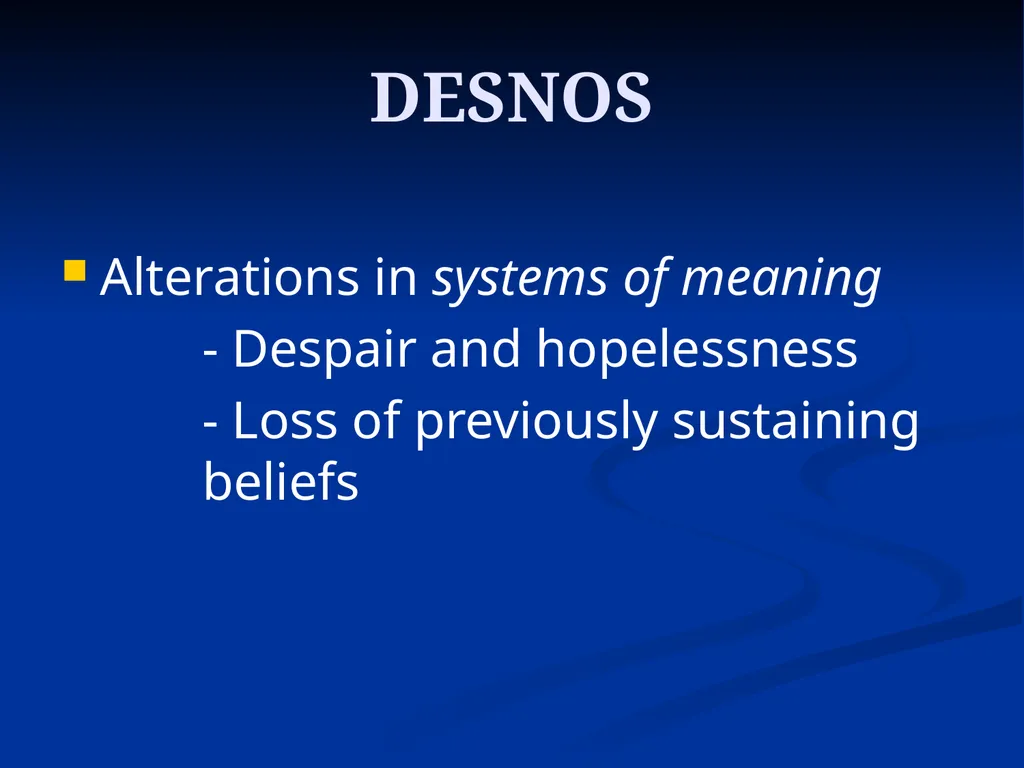
slide44. DESNOS Alterations in systems of meaning
- Despair and hopelessness
- Loss of previously sustaining beliefs<br>
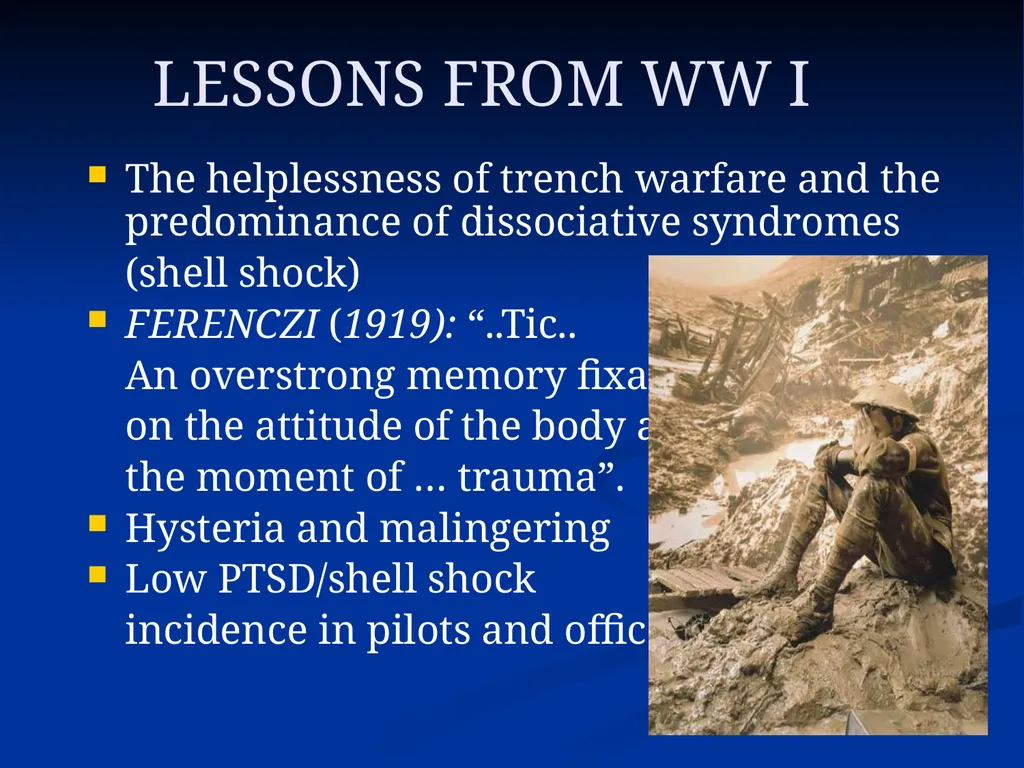
slide45. LESSONS FROM WW I The helplessness of trench warfare and the predominance of dissociative syndromes
(shell shock)
FERENCZI (1919): “..Tic..
An overstrong memory fixation
on the attitude of the body at
the moment of … trauma”.
Hysteria and malingering
Low PTSD/shell shock
incidence in pilots and officers<br>
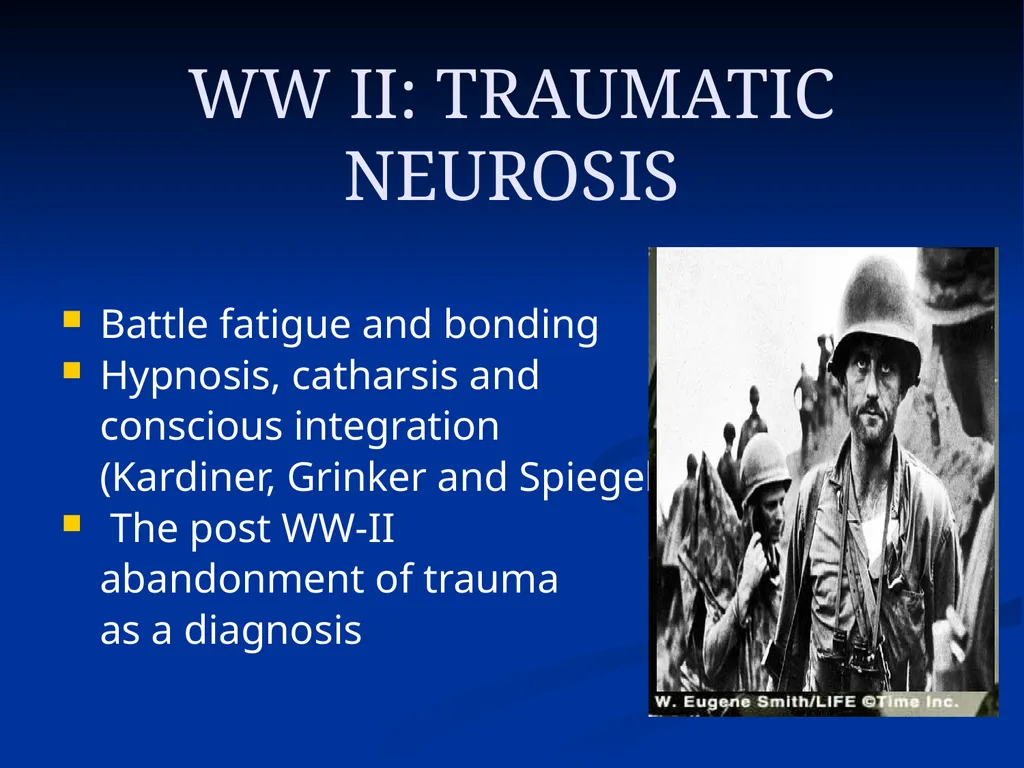
slide46. WW II: TRAUMATIC NEUROSIS Battle fatigue and bonding
Hypnosis, catharsis and
conscious integration
(Kardiner, Grinker and Spiegel)
The post WW-II
abandonment of trauma
as a diagnosis<br>
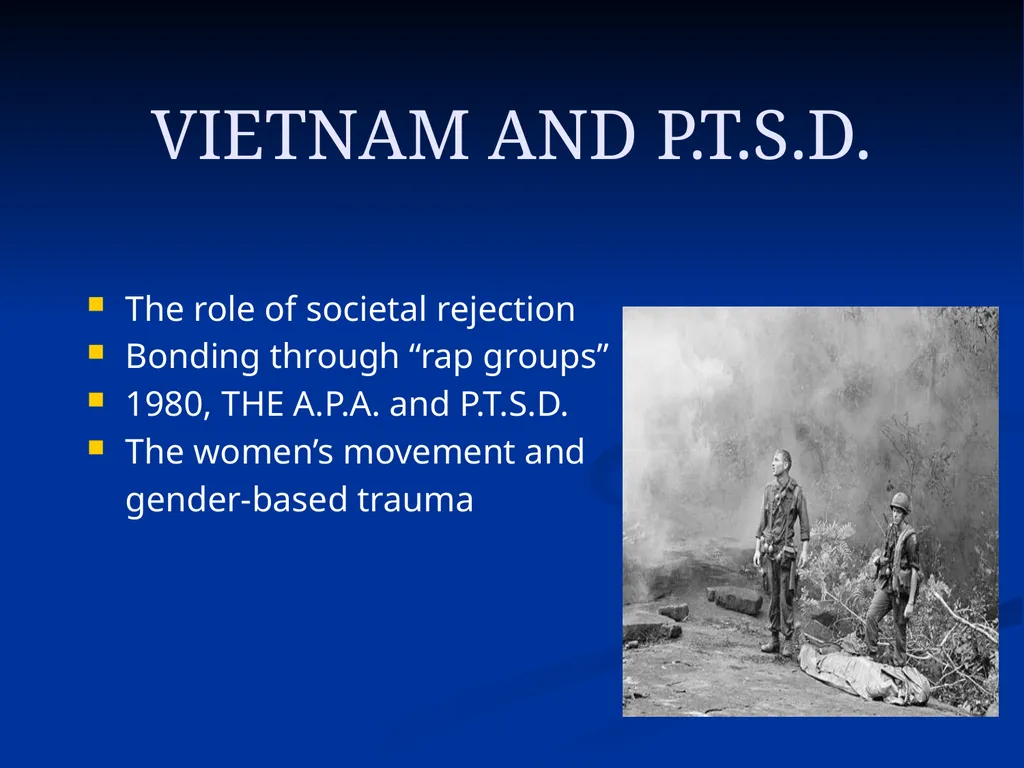
slide47. VIETNAM AND P.T.S.D. The role of societal rejection
Bonding through “rap groups”
1980, THE A.P.A. and P.T.S.D.
The women’s movement and
gender-based trauma<br>
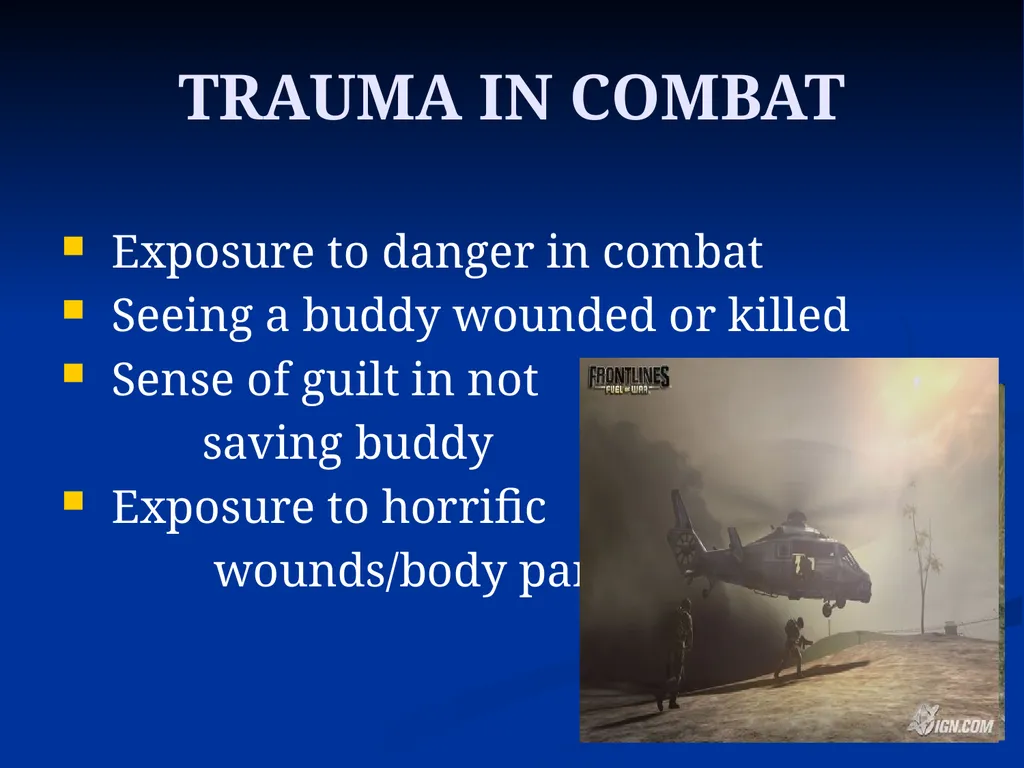
slide48. TRAUMA IN COMBAT Exposure to danger in combat
Seeing a buddy wounded or killed
Sense of guilt in not
saving buddy
Exposure to horrific
wounds/body parts<br>
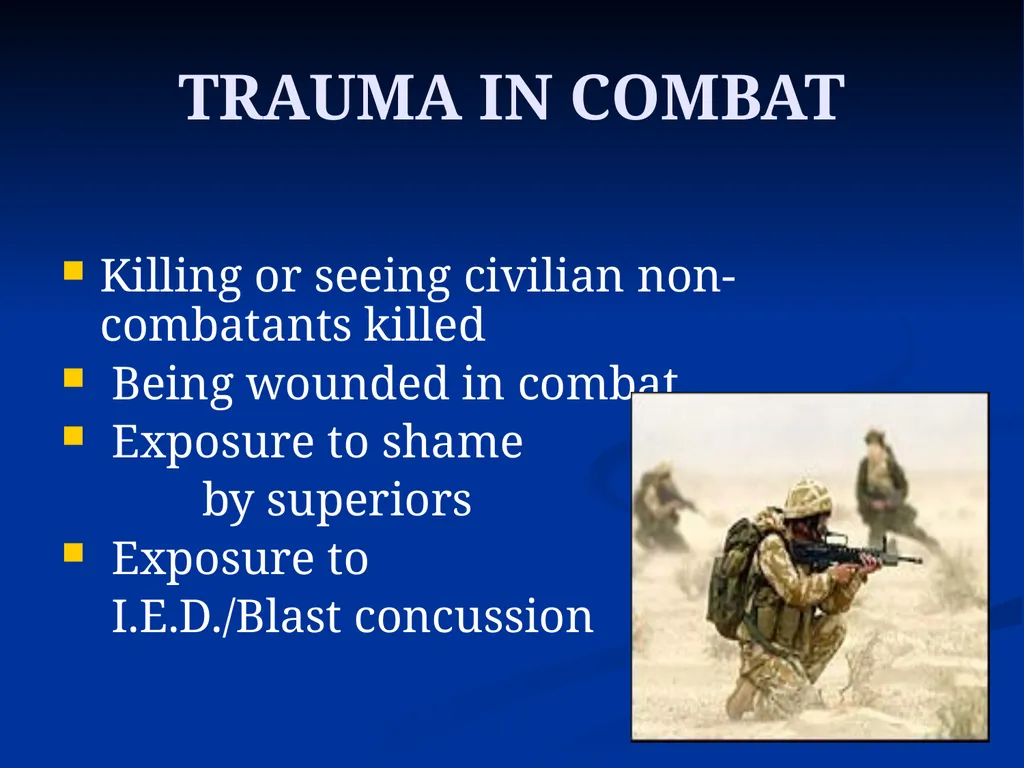
slide49. TRAUMA IN COMBAT Killing or seeing civilian non-combatants killed
Being wounded in combat
Exposure to shame
by superiors
Exposure to
I.E.D./Blast concussion<br>
slide50. DESNOS in COS Loss of joy
Despair and grief
Survivor guilt
Yearning for combat<br>
slide51. DESNOS in COS Anger, irritability
Mood swings
Feelings of isolation
Withdrawal<br>
slide52. DESNOS IN COS Numerous somatic symptoms
Reckless behavior /
risk-taking
Aggression / self harm
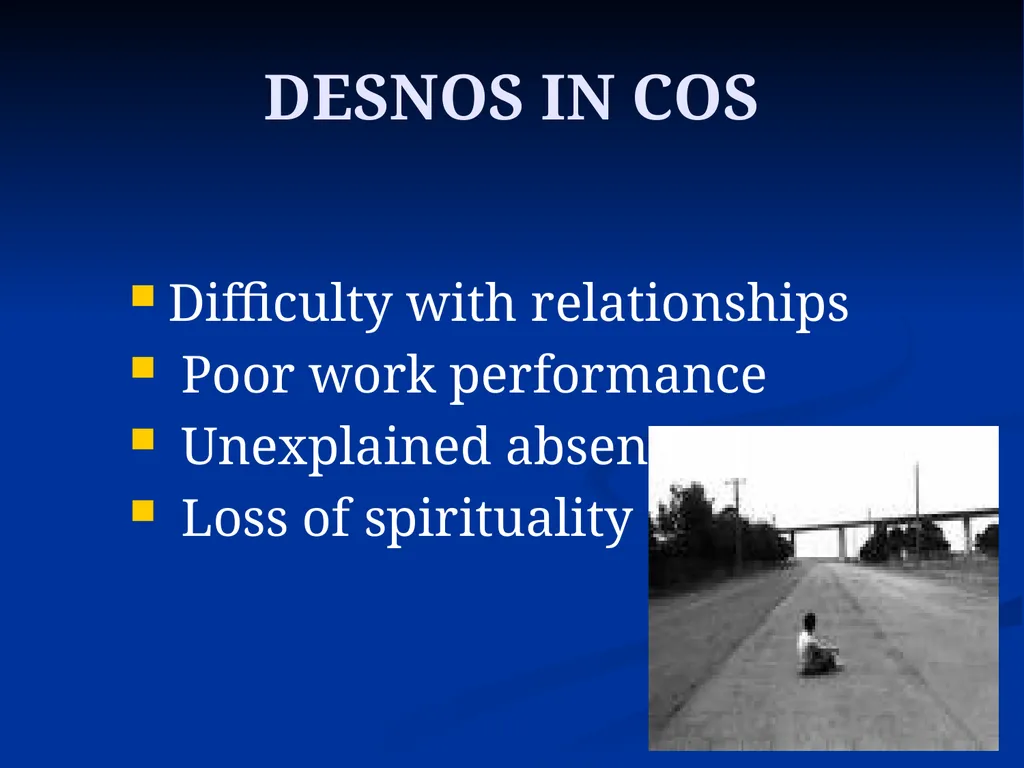
Substance abuse<br>
slide53. DESNOS IN COS Difficulty with relationships
Poor work performance
Unexplained absences
Loss of spirituality<br>
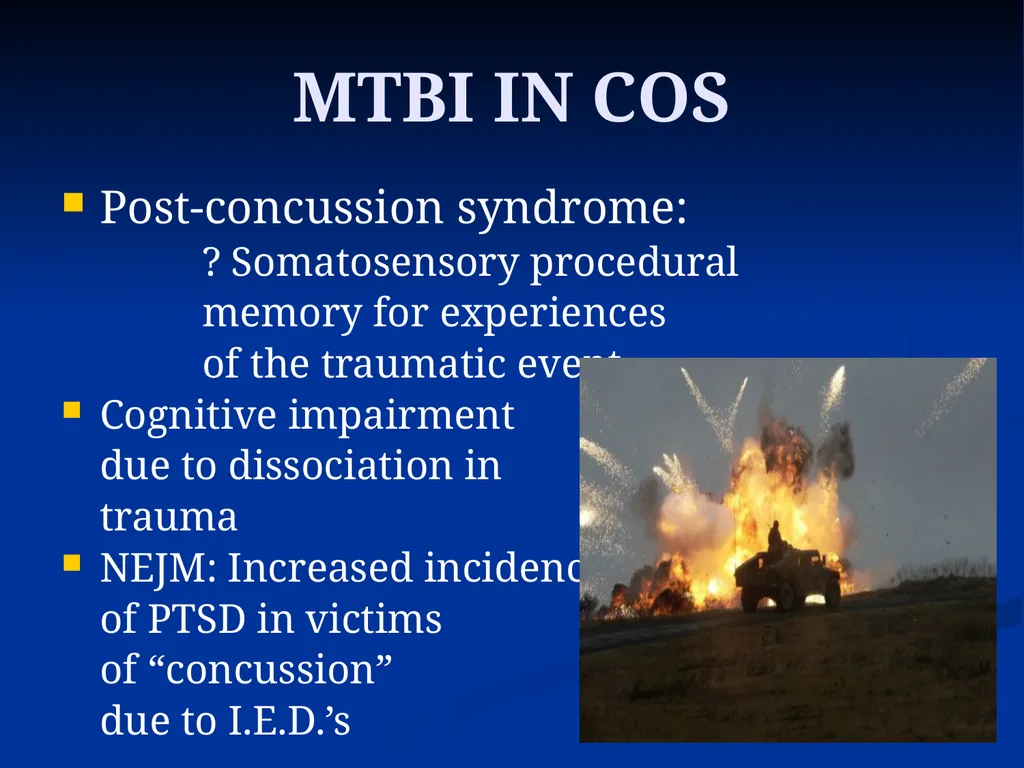
slide54. MTBI IN COS Post-concussion syndrome:
? Somatosensory procedural
memory for experiences
of the traumatic event
Cognitive impairment
due to dissociation in
trauma
NEJM: Increased incidence
of PTSD in victims
of “concussion”
due to I.E.D.’s<br>
slide55. PHYSICAL SYMPTOMS IN COS Bowel symptoms:
- Cramps and diarrhea
- Nausea and indigestion (GERDS)
Shortness of breath
Palpitations, chest pain<br>
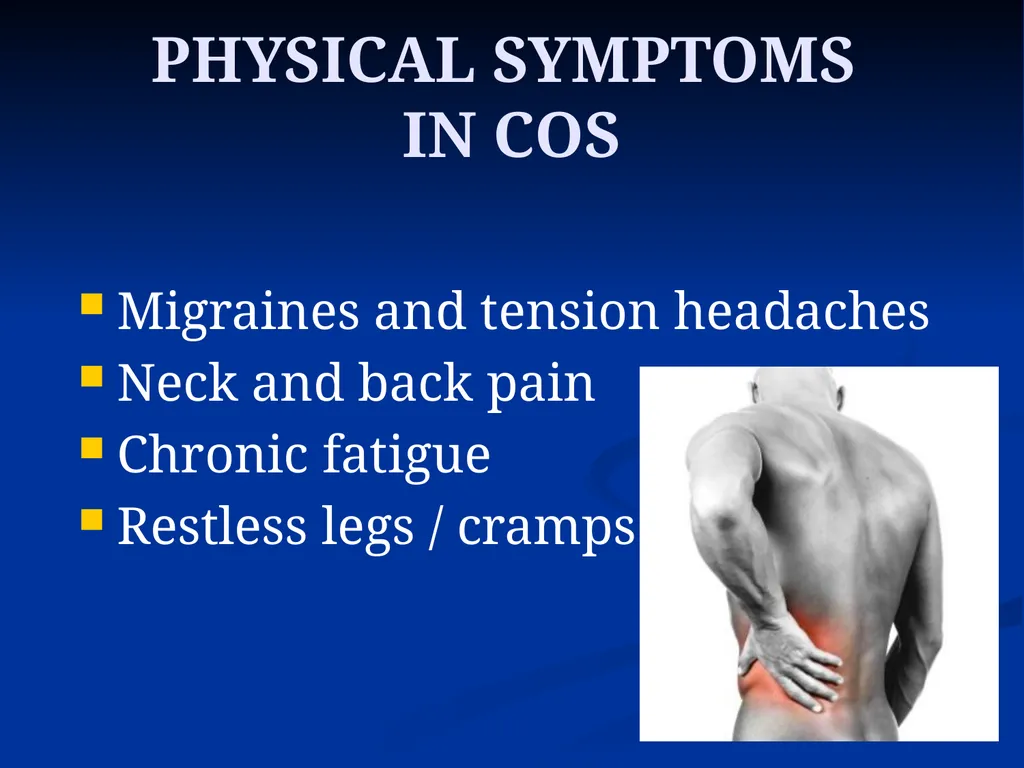
slide56. PHYSICAL SYMPTOMS IN COS Migraines and tension headaches
Neck and back pain
Chronic fatigue
Restless legs / cramps<br>
slide57. THE DILEMMA OF KILLING The history of killing rates in 19th century warfare: 1-2 shots/minute vs. 50% in practice
The impact rate in firing squads
Gen. Marshall –WWII: 15-20% firing rate
BUT – firing rates in Korea: 55%, in Vietnam: 90- 95%
The effectiveness of operant/classical conditioning
The residual legacy of guilt/shame<br>
slide58. DISSOCIATION: The primary expression of DESNOS and Combat Stress<br>
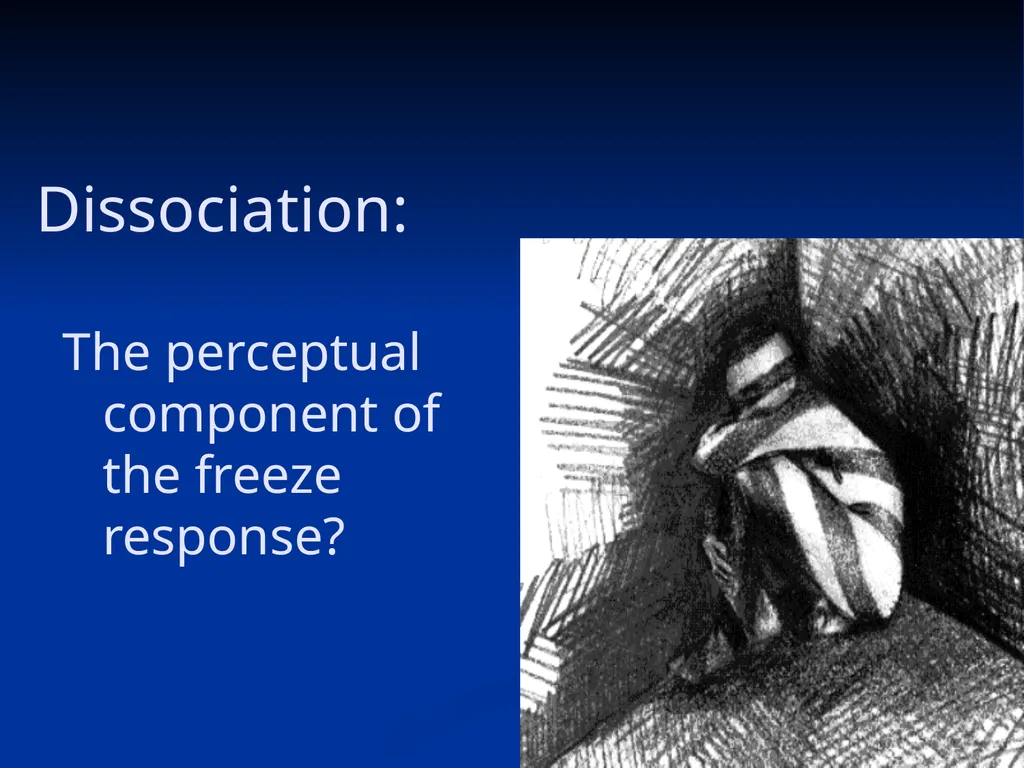
slide59. Dissociation: The perceptual component of the freeze response?<br>
slide60. MANIFESTATIONS OF DISSOCIATION Derealization
Depersonalization
Distorted time perception
Distorted sensory perception
Amnesia
Fugue states
Conversion reaction/hysteria
Dissociative identity disorder<br>
slide61. DISSOCIATION PSYCHOBIOLOGY SCHORE (2005):…”vagal outflow from the dorsal vagal nucleus …is the psychobiological engine of …dissociation”
…”early trauma expressed as emotional neglect and abuse…predict…dissociation.”
i.e.: Impaired attachment and right O.F.C. development leads to autonomic dysregulation, and the emergence of dorsal vagus freeze/dissociative states.<br>
slide62. THE DORSAL VAGUS NERVE The dorsal vagal complex (DVC)
- The dorsal vagal nucleus
- Primitive, reptilian
- Low O2 utilization
- The dive reflex: apnea, bradycardia
- The freeze response, the risk in mammals
and “voodoo death”<br>
slide63. BUT! The dorsal vagal/freeze theory does not explain the occurrence of high sympathetic-dominant dissociative states: Homicidal dissociation
“Berserker” behavior in combat<br>
slide64. DISSOCIATION STRUCTURE A capsule, compartment or state of perception composed of the varied procedural memories of the experiences of a past traumatic event where a freeze response occurred without a freeze discharge<br>
slide65. THE DISSOCIATION CAPSULE IS COMPOSED OF: Somatosensory messages and motor actions
Autonomic states
Emotions
Endorphinergic alteration of perception
Emotion linked declarative memory ALL SPECIFIC TO
THE TRAUMATIC EXPERIENCE<br>
slide66. FEATURES OF THE DISSOCIATIVE CAPSULE Capsules consist of procedural memories for the past trauma, but are perceived as being present, and are therefore dissociative<br>
slide67. EXAMPLES OF CAPSULE PROCEDRAL MEMORIES Pain, numbness, dizziness
Tremor, tics, paralysis
Nausea, cramps, palpitations
Anxiety, terror, shame, rage
Flashbacks, nightmares or intrusive thoughts<br>
slide68. The Dissociative Capsule is brought into conscious awareness (the present moment) by external representative cues or internal kindled memories<br>
slide69. The size, specificity and strength of a Dissociative Capsule depend upon the intensity or repetitive experience of the trauma that caused it<br>
slide70. The number of one’s Dissociative capsules is determined by the sum total of one’s cumulative life traumas<br>
slide71. The more the number of Dissociative Capsules, the less time one is able to spend in consciousness (the present moment)<br>
slide72. THE PRESENT MOMENT 1-10 second period of the awareness of “now”
A “lived story”
Background feelings from the body
Autobiographical memory
Changing internal and external perceptions
Concepts of time, intentionality, shifting emotional tone
A measure of consciousness
Our changing sense of self<br>
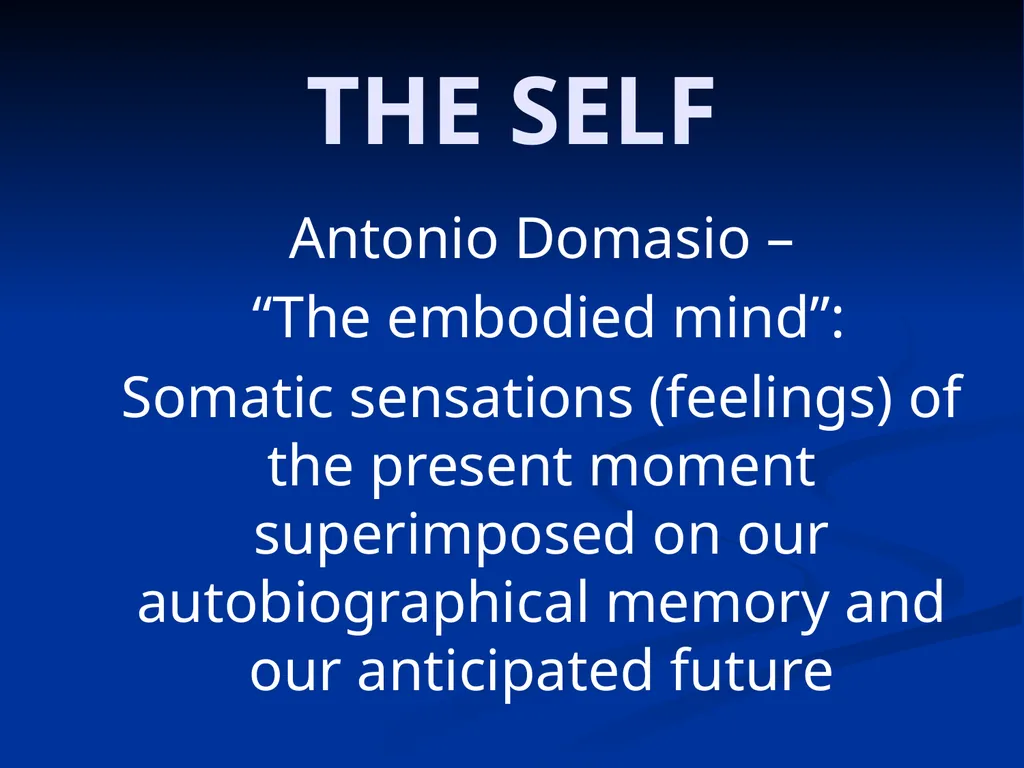
slide73. THE SELF Antonio Domasio –
“The embodied mind”:
Somatic sensations (feelings) of the present moment superimposed on our autobiographical memory and our anticipated future<br>
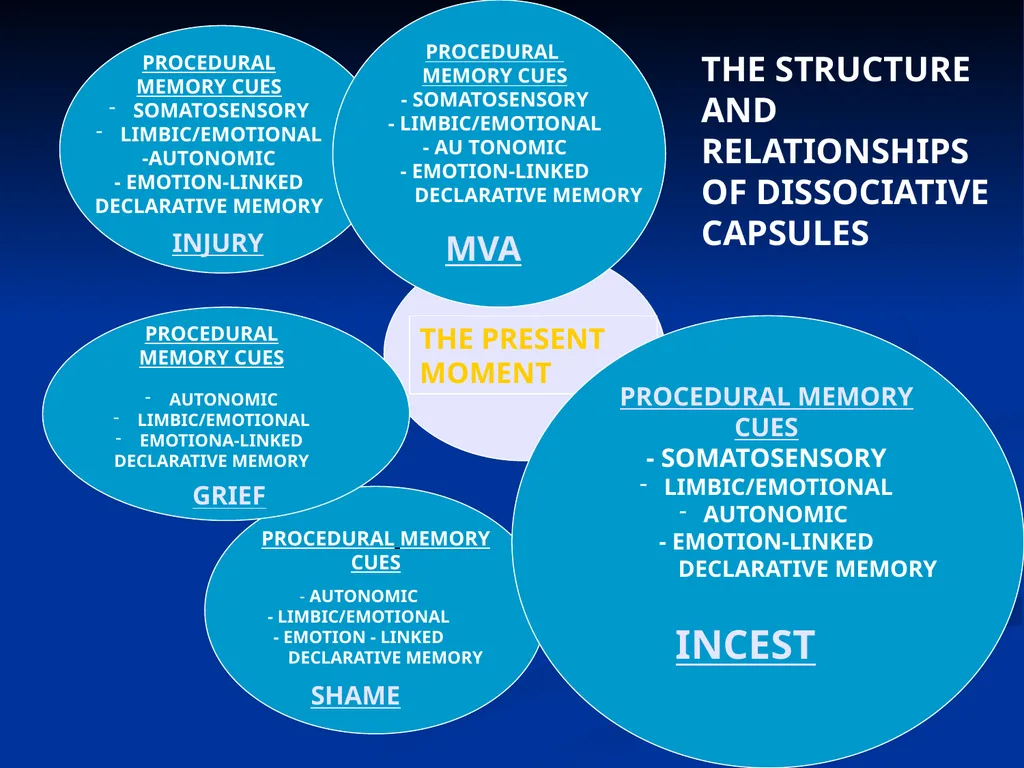
slide74. THE PRESENT MOMENT AUTONOMIC CUES SOMATOSENSORY CUES LIMBIC CUES SHAME THE STRUCTURE AND RELATIONSHIPS OF DISSOCIATIVE CAPSULES INCEST MVA INJURY PROCEDURAL MEMORY
CUES
- SOMATOSENSORY
LIMBIC/EMOTIONAL
AUTONOMIC
- EMOTION-LINKED
DECLARATIVE MEMORY PROCEDURAL MEMORY
CUES - AUTONOMIC
- LIMBIC/EMOTIONAL
- EMOTION - LINKED
DECLARATIVE MEMORY PROCEDURAL
MEMORY CUES
- SOMATOSENSORY
- LIMBIC/EMOTIONAL
- AU TONOMIC
- EMOTION-LINKED
DECLARATIVE MEMORY PROCEDURAL
MEMORY CUES
SOMATOSENSORY
LIMBIC/EMOTIONAL
-AUTONOMIC
- EMOTION-LINKED DECLARATIVE MEMORY GRIEF PROCEDURAL
MEMORY CUES
AUTONOMIC
LIMBIC/EMOTIONAL
EMOTIONA-LINKED
DECLARATIVE MEMORY<br>
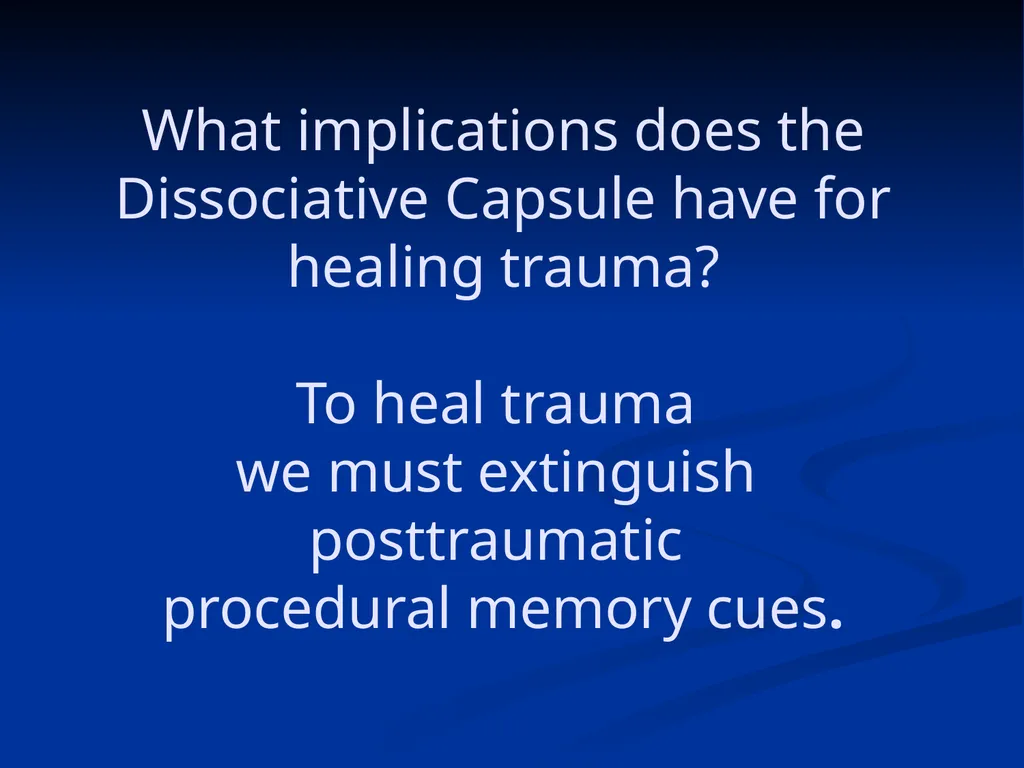
slide75. What implications does the Dissociative Capsule have for healing trauma? To heal trauma we must extinguish posttraumatic procedural memory cues.<br>
slide76. AND YOU CAN’T DO THAT WITH WORDS ALONE!<br>
slide77. THE CONCEPT OF BRAIN PLASTICITY HAS UNIQUE APPLICATION TO THE STUDY OF TRAUMA<br>
slide78. BRAIN NEUROPLASTCITY 1965: Hippocampal neurogenesis from stem cells
1980’s: rat brain weight increased with labyrinth exercise, blocked by stress
1990’s: Hippocampus, possible frontal cortex neurogenesis, decreased in stress/depression d/t cortisol but improved with treatment
2000’s: influence of “rewiring” – increased circuits, brain size: Einstein’s brain, Cab driver’s brains. Rewiring may play primary role<br>
slide79. BRAIN PLASTICITY: REMAPPING The concept of brain maps: compensatory remapping of cortex to assume lost function
- Activation of occipital (visual) cortex in blind subjects reading Braille
- Cutting nerve, amputating parts of body: adjacent cortex assumes function
- Remapping in cochlear implants
- Webbed finger anomaly: remapping with separation
- Brain maps enlarge with practice, then shrink with refinement/precision<br>
slide80. LEARNED NON-USE Diminished limb function with prolonged immobilization or paralysis: the “dissociated limb”
Taub: paralyzed limb in stroke or
deafferentation improved with immobilization of opposite limb
Ramachandran: use of mirror box in RSD, phantom limb pain<br>
slide81. NEUROPLASTICITY IN TRAUMA: THE PLASTICITY PARADOX Kindling may cause harmful remapping through incorporation of similar trauma cues: long term potentiation
Impaired hippocampal neurogenesis in childhood trauma: attention and memory deficits
Impaired neuronal development of orbitofrontal cortex in impaired infant attunement
Somatic dissociation and conversion hysteria<br>
slide82. NATURE VIA NURTURE The role of the epigenome
Obesity in the grandfather predicts shortened life span in the grandson.
Poor maternal diet predicts increased heart disease in the child.
? A cause for apparent “epidemics” of genetic diseases.<br>
slide83. NEUROPLASTICITY IN ADDICTION Most addictive drugs trigger release of dopamine by the ventral tegmentum, activating the pleasure center, the nucleus accumbans (opiates, cocaine, amphetamines, nicotine, alcohol). Cannabis probably mimics and replaces endogenous cannabinoids. Benzodiazepines and alcohol also affect GABA neurotransmitter systems.
Giving a hormone/neurotransmitter exogenously “shuts down” production by the body/brain, creates need for more exogenous input and addiction because of neurotransmitter receptor site sensitization.<br>
slide84. CHILDHOOD TRAUMA AND DISEASE IN ADULT LIFE Felitti, AJPM, 1998: THE ACE STUDY
Graded correlation between severity of childhood trauma (adverse life experiences), and the leading causes of death:
- Heart disease, stroke, cancer, COPD, fractures, liver disease
- Obesity, alcoholism and other addictions, suicide, depression
- Dramatic reduction in longevity<br>
slide85. NEUROPLASTICITY AND HEALING TRAUMA Therapy rewires the brain and takes time
Regulatory skills restore homeostasis, reduce serum cortisol, restore the hippocampus
Mindfulness and attunement skills inhibit the amygdala, enlarge frontal cortex
Fear extinction of traumatic memory cues inhibits kindling
Empowerment replaces helplessness
Increased frontal cortex, hippocampus in meditation<br>
slide86. THE KEY INGREDIENT IN HEALING TRAUMA Extinguishing
the Dissociative Capsule by
down-regulating the amygdala during imaginal exposure
to its contents.<br>
slide87. TRAUMA THERAPY: THEORETICAL CONSIDERATIONS Extinction of conditioned cues: accessing memory while inhibiting the amygdala
- The power of ritual
- Integrating the cerebral hemispheres
- Empowerment through affirmation
Reconsolidation of memory
“Completion” of defense/escape: the freeze discharge
Restoring homeostasis
Transformation and wisdom through meaning<br>
slide88. THE DILEMMA OF PHARMACOTHERAPY Treating a bipolar syndrome
Reciprocal side effects
Side effects become traumatic cues or triggers, perpetuate kindling
Narcotics in chronic pain<br>
slide89. TRAUMA THERAPY Psychotherapy
- Cognitive/behavioral therapy: most thoroughly evaluated
- Exposure therapies:
- Imaginal exposure
- In-vivo exposure
- Systematic desensitization
- Best for arousal and anxiety
- Less effective for avoidance and dissociation
- ? Long-term efficacy<br>
slide90. TRAUMA THERAPY Reconnecting with the body
- Somatic dissociation and the felt sense
- The use of movement therapy: Yoga, dance, balance, equestrian therapy
- The use of therapeutic body work and exercise
- The use of artistic media
- Biofeedback<br>
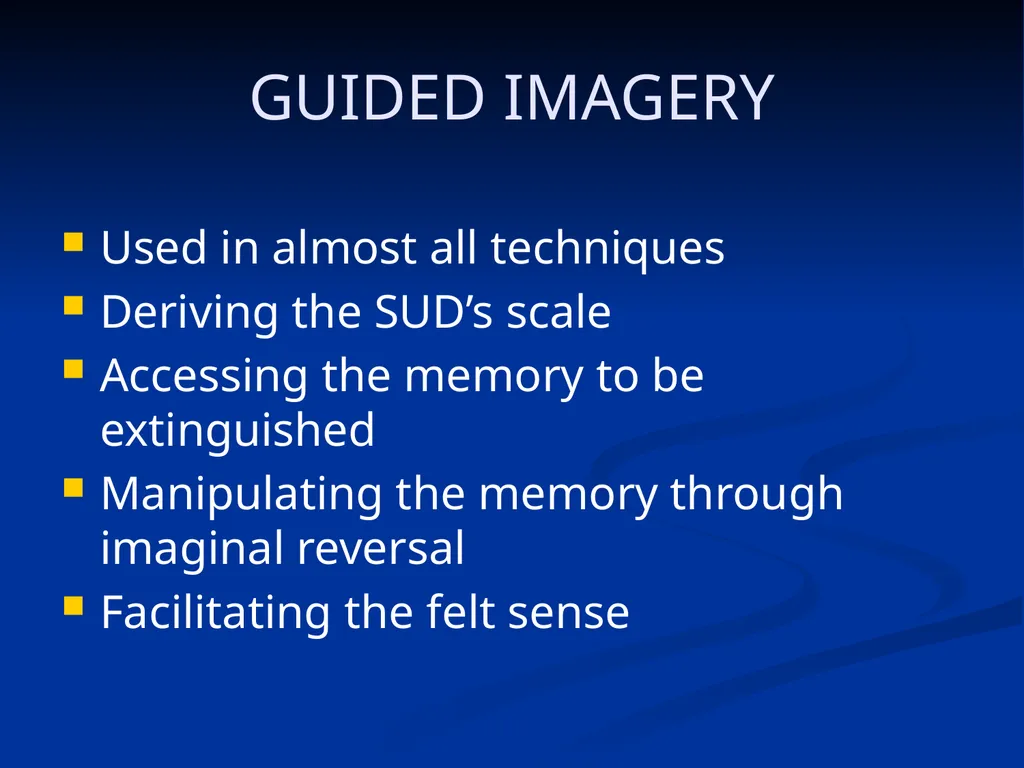
slide91. GUIDED IMAGERY Used in almost all techniques
Deriving the SUD’s scale
Accessing the memory to be extinguished
Manipulating the memory through imaginal reversal
Facilitating the felt sense<br>
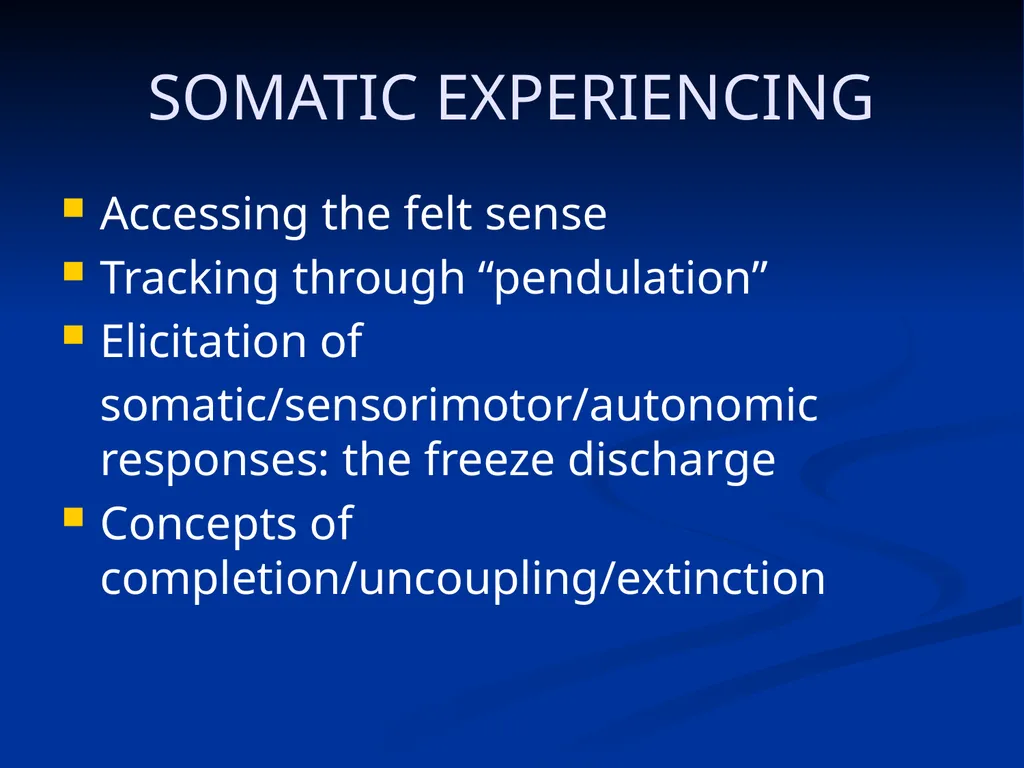
slide92. SOMATIC EXPERIENCING Accessing the felt sense
Tracking through “pendulation”
Elicitation of
somatic/sensorimotor/autonomic responses: the freeze discharge
Concepts of completion/uncoupling/extinction<br>
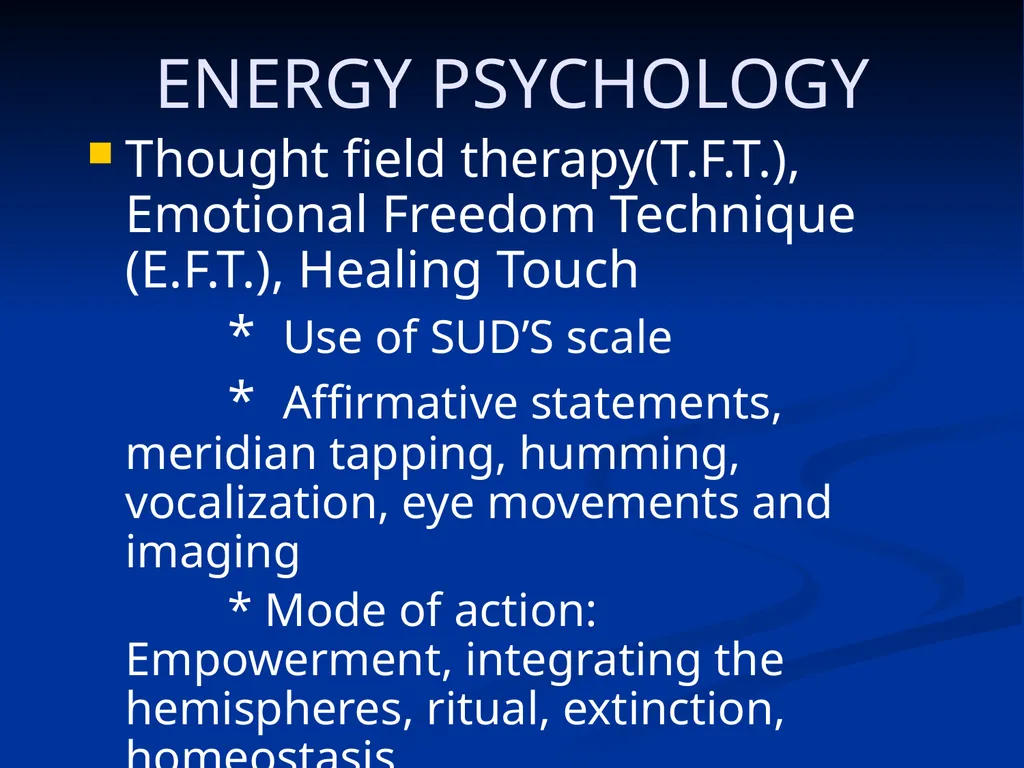
slide93. ENERGY PSYCHOLOGY Thought field therapy(T.F.T.), Emotional Freedom Technique (E.F.T.), Healing Touch
* Use of SUD’S scale
* Affirmative statements, meridian tapping, humming, vocalization, eye movements and imaging
* Mode of action: Empowerment, integrating the hemispheres, ritual, extinction, homeostasis<br>
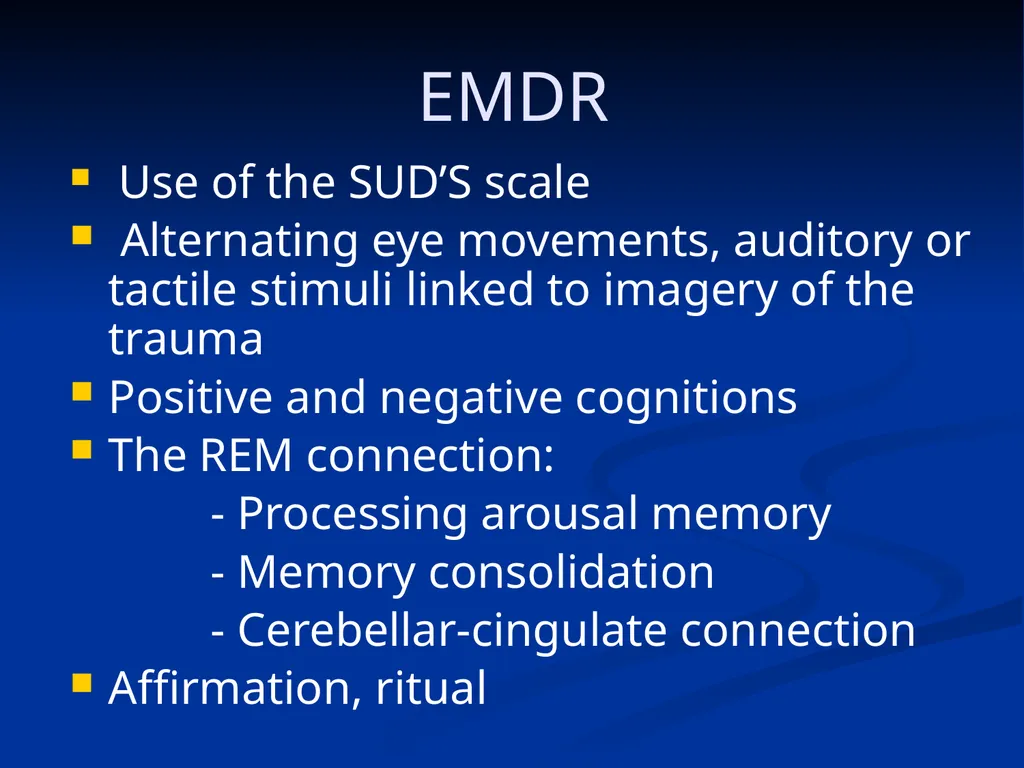
slide94. EMDR Use of the SUD’S scale
Alternating eye movements, auditory or tactile stimuli linked to imagery of the trauma
Positive and negative cognitions
The REM connection:
- Processing arousal memory
- Memory consolidation
- Cerebellar-cingulate connection
Affirmation, ritual<br>
slide95. BRAINSPOTTING Slowly passing a pointer around the peripheral field of the patient
Close observation for subtle motor responses
Intense focus on the “brain spot”
Elicitation of memory, emotional response
Relationship to boundary concepts
Relationship to eye position
Role of intense attunement in therapeutic effect<br>
slide96. NEUROFEEDBACK Driving the brain into the present moment
Comparison to deep mindful meditation
Applicable conditions:
- ADD/ADHD, OCD
- Addictions
- Criminal behavior
- Fibromyalgia/CFS
- Mood disorders, PTSD, anxiety
- Somatization
- MTBI<br>
slide97. The role of cognitive meaning and the acquisition of wisdom<br>
slide98. TRANSFORMATION AND WISDOM 1. The recognition and management of uncertainties
2. The integration of affect and cognition
3. The recognition and acceptance of human limitations, including the finitude of life
i.e.: LIFE IN THE PRESENT MOMENT<br>
slide2. THE ROOTS OF TRAUMATIZATION: A THREAT TO SURVIVAL IN THE FACE OF HELPLESSNESS THE FIGHT/FLIGHT/FREEZE RESPONSE<br>
slide3. TERROR – Fear in the face of helplessness<br>
slide4. THE FREEZE RESPONSE Numbing through endorphins
Vagal (parasympathetic) tone
Bimodal sympathetic/
parasympathetic cycling:
(THE ACCELERATOR
/ BRAKE ANALOGY)<br>
slide5. HYPNOSIS - FREUD: “…a paralysis produced by the influence of an omnipotent person on a defenseless, impotent subject”
- PAVLOV: Animal hypnosis - “…a self-protecting reflex of an inhibitory nature”
- Persistence of reflex motor postures imitating the last position of the limbs before hypnosis ensued<br>
slide6. LESSONS FROM THE WILD: THE CRITICAL IMPORTANCE OF DISCHARGING THE FREEZE RESPONSE<br>
slide7. FREEZE/IMMOBILIZATION AND SURVIVAL BABY CHICKS
NOT
IMMOBILIZED IMMOBILIZED IMMOBILIZED
SPONTANEOUS FORCED
RECOVERY RECOVERY
BEST INTERMEDIATE WORST
DROWNING DROWNING DROWNING
SURVIVAL SURVIVAL SURVIVAL<br>
slide8. ANIMALS THAT DO NOT DISCHARGE THE FREEZE Laboratory animals
Domestic animals
Zoo animals
Human animals
Q: WHAT DO THESE ANIMALS HAVE
IN COMMON?
A: THEY ALL LIVE IN A CAGE!<br>
slide9. ENDORPHINS IN TRAUMA Released in arousal: stress-induced analgesia (SIA)
Inhibits ministering to wound, self-care, allows continued fight/flight behavior
Mediates the freeze response
- Analgesia inhibits pain behavior
- Immobility promotes survival<br>
slide10. MEMORY MECHANISMS IN TRAUMA Declarative (explicit) memory
- Facts and events
Non-declarative (implicit) memory - Emotional associations
- Procedural memory
- Skills and habits
- Conditioned sensorimotor responses<br>
slide11. MEMORY IN TRAUMA Traumatic Stress: A life threat while in a state of helplessness
This leads to the freeze response
“Discharge” of the freeze response allows “completion” of escape or defense in procedural memory, extinguishes conditioned somatic cues<br>
slide12. CONDITIONING IN TRAUMA Lack of “completion” imprints the conditioned association of:
- The sensorimotor experience (or traumatic cues/triggers) of the body
- The emotional state (terror, rage)
- And the autonomic state of arousal WITHIN PROCEDURAL MEMORY!
This association leads to fear conditioning, or traumatization<br>
slide13. AMYGDALA HIPPOCAMPUS FORNIX THALAMUS CINGULATE
GYRUS ORBITOFRONTAL
CORTEX CORPUS CALLOSUM THE
LIMBIC
SYSTEM<br>
slide14. SENSORY
INPUT
HEAD AND NECK AMYGDALA
AROUSAL
CENTER ANTERIOR
CINGULATE GYRUS
MODULATES
AMYGDALA CEREBRAL CORTEX
HYPOTHALAMUS
HPA AXIS
HORMONAL RESPONSE HIPPOCAMPUS
DECLARATIVE MEMORY
COGNITIVE MEANING ORBITOFRONTAL
CORTEX
ORGANIZES RESPONSE
TO THREAT LOCUS
CERULEUS
EARLY WARNING THALAMUS
RELAY
CENTER INSULA
SOMATIC MARKERS OLFACTION<br>
slide15. KINDLING THE DEVELOPMENT OF
SELF-PERPETUATING
NEURAL CIRCUITS
THROUGH REPETITIVE
STIMULATION<br>
slide16. The key to trauma: The retention of traumatic procedural memories through fear-conditioning and kindling<br>
slide17. THE DILEMMA OF TRAUMA The perception that old traumatic procedural memories are actually in the
“present moment”:
A corruption of memory and perception of time
“Then vs. Now”<br>
slide18. THE TRAUMA STRUCTURE Retention of traumatic procedural memories through fear-conditioning
Past memories, triggered by internal/external cues, are perceived as being present
Recurrent unconscious triggering of memories leads to kindling
Repetitive sympathetic autonomic input leads to cyclical autonomic dysregulation<br>
slide19. COGNITIVE DEFICITS: P.T.S.D. Impaired memory in trauma: short term, working, verbal and interference, but not visual memory, proportionate to trauma
Duration of 30 years or more
Attention deficits in traumatized children
Speech and language disorders
Similar deficits in chronic pain, PTSD, depression, fibromyalgia
Findings comparable to cognitive deficits in MTBI<br>
slide20. RESILIENCY vs. VULNERABILITY TO TRAUMA Vulnerability:
A state of fear-conditioned and kindled vulnerability to retraumatization
based on the prior cumulative burden
of life trauma
We must explore what we define as trauma, especially in infancy and childhood<br>
slide21. THE ROLE OF DEVELOPMENTAL NEUROBIOLOGY IN RESILIENCE TO TRAUMA<br>
slide22. THE EXPERIENCE-BASED DEVELOPMENT OF THE BRAIN Allan Schore, 1996: Affect regulation and the Origin of the Self
* THE Maternal/infant dyad (two-as-one):
Face-to-face attunement facilitates development o the right orbito-frontal cortex, promotes autonomic and limbic regulation and resiliency to subsequent life stress/trauma<br>
slide23. PERINATAL STRESS: RATS Neonatal separation:
Maternal behavior in dam
Steroid response to startle in pup Startle response as adult Hippocampal neurogenesis
- Effects reversed by:
- Increased contact with foster dam
- Postnatal sensory enrichment<br>
slide24. MATERNAL CARE: LICKING/GROOMING (L/G) L/G behavior occurs on a bell curve of frequency in rat dams
Low L/G behavior in the dam leads to increased CRF gene expression, increased fear behavior and startle, increased CRF and HPA patterns in pups
Low L/G dams exhibit these same behavioral and endocrinological markers<br>
slide25. MATERNAL CARE: LICKING/GROOMING (L/G) Female pups exhibit the same L/G behavior as their dam, as do their own offspring.
Switching pups from one dam to another defines L/G behavior based on the rearing dam, and in subsequent female generations
Stressing the high L/G dam leads to low L/G behavior in the dam, and in their female pups, and in subsequent female generations<br>
slide26. THE EXPERIENCE-BASED DEVELOPMENT OF PERSONALITY Grigsby & Stevens, 2000: The Neurodynamics of Personality
* The phenotypic (genetic) expression of neural inheritance is relatively hard-wired. It forms a template on which experience forms brain neural networks, and therefore personality structure.<br>
slide27. PROCEDURAL LEARNING, PERSONALITY AND PSYCHOPATHOLOGY Pathways mediating declarative memory are not myelinated until 12-18 months, but procedural memory pathways are
Early resiliency to fear conditioning or trauma may be established through procedural learning in the first 6-12 months of live – and probably in utero
The infant’s/fetus’s environment may lay the seeds for subsequent vulnerability to “minor” trauma<br>
slide28. PROCEDURAL LEARNING, PERSONALITY AND PSYCHOPATHOLOGY Maternal emotional dysfunction may perpetuate patterns of emotional dysfunction in the infant (Genes vs experience in psychiatric disorders)
Genetic disorders (ADHD, dyslexia, autism, bipolar disorder) may actually be predominantly experiential<br>
slide29. THE SYMPTOMS OF TRAUMA: DSM-IV Abnormal arousal
(FIGHT/FLIGHT)
Abnormal avoidance
(FREEZE)
Abnormal reexperienceing, or memory (CONDITIONING)<br>
slide30. ADDITIONAL SYMPTOMS OF TRAUMA Hypersensitivity to light and sound
Cognitive impairment: ADD, memory loss
Stress intolerance
Loss of sense of self
Shyness, social withdrawal, constriction, depression, dissociation
Chronic fatigue
Somatic symptoms: myofascial pain, fibromyalgia, GI, or bladder symptoms, PMS
Impairment of sleep maintenance<br>
slide31. LATE (COMORBID) TRAUMA SYNDROMES Depression
Dissociation
Affect dysregulation
Somatization
THE CONCEPT OF
COMPLEX TRAUMA<br>
slide32. PTSD IS THE TIP OF THE TRAUMA ICEBERG DESNOS PTSD<br>
slide33. THE HISTORY OF TRAUMA AND DISSOCIATION IN PSYCHIATRY<br>
slide34. THE AGE OF HYSTERIA Breuer, the “talking cure”, and “reminiscences”
Freud, incest and “ The Aetiology of Hysteria”
Freud and Breuer: Recantation
Janet: Perseverance and professional ostracism<br>
slide35. CHARCOT AND THE SALPÊTRIÈRE THE STUDY
OF HYSTERIA
AS A
NEUROLOGICAL SYNDROME<br>
slide36. JANET AND DISSOCIATION “Fixed ideas: The spectrum of symptoms in hysteria
Somatic, emotional, perceptual symptoms triggered by trauma
“Absent-mindedness” and abulia – the inability to initiate action
Triggering of hysteria by cues in the environment<br>
slide37. HYPNOSIS - FREUD: “…a paralysis produced by the influence of an omnipotent person on a defenseless, impotent subject”
- PAVLOV: Animal hypnosis: - “…a self-protecting reflex of an inhibitory nature”
- Persistence of reflex motor postures imitating the last position of the limbs before hypnosis ensued – catalepsy
- Seen in “shell shock” and catatonic schizophrenia<br>
slide38. DISORDERS OF EXTREME STRESS, N.0.S. (DESNOS) Alterations in:
- Affect regulation
- Attention/consciousness
- Self-perception
- Relations with others
- Systems of meaning
- Somatizaton<br>
slide39. DISORDERS OF EXTREME STRESS (DESNOS) Alterations in affect regulation
- Regulation of emotions
- Modulation of anger
- Self-destructiveness/cutting
- Suicidal preoccupation
- Difficulty modulating sexual involvement
- Excessive risk-taking<br>
slide40. DESNOS Alterations in self-perception
- Ineffectiveness
- Permanent damage
- Guilt and responsibility
- Shame
- Nobody can understand
- Minimizing<br>
slide41. DESNOS Alterations of consciousness
- Amnesia
- Transient dissociative episodes
and depersonalization<br>
slide42. DESNOS Alterations in relations with others
- Inability to trust
- Revictimization
- Victimizing others<br>
slide43. DESNOS Somatization
- Digestive system complaints: IBS, GERDS
- Chronic pain: neck, back, myofascial
- Cardiopulmonary symptoms: palpitations, dizziness, shortness of breath
- Conversion symptoms: weakness, imbalance, RSD
- Sexual symptoms: PMS, pelvic pain, piriformis syndrome<br>
slide44. DESNOS Alterations in systems of meaning
- Despair and hopelessness
- Loss of previously sustaining beliefs<br>
slide45. LESSONS FROM WW I The helplessness of trench warfare and the predominance of dissociative syndromes
(shell shock)
FERENCZI (1919): “..Tic..
An overstrong memory fixation
on the attitude of the body at
the moment of … trauma”.
Hysteria and malingering
Low PTSD/shell shock
incidence in pilots and officers<br>
slide46. WW II: TRAUMATIC NEUROSIS Battle fatigue and bonding
Hypnosis, catharsis and
conscious integration
(Kardiner, Grinker and Spiegel)
The post WW-II
abandonment of trauma
as a diagnosis<br>
slide47. VIETNAM AND P.T.S.D. The role of societal rejection
Bonding through “rap groups”
1980, THE A.P.A. and P.T.S.D.
The women’s movement and
gender-based trauma<br>
slide48. TRAUMA IN COMBAT Exposure to danger in combat
Seeing a buddy wounded or killed
Sense of guilt in not
saving buddy
Exposure to horrific
wounds/body parts<br>
slide49. TRAUMA IN COMBAT Killing or seeing civilian non-combatants killed
Being wounded in combat
Exposure to shame
by superiors
Exposure to
I.E.D./Blast concussion<br>
slide50. DESNOS in COS Loss of joy
Despair and grief
Survivor guilt
Yearning for combat<br>
slide51. DESNOS in COS Anger, irritability
Mood swings
Feelings of isolation
Withdrawal<br>
slide52. DESNOS IN COS Numerous somatic symptoms
Reckless behavior /
risk-taking
Aggression / self harm
Substance abuse<br>
slide53. DESNOS IN COS Difficulty with relationships
Poor work performance
Unexplained absences
Loss of spirituality<br>
slide54. MTBI IN COS Post-concussion syndrome:
? Somatosensory procedural
memory for experiences
of the traumatic event
Cognitive impairment
due to dissociation in
trauma
NEJM: Increased incidence
of PTSD in victims
of “concussion”
due to I.E.D.’s<br>
slide55. PHYSICAL SYMPTOMS IN COS Bowel symptoms:
- Cramps and diarrhea
- Nausea and indigestion (GERDS)
Shortness of breath
Palpitations, chest pain<br>
slide56. PHYSICAL SYMPTOMS IN COS Migraines and tension headaches
Neck and back pain
Chronic fatigue
Restless legs / cramps<br>
slide57. THE DILEMMA OF KILLING The history of killing rates in 19th century warfare: 1-2 shots/minute vs. 50% in practice
The impact rate in firing squads
Gen. Marshall –WWII: 15-20% firing rate
BUT – firing rates in Korea: 55%, in Vietnam: 90- 95%
The effectiveness of operant/classical conditioning
The residual legacy of guilt/shame<br>
slide58. DISSOCIATION: The primary expression of DESNOS and Combat Stress<br>
slide59. Dissociation: The perceptual component of the freeze response?<br>
slide60. MANIFESTATIONS OF DISSOCIATION Derealization
Depersonalization
Distorted time perception
Distorted sensory perception
Amnesia
Fugue states
Conversion reaction/hysteria
Dissociative identity disorder<br>
slide61. DISSOCIATION PSYCHOBIOLOGY SCHORE (2005):…”vagal outflow from the dorsal vagal nucleus …is the psychobiological engine of …dissociation”
…”early trauma expressed as emotional neglect and abuse…predict…dissociation.”
i.e.: Impaired attachment and right O.F.C. development leads to autonomic dysregulation, and the emergence of dorsal vagus freeze/dissociative states.<br>
slide62. THE DORSAL VAGUS NERVE The dorsal vagal complex (DVC)
- The dorsal vagal nucleus
- Primitive, reptilian
- Low O2 utilization
- The dive reflex: apnea, bradycardia
- The freeze response, the risk in mammals
and “voodoo death”<br>
slide63. BUT! The dorsal vagal/freeze theory does not explain the occurrence of high sympathetic-dominant dissociative states: Homicidal dissociation
“Berserker” behavior in combat<br>
slide64. DISSOCIATION STRUCTURE A capsule, compartment or state of perception composed of the varied procedural memories of the experiences of a past traumatic event where a freeze response occurred without a freeze discharge<br>
slide65. THE DISSOCIATION CAPSULE IS COMPOSED OF: Somatosensory messages and motor actions
Autonomic states
Emotions
Endorphinergic alteration of perception
Emotion linked declarative memory ALL SPECIFIC TO
THE TRAUMATIC EXPERIENCE<br>
slide66. FEATURES OF THE DISSOCIATIVE CAPSULE Capsules consist of procedural memories for the past trauma, but are perceived as being present, and are therefore dissociative<br>
slide67. EXAMPLES OF CAPSULE PROCEDRAL MEMORIES Pain, numbness, dizziness
Tremor, tics, paralysis
Nausea, cramps, palpitations
Anxiety, terror, shame, rage
Flashbacks, nightmares or intrusive thoughts<br>
slide68. The Dissociative Capsule is brought into conscious awareness (the present moment) by external representative cues or internal kindled memories<br>
slide69. The size, specificity and strength of a Dissociative Capsule depend upon the intensity or repetitive experience of the trauma that caused it<br>
slide70. The number of one’s Dissociative capsules is determined by the sum total of one’s cumulative life traumas<br>
slide71. The more the number of Dissociative Capsules, the less time one is able to spend in consciousness (the present moment)<br>
slide72. THE PRESENT MOMENT 1-10 second period of the awareness of “now”
A “lived story”
Background feelings from the body
Autobiographical memory
Changing internal and external perceptions
Concepts of time, intentionality, shifting emotional tone
A measure of consciousness
Our changing sense of self<br>
slide73. THE SELF Antonio Domasio –
“The embodied mind”:
Somatic sensations (feelings) of the present moment superimposed on our autobiographical memory and our anticipated future<br>
slide74. THE PRESENT MOMENT AUTONOMIC CUES SOMATOSENSORY CUES LIMBIC CUES SHAME THE STRUCTURE AND RELATIONSHIPS OF DISSOCIATIVE CAPSULES INCEST MVA INJURY PROCEDURAL MEMORY
CUES
- SOMATOSENSORY
LIMBIC/EMOTIONAL
AUTONOMIC
- EMOTION-LINKED
DECLARATIVE MEMORY PROCEDURAL MEMORY
CUES - AUTONOMIC
- LIMBIC/EMOTIONAL
- EMOTION - LINKED
DECLARATIVE MEMORY PROCEDURAL
MEMORY CUES
- SOMATOSENSORY
- LIMBIC/EMOTIONAL
- AU TONOMIC
- EMOTION-LINKED
DECLARATIVE MEMORY PROCEDURAL
MEMORY CUES
SOMATOSENSORY
LIMBIC/EMOTIONAL
-AUTONOMIC
- EMOTION-LINKED DECLARATIVE MEMORY GRIEF PROCEDURAL
MEMORY CUES
AUTONOMIC
LIMBIC/EMOTIONAL
EMOTIONA-LINKED
DECLARATIVE MEMORY<br>
slide75. What implications does the Dissociative Capsule have for healing trauma? To heal trauma we must extinguish posttraumatic procedural memory cues.<br>
slide76. AND YOU CAN’T DO THAT WITH WORDS ALONE!<br>
slide77. THE CONCEPT OF BRAIN PLASTICITY HAS UNIQUE APPLICATION TO THE STUDY OF TRAUMA<br>
slide78. BRAIN NEUROPLASTCITY 1965: Hippocampal neurogenesis from stem cells
1980’s: rat brain weight increased with labyrinth exercise, blocked by stress
1990’s: Hippocampus, possible frontal cortex neurogenesis, decreased in stress/depression d/t cortisol but improved with treatment
2000’s: influence of “rewiring” – increased circuits, brain size: Einstein’s brain, Cab driver’s brains. Rewiring may play primary role<br>
slide79. BRAIN PLASTICITY: REMAPPING The concept of brain maps: compensatory remapping of cortex to assume lost function
- Activation of occipital (visual) cortex in blind subjects reading Braille
- Cutting nerve, amputating parts of body: adjacent cortex assumes function
- Remapping in cochlear implants
- Webbed finger anomaly: remapping with separation
- Brain maps enlarge with practice, then shrink with refinement/precision<br>
slide80. LEARNED NON-USE Diminished limb function with prolonged immobilization or paralysis: the “dissociated limb”
Taub: paralyzed limb in stroke or
deafferentation improved with immobilization of opposite limb
Ramachandran: use of mirror box in RSD, phantom limb pain<br>
slide81. NEUROPLASTICITY IN TRAUMA: THE PLASTICITY PARADOX Kindling may cause harmful remapping through incorporation of similar trauma cues: long term potentiation
Impaired hippocampal neurogenesis in childhood trauma: attention and memory deficits
Impaired neuronal development of orbitofrontal cortex in impaired infant attunement
Somatic dissociation and conversion hysteria<br>
slide82. NATURE VIA NURTURE The role of the epigenome
Obesity in the grandfather predicts shortened life span in the grandson.
Poor maternal diet predicts increased heart disease in the child.
? A cause for apparent “epidemics” of genetic diseases.<br>
slide83. NEUROPLASTICITY IN ADDICTION Most addictive drugs trigger release of dopamine by the ventral tegmentum, activating the pleasure center, the nucleus accumbans (opiates, cocaine, amphetamines, nicotine, alcohol). Cannabis probably mimics and replaces endogenous cannabinoids. Benzodiazepines and alcohol also affect GABA neurotransmitter systems.
Giving a hormone/neurotransmitter exogenously “shuts down” production by the body/brain, creates need for more exogenous input and addiction because of neurotransmitter receptor site sensitization.<br>
slide84. CHILDHOOD TRAUMA AND DISEASE IN ADULT LIFE Felitti, AJPM, 1998: THE ACE STUDY
Graded correlation between severity of childhood trauma (adverse life experiences), and the leading causes of death:
- Heart disease, stroke, cancer, COPD, fractures, liver disease
- Obesity, alcoholism and other addictions, suicide, depression
- Dramatic reduction in longevity<br>
slide85. NEUROPLASTICITY AND HEALING TRAUMA Therapy rewires the brain and takes time
Regulatory skills restore homeostasis, reduce serum cortisol, restore the hippocampus
Mindfulness and attunement skills inhibit the amygdala, enlarge frontal cortex
Fear extinction of traumatic memory cues inhibits kindling
Empowerment replaces helplessness
Increased frontal cortex, hippocampus in meditation<br>
slide86. THE KEY INGREDIENT IN HEALING TRAUMA Extinguishing
the Dissociative Capsule by
down-regulating the amygdala during imaginal exposure
to its contents.<br>
slide87. TRAUMA THERAPY: THEORETICAL CONSIDERATIONS Extinction of conditioned cues: accessing memory while inhibiting the amygdala
- The power of ritual
- Integrating the cerebral hemispheres
- Empowerment through affirmation
Reconsolidation of memory
“Completion” of defense/escape: the freeze discharge
Restoring homeostasis
Transformation and wisdom through meaning<br>
slide88. THE DILEMMA OF PHARMACOTHERAPY Treating a bipolar syndrome
Reciprocal side effects
Side effects become traumatic cues or triggers, perpetuate kindling
Narcotics in chronic pain<br>
slide89. TRAUMA THERAPY Psychotherapy
- Cognitive/behavioral therapy: most thoroughly evaluated
- Exposure therapies:
- Imaginal exposure
- In-vivo exposure
- Systematic desensitization
- Best for arousal and anxiety
- Less effective for avoidance and dissociation
- ? Long-term efficacy<br>
slide90. TRAUMA THERAPY Reconnecting with the body
- Somatic dissociation and the felt sense
- The use of movement therapy: Yoga, dance, balance, equestrian therapy
- The use of therapeutic body work and exercise
- The use of artistic media
- Biofeedback<br>
slide91. GUIDED IMAGERY Used in almost all techniques
Deriving the SUD’s scale
Accessing the memory to be extinguished
Manipulating the memory through imaginal reversal
Facilitating the felt sense<br>
slide92. SOMATIC EXPERIENCING Accessing the felt sense
Tracking through “pendulation”
Elicitation of
somatic/sensorimotor/autonomic responses: the freeze discharge
Concepts of completion/uncoupling/extinction<br>
slide93. ENERGY PSYCHOLOGY Thought field therapy(T.F.T.), Emotional Freedom Technique (E.F.T.), Healing Touch
* Use of SUD’S scale
* Affirmative statements, meridian tapping, humming, vocalization, eye movements and imaging
* Mode of action: Empowerment, integrating the hemispheres, ritual, extinction, homeostasis<br>
slide94. EMDR Use of the SUD’S scale
Alternating eye movements, auditory or tactile stimuli linked to imagery of the trauma
Positive and negative cognitions
The REM connection:
- Processing arousal memory
- Memory consolidation
- Cerebellar-cingulate connection
Affirmation, ritual<br>
slide95. BRAINSPOTTING Slowly passing a pointer around the peripheral field of the patient
Close observation for subtle motor responses
Intense focus on the “brain spot”
Elicitation of memory, emotional response
Relationship to boundary concepts
Relationship to eye position
Role of intense attunement in therapeutic effect<br>
slide96. NEUROFEEDBACK Driving the brain into the present moment
Comparison to deep mindful meditation
Applicable conditions:
- ADD/ADHD, OCD
- Addictions
- Criminal behavior
- Fibromyalgia/CFS
- Mood disorders, PTSD, anxiety
- Somatization
- MTBI<br>
slide97. The role of cognitive meaning and the acquisition of wisdom<br>
slide98. TRANSFORMATION AND WISDOM 1. The recognition and management of uncertainties
2. The integration of affect and cognition
3. The recognition and acceptance of human limitations, including the finitude of life
i.e.: LIFE IN THE PRESENT MOMENT<br>