Distillation equipments Dr. Garima Joshi Assistant Professor, Department of Pharm Sciences, MLSU Unit operation III sem GENERAL EQUIPMENT FOR DISTILLATION: STILL : It is a vaporizing chamber and used to place the material to be distilled.
"Distillation equipments Dr. Garima Joshi Assistant" is the property of its rightful owner. Permission is granted to
download and print the materials on this website for personal, non-commercial use only, and to display it
on your personal computer provided you do not modify the materials and that you retain all copyright
notices contained in the materials. By downloading content from our website, you accept the terms of this
agreement.
Presentation Transcript
01
Distillation equipments Dr. Garima Joshi
Assistant Professor, Department of Pharm Sciences, MLSU
Unit operation III sem<br>
02
GENERAL EQUIPMENT FOR DISTILLATION: STILL :
It is a vaporizing chamber and used to place the material
to be distilled.
The still is heated by a suitable means for vaporization of
the volatile constituents.
On laboratory scale round bottom flasks made of glass
are used so that the progress of the distillation can be
noticed.
A condenser is attached to the still using appropriate
joints. A trap is inserted between distillation flask and
condenser.<br>
03
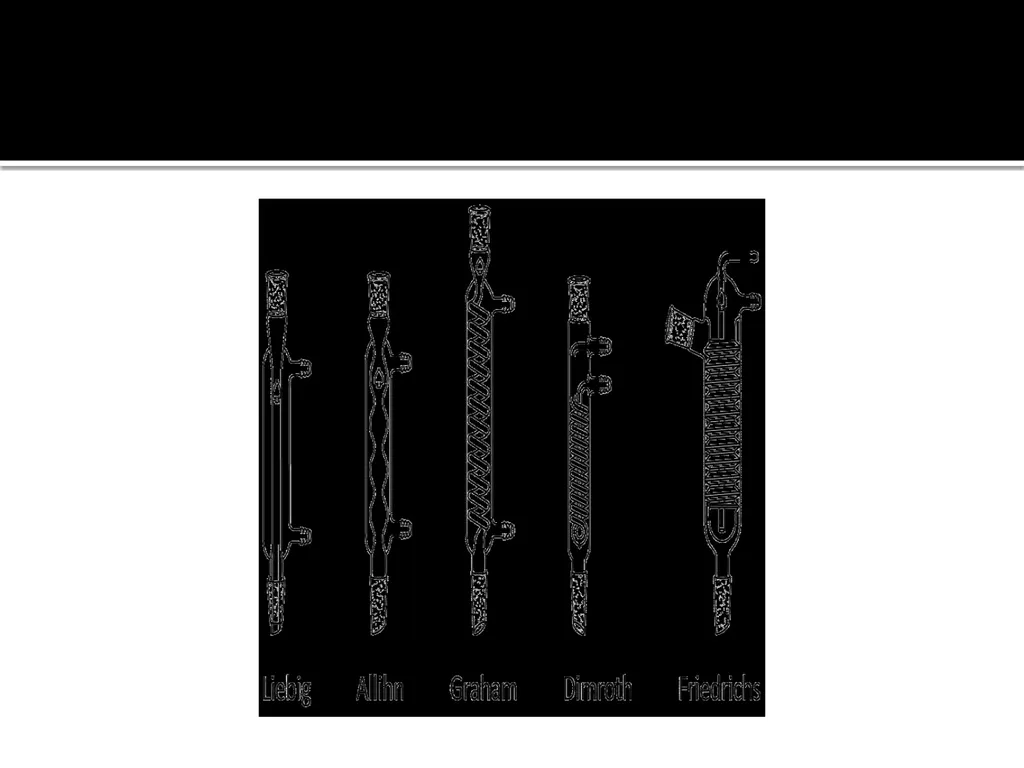
Condenser Used to condense the vapor
It is kept cold by circulating water/air through jacket.
Types:
Single-surface condensers
- Straight Tube
- Bulb type
- Spiral
- Coiled type
Double-surface condensers
Multi-tubular condensers
The condenser is connected to a receiver through a suitable
adapter<br>
04
RECEIVER : It is used to collect the distillate.
It may be a simple flask.
It immersed in ice-bath to minimize loss of volatile
matter.
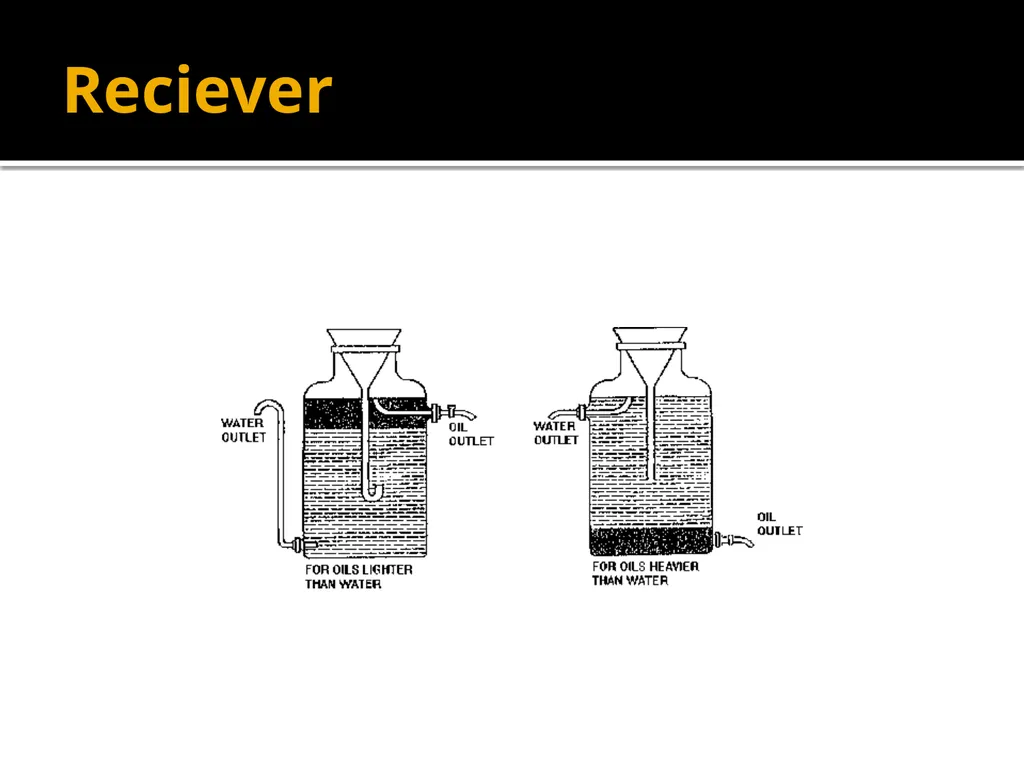
Florentine receivers are used for the separation of
oil and water.
Types of Florentine receivers :
Type-I :- for separation of oil heavier than water.
Type-II :- for separation of oil lighter than water<br>
05
Reciever<br>
06
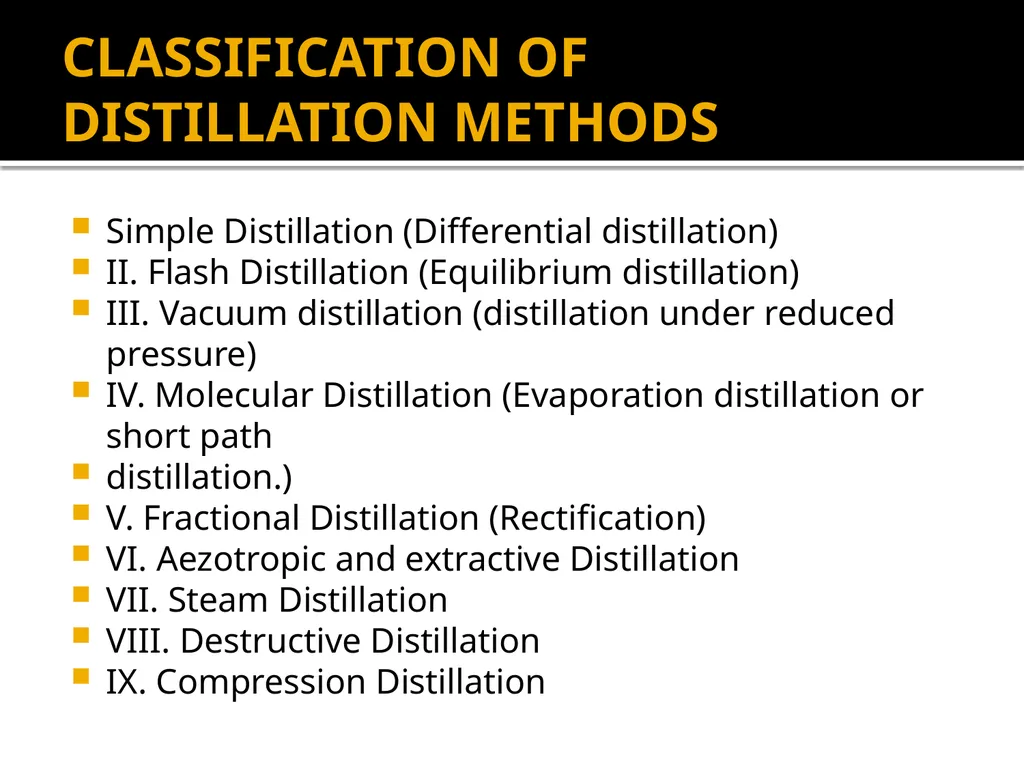
CLASSIFICATION OF DISTILLATION METHODS Simple Distillation (Differential distillation)
II. Flash Distillation (Equilibrium distillation)
III. Vacuum distillation (distillation under reduced pressure)
IV. Molecular Distillation (Evaporation distillation or short path
distillation.)
V. Fractional Distillation (Rectification)
VI. Aezotropic and extractive Distillation
VII. Steam Distillation
VIII. Destructive Distillation
IX. Compression Distillation<br>
07
SIMPLE DISTILLATION Simple distillation is a process of converting a single
constituent from a liquid (or mixture) into its vapour,
transferring the vapour to another place and recovering
the liquid by condensing the vapour, usually by allowing it
to come in contact with a cold surface.
This process is known differential distillation, as
distillation is based on the differences in volatilities and
vapour pressures of the components in the mixture.<br>
08
Principle Liquid boils when its vapour pressure is equal to atmospheric
pressure. Simple distillation is conducted at its boiling point.
The higher the relative volatility of a liquid, the better is the
separation by simple distillation. Heat is supplied to the liquid so
that it boils. The resulting vapour is transferred to a different
place and condensed.<br>
09
Construction It consists of a distillation flask with a side arm sloping
downwards.
Condenser is fitted into the side arm by means of a cork.
The condenser is usually water condenser, i.e., jacketed for
circulation of water.
The condenser is connected to a receiver flask using an adapter
with ground glass joints.
On a laboratory scale, the whole apparatus is made of glass.<br>