
Fractional Distillation Dr. Garima Joshi NDDS VII


Description: Fractional Distillation Dr. Garima Joshi NDDS VII SEM FRACTIONAL DISTILLATION This method is also known as rectification, because a part of the vapour is condensed and returned as a liquid. This method is used to separate miscible volatile
Related Topics
Download Presentation
"Fractional Distillation Dr. Garima Joshi NDDS VII" is the property of its rightful owner. Permission is granted to download and print the materials on this website for personal, non-commercial use only, and to display it on your personal computer provided you do not modify the materials and that you retain all copyright notices contained in the materials. By downloading content from our website, you accept the terms of this agreement.
Presentation Transcript
slide1. Fractional Distillation Dr. Garima Joshi
NDDS VII SEM<br>
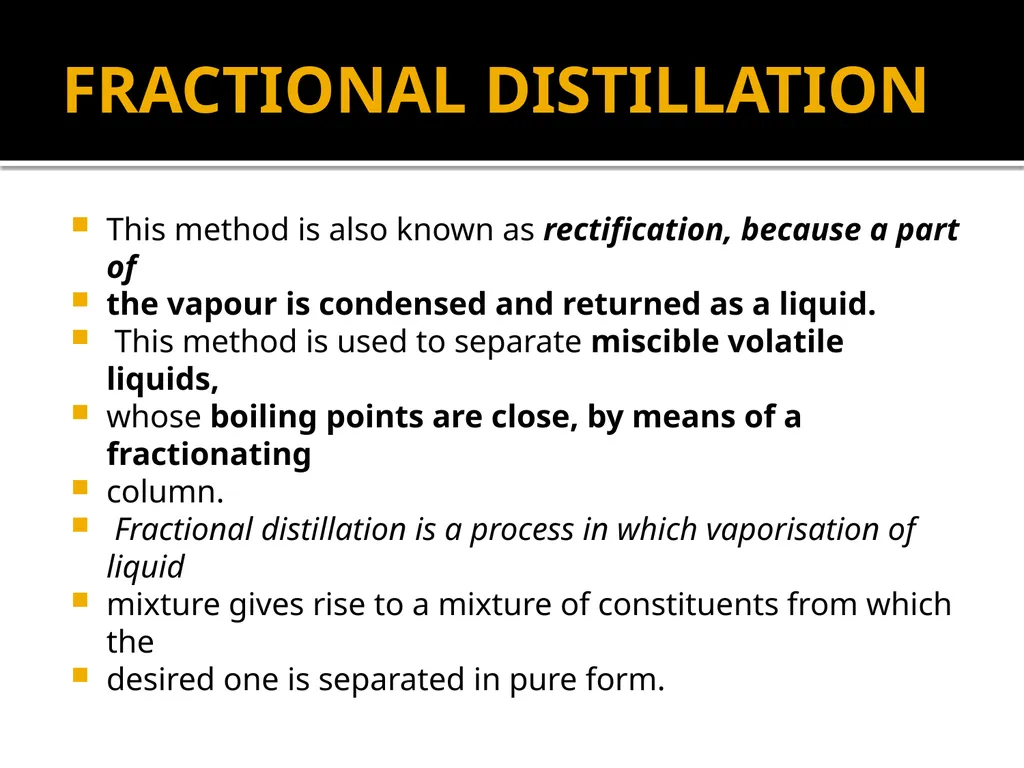
slide2. FRACTIONAL DISTILLATION This method is also known as rectification, because a part of
the vapour is condensed and returned as a liquid.
This method is used to separate miscible volatile liquids,
whose boiling points are close, by means of a fractionating
column.
Fractional distillation is a process in which vaporisation of liquid
mixture gives rise to a mixture of constituents from which the
desired one is separated in pure form.<br>
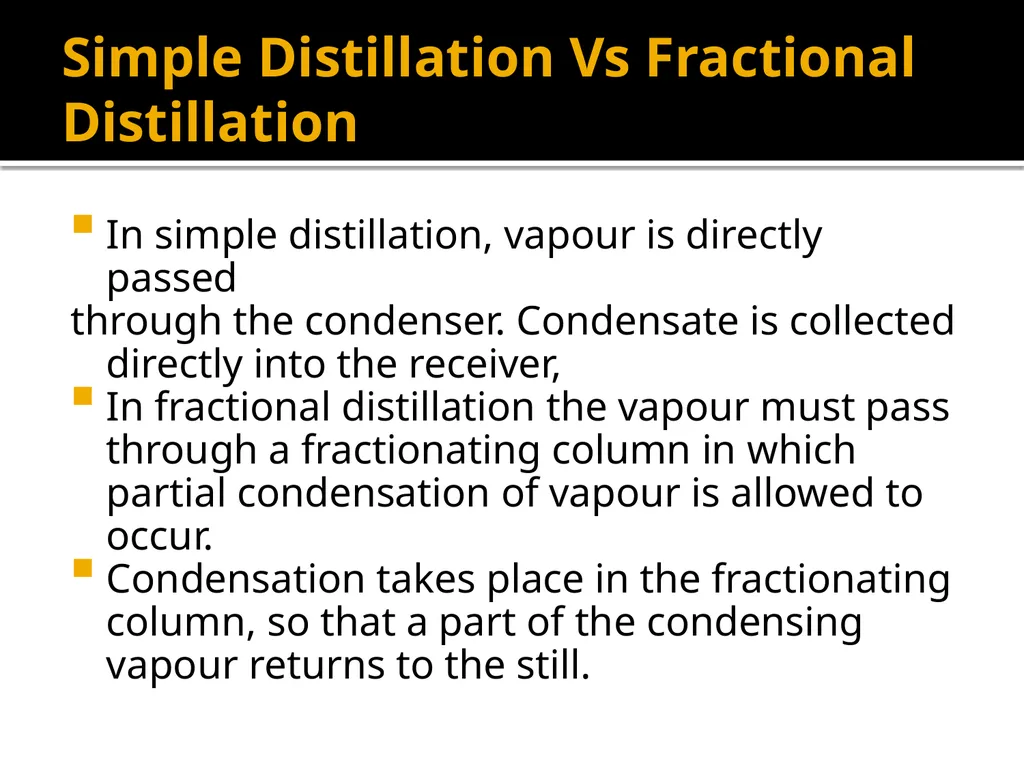
slide4. Simple Distillation Vs Fractional Distillation In simple distillation, vapour is directly passed
through the condenser. Condensate is collected directly into the receiver,
In fractional distillation the vapour must pass through a fractionating column in which partial condensation of vapour is allowed to occur.
Condensation takes place in the fractionating column, so that a part of the condensing vapour returns to the still.<br>
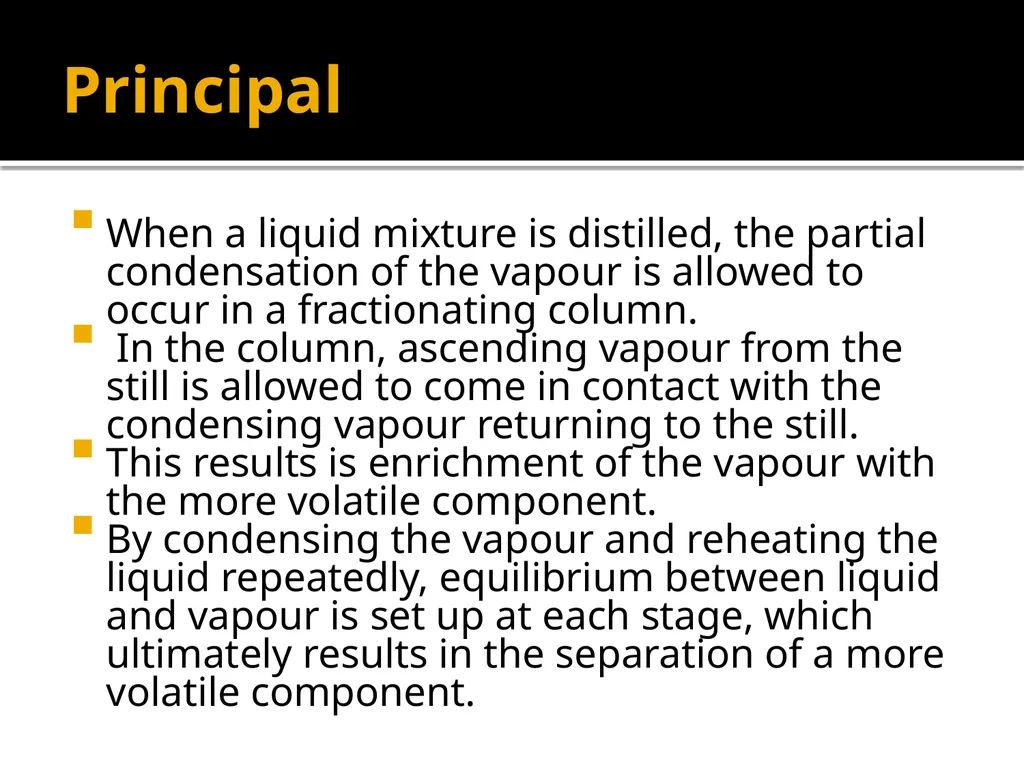
slide5. Principal When a liquid mixture is distilled, the partial condensation of the vapour is allowed to occur in a fractionating column.
In the column, ascending vapour from the still is allowed to come in contact with the condensing vapour returning to the still.
This results is enrichment of the vapour with the more volatile component.
By condensing the vapour and reheating the liquid repeatedly, equilibrium between liquid and vapour is set up at each stage, which ultimately results in the separation of a more volatile component.<br>
slide6. Applications:
Fractional distillation is used for the separation of volatile miscible liquids with
near boiling point such as
•Acetone and water
•Chloroform and benzene<br>
slide7. Fractionating columns In fractional distillation, special type of still-heads are required so that
condensation and re-vaporisation are affected continuously.
These are known as fractionating columns.
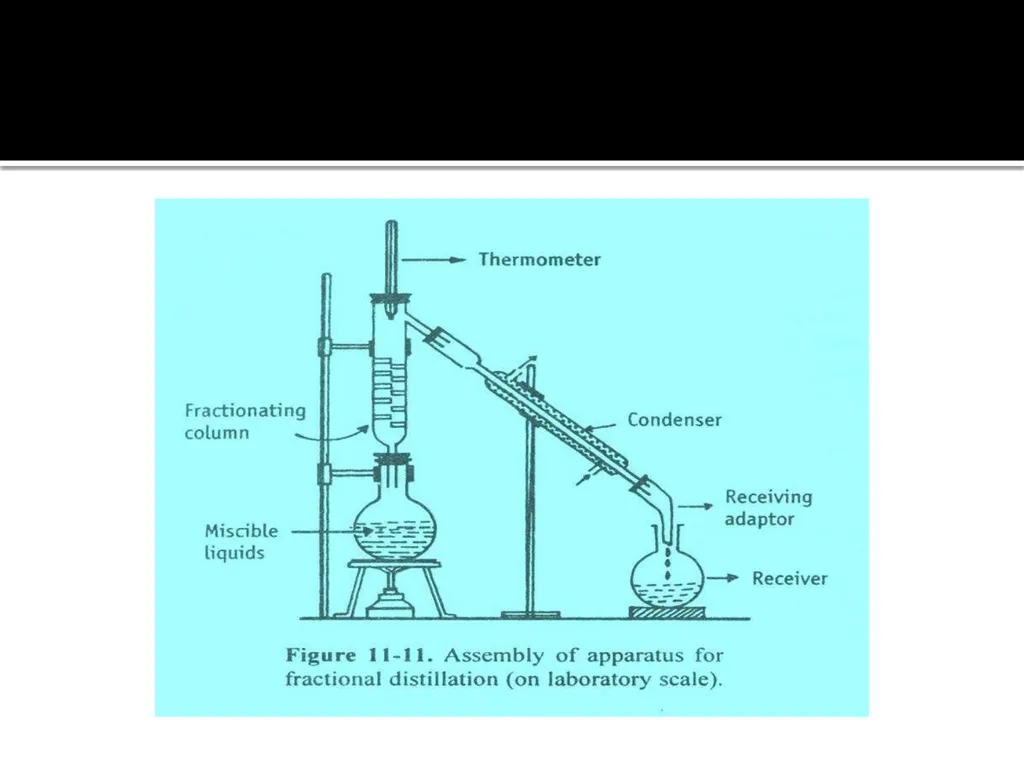
A fractionating column is essentially a long vertical tube in which the vapour passes upward and partially condensed. The condensate flows down the column and is returned eventually to the flask.
The columns are constructed so as to offer the following advantages simultaneously.<br>
slide8. Fractionating columns Types Packed columns
Plate columns<br>
slide9. Packed columns<br>
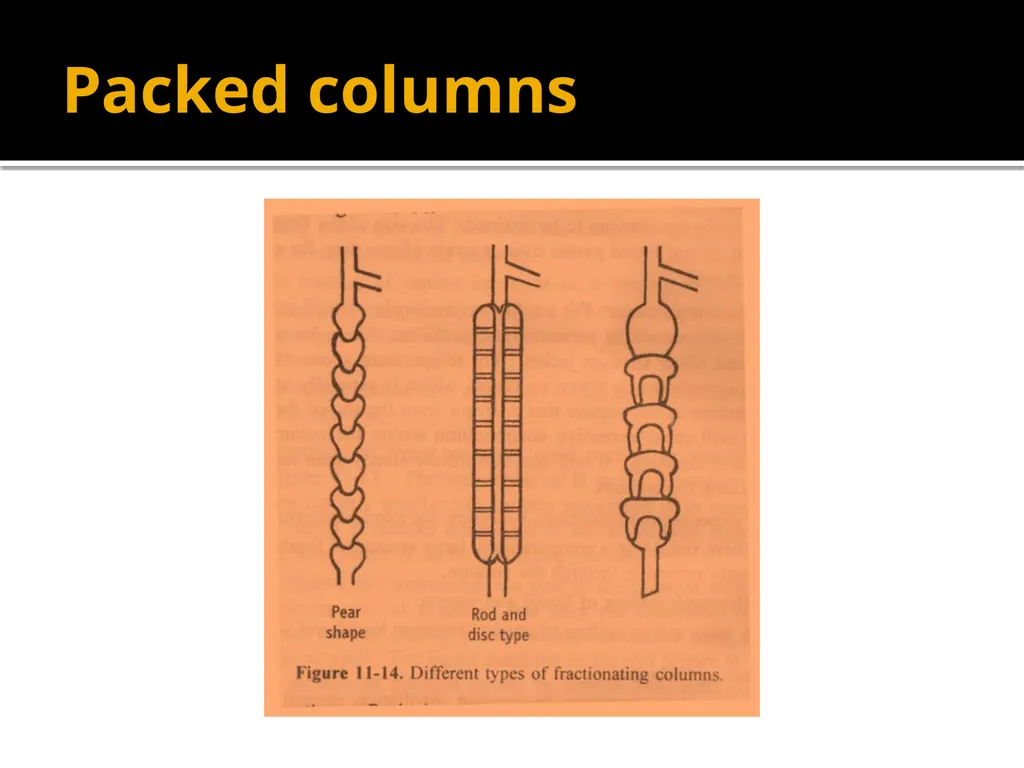
slide10. Packed columns
Some form of packing is used in the column to affect the
necessary liquid/vapour contact. The packing may consist of
single turn helices (spirals) of wire or glass, glass rings,
cylindrical glass beads, stainless steel rings etc.
Construction: Packed column consists of a tower containing a
packing that becomes wetted with a film of liquid, which is
brought into contact with the vapour in the intervening spaces.
(a) A long fractionating column is necessary when the boiling
points of the constituents are lying fairly close together.
(b) A short fractionating column is necessary when the boiling
point of the constituents differ considerably.
Applications: Packing must be uniform so as to obtain proper
channels. If packing is irregular, mass transfer becomes less
effective.<br>
slide11. Plate columns<br>
slide12. Plate columns
Many forms of plates are used in the distillation using different columns. It can be divided into two types, which are commonly used in pharmacy.
(a) Bubble cap plates
(b) Turbo grid plates
Bubble cap column is used in large distillation plants
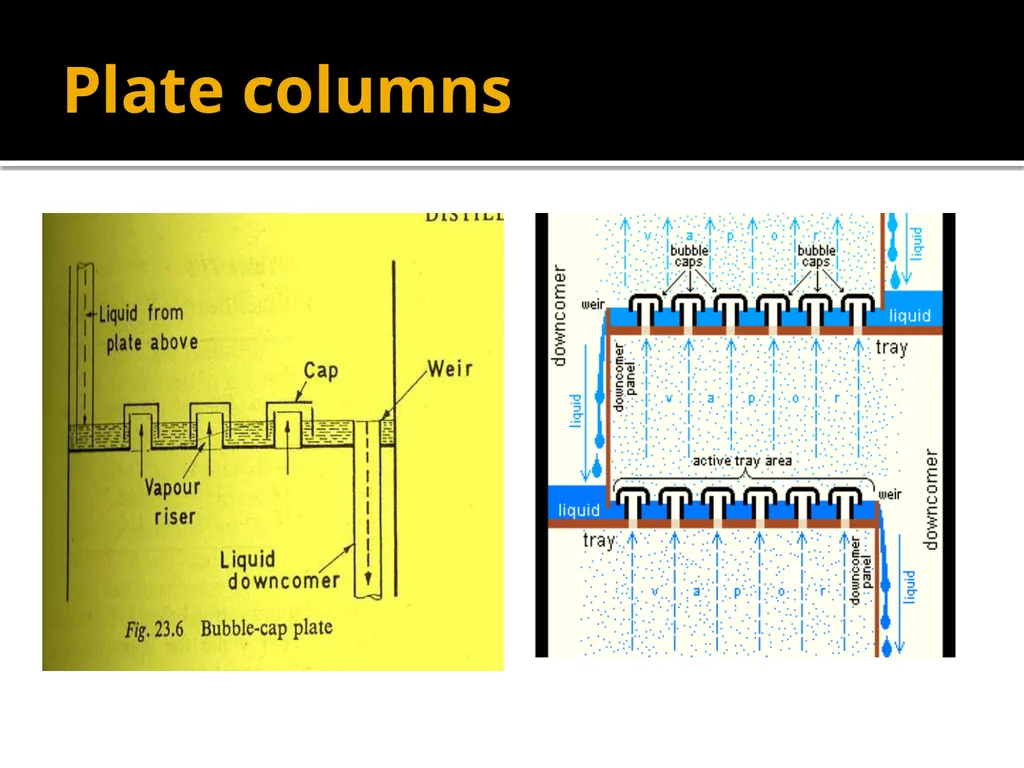
Construction: The column consists of a number of plates mounted one above the other. Caps are present on each plate, which allow the vapour to escape by bubbling through the liquid.
Working: Ascending vapour from the still passes through the bubble-caps on plate A and the rising vapour will be richer in the more volatile component. This vapour passes through the liquid on plate B and partially condensed. The heat of condensation partially vaporizes the
liquid. The process of condensation and vaporisation will be repeated at plate C and so on all the way up the column. Each bubble-cap plate has the same effect as a separate still.<br>
NDDS VII SEM<br>
slide2. FRACTIONAL DISTILLATION This method is also known as rectification, because a part of
the vapour is condensed and returned as a liquid.
This method is used to separate miscible volatile liquids,
whose boiling points are close, by means of a fractionating
column.
Fractional distillation is a process in which vaporisation of liquid
mixture gives rise to a mixture of constituents from which the
desired one is separated in pure form.<br>
slide4. Simple Distillation Vs Fractional Distillation In simple distillation, vapour is directly passed
through the condenser. Condensate is collected directly into the receiver,
In fractional distillation the vapour must pass through a fractionating column in which partial condensation of vapour is allowed to occur.
Condensation takes place in the fractionating column, so that a part of the condensing vapour returns to the still.<br>
slide5. Principal When a liquid mixture is distilled, the partial condensation of the vapour is allowed to occur in a fractionating column.
In the column, ascending vapour from the still is allowed to come in contact with the condensing vapour returning to the still.
This results is enrichment of the vapour with the more volatile component.
By condensing the vapour and reheating the liquid repeatedly, equilibrium between liquid and vapour is set up at each stage, which ultimately results in the separation of a more volatile component.<br>
slide6. Applications:
Fractional distillation is used for the separation of volatile miscible liquids with
near boiling point such as
•Acetone and water
•Chloroform and benzene<br>
slide7. Fractionating columns In fractional distillation, special type of still-heads are required so that
condensation and re-vaporisation are affected continuously.
These are known as fractionating columns.
A fractionating column is essentially a long vertical tube in which the vapour passes upward and partially condensed. The condensate flows down the column and is returned eventually to the flask.
The columns are constructed so as to offer the following advantages simultaneously.<br>
slide8. Fractionating columns Types Packed columns
Plate columns<br>
slide9. Packed columns<br>
slide10. Packed columns
Some form of packing is used in the column to affect the
necessary liquid/vapour contact. The packing may consist of
single turn helices (spirals) of wire or glass, glass rings,
cylindrical glass beads, stainless steel rings etc.
Construction: Packed column consists of a tower containing a
packing that becomes wetted with a film of liquid, which is
brought into contact with the vapour in the intervening spaces.
(a) A long fractionating column is necessary when the boiling
points of the constituents are lying fairly close together.
(b) A short fractionating column is necessary when the boiling
point of the constituents differ considerably.
Applications: Packing must be uniform so as to obtain proper
channels. If packing is irregular, mass transfer becomes less
effective.<br>
slide11. Plate columns<br>
slide12. Plate columns
Many forms of plates are used in the distillation using different columns. It can be divided into two types, which are commonly used in pharmacy.
(a) Bubble cap plates
(b) Turbo grid plates
Bubble cap column is used in large distillation plants
Construction: The column consists of a number of plates mounted one above the other. Caps are present on each plate, which allow the vapour to escape by bubbling through the liquid.
Working: Ascending vapour from the still passes through the bubble-caps on plate A and the rising vapour will be richer in the more volatile component. This vapour passes through the liquid on plate B and partially condensed. The heat of condensation partially vaporizes the
liquid. The process of condensation and vaporisation will be repeated at plate C and so on all the way up the column. Each bubble-cap plate has the same effect as a separate still.<br>