
Documenting Peer Support following Medicaid rules
JO
Published · 33 slides · 0 views
1 / 1



Description
Documenting Peer Support following Medicaid rules Theory and practice This section will outline a simple way to think about writing notes Well look at the Golden Thread (or Goal-den Thread) Well see how Medicaid and states
Related Topics
Share
Embed code
Download this presentation From Below
"Documenting Peer Support following Medicaid rules" is the property of its rightful owner. Permission is granted to download and print the materials on this website for personal, non-commercial use only, and to display it on your personal computer provided you do not modify the materials and that you retain all copyright notices contained in the materials. By downloading content from our website, you accept the terms of this agreement.
Presentation Transcript
01
Documenting Peer Support following Medicaid rules<br>
02
Theory and practice This section will outline a simple way to think about writing notes
We’ll look at the Golden Thread (or “Goal-den” Thread)
We’ll see how Medicaid and states’ Administrative Codes impact our notes
We’ll see how to use a simple format that includes all required elements
And we’ll have time for questions<br>
We’ll look at the Golden Thread (or “Goal-den” Thread)
We’ll see how Medicaid and states’ Administrative Codes impact our notes
We’ll see how to use a simple format that includes all required elements
And we’ll have time for questions<br>
03
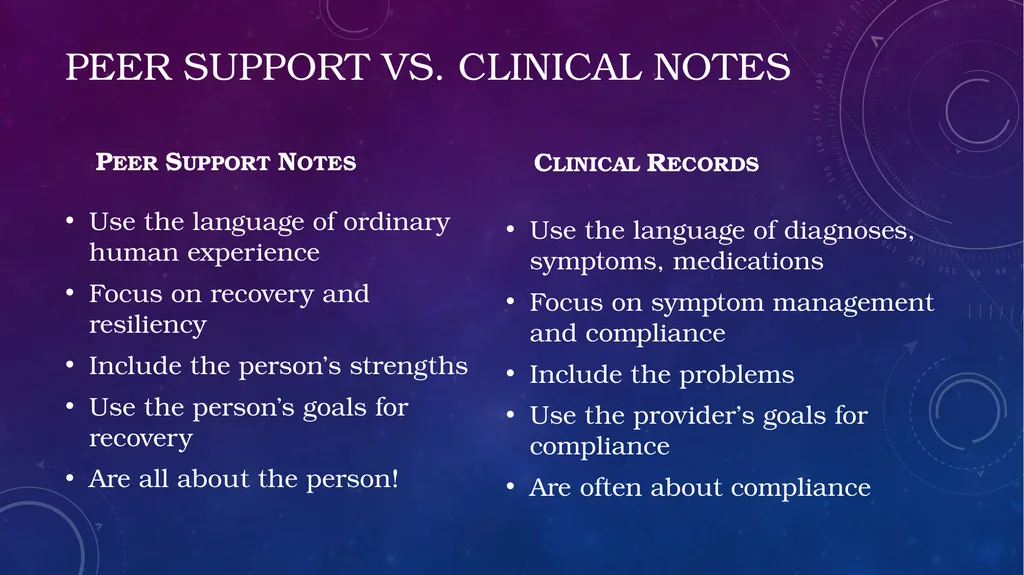
Peer support vs. clinical notes Use the language of ordinary human experience
Focus on recovery and resiliency
Include the person’s strengths
Use the person’s goals for recovery
Are all about the person! Use the language of diagnoses, symptoms, medications
Focus on symptom management and compliance
Include the problems
Use the provider’s goals for compliance
Are often about compliance Peer Support Notes Clinical Records<br>
Focus on recovery and resiliency
Include the person’s strengths
Use the person’s goals for recovery
Are all about the person! Use the language of diagnoses, symptoms, medications
Focus on symptom management and compliance
Include the problems
Use the provider’s goals for compliance
Are often about compliance Peer Support Notes Clinical Records<br>
04
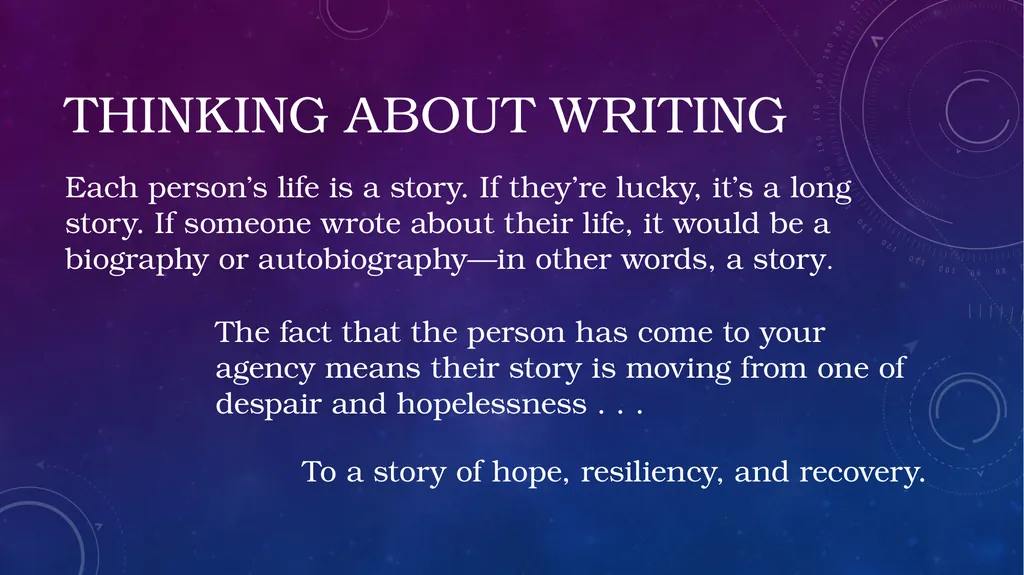
Thinking about writing Each person’s life is a story. If they’re lucky, it’s a long story. If someone wrote about their life, it would be a biography or autobiography—in other words, a story. The fact that the person has come to your agency means their story is moving from one of despair and hopelessness . . . To a story of hope, resiliency, and recovery.<br>
05
Writing the Recovery Story The record of a person’s time with your agency is the pivotal chapter in their life story. It’s the transitional chapter, the one that moves it from despair to hope.
Each note is a paragraph in that chapter. Every paragraph must fit within the chapter. Every chapter must fit with the whole story.
All pieces have to hang together and make sense.<br>
Each note is a paragraph in that chapter. Every paragraph must fit within the chapter. Every chapter must fit with the whole story.
All pieces have to hang together and make sense.<br>
06
structure Just like a good story, the “chapter” of this person’s life story, seeking services, starts with a problem
This is the “presenting problem” in the initial assessment
Service (or treatment) plans outline goals or strategies to help the person overcome the problem(s)
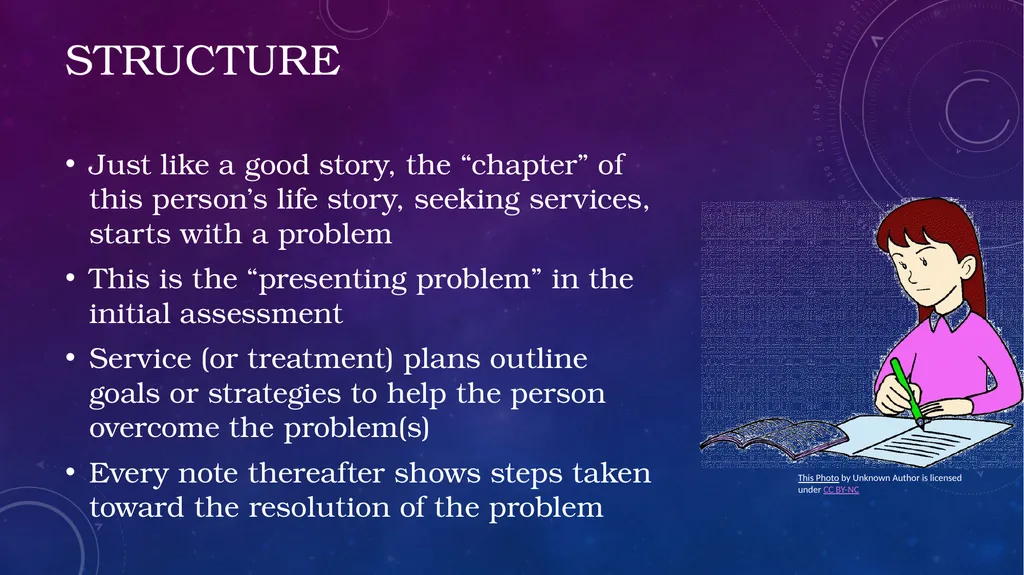
Every note thereafter shows steps taken toward the resolution of the problem This Photo by Unknown Author is licensed under CC BY-NC<br>
This is the “presenting problem” in the initial assessment
Service (or treatment) plans outline goals or strategies to help the person overcome the problem(s)
Every note thereafter shows steps taken toward the resolution of the problem This Photo by Unknown Author is licensed under CC BY-NC<br>
07
Golden Thread Also sometimes described as the “Goal-den Thread.” Required by Medicaid.
Connects the individual’s recovery goals to every service offered by your agency
Auditors will look for you to connect the goal to each service; make it easy for them to find
The “Goal-den Thread” concept is the same as the concept of narrative thread in writing a story<br>
Connects the individual’s recovery goals to every service offered by your agency
Auditors will look for you to connect the goal to each service; make it easy for them to find
The “Goal-den Thread” concept is the same as the concept of narrative thread in writing a story<br>
08
How would you know . . . How can you make your paragraph (note) match the rest of the chapter (full medical record) unless you know what’s in it?<br>
09
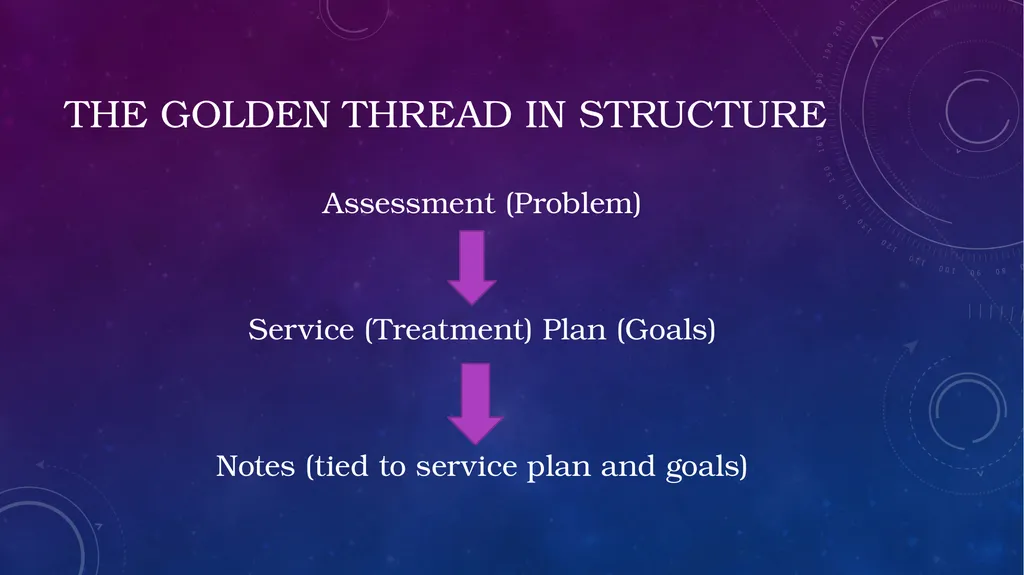
The Golden Thread in Structure Assessment (Problem)
Service (Treatment) Plan (Goals)
Notes (tied to service plan and goals)<br>
Service (Treatment) Plan (Goals)
Notes (tied to service plan and goals)<br>
10
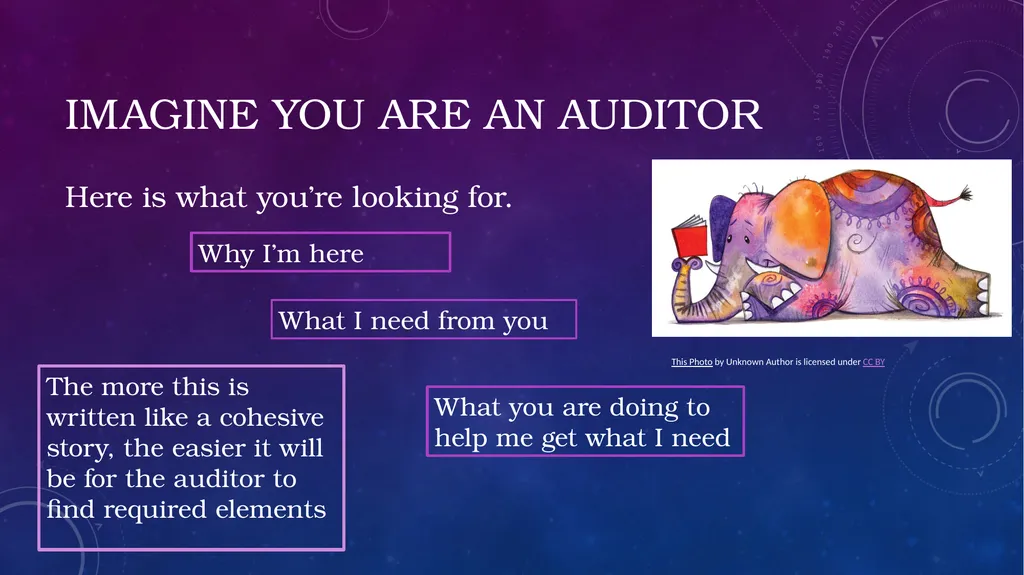
Imagine You Are an Auditor Here is what you’re looking for. Why I’m here What I need from you What you are doing to help me get what I need The more this is written like a cohesive story, the easier it will be for the auditor to find required elements This Photo by Unknown Author is licensed under CC BY<br>
11
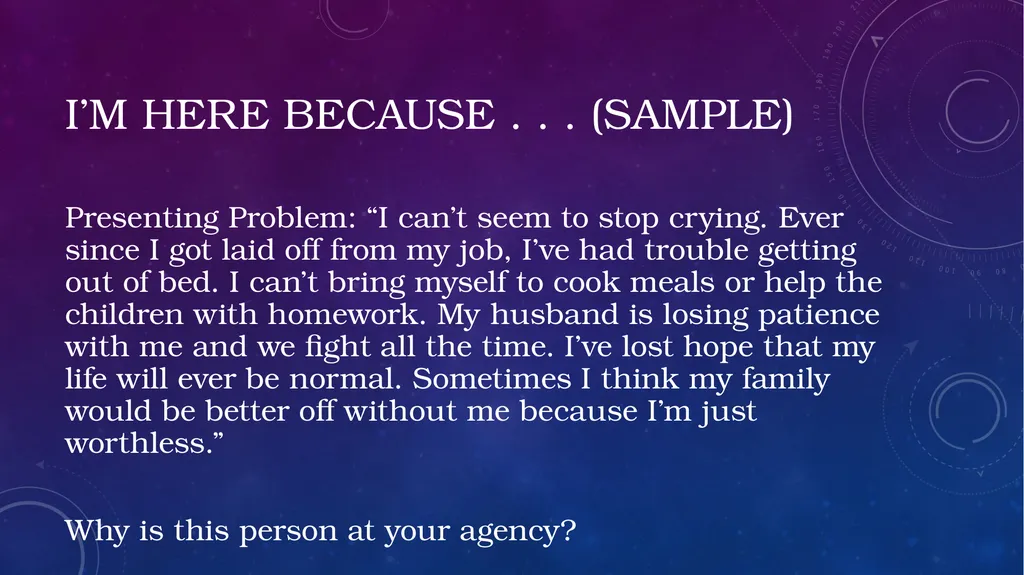
I’m here because . . . (sample) Presenting Problem: “I can’t seem to stop crying. Ever since I got laid off from my job, I’ve had trouble getting out of bed. I can’t bring myself to cook meals or help the children with homework. My husband is losing patience with me and we fight all the time. I’ve lost hope that my life will ever be normal. Sometimes I think my family would be better off without me because I’m just worthless.”
Why is this person at your agency?<br>
Why is this person at your agency?<br>
12
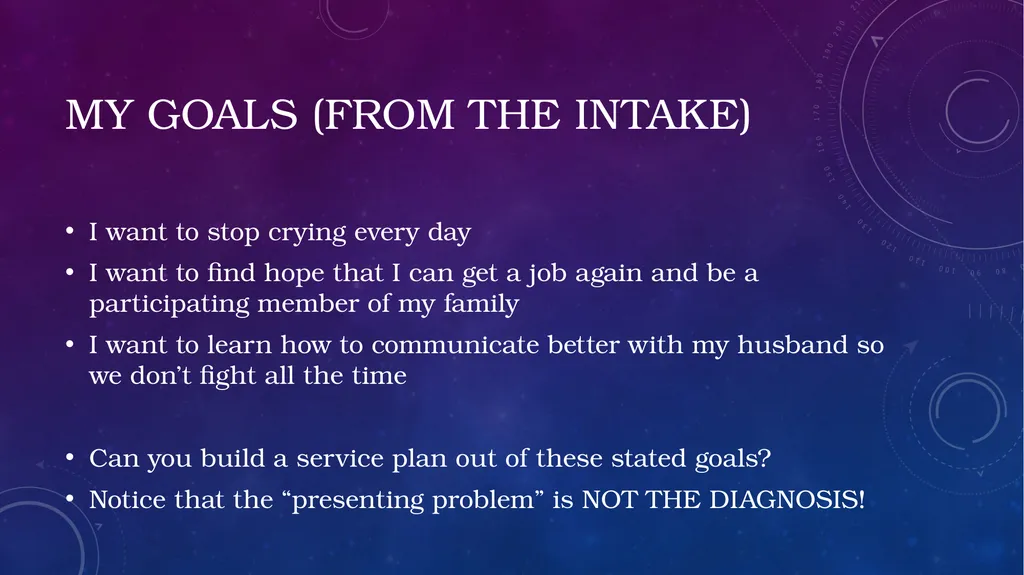
My goals (from the intake) I want to stop crying every day
I want to find hope that I can get a job again and be a participating member of my family
I want to learn how to communicate better with my husband so we don’t fight all the time
Can you build a service plan out of these stated goals?
Notice that the “presenting problem” is NOT THE DIAGNOSIS!<br>
I want to find hope that I can get a job again and be a participating member of my family
I want to learn how to communicate better with my husband so we don’t fight all the time
Can you build a service plan out of these stated goals?
Notice that the “presenting problem” is NOT THE DIAGNOSIS!<br>
13
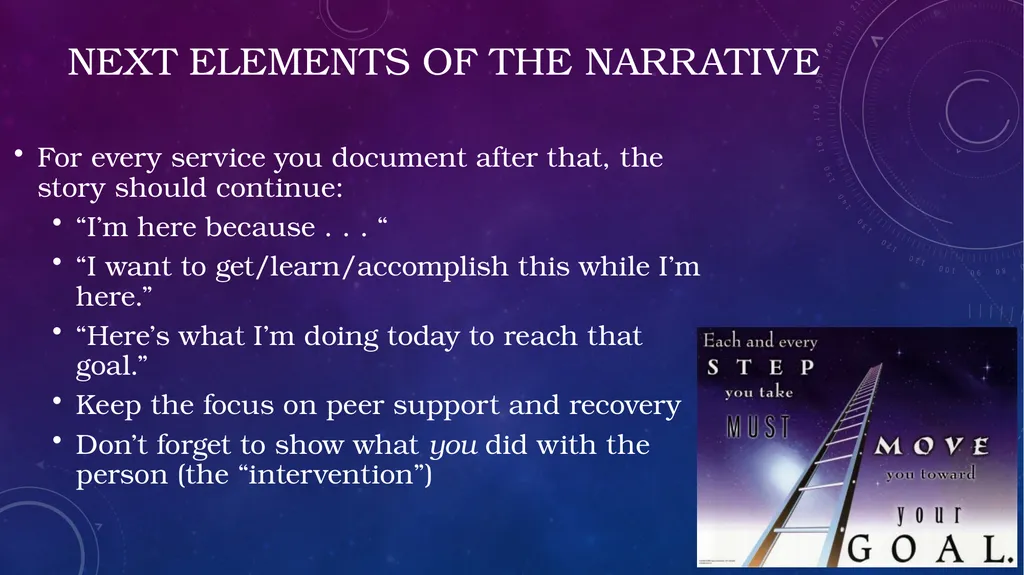
Next elements of the narrative For every service you document after that, the story should continue:
“I’m here because . . . “
“I want to get/learn/accomplish this while I’m here.”
“Here’s what I’m doing today to reach that goal.”
Keep the focus on peer support and recovery
Don’t forget to show what you did with the person (the “intervention”)<br>
“I’m here because . . . “
“I want to get/learn/accomplish this while I’m here.”
“Here’s what I’m doing today to reach that goal.”
Keep the focus on peer support and recovery
Don’t forget to show what you did with the person (the “intervention”)<br>
14
Understanding the Rules What they are and how to find them<br>
15
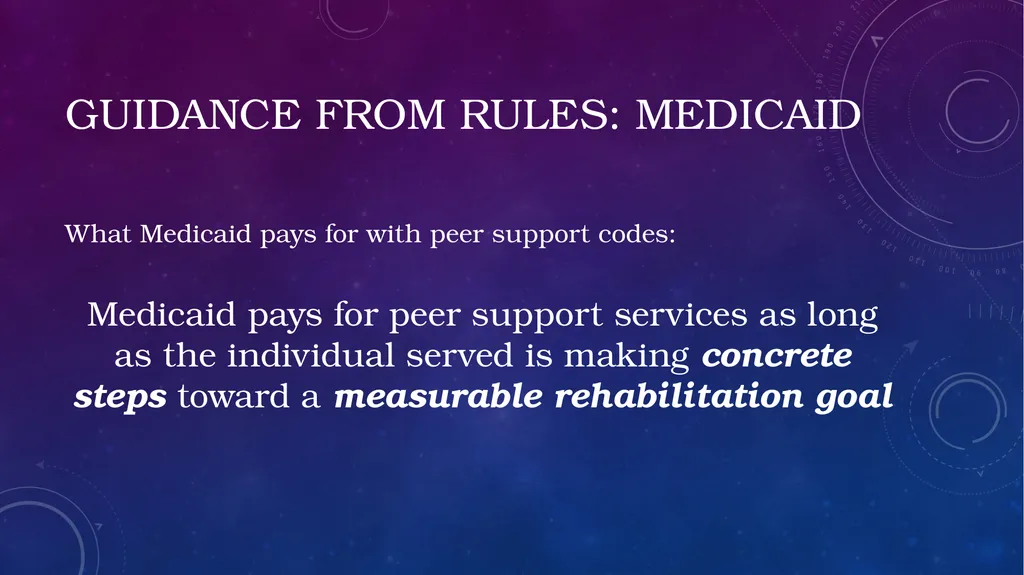
Guidance from Rules: Medicaid What Medicaid pays for with peer support codes:
Medicaid pays for peer support services as long as the individual served is making concrete steps toward a measurable rehabilitation goal<br>
Medicaid pays for peer support services as long as the individual served is making concrete steps toward a measurable rehabilitation goal<br>
16
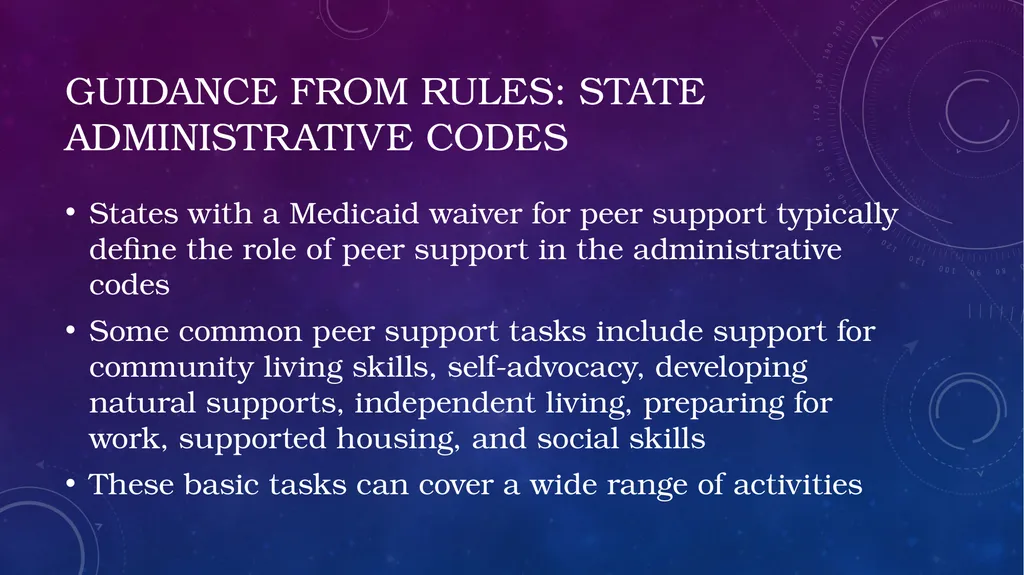
Guidance from rules: state administrative codes States with a Medicaid waiver for peer support typically define the role of peer support in the administrative codes
Some common peer support tasks include support for community living skills, self-advocacy, developing natural supports, independent living, preparing for work, supported housing, and social skills
These basic tasks can cover a wide range of activities<br>
Some common peer support tasks include support for community living skills, self-advocacy, developing natural supports, independent living, preparing for work, supported housing, and social skills
These basic tasks can cover a wide range of activities<br>
17
How does this apply to peers? When we understand the Medicaid rules and our state’s administrative codes, we can remember to document our work in a way that reflects (a) steps toward recovery goals (or difficulty making such steps), and (b) one or more of the tasks assigned to us in our state.
But there’s another consideration: we’re peer support workers, not clinicians. We have unique qualifications and a unique role. We aren’t qualified to evaluate success with symptom management, med compliance, or other clinical measures in our documentation.<br>
But there’s another consideration: we’re peer support workers, not clinicians. We have unique qualifications and a unique role. We aren’t qualified to evaluate success with symptom management, med compliance, or other clinical measures in our documentation.<br>
18
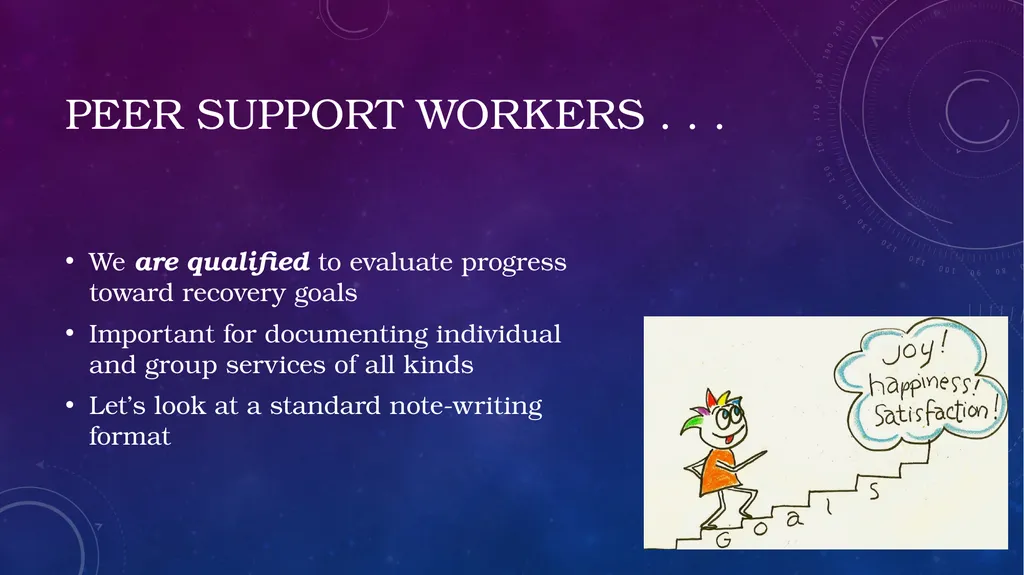
Peer Support Workers . . . We are qualified to evaluate progress toward recovery goals
Important for documenting individual and group services of all kinds
Let’s look at a standard note-writing format<br>
Important for documenting individual and group services of all kinds
Let’s look at a standard note-writing format<br>
19
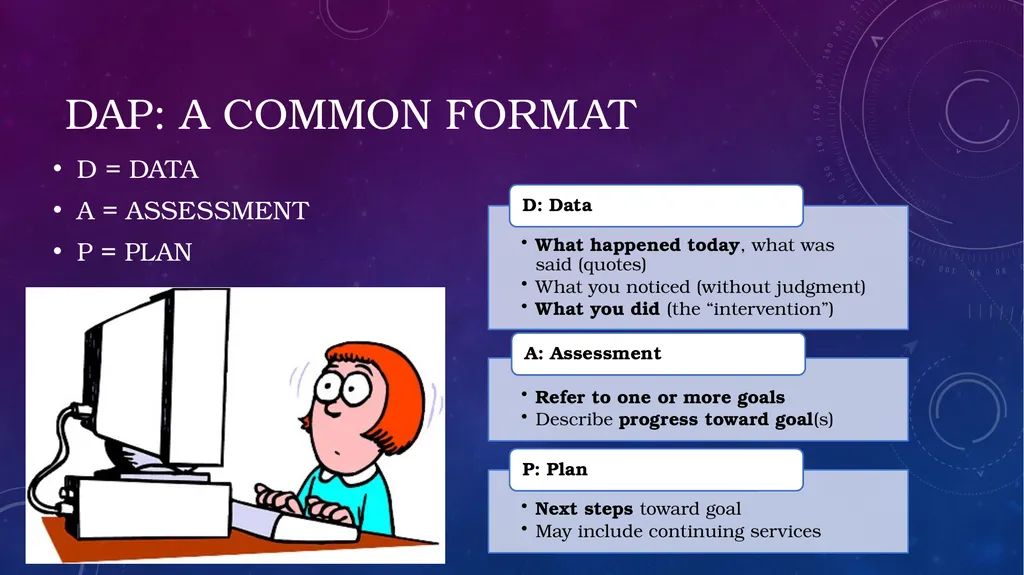
DAP: A Common Format D = DATA
A = ASSESSMENT
P = PLAN<br>
A = ASSESSMENT
P = PLAN<br>
20
First Element: D D: Data: What happened today
If this is a group, what’s the topic?
What did you talk about during the group/appointment?
Do you have quotes from the participant?
What did you notice about the participant?
Did the group or participant make any discoveries?
This section should not include any judgments or evaluations
All statements should be backed up by evidence
Be sure to include what you did with the participant. This is known as the “intervention.” Don’t forget to use recovery language!<br>
If this is a group, what’s the topic?
What did you talk about during the group/appointment?
Do you have quotes from the participant?
What did you notice about the participant?
Did the group or participant make any discoveries?
This section should not include any judgments or evaluations
All statements should be backed up by evidence
Be sure to include what you did with the participant. This is known as the “intervention.” Don’t forget to use recovery language!<br>
21
Next element: A A: Assessment. Your evaluation
Remember that peers are not qualified to evaluate symptom management, recovery, or other clinical measurements
Peers are qualified to assess progress toward recovery goals
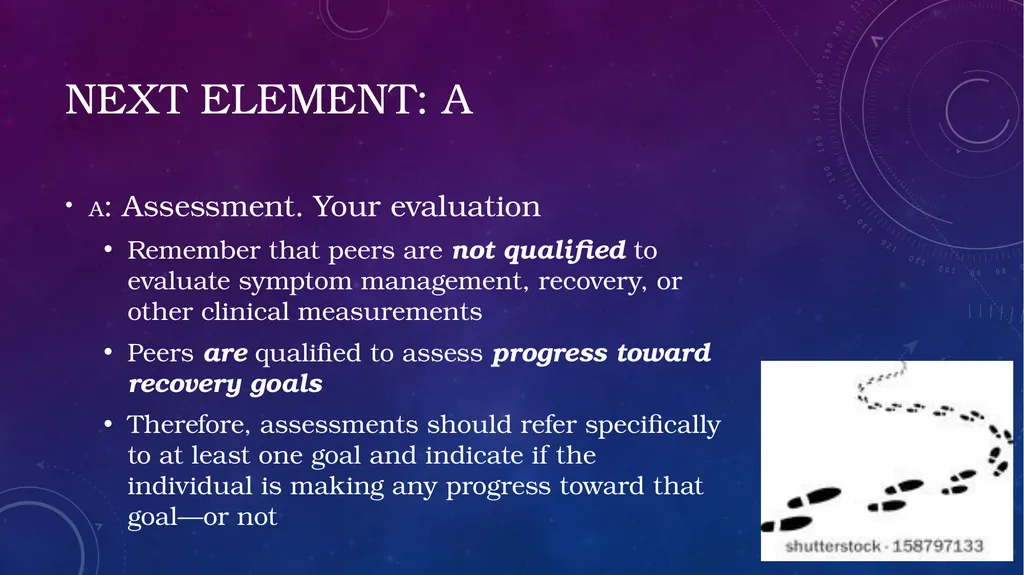
Therefore, assessments should refer specifically to at least one goal and indicate if the individual is making any progress toward that goal—or not<br>
Remember that peers are not qualified to evaluate symptom management, recovery, or other clinical measurements
Peers are qualified to assess progress toward recovery goals
Therefore, assessments should refer specifically to at least one goal and indicate if the individual is making any progress toward that goal—or not<br>
22
Next element: P P: Plan. What’s going to happen next
This section shows what the individual plans to do next to pursue the recovery goal
It might indicate the next appointment with you or other providers, or continuing in a group
Remember to identify strengths that can support action
You may also write what you plan to do before you see the person next. No judgments or evaluations in this section.
Do you read previous notes before you begin work with a person? Why or why not?<br>
This section shows what the individual plans to do next to pursue the recovery goal
It might indicate the next appointment with you or other providers, or continuing in a group
Remember to identify strengths that can support action
You may also write what you plan to do before you see the person next. No judgments or evaluations in this section.
Do you read previous notes before you begin work with a person? Why or why not?<br>
23
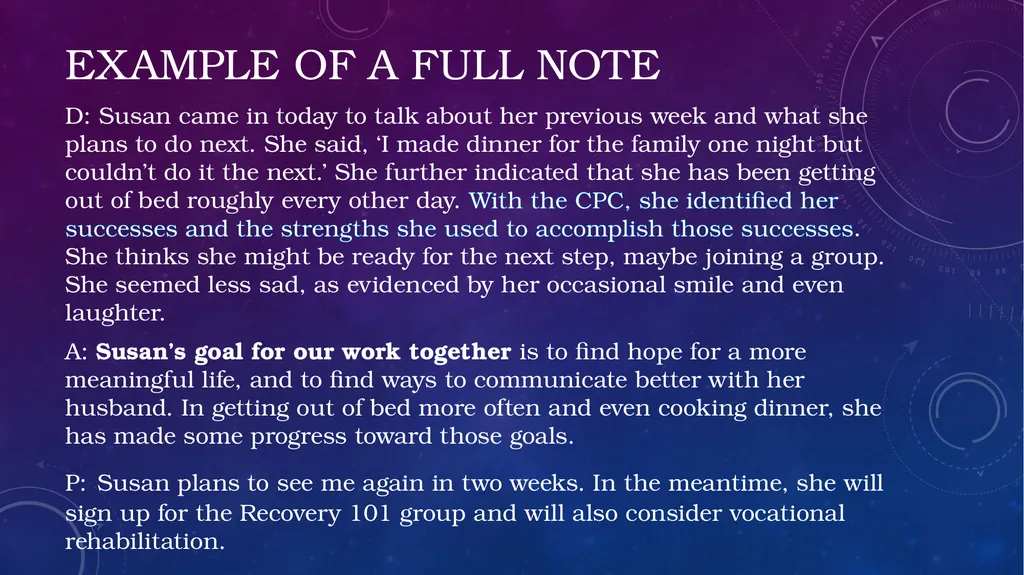
Example of a full note D: Susan came in today to talk about her previous week and what she plans to do next. She said, ‘I made dinner for the family one night but couldn’t do it the next.’ She further indicated that she has been getting out of bed roughly every other day. With the CPC, she identified her successes and the strengths she used to accomplish those successes. She thinks she might be ready for the next step, maybe joining a group. She seemed less sad, as evidenced by her occasional smile and even laughter.
A: Susan’s goal for our work together is to find hope for a more meaningful life, and to find ways to communicate better with her husband. In getting out of bed more often and even cooking dinner, she has made some progress toward those goals.
P: Susan plans to see me again in two weeks. In the meantime, she will sign up for the Recovery 101 group and will also consider vocational rehabilitation.<br>
A: Susan’s goal for our work together is to find hope for a more meaningful life, and to find ways to communicate better with her husband. In getting out of bed more often and even cooking dinner, she has made some progress toward those goals.
P: Susan plans to see me again in two weeks. In the meantime, she will sign up for the Recovery 101 group and will also consider vocational rehabilitation.<br>
24
Length of Note How long should your note be?
The previous slide’s note might cover a 45-60 minute appointment or group. Interactions that take less time will require a shorter note
If you spend more than an hour with someone, your note should reflect the additional time spent. Two lines will not be considered adequate for a 3-4 hour event with a peer.
You don’t have to write everything, but you do have to cover the main things, progress toward recovery goals, use of strengths, what you did, and plans for next steps<br>
The previous slide’s note might cover a 45-60 minute appointment or group. Interactions that take less time will require a shorter note
If you spend more than an hour with someone, your note should reflect the additional time spent. Two lines will not be considered adequate for a 3-4 hour event with a peer.
You don’t have to write everything, but you do have to cover the main things, progress toward recovery goals, use of strengths, what you did, and plans for next steps<br>
25
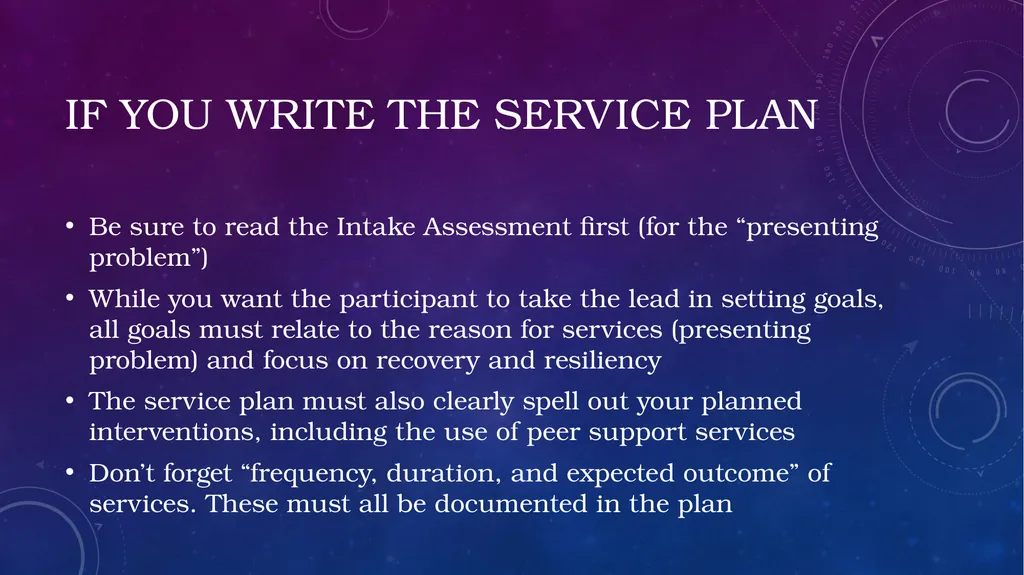
If You Write the service plan Be sure to read the Intake Assessment first (for the “presenting problem”)
While you want the participant to take the lead in setting goals, all goals must relate to the reason for services (presenting problem) and focus on recovery and resiliency
The service plan must also clearly spell out your planned interventions, including the use of peer support services
Don’t forget “frequency, duration, and expected outcome” of services. These must all be documented in the plan<br>
While you want the participant to take the lead in setting goals, all goals must relate to the reason for services (presenting problem) and focus on recovery and resiliency
The service plan must also clearly spell out your planned interventions, including the use of peer support services
Don’t forget “frequency, duration, and expected outcome” of services. These must all be documented in the plan<br>
26
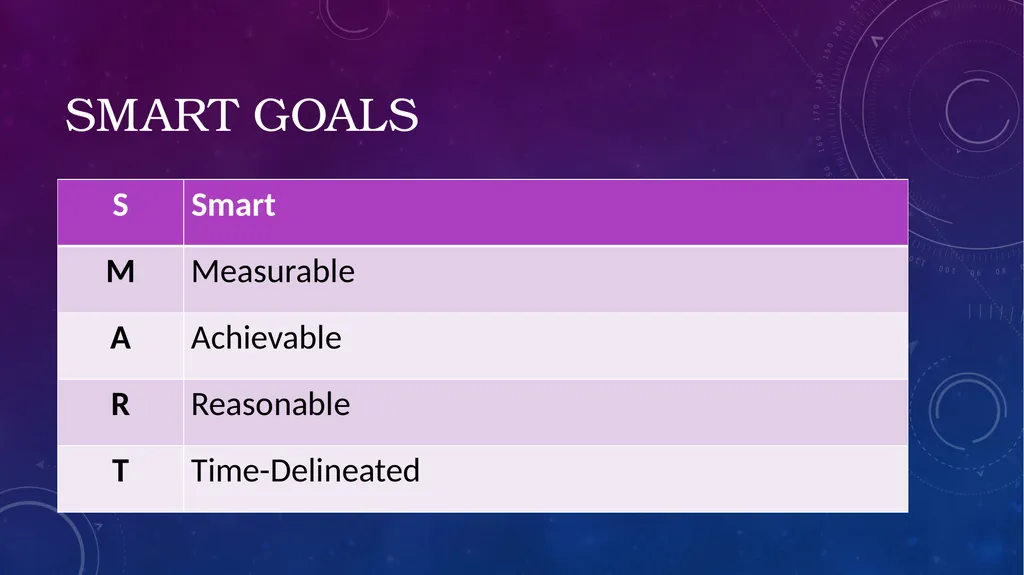
SMART Goals<br>
27
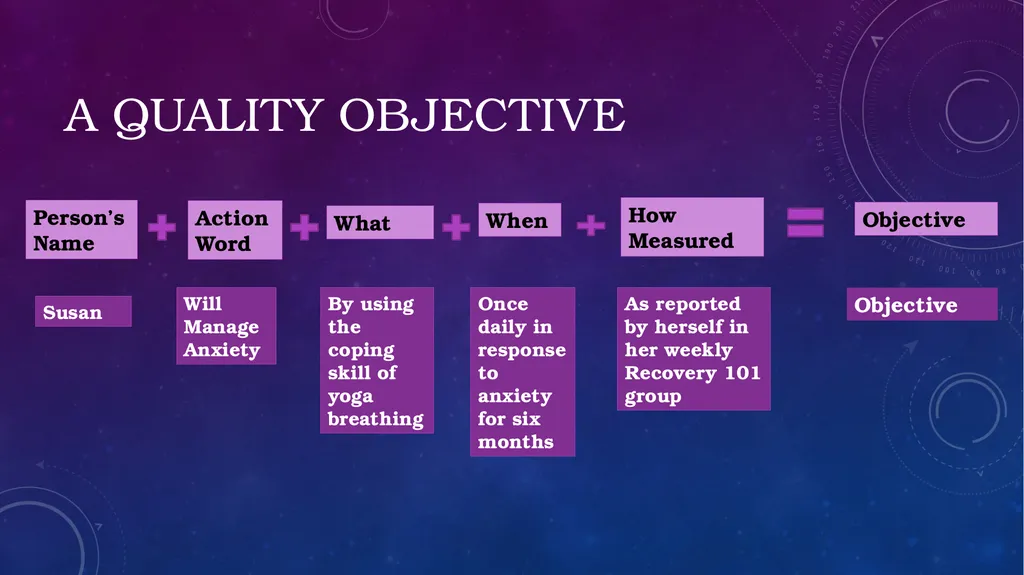
A Quality Objective Person’s Name Action Word What When How Measured Objective Susan Will Manage Anxiety By using the coping skill of yoga breathing Once daily in response to anxiety for six months As reported by herself in her weekly Recovery 101 group Objective<br>
28
Good to Know More Things to Consider<br>
29
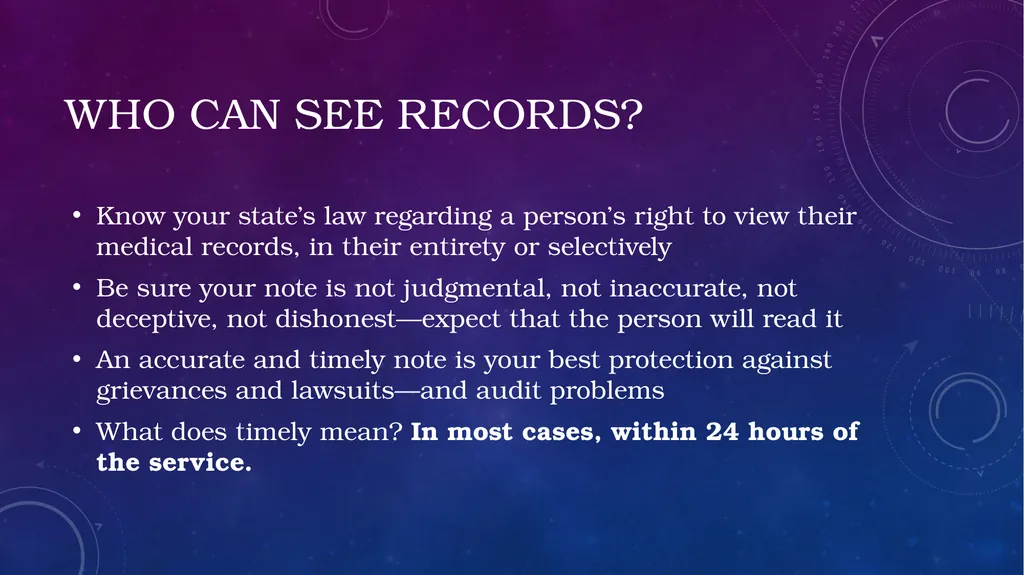
Who Can See Records? Know your state’s law regarding a person’s right to view their medical records, in their entirety or selectively
Be sure your note is not judgmental, not inaccurate, not deceptive, not dishonest—expect that the person will read it
An accurate and timely note is your best protection against grievances and lawsuits—and audit problems
What does timely mean? In most cases, within 24 hours of the service.<br>
Be sure your note is not judgmental, not inaccurate, not deceptive, not dishonest—expect that the person will read it
An accurate and timely note is your best protection against grievances and lawsuits—and audit problems
What does timely mean? In most cases, within 24 hours of the service.<br>
30
Timely There are exceptions to the 24-hour rule in timeliness.
Your agency may use a different standard (some prefer that you document the same day as services were offered)
Some peers work in the community and do not have access to an electronic health record (EHR) every day
If you cannot document within 24 hours, ask your supervisor what is expected and document reasons for any delay
Be sure to follow the guidance of your employer<br>
Your agency may use a different standard (some prefer that you document the same day as services were offered)
Some peers work in the community and do not have access to an electronic health record (EHR) every day
If you cannot document within 24 hours, ask your supervisor what is expected and document reasons for any delay
Be sure to follow the guidance of your employer<br>
31
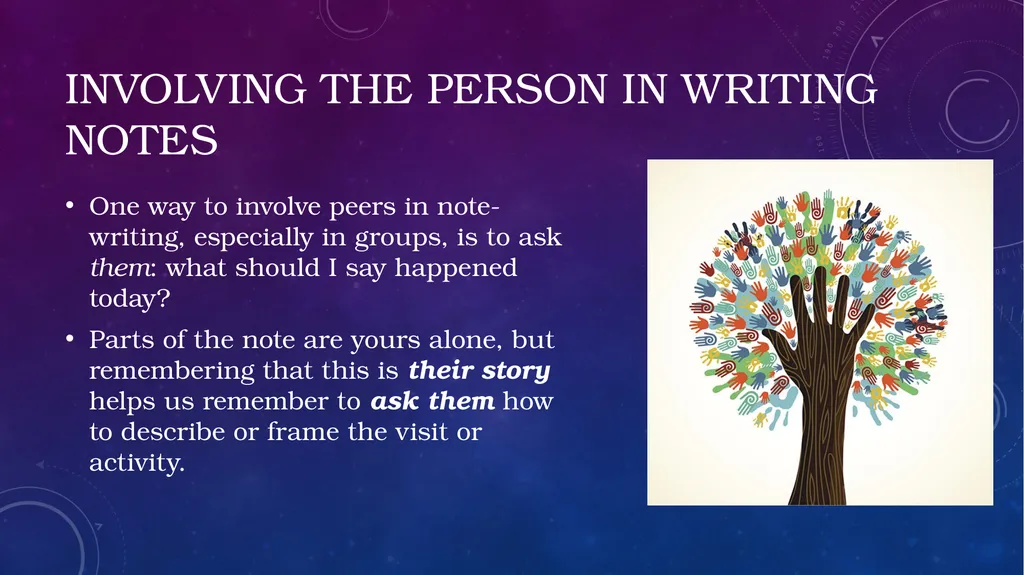
Involving the Person in Writing Notes One way to involve peers in note-writing, especially in groups, is to ask them: what should I say happened today?
Parts of the note are yours alone, but remembering that this is their story helps us remember to ask them how to describe or frame the visit or activity.<br>
Parts of the note are yours alone, but remembering that this is their story helps us remember to ask them how to describe or frame the visit or activity.<br>
32
Questions about Documentation<br>
33
Thank you! Ann Rider, MSW
Whole Human Consulting
wholehuman17@gmail.com
253.882.7635<br>
Whole Human Consulting
wholehuman17@gmail.com
253.882.7635<br>