
Doing Away with the Instructional Level Timothy
DJ
Published · 79 slides · 0 views

1 / 1



Description
Doing Away with the Instructional Level Timothy Shanahan University of Illinois at Chicago www.shanahanonliteracy.com Reasons for the shift to text complexity By the time students leave high school they should be able to read well enough to
Related Topics
Share
Embed code
Download this presentation From Below
"Doing Away with the Instructional Level Timothy" is the property of its rightful owner. Permission is granted to download and print the materials on this website for personal, non-commercial use only, and to display it on your personal computer provided you do not modify the materials and that you retain all copyright notices contained in the materials. By downloading content from our website, you accept the terms of this agreement.
Presentation Transcript
01
Doing Away with the Instructional Level Timothy Shanahan
University of Illinois at Chicago
www.shanahanonliteracy.com<br>
University of Illinois at Chicago
www.shanahanonliteracy.com<br>
02
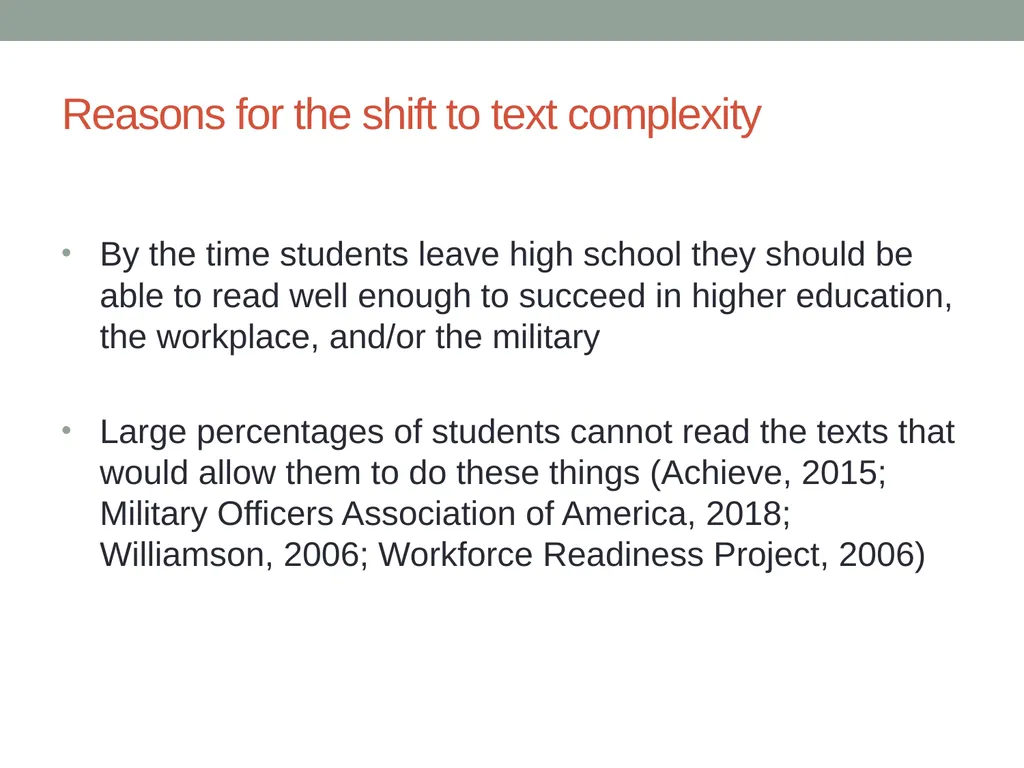
Reasons for the shift to text complexity By the time students leave high school they should be able to read well enough to succeed in higher education, the workplace, and/or the military
Large percentages of students cannot read the texts that would allow them to do these things (Achieve, 2015; Military Officers Association of America, 2018; Williamson, 2006; Workforce Readiness Project, 2006)<br>
Large percentages of students cannot read the texts that would allow them to do these things (Achieve, 2015; Military Officers Association of America, 2018; Williamson, 2006; Workforce Readiness Project, 2006)<br>
03
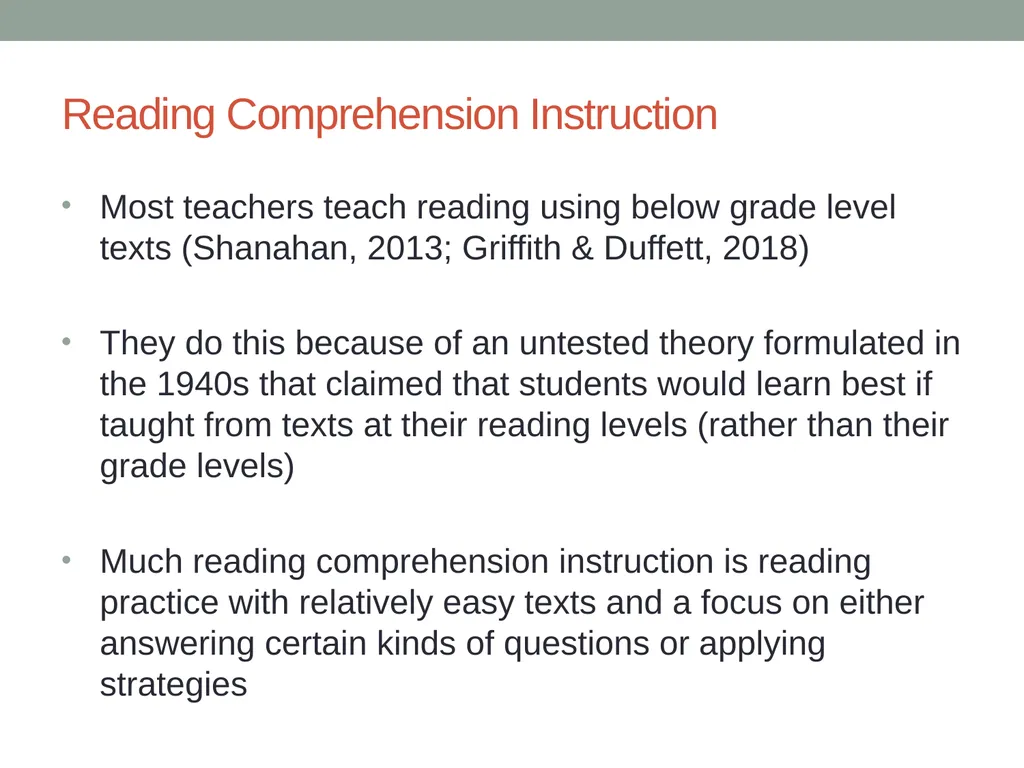
Reading Comprehension Instruction Most teachers teach reading using below grade level texts (Shanahan, 2013; Griffith & Duffett, 2018)
They do this because of an untested theory formulated in the 1940s that claimed that students would learn best if taught from texts at their reading levels (rather than their grade levels)
Much reading comprehension instruction is reading practice with relatively easy texts and a focus on either answering certain kinds of questions or applying strategies<br>
They do this because of an untested theory formulated in the 1940s that claimed that students would learn best if taught from texts at their reading levels (rather than their grade levels)
Much reading comprehension instruction is reading practice with relatively easy texts and a focus on either answering certain kinds of questions or applying strategies<br>
04
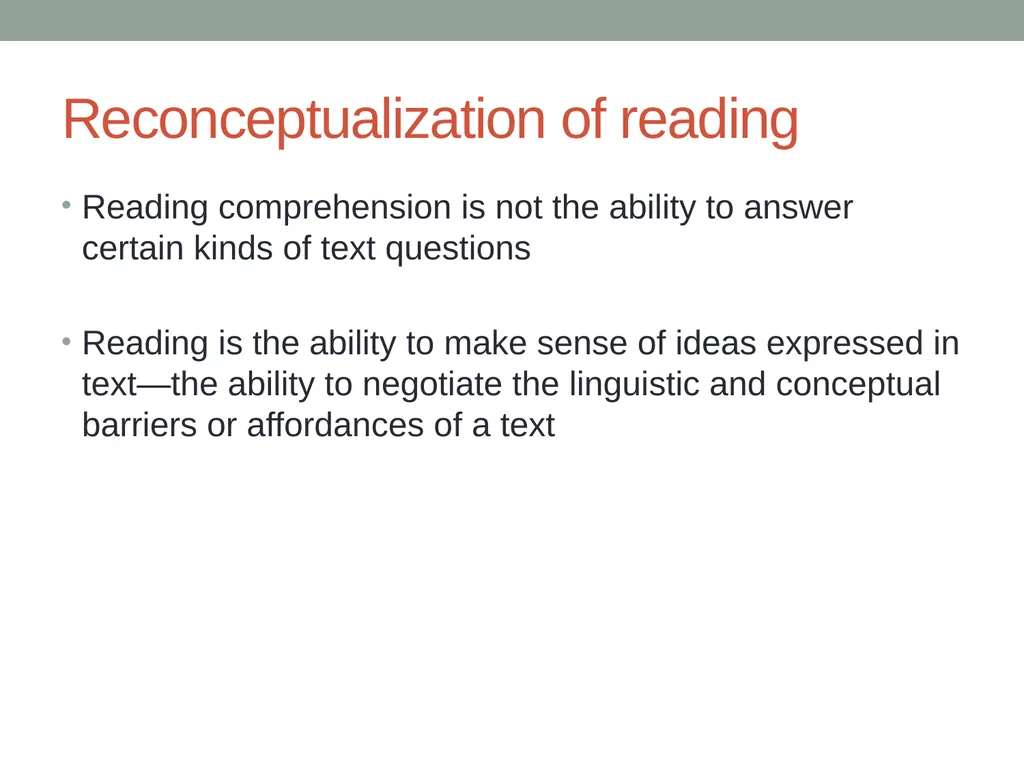
Reconceptualization of reading Reading comprehension is not the ability to answer certain kinds of text questions
Reading is the ability to make sense of ideas expressed in text—the ability to negotiate the linguistic and conceptual barriers or affordances of a text<br>
Reading is the ability to make sense of ideas expressed in text—the ability to negotiate the linguistic and conceptual barriers or affordances of a text<br>
05
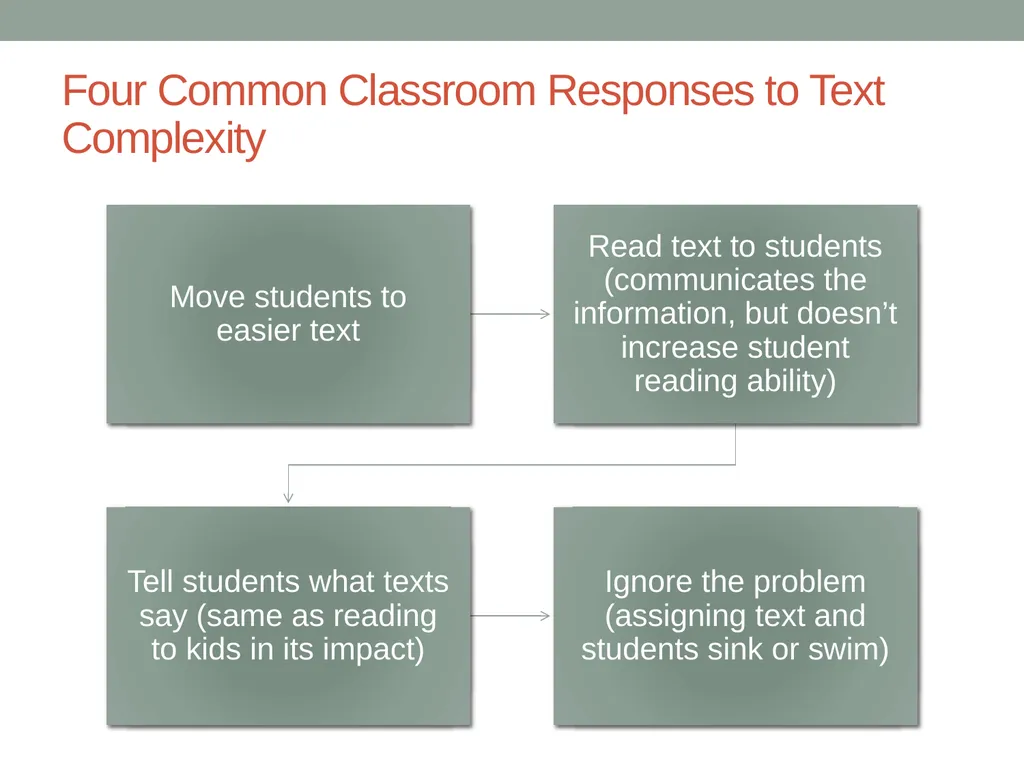
Four Common Classroom Responses to Text Complexity<br>
06
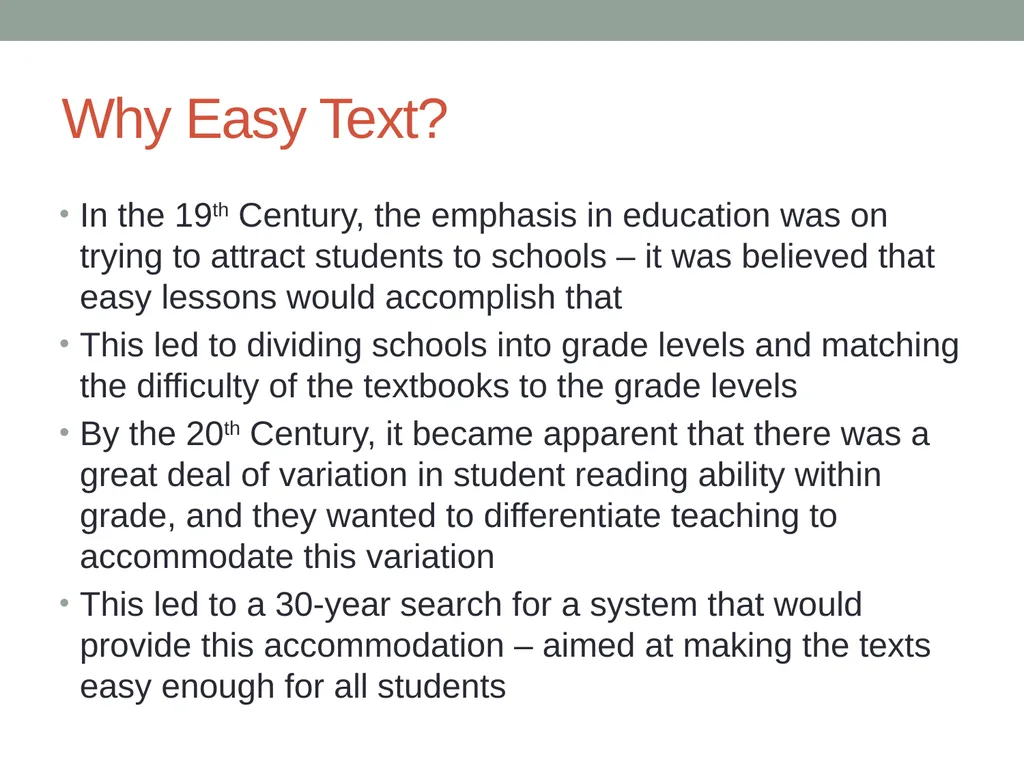
Why Easy Text? In the 19th Century, the emphasis in education was on trying to attract students to schools – it was believed that easy lessons would accomplish that
This led to dividing schools into grade levels and matching the difficulty of the textbooks to the grade levels
By the 20th Century, it became apparent that there was a great deal of variation in student reading ability within grade, and they wanted to differentiate teaching to accommodate this variation
This led to a 30-year search for a system that would provide this accommodation – aimed at making the texts easy enough for all students<br>
This led to dividing schools into grade levels and matching the difficulty of the textbooks to the grade levels
By the 20th Century, it became apparent that there was a great deal of variation in student reading ability within grade, and they wanted to differentiate teaching to accommodate this variation
This led to a 30-year search for a system that would provide this accommodation – aimed at making the texts easy enough for all students<br>
07
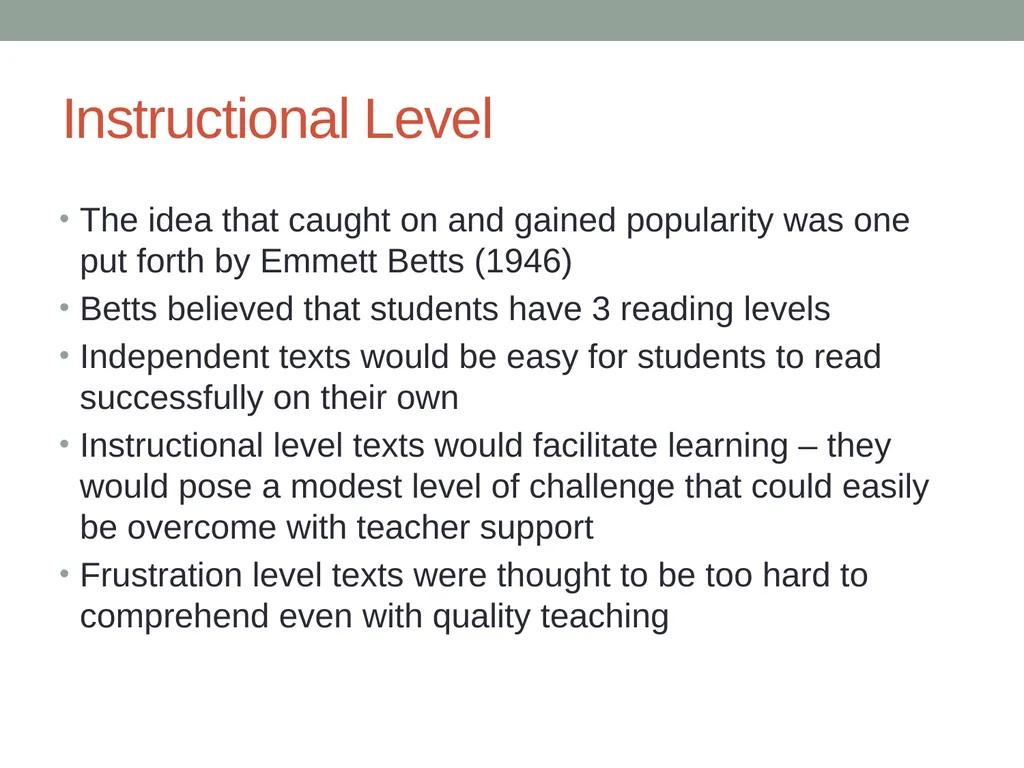
Instructional Level The idea that caught on and gained popularity was one put forth by Emmett Betts (1946)
Betts believed that students have 3 reading levels
Independent texts would be easy for students to read successfully on their own
Instructional level texts would facilitate learning – they would pose a modest level of challenge that could easily be overcome with teacher support
Frustration level texts were thought to be too hard to comprehend even with quality teaching<br>
Betts believed that students have 3 reading levels
Independent texts would be easy for students to read successfully on their own
Instructional level texts would facilitate learning – they would pose a modest level of challenge that could easily be overcome with teacher support
Frustration level texts were thought to be too hard to comprehend even with quality teaching<br>
08
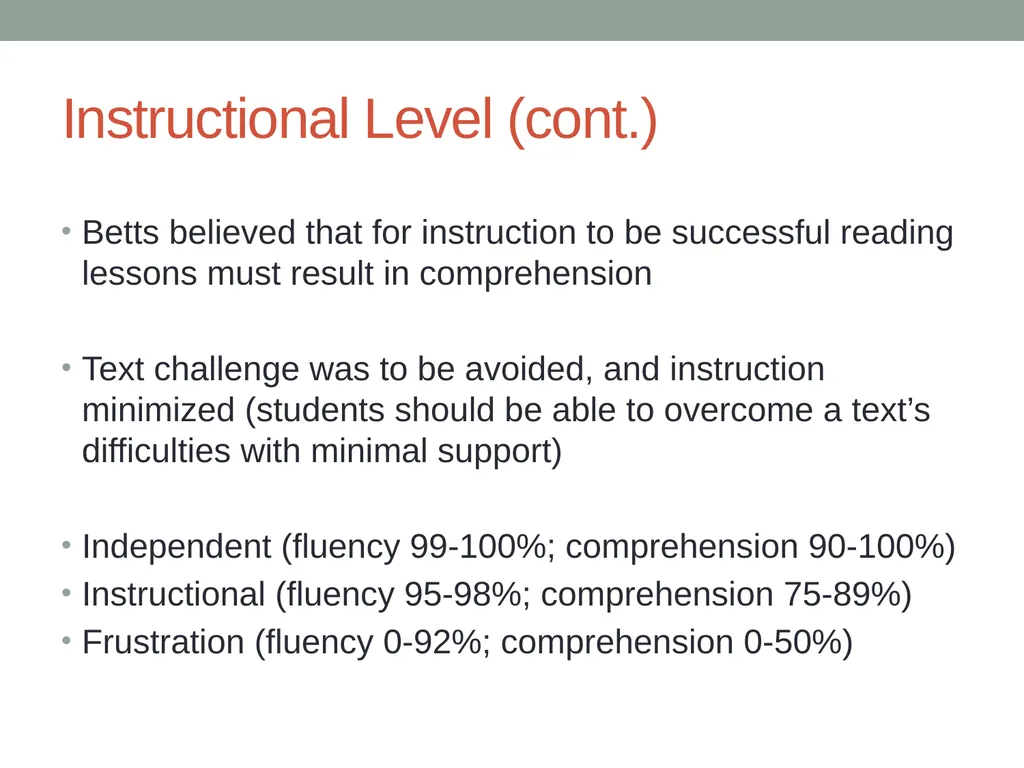
Instructional Level (cont.) Betts believed that for instruction to be successful reading lessons must result in comprehension
Text challenge was to be avoided, and instruction minimized (students should be able to overcome a text’s difficulties with minimal support)
Independent (fluency 99-100%; comprehension 90-100%)
Instructional (fluency 95-98%; comprehension 75-89%)
Frustration (fluency 0-92%; comprehension 0-50%)<br>
Text challenge was to be avoided, and instruction minimized (students should be able to overcome a text’s difficulties with minimal support)
Independent (fluency 99-100%; comprehension 90-100%)
Instructional (fluency 95-98%; comprehension 75-89%)
Frustration (fluency 0-92%; comprehension 0-50%)<br>
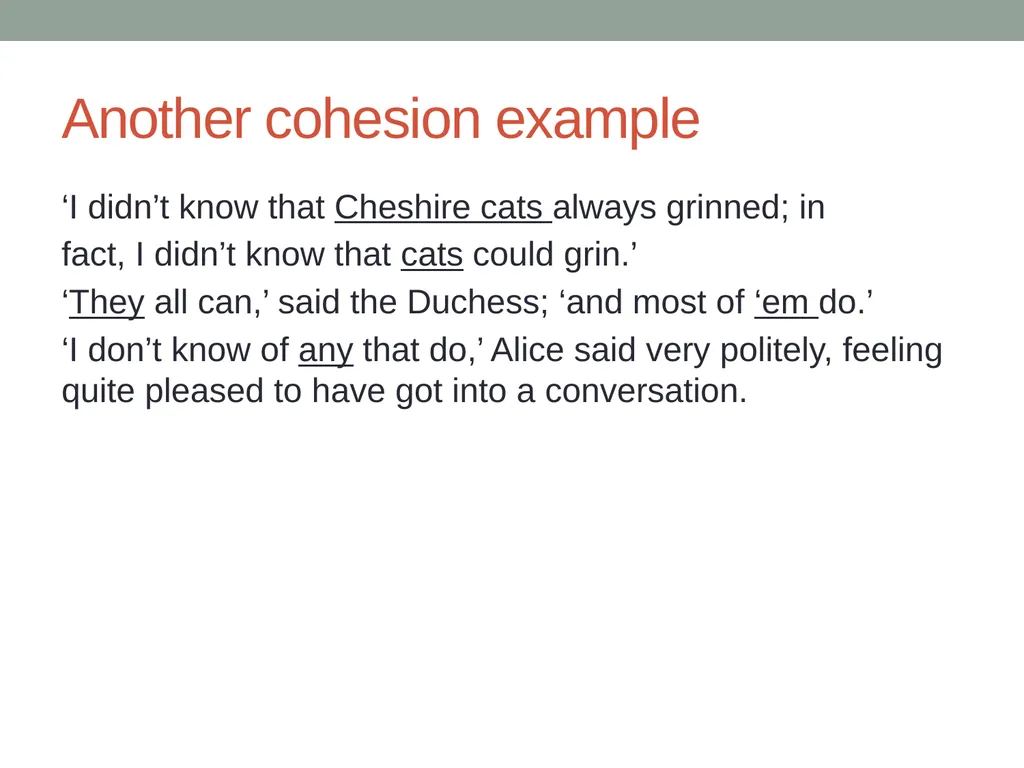
09
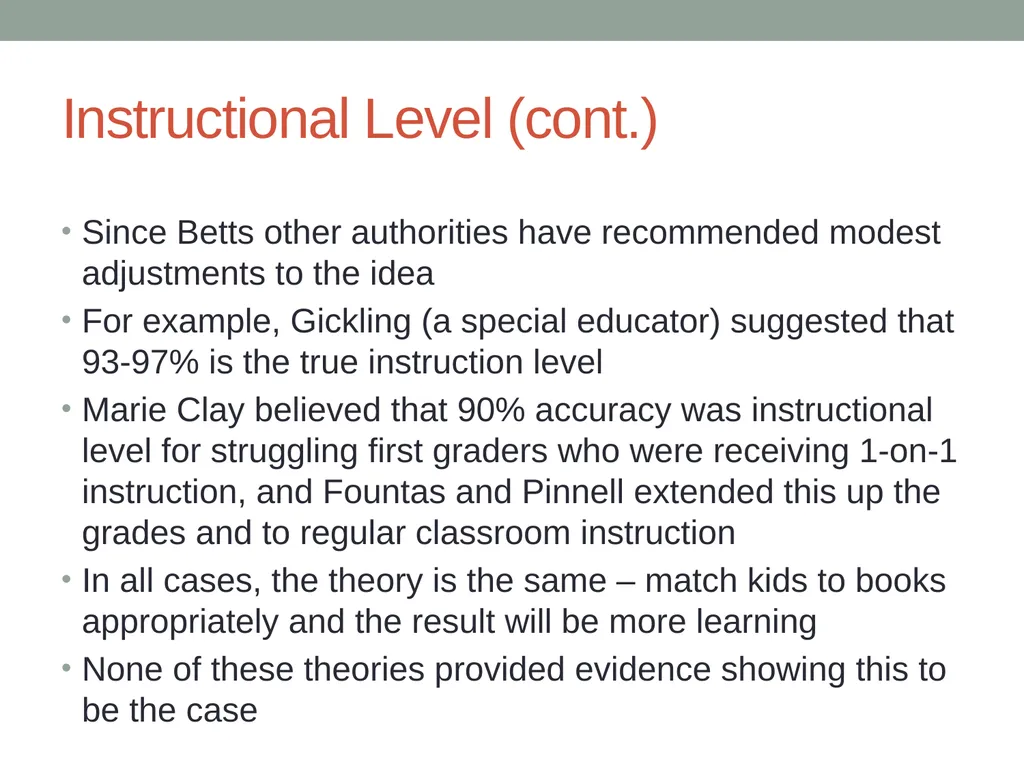
Instructional Level (cont.) Since Betts other authorities have recommended modest adjustments to the idea
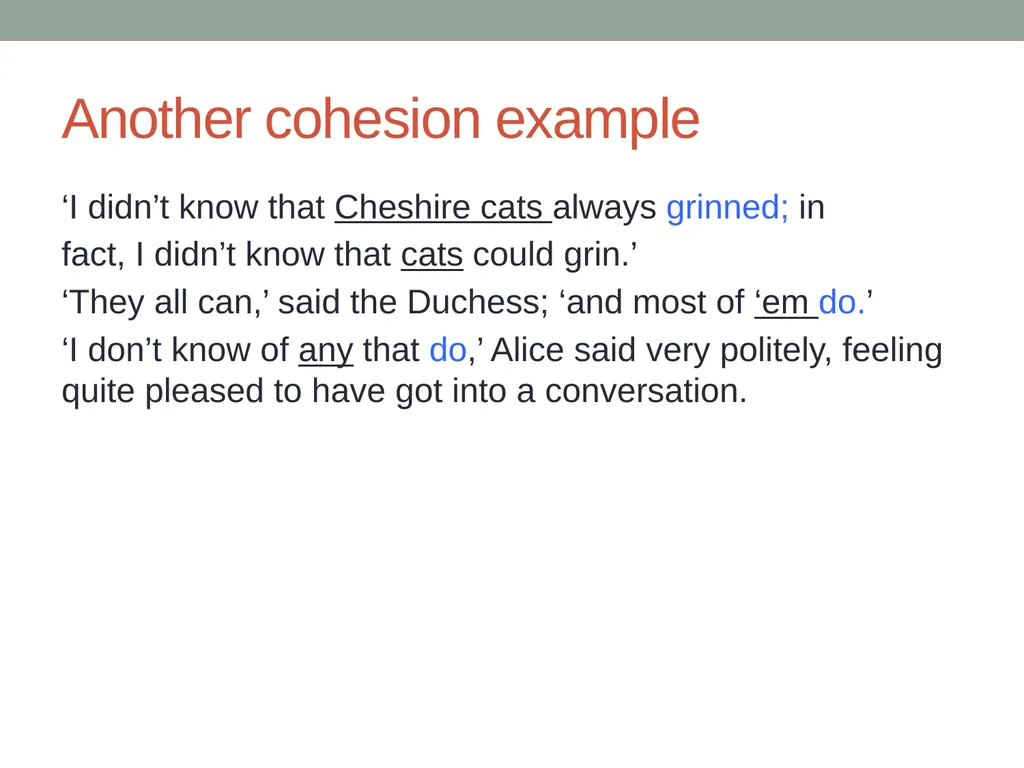
For example, Gickling (a special educator) suggested that 93-97% is the true instruction level
Marie Clay believed that 90% accuracy was instructional level for struggling first graders who were receiving 1-on-1 instruction, and Fountas and Pinnell extended this up the grades and to regular classroom instruction
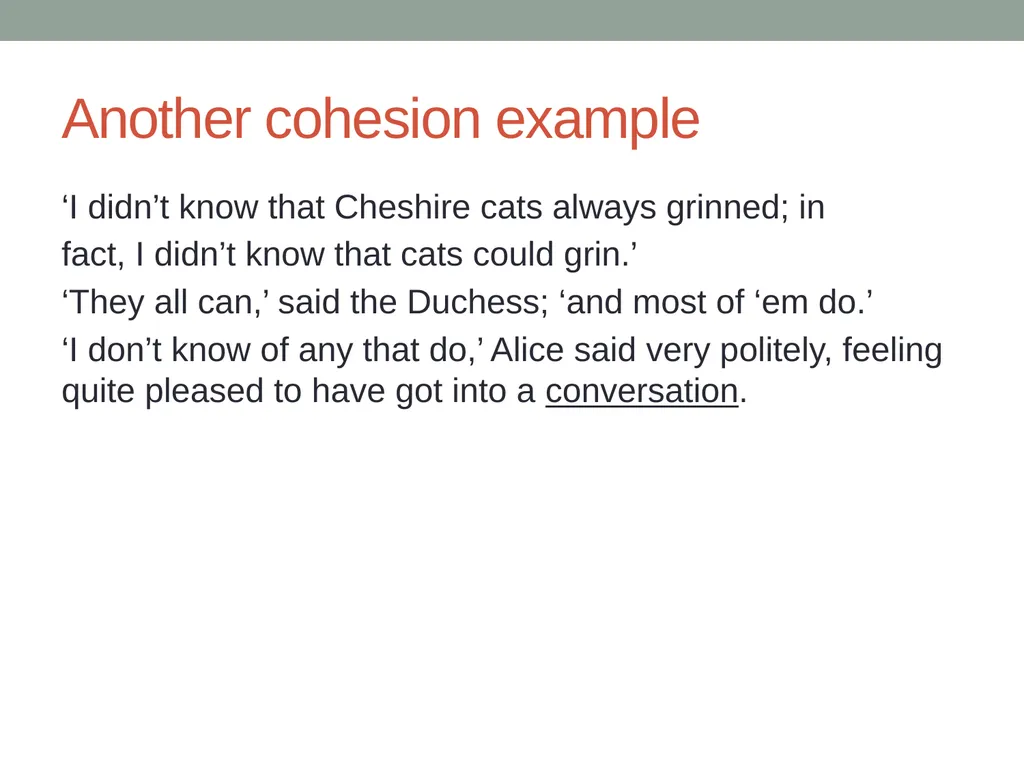
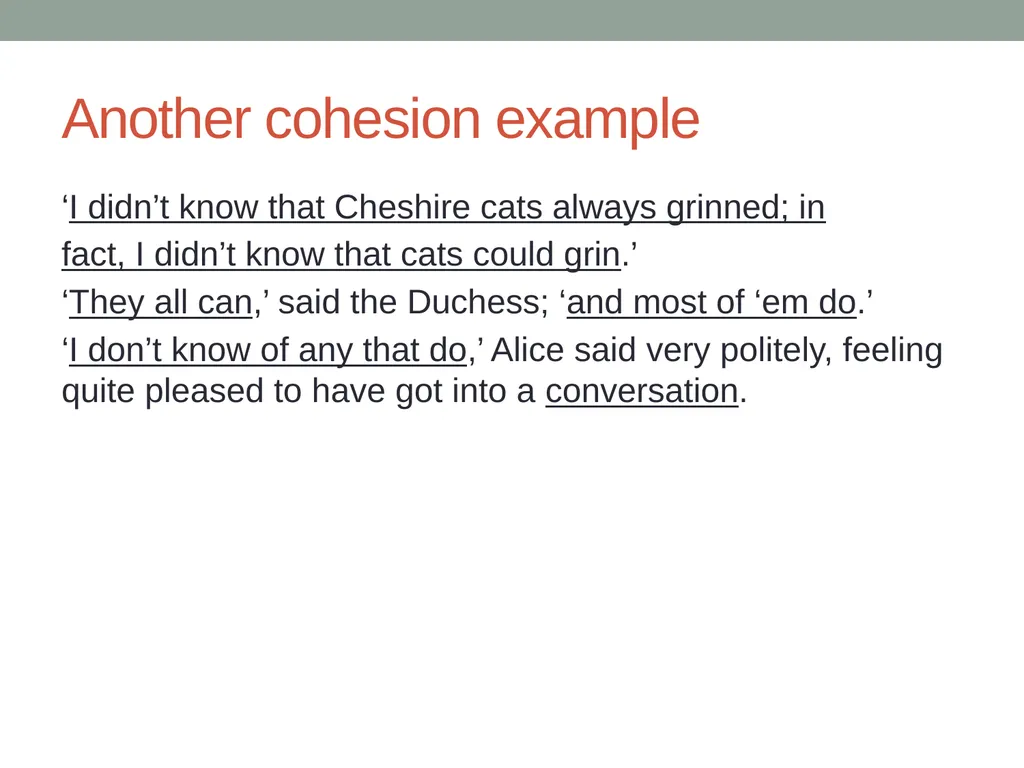
In all cases, the theory is the same – match kids to books appropriately and the result will be more learning
None of these theories provided evidence showing this to be the case<br>
For example, Gickling (a special educator) suggested that 93-97% is the true instruction level
Marie Clay believed that 90% accuracy was instructional level for struggling first graders who were receiving 1-on-1 instruction, and Fountas and Pinnell extended this up the grades and to regular classroom instruction
In all cases, the theory is the same – match kids to books appropriately and the result will be more learning
None of these theories provided evidence showing this to be the case<br>
10
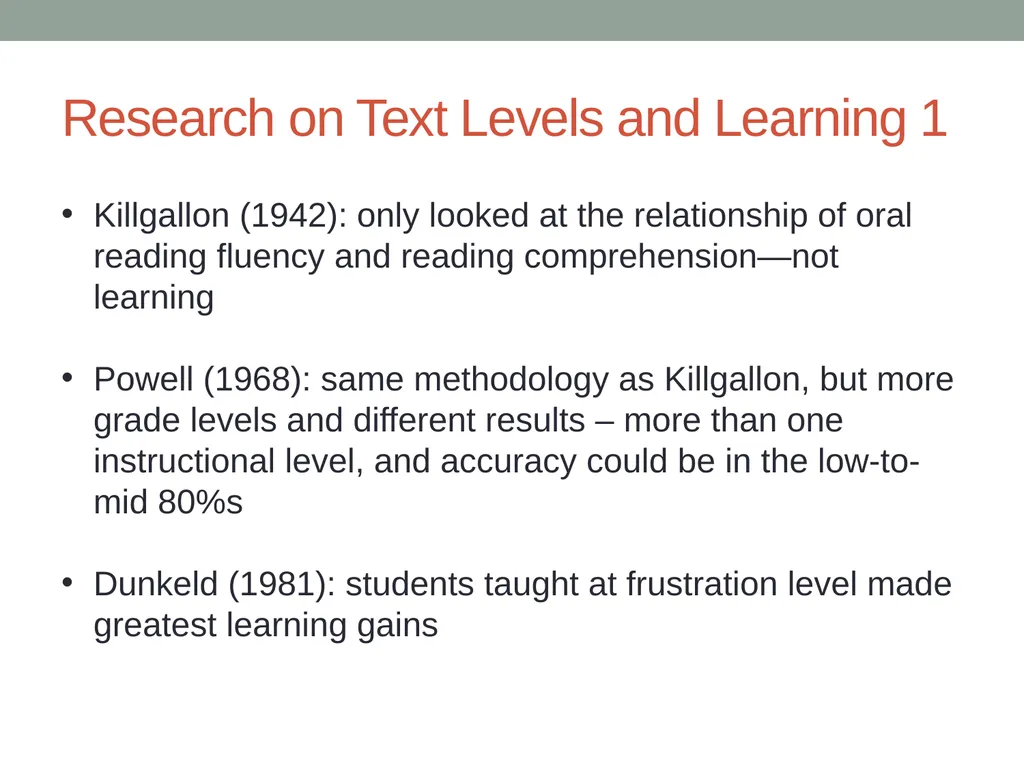
Research on Text Levels and Learning 1 Killgallon (1942): only looked at the relationship of oral reading fluency and reading comprehension—not learning
Powell (1968): same methodology as Killgallon, but more grade levels and different results – more than one instructional level, and accuracy could be in the low-to-mid 80%s
Dunkeld (1981): students taught at frustration level made greatest learning gains<br>
Powell (1968): same methodology as Killgallon, but more grade levels and different results – more than one instructional level, and accuracy could be in the low-to-mid 80%s
Dunkeld (1981): students taught at frustration level made greatest learning gains<br>
11
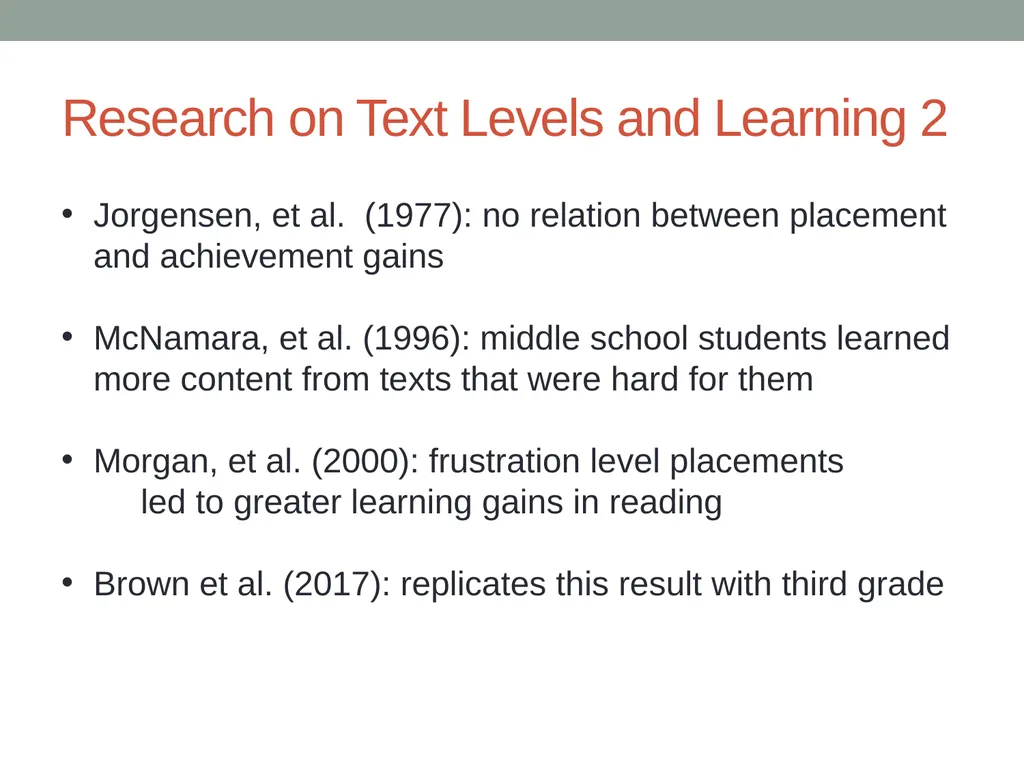
Research on Text Levels and Learning 2 Jorgensen, et al. (1977): no relation between placement and achievement gains
McNamara, et al. (1996): middle school students learned more content from texts that were hard for them
Morgan, et al. (2000): frustration level placements led to greater learning gains in reading
Brown et al. (2017): replicates this result with third grade<br>
McNamara, et al. (1996): middle school students learned more content from texts that were hard for them
Morgan, et al. (2000): frustration level placements led to greater learning gains in reading
Brown et al. (2017): replicates this result with third grade<br>
12
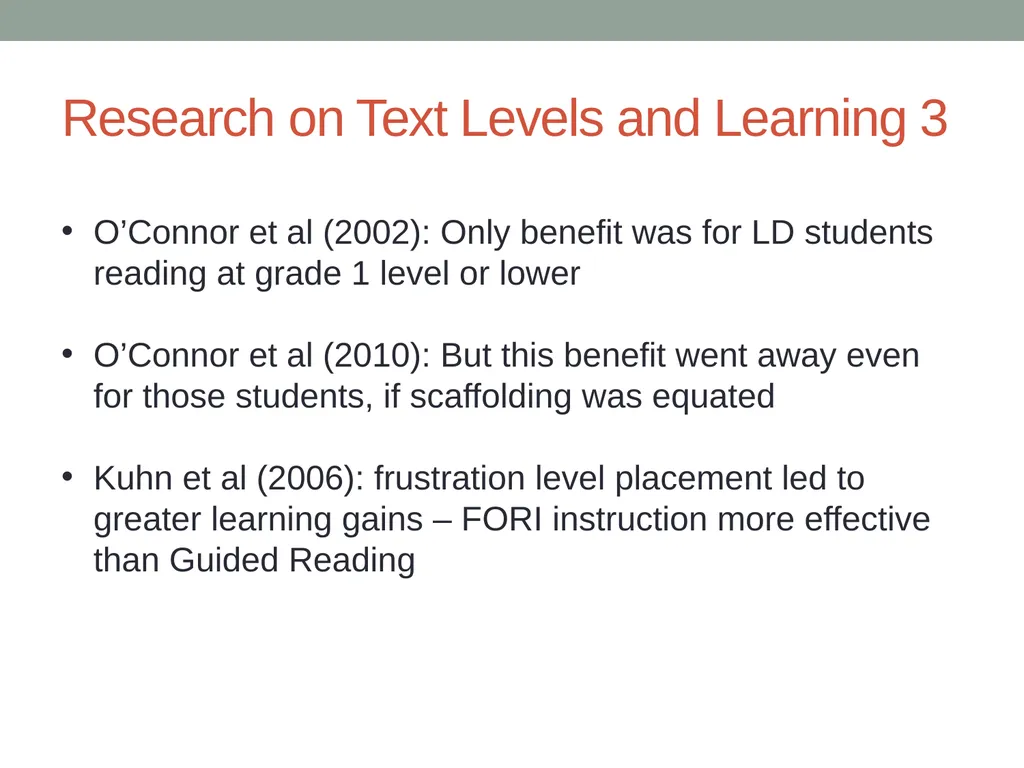
Research on Text Levels and Learning 3 O’Connor et al (2002): Only benefit was for LD students reading at grade 1 level or lower
O’Connor et al (2010): But this benefit went away even for those students, if scaffolding was equated
Kuhn et al (2006): frustration level placement led to greater learning gains – FORI instruction more effective than Guided Reading<br>
O’Connor et al (2010): But this benefit went away even for those students, if scaffolding was equated
Kuhn et al (2006): frustration level placement led to greater learning gains – FORI instruction more effective than Guided Reading<br>
13
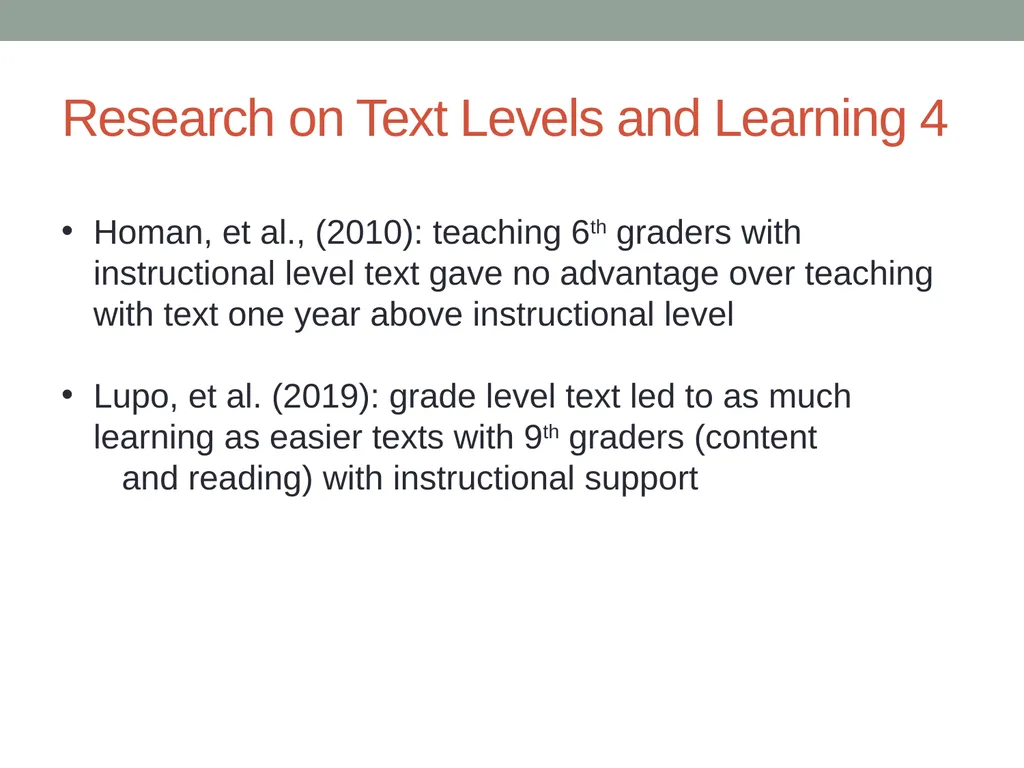
Research on Text Levels and Learning 4 Homan, et al., (2010): teaching 6th graders with instructional level text gave no advantage over teaching with text one year above instructional level
Lupo, et al. (2019): grade level text led to as much learning as easier texts with 9th graders (content and reading) with instructional support<br>
Lupo, et al. (2019): grade level text led to as much learning as easier texts with 9th graders (content and reading) with instructional support<br>
14
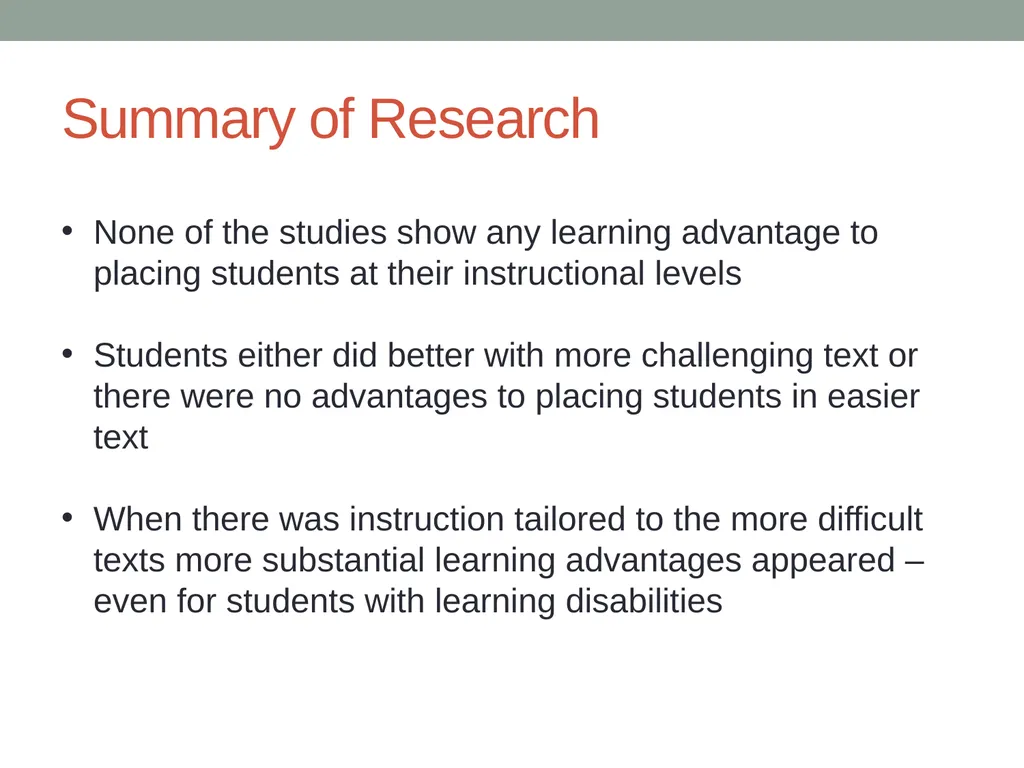
Summary of Research None of the studies show any learning advantage to placing students at their instructional levels
Students either did better with more challenging text or there were no advantages to placing students in easier text
When there was instruction tailored to the more difficult texts more substantial learning advantages appeared – even for students with learning disabilities<br>
Students either did better with more challenging text or there were no advantages to placing students in easier text
When there was instruction tailored to the more difficult texts more substantial learning advantages appeared – even for students with learning disabilities<br>
15
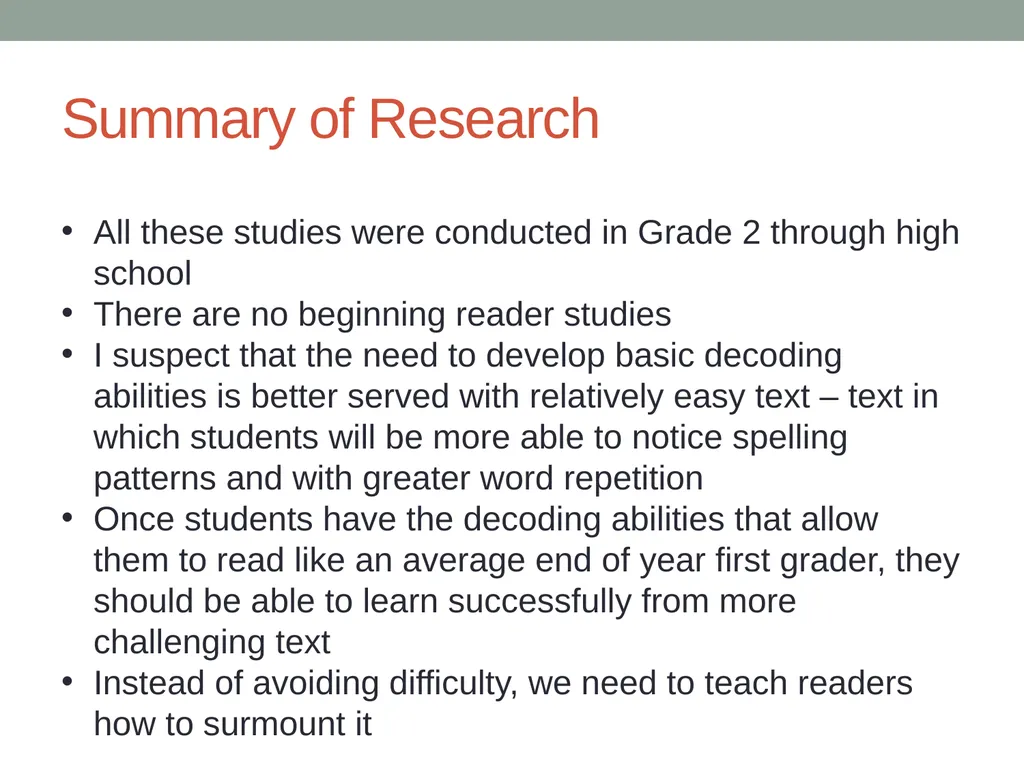
Summary of Research All these studies were conducted in Grade 2 through high school
There are no beginning reader studies
I suspect that the need to develop basic decoding abilities is better served with relatively easy text – text in which students will be more able to notice spelling patterns and with greater word repetition
Once students have the decoding abilities that allow them to read like an average end of year first grader, they should be able to learn successfully from more challenging text
Instead of avoiding difficulty, we need to teach readers how to surmount it<br>
There are no beginning reader studies
I suspect that the need to develop basic decoding abilities is better served with relatively easy text – text in which students will be more able to notice spelling patterns and with greater word repetition
Once students have the decoding abilities that allow them to read like an average end of year first grader, they should be able to learn successfully from more challenging text
Instead of avoiding difficulty, we need to teach readers how to surmount it<br>
16
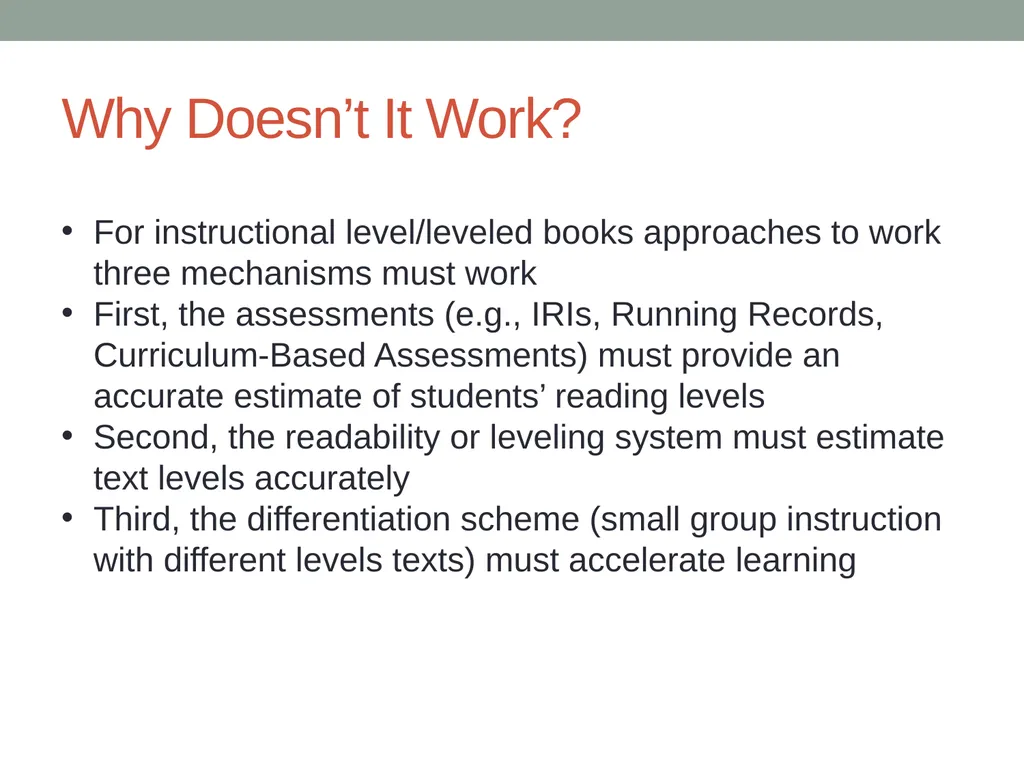
Why Doesn’t It Work? For instructional level/leveled books approaches to work three mechanisms must work
First, the assessments (e.g., IRIs, Running Records, Curriculum-Based Assessments) must provide an accurate estimate of students’ reading levels
Second, the readability or leveling system must estimate text levels accurately
Third, the differentiation scheme (small group instruction with different levels texts) must accelerate learning<br>
First, the assessments (e.g., IRIs, Running Records, Curriculum-Based Assessments) must provide an accurate estimate of students’ reading levels
Second, the readability or leveling system must estimate text levels accurately
Third, the differentiation scheme (small group instruction with different levels texts) must accelerate learning<br>
17
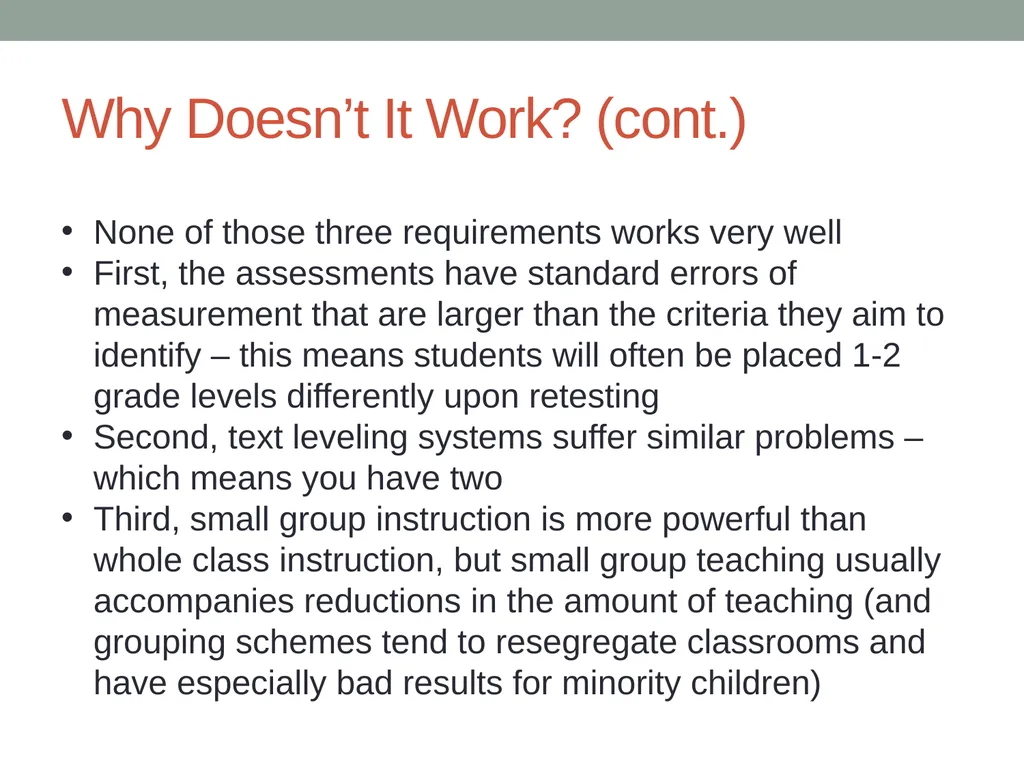
Why Doesn’t It Work? (cont.) None of those three requirements works very well
First, the assessments have standard errors of measurement that are larger than the criteria they aim to identify – this means students will often be placed 1-2 grade levels differently upon retesting
Second, text leveling systems suffer similar problems – which means you have two
Third, small group instruction is more powerful than whole class instruction, but small group teaching usually accompanies reductions in the amount of teaching (and grouping schemes tend to resegregate classrooms and have especially bad results for minority children)<br>
First, the assessments have standard errors of measurement that are larger than the criteria they aim to identify – this means students will often be placed 1-2 grade levels differently upon retesting
Second, text leveling systems suffer similar problems – which means you have two
Third, small group instruction is more powerful than whole class instruction, but small group teaching usually accompanies reductions in the amount of teaching (and grouping schemes tend to resegregate classrooms and have especially bad results for minority children)<br>
18
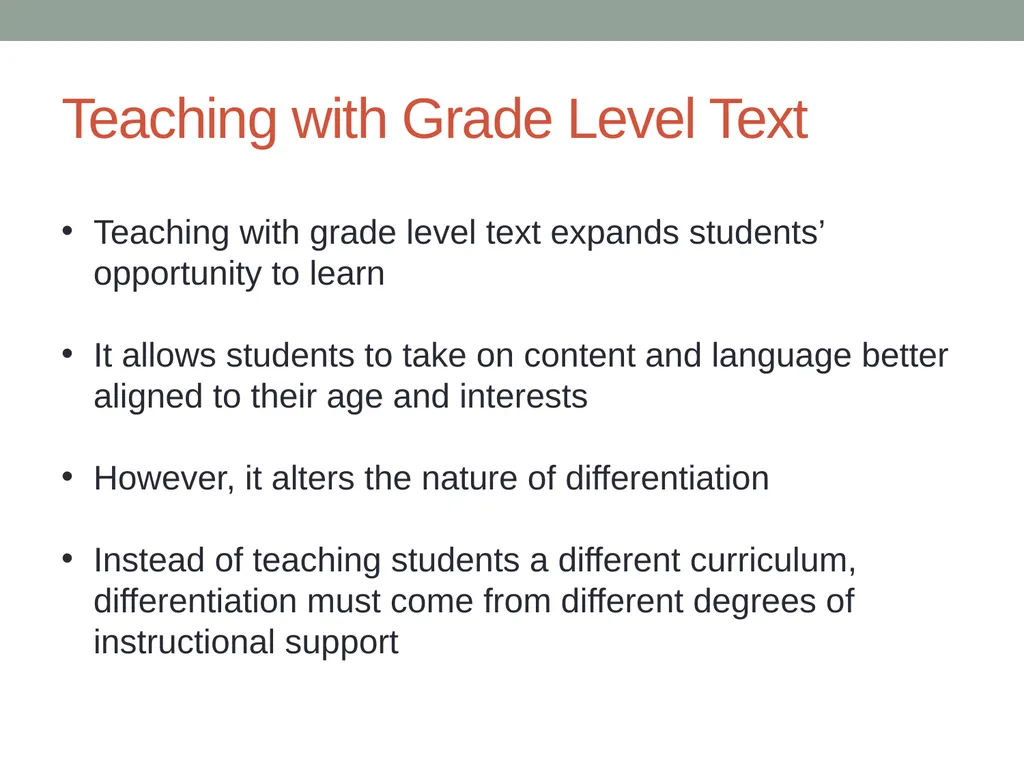
Teaching with Grade Level Text Teaching with grade level text expands students’ opportunity to learn
It allows students to take on content and language better aligned to their age and interests
However, it alters the nature of differentiation
Instead of teaching students a different curriculum, differentiation must come from different degrees of instructional support<br>
It allows students to take on content and language better aligned to their age and interests
However, it alters the nature of differentiation
Instead of teaching students a different curriculum, differentiation must come from different degrees of instructional support<br>
19
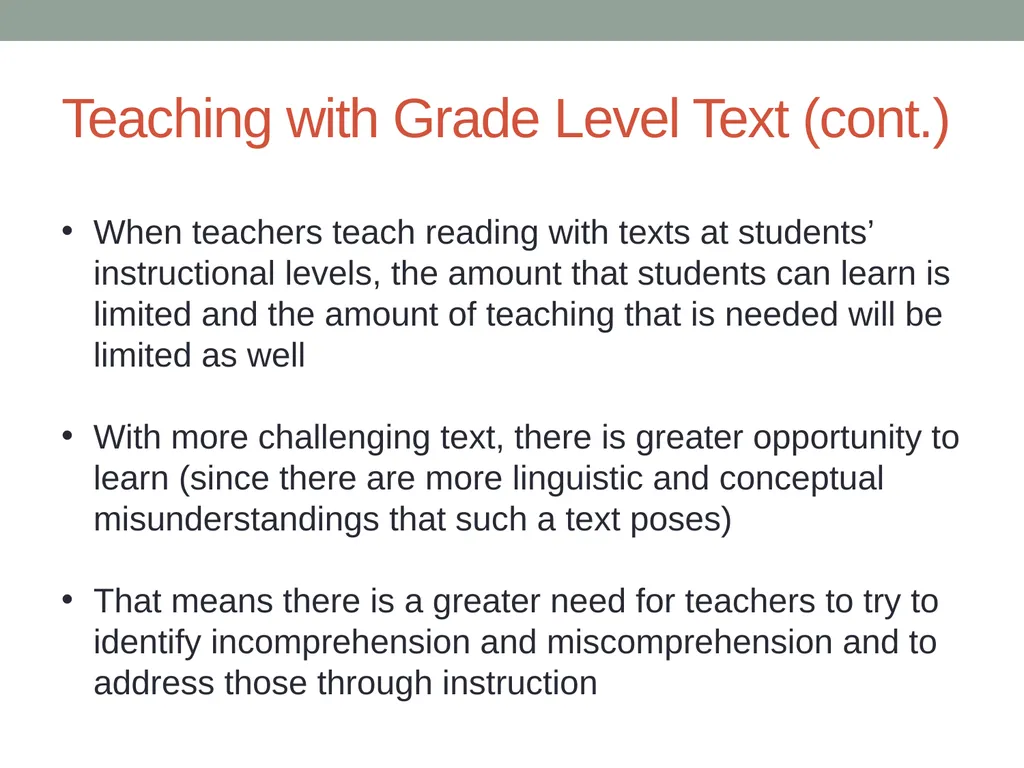
Teaching with Grade Level Text (cont.) When teachers teach reading with texts at students’ instructional levels, the amount that students can learn is limited and the amount of teaching that is needed will be limited as well
With more challenging text, there is greater opportunity to learn (since there are more linguistic and conceptual misunderstandings that such a text poses)
That means there is a greater need for teachers to try to identify incomprehension and miscomprehension and to address those through instruction<br>
With more challenging text, there is greater opportunity to learn (since there are more linguistic and conceptual misunderstandings that such a text poses)
That means there is a greater need for teachers to try to identify incomprehension and miscomprehension and to address those through instruction<br>
20
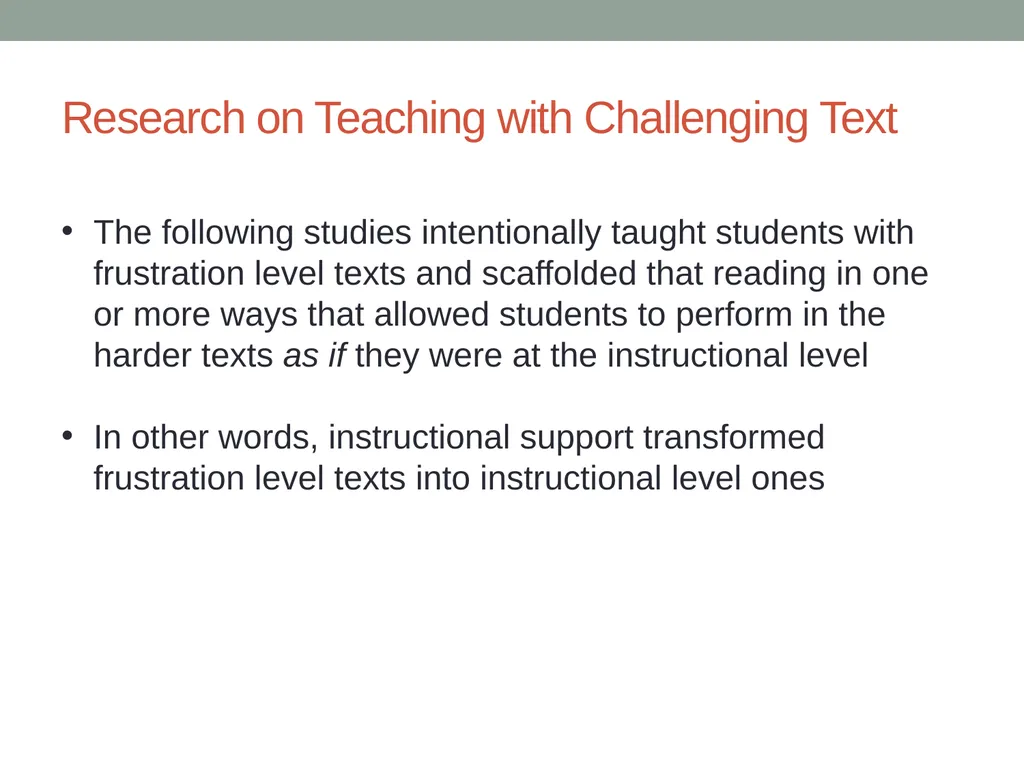
Research on Teaching with Challenging Text The following studies intentionally taught students with frustration level texts and scaffolded that reading in one or more ways that allowed students to perform in the harder texts as if they were at the instructional level
In other words, instructional support transformed frustration level texts into instructional level ones<br>
In other words, instructional support transformed frustration level texts into instructional level ones<br>
21
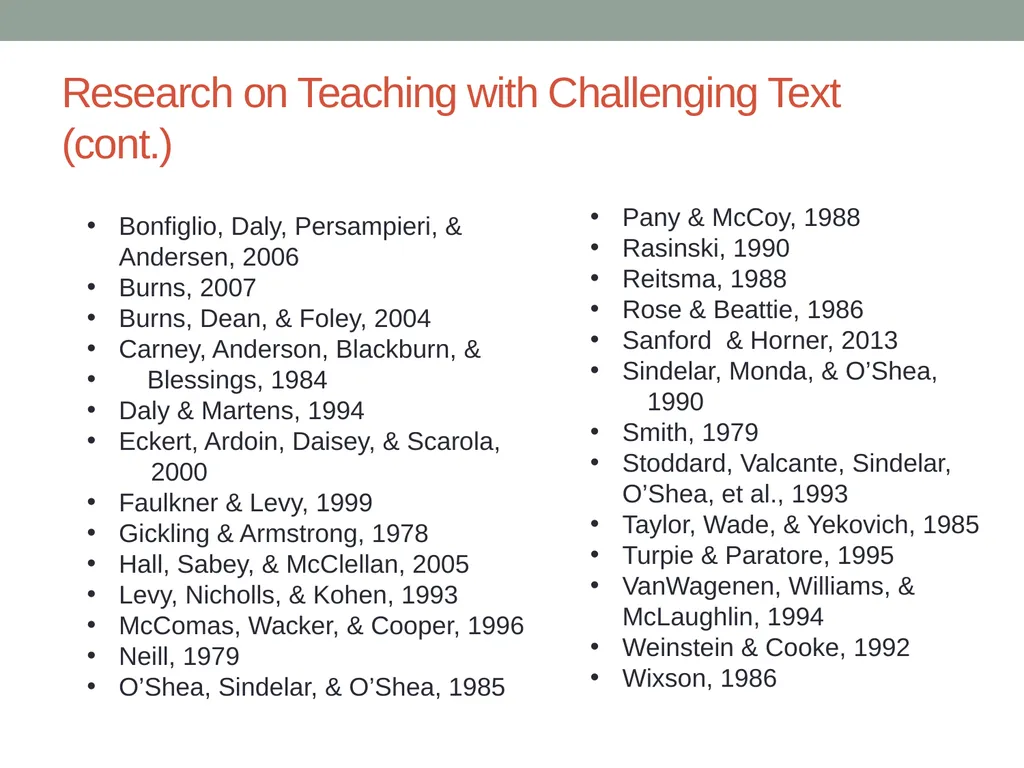
Research on Teaching with Challenging Text (cont.) Bonfiglio, Daly, Persampieri, & Andersen, 2006
Burns, 2007
Burns, Dean, & Foley, 2004
Carney, Anderson, Blackburn, &
Blessings, 1984
Daly & Martens, 1994
Eckert, Ardoin, Daisey, & Scarola,
2000
Faulkner & Levy, 1999
Gickling & Armstrong, 1978
Hall, Sabey, & McClellan, 2005
Levy, Nicholls, & Kohen, 1993
McComas, Wacker, & Cooper, 1996
Neill, 1979
O’Shea, Sindelar, & O’Shea, 1985 Pany & McCoy, 1988
Rasinski, 1990
Reitsma, 1988
Rose & Beattie, 1986
Sanford & Horner, 2013
Sindelar, Monda, & O’Shea,
1990
Smith, 1979
Stoddard, Valcante, Sindelar, O’Shea, et al., 1993
Taylor, Wade, & Yekovich, 1985
Turpie & Paratore, 1995
VanWagenen, Williams, & McLaughlin, 1994
Weinstein & Cooke, 1992
Wixson, 1986<br>
Burns, 2007
Burns, Dean, & Foley, 2004
Carney, Anderson, Blackburn, &
Blessings, 1984
Daly & Martens, 1994
Eckert, Ardoin, Daisey, & Scarola,
2000
Faulkner & Levy, 1999
Gickling & Armstrong, 1978
Hall, Sabey, & McClellan, 2005
Levy, Nicholls, & Kohen, 1993
McComas, Wacker, & Cooper, 1996
Neill, 1979
O’Shea, Sindelar, & O’Shea, 1985 Pany & McCoy, 1988
Rasinski, 1990
Reitsma, 1988
Rose & Beattie, 1986
Sanford & Horner, 2013
Sindelar, Monda, & O’Shea,
1990
Smith, 1979
Stoddard, Valcante, Sindelar, O’Shea, et al., 1993
Taylor, Wade, & Yekovich, 1985
Turpie & Paratore, 1995
VanWagenen, Williams, & McLaughlin, 1994
Weinstein & Cooke, 1992
Wixson, 1986<br>
22
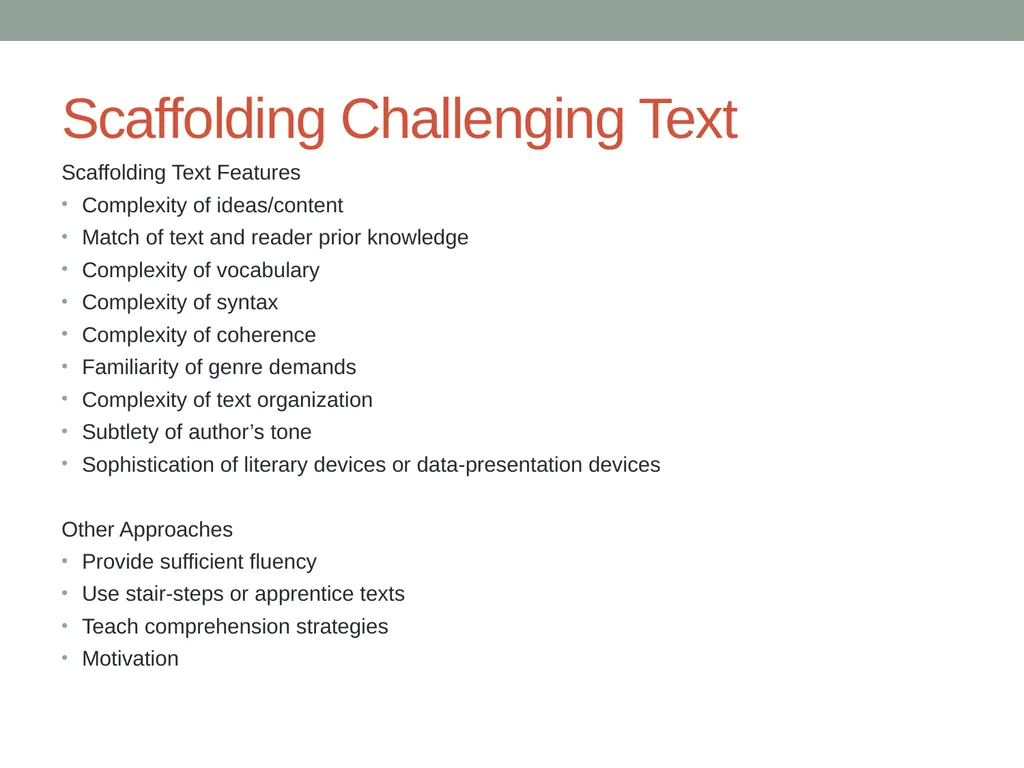
Scaffolding Challenging Text Scaffolding Text Features
Complexity of ideas/content
Match of text and reader prior knowledge
Complexity of vocabulary
Complexity of syntax
Complexity of coherence
Familiarity of genre demands
Complexity of text organization
Subtlety of author’s tone
Sophistication of literary devices or data-presentation devices
Other Approaches
Provide sufficient fluency
Use stair-steps or apprentice texts
Teach comprehension strategies
Motivation<br>
Complexity of ideas/content
Match of text and reader prior knowledge
Complexity of vocabulary
Complexity of syntax
Complexity of coherence
Familiarity of genre demands
Complexity of text organization
Subtlety of author’s tone
Sophistication of literary devices or data-presentation devices
Other Approaches
Provide sufficient fluency
Use stair-steps or apprentice texts
Teach comprehension strategies
Motivation<br>
23
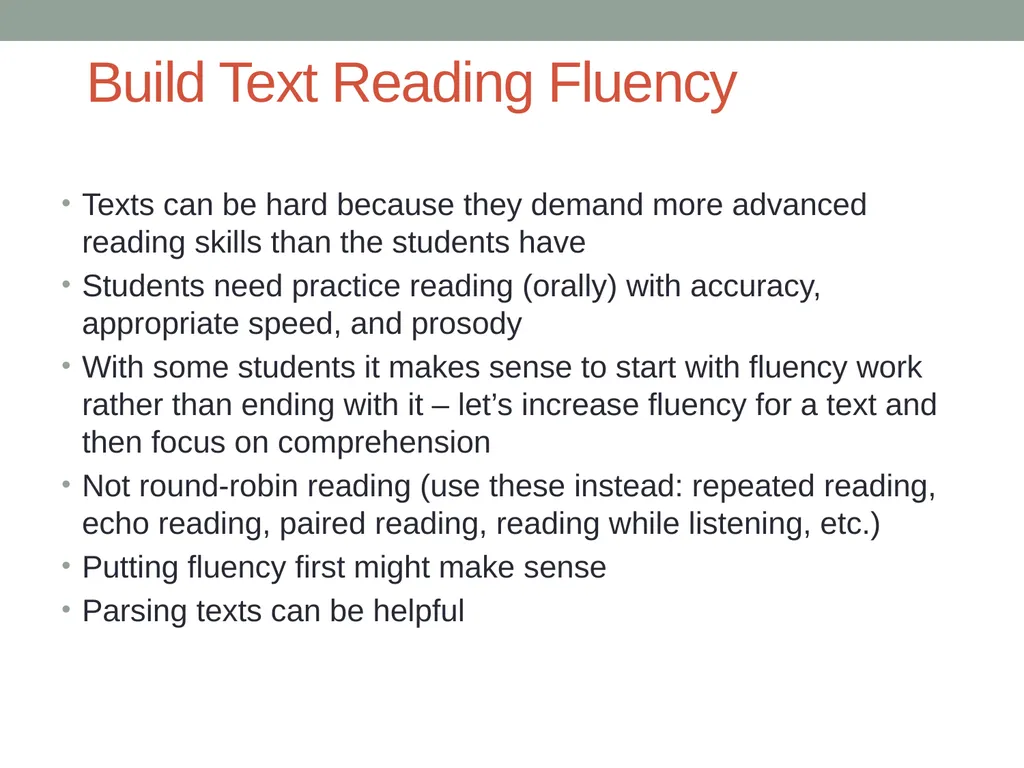
Build Text Reading Fluency Texts can be hard because they demand more advanced reading skills than the students have
Students need practice reading (orally) with accuracy, appropriate speed, and prosody
With some students it makes sense to start with fluency work rather than ending with it – let’s increase fluency for a text and then focus on comprehension
Not round-robin reading (use these instead: repeated reading, echo reading, paired reading, reading while listening, etc.)
Putting fluency first might make sense
Parsing texts can be helpful<br>
Students need practice reading (orally) with accuracy, appropriate speed, and prosody
With some students it makes sense to start with fluency work rather than ending with it – let’s increase fluency for a text and then focus on comprehension
Not round-robin reading (use these instead: repeated reading, echo reading, paired reading, reading while listening, etc.)
Putting fluency first might make sense
Parsing texts can be helpful<br>
24
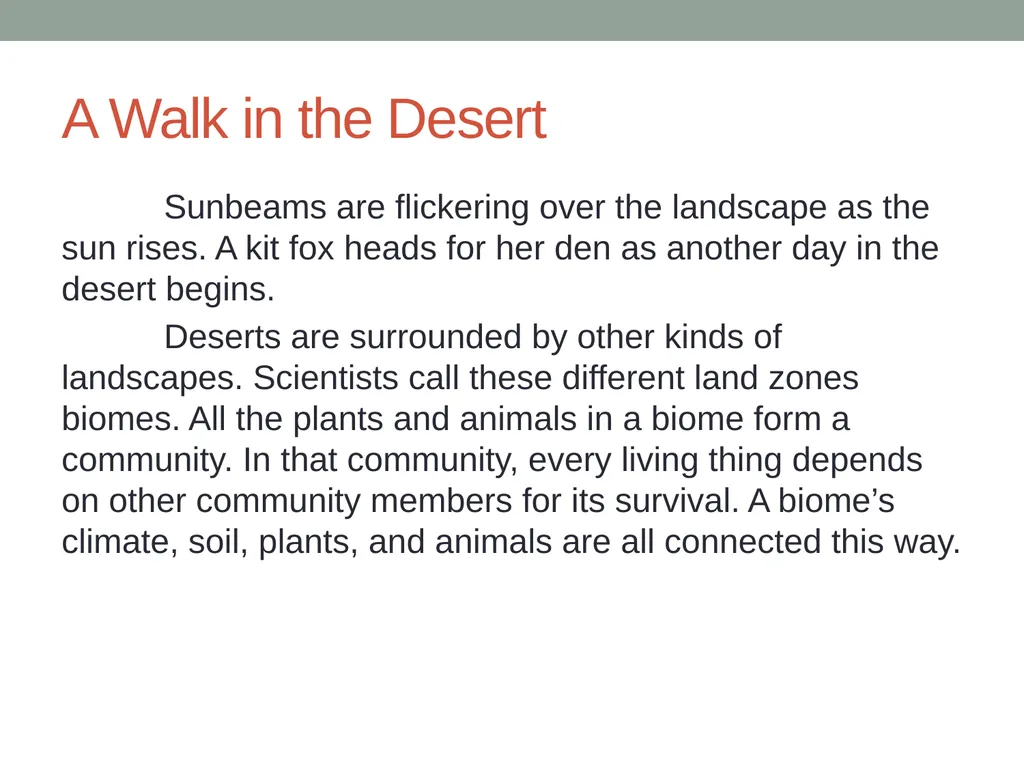
A Walk in the Desert Sunbeams are flickering over the landscape as the sun rises. A kit fox heads for her den as another day in the desert begins.
Deserts are surrounded by other kinds of landscapes. Scientists call these different land zones biomes. All the plants and animals in a biome form a community. In that community, every living thing depends on other community members for its survival. A biome’s climate, soil, plants, and animals are all connected this way.<br>
Deserts are surrounded by other kinds of landscapes. Scientists call these different land zones biomes. All the plants and animals in a biome form a community. In that community, every living thing depends on other community members for its survival. A biome’s climate, soil, plants, and animals are all connected this way.<br>
25
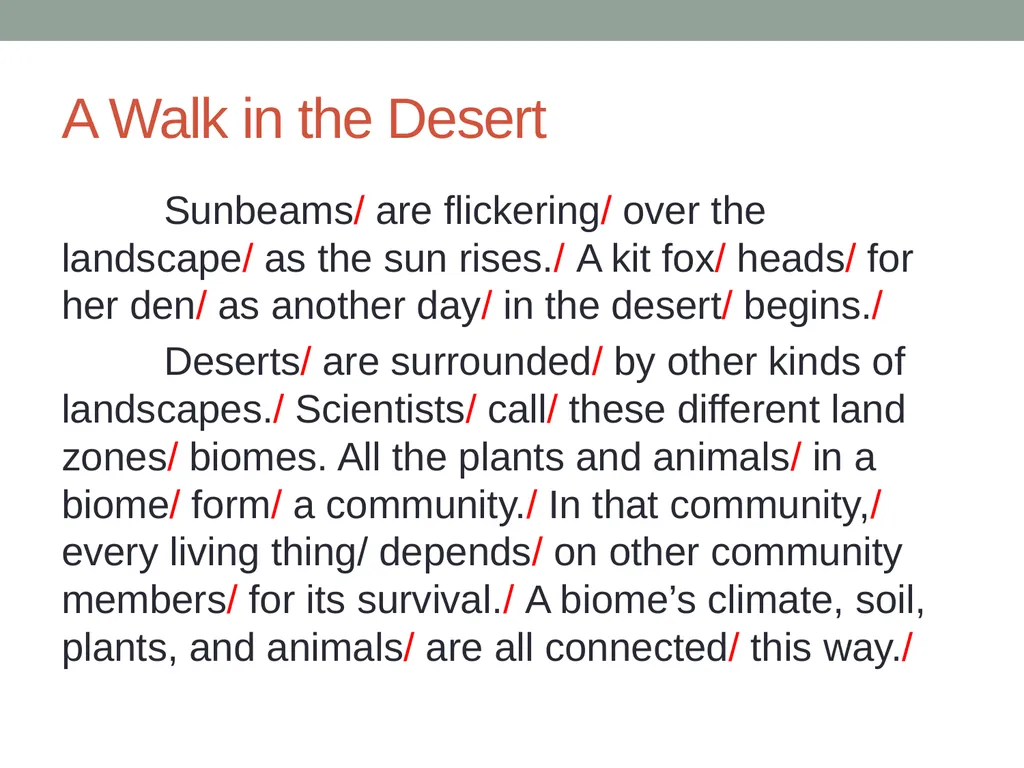
A Walk in the Desert Sunbeams/ are flickering/ over the landscape/ as the sun rises./ A kit fox/ heads/ for her den/ as another day/ in the desert/ begins./
Deserts/ are surrounded/ by other kinds of landscapes./ Scientists/ call/ these different land zones/ biomes. All the plants and animals/ in a biome/ form/ a community./ In that community,/ every living thing/ depends/ on other community members/ for its survival./ A biome’s climate, soil, plants, and animals/ are all connected/ this way./<br>
Deserts/ are surrounded/ by other kinds of landscapes./ Scientists/ call/ these different land zones/ biomes. All the plants and animals/ in a biome/ form/ a community./ In that community,/ every living thing/ depends/ on other community members/ for its survival./ A biome’s climate, soil, plants, and animals/ are all connected/ this way./<br>
26
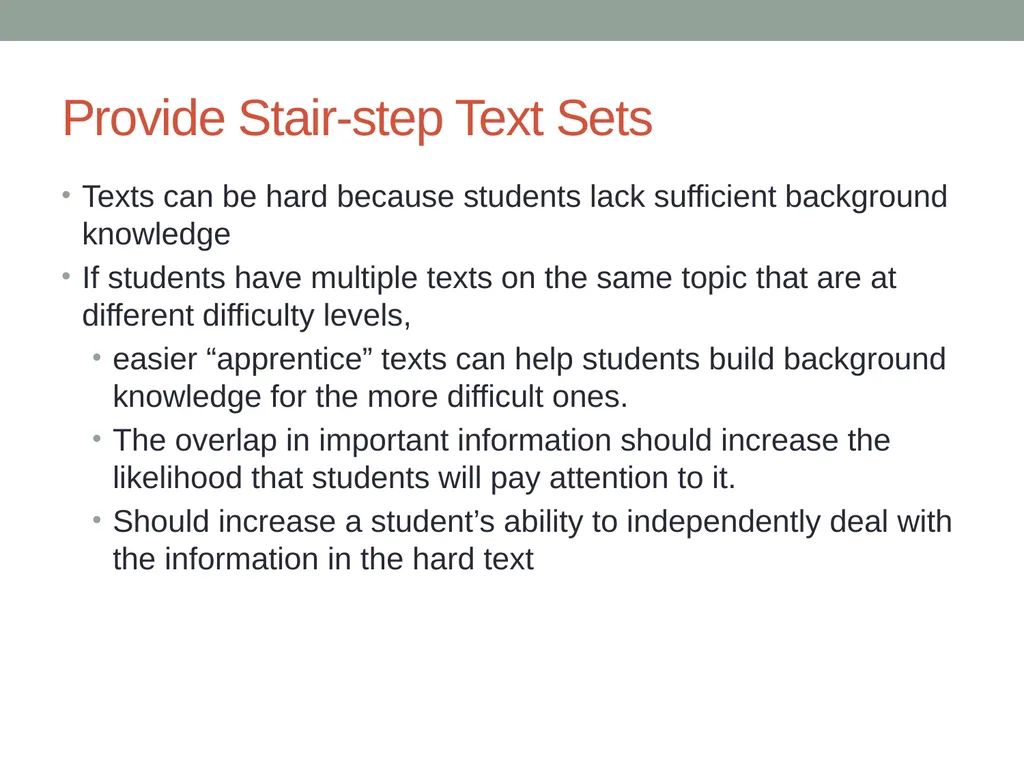
Provide Stair-step Text Sets Texts can be hard because students lack sufficient background knowledge
If students have multiple texts on the same topic that are at different difficulty levels,
easier “apprentice” texts can help students build background knowledge for the more difficult ones.
The overlap in important information should increase the likelihood that students will pay attention to it.
Should increase a student’s ability to independently deal with the information in the hard text<br>
If students have multiple texts on the same topic that are at different difficulty levels,
easier “apprentice” texts can help students build background knowledge for the more difficult ones.
The overlap in important information should increase the likelihood that students will pay attention to it.
Should increase a student’s ability to independently deal with the information in the hard text<br>
27
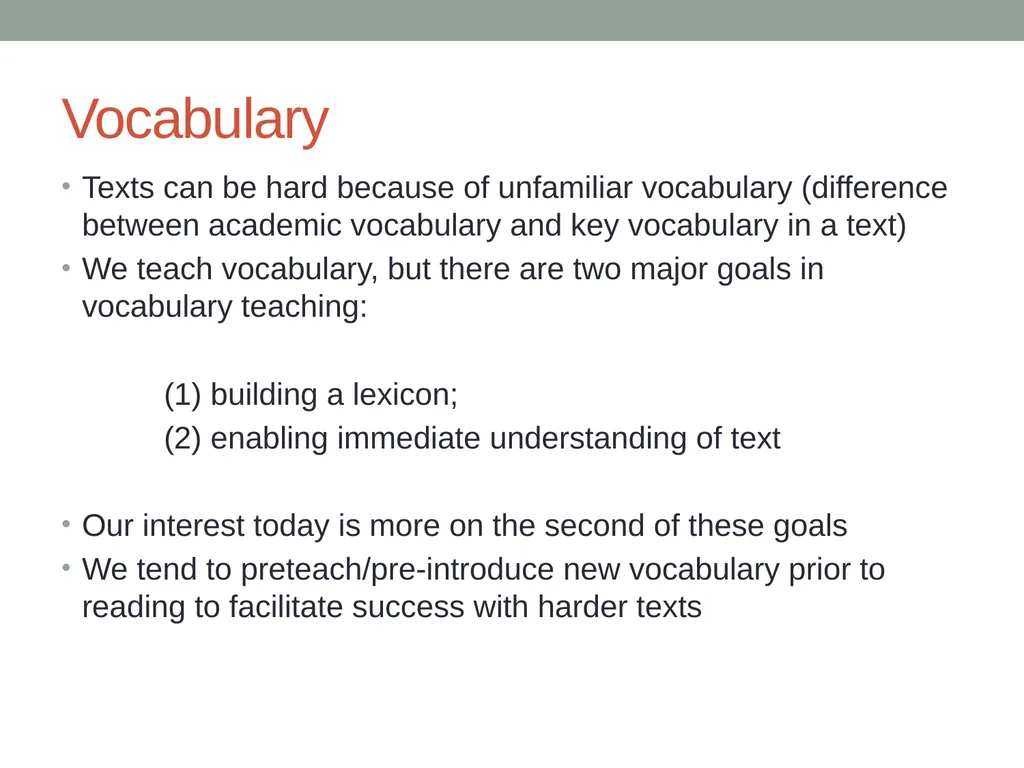
Vocabulary Texts can be hard because of unfamiliar vocabulary (difference between academic vocabulary and key vocabulary in a text)
We teach vocabulary, but there are two major goals in vocabulary teaching:
(1) building a lexicon;
(2) enabling immediate understanding of text
Our interest today is more on the second of these goals
We tend to preteach/pre-introduce new vocabulary prior to reading to facilitate success with harder texts<br>
We teach vocabulary, but there are two major goals in vocabulary teaching:
(1) building a lexicon;
(2) enabling immediate understanding of text
Our interest today is more on the second of these goals
We tend to preteach/pre-introduce new vocabulary prior to reading to facilitate success with harder texts<br>
28
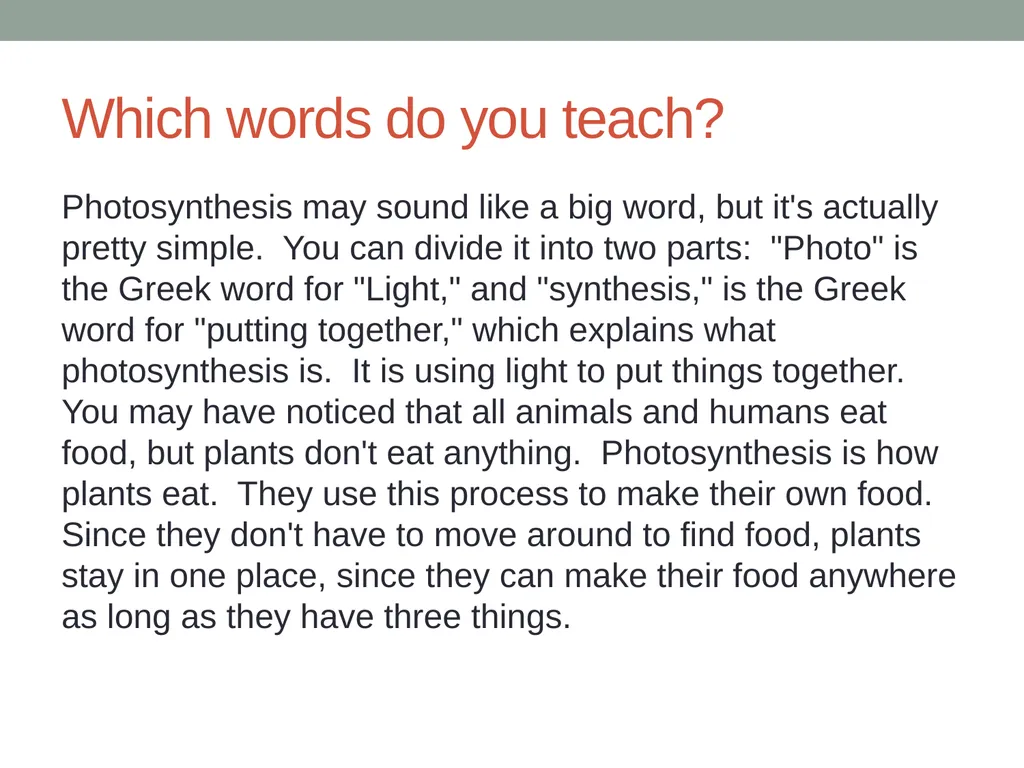
Which words do you teach? Photosynthesis may sound like a big word, but it's actually pretty simple. You can divide it into two parts: "Photo" is the Greek word for "Light," and "synthesis," is the Greek word for "putting together," which explains what photosynthesis is. It is using light to put things together. You may have noticed that all animals and humans eat food, but plants don't eat anything. Photosynthesis is how plants eat. They use this process to make their own food. Since they don't have to move around to find food, plants stay in one place, since they can make their food anywhere as long as they have three things.<br>
29
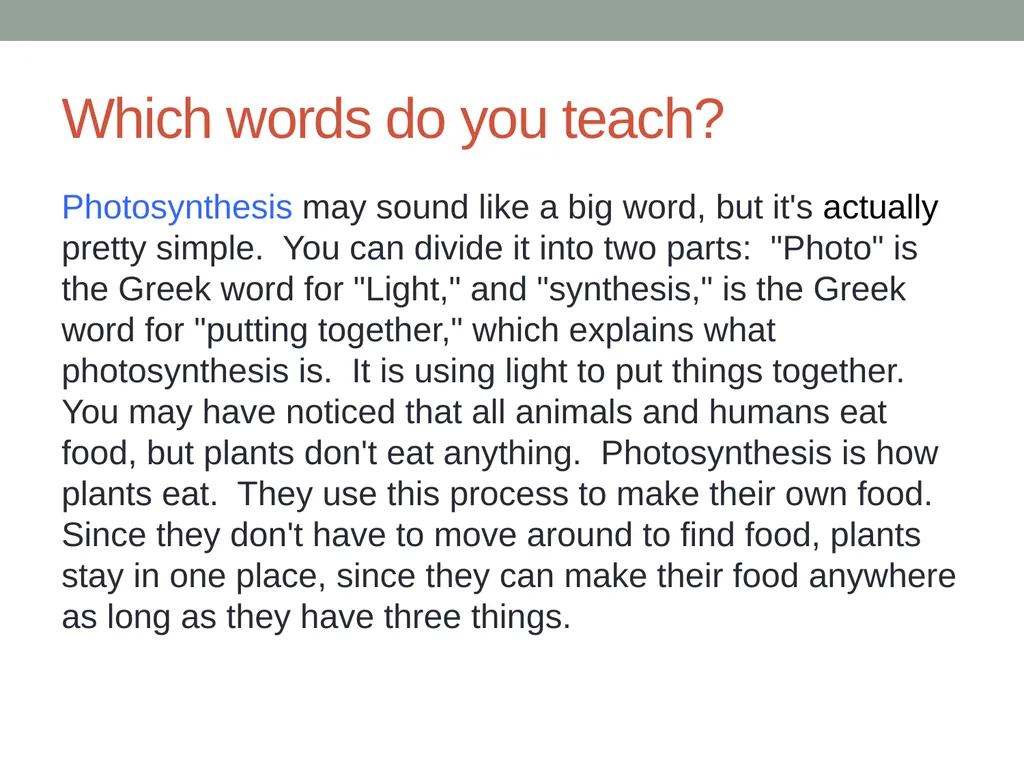
Which words do you teach? Photosynthesis may sound like a big word, but it's actually pretty simple. You can divide it into two parts: "Photo" is the Greek word for "Light," and "synthesis," is the Greek word for "putting together," which explains what photosynthesis is. It is using light to put things together. You may have noticed that all animals and humans eat food, but plants don't eat anything. Photosynthesis is how plants eat. They use this process to make their own food. Since they don't have to move around to find food, plants stay in one place, since they can make their food anywhere as long as they have three things.<br>
30
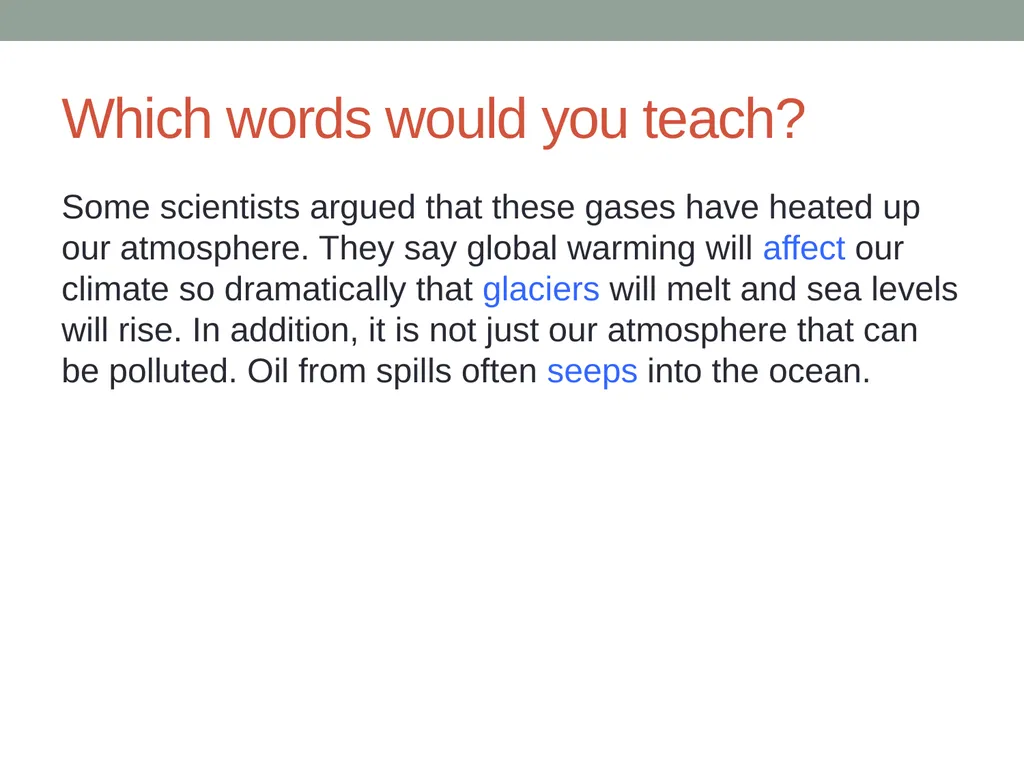
Which words would you teach? Some scientists argued that these gases have heated up our atmosphere. They say global warming will affect our climate so dramatically that glaciers will melt and sea levels will rise. In addition, it is not just our atmosphere that can be polluted. Oil from spills often seeps into the ocean.<br>
31
Which words would you teach? I can never forget the scene that met us. Between us and the Barrier was a lane of some fifty yards wide, a seething cauldron. Bergs were calving off as we watched: and capsizing: and hitting other bergs, splitting into two and falling apart. The Killers filled the whole place. Looking downwards into a hole between our berg and the next, a hole not bigger than a small room, we saw at least six whales. They were so crowded that they could only lie so as to get their snouts out of the water and my memory is that their snouts were bottle-nosed. At this moment our berg split into two parts and we hastily retreated to the lower and safer floes.<br>
32
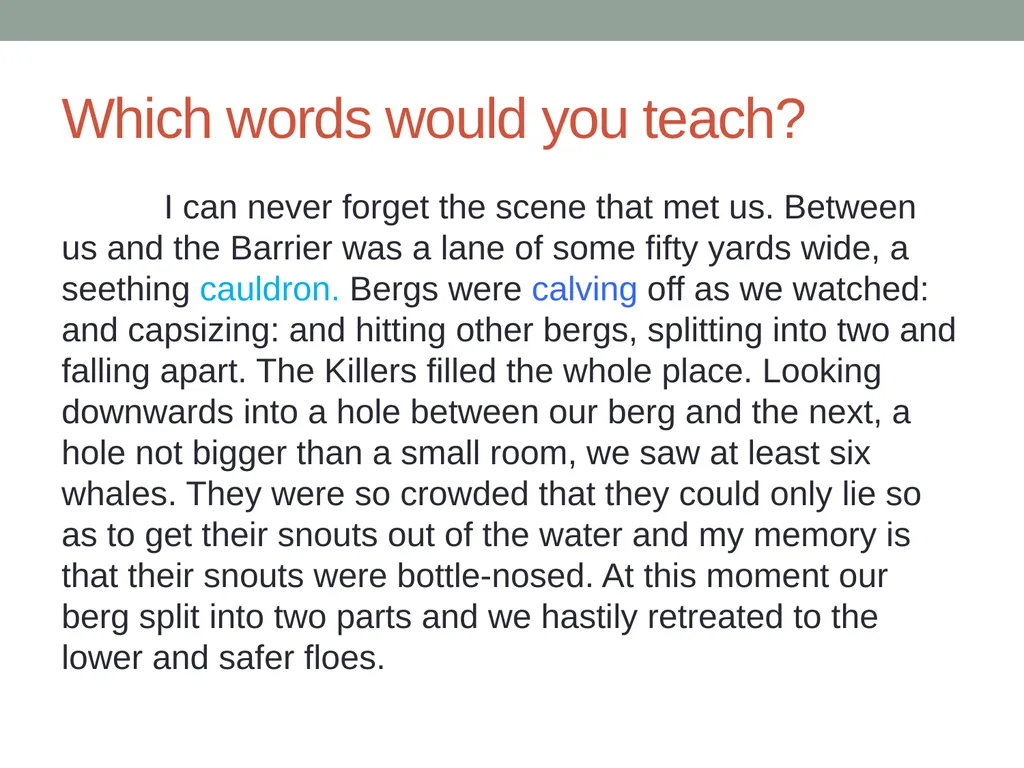
Which words would you teach? I can never forget the scene that met us. Between us and the Barrier was a lane of some fifty yards wide, a seething cauldron. Bergs were calving off as we watched: and capsizing: and hitting other bergs, splitting into two and falling apart. The Killers filled the whole place. Looking downwards into a hole between our berg and the next, a hole not bigger than a small room, we saw at least six whales. They were so crowded that they could only lie so as to get their snouts out of the water and my memory is that their snouts were bottle-nosed. At this moment our berg split into two parts and we hastily retreated to the lower and safer floes.<br>
33
Comprehending Sentences Reading requires more than an ability to make sense of word meanings
Comprehension also depends on one’s ability to make sense of syntax, too
Formal grammar instruction has not been found to have much impact on comprehension – but it is possible to teach it successfully in applied ways<br>
Comprehension also depends on one’s ability to make sense of syntax, too
Formal grammar instruction has not been found to have much impact on comprehension – but it is possible to teach it successfully in applied ways<br>
34
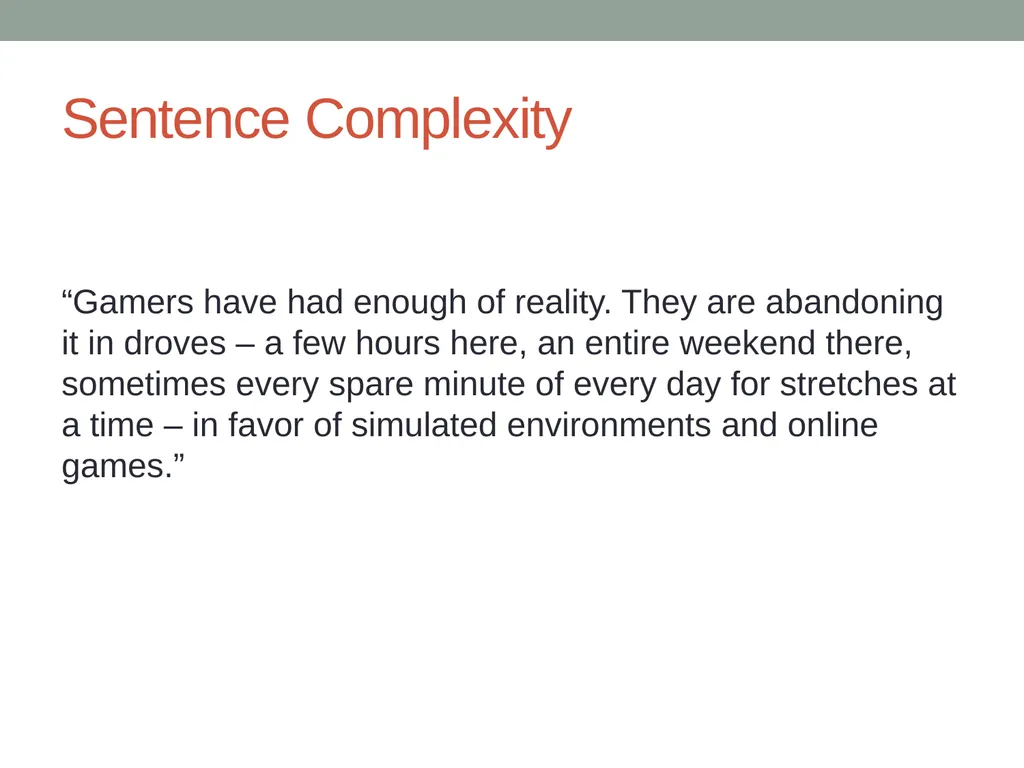
Sentence Complexity “Gamers have had enough of reality. They are abandoning it in droves – a few hours here, an entire weekend there, sometimes every spare minute of every day for stretches at a time – in favor of simulated environments and online games.”<br>
35
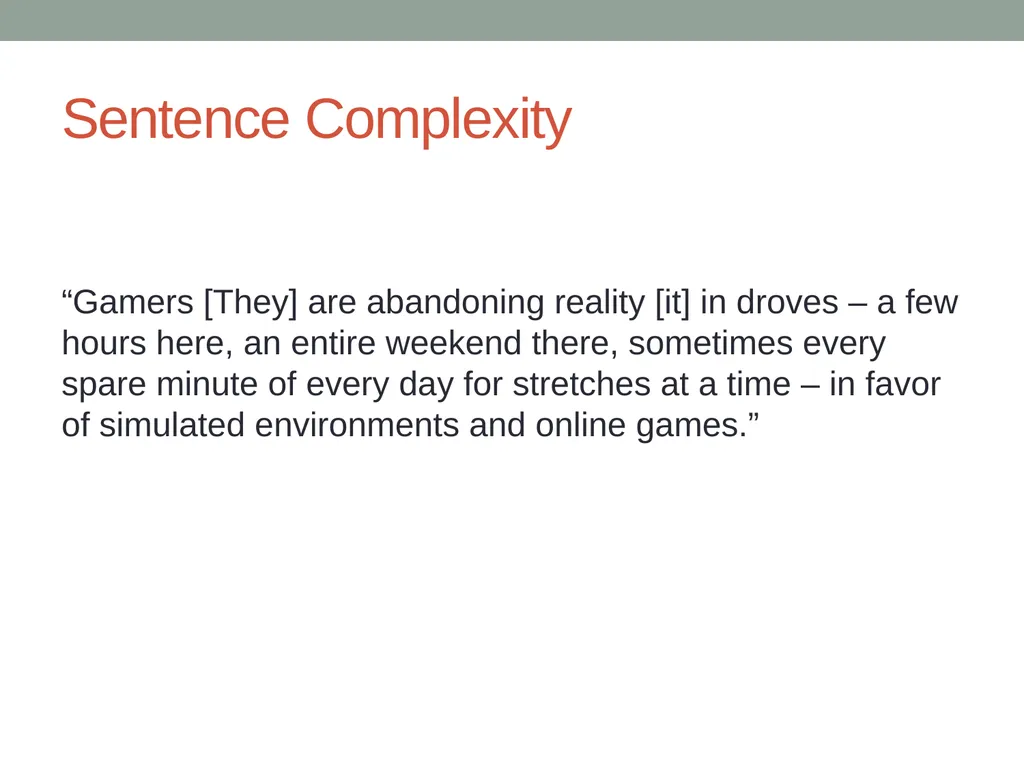
Sentence Complexity “Gamers [They] are abandoning reality [it] in droves – a few hours here, an entire weekend there, sometimes every spare minute of every day for stretches at a time – in favor of simulated environments and online games.”<br>
36
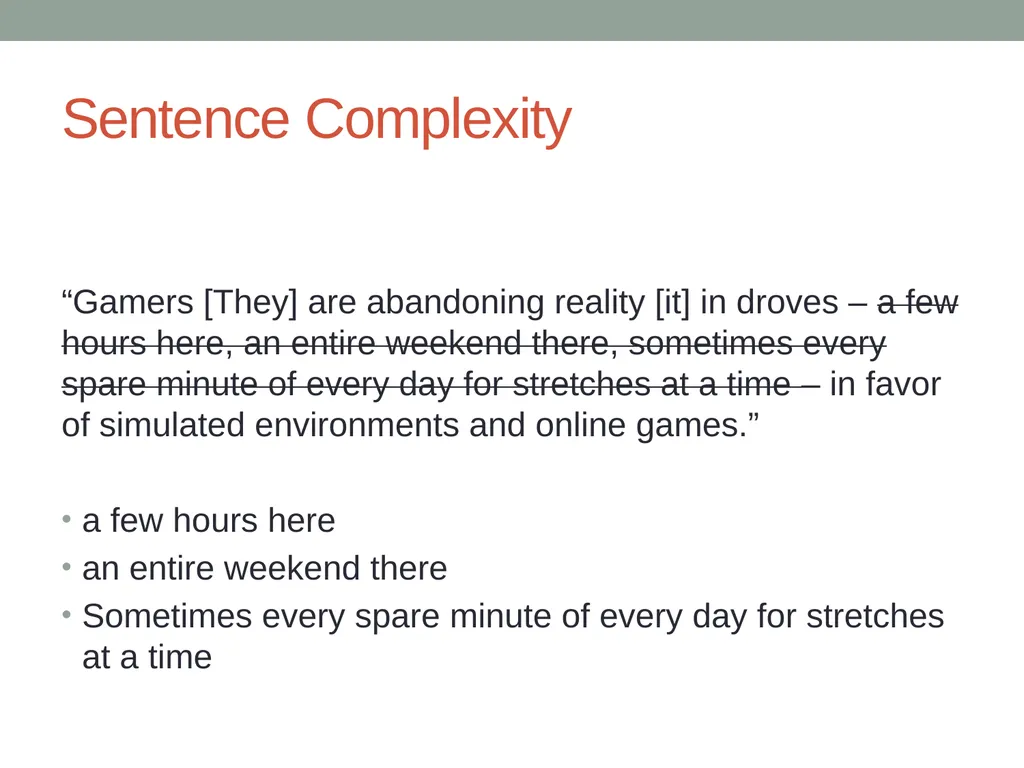
Sentence Complexity “Gamers [They] are abandoning reality [it] in droves – a few hours here, an entire weekend there, sometimes every spare minute of every day for stretches at a time – in favor of simulated environments and online games.”
a few hours here
an entire weekend there
Sometimes every spare minute of every day for stretches at a time<br>
a few hours here
an entire weekend there
Sometimes every spare minute of every day for stretches at a time<br>
37
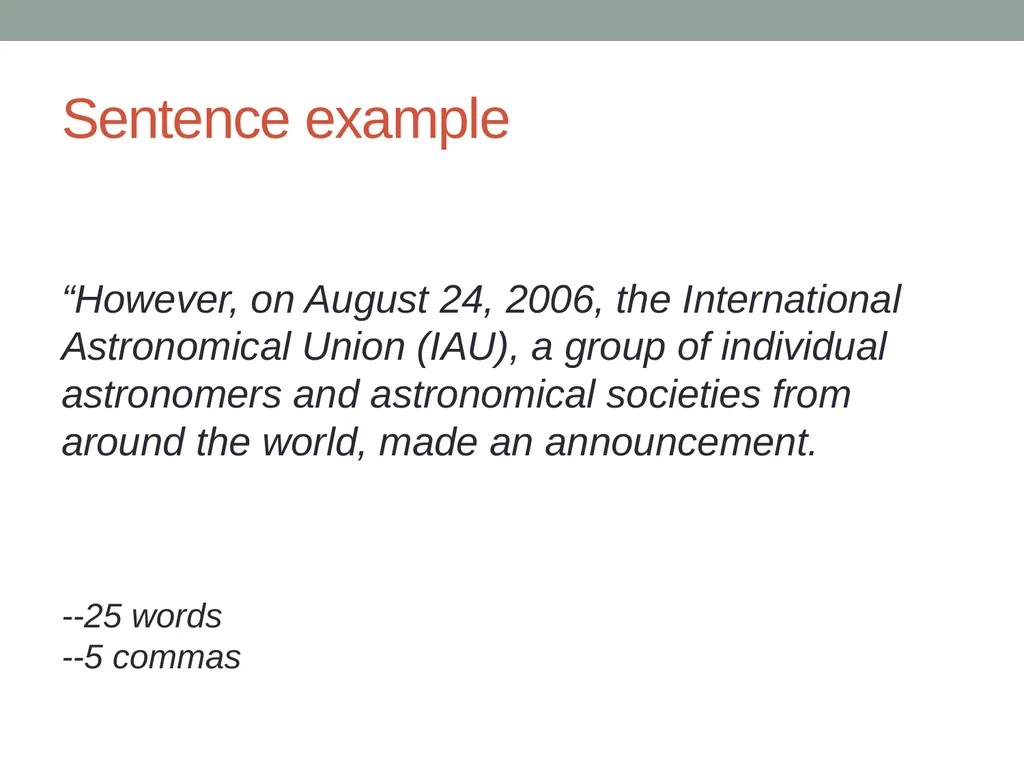
Sentence example “However, on August 24, 2006, the International Astronomical Union (IAU), a group of individual astronomers and astronomical societies from around the world, made an announcement.
--25 words
--5 commas<br>
--25 words
--5 commas<br>
38
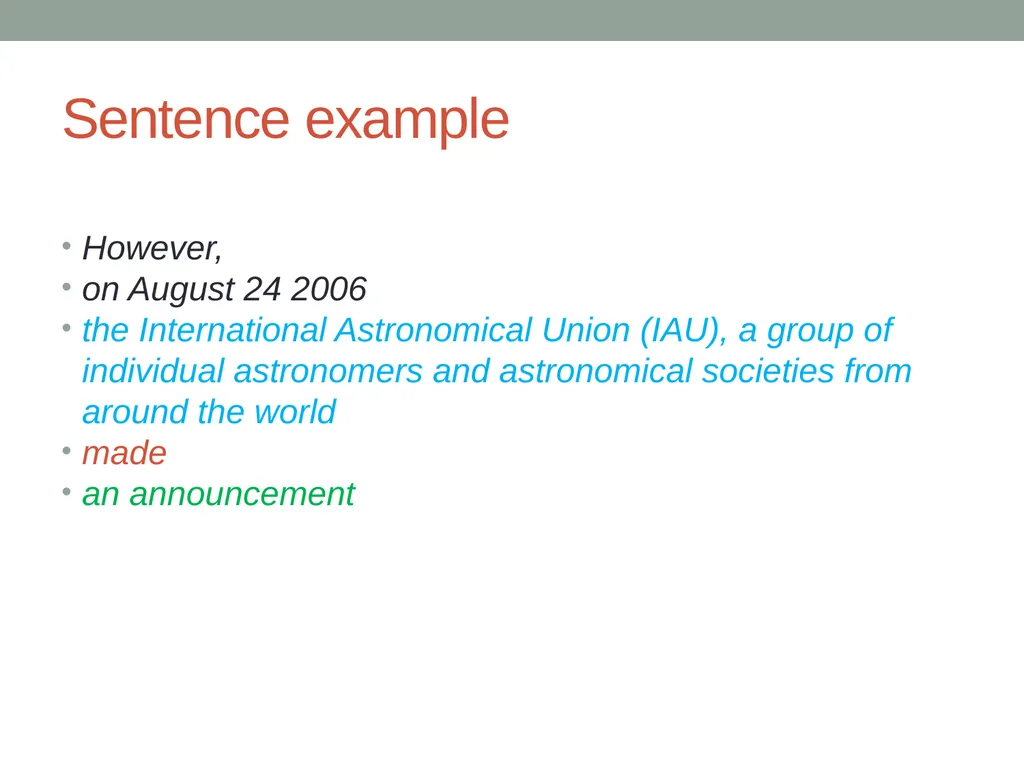
Sentence example However,
on August 24 2006
the International Astronomical Union (IAU), a group of individual astronomers and astronomical societies from around the world
made
an announcement<br>
on August 24 2006
the International Astronomical Union (IAU), a group of individual astronomers and astronomical societies from around the world
made
an announcement<br>
39
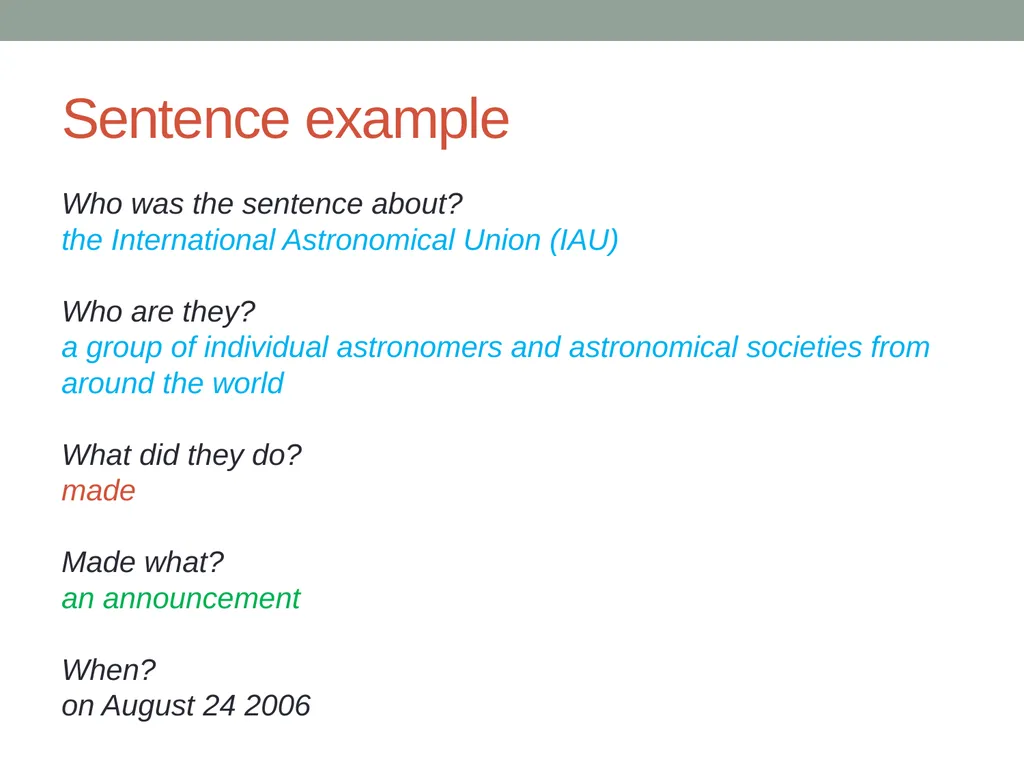
Sentence example Who was the sentence about?
the International Astronomical Union (IAU)
Who are they?
a group of individual astronomers and astronomical societies from around the world
What did they do?
made
Made what?
an announcement
When?
on August 24 2006<br>
the International Astronomical Union (IAU)
Who are they?
a group of individual astronomers and astronomical societies from around the world
What did they do?
made
Made what?
an announcement
When?
on August 24 2006<br>
40
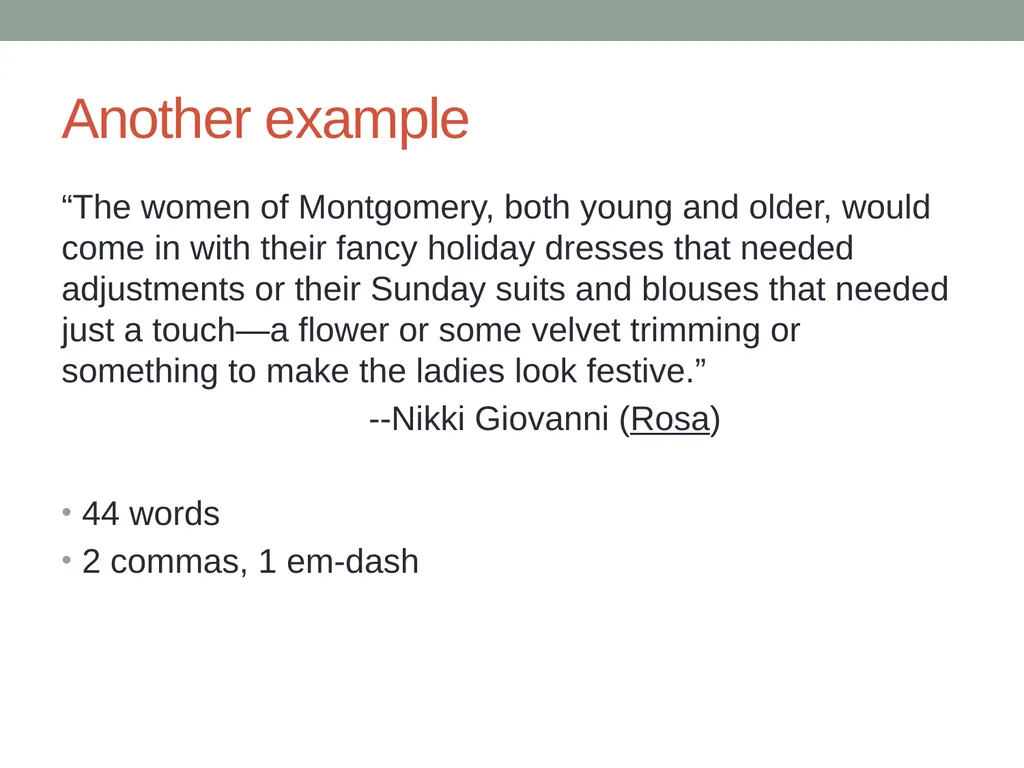
Another example “The women of Montgomery, both young and older, would come in with their fancy holiday dresses that needed adjustments or their Sunday suits and blouses that needed just a touch—a flower or some velvet trimming or something to make the ladies look festive.”
--Nikki Giovanni (Rosa)
44 words
2 commas, 1 em-dash<br>
--Nikki Giovanni (Rosa)
44 words
2 commas, 1 em-dash<br>
41
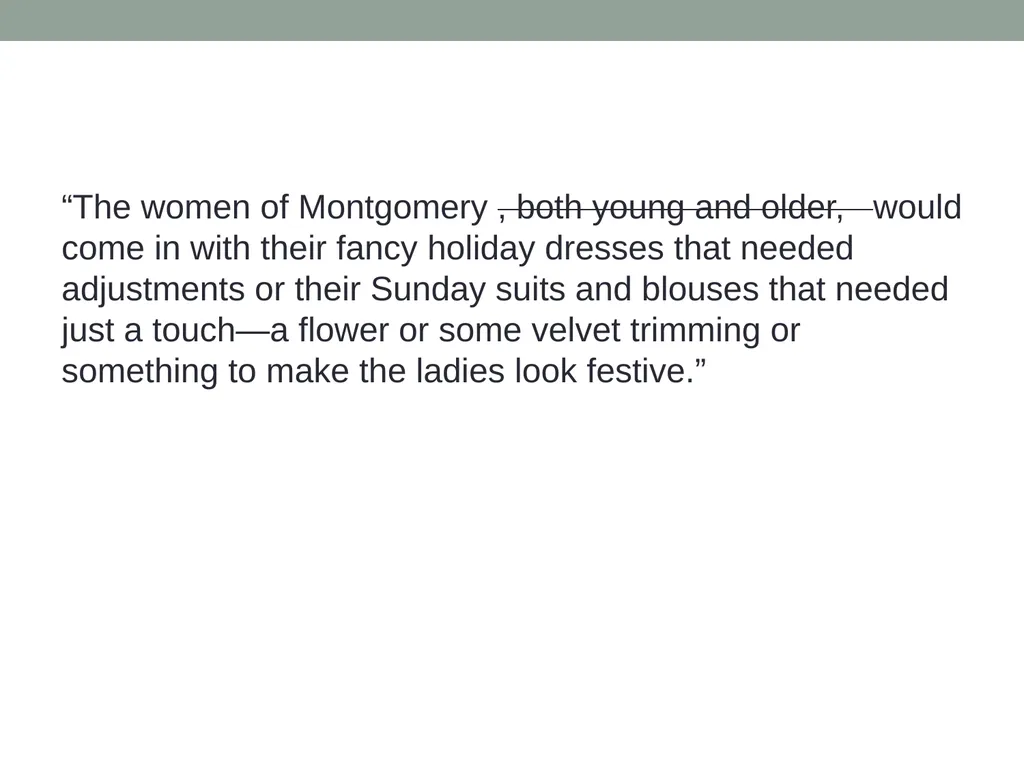
“The women of Montgomery , both young and older, would come in with their fancy holiday dresses that needed adjustments or their Sunday suits and blouses that needed just a touch—a flower or some velvet trimming or something to make the ladies look festive.”<br>
42
“The women of Montgomery would come in with their fancy holiday dresses that needed adjustments or their Sunday suits and blouses that needed just a touch—a flower or some velvet trimming or something to make the ladies look festive.”<br>
43
“The women of Montgomery would come in with their fancy holiday dresses that needed adjustments or their Sunday suits and blouses that needed just a touch—a flower or some velvet trimming or something to make the ladies look festive.”<br>
44
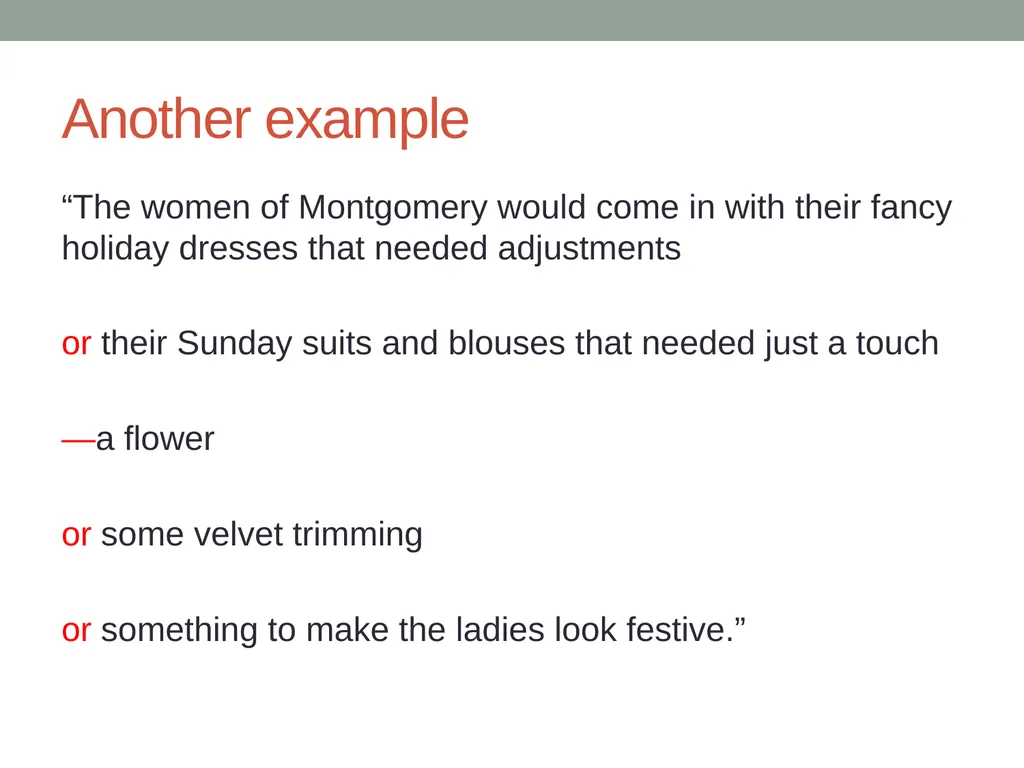
Another example “The women of Montgomery would come in with their fancy holiday dresses that needed adjustments
or their Sunday suits and blouses that needed just a touch
—a flower
or some velvet trimming
or something to make the ladies look festive.”<br>
or their Sunday suits and blouses that needed just a touch
—a flower
or some velvet trimming
or something to make the ladies look festive.”<br>
45
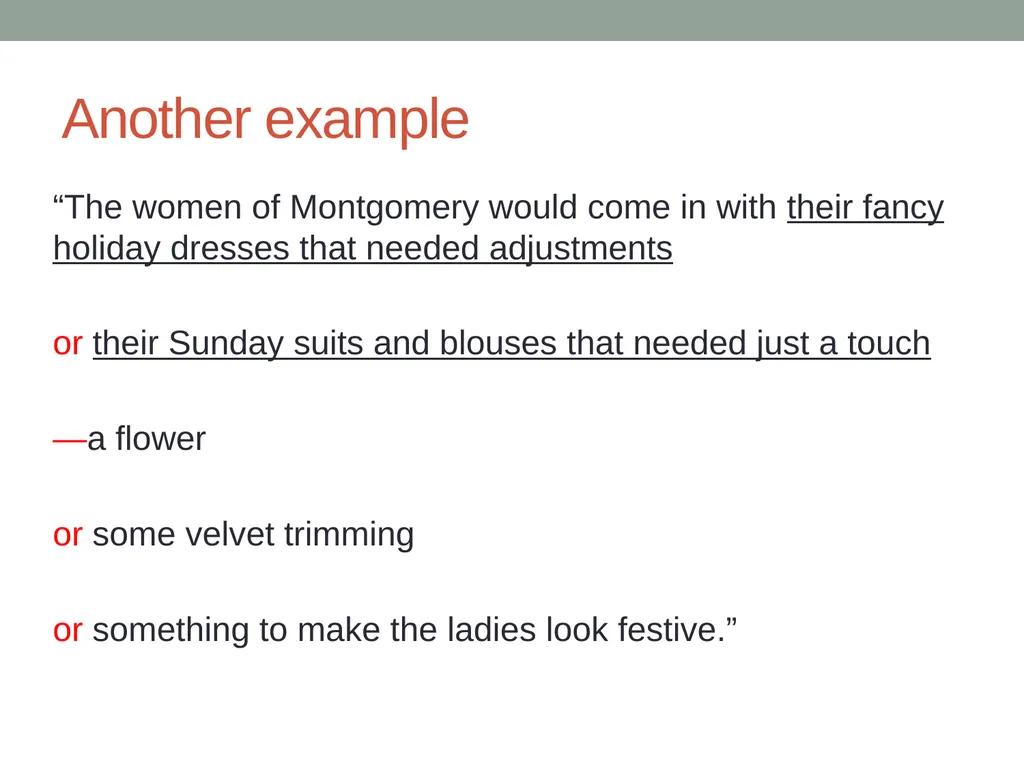
Another example “The women of Montgomery would come in with their fancy holiday dresses that needed adjustments
or their Sunday suits and blouses that needed just a touch
—a flower
or some velvet trimming
or something to make the ladies look festive.”<br>
or their Sunday suits and blouses that needed just a touch
—a flower
or some velvet trimming
or something to make the ladies look festive.”<br>
46
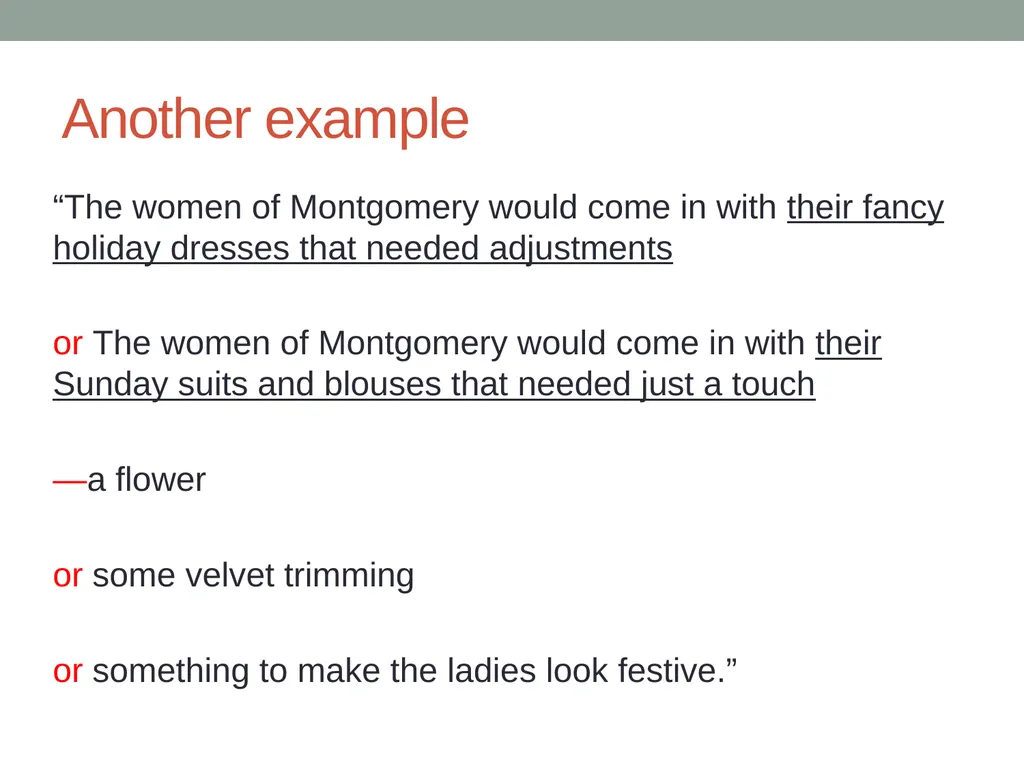
Another example “The women of Montgomery would come in with their fancy holiday dresses that needed adjustments
or The women of Montgomery would come in with their Sunday suits and blouses that needed just a touch
—a flower
or some velvet trimming
or something to make the ladies look festive.”<br>
or The women of Montgomery would come in with their Sunday suits and blouses that needed just a touch
—a flower
or some velvet trimming
or something to make the ladies look festive.”<br>
47
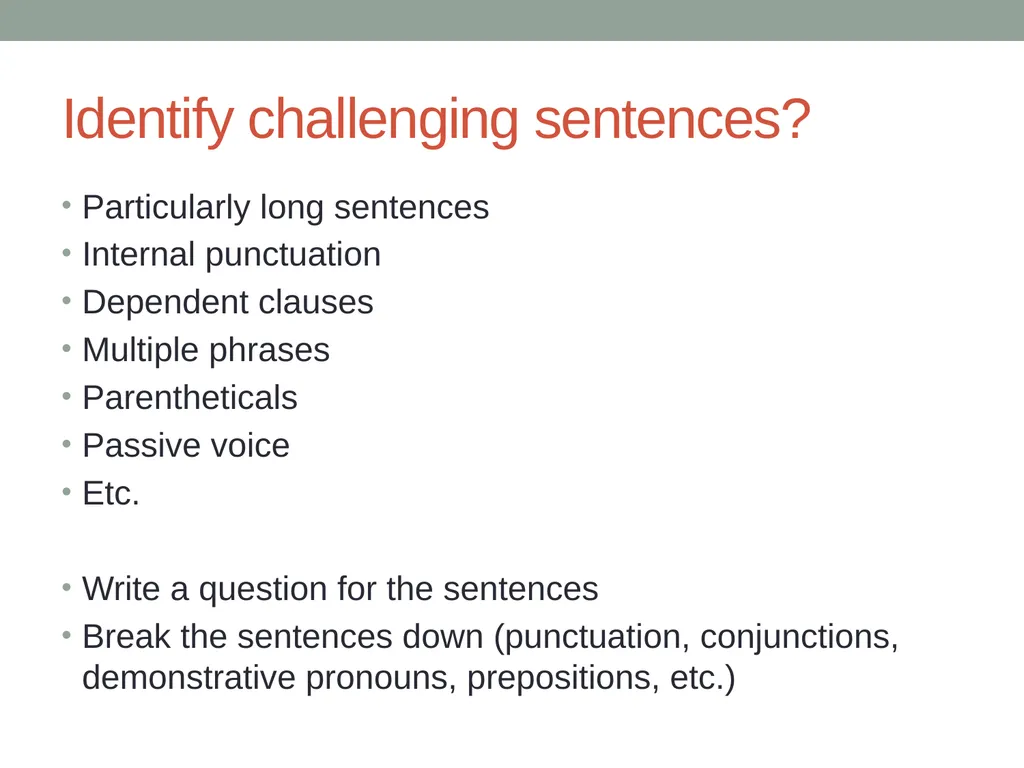
Identify challenging sentences? Particularly long sentences
Internal punctuation
Dependent clauses
Multiple phrases
Parentheticals
Passive voice
Etc.
Write a question for the sentences
Break the sentences down (punctuation, conjunctions, demonstrative pronouns, prepositions, etc.)<br>
Internal punctuation
Dependent clauses
Multiple phrases
Parentheticals
Passive voice
Etc.
Write a question for the sentences
Break the sentences down (punctuation, conjunctions, demonstrative pronouns, prepositions, etc.)<br>
48
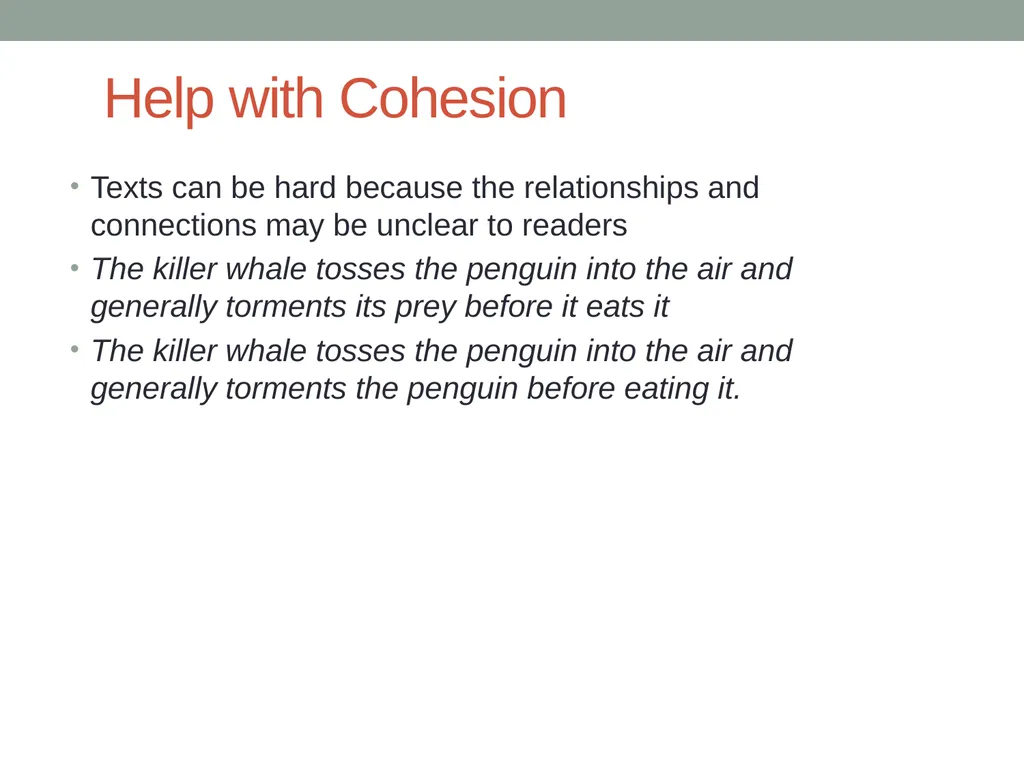
Help with Cohesion Texts can be hard because the relationships and connections may be unclear to readers
The killer whale tosses the penguin into the air and generally torments its prey before it eats it
The killer whale tosses the penguin into the air and generally torments the penguin before eating it.<br>
The killer whale tosses the penguin into the air and generally torments its prey before it eats it
The killer whale tosses the penguin into the air and generally torments the penguin before eating it.<br>
49
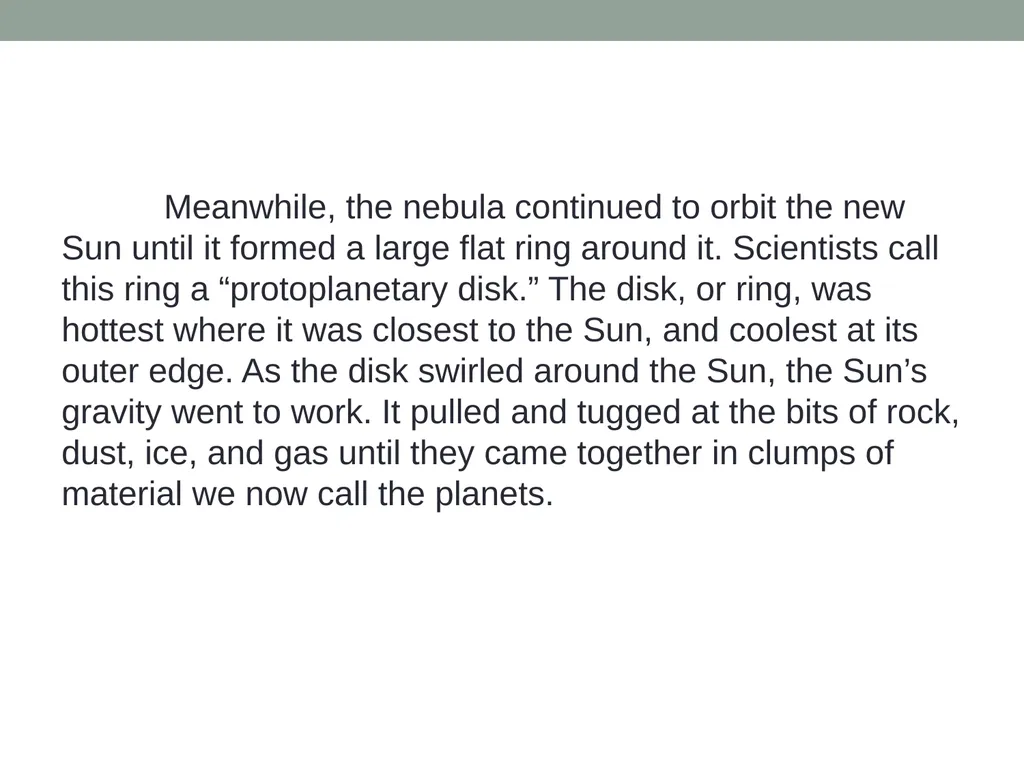
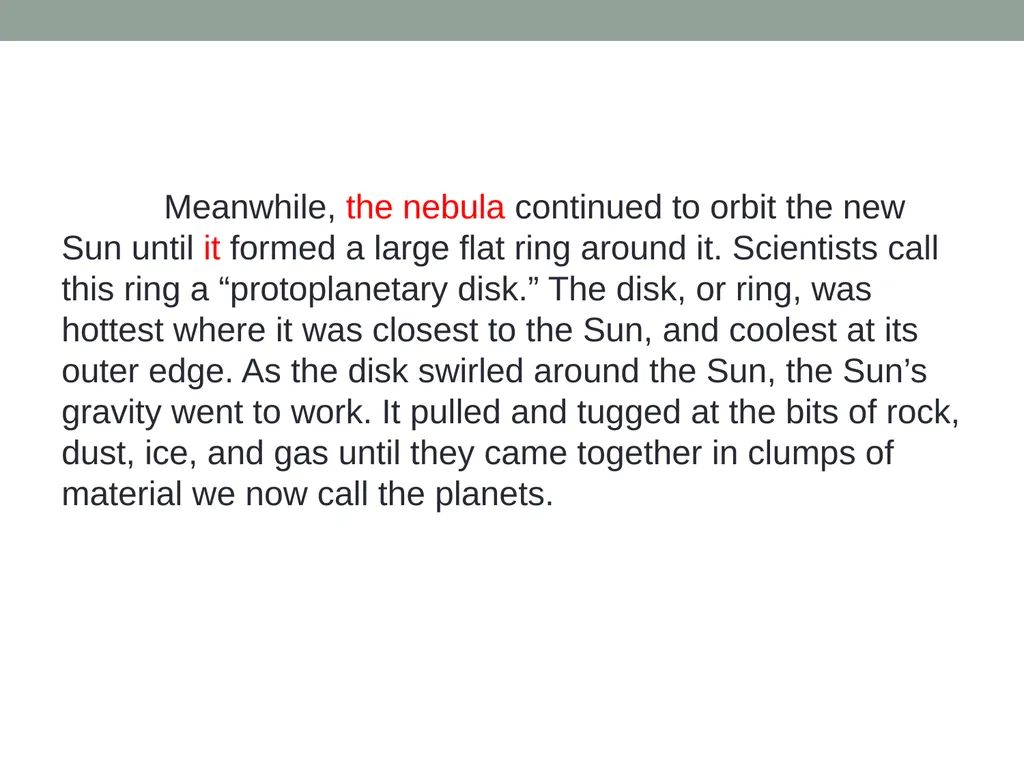
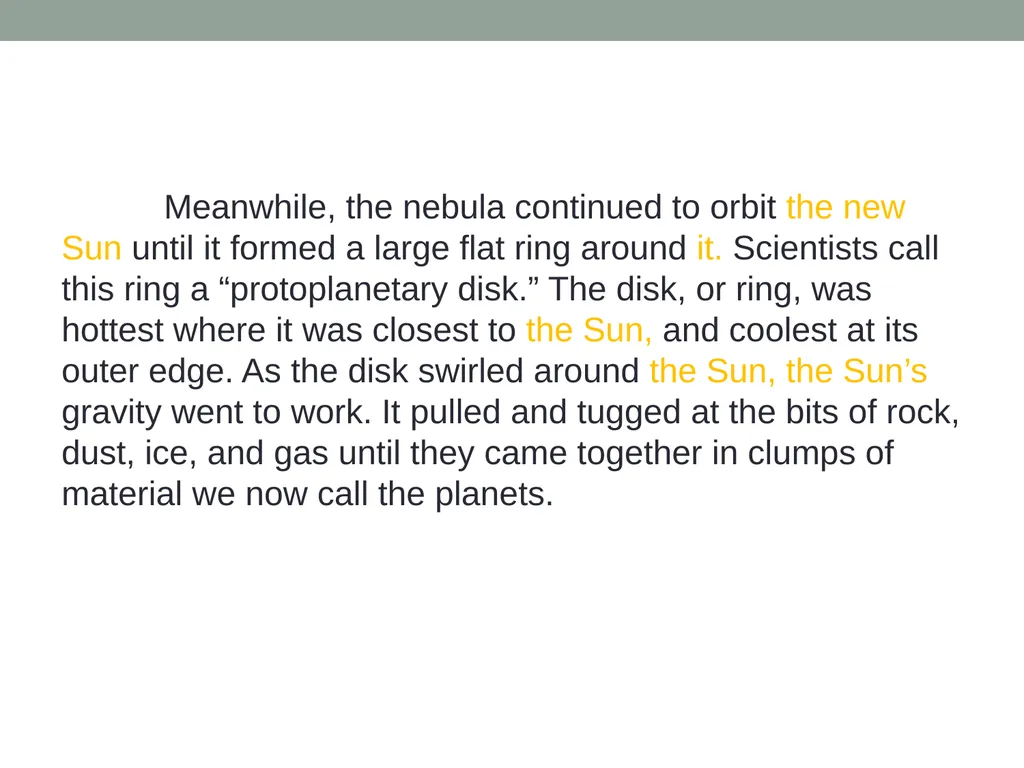
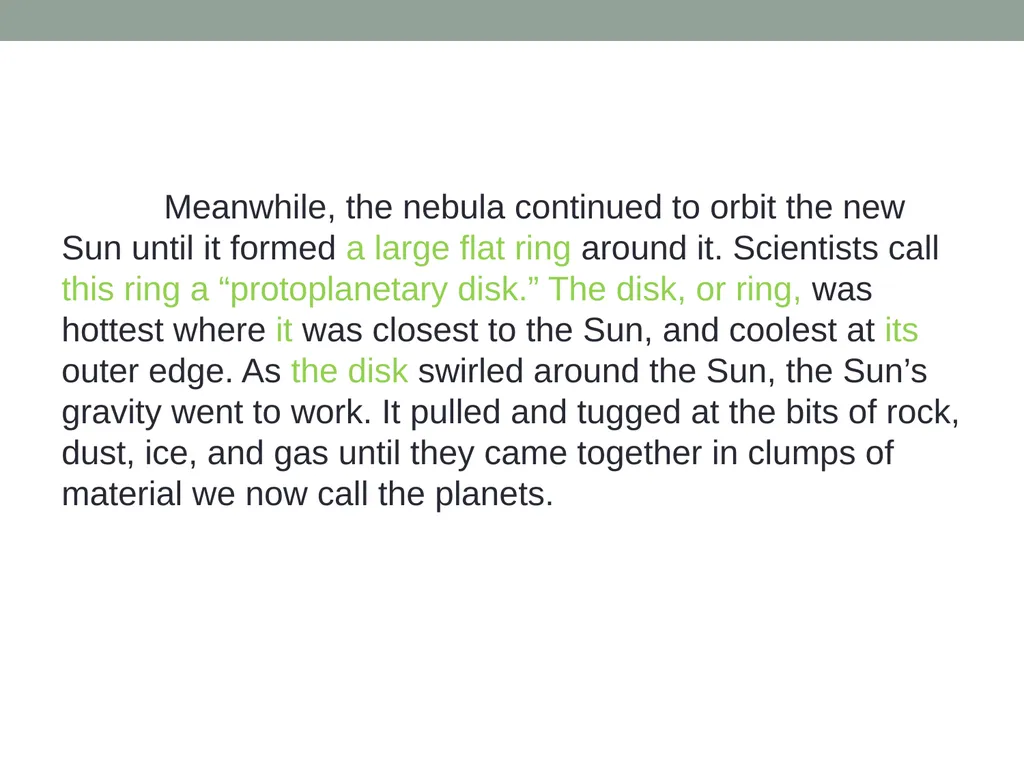
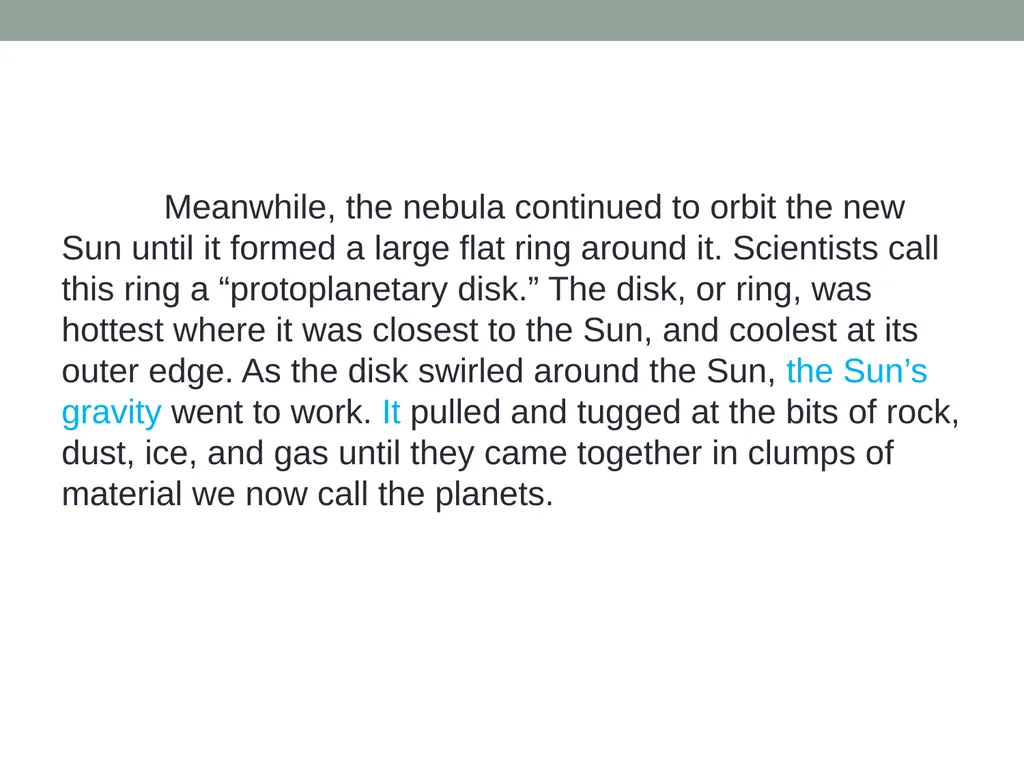
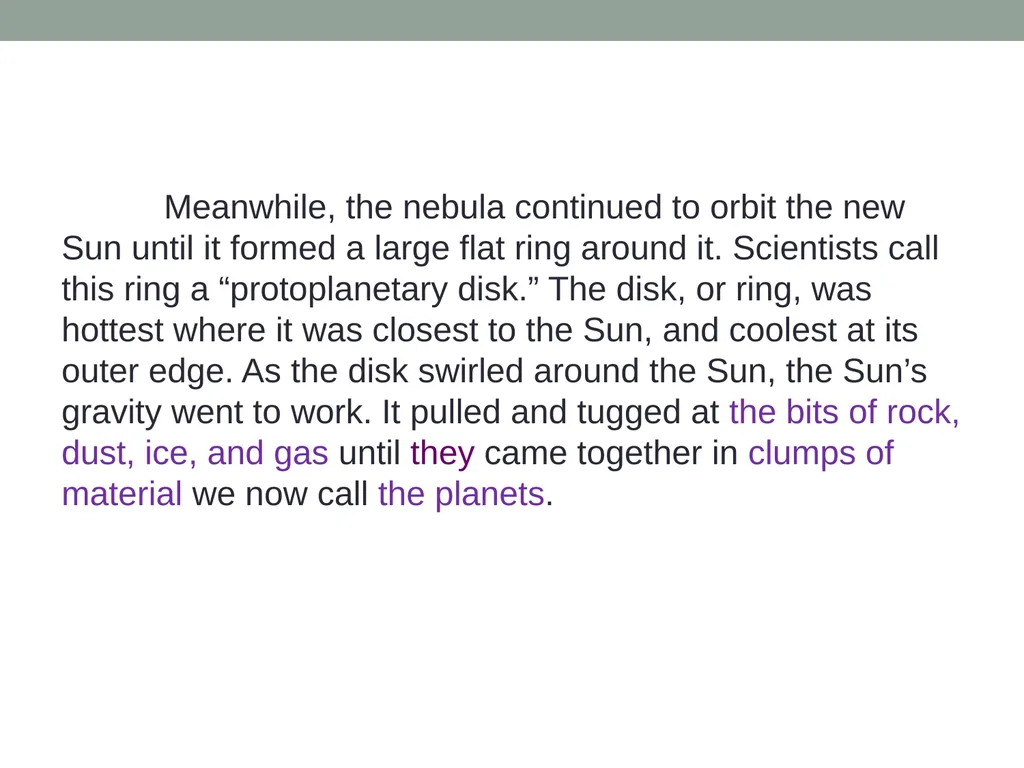
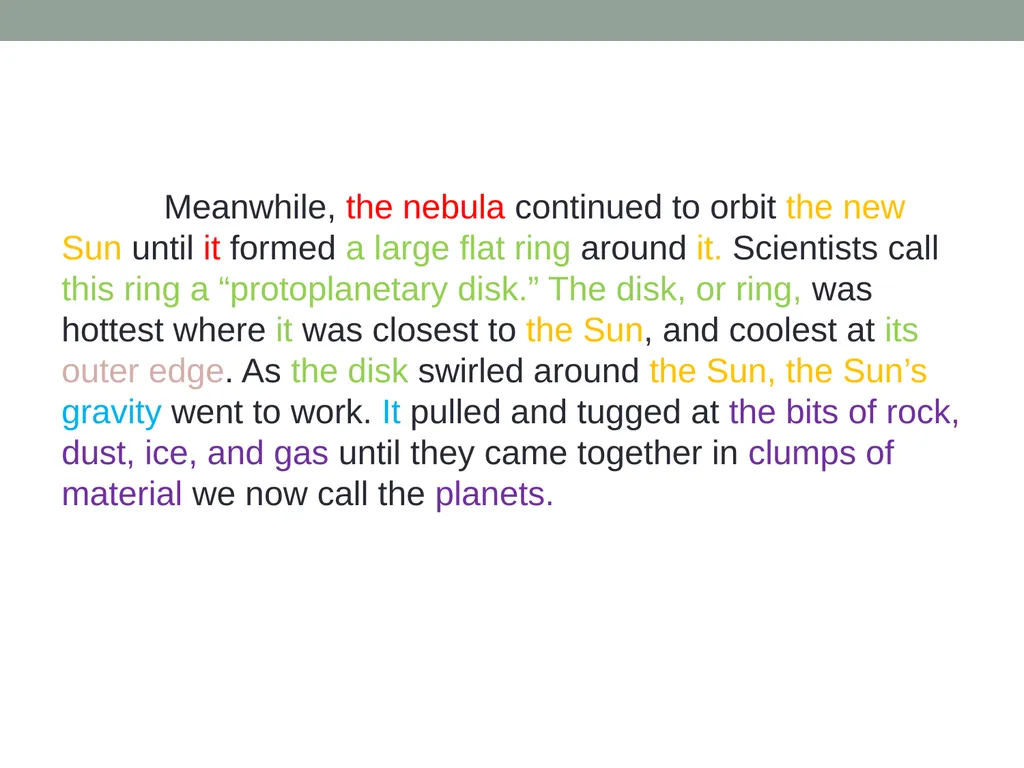
Meanwhile, the nebula continued to orbit the new Sun until it formed a large flat ring around it. Scientists call this ring a “protoplanetary disk.” The disk, or ring, was hottest where it was closest to the Sun, and coolest at its outer edge. As the disk swirled around the Sun, the Sun’s gravity went to work. It pulled and tugged at the bits of rock, dust, ice, and gas until they came together in clumps of material we now call the planets.<br>
50
Meanwhile, the nebula continued to orbit the new Sun until it formed a large flat ring around it. Scientists call this ring a “protoplanetary disk.” The disk, or ring, was hottest where it was closest to the Sun, and coolest at its outer edge. As the disk swirled around the Sun, the Sun’s gravity went to work. It pulled and tugged at the bits of rock, dust, ice, and gas until they came together in clumps of material we now call the planets.<br>
51
Meanwhile, the nebula continued to orbit the new Sun until it formed a large flat ring around it. Scientists call this ring a “protoplanetary disk.” The disk, or ring, was hottest where it was closest to the Sun, and coolest at its outer edge. As the disk swirled around the Sun, the Sun’s gravity went to work. It pulled and tugged at the bits of rock, dust, ice, and gas until they came together in clumps of material we now call the planets.<br>
52
Meanwhile, the nebula continued to orbit the new Sun until it formed a large flat ring around it. Scientists call this ring a “protoplanetary disk.” The disk, or ring, was hottest where it was closest to the Sun, and coolest at its outer edge. As the disk swirled around the Sun, the Sun’s gravity went to work. It pulled and tugged at the bits of rock, dust, ice, and gas until they came together in clumps of material we now call the planets.<br>
53
Meanwhile, the nebula continued to orbit the new Sun until it formed a large flat ring around it. Scientists call this ring a “protoplanetary disk.” The disk, or ring, was hottest where it was closest to the Sun, and coolest at its outer edge. As the disk swirled around the Sun, the Sun’s gravity went to work. It pulled and tugged at the bits of rock, dust, ice, and gas until they came together in clumps of material we now call the planets.<br>
54
Meanwhile, the nebula continued to orbit the new Sun until it formed a large flat ring around it. Scientists call this ring a “protoplanetary disk.” The disk, or ring, was hottest where it was closest to the Sun, and coolest at its outer edge. As the disk swirled around the Sun, the Sun’s gravity went to work. It pulled and tugged at the bits of rock, dust, ice, and gas until they came together in clumps of material we now call the planets.<br>
55
Meanwhile, the nebula continued to orbit the new Sun until it formed a large flat ring around it. Scientists call this ring a “protoplanetary disk.” The disk, or ring, was hottest where it was closest to the Sun, and coolest at its outer edge. As the disk swirled around the Sun, the Sun’s gravity went to work. It pulled and tugged at the bits of rock, dust, ice, and gas until they came together in clumps of material we now call the planets.<br>
56
Another cohesion example There were several roads near by, but it did not
take her long to find the one paved with yellow bricks.<br>
take her long to find the one paved with yellow bricks.<br>
57
Another cohesion example There were several roads near by, but it did not
take her long to find the one paved with yellow bricks.<br>
take her long to find the one paved with yellow bricks.<br>
58
Another cohesion example There were several roads near by, but it did not
take her long to find the one paved with yellow bricks.<br>
take her long to find the one paved with yellow bricks.<br>
59
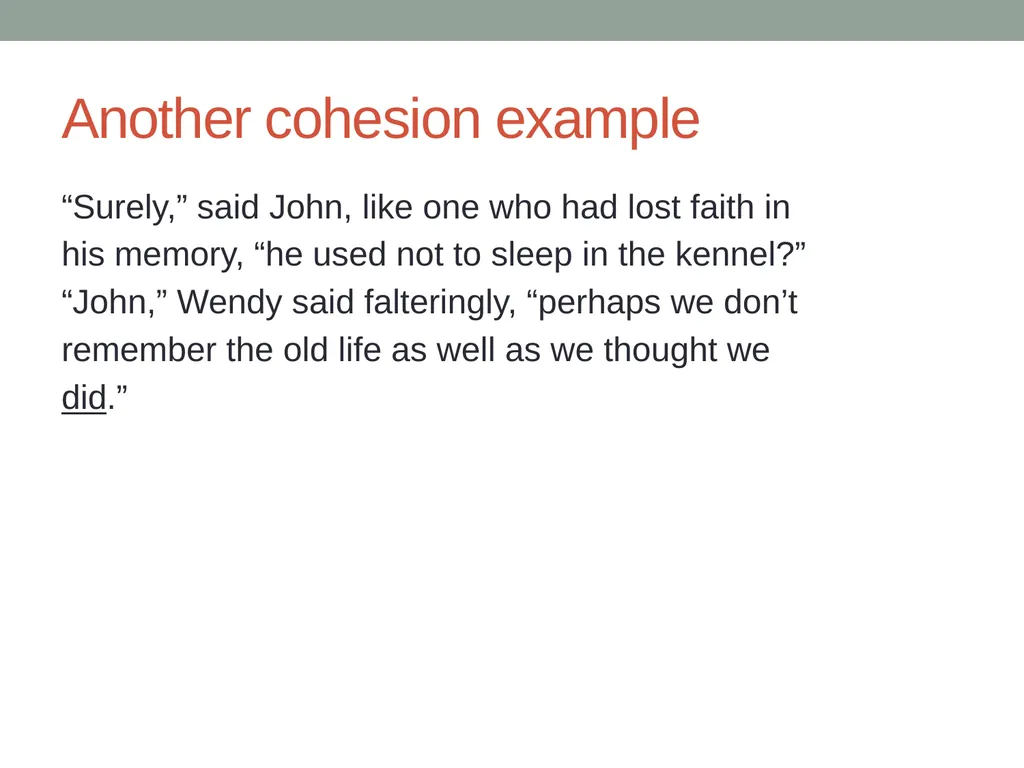
Another cohesion example “Surely,” said John, like one who had lost faith in
his memory, “he used not to sleep in the kennel?”
“John,” Wendy said falteringly, “perhaps we don’t
remember the old life as well as we thought we
did.”<br>
his memory, “he used not to sleep in the kennel?”
“John,” Wendy said falteringly, “perhaps we don’t
remember the old life as well as we thought we
did.”<br>
60
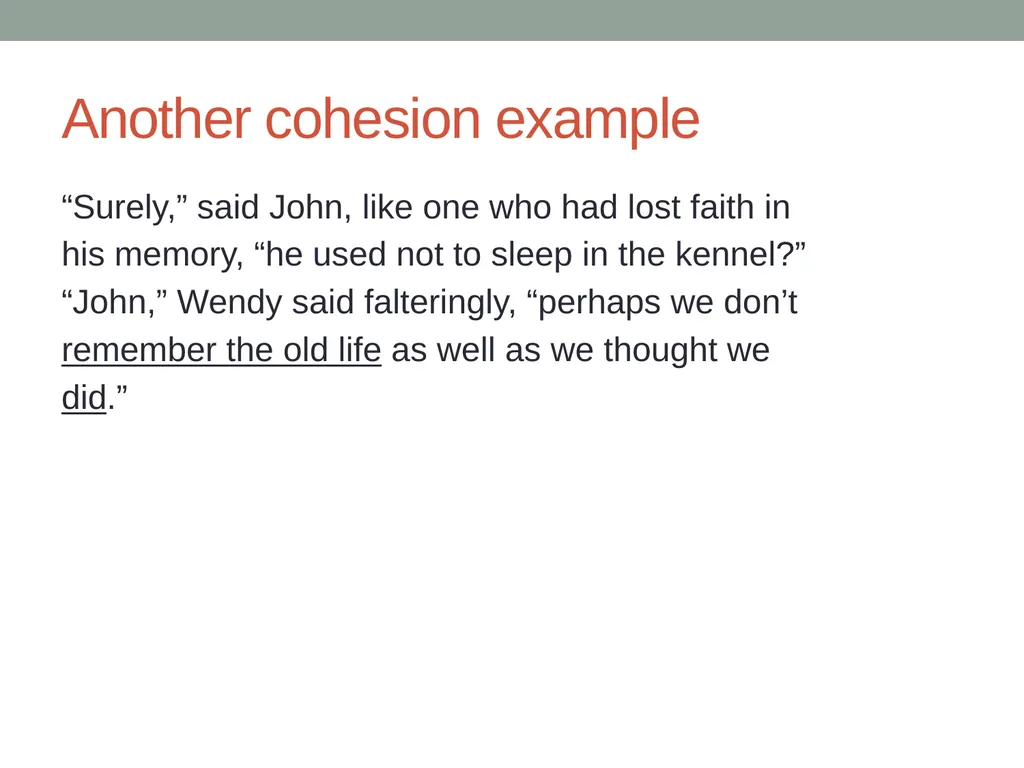
Another cohesion example “Surely,” said John, like one who had lost faith in
his memory, “he used not to sleep in the kennel?”
“John,” Wendy said falteringly, “perhaps we don’t
remember the old life as well as we thought we
did.”<br>
his memory, “he used not to sleep in the kennel?”
“John,” Wendy said falteringly, “perhaps we don’t
remember the old life as well as we thought we
did.”<br>
61
Another cohesion example “Surely,” said John, like one who had lost faith in
his memory, “he used not to sleep in the kennel?”
“John,” Wendy said falteringly, “perhaps we don’t
remember the old life as well as we thought we
did.”<br>
his memory, “he used not to sleep in the kennel?”
“John,” Wendy said falteringly, “perhaps we don’t
remember the old life as well as we thought we
did.”<br>
62
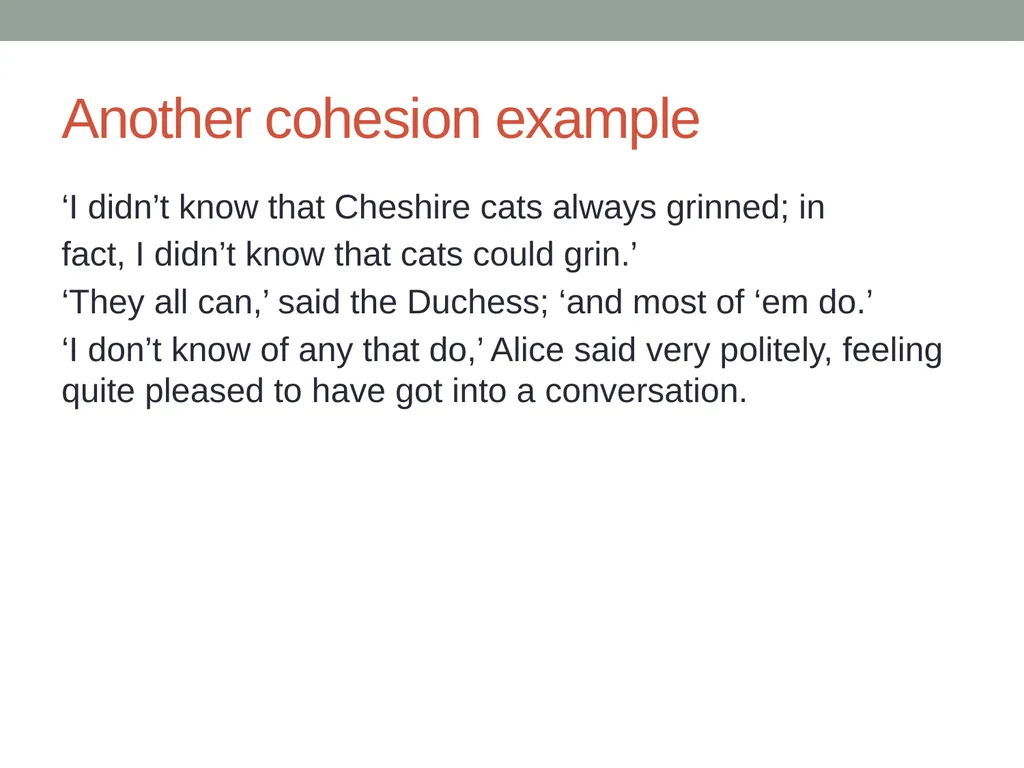
Another cohesion example ‘I didn’t know that Cheshire cats always grinned; in
fact, I didn’t know that cats could grin.’
‘They all can,’ said the Duchess; ‘and most of ‘em do.’
‘I don’t know of any that do,’ Alice said very politely, feeling quite pleased to have got into a conversation.<br>
fact, I didn’t know that cats could grin.’
‘They all can,’ said the Duchess; ‘and most of ‘em do.’
‘I don’t know of any that do,’ Alice said very politely, feeling quite pleased to have got into a conversation.<br>
63
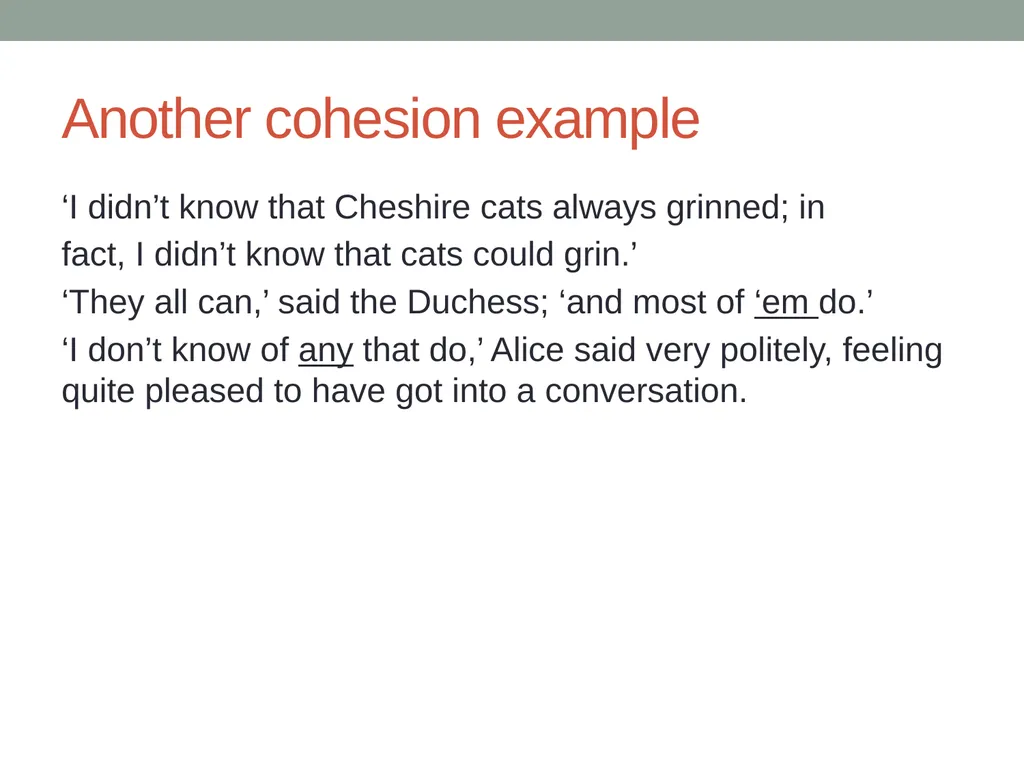
Another cohesion example ‘I didn’t know that Cheshire cats always grinned; in
fact, I didn’t know that cats could grin.’
‘They all can,’ said the Duchess; ‘and most of ‘em do.’
‘I don’t know of any that do,’ Alice said very politely, feeling quite pleased to have got into a conversation.<br>
fact, I didn’t know that cats could grin.’
‘They all can,’ said the Duchess; ‘and most of ‘em do.’
‘I don’t know of any that do,’ Alice said very politely, feeling quite pleased to have got into a conversation.<br>
64
Another cohesion example ‘I didn’t know that Cheshire cats always grinned; in
fact, I didn’t know that cats could grin.’
‘They all can,’ said the Duchess; ‘and most of ‘em do.’
‘I don’t know of any that do,’ Alice said very politely, feeling quite pleased to have got into a conversation.<br>
fact, I didn’t know that cats could grin.’
‘They all can,’ said the Duchess; ‘and most of ‘em do.’
‘I don’t know of any that do,’ Alice said very politely, feeling quite pleased to have got into a conversation.<br>
65
Another cohesion example ‘I didn’t know that Cheshire cats always grinned; in
fact, I didn’t know that cats could grin.’
‘They all can,’ said the Duchess; ‘and most of ‘em do.’
‘I don’t know of any that do,’ Alice said very politely, feeling quite pleased to have got into a conversation.<br>
fact, I didn’t know that cats could grin.’
‘They all can,’ said the Duchess; ‘and most of ‘em do.’
‘I don’t know of any that do,’ Alice said very politely, feeling quite pleased to have got into a conversation.<br>
66
Another cohesion example ‘I didn’t know that Cheshire cats always grinned; in
fact, I didn’t know that cats could grin.’
‘They all can,’ said the Duchess; ‘and most of ‘em do.’
‘I don’t know of any that do,’ Alice said very politely, feeling quite pleased to have got into a conversation.<br>
fact, I didn’t know that cats could grin.’
‘They all can,’ said the Duchess; ‘and most of ‘em do.’
‘I don’t know of any that do,’ Alice said very politely, feeling quite pleased to have got into a conversation.<br>
67
Another cohesion example ‘I didn’t know that Cheshire cats always grinned; in
fact, I didn’t know that cats could grin.’
‘They all can,’ said the Duchess; ‘and most of ‘em do.’
‘I don’t know of any that do,’ Alice said very politely, feeling quite pleased to have got into a conversation.<br>
fact, I didn’t know that cats could grin.’
‘They all can,’ said the Duchess; ‘and most of ‘em do.’
‘I don’t know of any that do,’ Alice said very politely, feeling quite pleased to have got into a conversation.<br>
68
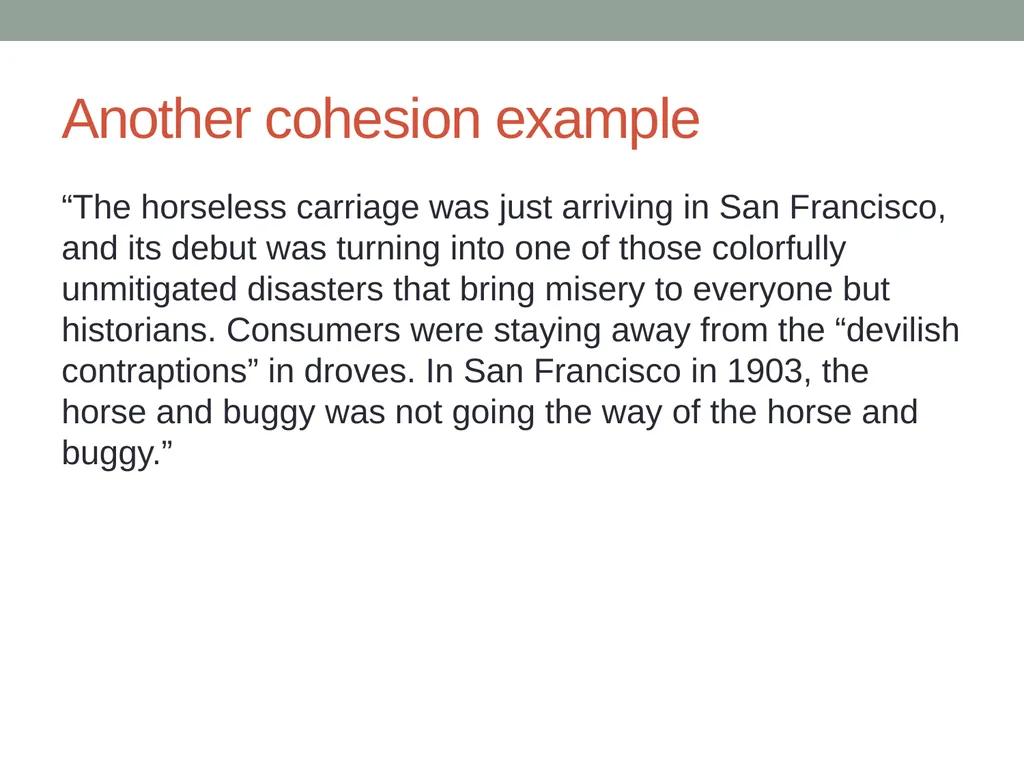
Another cohesion example “The horseless carriage was just arriving in San Francisco, and its debut was turning into one of those colorfully unmitigated disasters that bring misery to everyone but historians. Consumers were staying away from the “devilish contraptions” in droves. In San Francisco in 1903, the horse and buggy was not going the way of the horse and buggy.”<br>
69
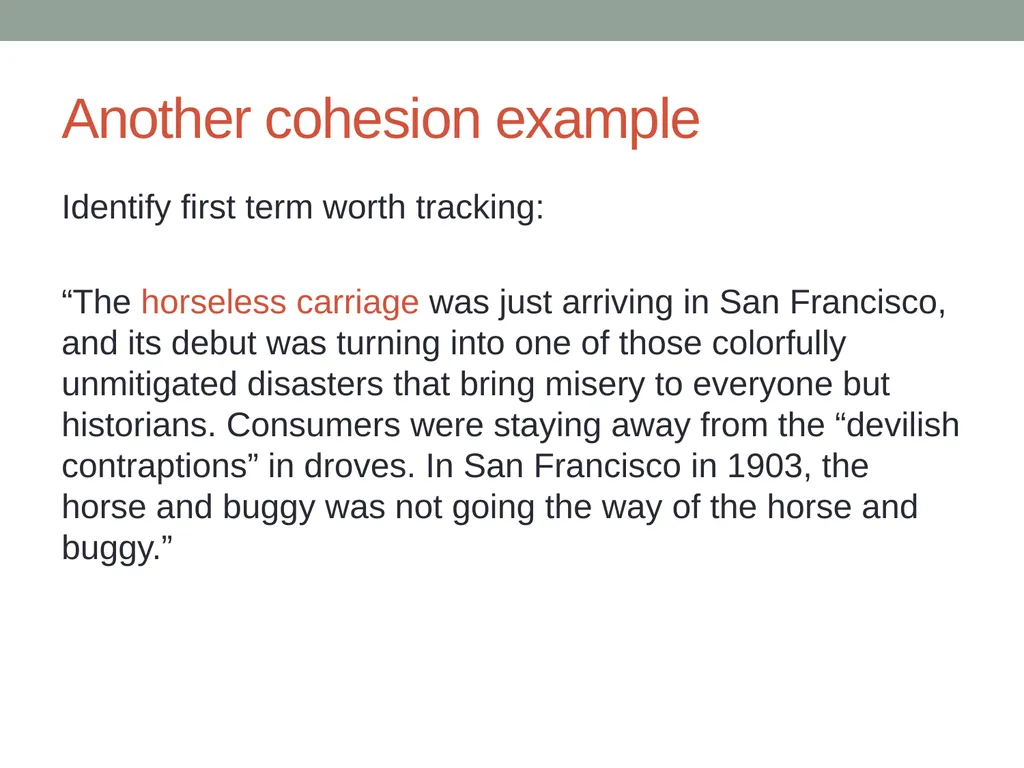
Another cohesion example Identify first term worth tracking:
“The horseless carriage was just arriving in San Francisco, and its debut was turning into one of those colorfully unmitigated disasters that bring misery to everyone but historians. Consumers were staying away from the “devilish contraptions” in droves. In San Francisco in 1903, the horse and buggy was not going the way of the horse and buggy.”<br>
“The horseless carriage was just arriving in San Francisco, and its debut was turning into one of those colorfully unmitigated disasters that bring misery to everyone but historians. Consumers were staying away from the “devilish contraptions” in droves. In San Francisco in 1903, the horse and buggy was not going the way of the horse and buggy.”<br>
70
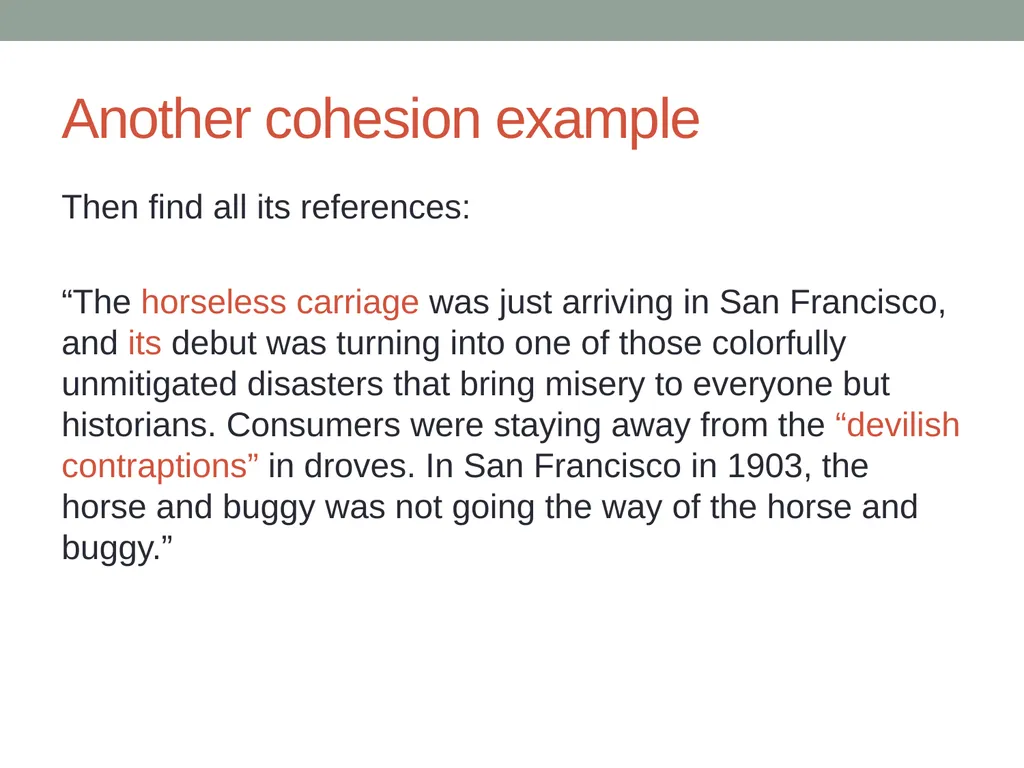
Another cohesion example Then find all its references:
“The horseless carriage was just arriving in San Francisco, and its debut was turning into one of those colorfully unmitigated disasters that bring misery to everyone but historians. Consumers were staying away from the “devilish contraptions” in droves. In San Francisco in 1903, the horse and buggy was not going the way of the horse and buggy.”<br>
“The horseless carriage was just arriving in San Francisco, and its debut was turning into one of those colorfully unmitigated disasters that bring misery to everyone but historians. Consumers were staying away from the “devilish contraptions” in droves. In San Francisco in 1903, the horse and buggy was not going the way of the horse and buggy.”<br>
71
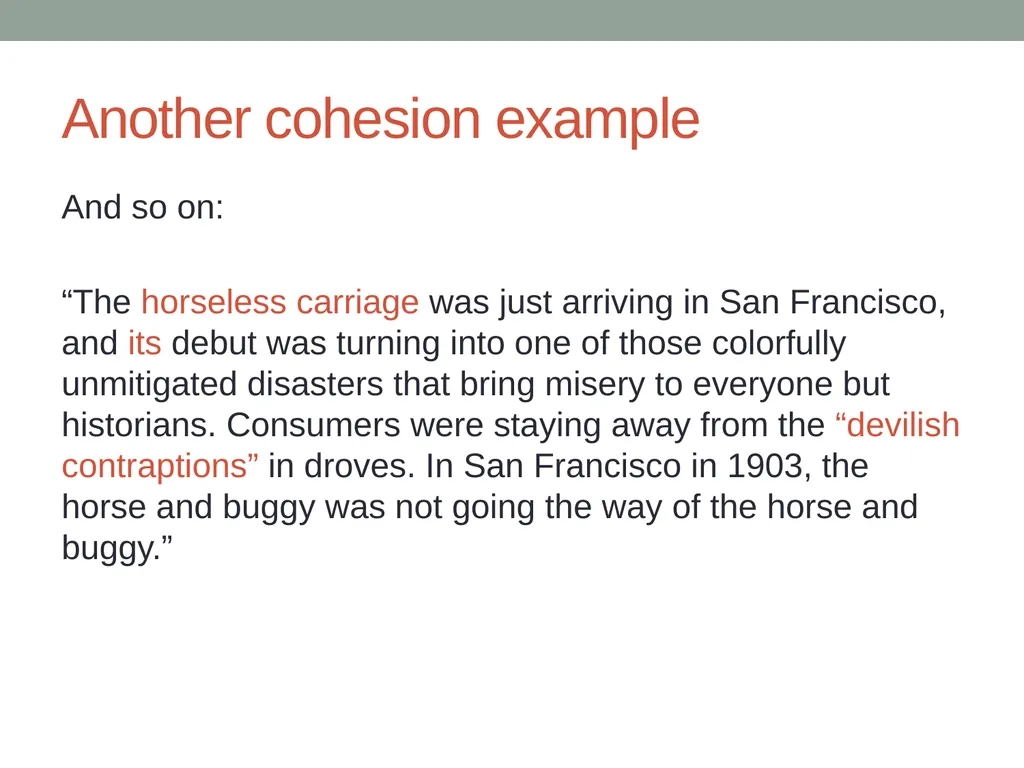
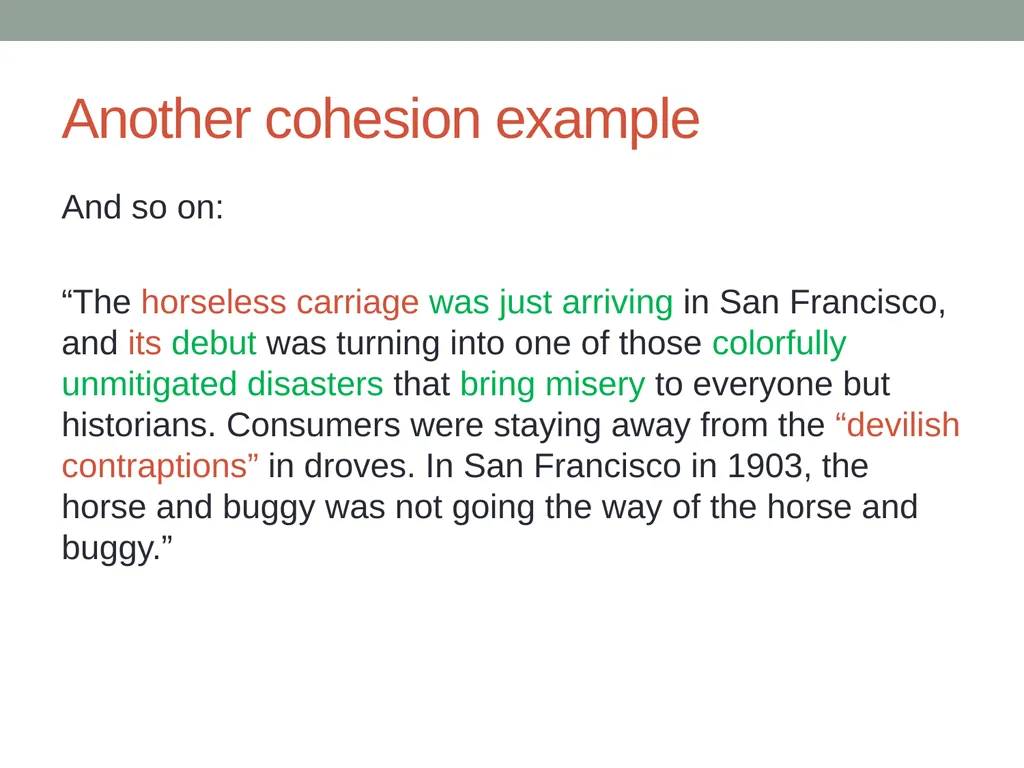
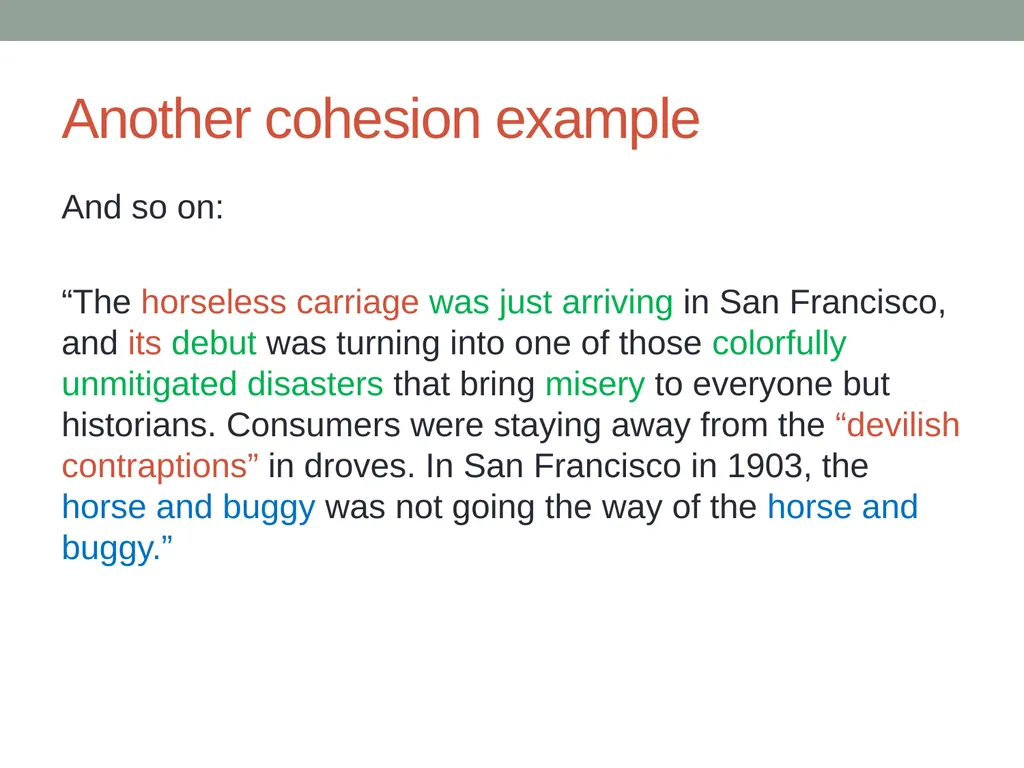
Another cohesion example And so on:
“The horseless carriage was just arriving in San Francisco, and its debut was turning into one of those colorfully unmitigated disasters that bring misery to everyone but historians. Consumers were staying away from the “devilish contraptions” in droves. In San Francisco in 1903, the horse and buggy was not going the way of the horse and buggy.”<br>
“The horseless carriage was just arriving in San Francisco, and its debut was turning into one of those colorfully unmitigated disasters that bring misery to everyone but historians. Consumers were staying away from the “devilish contraptions” in droves. In San Francisco in 1903, the horse and buggy was not going the way of the horse and buggy.”<br>
72
Another cohesion example And so on:
“The horseless carriage was just arriving in San Francisco, and its debut was turning into one of those colorfully unmitigated disasters that bring misery to everyone but historians. Consumers were staying away from the “devilish contraptions” in droves. In San Francisco in 1903, the horse and buggy was not going the way of the horse and buggy.”<br>
“The horseless carriage was just arriving in San Francisco, and its debut was turning into one of those colorfully unmitigated disasters that bring misery to everyone but historians. Consumers were staying away from the “devilish contraptions” in droves. In San Francisco in 1903, the horse and buggy was not going the way of the horse and buggy.”<br>
73
Another cohesion example And so on:
“The horseless carriage was just arriving in San Francisco, and its debut was turning into one of those colorfully unmitigated disasters that bring misery to everyone but historians. Consumers were staying away from the “devilish contraptions” in droves. In San Francisco in 1903, the horse and buggy was not going the way of the horse and buggy.”<br>
“The horseless carriage was just arriving in San Francisco, and its debut was turning into one of those colorfully unmitigated disasters that bring misery to everyone but historians. Consumers were staying away from the “devilish contraptions” in droves. In San Francisco in 1903, the horse and buggy was not going the way of the horse and buggy.”<br>
74
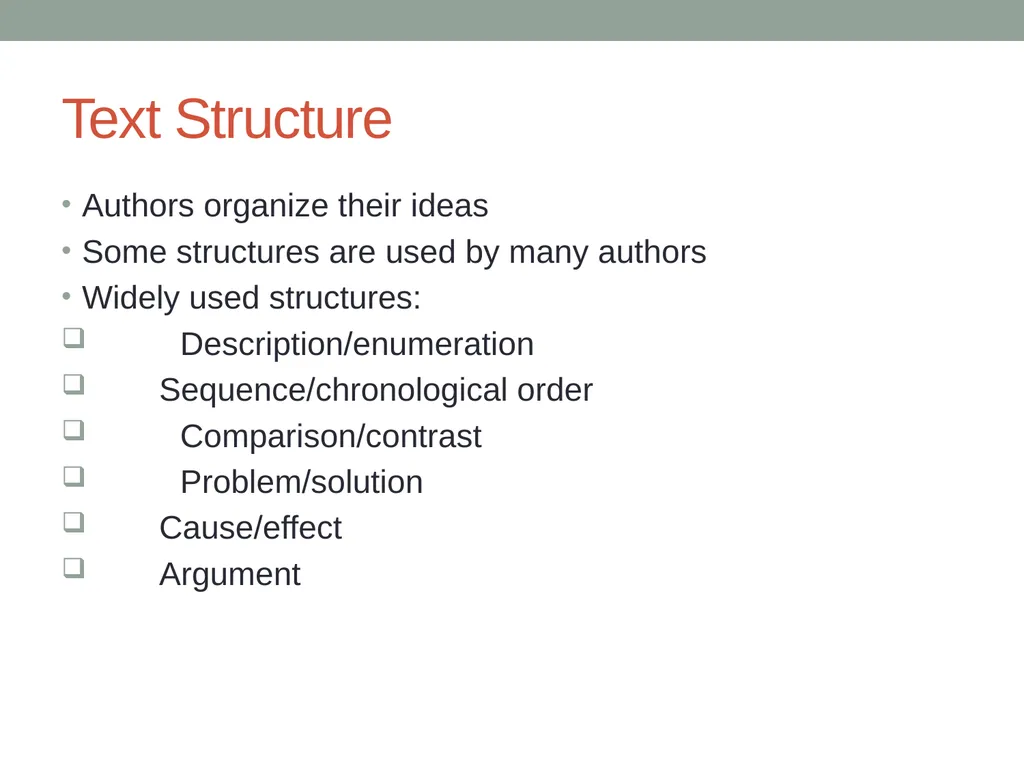
Text Structure Authors organize their ideas
Some structures are used by many authors
Widely used structures:
Description/enumeration
Sequence/chronological order
Comparison/contrast
Problem/solution
Cause/effect
Argument<br>
Some structures are used by many authors
Widely used structures:
Description/enumeration
Sequence/chronological order
Comparison/contrast
Problem/solution
Cause/effect
Argument<br>
75
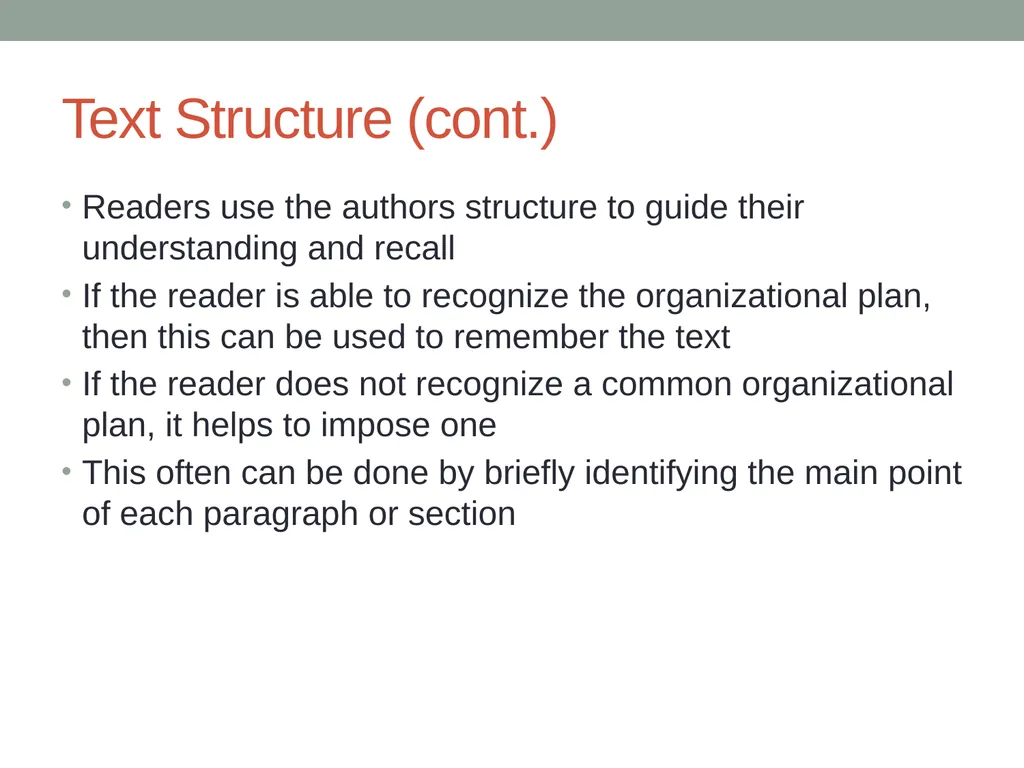
Text Structure (cont.) Readers use the authors structure to guide their understanding and recall
If the reader is able to recognize the organizational plan, then this can be used to remember the text
If the reader does not recognize a common organizational plan, it helps to impose one
This often can be done by briefly identifying the main point of each paragraph or section<br>
If the reader is able to recognize the organizational plan, then this can be used to remember the text
If the reader does not recognize a common organizational plan, it helps to impose one
This often can be done by briefly identifying the main point of each paragraph or section<br>
76
Comprehension strategies Research shows that when students are active readers—that is, when they are actively trying to understand a text—they comprehend and remember more
Comprehension strategies are a proven way to get students to think about the ideas in a text
Summarization, questioning, monitoring, seeking particular kinds of information have all been found to stimulate learning<br>
Comprehension strategies are a proven way to get students to think about the ideas in a text
Summarization, questioning, monitoring, seeking particular kinds of information have all been found to stimulate learning<br>
77
Repetition One of the most powerful scaffolds is also one of the most obvious—reading a text more than once makes it more accessible
In the past, we tended to have students read a text a single time, but as the text challenge increases it is essential that we encourage students to read texts (and parts of texts) more than once to make sense of it
This is an effective strategy, but it is expensive too (the idea is to become successful with these texts—which should make it possible to succeed with other texts later with less work)
Explain this to students<br>
In the past, we tended to have students read a text a single time, but as the text challenge increases it is essential that we encourage students to read texts (and parts of texts) more than once to make sense of it
This is an effective strategy, but it is expensive too (the idea is to become successful with these texts—which should make it possible to succeed with other texts later with less work)
Explain this to students<br>
78
Motivation The instructional level is based on the idea that students seek easy work--that if the work is challenging, they will stop trying
But research shows that students seek challenge and are motivated by it
Challenge only works if it is not overwhelming and if students see the possibility of getting better/stronger, et.
Don’t make challenging text a secret—tell kids what is happening and show them how you will make them effective
Research also shows that students are interested in more challenging content (and on their own, they’ll fight through more challenging text to get to this content)—using challenging text opens up content possibilities<br>
But research shows that students seek challenge and are motivated by it
Challenge only works if it is not overwhelming and if students see the possibility of getting better/stronger, et.
Don’t make challenging text a secret—tell kids what is happening and show them how you will make them effective
Research also shows that students are interested in more challenging content (and on their own, they’ll fight through more challenging text to get to this content)—using challenging text opens up content possibilities<br>
79
Resources Shanahan, T. (In press). Leveled Readers, Leveled Lives. Cambridge, MA: Harvard Education Press.
Shanahan, T. (2013). Letting the text take center stage. American Educator, 37(3), 4-11, 43.
Shanahan, T. (2019). Why children should be taught to read with more challenging text. Perspectives on Language and Literacy, 44(2), 17-23.
Shanahan, T. (2020). Limiting children to books they can already read. American Educator, 44(2), 13-17, 39.
Shanahan, T., Fisher, D., & Frey, N. (2012). The challenge of challenging text. Educational Leadership, 69(6), 58-63.<br>
Shanahan, T. (2013). Letting the text take center stage. American Educator, 37(3), 4-11, 43.
Shanahan, T. (2019). Why children should be taught to read with more challenging text. Perspectives on Language and Literacy, 44(2), 17-23.
Shanahan, T. (2020). Limiting children to books they can already read. American Educator, 44(2), 13-17, 39.
Shanahan, T., Fisher, D., & Frey, N. (2012). The challenge of challenging text. Educational Leadership, 69(6), 58-63.<br>