
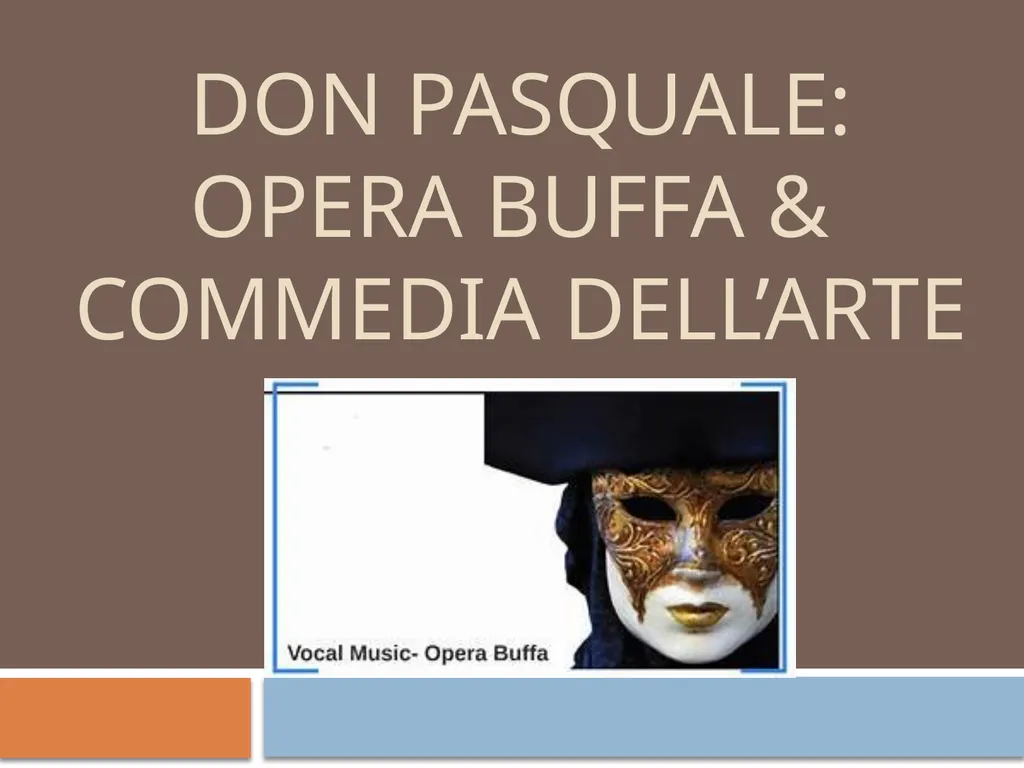
DON PASQUALE: Opera buffa & Commedia dell’arte

Description: DON PASQUALE: Opera buffa Commedia dellarte Opera Buffa Emerged as a genre in Italy in the first half of the 18th century (contrasted with opera seria) First used as an informal description of Italian comic operas (commedia in musica,
Related Topics
Download Presentation
"DON PASQUALE: Opera buffa & Commedia dell’arte" is the property of its rightful owner. Permission is granted to download and print the materials on this website for personal, non-commercial use only, and to display it on your personal computer provided you do not modify the materials and that you retain all copyright notices contained in the materials. By downloading content from our website, you accept the terms of this agreement.
Presentation Transcript
slide1. DON PASQUALE:
Opera buffa &
Commedia dell’arte<br>
slide2. Opera Buffa Emerged as a genre in Italy in the first half of the 18th century (contrasted with opera seria)
First used as an informal description of Italian comic operas (commedia in musica, dramma comico, divertimento giocoso)
First appeared between acts of opera seria
By 1750, opera buffa outnumbered opera seria
Not exclusively comic—mixture of comedy and pathos<br>
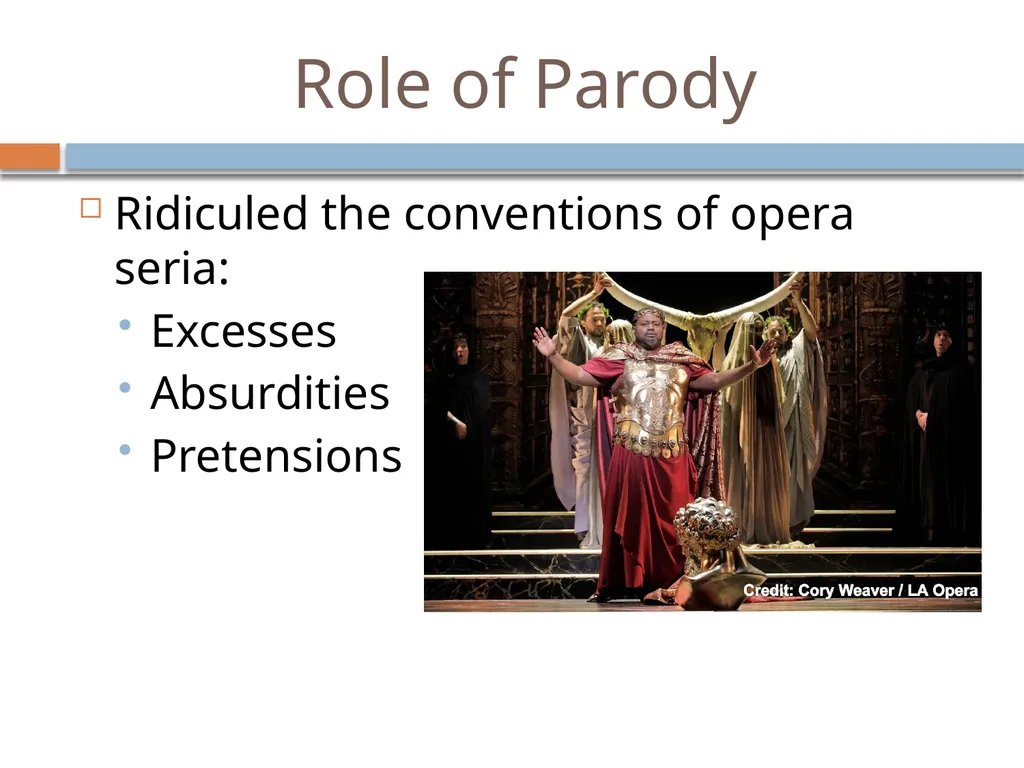
slide3. Role of Parody Ridiculed the conventions of opera seria:
Excesses
Absurdities
Pretensions<br>
slide4. Characteristics Common people as characters (contrasted with heroes of ancient myth, gods)
Often spoken dialogue or simple keyboard-accompaniment
Sparkling overture
Wider range of voice types
Patter, Ensemble numbers/finales
Stock characters<br>
slide5. Outstanding Examples Mozart
The Marriage of Figaro
Don Giovanni
Cosi Fan Tutte
Rossini
Barber of Seville
Le Comte Ory
Donizetti
L’Elisir d’Amore<br>
slide6. Commedia dell’Arte 16th Century Italy
Characterized by masked “types”
Stock Characters
Clowns (Zanni)—servants: sly, alert, sharp
Villains (Vecchi)—old men, proud, powerful
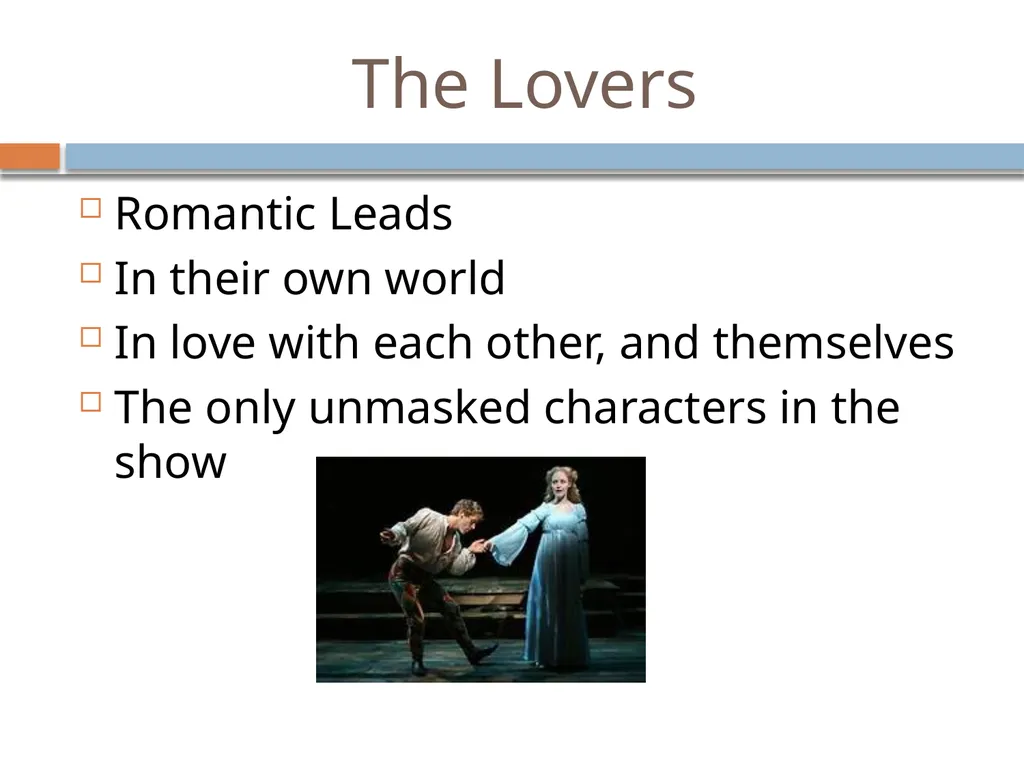
Lovers (Innamorati)—in love with each other (and themselves), self-obsessed, selfish
Crude physical humor
Exaggerated for Comic Effect<br>
slide7. Commedia dell’arte Employed women as actors
Plays were both scripted and improvised
Often performed outdoors on platforms or in piazzas
Traveled throughout Europe
Plots set in the present day
Inspired later playwrights, such as Molière, and opera buffa (Rossini, Verdi)<br>
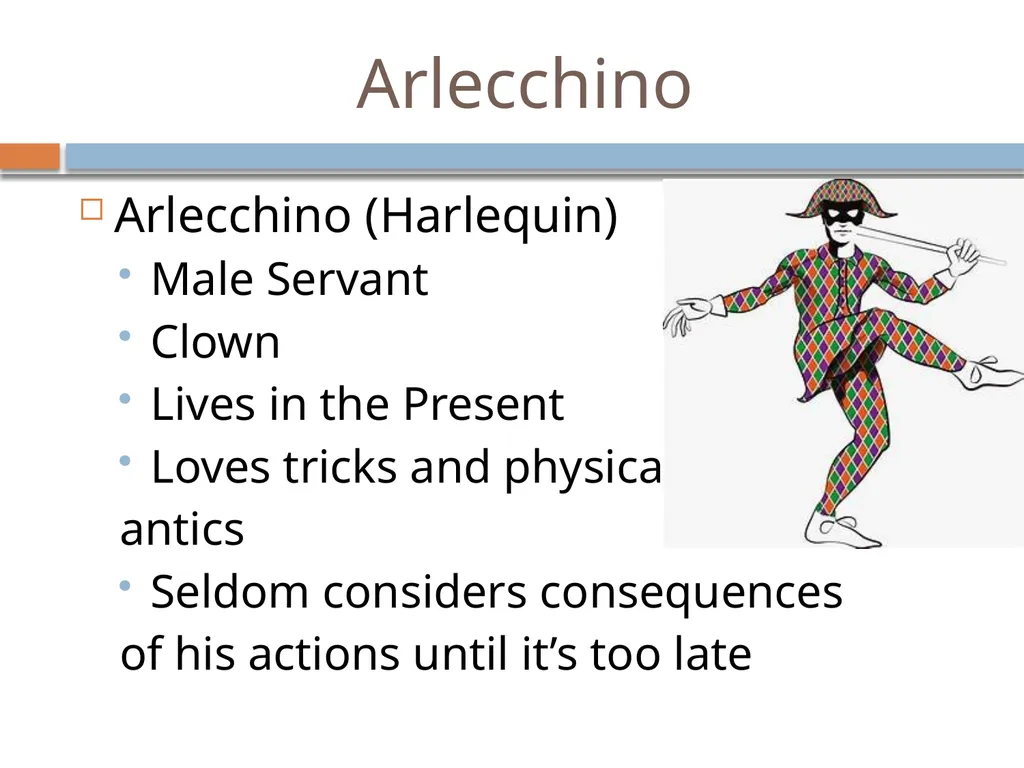
slide8. Arlecchino Arlecchino (Harlequin)
Male Servant
Clown
Lives in the Present
Loves tricks and physical
antics
Seldom considers consequences
of his actions until it’s too late<br>
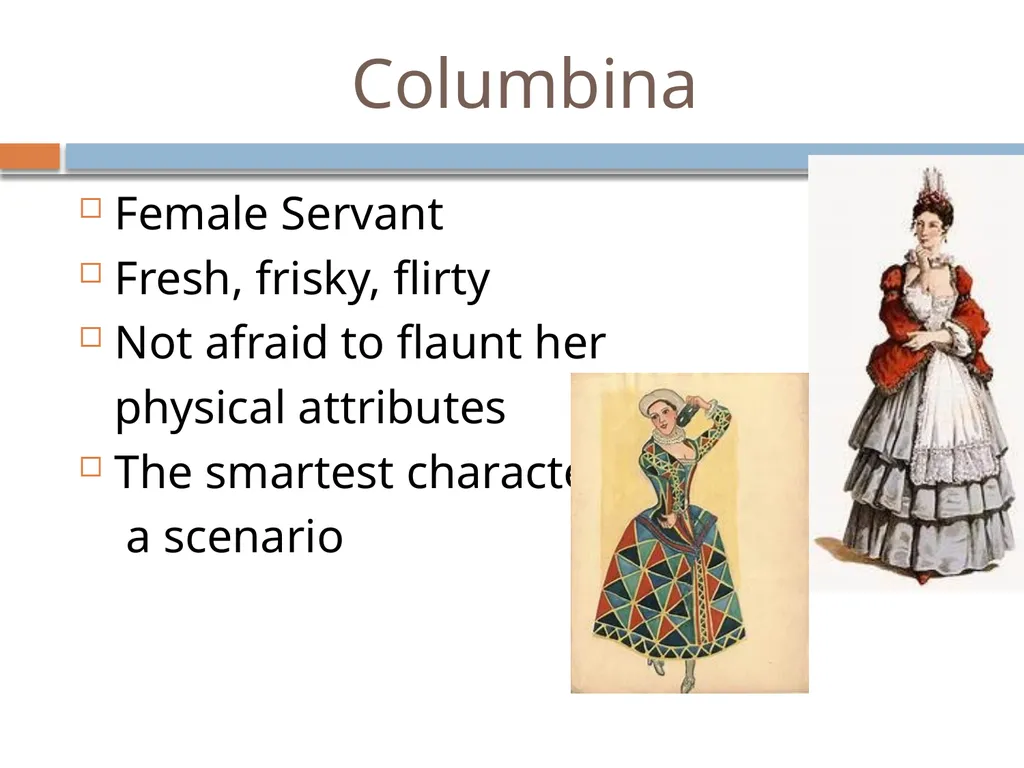
slide9. Columbina Female Servant
Fresh, frisky, flirty
Not afraid to flaunt her
physical attributes
The smartest character in
a scenario<br>
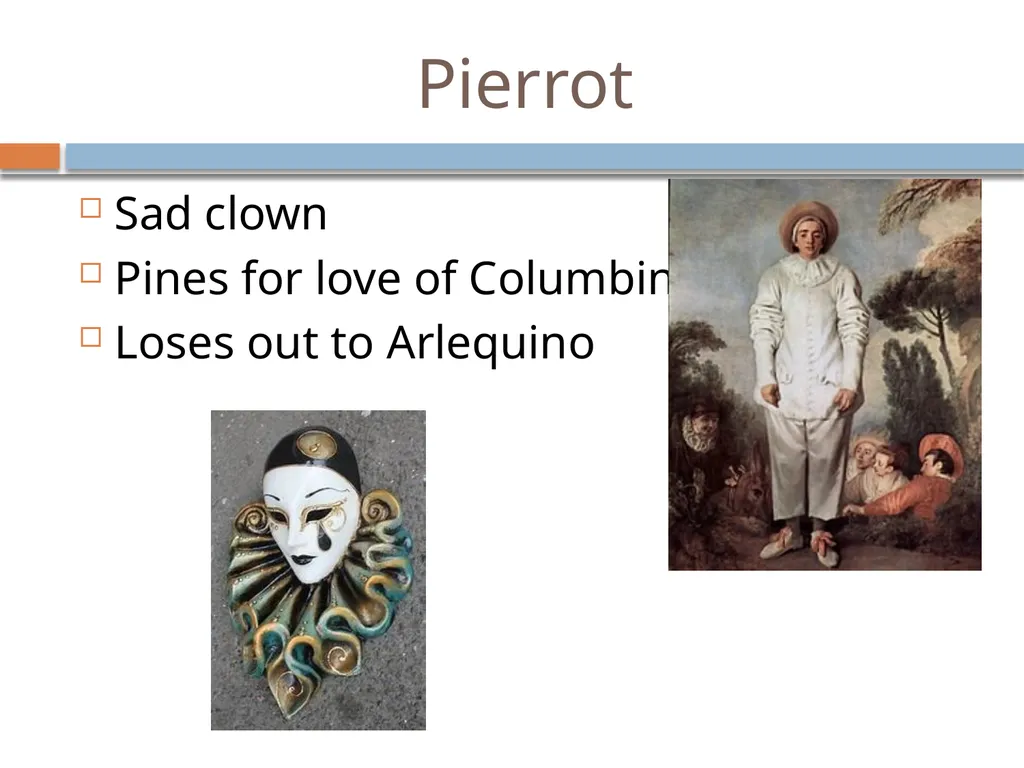
slide10. Pierrot Sad clown
Pines for love of Columbina
Loses out to Arlequino<br>
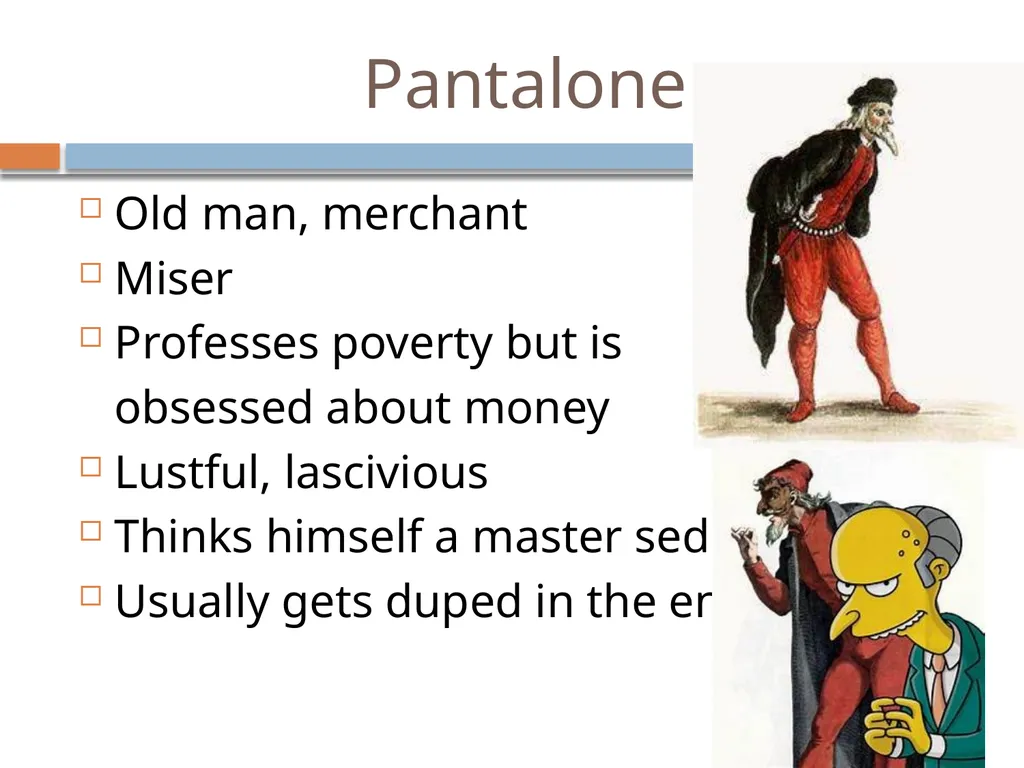
slide11. Pantalone Old man, merchant
Miser
Professes poverty but is
obsessed about money
Lustful, lascivious
Thinks himself a master seducer
Usually gets duped in the end<br>
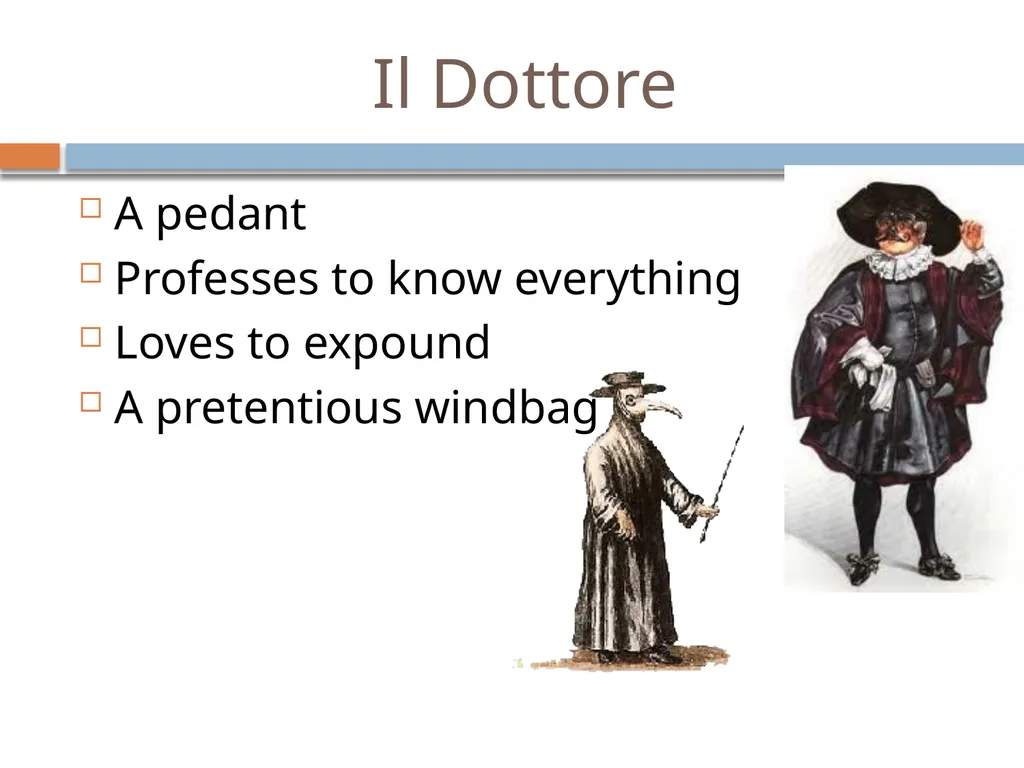
slide12. Il Dottore A pedant
Professes to know everything
Loves to expound
A pretentious windbag<br>
slide13. The Lovers Romantic Leads
In their own world
In love with each other, and themselves
The only unmasked characters in the show<br>
slide14. Opera Buffa and Don Pasquale Though opera buffa declined after 1840, Donizetti continued to write comic operas as well as serious ones.
Donizetti’s special contribution was to mix pathos and emotion with the farcical.
“As the music oscillates between the comic and sentimental, it encourages us to believe in the emotional capacity of the characters.”
Conventional to have characters point up the moral of the plot at the end of the opera.<br>
slide2. Opera Buffa Emerged as a genre in Italy in the first half of the 18th century (contrasted with opera seria)
First used as an informal description of Italian comic operas (commedia in musica, dramma comico, divertimento giocoso)
First appeared between acts of opera seria
By 1750, opera buffa outnumbered opera seria
Not exclusively comic—mixture of comedy and pathos<br>
slide3. Role of Parody Ridiculed the conventions of opera seria:
Excesses
Absurdities
Pretensions<br>
slide4. Characteristics Common people as characters (contrasted with heroes of ancient myth, gods)
Often spoken dialogue or simple keyboard-accompaniment
Sparkling overture
Wider range of voice types
Patter, Ensemble numbers/finales
Stock characters<br>
slide5. Outstanding Examples Mozart
The Marriage of Figaro
Don Giovanni
Cosi Fan Tutte
Rossini
Barber of Seville
Le Comte Ory
Donizetti
L’Elisir d’Amore<br>
slide6. Commedia dell’Arte 16th Century Italy
Characterized by masked “types”
Stock Characters
Clowns (Zanni)—servants: sly, alert, sharp
Villains (Vecchi)—old men, proud, powerful
Lovers (Innamorati)—in love with each other (and themselves), self-obsessed, selfish
Crude physical humor
Exaggerated for Comic Effect<br>
slide7. Commedia dell’arte Employed women as actors
Plays were both scripted and improvised
Often performed outdoors on platforms or in piazzas
Traveled throughout Europe
Plots set in the present day
Inspired later playwrights, such as Molière, and opera buffa (Rossini, Verdi)<br>
slide8. Arlecchino Arlecchino (Harlequin)
Male Servant
Clown
Lives in the Present
Loves tricks and physical
antics
Seldom considers consequences
of his actions until it’s too late<br>
slide9. Columbina Female Servant
Fresh, frisky, flirty
Not afraid to flaunt her
physical attributes
The smartest character in
a scenario<br>
slide10. Pierrot Sad clown
Pines for love of Columbina
Loses out to Arlequino<br>
slide11. Pantalone Old man, merchant
Miser
Professes poverty but is
obsessed about money
Lustful, lascivious
Thinks himself a master seducer
Usually gets duped in the end<br>
slide12. Il Dottore A pedant
Professes to know everything
Loves to expound
A pretentious windbag<br>
slide13. The Lovers Romantic Leads
In their own world
In love with each other, and themselves
The only unmasked characters in the show<br>
slide14. Opera Buffa and Don Pasquale Though opera buffa declined after 1840, Donizetti continued to write comic operas as well as serious ones.
Donizetti’s special contribution was to mix pathos and emotion with the farcical.
“As the music oscillates between the comic and sentimental, it encourages us to believe in the emotional capacity of the characters.”
Conventional to have characters point up the moral of the plot at the end of the opera.<br>