04
शुक्तारनालाम्लकुलत्थमाषनिषेवण
वेगविनिग्रह छर्देर्विघातात्
वमनातियोगात्
बाष्पग्रहात्
सूक्ष्मनिरीक्षणात् 4<br>
05
POORVAROOPA
आविलता
अश्रु
कण्डु
गौरव
शूकपूर्णाभं 5<br>
06
TYPES
Arma are 5 types depending upon their signs and symptoms.
प्रस्तार्यर्म
शुक्लार्म
शोणितार्म
अधिमांसार्म
स्नाय्वार्म 6<br>
07
1.प्रस्तार्यर्म
मृद्वाशुवृद्धयरुड्मांसं प्रस्तारि श्यावलोहितम् ॥
प्रस्तार्यर्म मलैः सास्त्रैः
(अ.हृ.उ.10)
Soft,quick developing,painless growth of muscle.
Bluish-red in color
Caused by Tridosha with Rakta. 7<br>
08
2.शुक्लार्म
कफाच्छुक्ले समं श्वेतं चिरवृद्धयधिमांसकम्।
(अ.हृ.उ.10)
Even,white and slowly growing muscle growth.
Caused by Kapha dosha. 8<br>
09
3.शोणितार्म
शोणितार्मं समं श्लक्ष्णं पद्माभमधिमांसकम् ॥
(अ.हृ.उ.10)
Even and smooth muscle growth,resembling a lotus flower
in colour.
Caused by Rakta 9<br>
10
4.अधिमांसार्म
शुष्कासृक् पिण्डवच्छ्यावं यन्मांसं बहलं पृथु ॥
अधिमांसार्म तत्
(अ.हृ.उ.10)
Thick and hard muscle growth ,appears like a brownish clotted blood.
Caused by Tridosha 10<br>
11
5.स्नाय्वर्म
स्नावार्मं स्नावसन्निभम्।
(अ.हृ.उ.10)
Growth resembles Snayu in appearance.
Caused by Tridosha 11<br>
12
TREATMENT
अर्मोक्तं पञ्चधा तत्र तनु धूमाविलं च यत्।
रक्तं दधिनिभं यच्च शुक्रवत्तस्य भेषजम् ॥
(अ.हृ.उ.11)
Among 5 types of Arma ,that which is तनु (thin), धूमाविलं (turbid like smoke) ,रक्तं (reddish) ,दधिनिभं (resembles curd) are to be treated like Shukra. 12<br>
13
Lekhana anjana yogas
Kharparadi anjana, Krishnadi anjana, Pippalyadi gutikanjana, Pushpaakshadi rasakriya, Nayanasukha varti
Lepana
Marichadi lepa
Oral medicines
Shatavaryadi choorna, Mahatriphaladi ghrita, Lohadi guggulu,
Shadanga guggulu, Brihat vasadi kwatha
Nasya yoga
Krishna lohadi yoga 13<br>
14
Shastra Karma
INDICATIONS
चर्माभं बहलं यत्तु स्नायुमांसघनावृतम् ।
छेद्यमेव तदर्म स्यात् कृष्णमण्डलगं च यत् ।।
(सु.उ.15)
Resembling चर्म, thick, fleshy growth covered densely with fibrous tissue
That which is reaching krishnamandala
दृष्टिप्राप्तं तु वर्जयेत् (अ.सं.उ.13)
Shastra Karma should be avoided, if Arma is reached Drishtimandala. 14<br>
15
अर्मच्छेदन
पूर्वकर्म
उत्तानस्येतरत् स्विन्नं ससिन्धूत्थेन चाञ्जितम्।
रसेन बीजपूरस्य निमील्याक्षि विमर्दयेत् ।।
इत्थं संरोषिताक्षस्य प्रचलेऽर्माधिमांसके।
धृतस्य निश्चलं मूर्ध्नि वर्त्मनोश्च विशेषतः ।।
(अ.हृ.उ.11) 15<br>
16
Patient is made to lie in supine position.
Do swedana of affected eye by Avagundana.
Saindhava macerated with Beejapoora rasa is applied.
Lids are closed and massaged briskly.
Then the upper part of lid is held motionless. 16<br>
17
प्रधानकर्म
अपाङ्गमीक्षमाणस्य वृद्धेऽर्मणि कनीनकात्।
वली स्याद्यत्र तत्रार्म बडिशेनावलम्बितम् ॥
नात्यायतं मुचुण्ड्या वा सूच्या सूत्रेण वा ततः ।
समन्तान्मण्डलाग्रेण मोचयेदथ मोक्षितम् ॥
कनीनकमुपानीय चतुर्भागावशेषितम् ।
छिन्द्यात्कनीनकं रक्षेद्वाहिनींश्चाश्रुवाहिनीः ॥
कनीनकव्यधादश्रु नाडी चाक्ष्णि प्रवर्तते।
वृद्धेऽर्मणि तथाऽपाङ्गात्पश्यतोऽस्य कनीनकम् ॥
(अ.हृ.उ .11) 17<br>
18
If Arma is at Kaneenaka, patient is asked to look towards Apanga.
The fold of arma is held with Badisha yantra and elevate it after tying with Suchi - Sutra.
Then ,cut it with Mandalagra shastra, after leaving quarter of it - to avoid over flow of tears from tear ducts.
If Arma is at Apanga, patient is asked to look towards
Kaneenaka and rest of the process done accordingly. 18<br>
19
पश्चात् कर्म
After proper Chedana, do Pratisarana with Madhu,Vyosha and Saindhava.
Do Parisheka with Sukhoshna Sarpi ,then Abhyanga with Madhu and Sarpi ,and bandaged.
On the 3rd day, bandage is removed and eye washed with Ksheera boiled with Karanja beeja.
On the 5th day, do Ashchotana with Kashaya prepared from Lodhra,Yashti,Nisha,etc. mixed with Madhu.
On the 7th day,bandage should be removed. 19<br>
20
अतिच्छेदन
- अक्षिपाक , अक्षिस्तम्भ , अश्रुनाडी
हीनच्छेदन
- पुनर्वृद्धि , राग , अश्रुपात , प्रकाशदर्शनाक्षमा
Diseases arising from अतिच्छेदन and हीनच्छेदन should be treated by proper Seka, Anjana, Lekhana and Brimhana treatments. 20<br>
21
PTERYGIUM
Pterygion – a wing
Pterygium is a wing-shaped fold of conjunctiva encroaching upon the cornea from either side within the interpalpebral fissure.
Usually seen in old age.
Usually present on nasal side but may also occur on temporal side. 21<br>
22
ETIOLOGY
Not definitely known.
More common in people living in hot climates.
Response to prolonged effect of environmental factors such as exposure to sunlight , dry heat , high wind and excess of dust. 22<br>
23
SYMPTOMS
Cosmetic intolerance
Foreign body sensation and irritation
Defective vision
Restriction of ocular movements
Diplopia 23<br>
24
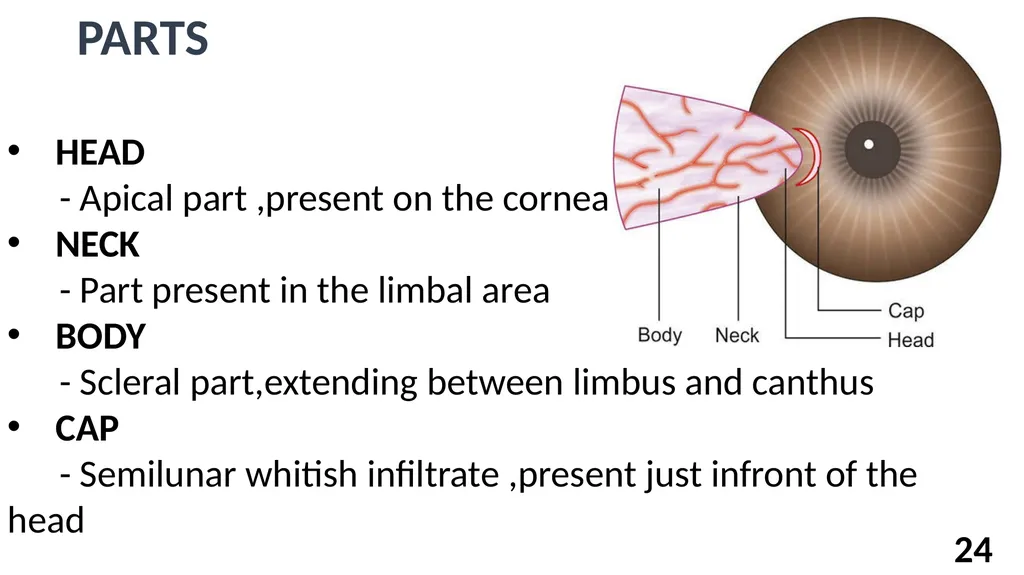
PARTS
HEAD
- Apical part ,present on the cornea
NECK
- Part present in the limbal area
BODY
- Scleral part,extending between limbus and canthus
CAP
- Semilunar whitish infiltrate ,present just infront of the head 24<br>
25
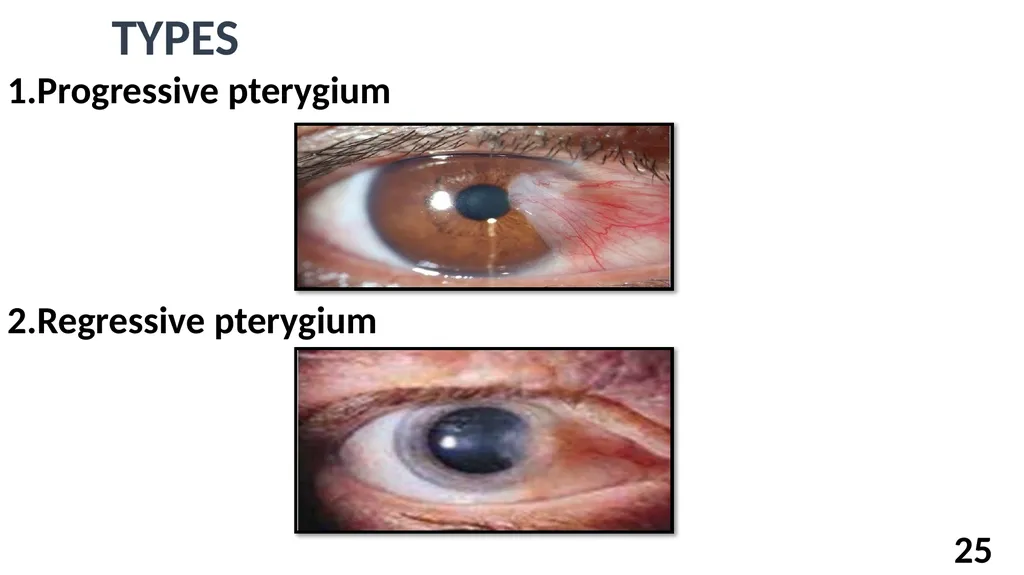
TYPES
1.Progressive pterygium
2.Regressive pterygium 25<br>
26
DIFFERENTIAL DIAGNOSIS
Pterygium must be differentiated from pseudopterygium.
Pseudopterygium is a fold of bulbar conjunctiva attached to the cornea. It is formed as a response to an acute inflammatory episode such as corneal trauma and marginal corneal ulcer. 26<br>
27
TREATMENT
Medical treatment of not much use.
Tear substitutes - small regressive pterygium
Topical steroids - for associated inflammation
Protection from UV rays with sunglasses - to decrease the growth stimulus. 27<br>
28
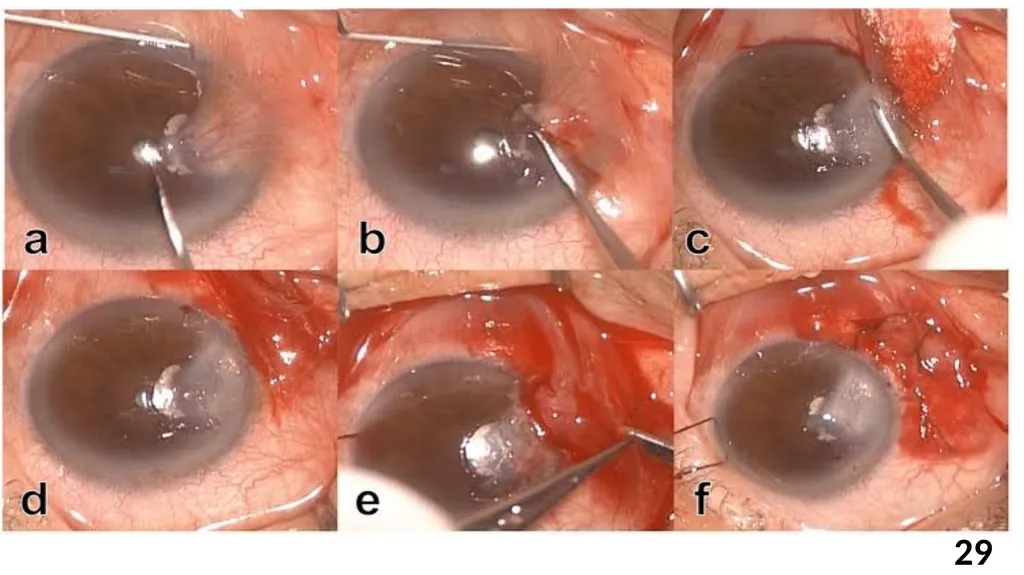
Surgical excision
After topical anaesthesia, eye is cleansed, draped and exposed using universal eye speculum.
Head of the pterygium is lifted and dissected it off.
Main mass of pterygium is then separated.
Pterygium tissue is then excised taking care not to damage the underlying medial rectus muscle.
Haemostasis is done.
Episcleral tissue exposed is cauterised thoroughly. 28<br>
31
CONCLUSION
In the initial stages ,Arma can be managed effectively by internal medications and Lekhana anjanas.
In Arma , excision has to done before reaching the pupillary
region.
Post surgical precautions and medications are also useful to prevent recurrence. 31<br>
32
REFERENCES
Ashtangahridaya .Uttara.10 & 11
Ashtangasangraha.Uttara.13
Sushruta Samhita.Uttara.1 & 15
Comprehensive Ophthalmology - A K Khurana 32<br>