E2-E3 Functional Skills English, Essential Skills English ESOL Tricky Words and Words with Silent Letters Functional Skills English: Writing content descriptors: E2.16: Spell correctly words designated for Entry Level 2 (see Appendix)
"E2-E3 Functional Skills English, Essential Skills" is the property of its rightful owner. Permission is granted to
download and print the materials on this website for personal, non-commercial use only, and to display it
on your personal computer provided you do not modify the materials and that you retain all copyright
notices contained in the materials. By downloading content from our website, you accept the terms of this
agreement.
Presentation Transcript
01
E2-E3 Functional Skills English, Essential Skills English & ESOL Tricky Words and Words with Silent Letters Functional Skills English: Writing content descriptors:
E2.16: Spell correctly words designated for Entry Level 2 (see *Appendix)
E3.17: Spell correctly words designated for Entry Level 3 (see *Appendix)
Source: Functional skills subject content: English. DFE 2018.
https://www.gov.uk/government/publications/functional-skills-subject-content-english
*Lists many silent letter words (e.g. write (E1), half(E2), doubt (E3)) and the following guidance:
Entry 2 (p28): spell correctly: common words with letters corresponding to sounds that are often not pronounced (e.g., February, library, often, every, everything, interest, ordinary)
Entry 3 (p31): spell common words with letters representing sounds that are often not pronounced (e.g., desperate, separate, history, category, natural, business, favourite, government, environment).
Essential Skills standards & Curriculum for Literacy & Numeracy in Northern Ireland
Several aspects of Writing - spelling at all Entry Level.
Source: Essential Skills standards & Curriculum for Literacy & Numeracy in Northern Ireland (2019)
UK Adult ESOL Curriculum Links
ESOL Ww/E2.1b use knowledge of sound-symbol relationships and phonological patterns to help work out correct spellings, as appropriate for the needs of the learner
ESOL Ww/E2.1c develop strategies to aid spelling
ESOL Ww/E3.1a apply knowledge of spelling to a wide range of common & special interest words
ESOL Ww/E3.1b apply knowledge of strategies to aid with spelling
Source: Adult ESOL core curriculum (DfES, 2001) September 2024. Kindly contributed Niamh Mulhern, Bryson Pathways, NI.
For curriculum links and related resources, refer to the download page for this resource on skillsworkshop:
https://www.skillsworkshop.org/resources/tricky_words_and_silent_letters
For full use of hyperlinks and other features, this presentation should be run in full screen mode.<br>
02
KNOWING ABOUT TRICKY WORDS AND WORDS WITH SILENT LETTERS: Improves spelling accuracy
Enhances pronunciation skills
Boosts confidence in writing and speaking<br>
03
SILENT LETTERS Definition:
Silent letters are letters that appear in a word but are not pronounced.
More than 60% of English words have silent letters<br>
04
WHY HAVE SILENT LETTERS? Silent letters appear in words for many reasons, such as historical changes and words being borrowed from other languages.
Silent letters can help distinguish between words that sound similar (homophones)
Silent letters can sometimes help to show long vowels or hard consonants
Silent letters can connect root words to prefixes and suffixes
Silent letters can give clues as to where the stress should be in a word<br>
05
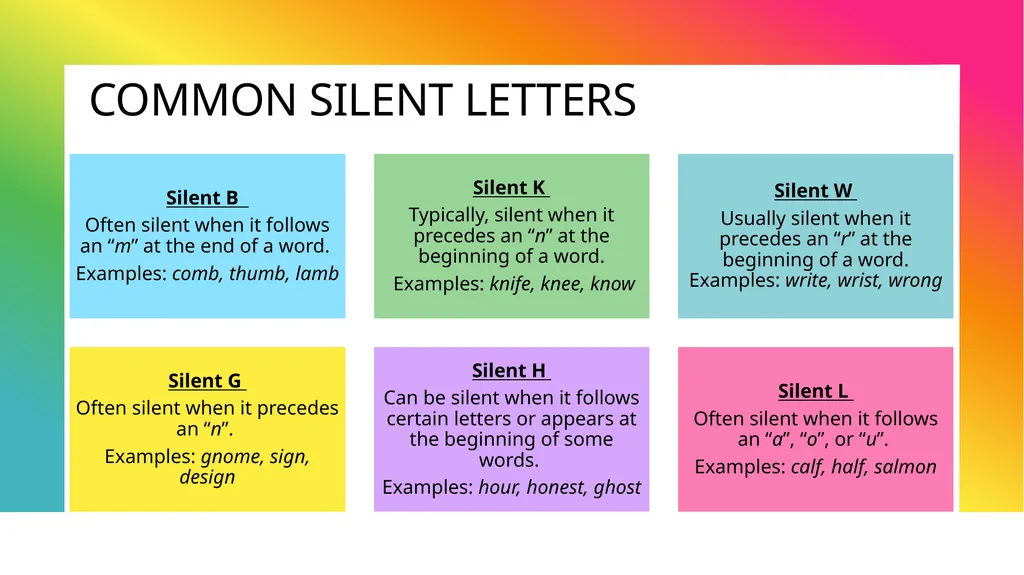
COMMON SILENT LETTERS<br>
06
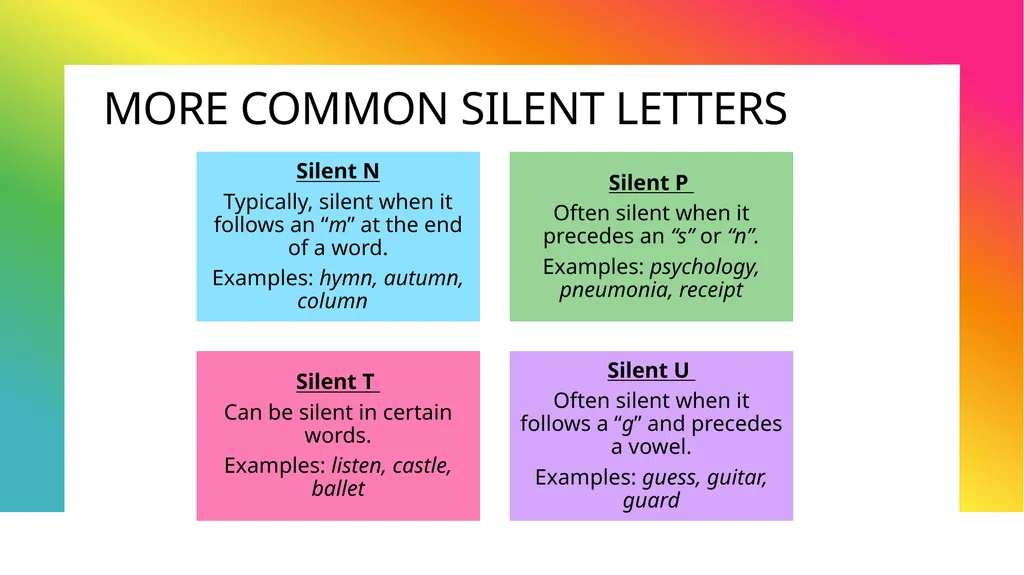
MORE COMMON SILENT LETTERS<br>
07
TRICKY WORDS UNDERSTANDING CHALLENGING WORDS<br>
08
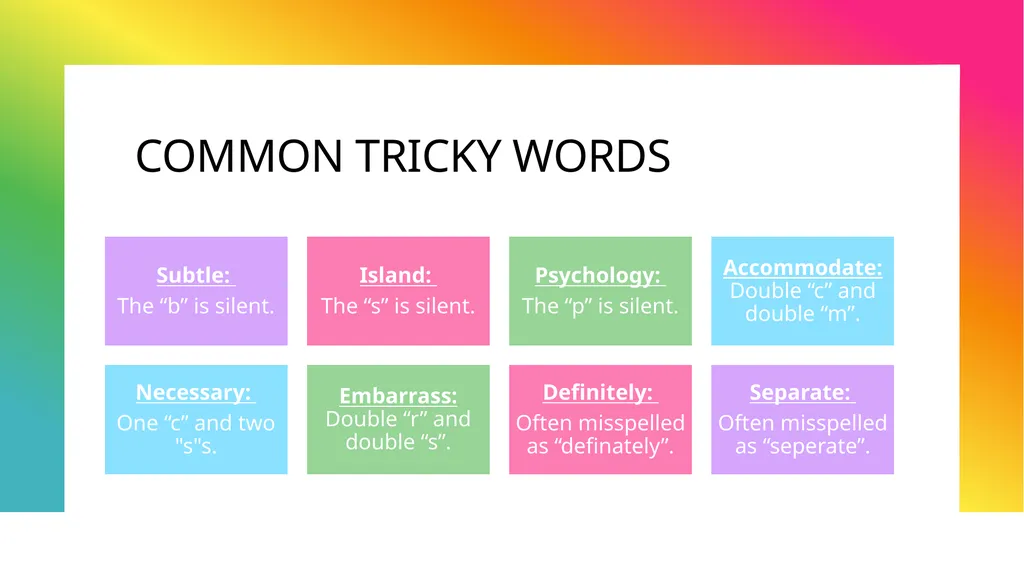
COMMON TRICKY WORDS<br>
09
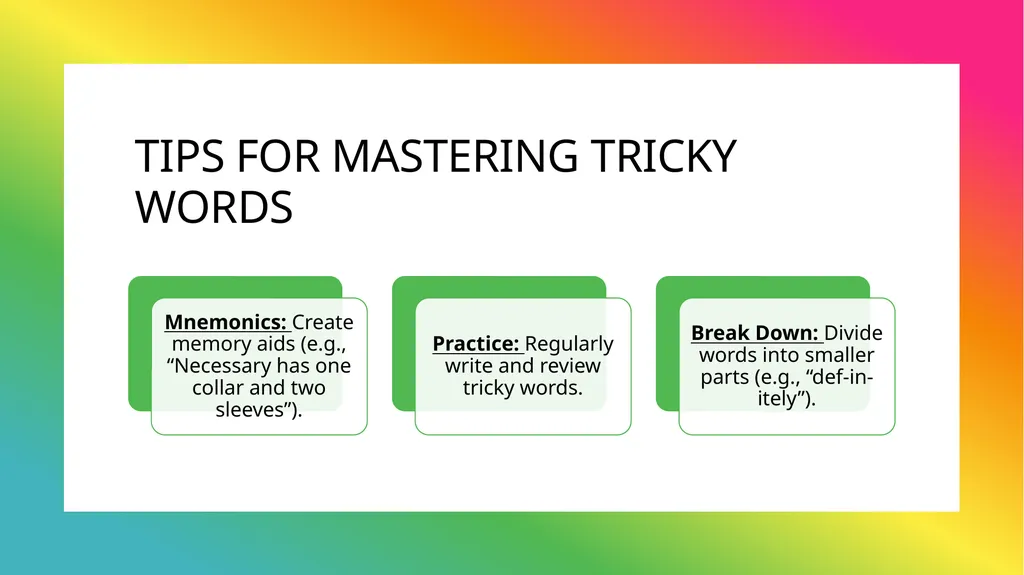
TIPS FOR MASTERING TRICKY WORDS<br>
10
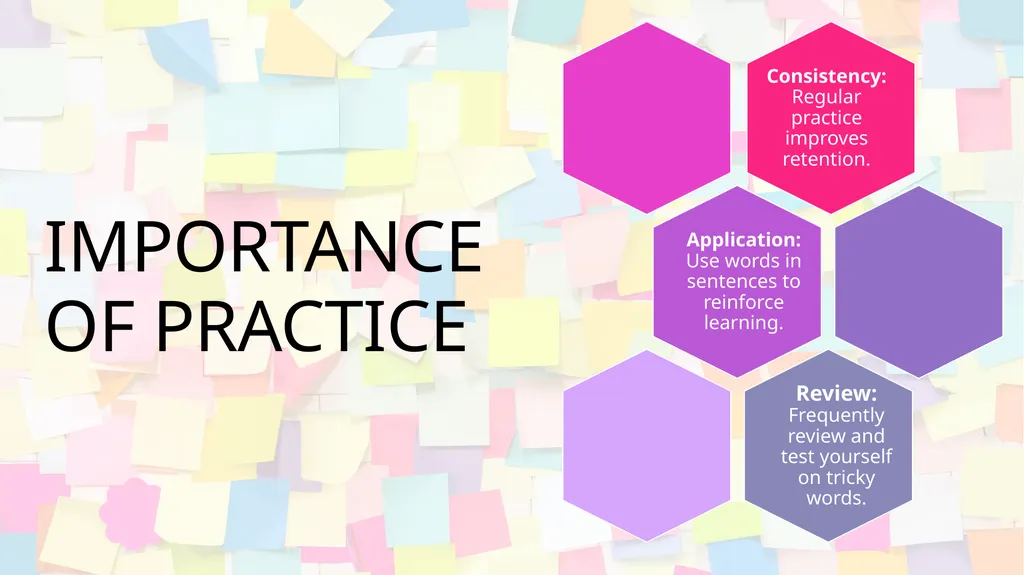
IMPORTANCE OF PRACTICE<br>
11
QUIZ . Can you select the correct spelling?<br>
12
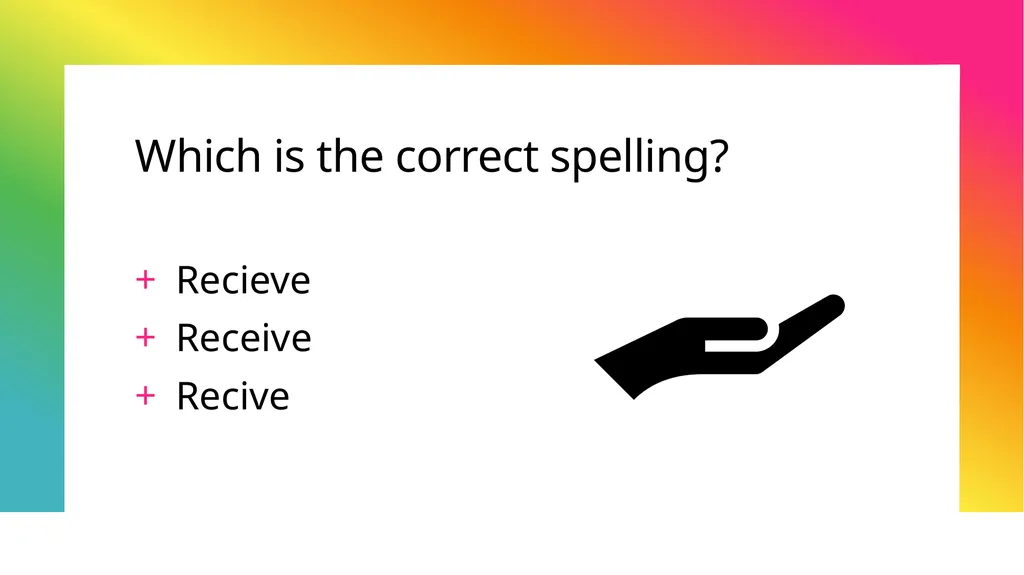
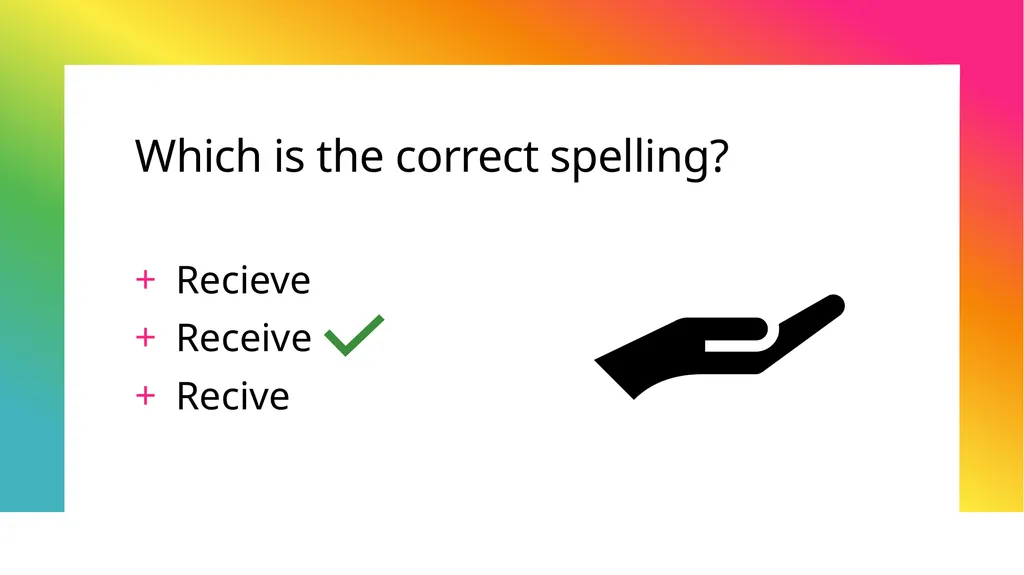
Which is the correct spelling? Recieve
Receive
Recive<br>
13
Which is the correct spelling? Recieve
Receive
Recive<br>
14
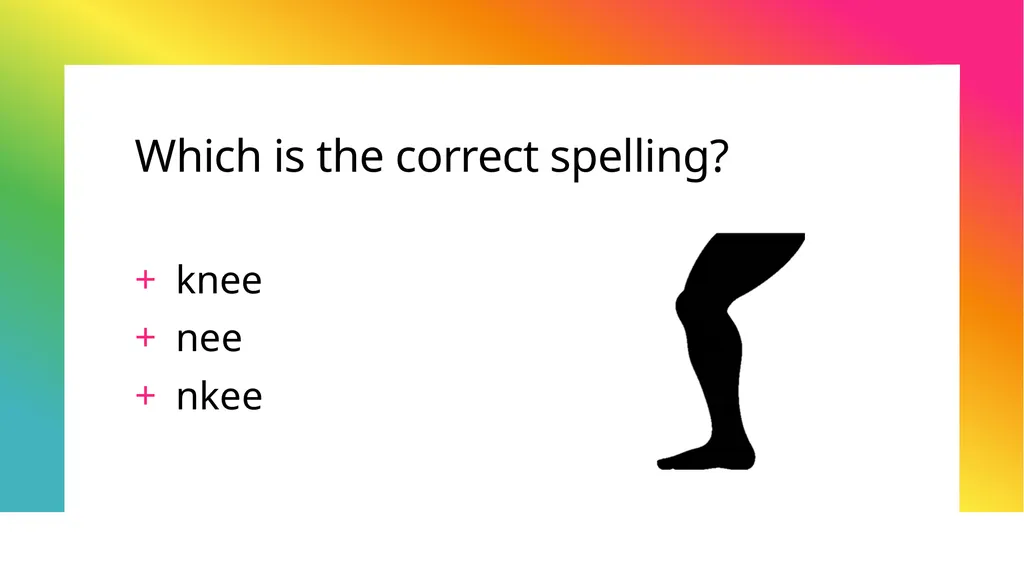
Which is the correct spelling? knee
nee
nkee<br>
15
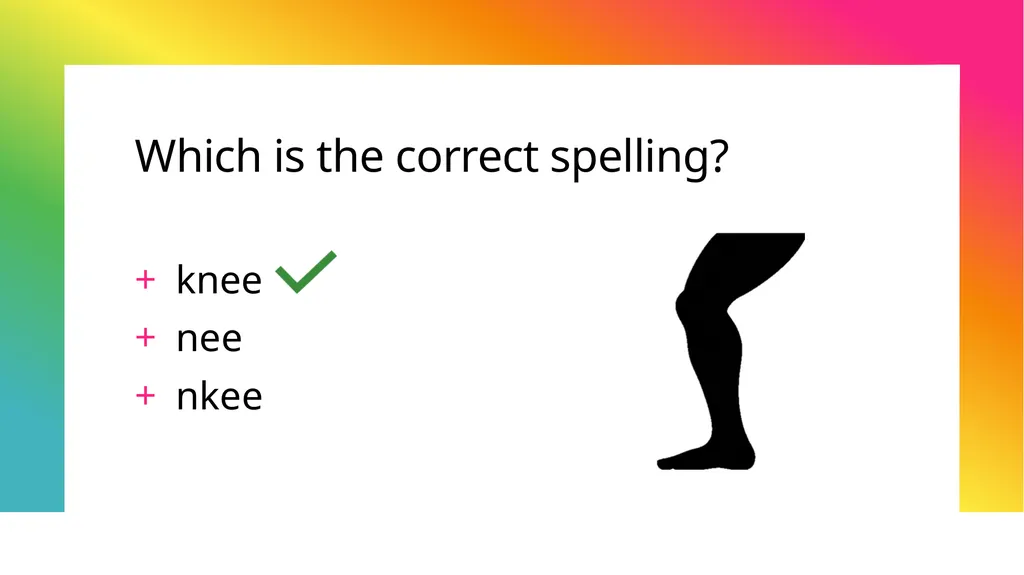
Which is the correct spelling? knee
nee
nkee<br>
16
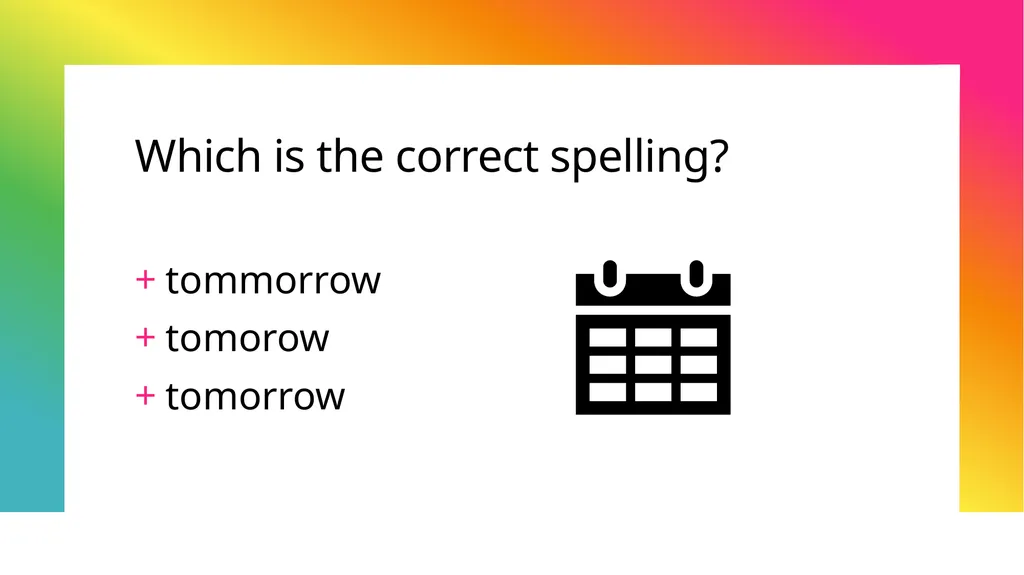
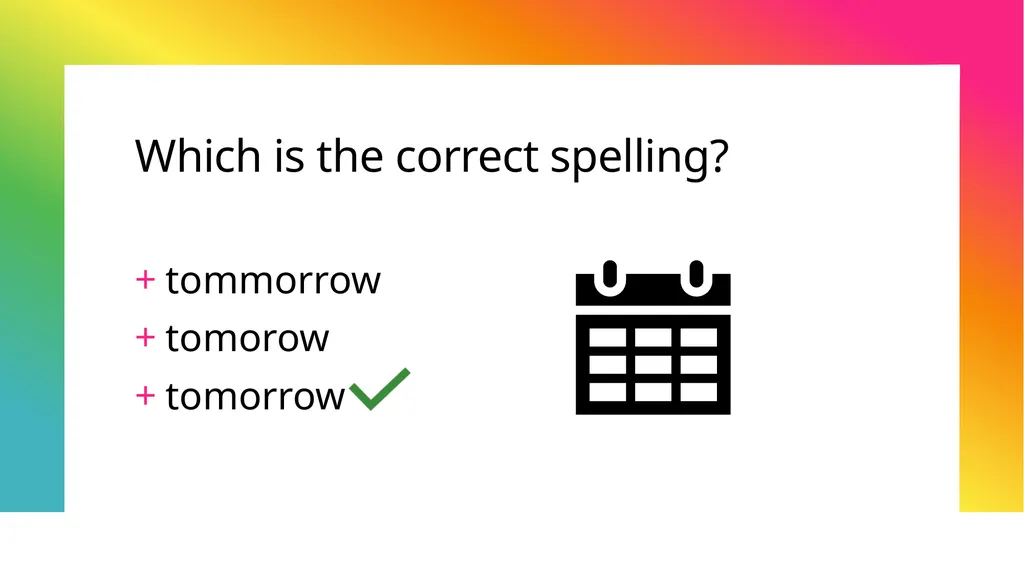
Which is the correct spelling? tommorrow
tomorow
tomorrow<br>
17
Which is the correct spelling? tommorrow
tomorow
tomorrow<br>
18
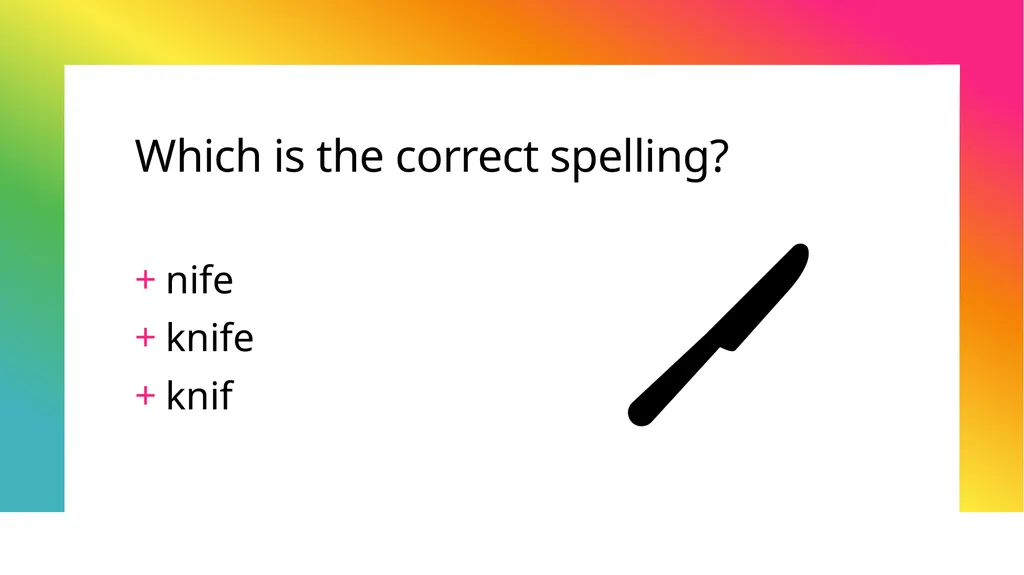
Which is the correct spelling? nife
knife
knif<br>
19
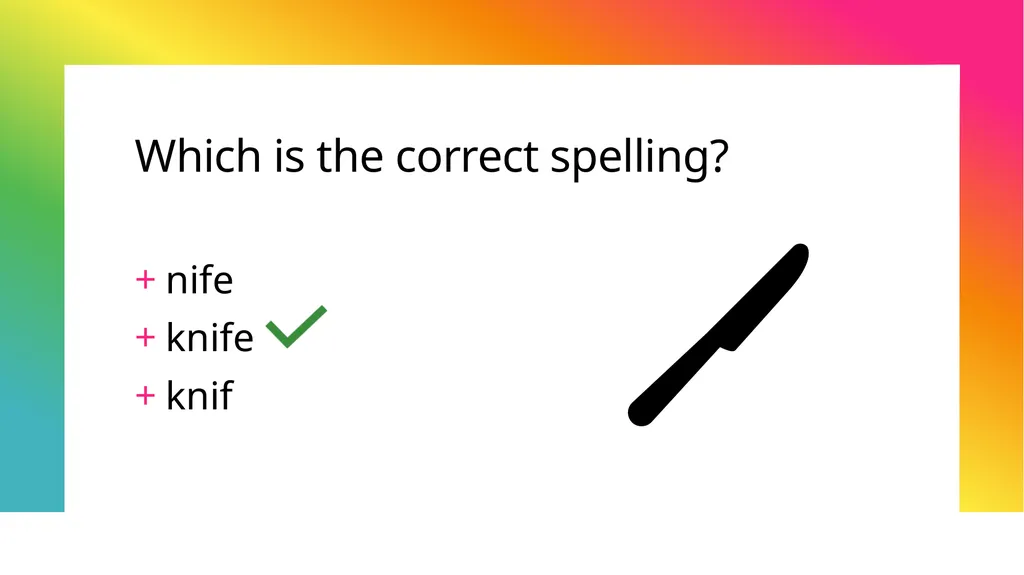
Which is the correct spelling? nife
knife
knif<br>
20
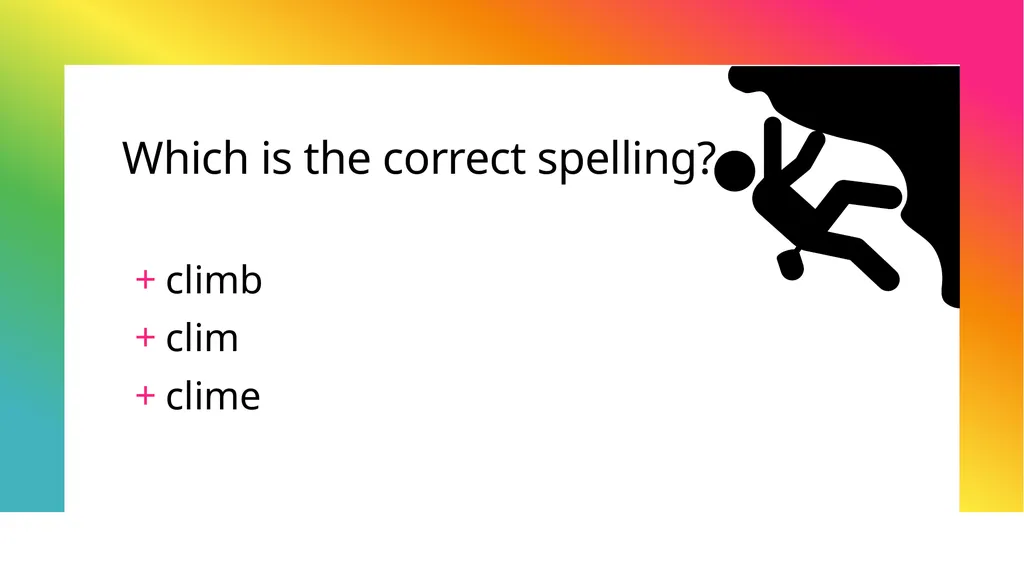
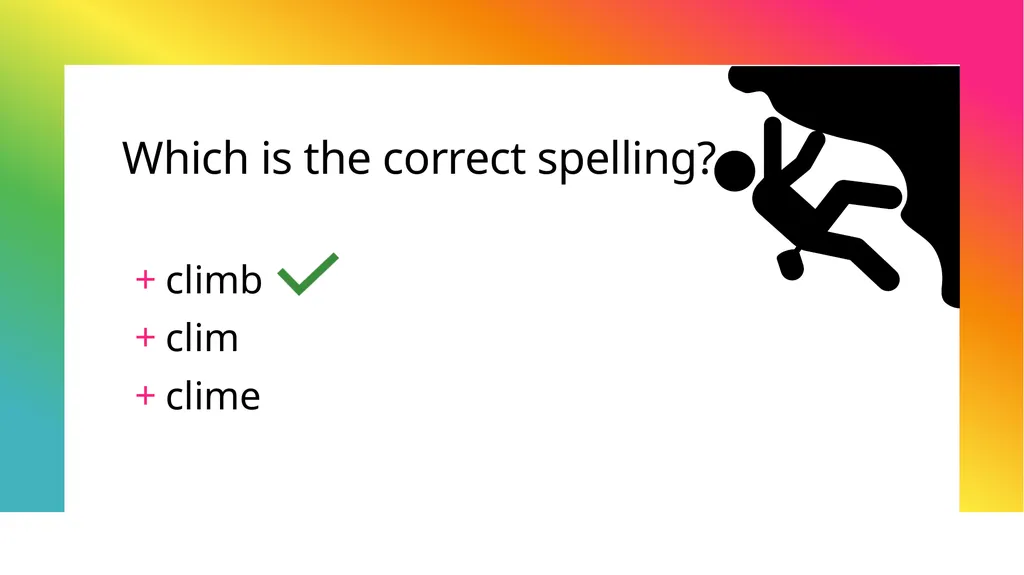
Which is the correct spelling? climb
clim
clime<br>
21
Which is the correct spelling? climb
clim
clime<br>
22
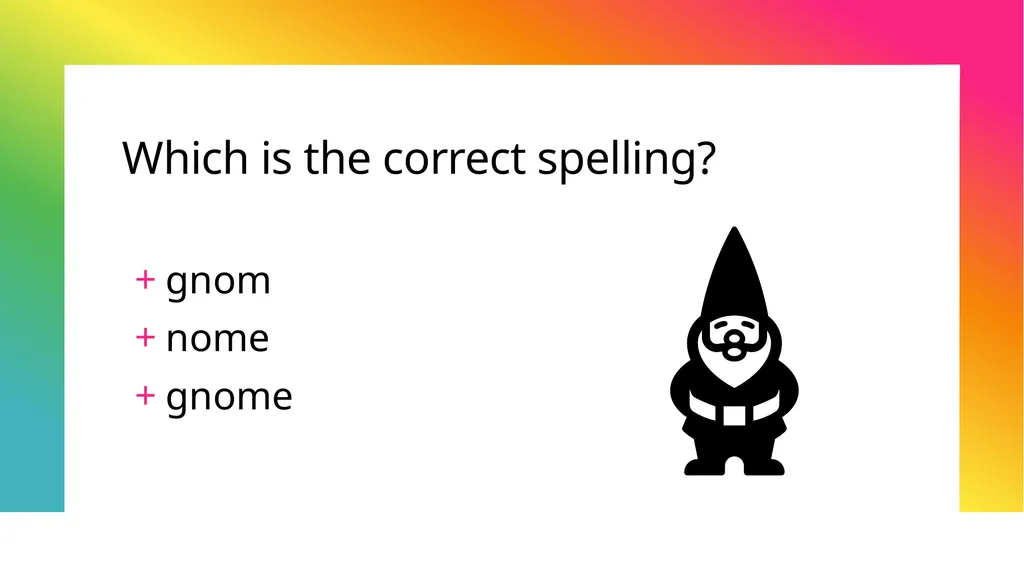
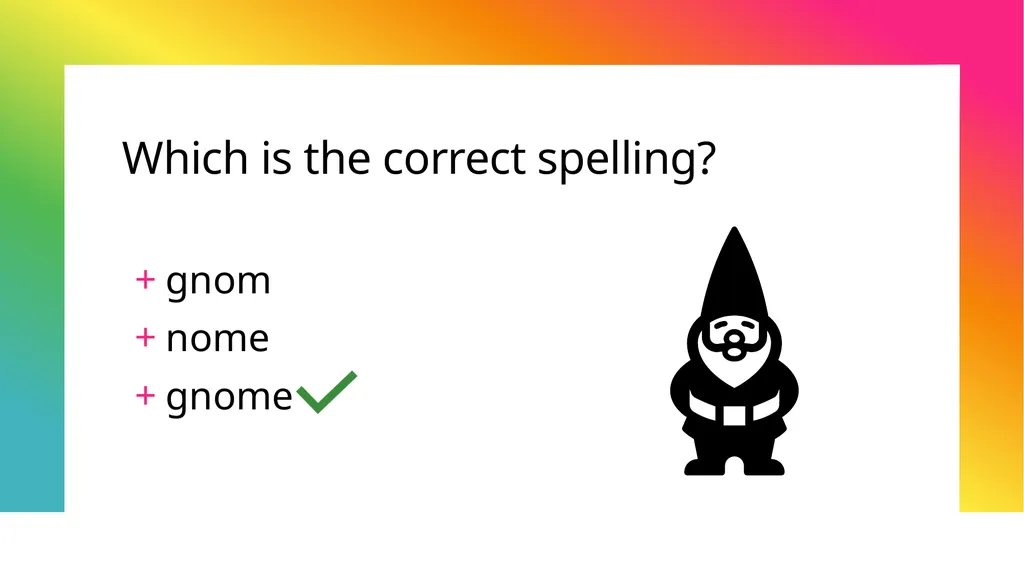
Which is the correct spelling? gnom
nome
gnome<br>
23
Which is the correct spelling? gnom
nome
gnome<br>