Effect of Climate Change and Future Introduction What causes climate change? Hazards and impacts What we learn today Introduction Weather Weather refers to conditions like rain, temperature and wind over hours to days LOOK out the window
"Effect of Climate Change and Future Introduction" is the property of its rightful owner. Permission is granted to
download and print the materials on this website for personal, non-commercial use only, and to display it
on your personal computer provided you do not modify the materials and that you retain all copyright
notices contained in the materials. By downloading content from our website, you accept the terms of this
agreement.
Presentation Transcript
01
Effect of Climate Change and Future<br>
02
Introduction
What causes climate change?
Hazards and impacts What we learn today………<br>
03
Introduction<br>
04
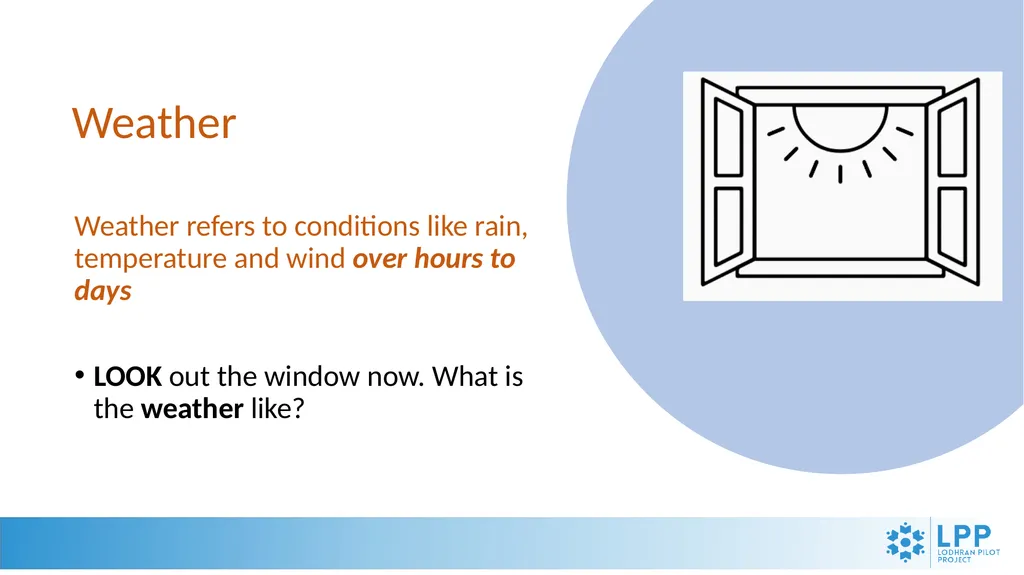
Weather Weather refers to conditions like rain, temperature and wind over hours to days
LOOK out the window now. What is the weather like?<br>
05
Climate Climate refers to average weather conditions over a long period of time (30+ years)
THINK about what the weather is normally like on your birthday? - Is it normally dry or wet / hot or cold?<br>
06
Climate change Climate change is a statistically significant change in the state of the climate (average weather) that persists for an extended period of time (decades or longer)
ASK an elder what the weather was normally like 30 years ago, in your birthday month? Has it changed?<br>
07
What causes climate change?<br>
08
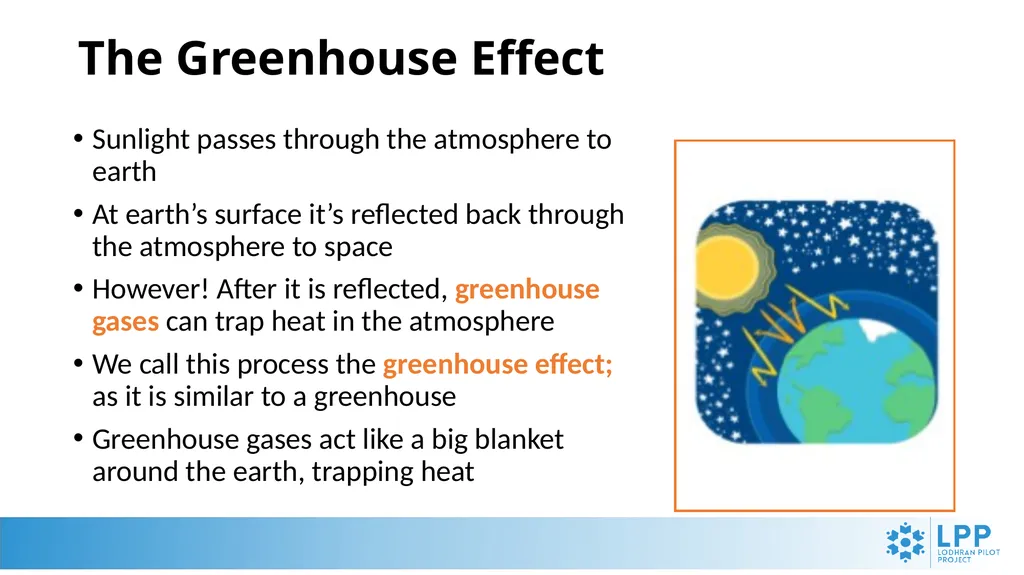
The Greenhouse Effect Sunlight passes through the atmosphere to earth
At earth’s surface it’s reflected back through the atmosphere to space
However! After it is reflected, greenhouse gases can trap heat in the atmosphere
We call this process the greenhouse effect; as it is similar to a greenhouse
Greenhouse gases act like a big blanket around the earth, trapping heat<br>
09
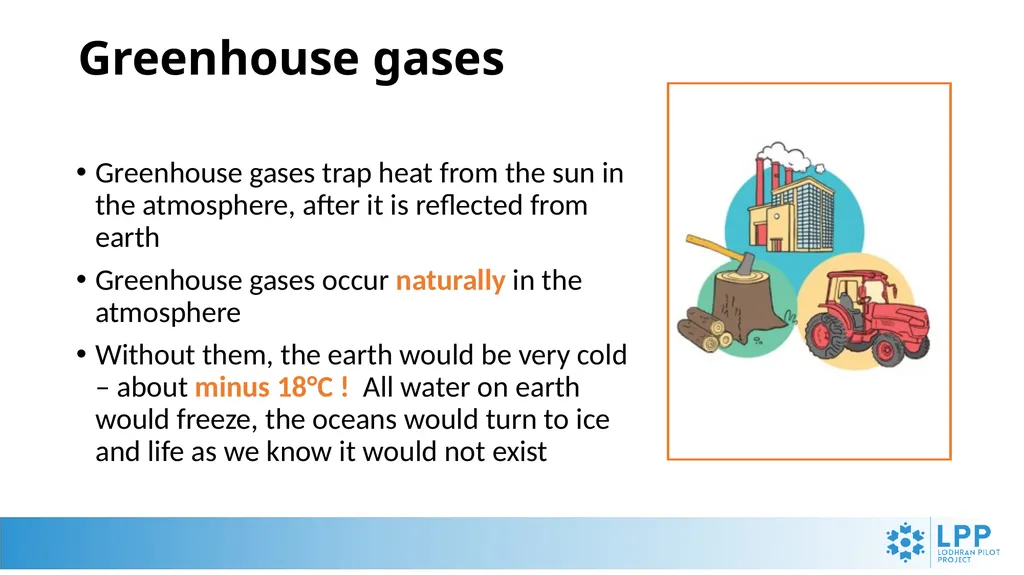
Greenhouse gases Greenhouse gases trap heat from the sun in the atmosphere, after it is reflected from earth
Greenhouse gases occur naturally in the atmosphere
Without them, the earth would be very cold – about minus 18°C ! All water on earth would freeze, the oceans would turn to ice and life as we know it would not exist<br>
10
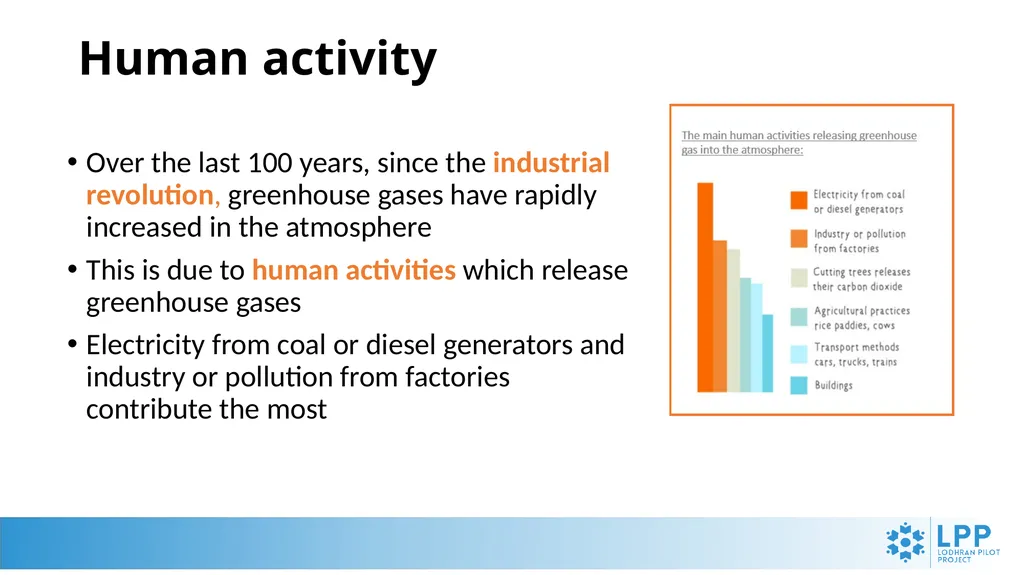
Human activity Over the last 100 years, since the industrial revolution, greenhouse gases have rapidly increased in the atmosphere
This is due to human activities which release greenhouse gases
Electricity from coal or diesel generators and industry or pollution from factories contribute the most<br>
11
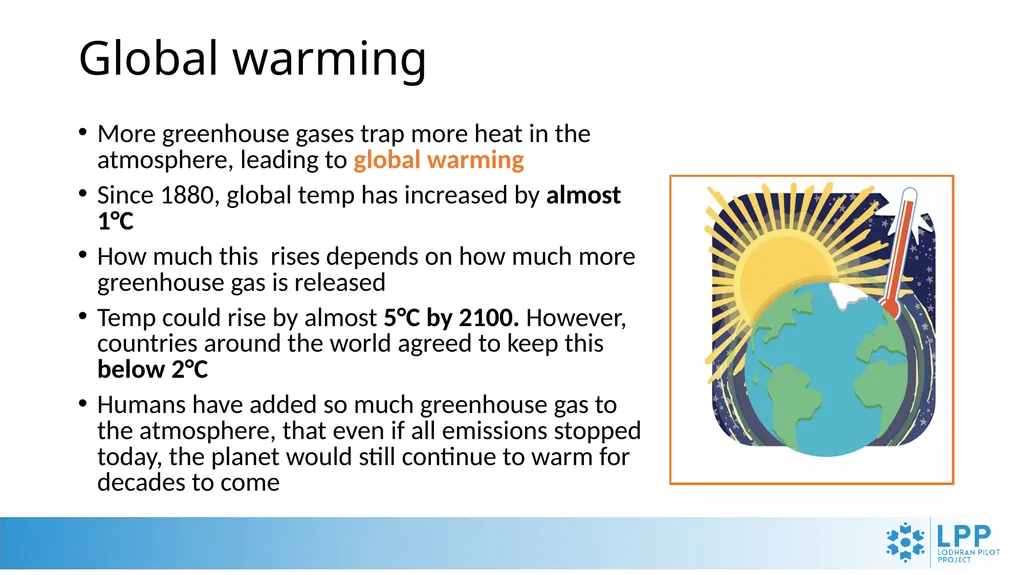
Global warming More greenhouse gases trap more heat in the atmosphere, leading to global warming
Since 1880, global temp has increased by almost 1°C
How much this rises depends on how much more greenhouse gas is released
Temp could rise by almost 5°C by 2100. However, countries around the world agreed to keep this below 2°C
Humans have added so much greenhouse gas to the atmosphere, that even if all emissions stopped today, the planet would still continue to warm for decades to come<br>
12
1°C or 2°C warmer sounds small? 1°C or 2°C - might not sound like much, but think about what happens when your body temperature is increased by 1 or 2 degrees?
You would immediately fall sick and get a fever<br>
13
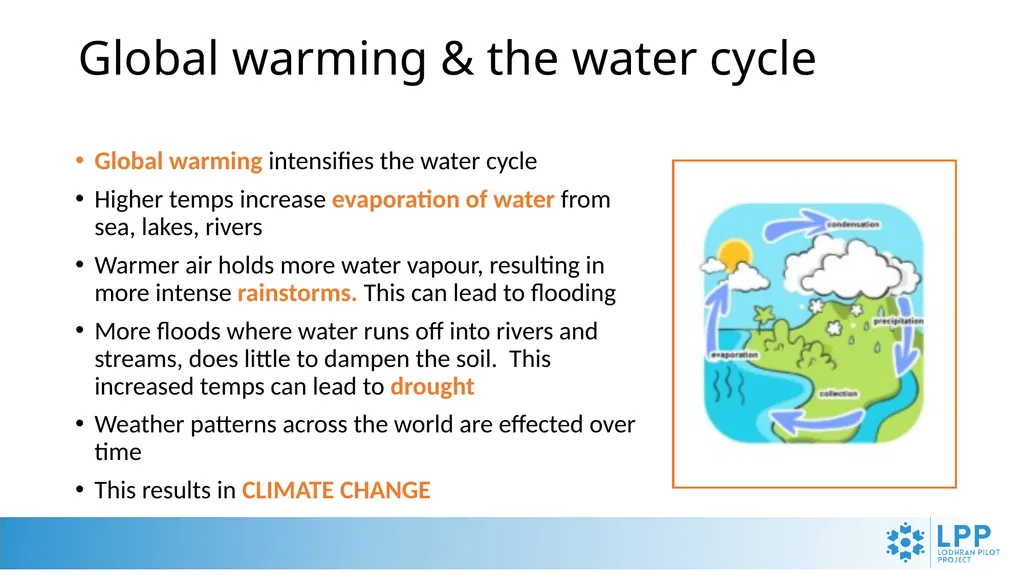
Global warming & the water cycle Global warming intensifies the water cycle
Higher temps increase evaporation of water from sea, lakes, rivers
Warmer air holds more water vapour, resulting in more intense rainstorms. This can lead to flooding
More floods where water runs off into rivers and streams, does little to dampen the soil. This increased temps can lead to drought
Weather patterns across the world are effected over time
This results in CLIMATE CHANGE<br>
14
Hazards and impacts<br>
15
Climate change, hazards & impacts Climate Change is exacerbating a range of weather related hazards around the world
Climate change makes some hazards more frequent
Climate change makes some hazards more intense
These hazards impact people around the world
The same hazard can have different impacts for different people<br>
16
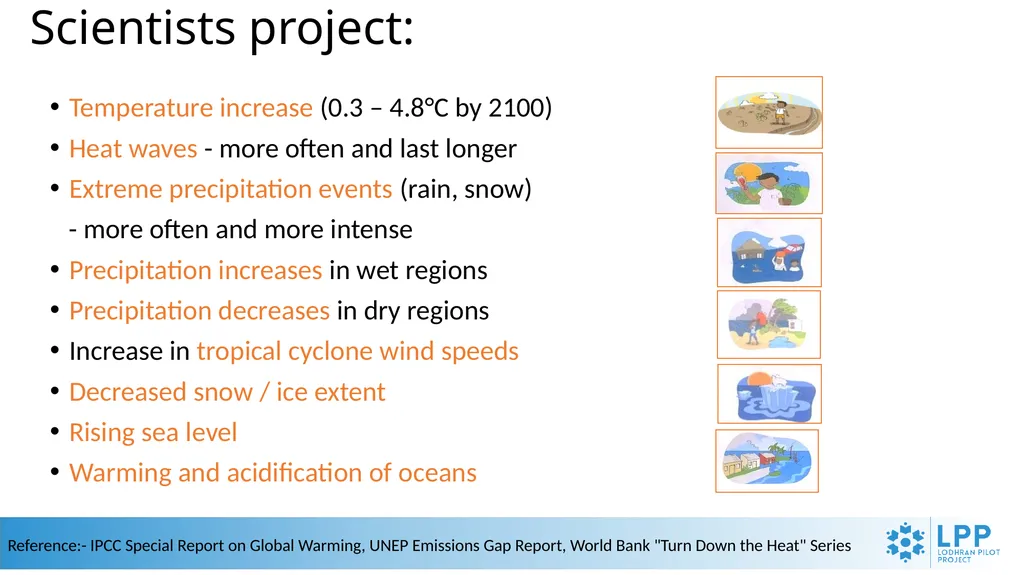
Scientists project: Temperature increase (0.3 – 4.8°C by 2100)
Heat waves - more often and last longer
Extreme precipitation events (rain, snow)
- more often and more intense
Precipitation increases in wet regions
Precipitation decreases in dry regions
Increase in tropical cyclone wind speeds
Decreased snow / ice extent
Rising sea level
Warming and acidification of oceans Source: IPCC 2014, AR5 Reference:- IPCC Special Report on Global Warming, UNEP Emissions Gap Report, World Bank "Turn Down the Heat" Series<br>