Effective management Accurate tracking Easier
Description: Effective management Accurate tracking Easier automation Creative collaboration ISO Standard compliance Enhance the value of your content when you are DOI Digital Object Identifier Digital Identifier of an Object DOI Digital Object
Related Topics
Download Presentation
"Effective management Accurate tracking Easier" is the property of its rightful owner. Permission is granted to download and print the materials on this website for personal, non-commercial use only, and to display it on your personal computer provided you do not modify the materials and that you retain all copyright notices contained in the materials. By downloading content from our website, you accept the terms of this agreement.
Presentation Transcript
slide2. Effective management<br>
slide3. Accurate tracking<br>
slide4. Easier automation<br>
slide5. Creative collaboration<br>
slide6. ISO Standard compliance<br>
slide7. Enhance the value of your content when you are<br>
slide8. DOI = Digital Object Identifier Digital Identifier of an Object<br>
slide9. DOI = Digital Object Identifier Digital Identifier of an Object<br>
slide10. DOI = Digital Object Identifier Digital Identifier of an Object<br>
slide11. Use DOIs to identify:<br>
slide12. Content (As abstract works or particular versions) Related objects (e.g. Agreements, participants in content exchange contracts, parties) Content (e.g. Files, equipment, DVDs)<br>
slide13. What’s special about DOIs?<br>
slide14. A DOI identifies an object permanently,
even if the object changes its location,
its owner or other characteristics The DOI does this through redirection,
using the Handle system<br>
slide15. The object has metadata associated with it. This metadata describes the object in whatever detail is appropriate for a service. The minimum set is kernel data and more can be added. DOIs are supported by the DOI Community to offer persistence.<br>
slide16. How do DOIs work?<br>
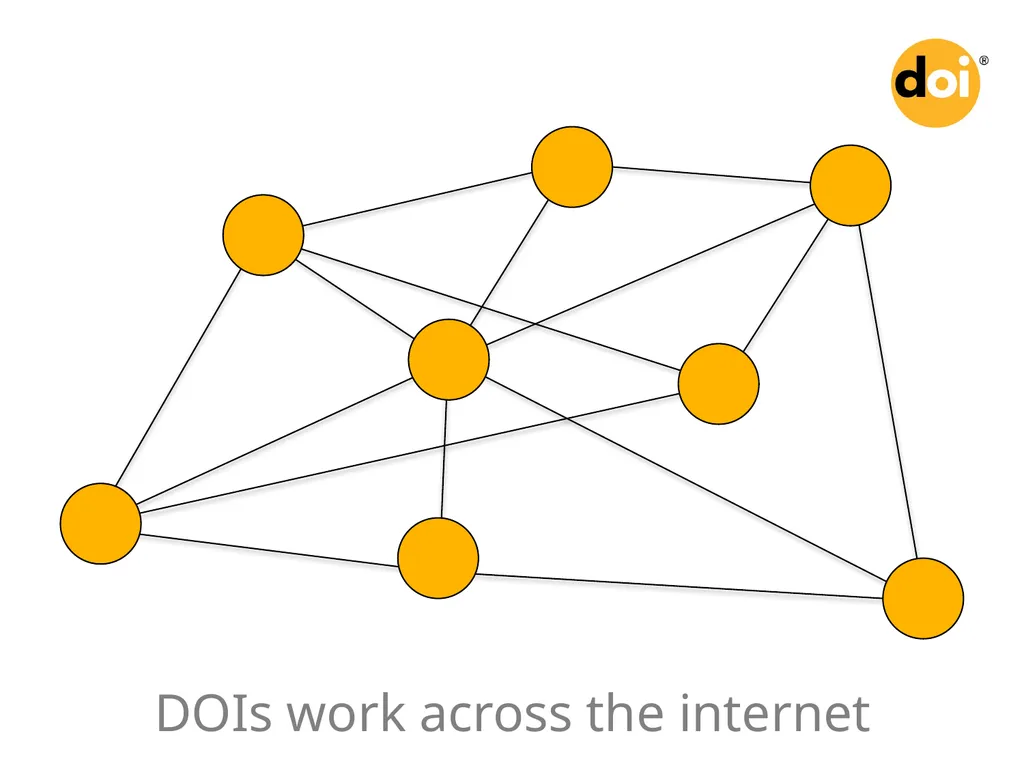
slide17. DOIs work across the internet<br>
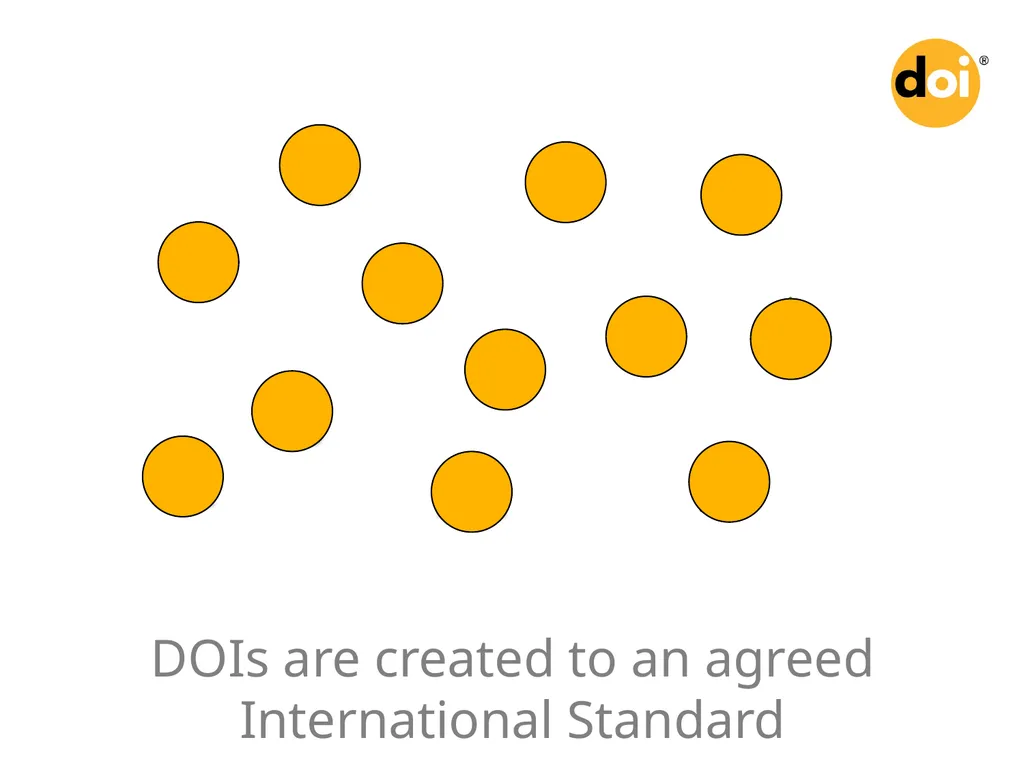
slide18. DOIs are created to an agreed International Standard<br>
slide19. DOIs are created to an agreed International Standard<br>
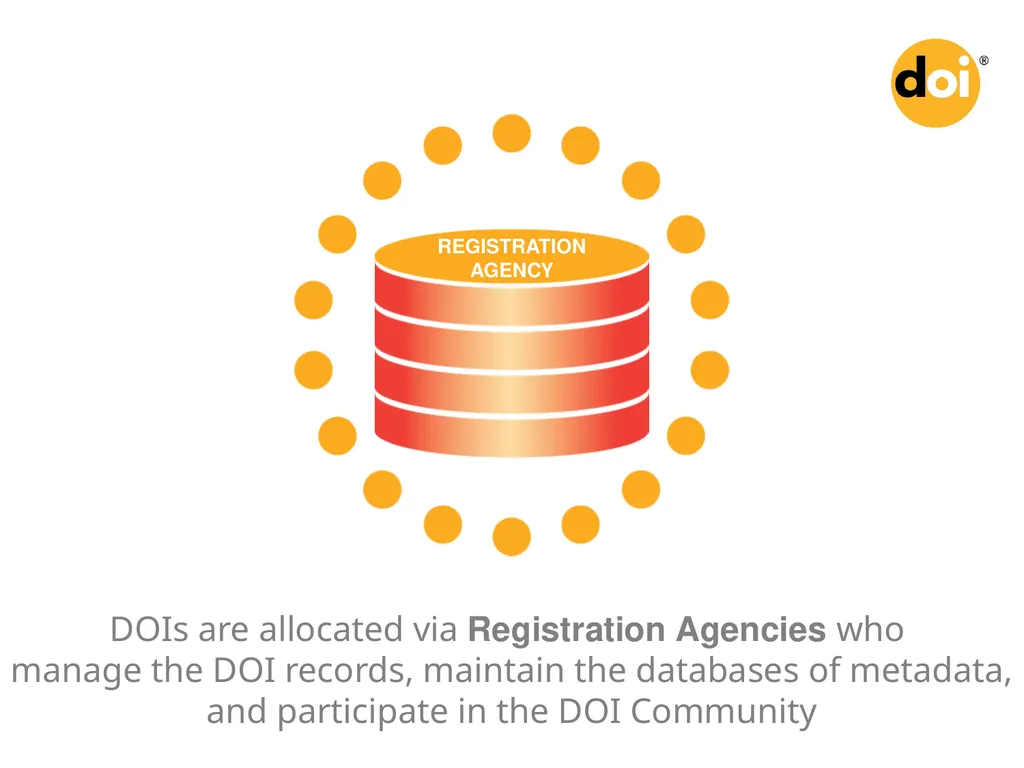
slide20. DOIs are allocated via Registration Agencies who manage the DOI records, maintain the databases of metadata, and participate in the DOI Community<br>
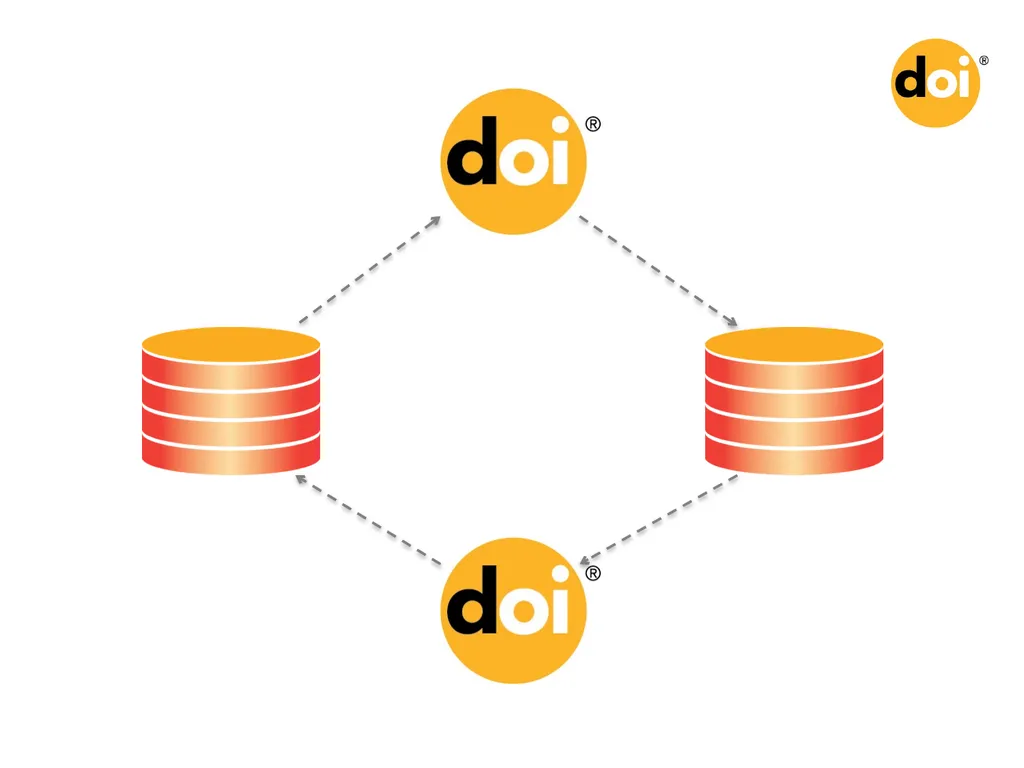
slide21. By creating metadata to a consistent standard, sharing and interoperability become possible, allowing users to build upon this value for commercial and operational advantage<br>
slide22. What do DOIs bring to your content?<br>
slide23. Persistence
Interoperability
Extensibility
Platform independence
Dynamic updating
Multiple resolution
Class management<br>
slide24. A DOI continues to point to the object it identifies even if the object is moved, updated or modified Persistence<br>
slide25. A common standard and agreed syntactical and semantic approach to metadata makes sharing data from different sources easier and more productive Interoperability<br>
slide26. Users can build on the standard to develop applications suited to their industry or sector Extensibility<br>
slide27. Allows data from different sources to be easily shared and facilitates multiple output formats Platform independence<br>
slide28. As DOIs are persistent, metadata can be added to or updated over time to further describe the object identified Dynamic updating<br>
slide29. A DOI can resolve to multiple items of data about an object.
Locations; rights information; specific services; user-defined data ; etc.
Any item can then be chosen to get appropriate information or deliver automated services
New items of data can be added at any time Multiple resolution<br>
slide30. DOIs with similar properties can be grouped together as a class.
The class can be managed as one thing, so all those DOIs can be easily accessed or modified
New groupings can be made at any time, to create new services Class management<br>
slide31. How do you benefit?<br>
slide32. Save on the time and cost required to manage your assets Know exactly what assets are where, and on which terms Locate assets and choose them with ease and accuracy Create applications to leverage maximum value<br>
slide33. Using DOIs is easy<br>
slide34. Contact a Registration Agency
appropriate to your industry or sector Obtain your DOI prefix and
choose your DOI Service Start working with your
Agency to register and use
all the DOIs you need Enjoy the benefits<br>
slide36. Now you’re part of the
DOI Community<br>

slide3. Accurate tracking<br>
slide4. Easier automation<br>
slide5. Creative collaboration<br>
slide6. ISO Standard compliance<br>
slide7. Enhance the value of your content when you are<br>
slide8. DOI = Digital Object Identifier Digital Identifier of an Object<br>
slide9. DOI = Digital Object Identifier Digital Identifier of an Object<br>
slide10. DOI = Digital Object Identifier Digital Identifier of an Object<br>
slide11. Use DOIs to identify:<br>
slide12. Content (As abstract works or particular versions) Related objects (e.g. Agreements, participants in content exchange contracts, parties) Content (e.g. Files, equipment, DVDs)<br>
slide13. What’s special about DOIs?<br>
slide14. A DOI identifies an object permanently,
even if the object changes its location,
its owner or other characteristics The DOI does this through redirection,
using the Handle system<br>
slide15. The object has metadata associated with it. This metadata describes the object in whatever detail is appropriate for a service. The minimum set is kernel data and more can be added. DOIs are supported by the DOI Community to offer persistence.<br>
slide16. How do DOIs work?<br>
slide17. DOIs work across the internet<br>
slide18. DOIs are created to an agreed International Standard<br>
slide19. DOIs are created to an agreed International Standard<br>
slide20. DOIs are allocated via Registration Agencies who manage the DOI records, maintain the databases of metadata, and participate in the DOI Community<br>
slide21. By creating metadata to a consistent standard, sharing and interoperability become possible, allowing users to build upon this value for commercial and operational advantage<br>
slide22. What do DOIs bring to your content?<br>
slide23. Persistence
Interoperability
Extensibility
Platform independence
Dynamic updating
Multiple resolution
Class management<br>
slide24. A DOI continues to point to the object it identifies even if the object is moved, updated or modified Persistence<br>
slide25. A common standard and agreed syntactical and semantic approach to metadata makes sharing data from different sources easier and more productive Interoperability<br>

slide26. Users can build on the standard to develop applications suited to their industry or sector Extensibility<br>
slide27. Allows data from different sources to be easily shared and facilitates multiple output formats Platform independence<br>
slide28. As DOIs are persistent, metadata can be added to or updated over time to further describe the object identified Dynamic updating<br>
slide29. A DOI can resolve to multiple items of data about an object.
Locations; rights information; specific services; user-defined data ; etc.
Any item can then be chosen to get appropriate information or deliver automated services
New items of data can be added at any time Multiple resolution<br>
slide30. DOIs with similar properties can be grouped together as a class.
The class can be managed as one thing, so all those DOIs can be easily accessed or modified
New groupings can be made at any time, to create new services Class management<br>
slide31. How do you benefit?<br>
slide32. Save on the time and cost required to manage your assets Know exactly what assets are where, and on which terms Locate assets and choose them with ease and accuracy Create applications to leverage maximum value<br>
slide33. Using DOIs is easy<br>
slide34. Contact a Registration Agency
appropriate to your industry or sector Obtain your DOI prefix and
choose your DOI Service Start working with your
Agency to register and use
all the DOIs you need Enjoy the benefits<br>
slide36. Now you’re part of the
DOI Community<br>