
Elder abuse definition, risk factors, warning
YM
Published · 10 slides · 0 views

1 / 1

Description
Elder abuse definition, risk factors, warning signs and types of abuse Elijah Levy, Ph.D. Definition Elder abuse is defined by the CDC as an intentional action or refusal of action by a caregiver or another person who is in a relationship
Related Topics
Share
Embed code
Download this presentation From Below
"Elder abuse definition, risk factors, warning" is the property of its rightful owner. Permission is granted to download and print the materials on this website for personal, non-commercial use only, and to display it on your personal computer provided you do not modify the materials and that you retain all copyright notices contained in the materials. By downloading content from our website, you accept the terms of this agreement.
Presentation Transcript
01
Elder abuse
definition, risk factors, warning signs and types of abuse Elijah Levy, Ph.D.<br>
02
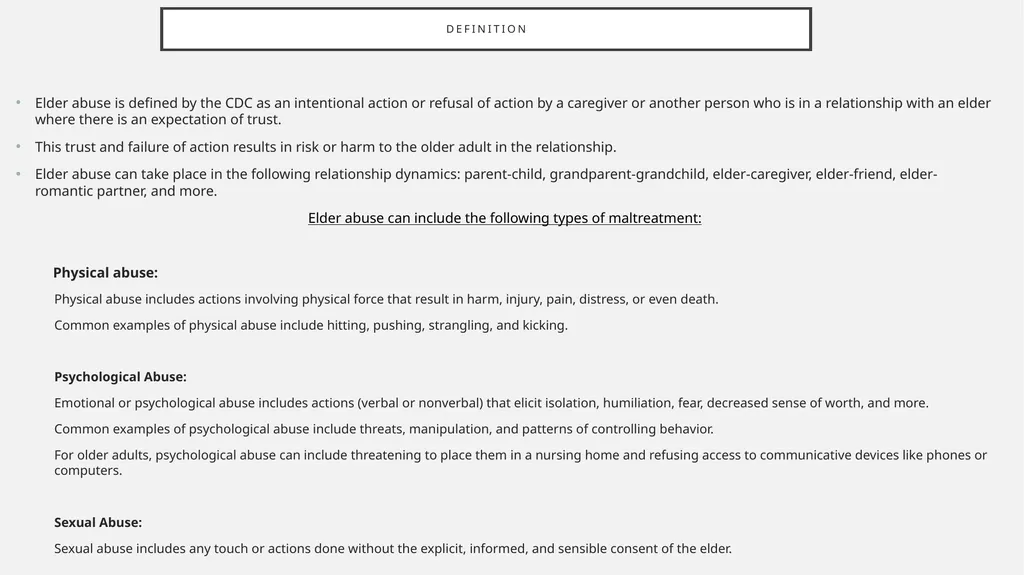
Definition Elder abuse is defined by the CDC as an intentional action or refusal of action by a caregiver or another person who is in a relationship with an elder where there is an expectation of trust.
This trust and failure of action results in risk or harm to the older adult in the relationship.
Elder abuse can take place in the following relationship dynamics: parent-child, grandparent-grandchild, elder-caregiver, elder-friend, elder-romantic partner, and more.
Elder abuse can include the following types of maltreatment:
Physical abuse:
Physical abuse includes actions involving physical force that result in harm, injury, pain, distress, or even death.
Common examples of physical abuse include hitting, pushing, strangling, and kicking.
Psychological Abuse:
Emotional or psychological abuse includes actions (verbal or nonverbal) that elicit isolation, humiliation, fear, decreased sense of worth, and more.
Common examples of psychological abuse include threats, manipulation, and patterns of controlling behavior.
For older adults, psychological abuse can include threatening to place them in a nursing home and refusing access to communicative devices like phones or computers.
Sexual Abuse:
Sexual abuse includes any touch or actions done without the explicit, informed, and sensible consent of the elder.<br>
This trust and failure of action results in risk or harm to the older adult in the relationship.
Elder abuse can take place in the following relationship dynamics: parent-child, grandparent-grandchild, elder-caregiver, elder-friend, elder-romantic partner, and more.
Elder abuse can include the following types of maltreatment:
Physical abuse:
Physical abuse includes actions involving physical force that result in harm, injury, pain, distress, or even death.
Common examples of physical abuse include hitting, pushing, strangling, and kicking.
Psychological Abuse:
Emotional or psychological abuse includes actions (verbal or nonverbal) that elicit isolation, humiliation, fear, decreased sense of worth, and more.
Common examples of psychological abuse include threats, manipulation, and patterns of controlling behavior.
For older adults, psychological abuse can include threatening to place them in a nursing home and refusing access to communicative devices like phones or computers.
Sexual Abuse:
Sexual abuse includes any touch or actions done without the explicit, informed, and sensible consent of the elder.<br>
03
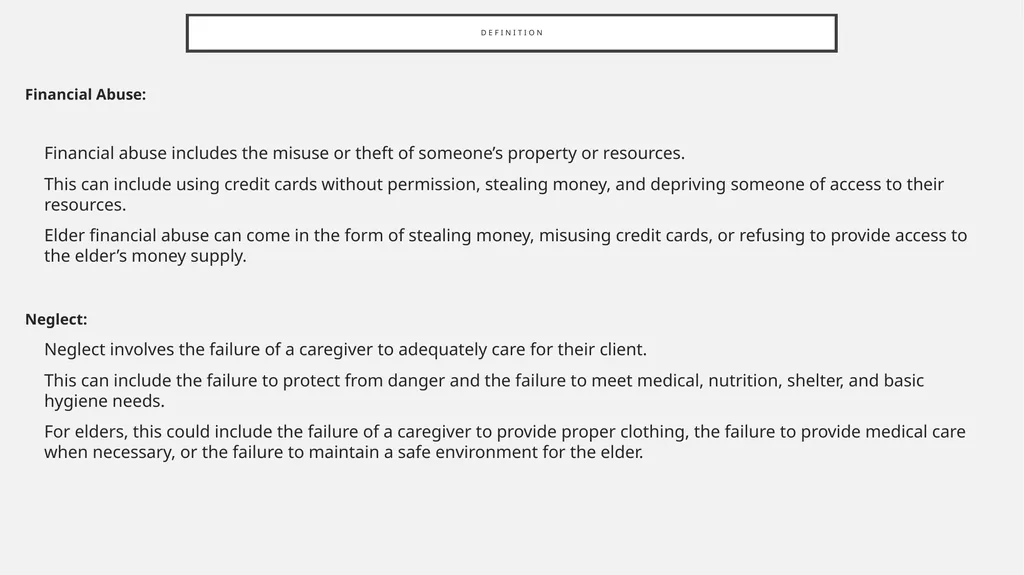
definition Financial Abuse:
Financial abuse includes the misuse or theft of someone’s property or resources.
This can include using credit cards without permission, stealing money, and depriving someone of access to their resources.
Elder financial abuse can come in the form of stealing money, misusing credit cards, or refusing to provide access to the elder’s money supply.
Neglect:
Neglect involves the failure of a caregiver to adequately care for their client.
This can include the failure to protect from danger and the failure to meet medical, nutrition, shelter, and basic hygiene needs.
For elders, this could include the failure of a caregiver to provide proper clothing, the failure to provide medical care when necessary, or the failure to maintain a safe environment for the elder.<br>
Financial abuse includes the misuse or theft of someone’s property or resources.
This can include using credit cards without permission, stealing money, and depriving someone of access to their resources.
Elder financial abuse can come in the form of stealing money, misusing credit cards, or refusing to provide access to the elder’s money supply.
Neglect:
Neglect involves the failure of a caregiver to adequately care for their client.
This can include the failure to protect from danger and the failure to meet medical, nutrition, shelter, and basic hygiene needs.
For elders, this could include the failure of a caregiver to provide proper clothing, the failure to provide medical care when necessary, or the failure to maintain a safe environment for the elder.<br>
04
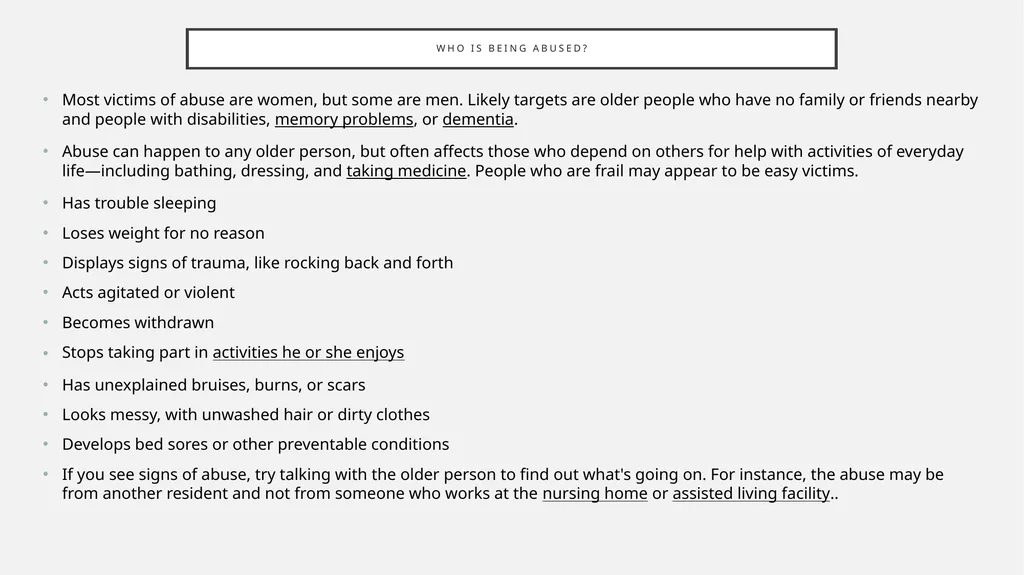
Who is being abused? Most victims of abuse are women, but some are men. Likely targets are older people who have no family or friends nearby and people with disabilities, memory problems, or dementia.
Abuse can happen to any older person, but often affects those who depend on others for help with activities of everyday life—including bathing, dressing, and taking medicine. People who are frail may appear to be easy victims.
Has trouble sleeping
Loses weight for no reason
Displays signs of trauma, like rocking back and forth
Acts agitated or violent
Becomes withdrawn
Stops taking part in activities he or she enjoys
Has unexplained bruises, burns, or scars
Looks messy, with unwashed hair or dirty clothes
Develops bed sores or other preventable conditions
If you see signs of abuse, try talking with the older person to find out what's going on. For instance, the abuse may be from another resident and not from someone who works at the nursing home or assisted living facility..<br>
Abuse can happen to any older person, but often affects those who depend on others for help with activities of everyday life—including bathing, dressing, and taking medicine. People who are frail may appear to be easy victims.
Has trouble sleeping
Loses weight for no reason
Displays signs of trauma, like rocking back and forth
Acts agitated or violent
Becomes withdrawn
Stops taking part in activities he or she enjoys
Has unexplained bruises, burns, or scars
Looks messy, with unwashed hair or dirty clothes
Develops bed sores or other preventable conditions
If you see signs of abuse, try talking with the older person to find out what's going on. For instance, the abuse may be from another resident and not from someone who works at the nursing home or assisted living facility..<br>
05
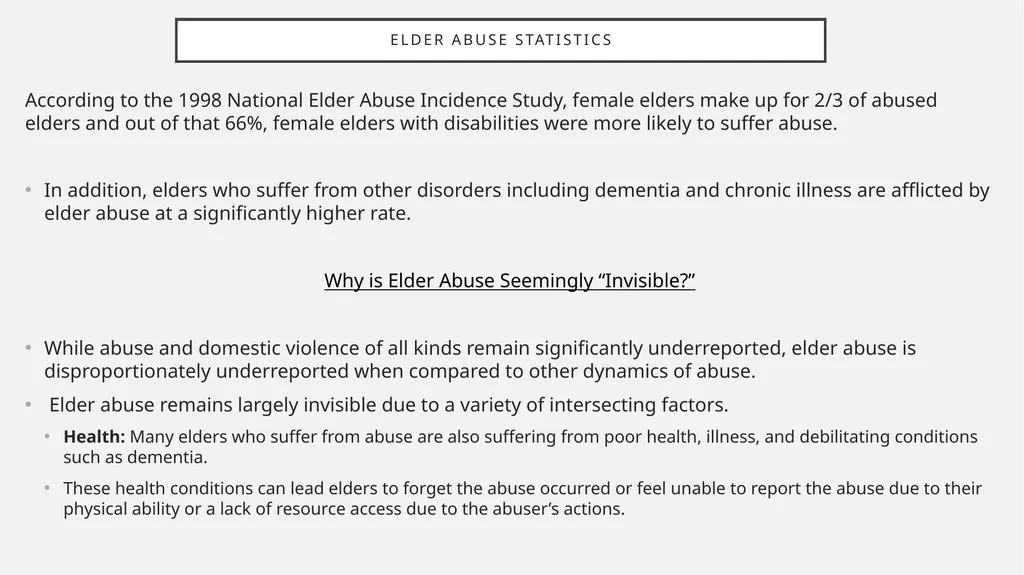
Elder abuse statistics According to the 1998 National Elder Abuse Incidence Study, female elders make up for 2/3 of abused elders and out of that 66%, female elders with disabilities were more likely to suffer abuse.
In addition, elders who suffer from other disorders including dementia and chronic illness are afflicted by elder abuse at a significantly higher rate.
Why is Elder Abuse Seemingly “Invisible?”
While abuse and domestic violence of all kinds remain significantly underreported, elder abuse is disproportionately underreported when compared to other dynamics of abuse.
Elder abuse remains largely invisible due to a variety of intersecting factors.
Health: Many elders who suffer from abuse are also suffering from poor health, illness, and debilitating conditions such as dementia.
These health conditions can lead elders to forget the abuse occurred or feel unable to report the abuse due to their physical ability or a lack of resource access due to the abuser’s actions.<br>
In addition, elders who suffer from other disorders including dementia and chronic illness are afflicted by elder abuse at a significantly higher rate.
Why is Elder Abuse Seemingly “Invisible?”
While abuse and domestic violence of all kinds remain significantly underreported, elder abuse is disproportionately underreported when compared to other dynamics of abuse.
Elder abuse remains largely invisible due to a variety of intersecting factors.
Health: Many elders who suffer from abuse are also suffering from poor health, illness, and debilitating conditions such as dementia.
These health conditions can lead elders to forget the abuse occurred or feel unable to report the abuse due to their physical ability or a lack of resource access due to the abuser’s actions.<br>
06
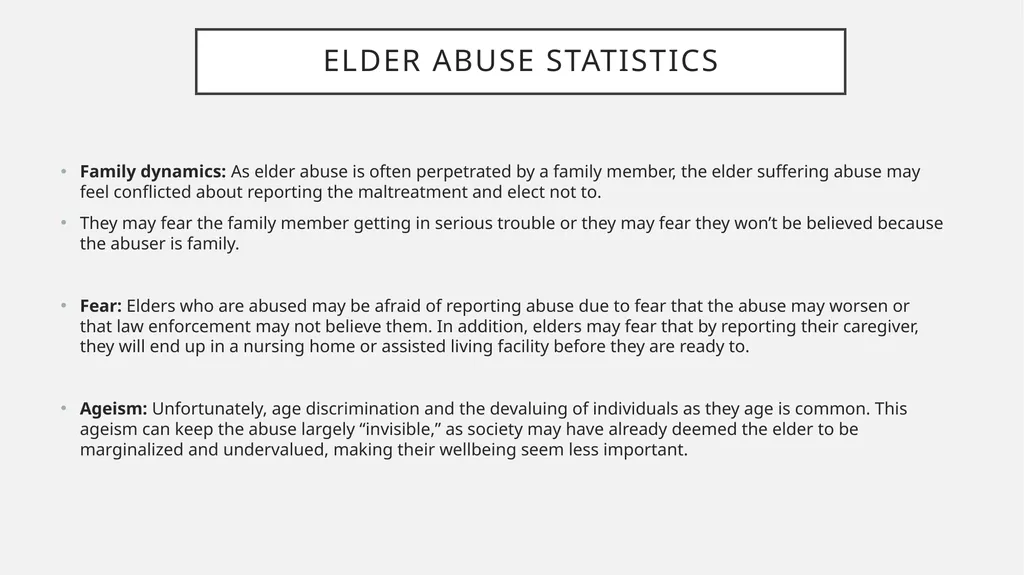
Elder abuse statistics Family dynamics: As elder abuse is often perpetrated by a family member, the elder suffering abuse may feel conflicted about reporting the maltreatment and elect not to.
They may fear the family member getting in serious trouble or they may fear they won’t be believed because the abuser is family.
Fear: Elders who are abused may be afraid of reporting abuse due to fear that the abuse may worsen or that law enforcement may not believe them. In addition, elders may fear that by reporting their caregiver, they will end up in a nursing home or assisted living facility before they are ready to.
Ageism: Unfortunately, age discrimination and the devaluing of individuals as they age is common. This ageism can keep the abuse largely “invisible,” as society may have already deemed the elder to be marginalized and undervalued, making their wellbeing seem less important.<br>
They may fear the family member getting in serious trouble or they may fear they won’t be believed because the abuser is family.
Fear: Elders who are abused may be afraid of reporting abuse due to fear that the abuse may worsen or that law enforcement may not believe them. In addition, elders may fear that by reporting their caregiver, they will end up in a nursing home or assisted living facility before they are ready to.
Ageism: Unfortunately, age discrimination and the devaluing of individuals as they age is common. This ageism can keep the abuse largely “invisible,” as society may have already deemed the elder to be marginalized and undervalued, making their wellbeing seem less important.<br>
07
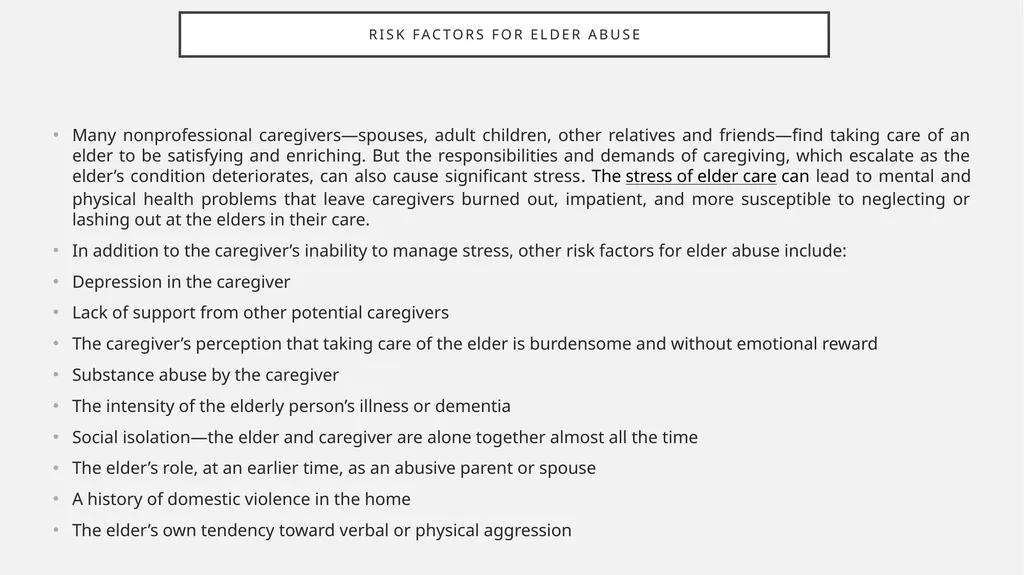
Risk factors for elder abuse Many nonprofessional caregivers—spouses, adult children, other relatives and friends—find taking care of an elder to be satisfying and enriching. But the responsibilities and demands of caregiving, which escalate as the elder’s condition deteriorates, can also cause significant stress. The stress of elder care can lead to mental and physical health problems that leave caregivers burned out, impatient, and more susceptible to neglecting or lashing out at the elders in their care.
In addition to the caregiver’s inability to manage stress, other risk factors for elder abuse include:
Depression in the caregiver
Lack of support from other potential caregivers
The caregiver’s perception that taking care of the elder is burdensome and without emotional reward
Substance abuse by the caregiver
The intensity of the elderly person’s illness or dementia
Social isolation—the elder and caregiver are alone together almost all the time
The elder’s role, at an earlier time, as an abusive parent or spouse
A history of domestic violence in the home
The elder’s own tendency toward verbal or physical aggression<br>
In addition to the caregiver’s inability to manage stress, other risk factors for elder abuse include:
Depression in the caregiver
Lack of support from other potential caregivers
The caregiver’s perception that taking care of the elder is burdensome and without emotional reward
Substance abuse by the caregiver
The intensity of the elderly person’s illness or dementia
Social isolation—the elder and caregiver are alone together almost all the time
The elder’s role, at an earlier time, as an abusive parent or spouse
A history of domestic violence in the home
The elder’s own tendency toward verbal or physical aggression<br>
08
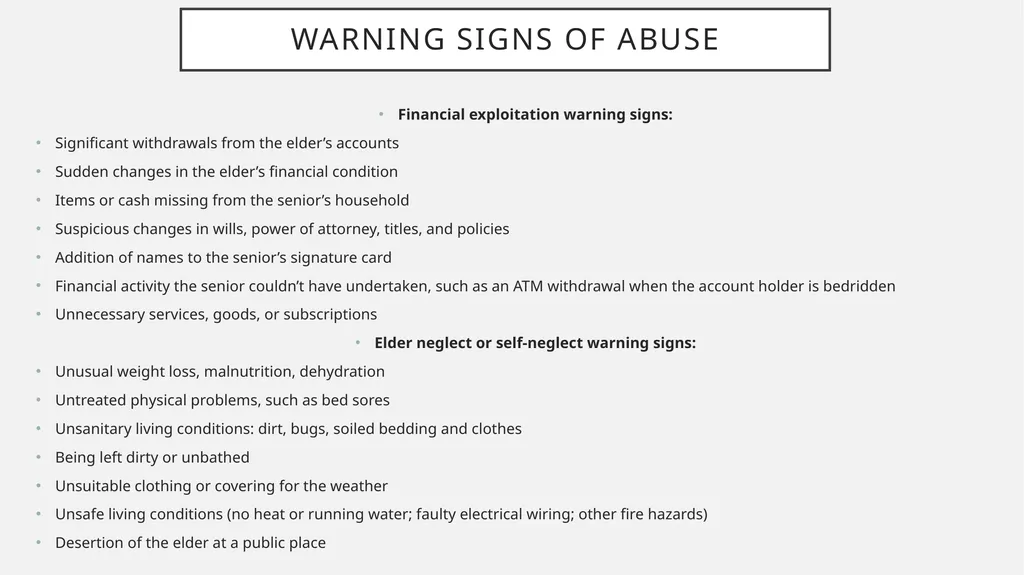
Warning signs of abuse Financial exploitation warning signs:
Significant withdrawals from the elder’s accounts
Sudden changes in the elder’s financial condition
Items or cash missing from the senior’s household
Suspicious changes in wills, power of attorney, titles, and policies
Addition of names to the senior’s signature card
Financial activity the senior couldn’t have undertaken, such as an ATM withdrawal when the account holder is bedridden
Unnecessary services, goods, or subscriptions
Elder neglect or self-neglect warning signs:
Unusual weight loss, malnutrition, dehydration
Untreated physical problems, such as bed sores
Unsanitary living conditions: dirt, bugs, soiled bedding and clothes
Being left dirty or unbathed
Unsuitable clothing or covering for the weather
Unsafe living conditions (no heat or running water; faulty electrical wiring; other fire hazards)
Desertion of the elder at a public place<br>
Significant withdrawals from the elder’s accounts
Sudden changes in the elder’s financial condition
Items or cash missing from the senior’s household
Suspicious changes in wills, power of attorney, titles, and policies
Addition of names to the senior’s signature card
Financial activity the senior couldn’t have undertaken, such as an ATM withdrawal when the account holder is bedridden
Unnecessary services, goods, or subscriptions
Elder neglect or self-neglect warning signs:
Unusual weight loss, malnutrition, dehydration
Untreated physical problems, such as bed sores
Unsanitary living conditions: dirt, bugs, soiled bedding and clothes
Being left dirty or unbathed
Unsuitable clothing or covering for the weather
Unsafe living conditions (no heat or running water; faulty electrical wiring; other fire hazards)
Desertion of the elder at a public place<br>
09
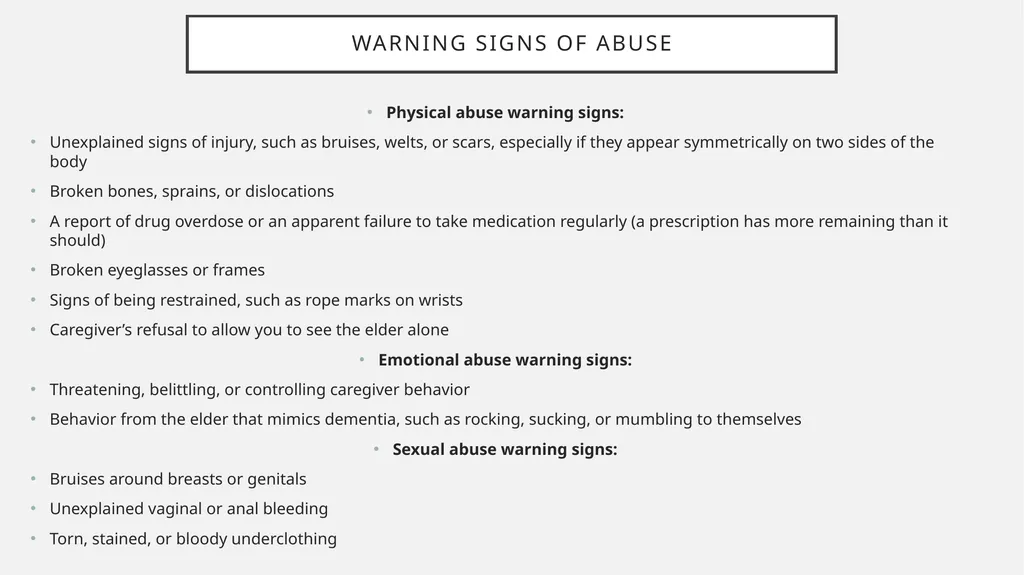
Warning signs of abuse Physical abuse warning signs:
Unexplained signs of injury, such as bruises, welts, or scars, especially if they appear symmetrically on two sides of the body
Broken bones, sprains, or dislocations
A report of drug overdose or an apparent failure to take medication regularly (a prescription has more remaining than it should)
Broken eyeglasses or frames
Signs of being restrained, such as rope marks on wrists
Caregiver’s refusal to allow you to see the elder alone
Emotional abuse warning signs:
Threatening, belittling, or controlling caregiver behavior
Behavior from the elder that mimics dementia, such as rocking, sucking, or mumbling to themselves
Sexual abuse warning signs:
Bruises around breasts or genitals
Unexplained vaginal or anal bleeding
Torn, stained, or bloody underclothing<br>
Unexplained signs of injury, such as bruises, welts, or scars, especially if they appear symmetrically on two sides of the body
Broken bones, sprains, or dislocations
A report of drug overdose or an apparent failure to take medication regularly (a prescription has more remaining than it should)
Broken eyeglasses or frames
Signs of being restrained, such as rope marks on wrists
Caregiver’s refusal to allow you to see the elder alone
Emotional abuse warning signs:
Threatening, belittling, or controlling caregiver behavior
Behavior from the elder that mimics dementia, such as rocking, sucking, or mumbling to themselves
Sexual abuse warning signs:
Bruises around breasts or genitals
Unexplained vaginal or anal bleeding
Torn, stained, or bloody underclothing<br>
10
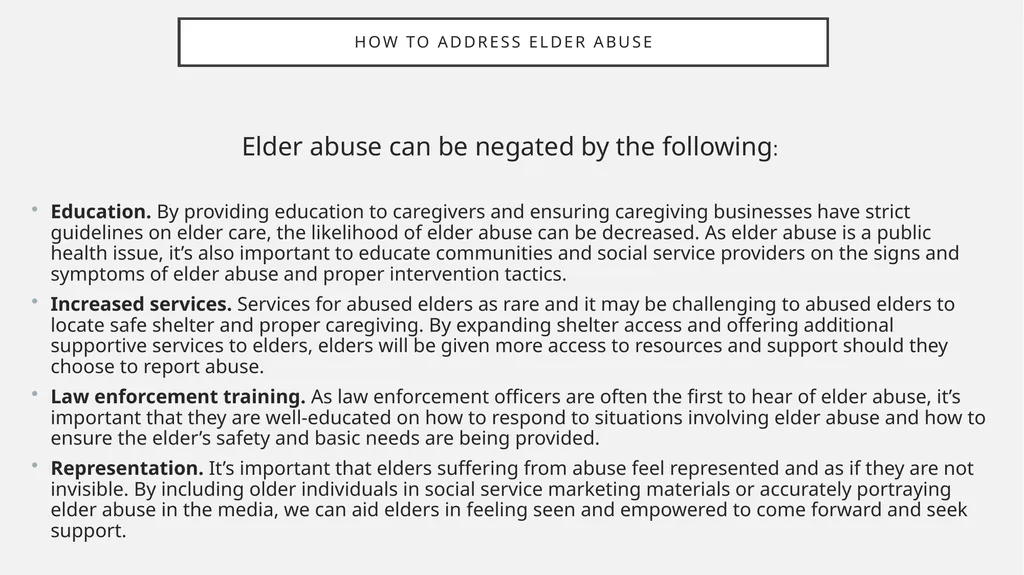
How to address elder abuse Elder abuse can be negated by the following:
Education. By providing education to caregivers and ensuring caregiving businesses have strict guidelines on elder care, the likelihood of elder abuse can be decreased. As elder abuse is a public health issue, it’s also important to educate communities and social service providers on the signs and symptoms of elder abuse and proper intervention tactics.
Increased services. Services for abused elders as rare and it may be challenging to abused elders to locate safe shelter and proper caregiving. By expanding shelter access and offering additional supportive services to elders, elders will be given more access to resources and support should they choose to report abuse.
Law enforcement training. As law enforcement officers are often the first to hear of elder abuse, it’s important that they are well-educated on how to respond to situations involving elder abuse and how to ensure the elder’s safety and basic needs are being provided.
Representation. It’s important that elders suffering from abuse feel represented and as if they are not invisible. By including older individuals in social service marketing materials or accurately portraying elder abuse in the media, we can aid elders in feeling seen and empowered to come forward and seek support.<br>
Education. By providing education to caregivers and ensuring caregiving businesses have strict guidelines on elder care, the likelihood of elder abuse can be decreased. As elder abuse is a public health issue, it’s also important to educate communities and social service providers on the signs and symptoms of elder abuse and proper intervention tactics.
Increased services. Services for abused elders as rare and it may be challenging to abused elders to locate safe shelter and proper caregiving. By expanding shelter access and offering additional supportive services to elders, elders will be given more access to resources and support should they choose to report abuse.
Law enforcement training. As law enforcement officers are often the first to hear of elder abuse, it’s important that they are well-educated on how to respond to situations involving elder abuse and how to ensure the elder’s safety and basic needs are being provided.
Representation. It’s important that elders suffering from abuse feel represented and as if they are not invisible. By including older individuals in social service marketing materials or accurately portraying elder abuse in the media, we can aid elders in feeling seen and empowered to come forward and seek support.<br>