
Elevar Therapeutics Elevating Treatment Outcomes
LD
Published · 25 slides · 0 views
1 / 1






Description
Elevar Therapeutics Elevating Treatment Outcomes For Patients NON-CONFIDENTIAL 2026 Elevar Therapeutics, Inc. All Rights Reserved. Disclaimer This presentation has been prepared for informational purposes only. No money or other
Related Topics
Share
Embed code
Download this presentation From Below
"Elevar Therapeutics Elevating Treatment Outcomes" is the property of its rightful owner. Permission is granted to download and print the materials on this website for personal, non-commercial use only, and to display it on your personal computer provided you do not modify the materials and that you retain all copyright notices contained in the materials. By downloading content from our website, you accept the terms of this agreement.
Presentation Transcript
01
Elevar Therapeutics
Elevating Treatment Outcomes For Patients
NON-CONFIDENTIAL © 2026 Elevar Therapeutics, Inc. All Rights Reserved.<br>
02
Disclaimer This presentation has been prepared for informational purposes only. No money or other consideration is being solicited, and if sent in response, will not be accepted. This presentation shall not constitute an offer to sell, or the solicitation of an offer to buy, any securities, nor shall there be any sale of these securities in any state or jurisdiction in which such offer, solicitation or sale would be unlawful prior to registration or qualification under the securities laws of any such state or jurisdiction. The Company is not under any obligation to make an offering. It may choose to make an offering to some, but not all, of the people who indicate an interest in investing. The information included in any registration statement will be more complete than the information the Company is providing now and could differ in important ways.
This presentation contains forward-looking statements about Elevar Therapeutics Inc. (“Elevar Therapeutics” or the “Company”). Forward-looking statements are based on our management’s beliefs and assumptions and on information currently available to our management, including those described in the forward-looking statements.
Such statements are subject to known and unknown risks, uncertainties, and other factors that may cause our or our industry’s actual results, levels of activity, performance, or achievements to be materially different from those anticipated by such statements. In some cases, you can identify forward-looking statements by terminology such as “may,” “will,” “should,” “expects,” “plans,” “anticipates,” “believes,” “estimates,” “predicts,” “potential,” “intends,” or “continue,” or the negative of these terms or other comparable terminology. Forward-looking statements contained in this presentation include, but are not limited to, (i) statements regarding the timing of anticipated clinical trials for our product candidates and our research and development programs; (ii) the timing of receipt of clinical data for our product candidates; (iii) our expectations regarding the potential safety, efficacy, or clinical utility of our product candidates; (iv) the size of patient populations targeted by our product candidates and market adoption of our product candidates by physicians and patients; and (v) the timing or likelihood of regulatory filings and approvals.
Except as required by law, we assume no obligation to update these forward-looking statements publicly, or to update the reasons why actual results could differ materially from those anticipated in the forward-looking statements, even if new information becomes available in the future.
The market data and certain other statistical information used throughout this presentation are based on independent industry publications, governmental publications, reports by market research firms or other independent sources. Some data are also based on our good faith estimates. Although we believe these third-party sources are reliable, we have not independently verified the information attributed to these third-party sources and cannot guarantee its accuracy and completeness. Similarly, our estimates have not been verified by any independent source.
By attending or receiving this presentation and viewing any related videos, you acknowledge that you will be solely responsible for your own assessment of the market and our market position and that you will conduct your own analysis and be solely responsible for forming your own view of the potential future performance of our business.<br>
This presentation contains forward-looking statements about Elevar Therapeutics Inc. (“Elevar Therapeutics” or the “Company”). Forward-looking statements are based on our management’s beliefs and assumptions and on information currently available to our management, including those described in the forward-looking statements.
Such statements are subject to known and unknown risks, uncertainties, and other factors that may cause our or our industry’s actual results, levels of activity, performance, or achievements to be materially different from those anticipated by such statements. In some cases, you can identify forward-looking statements by terminology such as “may,” “will,” “should,” “expects,” “plans,” “anticipates,” “believes,” “estimates,” “predicts,” “potential,” “intends,” or “continue,” or the negative of these terms or other comparable terminology. Forward-looking statements contained in this presentation include, but are not limited to, (i) statements regarding the timing of anticipated clinical trials for our product candidates and our research and development programs; (ii) the timing of receipt of clinical data for our product candidates; (iii) our expectations regarding the potential safety, efficacy, or clinical utility of our product candidates; (iv) the size of patient populations targeted by our product candidates and market adoption of our product candidates by physicians and patients; and (v) the timing or likelihood of regulatory filings and approvals.
Except as required by law, we assume no obligation to update these forward-looking statements publicly, or to update the reasons why actual results could differ materially from those anticipated in the forward-looking statements, even if new information becomes available in the future.
The market data and certain other statistical information used throughout this presentation are based on independent industry publications, governmental publications, reports by market research firms or other independent sources. Some data are also based on our good faith estimates. Although we believe these third-party sources are reliable, we have not independently verified the information attributed to these third-party sources and cannot guarantee its accuracy and completeness. Similarly, our estimates have not been verified by any independent source.
By attending or receiving this presentation and viewing any related videos, you acknowledge that you will be solely responsible for your own assessment of the market and our market position and that you will conduct your own analysis and be solely responsible for forming your own view of the potential future performance of our business.<br>
03
Company Overview<br>
04
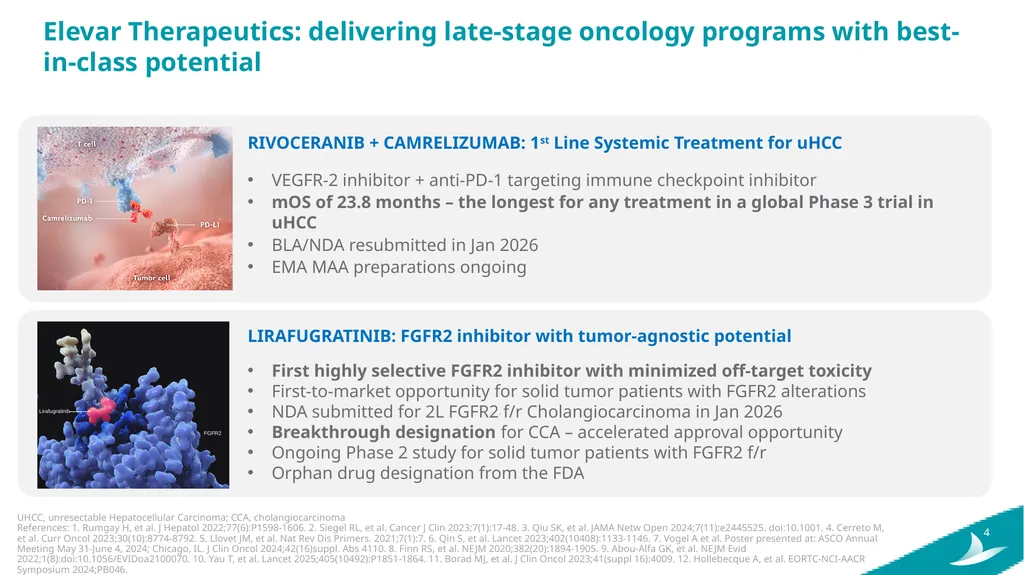
Q Elevar Therapeutics: delivering late-stage oncology programs with best-in-class potential RIVOCERANIB + CAMRELIZUMAB: 1st Line Systemic Treatment for uHCC
VEGFR-2 inhibitor + anti-PD-1 targeting immune checkpoint inhibitor
mOS of 23.8 months – the longest for any treatment in a global Phase 3 trial in uHCC
BLA/NDA resubmitted in Jan 2026
EMA MAA preparations ongoing UHCC, unresectable Hepatocellular Carcinoma; CCA, cholangiocarcinoma References: 1. Rumgay H, et al. J Hepatol 2022;77(6):P1598-1606. 2. Siegel RL, et al. Cancer J Clin 2023;7(1):17-48. 3. Qiu SK, et al. JAMA Netw Open 2024;7(11):e2445525. doi:10.1001. 4. Cerreto M, et al. Curr Oncol 2023;30(10):8774-8792. 5. Llovet JM, et al. Nat Rev Dis Primers. 2021;7(1):7. 6. Qin S, et al. Lancet 2023;402(10408):1133-1146. 7. Vogel A et al. Poster presented at: ASCO Annual Meeting May 31-June 4, 2024; Chicago, IL. J Clin Oncol 2024;42(16)suppl. Abs 4110. 8. Finn RS, et al. NEJM 2020;382(20):1894-1905. 9. Abou-Alfa GK, et al. NEJM Evid 2022;1(8):doi:10.1056/EVIDoa2100070. 10. Yau T, et al. Lancet 2025;405(10492):P1851-1864. 11. Borad MJ, et al. J Clin Oncol 2023;41(suppl 16):4009. 12. Hollebecque A, et al. EORTC-NCI-AACR Symposium 2024;PB046. . LIRAFUGRATINIB: FGFR2 inhibitor with tumor-agnostic potential
First highly selective FGFR2 inhibitor with minimized off-target toxicity
First-to-market opportunity for solid tumor patients with FGFR2 alterations
NDA submitted for 2L FGFR2 f/r Cholangiocarcinoma in Jan 2026
Breakthrough designation for CCA – accelerated approval opportunity
Ongoing Phase 2 study for solid tumor patients with FGFR2 f/r
Orphan drug designation from the FDA 4 Lirafugratinib FGFR2<br>
VEGFR-2 inhibitor + anti-PD-1 targeting immune checkpoint inhibitor
mOS of 23.8 months – the longest for any treatment in a global Phase 3 trial in uHCC
BLA/NDA resubmitted in Jan 2026
EMA MAA preparations ongoing UHCC, unresectable Hepatocellular Carcinoma; CCA, cholangiocarcinoma References: 1. Rumgay H, et al. J Hepatol 2022;77(6):P1598-1606. 2. Siegel RL, et al. Cancer J Clin 2023;7(1):17-48. 3. Qiu SK, et al. JAMA Netw Open 2024;7(11):e2445525. doi:10.1001. 4. Cerreto M, et al. Curr Oncol 2023;30(10):8774-8792. 5. Llovet JM, et al. Nat Rev Dis Primers. 2021;7(1):7. 6. Qin S, et al. Lancet 2023;402(10408):1133-1146. 7. Vogel A et al. Poster presented at: ASCO Annual Meeting May 31-June 4, 2024; Chicago, IL. J Clin Oncol 2024;42(16)suppl. Abs 4110. 8. Finn RS, et al. NEJM 2020;382(20):1894-1905. 9. Abou-Alfa GK, et al. NEJM Evid 2022;1(8):doi:10.1056/EVIDoa2100070. 10. Yau T, et al. Lancet 2025;405(10492):P1851-1864. 11. Borad MJ, et al. J Clin Oncol 2023;41(suppl 16):4009. 12. Hollebecque A, et al. EORTC-NCI-AACR Symposium 2024;PB046. . LIRAFUGRATINIB: FGFR2 inhibitor with tumor-agnostic potential
First highly selective FGFR2 inhibitor with minimized off-target toxicity
First-to-market opportunity for solid tumor patients with FGFR2 alterations
NDA submitted for 2L FGFR2 f/r Cholangiocarcinoma in Jan 2026
Breakthrough designation for CCA – accelerated approval opportunity
Ongoing Phase 2 study for solid tumor patients with FGFR2 f/r
Orphan drug designation from the FDA 4 Lirafugratinib FGFR2<br>
05
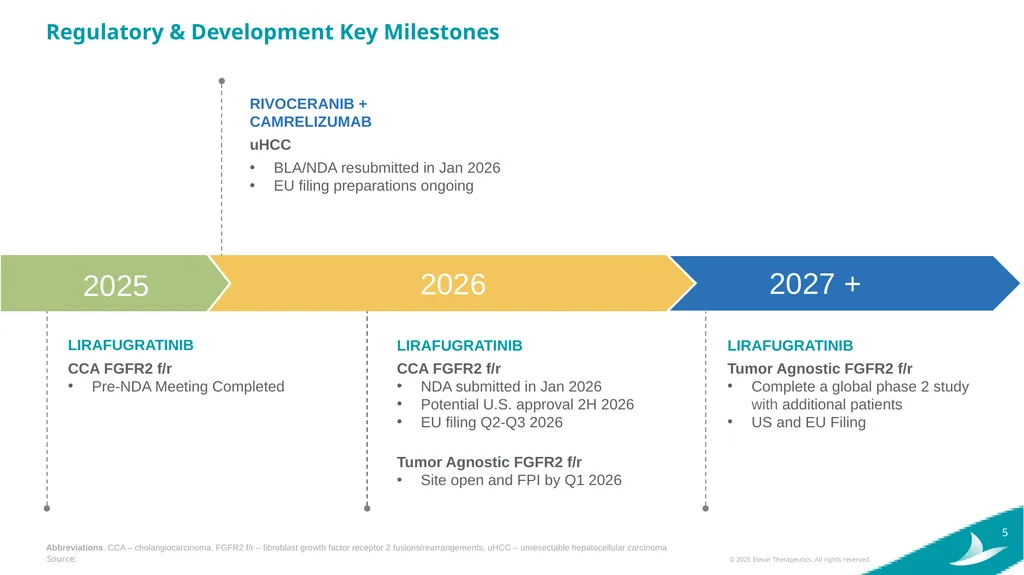
Source: RIVOCERANIB +
CAMRELIZUMAB
uHCC
BLA/NDA resubmitted in Jan 2026
EU filing preparations ongoing Regulatory & Development Key Milestones LIRAFUGRATINIB
Tumor Agnostic FGFR2 f/r
Complete a global phase 2 study with additional patients
US and EU Filing LIRAFUGRATINIB
CCA FGFR2 f/r
NDA submitted in Jan 2026
Potential U.S. approval 2H 2026
EU filing Q2-Q3 2026
Tumor Agnostic FGFR2 f/r
Site open and FPI by Q1 2026 LIRAFUGRATINIB
CCA FGFR2 f/r
Pre-NDA Meeting Completed 2025 2026 2027 + Abbreviations. CCA – cholangiocarcinoma, FGFR2 f/r – fibroblast growth factor receptor 2 fusions/rearrangements, uHCC – unresectable hepatocellular carcinoma<br>
uHCC
BLA/NDA resubmitted in Jan 2026
EU filing preparations ongoing Regulatory & Development Key Milestones LIRAFUGRATINIB
Tumor Agnostic FGFR2 f/r
Complete a global phase 2 study with additional patients
US and EU Filing LIRAFUGRATINIB
CCA FGFR2 f/r
NDA submitted in Jan 2026
Potential U.S. approval 2H 2026
EU filing Q2-Q3 2026
Tumor Agnostic FGFR2 f/r
Site open and FPI by Q1 2026 LIRAFUGRATINIB
CCA FGFR2 f/r
Pre-NDA Meeting Completed 2025 2026 2027 + Abbreviations. CCA – cholangiocarcinoma, FGFR2 f/r – fibroblast growth factor receptor 2 fusions/rearrangements, uHCC – unresectable hepatocellular carcinoma<br>
06
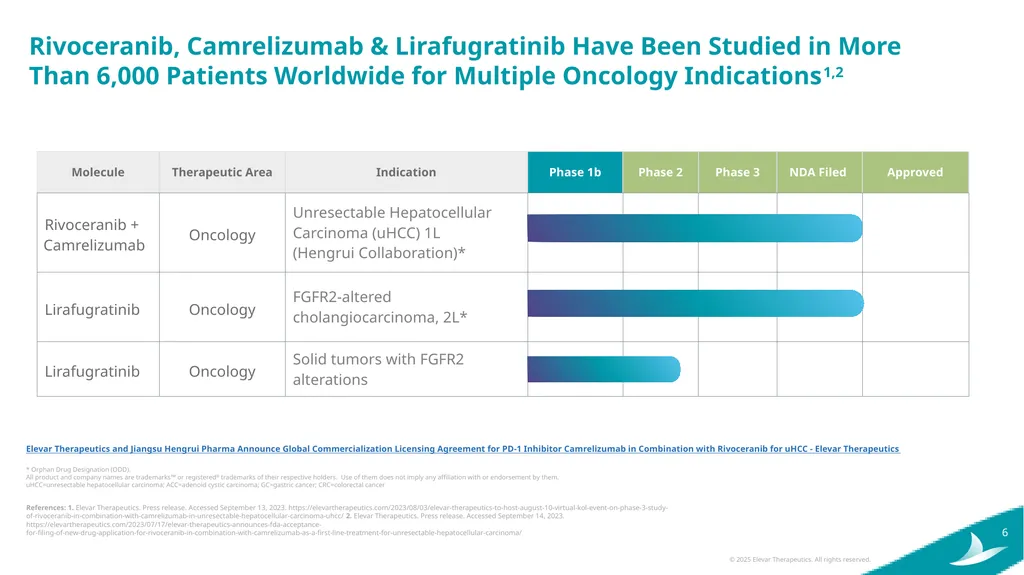
Rivoceranib, Camrelizumab & Lirafugratinib Have Been Studied in More Than 6,000 Patients Worldwide for Multiple Oncology Indications1,2 References: 1. Elevar Therapeutics. Press release. Accessed September 13, 2023. https://elevartherapeutics.com/2023/08/03/elevar-therapeutics-to-host-august-10-virtual-kol-event-on-phase-3-study-of-rivoceranib-in-combination-with-camrelizumab-in-unresectable-hepatocellular-carcinoma-uhcc/ 2. Elevar Therapeutics. Press release. Accessed September 14, 2023. https://elevartherapeutics.com/2023/07/17/elevar-therapeutics-announces-fda-acceptance-
for-filing-of-new-drug-application-for-rivoceranib-in-combination-with-camrelizumab-as-a-first-line-treatment-for-unresectable-hepatocellular-carcinoma/ Elevar Therapeutics and Jiangsu Hengrui Pharma Announce Global Commercialization Licensing Agreement for PD-1 Inhibitor Camrelizumab in Combination with Rivoceranib for uHCC - Elevar Therapeutics
* Orphan Drug Designation (ODD).
All product and company names are trademarks™ or registered® trademarks of their respective holders. Use of them does not imply any affiliation with or endorsement by them.
uHCC=unresectable hepatocellular carcinoma; ACC=adenoid cystic carcinoma; GC=gastric cancer; CRC=colorectal cancer<br>
* Orphan Drug Designation (ODD).
All product and company names are trademarks™ or registered® trademarks of their respective holders. Use of them does not imply any affiliation with or endorsement by them.
uHCC=unresectable hepatocellular carcinoma; ACC=adenoid cystic carcinoma; GC=gastric cancer; CRC=colorectal cancer<br>
07
Near-Term Pipeline Programs Camrelizumab + Rivoceranib
First line Unresectable Hepatocellular Carcinoma<br>
08
Camrelizumab and Rivoceranib are Proven Therapies with Commercial Track Record in China Elevar plans to leverage the commercial success in China to receive approval for & launch Cam-Rivo for 1L uHCC in the US, EU, and beyond Camrelizumab
Approved in China (AiRuiKa®, Hengrui Pharma) for eight indications (NSCLC 1L, HCC 2L, esophageal SCC 2L etc.)
One of the top-selling anti-PD-1s in China Rivoceranib
Approved in China (Apatinib®, Hengrui Pharma) for:
Gastric cancer 1L monotherapy (2014)
Advanced hepatocellular carcinoma (HCC) 2L monotherapy (2020) 8 Camrelizumab plus Rivoceranib
Approved in China for 1L Unresectable hepatocellular carcinoma (uHCC) (Jan 2023); preferred regimen alongside Atezo-Bev Combination
Elevar has global rights to rivoceranib (excluding Greater China and Korea)
Elevar has global rights to camrelizumab for HCC with ability to add indications (excluding Greater China and Korea)<br>
Approved in China (AiRuiKa®, Hengrui Pharma) for eight indications (NSCLC 1L, HCC 2L, esophageal SCC 2L etc.)
One of the top-selling anti-PD-1s in China Rivoceranib
Approved in China (Apatinib®, Hengrui Pharma) for:
Gastric cancer 1L monotherapy (2014)
Advanced hepatocellular carcinoma (HCC) 2L monotherapy (2020) 8 Camrelizumab plus Rivoceranib
Approved in China for 1L Unresectable hepatocellular carcinoma (uHCC) (Jan 2023); preferred regimen alongside Atezo-Bev Combination
Elevar has global rights to rivoceranib (excluding Greater China and Korea)
Elevar has global rights to camrelizumab for HCC with ability to add indications (excluding Greater China and Korea)<br>
09
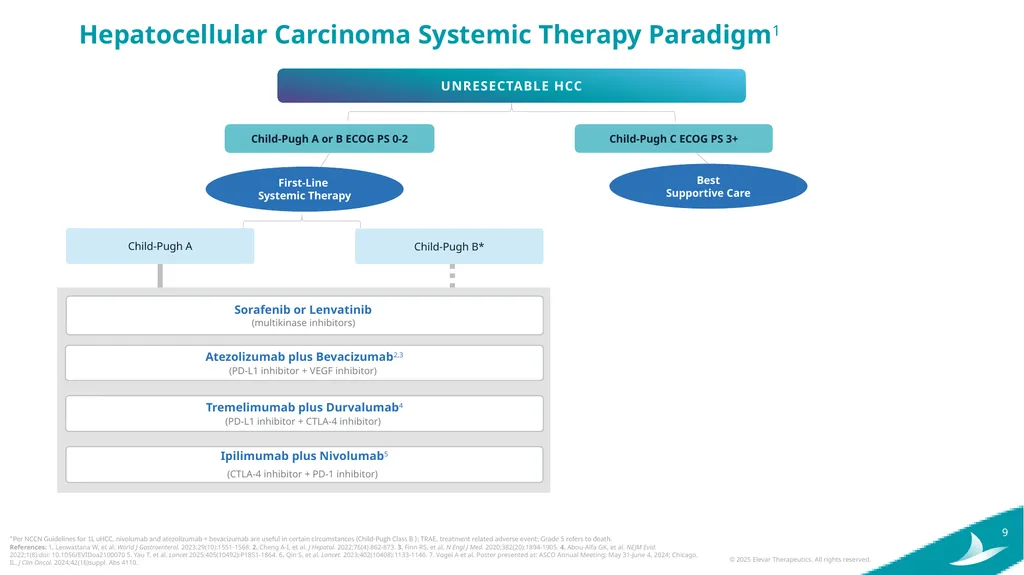
UNRESECTABLE HCC Child-Pugh C ECOG PS 3+ First-Line
Systemic Therapy Best
Supportive Care Atezolizumab plus Bevacizumab2,3
(PD-L1 inhibitor + VEGF inhibitor) Tremelimumab plus Durvalumab4
(PD-L1 inhibitor + CTLA-4 inhibitor) Sorafenib or Lenvatinib
(multikinase inhibitors) Child-Pugh B* Hepatocellular Carcinoma Systemic Therapy Paradigm1 References: 1. Leowattana W, et al. World J Gastroenterol. 2023;29(10):1551-1568. 2. Cheng A-I, et al. J Hepatol. 2022;76(4):862-873. 3. Finn RS, et al. N Engl J Med. 2020;382(20):1894-1905. 4. Abou-Alfa GK, et al. NEJM Evid. 2022;1(8):doi: 10.1056/EVIDoa2100070 5. Yau T, et al. Lancet 2025;405(10492):P1851-1864. 6. Qin S, et al. Lancet. 2023;402(10408):1133-1146. 7. Vogel A et al. Poster presented at: ASCO Annual Meeting; May 31-June 4, 2024; Chicago, IL. J Clin Oncol. 2024;42(16)suppl. Abs 4110. *Per NCCN Guidelines for 1L uHCC, nivolumab and atezolizumab + bevacizumab are useful in certain circumstances (Child-Pugh Class B ); TRAE, treatment related adverse event; Grade 5 refers to death. Ipilimumab plus Nivolumab5
(CTLA-4 inhibitor + PD-1 inhibitor) Child-Pugh A Child-Pugh A or B ECOG PS 0-2<br>
(PD-L1 inhibitor + VEGF inhibitor) Tremelimumab plus Durvalumab4
(PD-L1 inhibitor + CTLA-4 inhibitor) Sorafenib or Lenvatinib
(multikinase inhibitors) Child-Pugh B* Hepatocellular Carcinoma Systemic Therapy Paradigm1 References: 1. Leowattana W, et al. World J Gastroenterol. 2023;29(10):1551-1568. 2. Cheng A-I, et al. J Hepatol. 2022;76(4):862-873. 3. Finn RS, et al. N Engl J Med. 2020;382(20):1894-1905. 4. Abou-Alfa GK, et al. NEJM Evid. 2022;1(8):doi: 10.1056/EVIDoa2100070 5. Yau T, et al. Lancet 2025;405(10492):P1851-1864. 6. Qin S, et al. Lancet. 2023;402(10408):1133-1146. 7. Vogel A et al. Poster presented at: ASCO Annual Meeting; May 31-June 4, 2024; Chicago, IL. J Clin Oncol. 2024;42(16)suppl. Abs 4110. *Per NCCN Guidelines for 1L uHCC, nivolumab and atezolizumab + bevacizumab are useful in certain circumstances (Child-Pugh Class B ); TRAE, treatment related adverse event; Grade 5 refers to death. Ipilimumab plus Nivolumab5
(CTLA-4 inhibitor + PD-1 inhibitor) Child-Pugh A Child-Pugh A or B ECOG PS 0-2<br>
10
Camrelizumab plus Rivoceranib shows best-in-class potential with longest mOS and favorable safety (CARES-310) References: 1. Leowattana W, et al. World J Gastroenterol. 2023;29(10):1551-1568. 2. Cheng A-I, et al. J Hepatol. 2022;76(4):862-873. 3. Finn RS, et al. N Engl J Med. 2020;382(20):1894-1905. 4. Abou-Alfa GK, et al. NEJM Evid. 2022;1(8):doi: 10.1056/EVIDoa2100070 5. Yau T, et al. Lancet 2025;405(10492):P1851-1864. 6. Qin S, et al. Lancet. 2023;402(10408):1133-1146. 7. Vogel A et al. Poster presented at: ASCO Annual Meeting; May 31-June 4, 2024; Chicago, IL. J Clin Oncol. 2024;42(16)suppl. Abs 4110. *Per NCCN Guidelines for 1L uHCC, nivolumab and atezolizumab + bevacizumab are useful in certain circumstances (Child-Pugh Class B ); TRAE, treatment related adverse event; Grade 5 refers to death. Atezolizumab plus Bevacizumab2,3
(PD-L1 inhibitor + VEGF inhibitor) Tremelimumab plus Durvalumab4
(PD-L1 inhibitor + CTLA-4 inhibitor) Ipilimumab plus Nivolumab5
(CTLA-4 inhibitor + PD-1 inhibitor) Camrelizumab plus Rivoceranib6.7
(PD-1 inhibitor + VEGF 1-3 inhibitor)<br>
(PD-L1 inhibitor + VEGF inhibitor) Tremelimumab plus Durvalumab4
(PD-L1 inhibitor + CTLA-4 inhibitor) Ipilimumab plus Nivolumab5
(CTLA-4 inhibitor + PD-1 inhibitor) Camrelizumab plus Rivoceranib6.7
(PD-1 inhibitor + VEGF 1-3 inhibitor)<br>
11
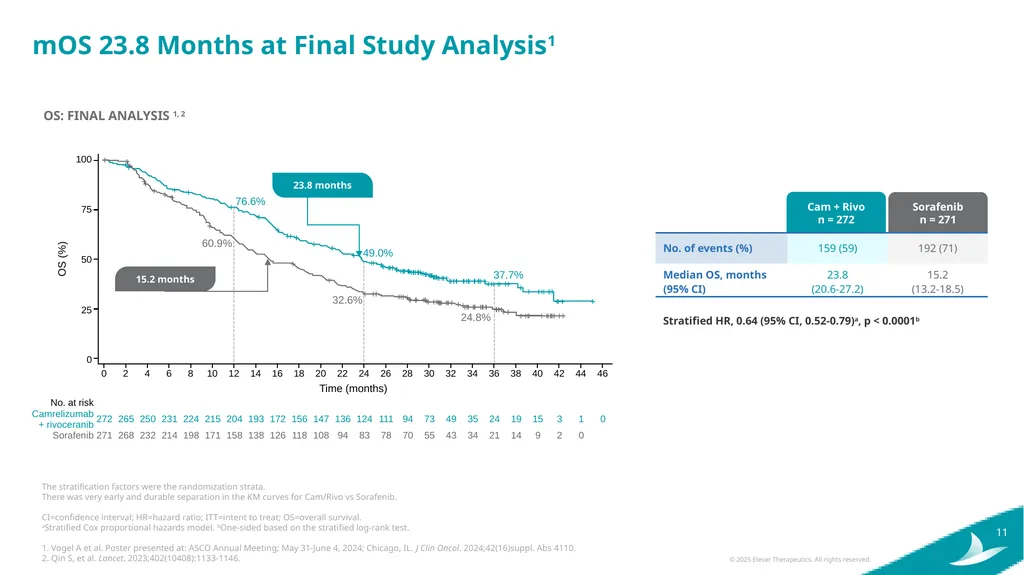
The stratification factors were the randomization strata.
There was very early and durable separation in the KM curves for Cam/Rivo vs Sorafenib.
CI=confidence interval; HR=hazard ratio; ITT=intent to treat; OS=overall survival.
aStratified Cox proportional hazards model. bOne-sided based on the stratified log-rank test.
1. Vogel A et al. Poster presented at: ASCO Annual Meeting; May 31-June 4, 2024; Chicago, IL. J Clin Oncol. 2024;42(16)suppl. Abs 4110.
2. Qin S, et al. Lancet. 2023;402(10408):1133-1146. Sorafenib
n = 271 Cam + Rivo
n = 272 Stratified HR, 0.64 (95% CI, 0.52-0.79)a, p < 0.0001b OS: FINAL ANALYSIS 1, 2 mOS 23.8 Months at Final Study Analysis1<br>
CI=confidence interval; HR=hazard ratio; ITT=intent to treat; OS=overall survival.
aStratified Cox proportional hazards model. bOne-sided based on the stratified log-rank test.
1. Vogel A et al. Poster presented at: ASCO Annual Meeting; May 31-June 4, 2024; Chicago, IL. J Clin Oncol. 2024;42(16)suppl. Abs 4110.
2. Qin S, et al. Lancet. 2023;402(10408):1133-1146. Sorafenib
n = 271 Cam + Rivo
n = 272 Stratified HR, 0.64 (95% CI, 0.52-0.79)a, p < 0.0001b OS: FINAL ANALYSIS 1, 2 mOS 23.8 Months at Final Study Analysis1<br>
12
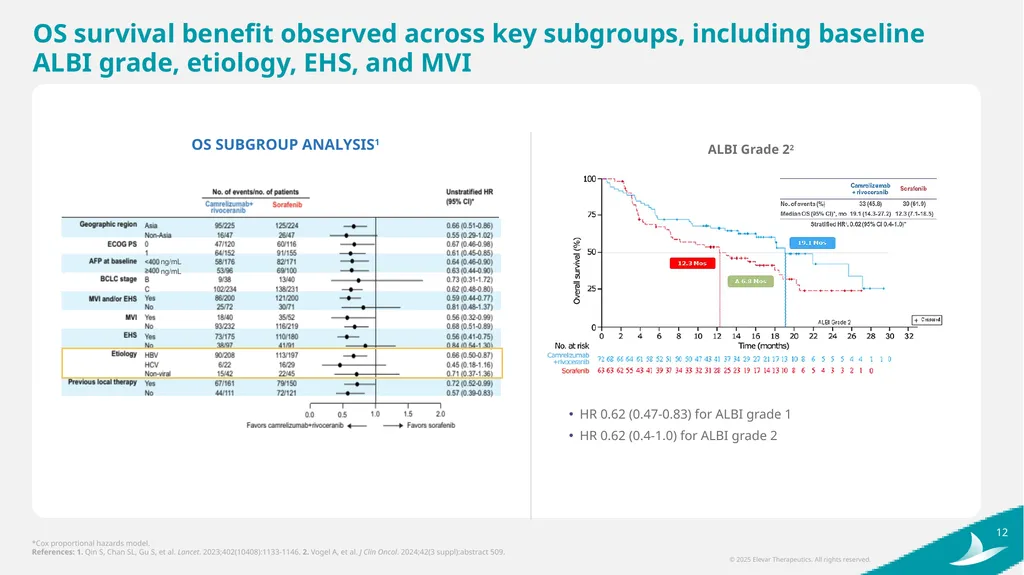
OS survival benefit observed across key subgroups, including baseline ALBI grade, etiology, EHS, and MVI 12 *Cox proportional hazards model.
References: 1. Qin S, Chan SL, Gu S, et al. Lancet. 2023;402(10408):1133-1146. 2. Vogel A, et al. J Clin Oncol. 2024;42(3 suppl):abstract 509. OS SUBGROUP ANALYSIS1 HR 0.62 (0.47-0.83) for ALBI grade 1
HR 0.62 (0.4-1.0) for ALBI grade 2 ALBI Grade 22<br>
HR 0.62 (0.4-1.0) for ALBI grade 2 ALBI Grade 22<br>
13
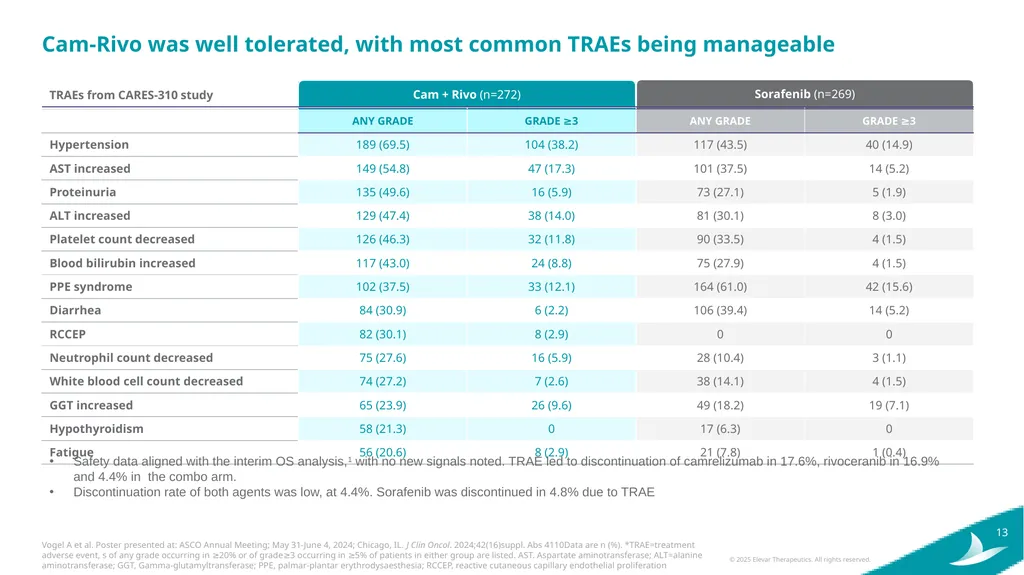
Sorafenib (n=269) Cam + Rivo (n=272) Cam-Rivo was well tolerated, with most common TRAEs being manageable Vogel A et al. Poster presented at: ASCO Annual Meeting; May 31-June 4, 2024; Chicago, IL. J Clin Oncol. 2024;42(16)suppl. Abs 4110Data are n (%). *TRAE=treatment adverse event, s of any grade occurring in ≥20% or of grade≥3 occurring in ≥5% of patients in either group are listed. AST. Aspartate aminotransferase; ALT=alanine aminotransferase; GGT, Gamma-glutamyltransferase; PPE, palmar-plantar erythrodysaesthesia; RCCEP, reactive cutaneous capillary endothelial proliferation TRAEs from CARES-310 study Safety data aligned with the interim OS analysis,1 with no new signals noted. TRAE led to discontinuation of camrelizumab in 17.6%, rivoceranib in 16.9% and 4.4% in the combo arm.
Discontinuation rate of both agents was low, at 4.4%. Sorafenib was discontinued in 4.8% due to TRAE<br>
Discontinuation rate of both agents was low, at 4.4%. Sorafenib was discontinued in 4.8% due to TRAE<br>
14
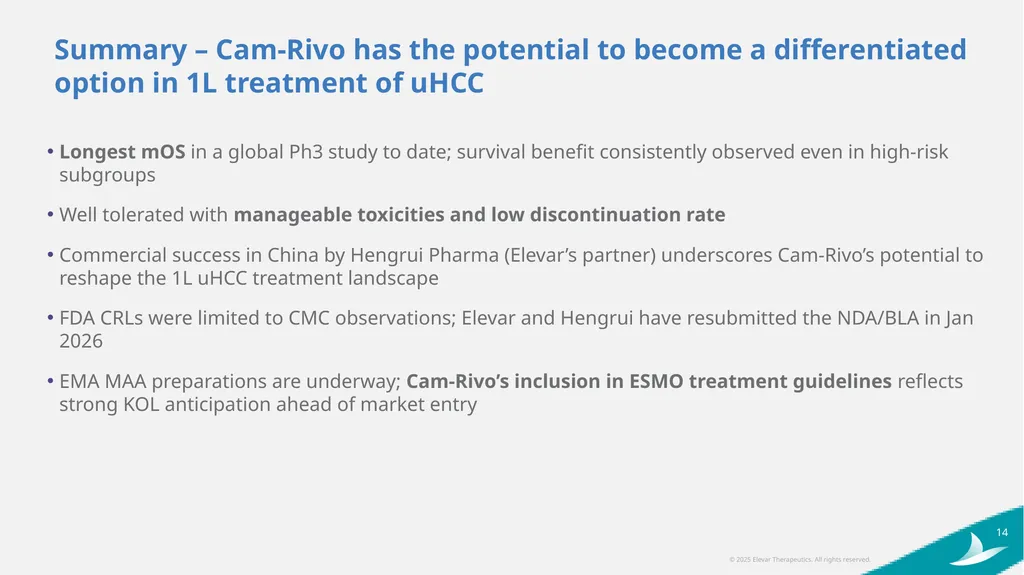
Longest mOS in a global Ph3 study to date; survival benefit consistently observed even in high-risk subgroups
Well tolerated with manageable toxicities and low discontinuation rate
Commercial success in China by Hengrui Pharma (Elevar’s partner) underscores Cam-Rivo’s potential to reshape the 1L uHCC treatment landscape
FDA CRLs were limited to CMC observations; Elevar and Hengrui have resubmitted the NDA/BLA in Jan 2026
EMA MAA preparations are underway; Cam-Rivo’s inclusion in ESMO treatment guidelines reflects strong KOL anticipation ahead of market entry Summary – Cam-Rivo has the potential to become a differentiated option in 1L treatment of uHCC<br>
Well tolerated with manageable toxicities and low discontinuation rate
Commercial success in China by Hengrui Pharma (Elevar’s partner) underscores Cam-Rivo’s potential to reshape the 1L uHCC treatment landscape
FDA CRLs were limited to CMC observations; Elevar and Hengrui have resubmitted the NDA/BLA in Jan 2026
EMA MAA preparations are underway; Cam-Rivo’s inclusion in ESMO treatment guidelines reflects strong KOL anticipation ahead of market entry Summary – Cam-Rivo has the potential to become a differentiated option in 1L treatment of uHCC<br>
15
Near-Term Pipeline Programs Lirafugratinib
Second Line Intrahepatic Cholangiocarcinoma with
FGFR2 Fusion and Rearrangement Second Line Solid Tumors with
FGFR2 Fusion and Rearrangement<br>
FGFR2 Fusion and Rearrangement Second Line Solid Tumors with
FGFR2 Fusion and Rearrangement<br>
16
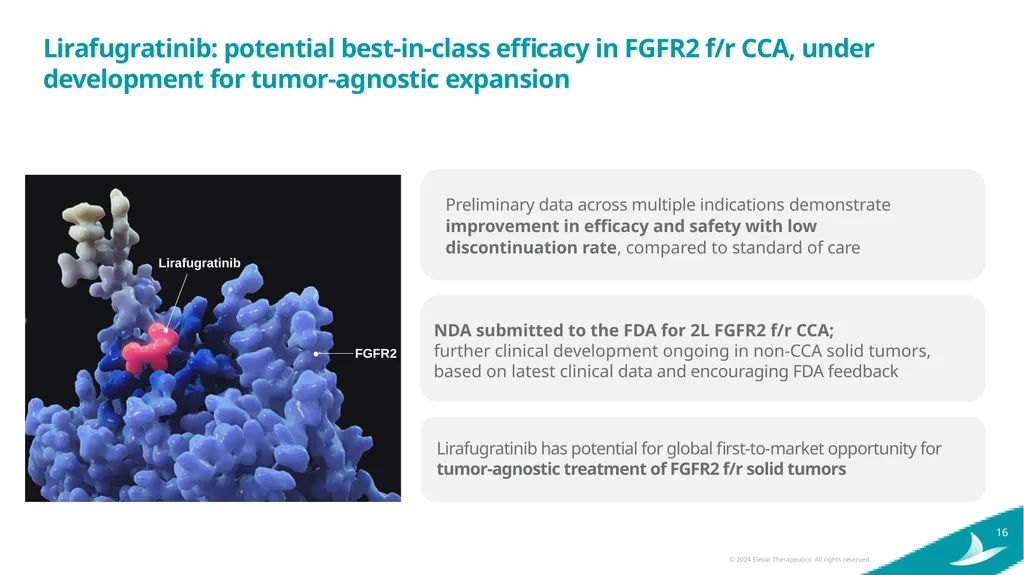
Lirafugratinib: potential best-in-class efficacy in FGFR2 f/r CCA, under development for tumor-agnostic expansion NDA submitted to the FDA for 2L FGFR2 f/r CCA;
further clinical development ongoing in non-CCA solid tumors, based on latest clinical data and encouraging FDA feedback Lirafugratinib has potential for global first-to-market opportunity for tumor-agnostic treatment of FGFR2 f/r solid tumors Preliminary data across multiple indications demonstrate
improvement in efficacy and safety with low
discontinuation rate, compared to standard of care<br>
further clinical development ongoing in non-CCA solid tumors, based on latest clinical data and encouraging FDA feedback Lirafugratinib has potential for global first-to-market opportunity for tumor-agnostic treatment of FGFR2 f/r solid tumors Preliminary data across multiple indications demonstrate
improvement in efficacy and safety with low
discontinuation rate, compared to standard of care<br>
17
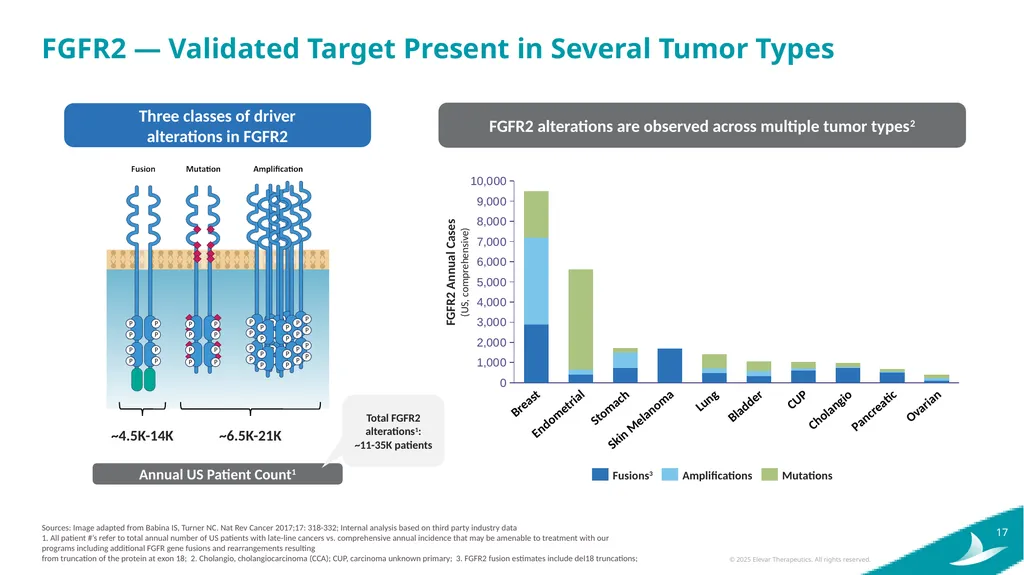
FGFR2 — Validated Target Present in Several Tumor Types Sources: Image adapted from Babina IS, Turner NC. Nat Rev Cancer 2017;17: 318-332; Internal analysis based on third party industry data
1. All patient #’s refer to total annual number of US patients with late-line cancers vs. comprehensive annual incidence that may be amenable to treatment with our programs including additional FGFR gene fusions and rearrangements resulting from truncation of the protein at exon 18; 2. Cholangio, cholangiocarcinoma (CCA); CUP, carcinoma unknown primary; 3. FGFR2 fusion estimates include del18 truncations; ~6.5K-21K ~4.5K-14K FGFR2 alterations are observed across multiple tumor types2 Three classes of driver
alterations in FGFR2 Annual US Patient Count1 Total FGFR2 alterations1:
~11-35K patients Fusions3 Amplifications Mutations FGFR2 Annual Cases (US, comprehensive) Pancreatic Breast Endometrial Lung Stomach Skin Melanoma Bladder CUP Ovarian Cholangio<br>
1. All patient #’s refer to total annual number of US patients with late-line cancers vs. comprehensive annual incidence that may be amenable to treatment with our programs including additional FGFR gene fusions and rearrangements resulting from truncation of the protein at exon 18; 2. Cholangio, cholangiocarcinoma (CCA); CUP, carcinoma unknown primary; 3. FGFR2 fusion estimates include del18 truncations; ~6.5K-21K ~4.5K-14K FGFR2 alterations are observed across multiple tumor types2 Three classes of driver
alterations in FGFR2 Annual US Patient Count1 Total FGFR2 alterations1:
~11-35K patients Fusions3 Amplifications Mutations FGFR2 Annual Cases (US, comprehensive) Pancreatic Breast Endometrial Lung Stomach Skin Melanoma Bladder CUP Ovarian Cholangio<br>
18
Currently approved FGFR inhibitors are associated with off-target toxicity and limited efficacy Sources.: 1. Pemigatinib – prescribing information; futibatinib – prescribing Information; erdafitinib – prescribing information; (note: AEs are reflective of respective label indications); 2. Reflects reported ORRs in key randomized studies evaluating NCCN recommended regimens for recurrent/metastatic patients (second/third line or later) for the following tumor types: HR+ breast cancer, gastric cancer, pancreatic cancer, NSCLC, ovarian cancer, and head and neck ORR in currently approved tx1
(in fusion+ CCA, FGFRi-naïve pt) Pan-FGFRi's lead to high rates of off-target toxicity, esp. for FGFR1,4 CCA ORR in approved late-line tx2
(based on NCCN guidelines) Non-CCA Solid Tumors mPFS 1-5mo in
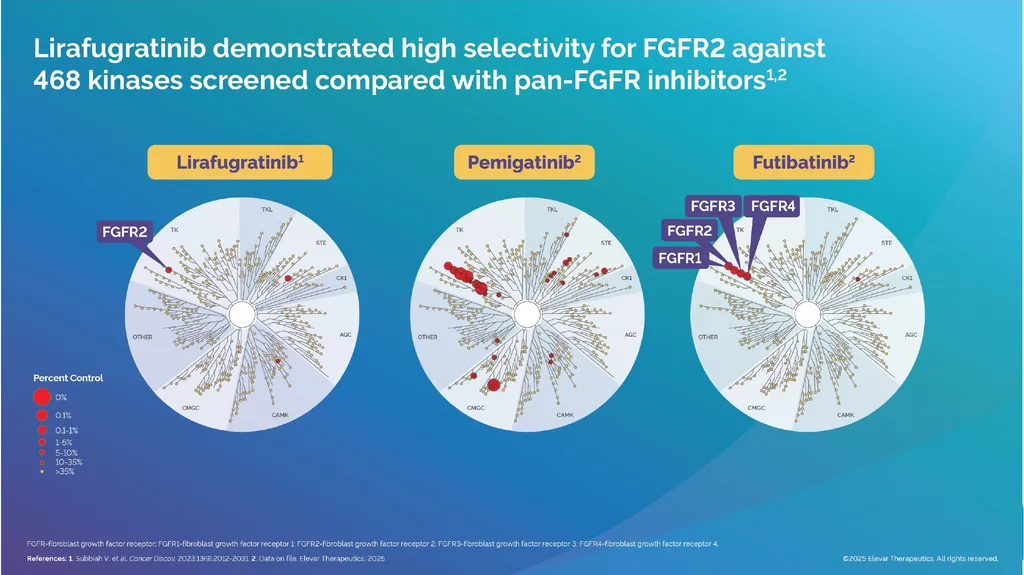
non-CCA solid tumors Chemo and other late line therapies also have high rates of AEs and dose modifications FGFR1-4 static structures look the same FGFR1 FGFR2 No FGFR2-targeted therapy available Efficacy limited by off-target tox Pan-FGFR inhibitors are often limited by off-target toxicities that prevent dosing at maximum efficacy;
selective inhibition of FGFR2 offers the potential to achieve optimal efficacy with an improved safety profile<br>
(in fusion+ CCA, FGFRi-naïve pt) Pan-FGFRi's lead to high rates of off-target toxicity, esp. for FGFR1,4 CCA ORR in approved late-line tx2
(based on NCCN guidelines) Non-CCA Solid Tumors mPFS 1-5mo in
non-CCA solid tumors Chemo and other late line therapies also have high rates of AEs and dose modifications FGFR1-4 static structures look the same FGFR1 FGFR2 No FGFR2-targeted therapy available Efficacy limited by off-target tox Pan-FGFR inhibitors are often limited by off-target toxicities that prevent dosing at maximum efficacy;
selective inhibition of FGFR2 offers the potential to achieve optimal efficacy with an improved safety profile<br>
19
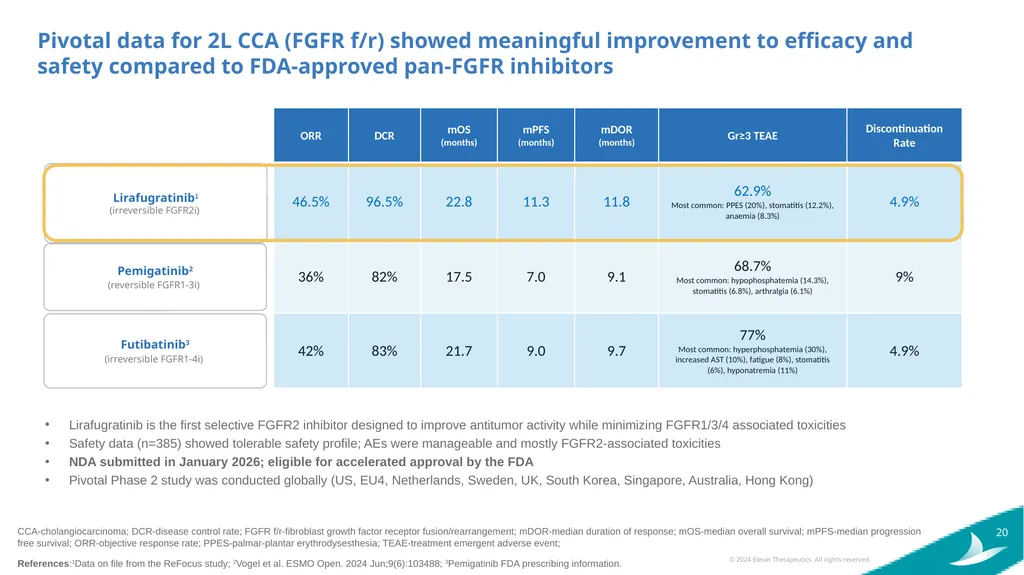
Pivotal data for 2L CCA (FGFR f/r) showed meaningful improvement to efficacy and safety compared to FDA-approved pan-FGFR inhibitors Pemigatinib2
(reversible FGFR1-3i) Futibatinib3
(irreversible FGFR1-4i) Lirafugratinib1
(irreversible FGFR2i) Lirafugratinib is the first selective FGFR2 inhibitor designed to improve antitumor activity while minimizing FGFR1/3/4 associated toxicities
Safety data (n=385) showed tolerable safety profile; AEs were manageable and mostly FGFR2-associated toxicities
NDA submitted in January 2026; eligible for accelerated approval by the FDA
Pivotal Phase 2 study was conducted globally (US, EU4, Netherlands, Sweden, UK, South Korea, Singapore, Australia, Hong Kong) CCA-cholangiocarcinoma; DCR-disease control rate; FGFR f/r-fibroblast growth factor receptor fusion/rearrangement; mDOR-median duration of response; mOS-median overall survival; mPFS-median progression
free survival; ORR-objective response rate; PPES-palmar-plantar erythrodysesthesia; TEAE-treatment emergent adverse event;
References:1Data on file from the ReFocus study; 2Vogel et al. ESMO Open. 2024 Jun;9(6):103488; 3Pemigatinib FDA prescribing information.<br>
(reversible FGFR1-3i) Futibatinib3
(irreversible FGFR1-4i) Lirafugratinib1
(irreversible FGFR2i) Lirafugratinib is the first selective FGFR2 inhibitor designed to improve antitumor activity while minimizing FGFR1/3/4 associated toxicities
Safety data (n=385) showed tolerable safety profile; AEs were manageable and mostly FGFR2-associated toxicities
NDA submitted in January 2026; eligible for accelerated approval by the FDA
Pivotal Phase 2 study was conducted globally (US, EU4, Netherlands, Sweden, UK, South Korea, Singapore, Australia, Hong Kong) CCA-cholangiocarcinoma; DCR-disease control rate; FGFR f/r-fibroblast growth factor receptor fusion/rearrangement; mDOR-median duration of response; mOS-median overall survival; mPFS-median progression
free survival; ORR-objective response rate; PPES-palmar-plantar erythrodysesthesia; TEAE-treatment emergent adverse event;
References:1Data on file from the ReFocus study; 2Vogel et al. ESMO Open. 2024 Jun;9(6):103488; 3Pemigatinib FDA prescribing information.<br>
20
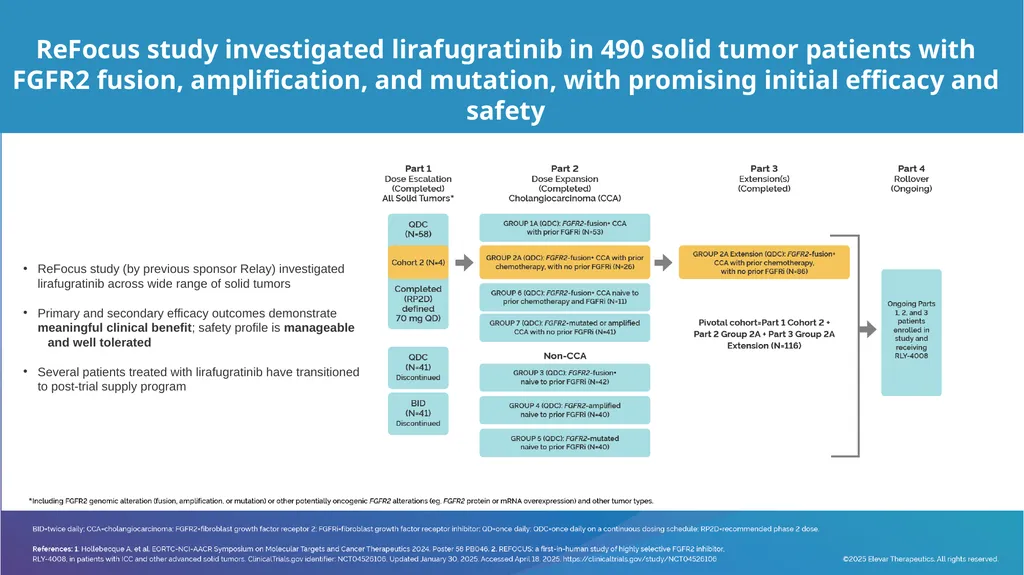
ReFocus study (by previous sponsor Relay) investigated lirafugratinib across wide range of solid tumors
Primary and secondary efficacy outcomes demonstrate meaningful clinical benefit; safety profile is manageable and well tolerated
Several patients treated with lirafugratinib have transitioned to post-trial supply program ReFocus study investigated lirafugratinib in 490 solid tumor patients with FGFR2 fusion, amplification, and mutation, with promising initial efficacy and safety<br>
Primary and secondary efficacy outcomes demonstrate meaningful clinical benefit; safety profile is manageable and well tolerated
Several patients treated with lirafugratinib have transitioned to post-trial supply program ReFocus study investigated lirafugratinib in 490 solid tumor patients with FGFR2 fusion, amplification, and mutation, with promising initial efficacy and safety<br>
21
Leadership & SAB<br>
22
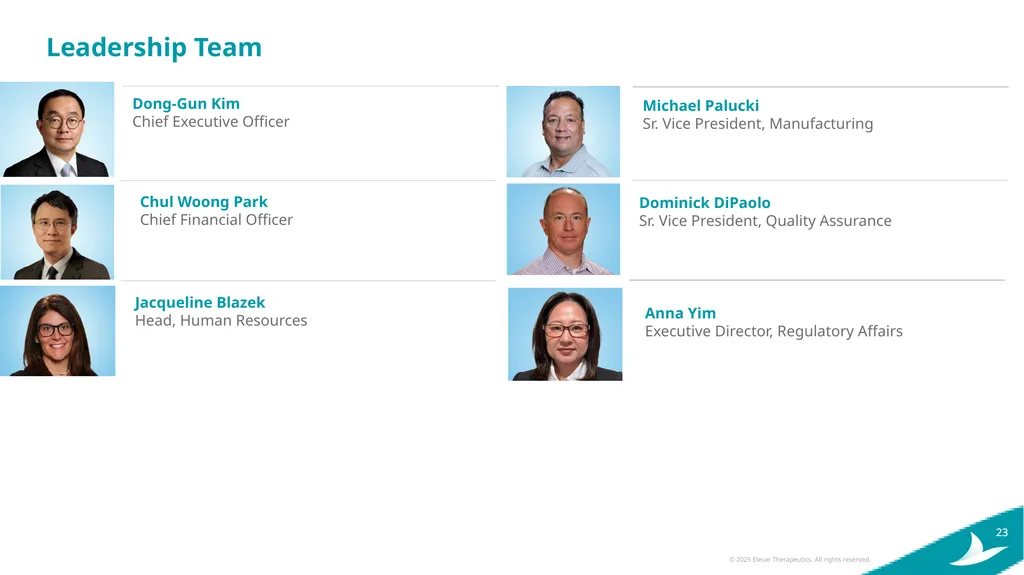
Leadership Team Dominick DiPaolo
Sr. Vice President, Quality Assurance Michael Palucki
Sr. Vice President, Manufacturing Anna Yim
Executive Director, Regulatory Affairs 23 Chul Woong Park
Chief Financial Officer Dong-Gun Kim
Chief Executive Officer Jacqueline Blazek
Head, Human Resources<br>
Sr. Vice President, Quality Assurance Michael Palucki
Sr. Vice President, Manufacturing Anna Yim
Executive Director, Regulatory Affairs 23 Chul Woong Park
Chief Financial Officer Dong-Gun Kim
Chief Executive Officer Jacqueline Blazek
Head, Human Resources<br>
23
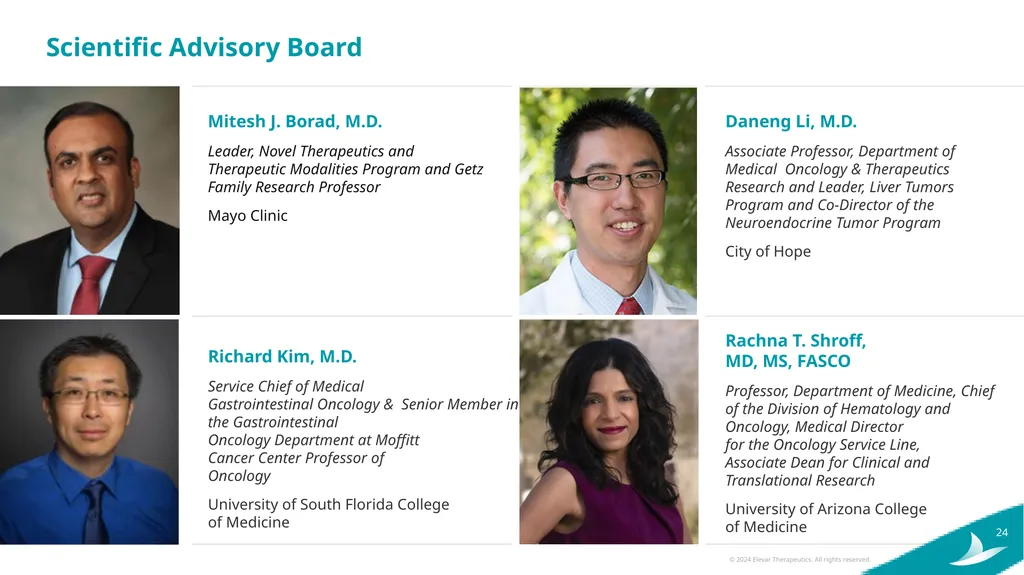
Scientific Advisory Board Richard Kim, M.D.
Service Chief of Medical Gastrointestinal Oncology & Senior Member in the Gastrointestinal Oncology Department at Moffitt Cancer Center Professor of Oncology
University of South Florida College of Medicine Daneng Li, M.D.
Associate Professor, Department of Medical Oncology & Therapeutics Research and Leader, Liver Tumors Program and Co-Director of the Neuroendocrine Tumor Program
City of Hope Mitesh J. Borad, M.D.
Leader, Novel Therapeutics and Therapeutic Modalities Program and Getz Family Research Professor
Mayo Clinic 24 Rachna T. Shroff, MD, MS, FASCO
Professor, Department of Medicine, Chief of the Division of Hematology and Oncology, Medical Director for the Oncology Service Line, Associate Dean for Clinical and Translational Research
University of Arizona College of Medicine<br>
Service Chief of Medical Gastrointestinal Oncology & Senior Member in the Gastrointestinal Oncology Department at Moffitt Cancer Center Professor of Oncology
University of South Florida College of Medicine Daneng Li, M.D.
Associate Professor, Department of Medical Oncology & Therapeutics Research and Leader, Liver Tumors Program and Co-Director of the Neuroendocrine Tumor Program
City of Hope Mitesh J. Borad, M.D.
Leader, Novel Therapeutics and Therapeutic Modalities Program and Getz Family Research Professor
Mayo Clinic 24 Rachna T. Shroff, MD, MS, FASCO
Professor, Department of Medicine, Chief of the Division of Hematology and Oncology, Medical Director for the Oncology Service Line, Associate Dean for Clinical and Translational Research
University of Arizona College of Medicine<br>
24
© 2026 Elevar Therapeutics, Inc. All Rights Reserved. CONTACT INFO:
Elevar Therapeutics 1 Bridge Plaza N, Ste 850 Fort Lee, NJ 07024 U.S.A.
info@elevartx.com Thank You<br>
Elevar Therapeutics 1 Bridge Plaza N, Ste 850 Fort Lee, NJ 07024 U.S.A.
info@elevartx.com Thank You<br>