Embodied Interaction By Matthew Dunlap 1 Overview I will explore Embodied Interaction, looking into its: Presence in Tangible and Social computing Philosophical Background The foundation it creates for HCI Its effect on HCI design Paul
"Embodied Interaction By Matthew Dunlap 1 Overview" is the property of its rightful owner. Permission is granted to
download and print the materials on this website for personal, non-commercial use only, and to display it
on your personal computer provided you do not modify the materials and that you retain all copyright
notices contained in the materials. By downloading content from our website, you accept the terms of this
agreement.
Presentation Transcript
01
Embodied Interaction By Matthew Dunlap 1<br>
02
Overview I will explore Embodied Interaction, looking into its:
Presence in Tangible and Social computing
Philosophical Background
The foundation it creates for HCI
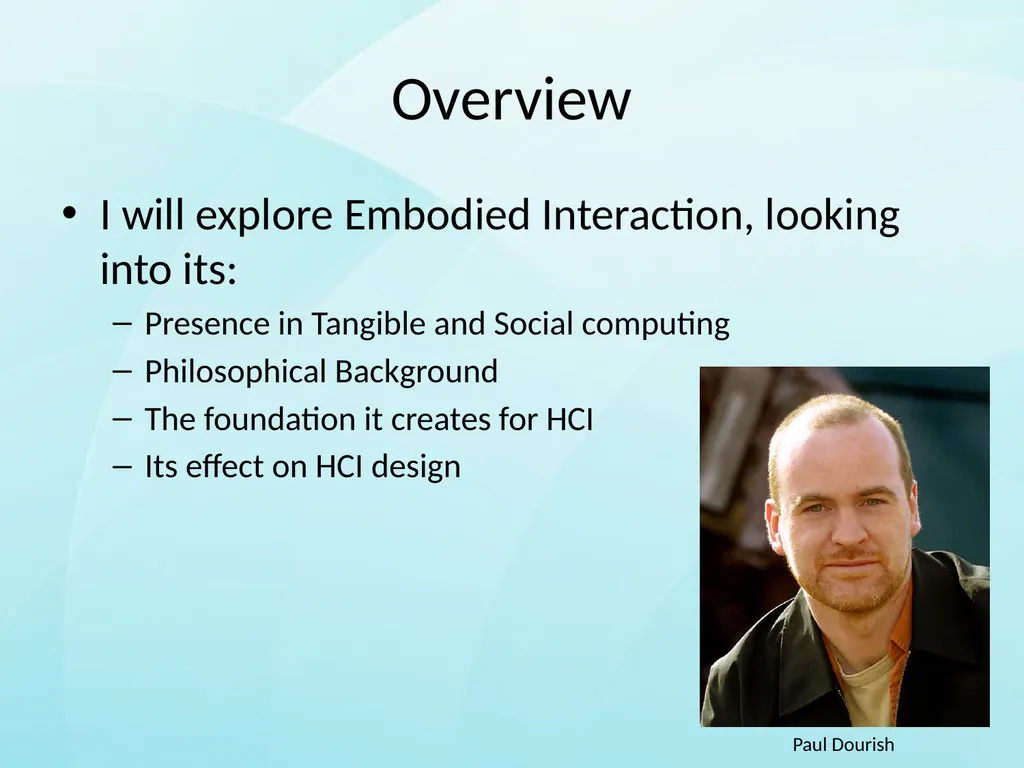
Its effect on HCI design Paul Dourish<br>
03
What is Embodied Interaction? “Embodied Interaction is the creation, manipulation, and sharing of meaning through engaged interaction with artifacts.”
“Embodied Interaction is based on the understanding that users create and communicate meaning through their interaction with the system (and with each other, through the system).” 3<br>
04
Embodied interaction is based upon the marriage of two computing concepts… 4<br>
05
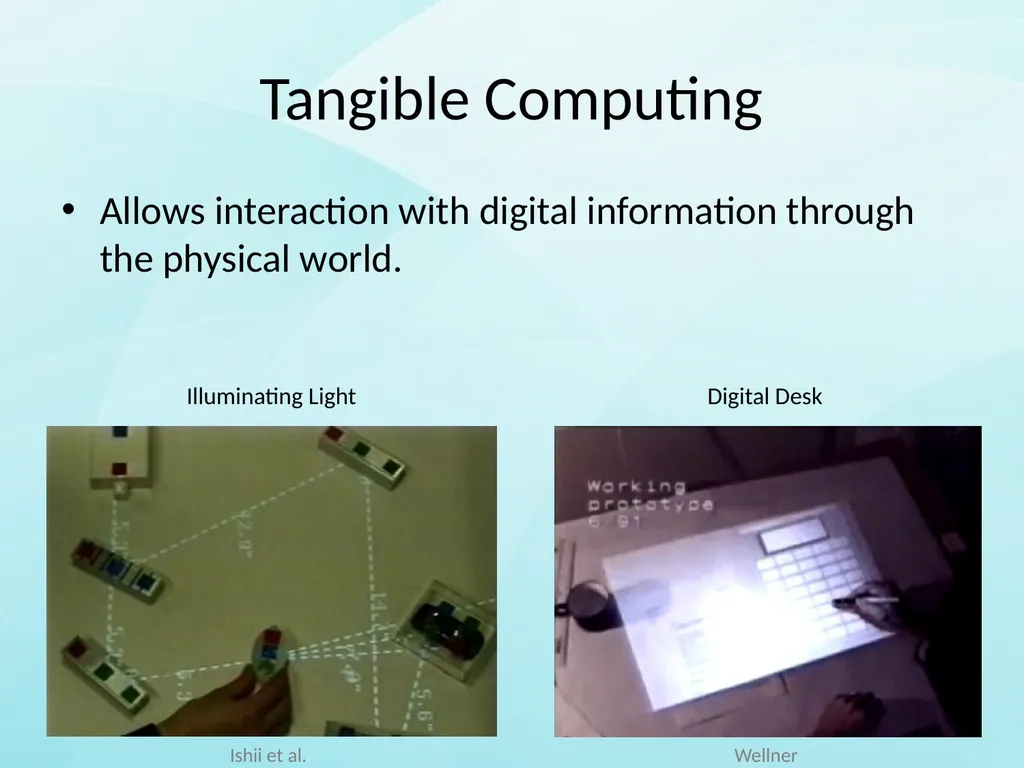
Tangible Computing Allows interaction with digital information through the physical world. Illuminating Light Digital Desk Ishii et al. Wellner<br>
06
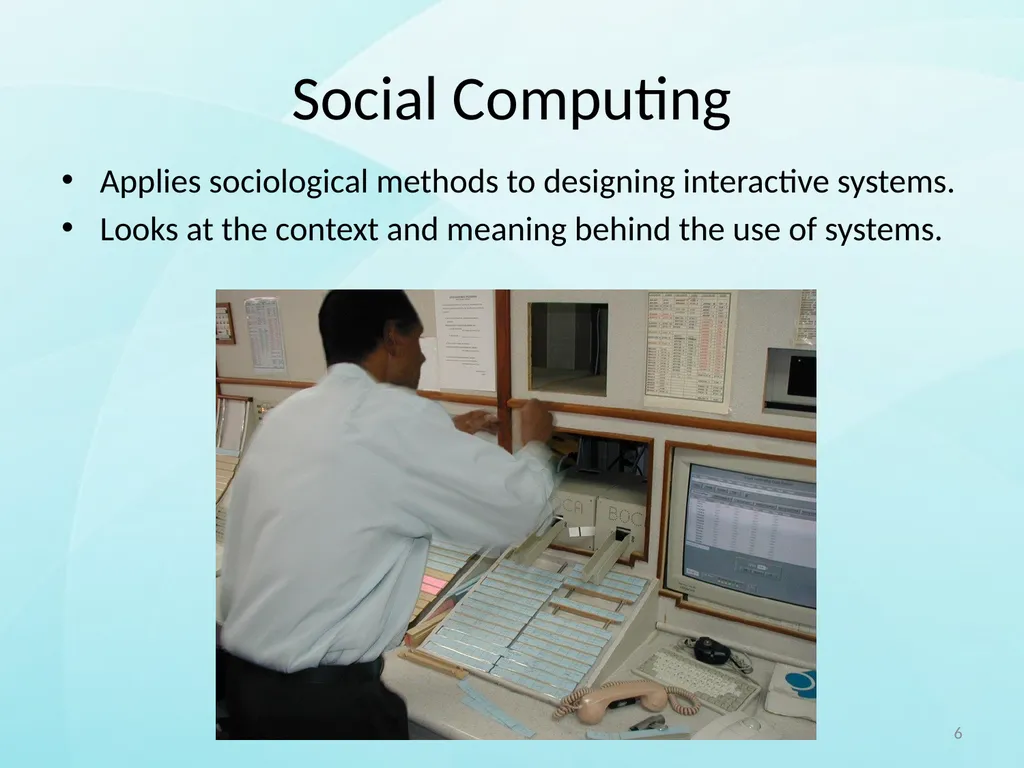
Social Computing Applies sociological methods to designing interactive systems.
Looks at the context and meaning behind the use of systems. 6<br>
07
Social Computing Social action is embedded
Technology changes social interaction
Technology is a radically different social medium. 7<br>
08
Philosophy and Terms The study of questions in reality.
Existence
Knowledge
Values
Reason
Mind
Language 8<br>
09
Philosophical Background: Embodiment “Embodied phenomena are those that by their very nature occur in real time and real space.” … what?
Comes from philosophical tradition of Phenomenology. 9<br>
10
Phenomenology Human experience (phenomena) answers philosophical questions.
Previous traditions separated the mind and the body.
Phenomenology unified the two. 10<br>
11
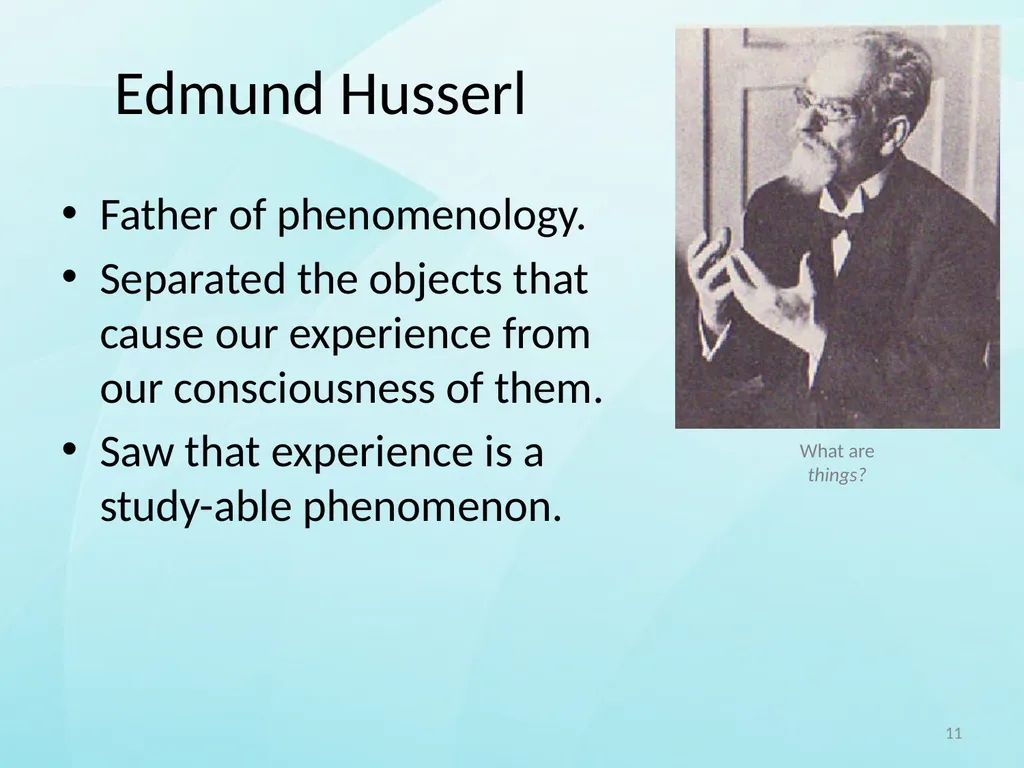
Edmund Husserl Father of phenomenology.
Separated the objects that cause our experience from our consciousness of them.
Saw that experience is a study-able phenomenon. 11 What are things?<br>
12
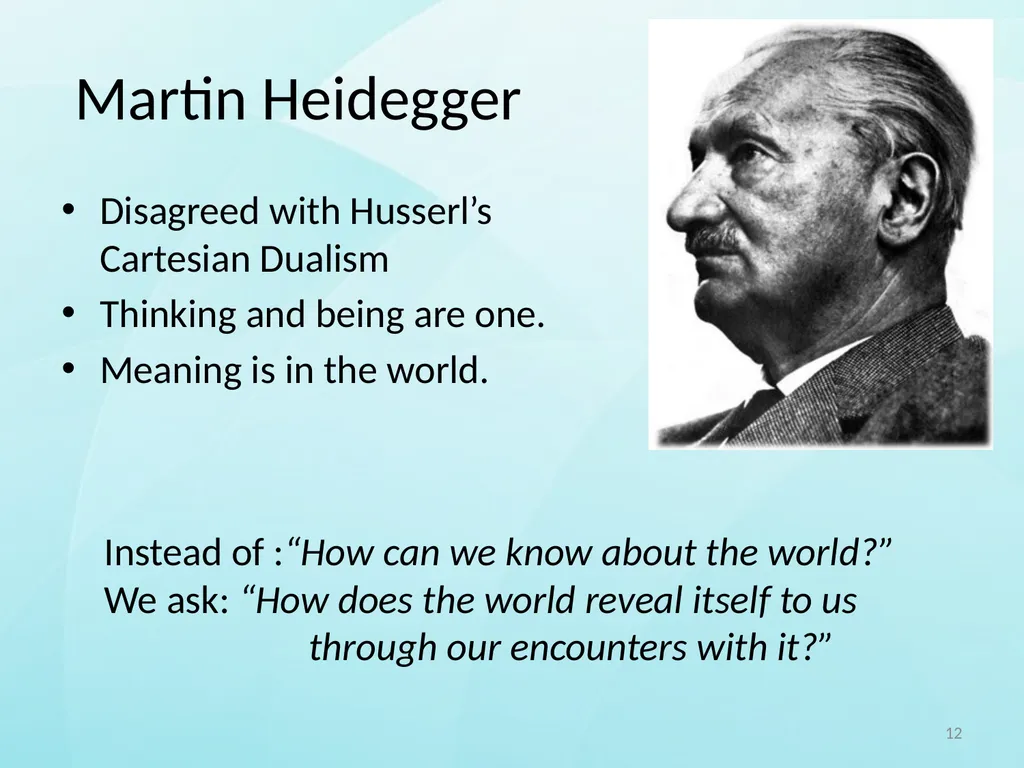
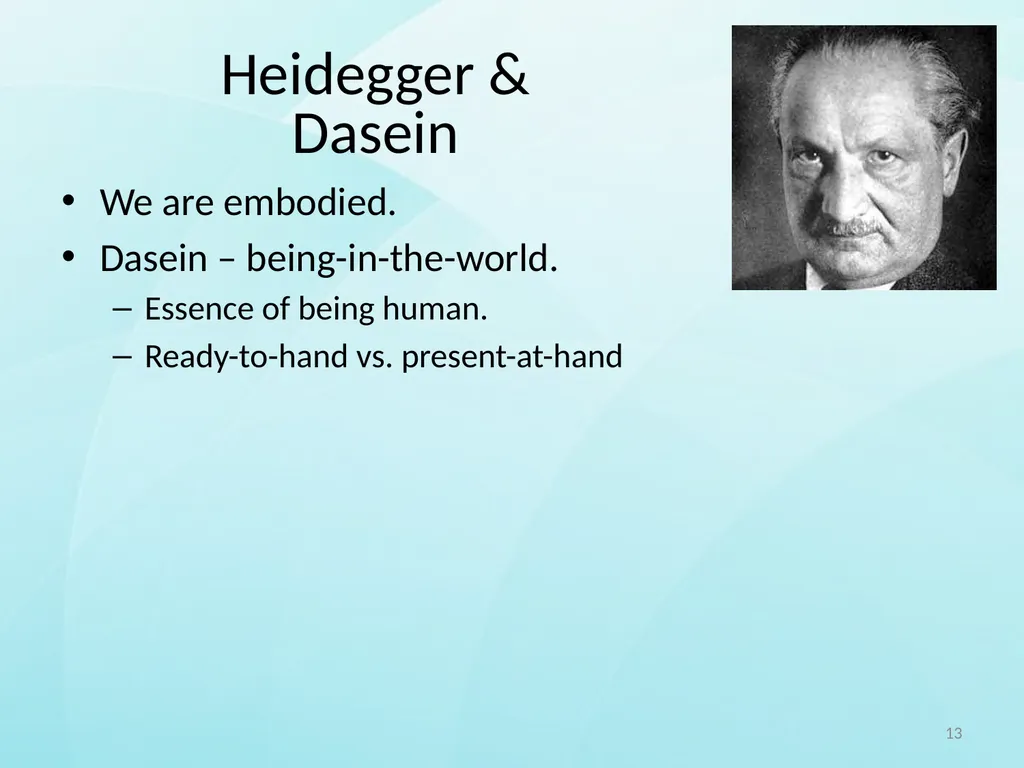
Martin Heidegger Disagreed with Husserl’s Cartesian Dualism
Thinking and being are one.
Meaning is in the world. 12 Instead of :“How can we know about the world?” We ask: “How does the world reveal itself to us through our encounters with it?”<br>
13
13 We are embodied.
Dasein – being-in-the-world.
Essence of being human.
Ready-to-hand vs. present-at-hand Heidegger & Dasein<br>
14
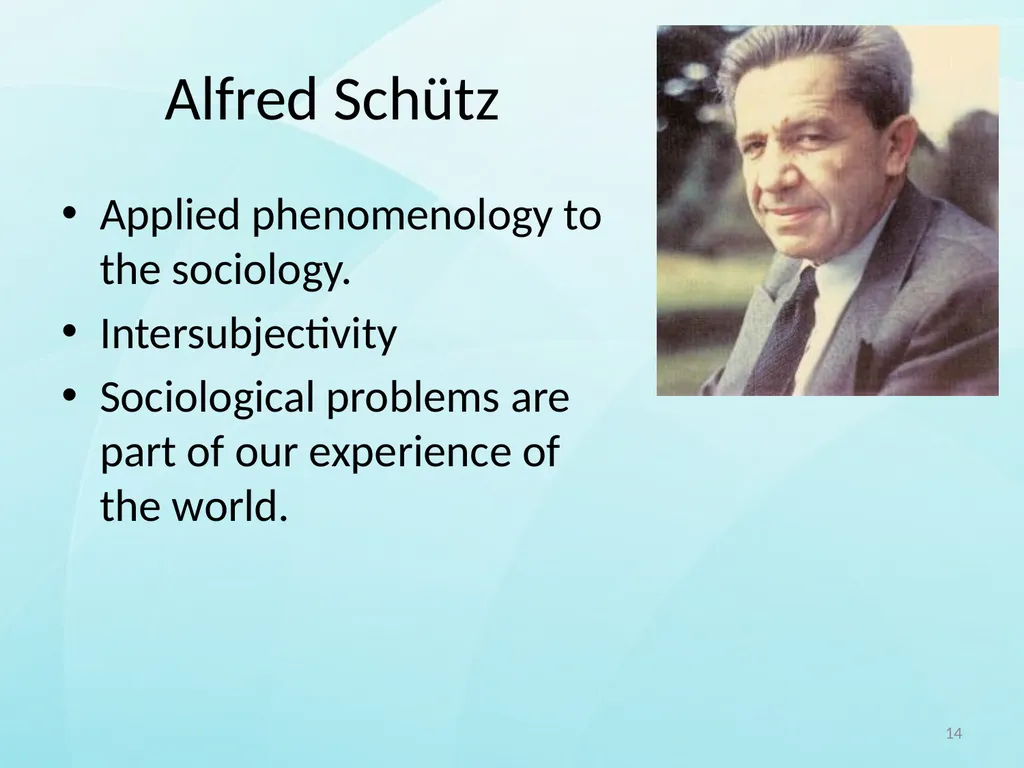
Alfred Schütz Applied phenomenology to the sociology.
Intersubjectivity
Sociological problems are part of our experience of the world. 14<br>
15
Philosophy Summary We are a part of the world, and we engage with it practically to find meaning.
“Embodiment is the property of our engagement with the world that allows us to make it meaningful.” 15<br>
16
Foundations for Embodied Systems 16<br>
17
Ontology The study of categories of being.
Ontology is a term used in computer science, but its connotations are flawed. 17<br>
18
Applying Ontology Allowing the user control over the ontology of a system.
Conveying the representation of a system through digital/physical affordances 18<br>
19
Intersubjectivity The sharing of experience/meaning between individuals. 19<br>
20
Applying Intersubjectivity Allowing the designer to communicate meaning to the user.
Allowing the users to use and appropriate a system to communicate with one another. 20<br>
21
Intentionality What a concept it “directed” towards
Can intention be shared?
Original vs. derived 21<br>
22
Applying Intentionality Computation is intentional.
How do we act through this intention? 22<br>
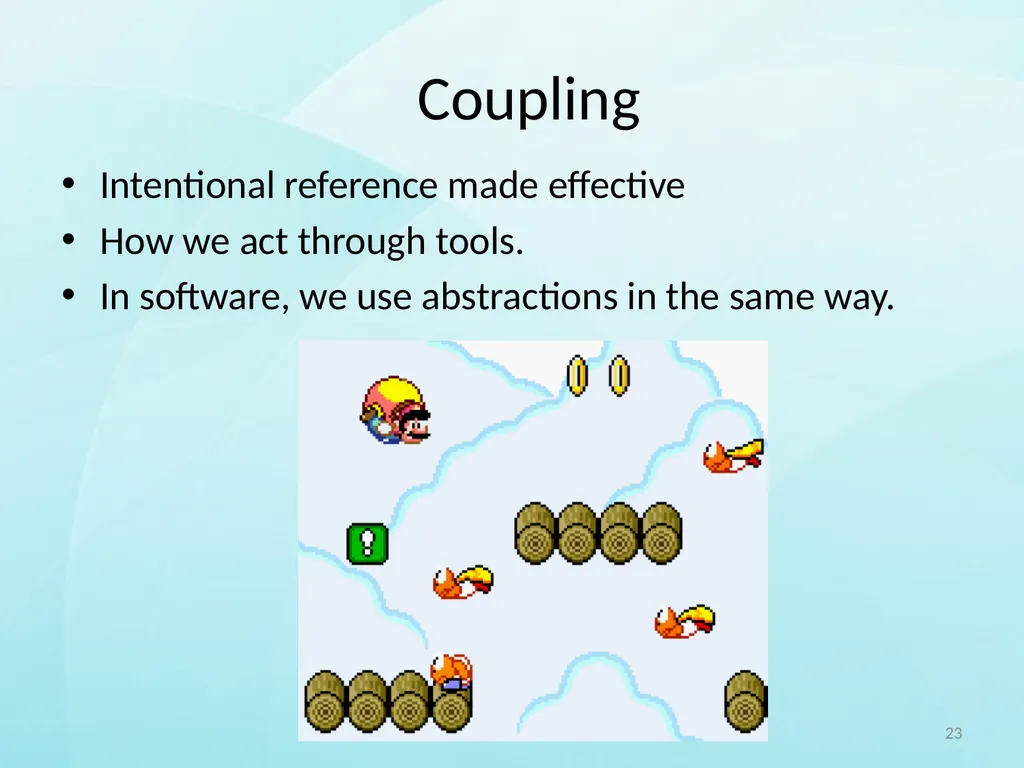
23
Coupling Intentional reference made effective
How we act through tools.
In software, we use abstractions in the same way. 23<br>
24
Design Principles 24<br>
25
Computation is a medium: Computers act as an extensions of our own activities 25<br>
26
Meaning arises on multiple levels: Systems and artifacts should be designed with a focus on the numerous meaning they can possess. 26<br>
27
Users, not designers, manage meaning and coupling:
The goal of designers should be towards suggesting meaning and coupling for artifacts, focusing on “ways for the user to understand the tool and understand how to apply it to each situation.” 27<br>
28
Embodied technologies participate in the world they represent: The representation and the object exist in the same reality. 28<br>
29
Embodied interaction turns action into meaning: Meaning is not in the system itself, but is expressed by how the user acts through the system. 29<br>
30
Conclusion Embodied interaction is a highly useful way to look at system design.
Emphasizes the user as a being who interacts in ways that contain meaning.
Encourages the creation of systems that take the users environment and meaning into account. 30<br>
31
Abstraction “The very essence of software system design is the manipulation, combination and creation of abstractions.”
Hides implementation 31<br>
32
Intentionthing? How meaning arises from the community
In Embodied Interaction:
Allowing a system to be modified by a community to better suit its needs
Customizing a system through the needs of a community 32<br>