employABILITY Skills: Soft vs. Hard Skills Lesson Goals for this Lesson Consider the skills you possess for your future career journey Understand the difference between hard soft skills the important role soft skills play in the workplace
"employABILITY Skills: Soft vs. Hard Skills Lesson" is the property of its rightful owner. Permission is granted to
download and print the materials on this website for personal, non-commercial use only, and to display it
on your personal computer provided you do not modify the materials and that you retain all copyright
notices contained in the materials. By downloading content from our website, you accept the terms of this
agreement.
Presentation Transcript
01
employABILITY Skills: Soft vs. Hard Skills Lesson<br>
02
Goals for this Lesson Consider the skills you possess for your future career journey
Understand
the difference between hard & soft skills
the important role soft skills play in the workplace
Set goals for improving your skills
Consider how to communicate your skills to an employer<br>
03
Saskatchewan Perspective The Credit Counselling Society released a report in January [2018] showing there has been an increase of people under 35 years old [seeking] help to deal with unemployment since 2010. (CBC)<br>
04
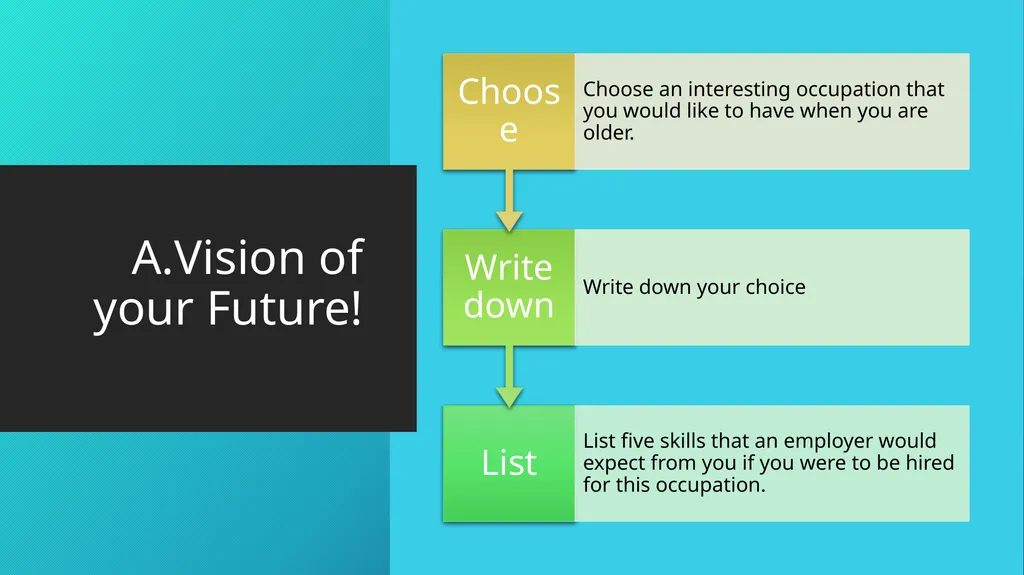
Vision of your Future!<br>
05
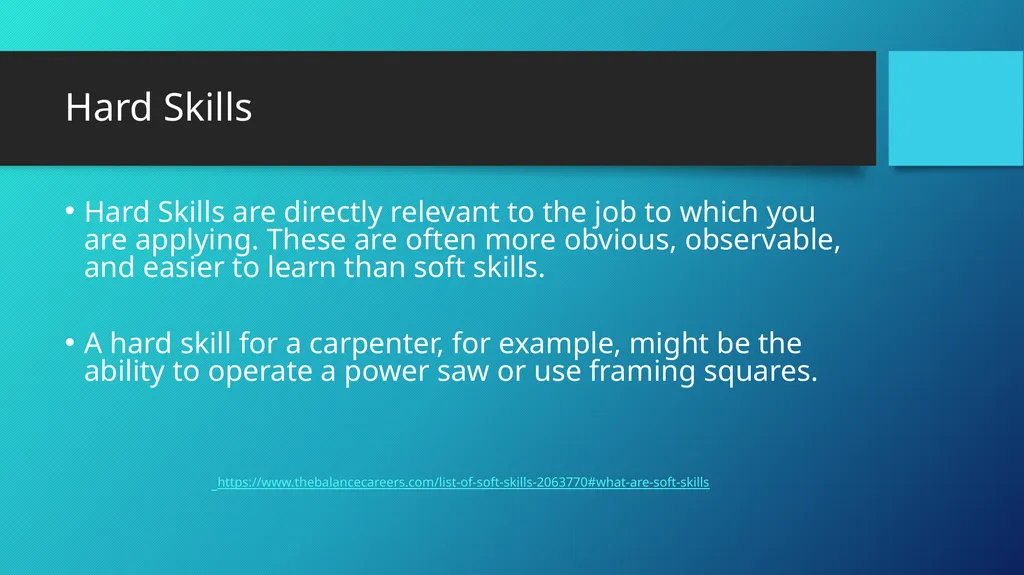
Hard Skills Hard Skills are directly relevant to the job to which you are applying. These are often more obvious, observable, and easier to learn than soft skills.
A hard skill for a carpenter, for example, might be the ability to operate a power saw or use framing squares.
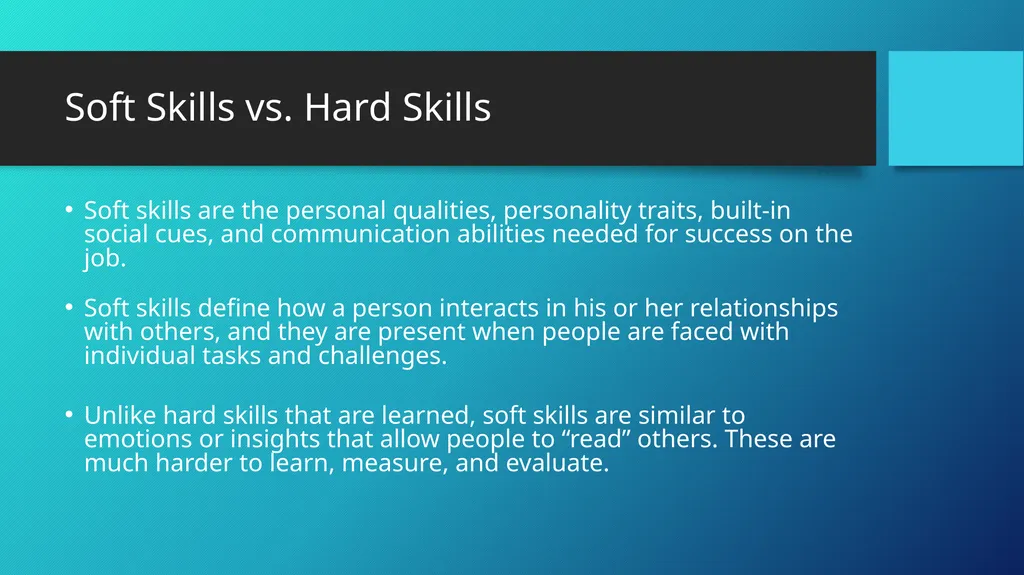
Soft Skills vs. Hard Skills Soft skills are the personal qualities, personality traits, built-in social cues, and communication abilities needed for success on the job.
Soft skills define how a person interacts in his or her relationships with others, and they are present when people are faced with individual tasks and challenges.
Unlike hard skills that are learned, soft skills are similar to emotions or insights that allow people to “read” others. These are much harder to learn, measure, and evaluate.<br>
07
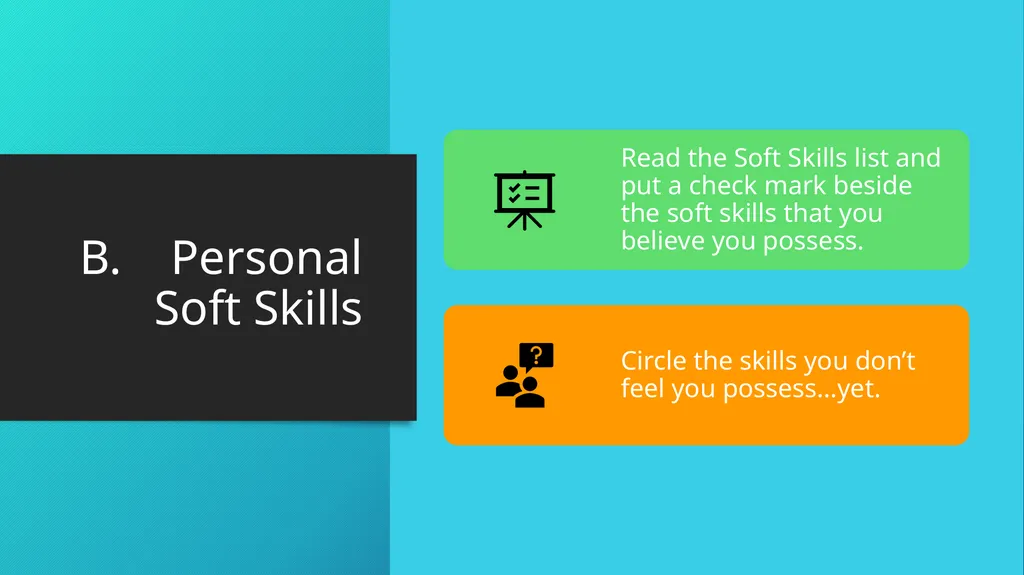
B. Personal Soft Skills<br>
08
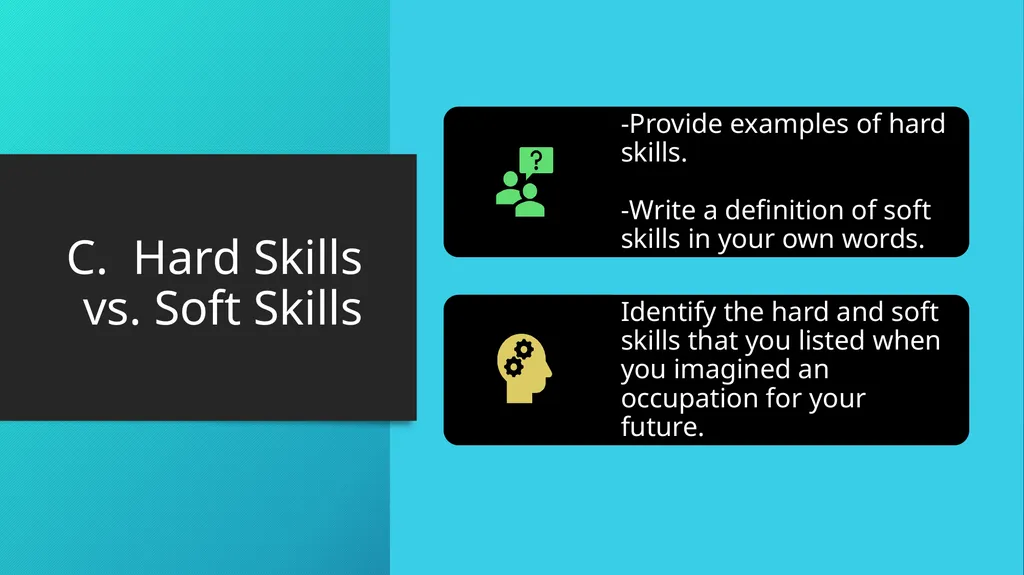
C. Hard Skills vs. Soft Skills<br>
09
D. Soft Skills are Valued! Many employers in Saskatchewan value soft skills over hard skills when hiring new employees. Why do you think this is the case?
List three possible explanations.<br>
10
Did you consider? Employers value people who are organized, hard working, polite to others, and demonstrate a willingness to learn.
These soft skills are harder to teach since they involve a change in habits and behaviour.
Depending on the role, hard skills can be taught relatively easily to those who are eager to learn!<br>
11
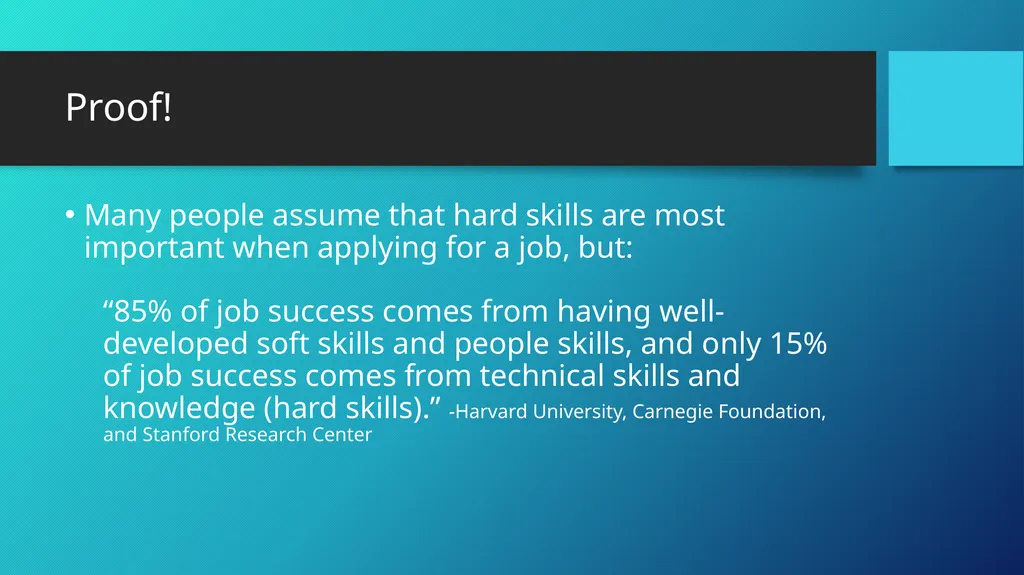
Proof! Many people assume that hard skills are most important when applying for a job, but:
“85% of job success comes from having well-developed soft skills and people skills, and only 15% of job success comes from technical skills and knowledge (hard skills).” -Harvard University, Carnegie Foundation, and Stanford Research Center<br>
12
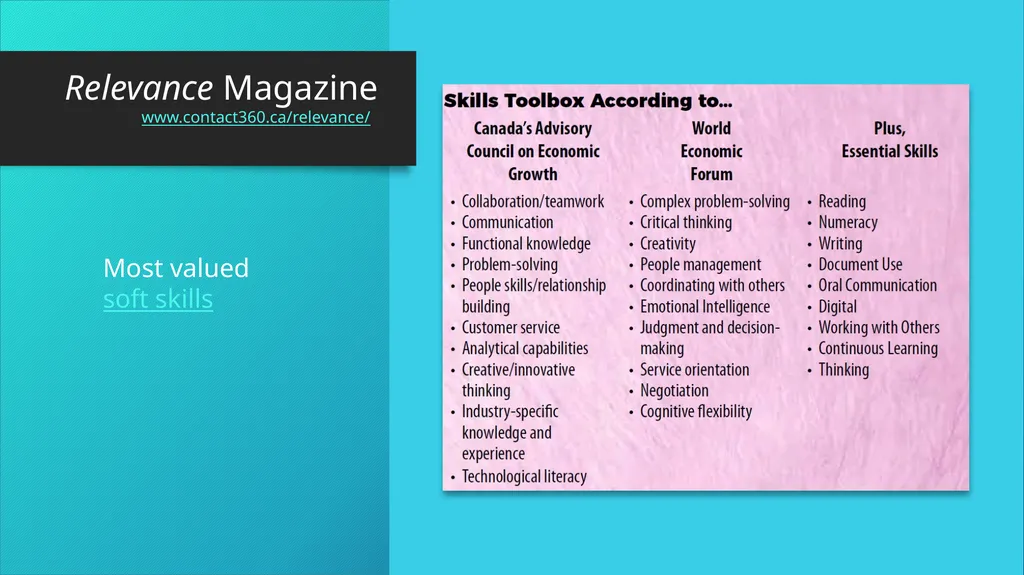
Relevance Magazine www.contact360.ca/relevance/ Most valued soft skills<br>
13
Consider How do you think people become aware of the soft skills that they possess?<br>
14
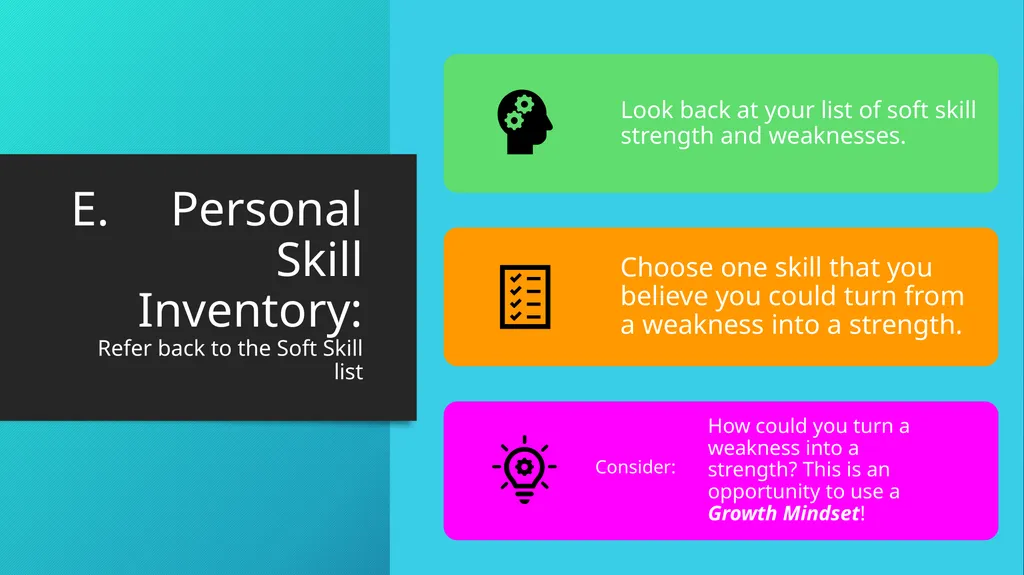
E. Personal Skill Inventory:
Refer back to the Soft Skill list<br>