Engaging Students in Active Learning Imagine this Once upon a time, two people were sitting in the Quad Neuroscience Learning When exposed to any stimulus, neurons are activated.
"Engaging Students in “Active Learning” Imagine" is the property of its rightful owner. Permission is granted to
download and print the materials on this website for personal, non-commercial use only, and to display it
on your personal computer provided you do not modify the materials and that you retain all copyright
notices contained in the materials. By downloading content from our website, you accept the terms of this
agreement.
Presentation Transcript
01
Engaging Students in “Active Learning”<br>
02
Imagine this… Once upon a time, two people were sitting in the Quad…<br>
03
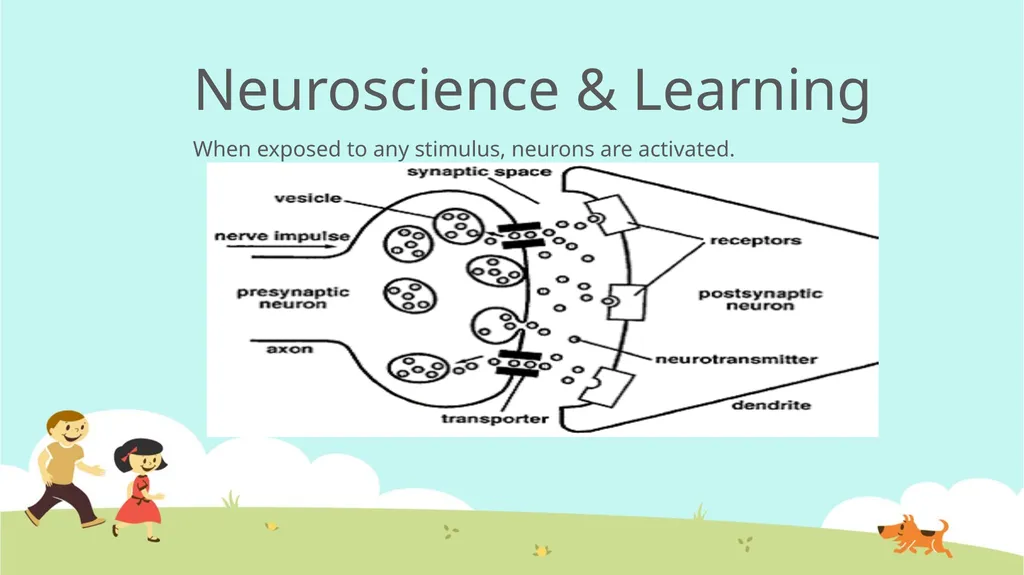
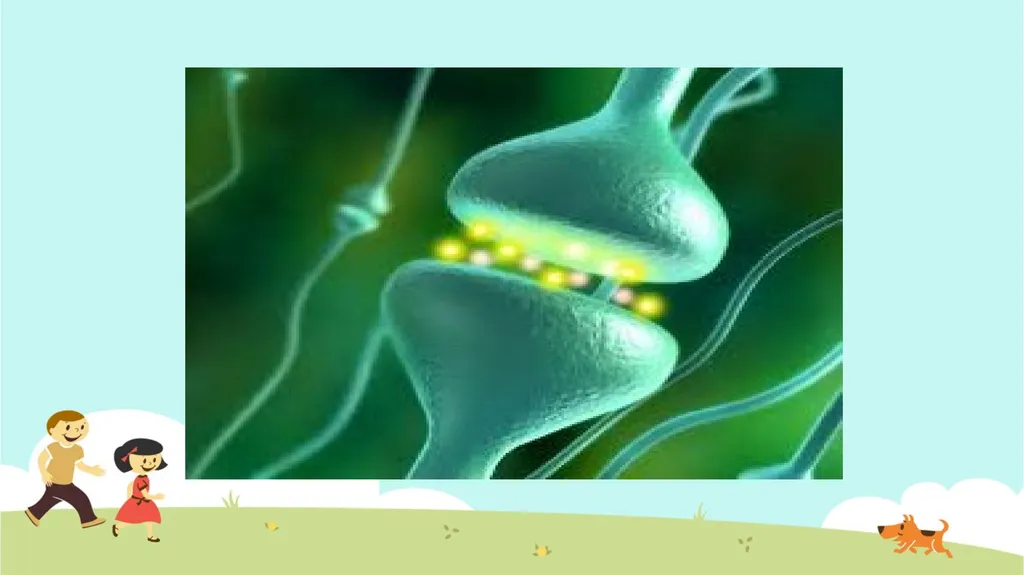
Neuroscience & Learning When exposed to any stimulus, neurons are activated.<br>
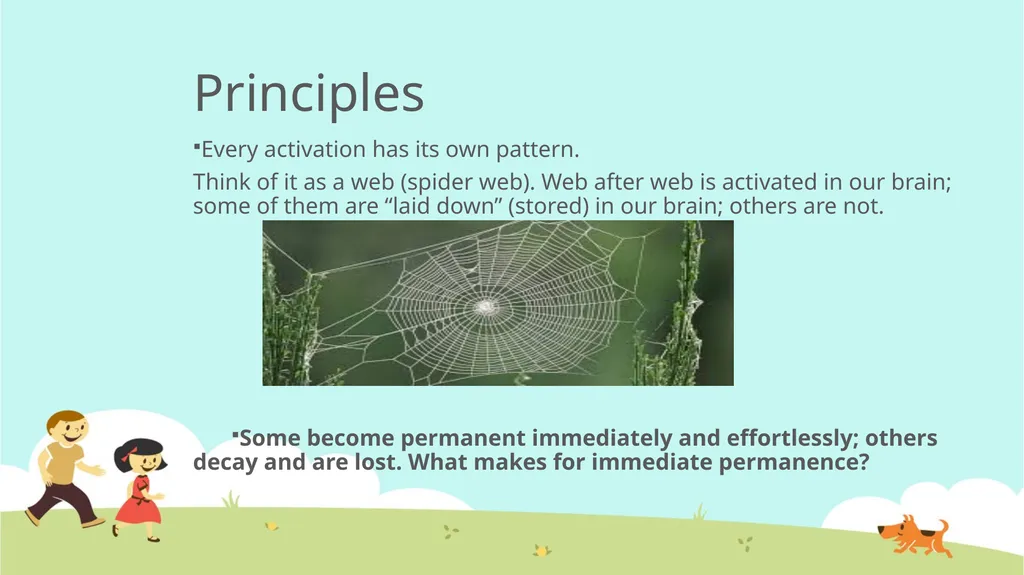
Principles Every activation has its own pattern.
Think of it as a web (spider web). Web after web is activated in our brain; some of them are “laid down” (stored) in our brain; others are not.
Some become permanent immediately and effortlessly; others decay and are lost. What makes for immediate permanence?<br>
06
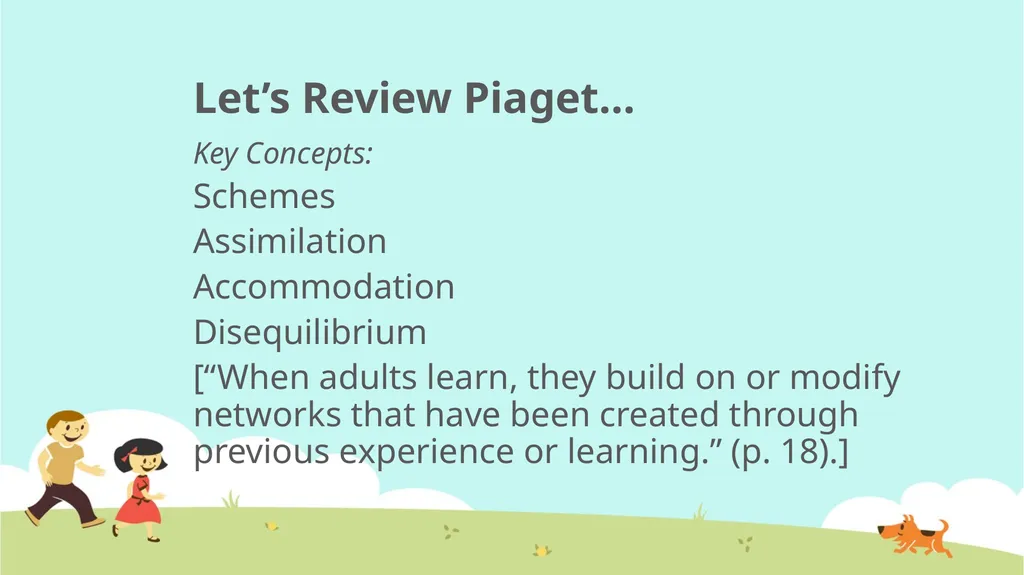
“When adults learn, they build on or modify networks that have been created through previous experience or learning.” (Barkley, E.F., p. 18).<br>
07
Let’s Review Piaget… Key Concepts:
Schemes
Assimilation
Accommodation
Disequilibrium
[“When adults learn, they build on or modify networks that have been created through previous experience or learning.” (p. 18).]<br>
08
So there is NO new learning without disequilibrium. How does disequilibrium occur?
Can we (as teachers) make that happen? (Do we really want our students to actually struggle?)
Let’s review…<br>
09
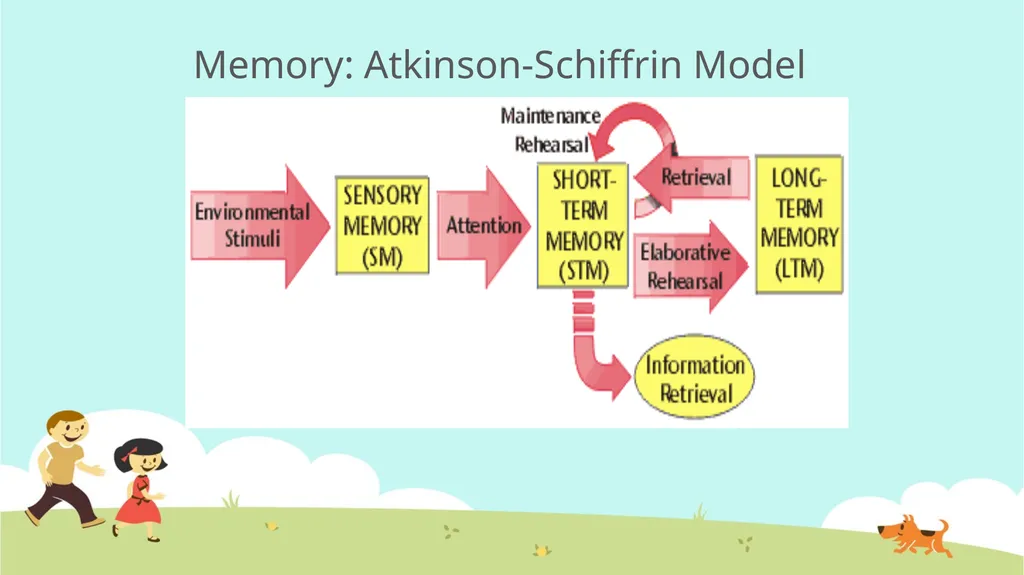
Memory: Atkinson-Schiffrin Model<br>
10
What makes the difference in ease/difficulty of learning? Some images, ideas, concepts, experiences are Immediately and Effortlessly stored permanently!
Surprise; emotional load, etc.<br>
11
What makes the difference in ease/difficulty of learning? Effortful : A general principle: The longer we hold a concept in working memory, the more likely it is to be moved to permanent storage.
But we have a problem: “Attention Span”<br>
12
Cognitive Strategies Levels of processing:
The information “makes sense”…is “meaningful.”
Elaboration of existing schema:
Fits in with what one already knows about how the world works (re-conceptualization)<br>
13
Key Concepts Connection
Meaning
Usefulness
Novelty
Elaborative<br>
14
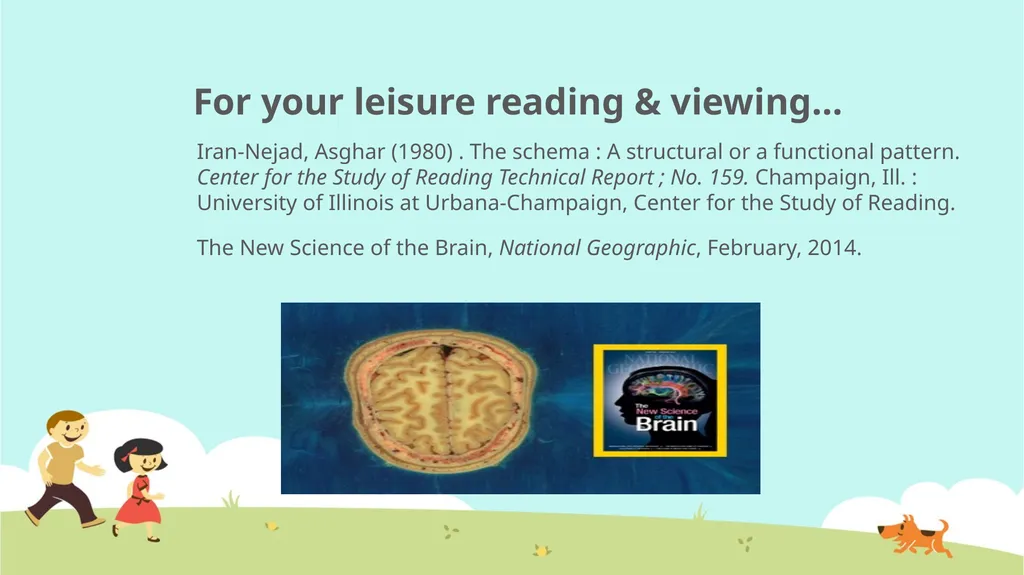
For your leisure reading & viewing… Iran-Nejad, Asghar (1980) . The schema : A structural or a functional pattern. Center for the Study of Reading Technical Report ; No. 159. Champaign, Ill. : University of Illinois at Urbana-Champaign, Center for the Study of Reading.
The New Science of the Brain, National Geographic, February, 2014.<br>