Environmental Cold Injuries in Intercollegiate Athletics Cold Injuries Cold injuries are classified into 3 categories: decreased core temperature (hypothermia), freezing injuries of the extremities, and nonfreezing injuries of the
"Environmental Cold Injuries in Intercollegiate" is the property of its rightful owner. Permission is granted to
download and print the materials on this website for personal, non-commercial use only, and to display it
on your personal computer provided you do not modify the materials and that you retain all copyright
notices contained in the materials. By downloading content from our website, you accept the terms of this
agreement.
Presentation Transcript
01
Environmental Cold Injuries in Intercollegiate Athletics<br>
02
Cold Injuries Cold injuries are classified into 3 categories: decreased core temperature (hypothermia), freezing injuries of the extremities, and nonfreezing injuries of the extremities<br>
03
Hypothermia Hypothermia is classified as mild, moderate, or severe, depending upon measured core temperature
Mild hypothermia is a core temperature of 95.6F (35.6C) to 98.66F (37.6C)
Moderate hypothermia is a core temperature of 90.6F (32.6C) to 94.6F (34.6C)
Severe hypothermia is a core temperature below 90.6F (32.6C)
Recognition
S/S: Vigorous shivering, increased blood pressure, rectal temperature less than 98.66F (37.6C) but greater than 95.6F(35.6C), fine motor skill impairment, lethargy, apathy, and mild amnesia
Treatment
Remove wet or damp clothing; insulating the athlete with warm, dry clothing or blankets (including covering the head); and moving the athlete to a warm environment with shelter from the wind and rain
Heat/rewarm only to the trunk and other areas of heat transfer, including the axilla, chest wall, and groin
Avoid applying friction massage to tissues, as this may increase damage if frostbite is present<br>
04
Frostbite (Superficial) Frostbite is actual freezing of body tissues
It is a localized response to a cold, dry environment, yet moisture from sweating may exacerbate frostbite due to increased tissue cooling
Recognition
S/S: Edema, redness or mottled gray skin appearance, stiffness, and transient tingling or burning. Rule out hypothermia by measuring core temperature
Treatment
To rewarm, the affected tissue should be immersed in a warm (98.6F–104.6F [37.6C–40.6C]) water bath
Remove any constrictive clothing and submerge the entire affected area for 15 to 30 minutes keeping the water gently circulated
Thawing is complete when the tissue is pliable, and color and sensation have returned
Rewarming can result in significant pain, so a physician may prescribe appropriate analgesic medication
Do not use dry heat or steam to rewarm affected tissue<br>
05
Frostbite (Deep) Recognition
S/S: edema, mottled or gray skin appearance, tissue that feels hard and does not rebound, vesicles, and numbness or anesthesia
Rule out hypothermia by measuring core temperature
Treatment
Rewarming can occur at room temperature or by placing the affected tissue against another person’s warm skin
Rewarming should be performed slowly, and water temperatures greater than 98.6F to 104.6F(37.6C–40.6C) should be avoided
Avoid applying friction massage to tissues and leave any vesicles (fluid-filled blisters) intact
If rewarming is not undertaken, protect the affected area from additional damage and further tissue temperature decreases and consult with a physician or transport to a medical facility<br>
06
Chilblain Chilblain, also known as pernio, is an injury associated with extended exposure (1–5 hours) to cold, wet conditions
Chilblain is an exaggerated or uncharacteristic inflammatory response to cold exposure
Recognition
S/S: exposure to cold, wet conditions for more than 60 minutes at temperatures less than 50.6F (16.6C) and the presence of small erythematous papules, with edema, tenderness, itching, and pain
Upon rewarming, the skin may exhibit inflammation, redness, swelling, itching, or burning and increased temperature
Treatment
Remove wet or constrictive clothing, wash and dry the area gently, elevate the area, and cover with warm, loose, dry clothing or blankets
Do not disturb blisters, apply friction massage, apply creams or lotions, use high levels of heat, or allow weight bearing on the affected area
During treatment, continually monitor the affected area for return of circulation and sensation<br>
07
General Considerations of Environmental Cold Injuries Environmental cold injuries (frostbite, chilblains, and hypothermia) should not be the only area of concern when considering scheduling athletics in the cold
All injuries can occur at an increased rate due to exercising at low environmental temperatures and can also impair how the body responds to mental and physical tasks
Prolonged exposure to the cold environment most often leads to cold extremities
Studies have concluded these cold extremities quickly lose sensation and proprioception once the tissue temperature starts to lower which negates and impairs the gait and balance control of the body (i.e. individuals lose track of their spatial awareness for their body) which may increase the risk of injury<br>
08
Monitoring Institutions should have a written policy regarding the suspension or cancellation of outdoor practices/competitions per NCAA, NAIA and NATA Recommendations
Monitoring of student-athletes’ safety should be continuous during events
Athletic trainers, coaches, administrators, and other athletic personnel should be educated annually on the cold weather policy
Environmental monitoring should occur any time it is cold outside (i.e. <41oF)
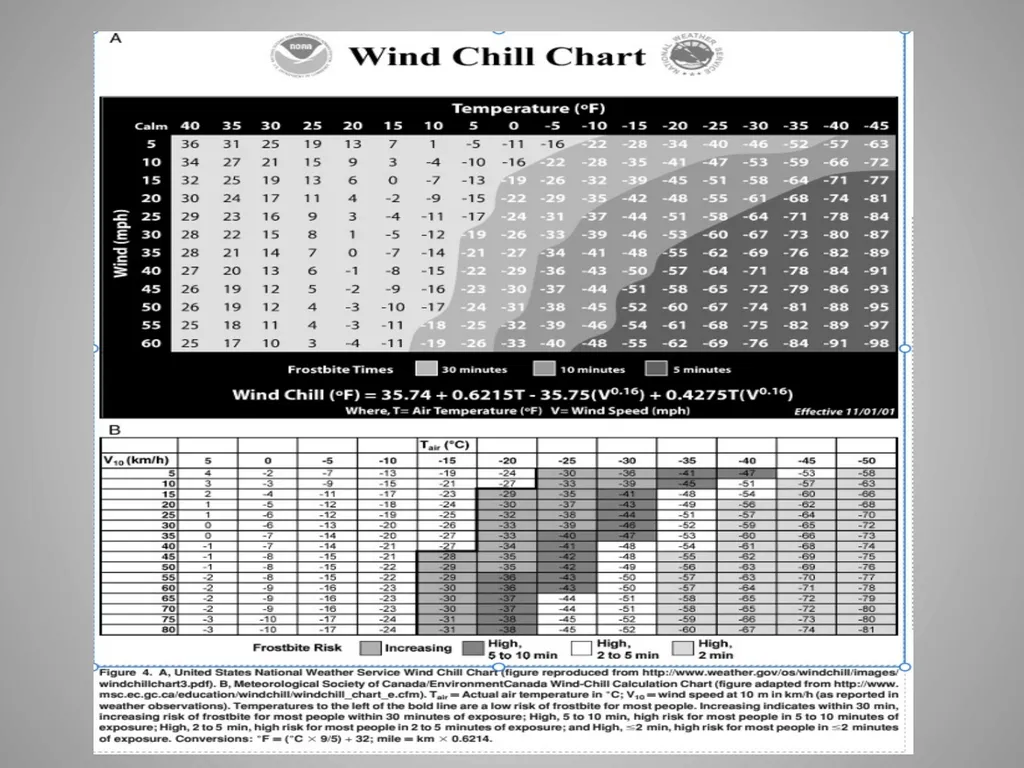
Monitoring of wind chill should occur every 30 minutes beginning at least 60 minutes prior to the scheduled event<br>
09
References National Athletic Trainers’ Association Position Statement: Environmental Cold Injuries (2008)
https://www.nata.org/sites/default/files/environmental_cold_injuries.pdf
NAIA Championship Events Cold Weather Medical Policy<br>